
Free Printable Mrna Editing and Processing Worksheets for Class 10
Class 10 mRNA editing and processing worksheets from Wayground offer comprehensive printables and practice problems with answer keys to help students master post-transcriptional modifications and RNA maturation processes.
Download any worksheet with a free account
Free PDF downloads, saved to your library.
Keep exploring
Explore printable Mrna Editing and Processing worksheets for Class 10
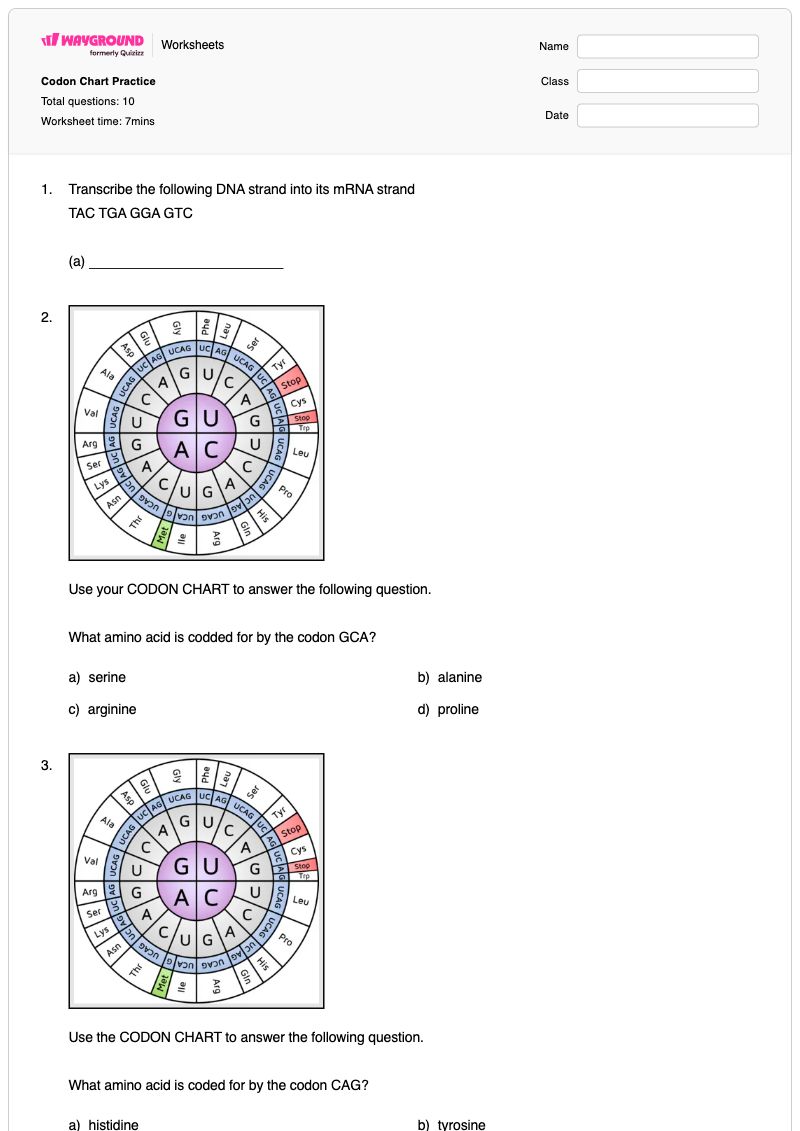
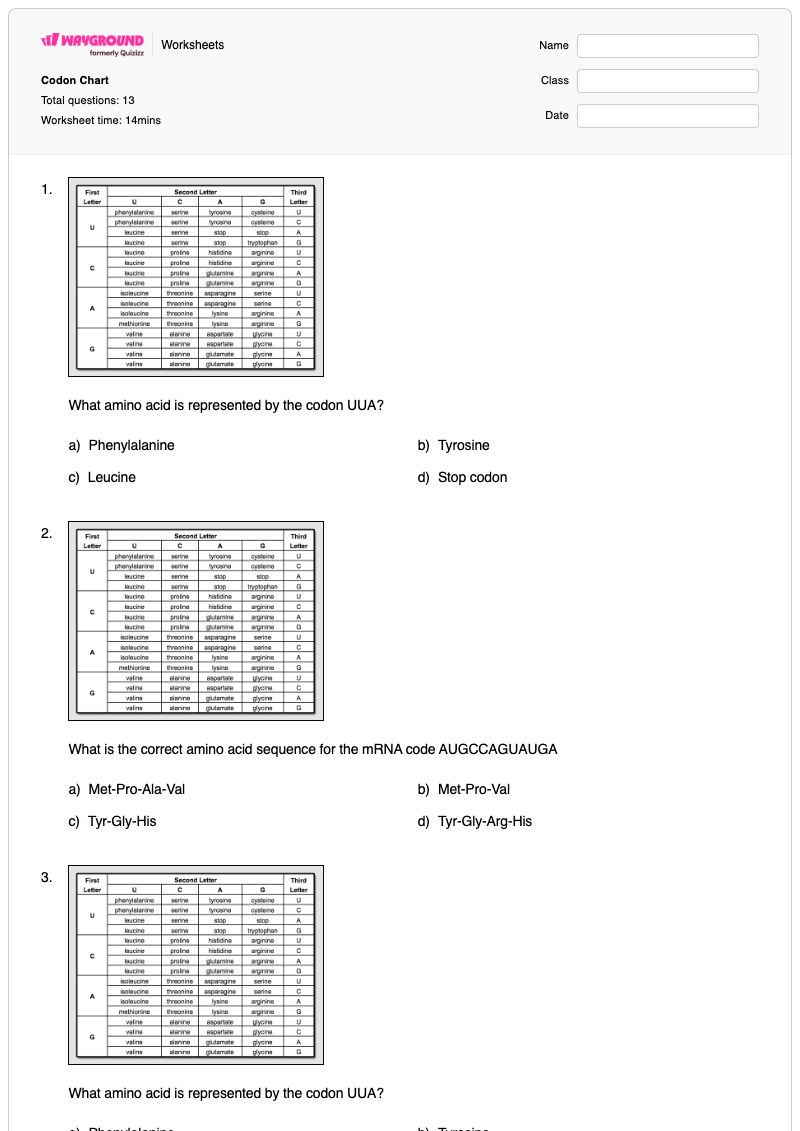
mRNA editing and processing worksheets for Class 10 students available through Wayground (formerly Quizizz) provide comprehensive coverage of post-transcriptional modifications that transform primary RNA transcripts into mature messenger RNA molecules. These educational resources focus on critical molecular biology concepts including 5' capping, 3' polyadenylation, splicing mechanisms, and alternative splicing patterns that enable protein diversity. Students develop essential skills in analyzing splice site recognition sequences, understanding the role of small nuclear ribonucleoproteins (snRNPs) in spliceosome assembly, and evaluating how RNA editing creates functional mRNA molecules ready for translation. The worksheet collections include detailed practice problems that challenge students to trace the step-by-step conversion of pre-mRNA to mature mRNA, complete with answer keys that facilitate independent study and comprehensive pdf formats suitable for both classroom instruction and individual review sessions as free printable resources.
Wayground (formerly Quizizz) supports biology educators with an extensive library of millions of teacher-created mRNA editing and processing worksheets specifically designed for Class 10 instruction. The platform's robust search and filtering capabilities enable teachers to locate materials aligned with specific curriculum standards while offering differentiation tools that accommodate diverse learning needs within the same classroom. These customizable worksheet collections are available in both printable pdf formats for traditional instruction and digital formats for technology-enhanced learning environments, providing educators with flexible options for lesson planning and assessment preparation. Teachers utilize these resources for targeted skill practice sessions, remediation support for students struggling with complex molecular processes, and enrichment activities that extend learning beyond basic transcriptional concepts, ensuring comprehensive understanding of how cells regulate gene expression through sophisticated RNA processing mechanisms.
Frequently asked questions
Start by grounding students in the central dogma before introducing post-transcriptional modifications as a refinement layer between transcription and translation. Use the major events — 5' capping, 3' polyadenylation, and intron splicing — as a sequential framework so students can see how each step protects and prepares the mRNA for export and translation. Connecting each modification to a functional consequence (e.g., the 5' cap protects against degradation and aids ribosome binding) helps students move beyond memorization toward mechanistic understanding.