Free Printable DNA Fingerprinting Worksheets for Class 10
Explore Class 10 DNA fingerprinting worksheets and printables through Wayground that help students master genetic identification techniques with comprehensive practice problems, free PDFs, and detailed answer keys.
Explore printable DNA Fingerprinting worksheets for Class 10
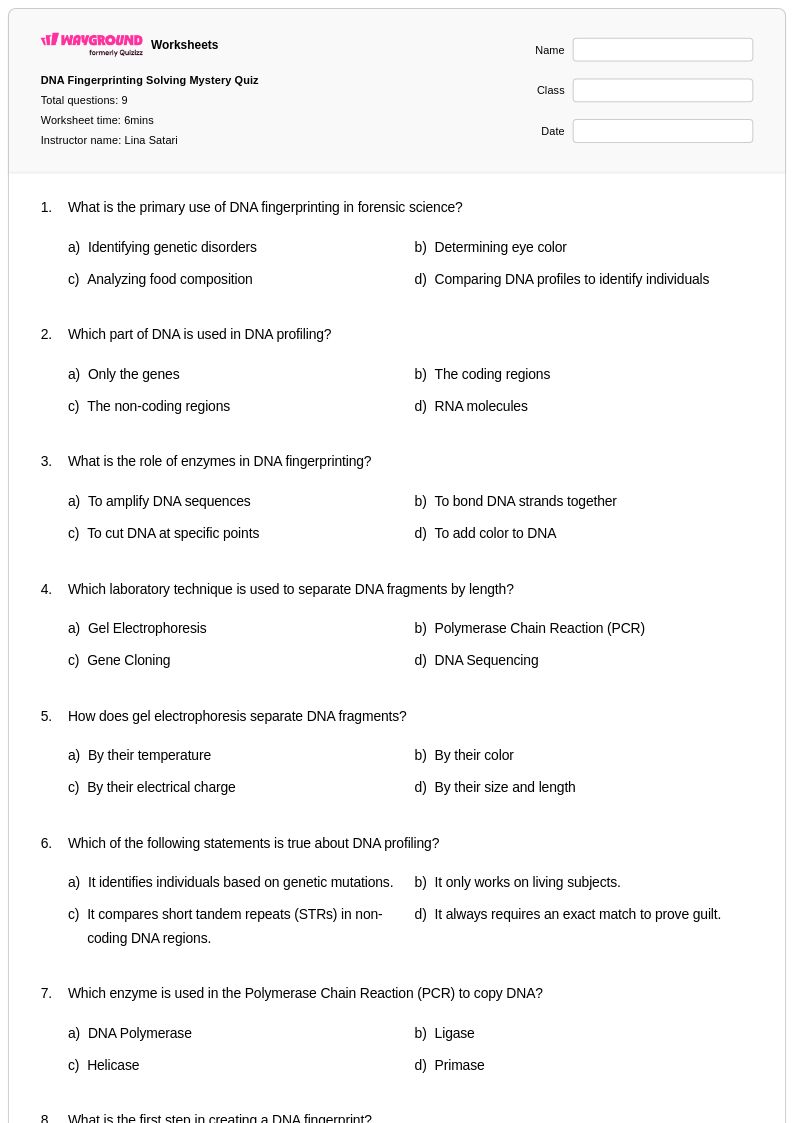
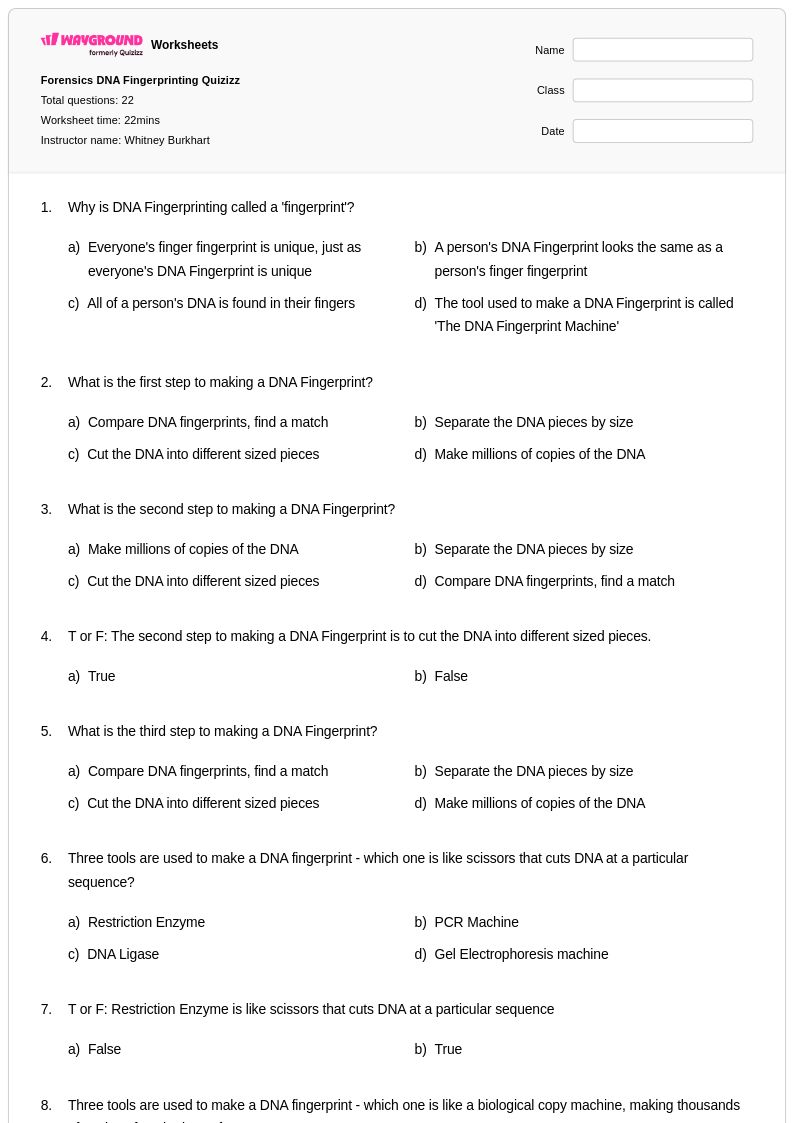
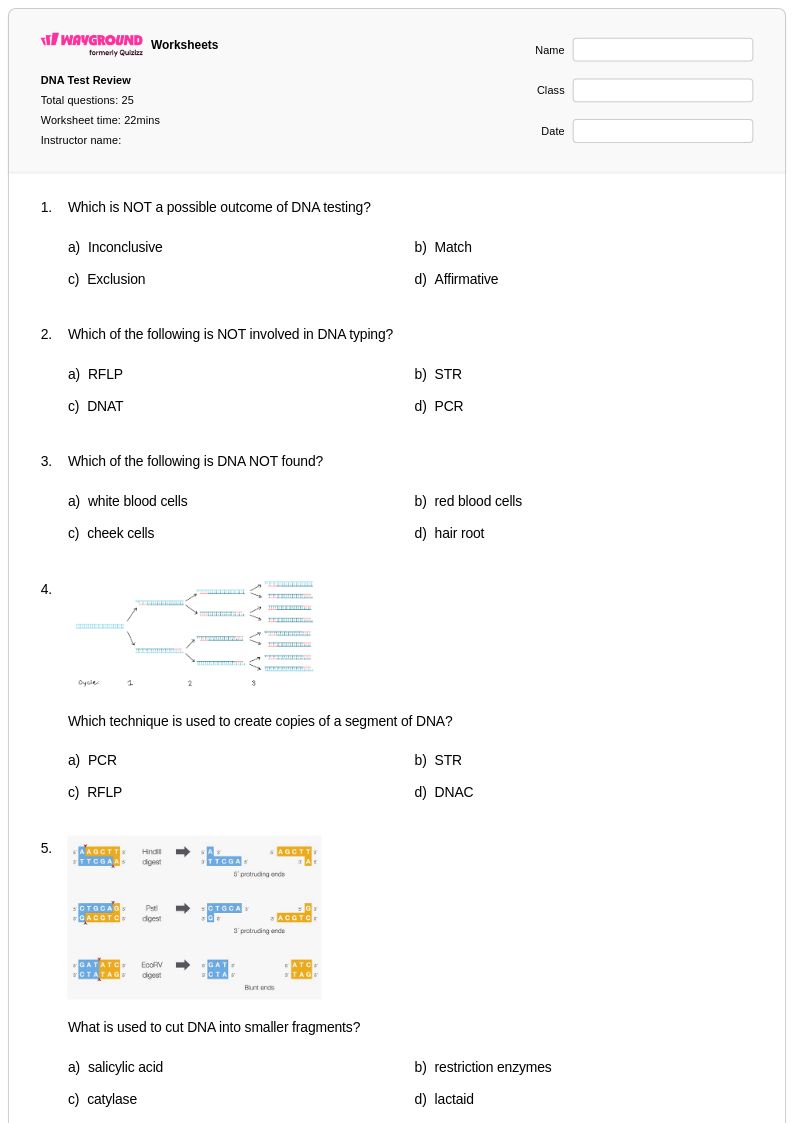
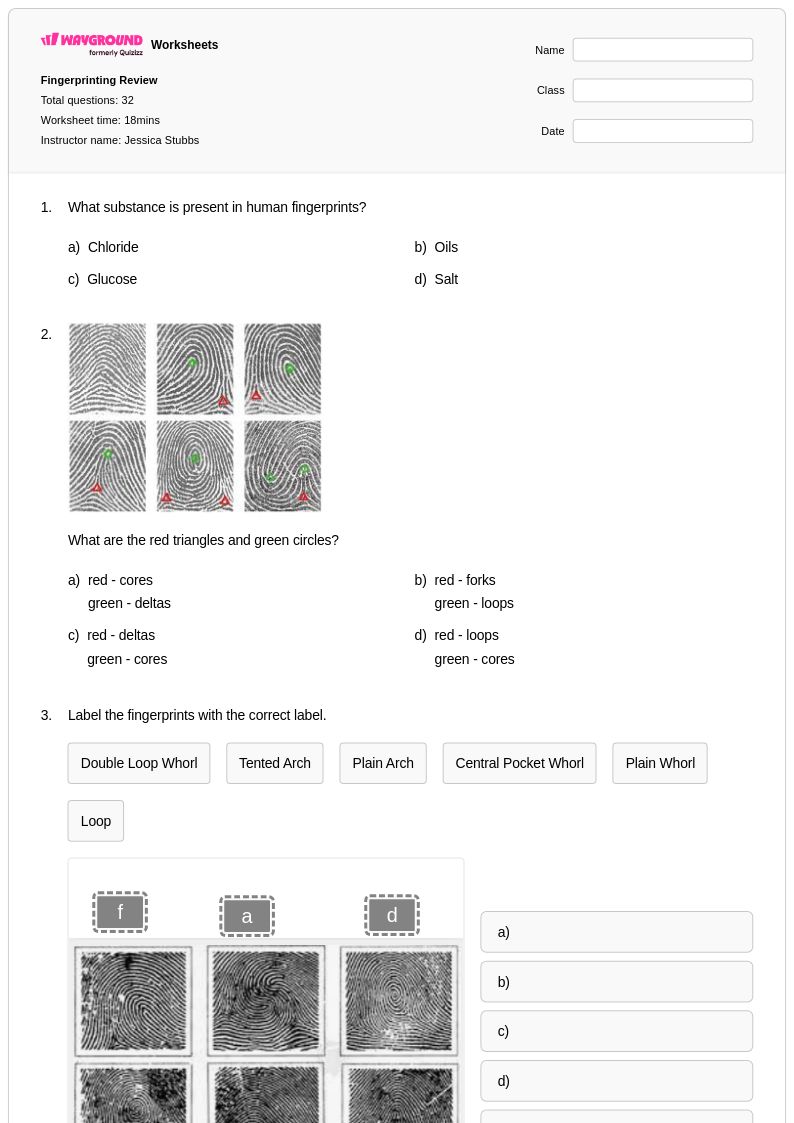
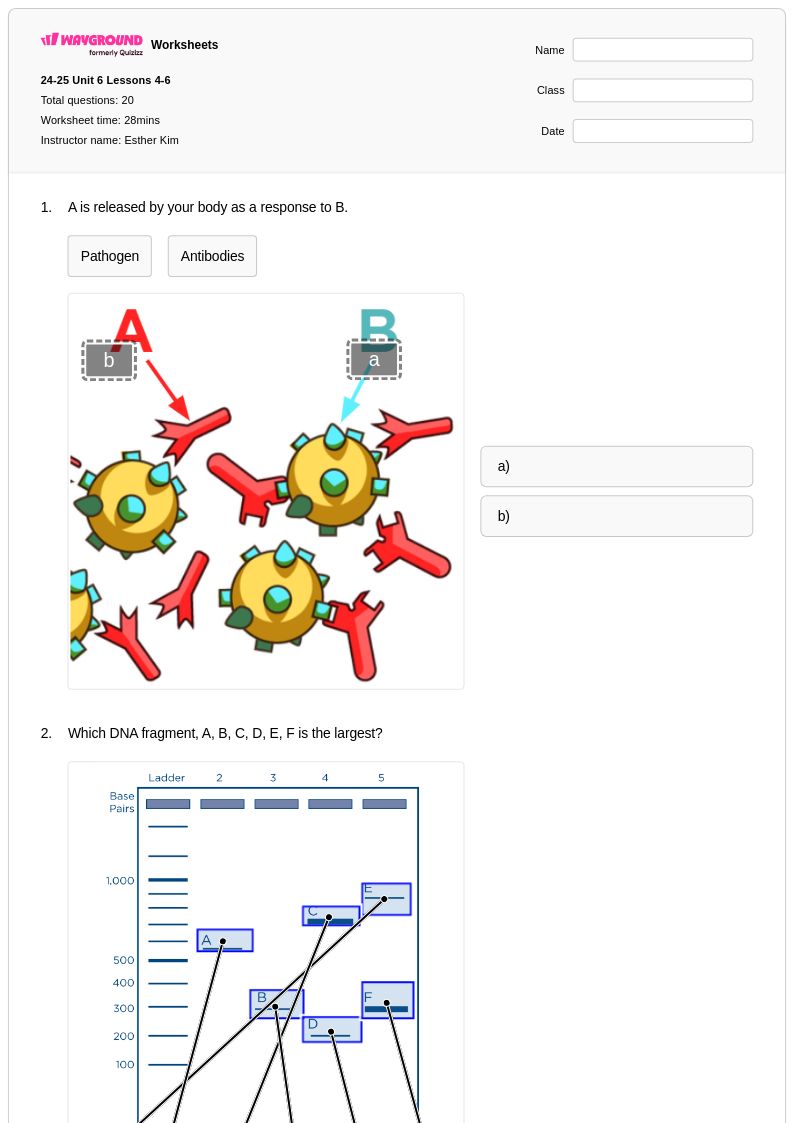
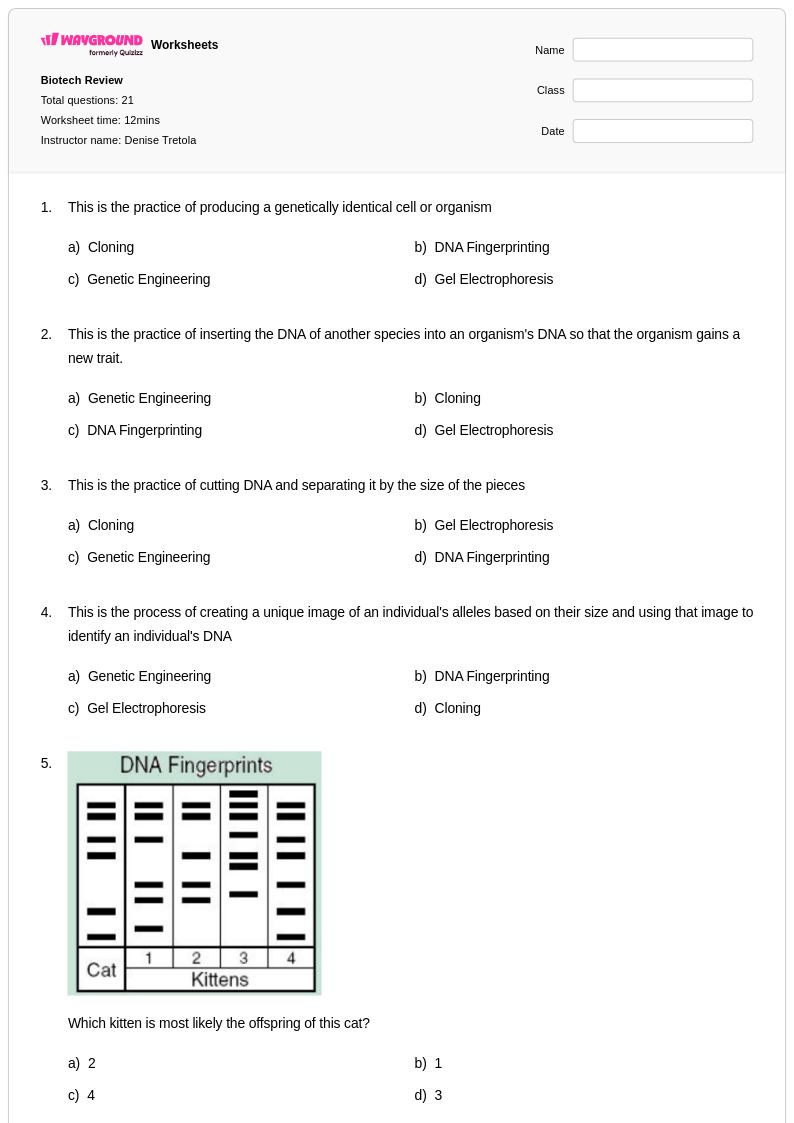
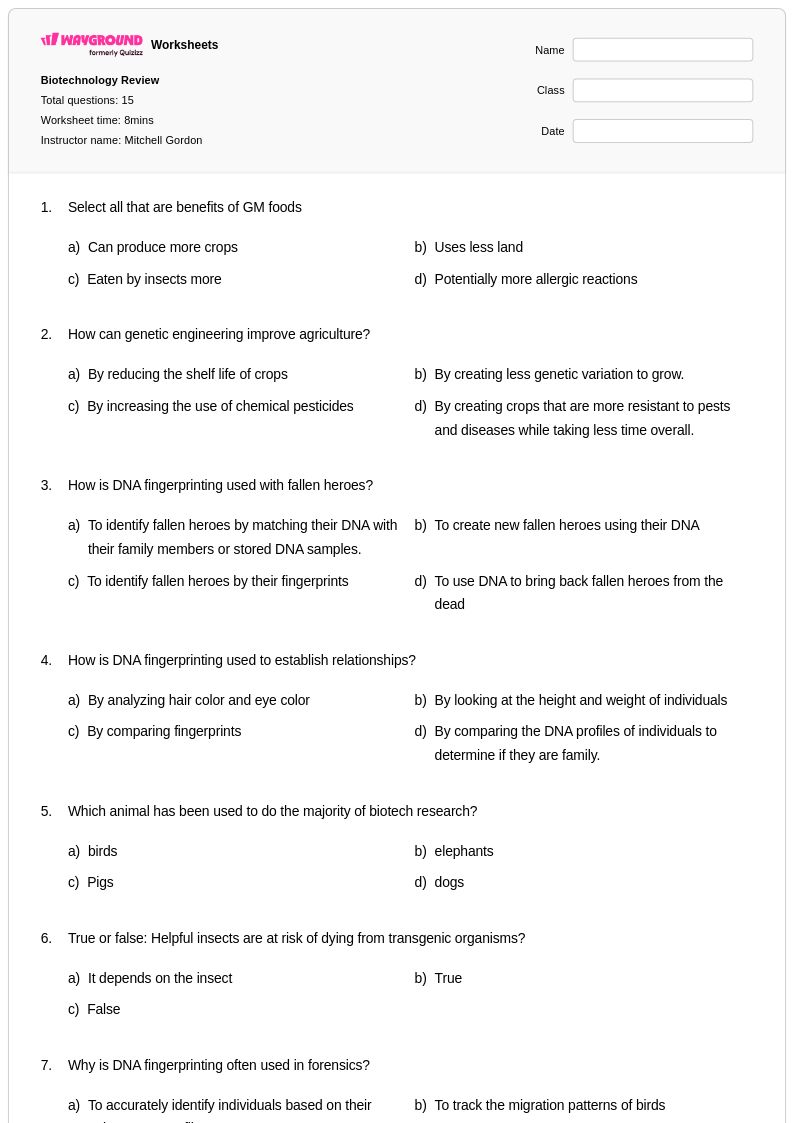
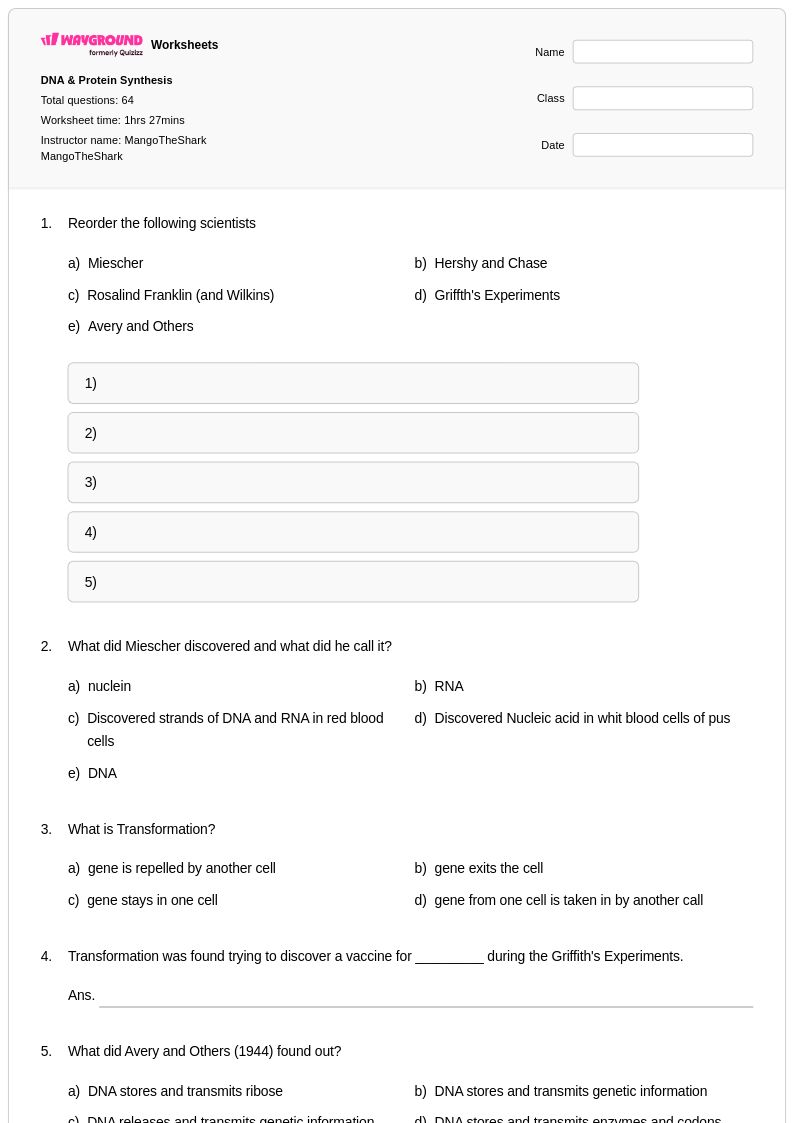
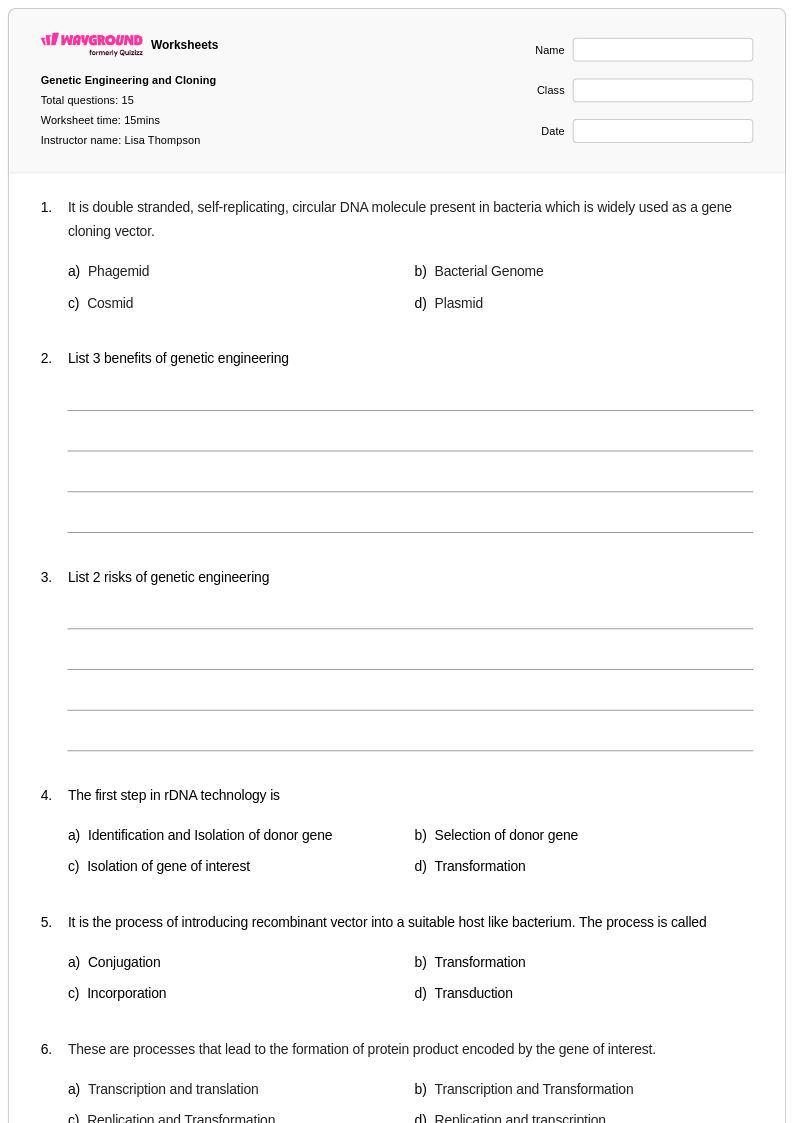
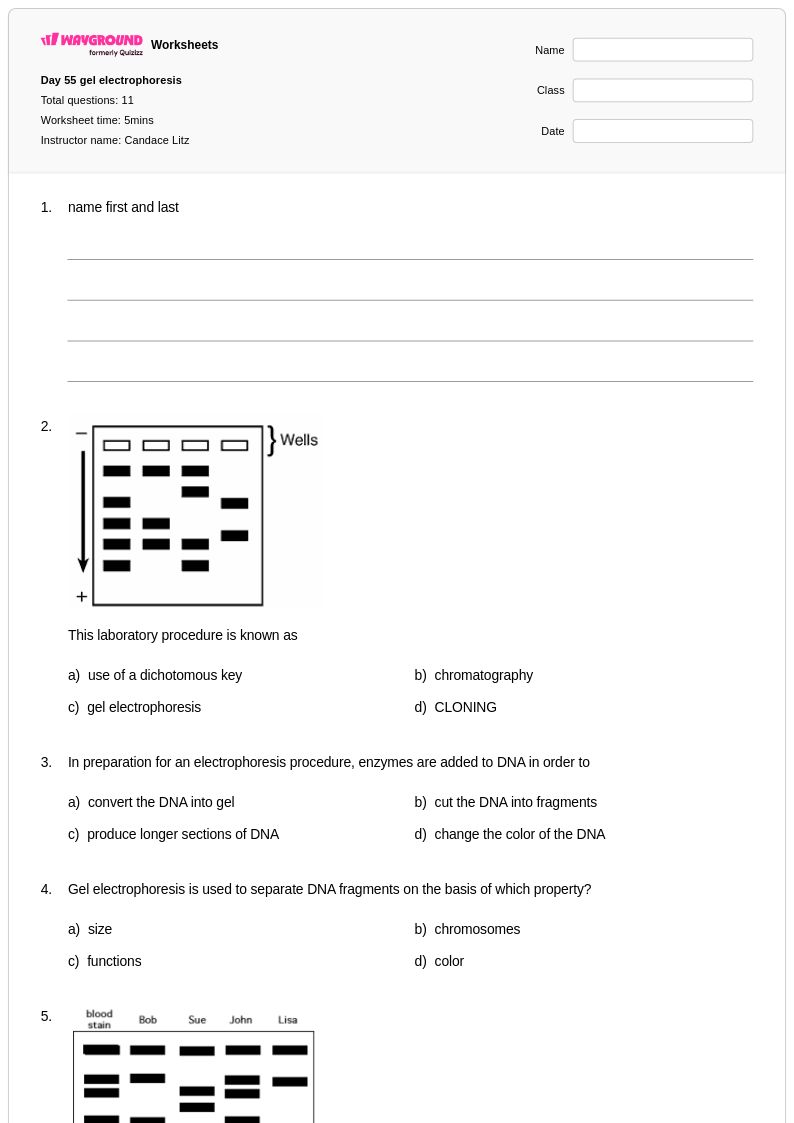
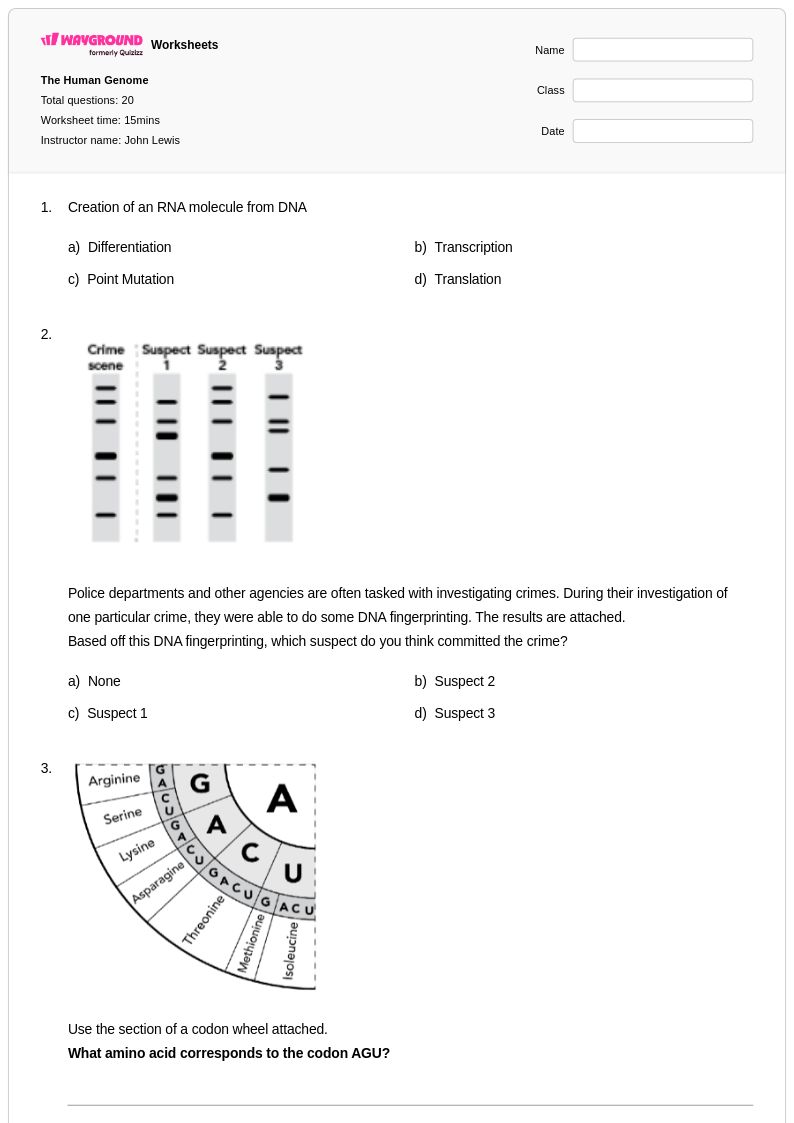
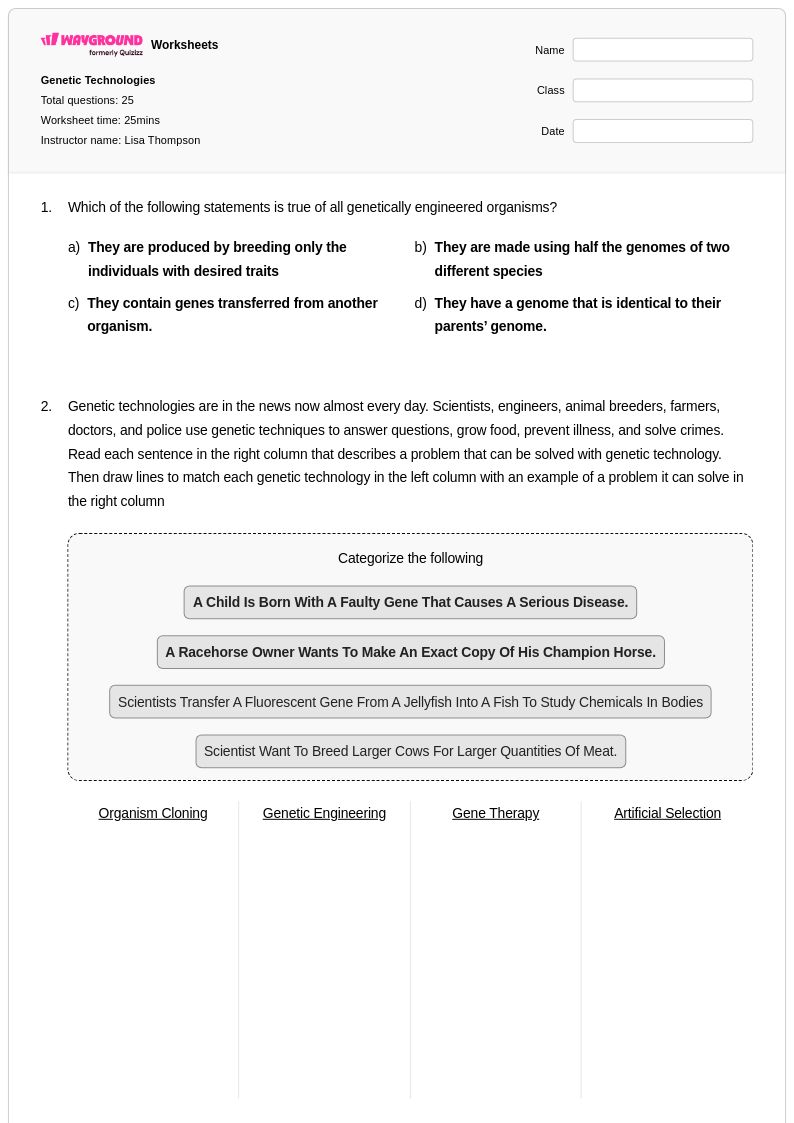
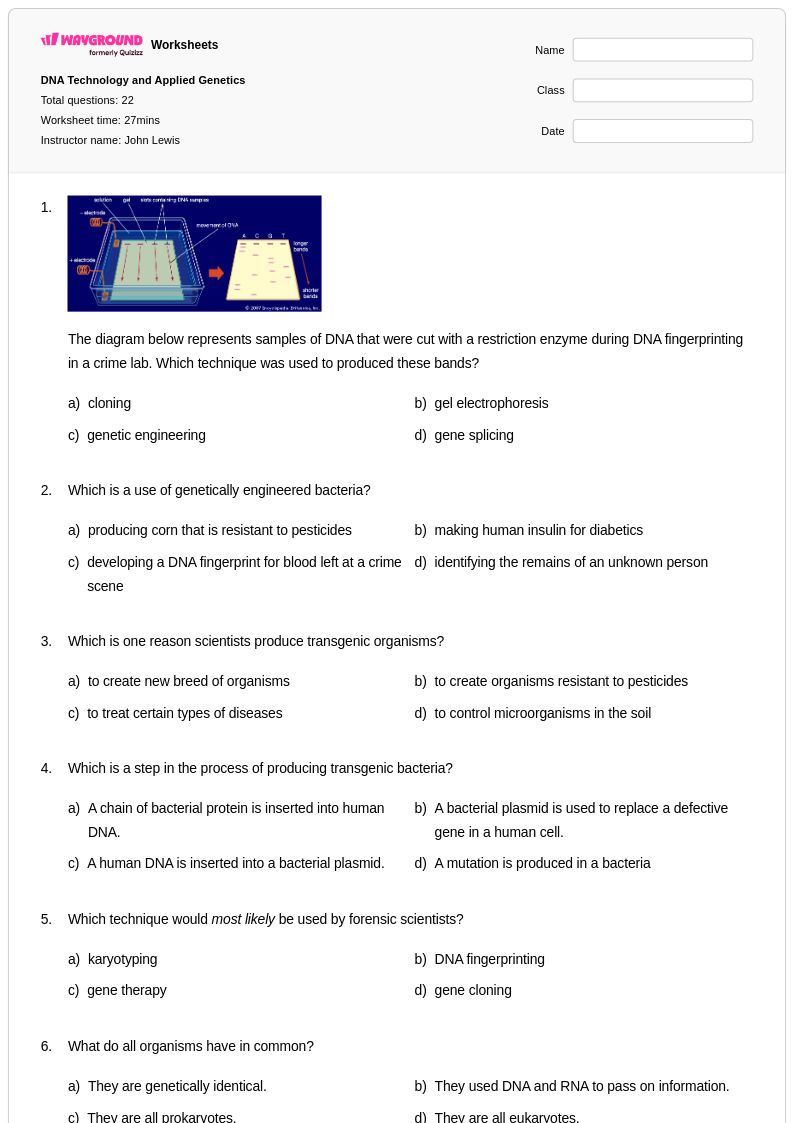
DNA fingerprinting worksheets for Class 10 biology students available through Wayground (formerly Quizizz) provide comprehensive coverage of this essential forensic and molecular biology technique. These educational resources guide students through the fundamental principles of DNA analysis, including restriction enzyme digestion, gel electrophoresis, and pattern interpretation used in criminal investigations, paternity testing, and evolutionary studies. The worksheet collections strengthen critical thinking skills as students analyze electrophoresis results, compare DNA banding patterns, and draw conclusions about genetic relationships between samples. Practice problems within these free printables challenge learners to calculate fragment sizes, interpret autoradiographs, and understand the statistical probability of DNA matches. Each worksheet comes with a detailed answer key that supports both independent study and classroom instruction, while pdf formats ensure easy distribution and accessibility for all students.
Wayground (formerly Quizizz) empowers biology educators with an extensive library of millions of teacher-created DNA fingerprinting resources that streamline lesson planning and enhance student engagement. The platform's robust search and filtering capabilities allow teachers to quickly locate worksheets aligned with specific curriculum standards and learning objectives, while differentiation tools enable customization for diverse learning needs and ability levels. Teachers can easily modify existing materials or create entirely new assessments, with flexible options for both digital classroom integration and traditional printable pdf formats. These comprehensive worksheet collections support effective remediation for struggling students who need additional practice with gel electrophoresis interpretation, while also providing enrichment opportunities for advanced learners to explore complex forensic case studies and biotechnology applications. The standardized formatting and consistent answer key structure across the platform facilitate efficient grading and enable teachers to focus more time on individualized instruction and skill development.
FAQs
How do I teach DNA fingerprinting in a biology class?
Start by grounding students in prerequisite concepts: DNA structure, the role of restriction enzymes in cutting DNA at specific recognition sequences, and the principles of gel electrophoresis as a separation technique. From there, walk students through how unique banding patterns emerge because no two individuals (except identical twins) share the same repeat sequences at every locus. Using case-based scenarios, such as a simulated forensic investigation or paternity analysis, helps students apply the technique to concrete problems rather than treating it as an abstract process.
What exercises help students practice reading and interpreting DNA fingerprint gels?
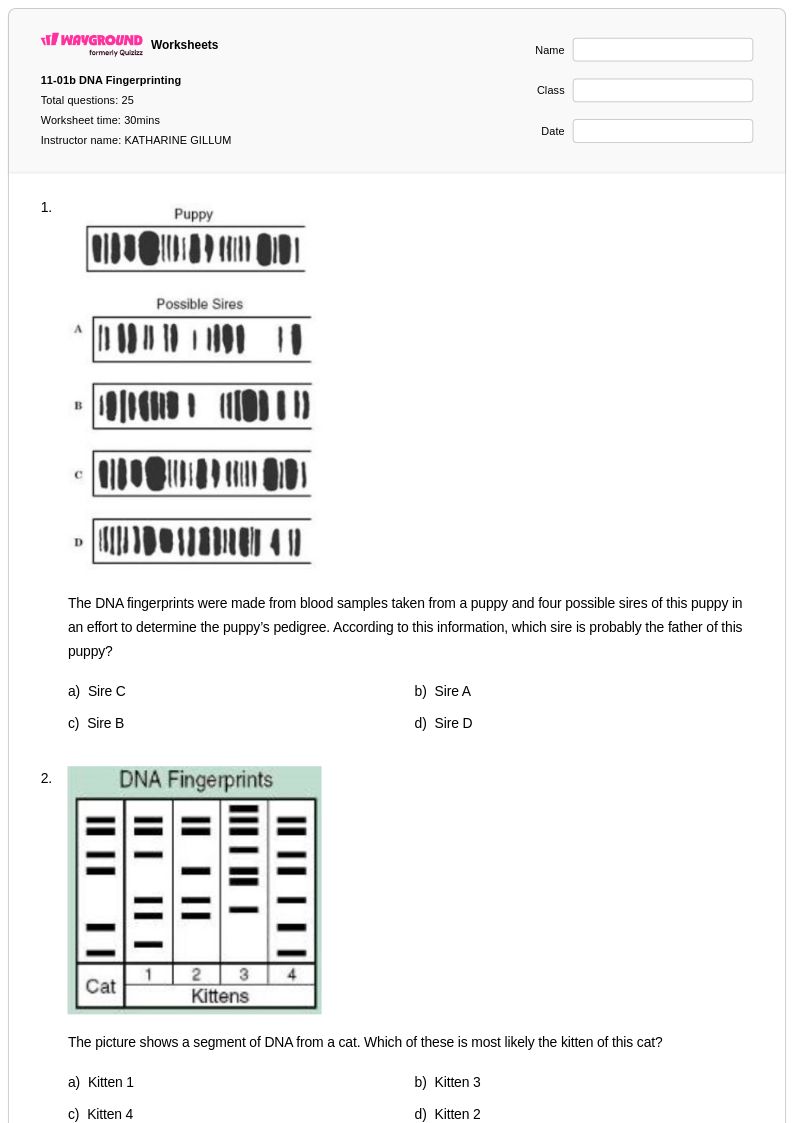
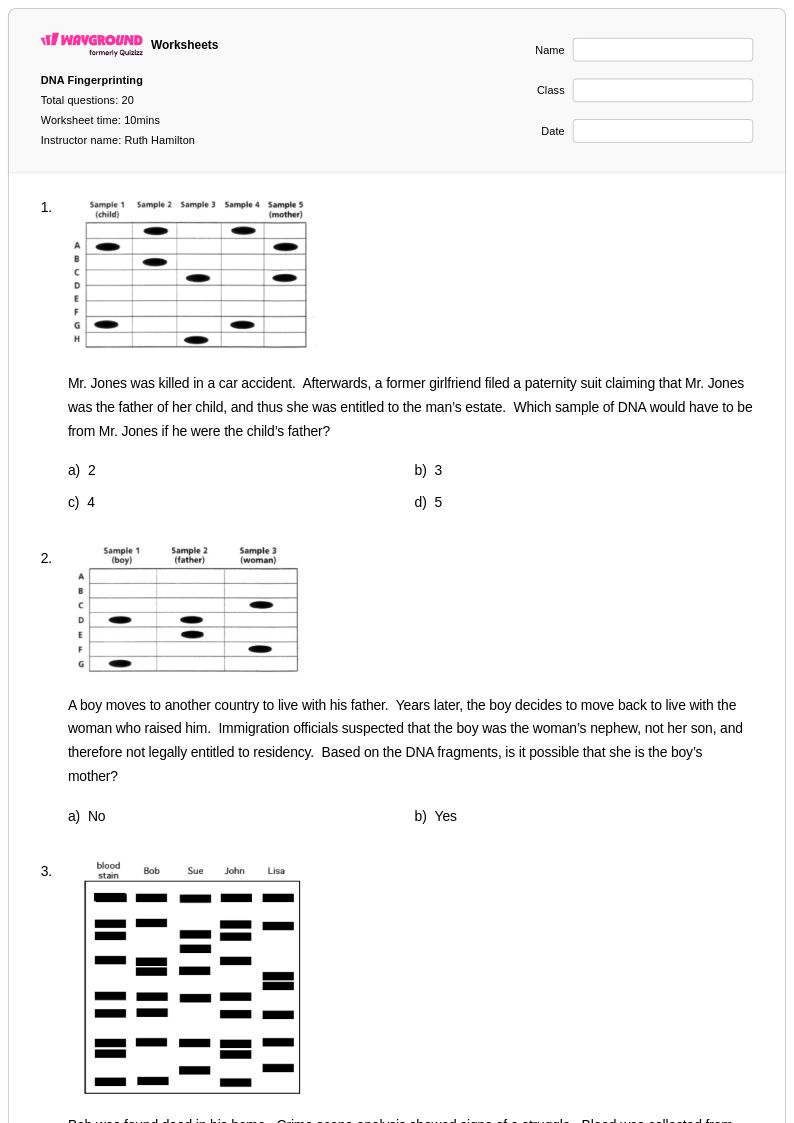
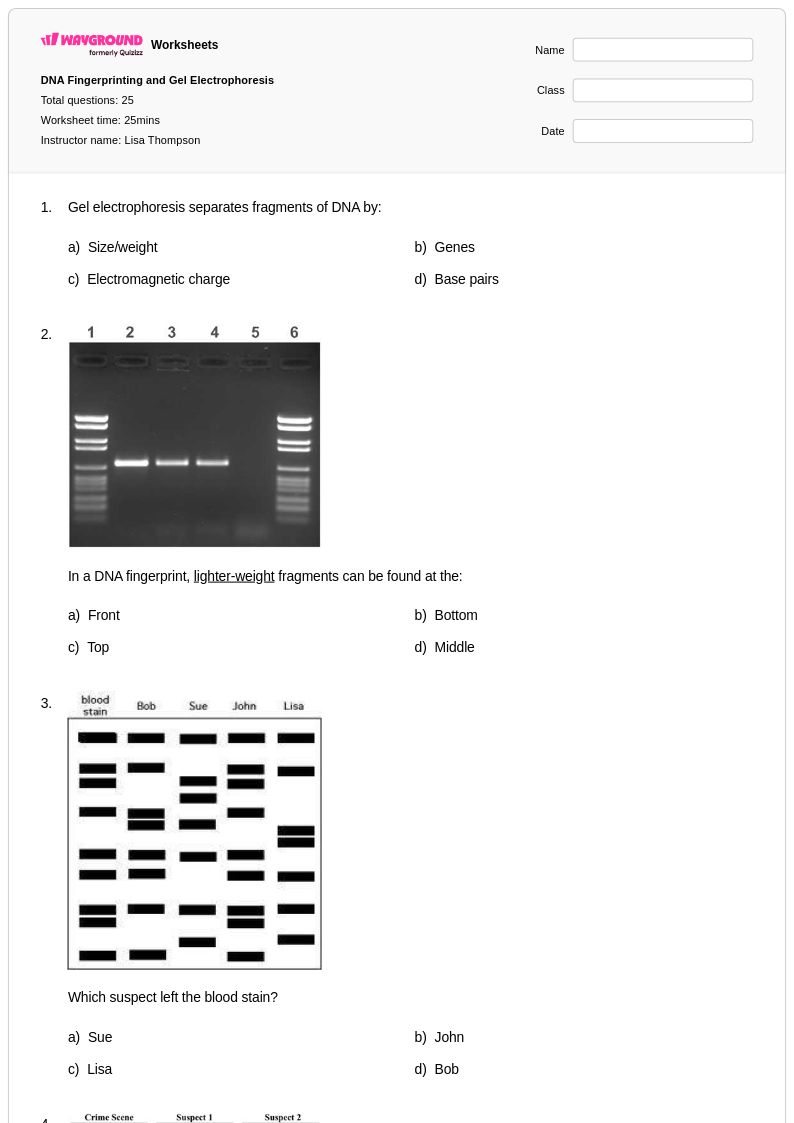
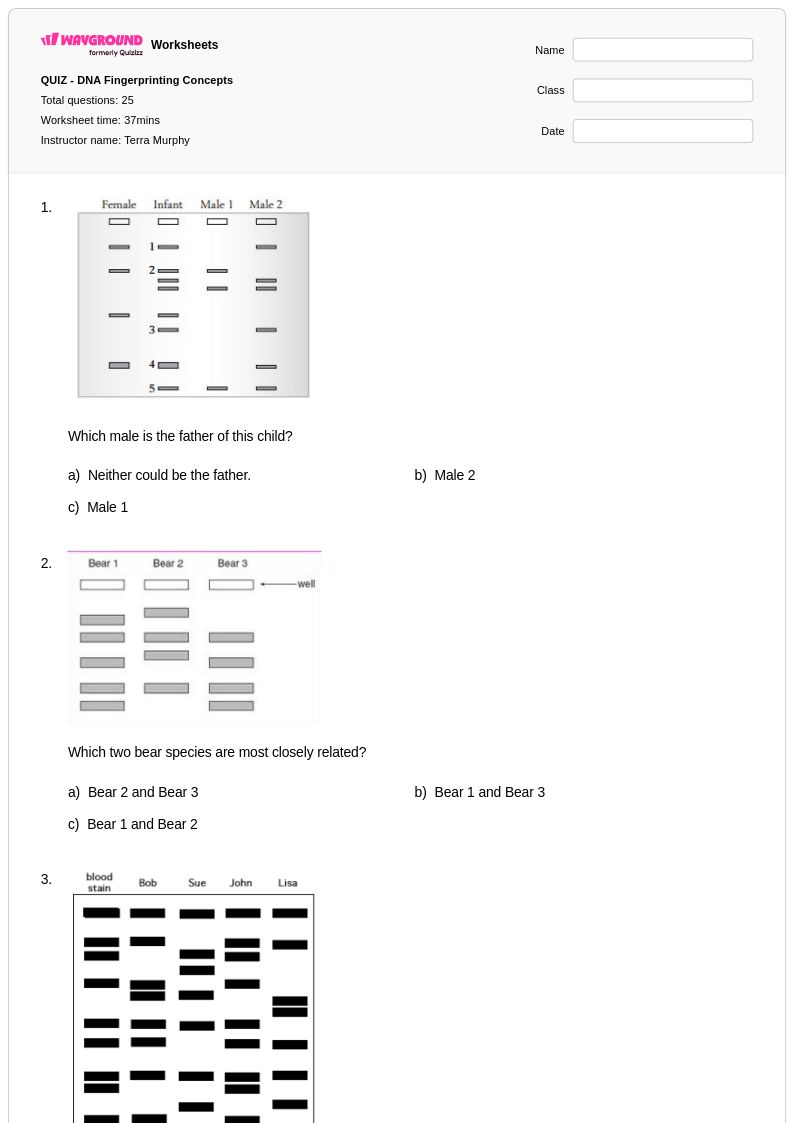
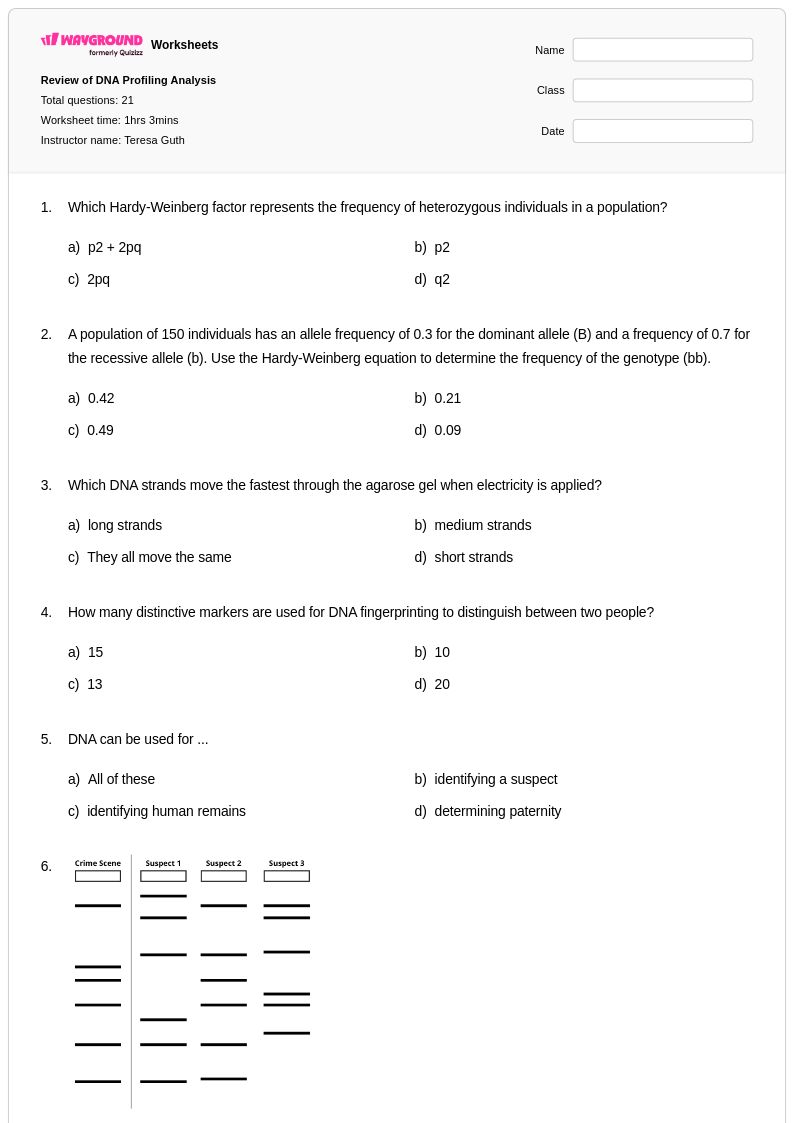
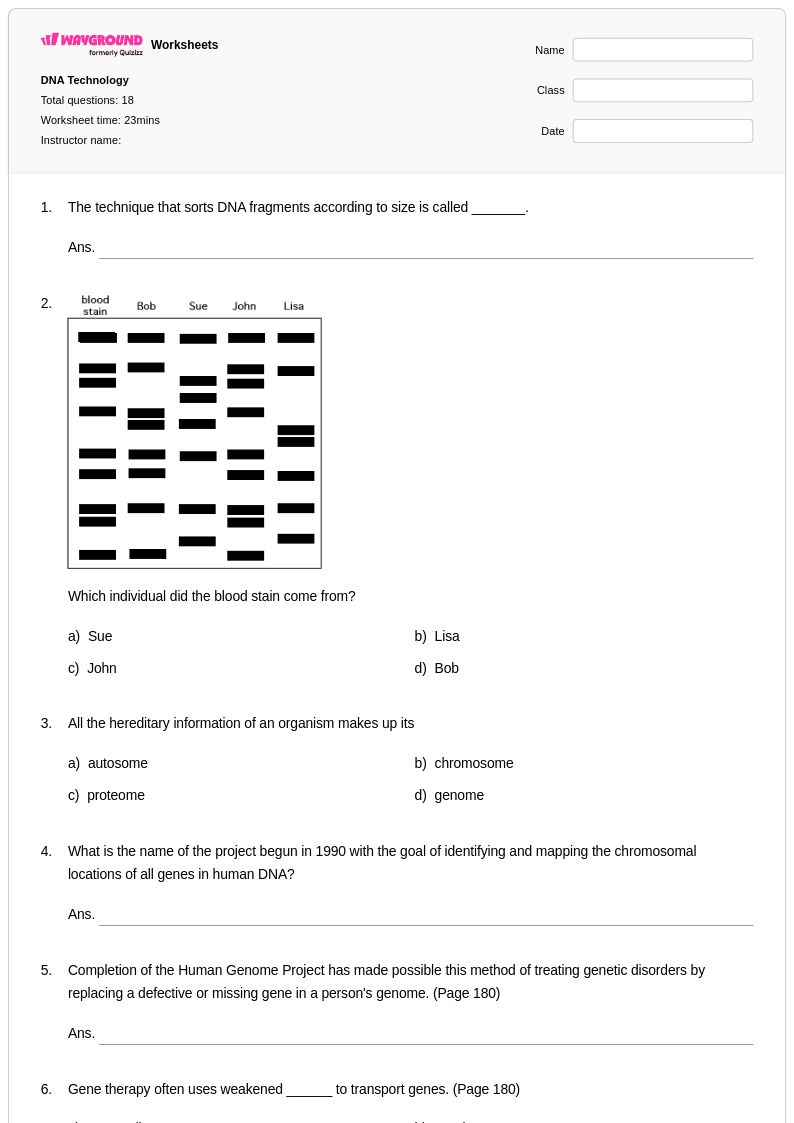
The most effective practice involves giving students gel diagrams with multiple lanes and asking them to match unknown samples to known reference profiles, which mirrors real forensic and paternity testing workflows. Students should also practice ranking band positions by molecular weight and explaining why smaller fragments migrate farther in an agarose gel. Worked examples that escalate in complexity, from two-person comparisons to multi-suspect crime scene problems, build the analytical confidence students need to interpret ambiguous results.
What mistakes do students commonly make when analyzing DNA banding patterns?
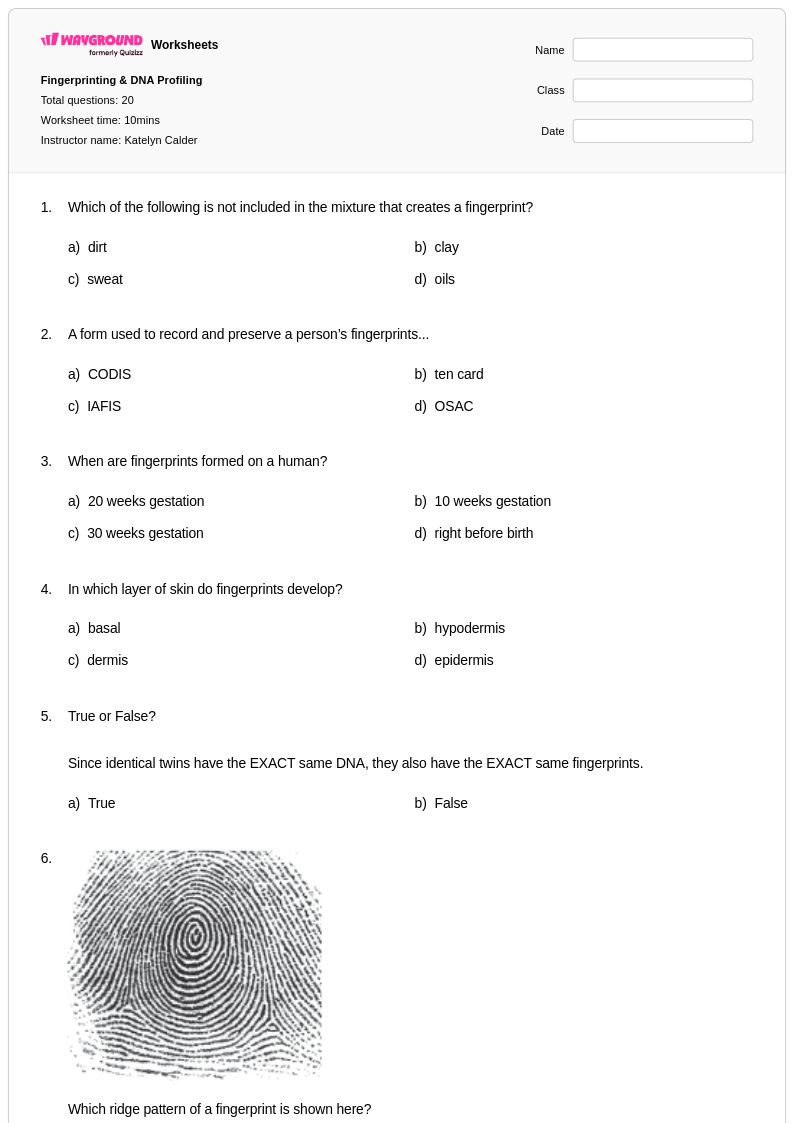
The most frequent error is confusing the direction of migration: students often assume larger fragments travel farther from the well, when in fact smaller fragments move farther because they pass more easily through the gel matrix. Students also frequently misidentify a match by focusing on only one or two bands rather than comparing the entire banding profile across all loci. A third common misconception is believing that DNA fingerprints are literally fingerprint images rather than pattern profiles derived from restriction fragment length polymorphisms.
How can I differentiate DNA fingerprinting instruction for students at different ability levels?
For students who need additional support, begin with single-locus comparisons and provide a reference ladder so they can practice matching band positions before tackling multi-locus profiles. Advanced students can be challenged with incomplete or degraded sample scenarios that require probabilistic reasoning about whether a partial match constitutes sufficient evidence. On Wayground, teachers can apply accommodations such as reduced answer choices and read-aloud support to individual students, allowing the same worksheet to serve diverse learners simultaneously without singling anyone out.
How do I use DNA fingerprinting worksheets from Wayground in my classroom?
Wayground's DNA fingerprinting worksheets are available as printable PDFs for traditional classroom and lab use, as well as in digital formats that can be assigned online or hosted as a quiz directly on the Wayground platform. The printable versions work well as lab supplements or homework following a lecture on gel electrophoresis, while the digital format supports remote learning or in-class technology-integrated sessions. Each worksheet includes a complete answer key, so students can self-check their gel interpretations and teachers can use the materials for formative assessment with minimal preparation time.
How does DNA fingerprinting connect to real-world applications I can use to motivate students?
DNA fingerprinting is the technology behind forensic crime scene analysis, paternity and ancestry testing, and the identification of disaster victims, contexts that immediately resonate with students because they appear in news coverage and popular media. Framing a worksheet problem as a criminal investigation or a disputed parentage case gives students a reason to care about whether their gel interpretation is correct. This real-world grounding also helps students understand why precision in reading banding patterns matters, since an error in a forensic context can have serious legal consequences.