
Free Printable Defense Mechanisms Worksheets for Class 10
Explore Wayground's comprehensive Class 10 defense mechanisms worksheets featuring free printables and practice problems with answer keys to help students master biological protection strategies in organisms.
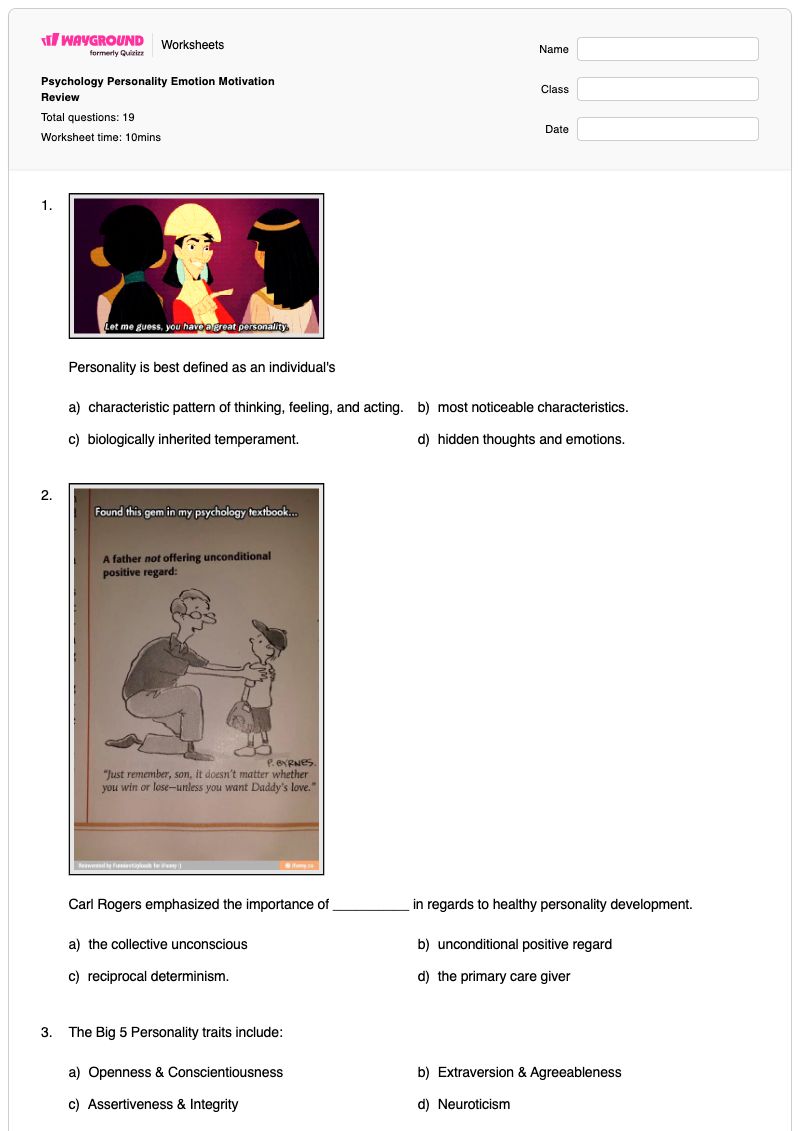
Download any worksheet with a free account
Free PDF downloads, saved to your library.
Keep exploring
Explore printable Defense Mechanisms worksheets for Class 10
Defense mechanisms worksheets for Class 10 biology students available through Wayground (formerly Quizizz) provide comprehensive coverage of how organisms protect themselves from predators, pathogens, and environmental threats. These expertly designed resources strengthen students' understanding of physical defenses like shells, spines, and camouflage, as well as chemical defenses including toxins, warning coloration, and pheromones. The worksheets feature detailed practice problems that challenge students to analyze behavioral adaptations such as mimicry, flocking, and territorial behaviors, while reinforcing core concepts through varied question formats. Each worksheet collection includes comprehensive answer keys and is available as free printables in convenient pdf format, making them ideal for both classroom instruction and independent study sessions.
Wayground (formerly Quizizz) empowers biology educators with millions of teacher-created defense mechanisms resources that streamline lesson planning and enhance student learning outcomes. The platform's robust search and filtering capabilities allow teachers to quickly locate worksheets aligned with specific curriculum standards and learning objectives, while built-in differentiation tools enable customization for diverse learning needs and ability levels. These versatile materials are available in both printable pdf format and interactive digital versions, providing flexibility for traditional classroom settings, hybrid learning environments, and remote instruction. Teachers can efficiently implement these resources for skill practice, targeted remediation of challenging concepts, and enrichment activities that deepen student understanding of evolutionary adaptations and ecological relationships within defense mechanism studies.
Frequently asked questions
Start by categorizing defense mechanisms into behavioral, physiological, and structural types, then use concrete examples students can visualize — camouflage in stick insects, chemical secretions in skunks, or structural spines in sea urchins. Connecting each mechanism to its evolutionary advantage helps students understand why natural selection favors these traits. Moving from passive defenses like protective coloration to active responses like alarm calls gives students a clear conceptual framework before they tackle more complex species interactions.