Free Printable Urinary System Worksheets for Class 10
Class 10 Biology students can explore the urinary system with our comprehensive collection of free worksheets, featuring printable PDFs with practice problems and answer keys to master kidney function and waste elimination.
Explore printable Urinary System worksheets for Class 10
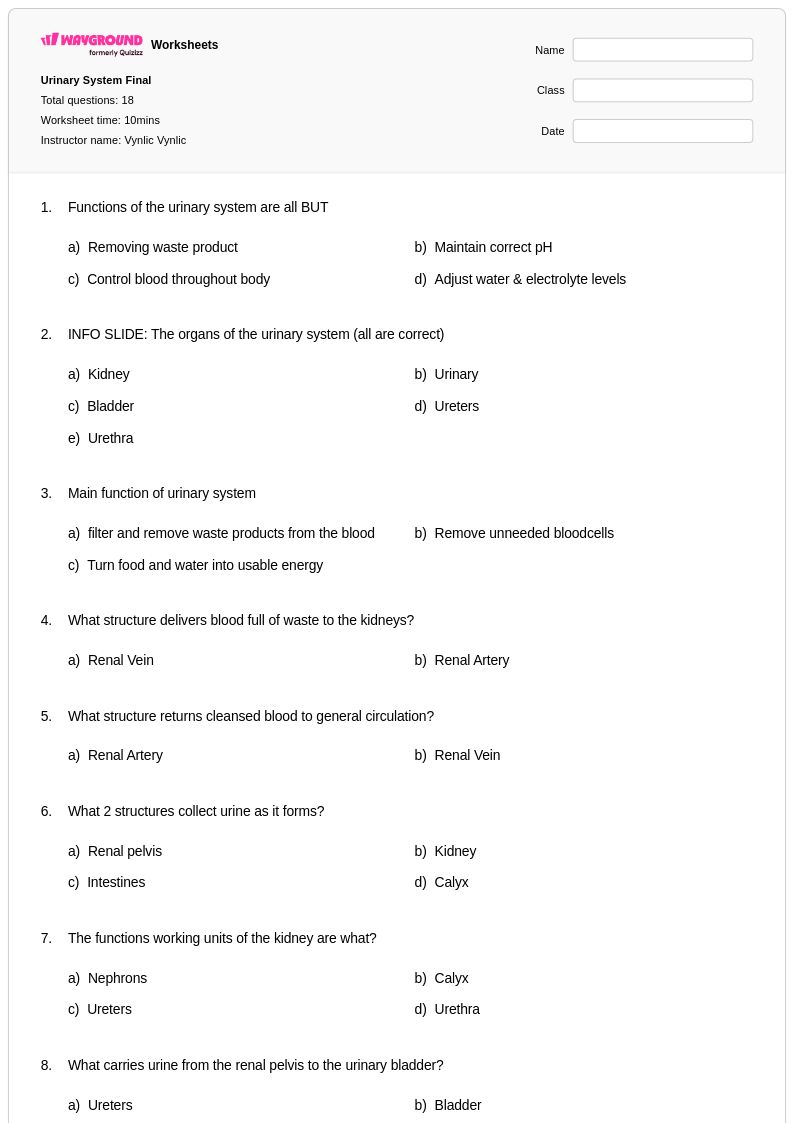
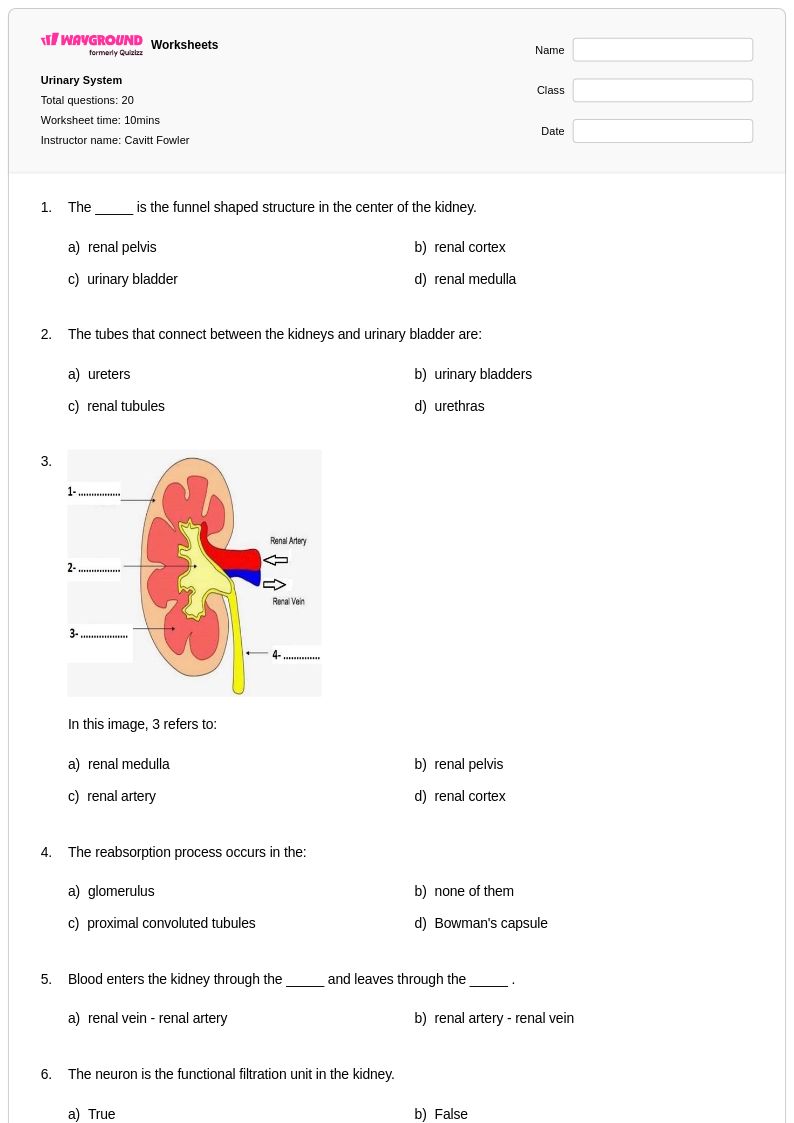
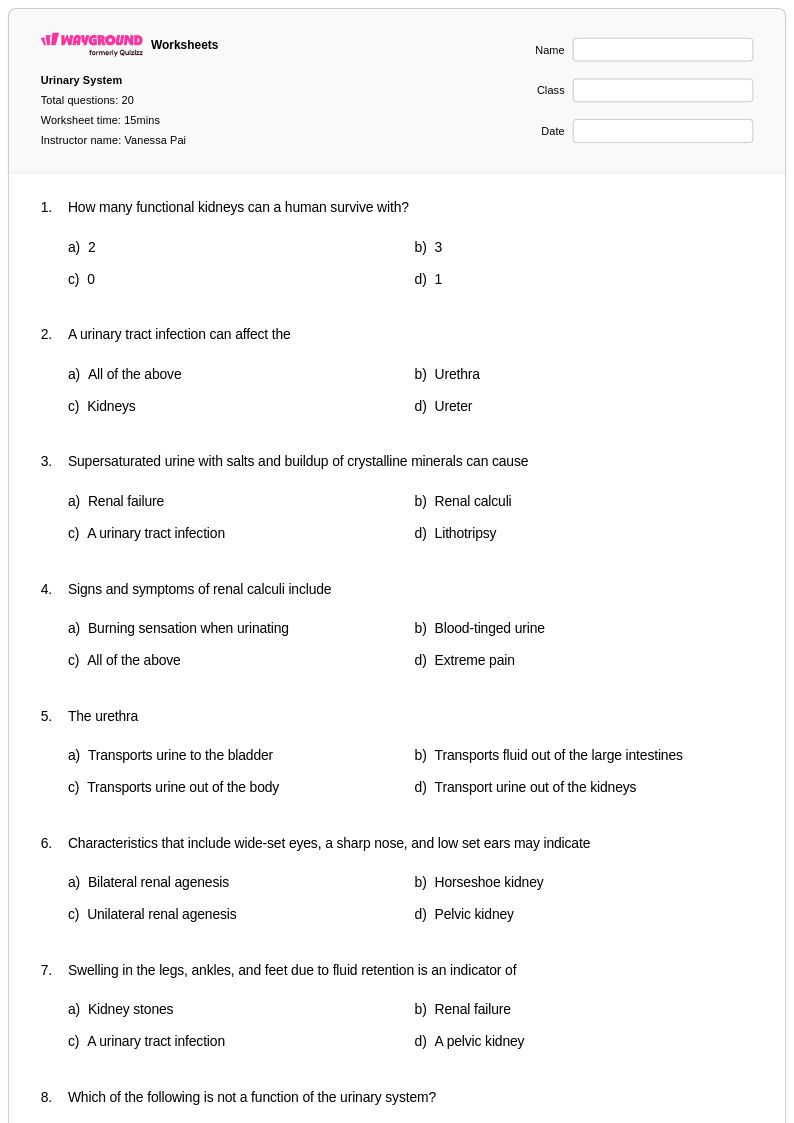
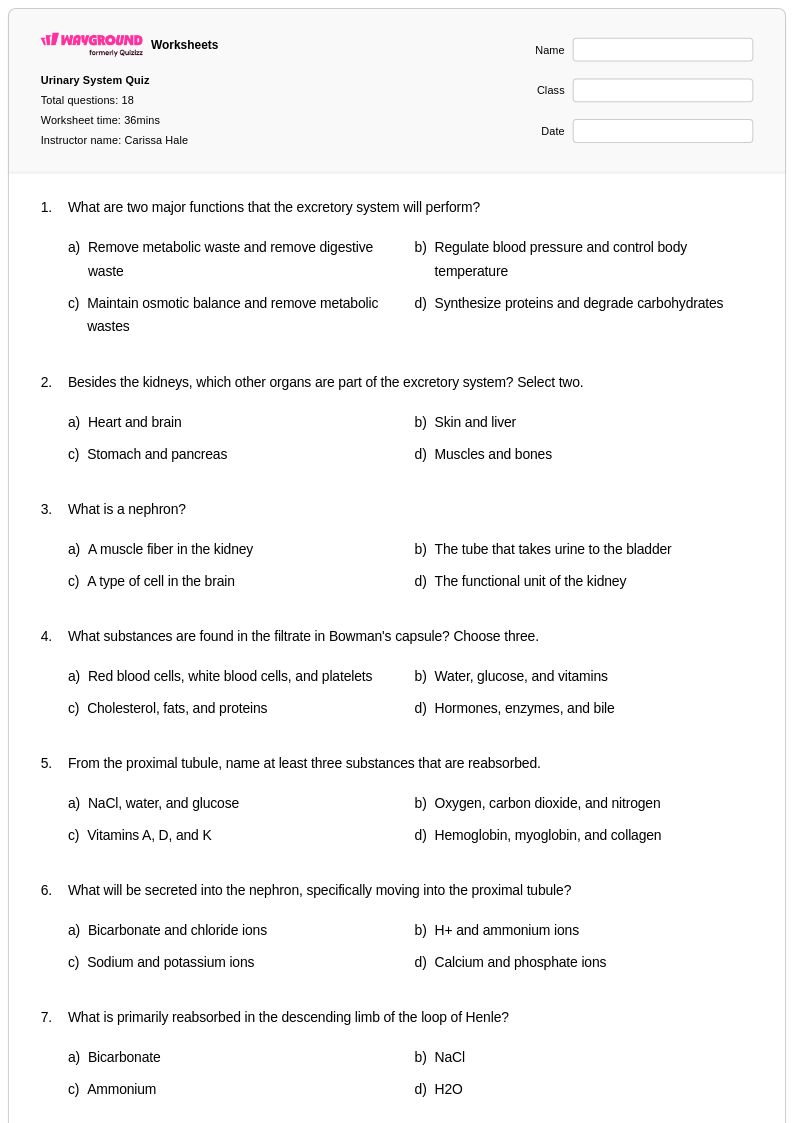
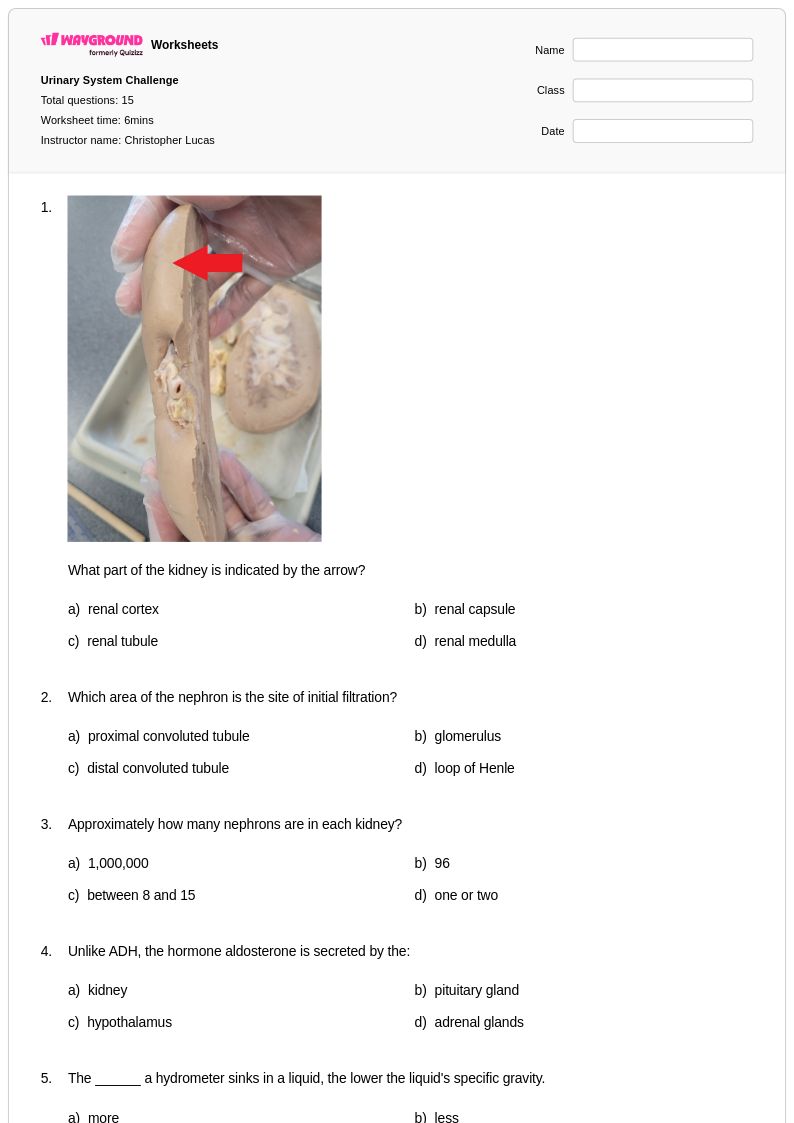
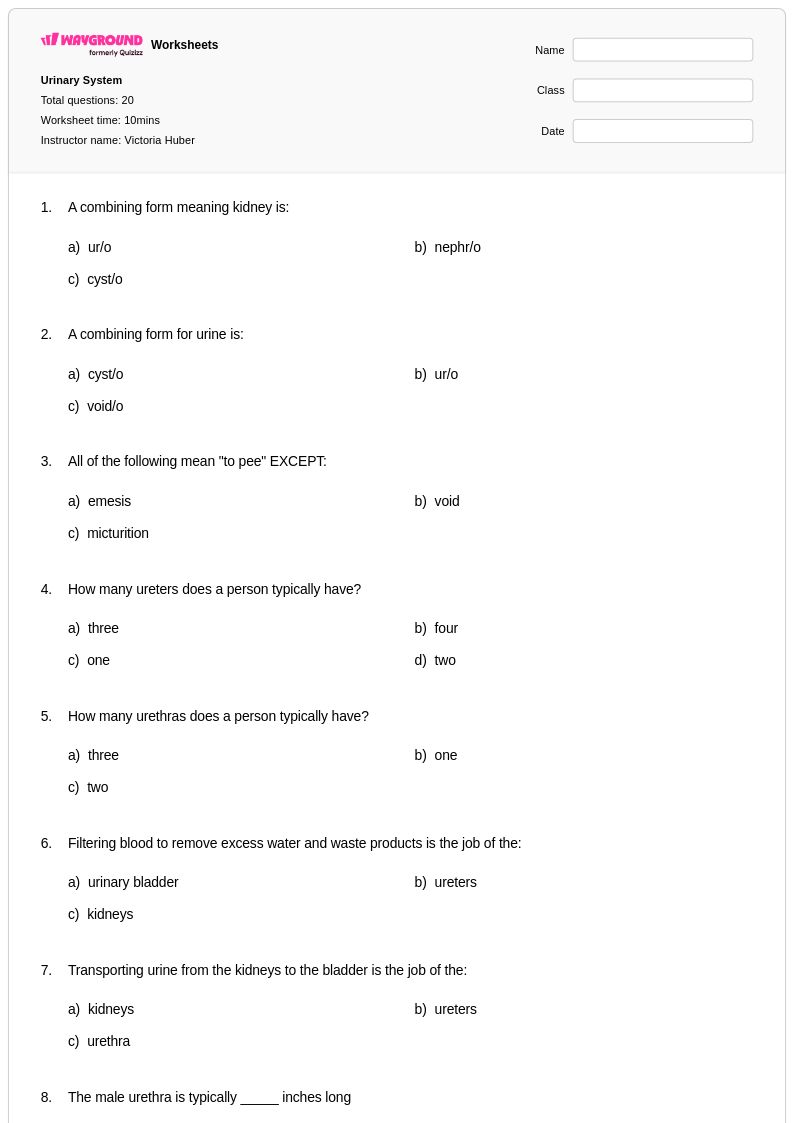
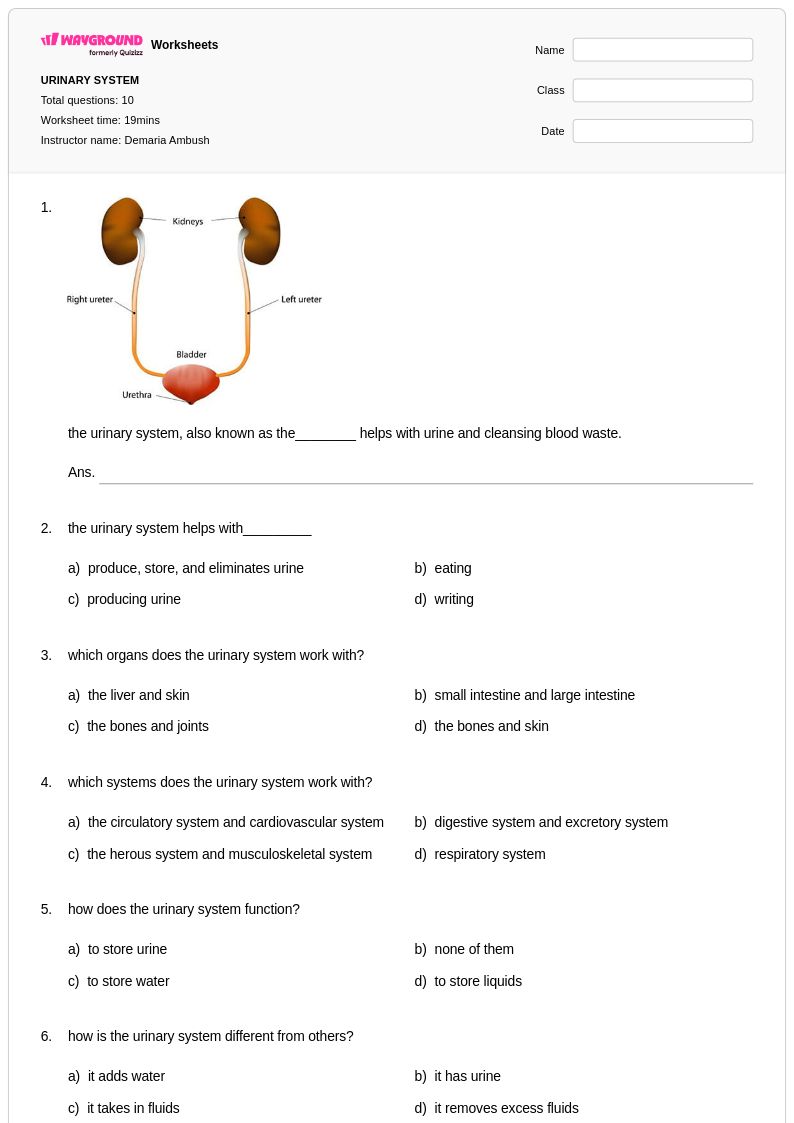
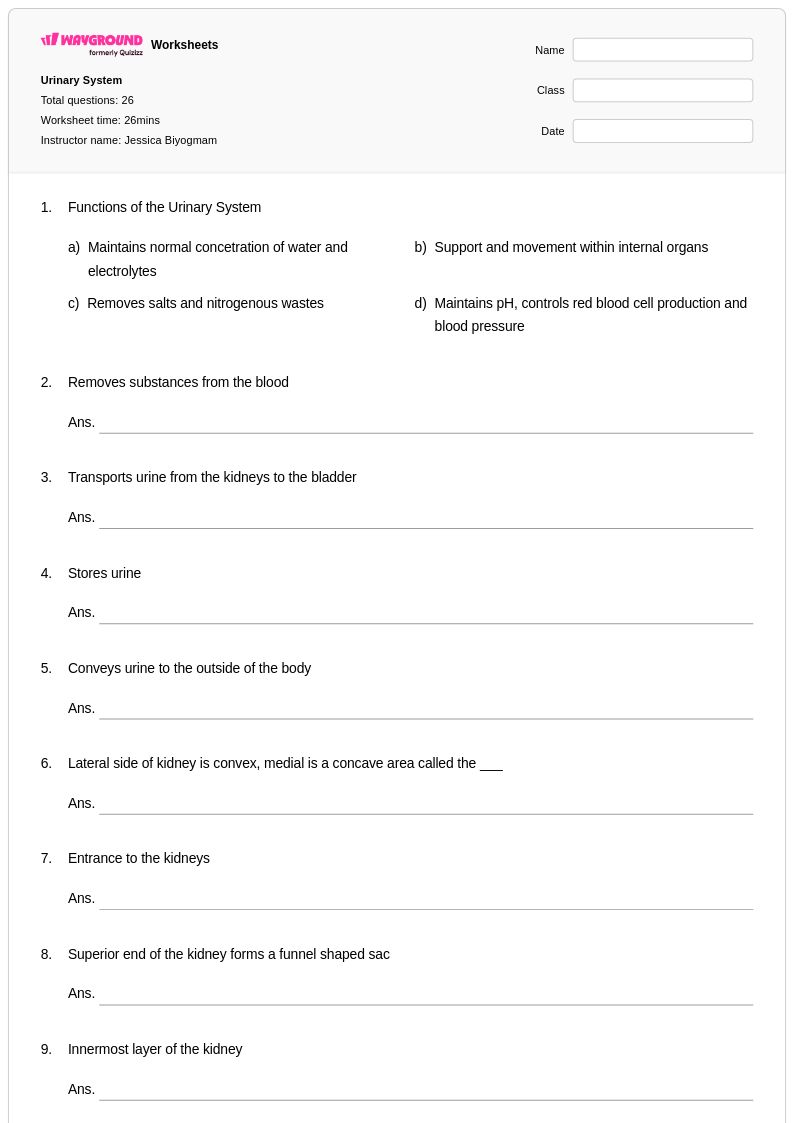
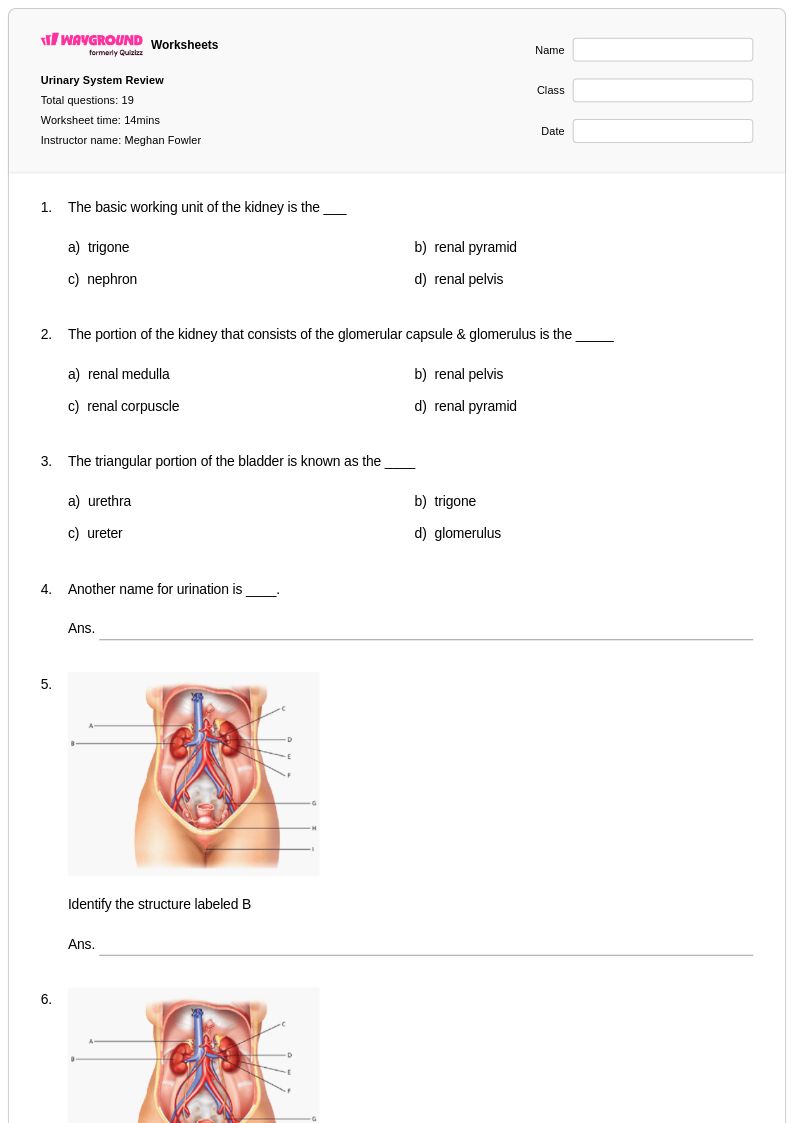
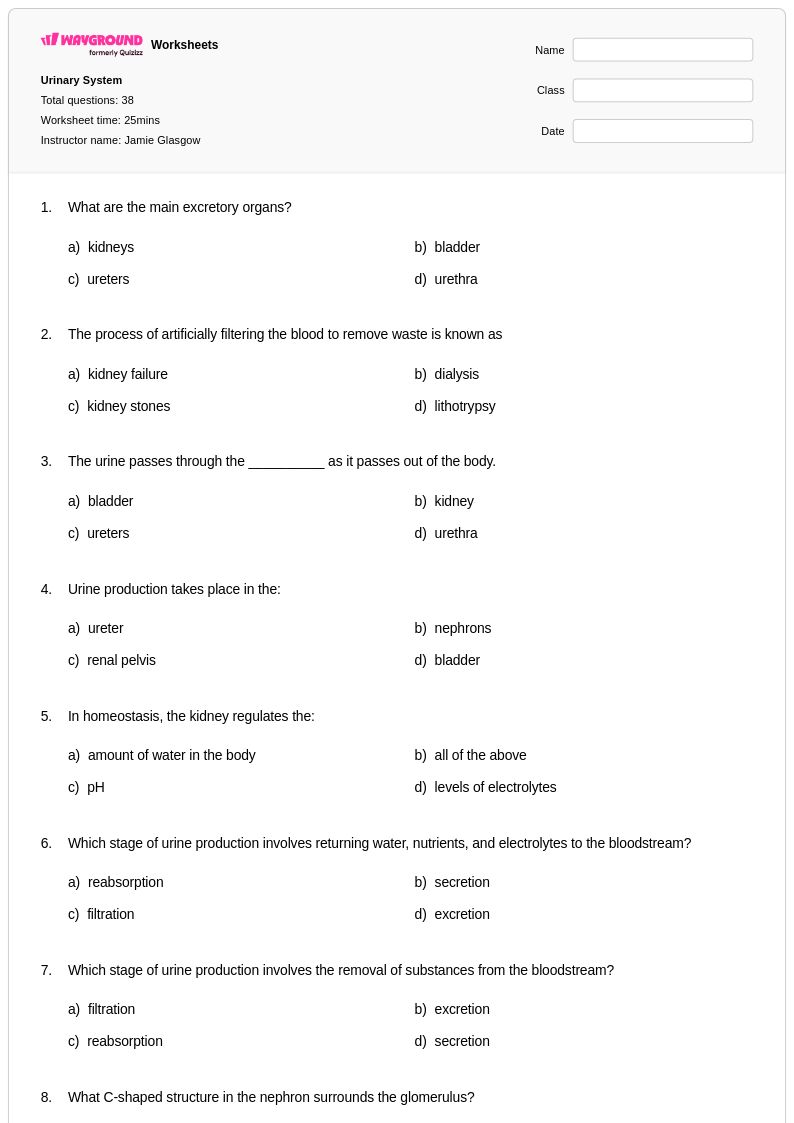
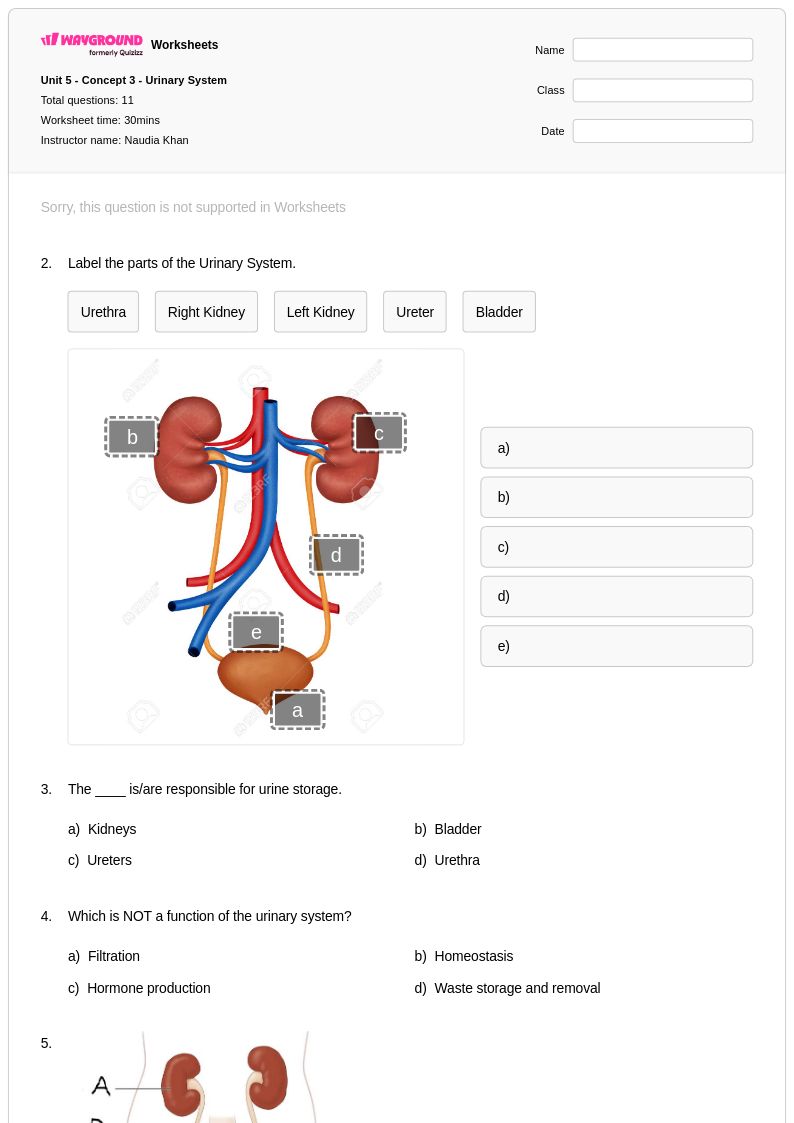
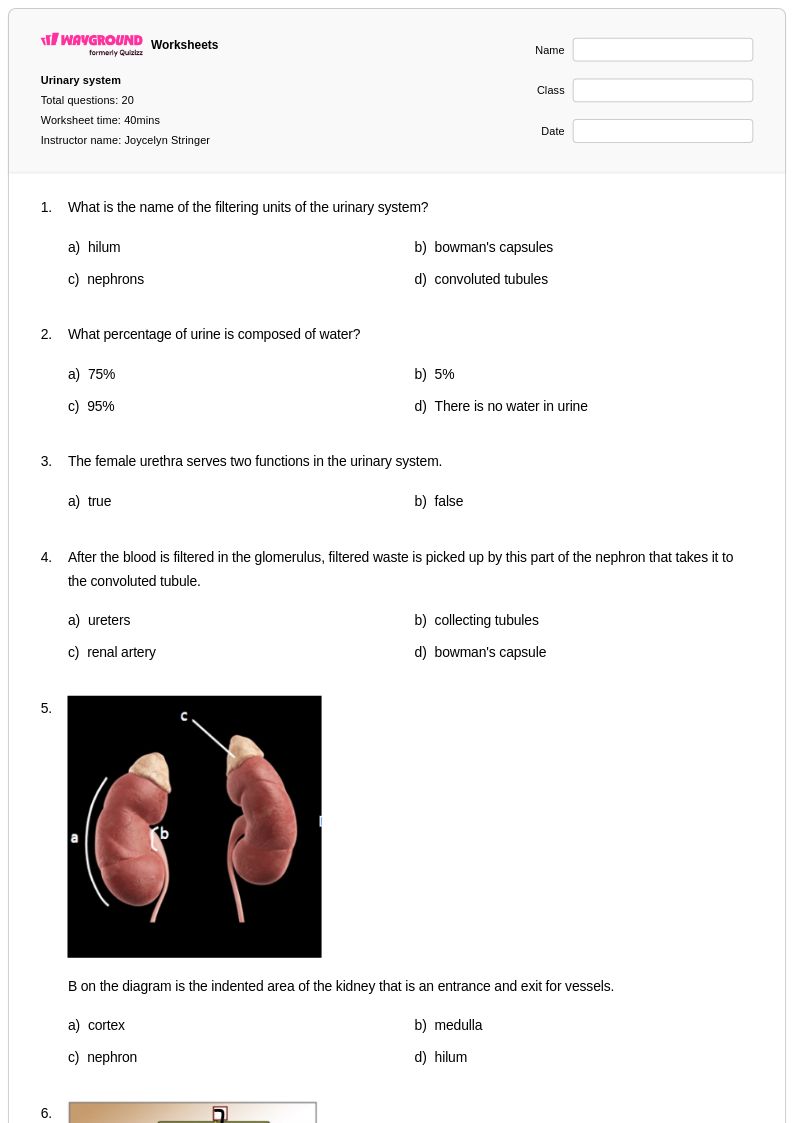
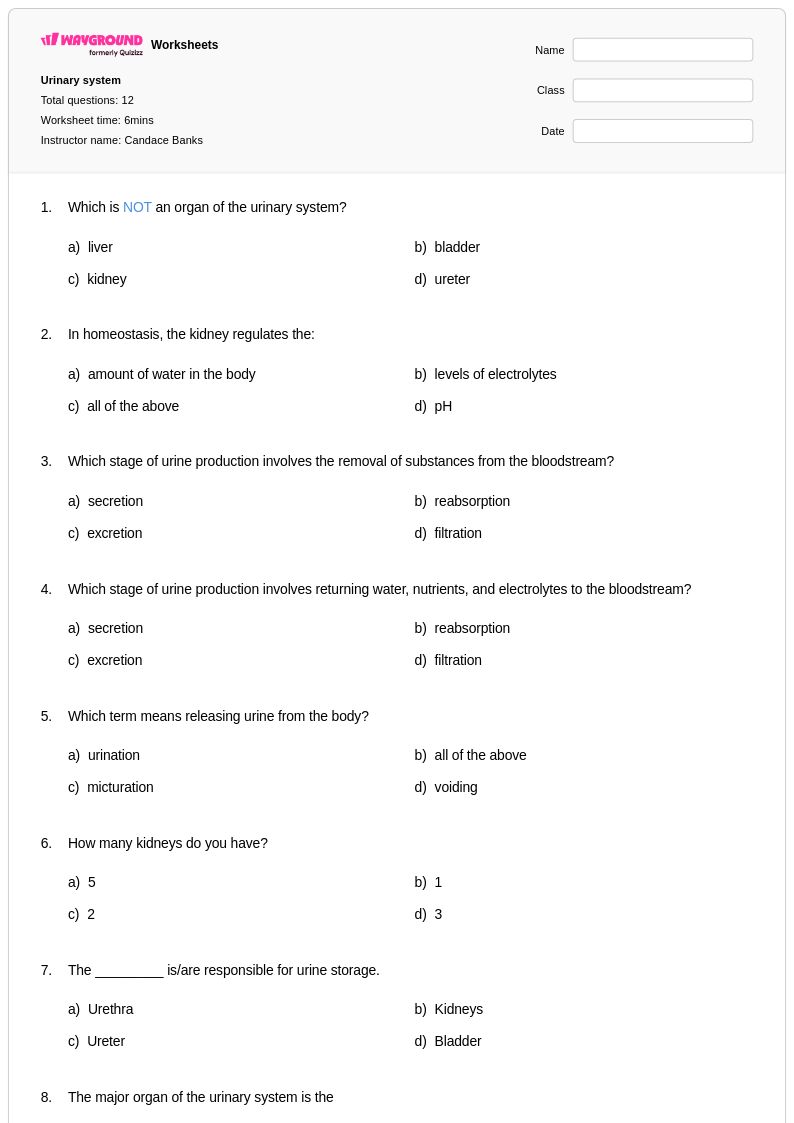
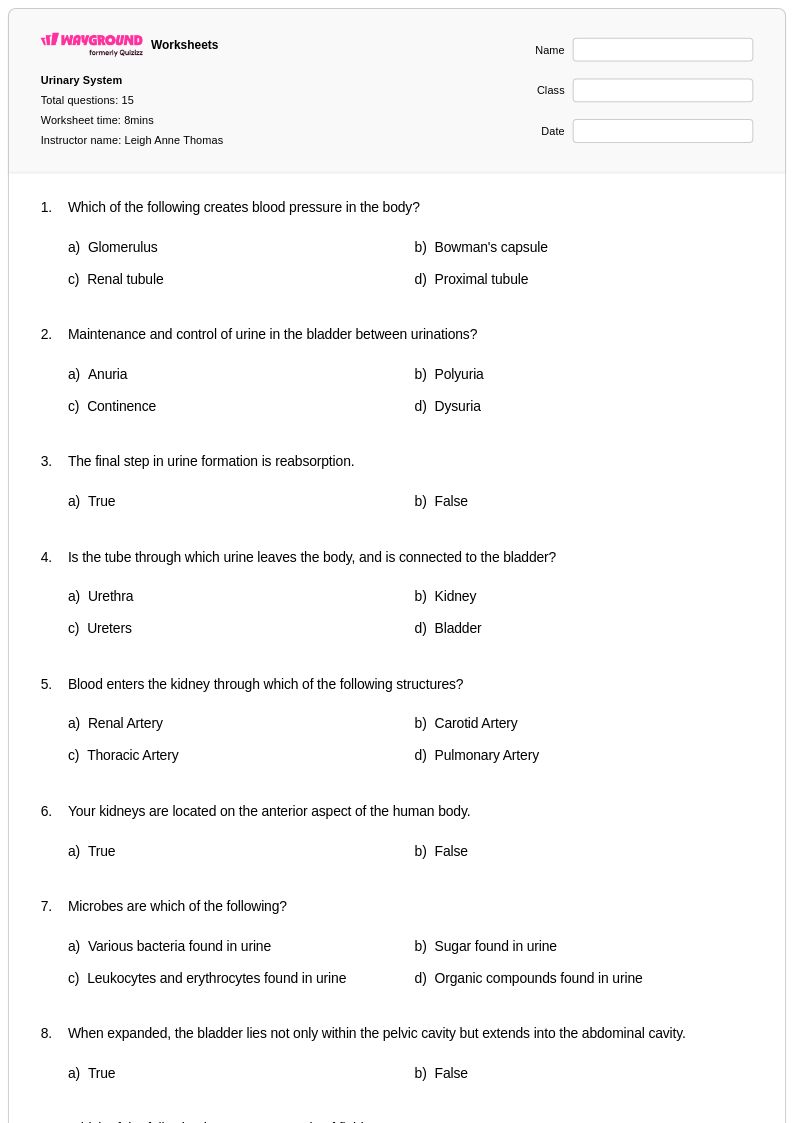
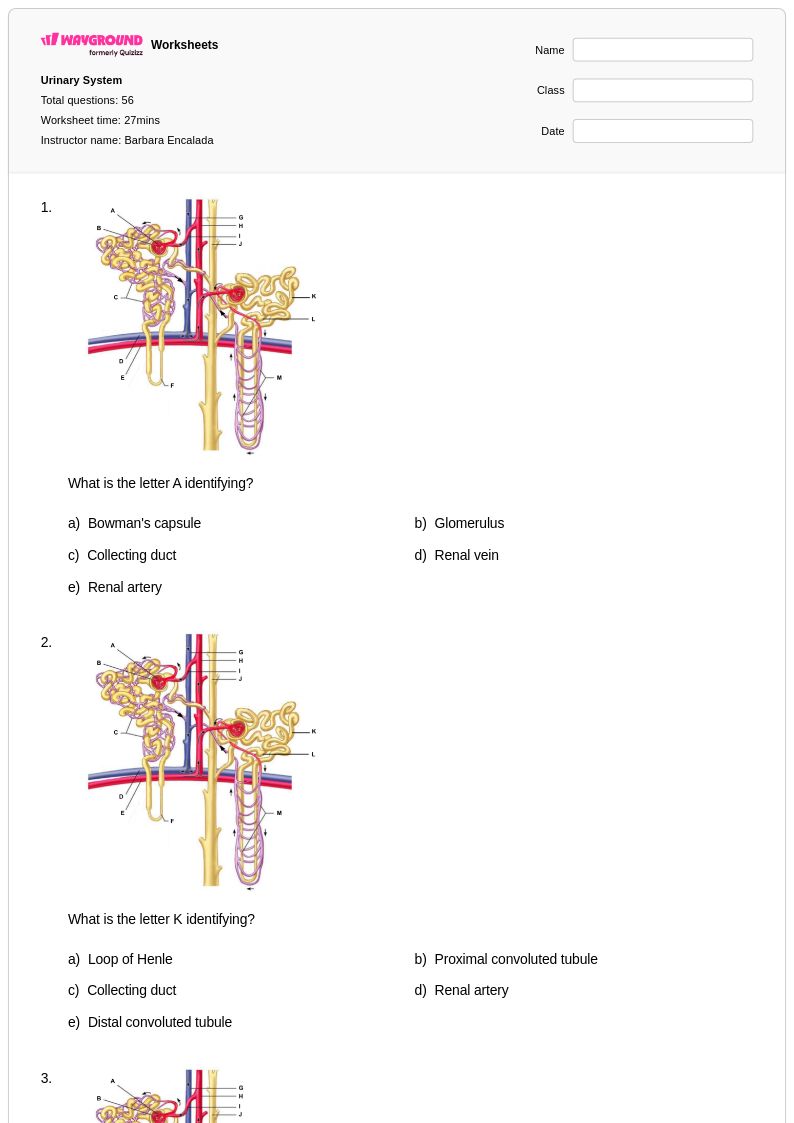
Class 10 urinary system worksheets from Wayground (formerly Quizizz) provide comprehensive coverage of kidney function, nephron structure, urine formation, and waste elimination processes that are essential to advanced high school biology understanding. These educational resources strengthen students' ability to analyze complex physiological mechanisms, including filtration, reabsorption, and secretion within the nephron, while building mastery of anatomical terminology and system interactions. The collection includes practice problems that challenge learners to trace the pathway of urine formation, identify key structures like the glomerulus and collecting duct, and explain how the urinary system maintains homeostasis through water and electrolyte balance. Each worksheet comes with a detailed answer key and is available as a free printable pdf, making it easy for educators to assess student comprehension of these intricate biological processes.
Wayground (formerly Quizizz) empowers teachers with millions of educator-created urinary system resources that feature robust search and filtering capabilities, enabling quick discovery of materials aligned to specific curriculum standards and learning objectives. The platform's differentiation tools allow instructors to customize worksheets for varying skill levels within the same Class 10 classroom, while flexible formatting options provide both printable pdf versions for traditional assignments and digital formats for interactive learning experiences. These comprehensive features streamline lesson planning by offering ready-to-use materials for initial instruction, targeted remediation for struggling learners, and enrichment opportunities for advanced students, ensuring that all learners can develop strong foundational knowledge of urinary system anatomy and physiology through consistent skill practice and assessment.
FAQs
How do I teach the urinary system to high school biology students?
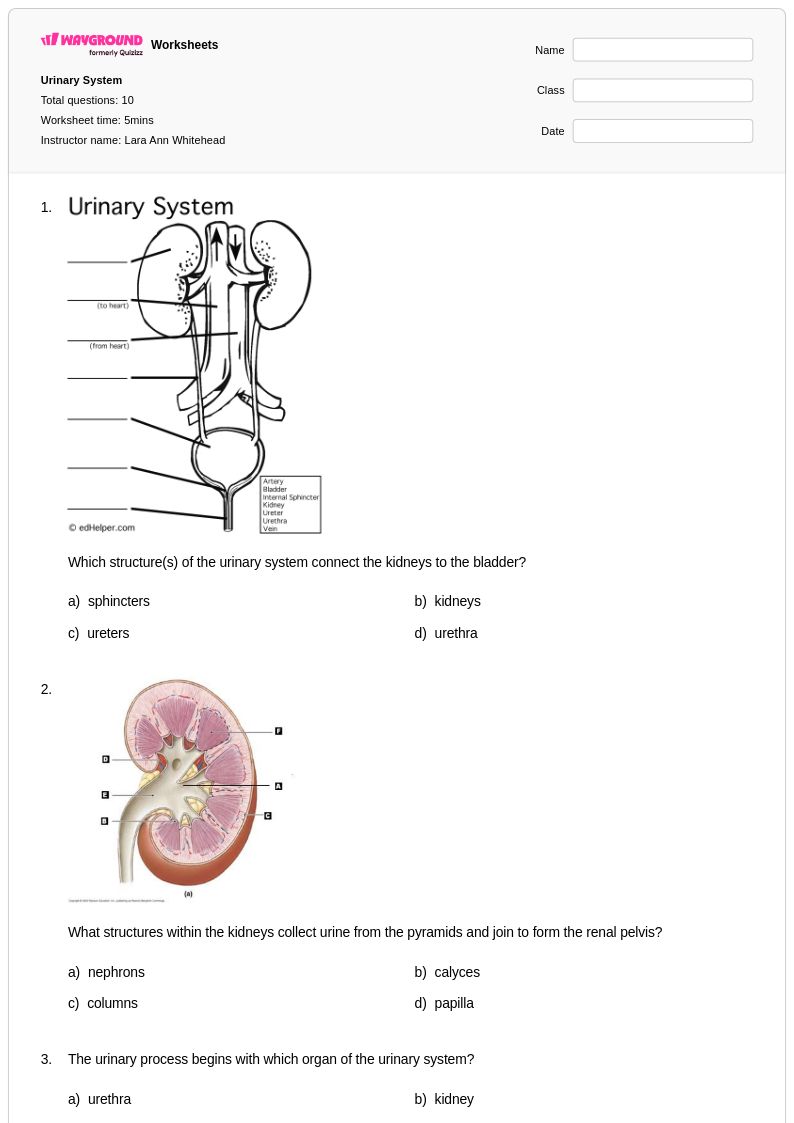
Start by grounding students in the big picture: the urinary system exists to maintain homeostasis by filtering blood and excreting metabolic waste. From there, move into kidney anatomy before zooming in on the nephron, walking students through filtration, reabsorption, and secretion in sequence. Using labeled diagrams alongside hormone regulation content (ADH and aldosterone) helps students connect structure to function rather than memorizing isolated facts.
What worksheets help students practice nephron anatomy and urine formation?
Worksheets that ask students to label nephron structures — glomerulus, Bowman's capsule, loop of Henle, and collecting ducts — alongside process-based questions on filtration, reabsorption, and secretion are most effective for building both vocabulary and conceptual understanding. Practice problems that require students to trace what happens to a substance (like glucose or urea) at each stage of urine formation push beyond memorization into applied analysis.
What mistakes do students commonly make when learning about the urinary system?
The most common misconception is confusing filtration with excretion — students often assume that everything filtered at the glomerulus is excreted, not realizing that reabsorption returns most water, glucose, and ions back to the bloodstream. Students also frequently mix up the roles of ADH and aldosterone, or misplace structures like the loop of Henle when labeling diagrams. Targeted practice that requires students to explain what is reabsorbed versus secreted at specific nephron segments helps correct these errors directly.
How do I use urinary system worksheets to support students with different learning needs?
Urinary system worksheets on Wayground are available as printable PDFs for traditional classroom use and in digital formats for technology-integrated environments, including the option to host them as a quiz on Wayground. For students who need additional support, Wayground's accommodation tools allow teachers to enable Read Aloud for audio delivery of questions, reduce answer choices to lower cognitive load, and set extended time per question — all configurable at the individual student level without notifying the rest of the class.
How does hormone regulation connect to urinary system function, and how do I teach it?
ADH (antidiuretic hormone) and aldosterone are the two key hormones students need to understand in this context — ADH increases water reabsorption in the collecting ducts, while aldosterone promotes sodium reabsorption in the distal tubule, indirectly retaining water. Teaching these together in response to scenarios (e.g., dehydration or low blood pressure) helps students see hormone regulation as a feedback mechanism rather than an isolated fact. Worksheets that present clinical scenarios and ask students to predict hormonal responses are particularly effective for consolidating this understanding.
How can I assess whether students understand kidney filtration beyond basic recall?
Move beyond labeling by assigning practice problems that ask students to analyze what would happen if a specific structure were damaged — for example, if the glomerulus were compromised, would protein appear in urine? Questions that require students to compare the composition of blood entering the glomerulus versus the filtrate, or to explain why glucose is not normally found in urine, reveal whether students understand the process rather than just the vocabulary. These scenario-based formats also mirror the reasoning style of AP Biology and anatomy exams.