Free Printable Hair Analysis Worksheets for Class 10
Explore Class 10 hair analysis worksheets and printables that help students master forensic science techniques, microscopic examination skills, and biological evidence interpretation through comprehensive practice problems with answer keys.
Explore printable Hair Analysis worksheets for Class 10
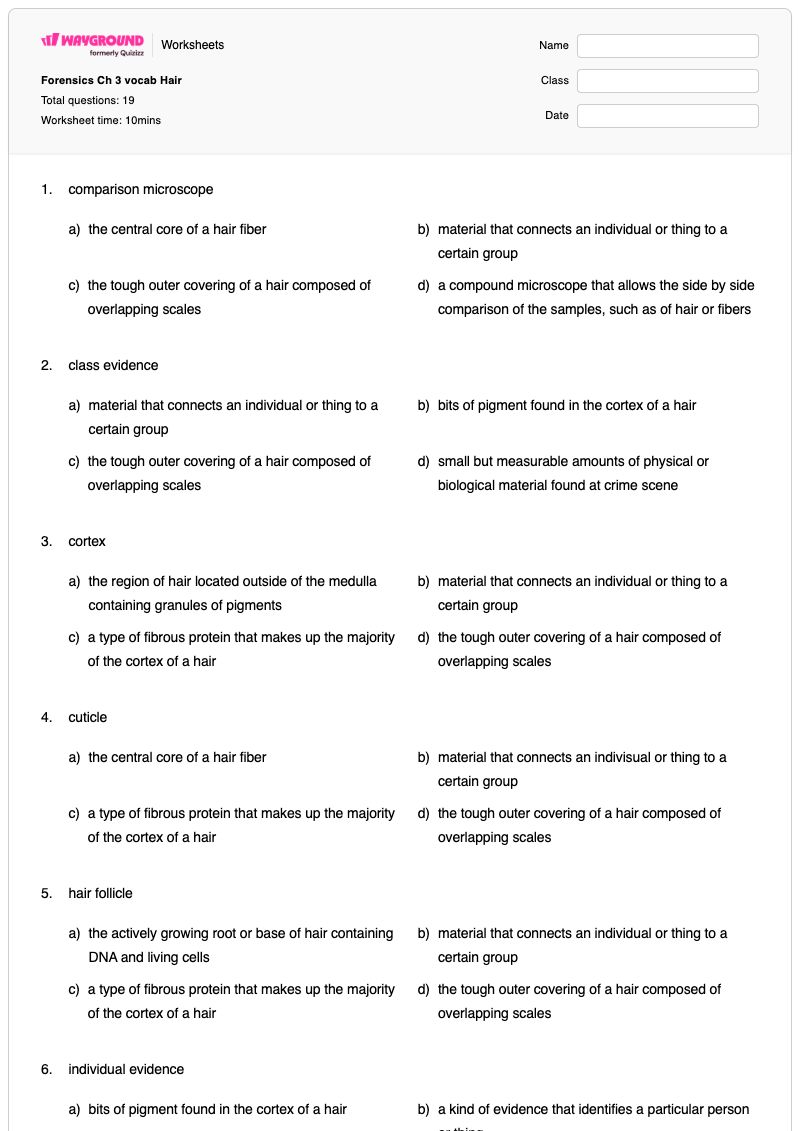
Hair analysis worksheets for Class 10 biology provide students with comprehensive practice in examining microscopic hair structures, identifying species through follicular characteristics, and understanding the forensic applications of hair evidence. These educational resources strengthen critical observation skills while teaching students to differentiate between human and animal hair samples, analyze medullary patterns, and interpret cortical features that make hair analysis valuable in scientific investigations. The worksheets include detailed answer keys that guide students through complex identification processes, while printable pdf formats ensure easy classroom distribution and individual study sessions with structured practice problems covering hair morphology and comparative analysis techniques.
Wayground (formerly Quizizz) supports biology educators with an extensive collection of millions of teacher-created hair analysis worksheets that align with Class 10 science standards and accommodate diverse learning needs through sophisticated search and filtering capabilities. Teachers can easily customize these digital and printable resources to target specific forensic concepts, differentiate instruction for varying skill levels, and create comprehensive assessment tools that support both remediation and enrichment activities. The platform's flexible pdf options and standards-aligned content enable seamless lesson planning while providing students with engaging practice opportunities that reinforce microscopic analysis skills, scientific methodology, and evidence interpretation techniques essential for understanding how hair analysis contributes to forensic science and biological classification systems.
Teaching hair analysis effectively means building from microscopic structure before moving into forensic application. Start by having students identify the three main structural layers of hair: the cuticle, cortex, and medulla. Once students can recognize these components under a microscope, introduce comparative analysis by having them examine human versus animal hair samples and identify distinguishing characteristics such as medulla patterns and cuticle scale variations. Connecting the science to real forensic case studies helps students understand why accurate hair identification matters in criminal investigations.
Effective practice exercises for hair analysis include comparative identification tasks where students examine diagrams or slides of hair cross-sections and classify them by medulla pattern, cuticle structure, and pigmentation. Data collection worksheets that ask students to record observable characteristics and draw conclusions from their findings reinforce both scientific observation skills and analytical thinking. Practice problems focused on distinguishing human hair from animal hair samples are particularly valuable because they require students to apply multiple identification criteria simultaneously.
One of the most frequent errors is conflating correlation with definitive identification: students often treat a single matching characteristic as conclusive evidence rather than understanding that forensic hair analysis requires a pattern of multiple consistent features. Students also struggle to distinguish between medulla types, particularly continuous versus interrupted patterns, which can lead to misclassification between species. Another common misconception is assuming that hair color alone is a reliable identifier, when in practice pigmentation granule distribution and density are far more diagnostically significant than surface color appearance.
For foundational learners, worksheets that focus on labeling hair follicle anatomy and matching cuticle scale images to descriptions build the vocabulary and visual recognition skills needed before forensic application. Advanced students benefit from case-based analysis worksheets where they must evaluate multiple hair samples, weigh competing evidence, and write forensic conclusions. On Wayground, teachers can apply accommodations such as reduced answer choices for students who need additional support, or enable Read Aloud for students who benefit from audio delivery of questions, ensuring all learners can engage with the same core content at an appropriate level.
Wayground's hair analysis worksheets are available as printable PDFs, making them suitable for hands-on laboratory activities where students examine physical diagrams alongside microscope work, and in digital formats for technology-integrated classrooms. Teachers can also host the worksheets as a quiz directly on Wayground, enabling real-time data collection on student performance. Answer keys are included with each worksheet, which reduces grading time and allows teachers to focus post-lesson discussion on the misconceptions the data reveals.
Hair analysis sits at the intersection of biology and forensic science, requiring students to apply microscopy skills, comparative anatomy knowledge, and evidence-based reasoning within a single investigative context. It supports standards related to scientific observation, data interpretation, and the nature of forensic evidence, which are common threads across high school biology, anatomy, and elective forensic science courses. Because hair is a form of trace evidence, worksheets covering this topic naturally scaffold into broader units on evidence collection, chain of custody, and the limitations of physical evidence in legal contexts.