Free Printable Forensic Anthropology Worksheets for Class 10
Explore Class 10 forensic anthropology worksheets and printables that help students master human skeletal analysis, crime scene investigation techniques, and biological evidence interpretation through engaging practice problems with comprehensive answer keys.
Explore printable Forensic Anthropology worksheets for Class 10
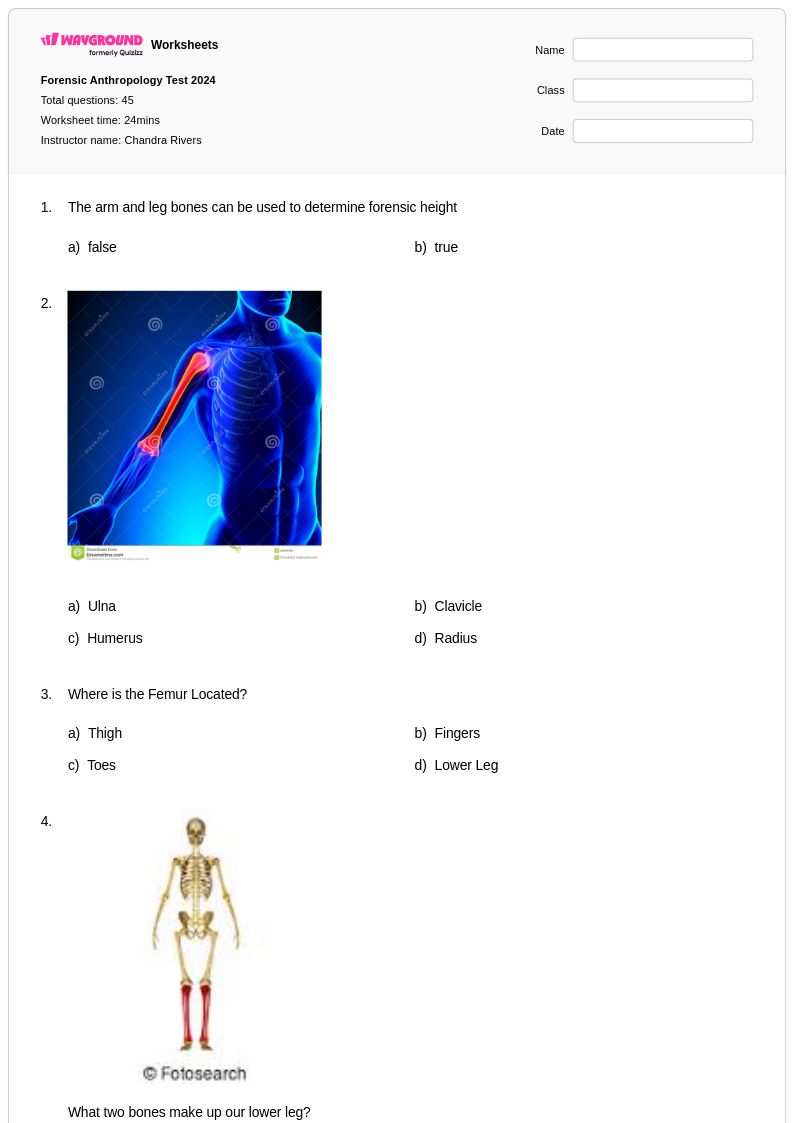
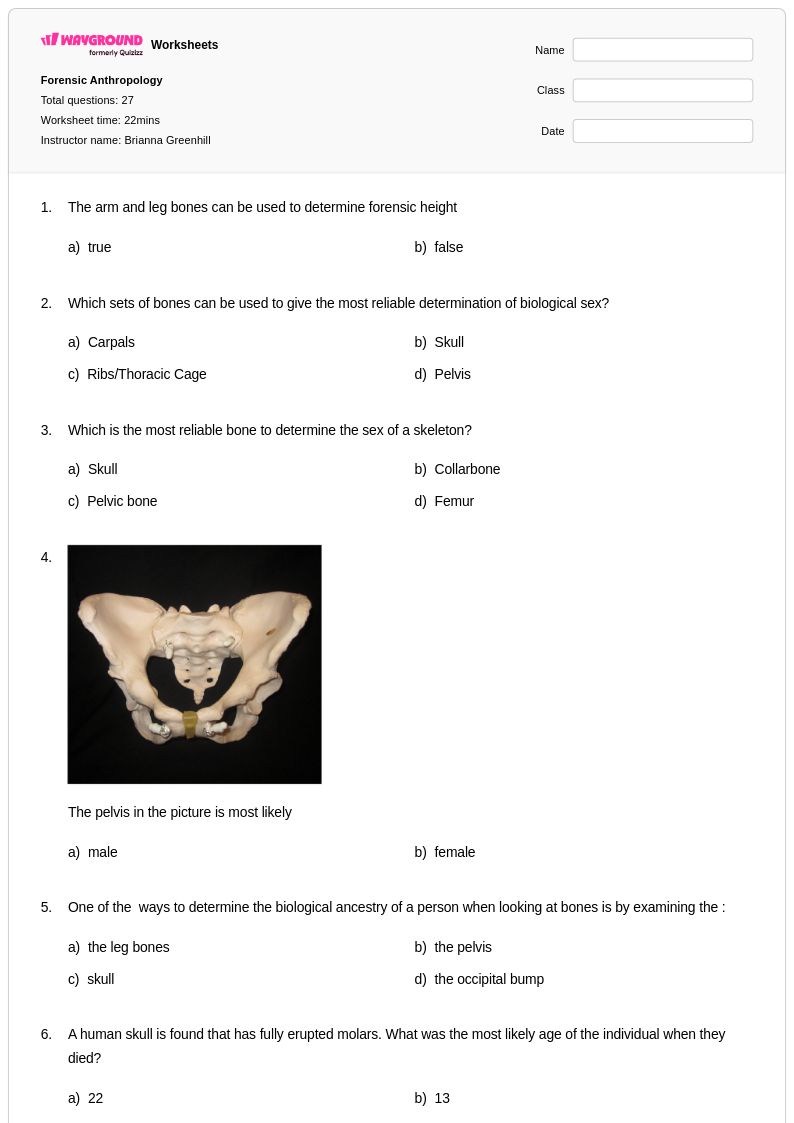
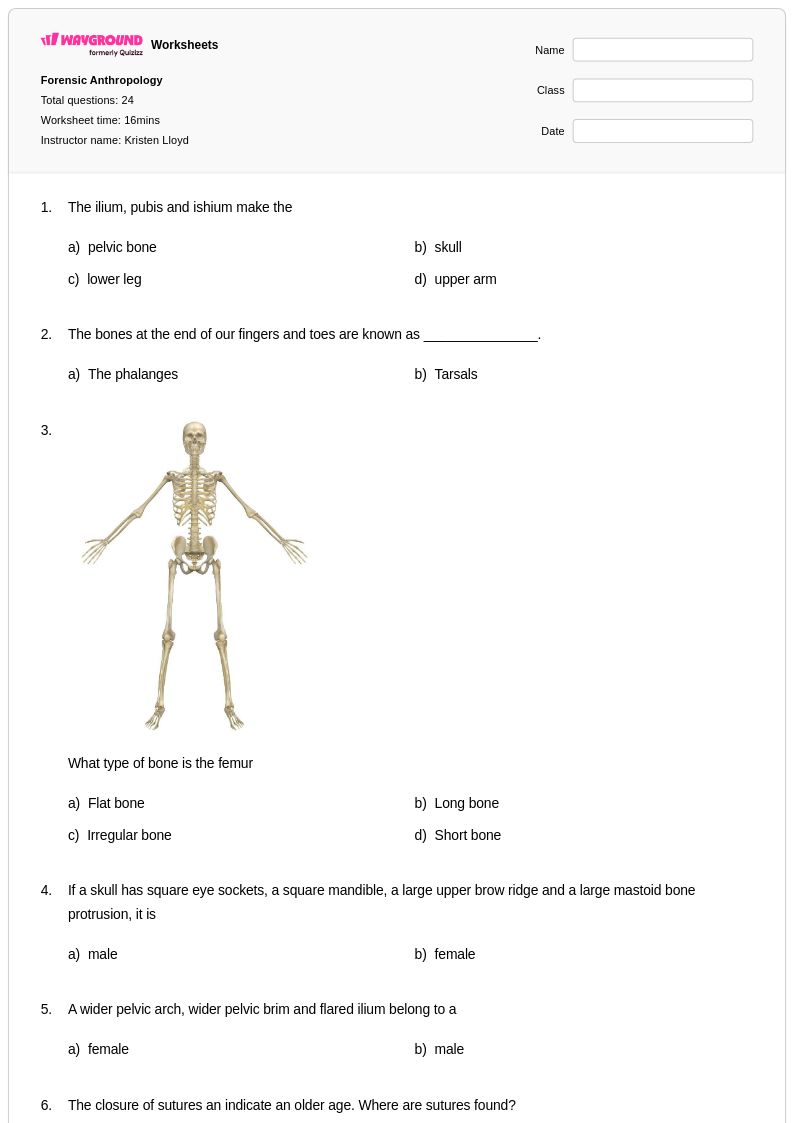
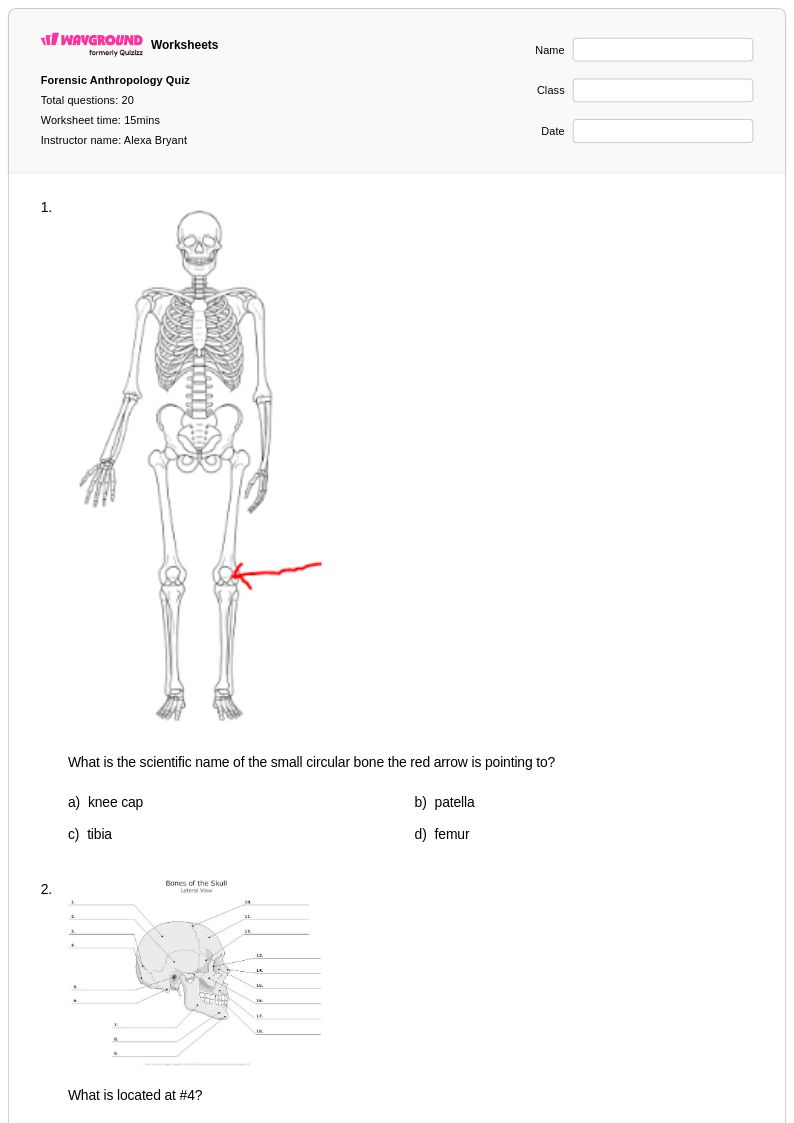
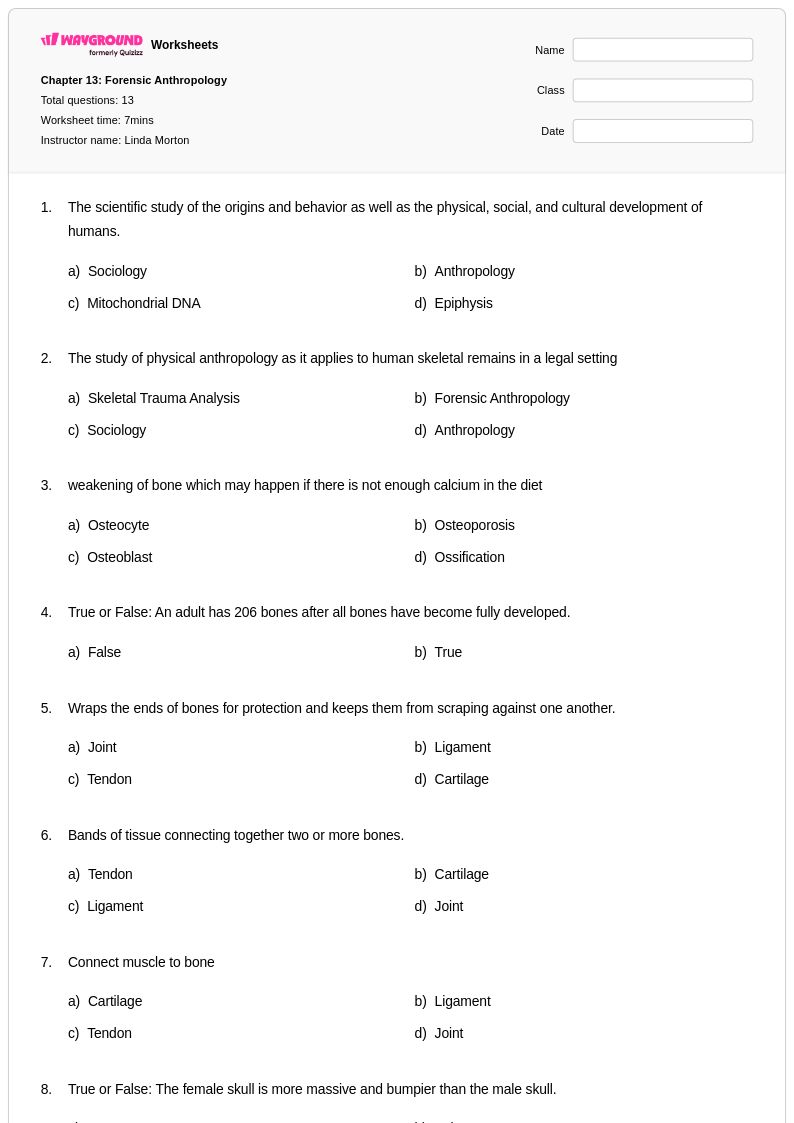
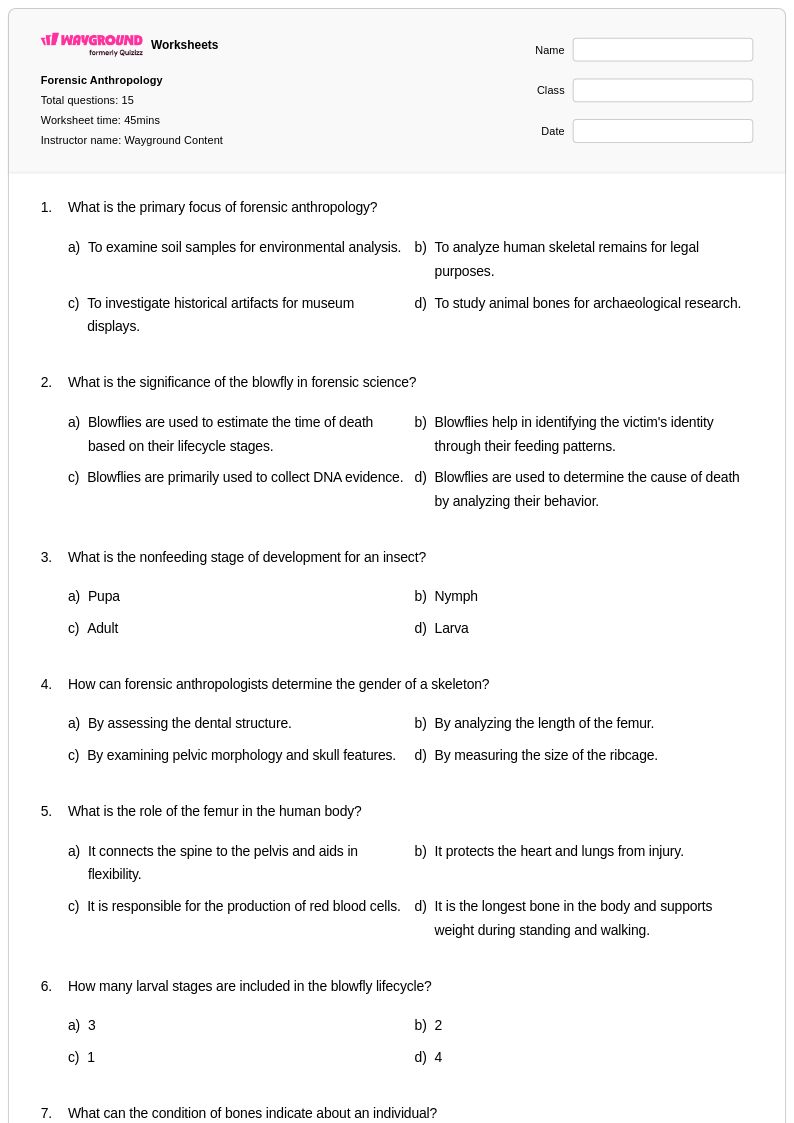
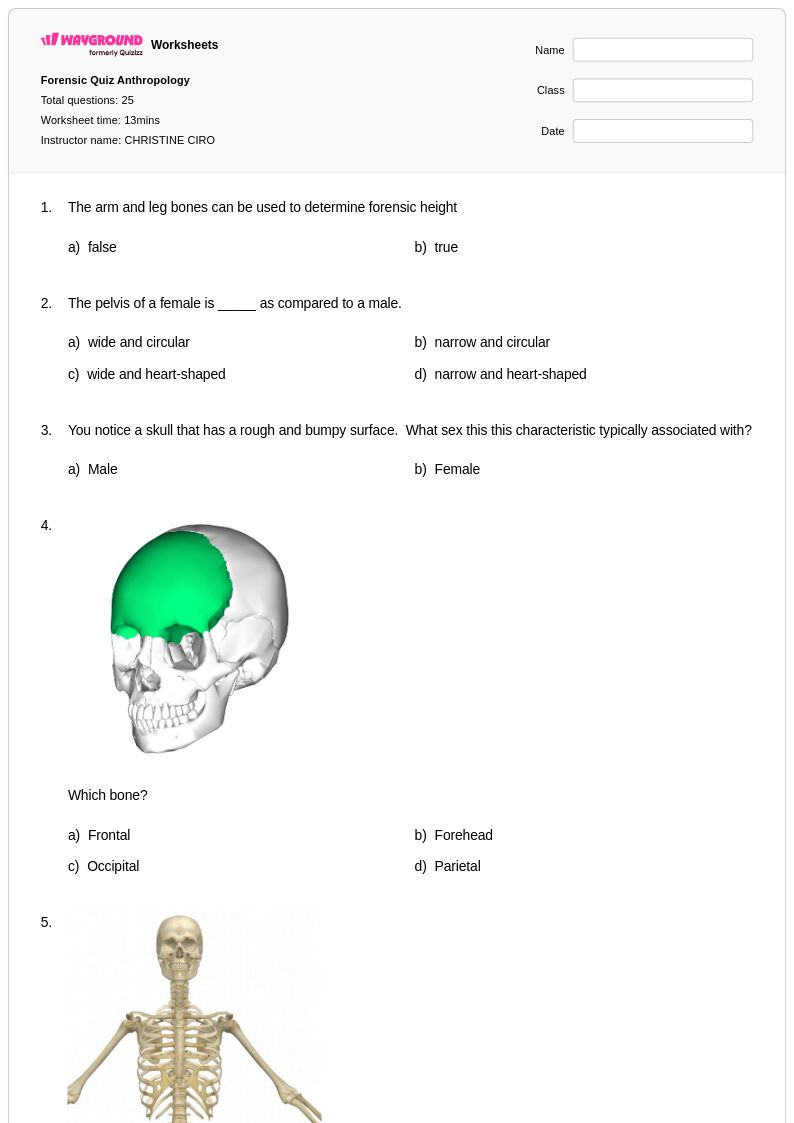
Forensic anthropology worksheets for Class 10 students available through Wayground (formerly Quizizz) provide comprehensive exploration of how biological principles apply to criminal investigations and human identification. These educational resources strengthen critical thinking skills as students analyze skeletal remains, interpret bone measurements, and apply osteological knowledge to determine age, sex, ancestry, and stature from human remains. The practice problems guide learners through real-world scenarios involving trauma analysis, taphonomic processes, and postmortem interval estimation, while printable materials include detailed answer keys that support independent study and peer review. Students engage with free pdf worksheets covering bone pathology, dental evidence analysis, and the scientific methods used by forensic anthropologists in medicolegal contexts, building essential skills in observation, measurement, and scientific reasoning.
Wayground's extensive collection of teacher-created forensic anthropology resources offers educators powerful tools for delivering this specialized Class 10 biology content effectively. The platform's millions of worksheets include standards-aligned materials that can be filtered by specific forensic concepts, difficulty levels, and learning objectives, enabling teachers to differentiate instruction for diverse learners. Customizable digital and printable formats allow educators to modify content for remediation or enrichment activities, while comprehensive search functionality helps locate targeted practice materials for topics ranging from basic osteology to complex case study analysis. These flexible worksheet collections support varied instructional approaches, whether teachers need quick formative assessments, extended research projects, or skill-building exercises that connect biological concepts to forensic science applications.
FAQs
How do I teach forensic anthropology in a high school science class?
Teaching forensic anthropology effectively means grounding students in osteology before moving into applied skills like age and sex determination, ancestry assessment, and trauma interpretation. Start with bone identification and skeletal anatomy, then introduce case-based scenarios that require students to apply scientific methodology to hypothetical investigations. Connecting each concept to real-world forensic contexts keeps engagement high and reinforces why accuracy in skeletal analysis matters.
What topics should forensic anthropology worksheets cover?
Forensic anthropology worksheets should cover bone identification, skeletal aging techniques, biological sex determination from skeletal remains, ancestry assessment, taphonomic processes, and trauma interpretation. Strong practice materials also introduce students to postmortem interval calculations and the osteological vocabulary used by working forensic experts. Structured practice problems that simulate case analysis help students move from recall to application.
What mistakes do students commonly make when learning forensic anthropology?
Students frequently conflate biological sex determination from skeletal remains with gender, and they often overgeneralize ancestry indicators without understanding population variation. Another common error is misapplying age estimation methods, such as using dental eruption charts for adults or epiphyseal fusion data for juveniles interchangeably. Reinforcing that each method has a defined application range and population context helps students develop more precise analytical habits.
How can I use worksheets to help students practice skeletal analysis skills?
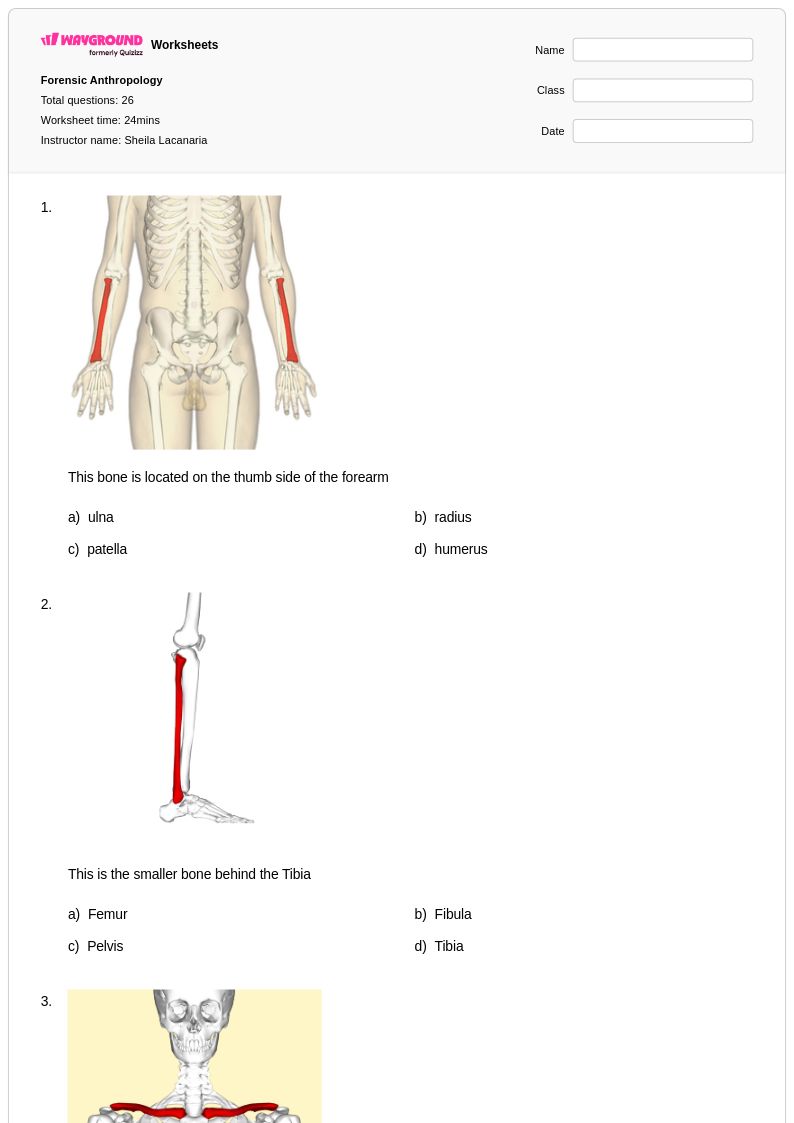
Worksheets that present labeled skeletal diagrams alongside case-based prompts require students to identify specific bones, interpret taphonomic evidence, and draw conclusions about biological profile characteristics. Pairing these with structured answer keys allows students to self-assess their reasoning, not just their answers, which builds the critical thinking forensic science demands. Practice problems that escalate in complexity, from single bone identification to multi-variable case interpretation, scaffold the skill progression effectively.
How do I differentiate forensic anthropology instruction for students at different skill levels?
For students still building foundational knowledge, focus on bone identification and basic skeletal terminology before introducing determination methods. Advanced students benefit from multi-variable case problems that require integrating taphonomy, trauma analysis, and biological profiling simultaneously. On Wayground, teachers can apply accommodations such as reduced answer choices to lower cognitive load for students who need support, or assign enrichment-level cases to students ready for greater challenge, all within the same assignment.
How do I use Wayground's forensic anthropology worksheets in my classroom?
Wayground's forensic anthropology worksheets are available as printable PDFs for traditional classroom and lab use, as well as in digital formats for technology-integrated learning environments. Teachers can also host them as a quiz directly on Wayground, enabling real-time participation and instant feedback. Each worksheet includes a detailed answer key, making them practical for independent practice, lab simulation activities, and assessment preparation without additional prep work.