Free Printable Phases of Meiosis Worksheets for Class 11
Class 11 biology students can master the phases of meiosis with Wayground's free worksheets and printables, featuring detailed practice problems and comprehensive answer keys to reinforce cellular division concepts.
Explore printable Phases of Meiosis worksheets for Class 11
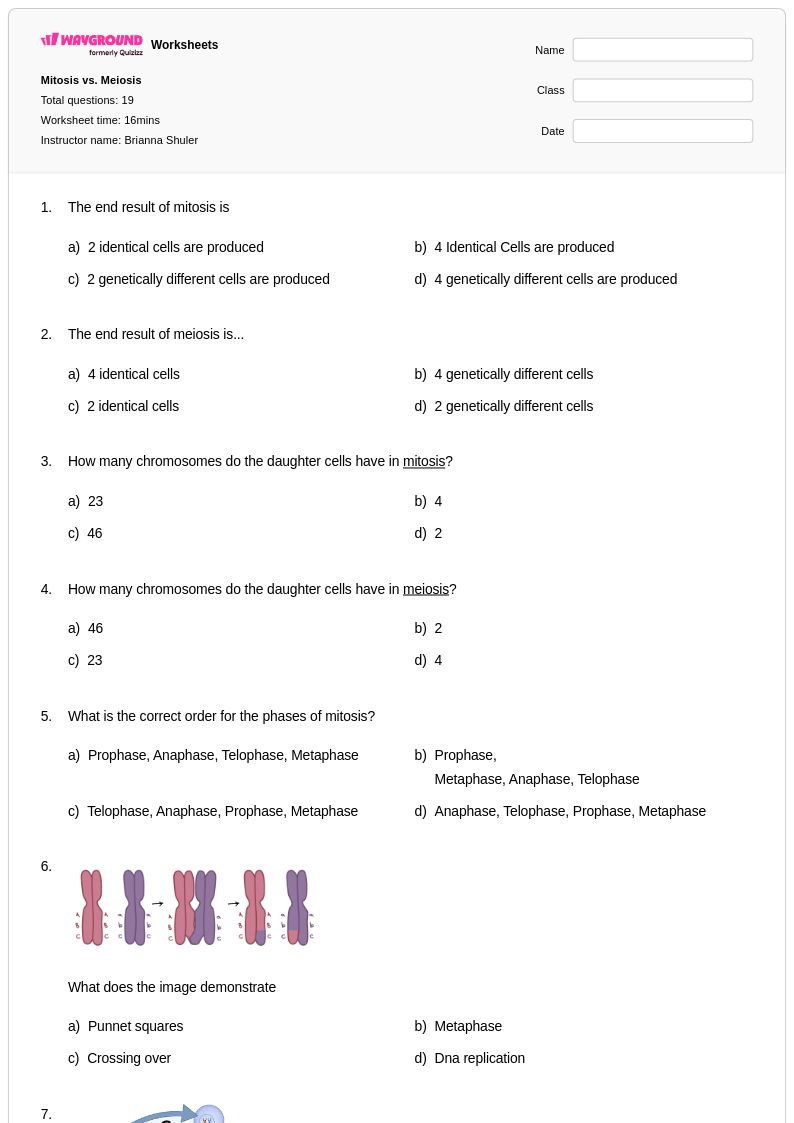
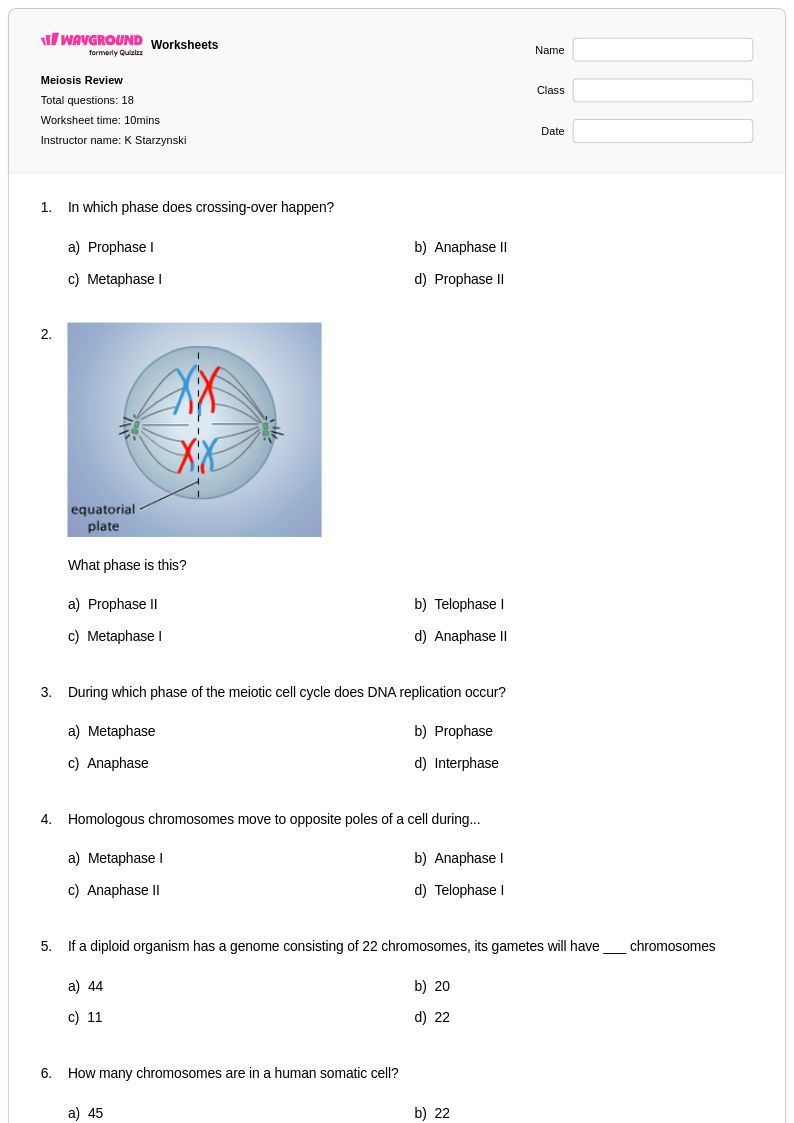
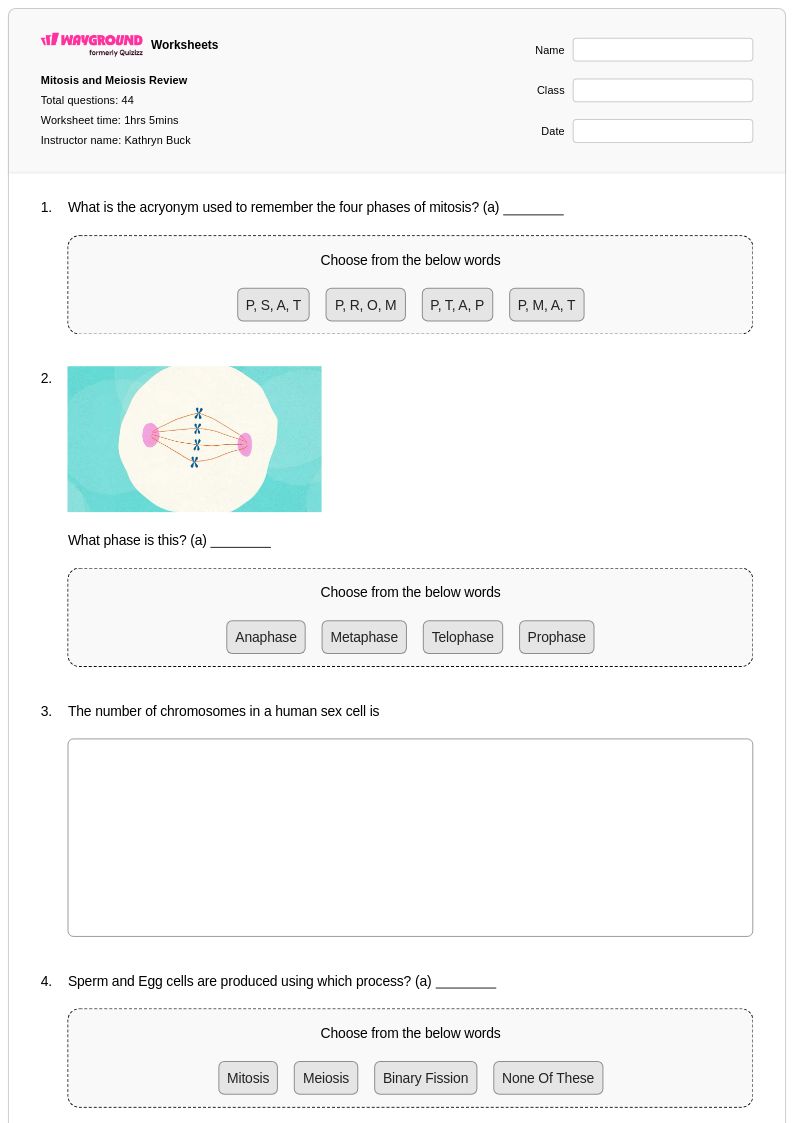
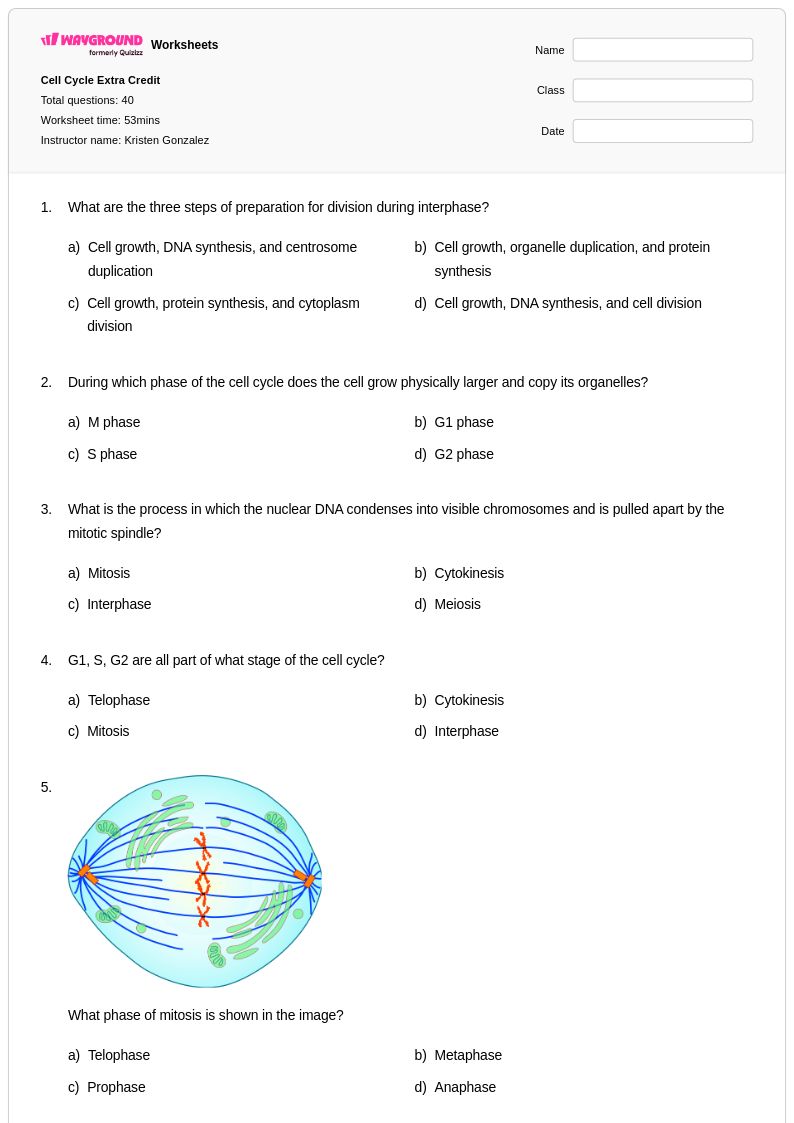
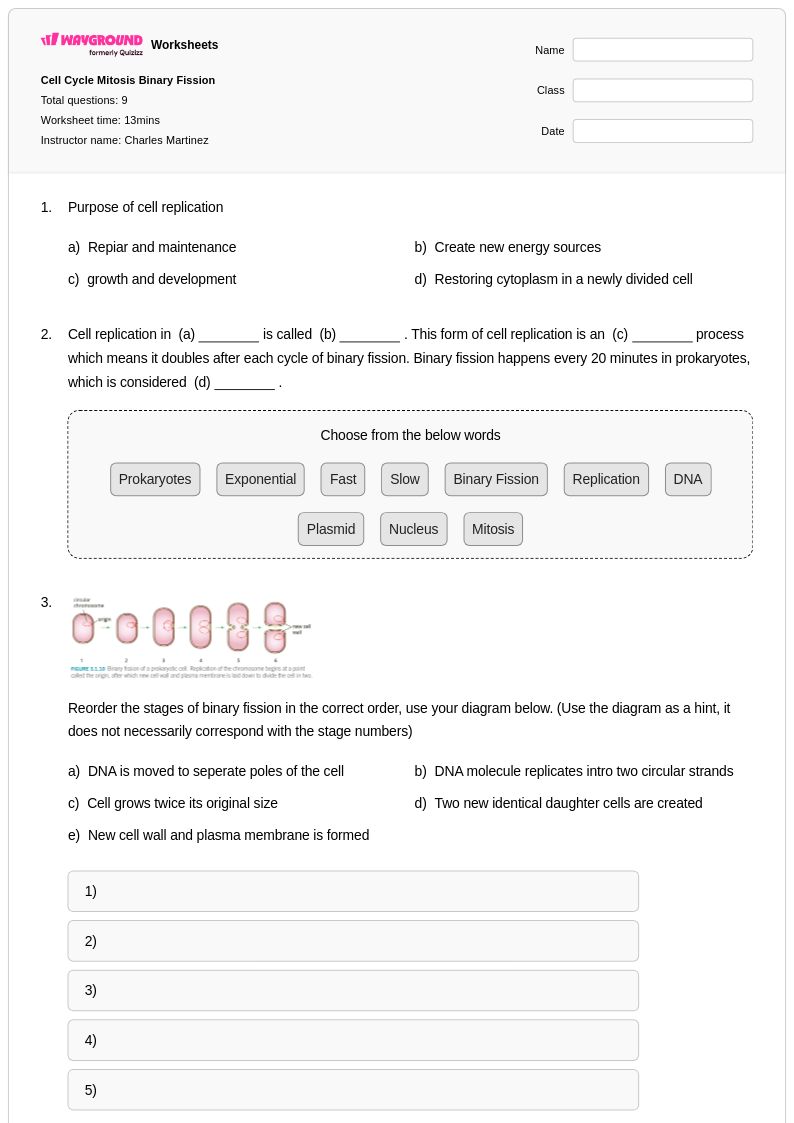
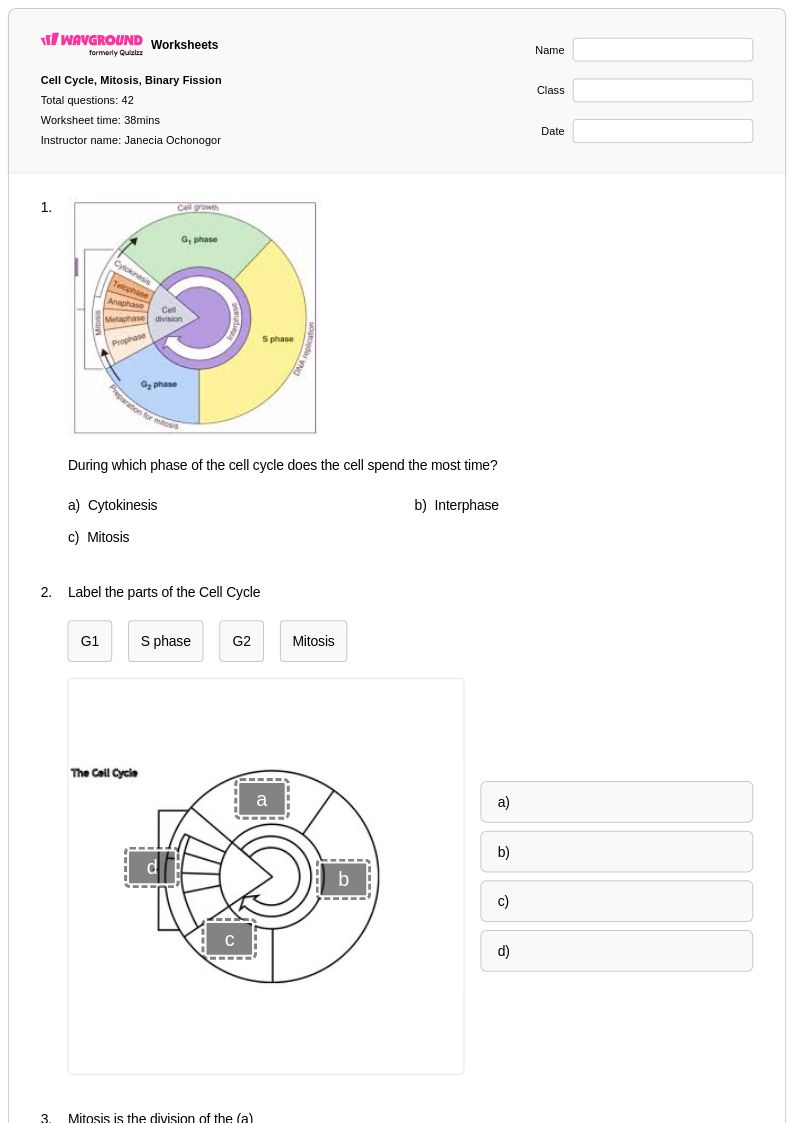
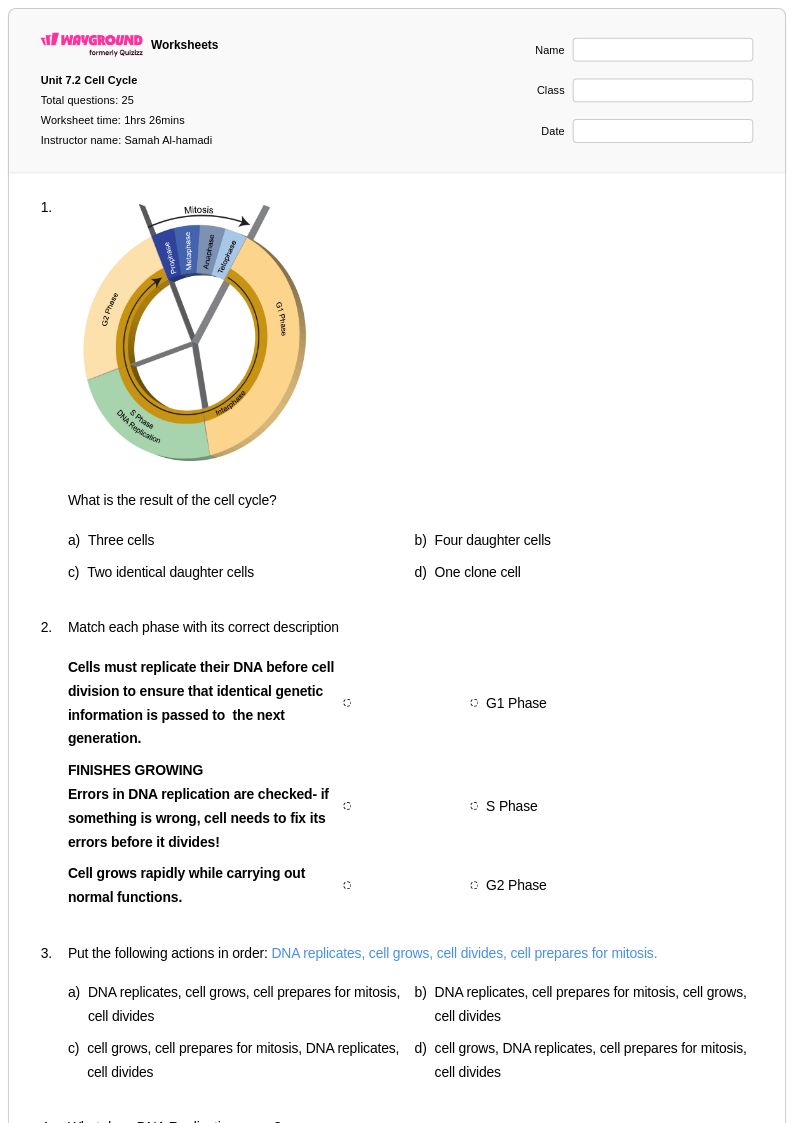
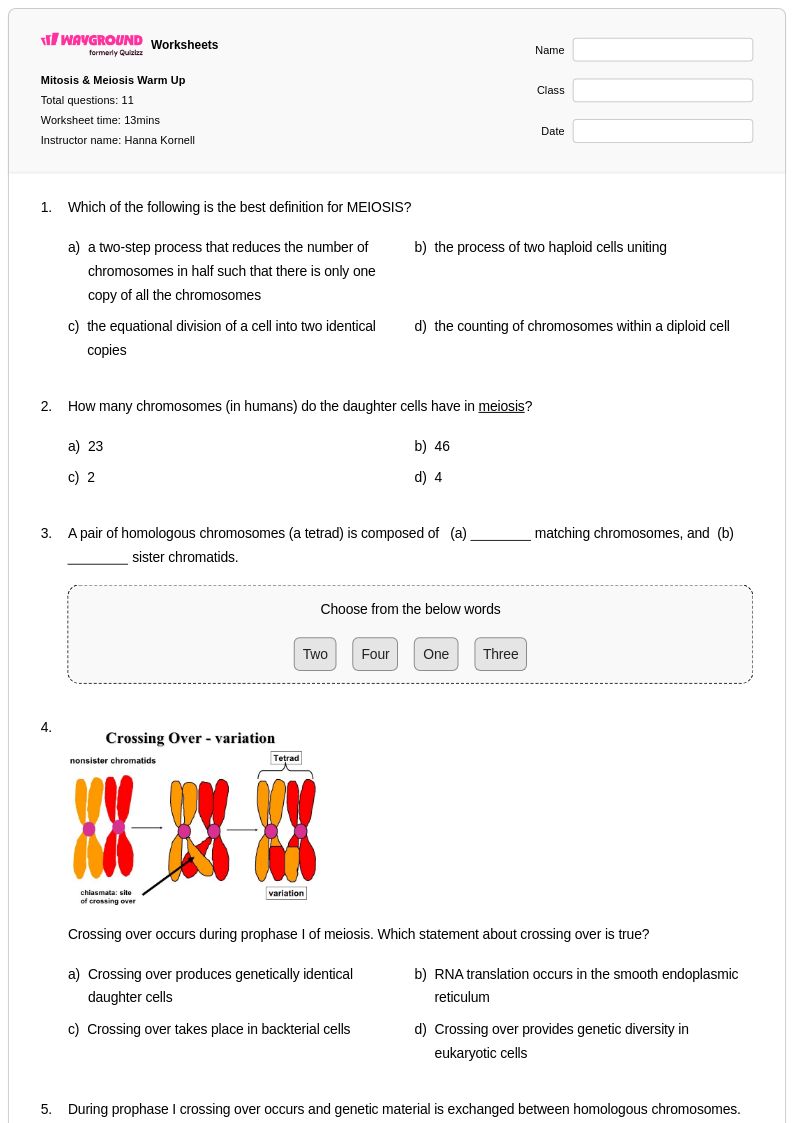
Phases of meiosis worksheets for Class 11 students available through Wayground (formerly Quizizz) provide comprehensive coverage of this fundamental cellular process that underlies sexual reproduction and genetic diversity. These expertly designed resources guide students through the intricate stages of meiotic division, including prophase I with its critical crossing over events, metaphase I chromosome alignment, anaphase I separation of homologous pairs, and the subsequent phases of meiosis II that produce four genetically unique haploid gametes. The worksheets strengthen essential biology skills including chromosome behavior analysis, genetic recombination understanding, and the ability to distinguish between mitotic and meiotic processes. Students engage with detailed diagrams, phase identification exercises, and practice problems that reinforce their comprehension of synapsis, chiasma formation, and independent assortment. Each worksheet collection includes comprehensive answer keys and is available as free printables in convenient pdf format, allowing educators to seamlessly integrate these resources into their cellular biology curriculum.
Wayground (formerly Quizizz) empowers teachers with an extensive collection of millions of teacher-created meiosis worksheets that support diverse instructional needs and learning objectives. The platform's robust search and filtering capabilities enable educators to quickly locate materials aligned with specific academic standards and tailored to Class 11 biology requirements. Teachers benefit from sophisticated differentiation tools that accommodate varying student readiness levels, from foundational phase recognition activities to advanced genetic mapping challenges that explore crossover frequencies and chromosome mapping. The flexible customization features allow instructors to modify existing worksheets or create hybrid resources that address specific classroom needs, whether for initial skill introduction, targeted remediation of challenging concepts like crossing over mechanisms, or enrichment activities for advanced learners. All materials are available in both printable and digital formats, including downloadable pdf versions, facilitating seamless integration into traditional classroom instruction, hybrid learning environments, and remote education scenarios while supporting effective lesson planning and assessment strategies.
FAQs
How do I teach the phases of meiosis to biology students?
Teaching the phases of meiosis is most effective when broken into two distinct divisions: meiosis I, which separates homologous chromosomes, and meiosis II, which separates sister chromatids. Start by grounding students in mitosis first, then use side-by-side comparisons to highlight what makes meiosis unique, particularly synapsis, crossing over, and independent assortment during prophase I and metaphase I. Visual sequencing activities, where students arrange labeled diagrams in order, help solidify the progression through prophase I, metaphase I, anaphase I, telophase I, and the second meiotic division before moving to abstract problems.
What exercises help students practice the stages of meiosis?
Diagram labeling, phase sequencing tasks, and process-matching exercises are among the most effective practice formats for meiosis. Students benefit from activities that ask them to identify what is happening to chromosomes at each stage, rather than simply memorizing names, because this builds conceptual understanding of chromosome reduction from diploid to haploid. Comparative analysis worksheets that contrast meiosis and mitosis side by side are especially useful for reinforcing why each phase matters in the context of genetic diversity and sexual reproduction.
What mistakes do students commonly make when learning the phases of meiosis?
One of the most persistent errors is confusing meiosis I and meiosis II, particularly misidentifying when homologous chromosomes separate versus when sister chromatids separate. Students also frequently conflate crossing over with independent assortment, treating them as the same mechanism rather than two distinct sources of genetic recombination. Another common misconception is assuming the cell is haploid after meiosis I, when in fact the chromosomes still consist of joined sister chromatids until meiosis II is complete.
How do I use phases of meiosis worksheets in my classroom?
Phases of meiosis worksheets on Wayground are available as free printable PDFs for traditional classroom use and in digital formats for technology-integrated environments, including the option to host them as an interactive quiz directly on Wayground. Printed versions work well for guided note-taking or independent practice following direct instruction, while digital formats allow for self-paced review and immediate feedback. Both formats come with complete answer keys, making them equally useful for in-class assignments, homework, or targeted remediation of concepts like crossing over and chromosome disjunction.
How do phases of meiosis worksheets help students understand genetic diversity?
Meiosis worksheets that specifically address crossing over during prophase I and independent assortment during metaphase I give students concrete practice connecting cellular mechanics to genetic outcomes. When students work through problems that trace how homologous chromosomes exchange segments or align randomly, they build a functional understanding of why offspring are genetically unique from both parents. This conceptual bridge between cellular division and heredity is essential preparation for genetics units covering Mendelian inheritance and beyond.
How can I differentiate meiosis instruction for students at different skill levels?
For students who struggle with the complexity of meiosis, reducing the scope to meiosis I first and using heavily annotated diagrams can lower the cognitive load before introducing meiosis II. Advanced learners benefit from extension problems that connect crossing over frequency to genetic map distances or compare nondisjunction errors to real chromosomal disorders. On Wayground, teachers can apply built-in accommodation tools, such as read aloud support and reduced answer choices, to individual students without disrupting the experience of the rest of the class.