Free Printable Analyzing Mood Worksheets for Class 8
Class 8 students can master analyzing mood through Wayground's comprehensive collection of free reading comprehension worksheets, featuring engaging printables with practice problems and complete answer keys in convenient PDF format.
Explore printable Analyzing Mood worksheets for Class 8
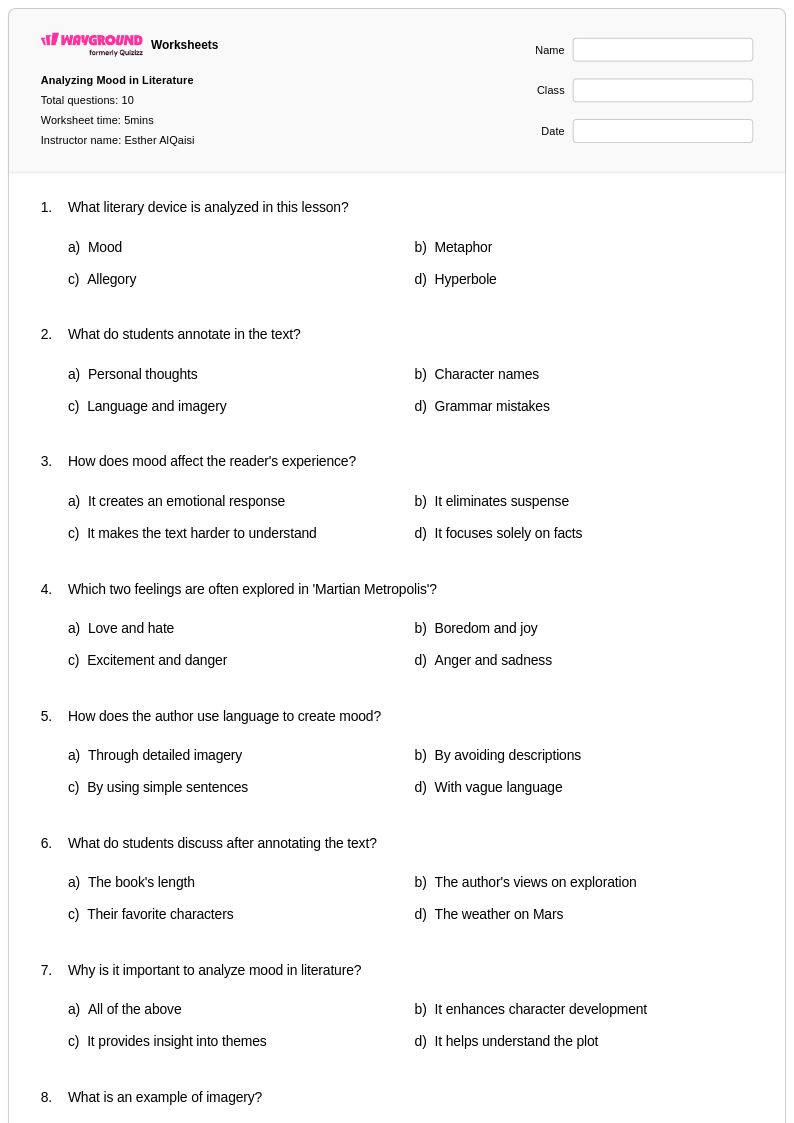
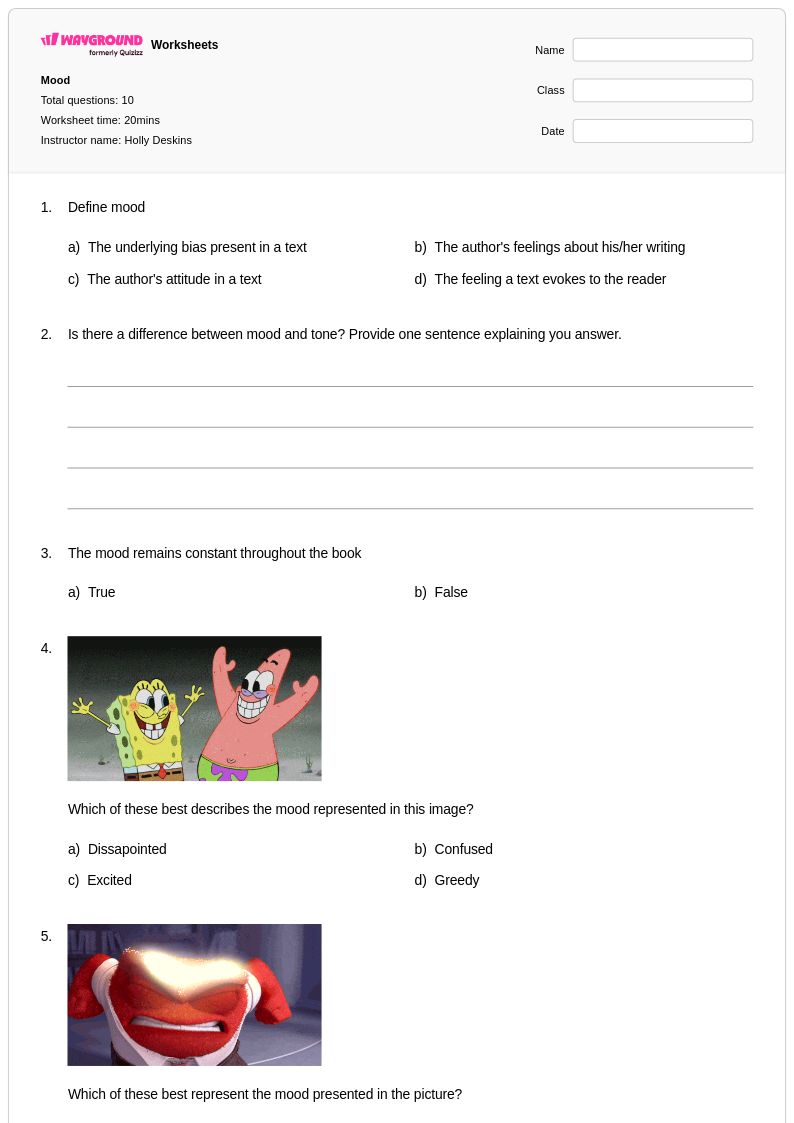
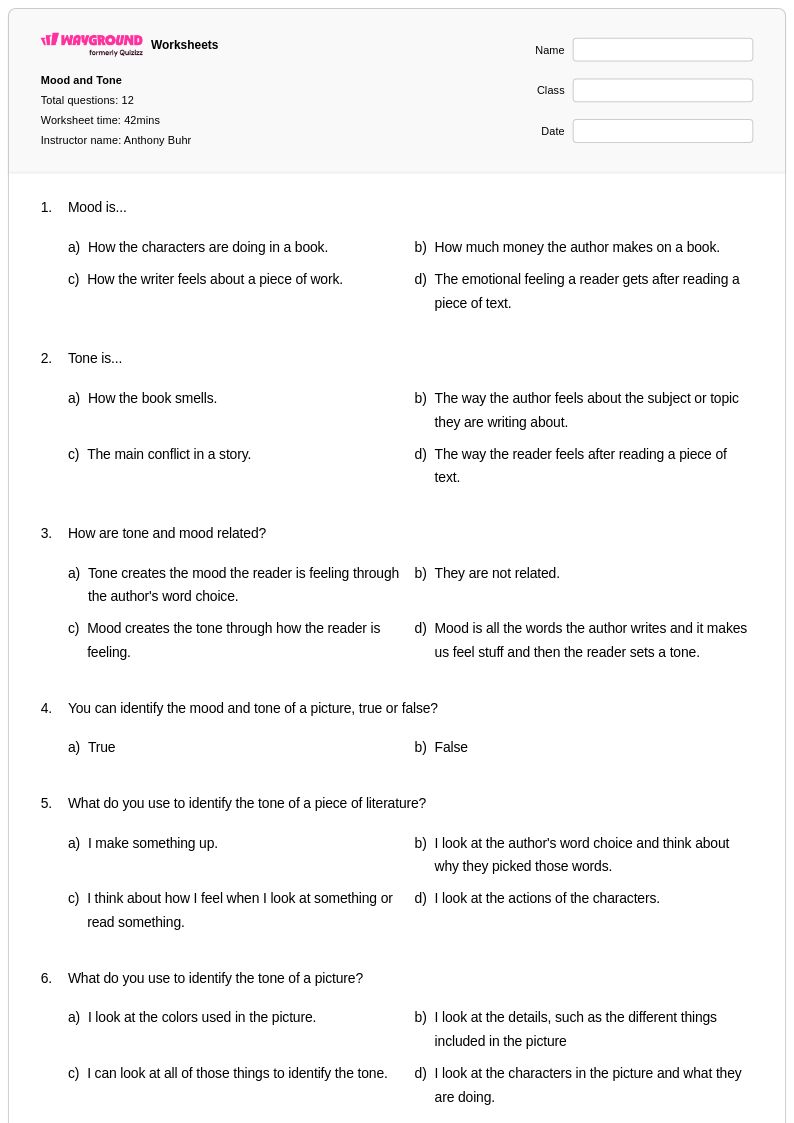
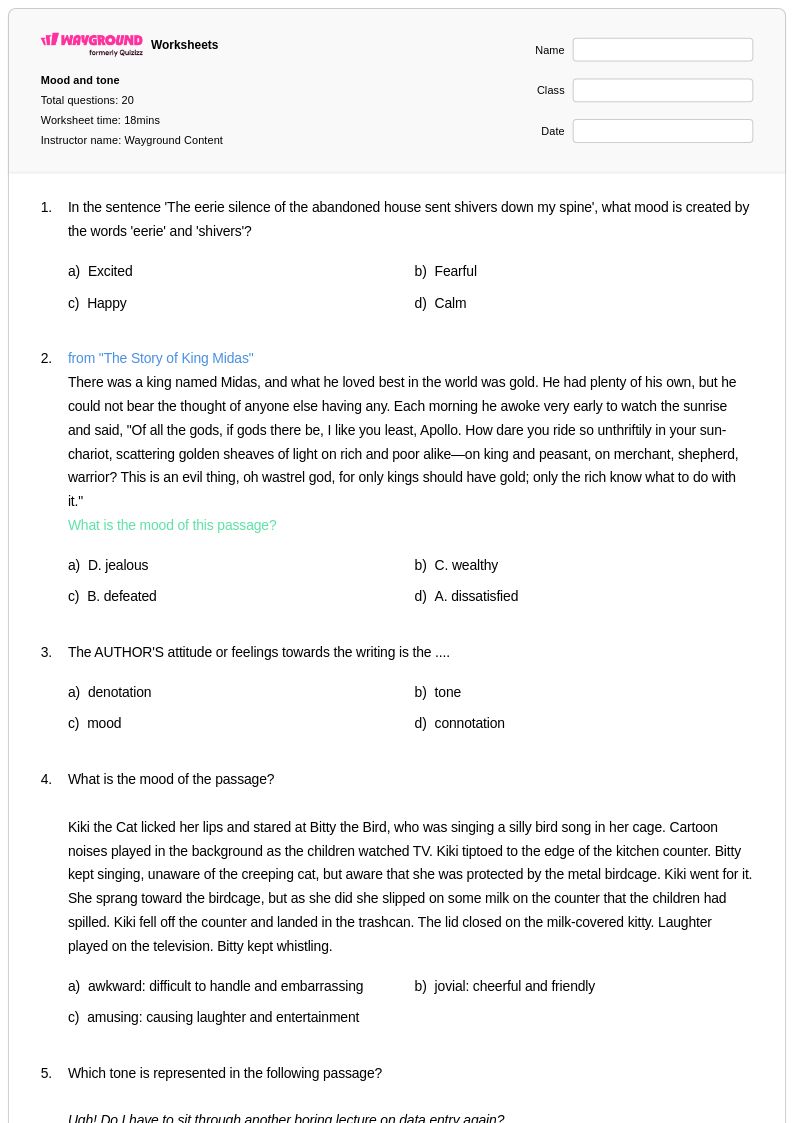
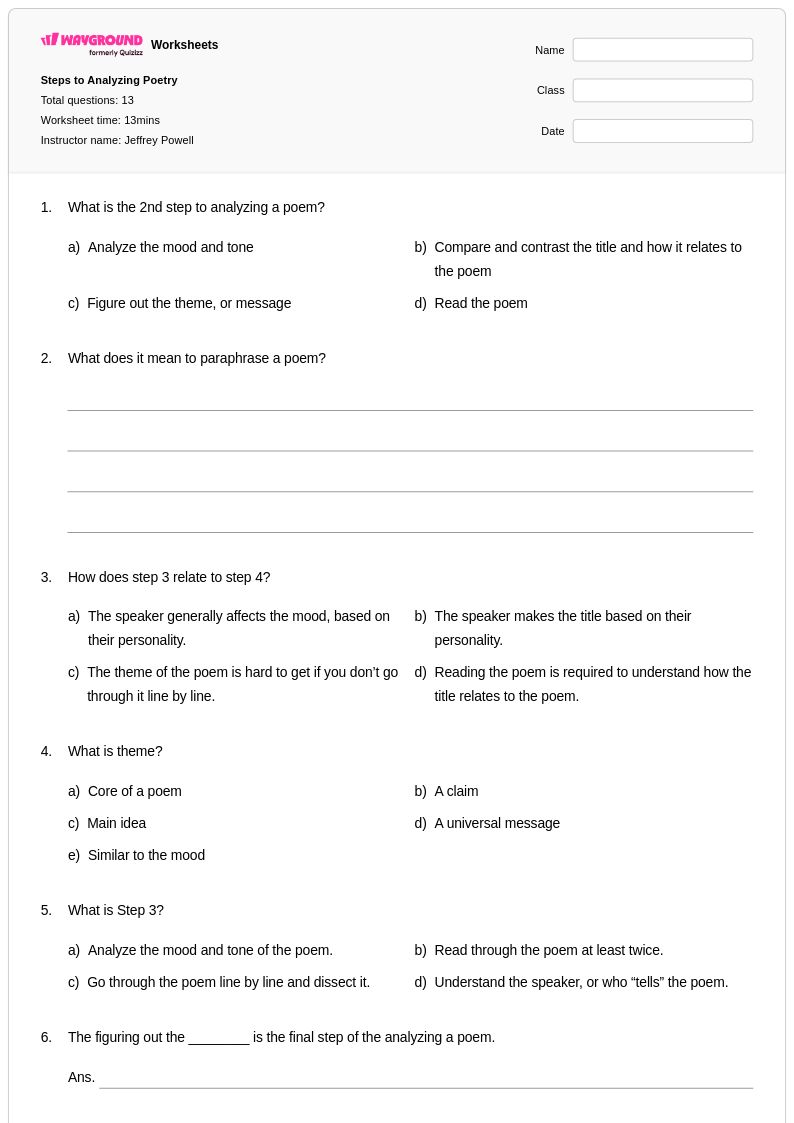
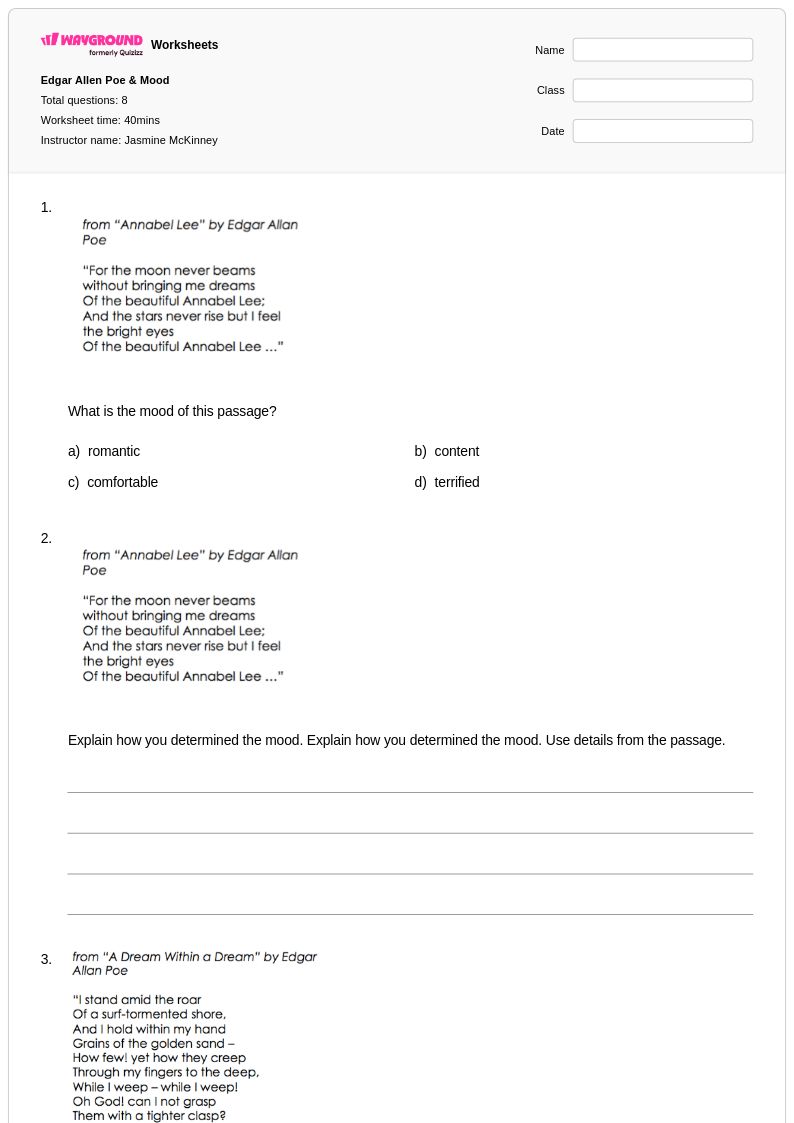
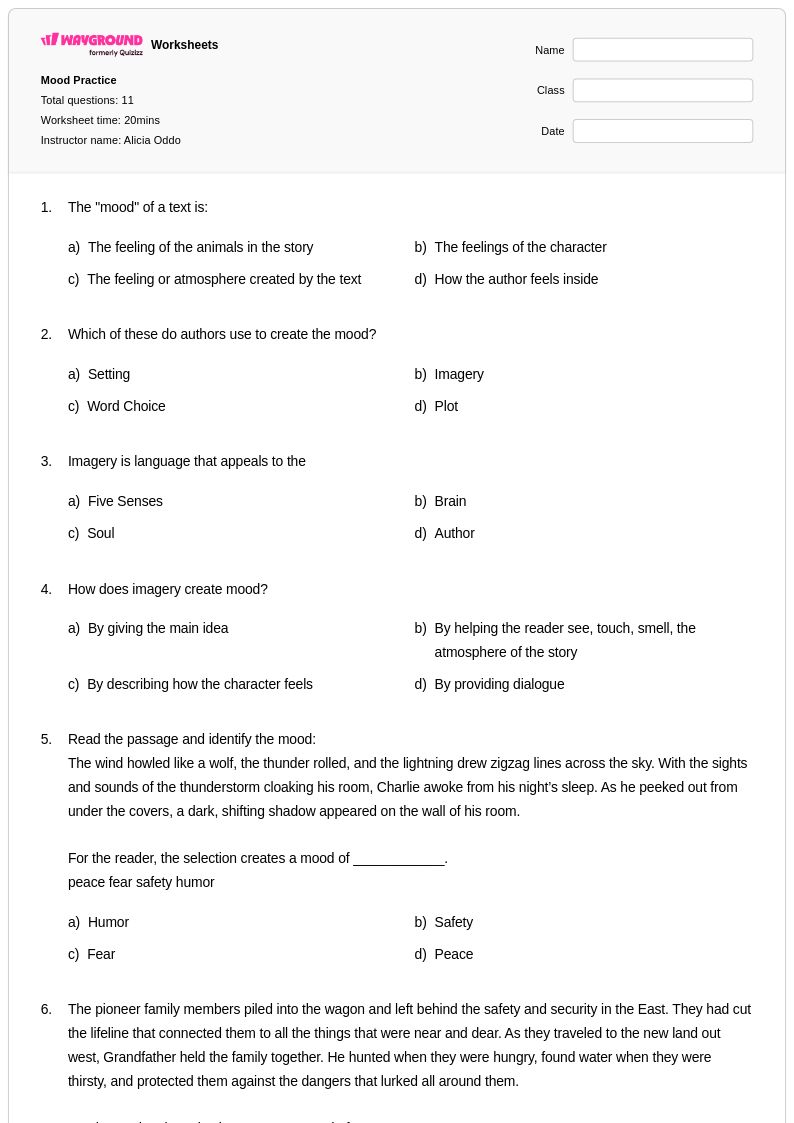
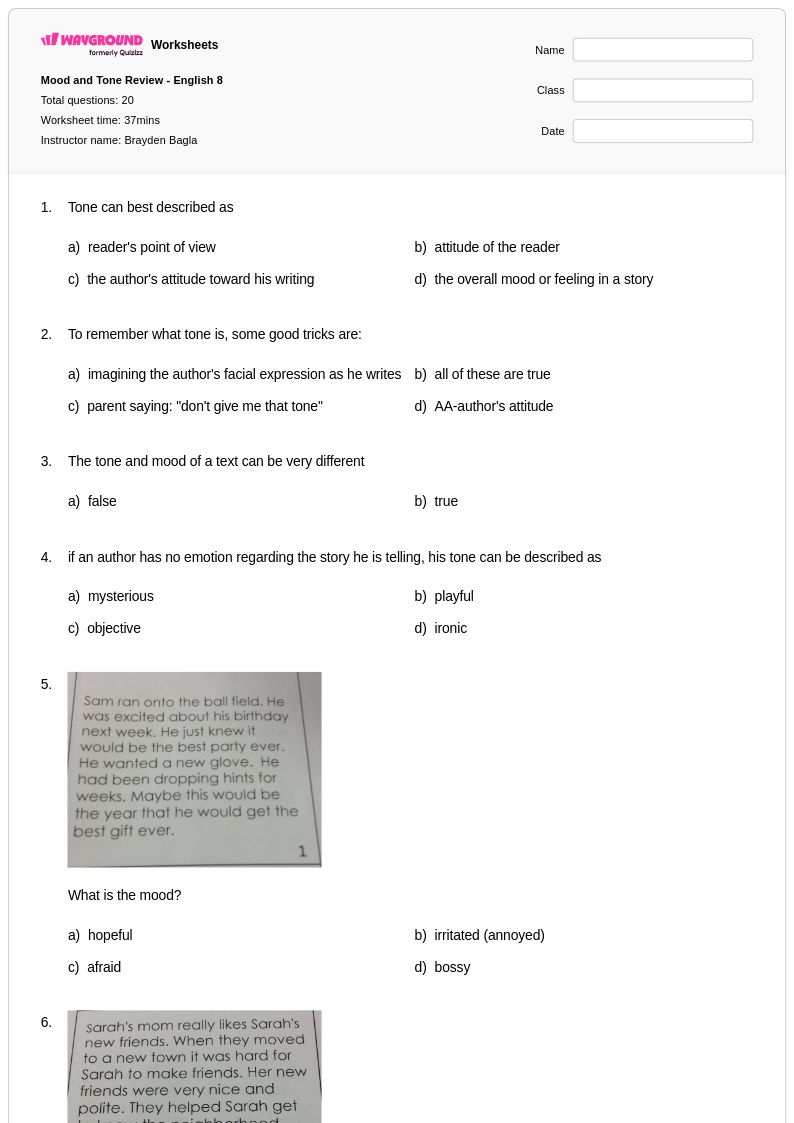
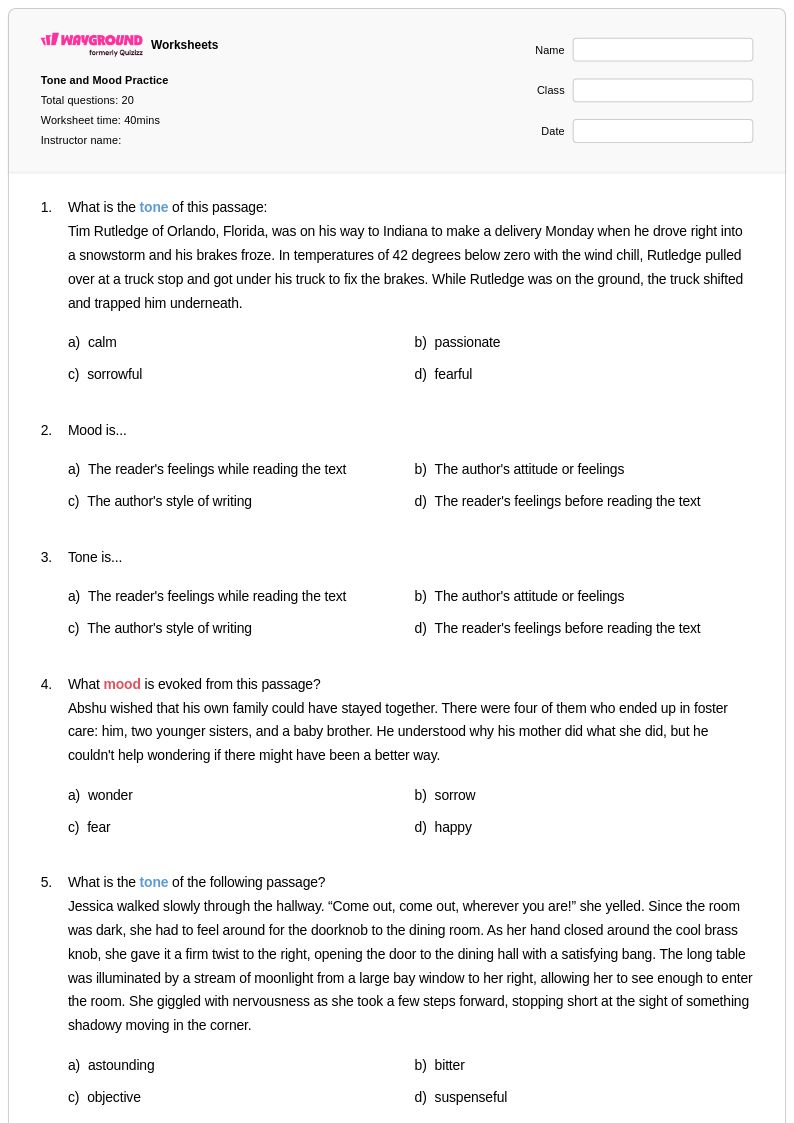
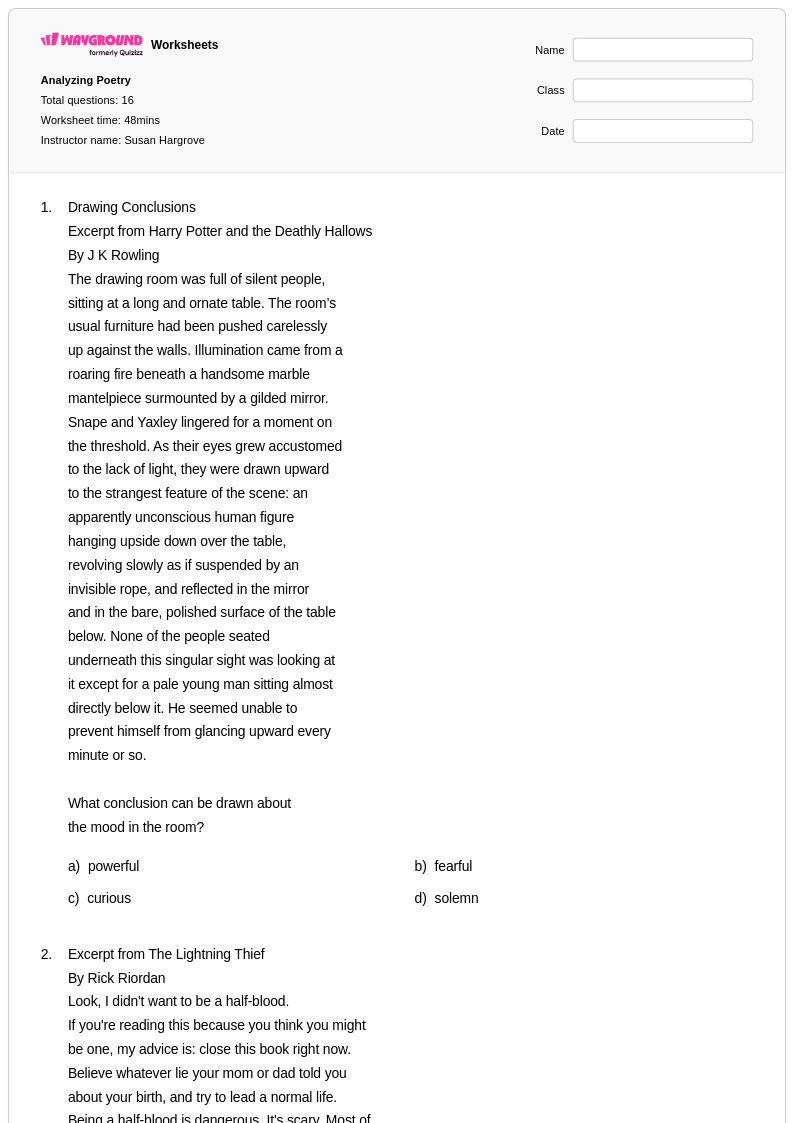
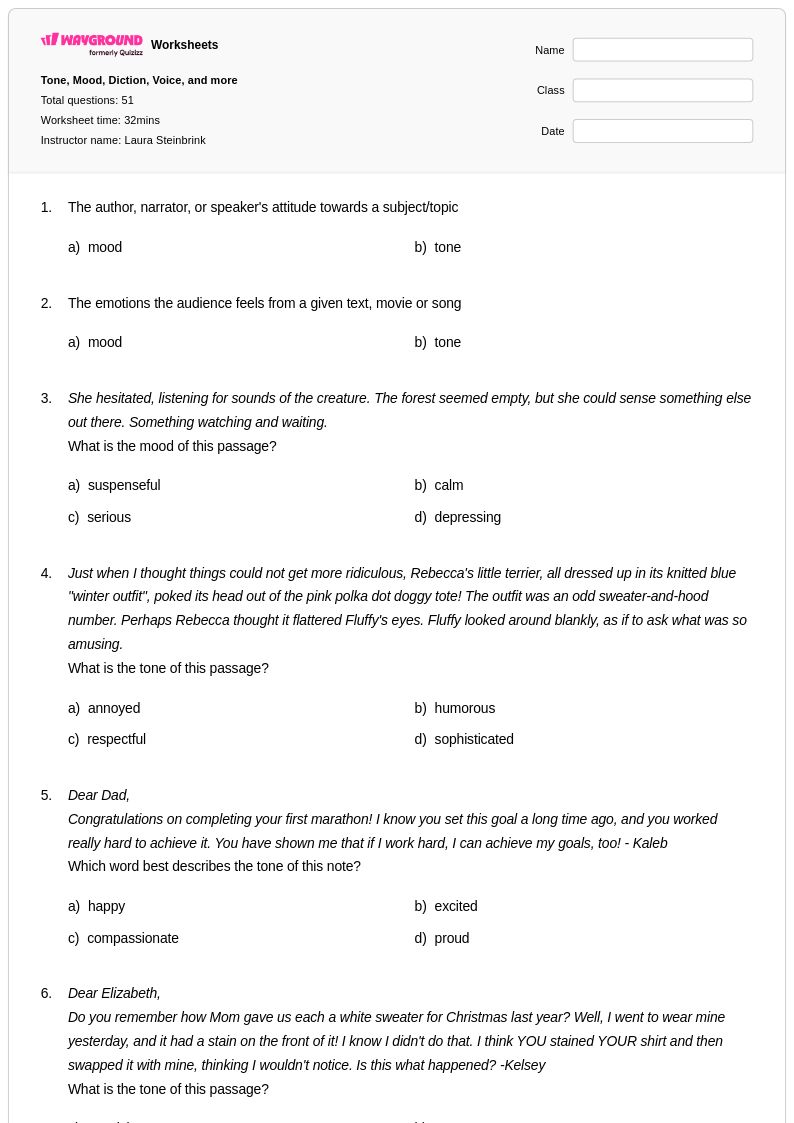
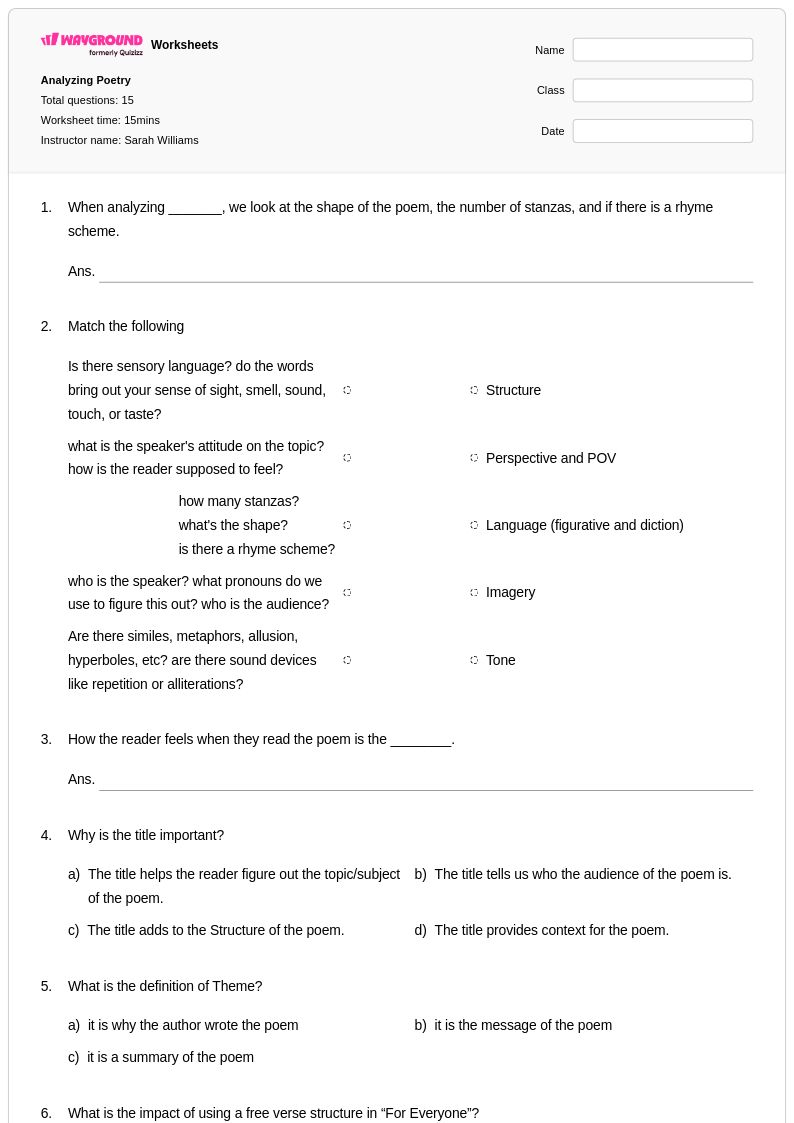
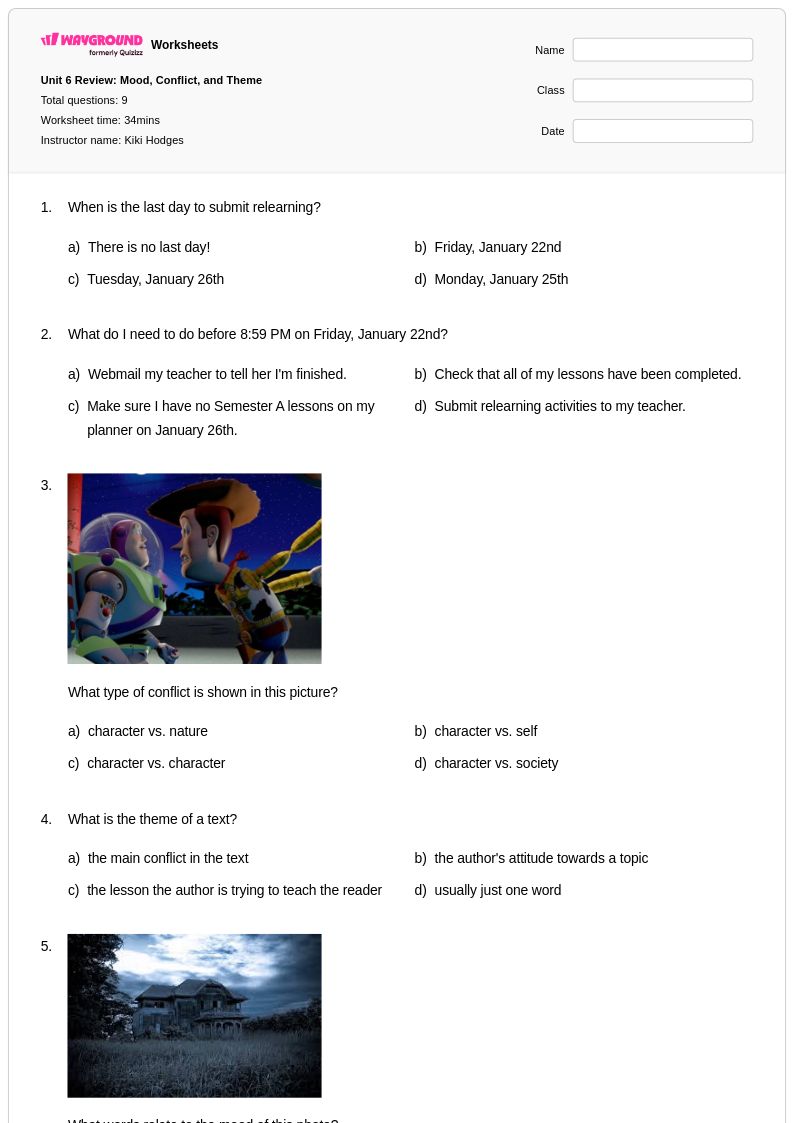
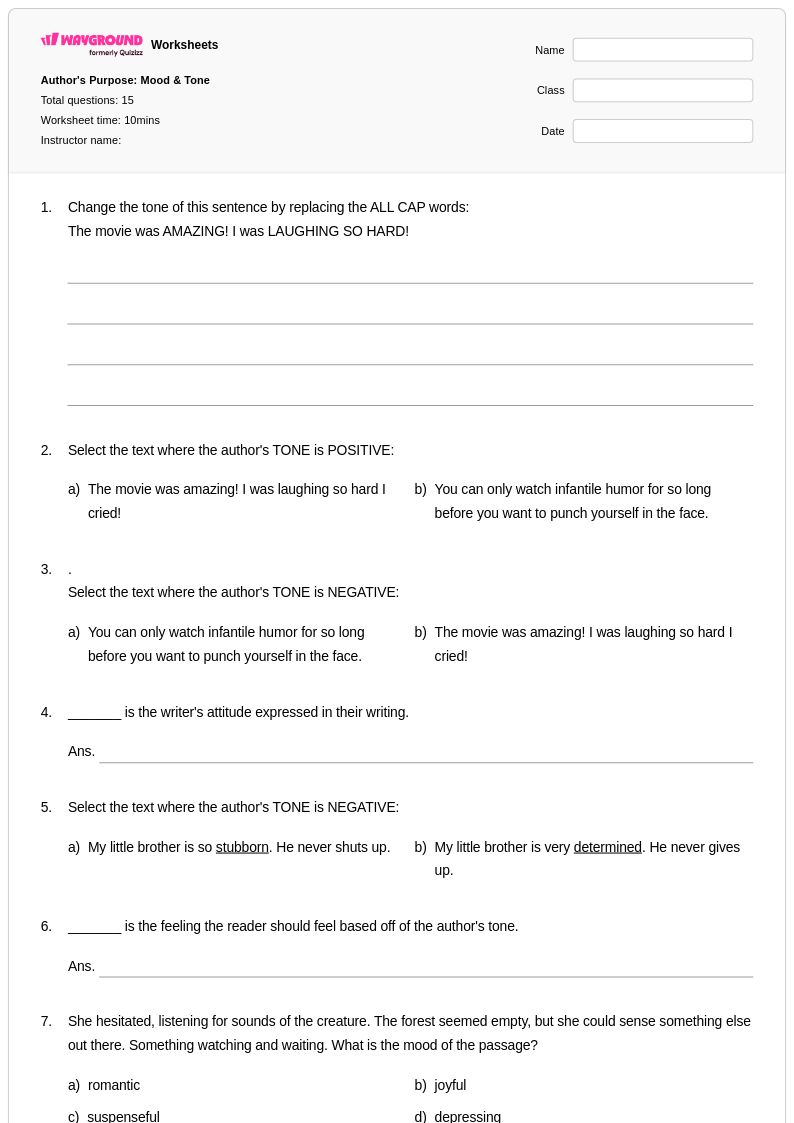
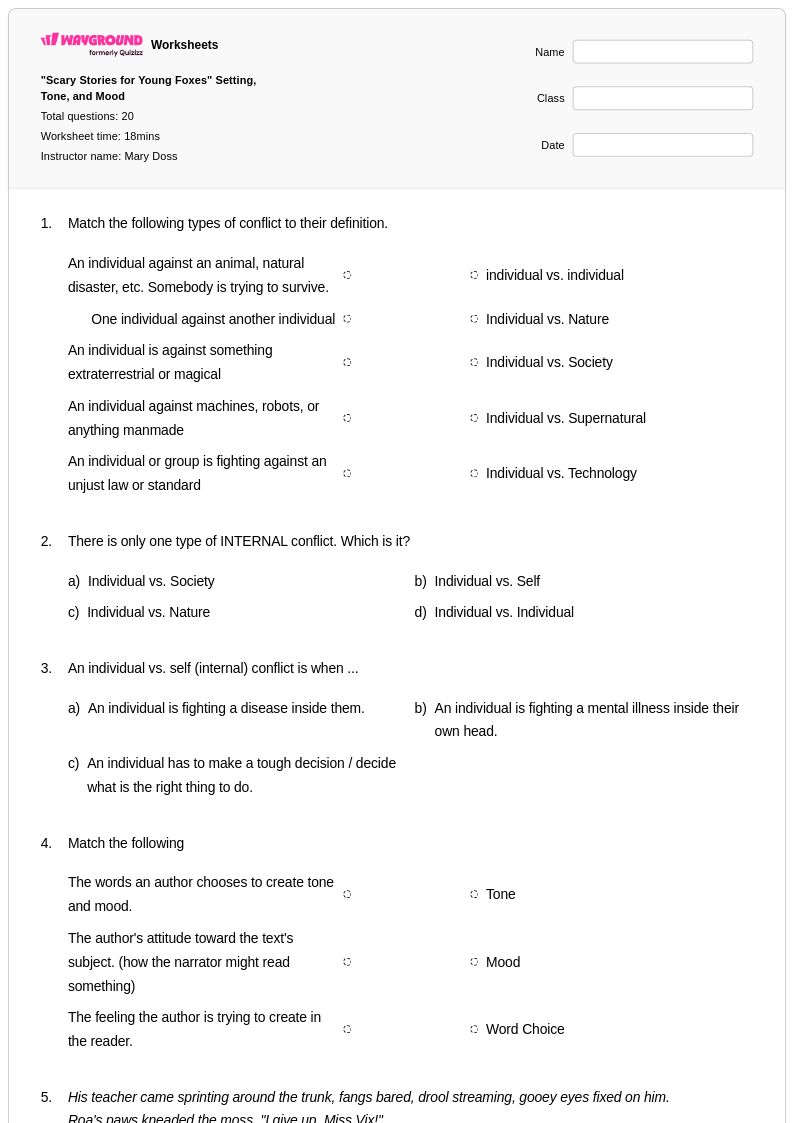
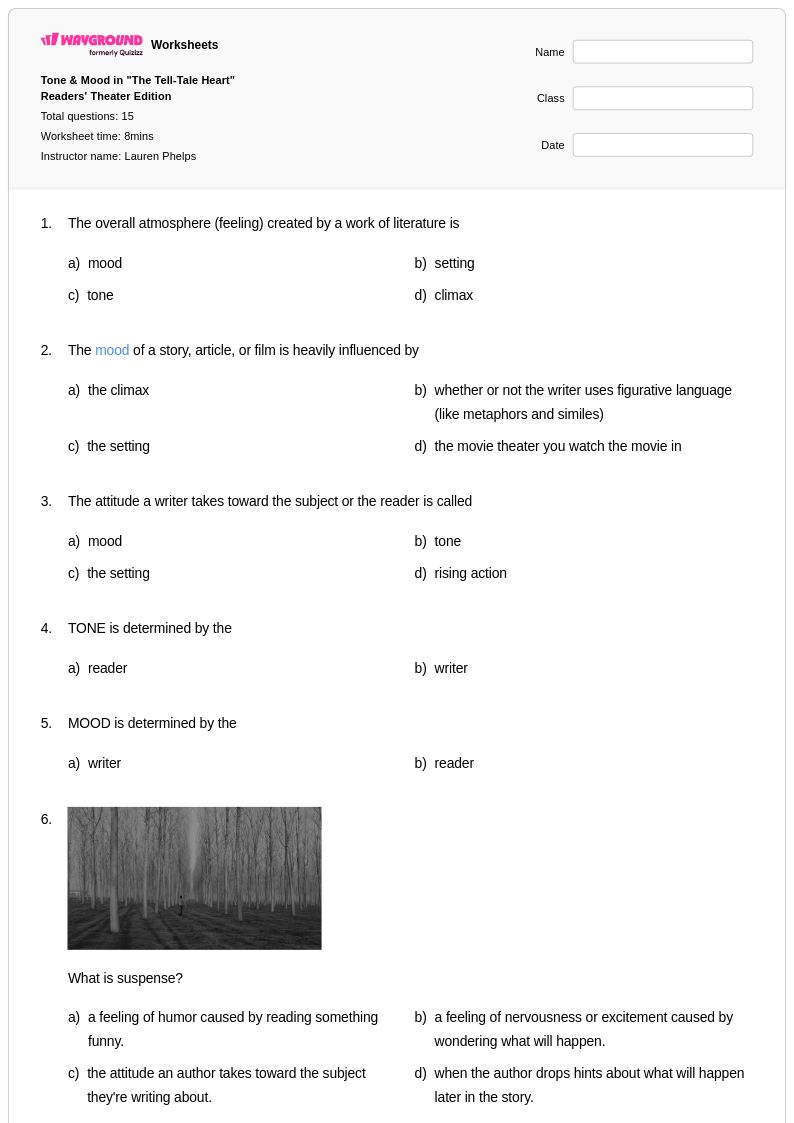
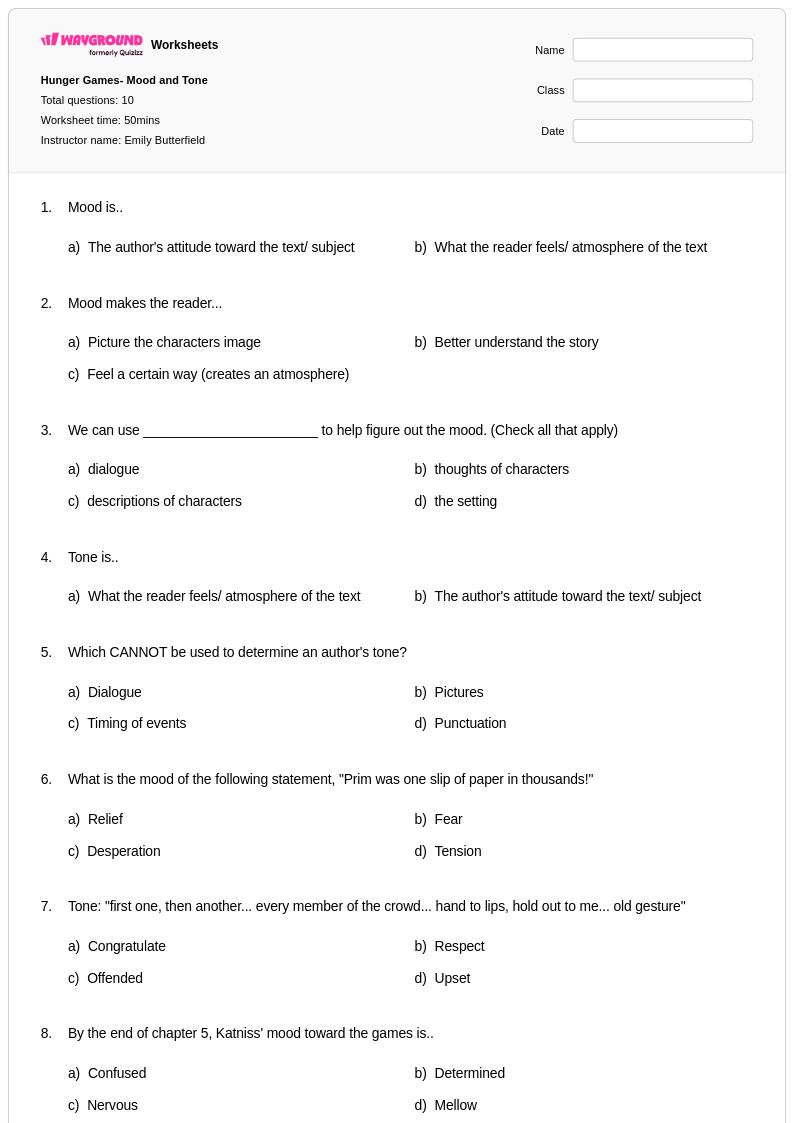
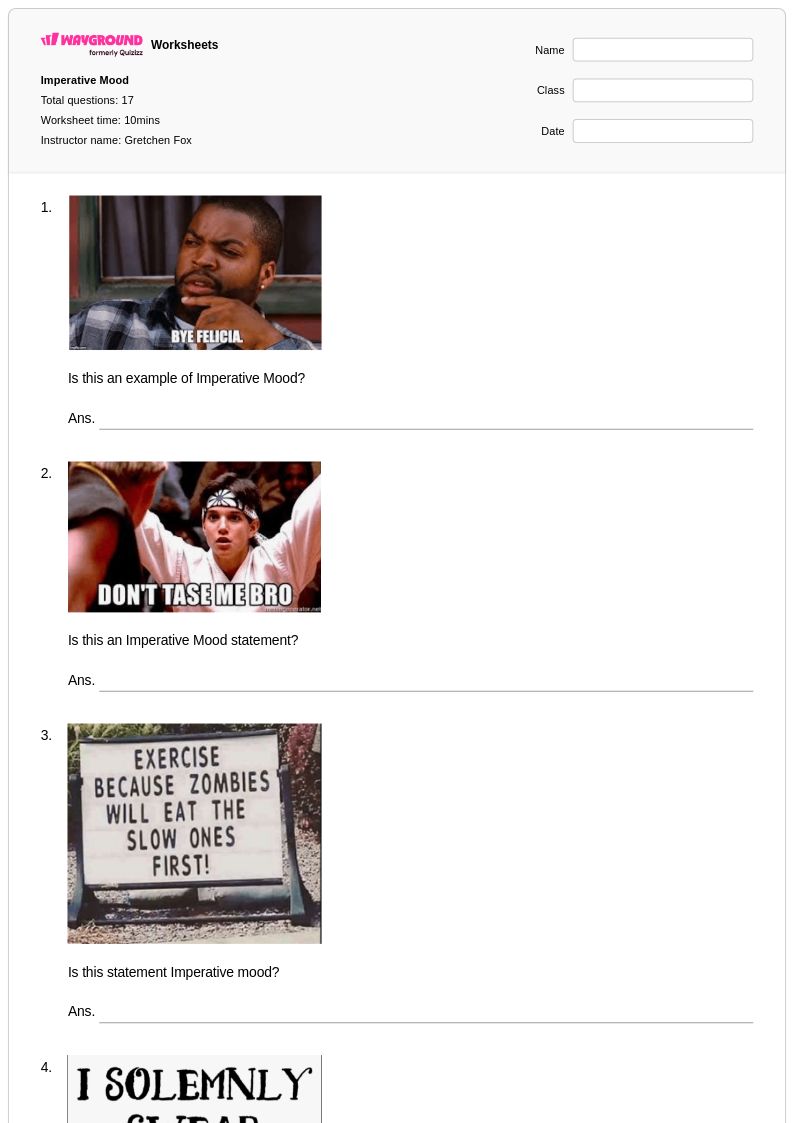
Analyzing mood worksheets for Class 8 students through Wayground (formerly Quizizz) provide comprehensive practice in identifying and interpreting the emotional atmosphere authors create in literary texts. These carefully crafted resources help eighth-grade students develop critical thinking skills by examining word choice, imagery, setting details, and character interactions that contribute to a text's overall mood. Students work through practice problems that guide them in distinguishing between mood and tone, recognizing subtle emotional shifts throughout passages, and supporting their analyses with textual evidence. Each worksheet includes an answer key to facilitate immediate feedback and self-assessment, while the printable pdf format ensures easy classroom distribution and independent study opportunities.
Wayground (formerly Quizizz) empowers teachers with millions of educator-created resources specifically designed to strengthen Class 8 reading comprehension through mood analysis activities. The platform's robust search and filtering capabilities allow instructors to quickly locate worksheets aligned with specific standards and learning objectives, while differentiation tools enable customization for diverse learner needs and reading levels. Teachers can seamlessly integrate these materials into lesson planning for initial instruction, targeted remediation, or enrichment activities, with both digital and printable formats providing maximum classroom flexibility. The extensive collection supports systematic skill practice through varied text genres and complexity levels, helping educators scaffold student understanding of how authors manipulate literary elements to evoke specific emotional responses in readers.
FAQs
How do I teach students to analyze mood in literature?
Start by helping students recognize that mood is the emotional atmosphere a reader feels, distinct from the narrator's tone. Teach them to identify specific textual evidence — word choice, setting details, and descriptive language — and explain how each contributes to an overall emotional effect. Anchor lessons in short passages first so students can practice close reading before moving to longer texts.
What is the difference between mood and tone in literature?
Tone refers to the author's or narrator's attitude toward the subject, while mood describes the emotional atmosphere that the reader experiences. For example, a passage can have a detached, clinical tone while still creating a feeling of dread or unease in the reader. Students frequently conflate these two concepts, so explicit side-by-side comparison using the same passage is the most effective way to clarify the distinction.
What exercises help students practice identifying mood in a text?
Effective practice exercises ask students to highlight specific words or phrases that contribute to mood and explain their emotional effect, rather than simply labeling a mood in one word. Passages that use contrasting moods — a cheerful opening that shifts to something ominous — are especially useful because they require students to track how word choice and setting details evolve. Worksheets that prompt textual evidence citation alongside mood identification build the analytical habit most useful for literary analysis assessments.
What mistakes do students commonly make when analyzing mood?
The most common error is confusing mood with plot summary — students describe what happens in a passage instead of how the language makes the reader feel. A second frequent mistake is labeling mood with vague terms like 'sad' or 'happy' without connecting that label to specific word choices or literary devices in the text. Teaching students to always cite a textual example before naming a mood significantly reduces both errors.
How can I differentiate mood analysis instruction for struggling and advanced readers?
For struggling readers, use shorter passages with more explicit emotional language and consider enabling read-aloud support so students can hear the rhythm and tone of the text rather than decoding it word by word. For advanced students, select passages with subtle or shifting moods that require inference and multi-step evidence analysis. On Wayground, teachers can apply accommodations such as read aloud, reduced answer choices, and extended time to individual students without notifying the rest of the class, allowing seamless differentiation within a single assignment.
How do I use Wayground's analyzing mood worksheets in my classroom?
Wayground's analyzing mood worksheets are available as printable PDFs, making them easy to incorporate into traditional classroom instruction or send home for independent practice, and they also come in digital formats suited for blended or fully online learning environments. Teachers can host the worksheets as an interactive quiz directly on Wayground, which allows for real-time response tracking. All worksheets include complete answer keys, so grading and feedback are straightforward regardless of the format used.