Free Printable Literary Terms Development Worksheets for Class 8
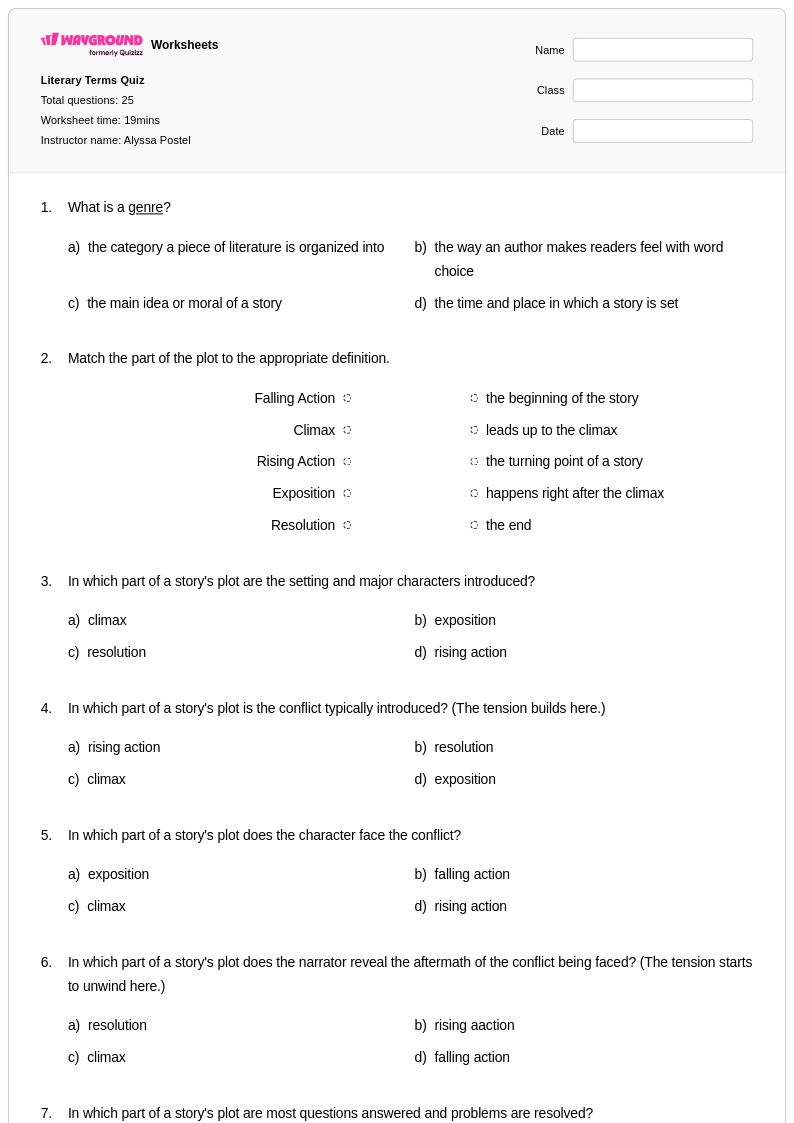
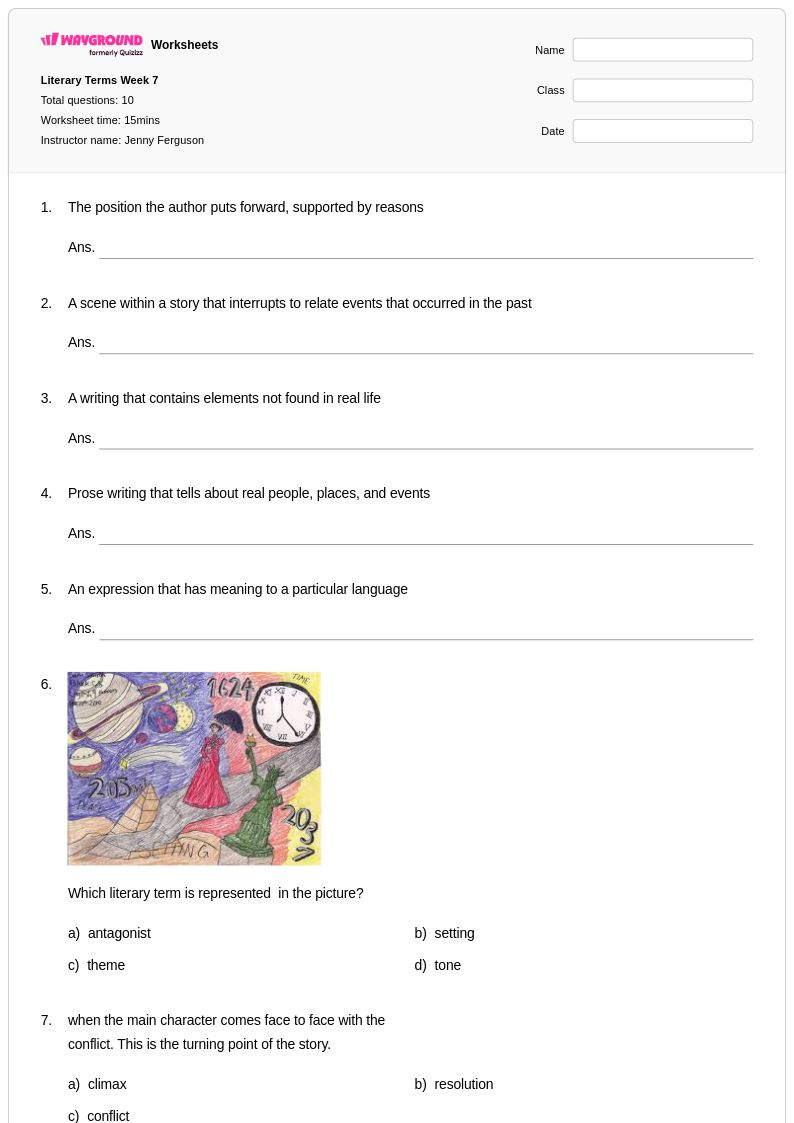
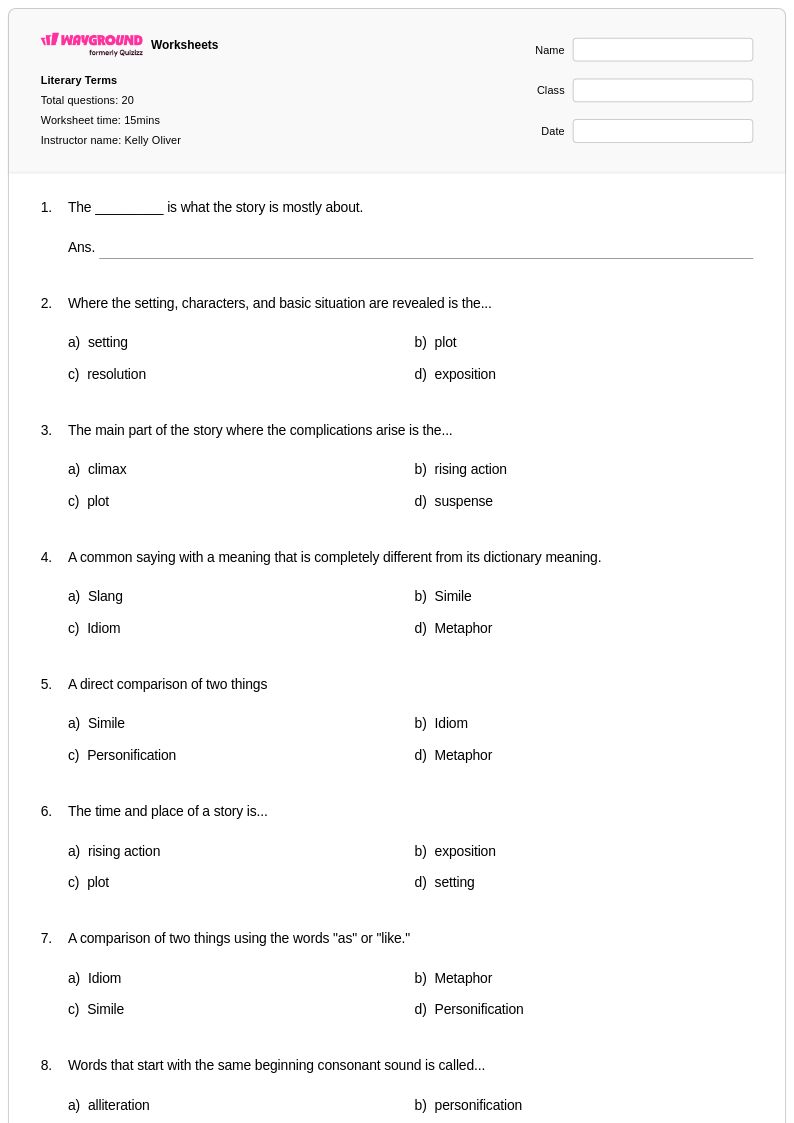
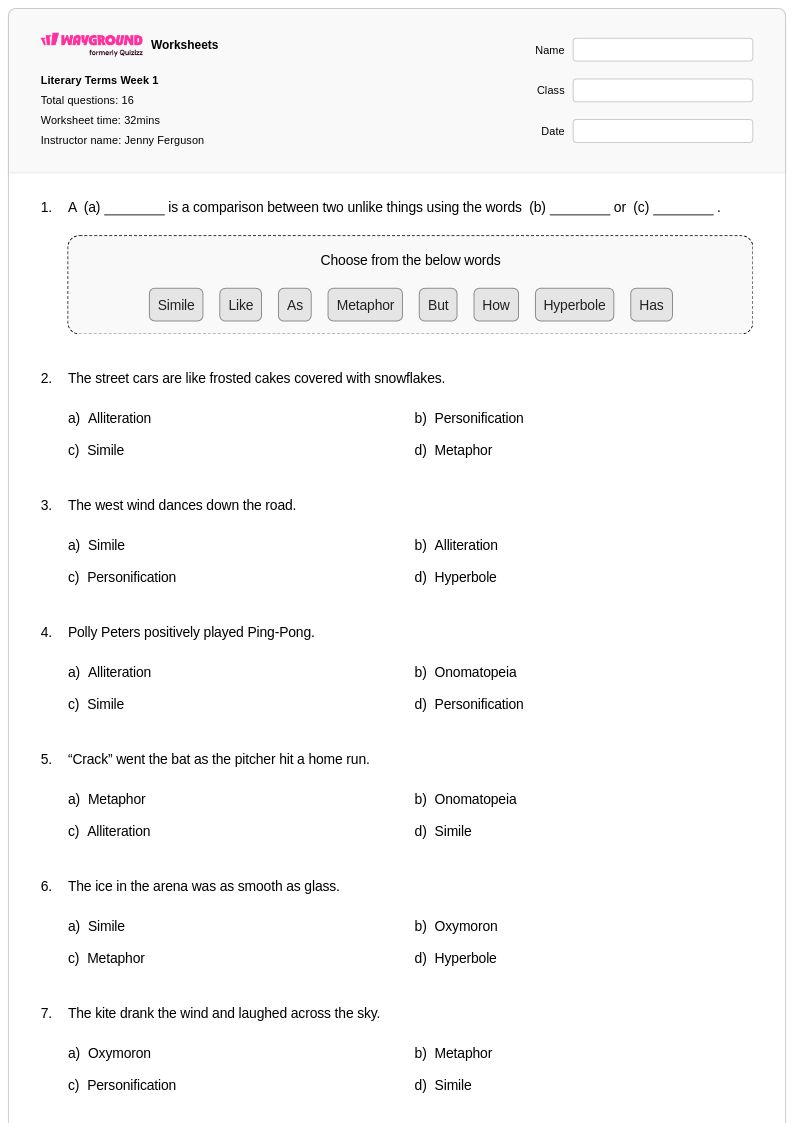
Class 8 literary terms development worksheets from Wayground help students master figurative language, narrative elements, and poetic devices through engaging printables with comprehensive answer keys and targeted practice problems.
Explore printable Literary Terms Development worksheets for Class 8
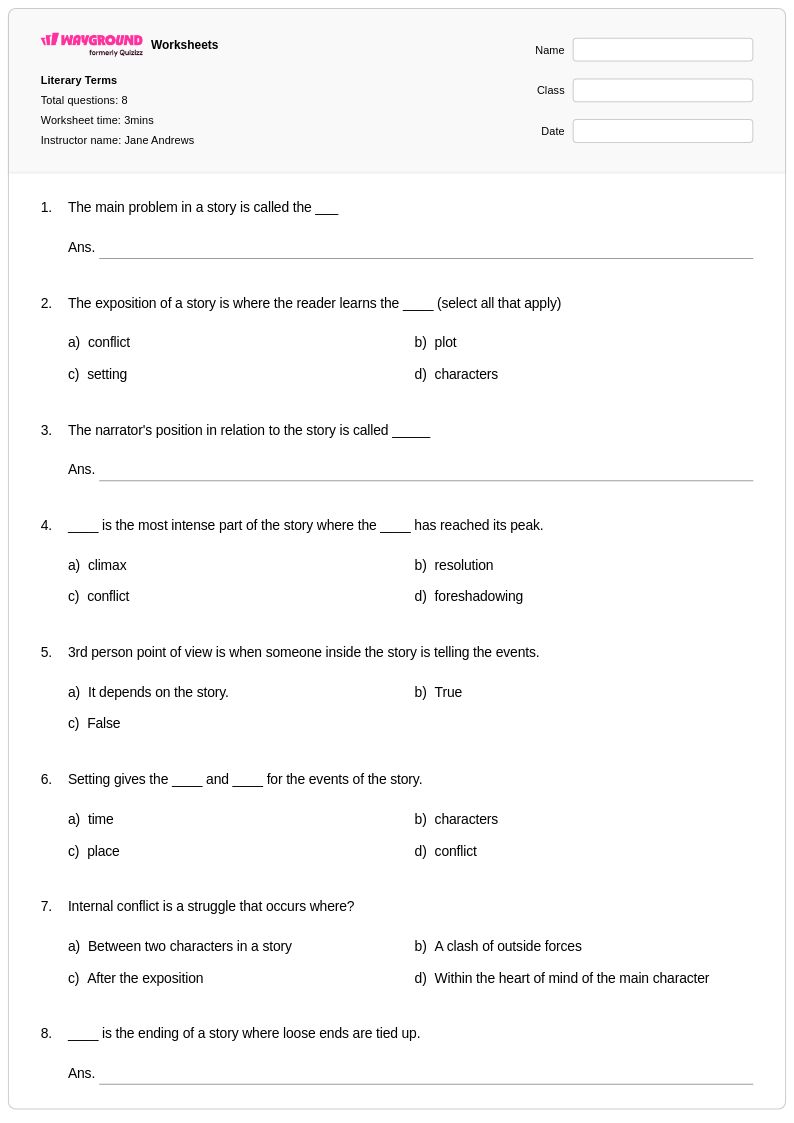
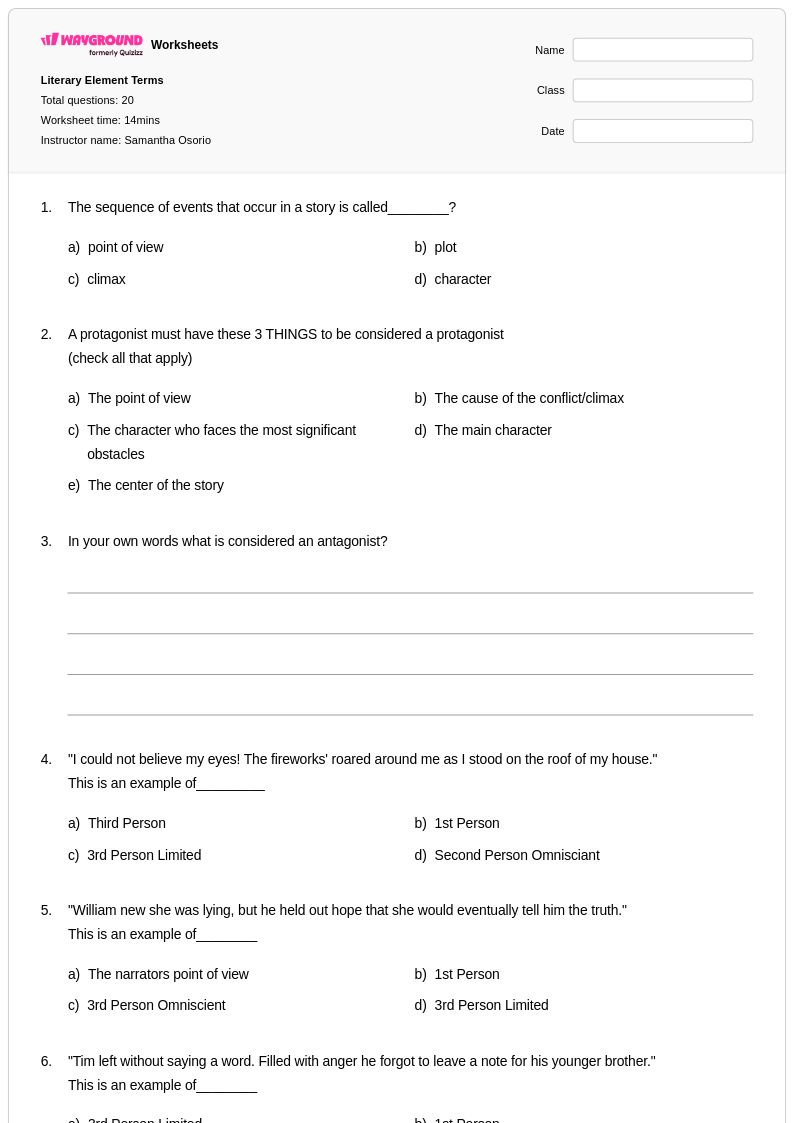
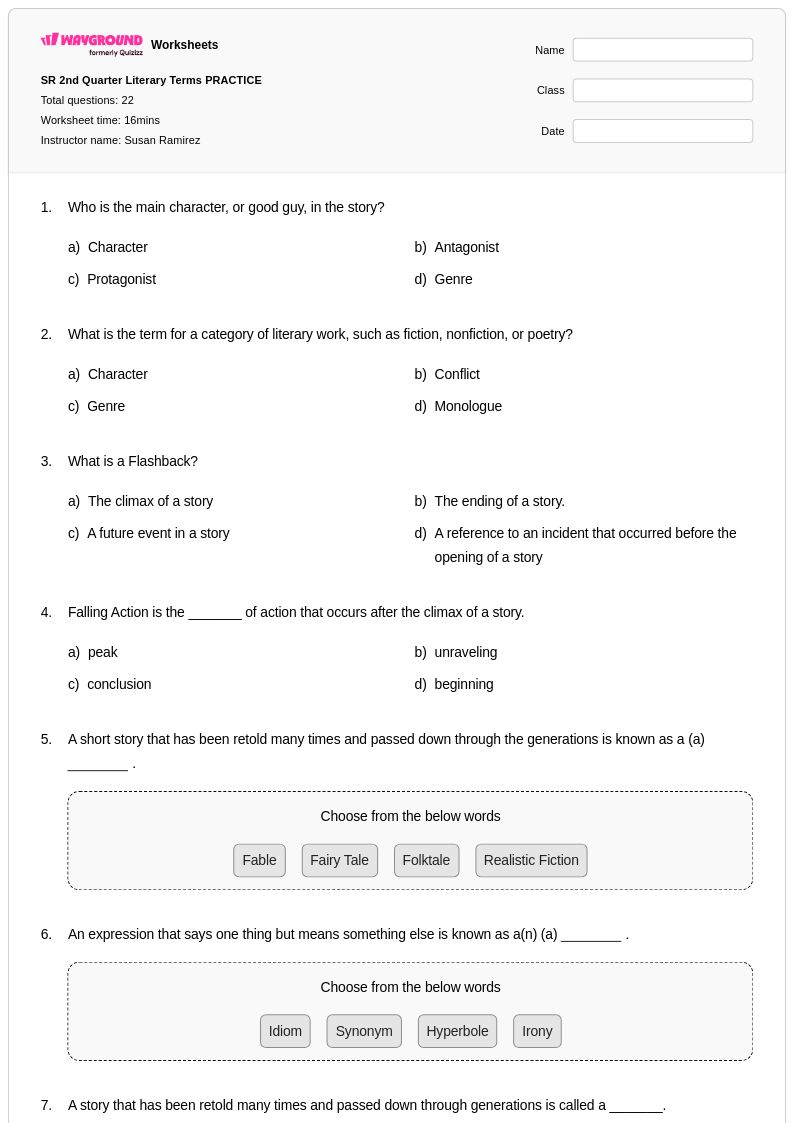
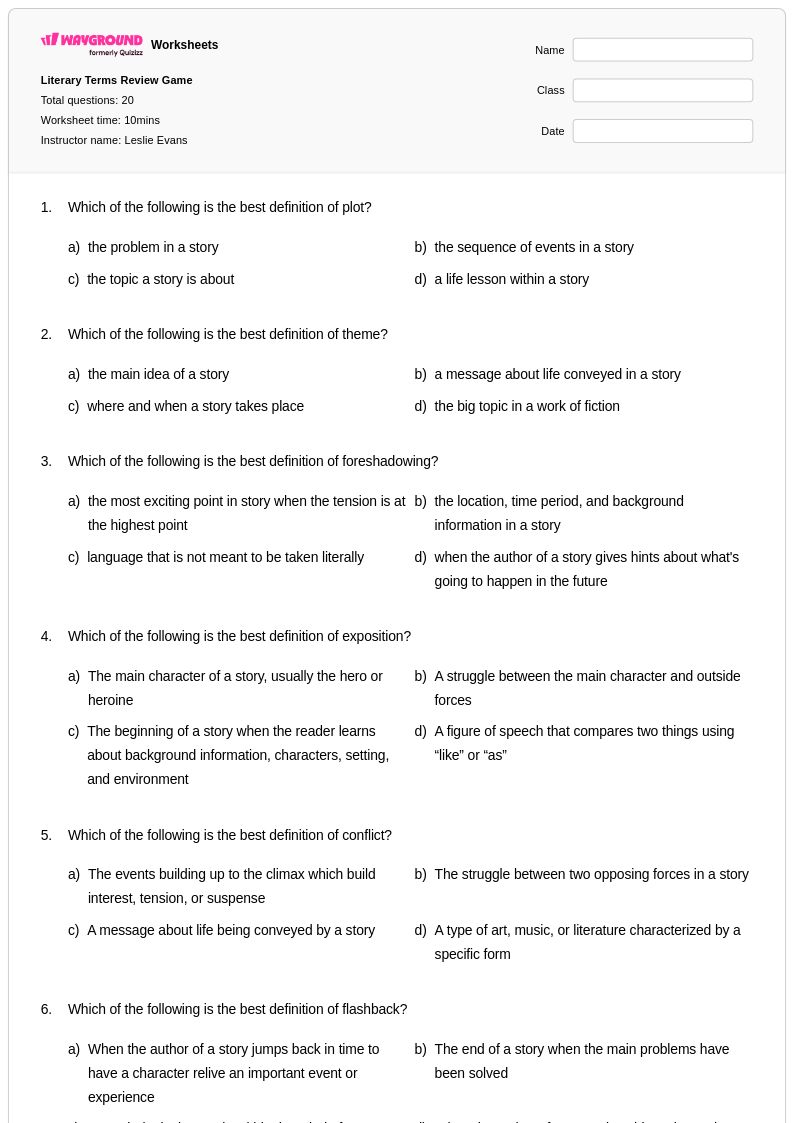
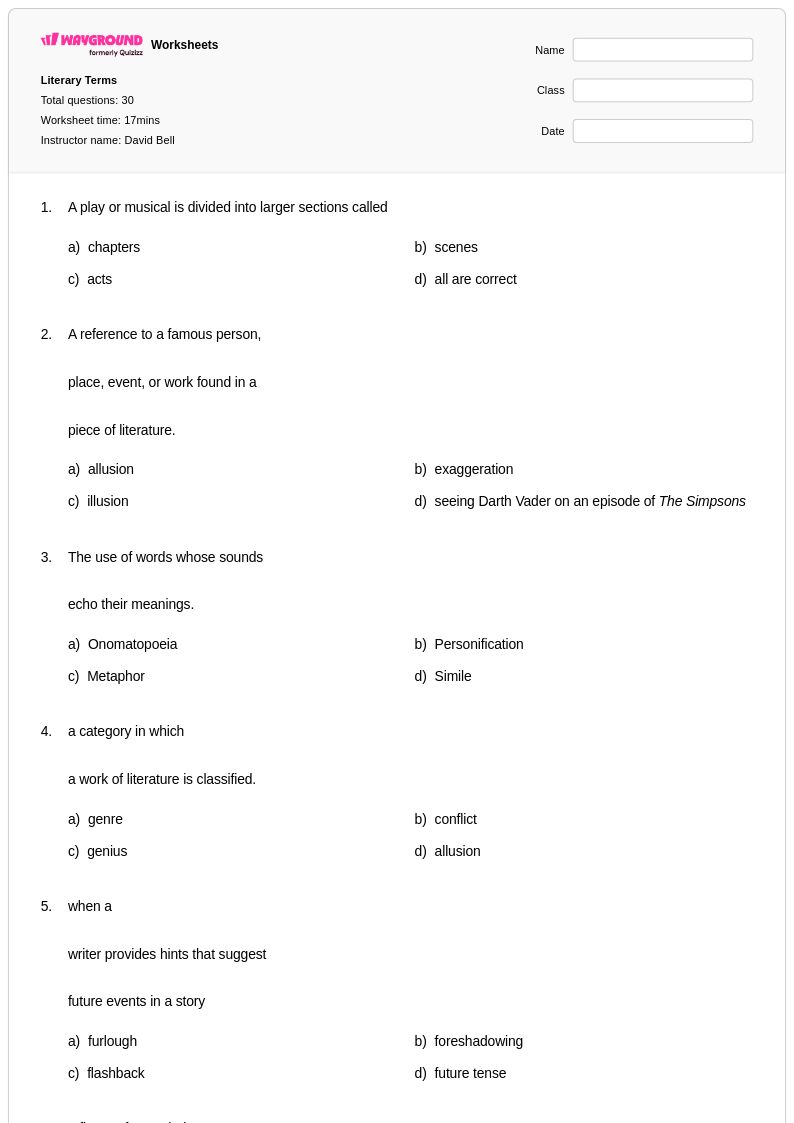
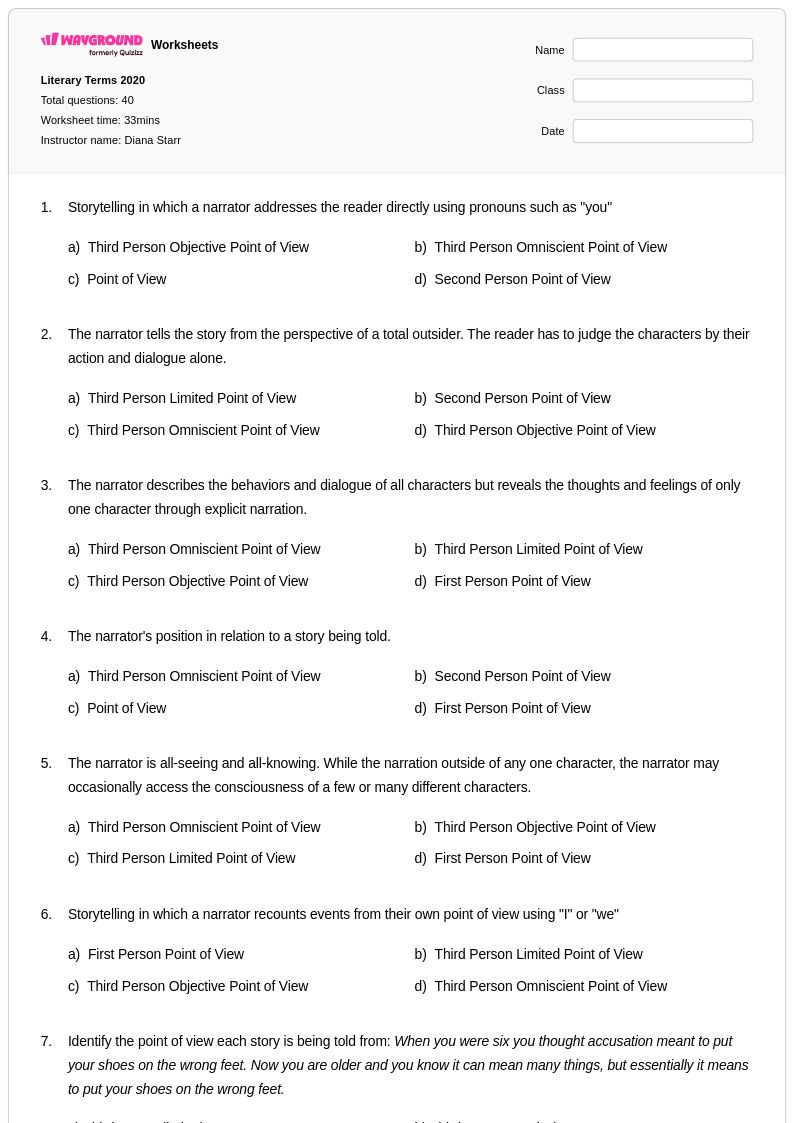
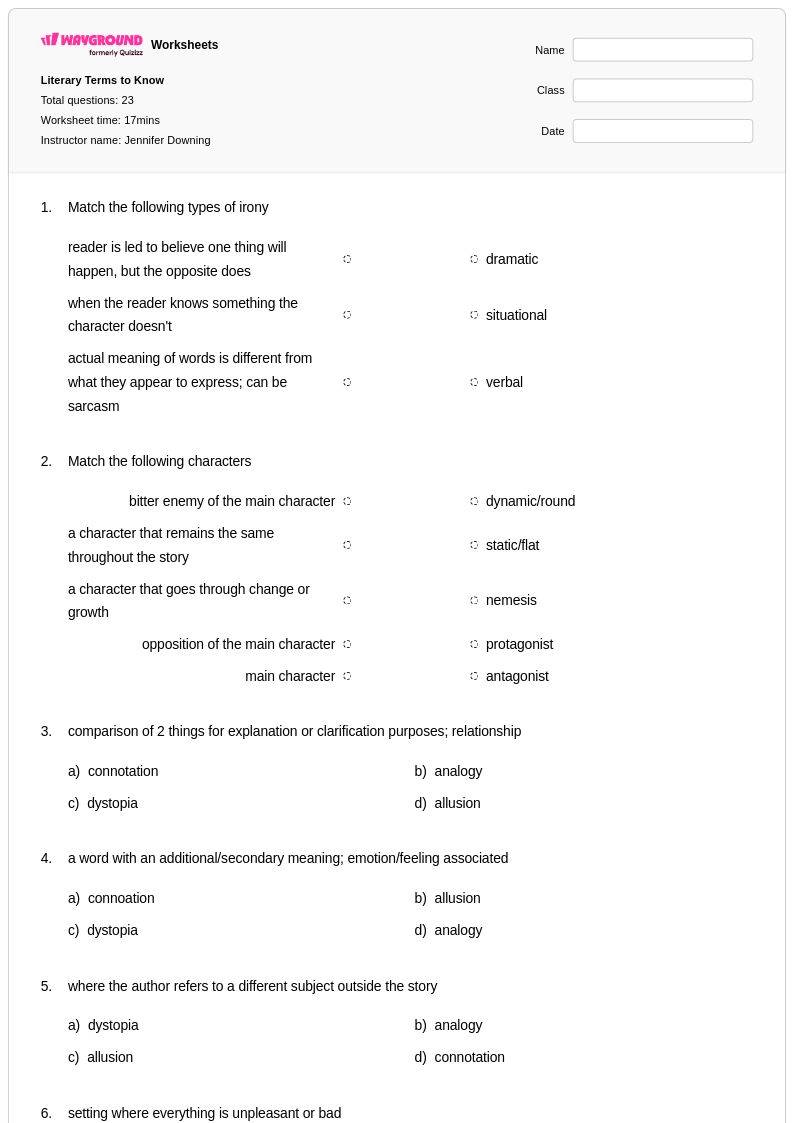
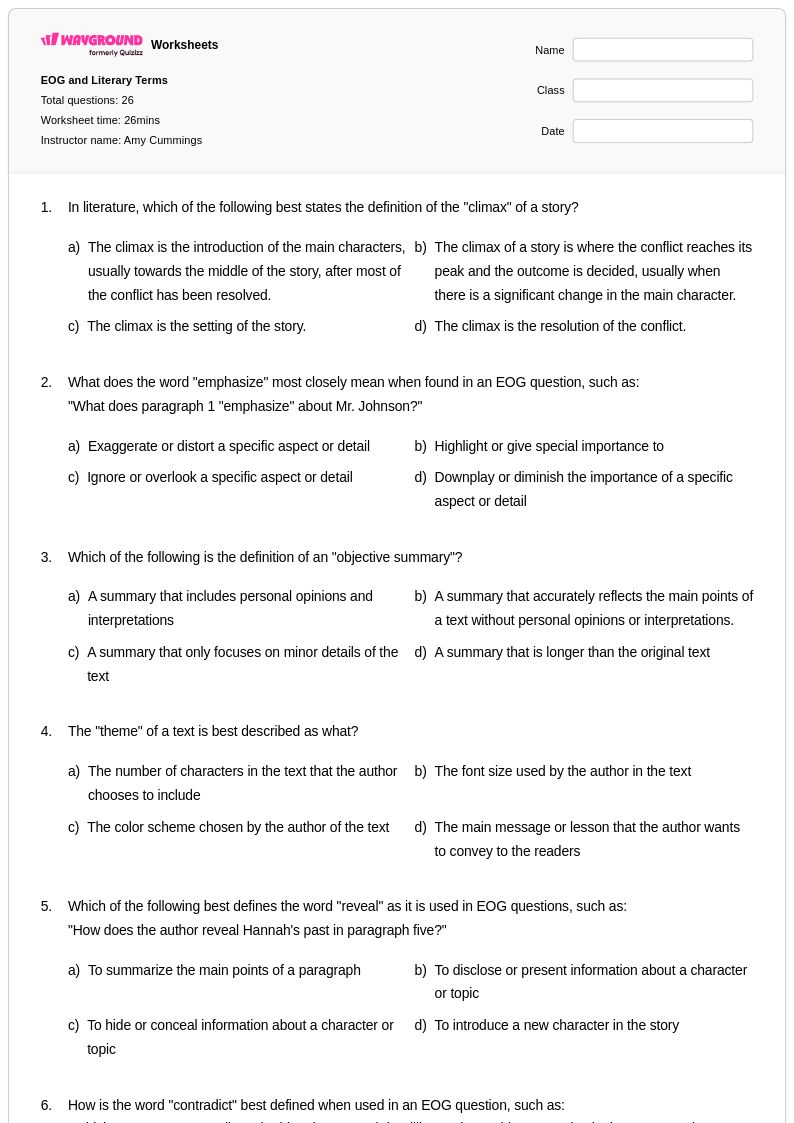
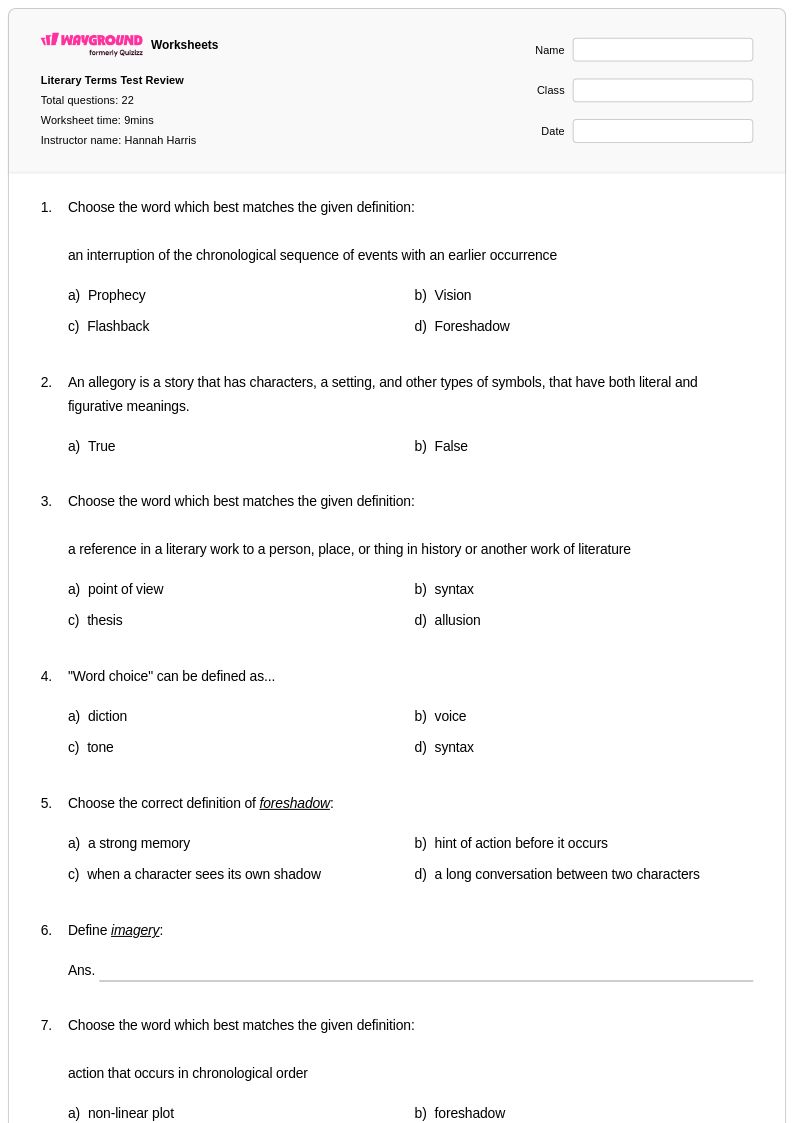
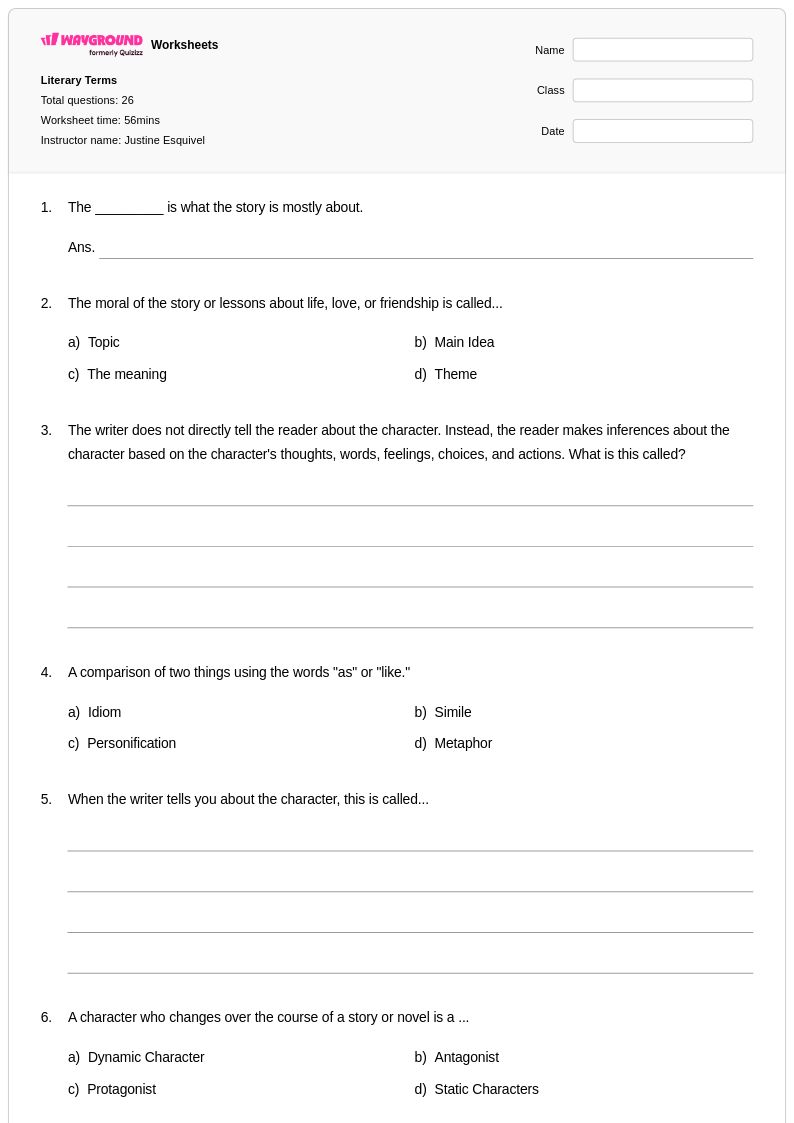
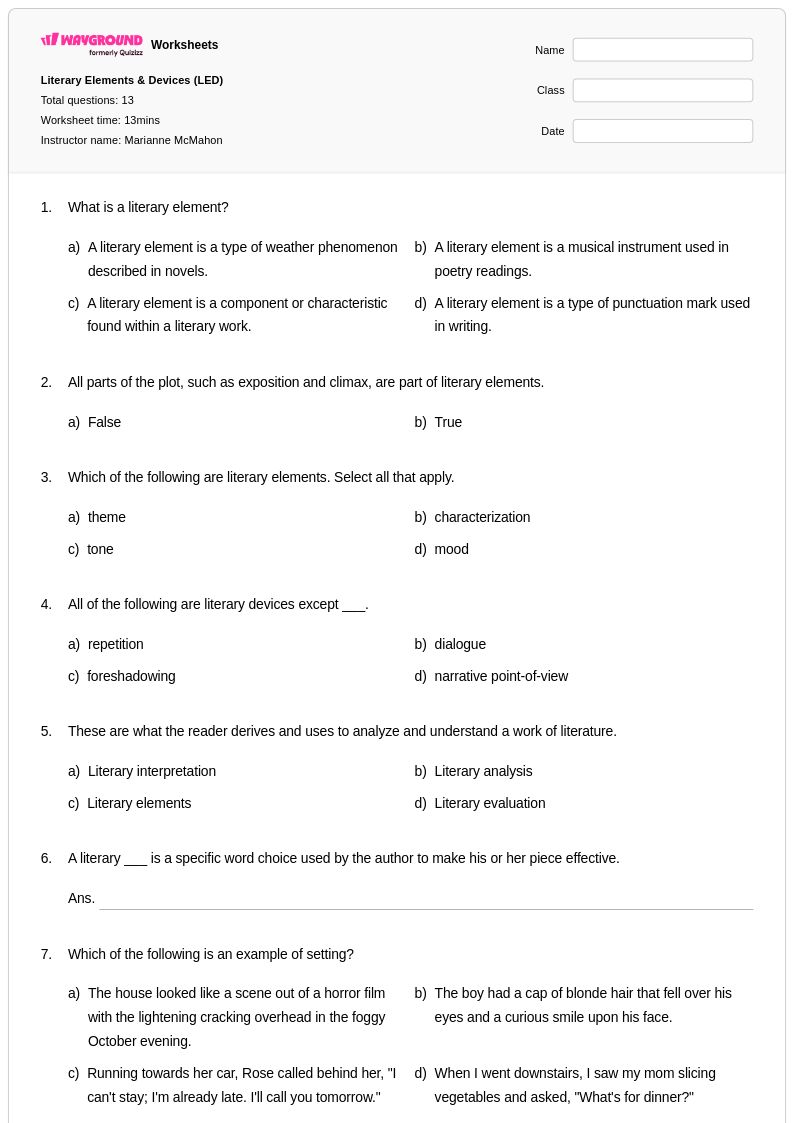
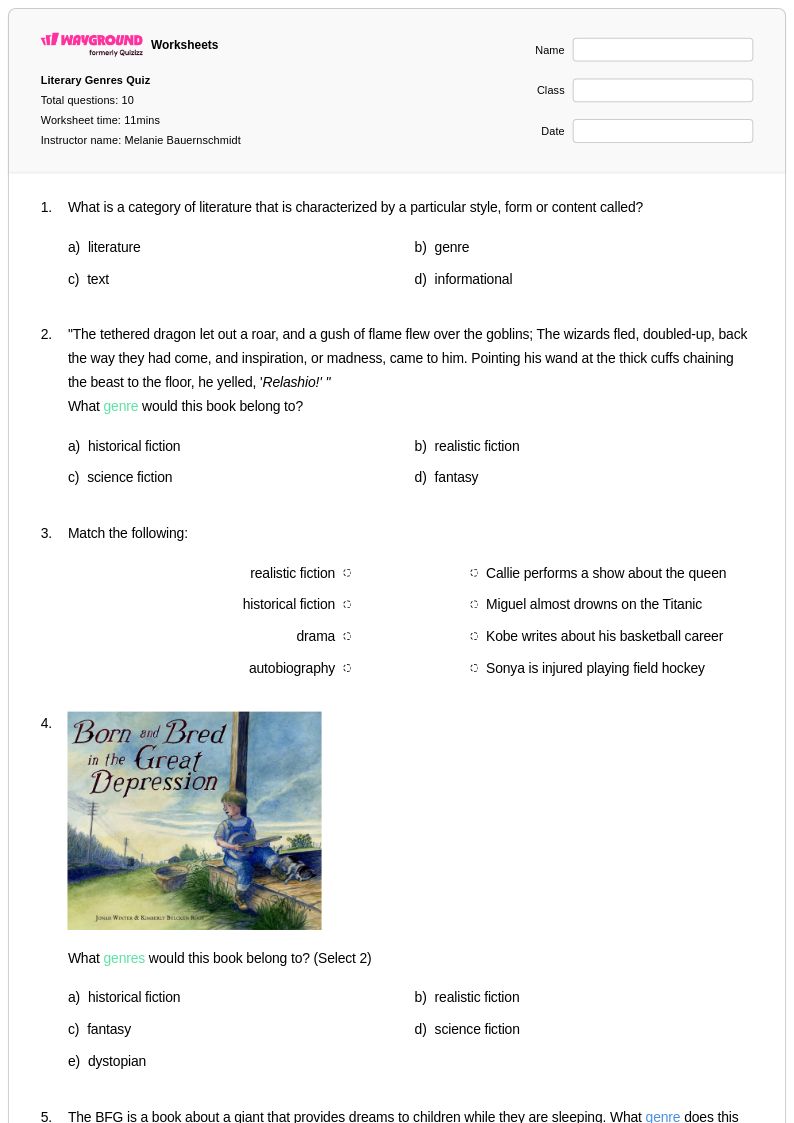
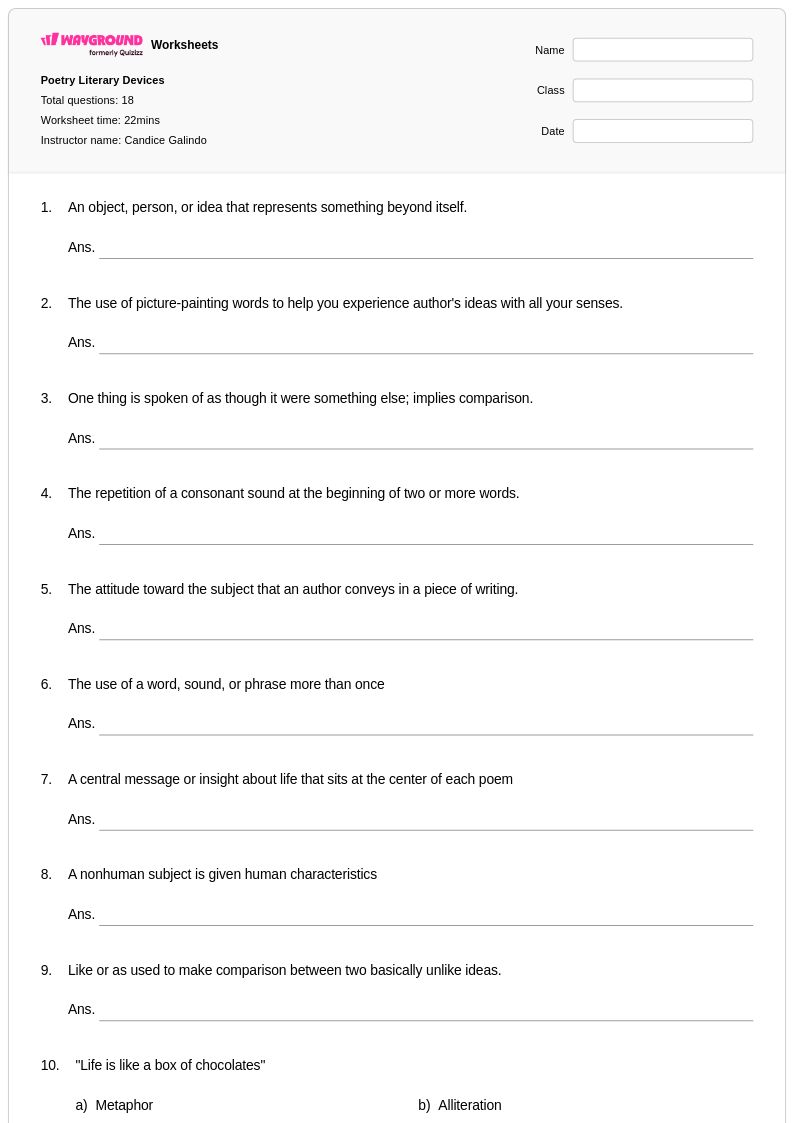
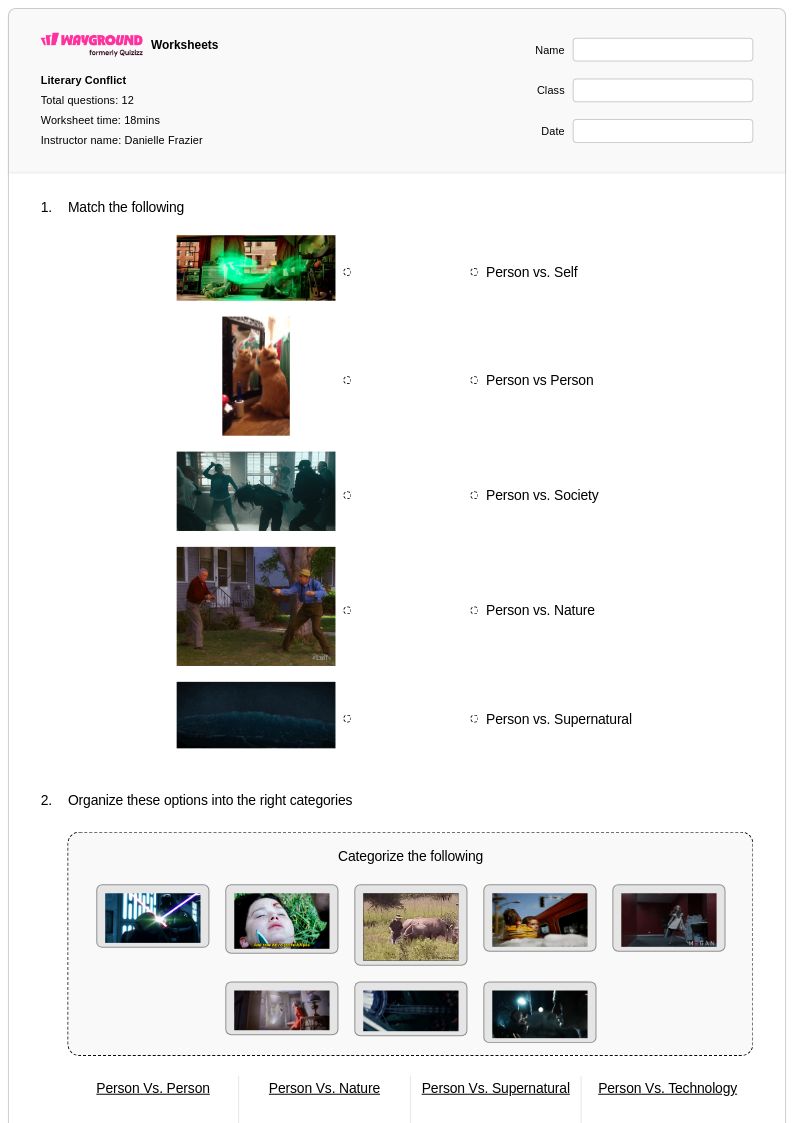
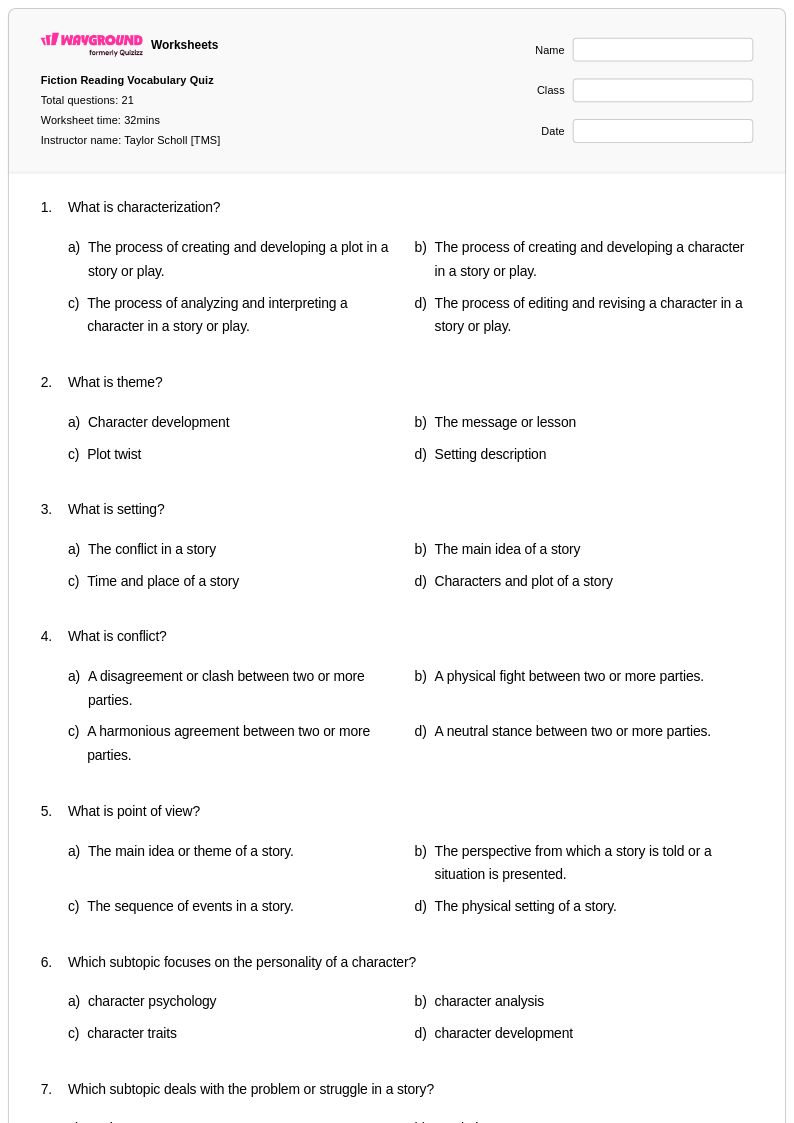
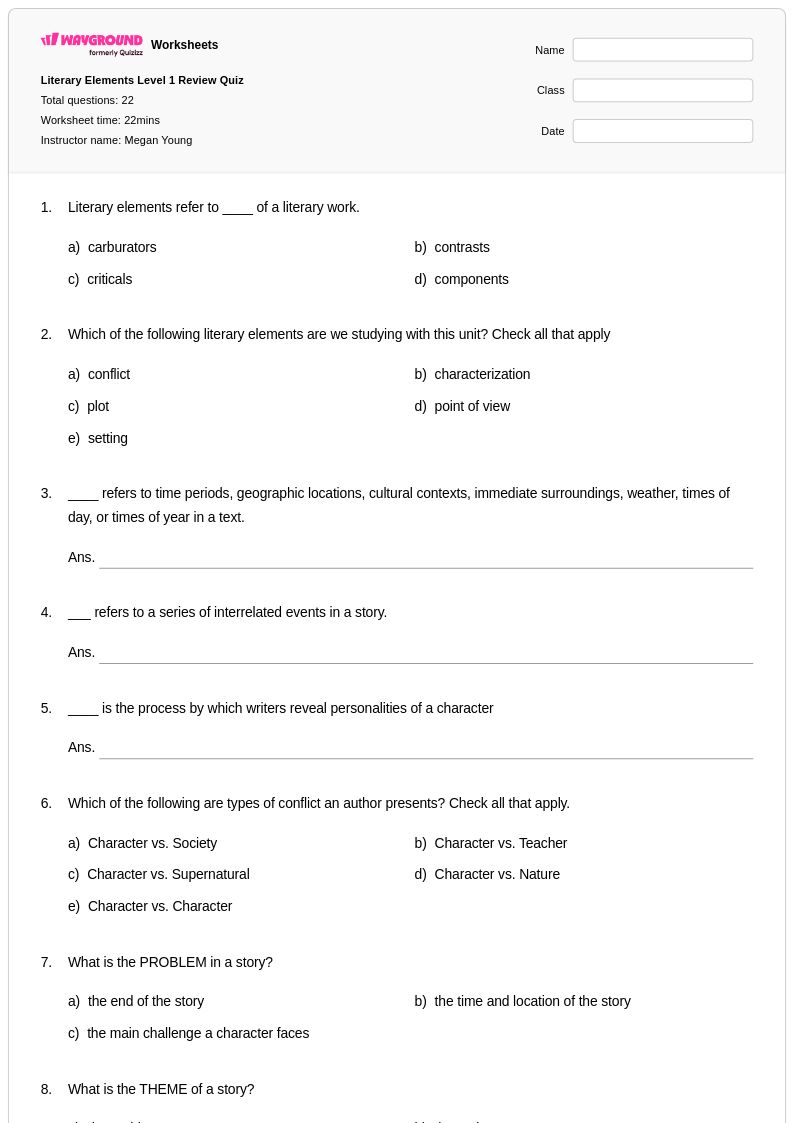
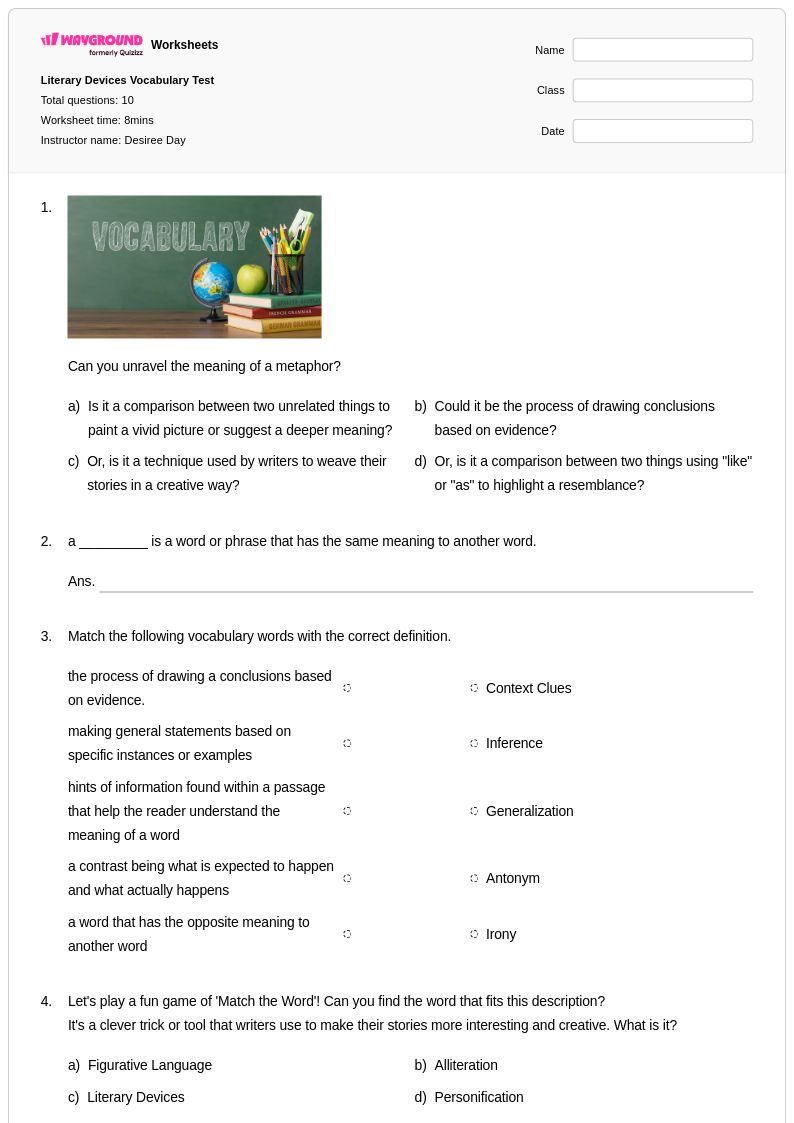
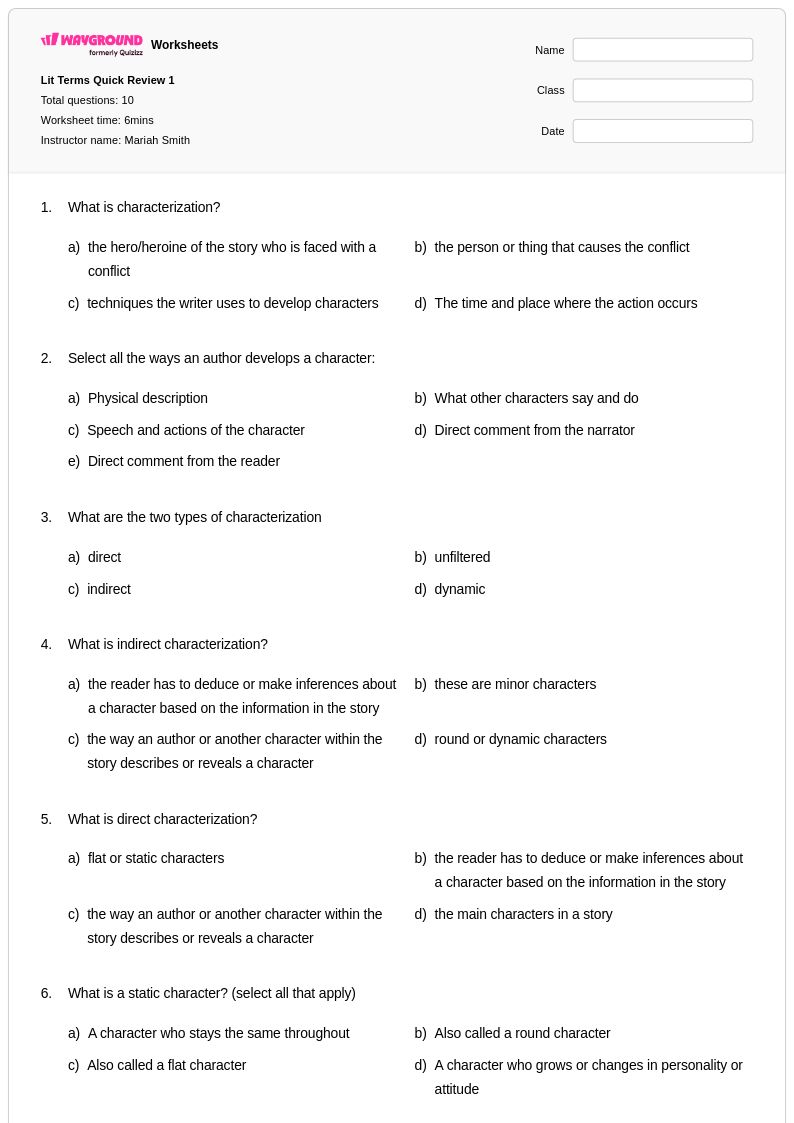
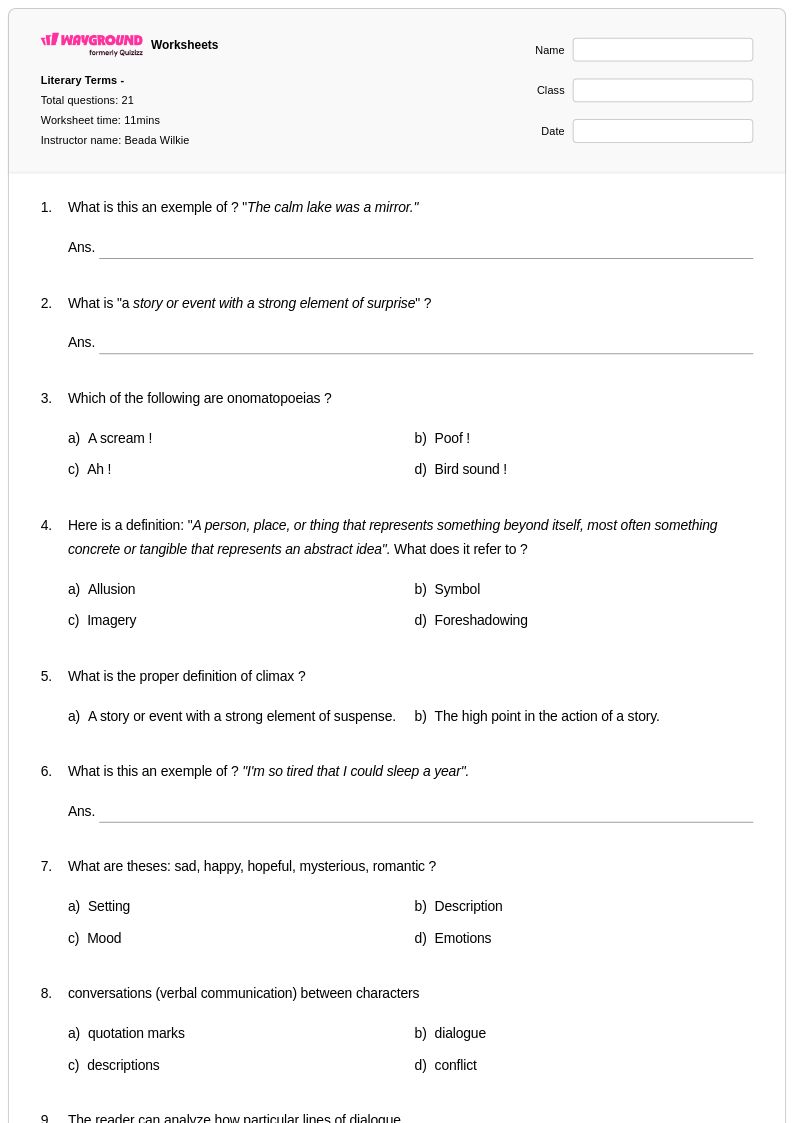
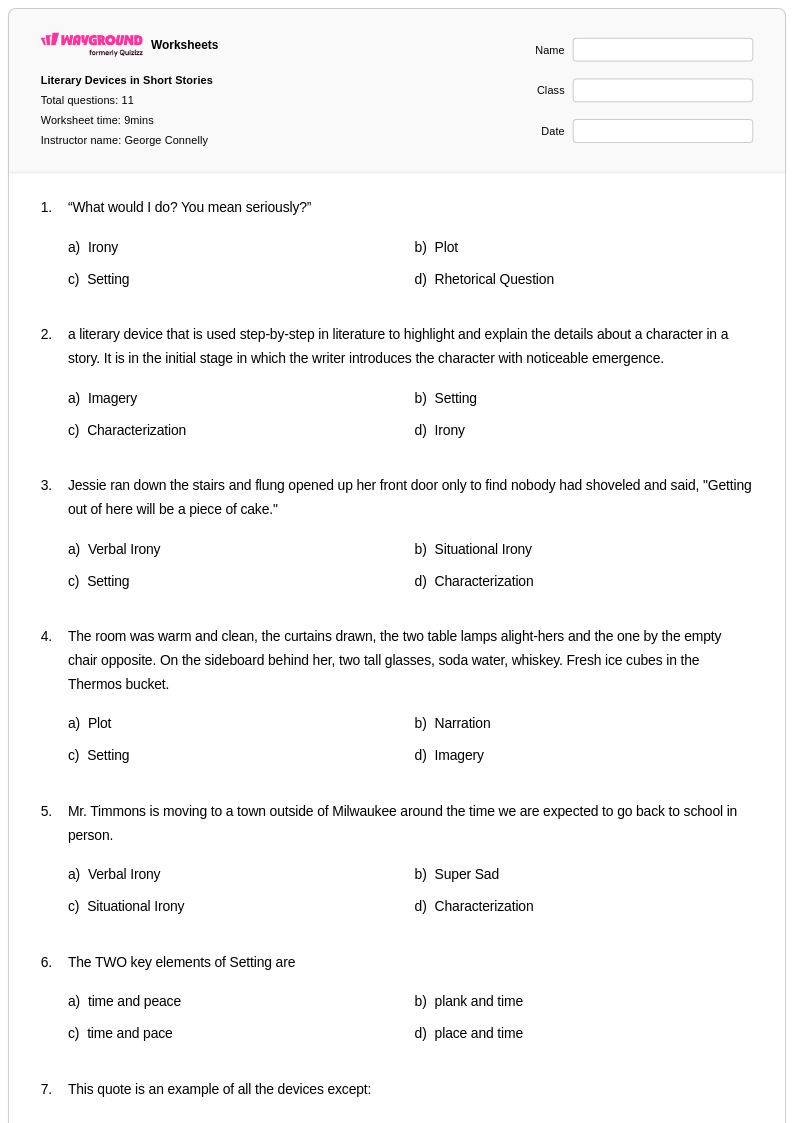
Literary terms development worksheets for Class 8 students available through Wayground (formerly Quizizz) provide comprehensive practice with essential vocabulary and concepts that form the foundation of advanced reading comprehension. These expertly crafted resources help students master critical literary devices such as metaphor, symbolism, irony, foreshadowing, and characterization while building the analytical skills necessary for interpreting complex texts. Each worksheet includes carefully structured practice problems that guide students through identifying, analyzing, and applying literary terms in various contexts, with complete answer keys provided to support both independent study and classroom instruction. These free printables offer systematic skill development through progressively challenging exercises that strengthen students' ability to recognize literary techniques and understand their impact on meaning, preparing them for more sophisticated textual analysis.
Wayground (formerly Quizizz) empowers educators with an extensive collection of millions of teacher-created literary terms development worksheets specifically designed for Class 8 reading comprehension instruction. The platform's advanced search and filtering capabilities allow teachers to quickly locate resources aligned with specific curriculum standards and learning objectives, while built-in differentiation tools enable seamless adaptation of materials for diverse student needs. These customizable worksheets are available in both printable pdf format and interactive digital versions, providing flexibility for various instructional settings and learning preferences. Teachers can efficiently plan targeted skill practice sessions, implement remediation strategies for struggling readers, and offer enrichment opportunities for advanced students, all while accessing a constantly expanding library of high-quality resources that support comprehensive literary terms instruction and assessment.
FAQs
How do I teach literary terms effectively in the classroom?
Effective literary terms instruction starts with grounding each term in a concrete, memorable example from a text students already know. From there, move students through a gradual release: direct instruction on the term's definition, guided identification in short passages, and finally independent application in longer texts. Pairing terms thematically, such as grouping figurative language devices like metaphor, simile, and personification together, helps students build categorical understanding rather than memorizing terms in isolation.
What exercises help students practice identifying literary terms in context?
The most effective practice exercises require students to identify literary terms within actual passages rather than in isolation. Matching activities that connect definitions to textual examples, short-passage annotation tasks, and fill-in-the-blank exercises using authentic excerpts all build recognition and analytical skill simultaneously. Worksheets that progress from identification to interpretation, asking students not just to name the device but to explain its effect on meaning or tone, develop the deeper analytical vocabulary needed for literary analysis.
What mistakes do students commonly make when learning literary terms?
One of the most frequent errors is surface-level labeling: students identify that a device is present without explaining what it accomplishes in the text. Students also regularly confuse structurally similar terms, such as metaphor and simile, or mood and tone, particularly when those terms appear without clear contextual contrast. Another common misconception is treating literary terms as interchangeable with themes, which leads students to conflate the device with its meaning rather than analyzing how the device constructs meaning.
How do I differentiate literary terms instruction for students at different skill levels?
For students who are still building foundational vocabulary, start with high-frequency devices, such as metaphor, simile, and imagery, and use visual anchor charts to reinforce definitions. More advanced students benefit from exercises that ask them to evaluate how an author's choice of a specific device shapes the reader's interpretation. On Wayground, teachers can apply accommodations such as reduced answer choices to lower the cognitive load for students who need additional support, while other students work through standard question sets, all within the same session.
How can I use Wayground's literary terms worksheets in my classroom?
Wayground's literary terms development worksheets are available as printable PDFs, making them easy to assign as classwork, homework, or review packets in a traditional classroom setting. They are also available in digital formats for technology-integrated environments, and teachers can host them as a quiz directly on Wayground for interactive practice. All worksheets include answer keys, which supports both self-paced independent study and teacher-led instruction.
How do I assess whether students have genuinely mastered a literary term versus just memorized it?
True mastery shows when students can identify a device in an unfamiliar passage and articulate its effect on the text, not just recall a definition. Assessment tasks that present new excerpts and ask students to locate, name, and analyze a device are far more reliable indicators of understanding than definition-matching alone. Look for students' ability to explain why an author might have chosen a particular device, since this signals analytical comprehension rather than surface memorization.