Free Printable Key Ideas and Details Worksheets for Class 8
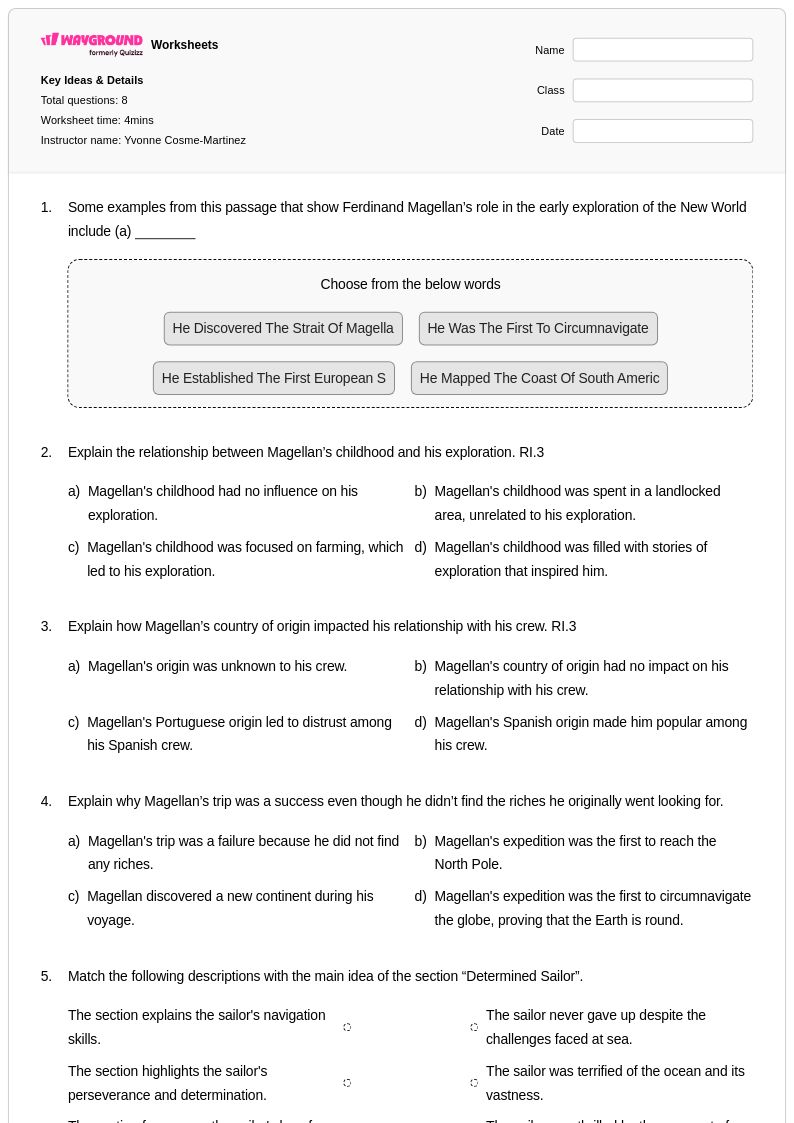
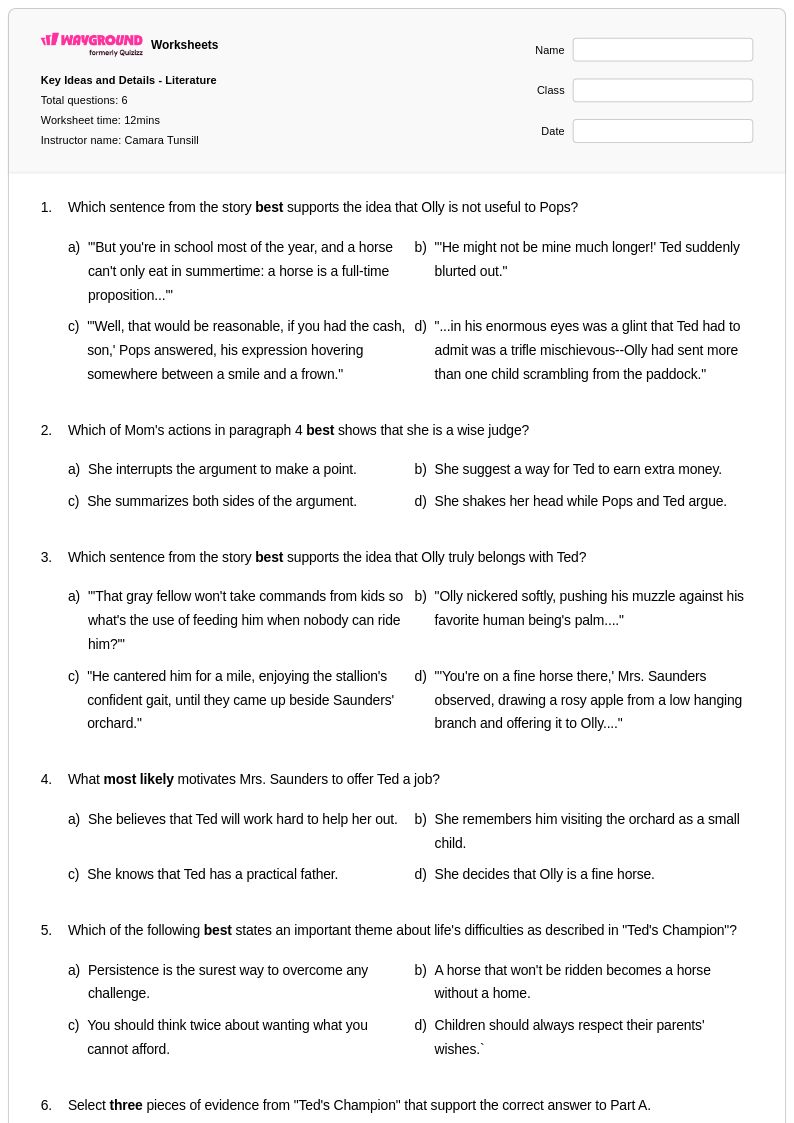
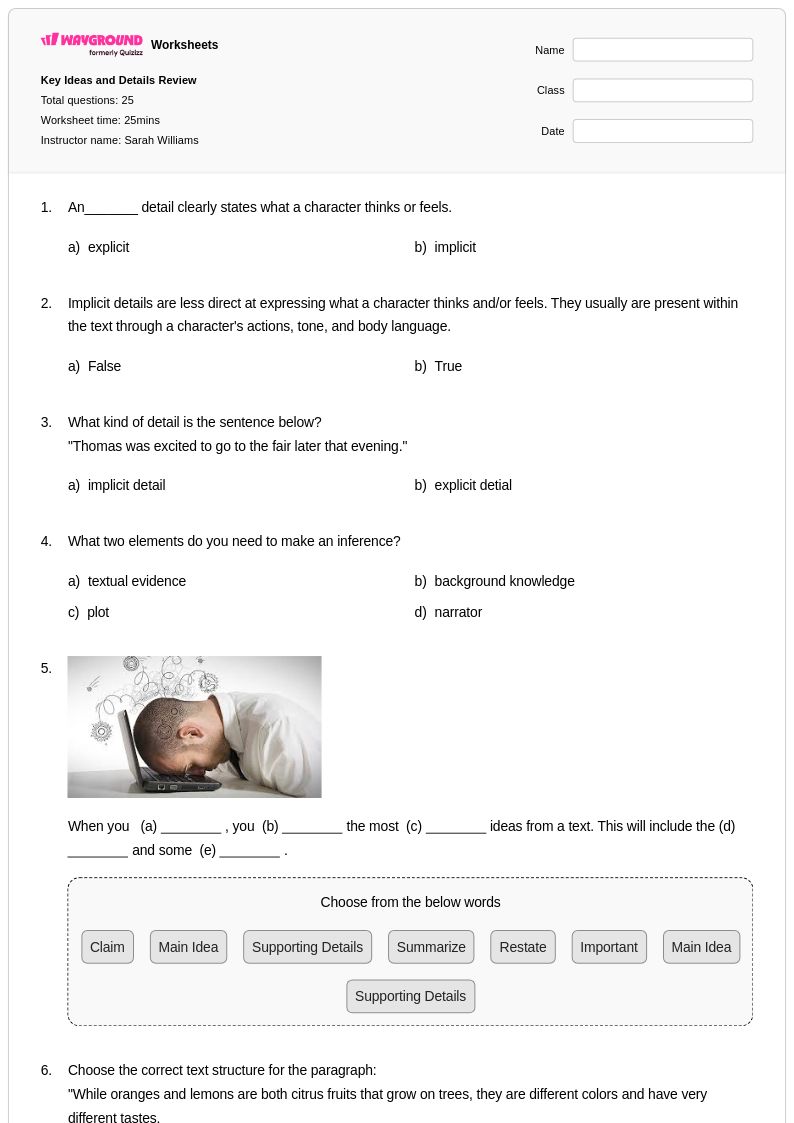
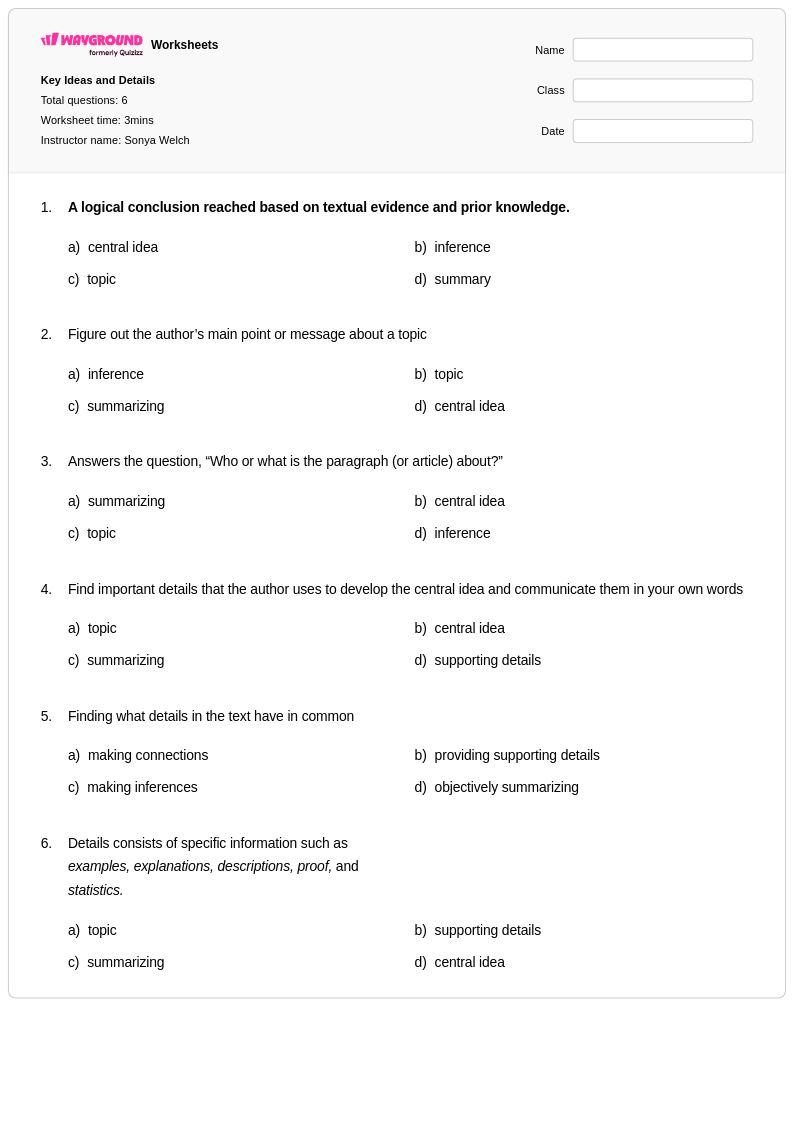
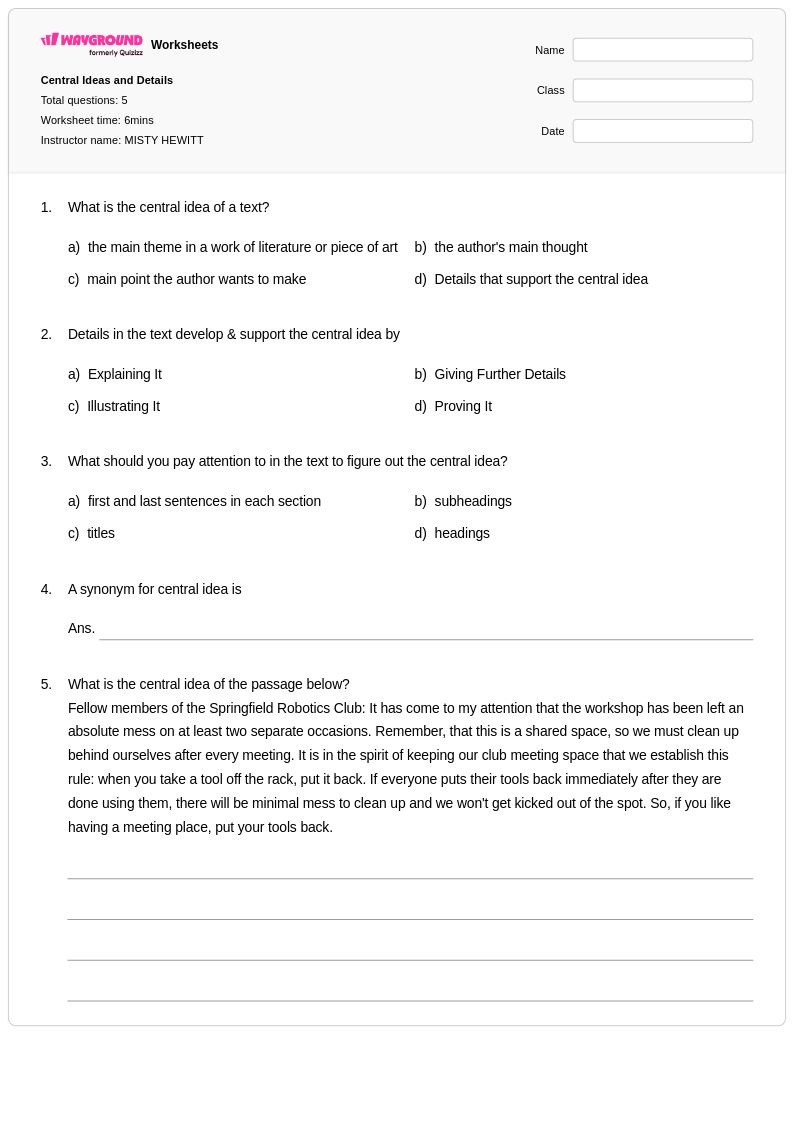
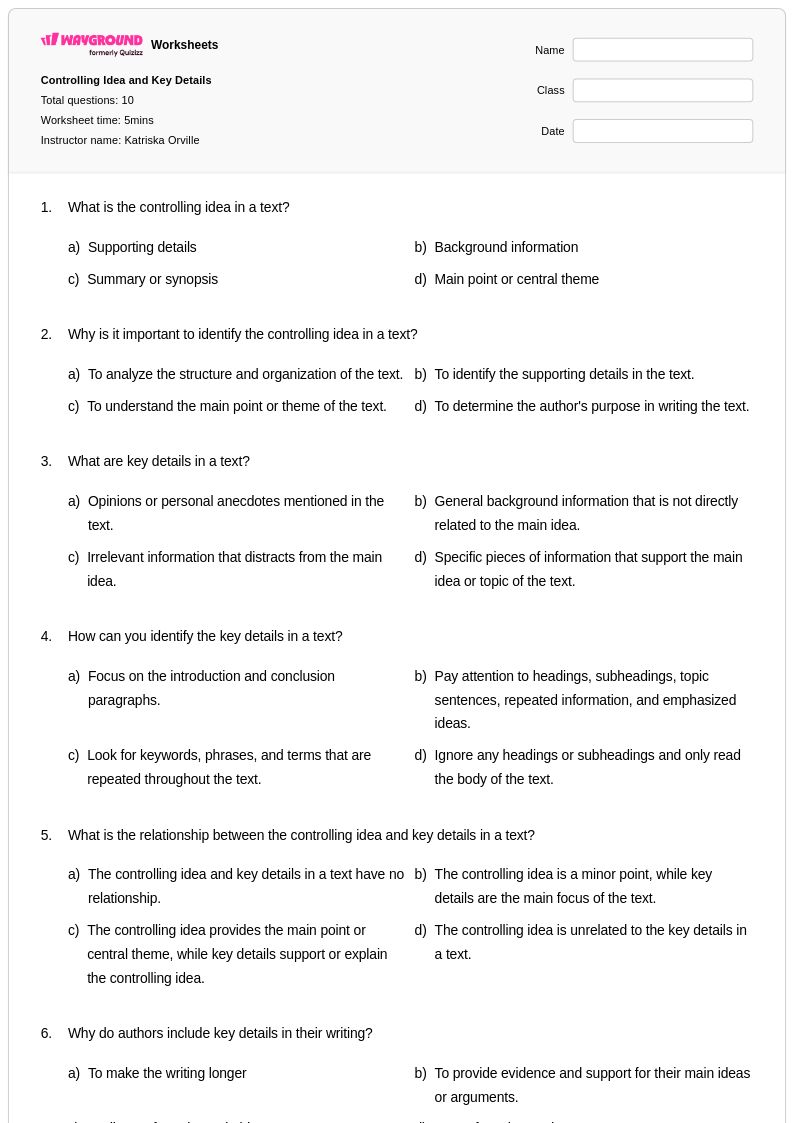
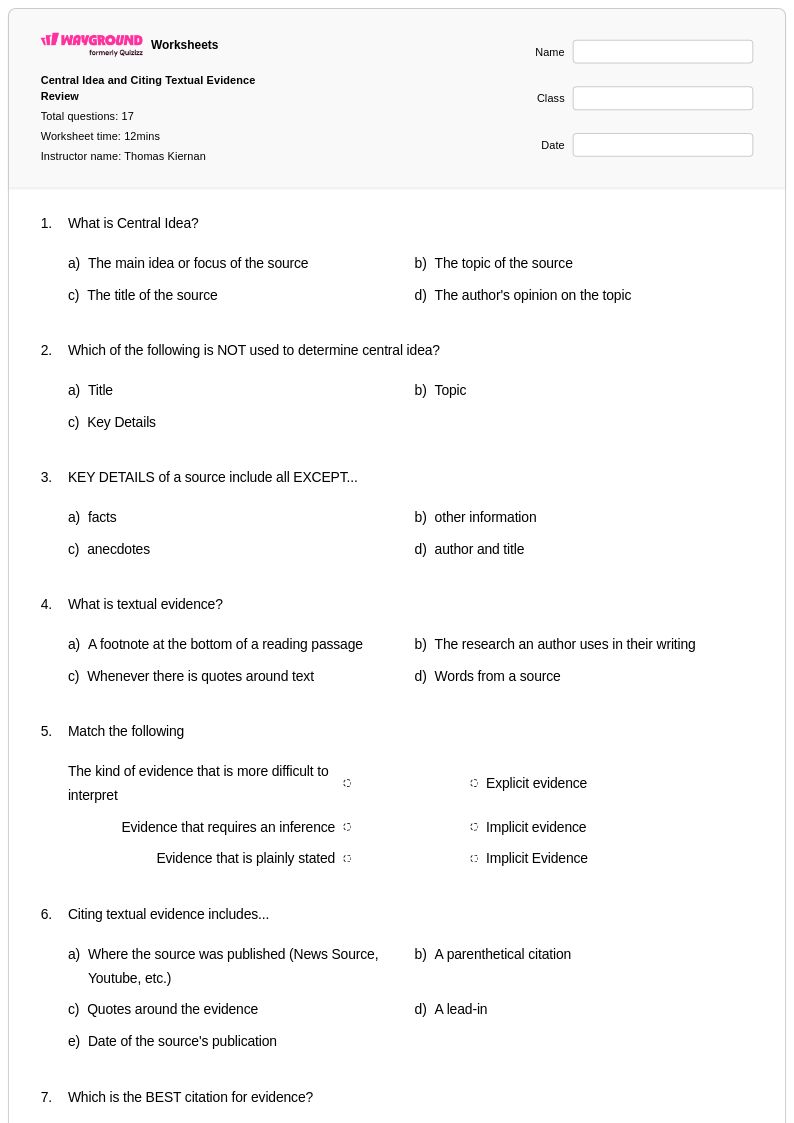
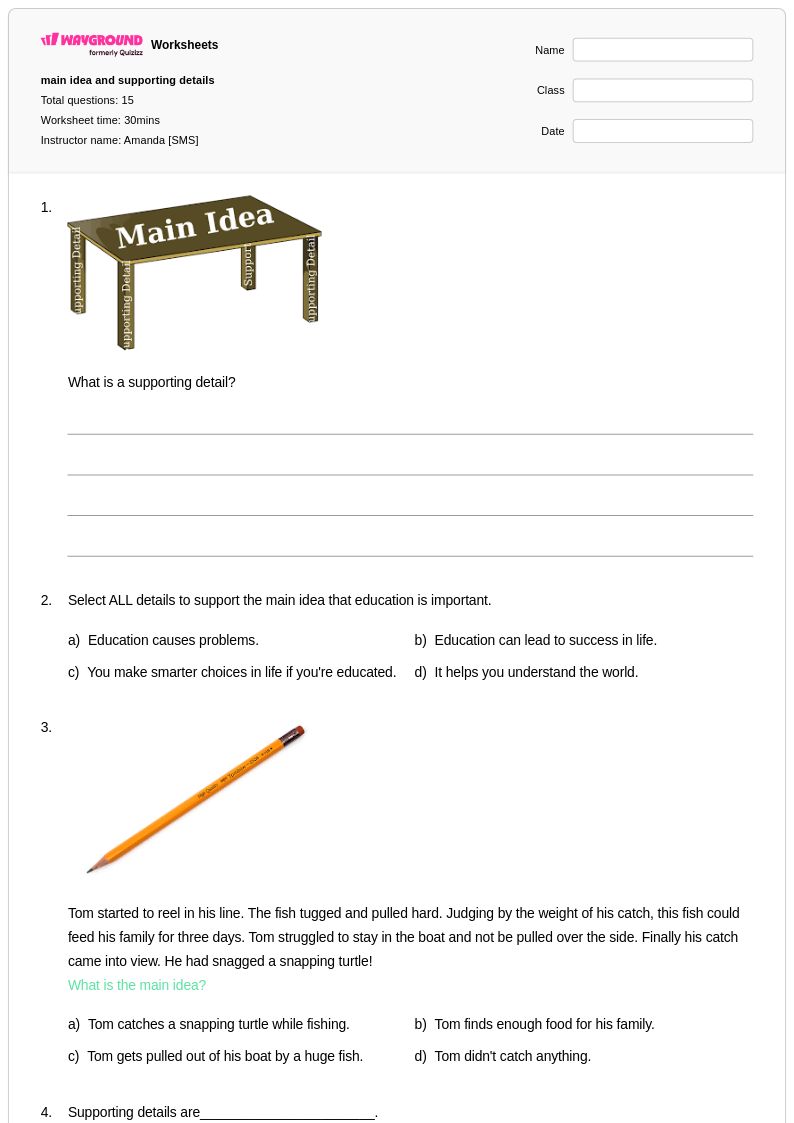
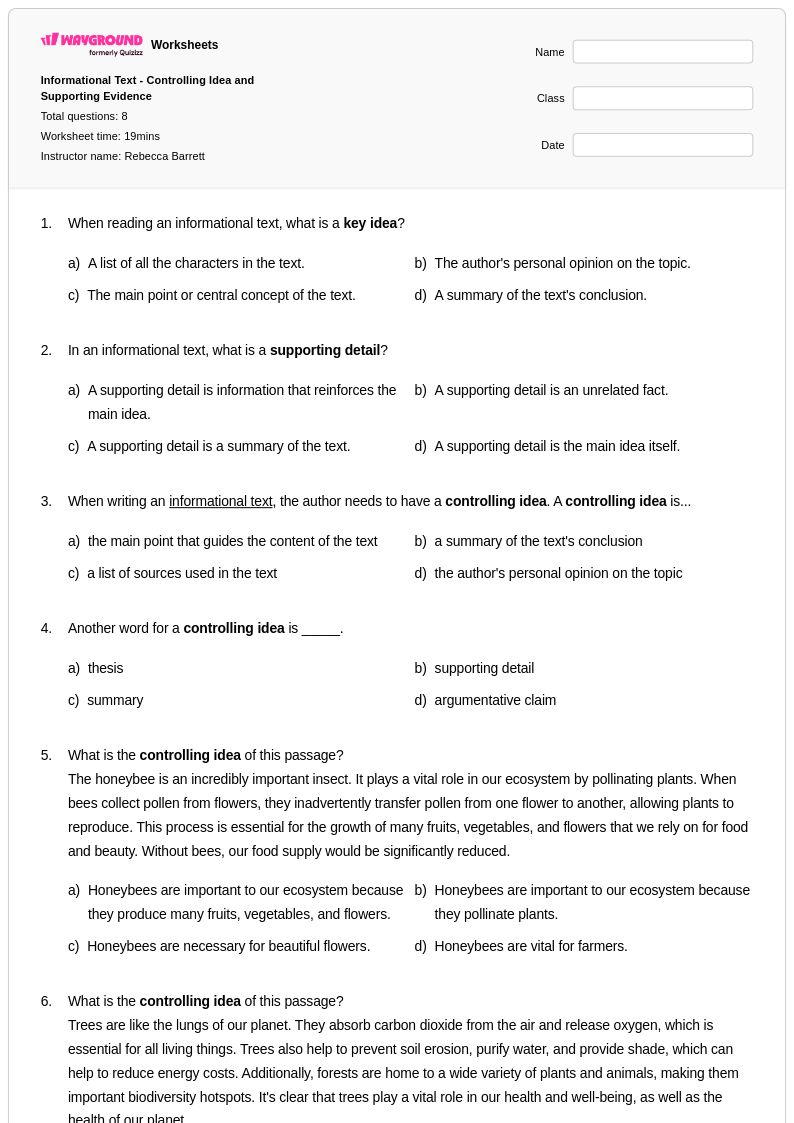
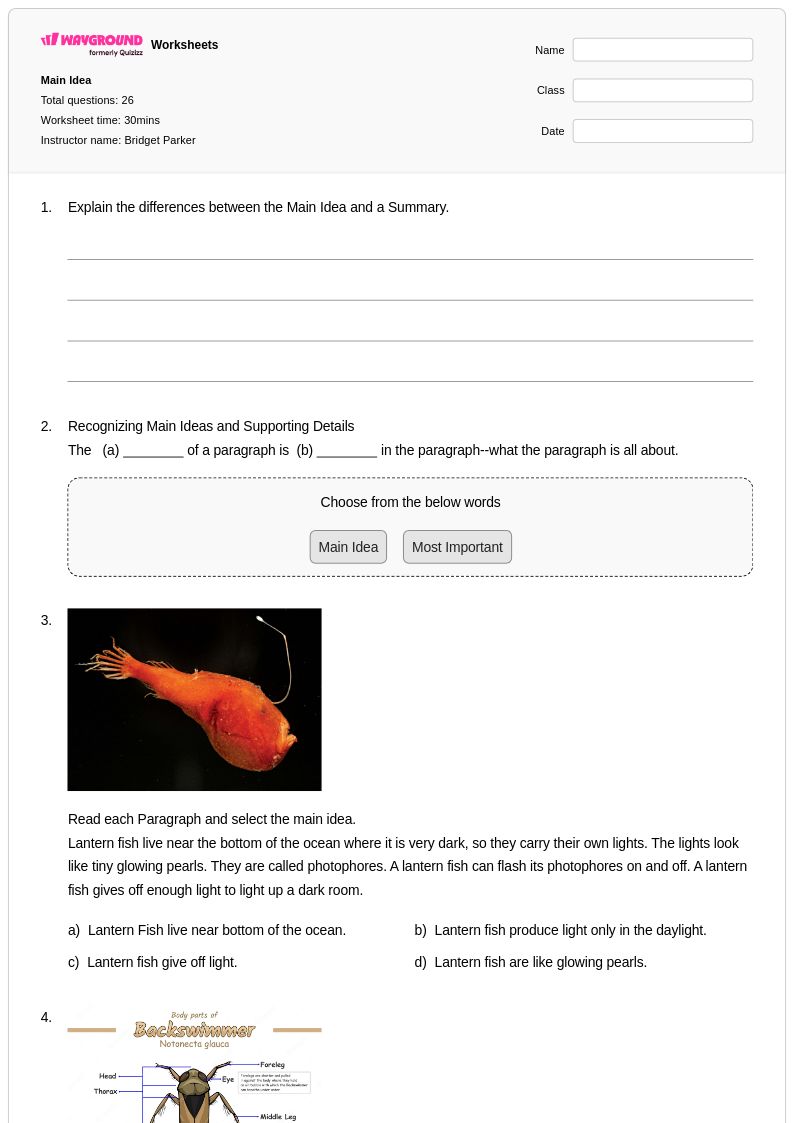
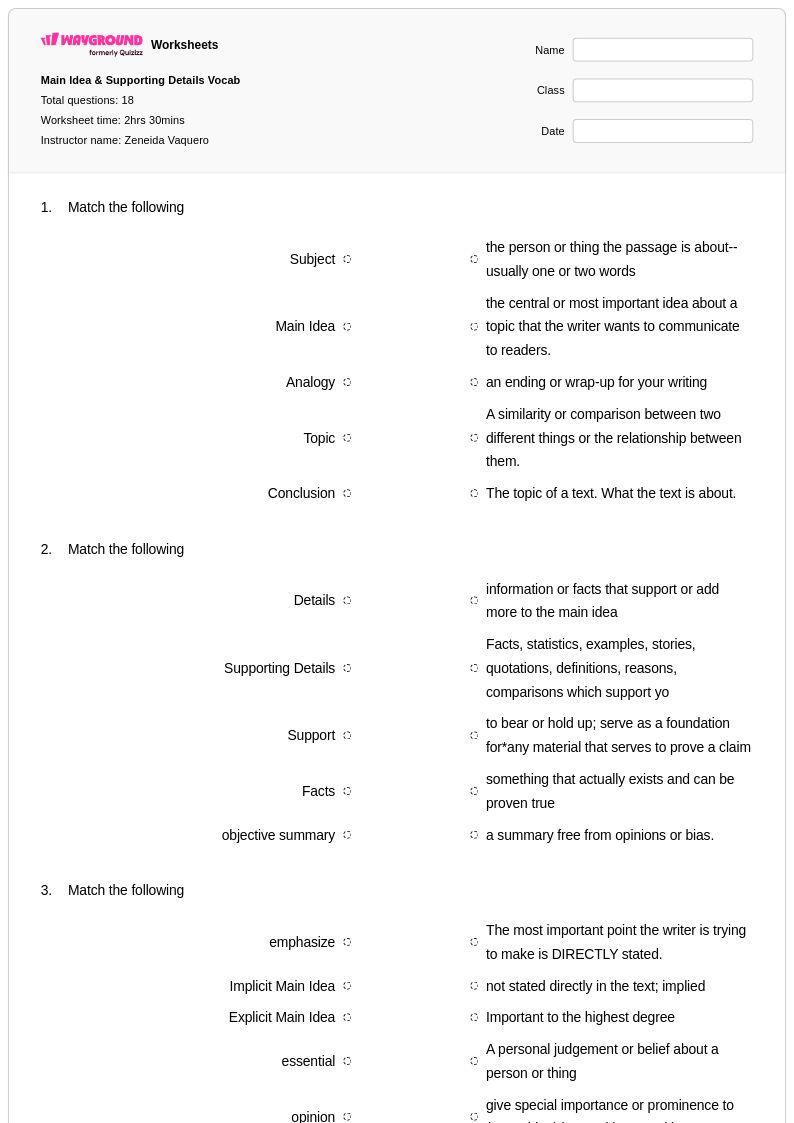
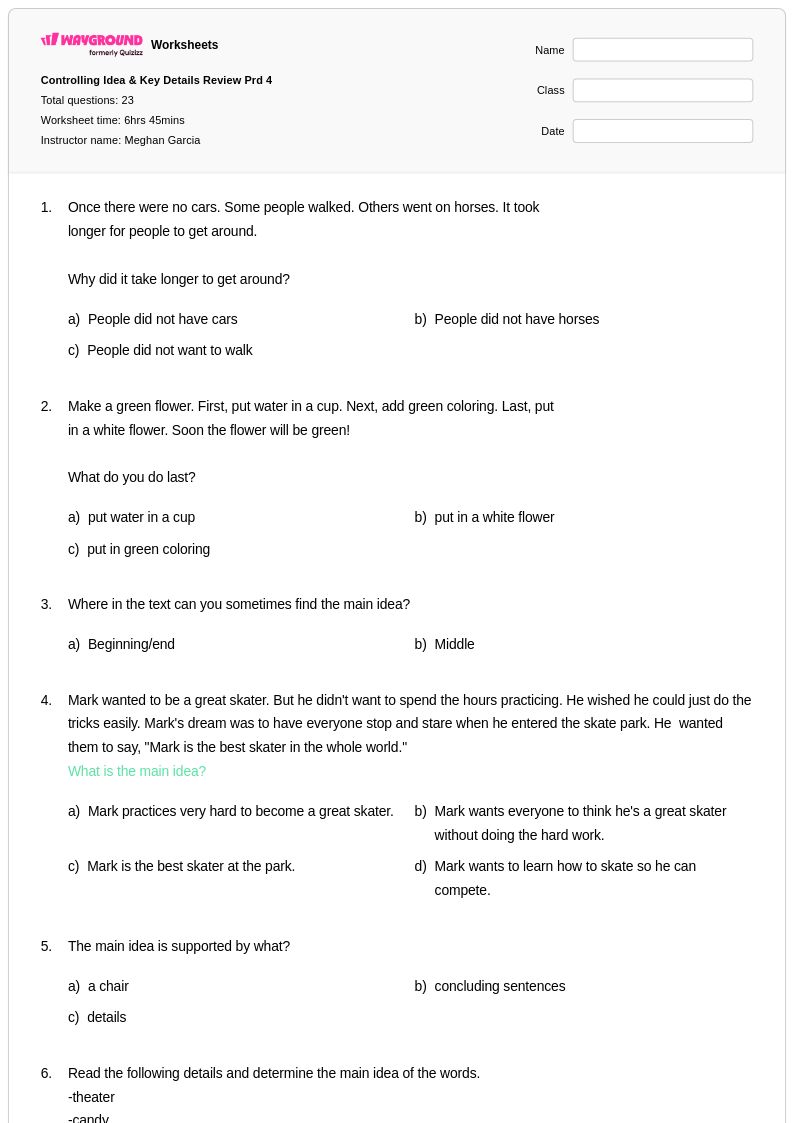
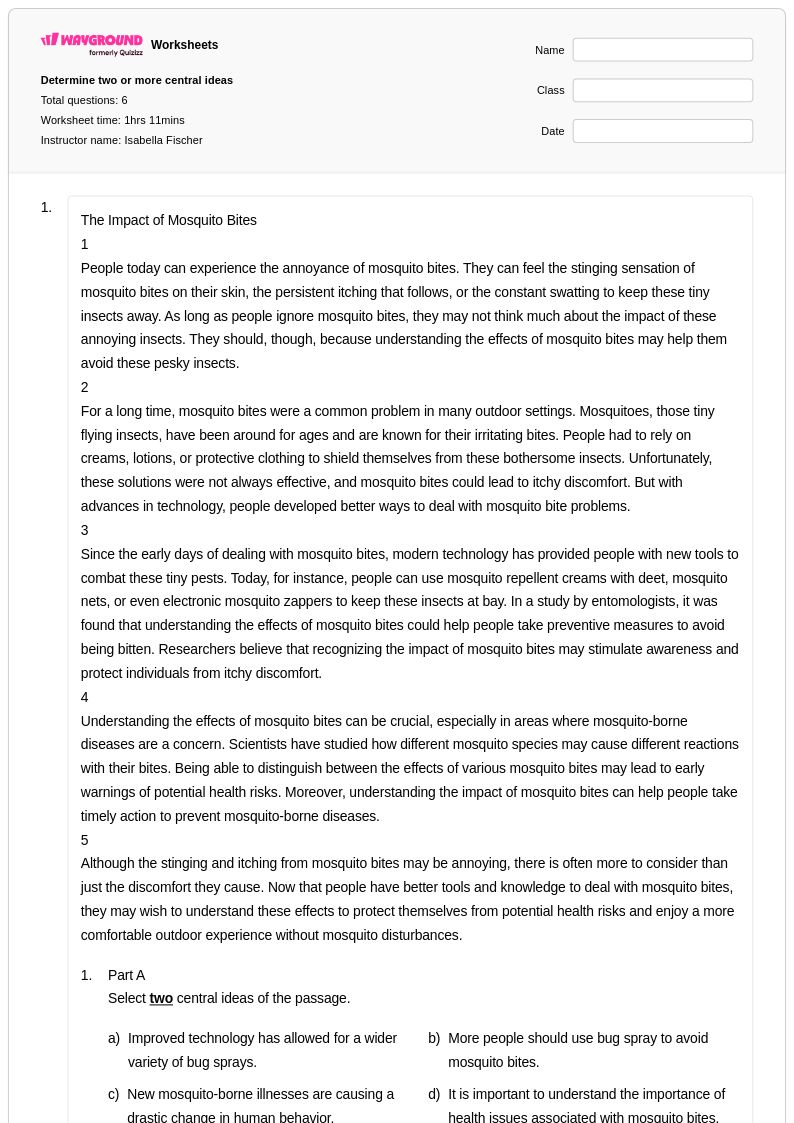
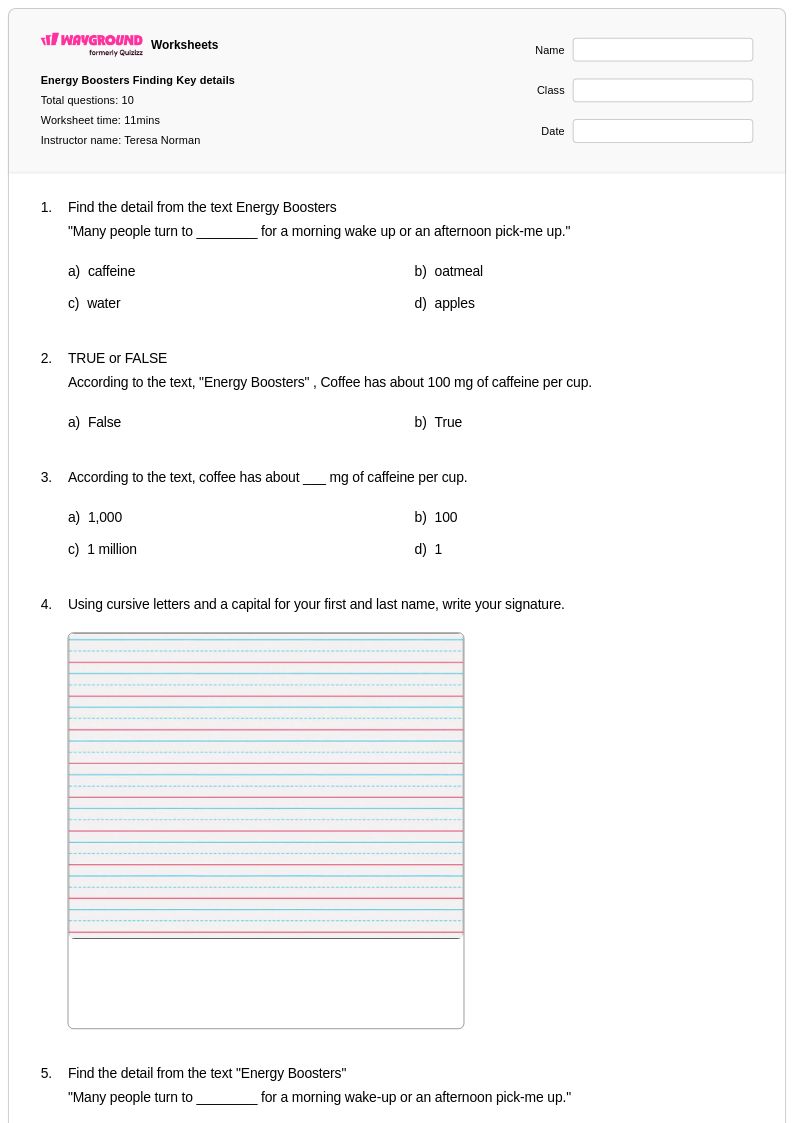
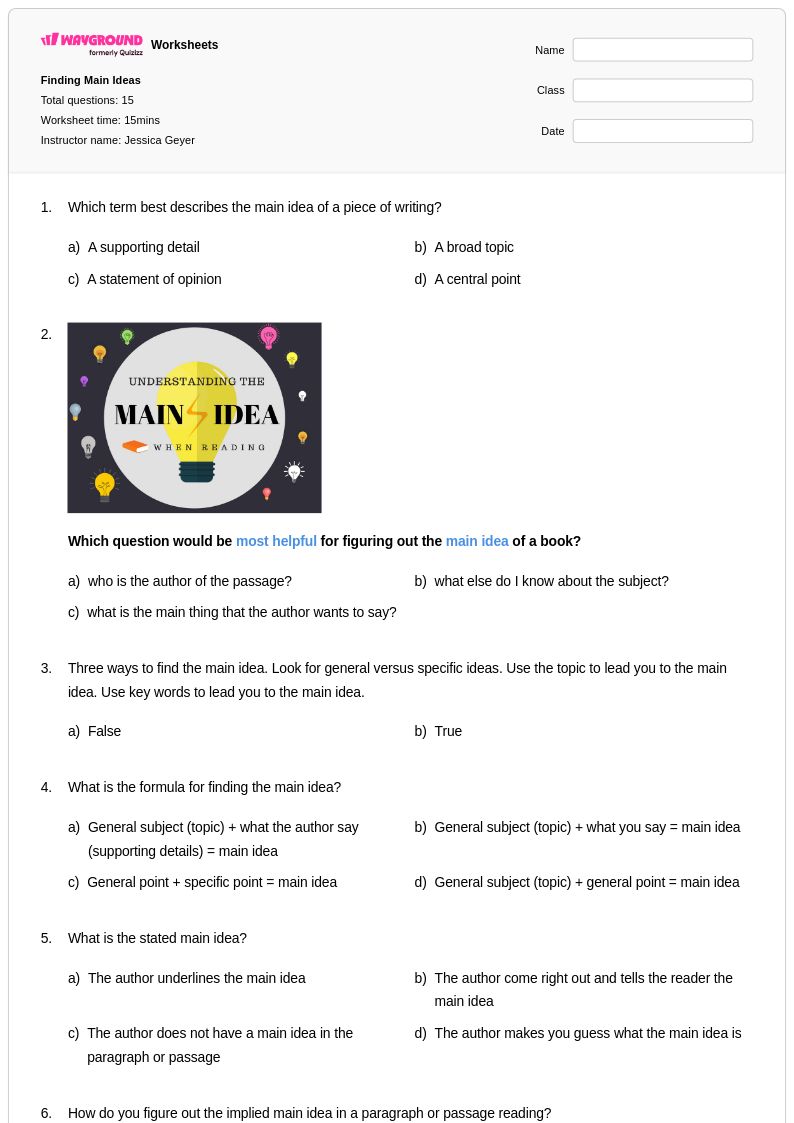
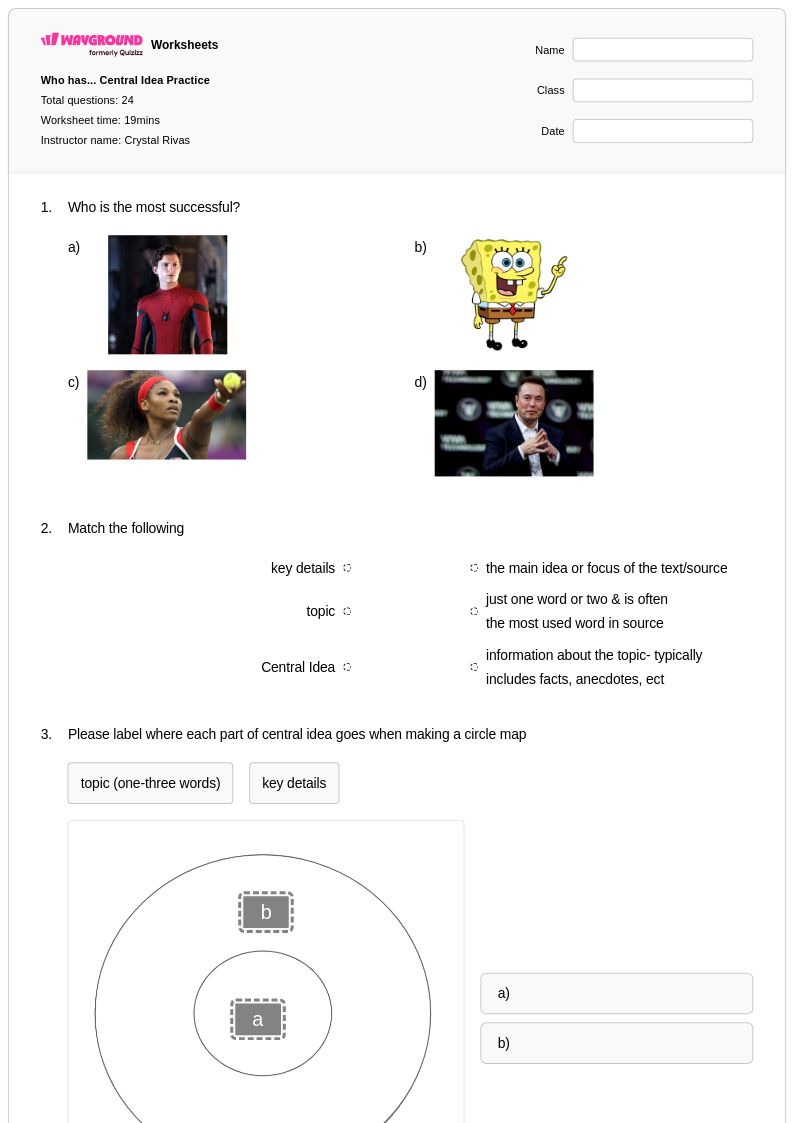
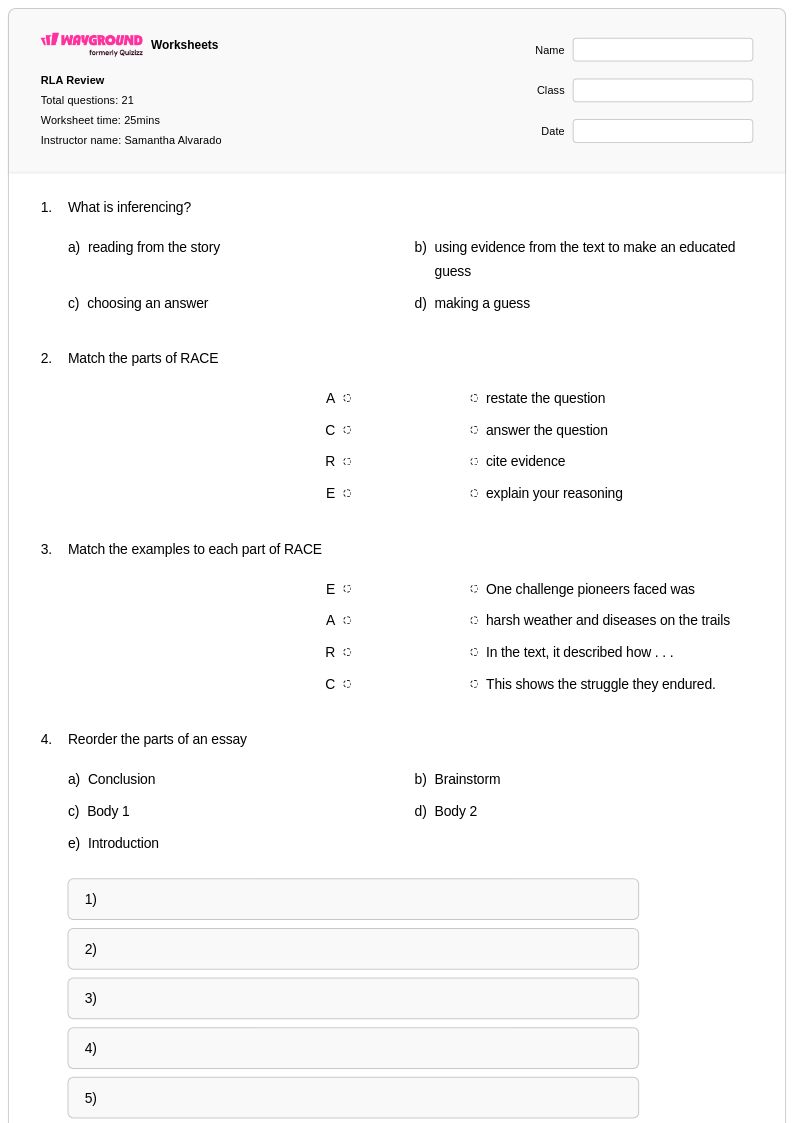
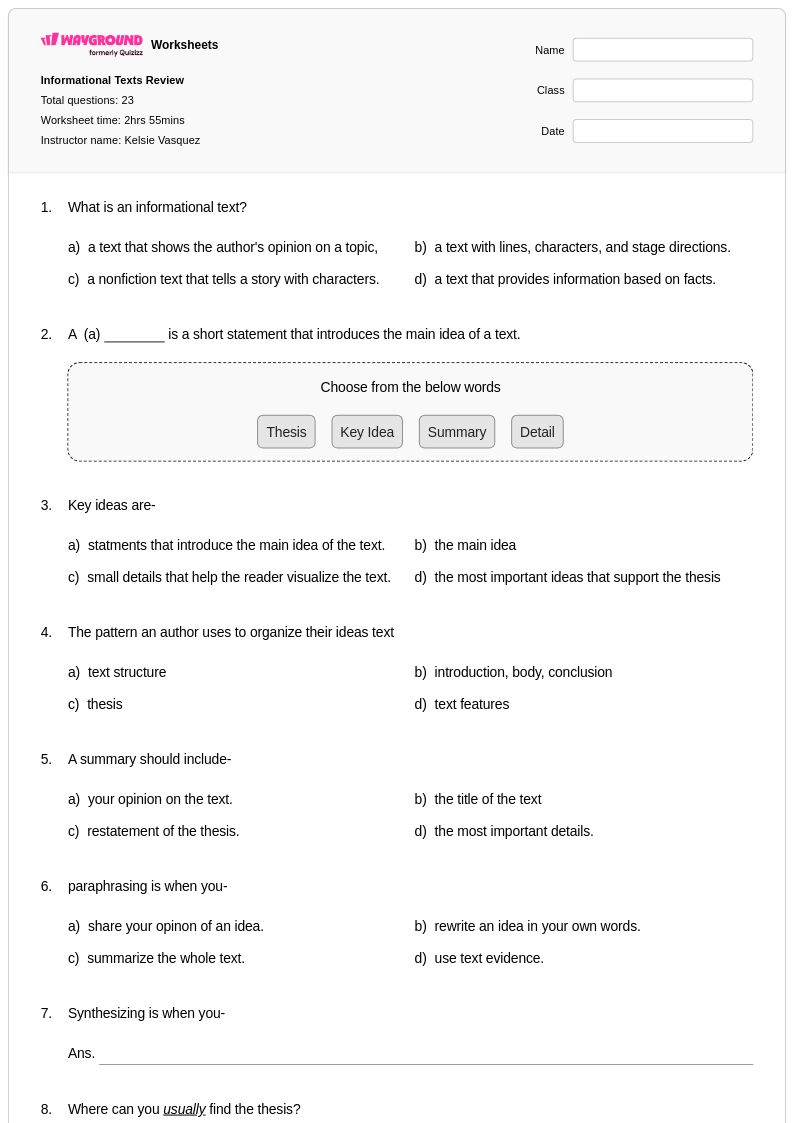
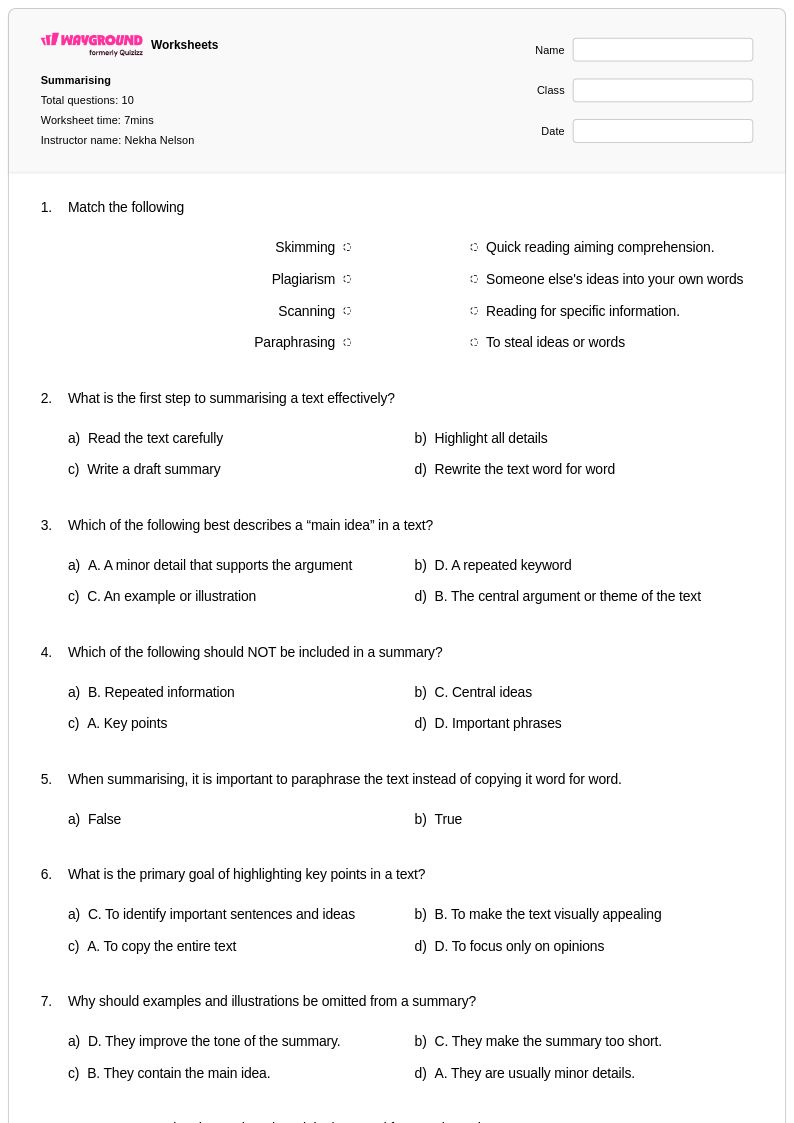
Class 8 Key Ideas and Details worksheets from Wayground provide comprehensive reading comprehension practice problems and free printables with answer keys to help students master identifying main ideas, supporting details, and textual evidence in various texts.
Explore printable Key Ideas and Details worksheets for Class 8
Key Ideas and Details worksheets for Class 8 students available through Wayground (formerly Quizizz) provide comprehensive practice in essential reading comprehension skills that form the foundation of literary analysis. These carefully designed resources help eighth-grade students master the ability to cite textual evidence to support analysis, determine central themes and their development throughout a text, and analyze how key elements of a story or drama interact. Each worksheet includes structured practice problems that guide students through close reading techniques, with answer keys provided to support independent learning and teacher assessment. The printable pdf format ensures easy classroom distribution, while the free accessibility of these educational materials makes high-quality reading instruction available to all educators seeking to strengthen their students' analytical reading abilities.
Wayground (formerly Quizizz) empowers teachers with millions of educator-created worksheet resources specifically targeting Key Ideas and Details comprehension strategies, supported by robust search and filtering capabilities that allow quick identification of grade-appropriate materials. The platform's standards alignment ensures these worksheets meet curriculum requirements, while differentiation tools enable teachers to modify content complexity for diverse learning needs. Teachers can seamlessly customize these resources for both printable and digital implementation, accessing comprehensive pdf collections that support lesson planning, targeted remediation for struggling readers, and enrichment opportunities for advanced students. This extensive worksheet library streamlines instructional preparation by providing ready-to-use practice materials that systematically build eighth-grade students' capacity to extract, analyze, and synthesize key information from complex texts across various genres and formats.
FAQs
How do I teach students to identify the main idea and supporting details in a text?
Start by modeling the process explicitly: read a short passage aloud, think aloud about what the whole text is mostly about, and then identify which sentences support that central point. A reliable scaffold is to have students ask themselves, 'What is the author saying about the topic in almost every sentence?' Once students can articulate the main idea in their own words, guide them to locate two or three specific details that explain or prove it. Repeated practice with varied text types, including informational and narrative passages, builds the transferable skill of distinguishing central meaning from peripheral information.
What exercises help students practice identifying key ideas and details?
Structured practice with graphic organizers, such as main idea maps and detail webs, gives students a visual framework for extracting meaning from a passage before answering questions. Close reading tasks that ask students to annotate explicit information, underline supporting evidence, and label inferences build the same skill in a more text-embedded way. Key ideas and details worksheets on Wayground reinforce this through targeted question formats, including locating explicit facts, identifying central themes, and drawing logical inferences, covering the range of skills assessed in reading comprehension standards.
What mistakes do students commonly make when identifying the main idea?
The most frequent error is confusing the topic with the main idea: students often name what the passage is about (e.g., 'bees') rather than what the author is saying about it (e.g., 'bees are essential to the food supply'). A second common mistake is selecting a supporting detail as the main idea, particularly when that detail appears in the first or last sentence, positions students associate with importance. Students also frequently overlook implicit main ideas, especially in narrative or argumentative texts where the central point is never directly stated but must be inferred from accumulated evidence.
How do I help students distinguish between explicit information and inferences in a text?
Teach students a simple two-column protocol: one column for 'The text says' (direct quotes or paraphrases) and one for 'I can conclude' (what that evidence implies). This makes the cognitive distinction concrete and visible. Reinforce the difference by presenting questions that are clearly text-based alongside questions that require students to combine clues, and ask them to sort the questions before answering. Over time, students internalize the habit of asking whether an answer lives in the text or must be reasoned out from it.
How can I use Key Ideas and Details worksheets to support students with different reading levels?
Differentiation starts with passage complexity: assign the same skill focus, such as identifying supporting details, but use texts at varying Lexile levels so all students practice the same strategy. On Wayground, teachers can apply accommodations individually, including Read Aloud, which delivers audio reading of questions and passages for students who need decoding support, and reduced answer choices, which lowers cognitive load for students who struggle with elimination. These settings can be assigned to specific students while the rest of the class receives default settings, allowing one worksheet to serve the full range of learners without separate lesson planning.
How do I use Wayground's Key Ideas and Details worksheets in my classroom?
These worksheets are available as printable PDFs for traditional classroom use and in digital formats for technology-integrated environments, including the option to host them as a live quiz on Wayground. The printable format works well for independent reading practice, homework, or small-group instruction, while the digital format enables real-time response tracking. Each worksheet includes a complete answer key, so they can also be used for student self-evaluation after a reading activity or as a formative check at the end of a lesson.