Free Printable Types of Conflict Worksheets for Class 8
Master Class 8 types of conflict with Wayground's comprehensive reading comprehension worksheets featuring engaging printables, practice problems, and answer keys to help students identify and analyze literary conflicts effectively.
Explore printable Types of Conflict worksheets for Class 8
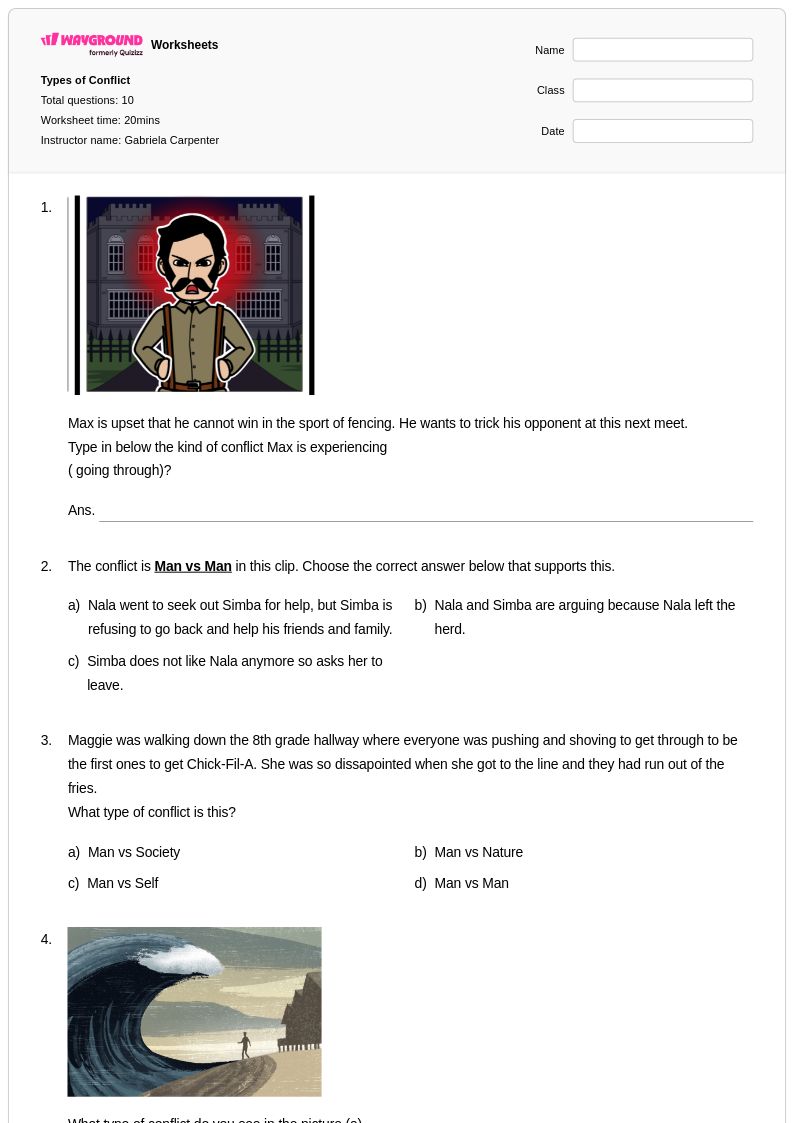
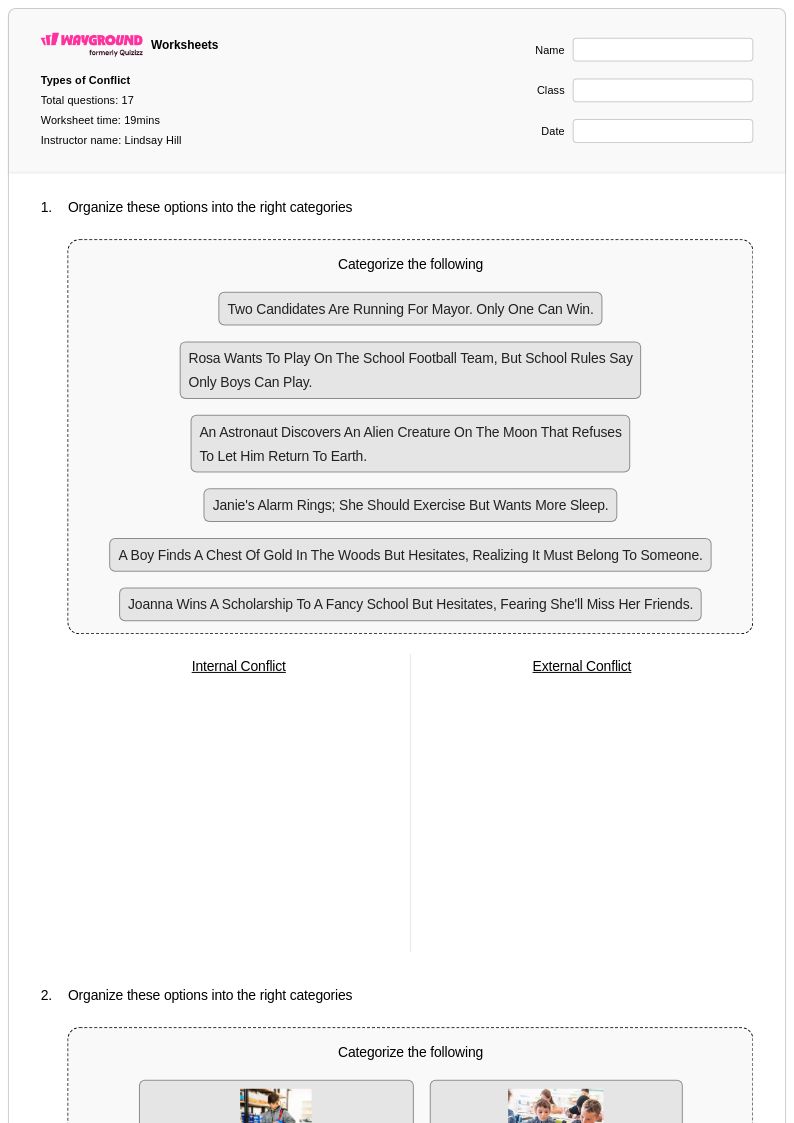
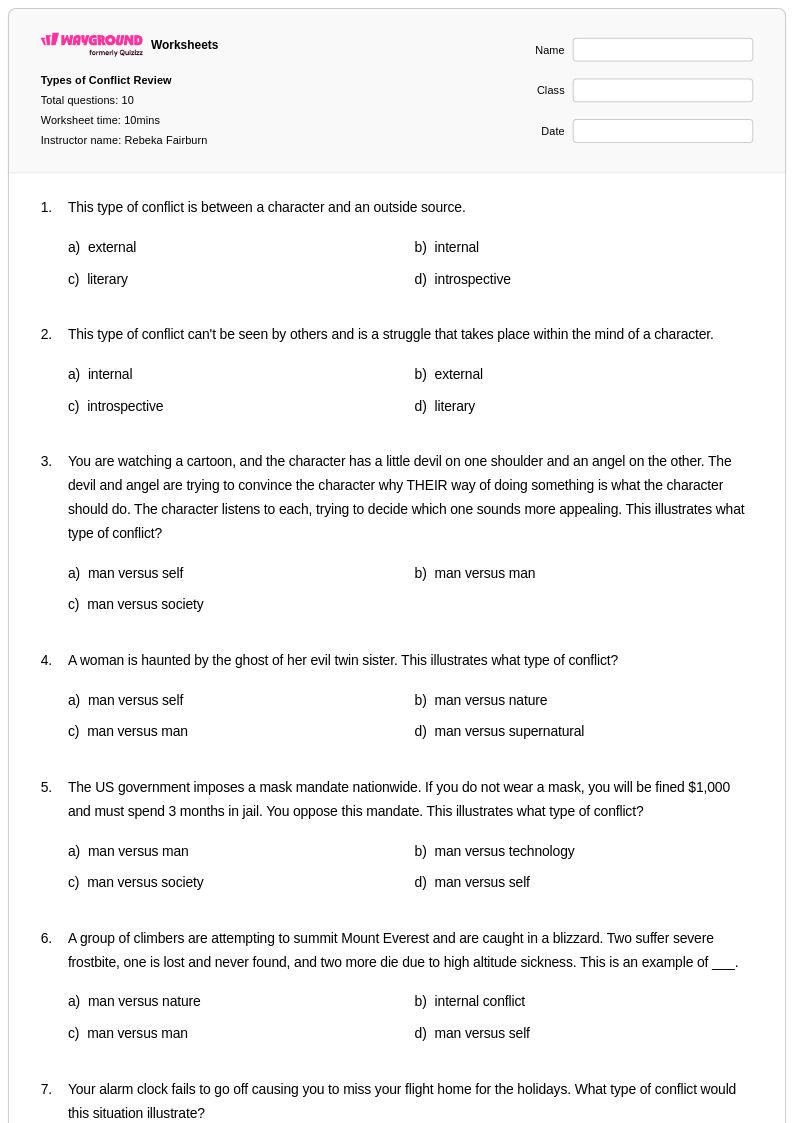
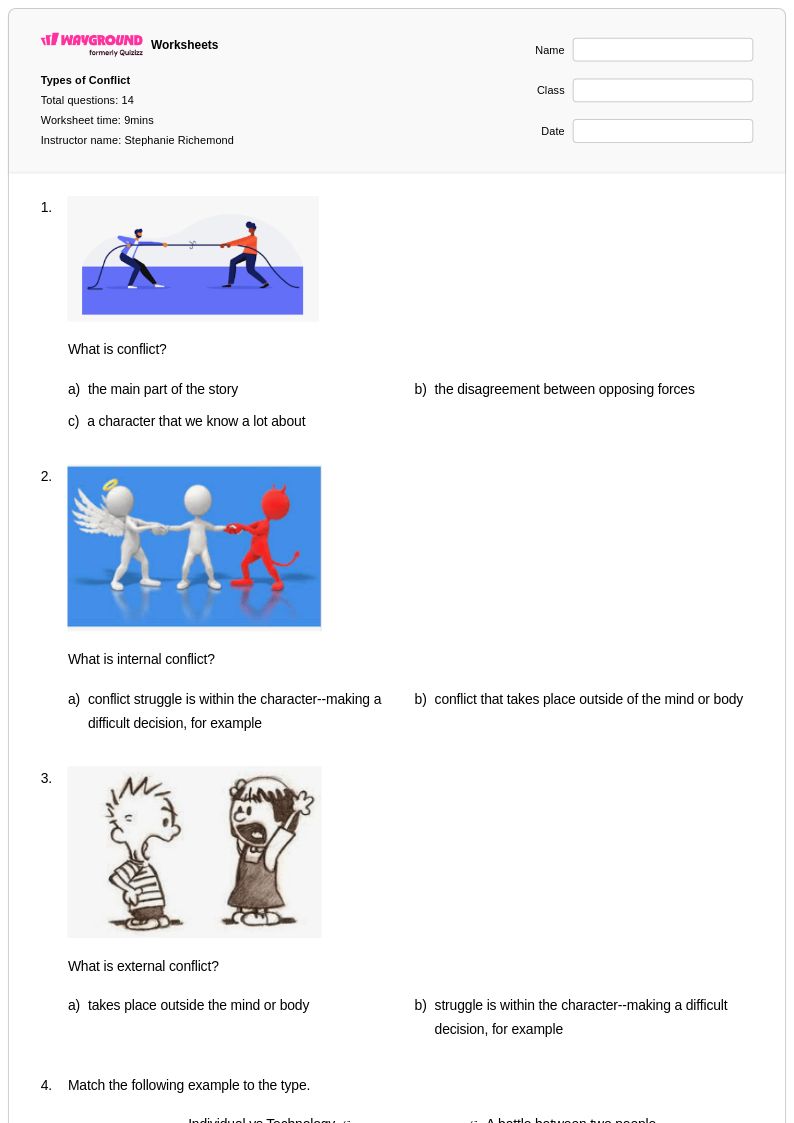
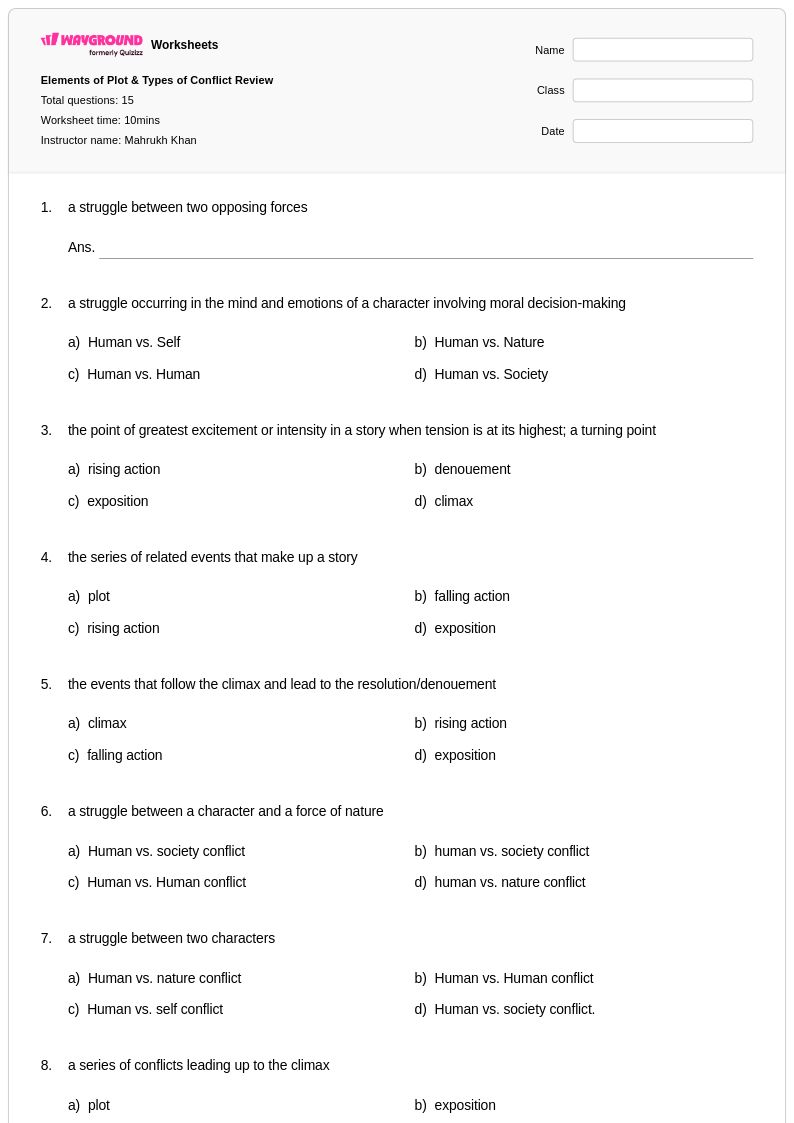
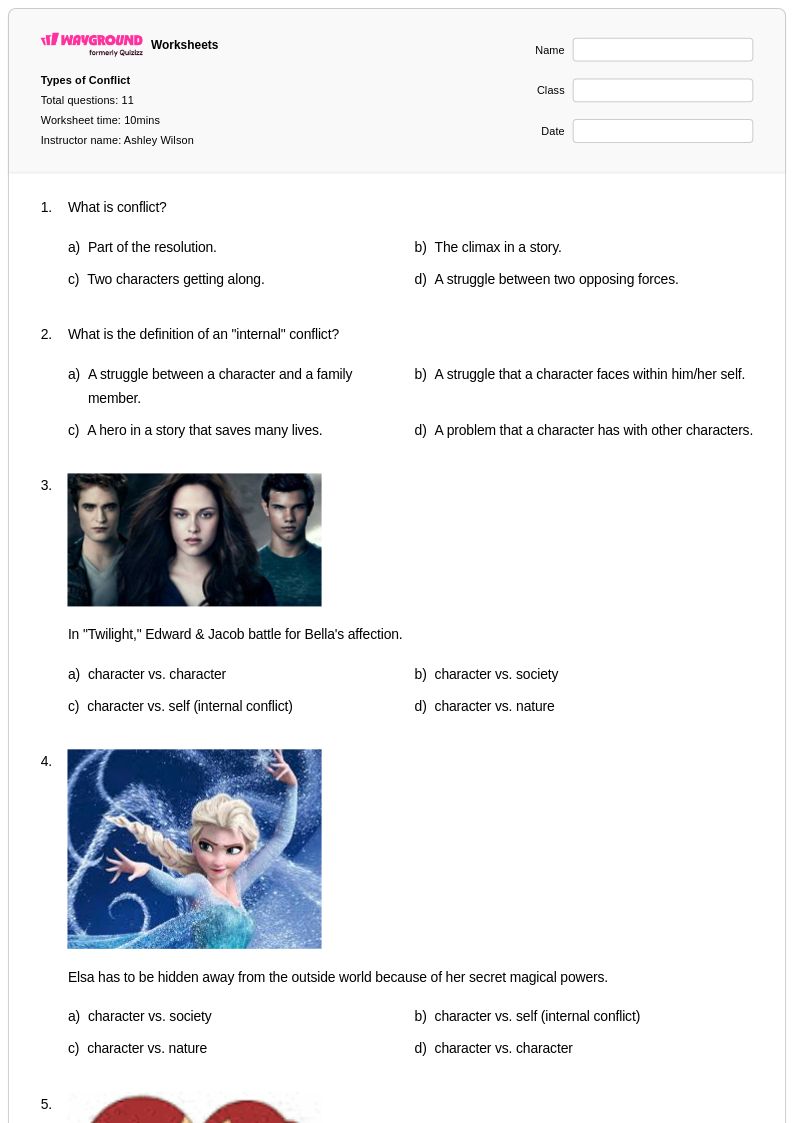
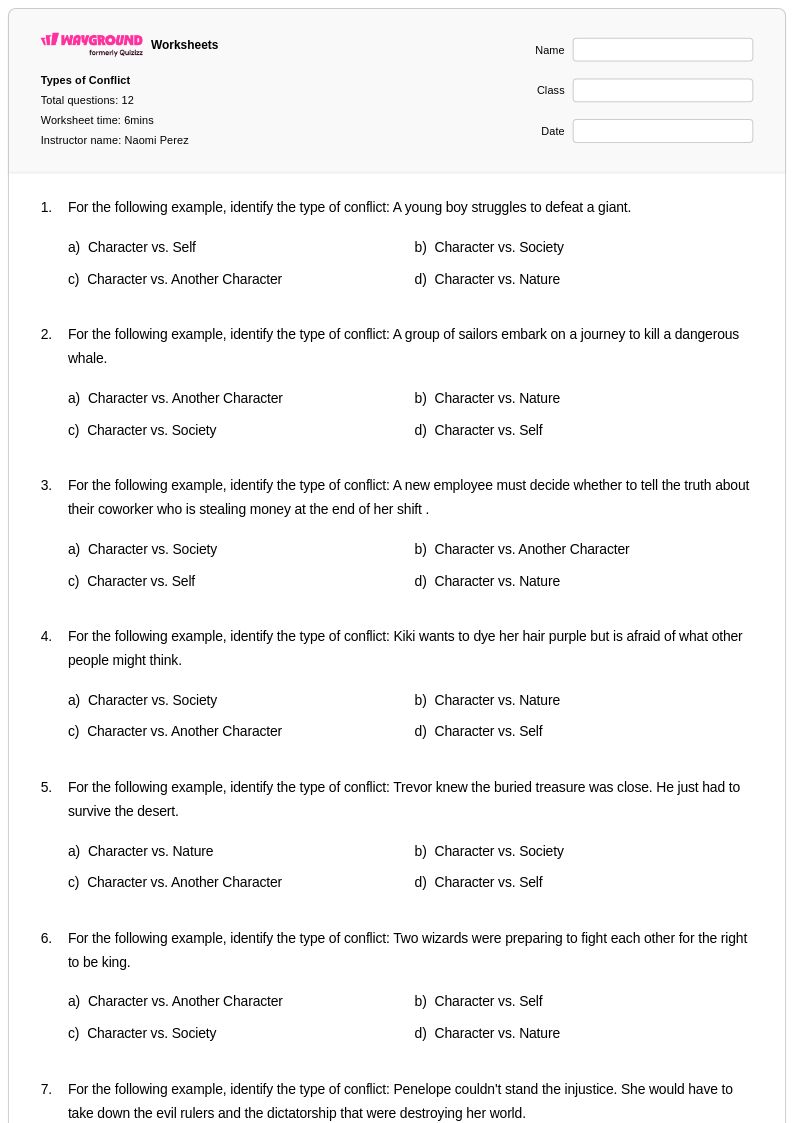
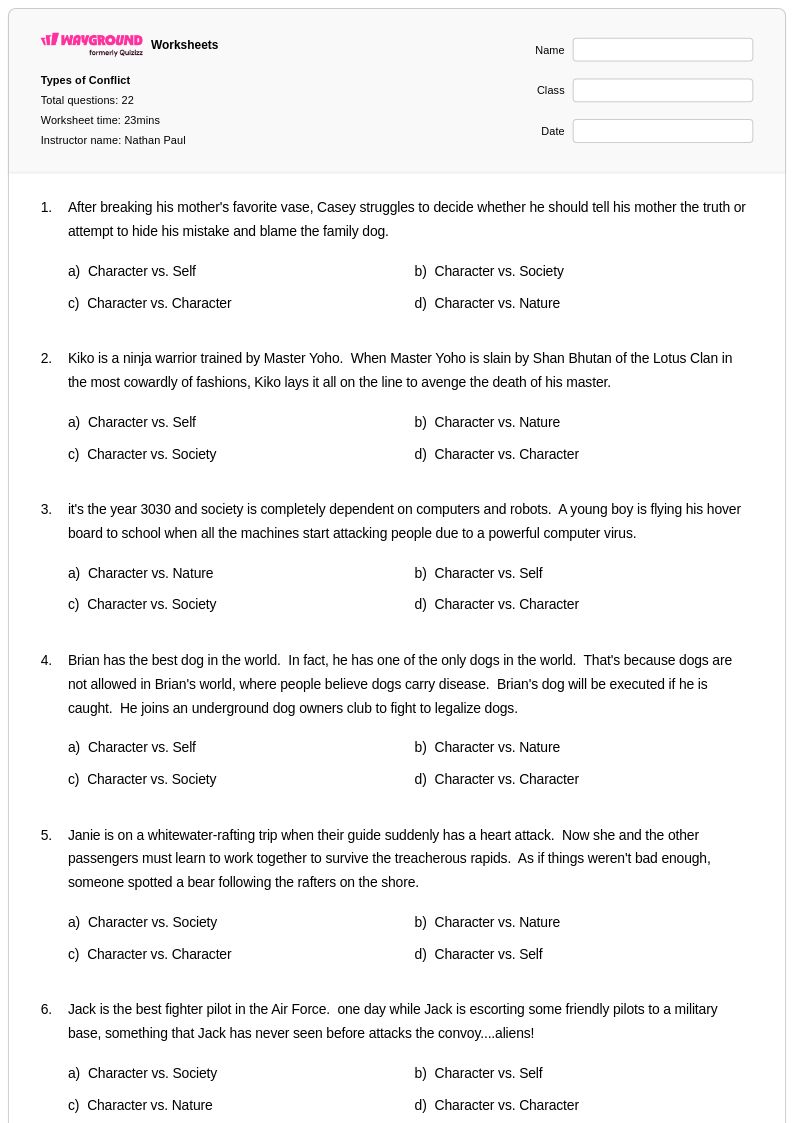
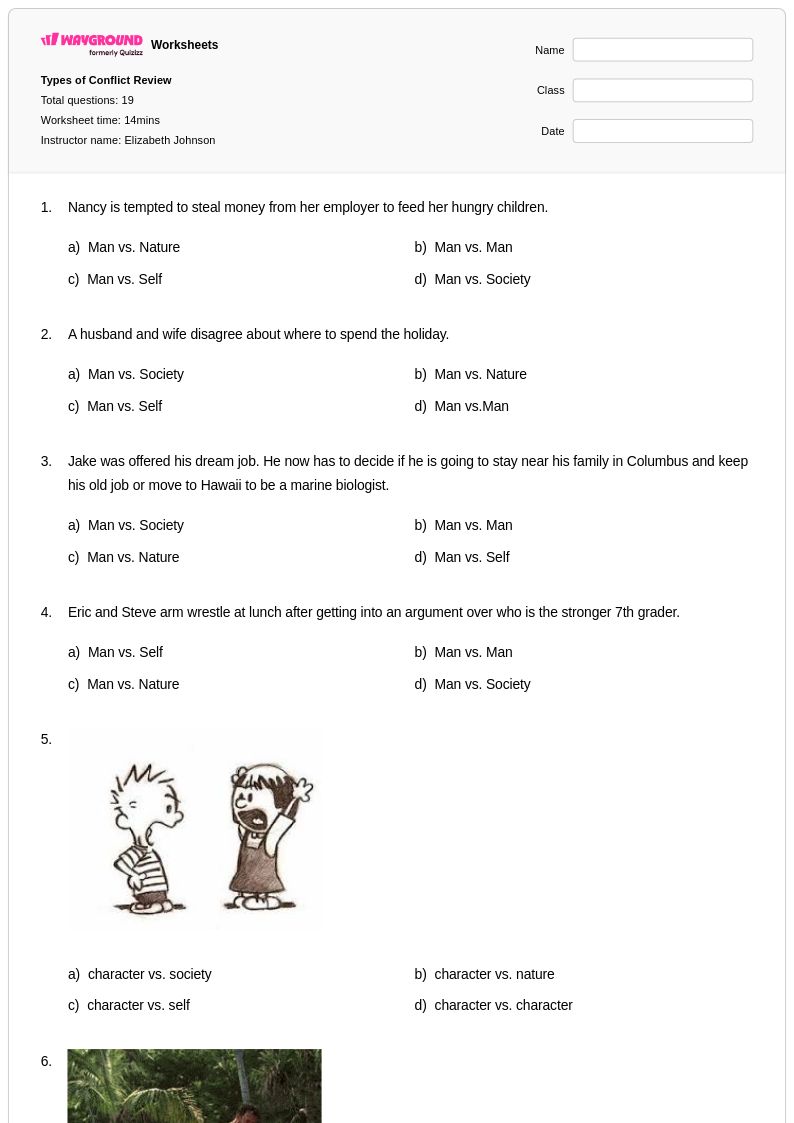
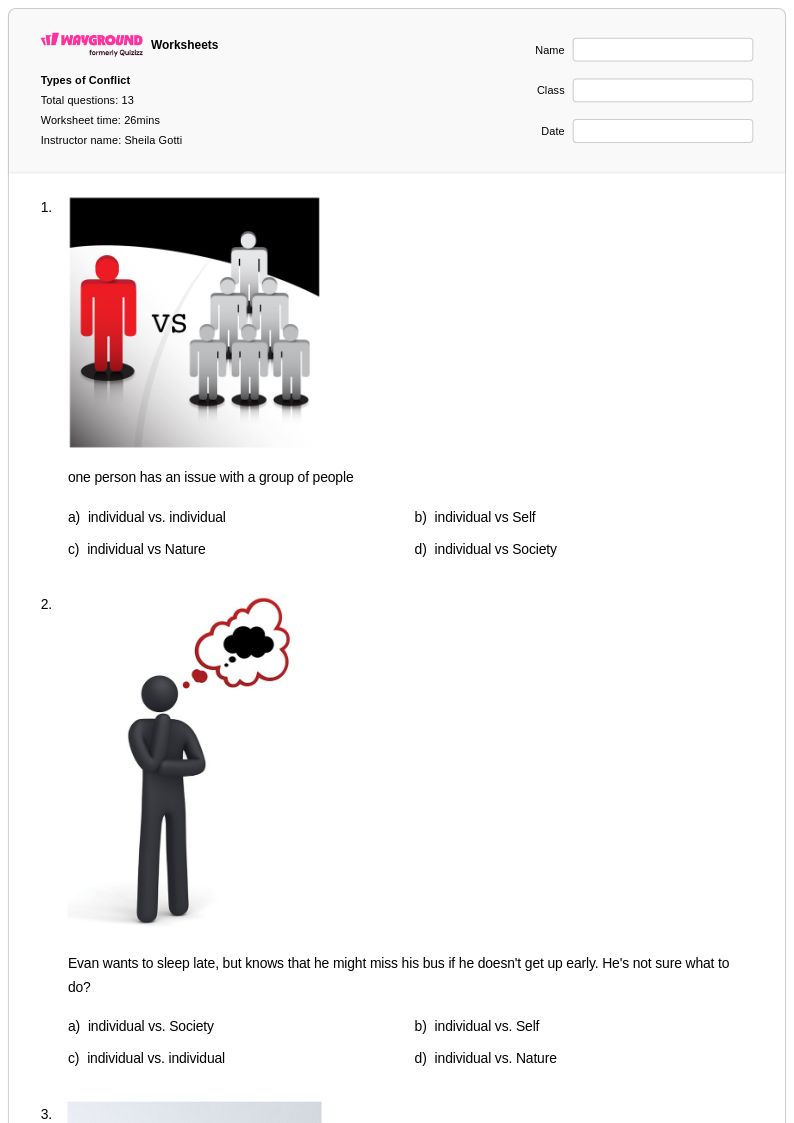
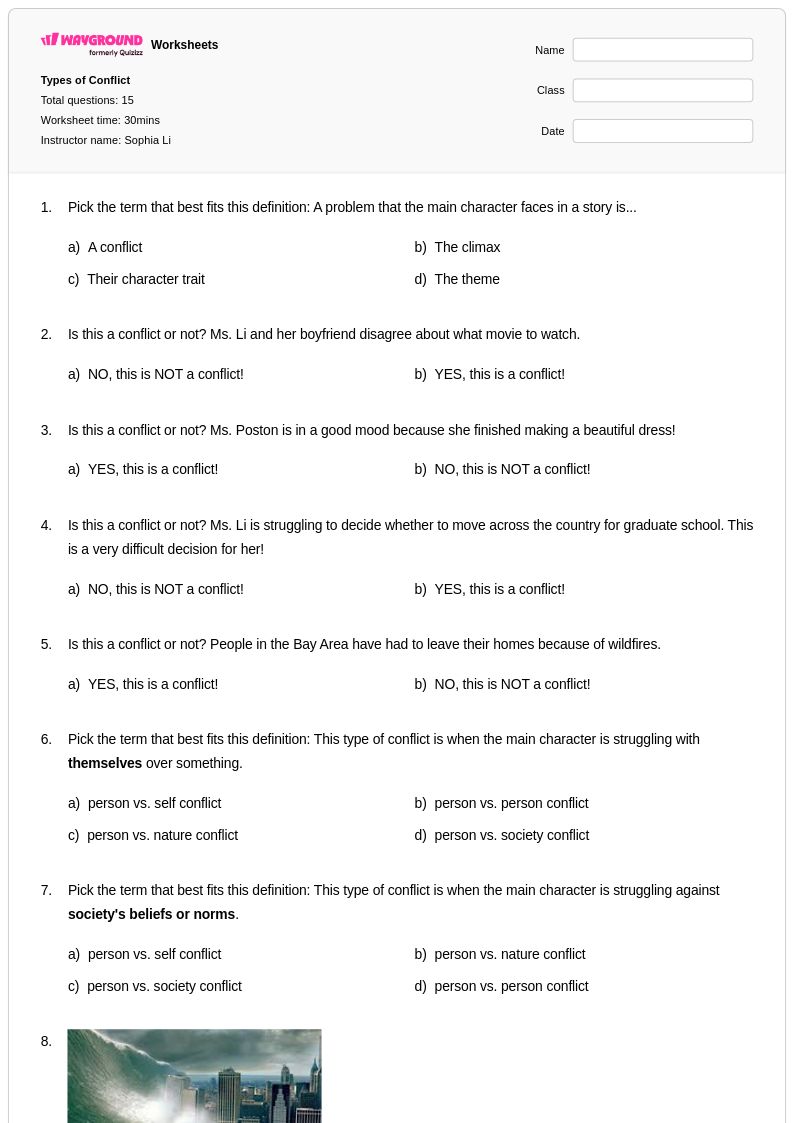
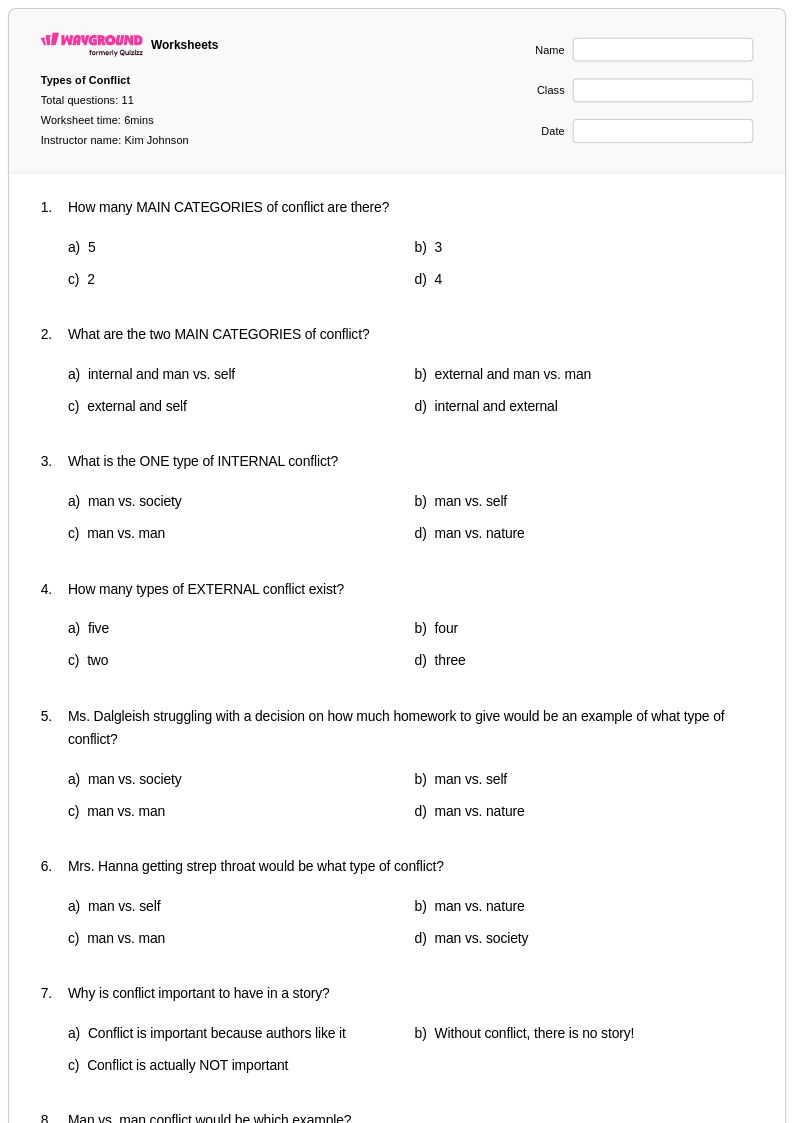
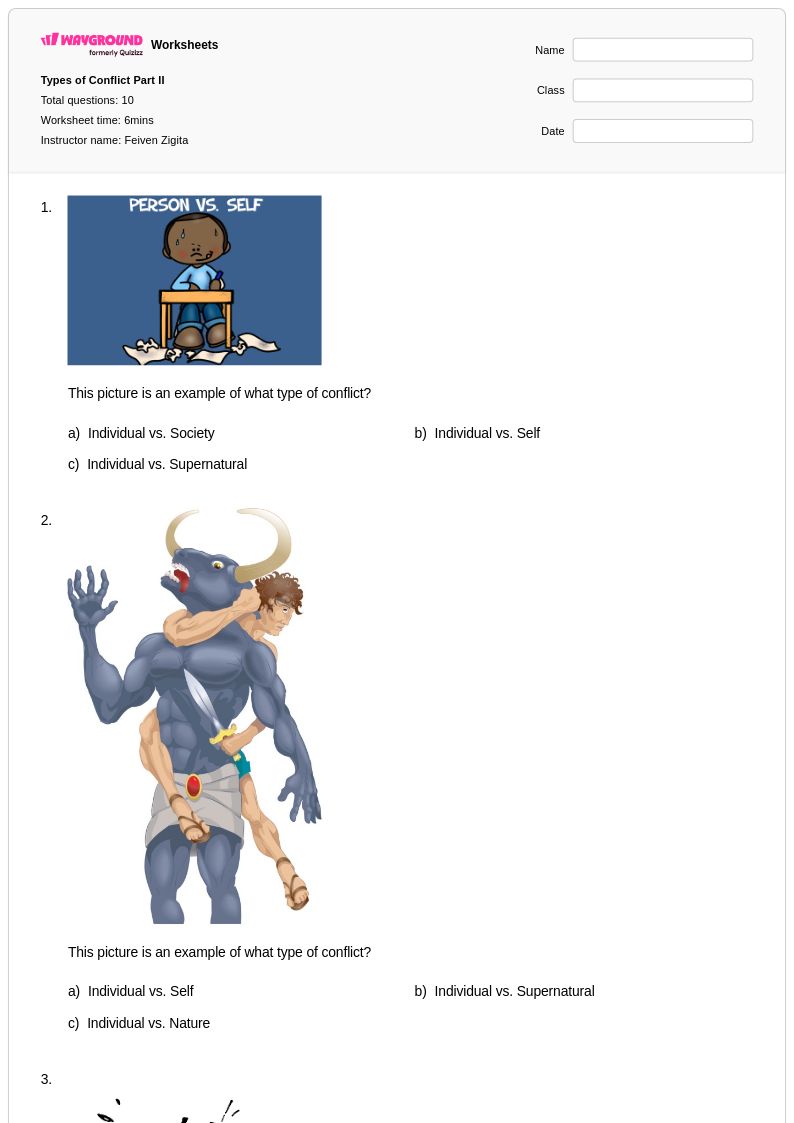
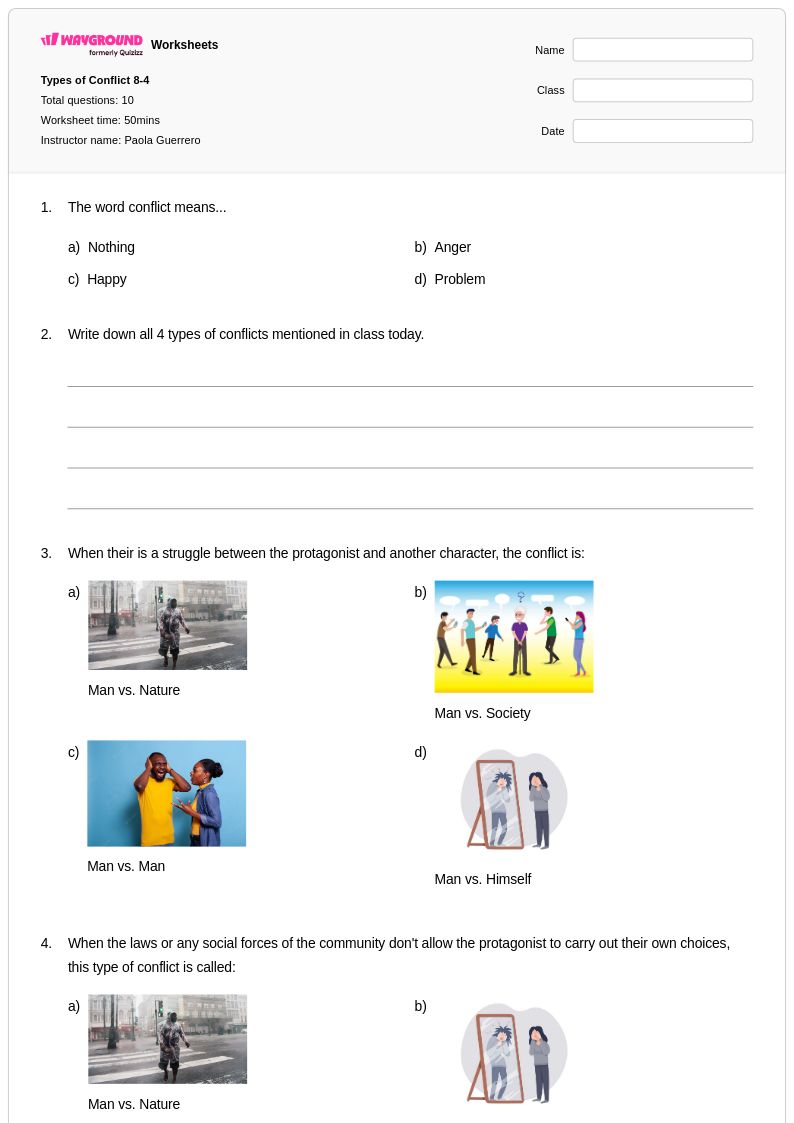
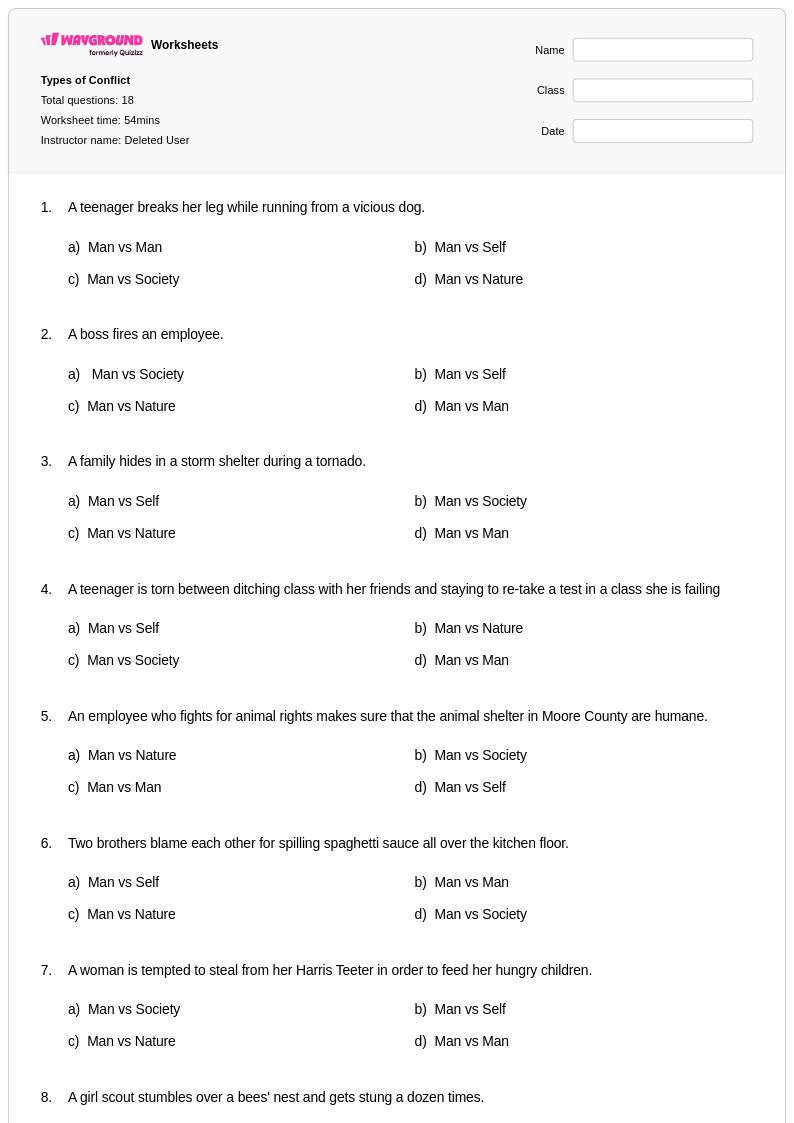
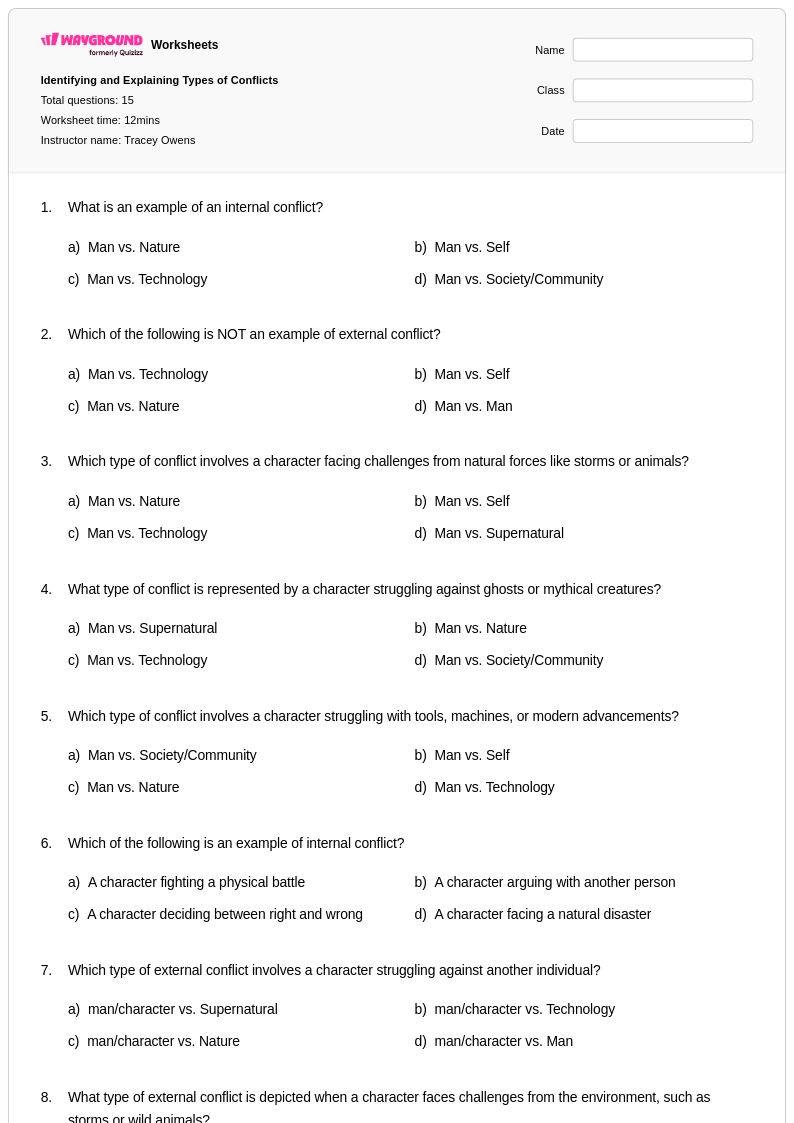
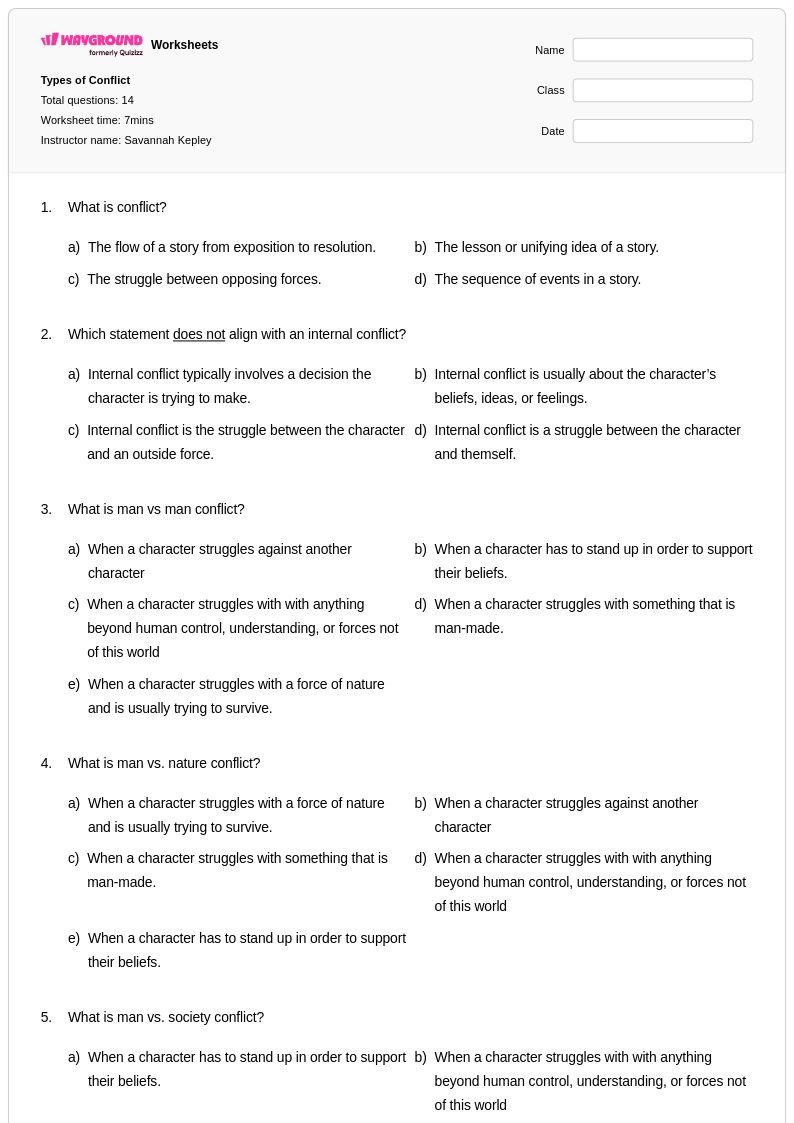
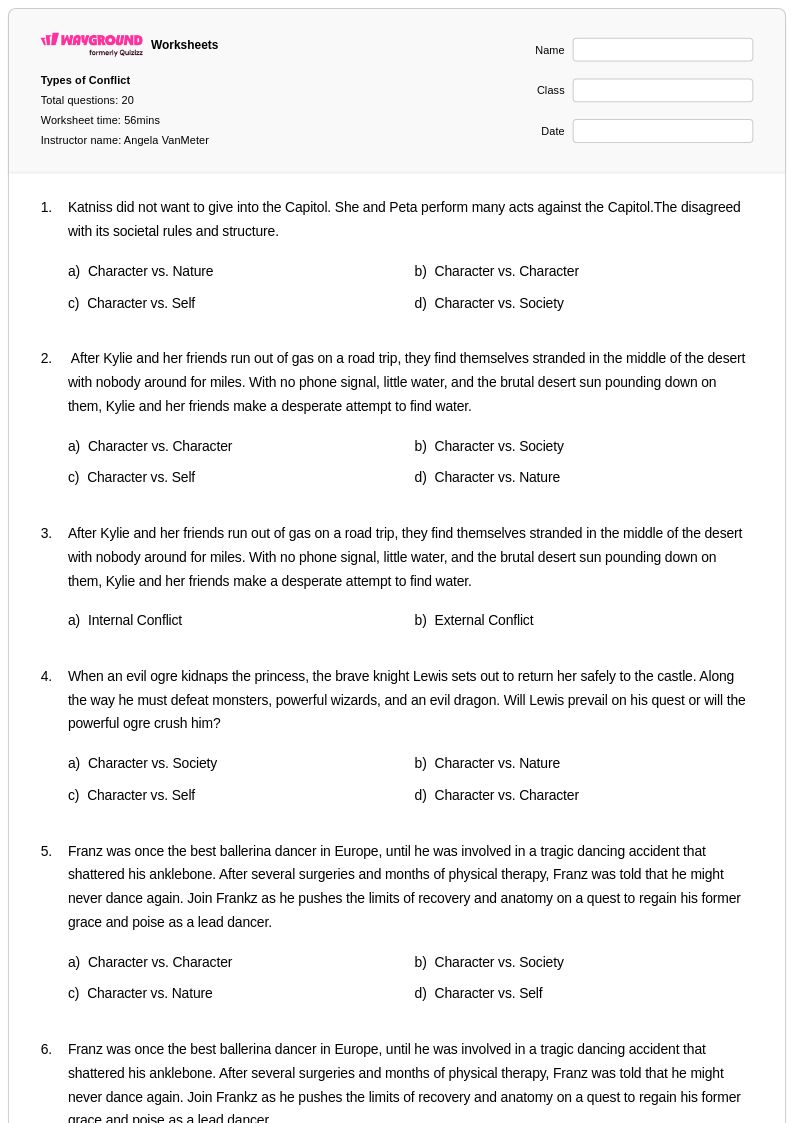
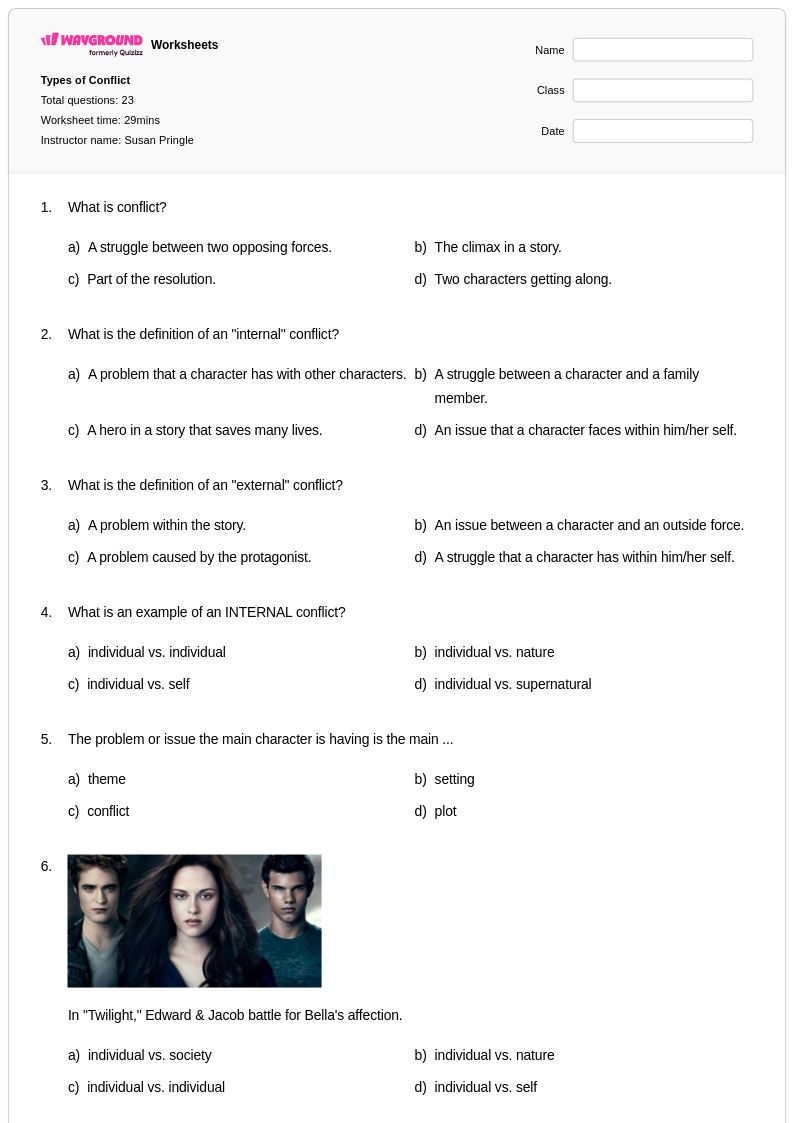
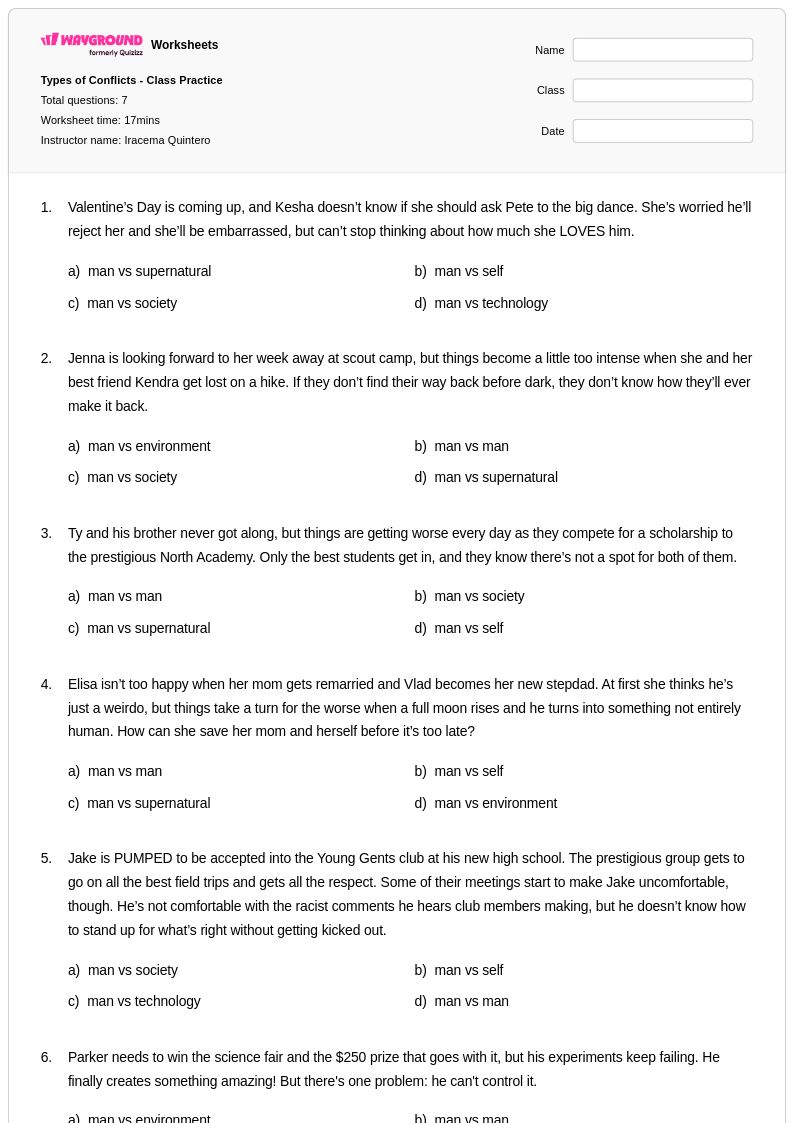
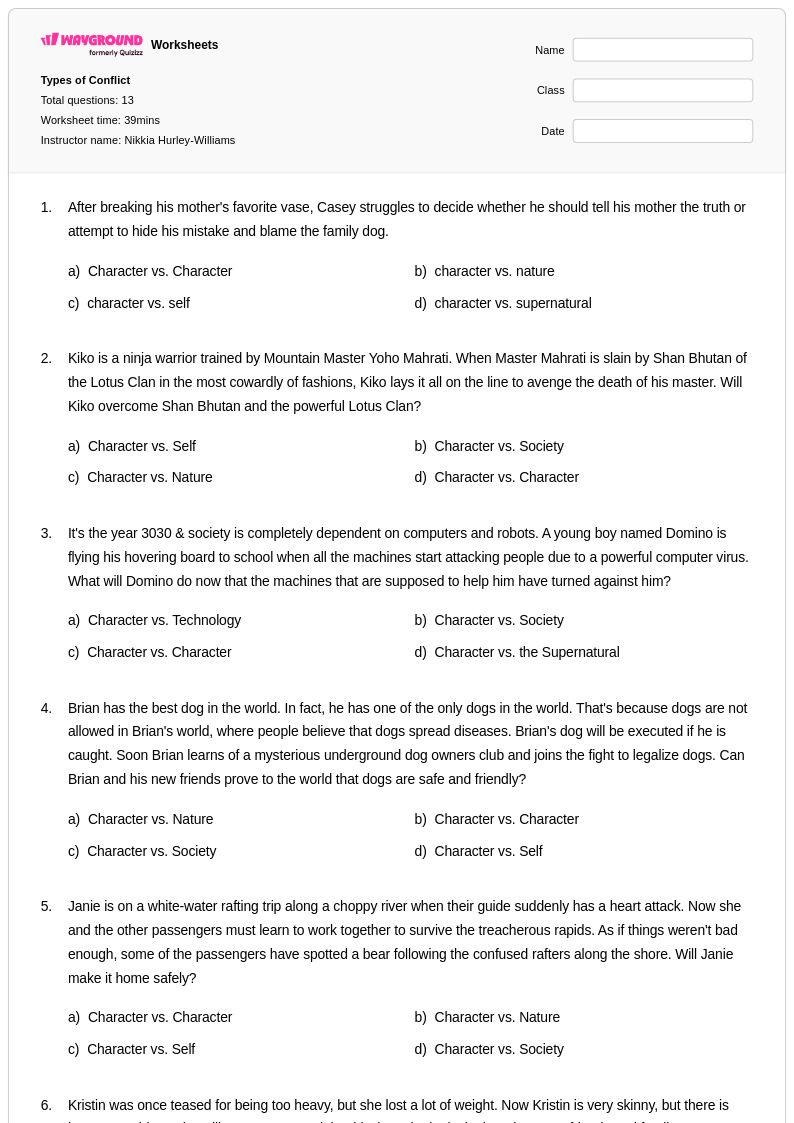
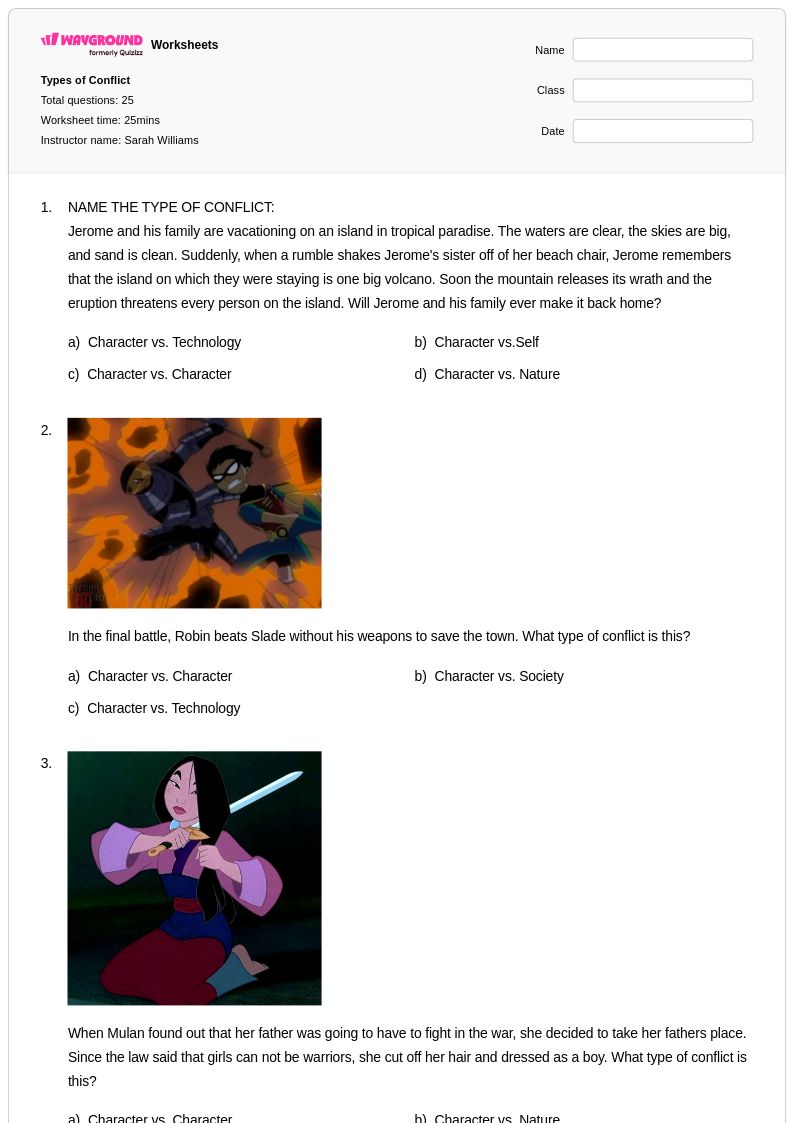
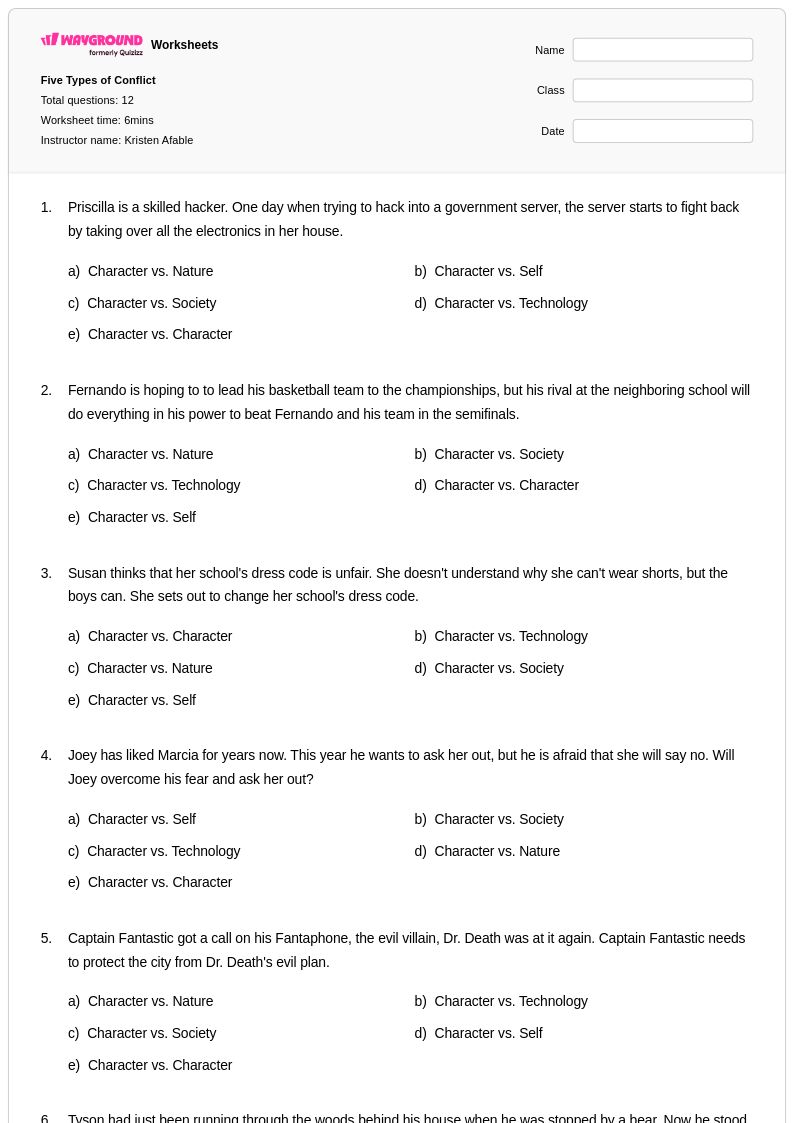
Types of conflict worksheets for Class 8 students available through Wayground (formerly Quizizz) provide comprehensive practice in identifying and analyzing the fundamental conflicts that drive literary narratives. These expertly crafted resources help eighth-grade students distinguish between internal conflicts, where characters struggle with their own emotions, decisions, or beliefs, and external conflicts, including person versus person, person versus nature, person versus society, and person versus technology. Each worksheet contains carefully selected passages and practice problems that guide students through the process of recognizing conflict clues, understanding character motivations, and analyzing how different types of conflict contribute to plot development and theme. Teachers can access complete answer keys and printable pdf versions, making it easy to assign these free resources for both classroom instruction and independent study.
Wayground (formerly Quizizz) empowers educators with an extensive collection of teacher-created worksheets focused on types of conflict, drawn from millions of high-quality resources that align with grade-level reading standards. The platform's advanced search and filtering capabilities allow teachers to quickly locate materials that match their specific curriculum requirements, while differentiation tools enable customization for students with varying reading abilities and comprehension levels. These conflict analysis worksheets are available in both digital and printable formats, including downloadable pdf options, giving teachers the flexibility to seamlessly integrate them into lesson plans for initial instruction, targeted remediation, or enrichment activities. The comprehensive nature of these resources supports systematic skill development, helping teachers guide students toward sophisticated literary analysis while building the critical thinking skills essential for advanced reading comprehension.
FAQs
How do I teach types of conflict in literature?
Start by introducing the distinction between internal and external conflict before breaking down specific types: person vs. person, person vs. self, person vs. society, person vs. nature, and person vs. technology. Use short, familiar texts or film clips to anchor each conflict type in a concrete example students already know. Once students can identify conflict types in isolation, move to longer passages where multiple conflict types appear simultaneously, asking students to explain how each conflict drives character motivation and plot development.
What exercises help students practice identifying types of conflict?
Effective practice involves presenting students with brief narrative passages and asking them to label the conflict type, cite textual evidence, and explain how the conflict shapes the character's choices. Graphic organizers that separate internal from external conflicts help students categorize before they analyze. Worksheets that require students to distinguish between, for example, a character's internal guilt (person vs. self) and their outward confrontation with authority (person vs. society) build the precision needed for literary analysis.
What mistakes do students commonly make when identifying types of conflict in literature?
The most common error is conflating external conflict with internal conflict — students often label any difficult situation as person vs. self when the primary tension is actually between characters or between a character and society. Students also frequently misclassify person vs. society conflicts as person vs. person when a character challenges a rule or institution rather than a specific individual. Requiring students to justify their classification with textual evidence rather than just name the conflict type is the most effective correction for both errors.
How can I use types of conflict worksheets to support differentiated instruction?
Types of conflict worksheets can be differentiated by text complexity — assign shorter, more straightforward passages to struggling readers while giving advanced students multi-conflict texts that require nuanced analysis. On Wayground, teachers can apply individual accommodations such as Read Aloud for students who need audio support, reduced answer choices to lower cognitive load for select learners, and extended time settings that carry over across sessions. These settings can be configured per student without alerting the rest of the class, allowing genuinely seamless differentiation.
How do I use Wayground's types of conflict worksheets in my classroom?
Wayground's types of conflict worksheets are available as printable PDFs for traditional classroom use and in digital formats for technology-integrated or remote learning environments, and can also be hosted as an interactive quiz directly on Wayground. Each worksheet includes a complete answer key, making them suitable for independent practice, guided instruction, or homework assignments. Teachers can search and filter resources by standard or reading level to find materials that match the specific needs of their class.
How do types of conflict connect to broader literary analysis skills?
Understanding conflict types gives students a framework for analyzing character motivation, theme, and plot structure — because conflict is the engine that drives a narrative forward, identifying its type reveals why characters make the choices they do. A student who can distinguish between person vs. society and person vs. self in the same character arc is better positioned to write analytical essays and respond to text-dependent questions. Building this skill in middle school creates a durable foundation for the close reading demands students encounter in high school and beyond.