Free Printable Ancient Civilizations Worksheets for Class 6
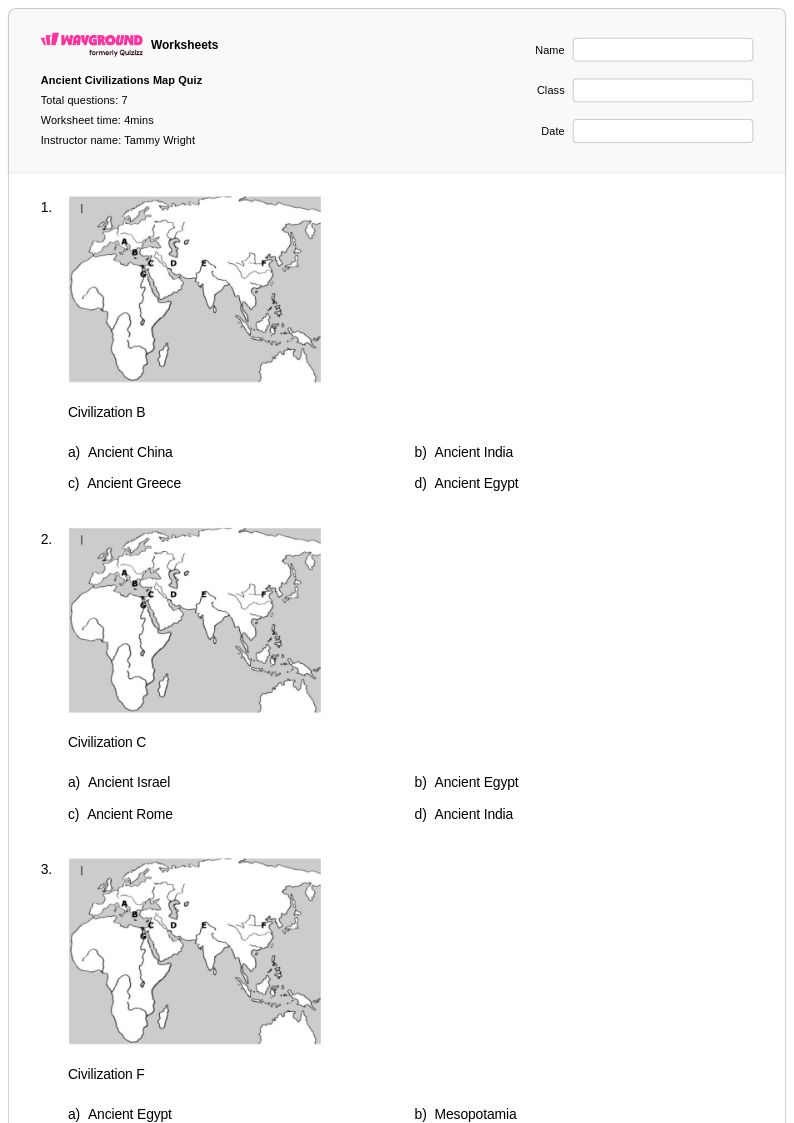
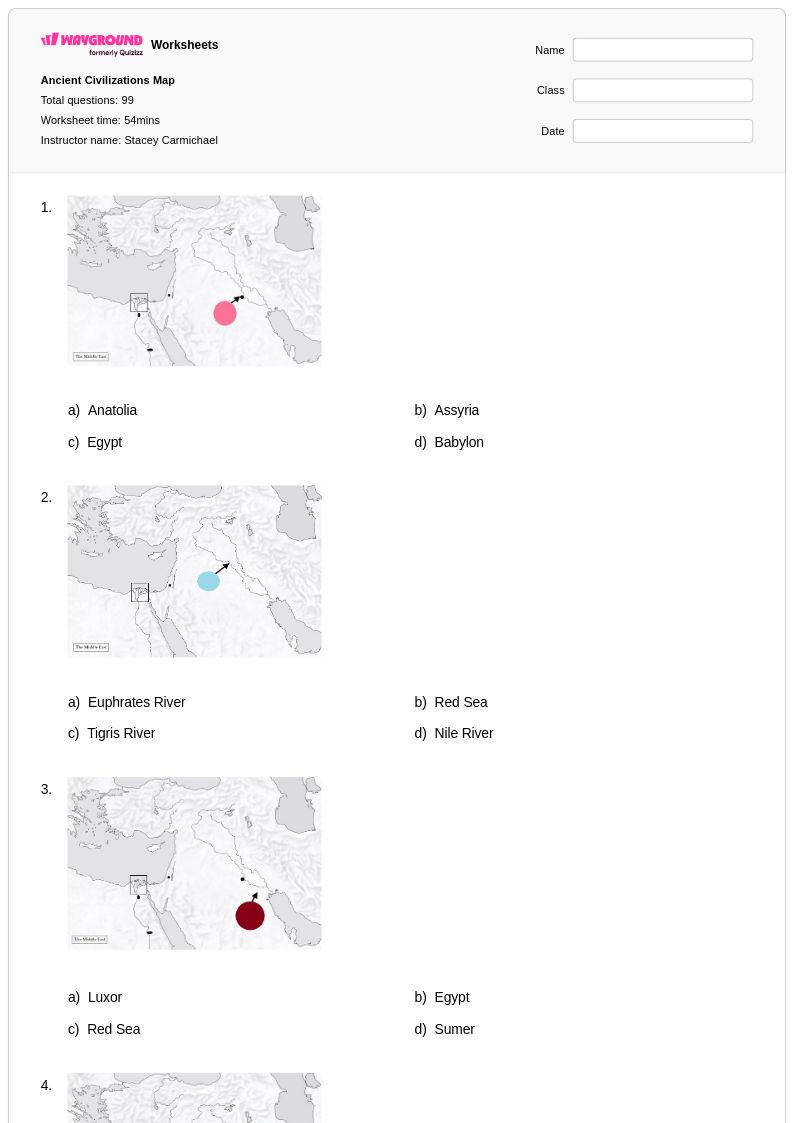
Class 6 Ancient Civilizations worksheets from Wayground offer engaging printables and practice problems that help students explore early societies, with free PDF resources and complete answer keys included.
Explore printable Ancient Civilizations worksheets for Class 6
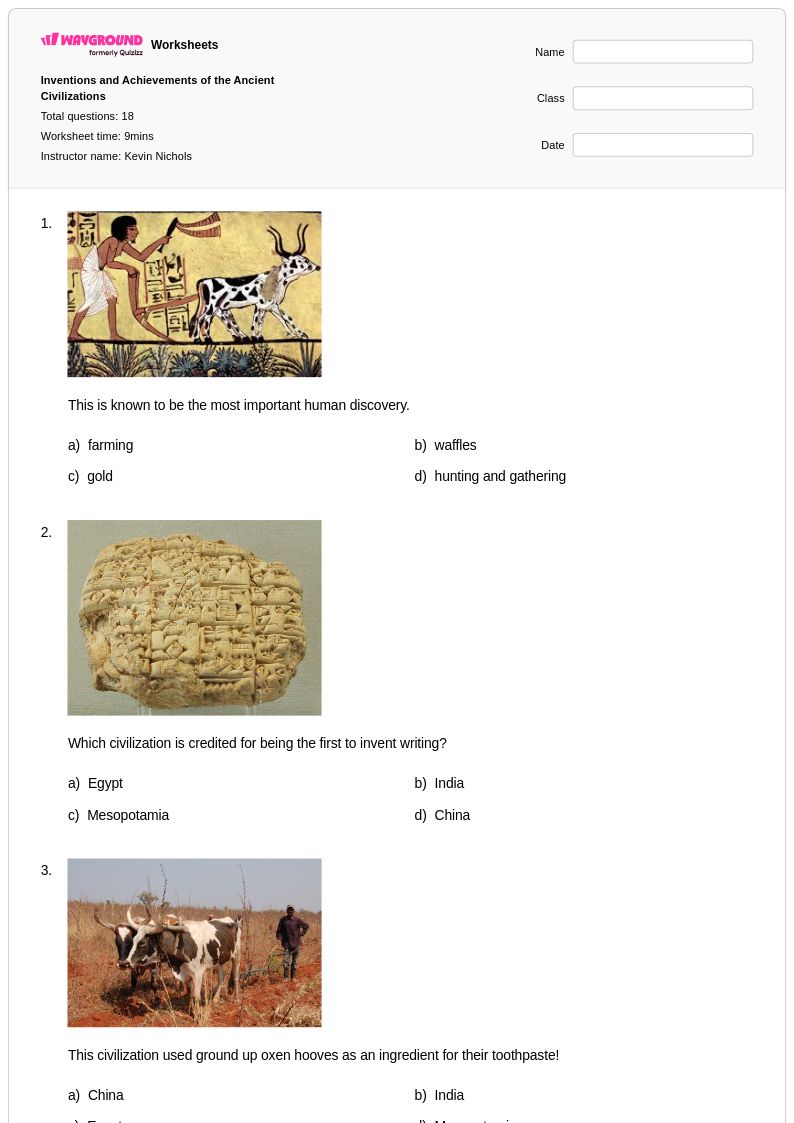
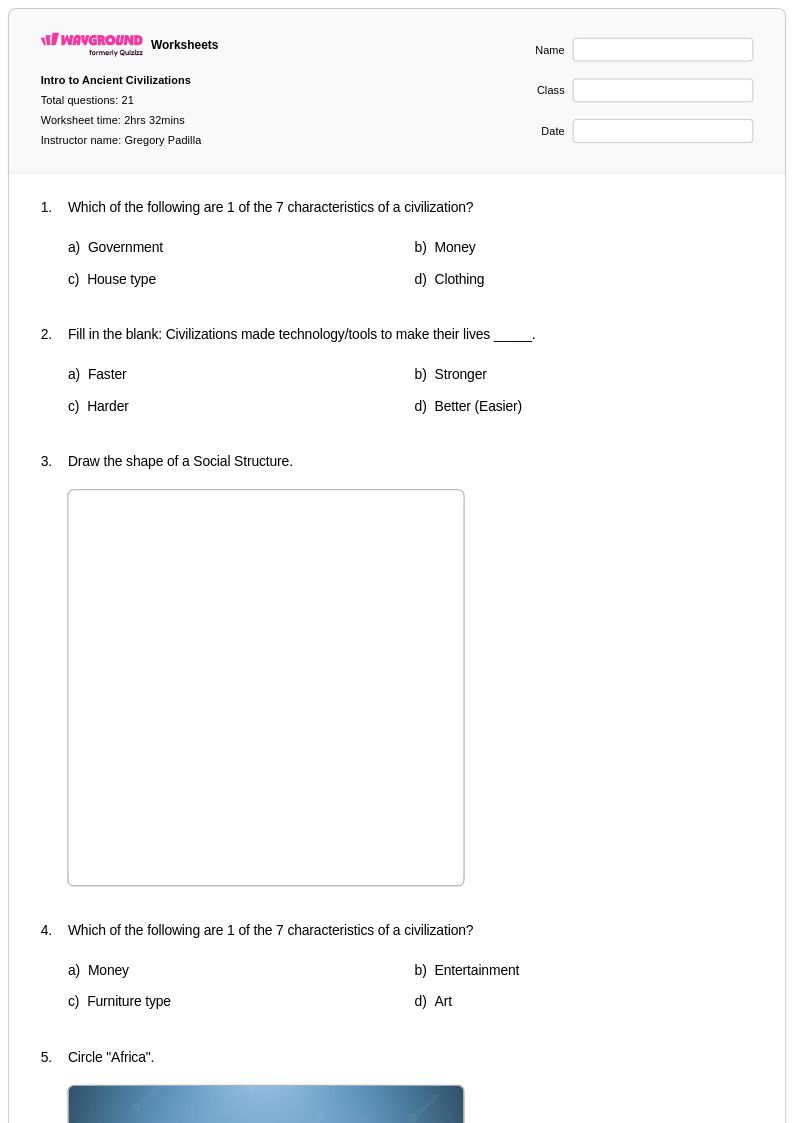
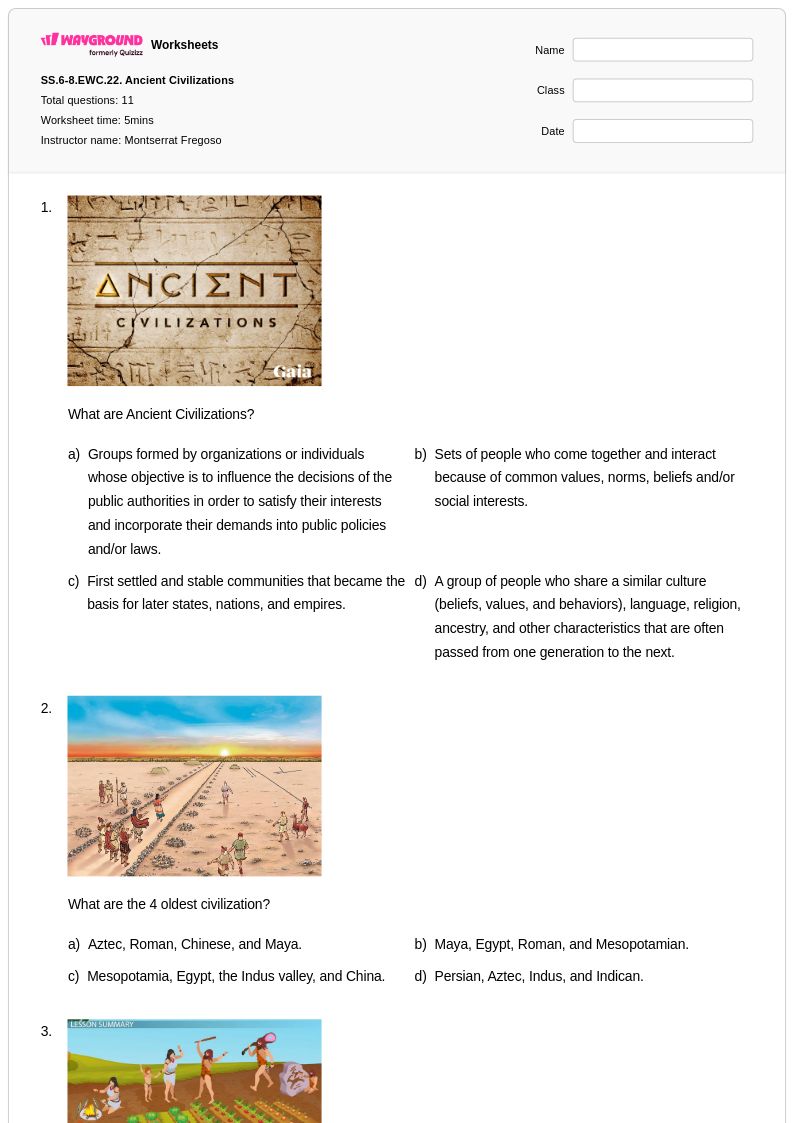
Ancient Civilizations worksheets for Class 6 students through Wayground (formerly Quizizz) provide comprehensive exploration of humanity's earliest complex societies, from Mesopotamian city-states to Egyptian dynasties, Greek democracy, and Roman engineering marvels. These carefully crafted educational materials strengthen critical thinking skills by engaging students in analyzing primary source documents, comparing governmental systems, and understanding how geography influenced civilization development. Each worksheet collection includes detailed answer keys to support independent learning, with free printables available in convenient PDF format that teachers can easily distribute for classroom practice problems or homework assignments. Students develop essential historical analysis skills while investigating topics such as cuneiform writing systems, pyramid construction techniques, philosophical developments, and trade network expansion that connected ancient peoples across continents.
Wayground (formerly Quizizz) supports educators with millions of teacher-created resources specifically designed for ancient civilizations instruction, featuring robust search and filtering capabilities that allow teachers to quickly locate materials aligned with state social studies standards. The platform's differentiation tools enable instructors to customize worksheets for varying skill levels within their Class 6 classrooms, ensuring that both struggling learners and advanced students receive appropriately challenging content about Babylonian law codes, Athenian democracy, or Roman architectural innovations. These flexible resources are available in both printable PDF formats for traditional paper-based learning and digital formats for technology-integrated instruction, making lesson planning more efficient while providing targeted practice for skill development, remediation of challenging concepts, and enrichment opportunities that deepen student understanding of how ancient civilizations laid the foundation for modern society.
FAQs
How do I teach ancient civilizations to middle school students?
Teaching ancient civilizations effectively means grounding students in geographic context first — use map activities to show where civilizations like Mesopotamia, Egypt, and the Indus Valley emerged and why river systems were critical to their development. From there, build outward into comparative studies: how did different societies organize government, practice religion, and develop technology? Primary source analysis, timeline construction, and structured comparisons of civilizations like Athens vs. Sparta or the Aztec Empire vs. Rome help students see patterns across history rather than isolated facts.
What are common misconceptions students have about ancient civilizations?
One of the most frequent misconceptions is that ancient civilizations were primitive or unsophisticated — students often underestimate achievements like Egyptian engineering, cuneiform writing systems, or Hammurabi's Code as a codified legal framework. Another common error is treating civilizations as static: students may not recognize that societies like Rome or the Aztec Empire evolved significantly over centuries before their eventual decline. Addressing these misconceptions early, through primary source analysis and evidence-based discussion, helps students build a more accurate historical understanding.
What worksheet activities work best for practicing ancient civilizations content?
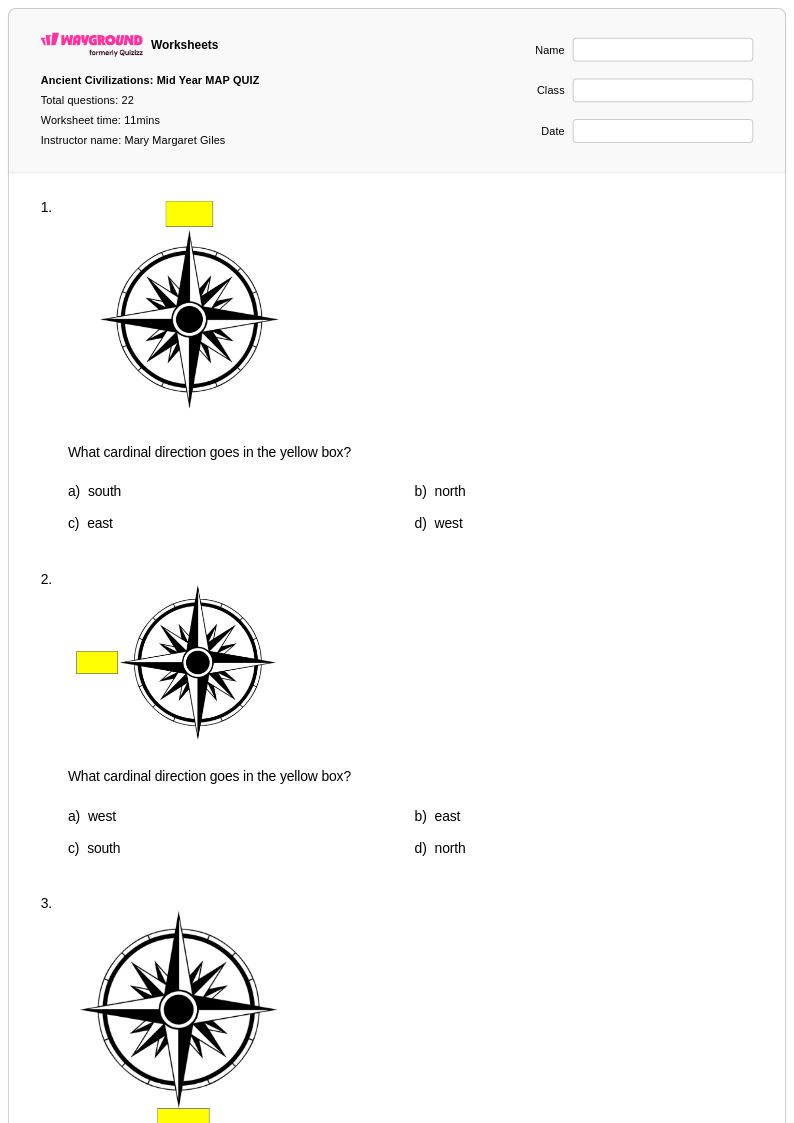
Effective practice activities for ancient civilizations include primary source analysis of documents like Hammurabi's Code or hieroglyphic texts, map interpretation exercises focused on River Valley Civilizations and trade routes, and comparative graphic organizers that ask students to evaluate governmental systems or religious beliefs across multiple societies. Timeline construction activities are particularly useful for helping students sequence events like the rise and fall of the Roman Empire or the development of Greek democracy. These formats build both content knowledge and the analytical skills central to historical inquiry.
How do I compare ancient Greece and ancient Rome in a classroom lesson?
A structured comparison of ancient Greece and Rome works well when organized around shared categories: government structure, military organization, cultural contributions, and reasons for decline. For Greece, focus on the contrast between Athenian democracy and Spartan militarism, then connect those governance models to how Rome adapted and transformed Greek political ideas. Using side-by-side graphic organizers or Venn diagrams helps students identify both the direct influence Greece had on Rome and the distinct innovations each civilization produced.
How can I use Wayground's ancient civilizations worksheets in my classroom?
Wayground's ancient civilizations worksheets are available as printable PDFs for traditional classroom use and in digital formats for technology-integrated learning environments. Teachers can also host worksheets as a live quiz directly on Wayground, making them suitable for whole-class instruction, independent practice, or formative assessment. For students who need additional support, Wayground offers built-in accommodations including read aloud, extended time, and reduced answer choices — all configurable per student without disrupting the rest of the class.
How do I differentiate ancient civilizations instruction for students at different reading levels?
Differentiation in ancient civilizations instruction starts with scaffolding text complexity — pair visual primary sources like hieroglyphics or architectural diagrams with written analysis tasks so lower-level readers can access the content. For digital delivery, Wayground's accommodation tools allow teachers to enable read aloud for individual students who need audio support, adjust font sizes through reading mode, and reduce answer choices to lower cognitive load, all without signaling those differences to the rest of the class. Advanced students can be extended through comparative writing tasks or research into subtopics like the Fall of Rome or Constantine the Great.