Free Printable Asexual Reproduction Worksheets for Class 1
Explore Class 1 asexual reproduction worksheets and printables through Wayground that help young students discover how living things reproduce without partners, featuring engaging practice problems, free PDF downloads, and complete answer keys.
Explore printable Asexual Reproduction worksheets for Class 1
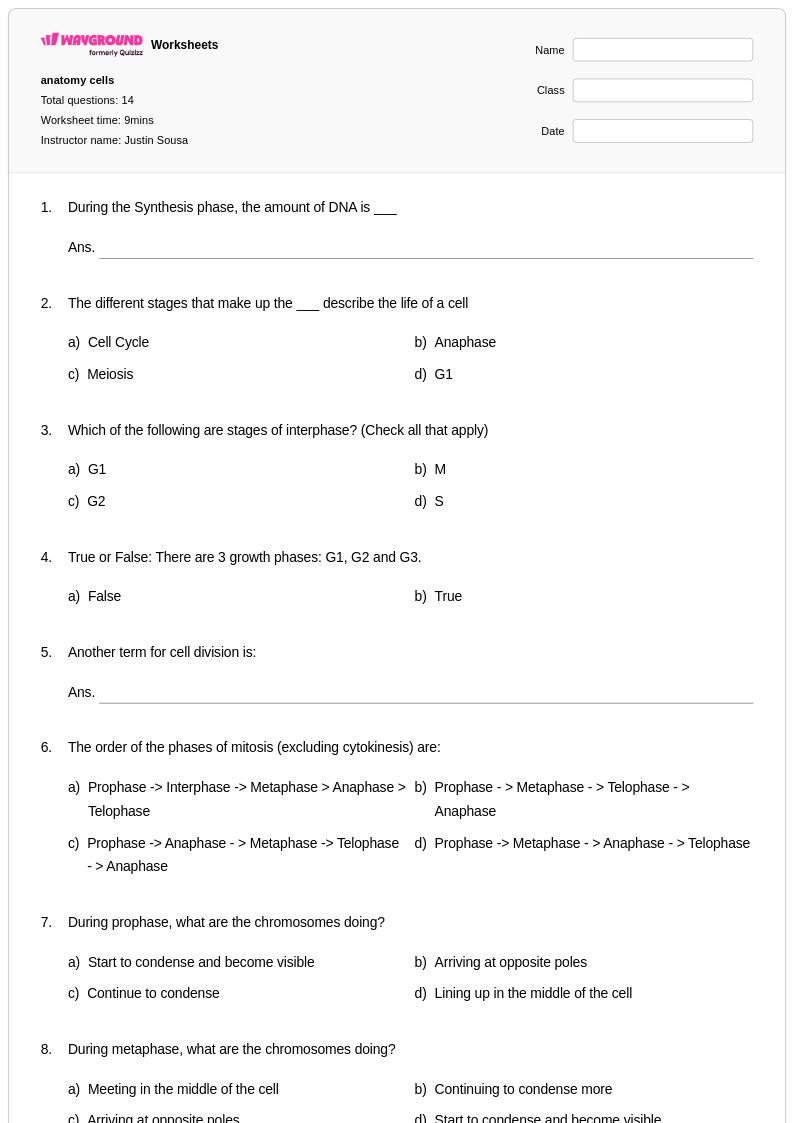
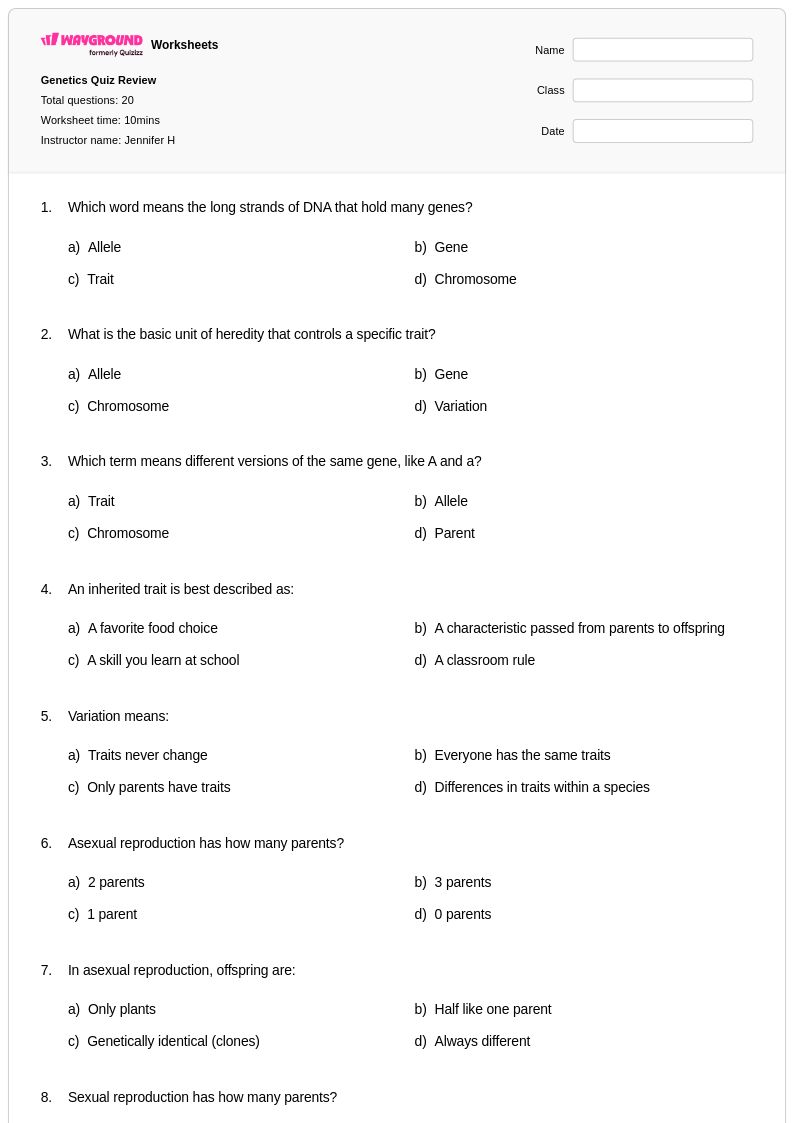
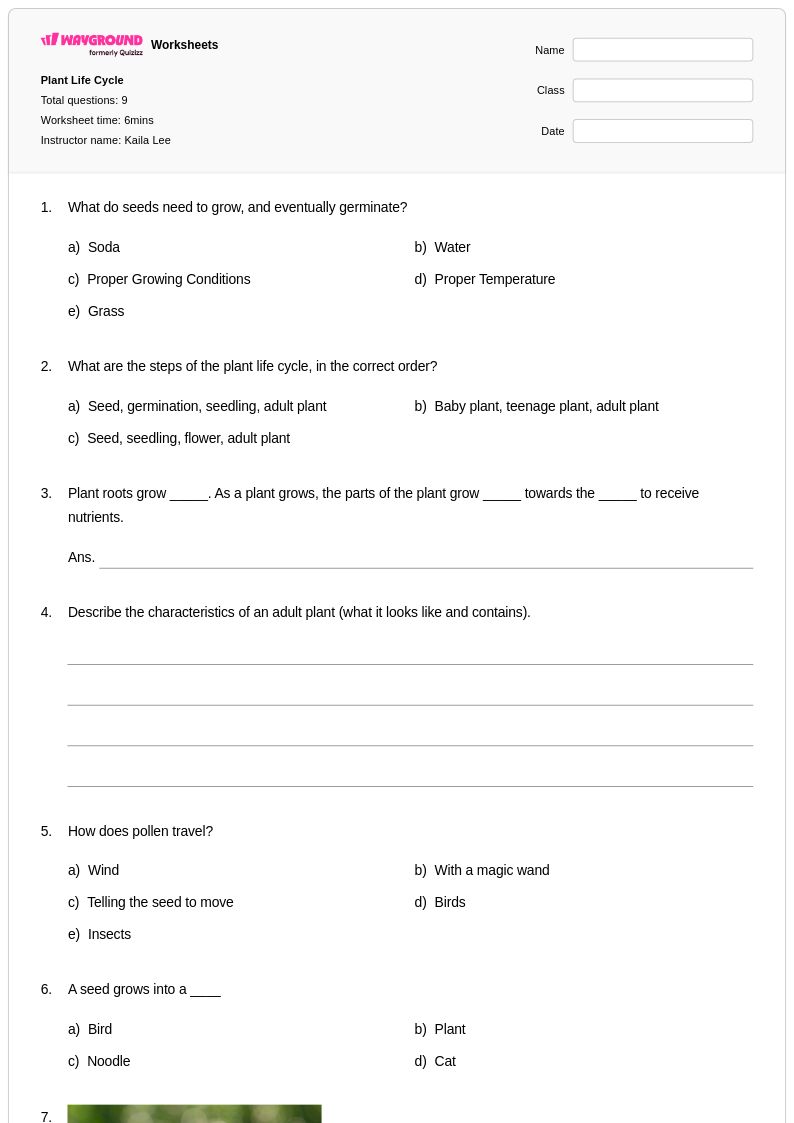
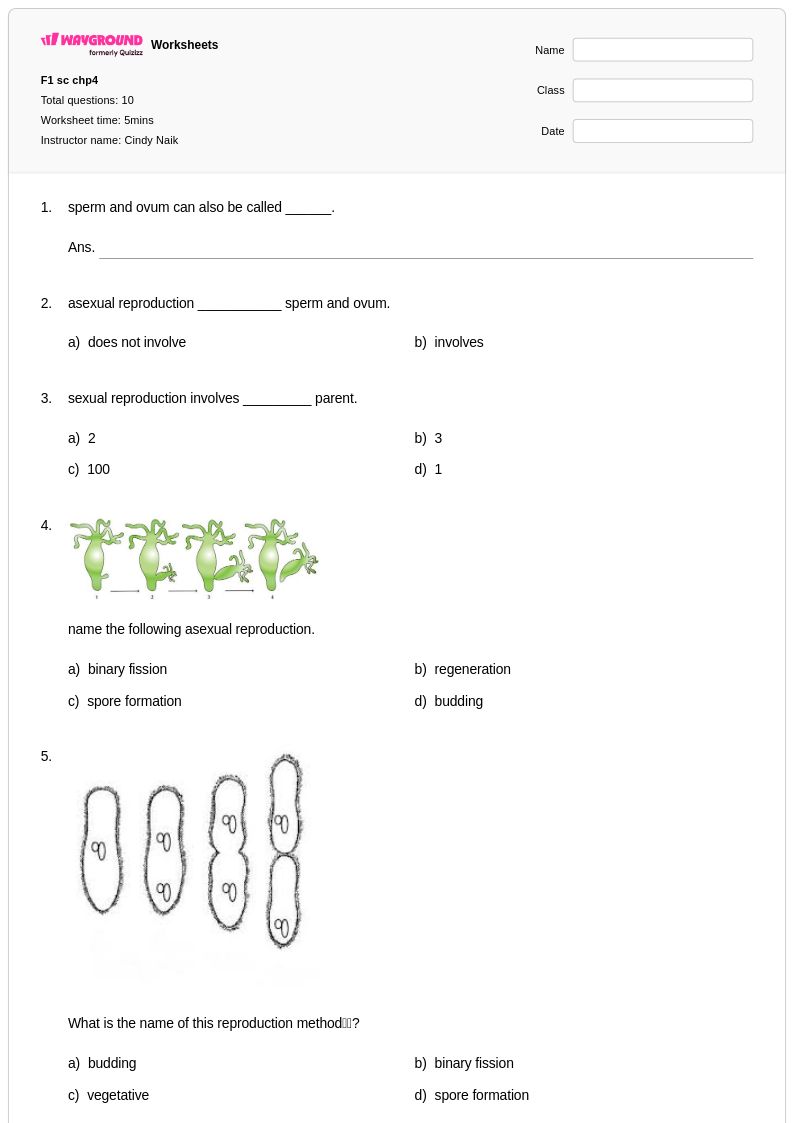
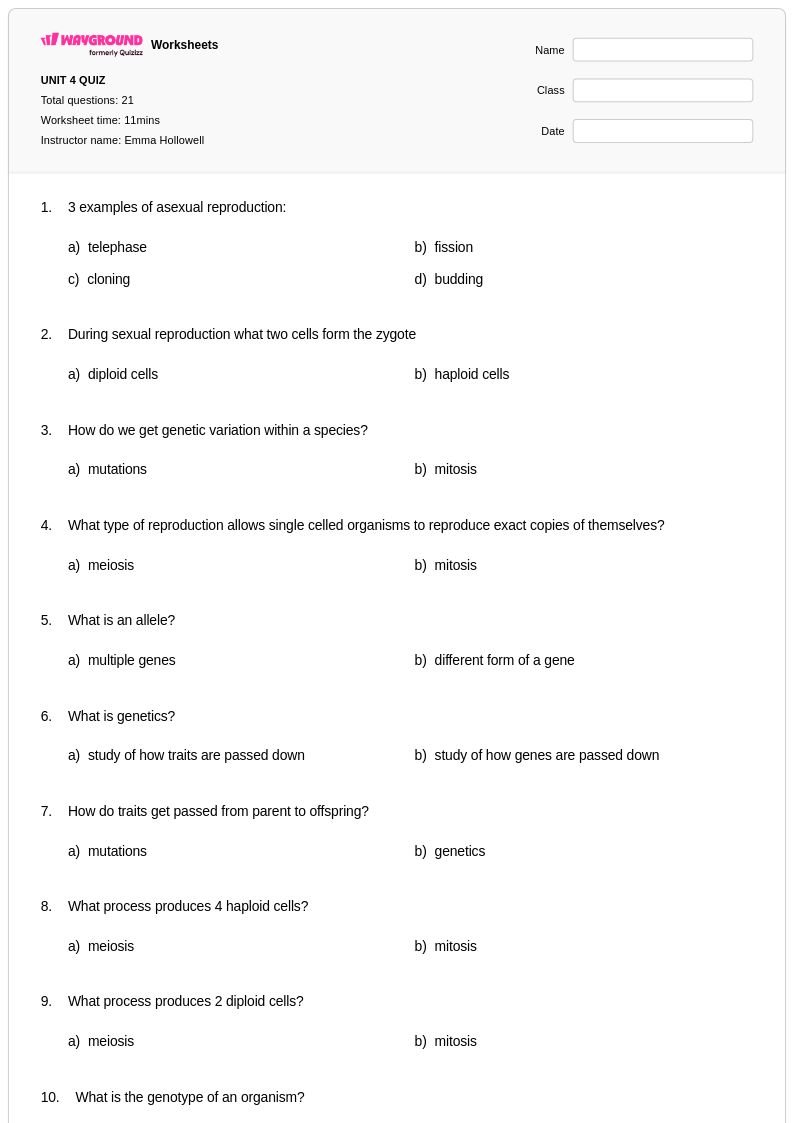
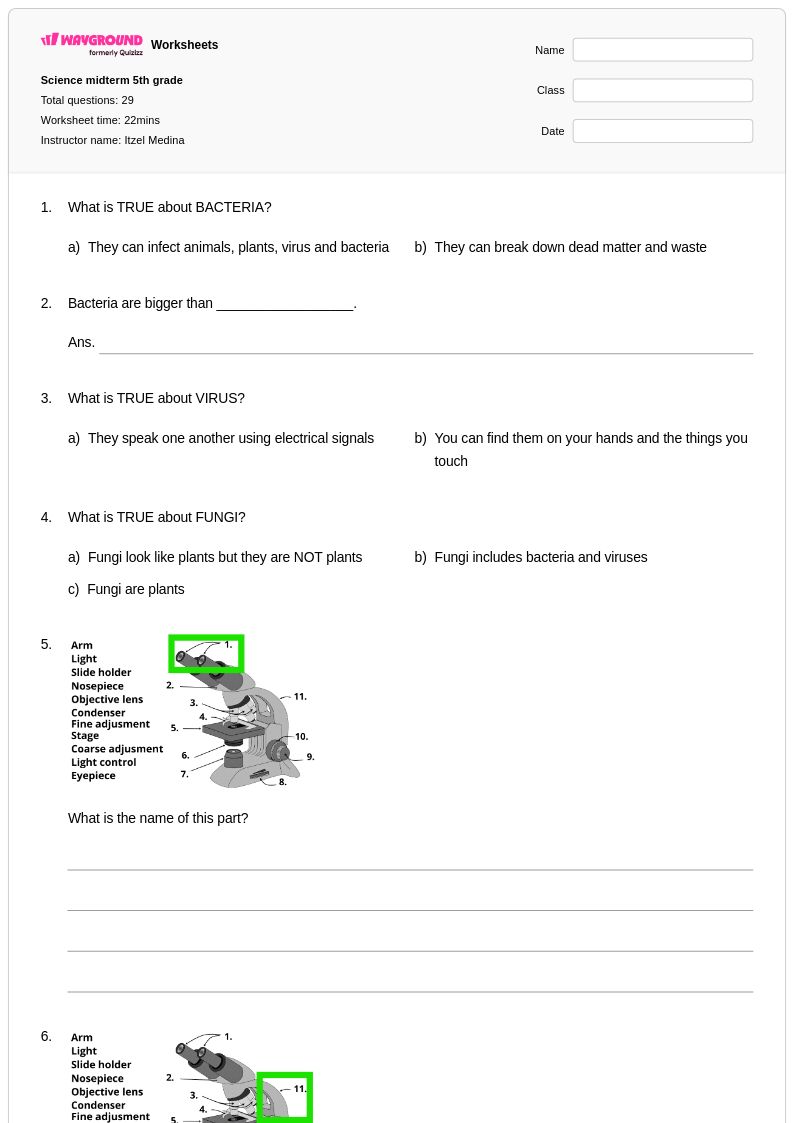
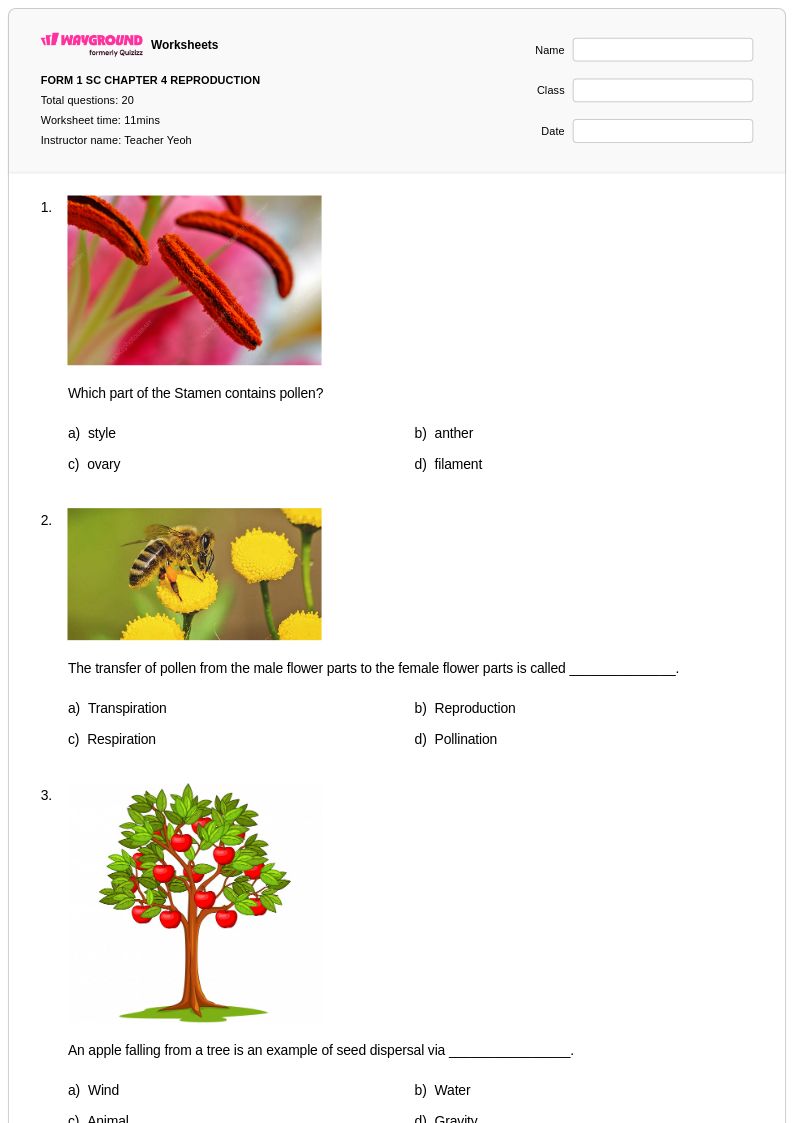
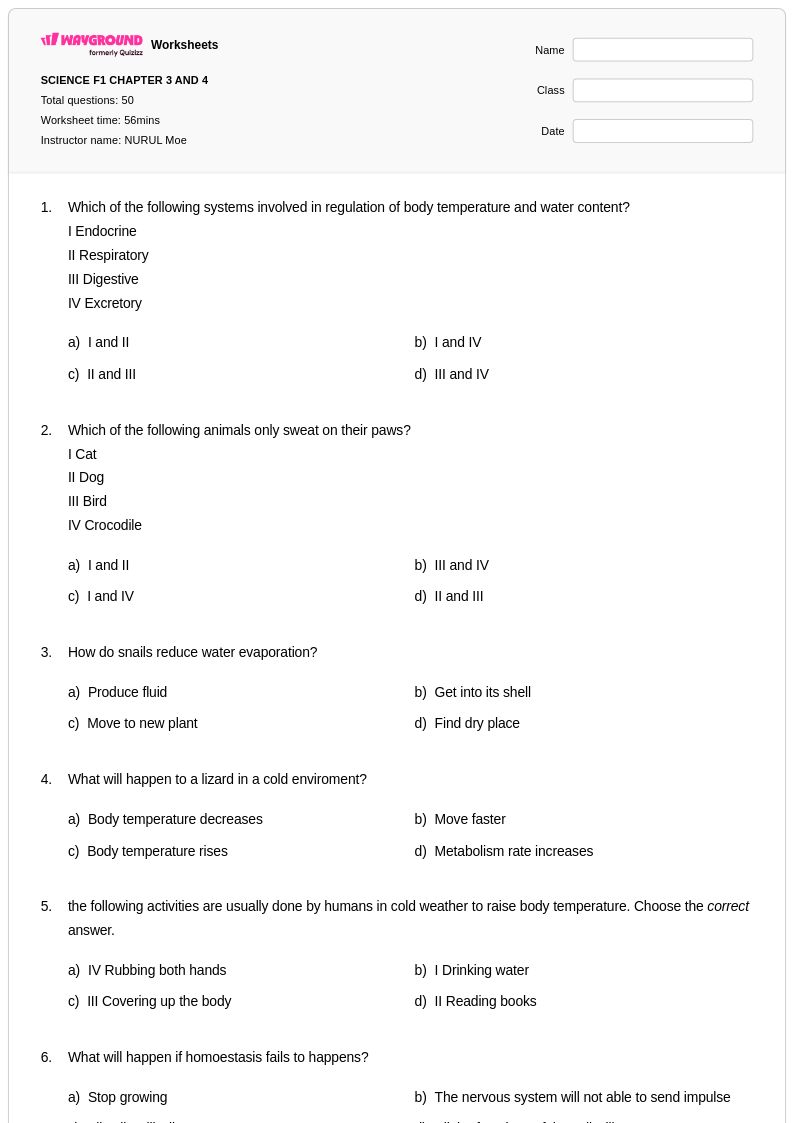
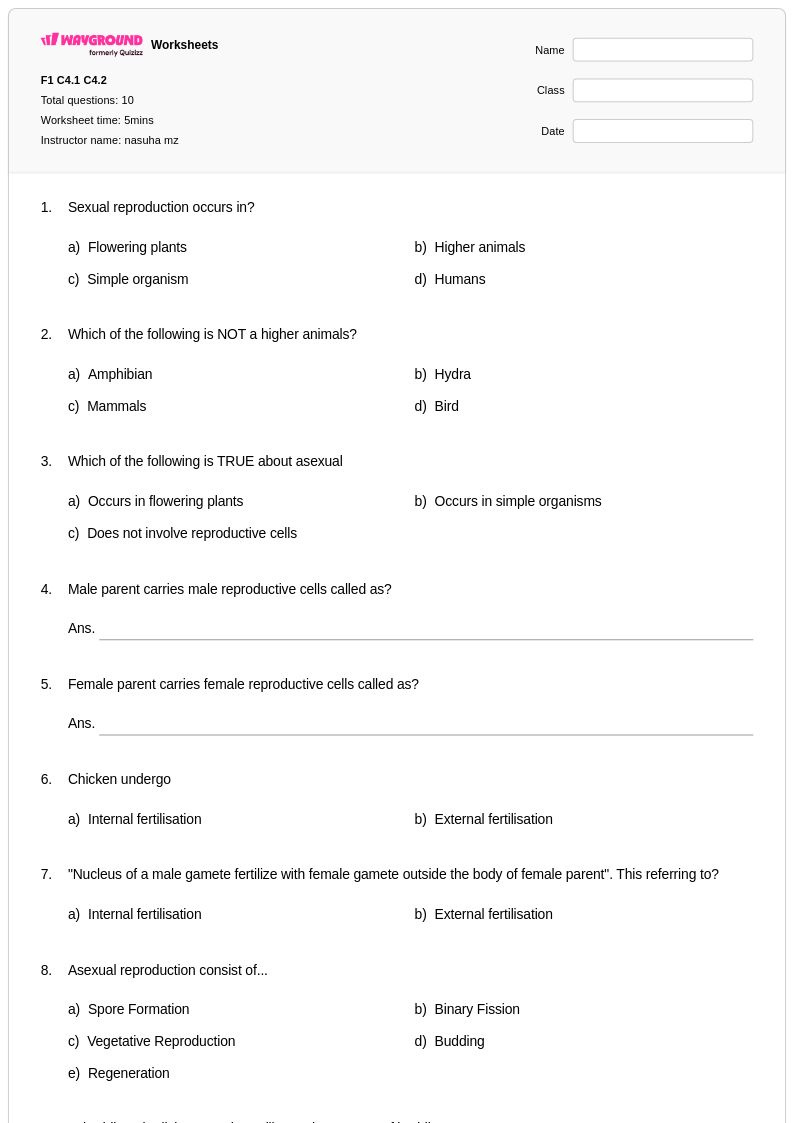
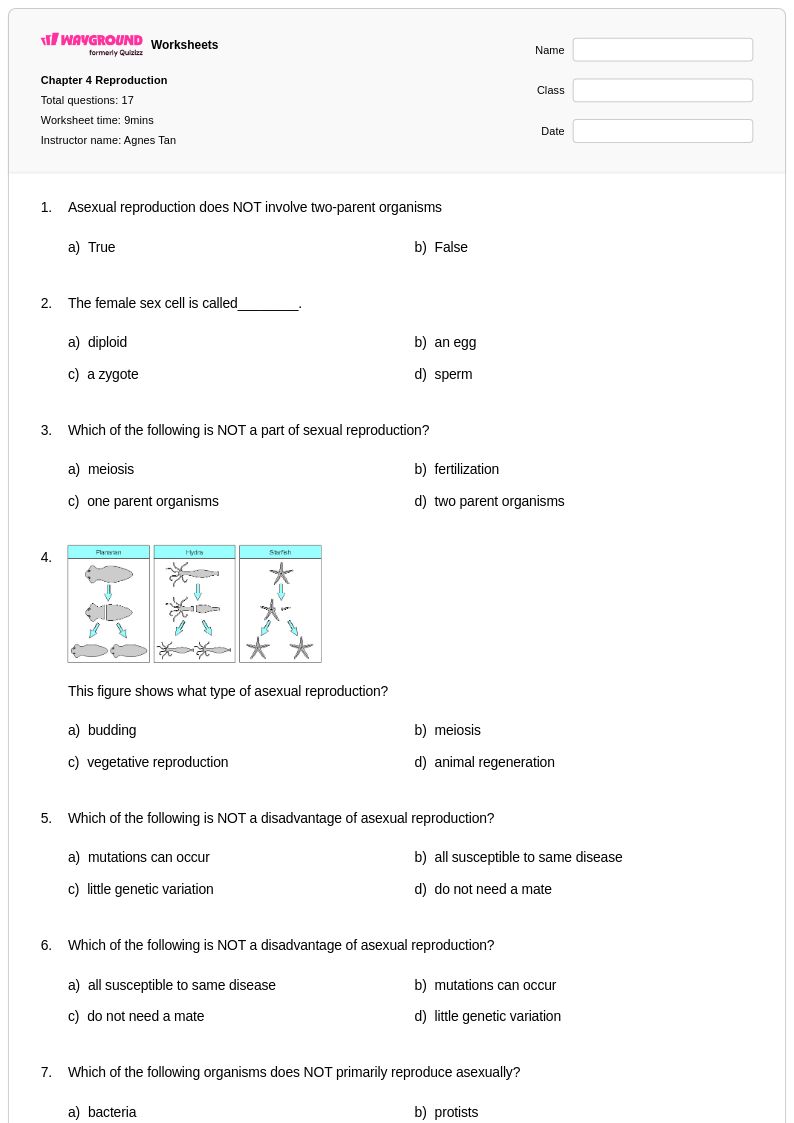
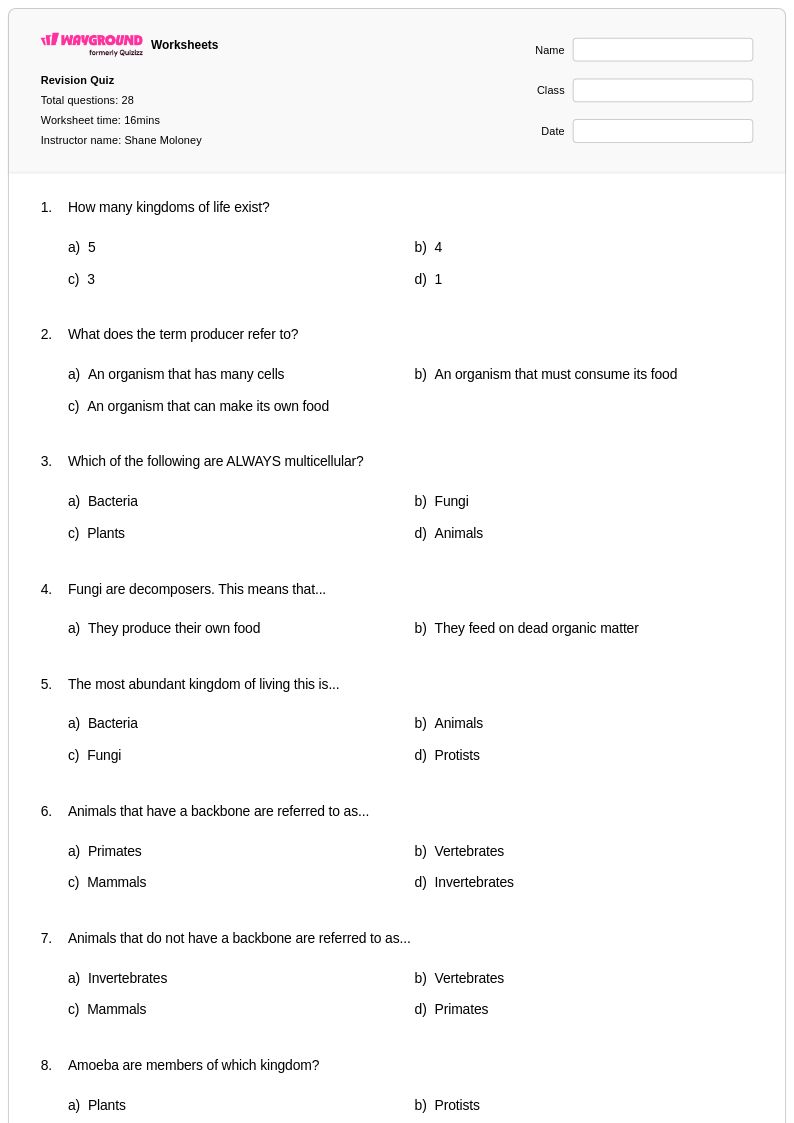
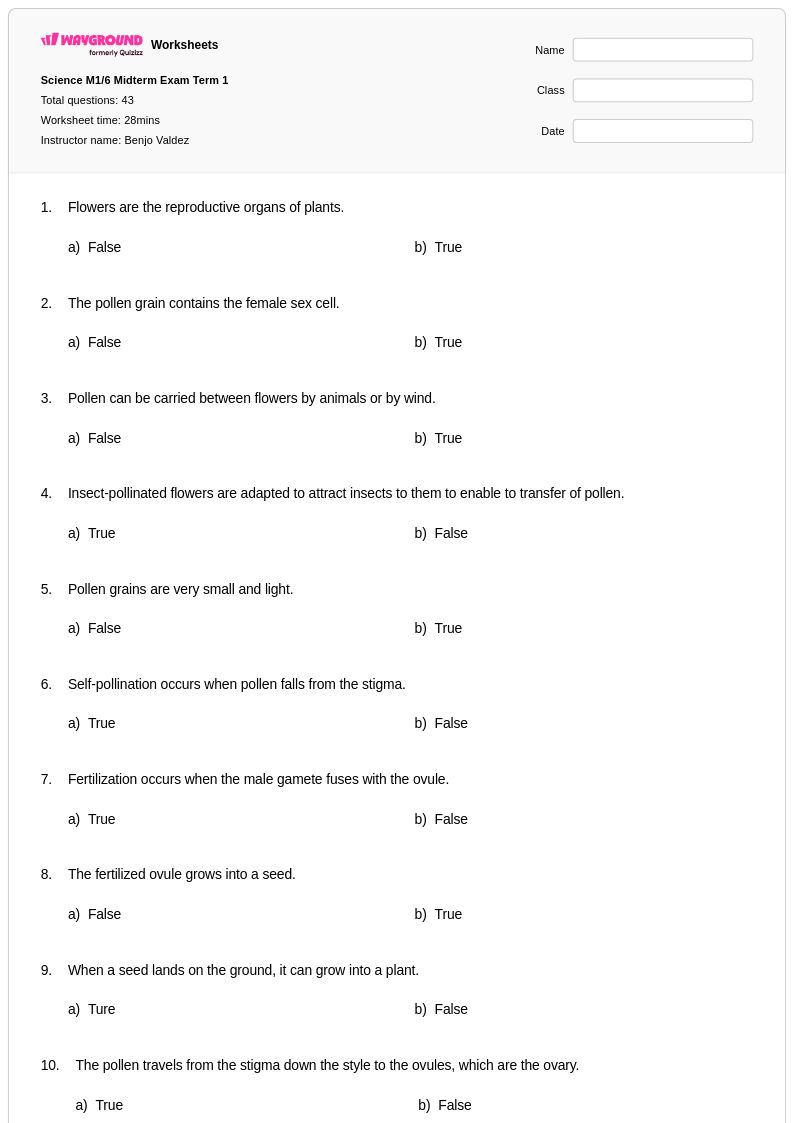
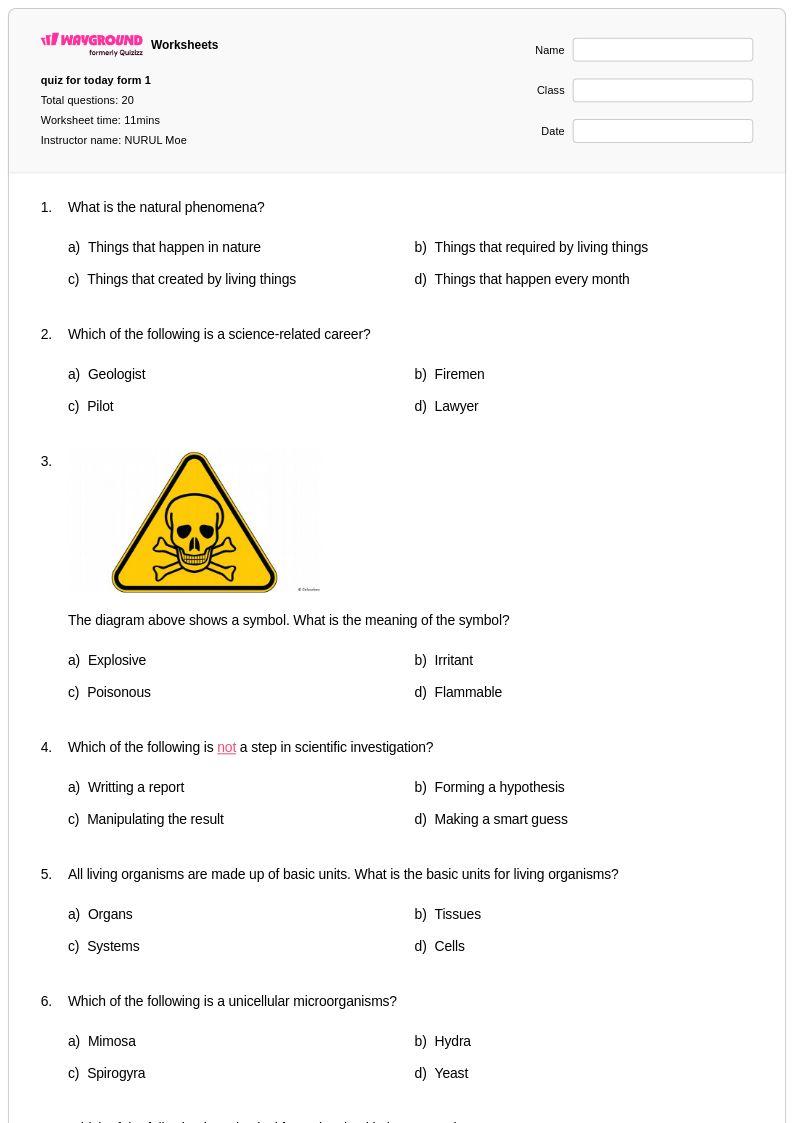
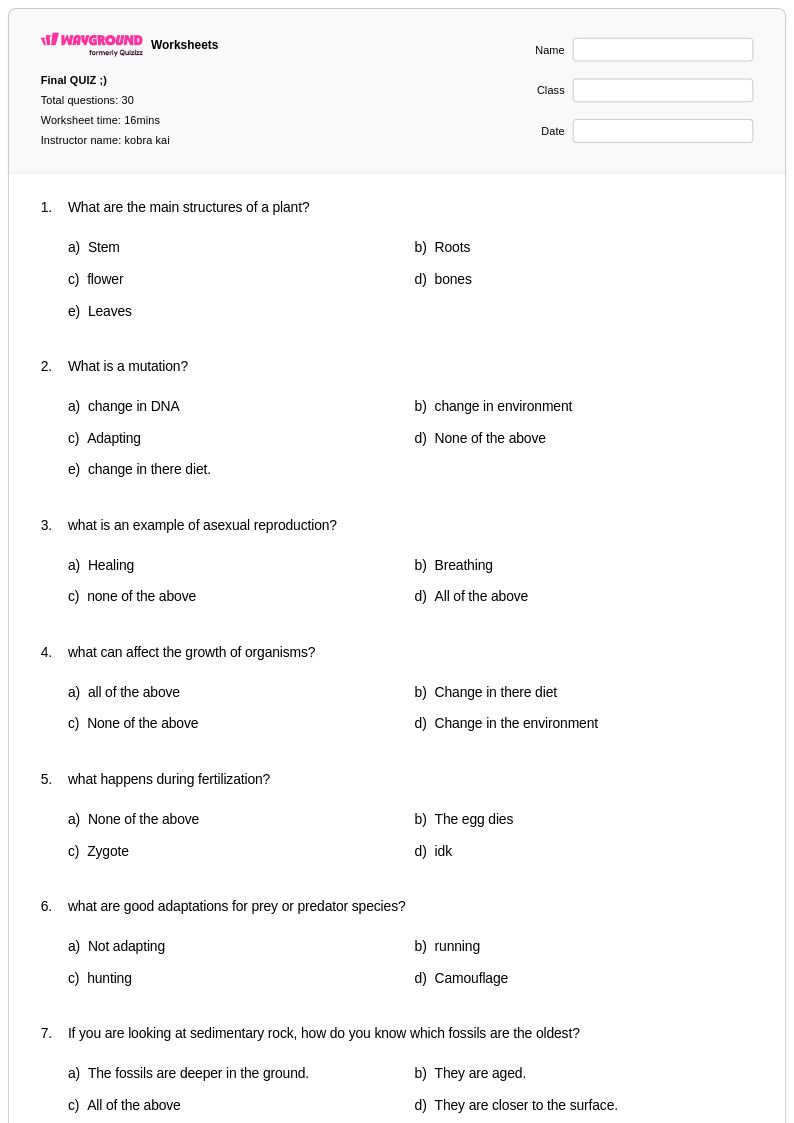
Asexual reproduction worksheets for Class 1 students available through Wayground (formerly Quizizz) introduce young learners to the fundamental biological concept of how some living things create offspring without the need for two parents. These carefully designed educational materials help first-grade students understand simple examples of asexual reproduction in nature, such as how plants can grow new shoots from their roots or how some animals like starfish can regenerate lost parts. The worksheets strengthen essential observation skills, basic vocabulary development, and early scientific thinking through age-appropriate activities that include matching exercises, simple diagrams, and guided practice problems. Teachers can access comprehensive answer keys and utilize these free printables in both pdf format and digital versions to support diverse learning preferences in the classroom.
Wayground (formerly Quizizz) empowers educators with millions of teacher-created resources specifically designed for Class 1 biology instruction, including extensive collections focused on asexual reproduction concepts. The platform's robust search and filtering capabilities allow teachers to quickly locate worksheets that align with specific learning standards and match their students' developmental needs. Advanced differentiation tools enable seamless customization of content difficulty levels, ensuring that both struggling learners and advanced students receive appropriate challenges during skill practice sessions. Whether used for initial concept introduction, targeted remediation, or enrichment activities, these flexible resources support comprehensive lesson planning by providing educators with reliable, curriculum-aligned materials available in multiple formats to accommodate various teaching approaches and classroom technologies.
FAQs
How do I teach asexual reproduction to biology students?
Start by grounding students in the definition of asexual reproduction as a single-parent process that produces genetically identical offspring, then build outward to specific mechanisms. Teach each type — binary fission, budding, fragmentation, spore formation, and vegetative propagation — with concrete organism examples like bacteria, yeast, hydra, fungi, and plants. Connecting each reproductive strategy to its evolutionary advantage (speed, energy efficiency, stability in unchanging environments) helps students move beyond memorization toward conceptual understanding.
What are the most common misconceptions students have about asexual reproduction?
One of the most frequent errors is assuming asexual reproduction only occurs in simple or microscopic organisms — students often overlook vegetative propagation in plants or fragmentation in starfish. Another common misconception is that genetically identical offspring are always advantageous; students need to understand that lack of genetic variation makes asexually reproducing populations more vulnerable to disease and environmental change. Explicitly contrasting asexual and sexual reproduction in terms of genetic diversity helps address both errors simultaneously.
What types of practice problems help students master the different forms of asexual reproduction?
Effective practice includes identification tasks where students match reproductive strategies to specific organisms, diagram analysis where they label stages of binary fission or budding cycles, and short-answer questions that ask students to explain the genetic implications of producing clones. Comparison questions — asking students to evaluate the advantages and disadvantages of asexual versus sexual reproduction across different environments — push higher-order thinking beyond recall. These problem types mirror the analytical demands students face on biology assessments.
How can I use asexual reproduction worksheets to support students who are struggling with this topic?
For struggling students, scaffolded worksheets that isolate one reproductive mechanism at a time are more effective than comprehensive mixed reviews, which can overwhelm students still building foundational vocabulary. On Wayground, teachers can apply individual accommodations such as Read Aloud support for students who need audio assistance with scientific terminology, or reduced answer choices to lower cognitive load on identification questions. These settings can be assigned per student without notifying the rest of the class, keeping the experience seamless for everyone.
How do I use Wayground's asexual reproduction worksheets in my classroom?
Wayground's asexual reproduction worksheets are available as downloadable PDF files for traditional print-and-use classroom instruction and in digital formats for technology-integrated or hybrid learning environments. Teachers can assign them as in-class practice, homework, or host them directly as a quiz on Wayground for instant scoring. Each worksheet includes a comprehensive answer key, supporting independent student review and reducing teacher grading time.
How do I assess whether students understand the genetic implications of asexual reproduction?
Ask students to explain why organisms produced through asexual reproduction are genetically identical to the parent and to each other, then challenge them to connect this to real-world consequences such as susceptibility to a single pathogen wiping out an entire clonal population. Strong responses will reference the absence of meiosis and fertilization as the reason for genetic uniformity. Students who can articulate both the mechanism and the evolutionary trade-off have moved beyond surface-level understanding of the topic.