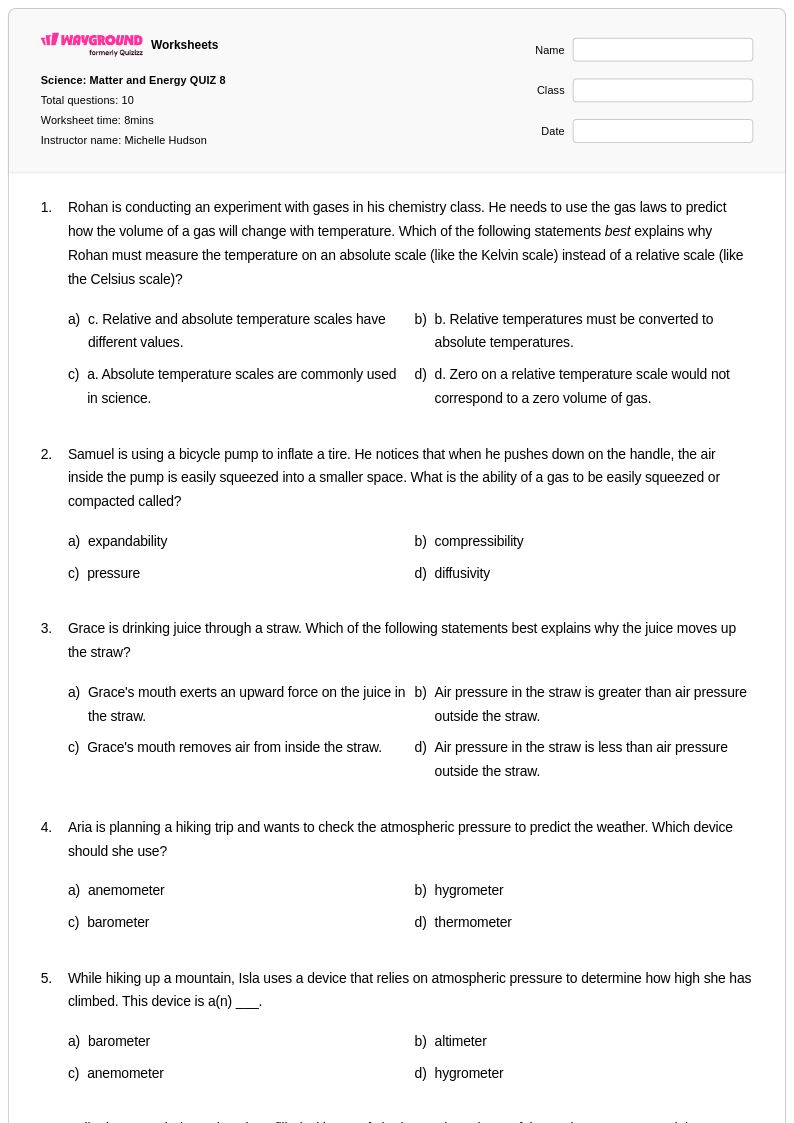
Free Printable Atmospheric Pressure Worksheets for Class 9
Explore Wayground's free Class 9 atmospheric pressure worksheets and printables with comprehensive practice problems and answer keys to help students master air pressure concepts, barometric measurements, and weather-related atmospheric phenomena.
Explore printable Atmospheric Pressure worksheets for Class 9
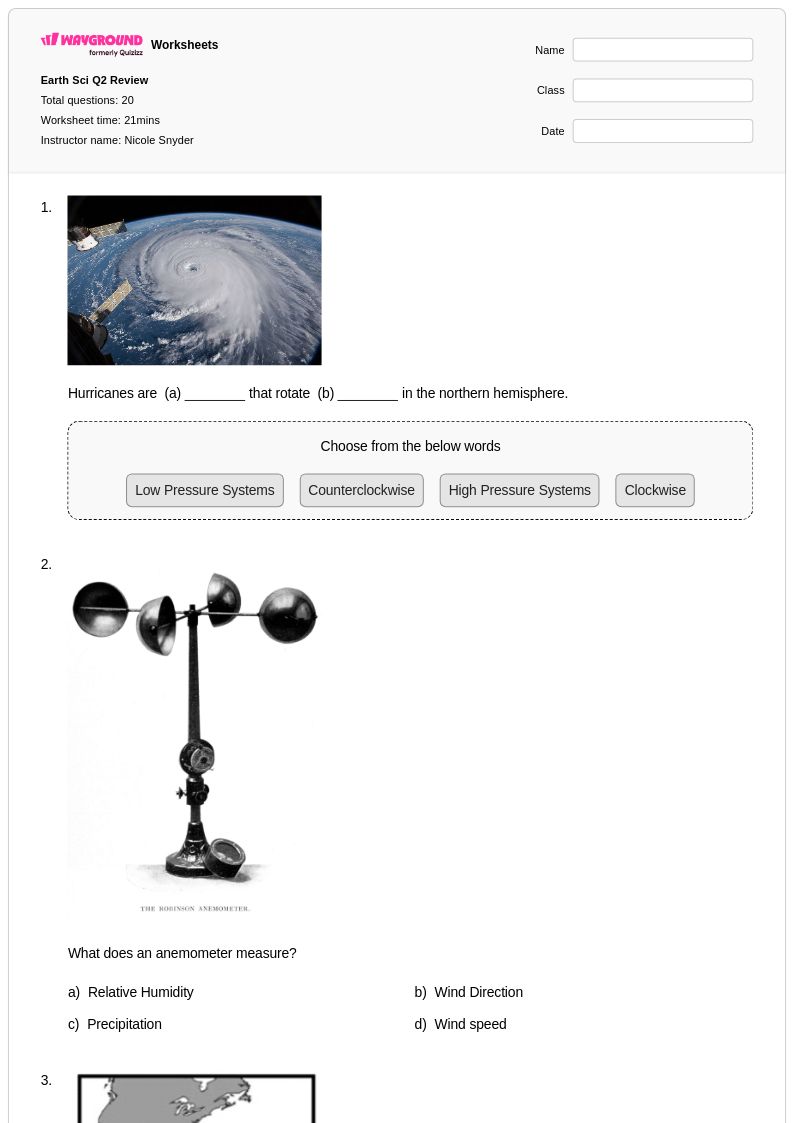
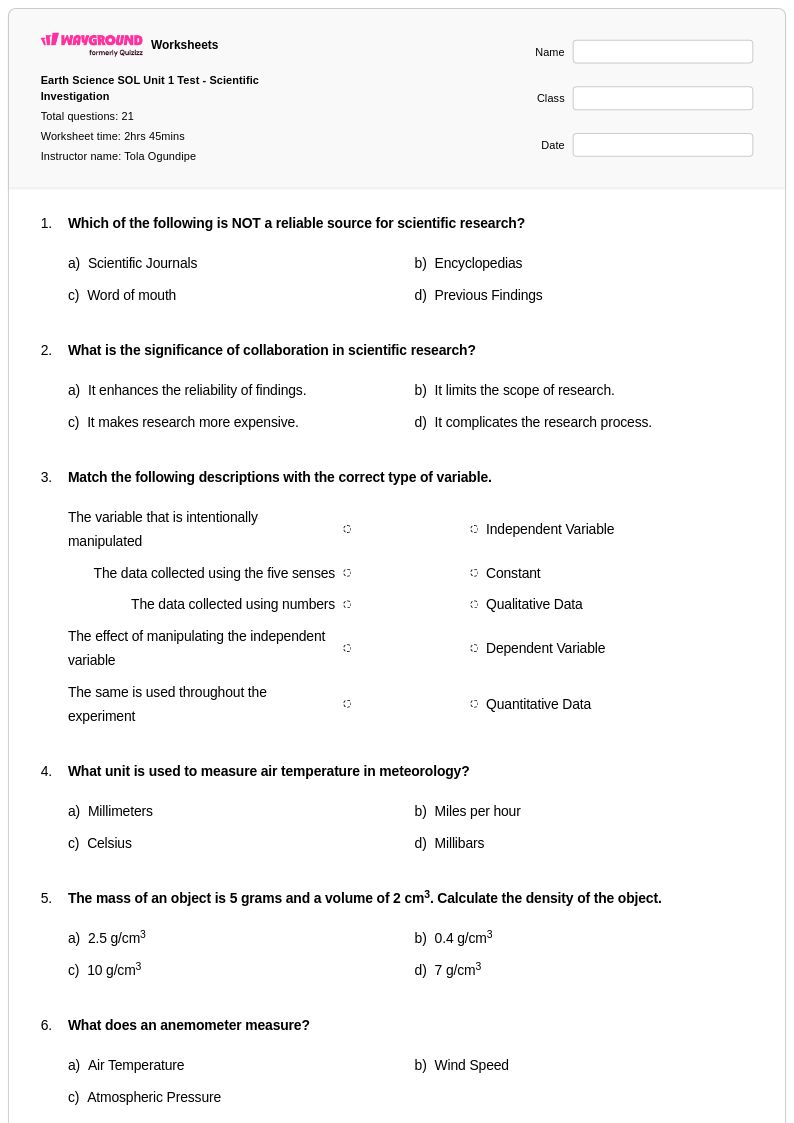
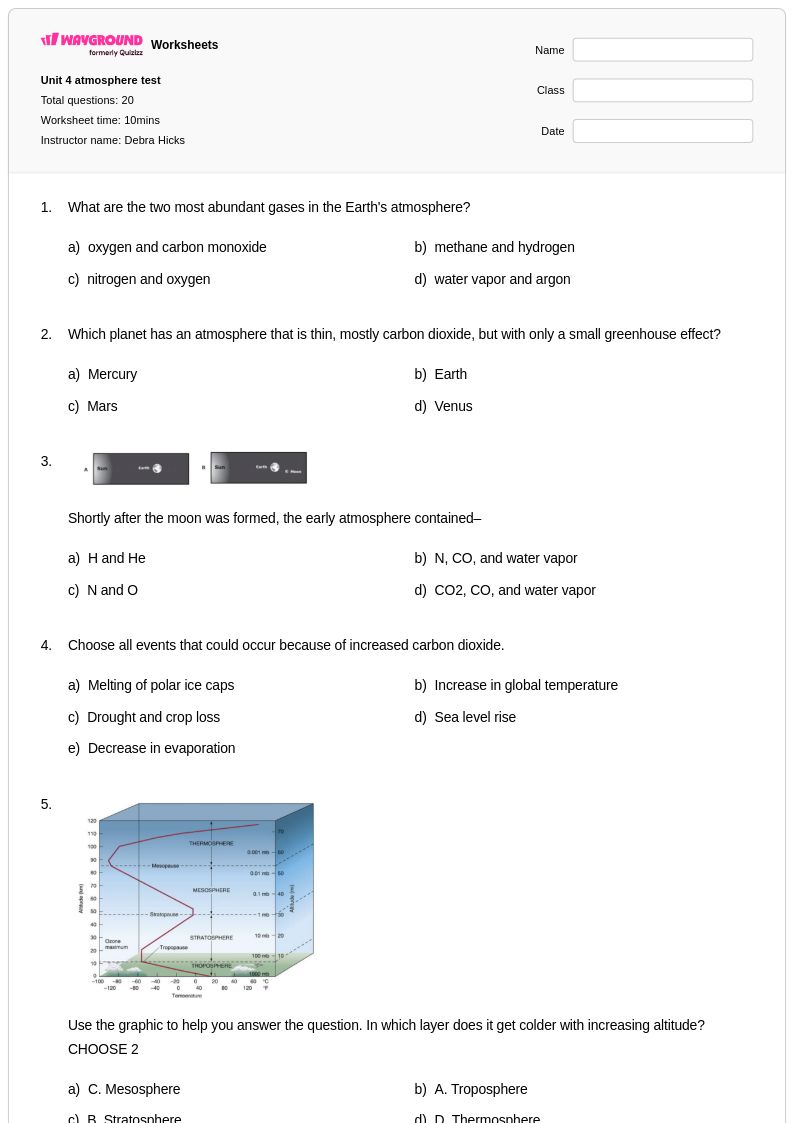
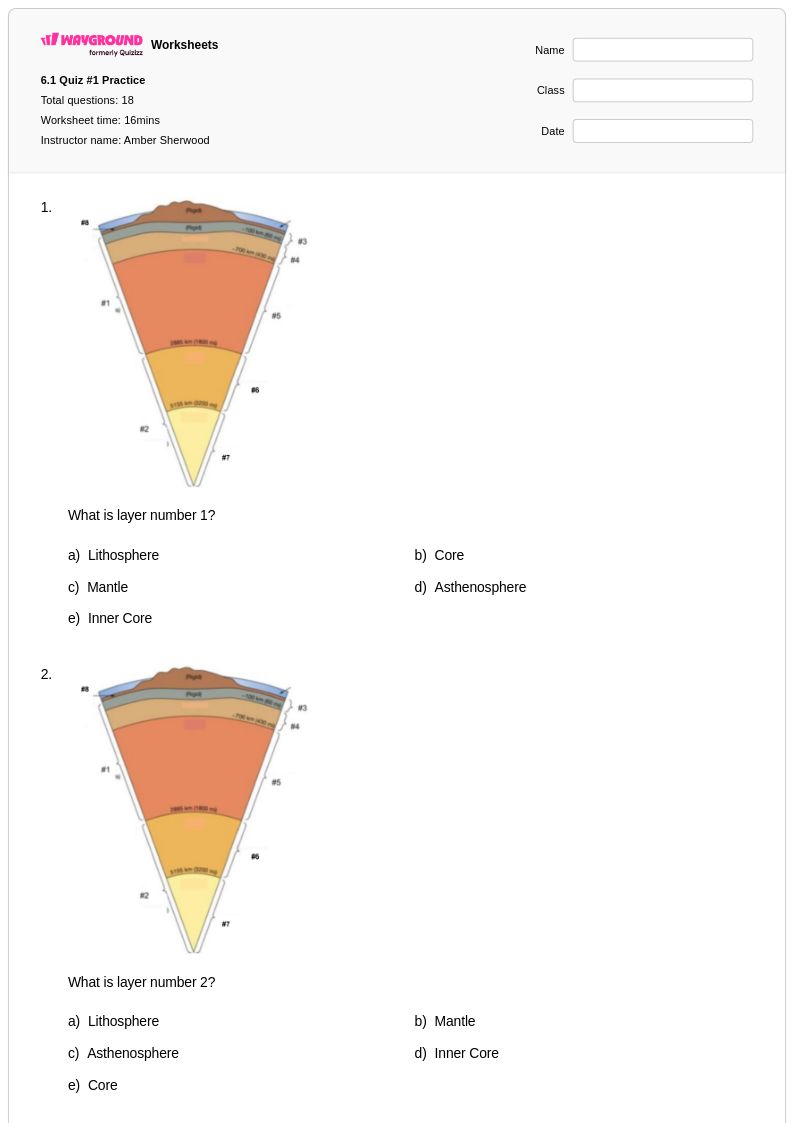
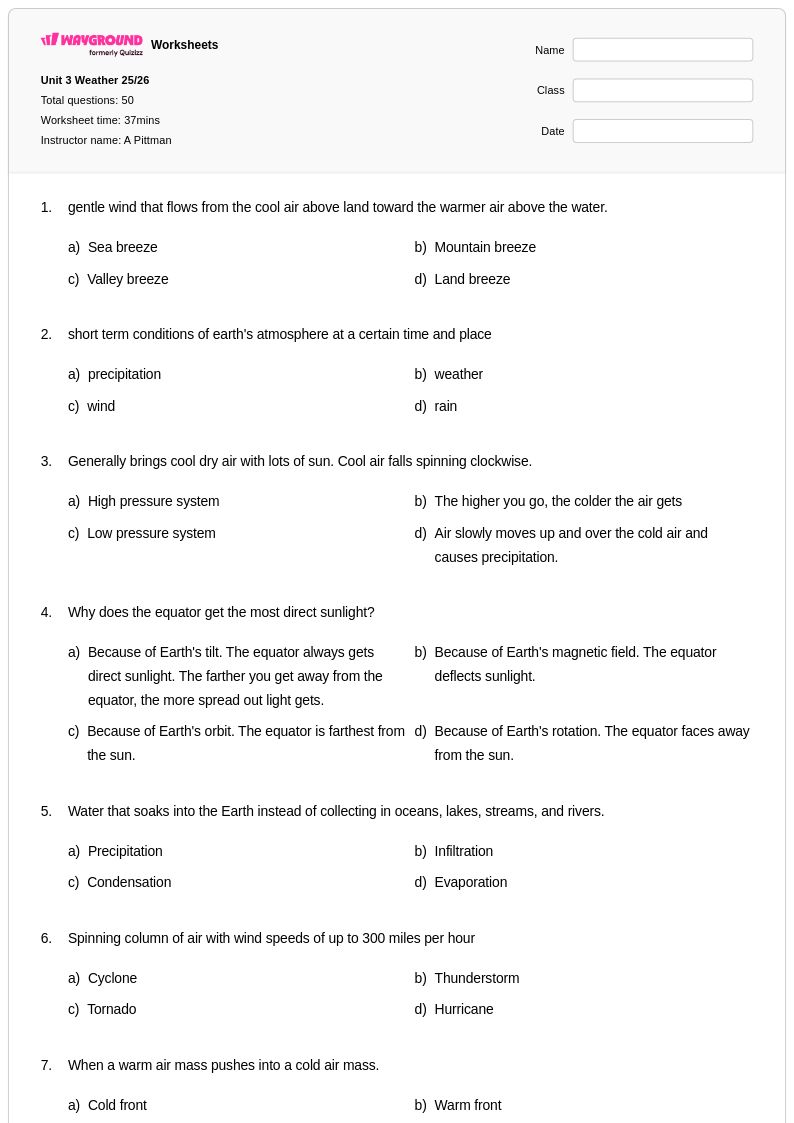
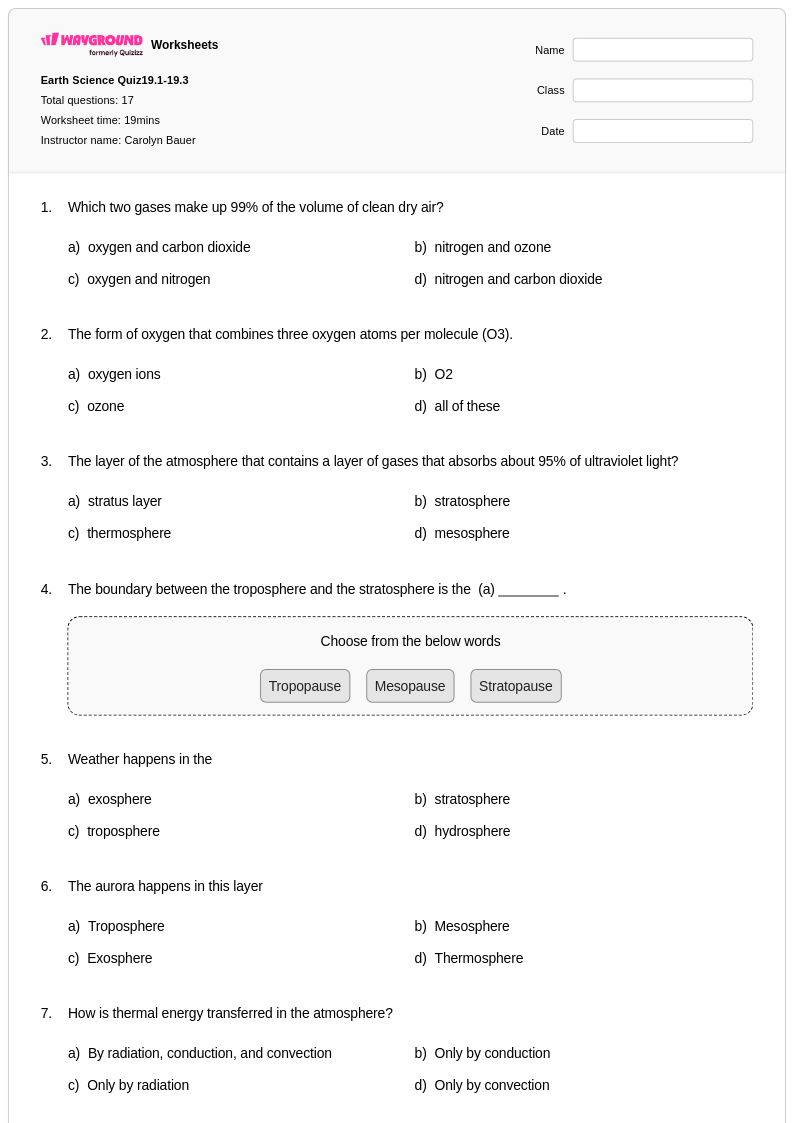
Atmospheric pressure worksheets for Class 9 students available through Wayground (formerly Quizizz) provide comprehensive exploration of how Earth's atmosphere exerts force on all surfaces at sea level and varying altitudes. These educational resources strengthen students' understanding of barometric measurements, pressure gradients, weather system relationships, and the inverse correlation between altitude and atmospheric density. Through carefully structured practice problems, students master calculations involving pressure units like pascals, atmospheres, and millibars, while developing critical thinking skills about how atmospheric pressure influences weather patterns, human physiology, and everyday phenomena. The collection includes detailed answer keys and free printable materials that guide students through complex concepts such as pressure differentials, the role of atmospheric pressure in weather forecasting, and practical applications in aviation and meteorology.
Wayground (formerly Quizizz) empowers educators with millions of teacher-created atmospheric pressure resources that feature robust search and filtering capabilities, enabling precise alignment with curriculum standards and learning objectives. The platform's differentiation tools allow teachers to customize worksheets for varying skill levels within Class 9 classrooms, supporting both remediation for struggling learners and enrichment opportunities for advanced students. These materials are available in flexible formats including printable PDF versions and interactive digital worksheets, facilitating seamless integration into diverse instructional approaches from traditional classroom settings to hybrid learning environments. Teachers benefit from comprehensive planning support through organized content libraries that streamline lesson preparation while providing targeted skill practice opportunities that reinforce atmospheric pressure concepts through varied problem-solving scenarios and real-world applications.
FAQs
How do I teach atmospheric pressure to students?
Start by grounding students in the concept that air has mass and that gravity pulling that mass downward creates pressure at Earth's surface. From there, build toward how pressure changes with altitude, temperature, and weather systems using real barometric data. Connecting abstract pressure values to observable weather events — like rising pressure before clear skies — helps students anchor the concept to their lived experience.
What exercises help students practice atmospheric pressure concepts?
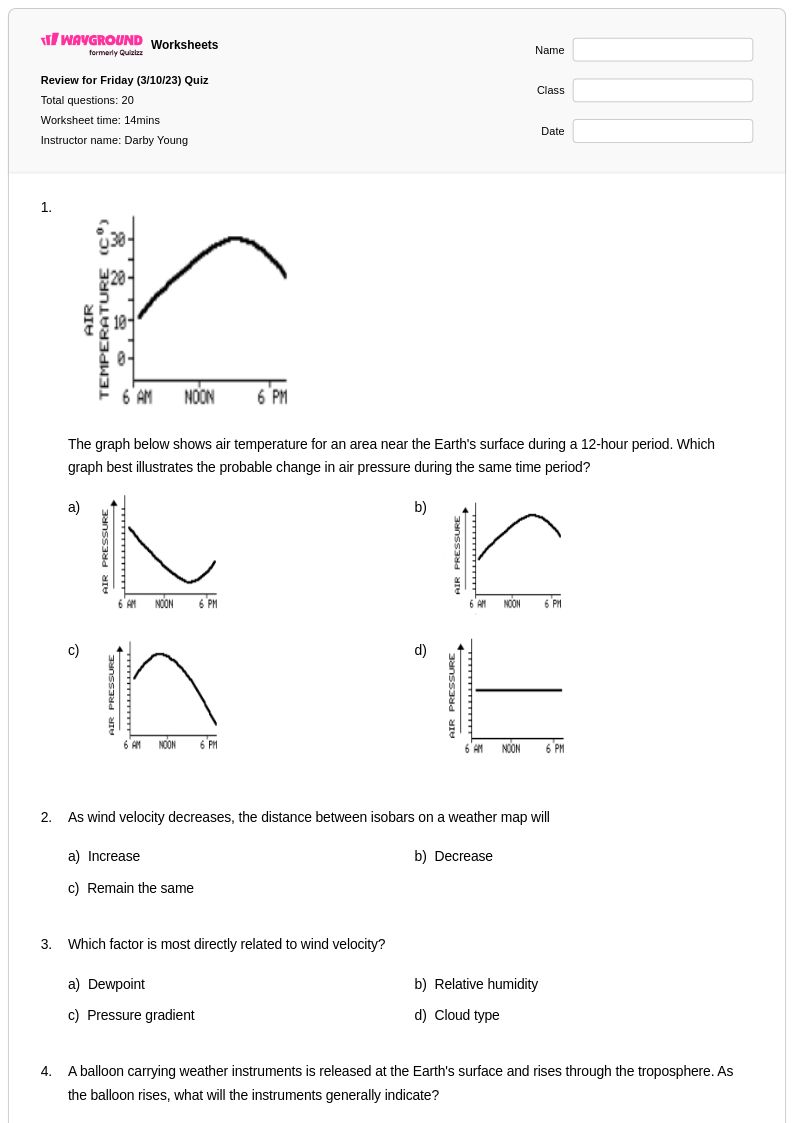
Effective practice exercises include reading and interpreting barometric data, analyzing how pressure changes across altitude gradients, and connecting pressure readings to weather pattern predictions. Problems that ask students to compare pressure values across different elevations or seasons reinforce the relationship between atmospheric conditions and measurable pressure. Structured practice problems that move from single-variable to multi-variable scenarios build both procedural fluency and conceptual understanding.
What mistakes do students commonly make when learning about atmospheric pressure?
A common misconception is that atmospheric pressure is only relevant at extreme altitudes, leading students to underestimate how meaningful pressure differences are at ground level. Students also frequently confuse the direction of pressure — thinking it pushes only downward rather than in all directions. Another persistent error is conflating low pressure with weak pressure rather than understanding it as a relative measure tied to surrounding air masses.
How can I differentiate atmospheric pressure instruction for students at different skill levels?
For struggling students, simplify problems to focus on single variables such as altitude alone before introducing temperature or weather system interactions. Advanced learners can be challenged with multi-step analysis tasks that require interpreting pressure maps or predicting weather outcomes from barometric trends. Wayground supports individual accommodations such as reduced answer choices to lower cognitive load and read-aloud features for students who benefit from audio support, all configurable per student without affecting the rest of the class.
How do I use Wayground's atmospheric pressure worksheets in my classroom?
Wayground's atmospheric pressure worksheets are available as printable PDFs for traditional classroom use and in digital formats for technology-integrated or remote learning environments. Teachers can also host worksheets as a live quiz directly on Wayground, making them suitable for formative assessment or whole-class review. Each worksheet includes a complete answer key, reducing prep time and supporting both independent student work and guided instruction.
How does atmospheric pressure connect to weather patterns, and how can I teach that connection?
Atmospheric pressure is one of the primary drivers of weather: low-pressure systems are typically associated with storms and precipitation, while high-pressure systems bring clear, stable conditions. Teaching this connection works best when students can trace pressure changes over time using real or simulated barometric data, then match those changes to corresponding weather outcomes. Structured exercises that ask students to interpret pressure trends before revealing the associated weather event build both analytical reasoning and content knowledge.