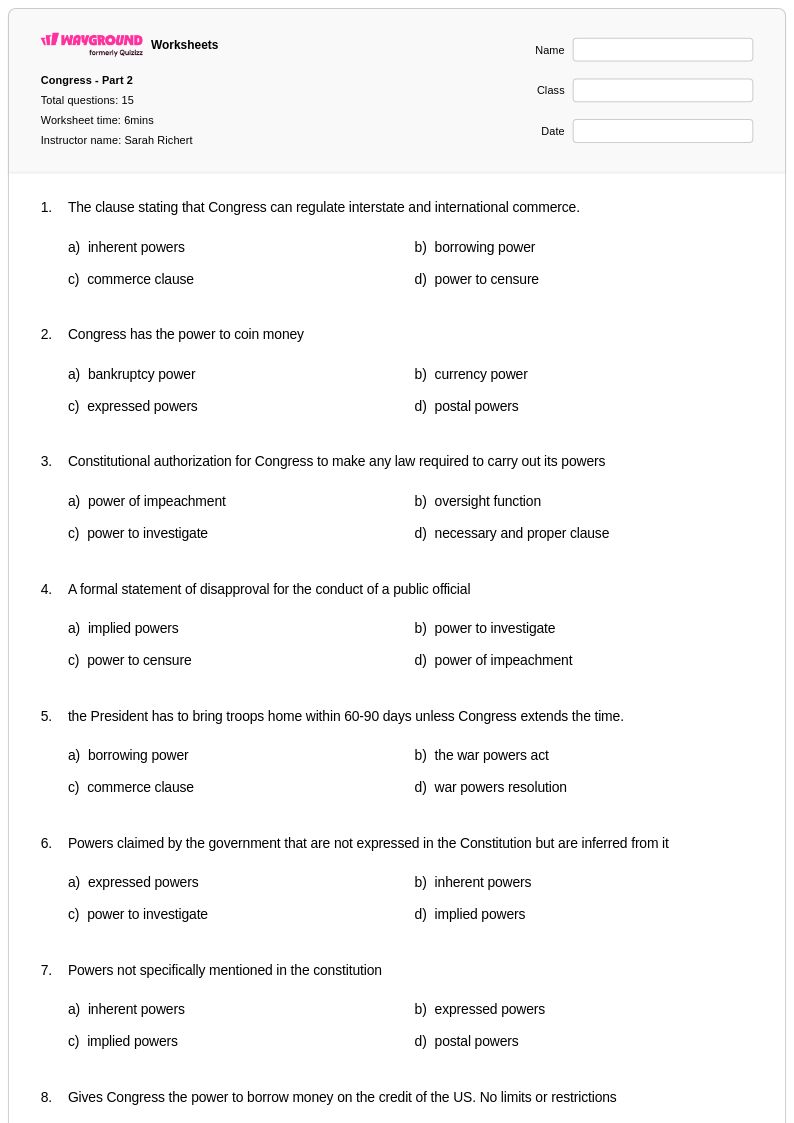
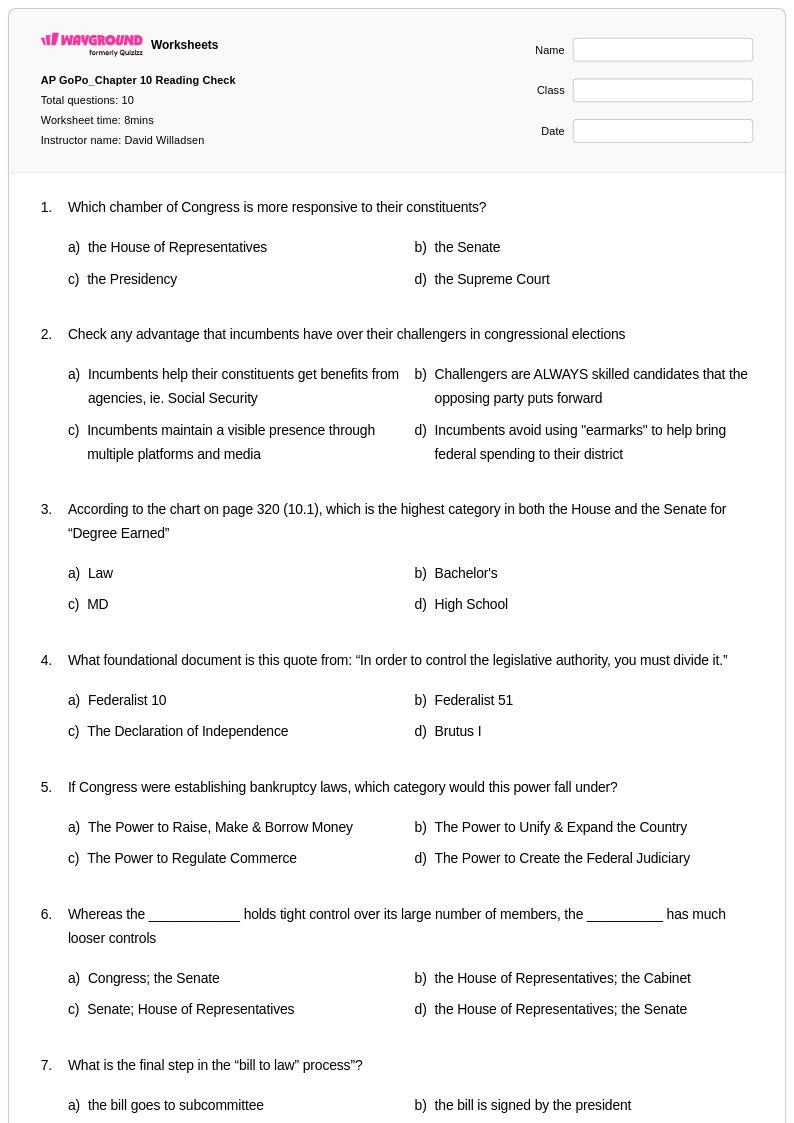
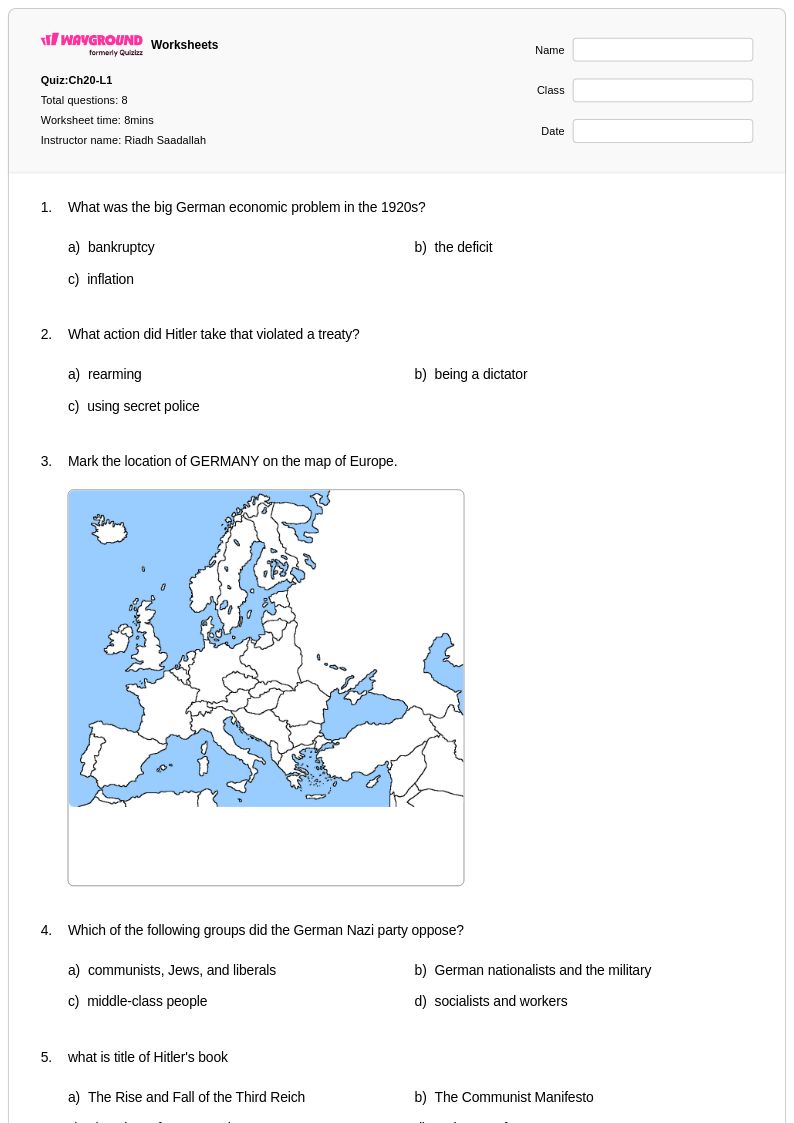
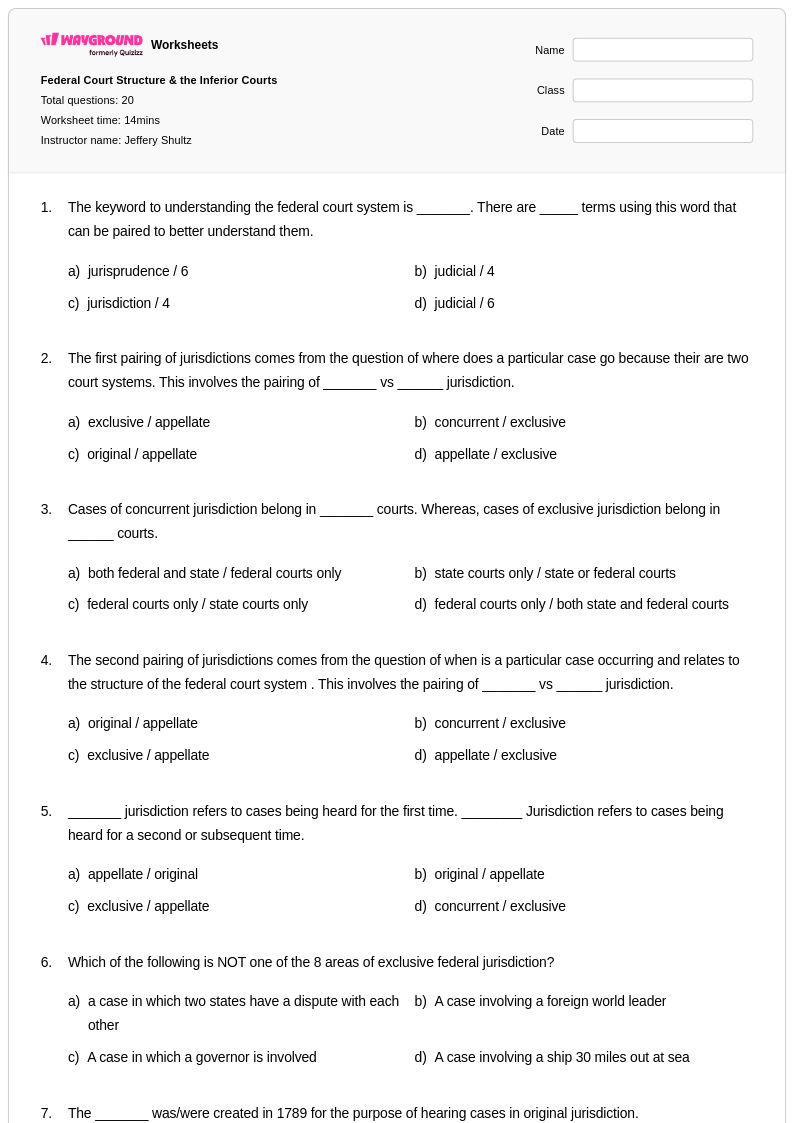
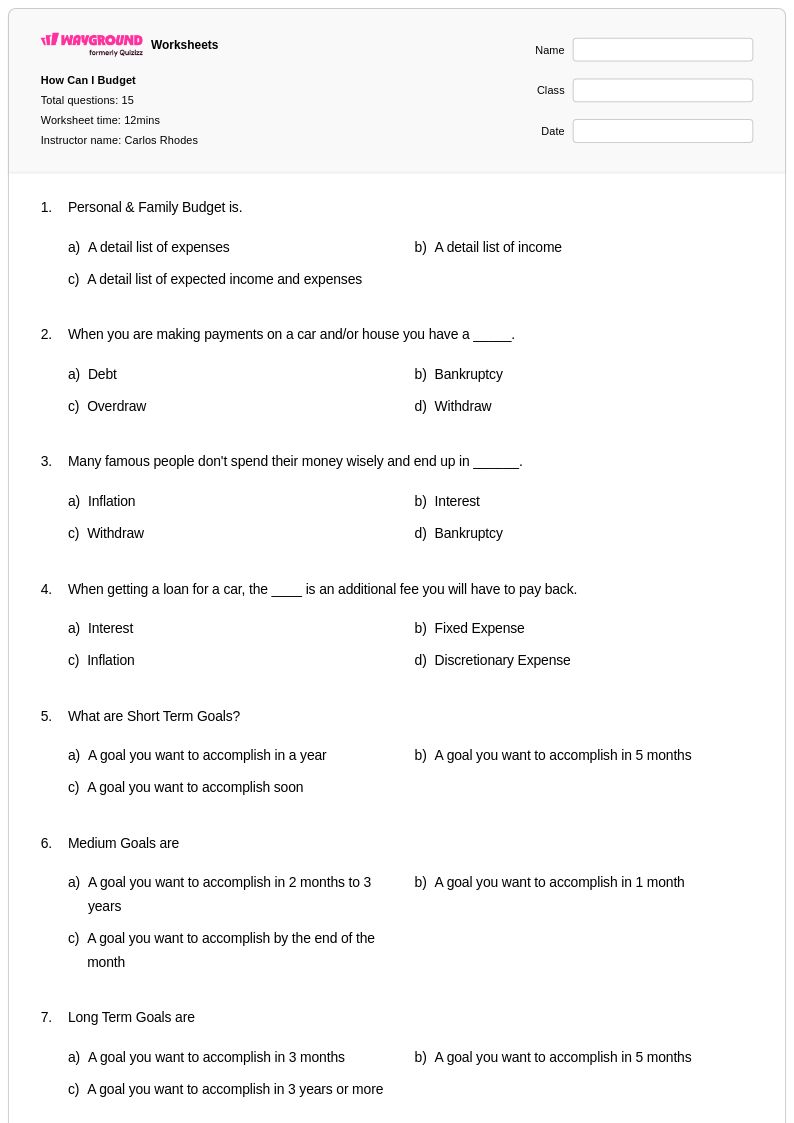
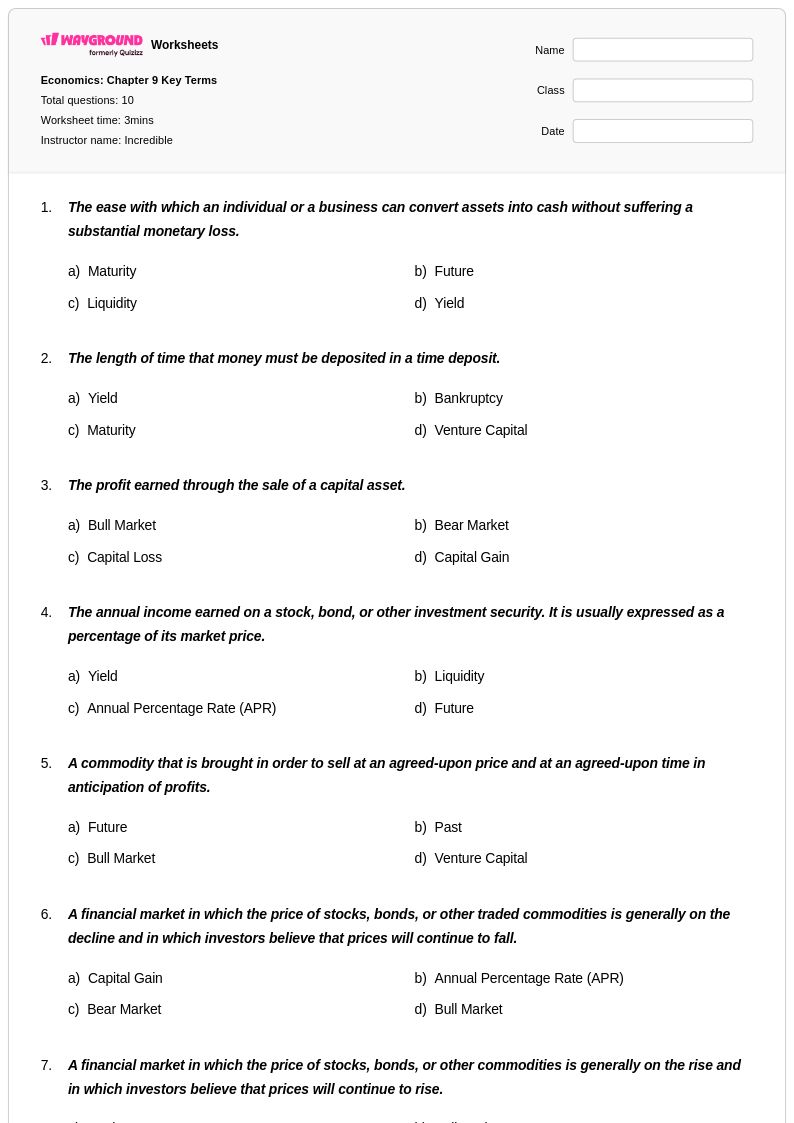
Explore Wayground's free Class 10 bankruptcy worksheets and printables that help students understand financial insolvency, debt management, and economic recovery through engaging practice problems with comprehensive answer keys.
Explore printable Bankruptcy worksheets for Class 10
Class 10 bankruptcy worksheets available through Wayground (formerly Quizizz) provide comprehensive coverage of this critical economics concept, helping students understand the complex legal and financial processes involved when individuals or businesses cannot meet their debt obligations. These educational resources strengthen essential analytical skills by guiding students through the causes and consequences of bankruptcy, different types of bankruptcy proceedings, and the broader economic implications for creditors, debtors, and society. The collection includes practice problems that challenge students to analyze real-world bankruptcy scenarios, calculate debt-to-income ratios, and evaluate the effectiveness of various debt relief options. Each worksheet comes with a detailed answer key to support independent learning and self-assessment, while the free printables in convenient PDF format make it easy for educators to distribute materials and for students to work through bankruptcy case studies at their own pace.
Wayground (formerly Quizizz) empowers educators with millions of teacher-created resources specifically designed to support Class 10 economics instruction on bankruptcy and related financial literacy topics. The platform's robust search and filtering capabilities allow teachers to quickly locate worksheets that align with specific curriculum standards and learning objectives, while built-in differentiation tools enable customization based on individual student needs and skill levels. These bankruptcy worksheets are available in both printable PDF format for traditional classroom use and digital formats for technology-enhanced learning environments, providing maximum flexibility for diverse teaching situations. Teachers can leverage these resources for initial concept introduction, targeted skill practice, remediation for struggling learners, or enrichment activities for advanced students, making lesson planning more efficient while ensuring comprehensive coverage of bankruptcy's role in modern economic systems.
FAQs
How do I teach bankruptcy to students in an economics or business class?
Start by grounding students in the distinction between personal and business bankruptcy, then introduce the two most common filing types: Chapter 7, which involves asset liquidation, and Chapter 13, which involves a structured repayment plan. Use real-world case studies to show how bankruptcy affects individuals, businesses, and creditors differently. From there, students can examine financial documents and eligibility criteria to understand how the legal and economic systems interact in insolvency cases.
What practice exercises help students understand the difference between Chapter 7 and Chapter 13 bankruptcy?
Comparison exercises work well here — give students a scenario with a debtor's income, assets, and debts, then ask them to determine which chapter applies and why. Practice problems that involve calculating debt-to-income ratios and assessing means-test eligibility help students move beyond memorization into genuine financial reasoning. Worksheets that walk through the debt discharge process for Chapter 7 versus the repayment schedule structure of Chapter 13 reinforce these distinctions with applied practice.
What common mistakes do students make when learning about bankruptcy?
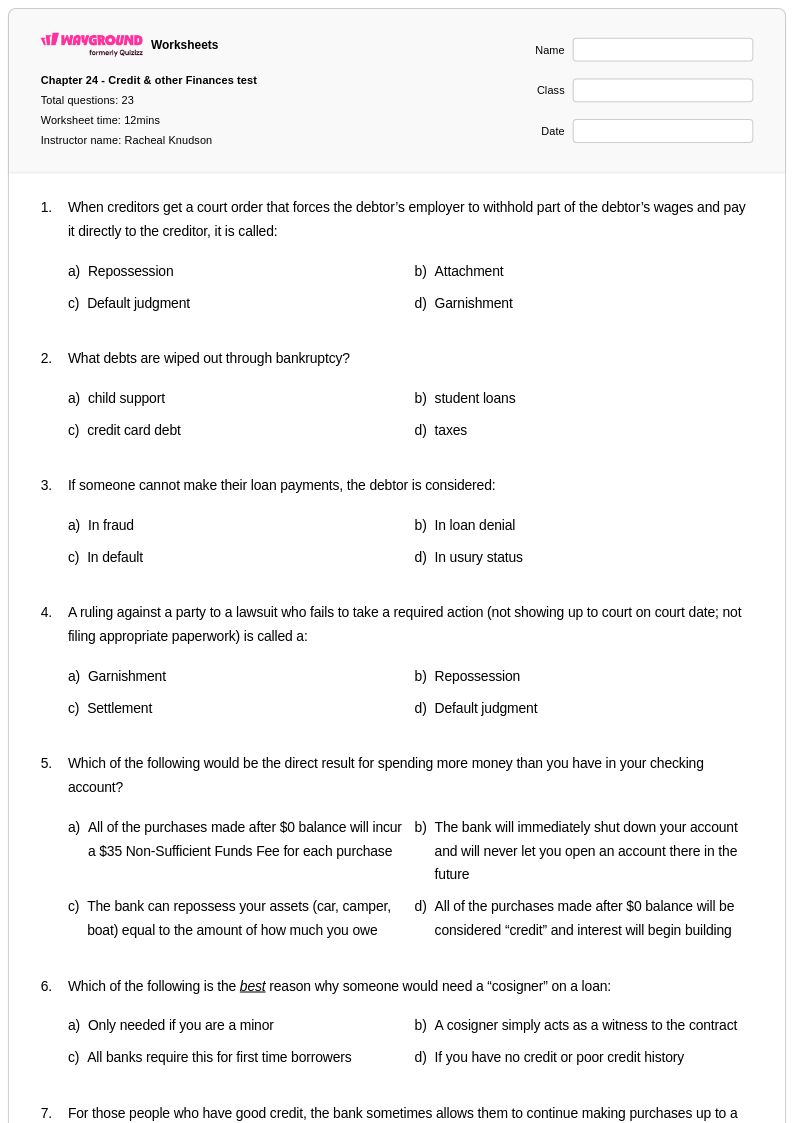
Students frequently conflate bankruptcy with simply 'not paying debts,' missing the legal structure and court oversight involved. Another common error is assuming bankruptcy eliminates all debt — students often don't recognize that certain obligations like student loans and tax debts are typically non-dischargeable. Confusing asset liquidation in Chapter 7 with the repayment plan structure of Chapter 13 is also a persistent misconception that targeted practice problems can help correct.
How can I use bankruptcy worksheets to build financial literacy skills beyond the legal process?
Bankruptcy worksheets naturally integrate credit systems, debt management, and long-term financial planning — making them effective for broader financial literacy instruction. Exercises that ask students to analyze the long-term credit impact of a bankruptcy filing, or compare economic recovery timelines under different filing types, connect legal concepts to personal financial decision-making. This makes bankruptcy an effective anchor topic for units on responsible borrowing, creditworthiness, and economic consequences.
How do I use Wayground's bankruptcy worksheets in my classroom?
Wayground's bankruptcy worksheets are available as printable PDFs for traditional classroom use and in digital formats for technology-integrated or remote learning environments. You can also host them directly as a quiz on Wayground, allowing students to complete the material interactively while you track results. All worksheets include complete answer keys, so teachers can use them for independent practice, guided instruction, or assessment without additional preparation.
How can I differentiate bankruptcy instruction for students at different skill levels?
For students who need additional support, Wayground offers accommodations such as read aloud for question content, reduced answer choices to lower cognitive load, and extended time per question — all configurable at the individual student level. Advanced students can be challenged with open-ended case analysis and multi-step financial calculations, while struggling learners work through scaffolded problems with guided steps. These settings are saved and reusable across sessions, so differentiation doesn't require resetting each time.