Free Printable Battle of Midway Worksheets for Class 12
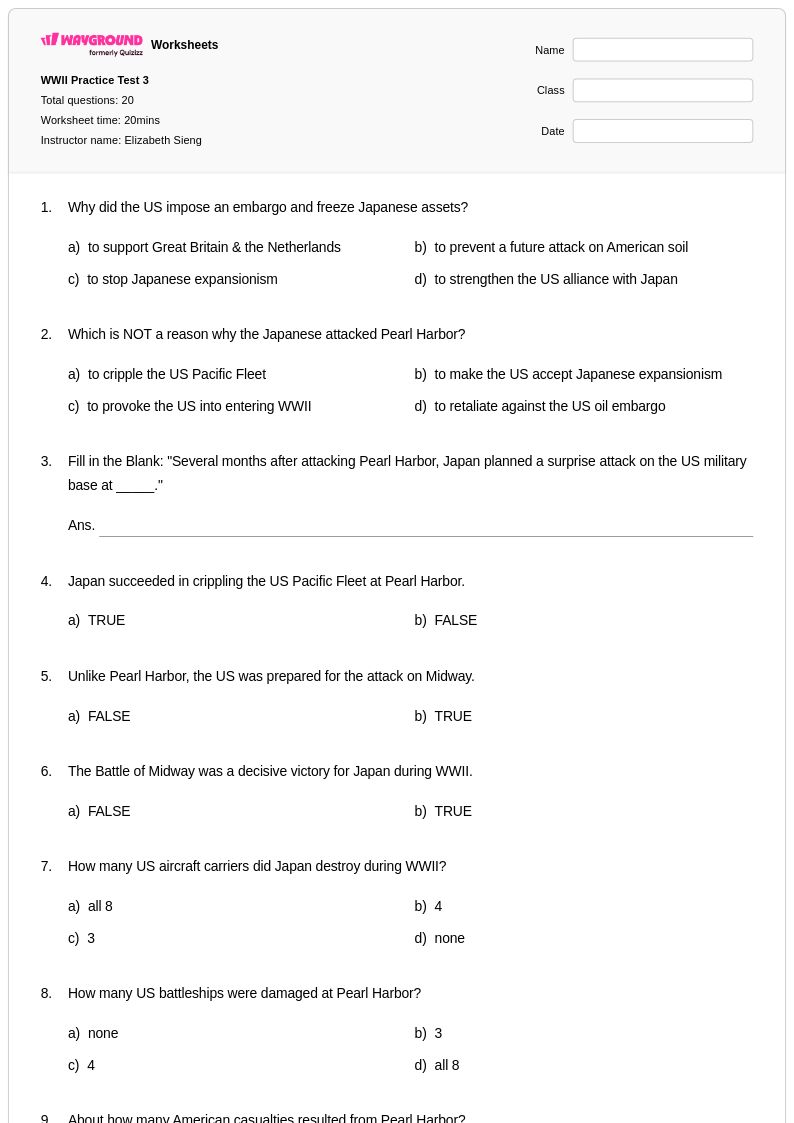
Class 12 Social Studies worksheets on the Battle of Midway help students analyze this pivotal World War 2 naval engagement through comprehensive printables, practice problems, and answer keys available as free PDF downloads.
Explore printable Battle of Midway worksheets for Class 12
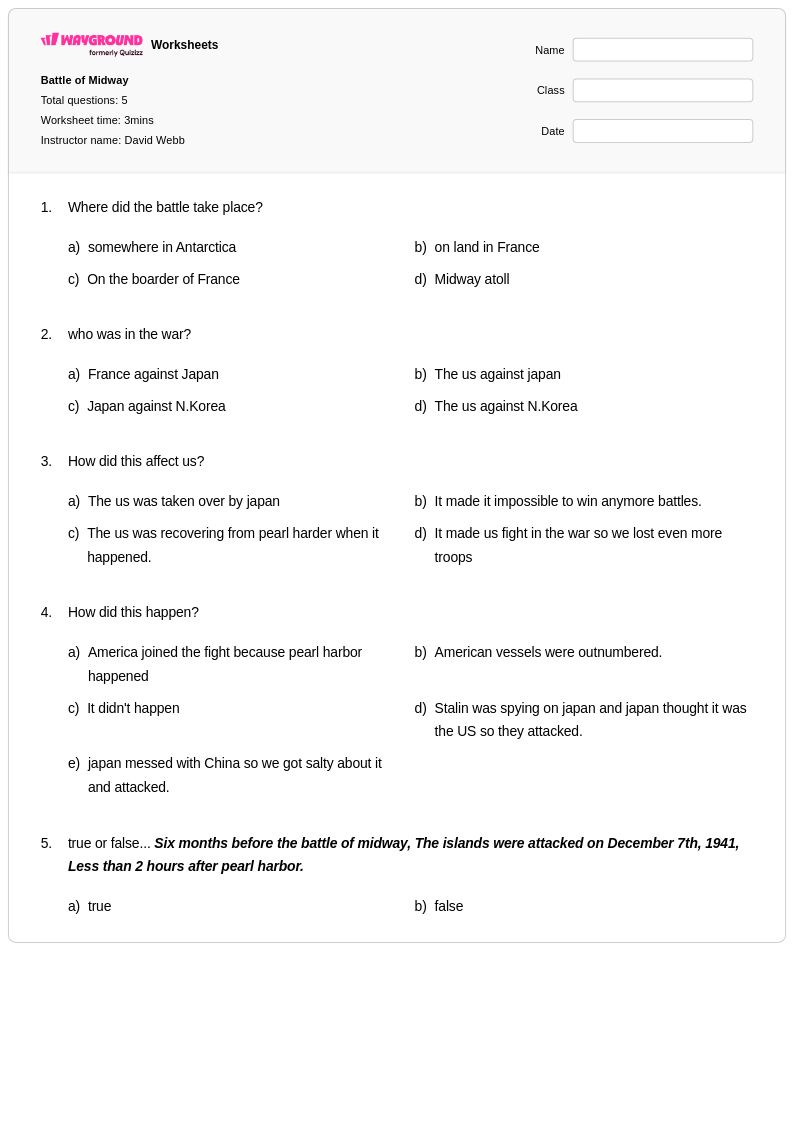
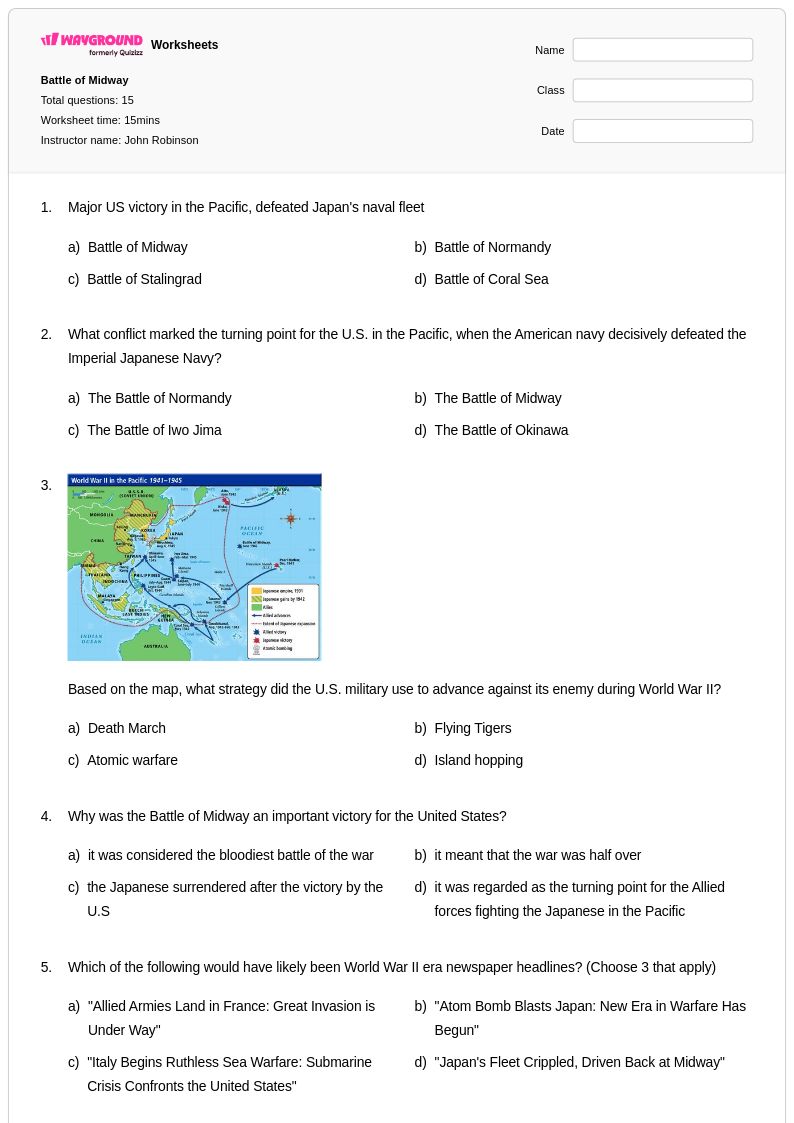
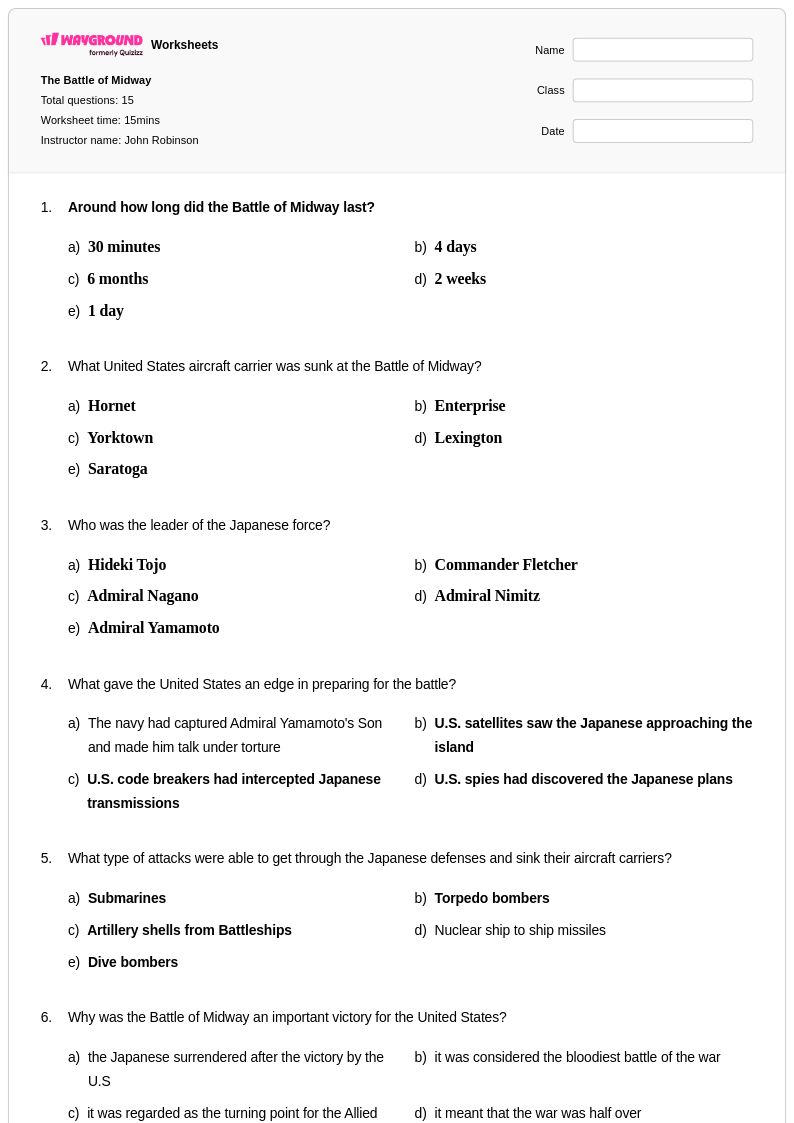
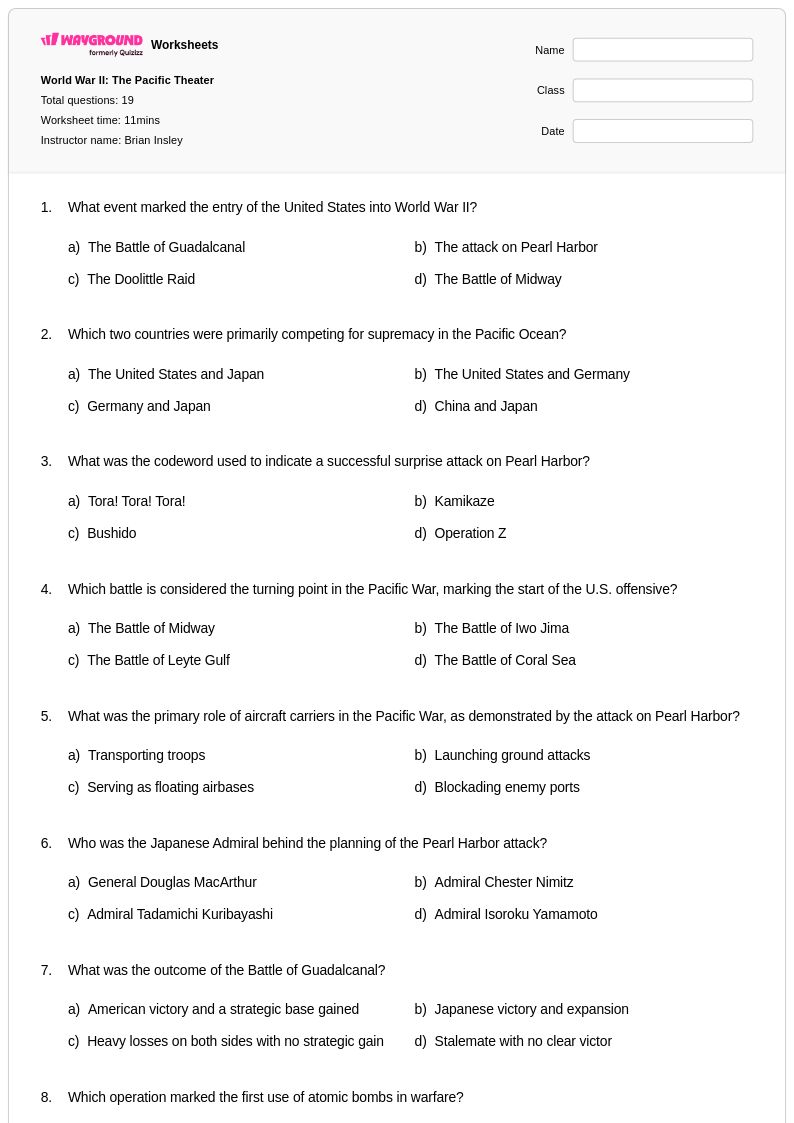
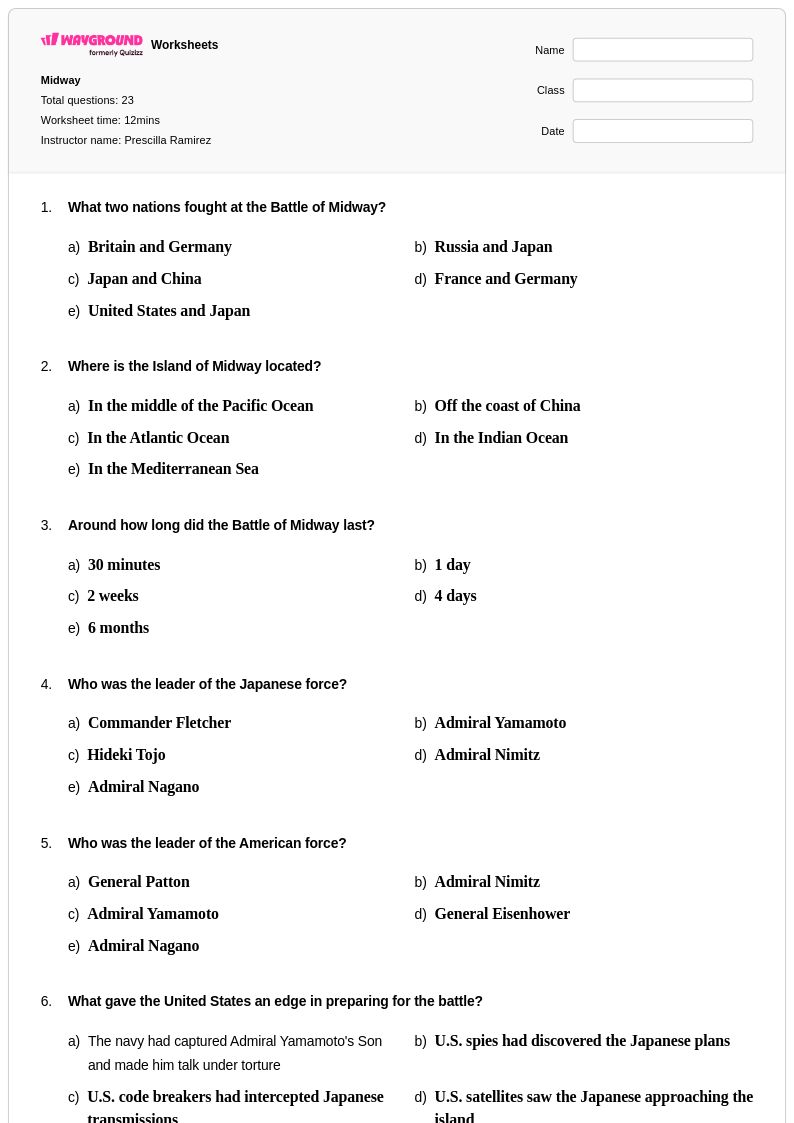
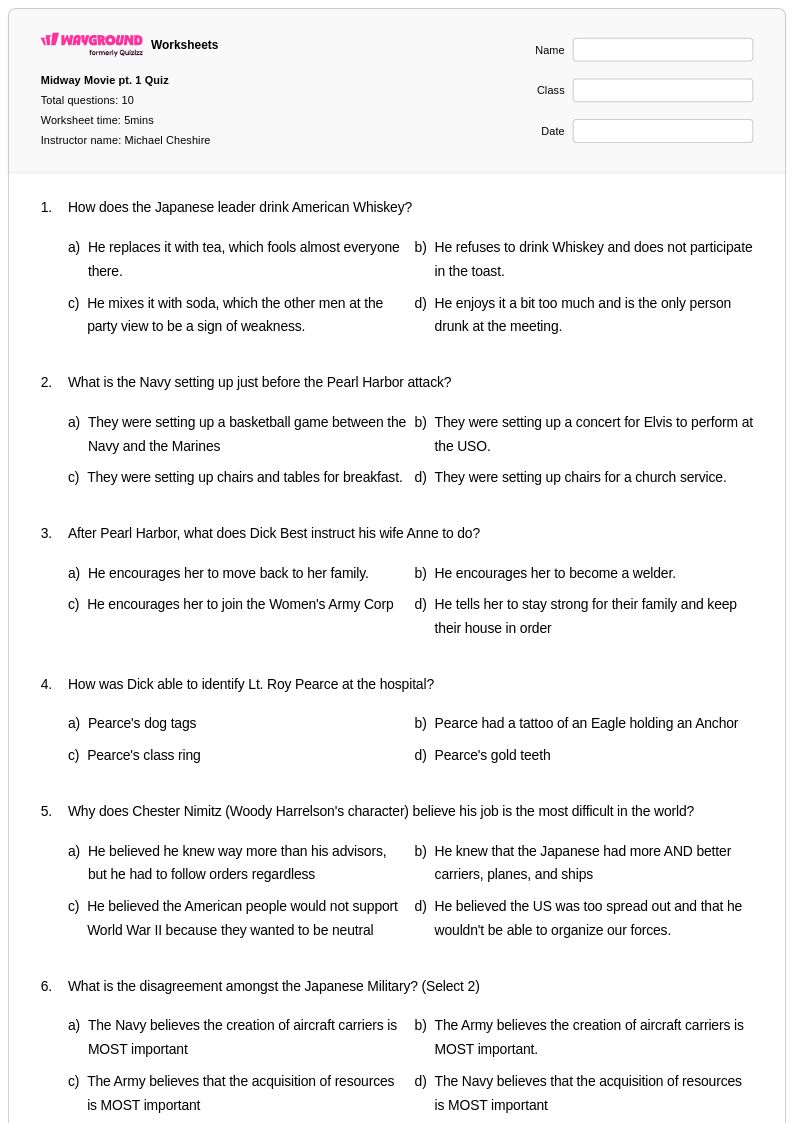
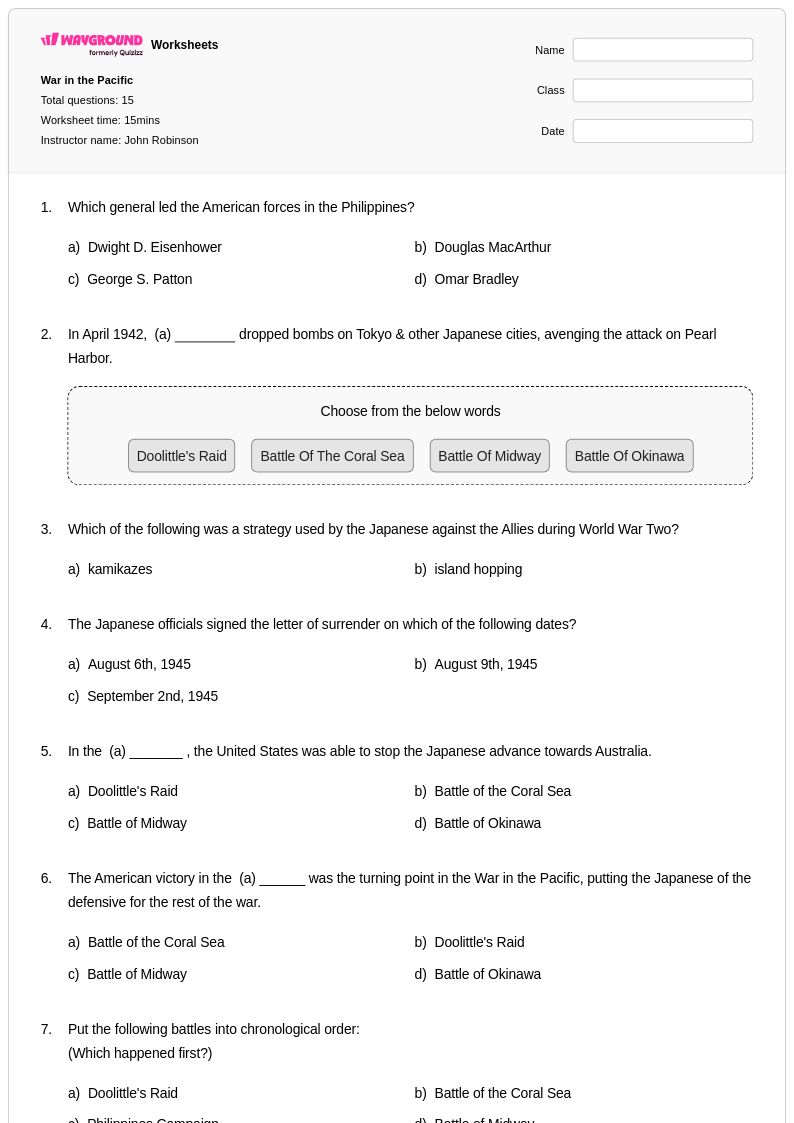
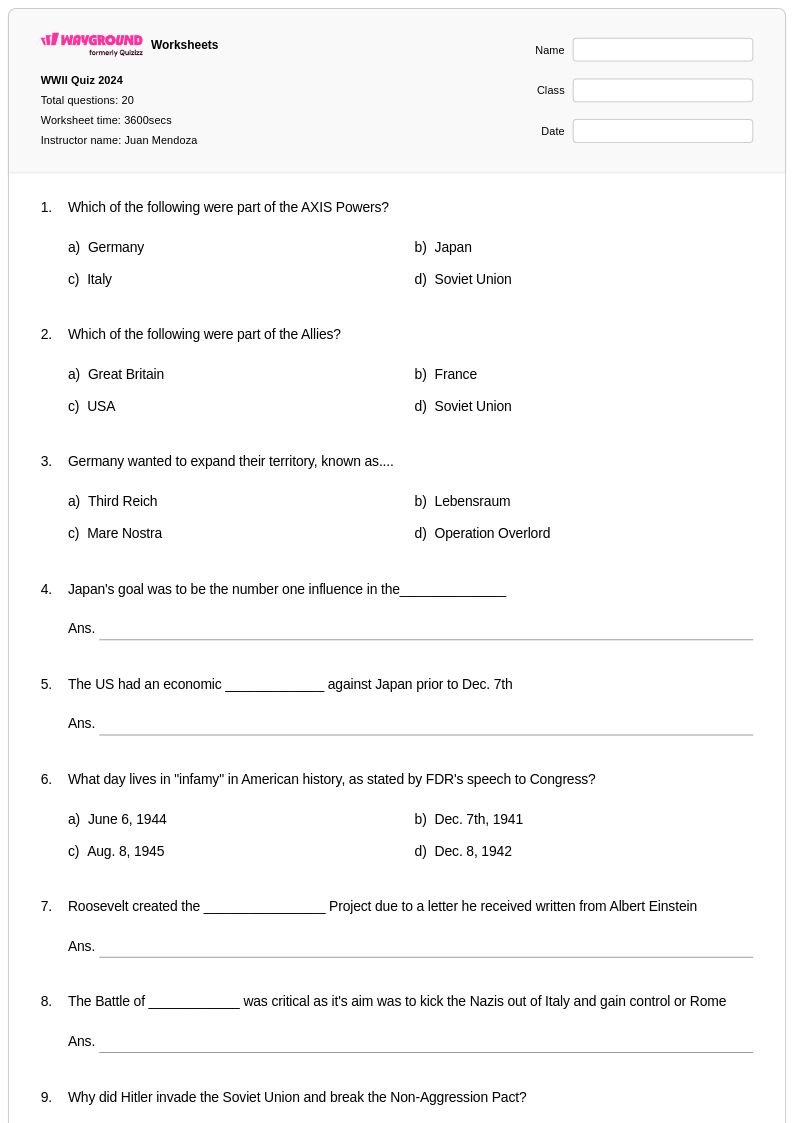
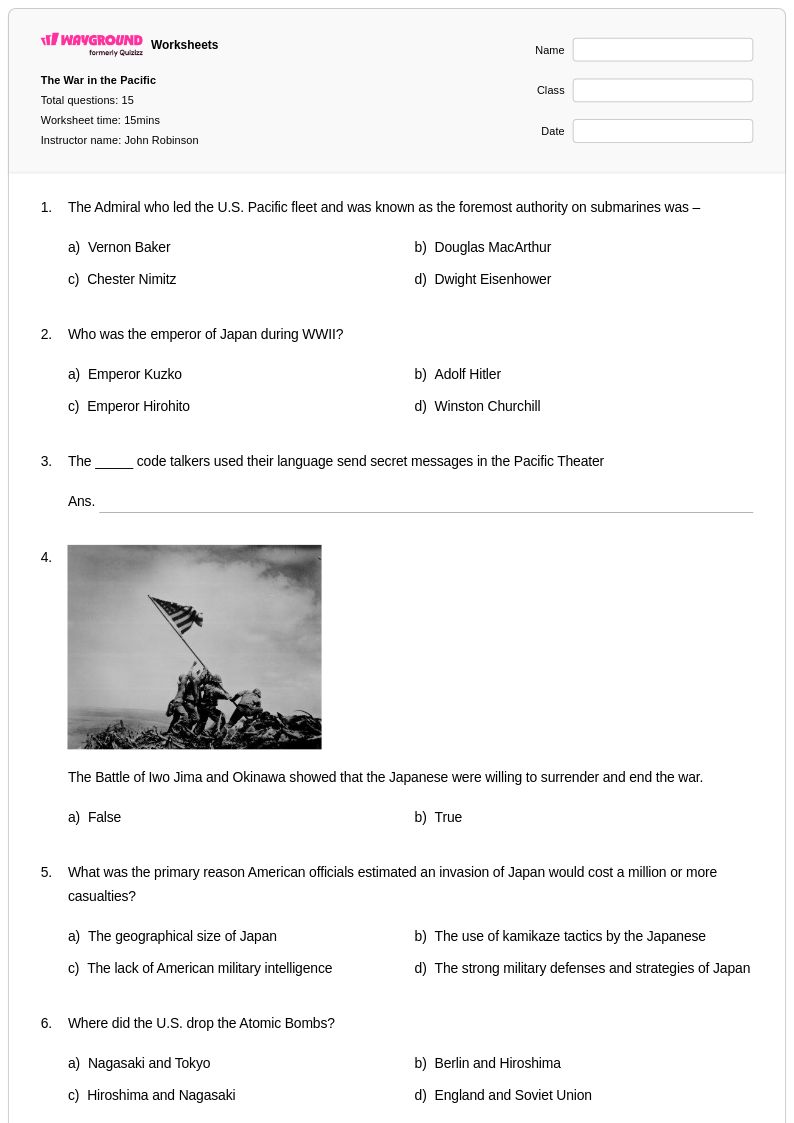
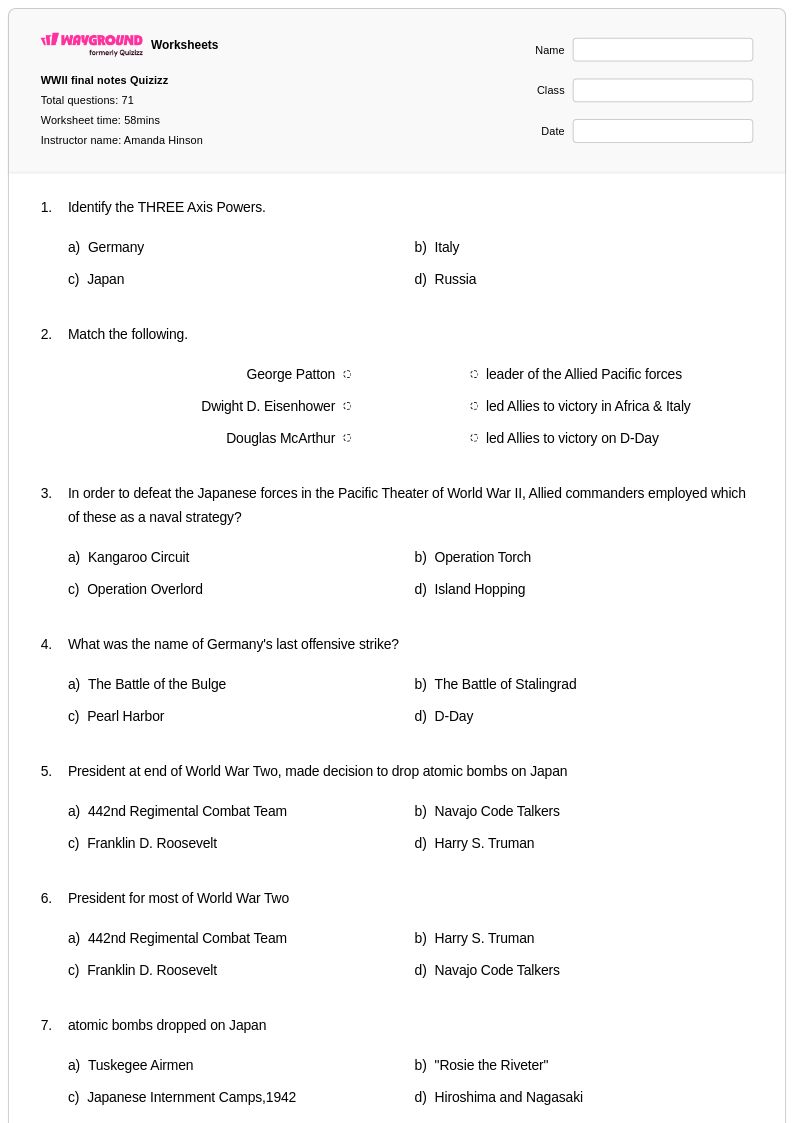
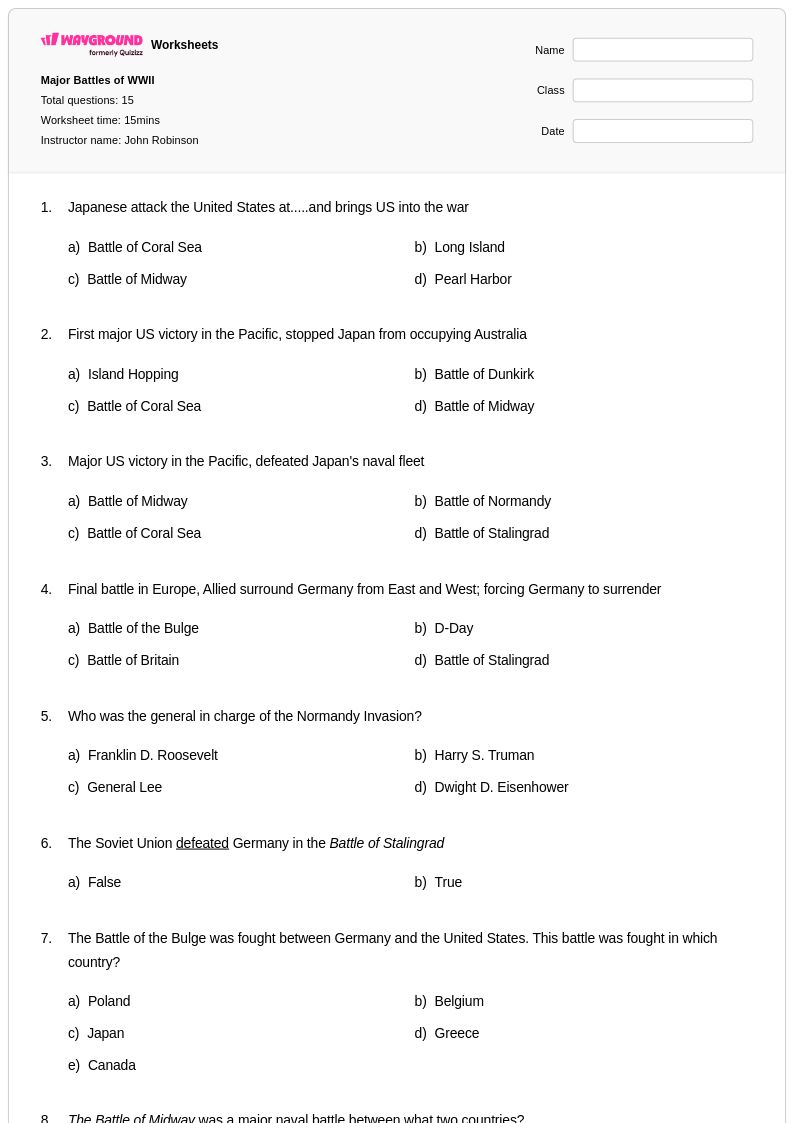
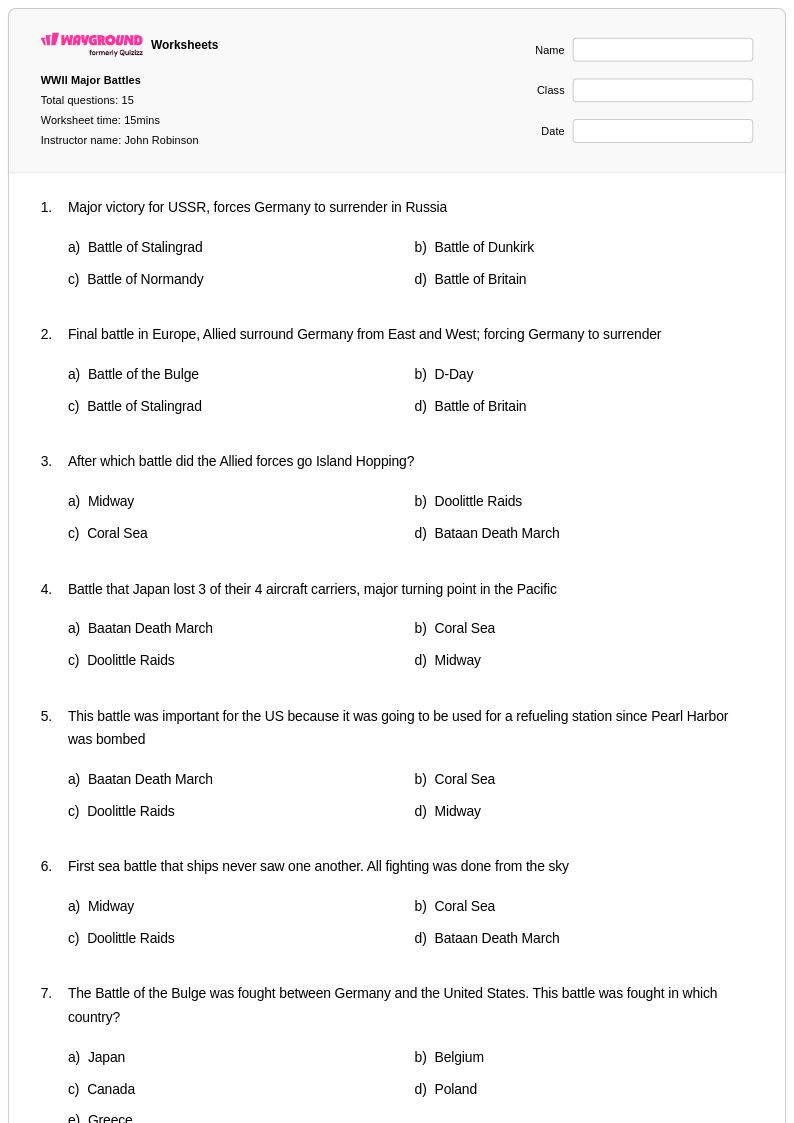
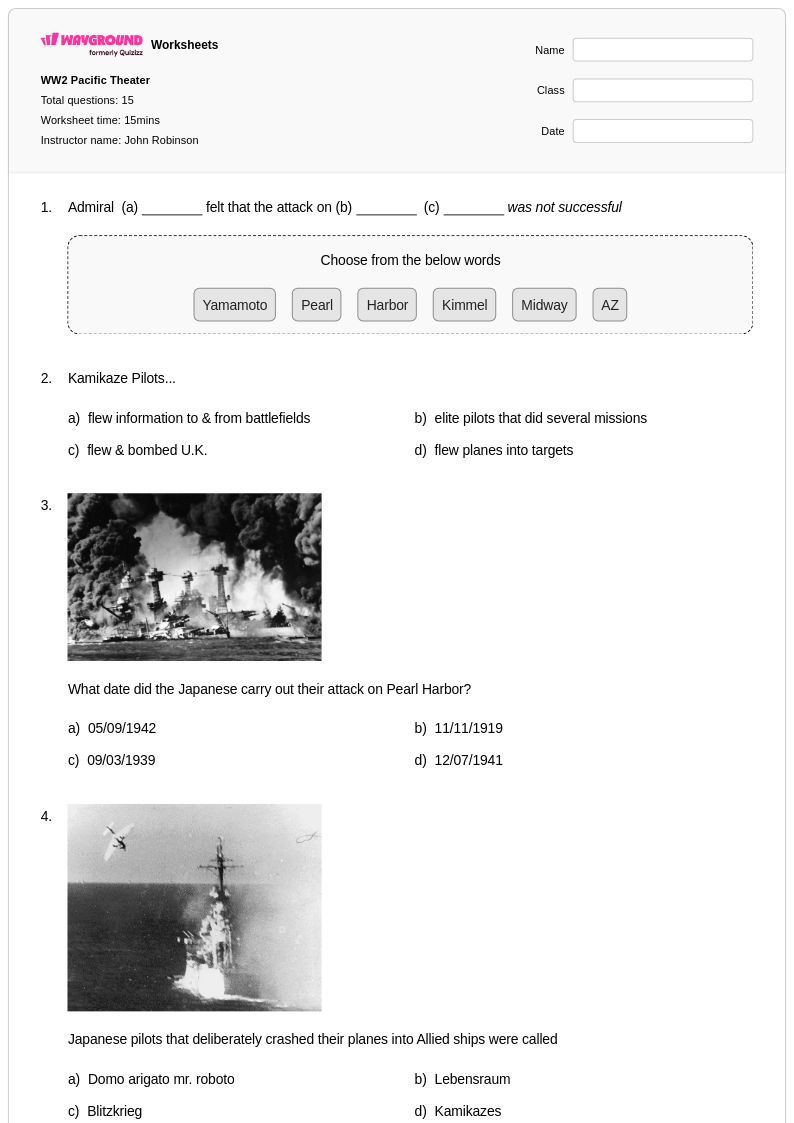
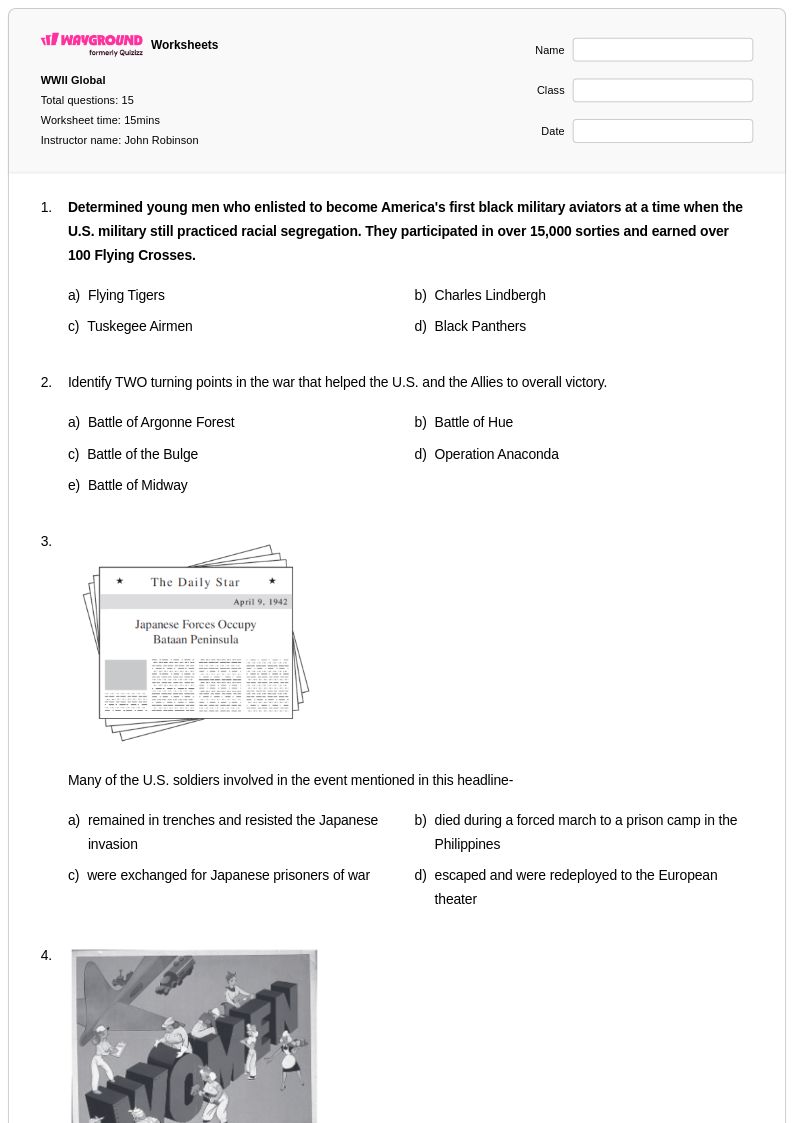
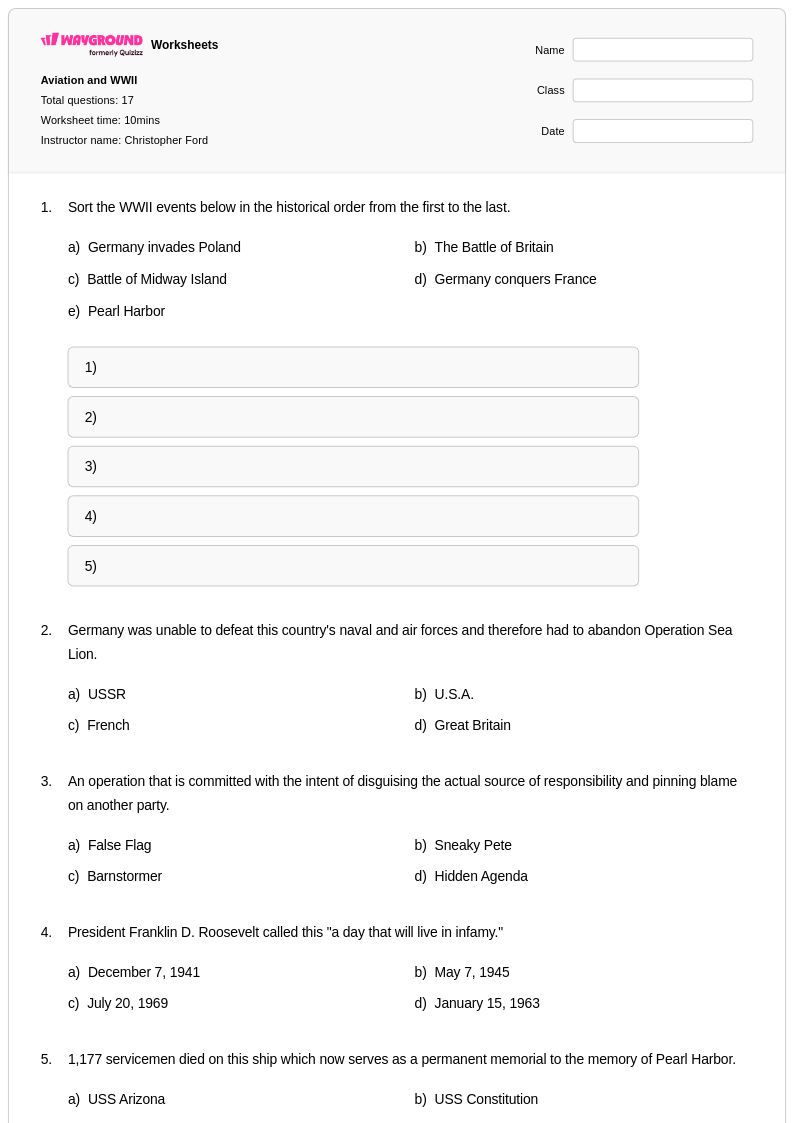
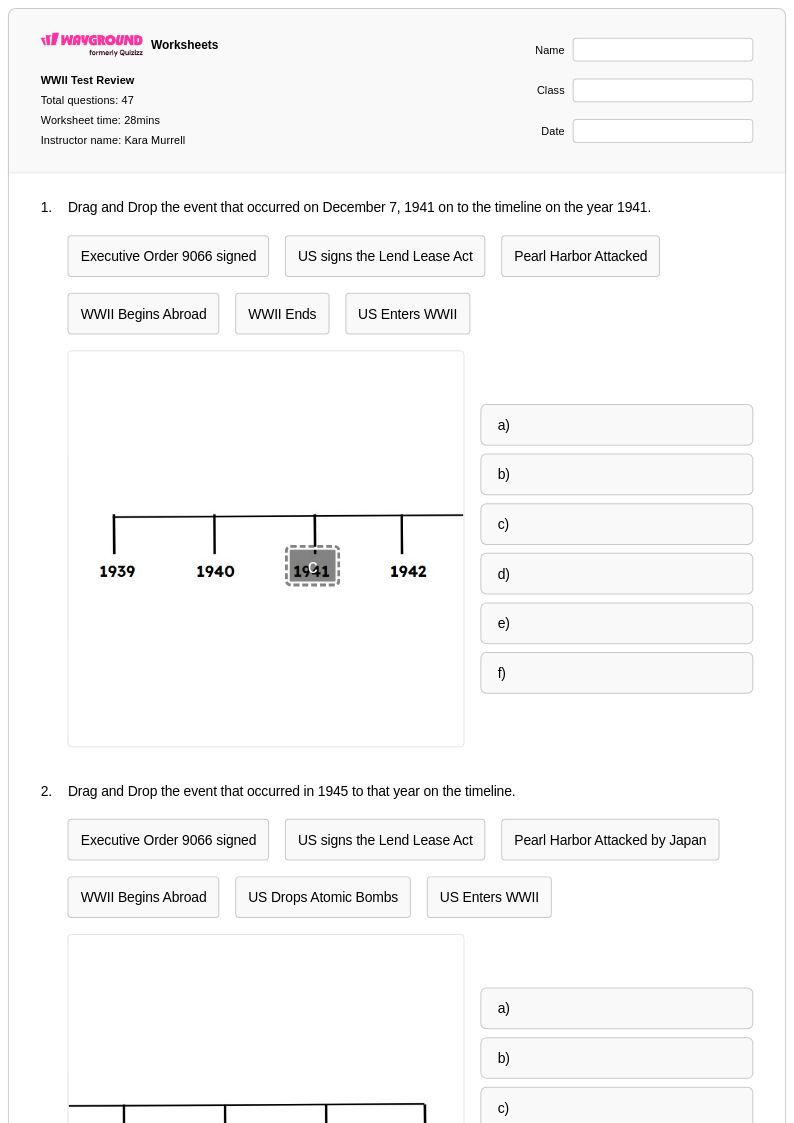
Battle of Midway worksheets available through Wayground (formerly Quizizz) provide Class 12 students with comprehensive resources to analyze this pivotal World War 2 naval engagement that shifted the balance of power in the Pacific Theater. These expertly crafted worksheets strengthen critical thinking skills by having students examine primary source documents, analyze strategic decisions made by both American and Japanese forces, and evaluate the long-term consequences of this June 1942 battle. The collection includes detailed practice problems that guide students through complex historical analysis, with accompanying answer keys that help educators assess comprehension of key concepts such as code-breaking intelligence, aircraft carrier warfare tactics, and the battle's role in halting Japanese expansion. Available as free printables and digital resources, these materials enable students to develop sophisticated understanding of military strategy, decision-making under pressure, and the interconnected nature of Pacific War campaigns.
Wayground (formerly Quizizz) empowers teachers with access to millions of educator-created Battle of Midway worksheet resources, supported by robust search and filtering capabilities that allow quick identification of materials aligned with specific learning standards and curriculum requirements. The platform's differentiation tools enable teachers to customize content complexity, ensuring that all Class 12 students can engage meaningfully with this challenging World War 2 topic regardless of their current skill level. Teachers benefit from flexible formatting options, including both printable pdf versions for traditional classroom use and interactive digital formats that support varied instructional approaches. These comprehensive resources facilitate effective lesson planning while providing targeted materials for remediation of struggling students and enrichment opportunities for advanced learners, ultimately supporting systematic skill practice in historical analysis, source evaluation, and argumentative writing within the context of this crucial Pacific War turning point.
FAQs
How do I teach the Battle of Midway to middle or high school students?
Teaching the Battle of Midway effectively means anchoring the lesson in cause and effect: why was Midway strategically vital, how did American codebreakers gain the upper hand, and what were the consequences for Japan's carrier fleet? Start with a brief overview of the Pacific Theater context, then use primary sources, maps, and timeline activities to guide students through the June 1942 events. Document analysis tasks work especially well because they push students to evaluate intelligence, decision-making, and military strategy rather than just memorize dates.
What skills do Battle of Midway worksheets help students practice?
Battle of Midway worksheets build several interconnected historical thinking skills, including document analysis, timeline construction, and cause-and-effect reasoning. Students practice evaluating primary sources such as military dispatches and maps, tracing how American codebreaking led to a strategic ambush, and assessing the long-term implications of Japan's carrier losses on the Pacific War. These practice formats reinforce both content knowledge and transferable analytical skills.
What common misconceptions do students have about the Battle of Midway?
A frequent misconception is that the American victory at Midway was primarily due to superior firepower or luck rather than intelligence work. Students often underestimate the role of codebreakers who intercepted Japanese communications, which allowed the U.S. Navy to position forces strategically before the attack. Another error is treating Midway as the end of the Pacific War rather than as a momentum shift — teachers should emphasize that significant fighting continued for years after June 1942.
How can I use Battle of Midway worksheets to support different learners in my classroom?
Wayground's Battle of Midway worksheets support differentiation through customizable content difficulty and format, making it possible to provide remediation for struggling learners and enrichment for advanced students within the same lesson. When hosting a worksheet as a digital quiz on Wayground, teachers can apply individual accommodations such as extended time, read-aloud support, reduced answer choices, and adjustable reading modes to specific students without disrupting the rest of the class. These settings are saved and reusable across future sessions, which reduces setup time when returning to this topic.
How do I use Wayground's Battle of Midway worksheets in my classroom?
Wayground's Battle of Midway worksheets are available as printable PDFs for traditional classroom use and in digital formats for technology-integrated environments, including the option to host them as a live quiz on Wayground. Printable versions work well for close-reading and annotation activities, while digital formats allow teachers to assign worksheets as homework or independent study with built-in answer key support. All resources include detailed answer keys, making them practical for both formative checks and summative assessments.
How does the Battle of Midway connect to broader World War 2 curriculum standards?
The Battle of Midway connects directly to standards addressing World War 2 causes and consequences, military strategy, and the role of intelligence in modern warfare. It also supports analytical standards around primary source evaluation, geographic reasoning with Pacific Theater maps, and understanding how a single engagement can shift the momentum of a prolonged conflict. Teachers can use it as a case study in how technology, code-breaking, and decision-making intersect in military history.