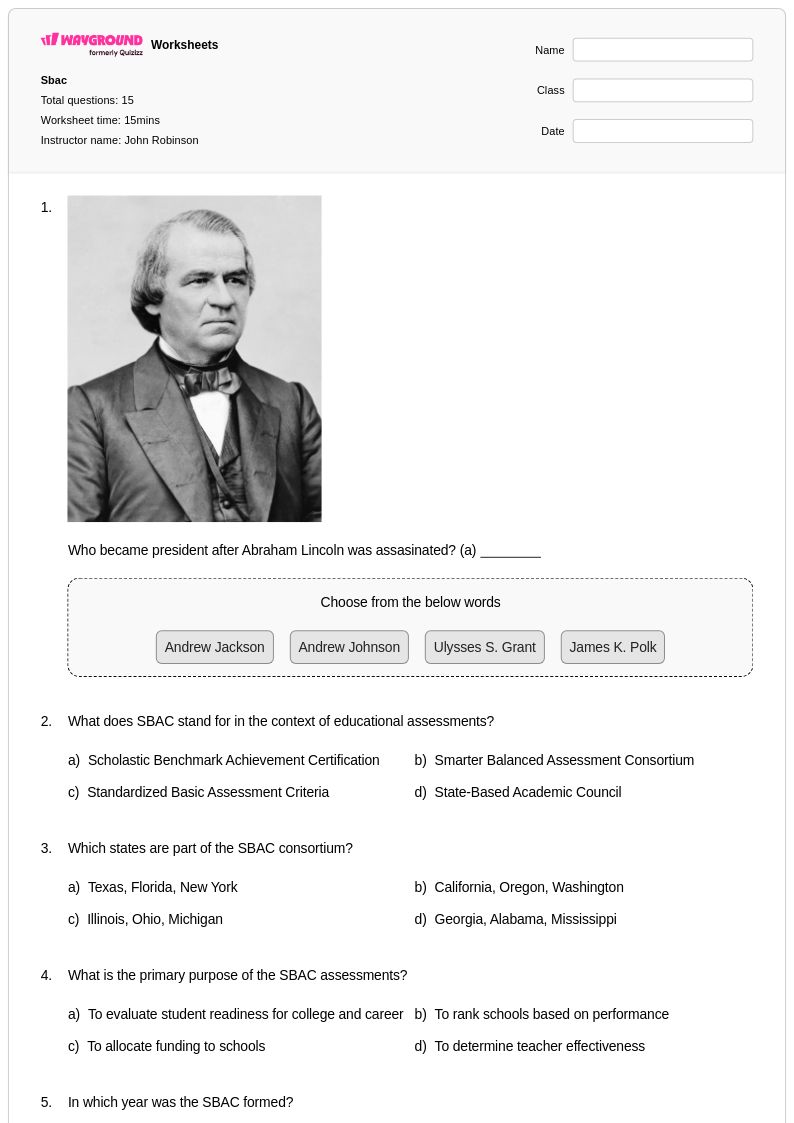
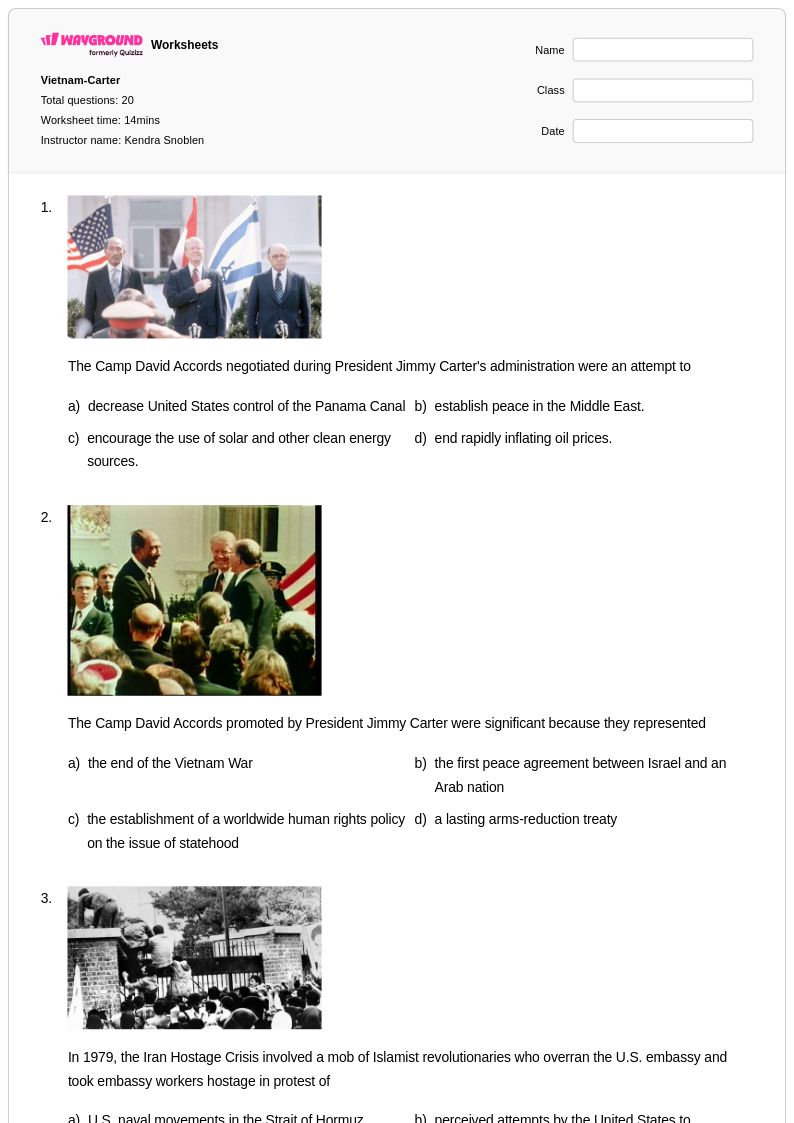
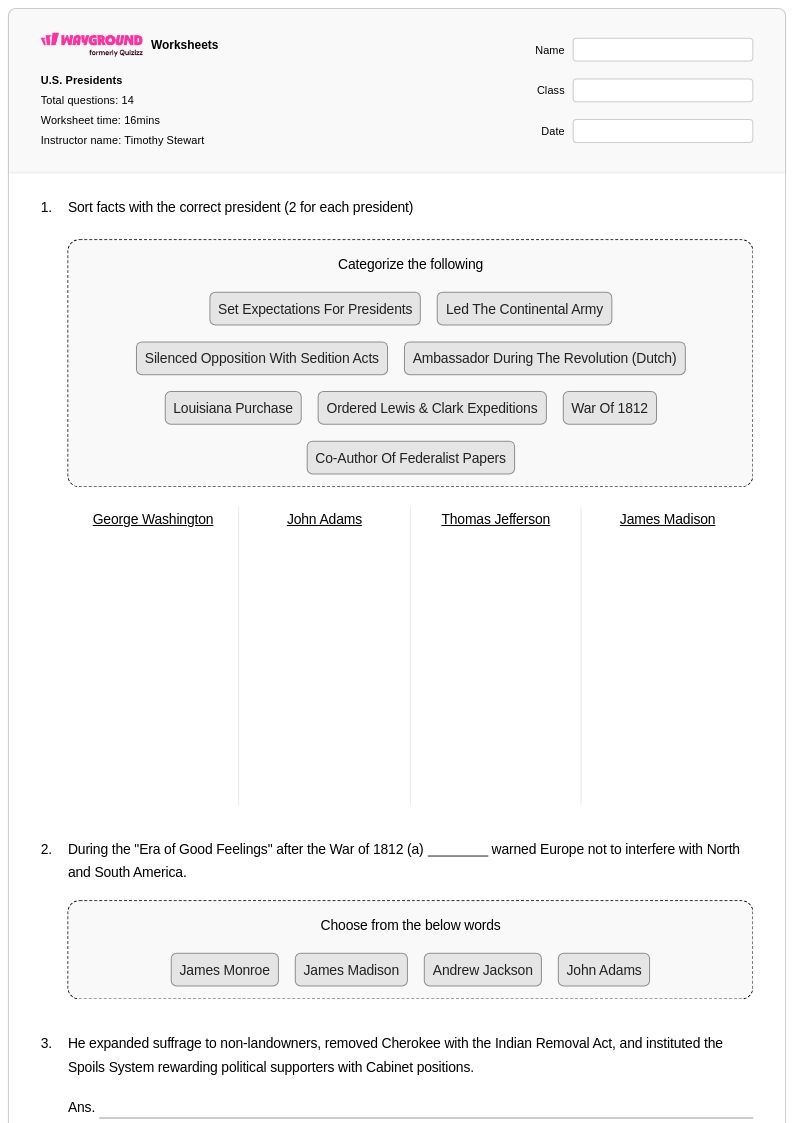
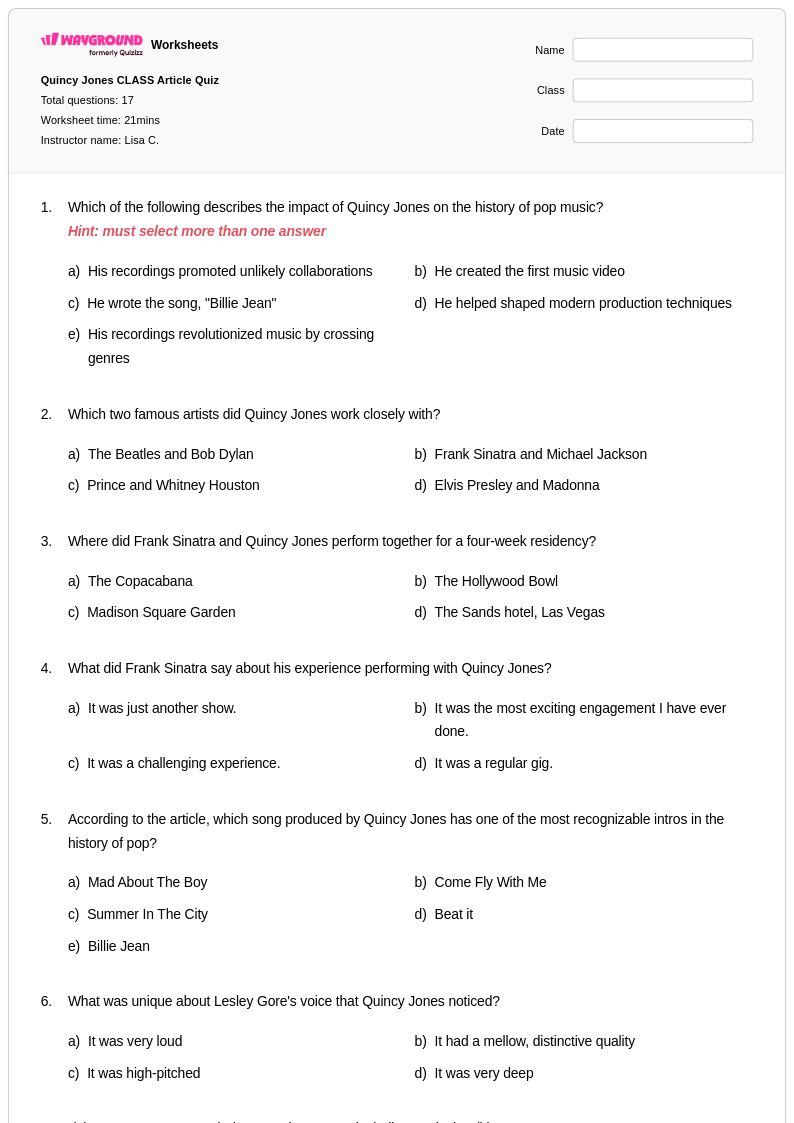
Free Printable Career Readiness Worksheets for Class 11
Develop essential career readiness skills with Wayground's comprehensive Class 11 social studies worksheets, featuring printable PDFs, practice problems, and answer keys to prepare students for professional success.
Explore printable Career Readiness worksheets for Class 11
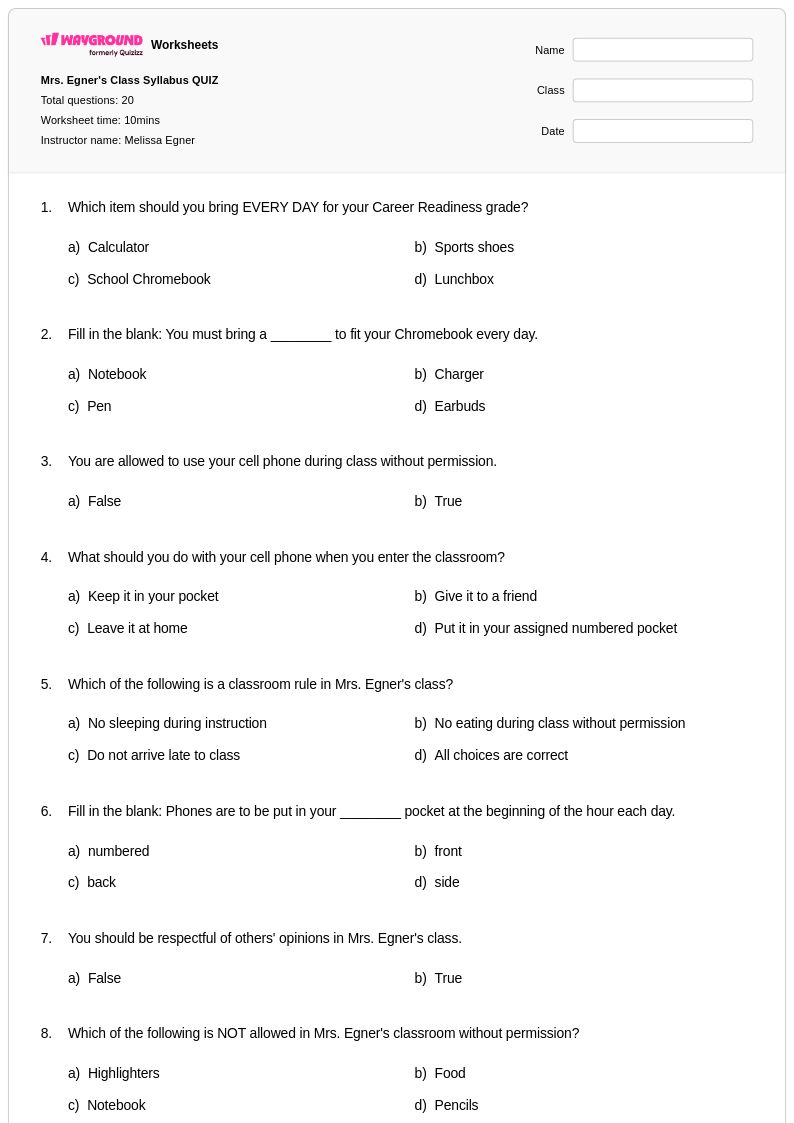
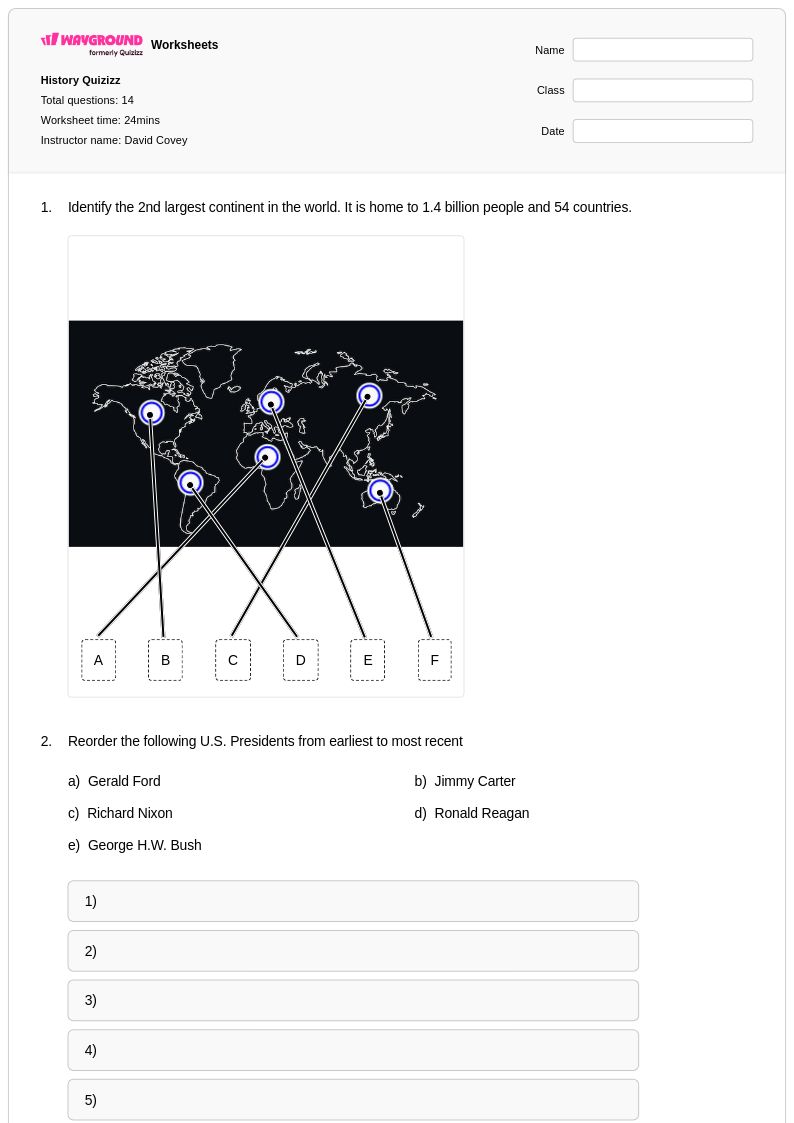
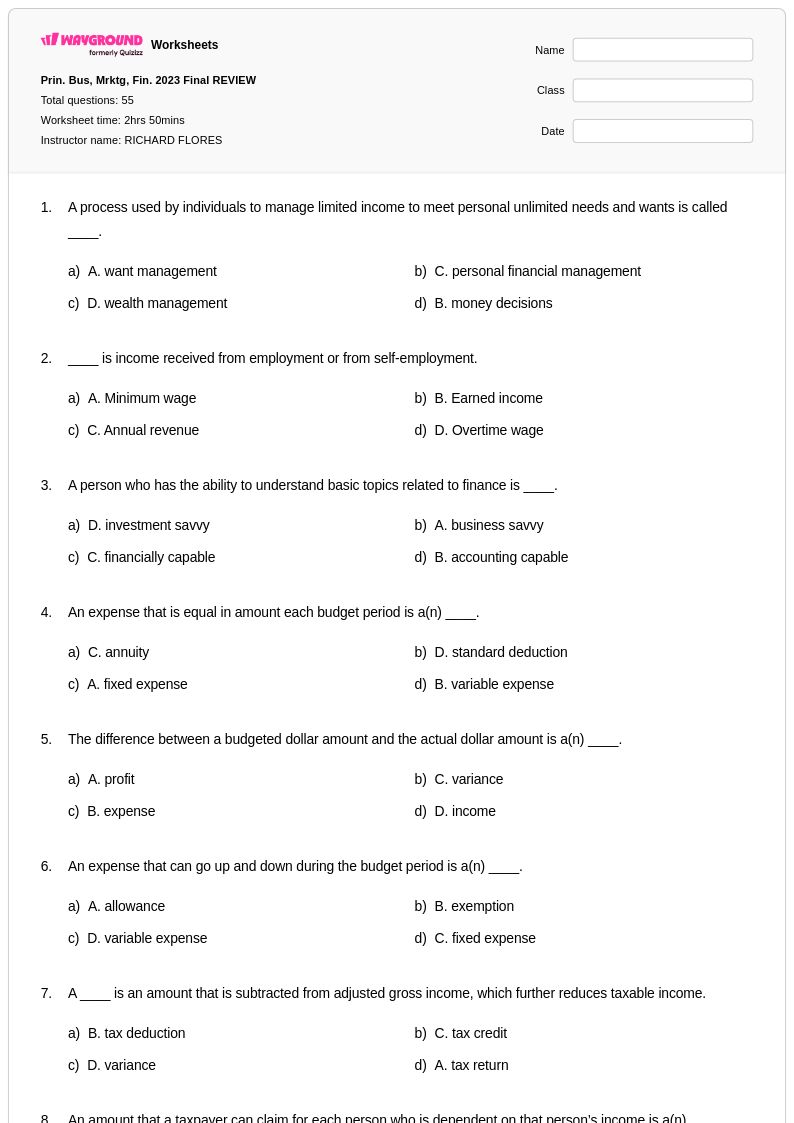
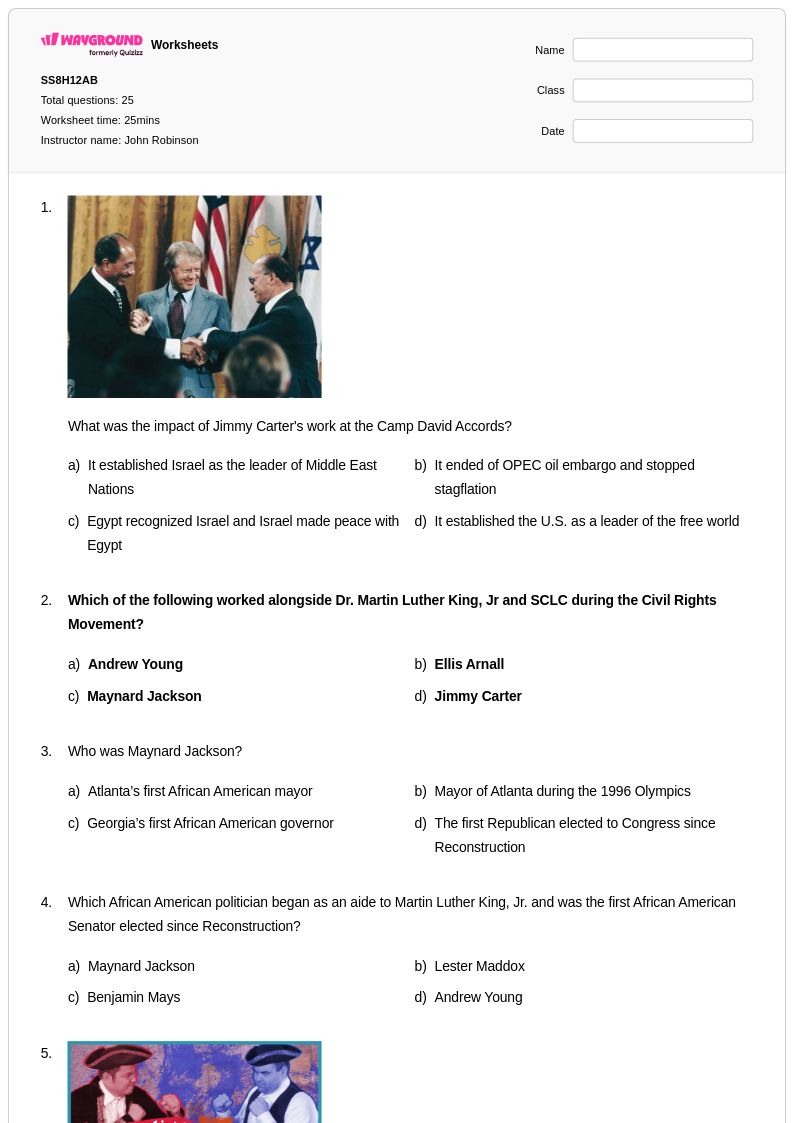
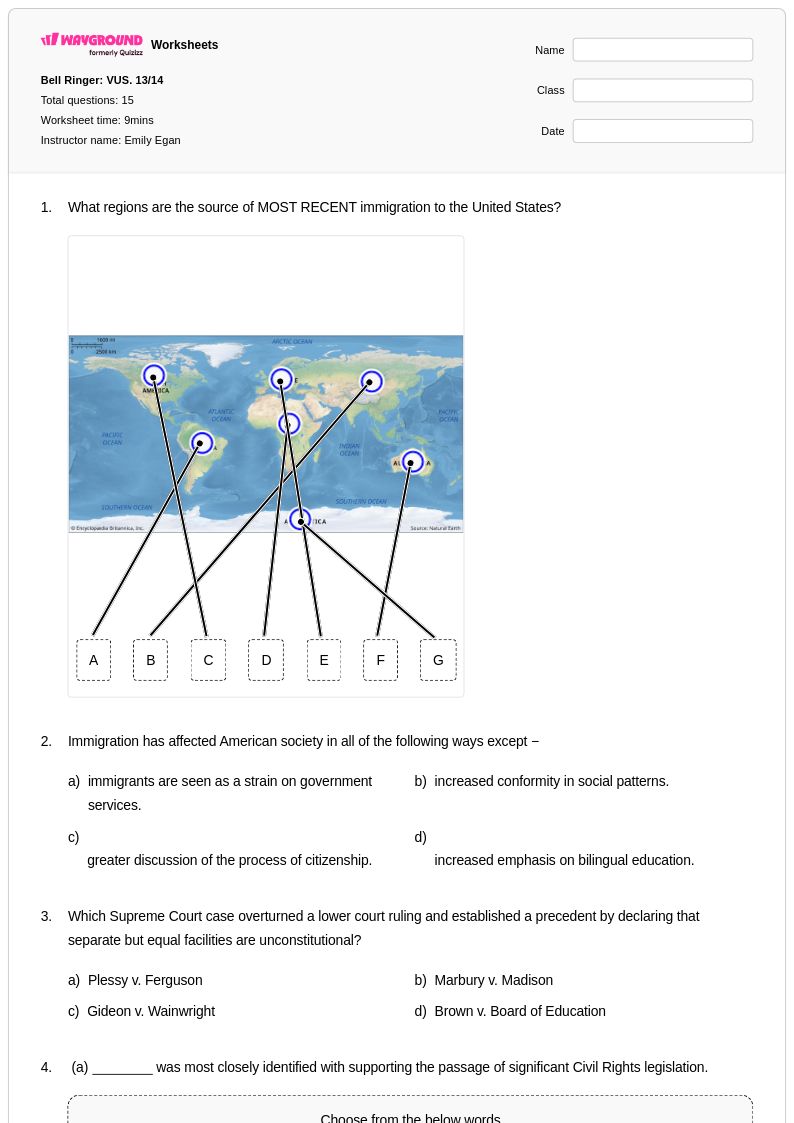
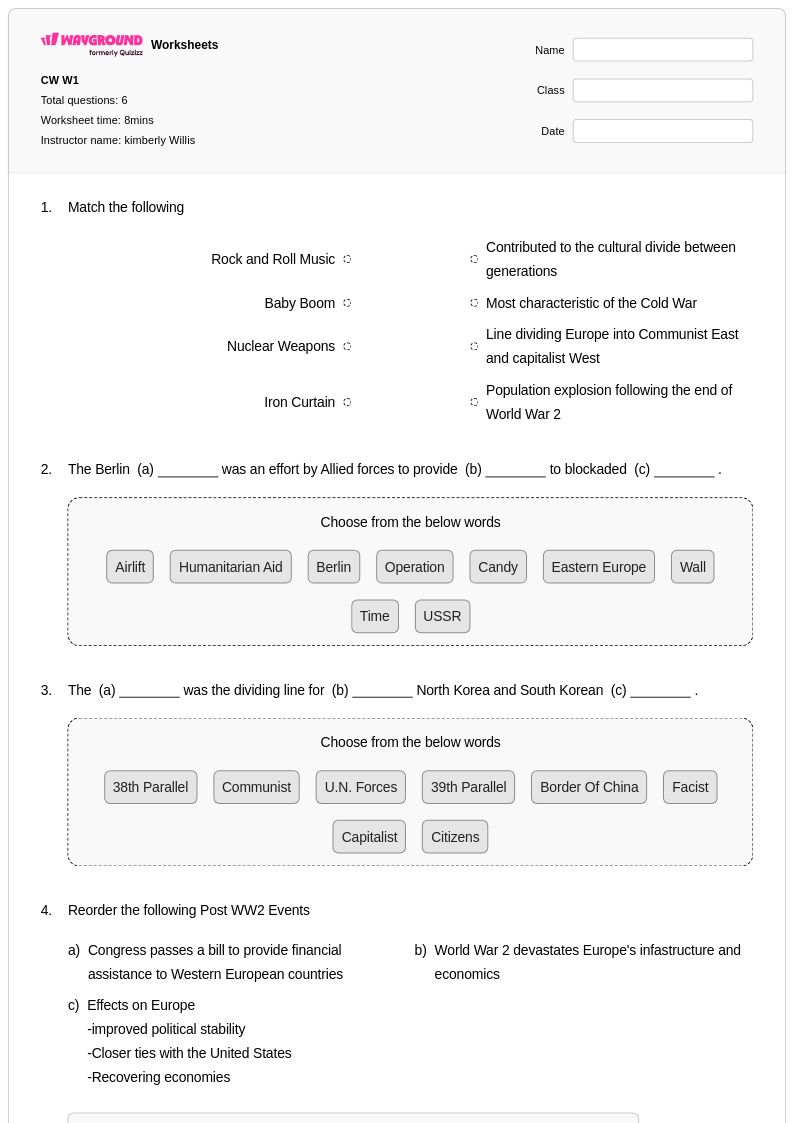
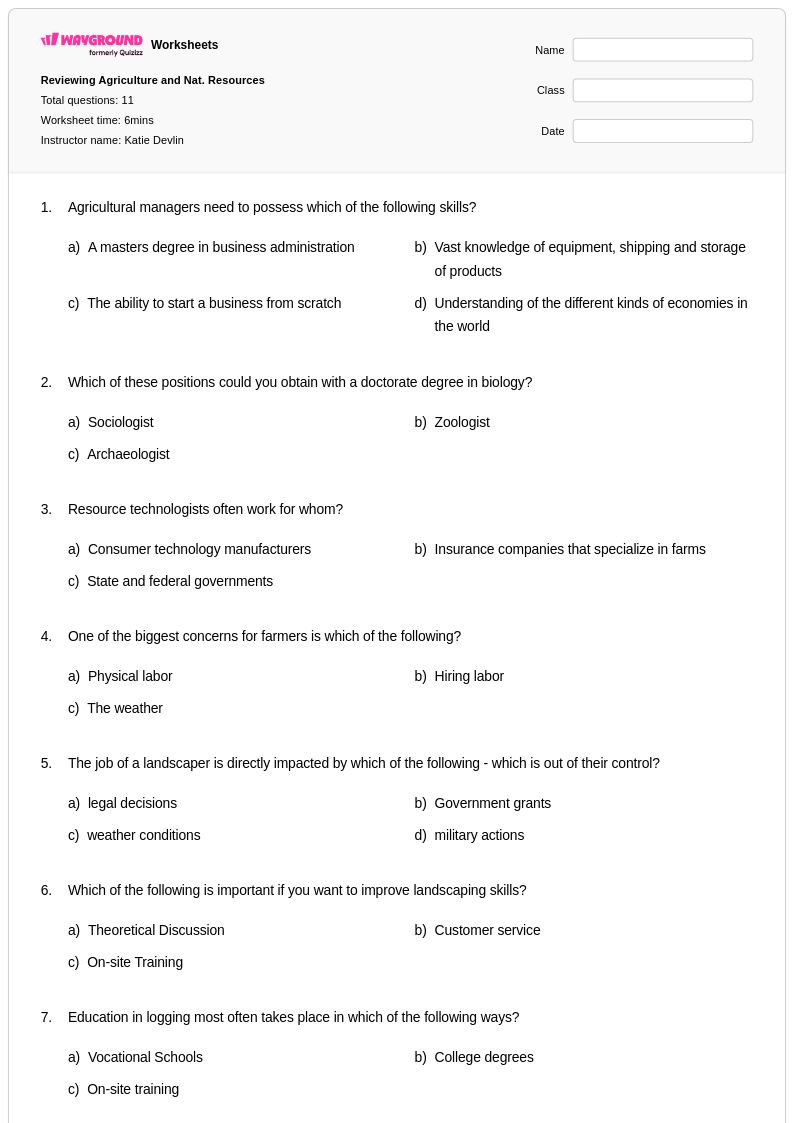
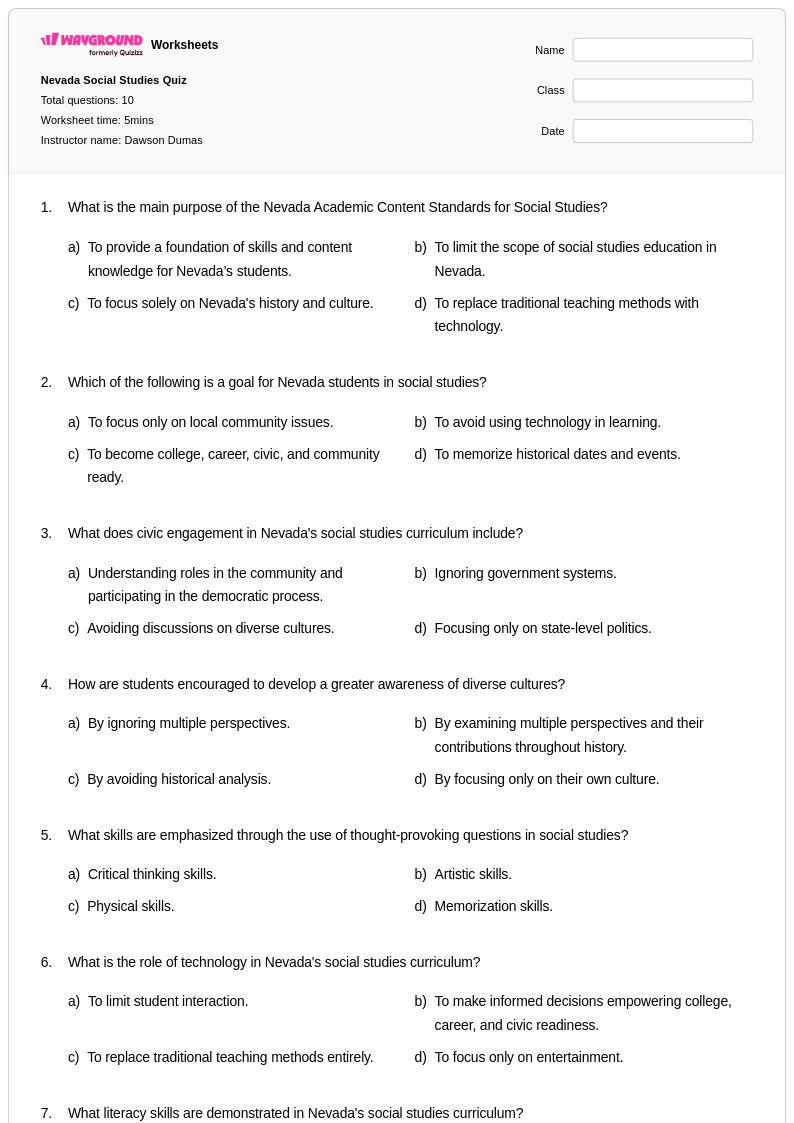
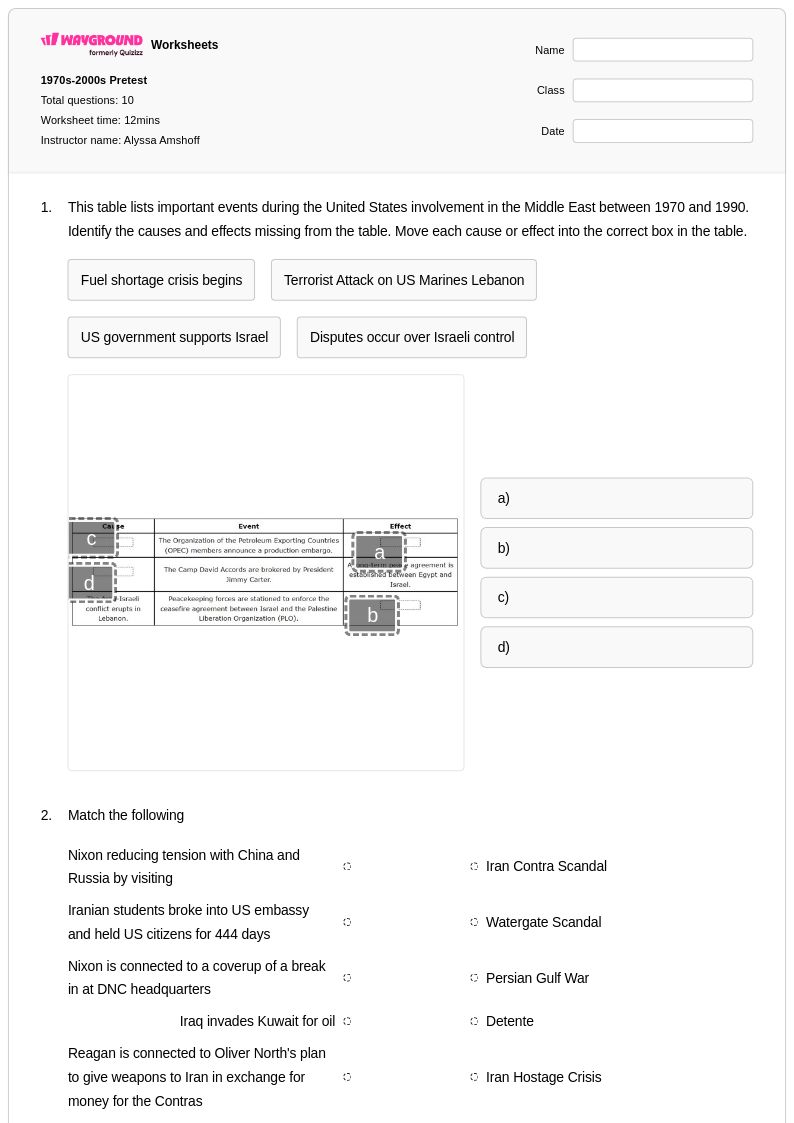
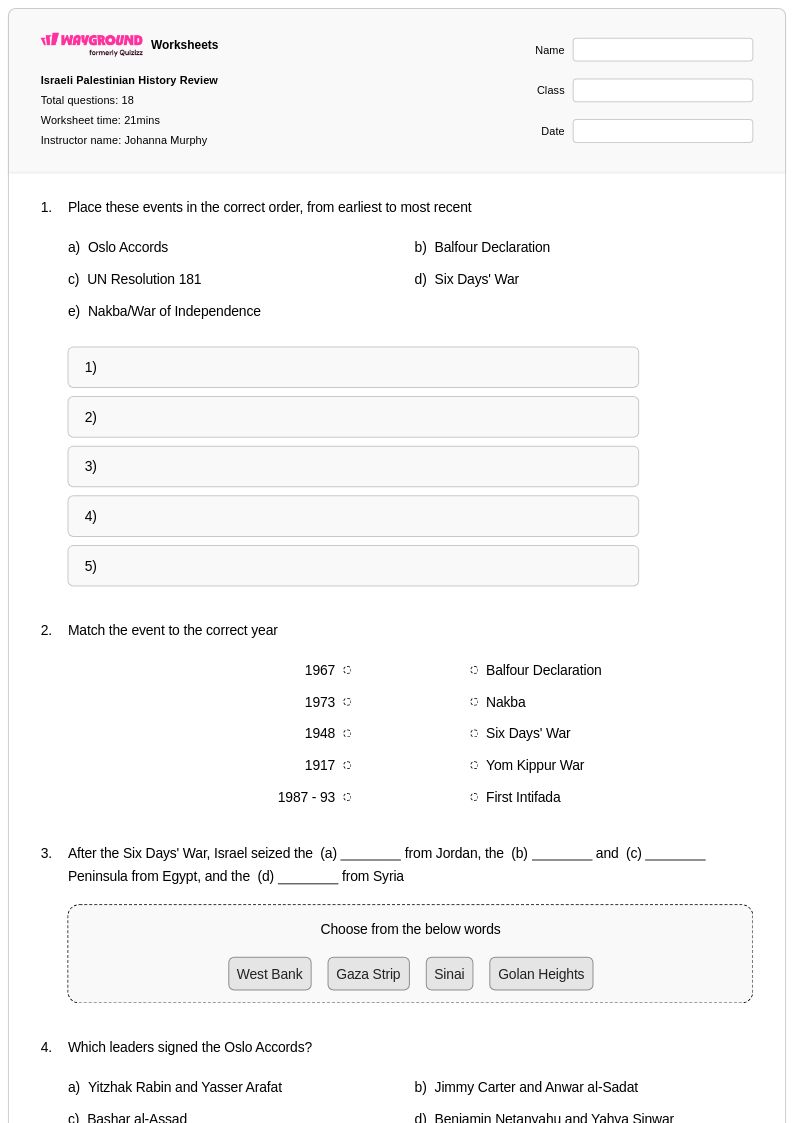
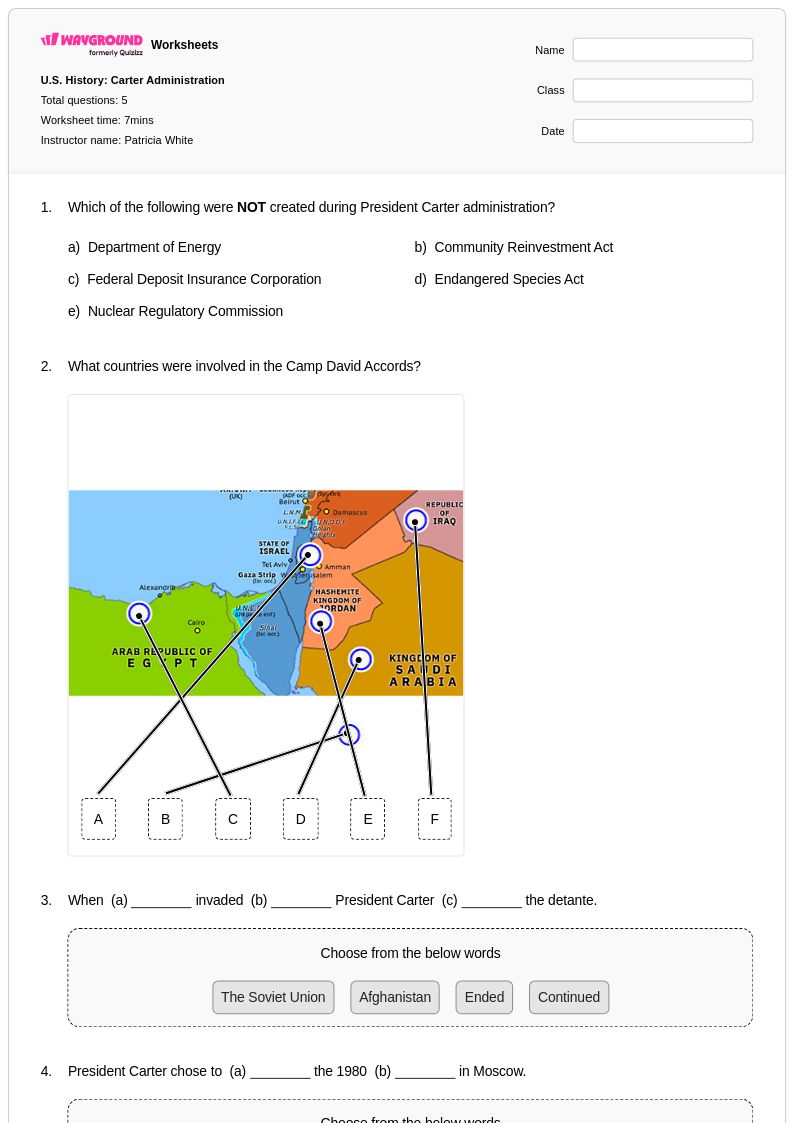
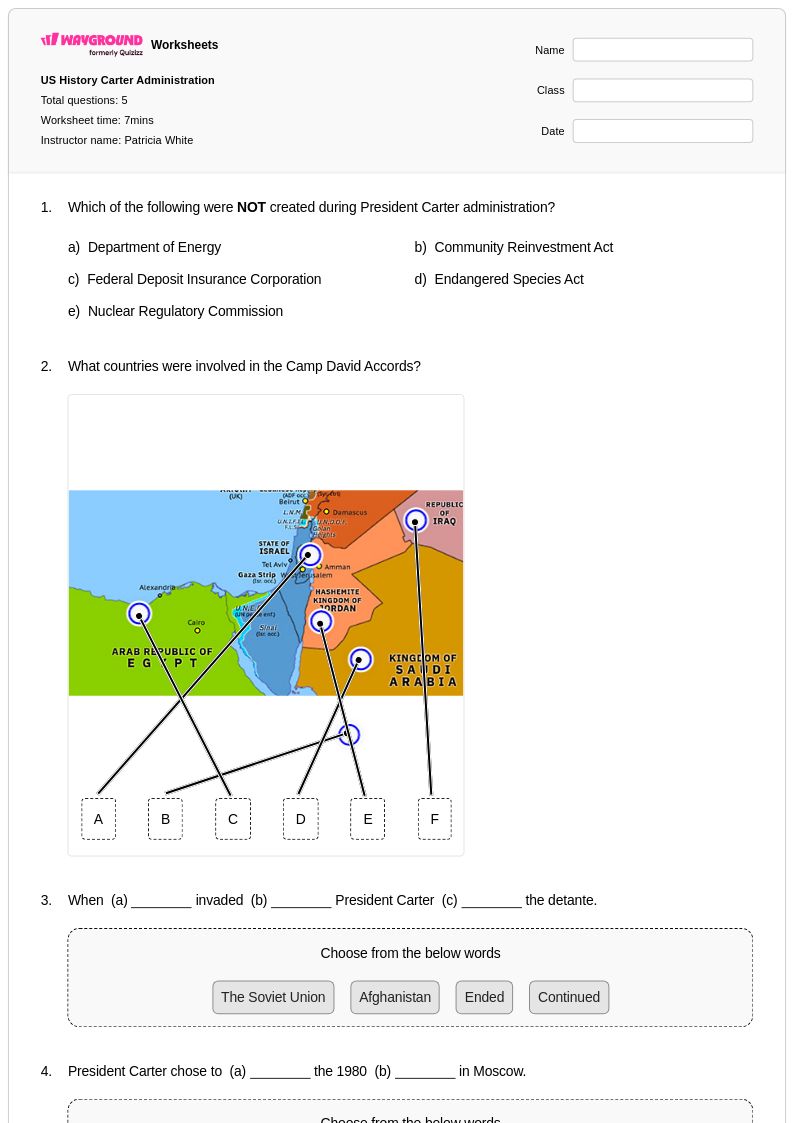
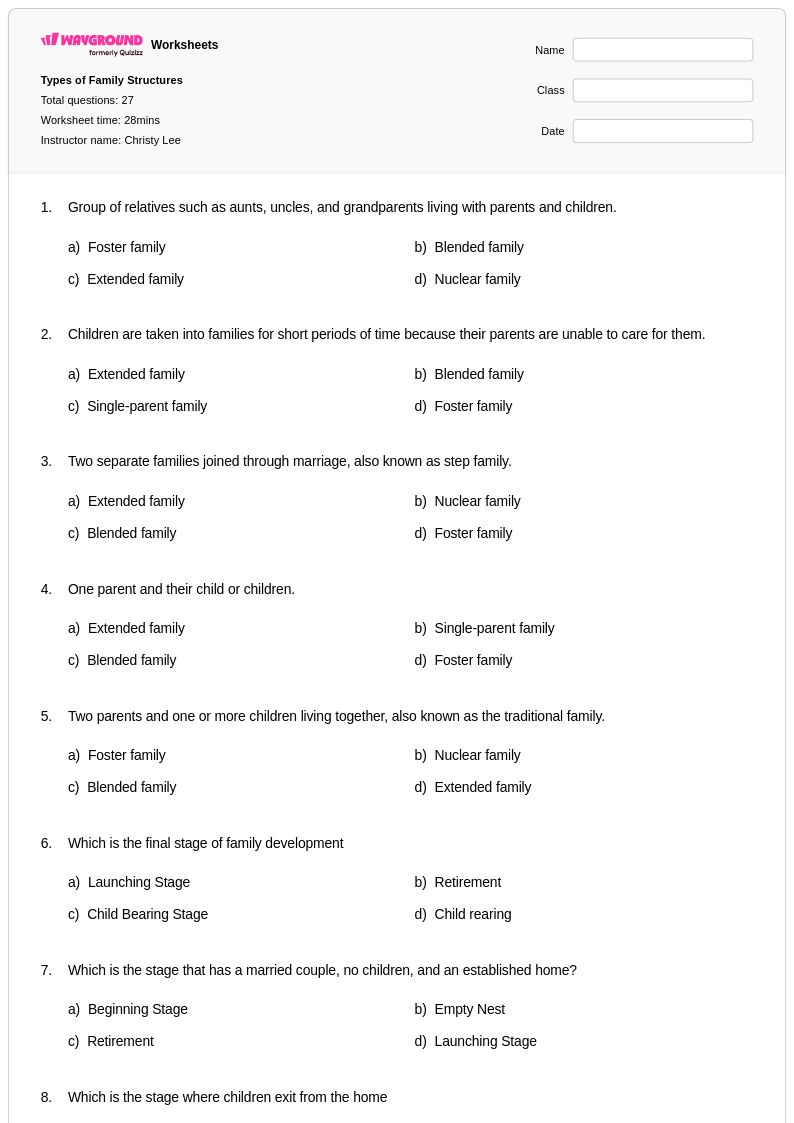
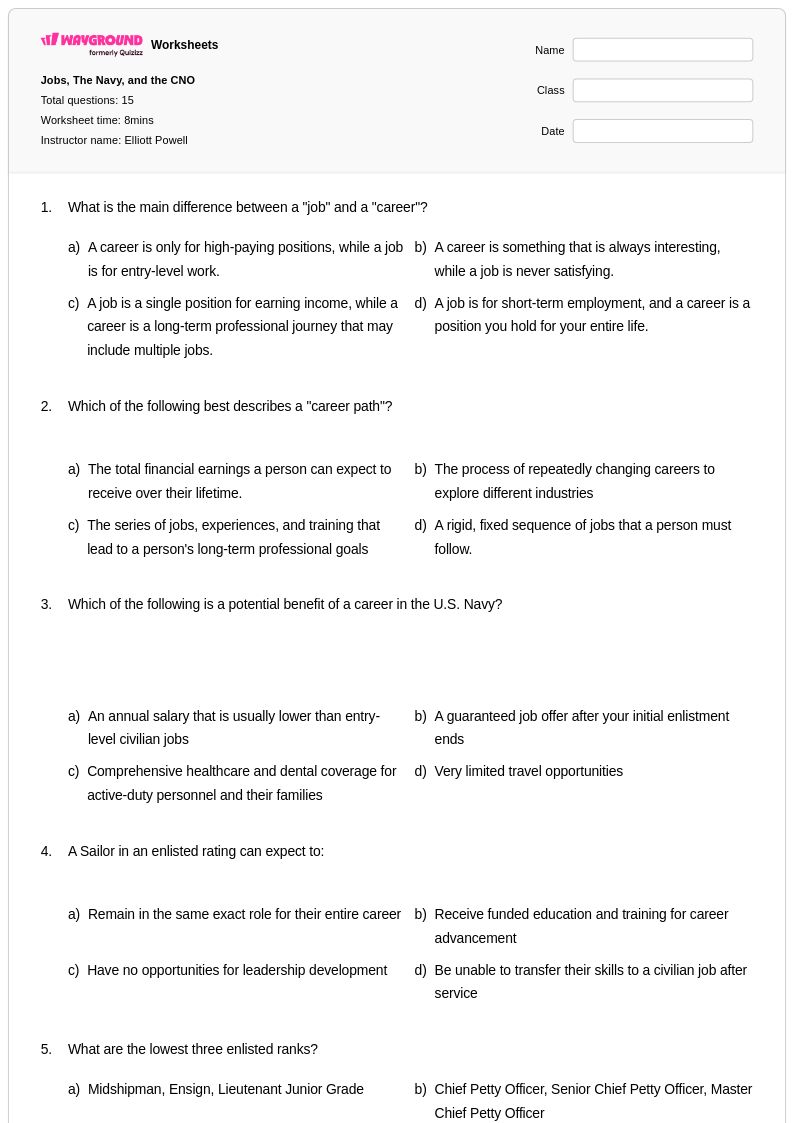
Career readiness worksheets for Class 11 students available through Wayground (formerly Quizizz) provide comprehensive skill-building exercises that prepare students for successful transitions into the professional world. These Social Studies resources focus on essential workplace competencies including communication skills, professional etiquette, interview preparation, resume writing, and understanding workplace dynamics. Students engage with practice problems that simulate real-world scenarios, developing critical thinking about career pathways, professional networking, and workplace problem-solving. Each worksheet includes detailed answer keys that allow for self-assessment and guided learning, while the free printable format ensures accessibility for diverse learning environments. These pdf resources strengthen students' ability to navigate professional relationships, understand workplace hierarchies, and develop the interpersonal skills necessary for career success.
Wayground (formerly Quizizz) supports educators with millions of teacher-created career readiness resources that streamline lesson planning and enhance classroom instruction for Class 11 Social Studies programs. The platform's advanced search and filtering capabilities allow teachers to quickly locate worksheets aligned with specific career readiness standards and learning objectives. Differentiation tools enable educators to customize content for varying skill levels, supporting both remediation for students needing additional practice and enrichment opportunities for advanced learners. Available in both printable and digital formats including downloadable pdfs, these worksheets facilitate flexible implementation across different teaching environments. Teachers can efficiently create targeted skill practice sessions, assess student understanding of professional concepts, and provide structured opportunities for students to explore career interests while developing the social and professional competencies essential for post-graduation success.
FAQs
How do I teach career readiness skills in the classroom?
Career readiness instruction works best when it connects abstract skills to real-world scenarios students will actually encounter. Teachers typically organize units around clusters of competencies such as resume writing, interview preparation, workplace communication, and financial literacy, then use structured practice activities to build each skill progressively. Anchoring lessons in role-play, self-reflection, and goal-setting helps students internalize professional expectations rather than simply memorize them.
What exercises help students practice career readiness skills?
Effective practice activities for career readiness include resume drafting exercises, mock interview question-and-answer practice, workplace scenario analysis, and goal-setting worksheets that ask students to map short-term actions to long-term career pathways. Activities that simulate professional communication, such as writing a formal email or navigating a workplace conflict, build both soft skills like teamwork and practical competencies like digital professionalism. Structured worksheets with guided prompts are particularly useful for scaffolding these skills across different readiness levels.
What mistakes do students commonly make when learning career readiness concepts?
Students often underestimate the importance of soft skills, focusing narrowly on hard credentials while overlooking how communication style, time management, and professional etiquette influence hiring and workplace success. Another common error is treating resume writing as a one-size-fits-all task rather than a document tailored to a specific role or industry. Students also frequently conflate confidence with competence in interview practice, missing the value of structured preparation and professional tone.
How can I differentiate career readiness instruction for students with different skill levels?
Differentiation in career readiness can mean simplifying the complexity of a scenario for students who need scaffolding while offering open-ended extension tasks for advanced learners exploring specific career pathways. On Wayground, teachers can apply student-level accommodations such as Read Aloud for students who benefit from hearing questions spoken aloud, reduced answer choices to lower cognitive load, and extended time for students who need more processing time. These settings are saved per student and apply automatically across future sessions without disrupting the rest of the class.
How do I use Wayground's career readiness worksheets in my classroom?
Wayground's career readiness worksheets are available as printable PDFs for traditional classroom use and in digital formats for technology-integrated learning environments, giving teachers flexibility based on their setup. Teachers can also host any worksheet as a live or assigned quiz directly on Wayground, making it easy to track student responses and identify skill gaps in real time. Each worksheet includes a complete answer key, so they can be used for independent practice, remediation sessions, or structured class activities with minimal prep time.
How do I align career readiness worksheets to specific learning standards or grade levels?
Career readiness standards vary by state and often fall under social studies, career and technical education (CTE), or college and career readiness frameworks. Wayground's search and filtering tools allow teachers to locate materials aligned with specific learning standards and grade-appropriate skill levels, reducing the time spent searching for appropriately targeted resources. Because career readiness spans all grade levels, teachers can filter by both competency area and grade band to find materials that fit their exact instructional context.