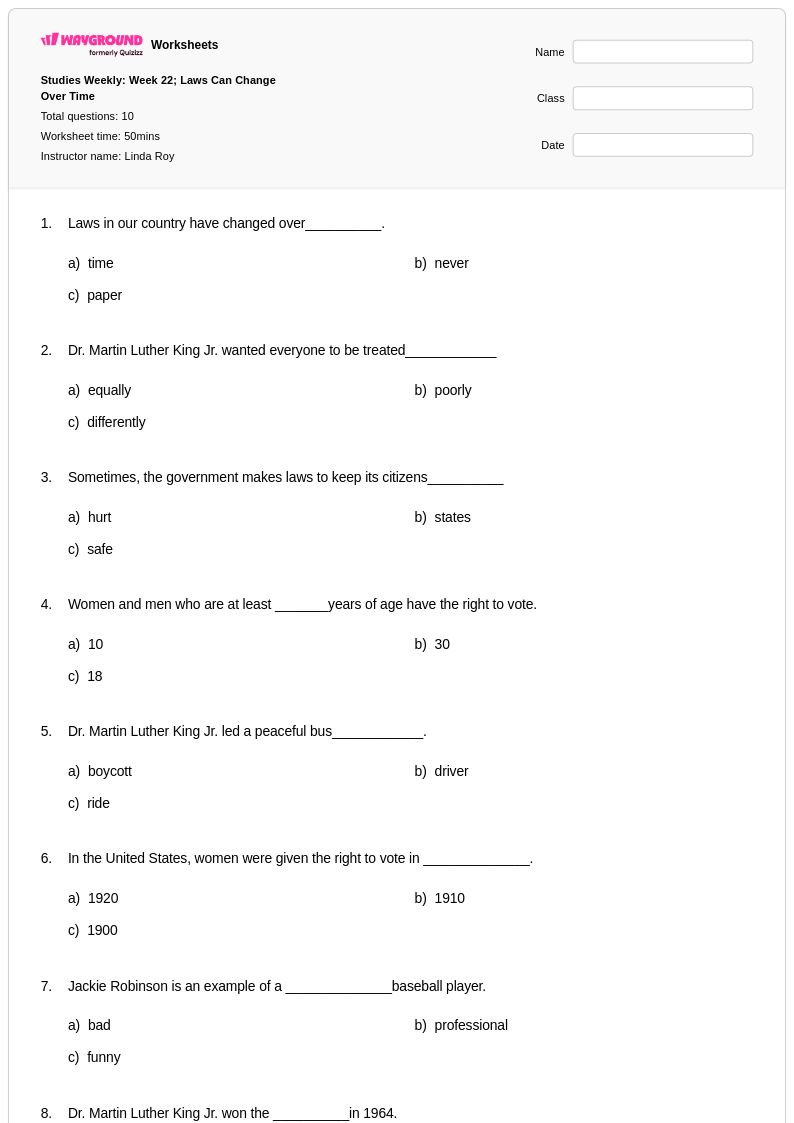
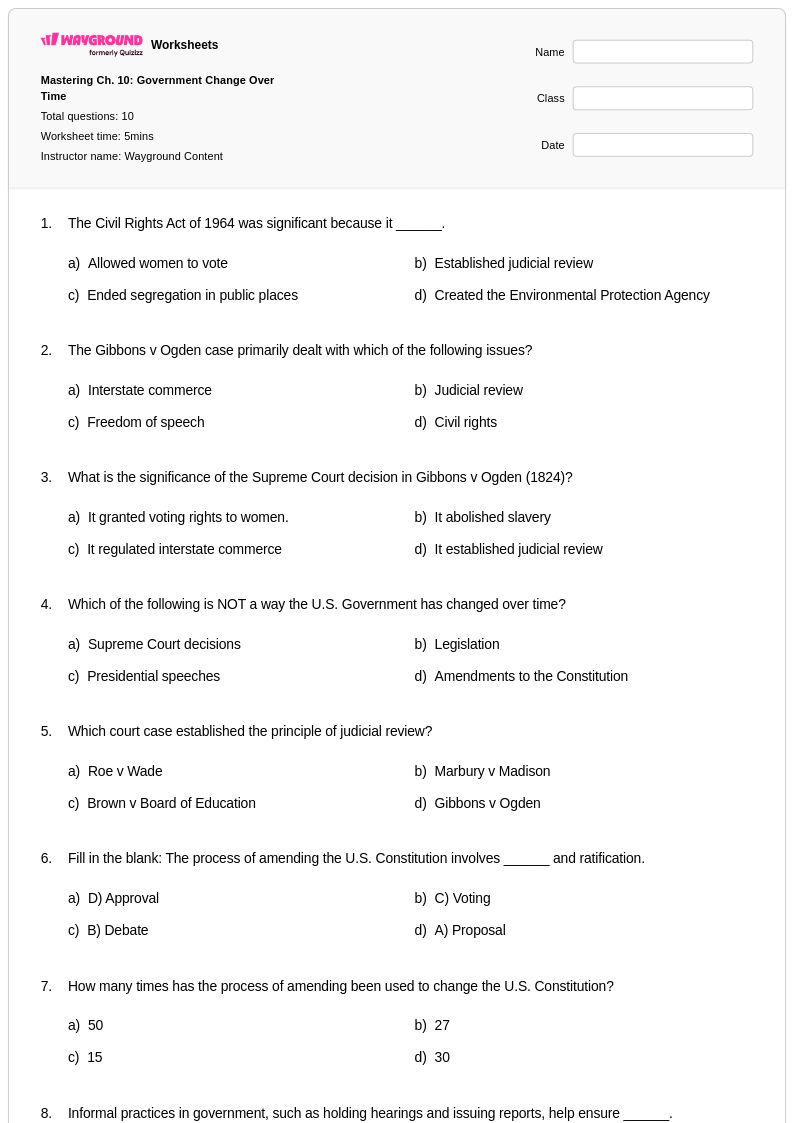
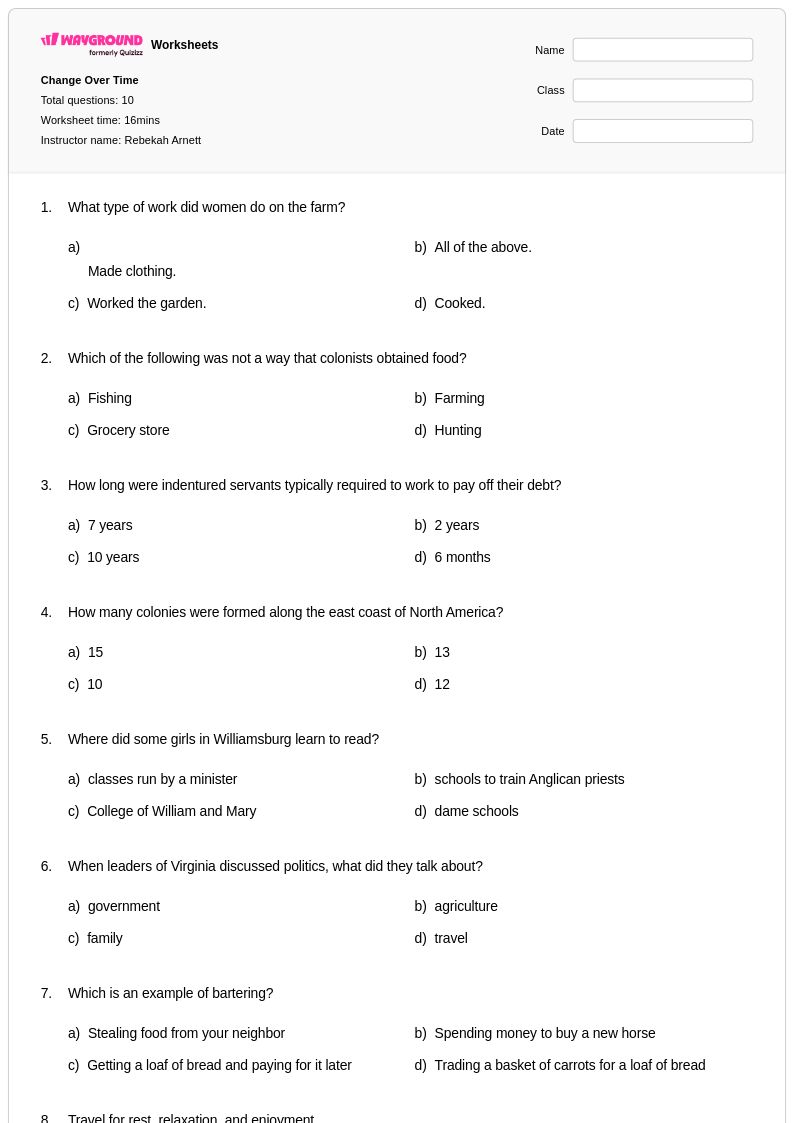
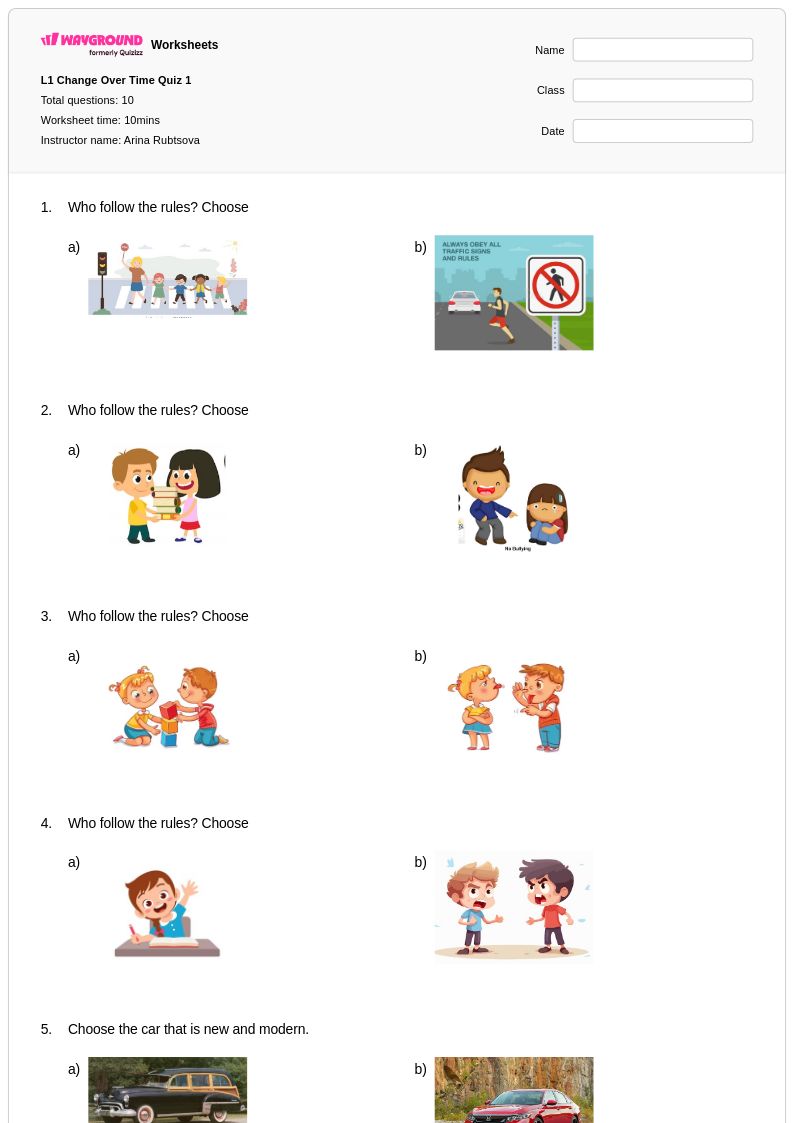
Explore Wayground's free Change Over Time worksheets and printables that help students analyze historical transformations, track societal developments, and practice identifying patterns across different eras with comprehensive answer keys.
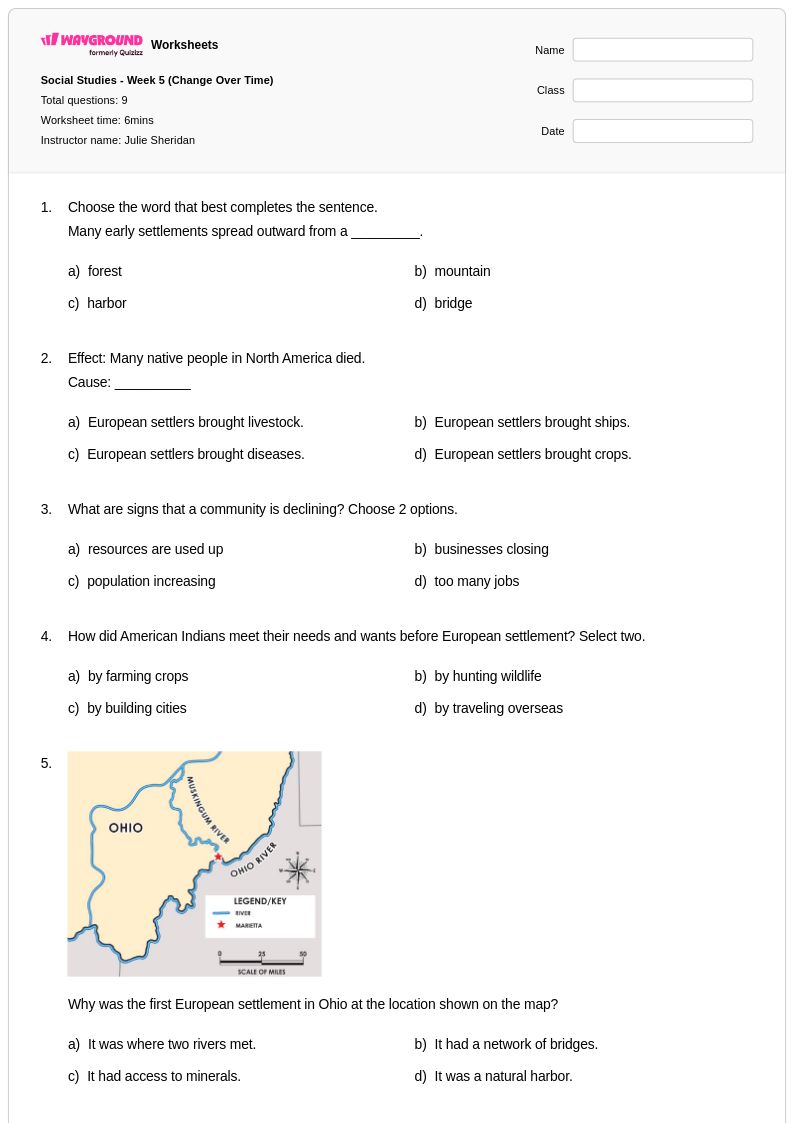
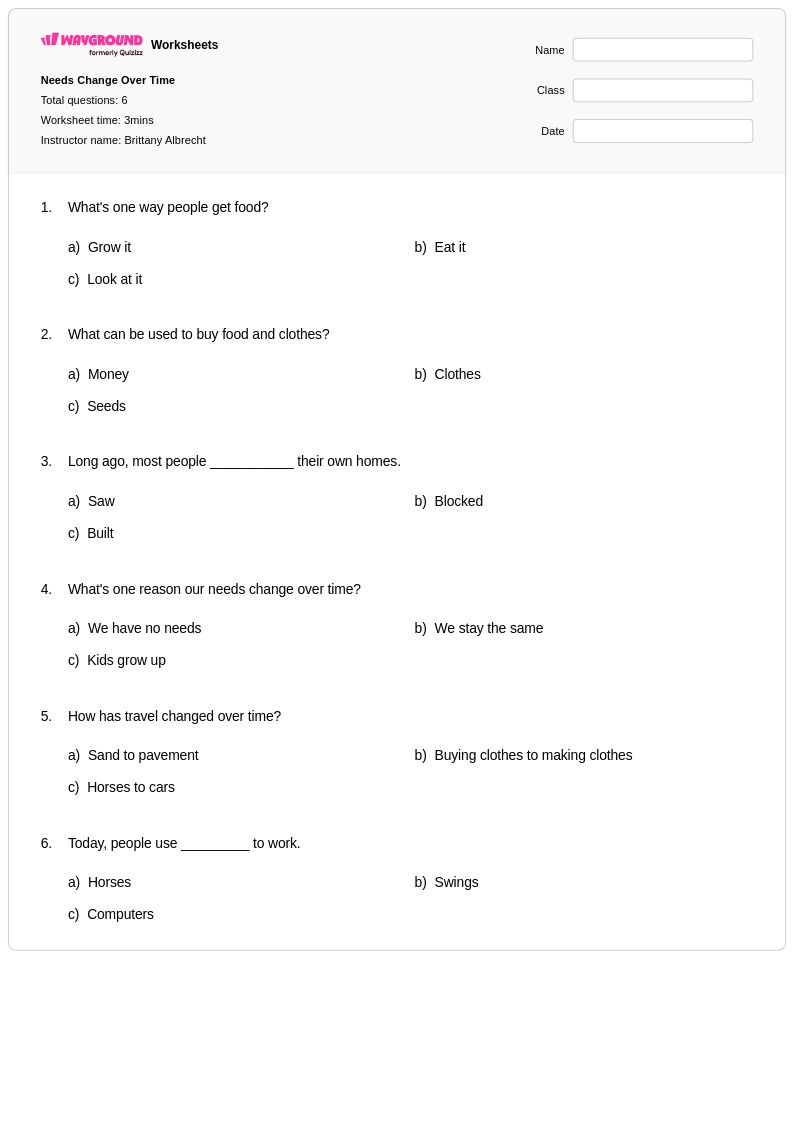
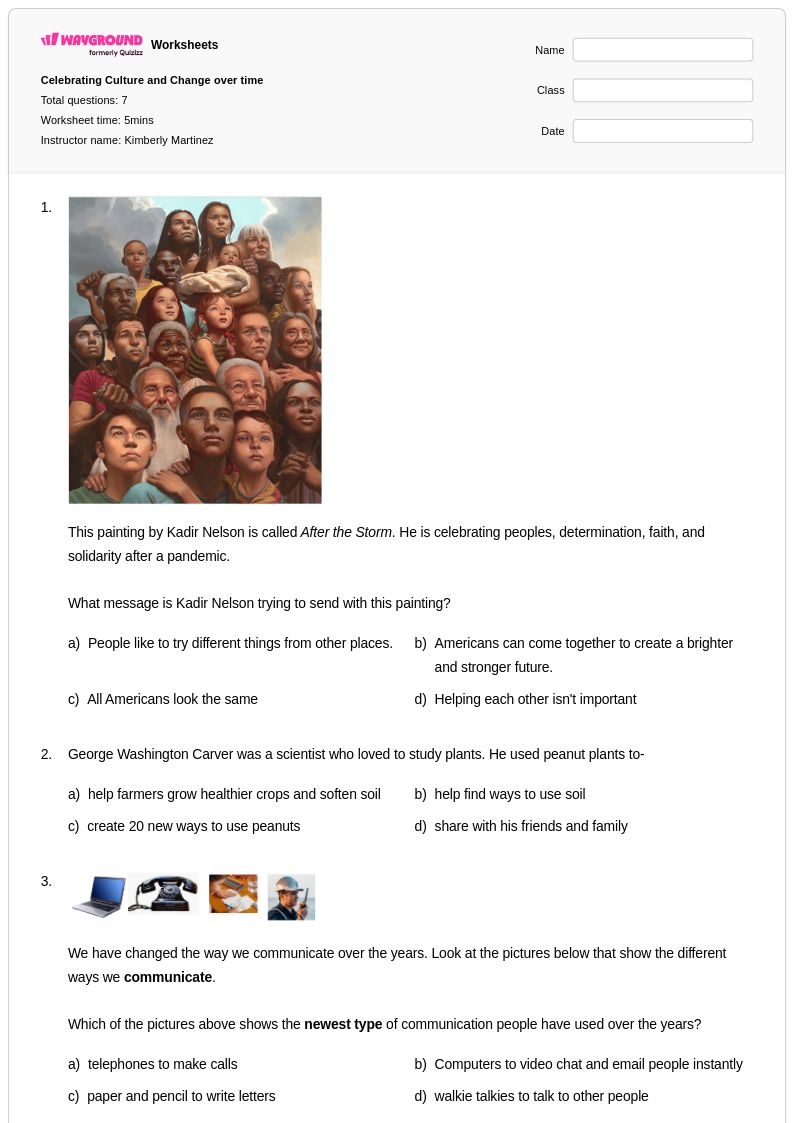
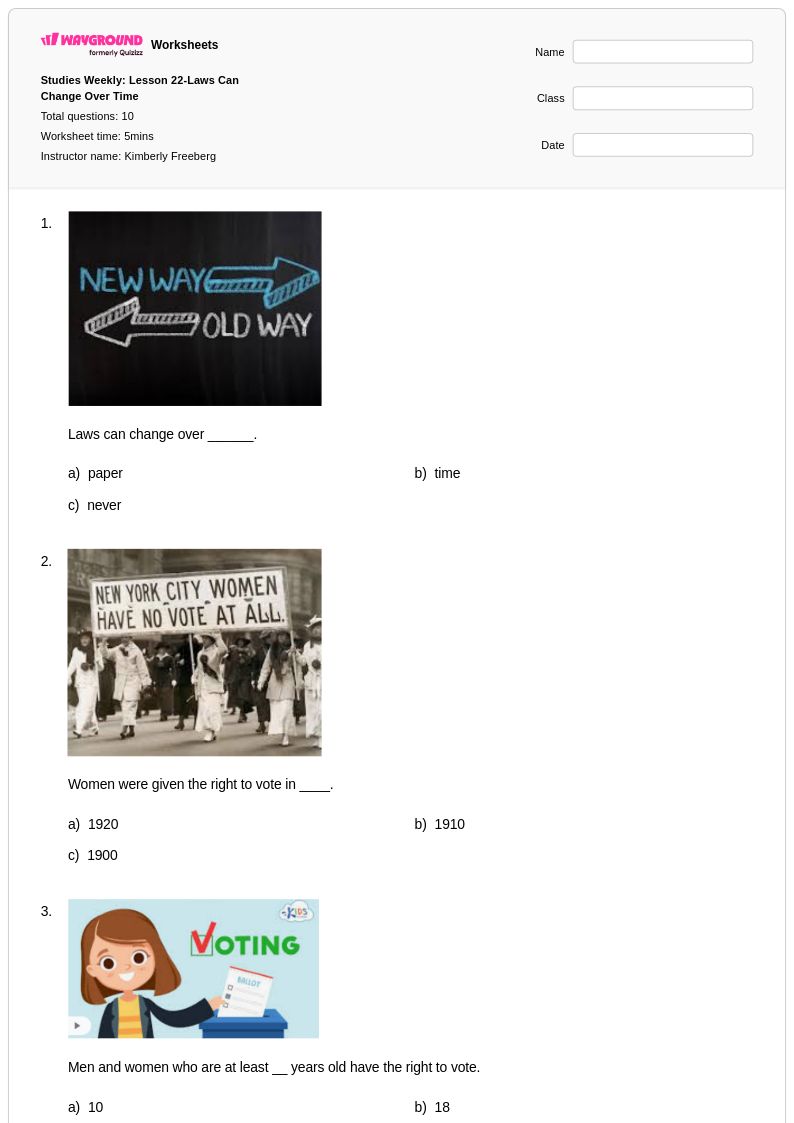
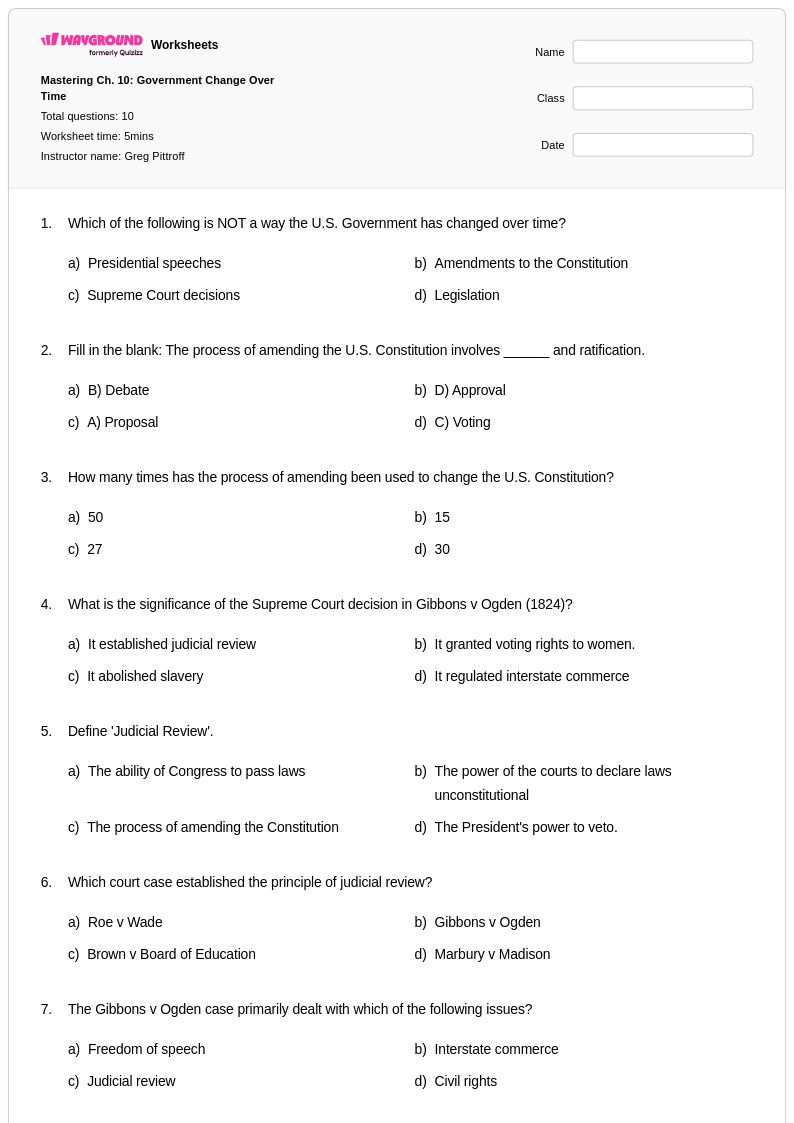
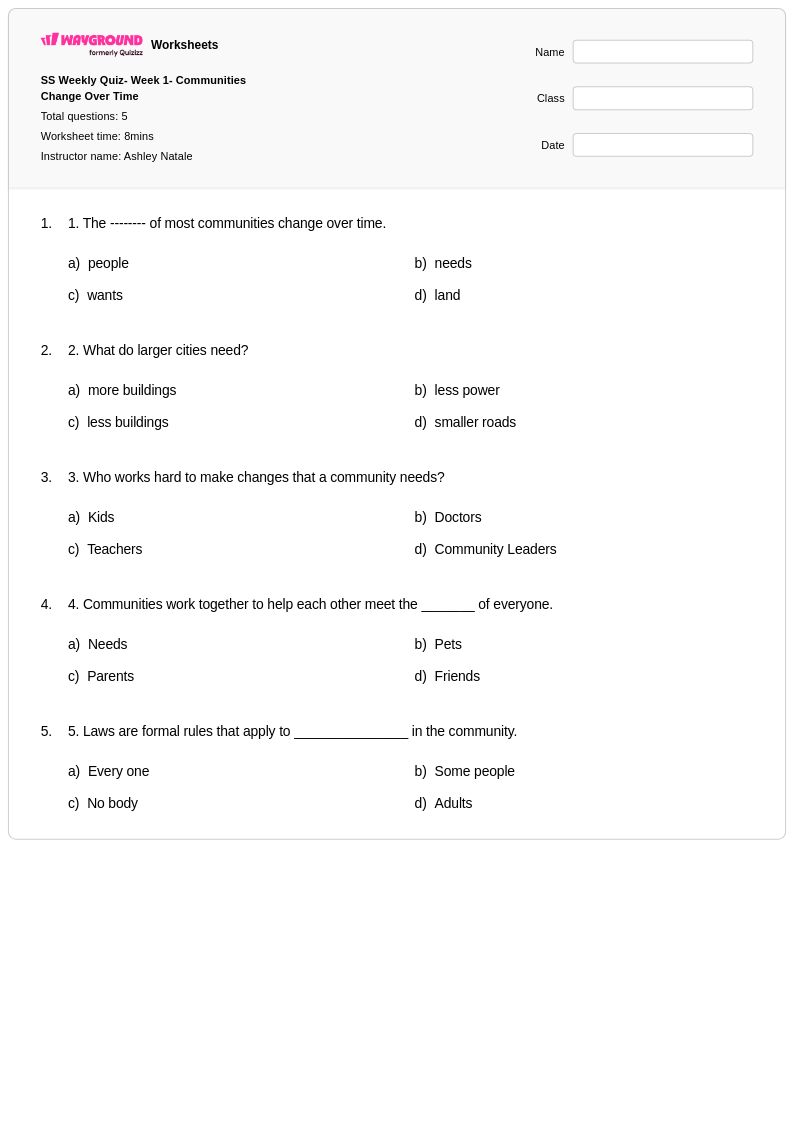
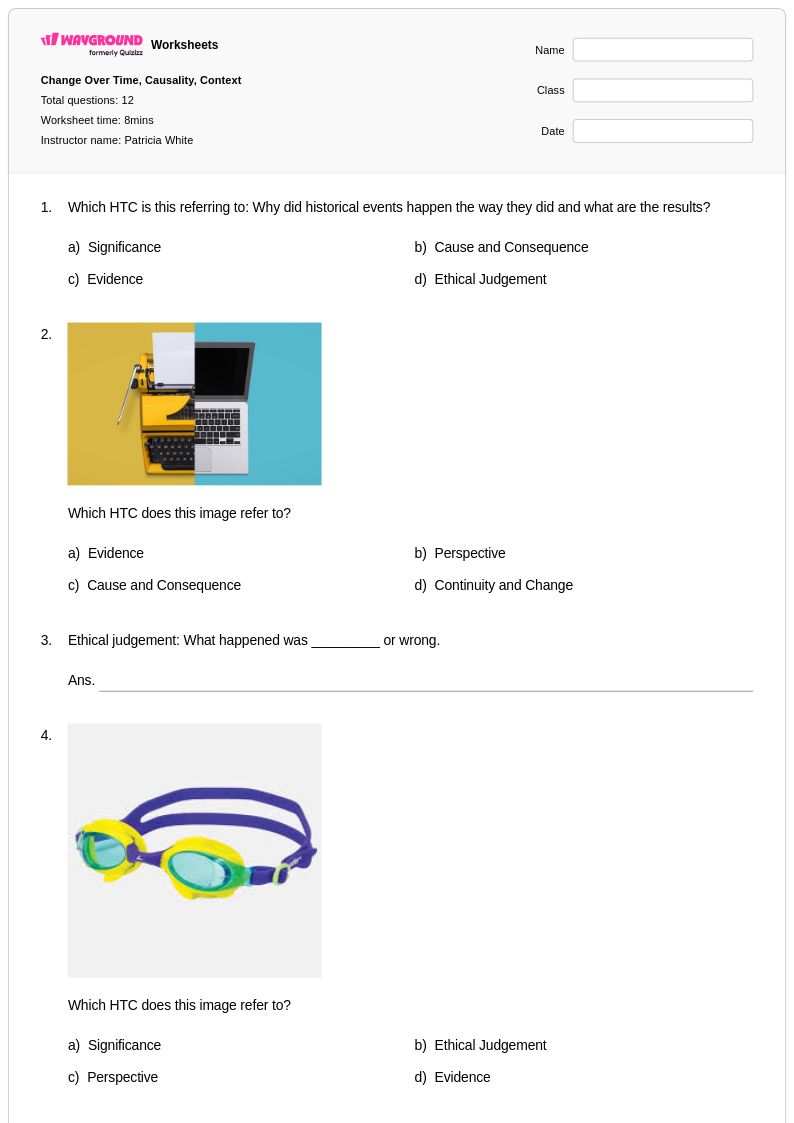
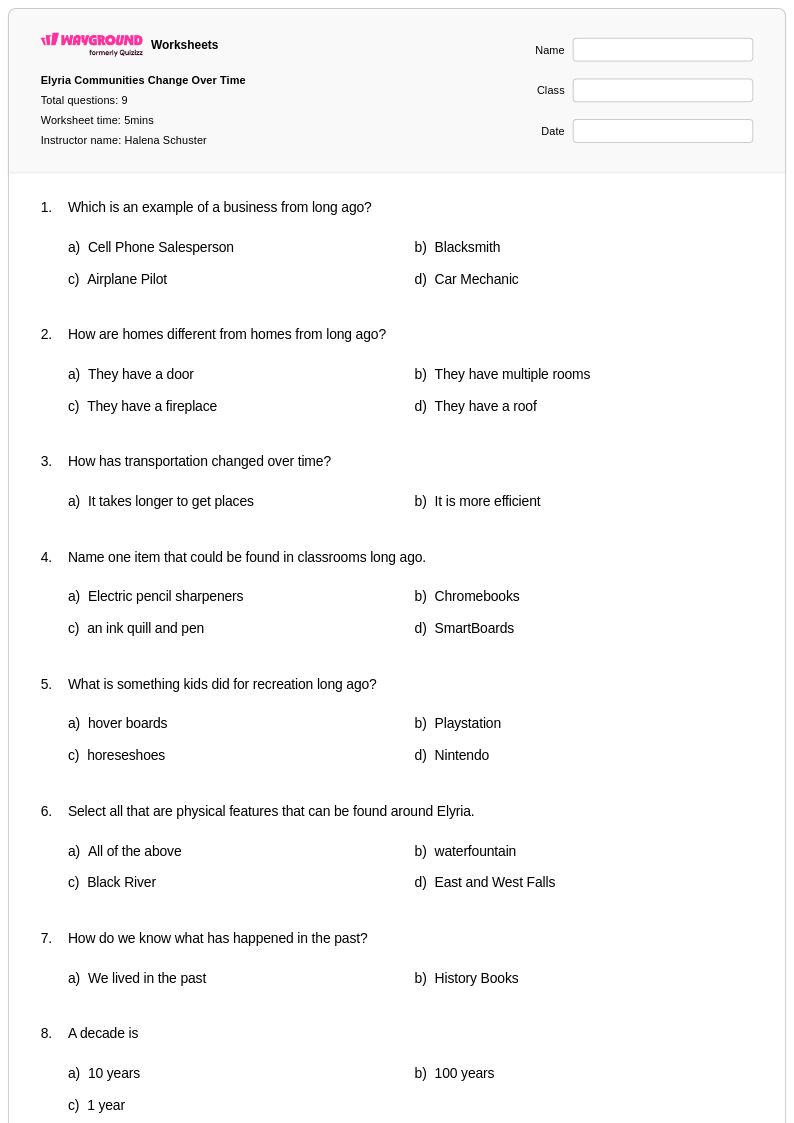
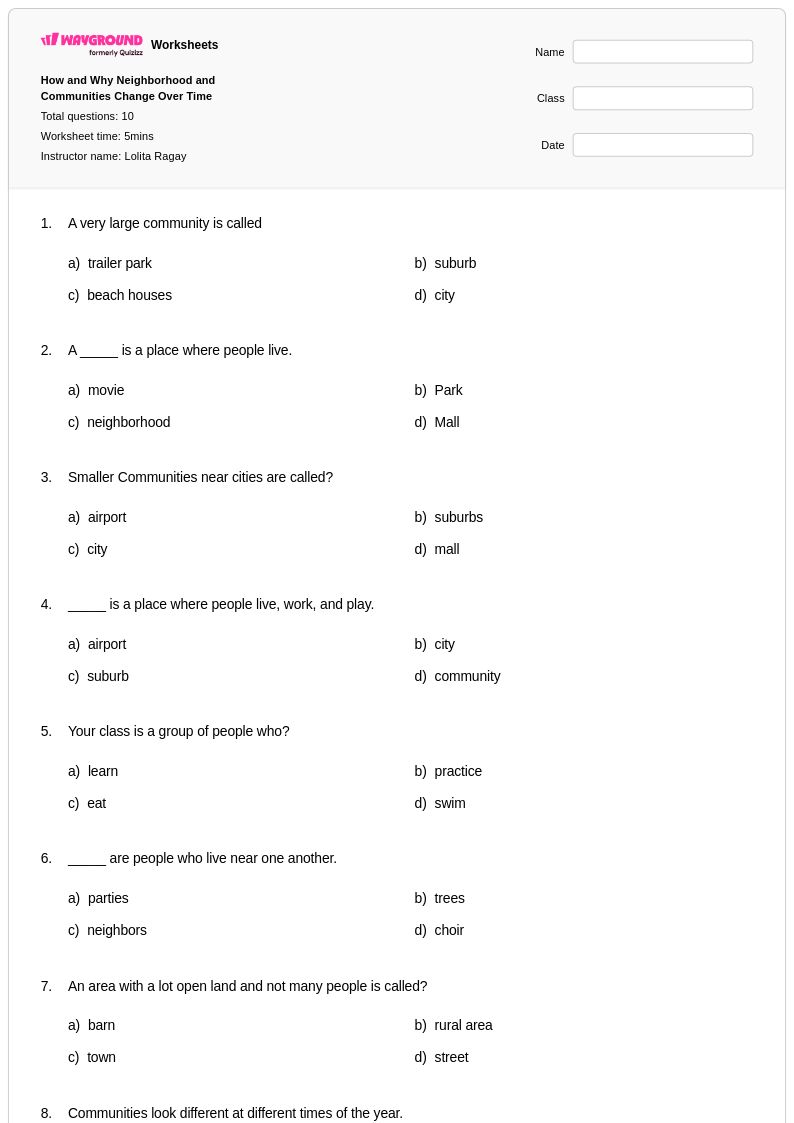
Change over time worksheets available through Wayground (formerly Quizizz) provide comprehensive resources for exploring how civilizations, societies, and cultures have evolved throughout world history. These educational materials strengthen students' analytical thinking skills by guiding them through the examination of political systems, technological advancements, social structures, and cultural practices across different historical periods. The worksheets feature practice problems that challenge learners to identify patterns of continuity and change, compare historical developments across regions and time periods, and analyze the causes and effects of major transformations in human civilization. Each worksheet comes with a detailed answer key to support independent learning and assessment, and the free printables are available in convenient pdf format for easy classroom distribution and homework assignments.
Wayground (formerly Quizizz) supports educators with millions of teacher-created resources specifically designed for world history instruction, including extensive collections focused on analyzing historical change over time. The platform's robust search and filtering capabilities enable teachers to locate worksheets that align with specific curriculum standards and match their students' academic needs. Advanced differentiation tools allow instructors to customize content complexity, modify question formats, and adjust assessment criteria to accommodate diverse learning styles and abilities. These flexible resources are available in both printable and digital formats, including downloadable pdf versions, making them ideal for traditional classroom instruction, remote learning environments, and hybrid educational models. Teachers can effectively utilize these materials for lesson planning, targeted skill practice, remediation support for struggling students, and enrichment activities for advanced learners seeking deeper historical analysis opportunities.
FAQs
How do I teach change over time in a history class?
Teaching change over time effectively requires guiding students to compare specific historical conditions across two or more distinct periods rather than simply listing events. Start by anchoring the analysis to a clear theme, such as political authority, economic systems, or social hierarchies, then ask students to identify what shifted, what remained constant, and what caused those outcomes. Using structured comparison frameworks, such as T-charts or annotated timelines, helps students move from surface-level observation to genuine historical reasoning.
What exercises help students practice analyzing change and continuity over time?
Effective practice exercises include comparing primary sources from different eras on the same topic, labeling turning points on historical timelines, and writing short analytical paragraphs that address both change and continuity explicitly. Worksheets that prompt students to identify patterns across regions and time periods, rather than focusing on a single event, are especially useful for building the analytical habits this skill demands. Regular low-stakes practice with answer keys allows students to self-correct their reasoning before formal assessment.
What mistakes do students commonly make when analyzing change over time?
The most common error is conflating change over time with simple event narration, where students describe what happened without explaining what transformed and why. Students also frequently ignore continuity, presenting history as a series of complete breaks rather than recognizing elements that persisted across periods. A related misconception is treating change as uniform and linear rather than uneven, gradual, or regionally varied, which flattens the complexity of actual historical development.
How can I differentiate change over time worksheets for students at different skill levels?
For students who need additional support, reduce the scope of comparison to two clearly defined time periods with visual scaffolds such as graphic organizers or sentence starters. Advanced learners benefit from open-ended prompts that ask them to evaluate the relative significance of changes across multiple regions or civilizations simultaneously. On Wayground, teachers can apply accommodations such as reduced answer choices or read-aloud support to individual students, so differentiation can be implemented without disrupting the rest of the class.
How do I use Change Over Time worksheets from Wayground in my classroom?
Wayground's Change Over Time worksheets are available as printable PDFs for traditional classroom use and in digital formats for technology-integrated or remote learning environments, including the option to host them as a quiz directly on Wayground. Teachers can use these materials for direct instruction support, independent practice, homework assignments, or targeted remediation. Each worksheet includes a complete answer key, making them practical for both teacher-led review and independent student learning.
How do change over time skills connect to standardized history assessments?
Analyzing change and continuity over time is a core historical thinking skill assessed on AP World History, AP US History, and many state-level social studies exams, often appearing in long-essay and document-based question formats. Students who can articulate what changed, what stayed the same, and what drove those patterns demonstrate the kind of sophisticated reasoning these assessments reward. Building this skill through regular worksheet practice aligned to specific curriculum standards helps students internalize the analytical framework before high-stakes testing.