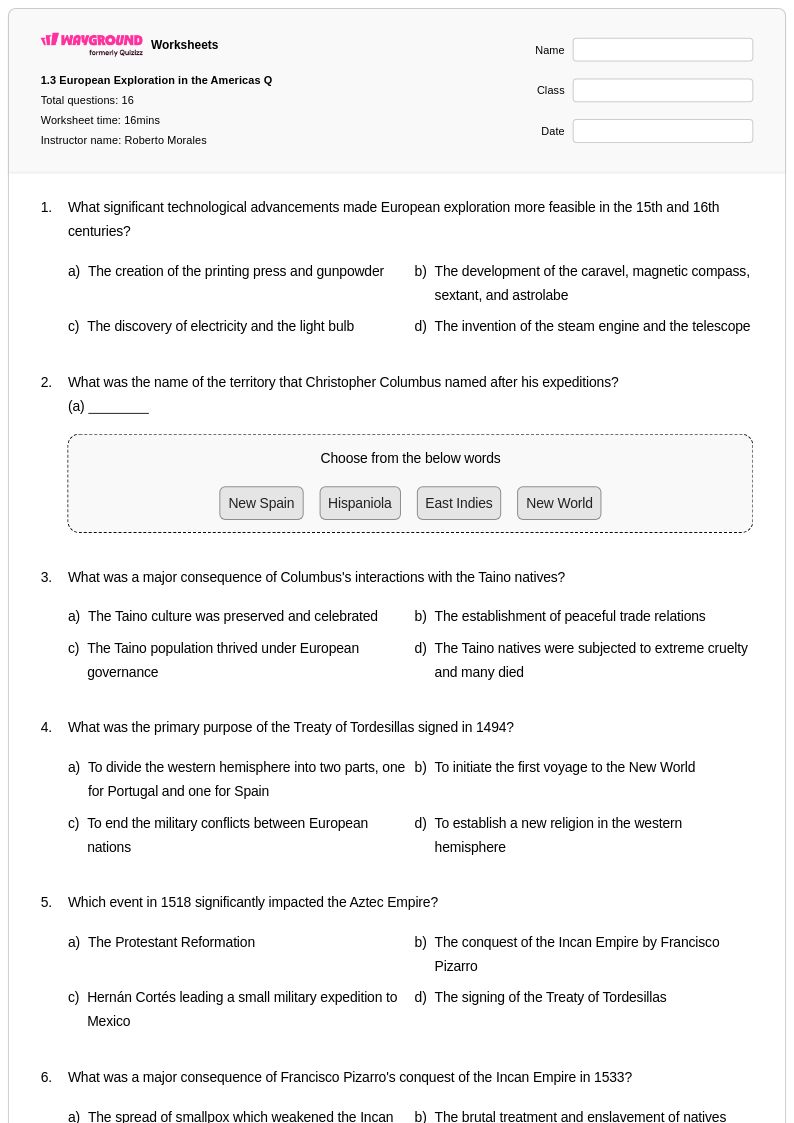
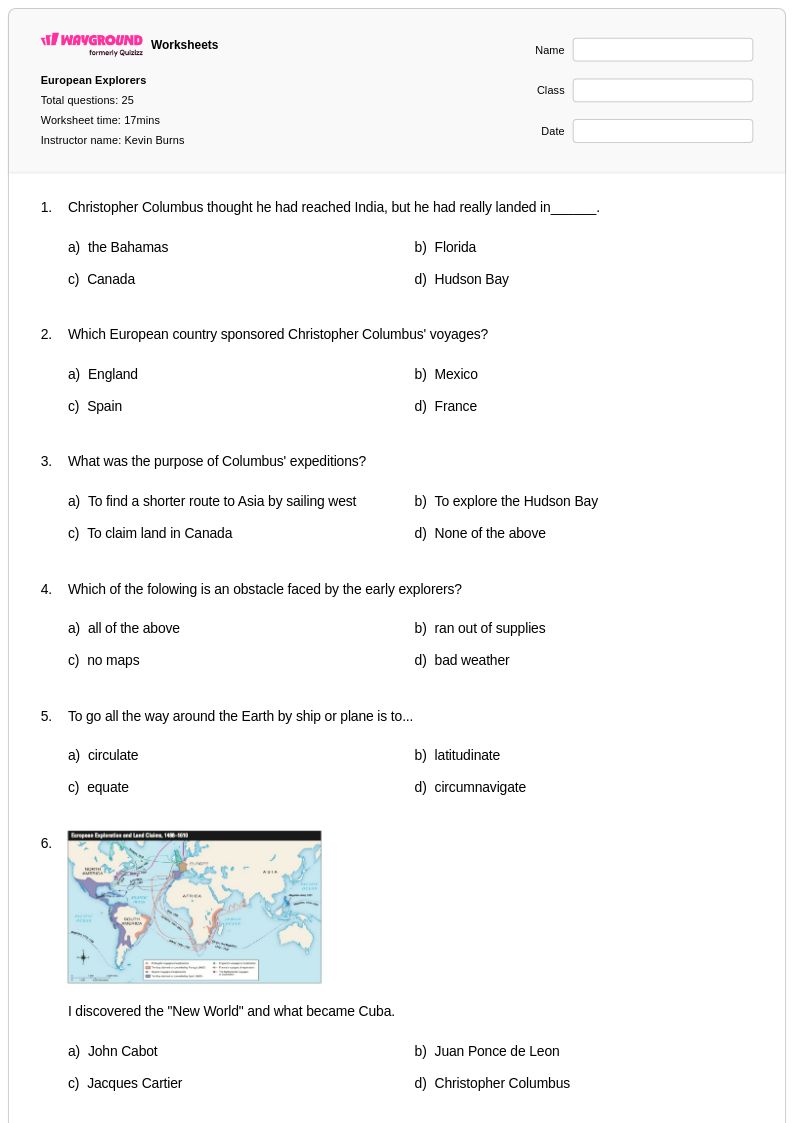
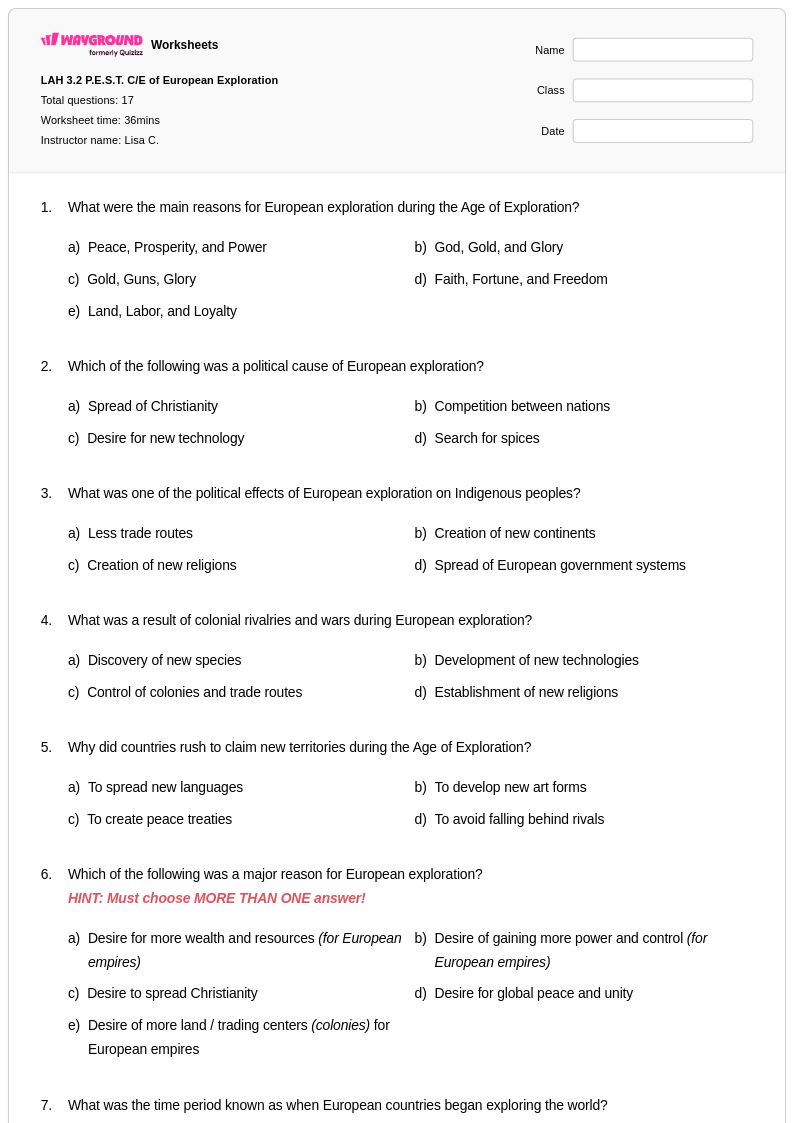
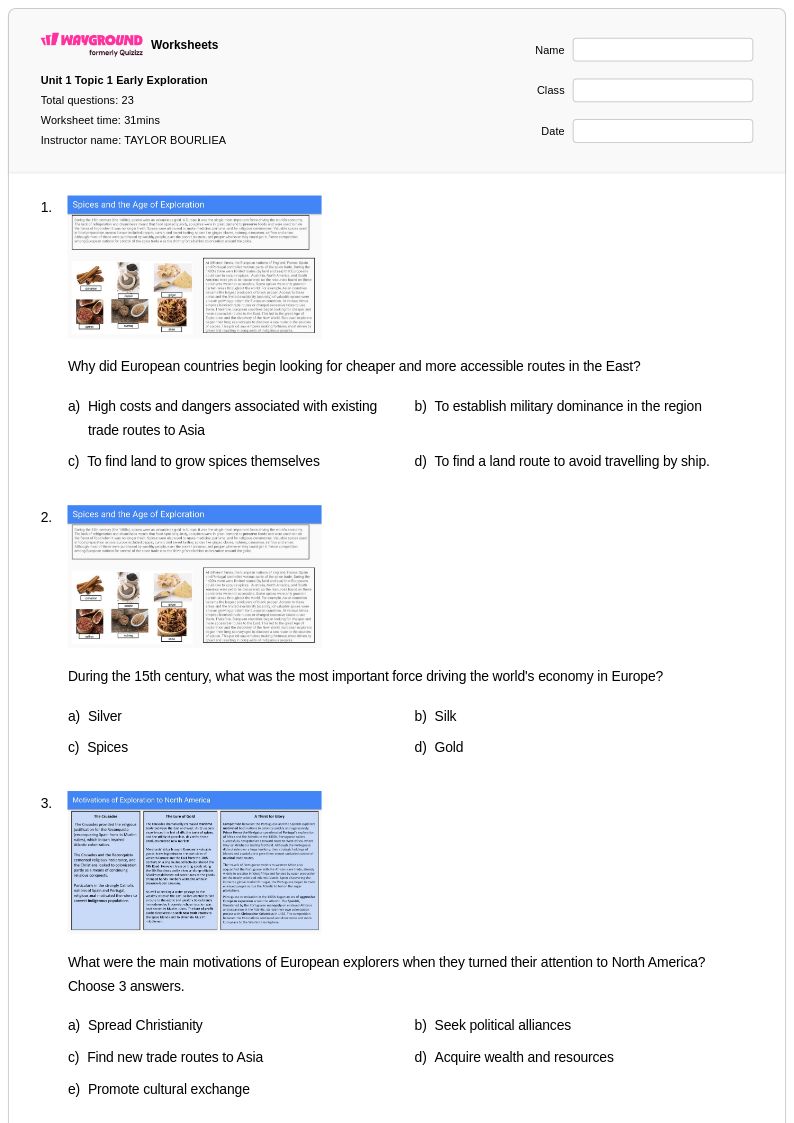
Free Printable Maps of European Exploration worksheets
Discover free printable worksheets and practice problems focusing on Maps of European Exploration to help students analyze historical routes, navigation techniques, and geographical discoveries with comprehensive answer keys available as downloadable PDFs.
Explore printable Maps of European Exploration worksheets
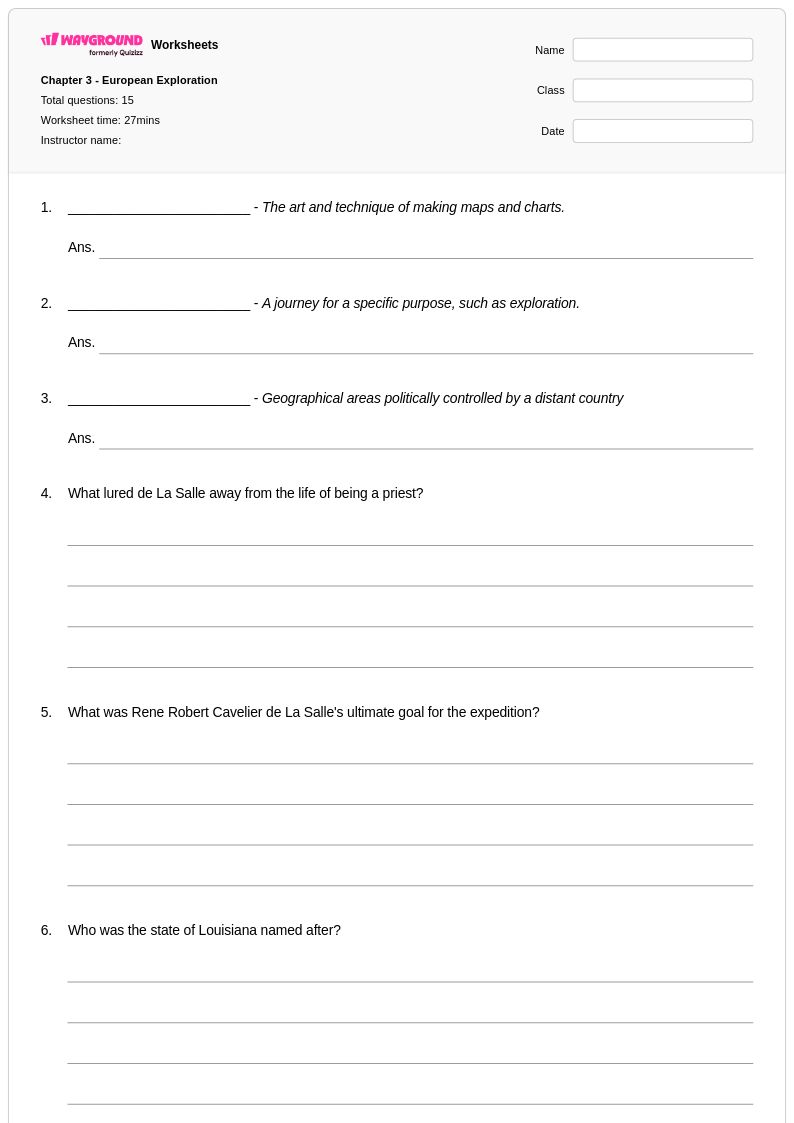
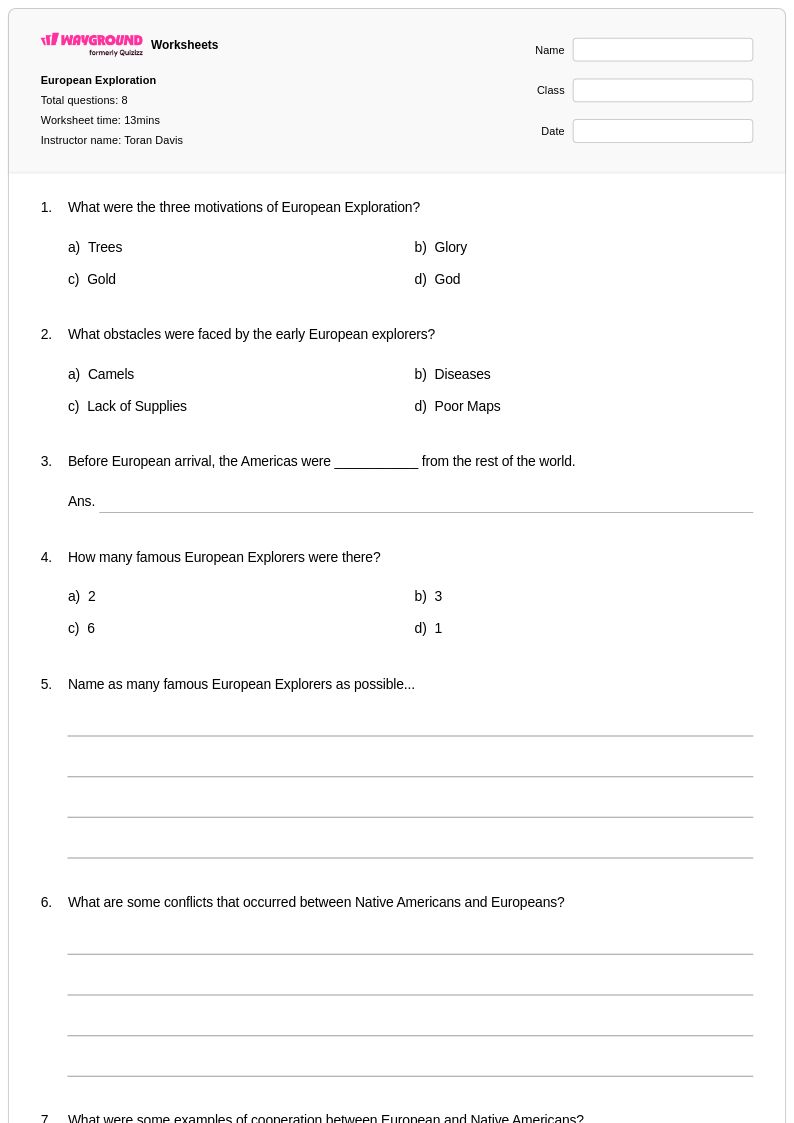
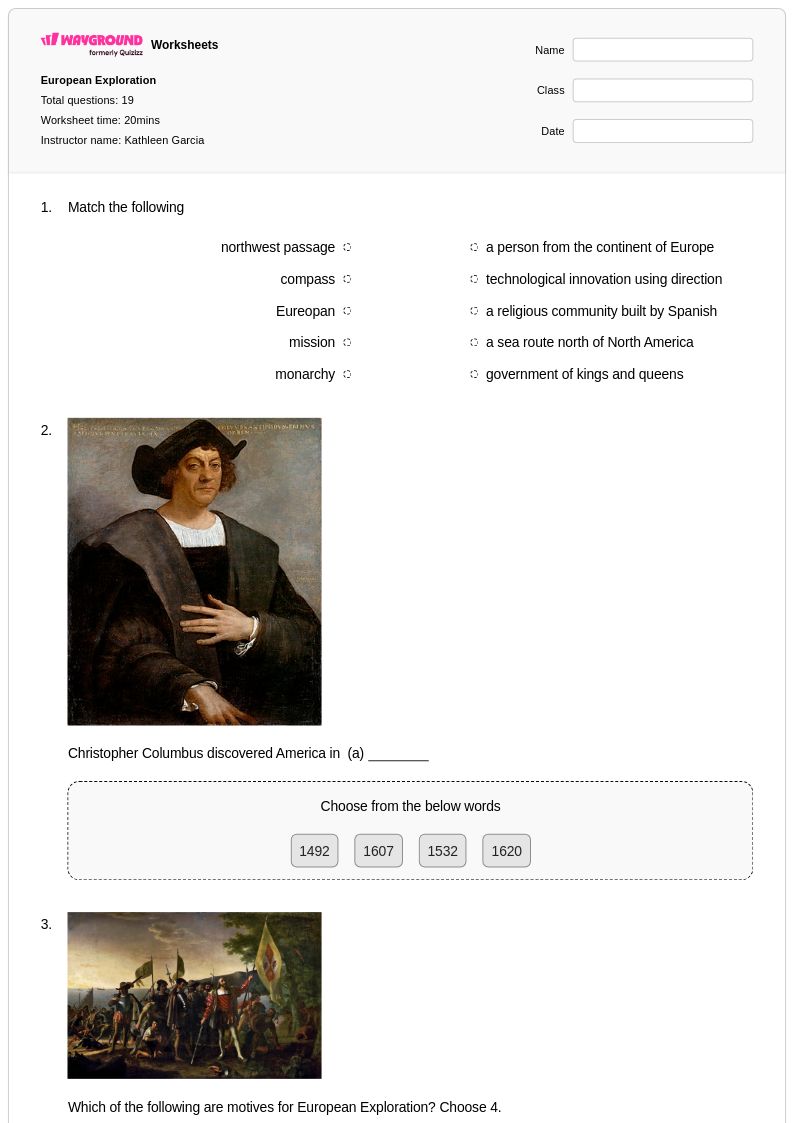
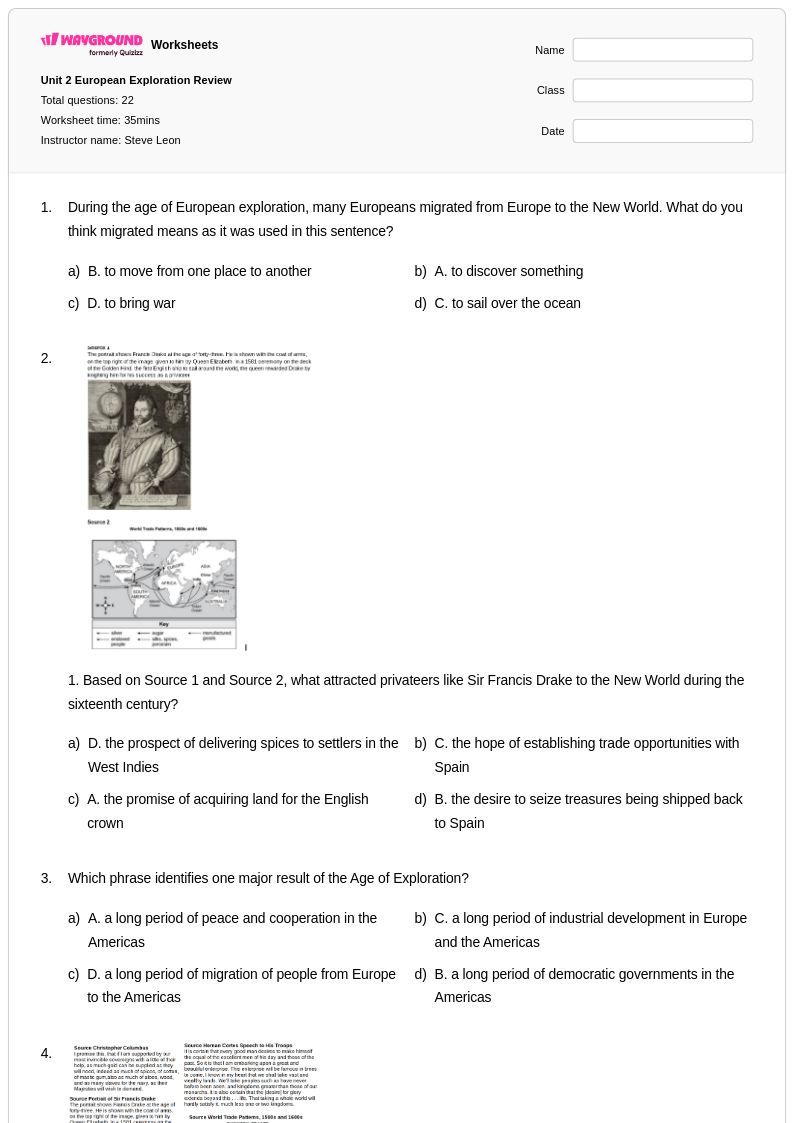
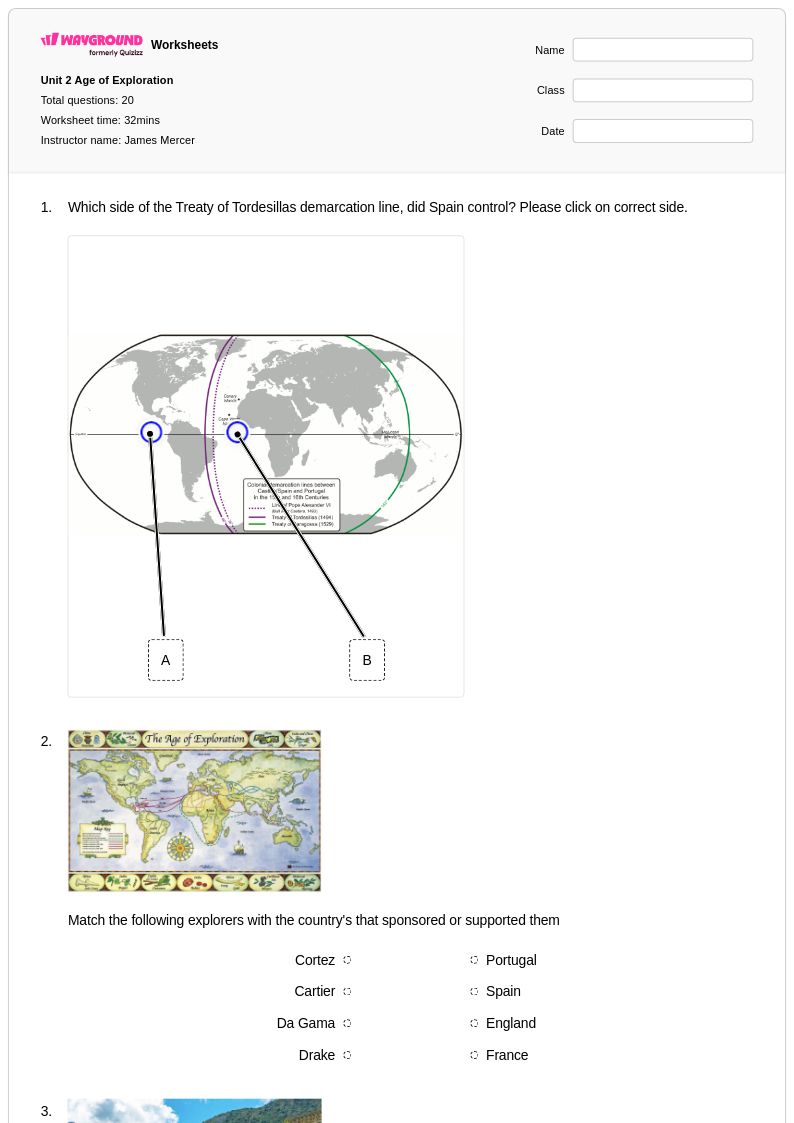
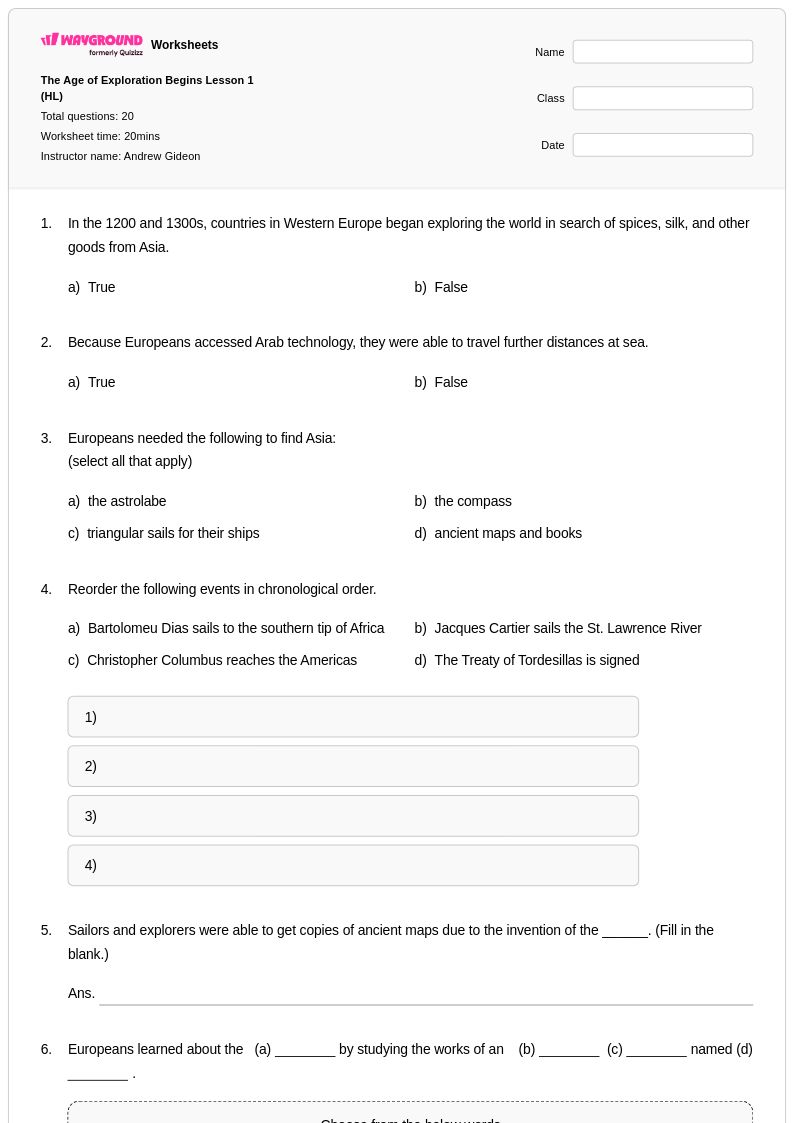
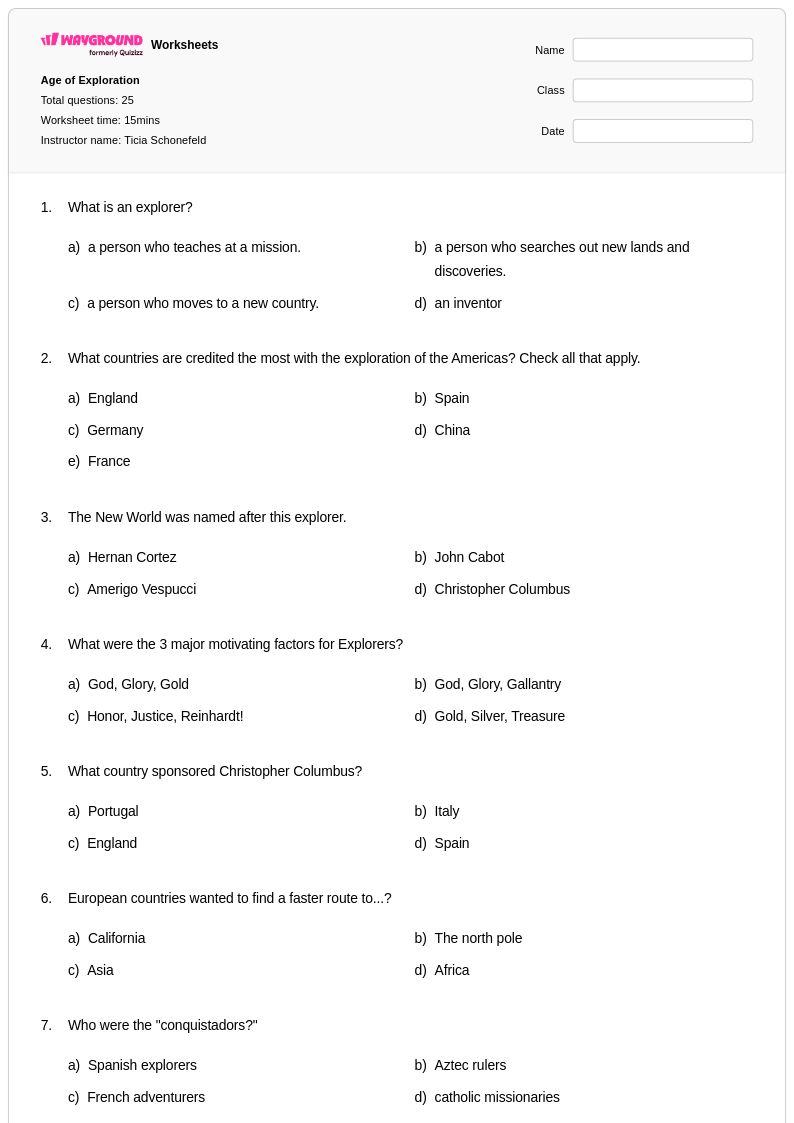
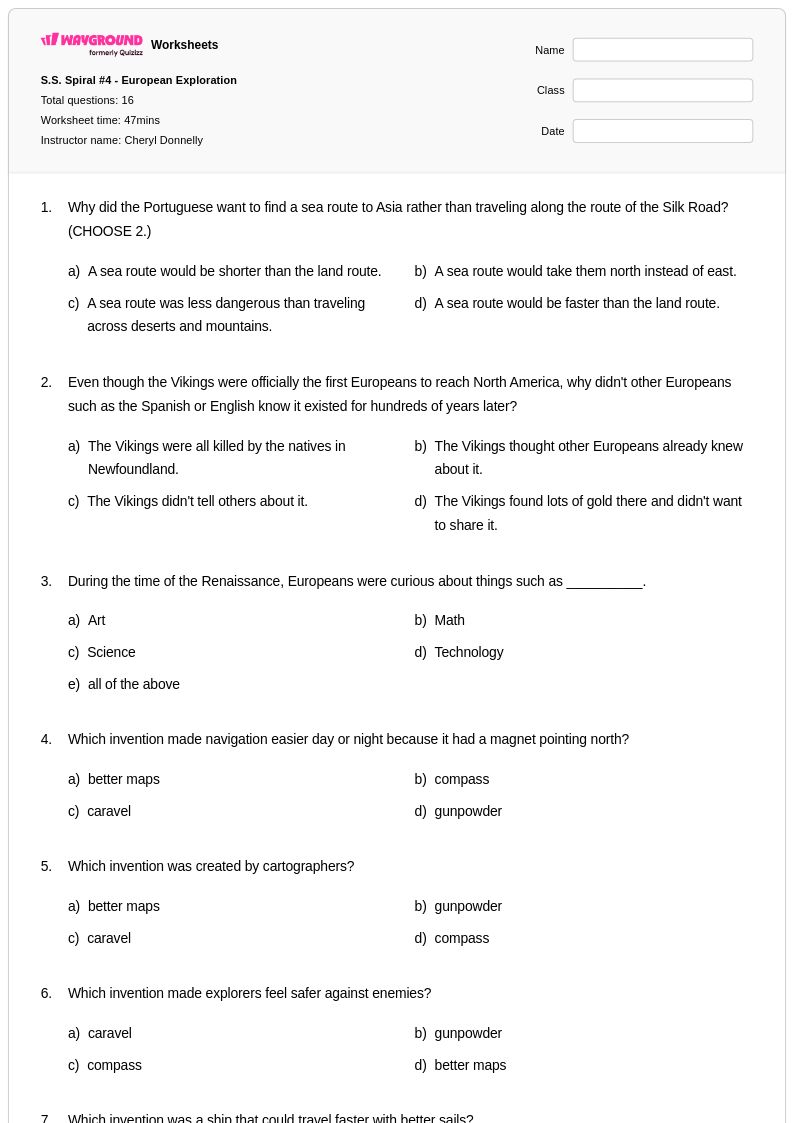
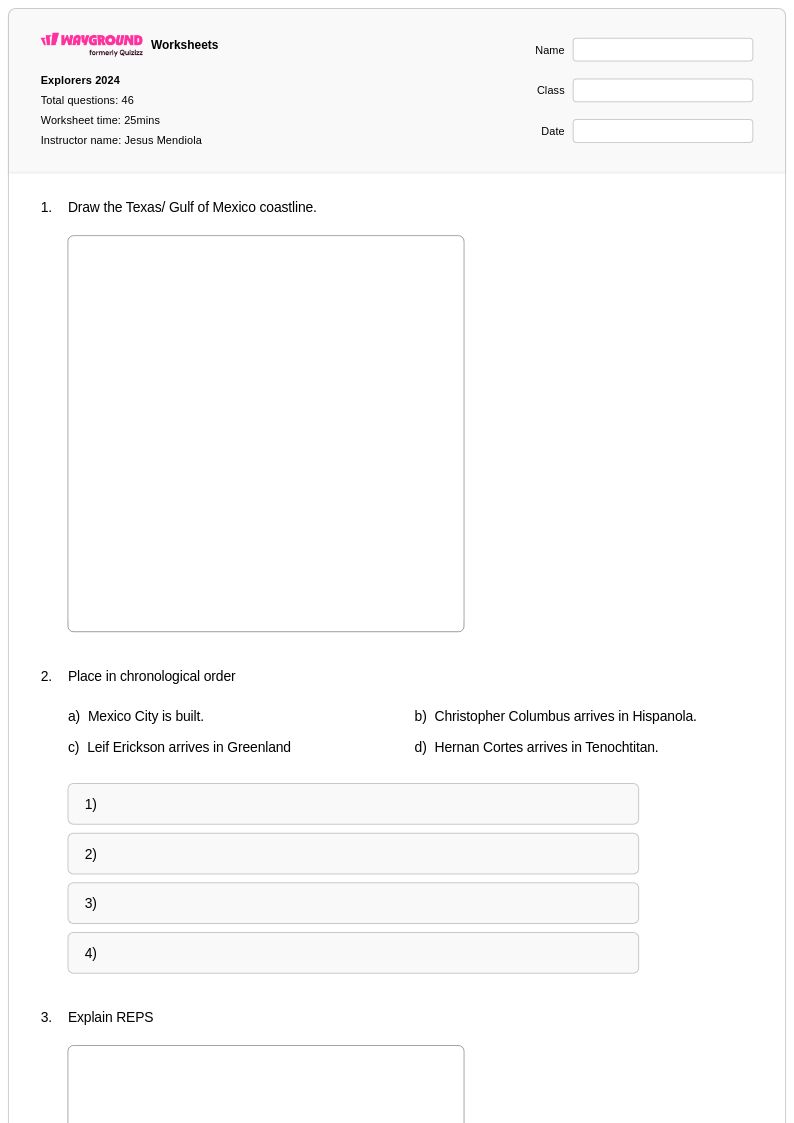
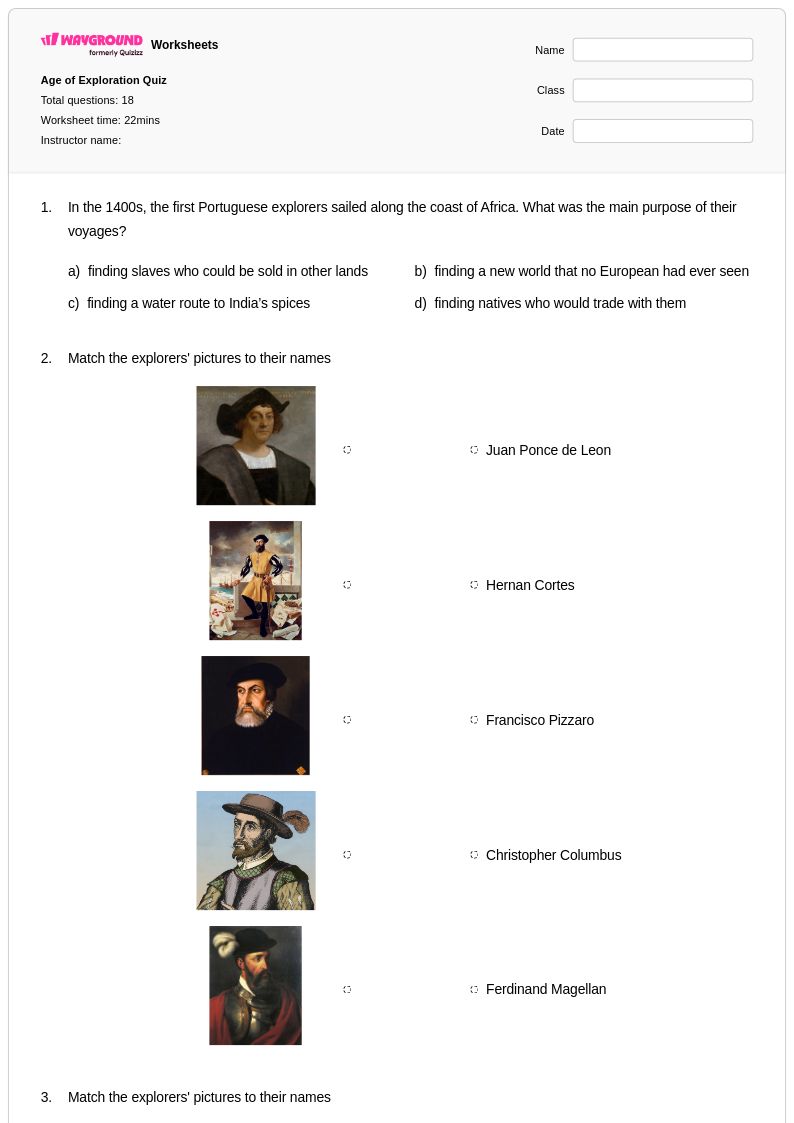
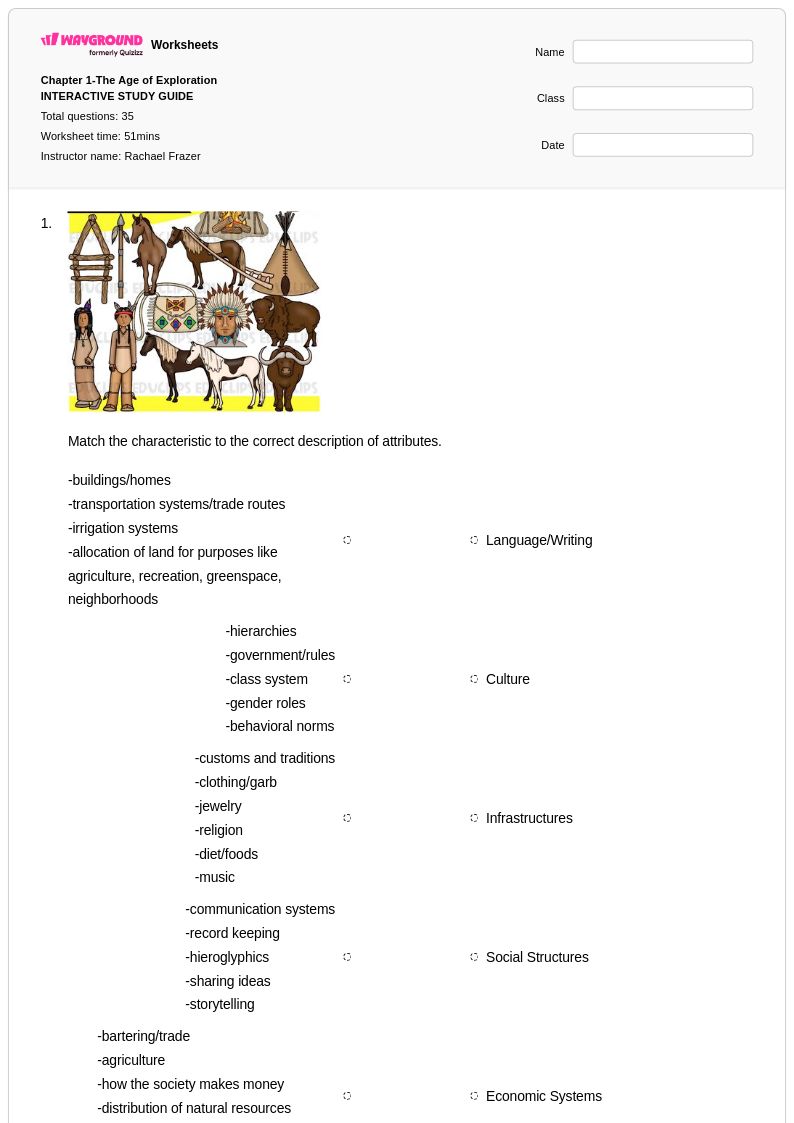
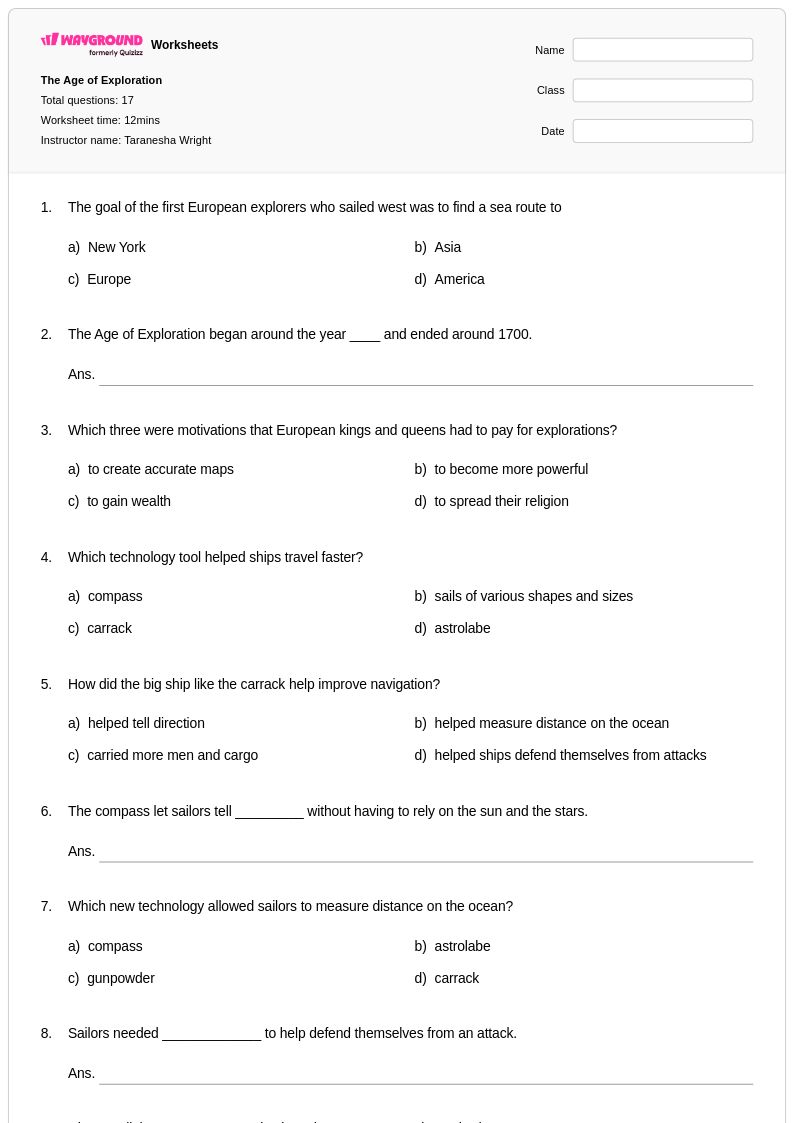
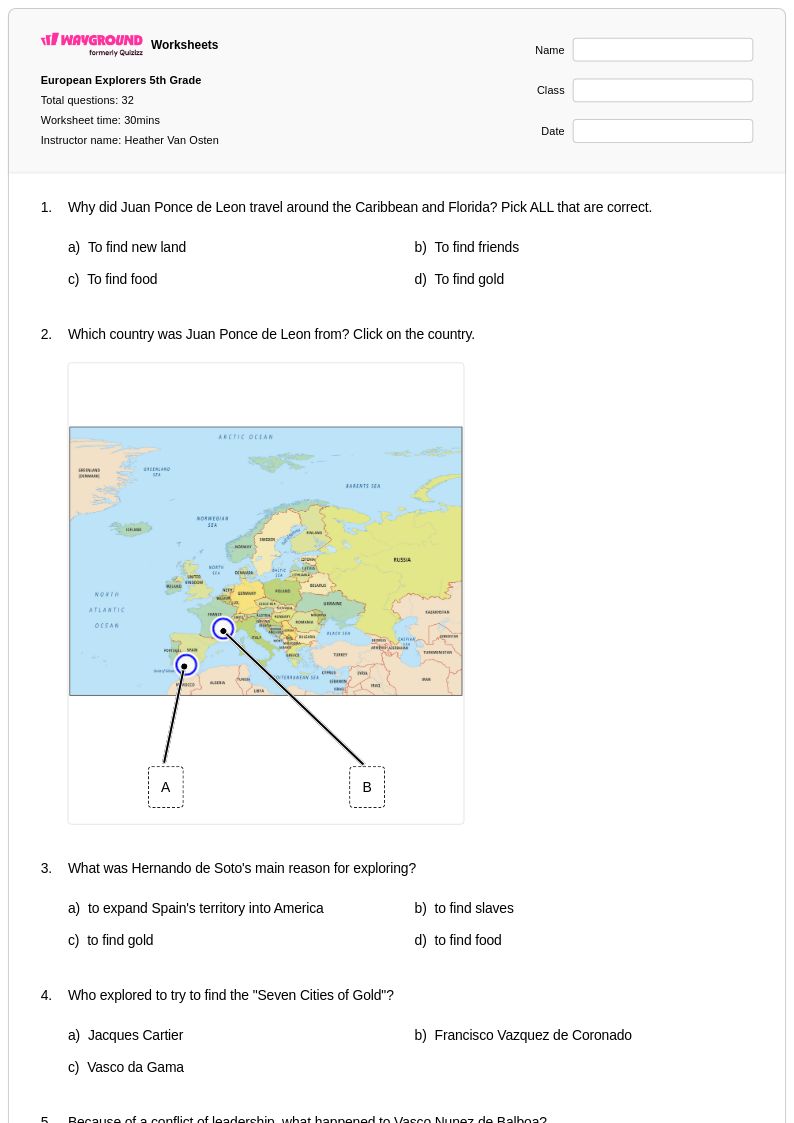
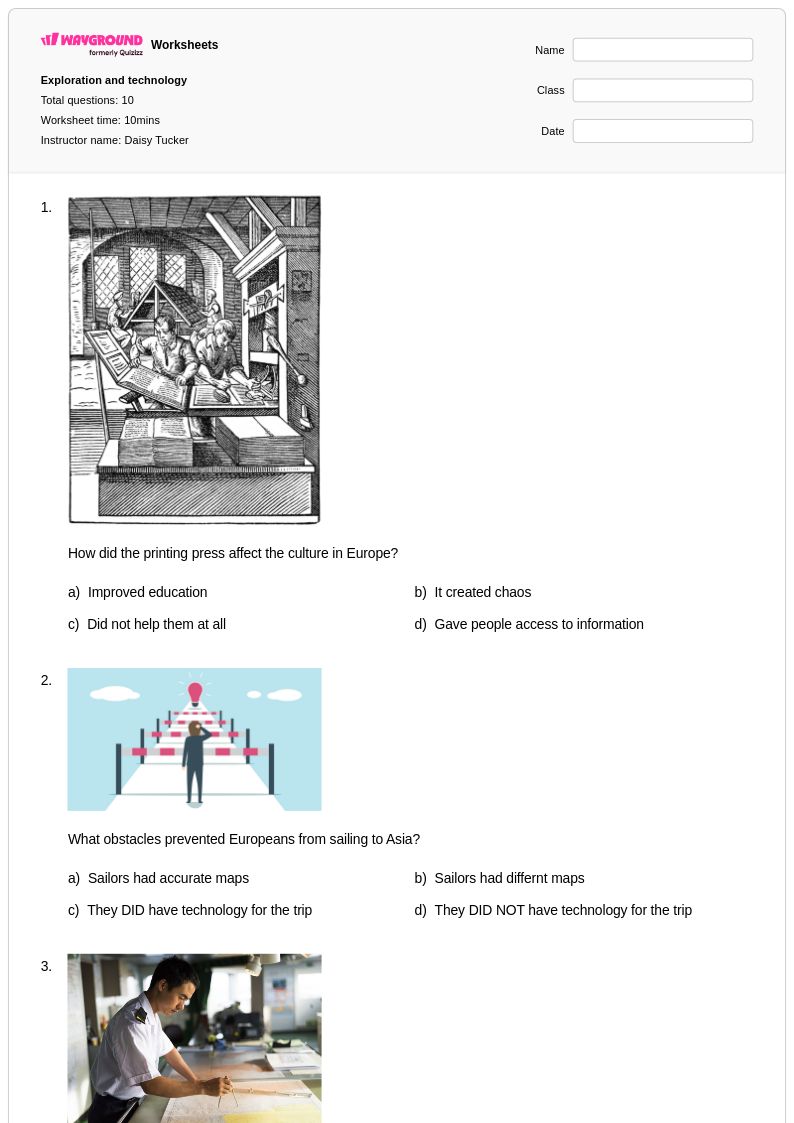
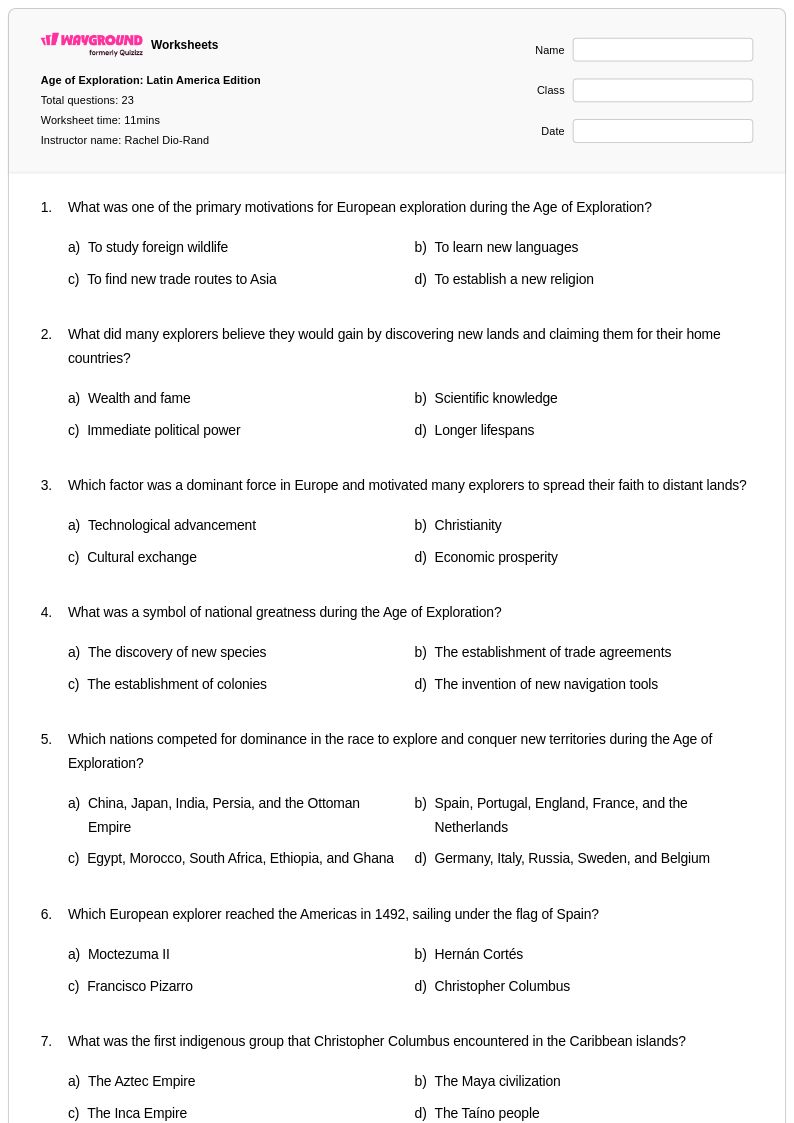
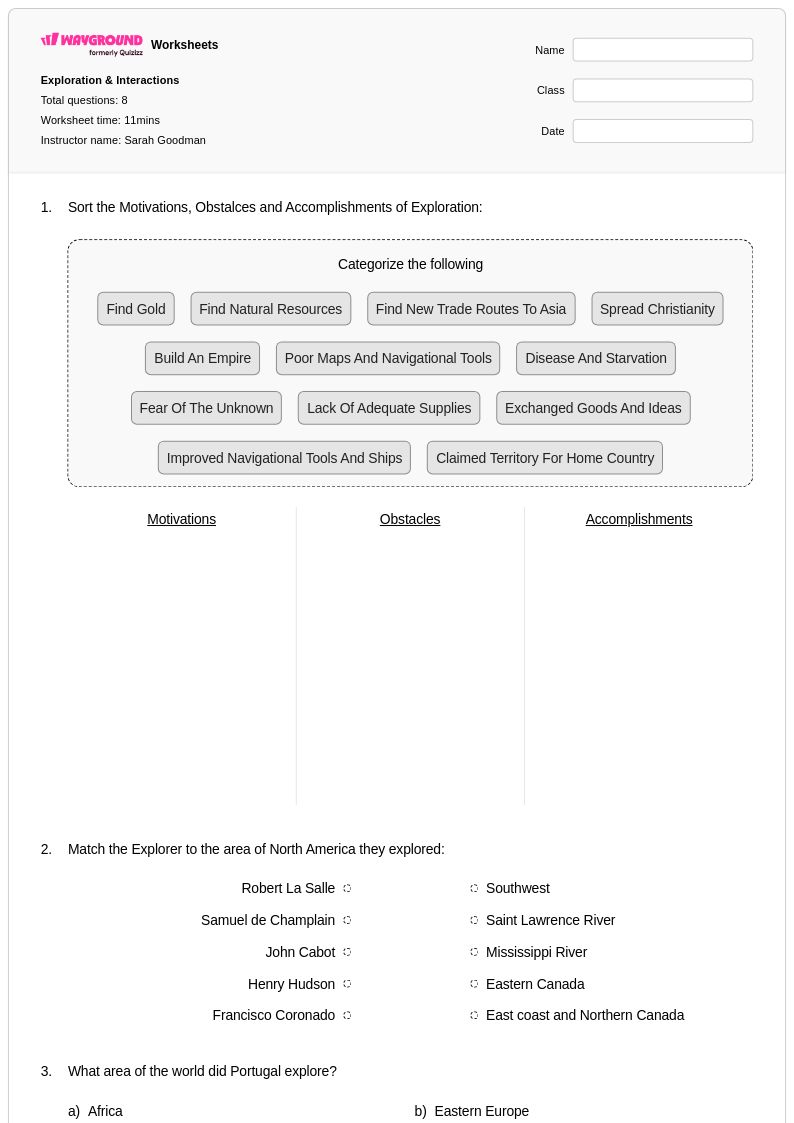
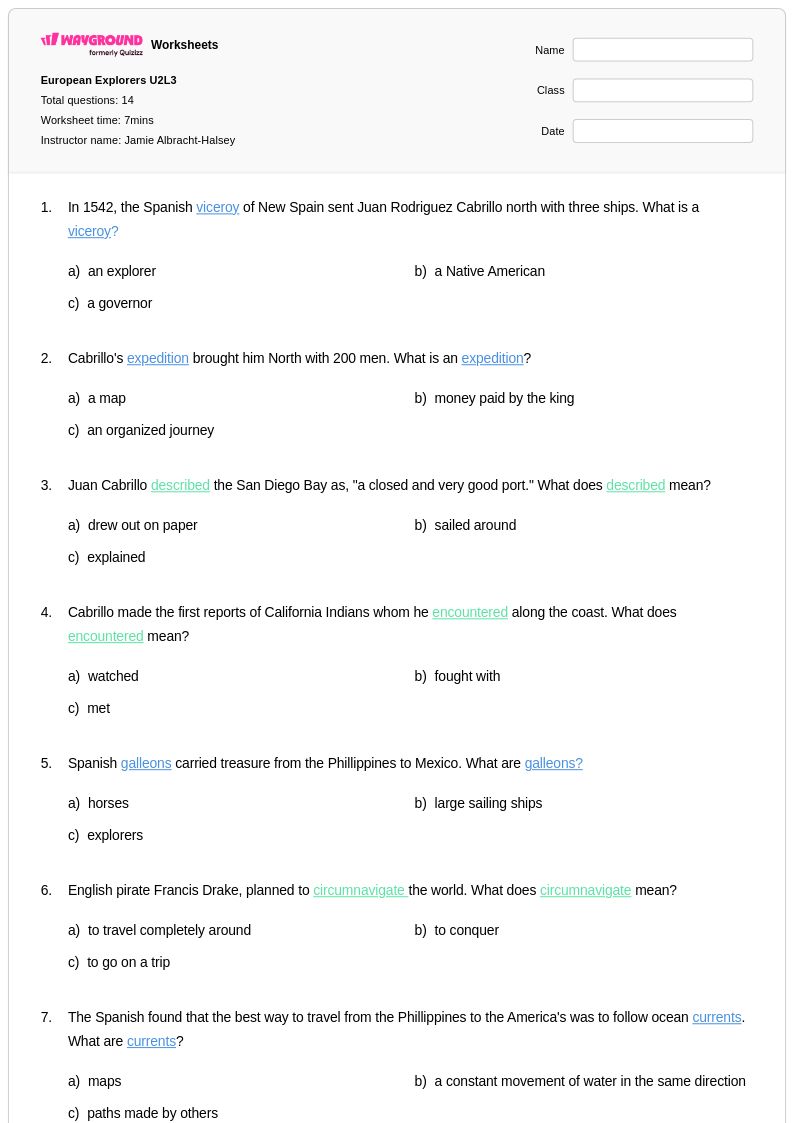
Maps of European Exploration worksheets available through Wayground (formerly Quizizz) provide students with comprehensive visual and analytical tools to understand the geographic scope and impact of European maritime expeditions from the 15th through 17th centuries. These educational resources strengthen critical map reading skills, spatial reasoning abilities, and historical analysis competencies as students trace the routes of explorers like Columbus, Vasco da Gama, and Magellan across previously uncharted waters. The worksheet collection includes detailed practice problems that require students to identify exploration routes, analyze the motivations behind specific voyages, and evaluate the consequences of European contact with indigenous populations. Each printable resource comes with a comprehensive answer key and is available as a free pdf download, enabling educators to seamlessly integrate these materials into their world history curriculum while accommodating diverse learning environments.
Wayground (formerly Quizizz) supports educators with an extensive collection of teacher-created resources focused on European exploration mapping, drawing from millions of worksheets that have been developed and refined by classroom professionals worldwide. The platform's robust search and filtering capabilities allow teachers to quickly locate materials that align with specific curriculum standards and learning objectives, while built-in differentiation tools enable customization based on individual student needs and ability levels. These resources are available in both printable and digital formats, including downloadable pdf versions that facilitate flexible lesson planning and accommodate various instructional approaches. Teachers can effectively utilize these materials for initial skill introduction, targeted remediation for struggling learners, enrichment activities for advanced students, and ongoing practice that reinforces geographic literacy and historical thinking skills essential for understanding the transformative period of European maritime exploration.
FAQs
How do I teach students to read and interpret historical exploration maps?
Start by grounding students in map fundamentals: scale, compass rose, legend, and coordinate systems. Then introduce historical context by having students compare period maps (like portolan charts) with modern equivalents to highlight what explorers knew versus what they discovered. Walking students through a single voyage, such as Columbus's 1492 route, before asking them to analyze others independently helps build the spatial reasoning needed for broader comparative work.
What exercises help students practice analyzing European exploration routes?
Effective practice tasks include tracing explorer routes on blank maps, identifying key waypoints and geographic obstacles, and comparing the routes of multiple explorers side by side to identify patterns. Students also benefit from connecting routes to motivations, such as linking Portugal's eastward routes to the spice trade, which reinforces both geographic literacy and historical analysis in the same exercise.
What common mistakes do students make when analyzing maps of European exploration?
Students frequently conflate the order of voyages or misattribute discoveries to the wrong explorer, especially when multiple expeditions followed similar routes. Another common error is interpreting European-drawn maps as objective records rather than recognizing that they reflect European perspectives and often omit or distort indigenous territories. Students also struggle to use map scale accurately when estimating voyage distances and travel time.
How can I use Maps of European Exploration worksheets to assess student understanding?
Use map-labeling tasks to assess recall of key routes and explorers, and open-response questions to evaluate whether students can explain the geographic, economic, and political motivations behind specific voyages. Asking students to evaluate the consequences of European contact with indigenous populations on the same map activity integrates geographic and historical thinking into a single assessable task. Answer keys included with these worksheets make grading consistent and efficient.
How do I use Wayground's Maps of European Exploration worksheets in my classroom?
These worksheets are available as both printable PDFs and in digital formats, making them suitable for traditional classroom settings and technology-integrated environments alike. You can assign them as standalone practice, use them as a guided activity during instruction, or host them as a quiz directly on Wayground. For students who need additional support, Wayground's built-in accommodation tools allow you to enable read-aloud, extended time, or reduced answer choices on an individual basis without affecting other students' experiences.
How do I differentiate Maps of European Exploration instruction for diverse learners?
For students who struggle with geographic literacy, pre-teaching map vocabulary and providing partially completed maps with labeled continents and oceans reduces cognitive overload. Advanced students can be challenged with comparative analysis tasks, such as evaluating how different explorers' routes reflect competing national interests. On Wayground, teachers can apply accommodations like extended time, read-aloud, or reduced answer choices to individual students, ensuring differentiated support without singling anyone out in the classroom.