Free Printable Chemistry Calculations Worksheets for Class 9
Class 9 chemistry calculations worksheets from Wayground provide comprehensive practice problems and answer keys to help students master stoichiometry, molarity, and chemical equation balancing through engaging printable PDFs and free worksheets.
Explore printable Chemistry Calculations worksheets for Class 9
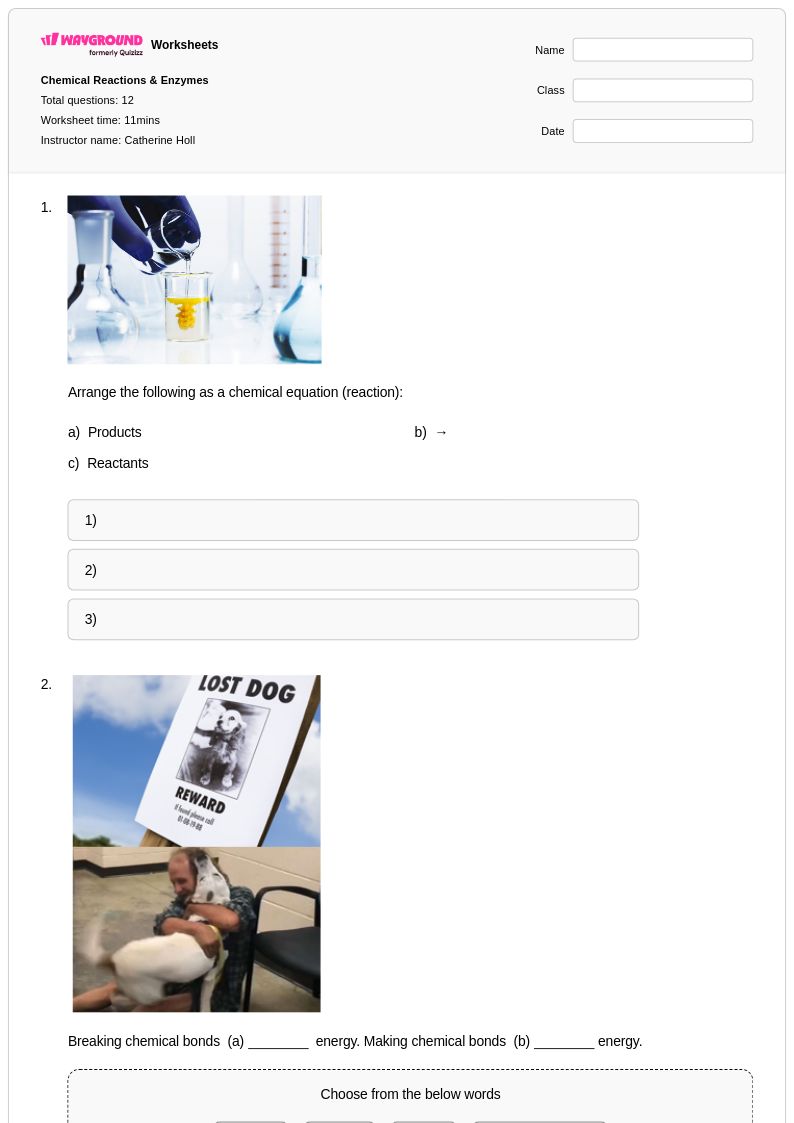
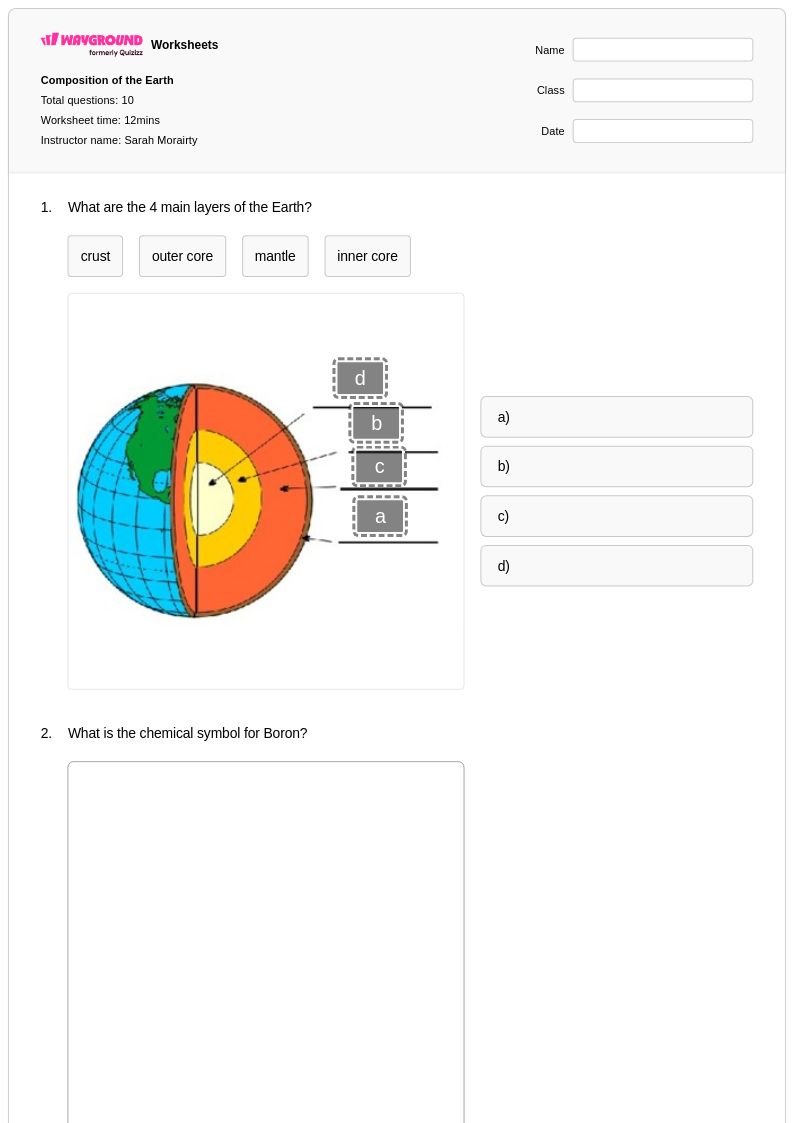
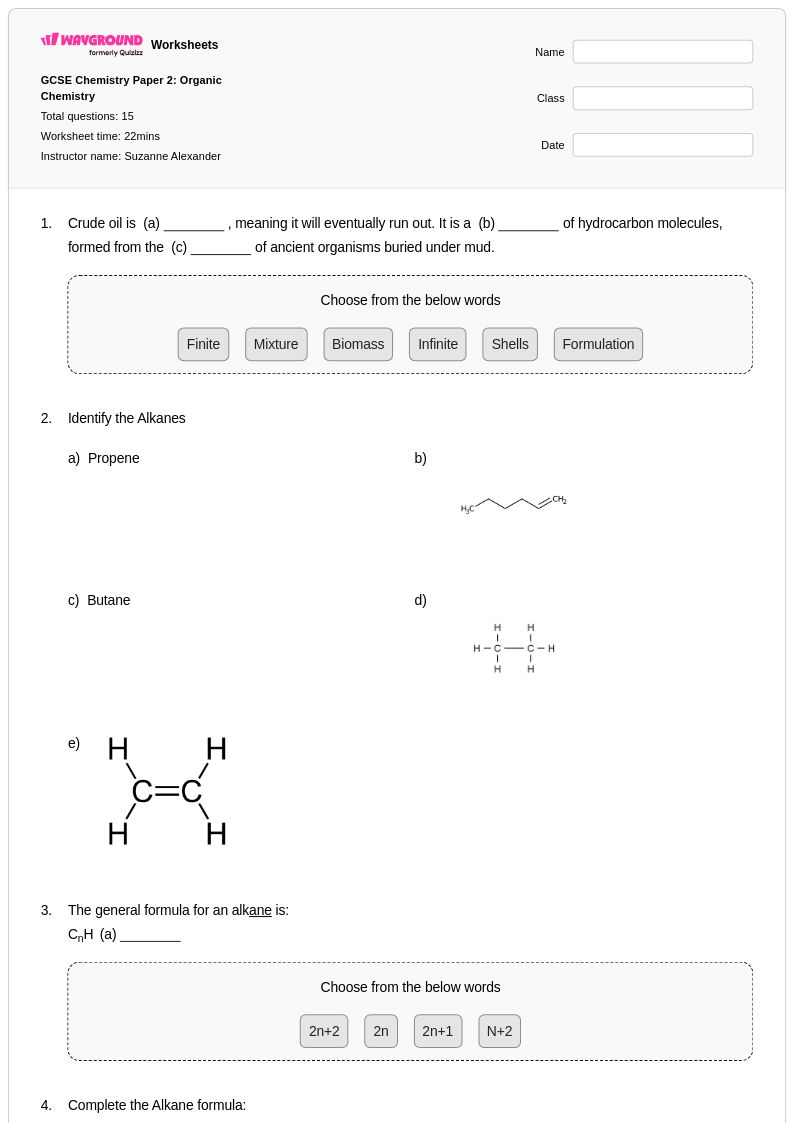
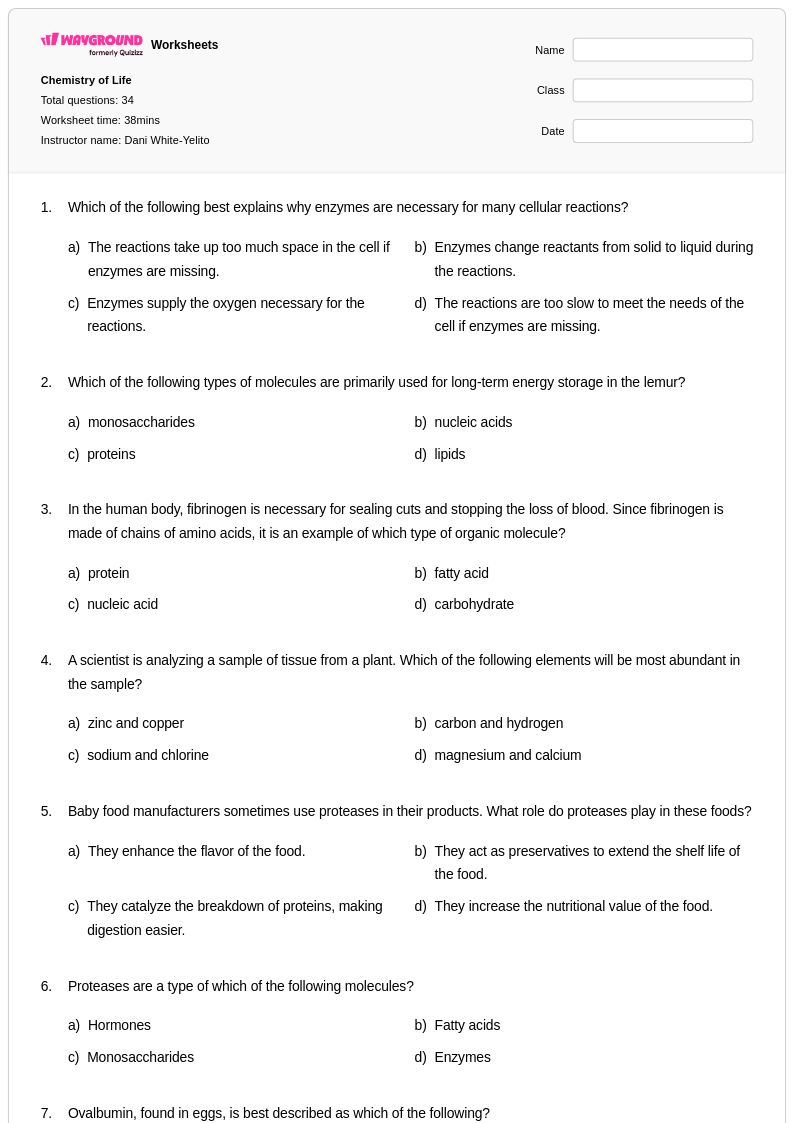
Class 9 chemistry calculations worksheets available through Wayground (formerly Quizizz) provide comprehensive practice opportunities for students mastering quantitative problem-solving in chemistry. These worksheets strengthen essential skills including stoichiometric calculations, molar mass determinations, percent composition problems, and empirical formula derivations that form the foundation of chemical analysis. Students develop proficiency in dimensional analysis techniques while working through practice problems that range from basic unit conversions to complex multi-step calculations involving chemical equations. Each worksheet collection includes detailed answer keys that guide students through systematic problem-solving approaches, and the free printables are available in convenient pdf format for seamless classroom integration or independent study sessions.
Wayground (formerly Quizizz) supports chemistry educators with millions of teacher-created resources specifically designed for Class 9 chemistry calculations instruction. The platform's advanced search and filtering capabilities allow teachers to quickly locate worksheets aligned with specific curriculum standards, while differentiation tools enable customization based on individual student needs and skill levels. Teachers can access materials in both printable and digital formats, including downloadable pdf versions that facilitate flexible lesson planning and homework assignments. These comprehensive worksheet collections prove invaluable for targeted skill practice, remediation of challenging calculation concepts, and enrichment opportunities for advanced learners, ensuring that all students develop the quantitative reasoning abilities essential for success in chemistry coursework.
FAQs
How do I teach stoichiometry and chemistry calculations effectively?
Start by building students' comfort with dimensional analysis and unit conversions before introducing mole ratios and stoichiometric relationships. Use worked examples that break multi-step problems into discrete stages, so students can see exactly where each number comes from and why. Once the process is explicit, move students toward independent problem-solving using practice sets that gradually increase in complexity, from single-step molar mass calculations to limiting reagent and percent yield problems.
What exercises help students practice chemistry calculations like molarity and gas laws?
Structured practice sets that isolate one calculation type at a time are most effective for building fluency — for example, a worksheet focused solely on molarity (moles per liter) before mixing in dilution or titration problems. Gas law practice should pair formula identification with unit consistency checks, since errors most often stem from mixing pressure or temperature units. Problems that require students to show each step of dimensional analysis reinforce the reasoning process, not just the final answer.
What mistakes do students commonly make with chemistry calculations?
The most frequent errors in chemistry calculations involve unit inconsistency — for example, using Celsius instead of Kelvin in gas law equations, or forgetting to convert grams to moles before applying stoichiometric ratios. Students also commonly invert mole ratios from balanced equations, especially in limiting reagent problems. A strong diagnostic approach is to examine student work step-by-step rather than checking only final answers, since correct answers sometimes mask flawed reasoning.
How can I use chemistry calculations worksheets to support students at different skill levels?
Tiered problem sets work well: assign foundational formula-application problems to students who need to build procedural fluency, while directing advanced learners toward multi-step problems involving thermodynamic equations or chemical equilibrium. On Wayground, teachers can apply individual accommodations such as read aloud support for students who struggle with dense problem text, or reduced answer choices for multiple-choice items to lower cognitive load for students who need it. These settings are saved per student and can be reused across sessions without affecting how other students experience the worksheet.
How do I use Wayground's chemistry calculations worksheets in my classroom?
Wayground's chemistry calculations worksheets are available as printable PDFs for traditional classroom use and in digital formats for technology-integrated environments, including the option to host them as a quiz directly on Wayground. Teachers can assign them as guided practice during class, independent homework sets, or formative assessments to gauge mastery before moving to the next topic. Each worksheet includes a complete answer key, supporting both teacher-led review and student self-assessment.
How do I help students who consistently struggle with multi-step chemistry calculations?
Students who struggle with multi-step problems often lack a consistent problem-solving framework rather than a gap in content knowledge. Teaching a standard approach — identify what is given, identify what is asked, choose the correct formula, convert units, then calculate — reduces working memory load and makes errors easier to isolate. Targeted remediation worksheets that focus on a single weak area, such as unit conversion or mole-to-gram conversion, are more effective than re-assigning general review sets.