
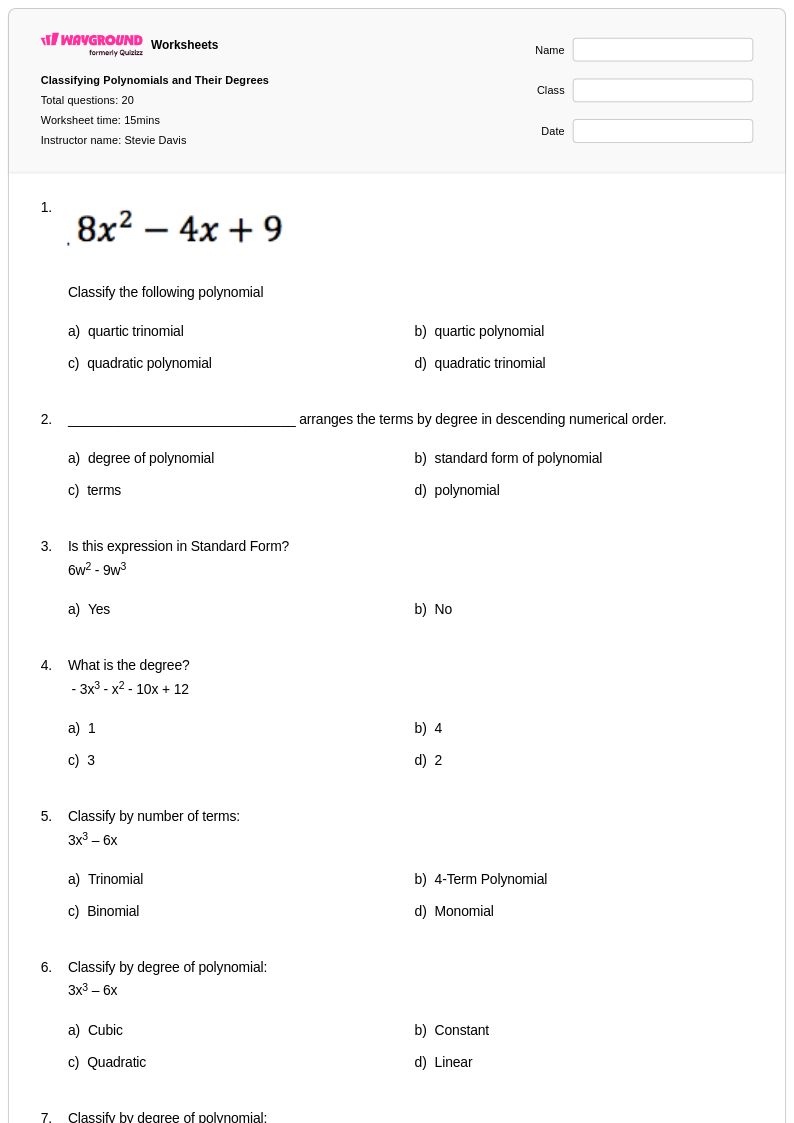
20Q
9th
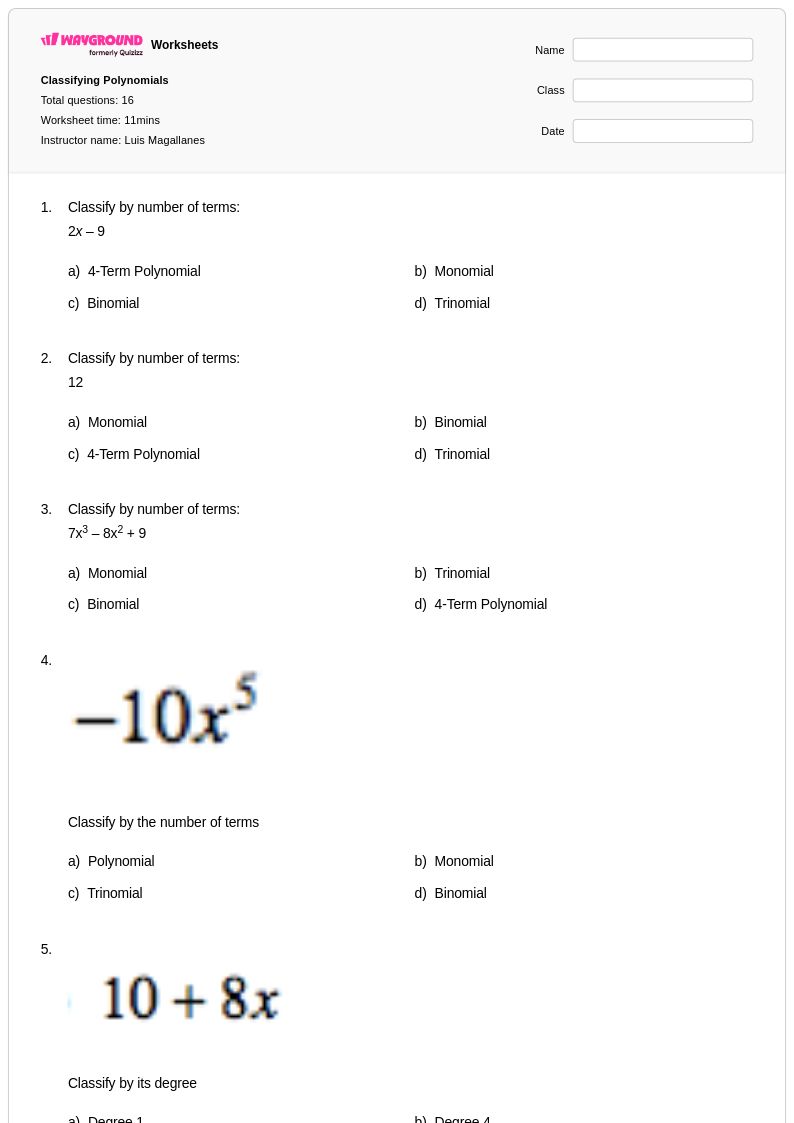
16Q
8th - 10th
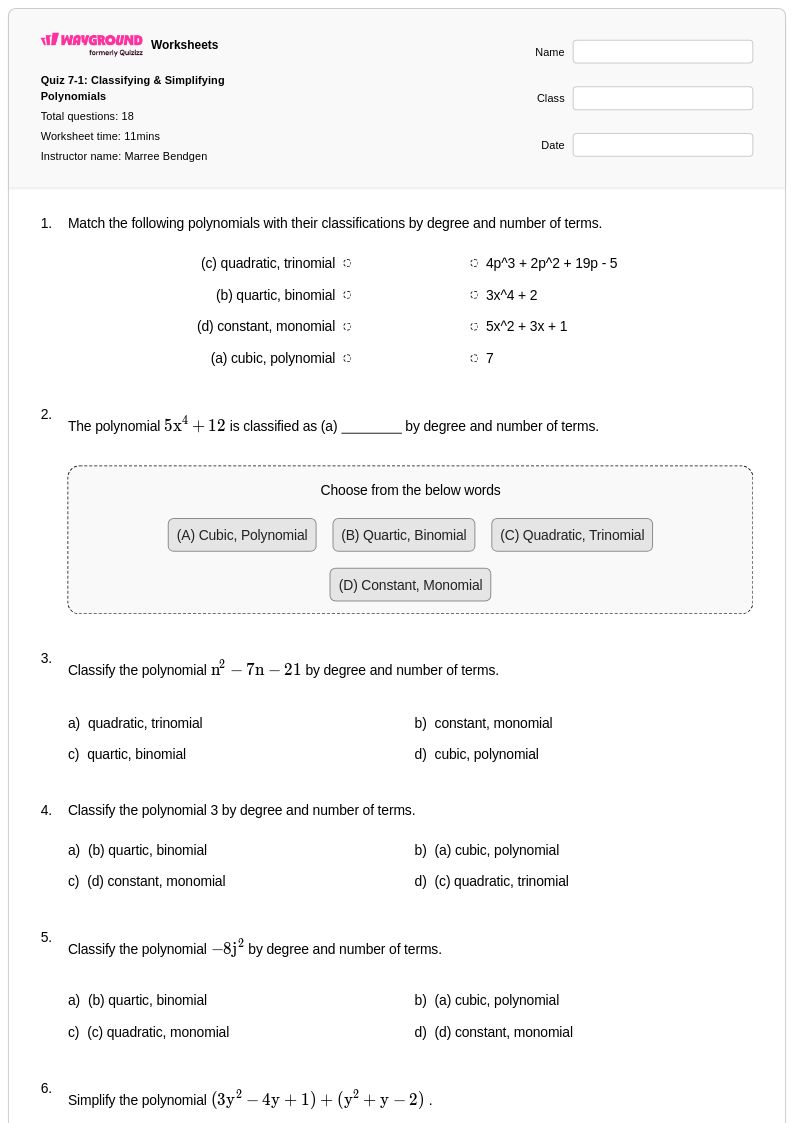
18Q
8th
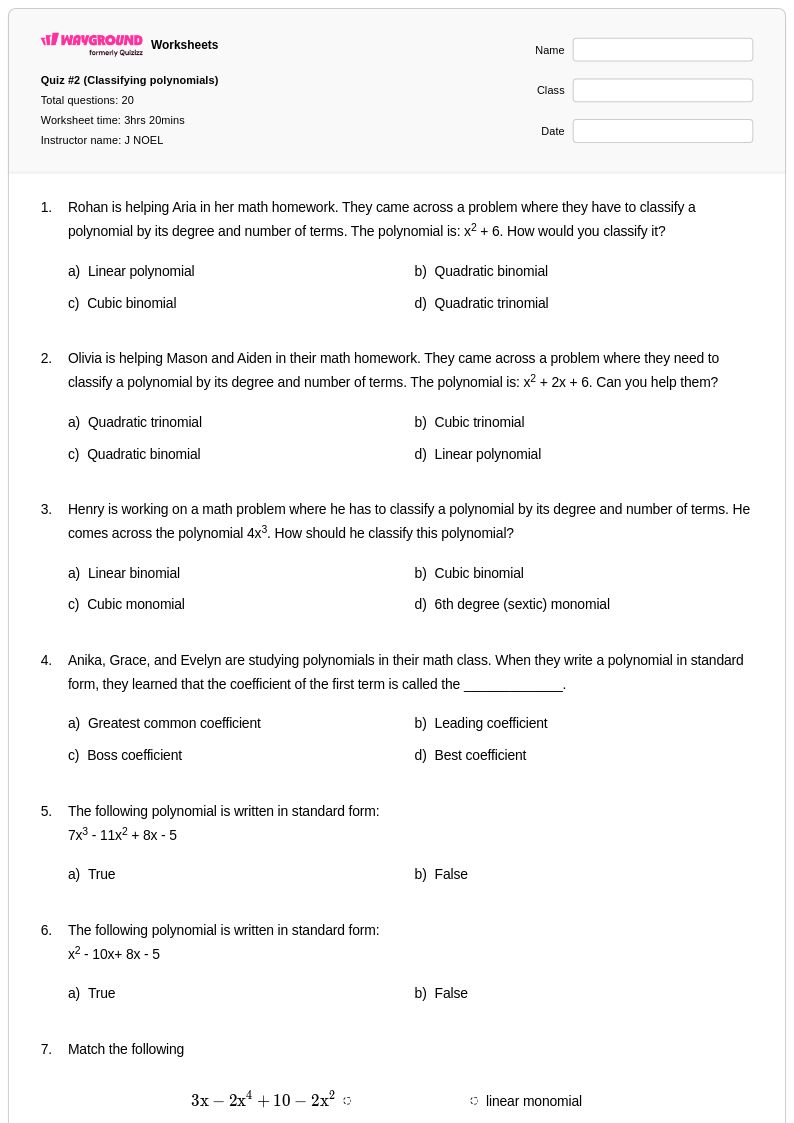
20Q
11th
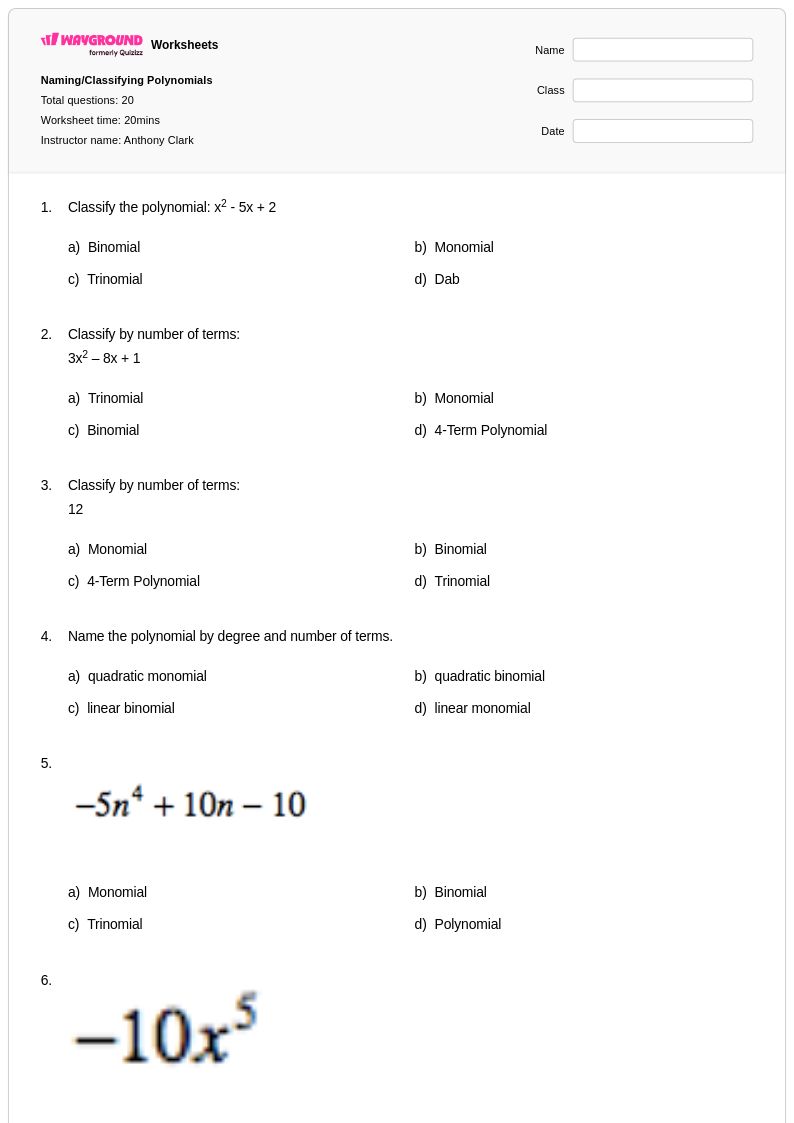
20Q
9th - Uni
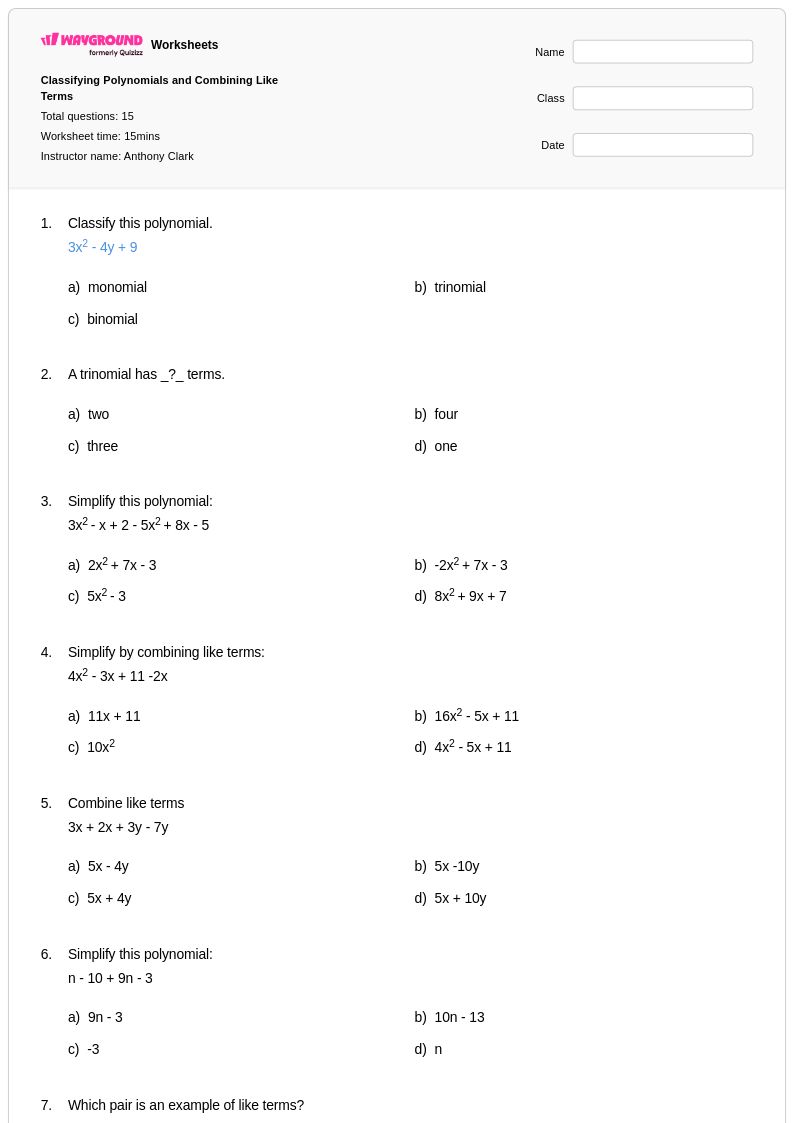
15Q
9th - Uni
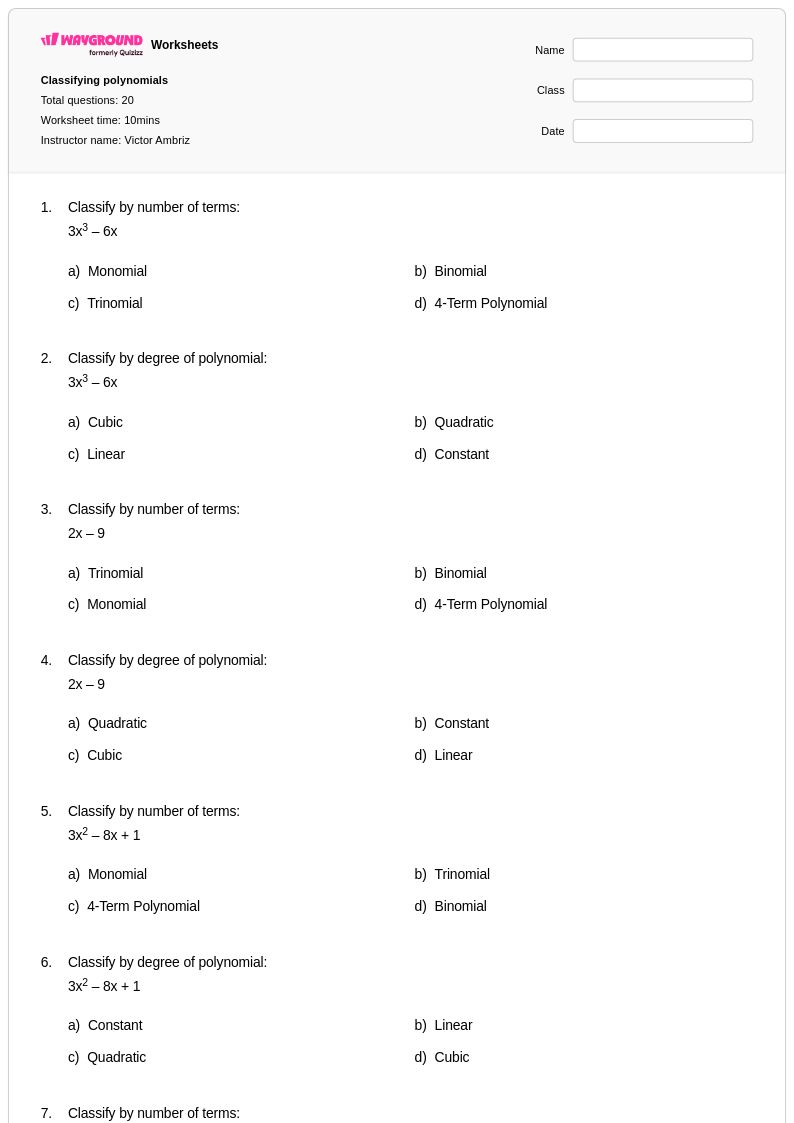
20Q
11th
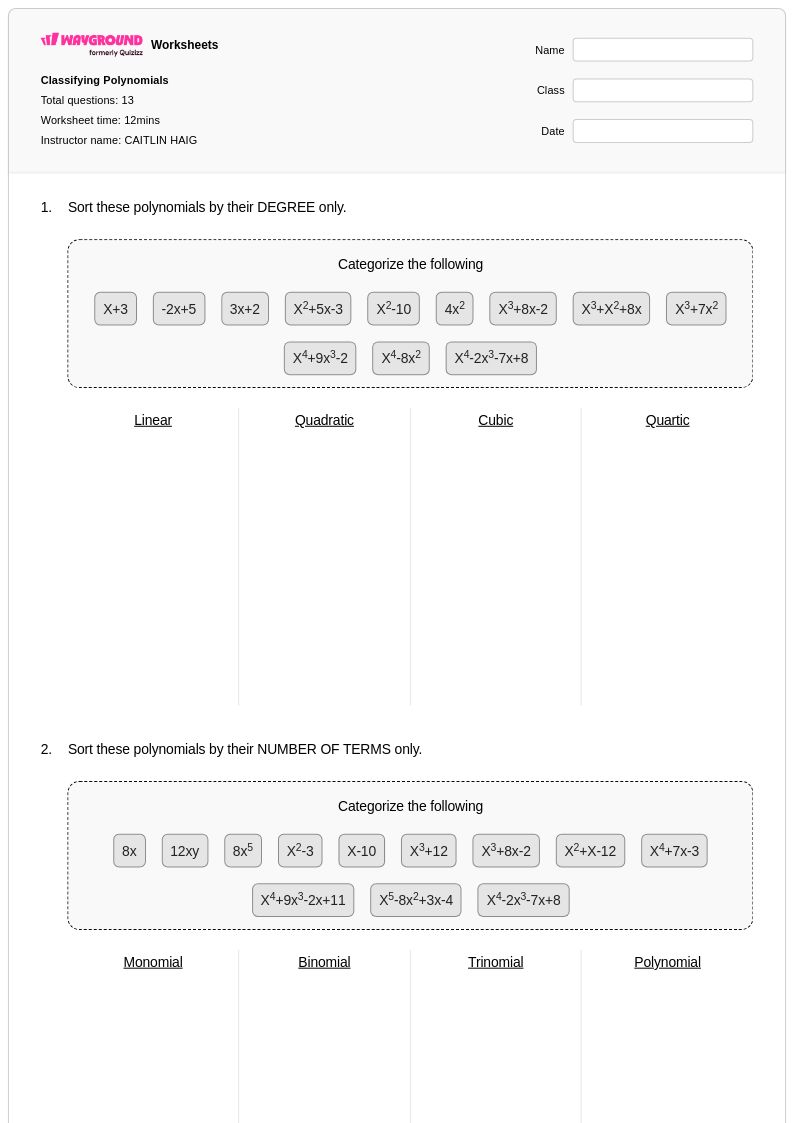
13Q
12th
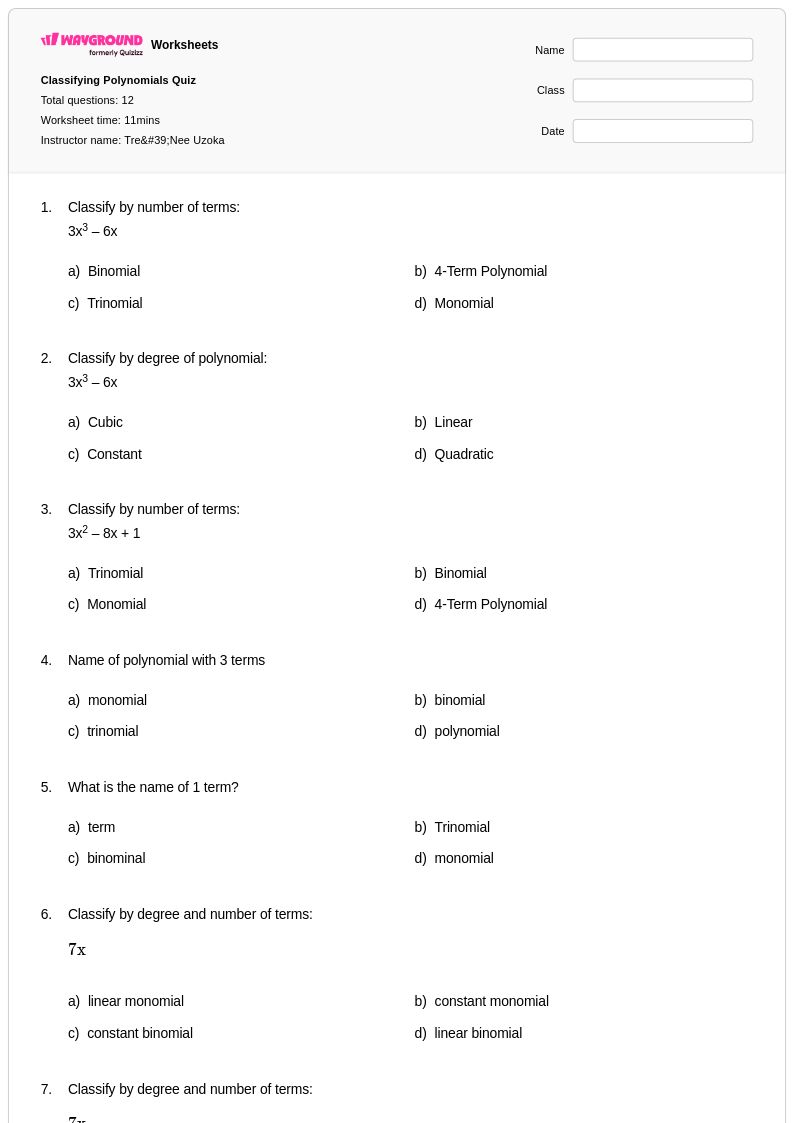
12Q
9th
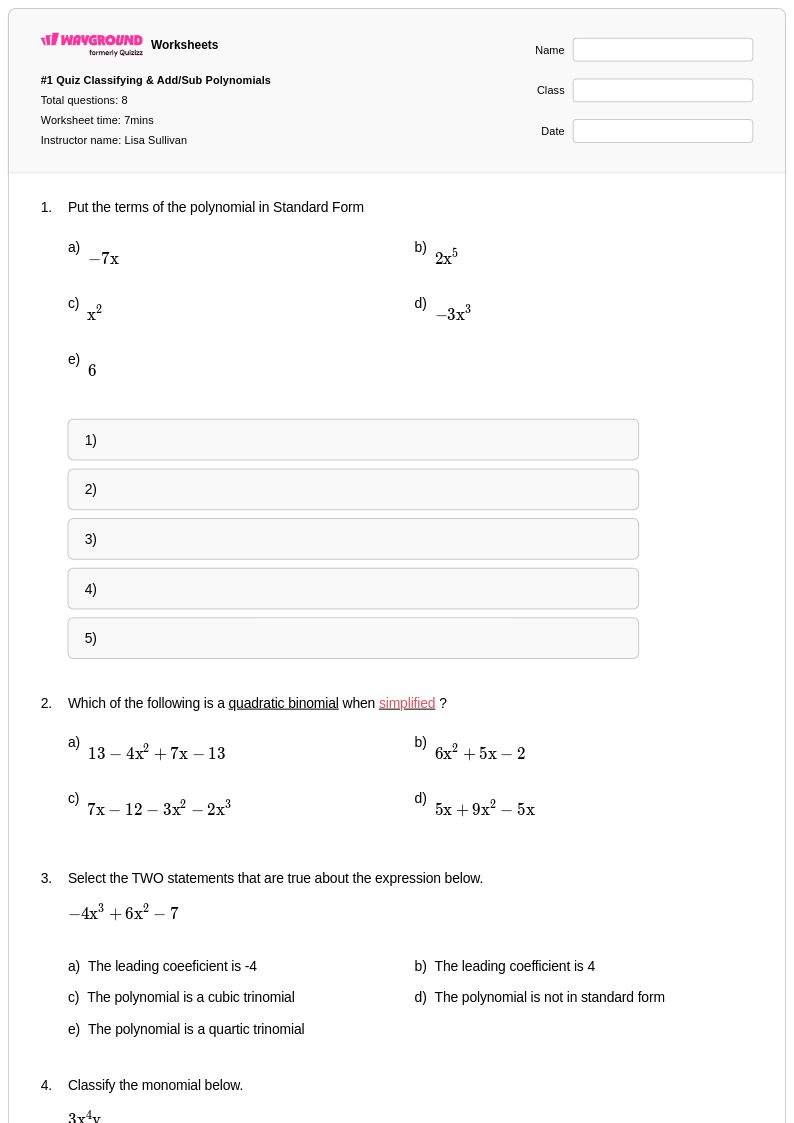
8Q
9th
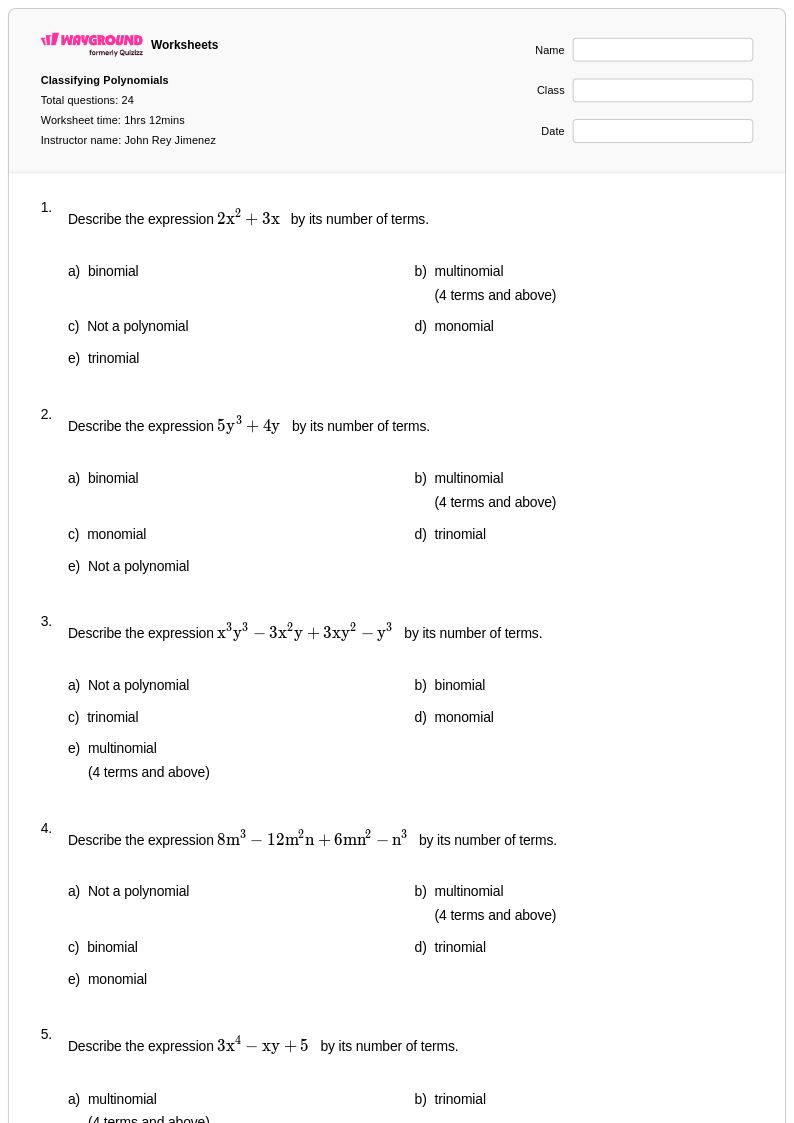
24Q
7th
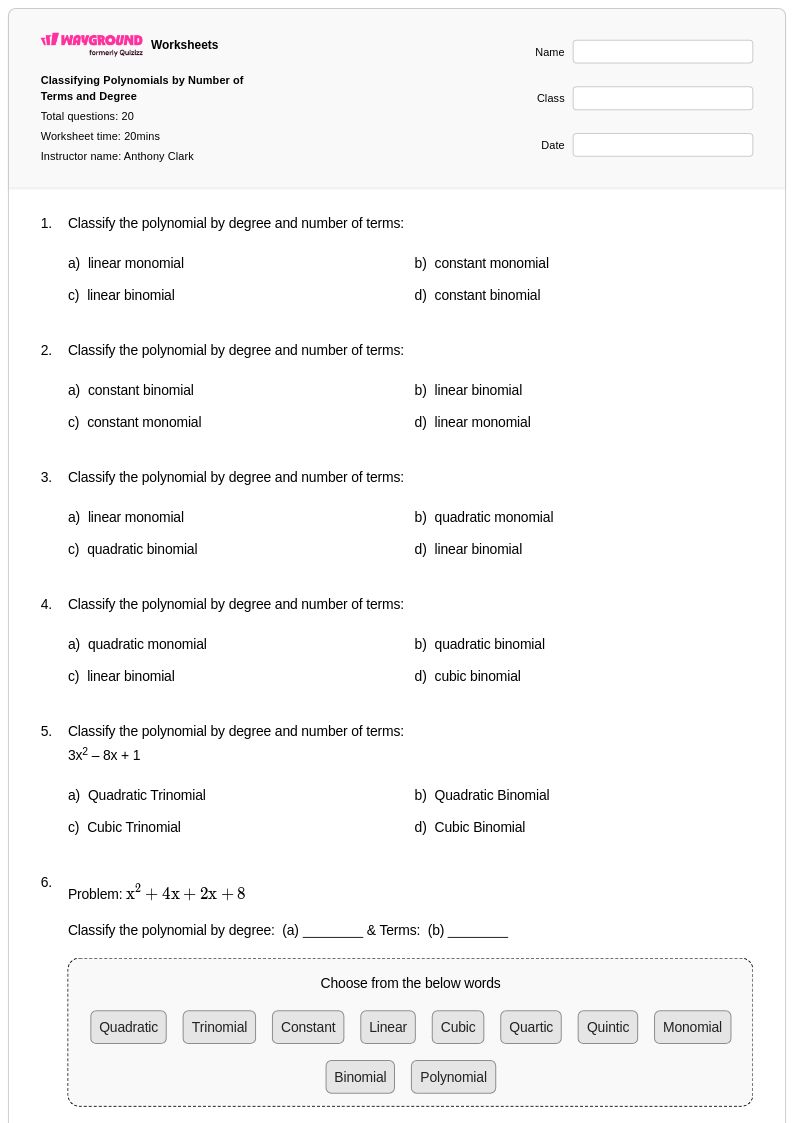
20Q
9th - Uni
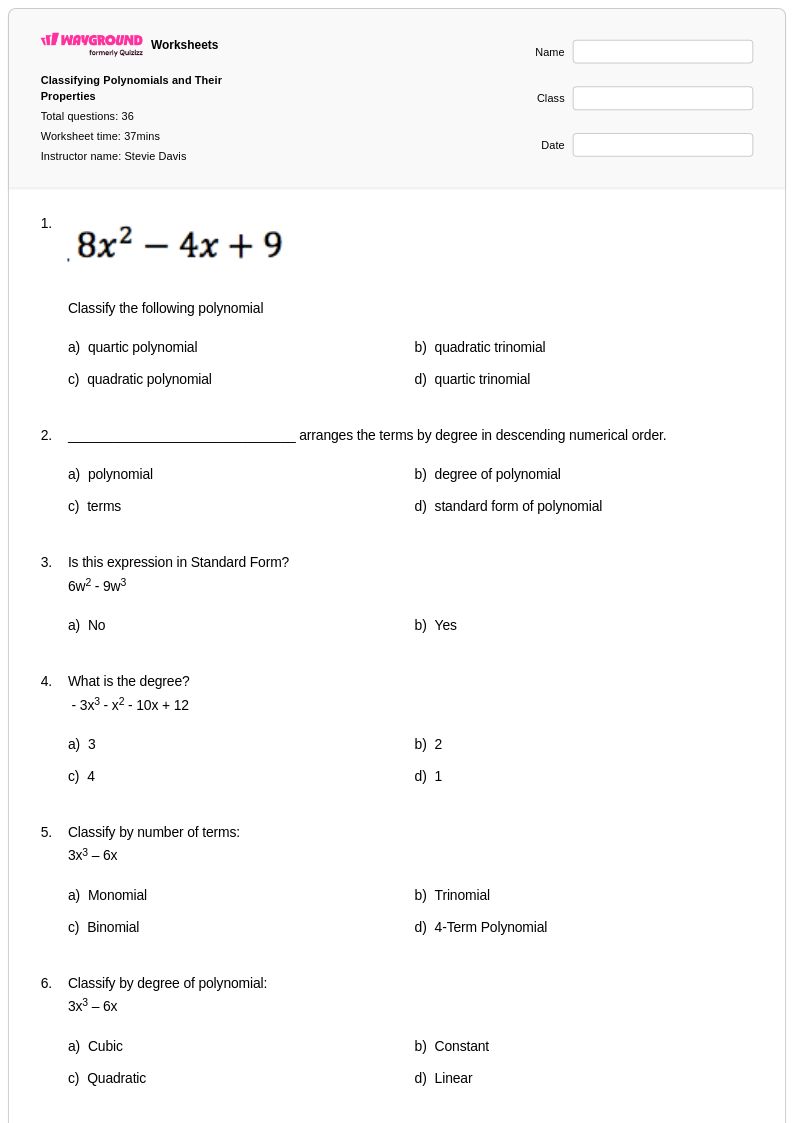
36Q
9th
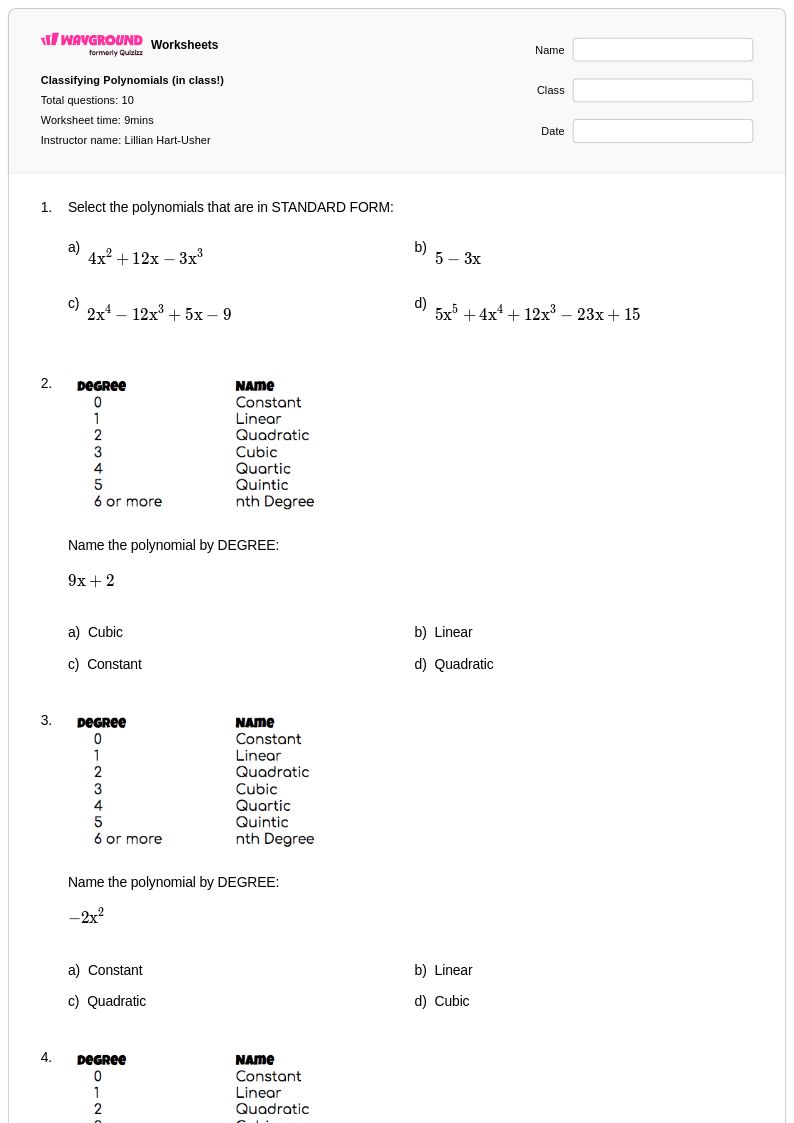
10Q
9th
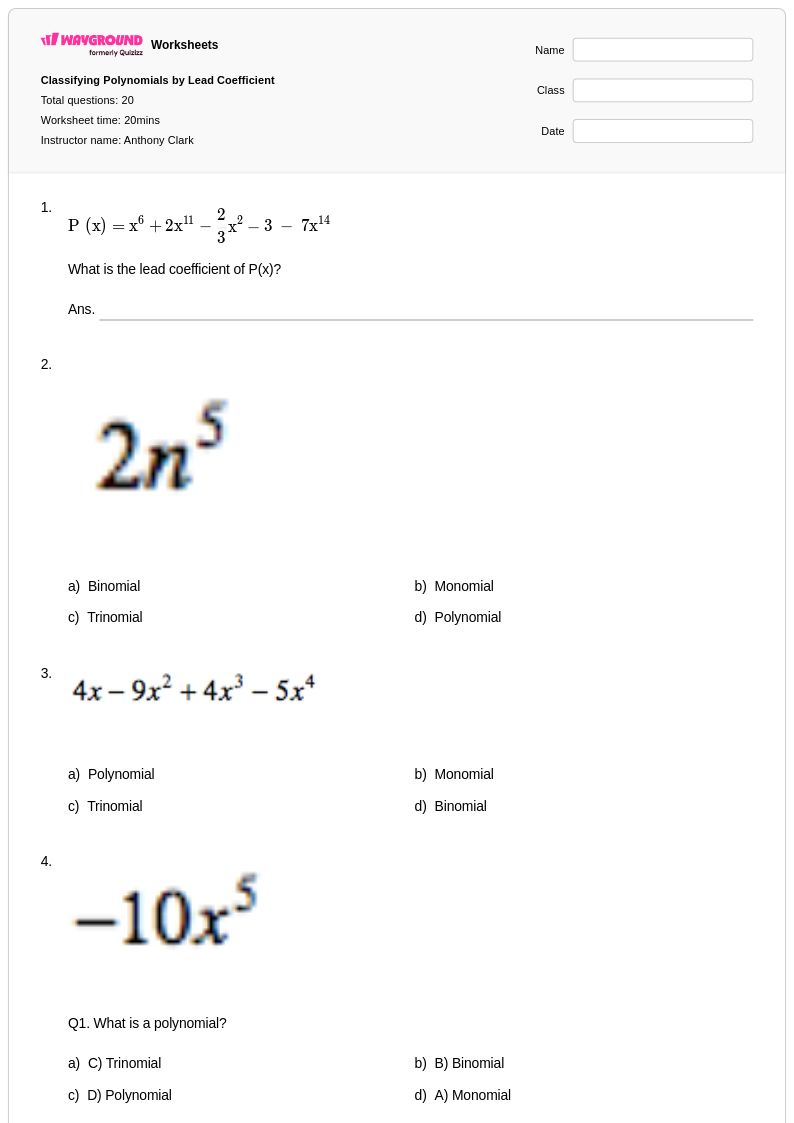
20Q
9th - Uni
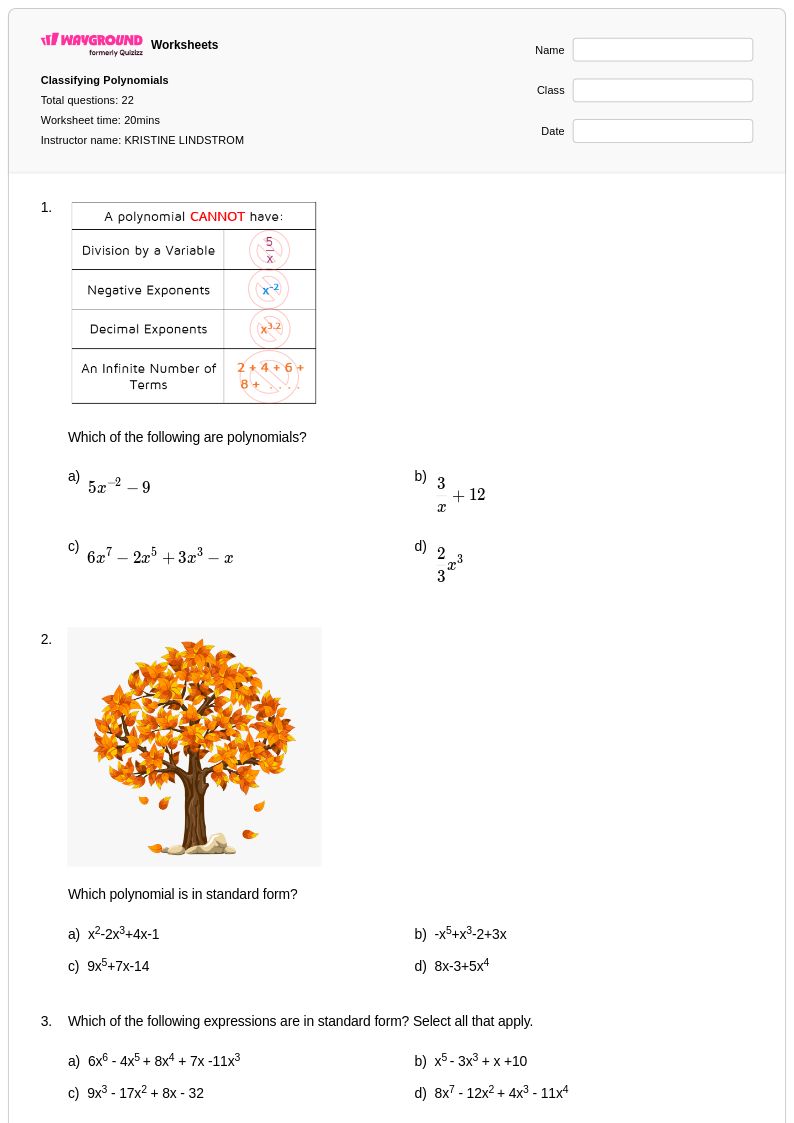
22Q
8th
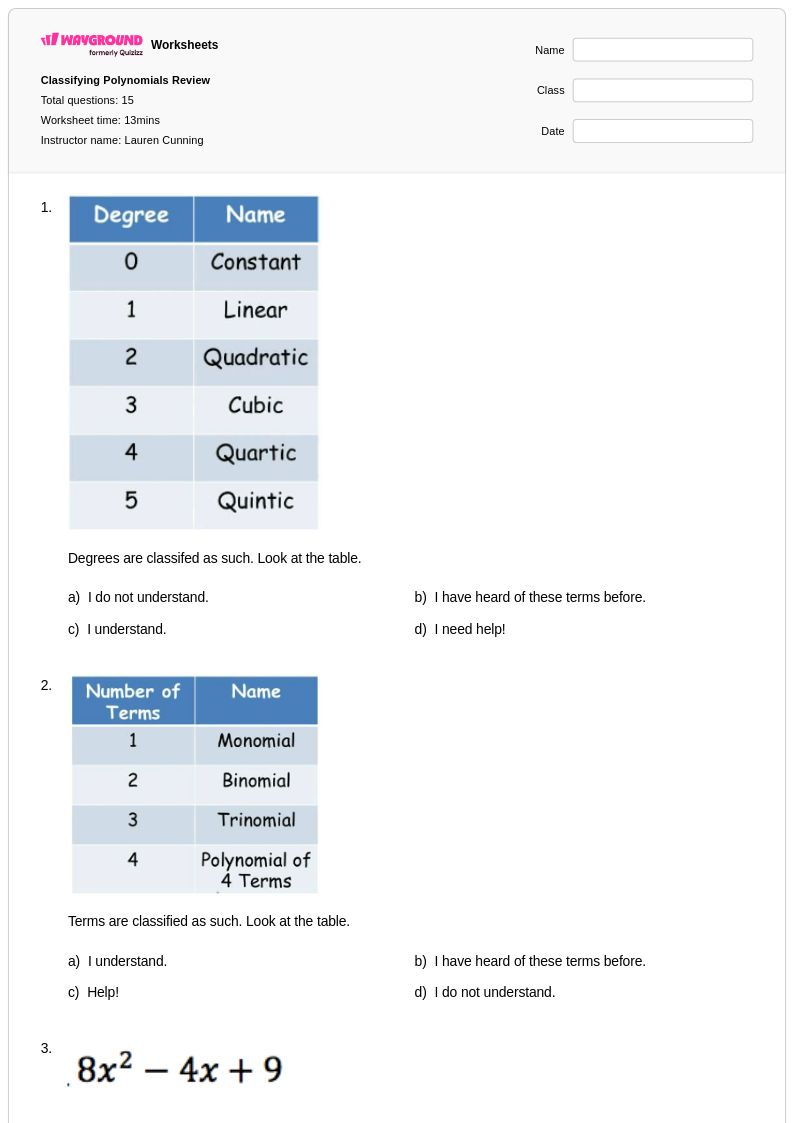
15Q
8th
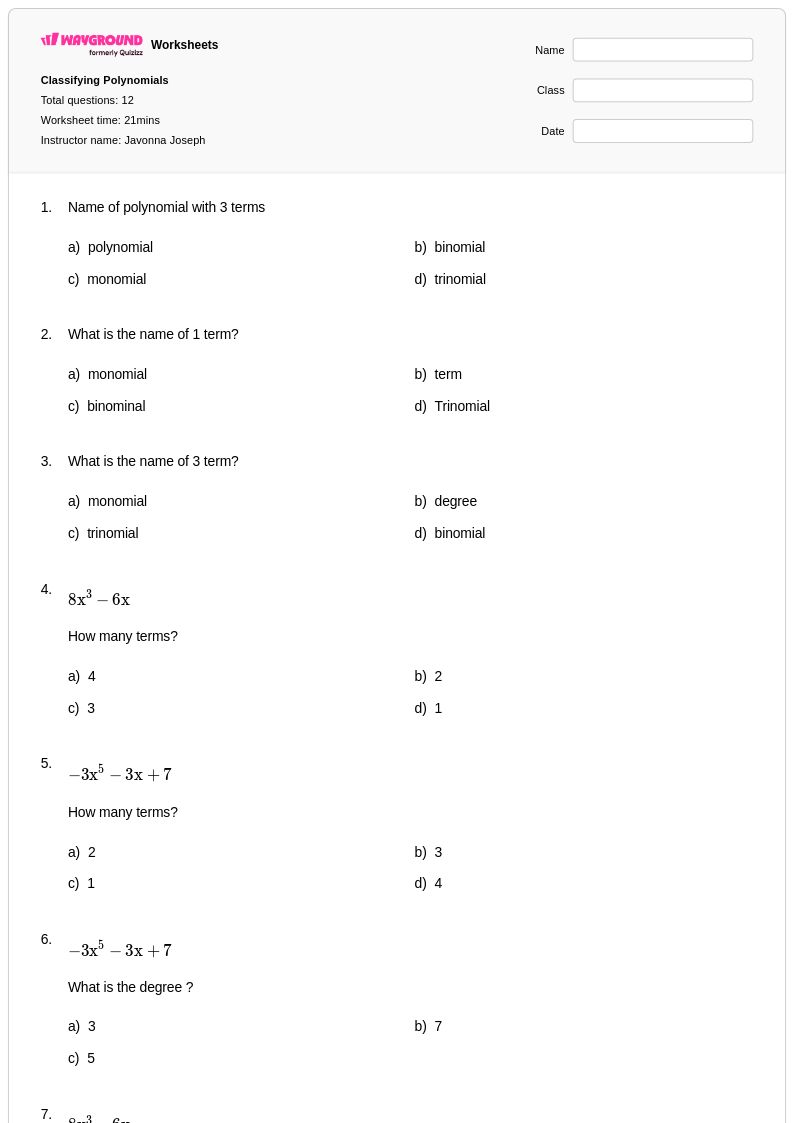
12Q
9th
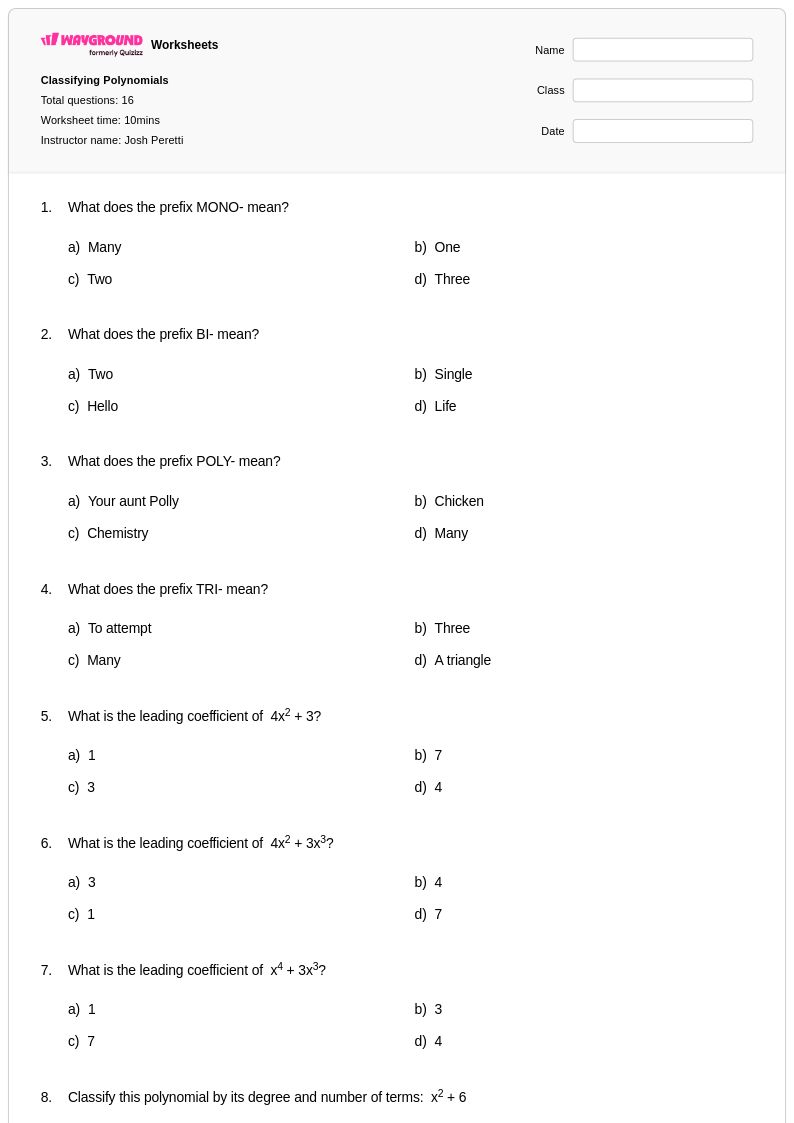
16Q
8th - 10th
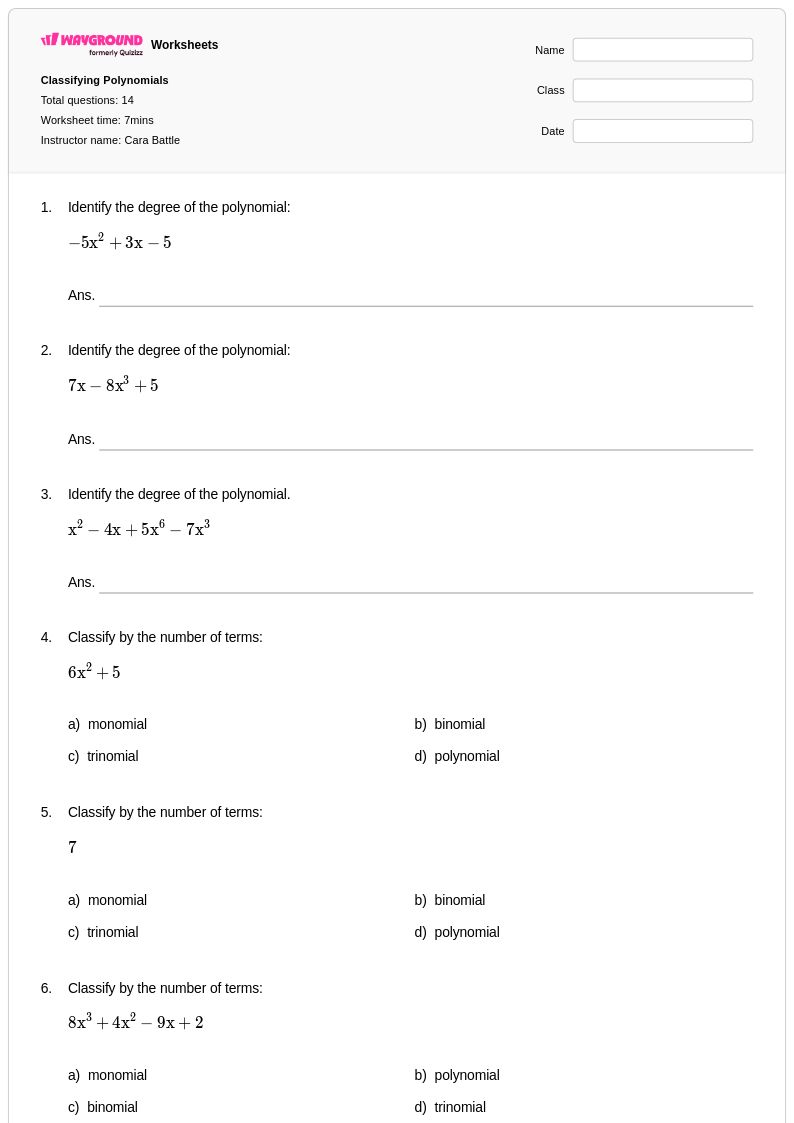
14Q
10th
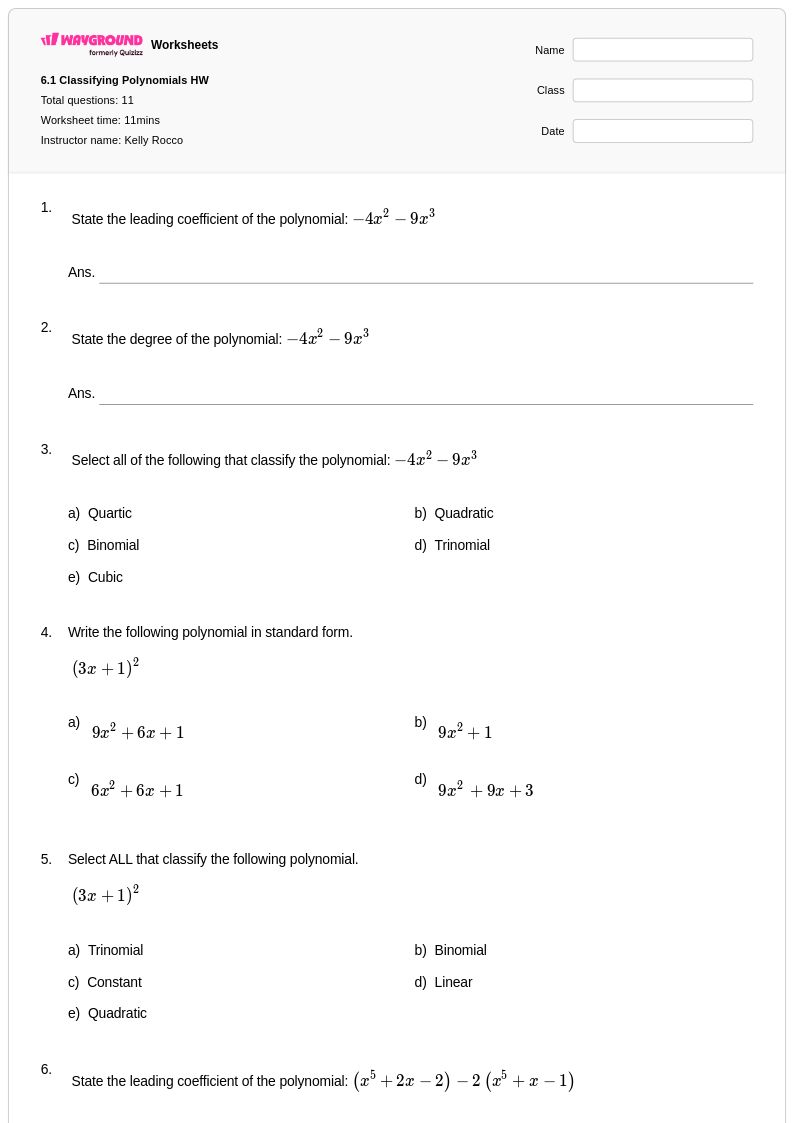
11Q
9th - 12th
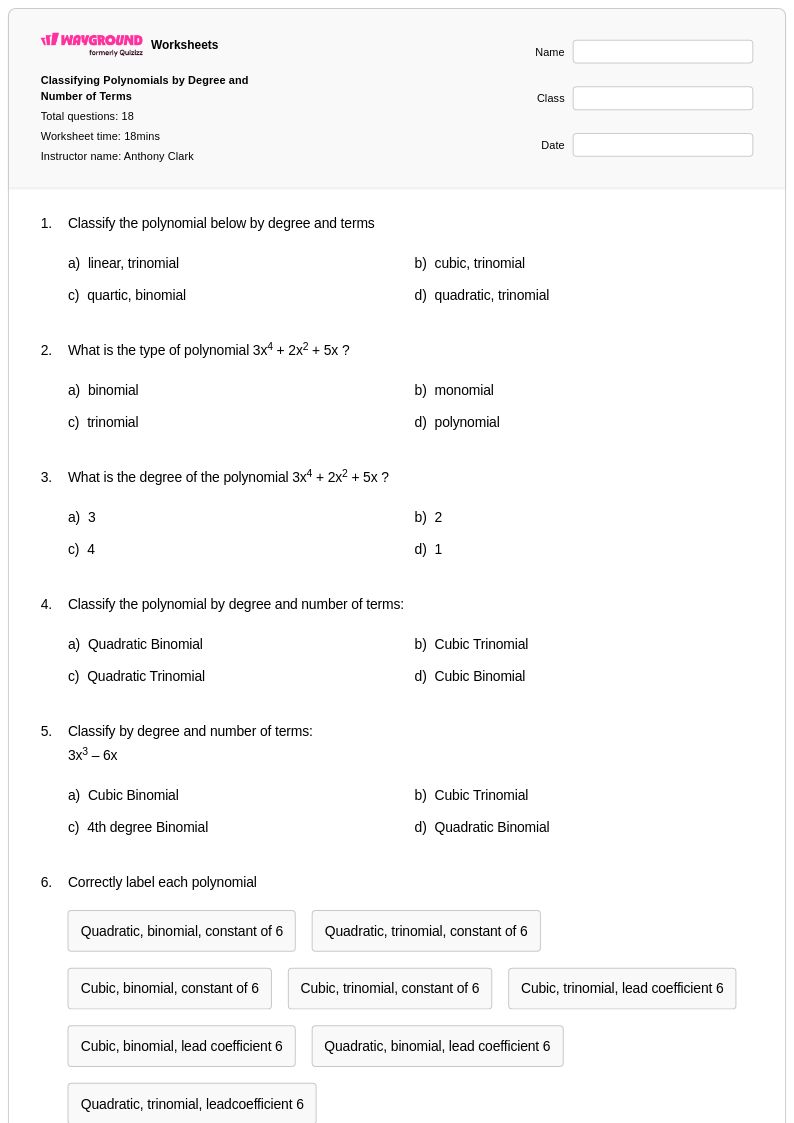
18Q
9th - Uni
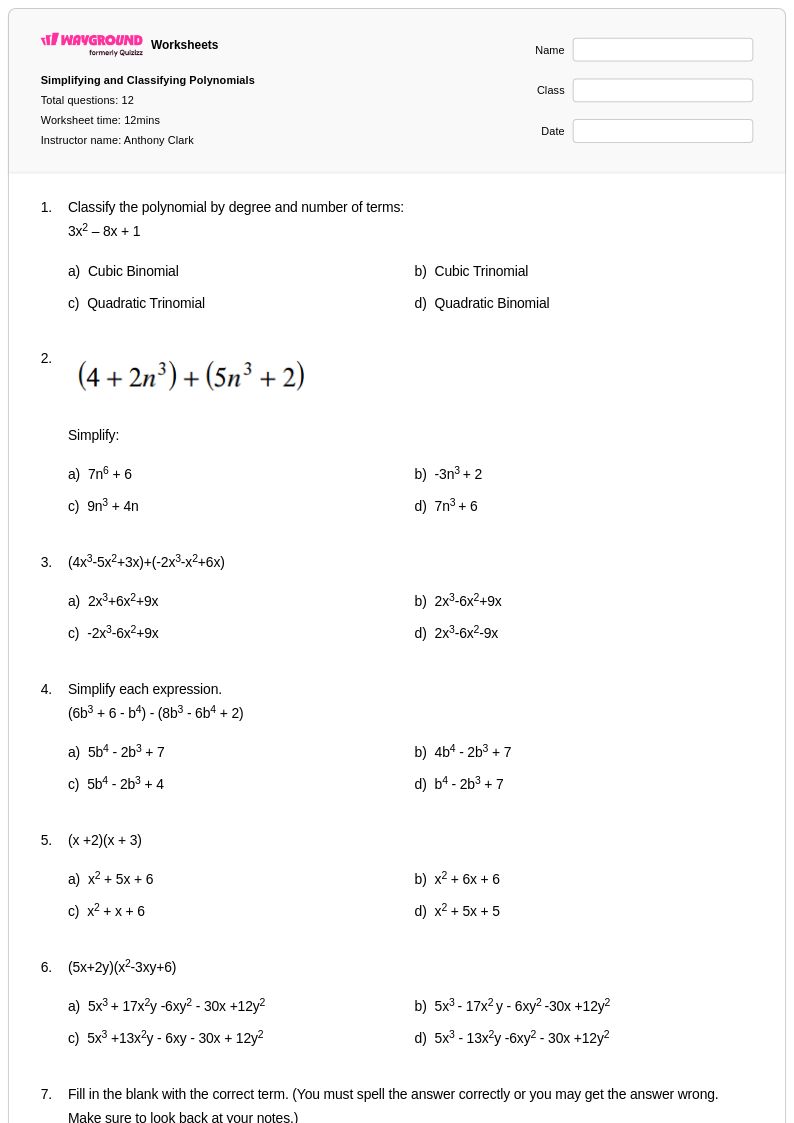
12Q
9th - Uni
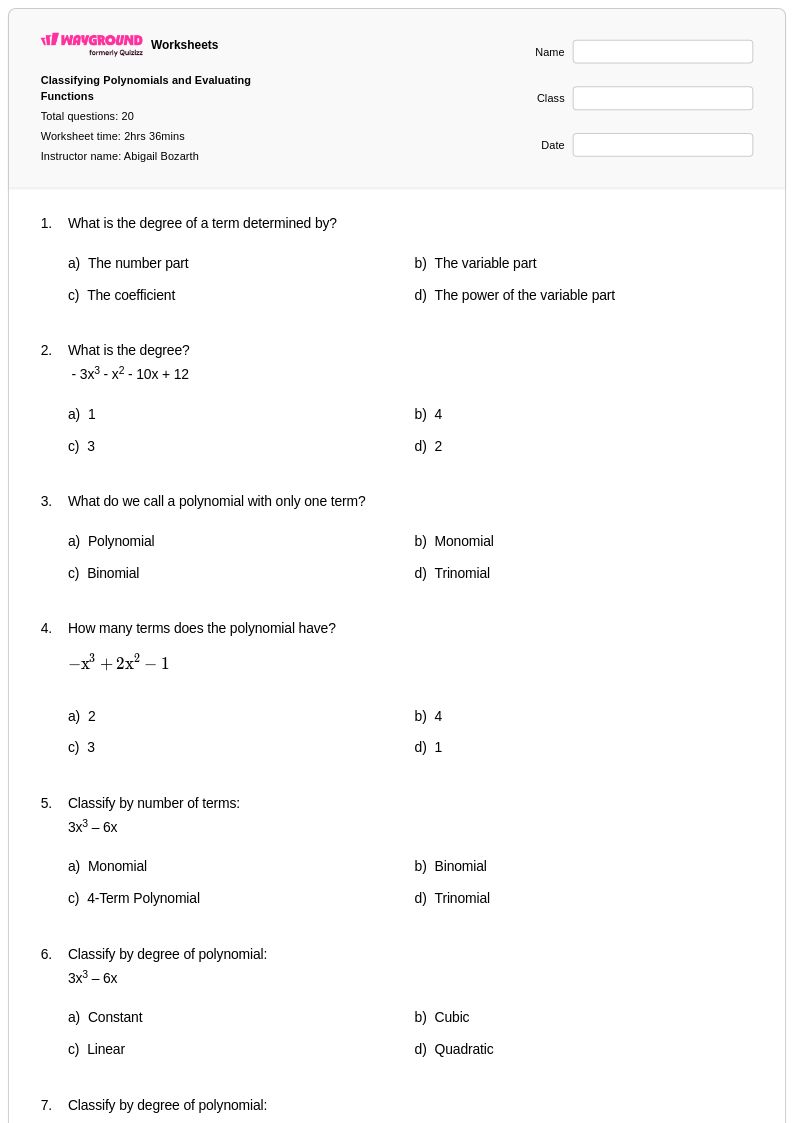
20Q
9th - 12th
Explorar hojas de trabajo por materias
Explore printable Classifying Polynomials worksheets
Classifying polynomials represents a fundamental algebraic skill that bridges basic arithmetic concepts with advanced mathematical reasoning. Wayground's comprehensive collection of classifying polynomials worksheets provides students with systematic practice in identifying polynomial characteristics such as degree, number of terms, and standard form arrangements. These carefully structured resources strengthen critical analytical skills by guiding learners through the process of categorizing expressions as monomials, binomials, trinomials, or polynomials with multiple terms, while simultaneously reinforcing concepts of coefficient identification and variable recognition. Each worksheet includes detailed answer keys and step-by-step solutions, ensuring students can verify their understanding and identify areas requiring additional focus. The printable pdf format makes these free practice problems easily accessible for classroom instruction, homework assignments, or independent study sessions.
Wayground's extensive platform supports mathematics educators with millions of teacher-created resources specifically designed for polynomial classification instruction across various skill levels. The sophisticated search and filtering system allows instructors to quickly locate worksheets that align with specific curriculum standards and match their students' developmental needs. Teachers can customize existing materials or create differentiated versions to accommodate diverse learning styles and abilities, ensuring every student receives appropriate challenge and support. The flexible digital and printable formats enable seamless integration into both traditional classroom settings and remote learning environments, while built-in assessment tools help educators track student progress and identify concepts requiring remediation or enrichment. This comprehensive approach to worksheet management streamlines lesson planning and provides reliable resources for ongoing skill practice and mastery verification.
FAQs
How do I teach students to classify polynomials?
What exercises help students practice classifying polynomials?
What mistakes do students make when classifying polynomials?
How can I use a classifying polynomials worksheet from Wayground?
How does classifying polynomials fit into the Common Core math progression?
How can I differentiate a classifying polynomials worksheet?