
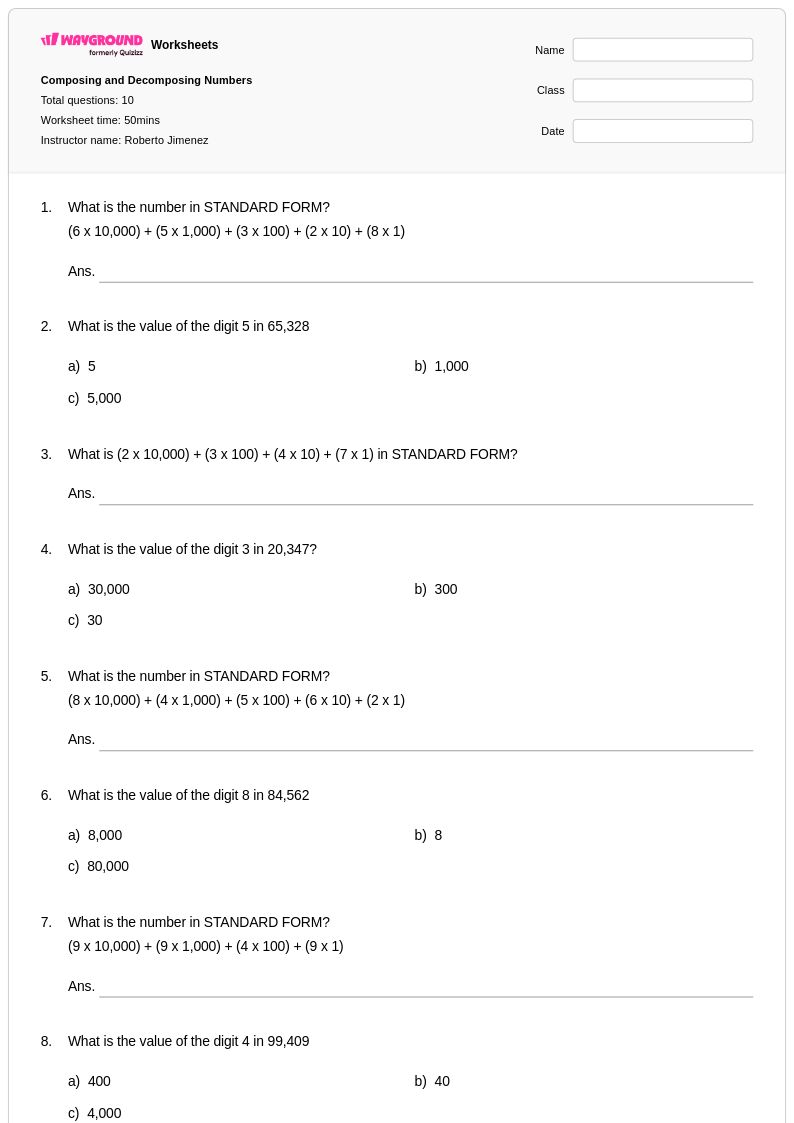
10Q
3rd
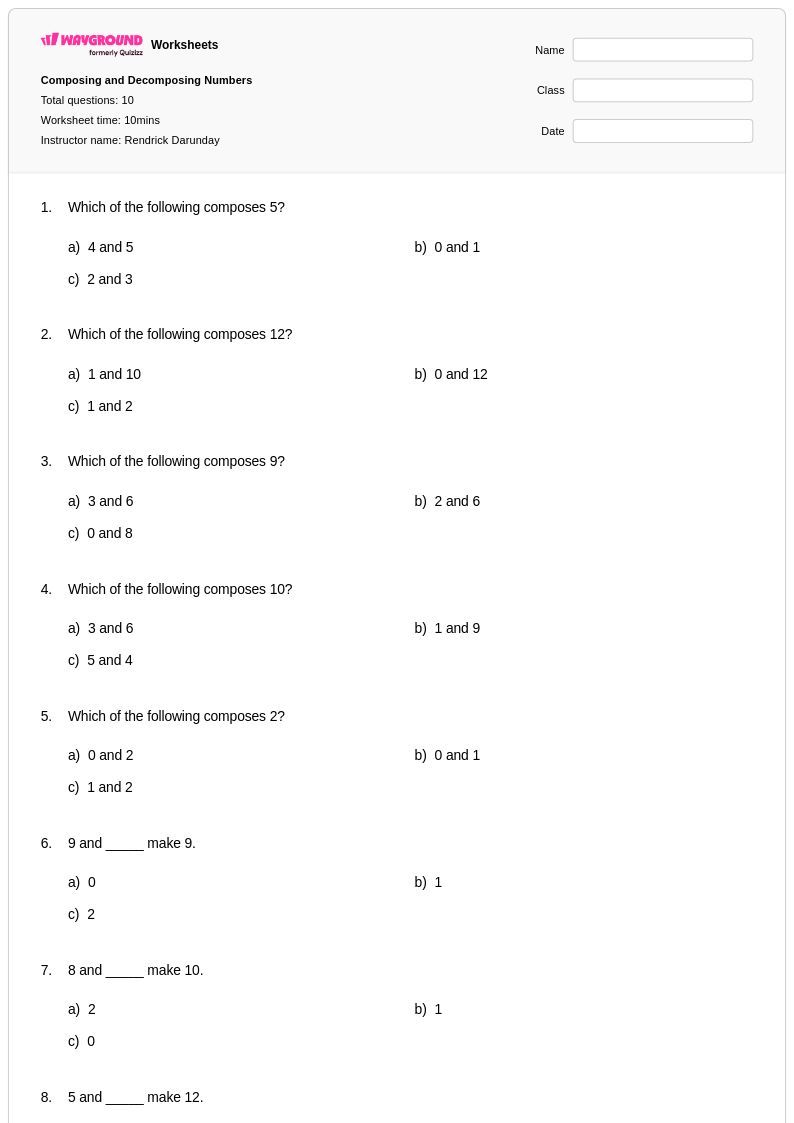
10Q
1st
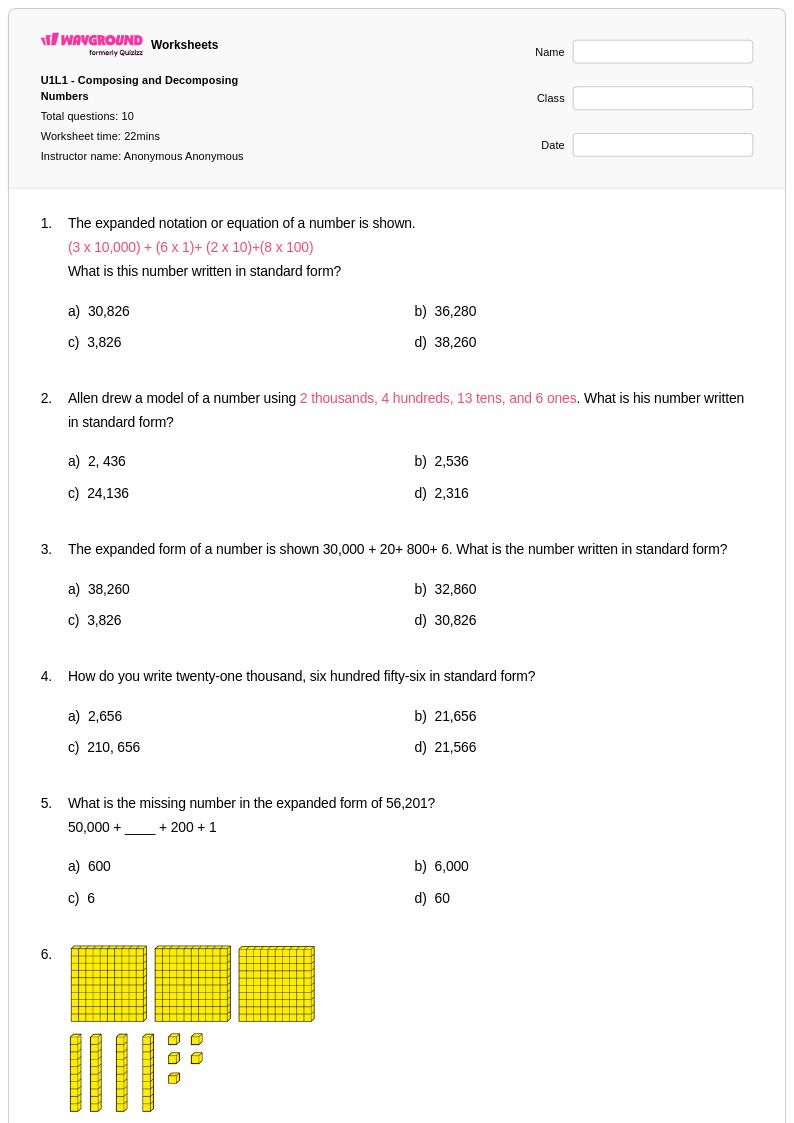
10Q
4th
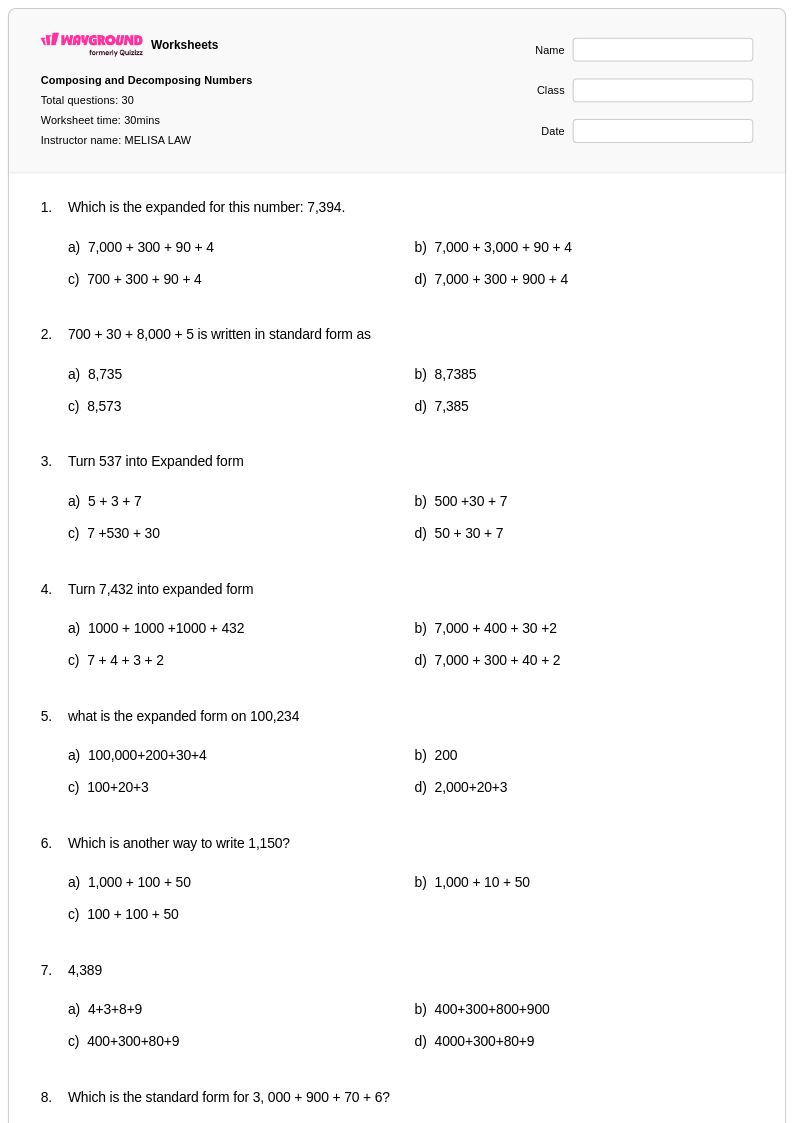
30Q
3rd
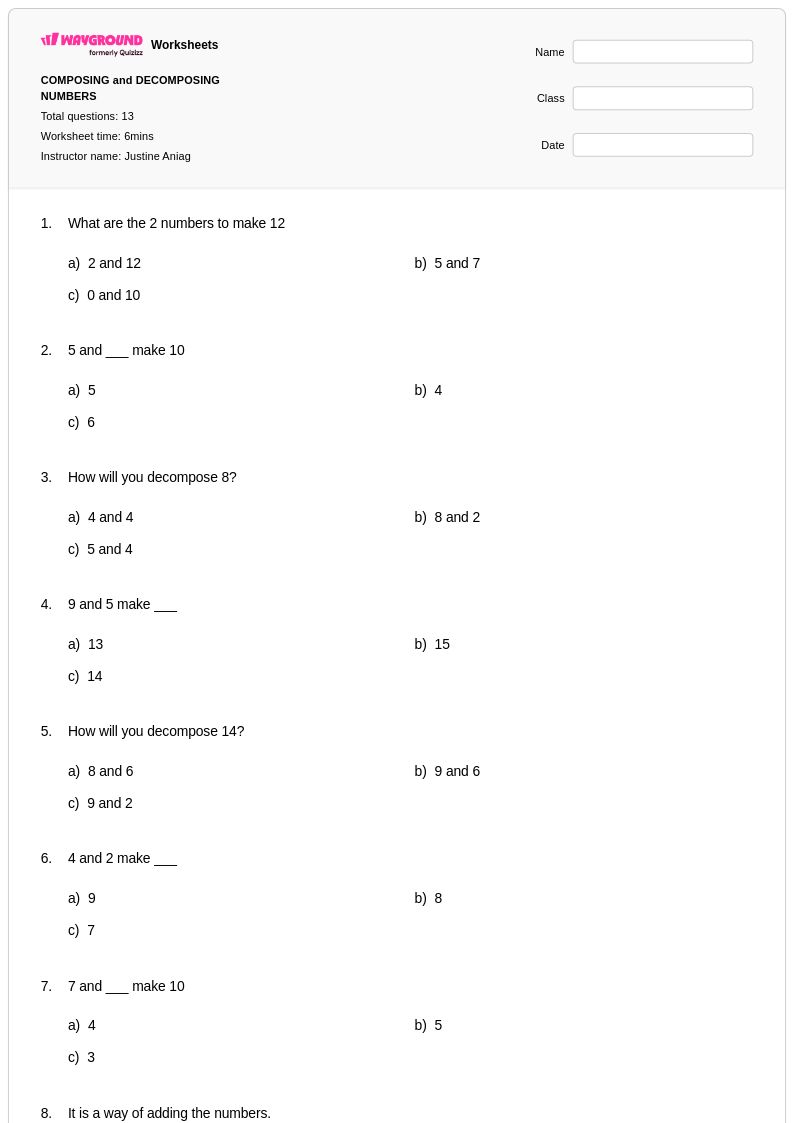
13Q
1st - 2nd
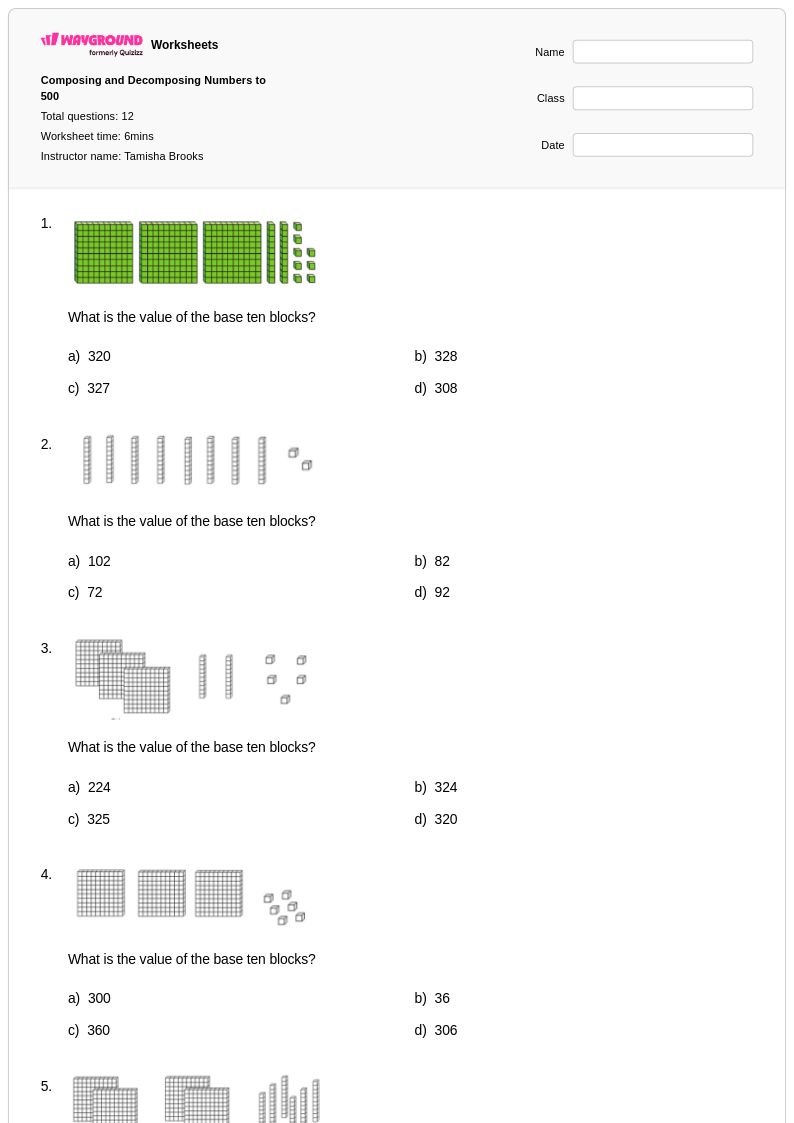
12Q
2nd
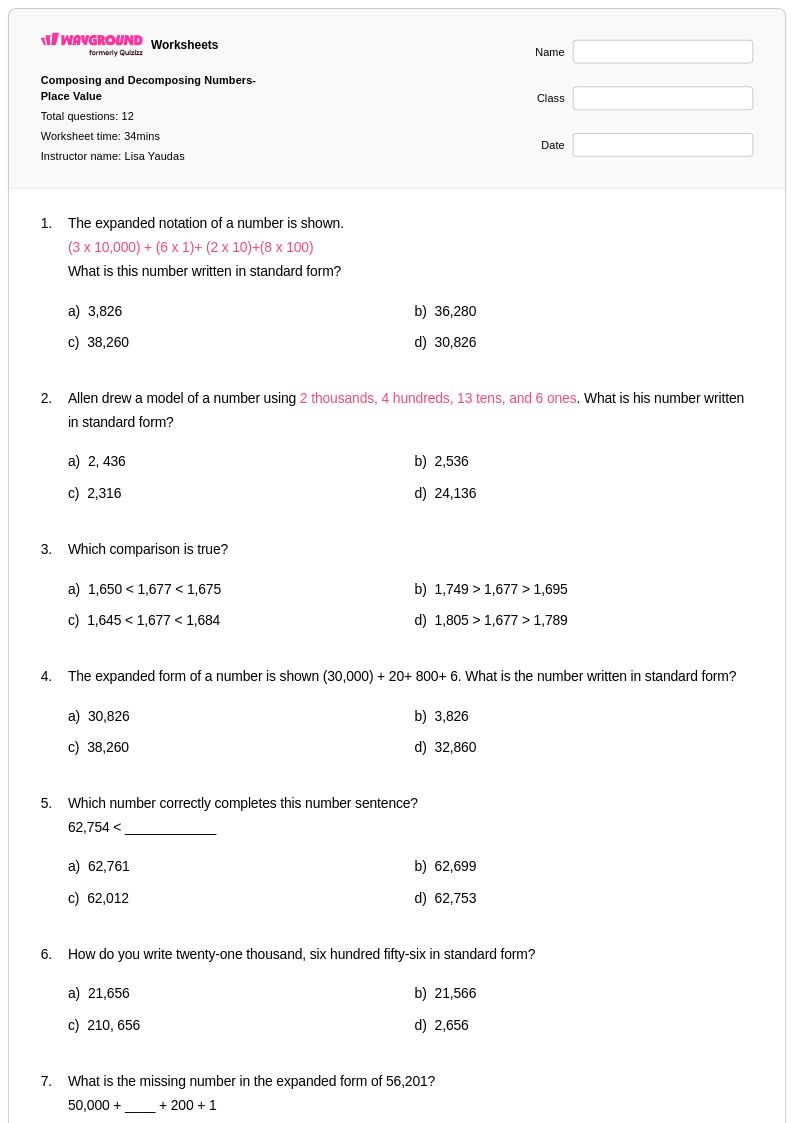
12Q
3rd
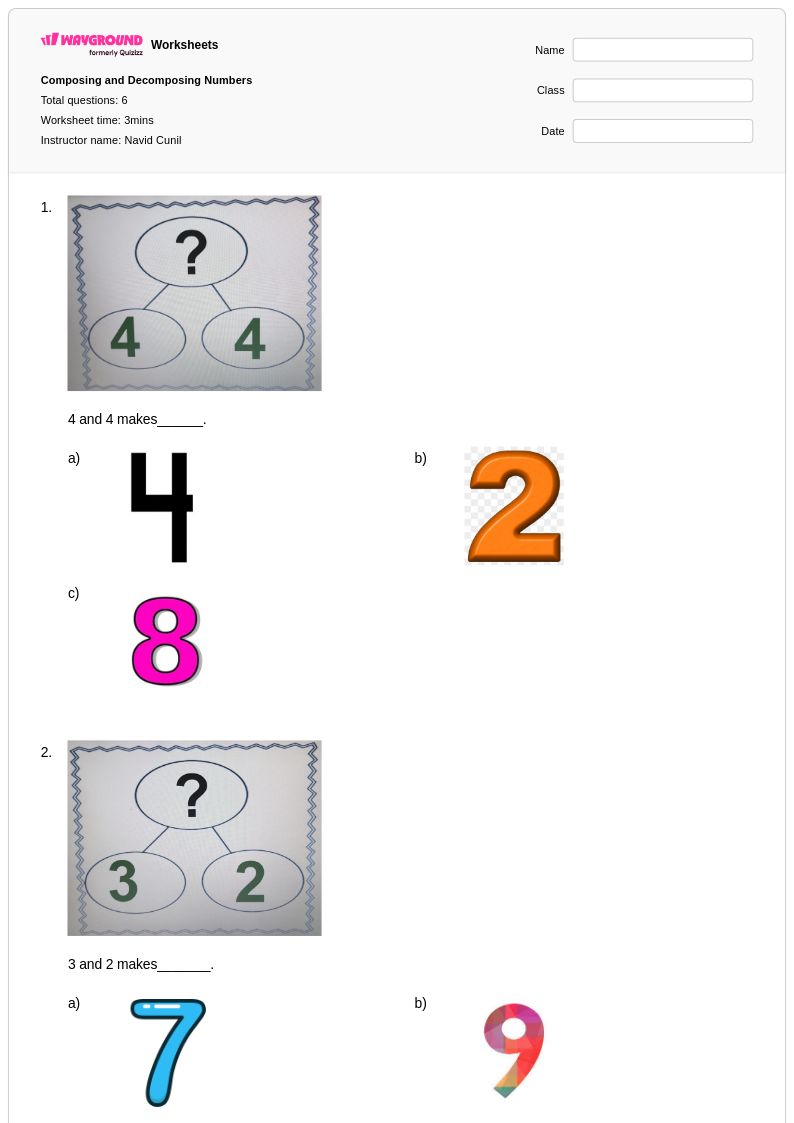
6Q
KG
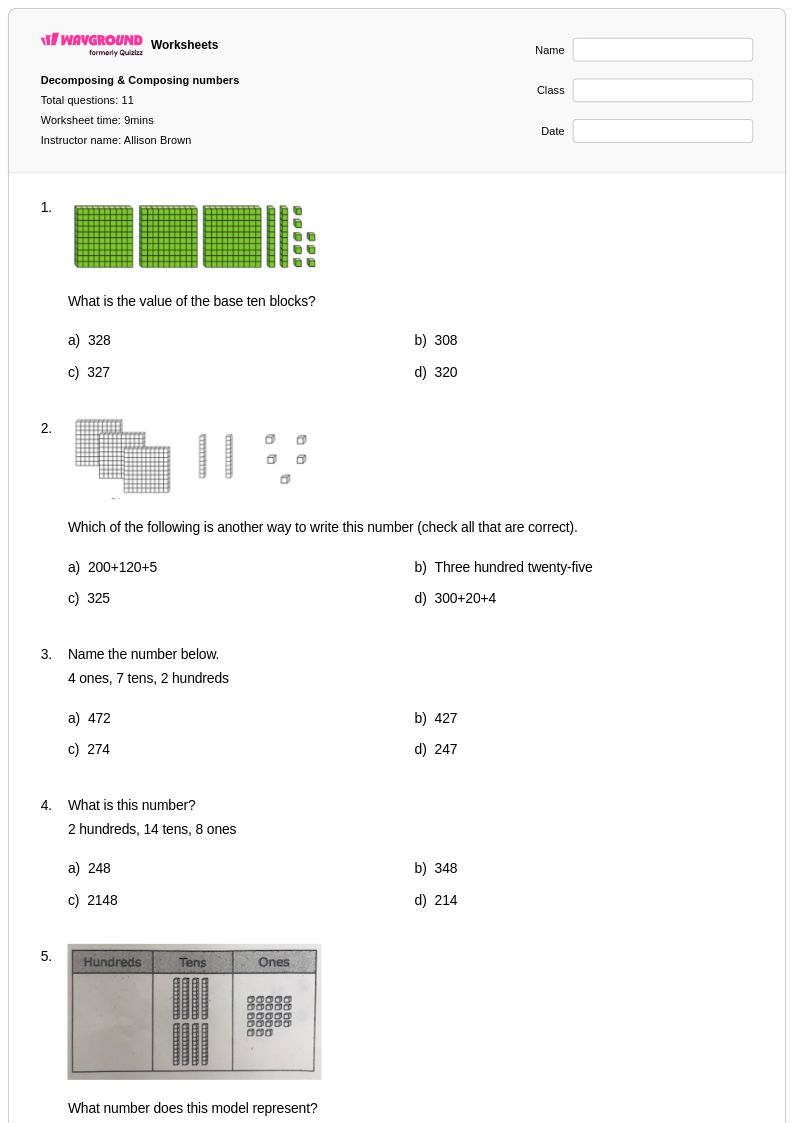
11Q
2nd
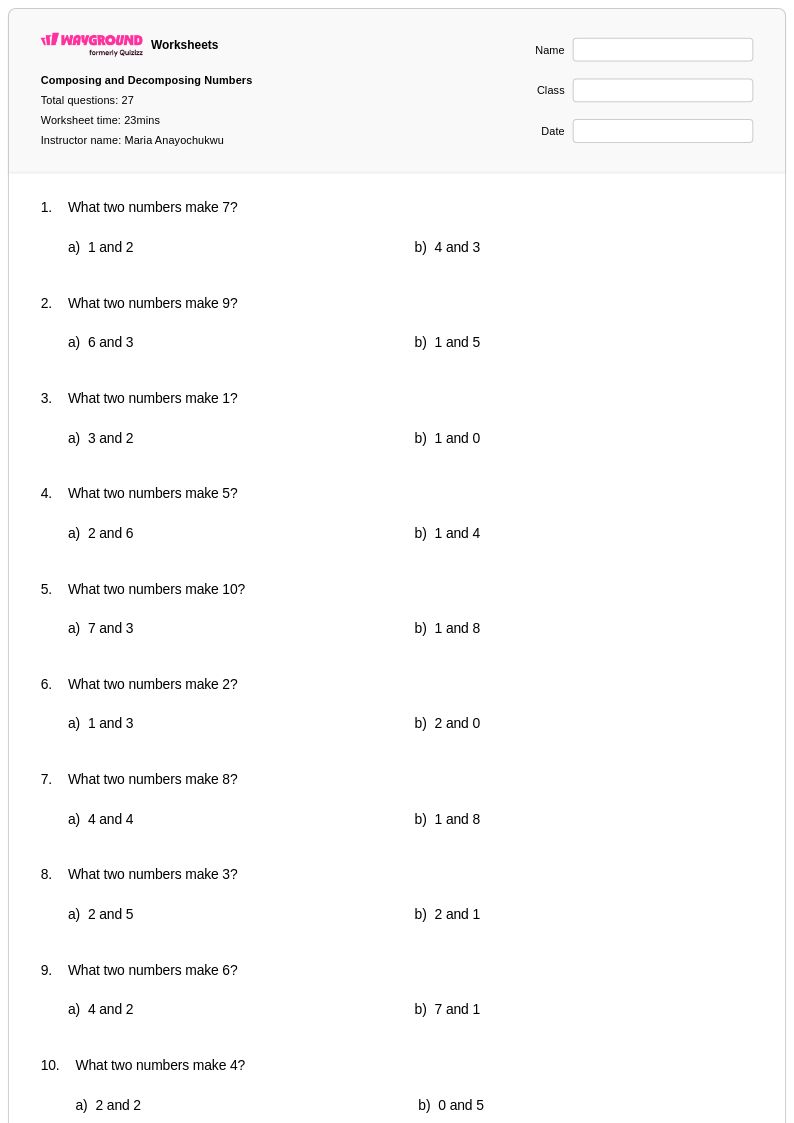
27Q
3rd
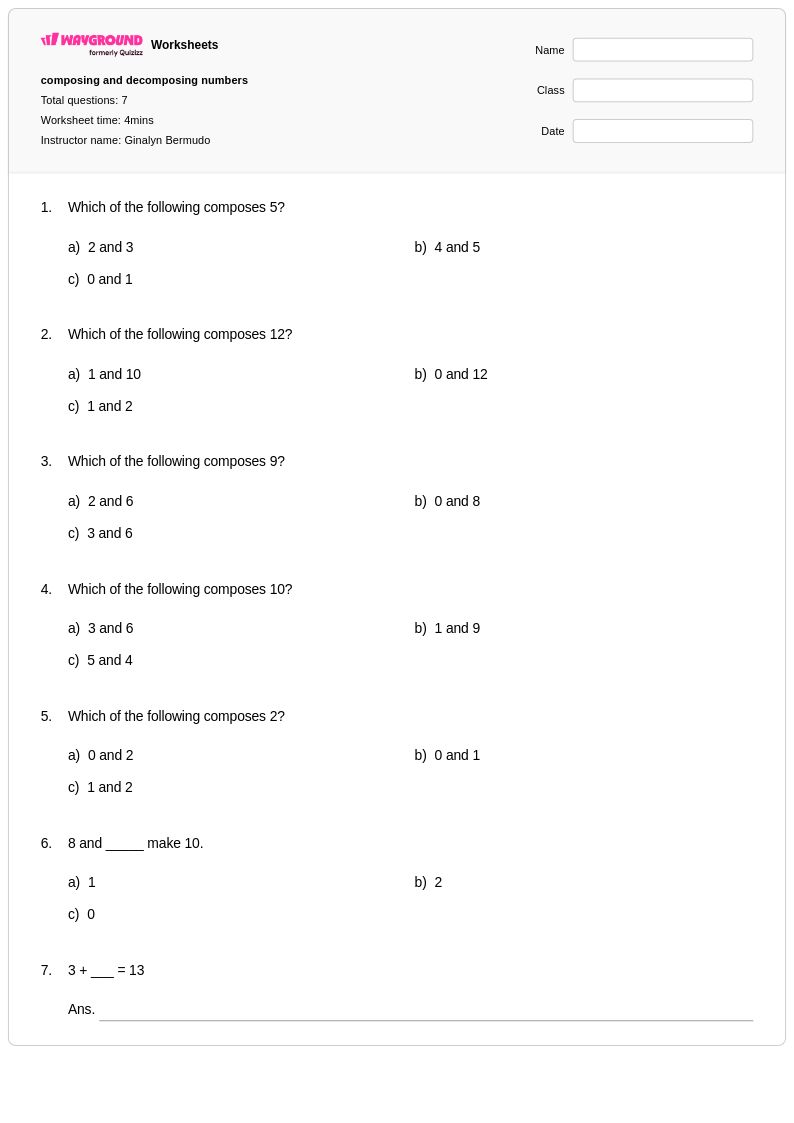
7Q
1st - 2nd
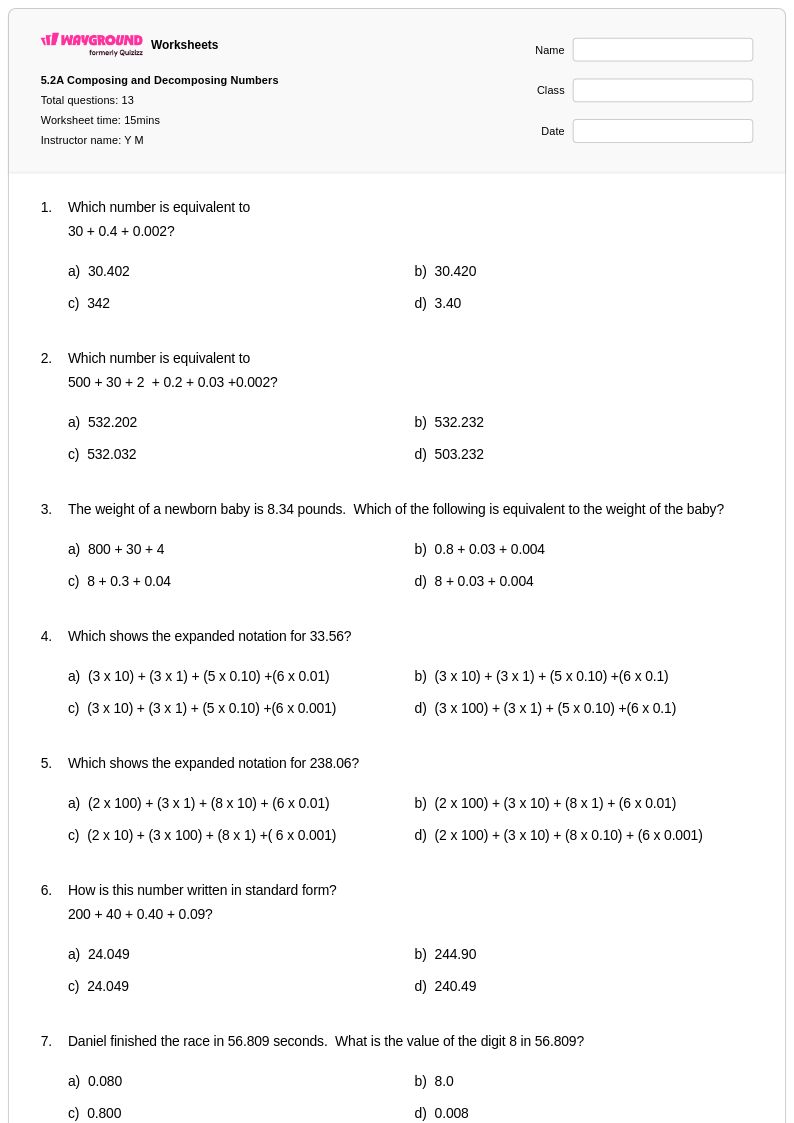
13Q
5th
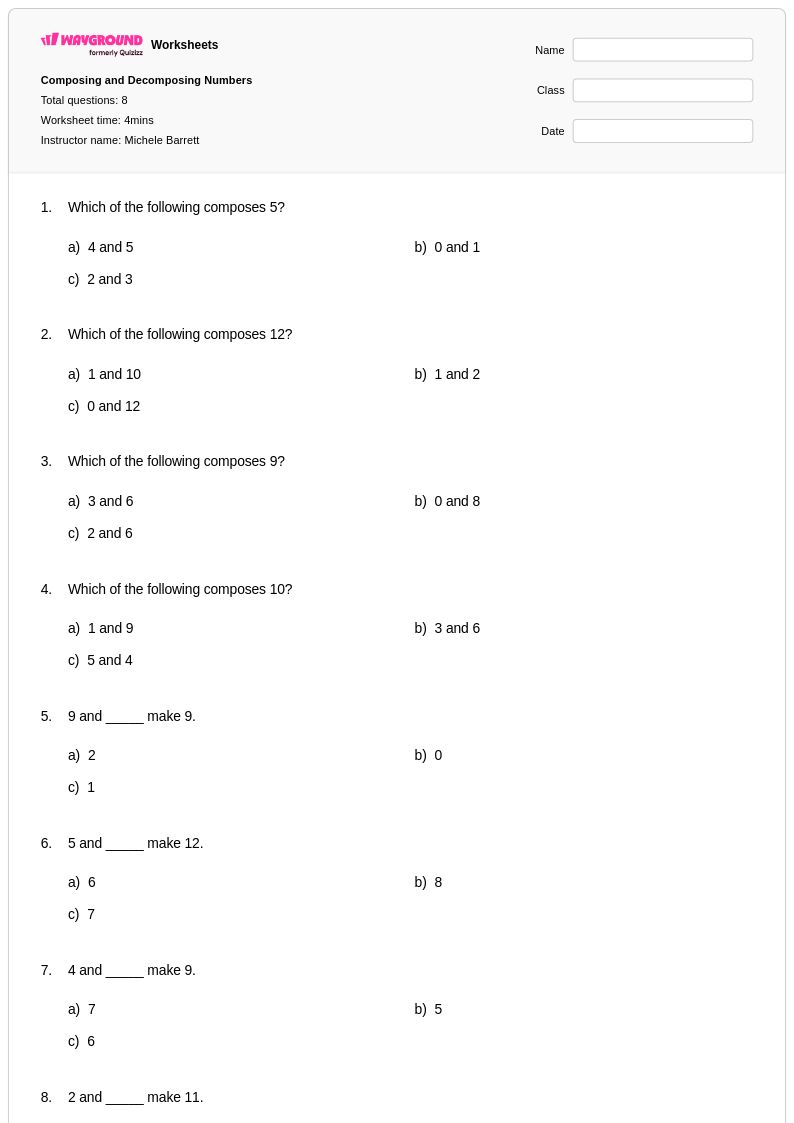
8Q
2nd
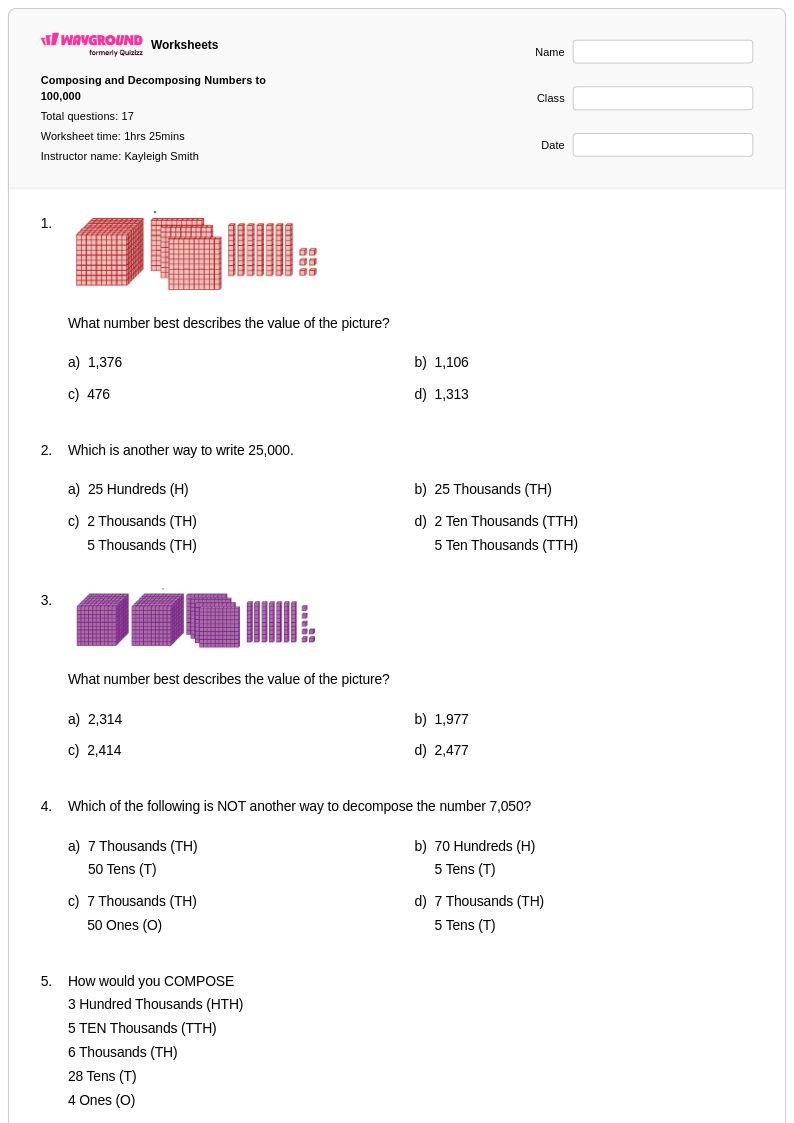
17Q
3rd
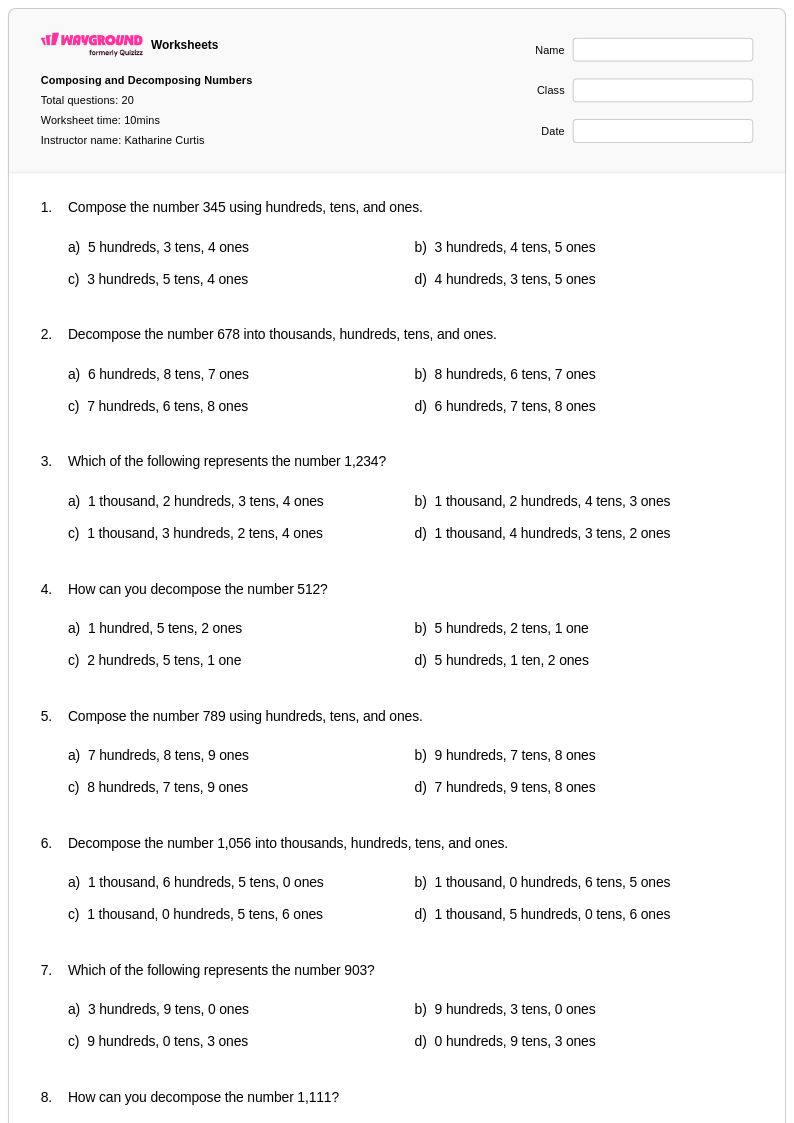
20Q
2nd
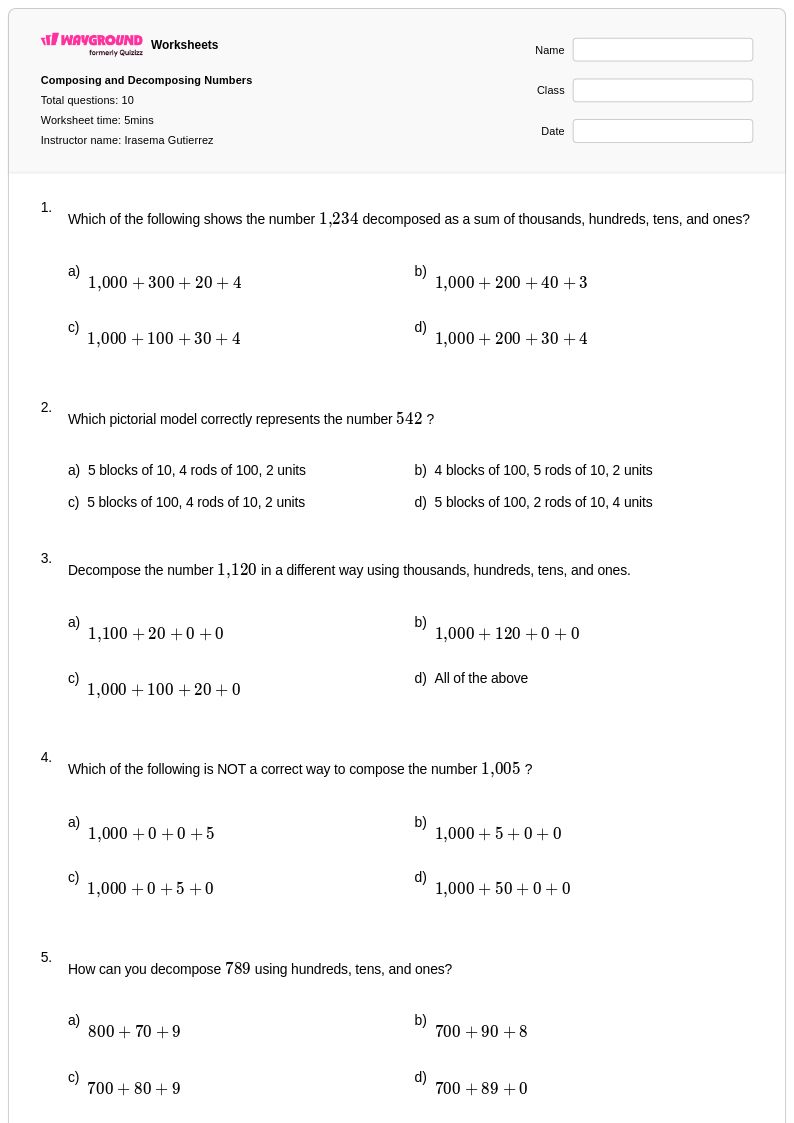
10Q
2nd
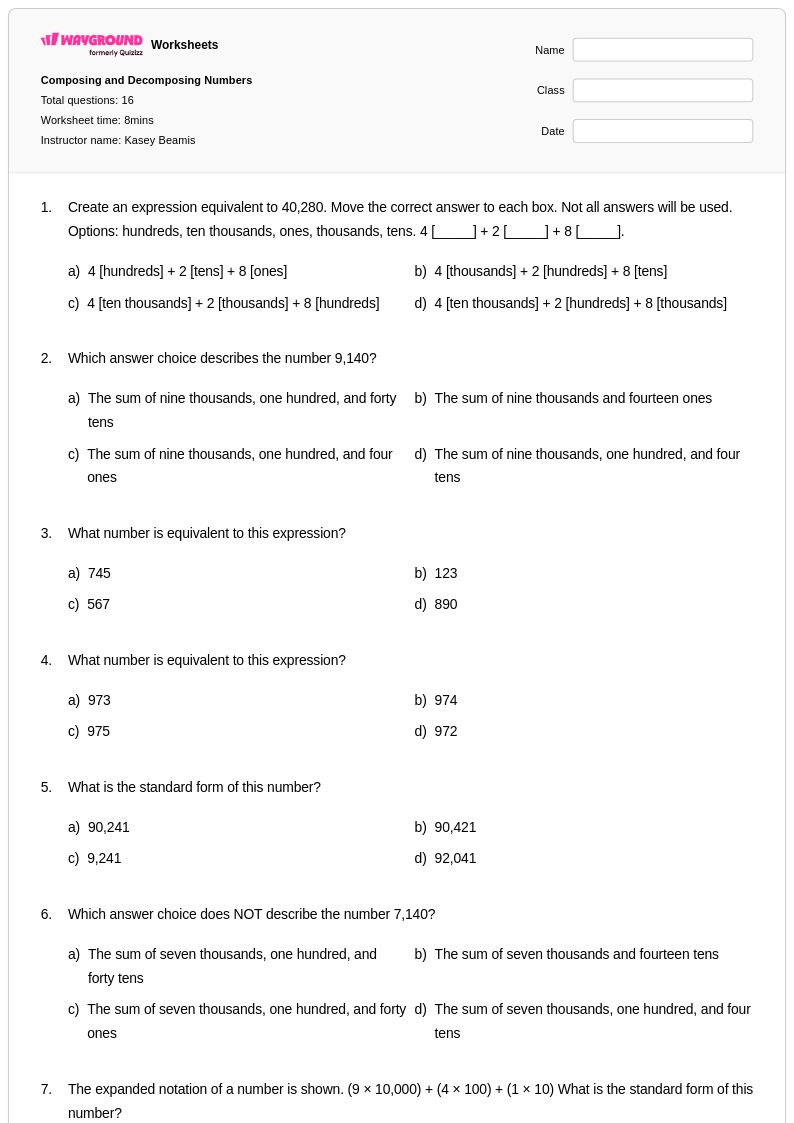
16Q
3rd
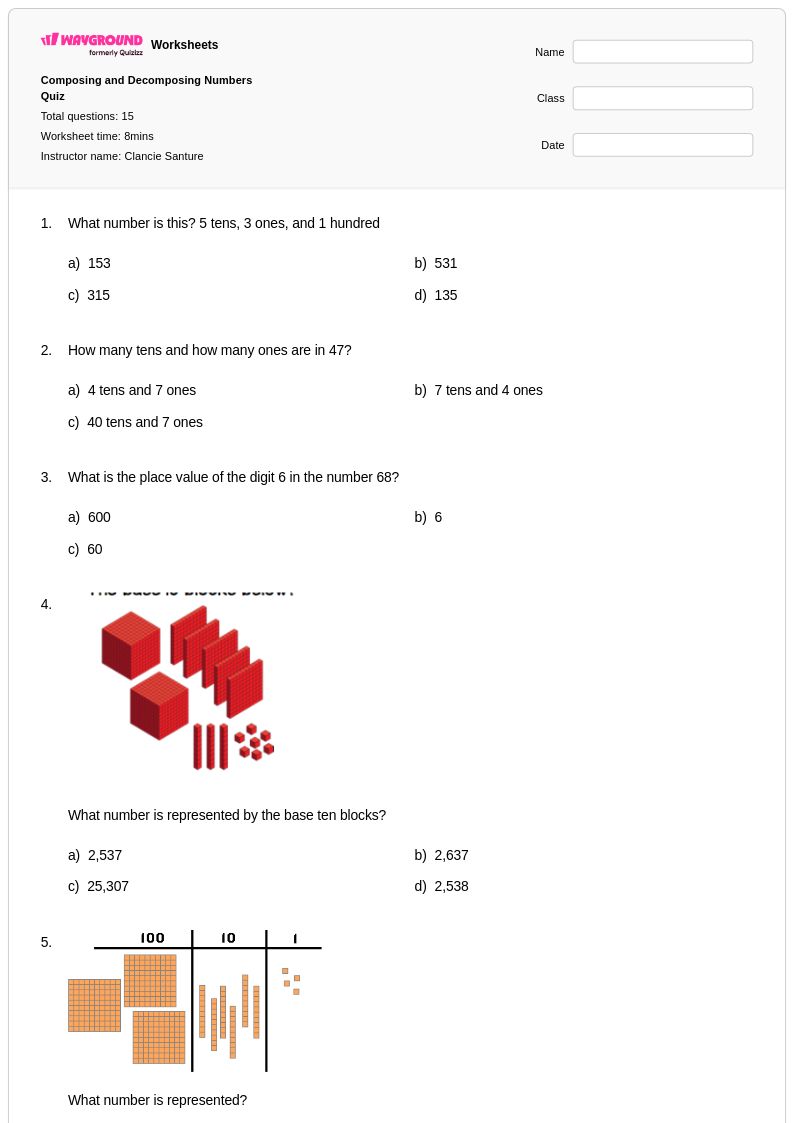
15Q
2nd
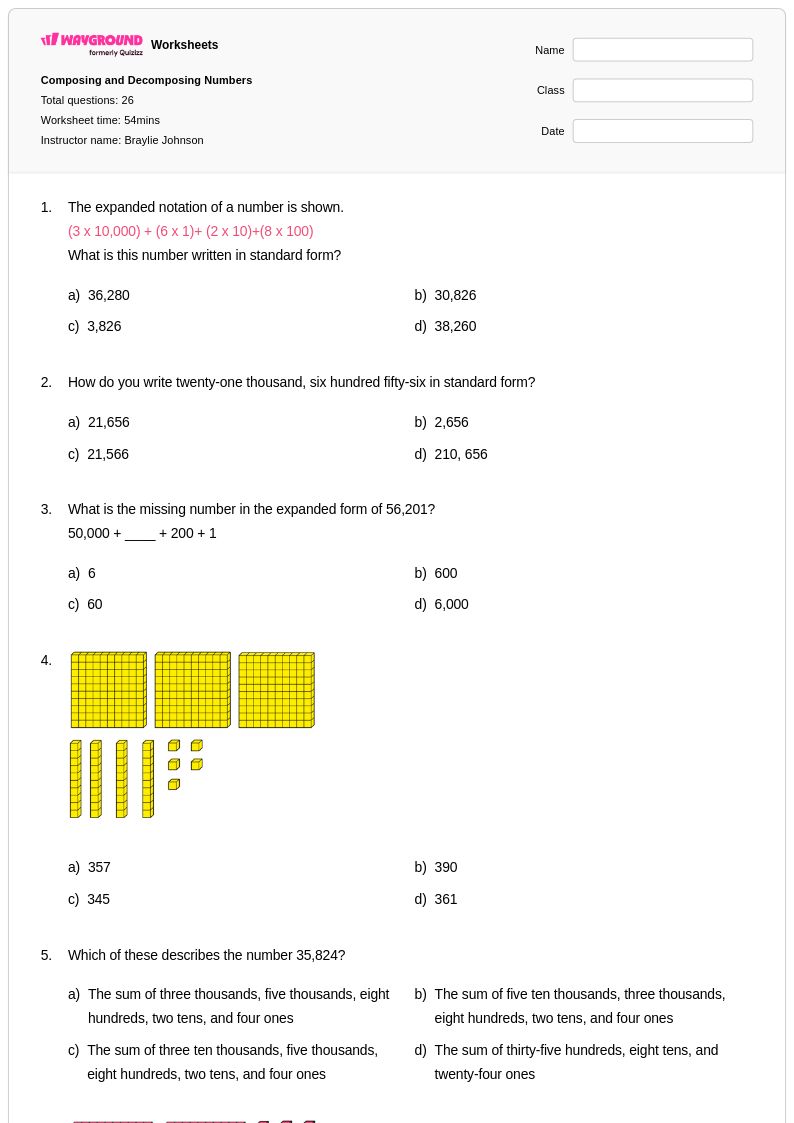
26Q
2nd - 4th
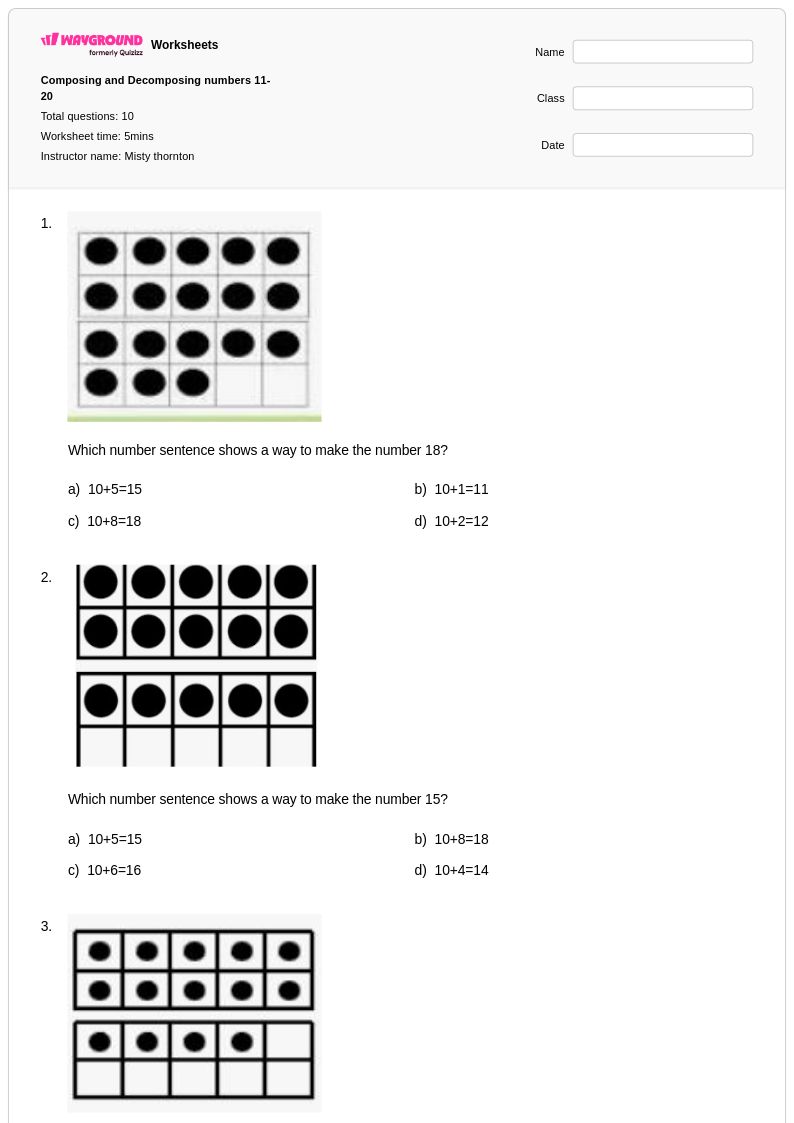
10Q
KG
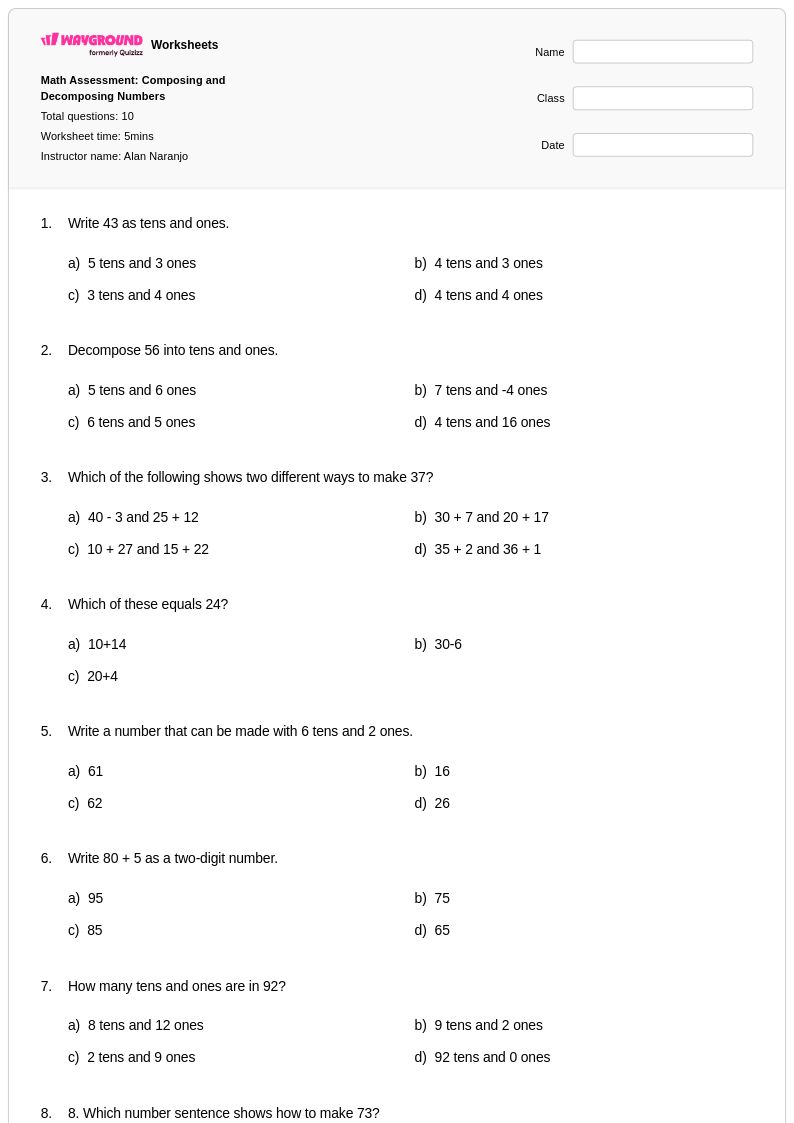
10Q
2nd
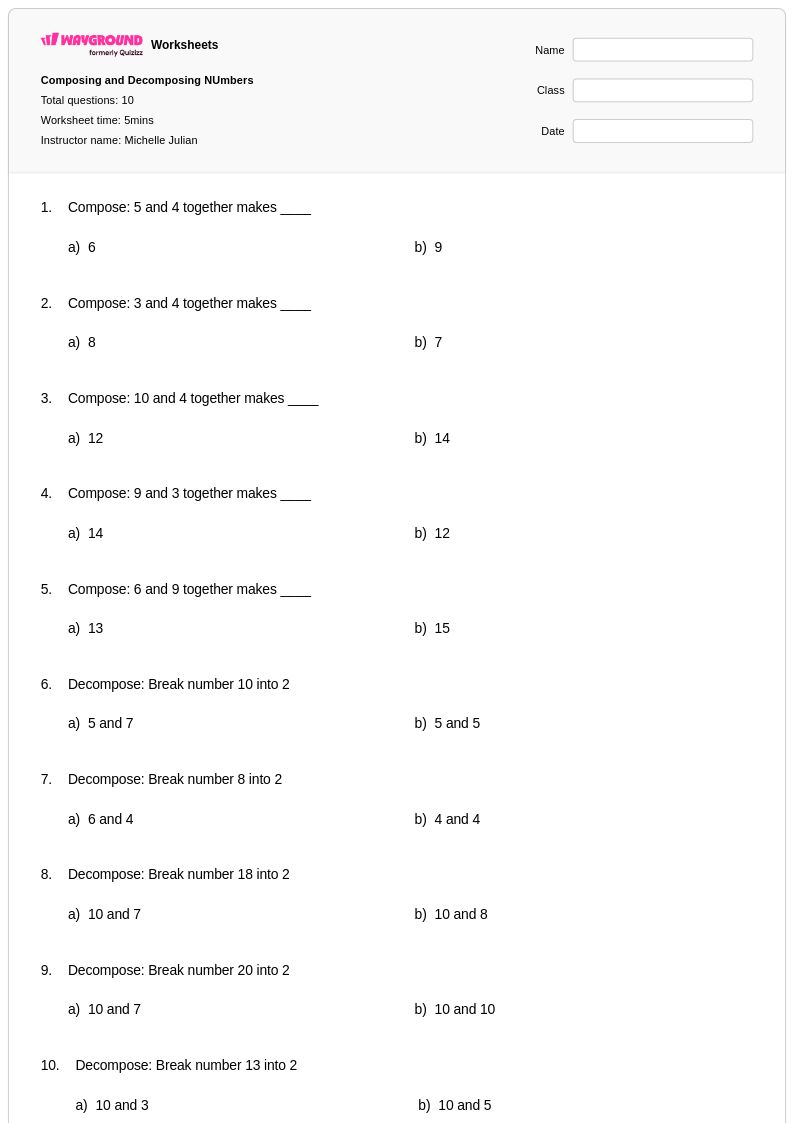
10Q
KG
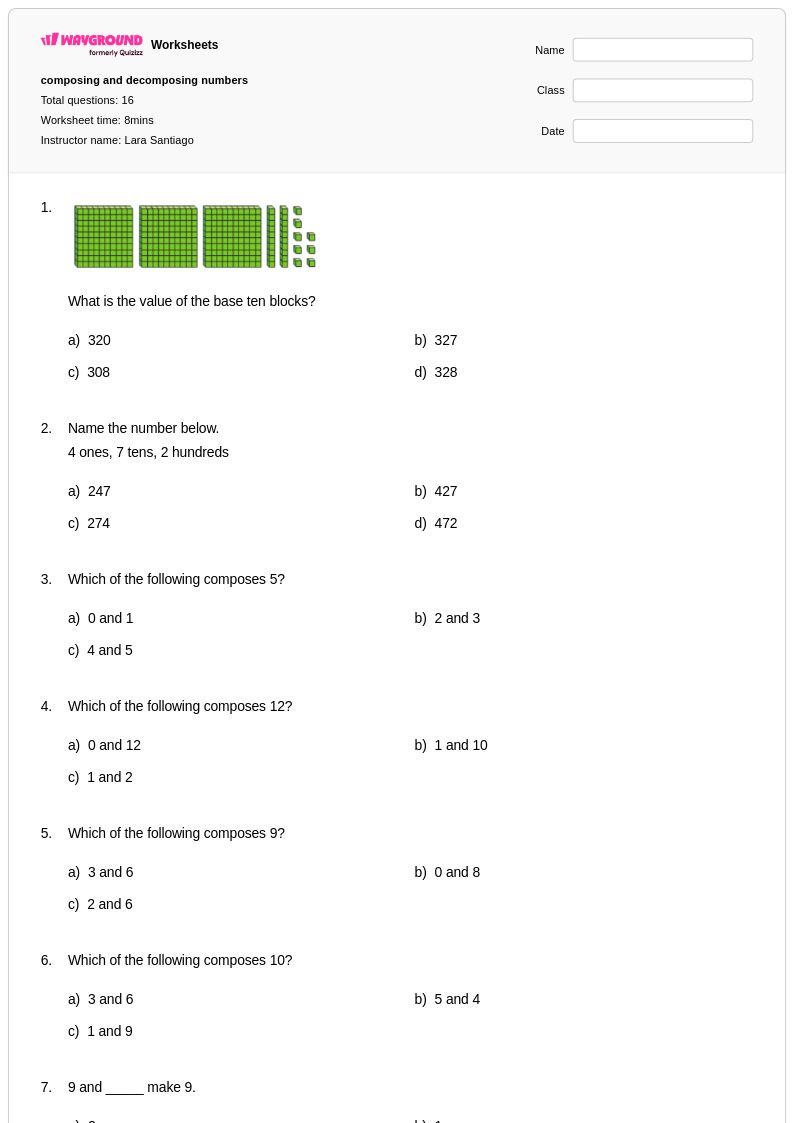
16Q
1st
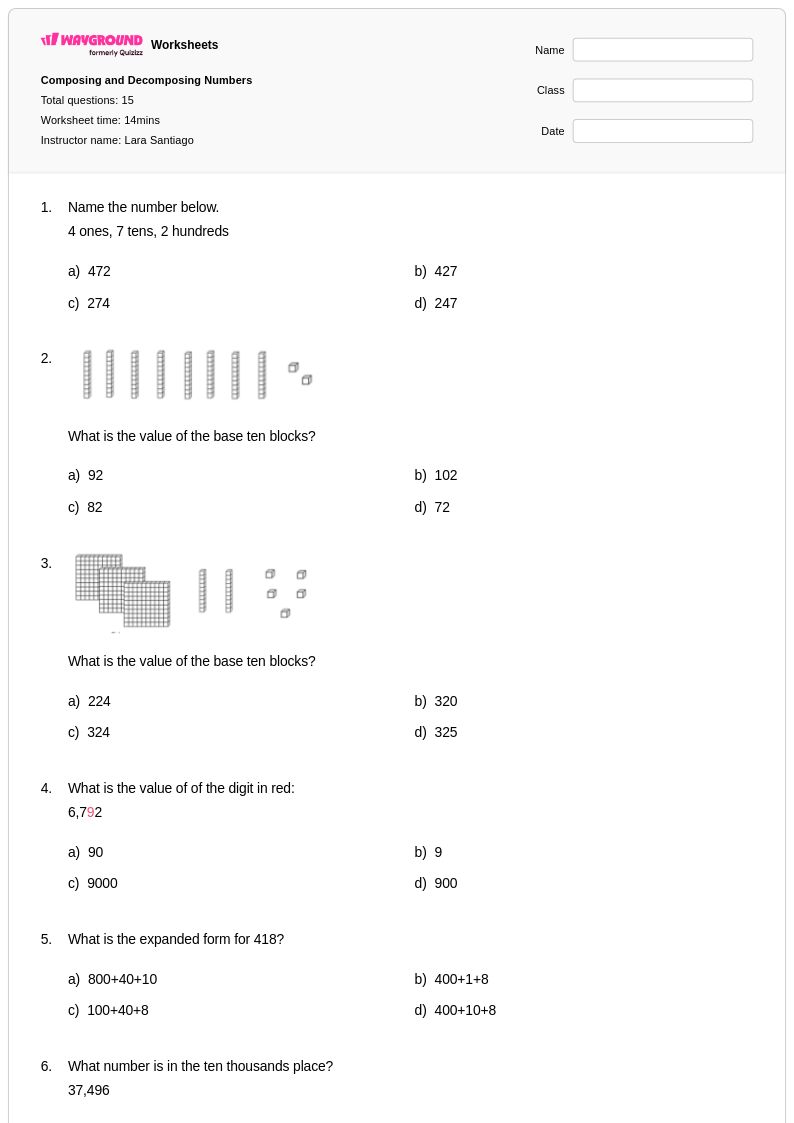
15Q
1st
Explorar hojas de trabajo por grado
Explorar hojas de trabajo por materias
Explore printable Composing and Decomposing Numbers worksheets
Composing and decomposing numbers worksheets through Wayground (formerly Quizizz) provide students with essential foundational practice in breaking apart and building numbers in flexible ways. These comprehensive printable resources help students develop number sense by exploring various strategies to represent the same quantity, such as understanding that 8 can be composed as 5+3, 4+4, or 6+2, while also learning to decompose numbers into their component parts. The collection includes free pdf worksheets with detailed answer keys that support systematic practice problems designed to strengthen students' conceptual understanding of number relationships and prepare them for more advanced mathematical reasoning. Teachers can access these versatile materials to reinforce critical skills that form the building blocks for addition, subtraction, and place value concepts.
Wayground (formerly Quizizz) empowers educators with millions of teacher-created resources specifically focused on composing and decomposing numbers, featuring robust search and filtering capabilities that help locate precisely the right materials for any instructional need. The platform's standards-aligned worksheet collections support differentiated instruction through flexible customization options, allowing teachers to modify content difficulty, problem types, and visual representations to meet diverse learner needs. Available in both printable and digital formats including downloadable pdfs, these resources streamline lesson planning while providing targeted options for remediation, enrichment, and daily skill practice. The comprehensive toolkit enables teachers to efficiently address varying ability levels within their classrooms, ensuring all students develop strong number sense foundations through engaging, research-based practice opportunities.
FAQs
How do I teach students to compose and decompose numbers?
What exercises help students practice composing and decomposing numbers?
What mistakes do students make when composing and decomposing numbers?
How can I use these composing and decomposing numbers worksheets in class?
How does composing and decomposing numbers fit the Common Core math progression?
How can I differentiate composing and decomposing numbers practice?