Free Printable Debt to Income Ratio Worksheets for Class 9
Explore free Class 9 debt to income ratio worksheets and printables that help students master essential financial literacy concepts through engaging practice problems and comprehensive answer keys.
Explore printable Debt to Income Ratio worksheets for Class 9
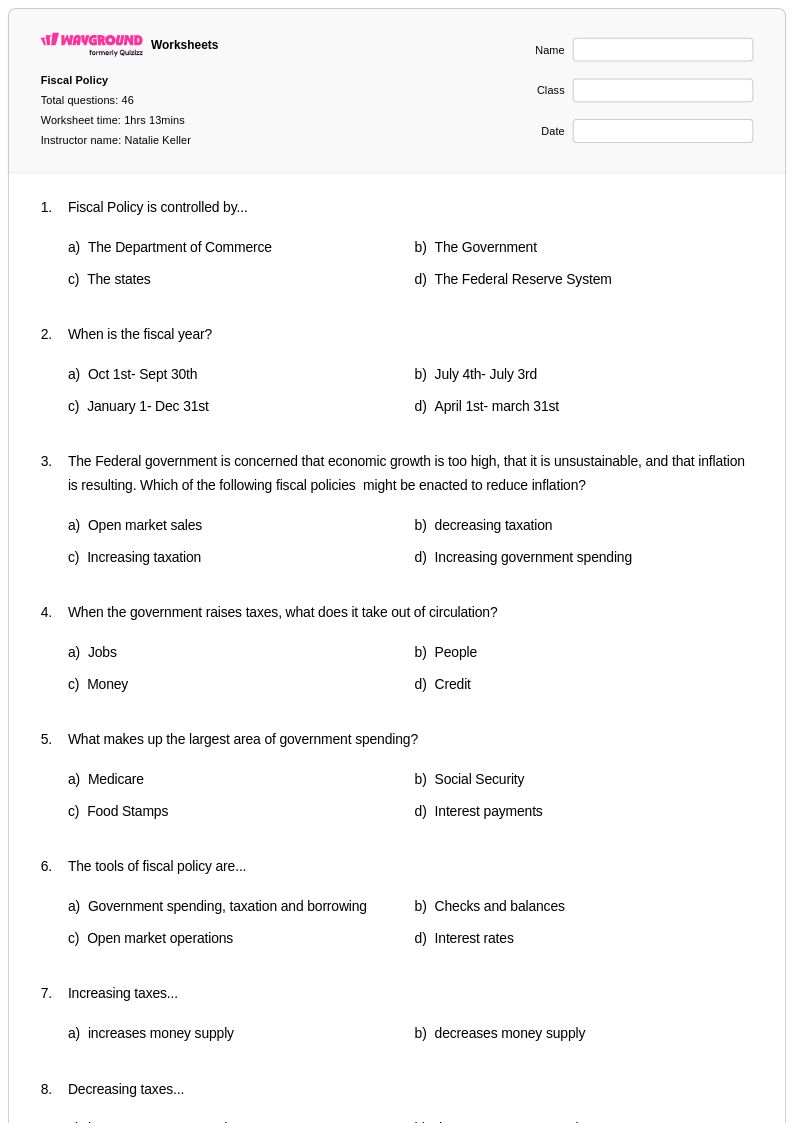
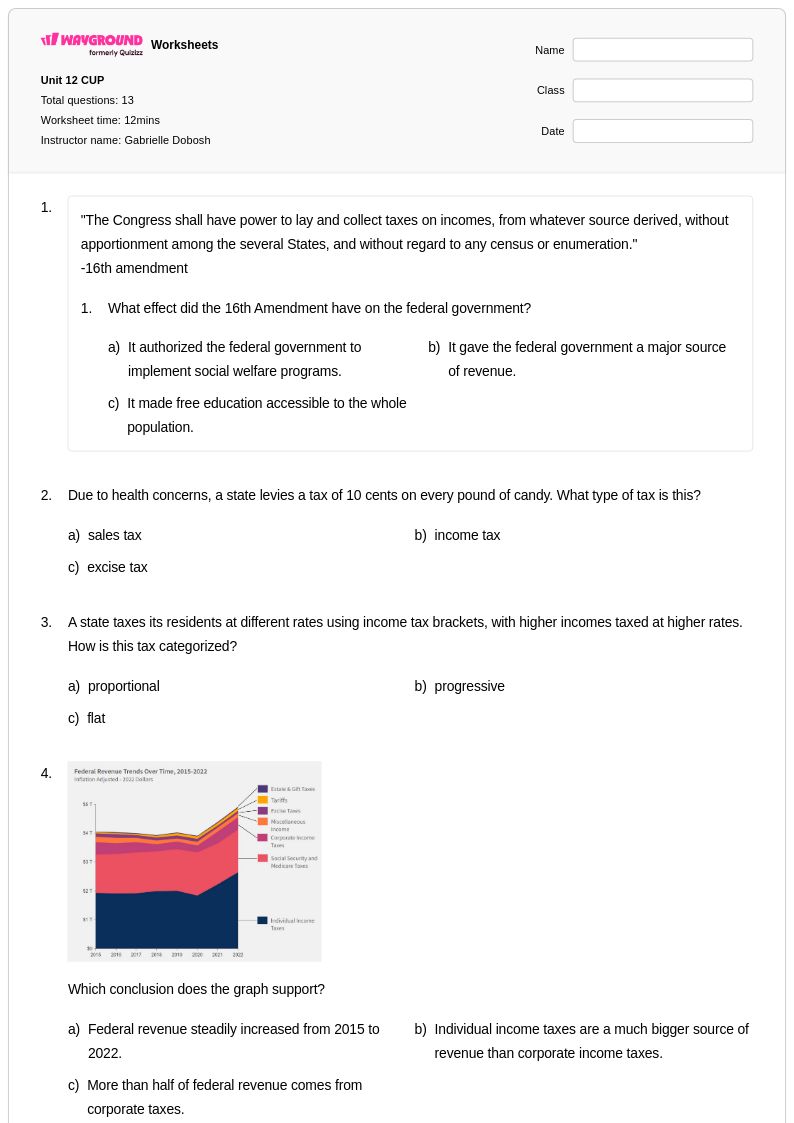
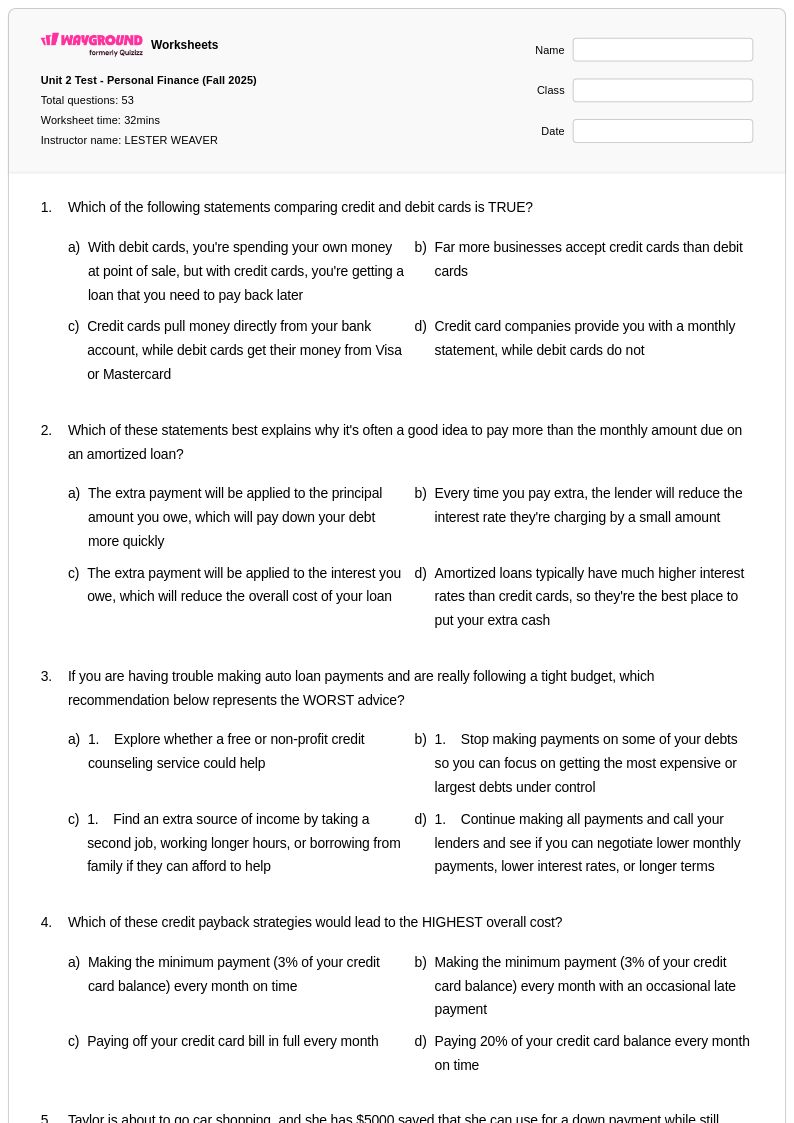
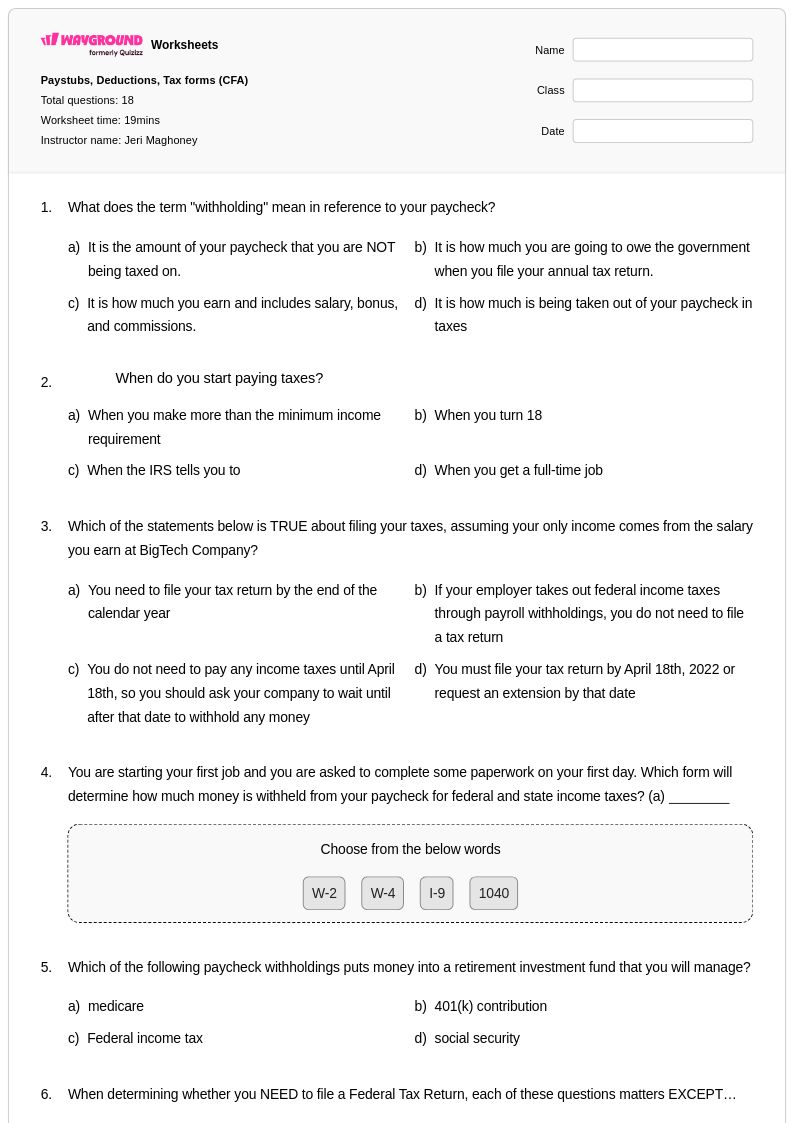
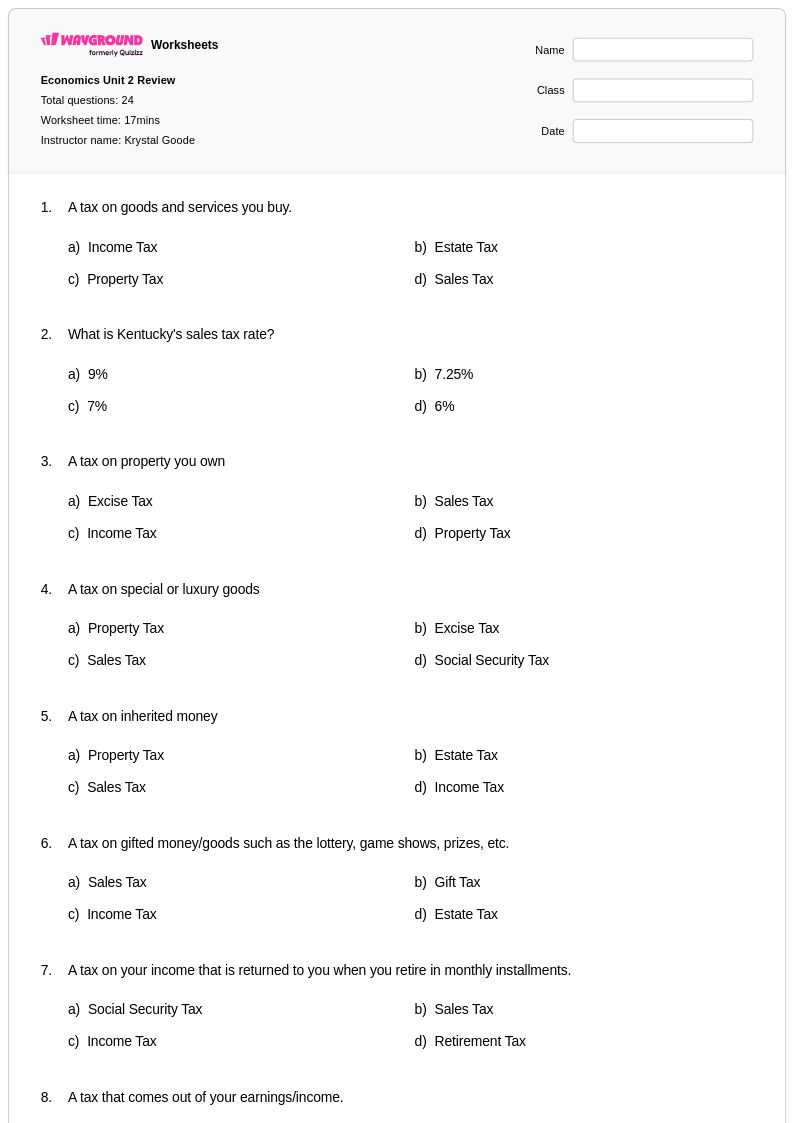
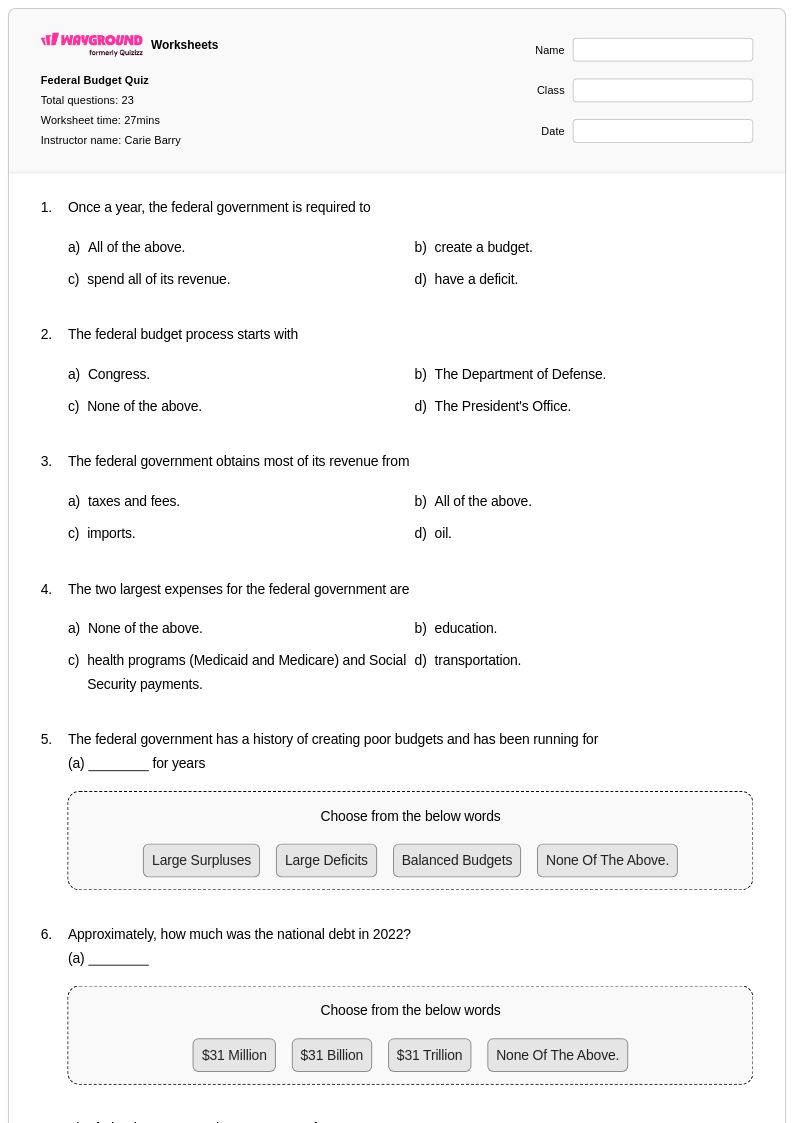
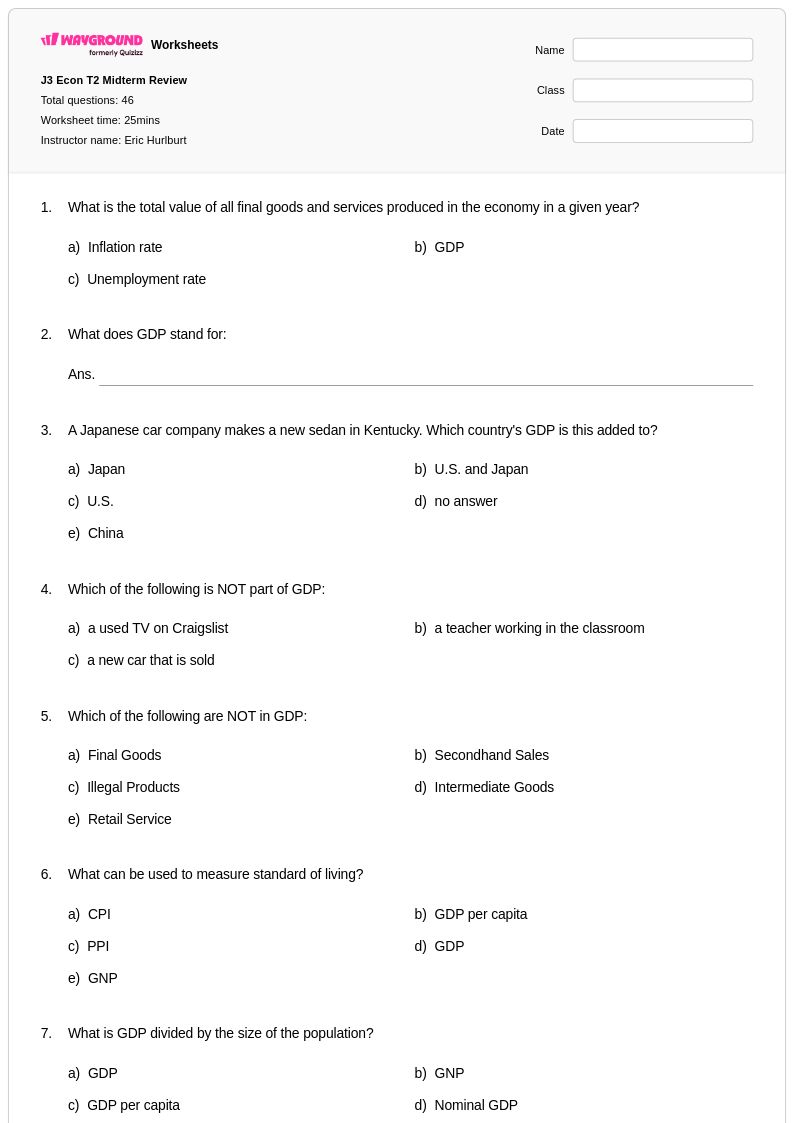
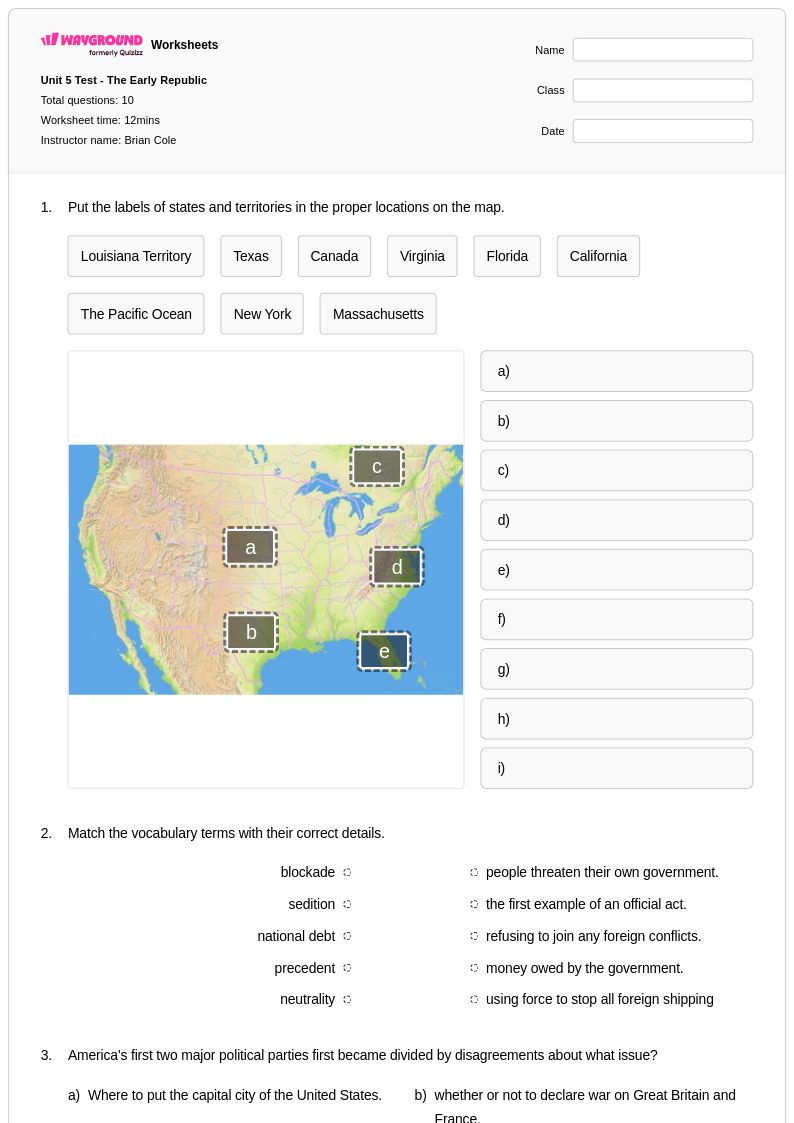
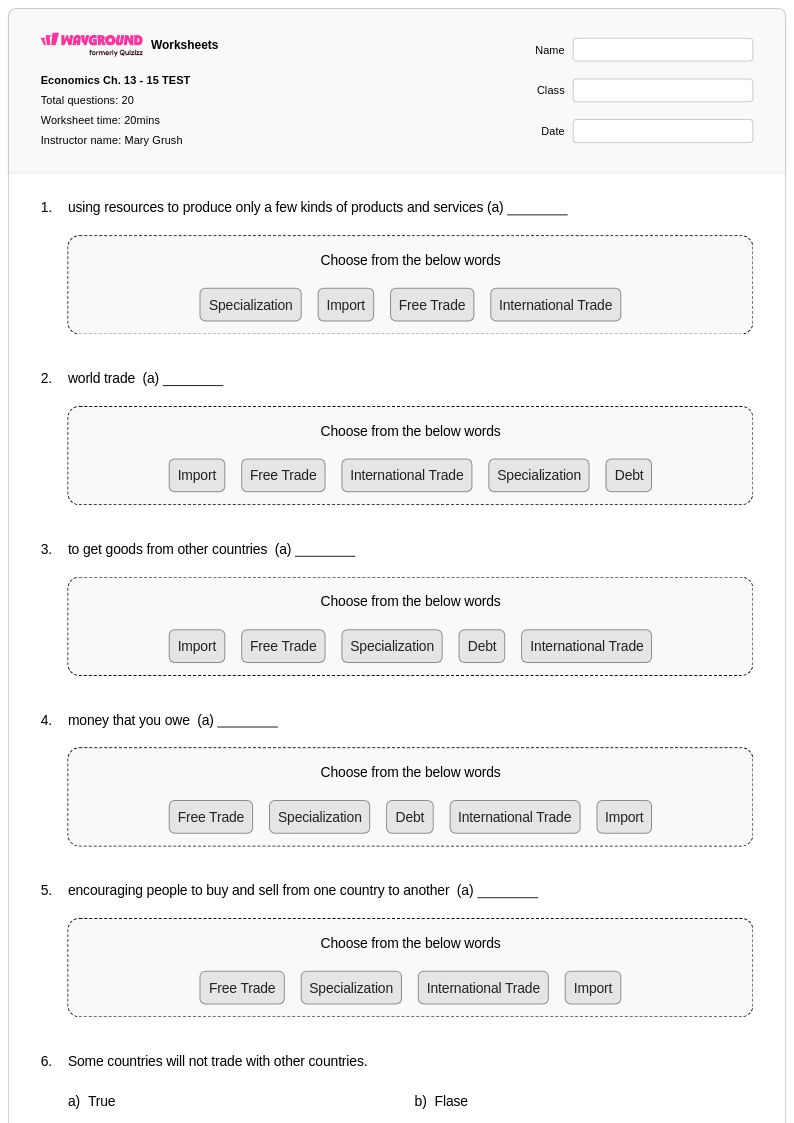
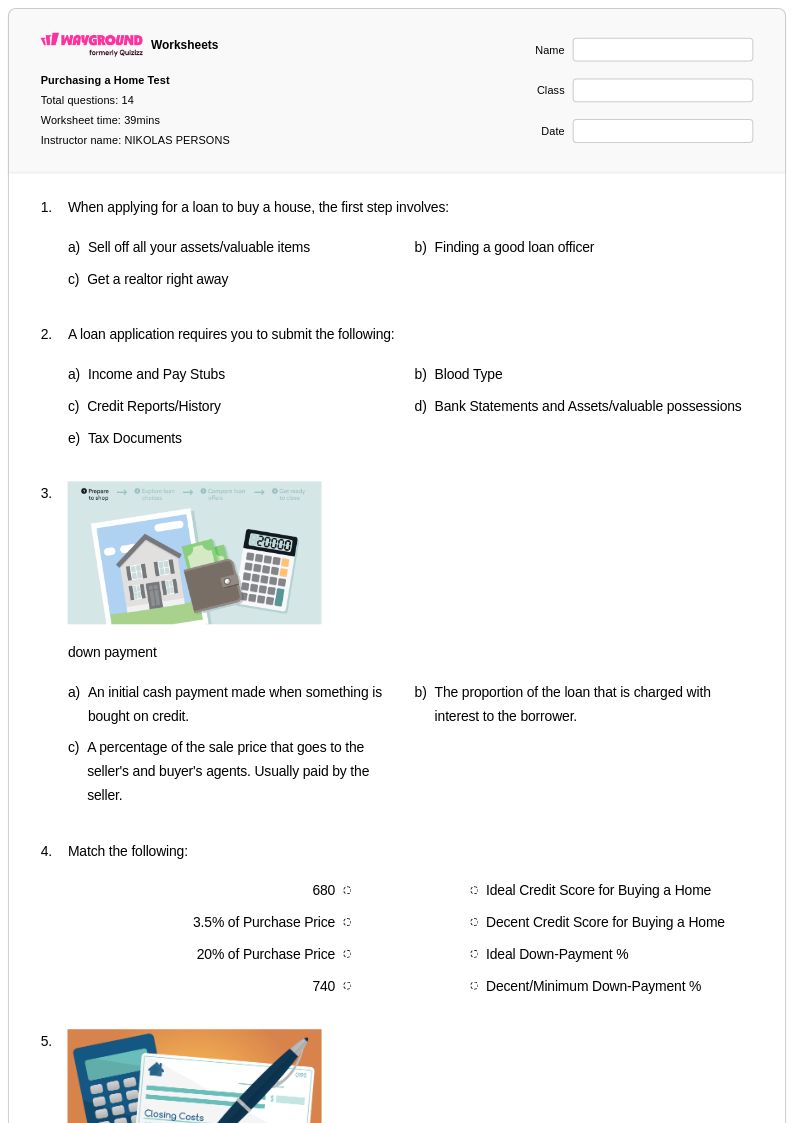
Debt to income ratio worksheets for Class 9 students available through Wayground provide essential practice in calculating and analyzing this critical personal finance metric. These comprehensive resources help students develop quantitative reasoning skills while learning to evaluate financial health by comparing monthly debt payments to gross monthly income. The worksheets feature real-world scenarios that challenge students to calculate debt to income percentages, interpret results, and make informed decisions about borrowing and spending habits. Each printable resource includes detailed practice problems with varying complexity levels, complete answer keys for immediate feedback, and free pdf downloads that make classroom implementation seamless. Students strengthen their mathematical computation abilities while gaining practical knowledge about credit worthiness, loan approval processes, and responsible financial planning.
Wayground's extensive collection of teacher-created debt to income ratio worksheets offers educators millions of professionally developed resources with robust search and filtering capabilities to match specific Class 9 economics curriculum needs. The platform's standards alignment ensures worksheets meet state and national financial literacy requirements, while built-in differentiation tools allow teachers to customize content for diverse learning levels within their classrooms. These flexible resources are available in both printable and digital formats, including downloadable pdf versions that support various instructional approaches from traditional paper-based activities to technology-integrated lessons. Teachers can efficiently plan comprehensive financial literacy units, provide targeted remediation for struggling learners, offer enrichment opportunities for advanced students, and deliver consistent skill practice that builds mathematical confidence alongside real-world financial competency.
FAQs
How do I teach debt to income ratio in a personal finance class?
Start by establishing what counts as debt versus income, since students often confuse gross and net income when setting up calculations. Introduce the formula (total monthly debt payments divided by gross monthly income, expressed as a percentage) using relatable examples like a first-time renter or car loan applicant. From there, connect the math to real-world thresholds lenders use, such as the common guideline that a DTI above 43% typically disqualifies a borrower from a qualified mortgage. This context gives students a reason to care about the calculation beyond the arithmetic itself.
What practice problems work best for teaching debt to income ratio?
Scenario-based problems are most effective because they force students to identify which expenses qualify as debt and which do not before performing any calculation. Effective practice problems present a full financial snapshot, including monthly income, rent or mortgage payments, car loans, student loans, and credit card minimums, and ask students to determine whether a lender would approve the borrower. Graduated problem sets that begin with straightforward single-debt scenarios and build toward complex multi-debt profiles help students develop calculation fluency before tackling interpretation questions.
What mistakes do students commonly make when calculating debt to income ratio?
The most frequent error is using net (take-home) income instead of gross monthly income in the denominator, which inflates the DTI percentage and leads to incorrect conclusions about a borrower's financial health. Students also commonly include non-debt expenses like groceries or utilities in the numerator, not understanding that DTI only counts recurring debt obligations. A third common mistake is failing to convert annual income to a monthly figure before dividing, producing a ratio that is off by a factor of twelve.
How can I use debt to income ratio worksheets to support students at different skill levels?
For students who are still building arithmetic confidence, start with problems that provide pre-calculated monthly totals so the focus stays on setting up and interpreting the ratio rather than multi-step arithmetic. Advanced students benefit from open-ended scenarios where they must recommend whether a borrower should pay down specific debts before applying for a loan. On Wayground, teachers can apply accommodations such as reduced answer choices or read-aloud support to individual students, allowing the same worksheet to serve a differentiated classroom without requiring separate materials.
How do I use Wayground's debt to income ratio worksheets in my classroom?
Wayground's debt to income ratio worksheets are available as printable PDFs for traditional classroom use and in digital formats for technology-integrated environments, including the option to host them as a quiz directly on Wayground. Each worksheet includes complete answer keys, so teachers can use them for guided practice, independent work, or assessment without additional preparation. The platform's search and filtering tools allow instructors to quickly locate worksheets that match specific learning objectives, making lesson planning more efficient.
How does debt to income ratio connect to broader personal finance and economics standards?
Debt to income ratio sits at the intersection of several personal finance competencies, including budgeting, credit management, and understanding lending criteria, making it a high-leverage topic in financial literacy curricula. Teaching DTI gives students a concrete, quantitative tool for evaluating borrowing decisions, which connects directly to standards around responsible credit use and long-term financial planning. Because the calculation requires students to categorize income and expenses accurately, it also reinforces foundational budgeting skills taught earlier in a personal finance course.