Free Printable Direct and Inverse Variation Worksheets for Class 11
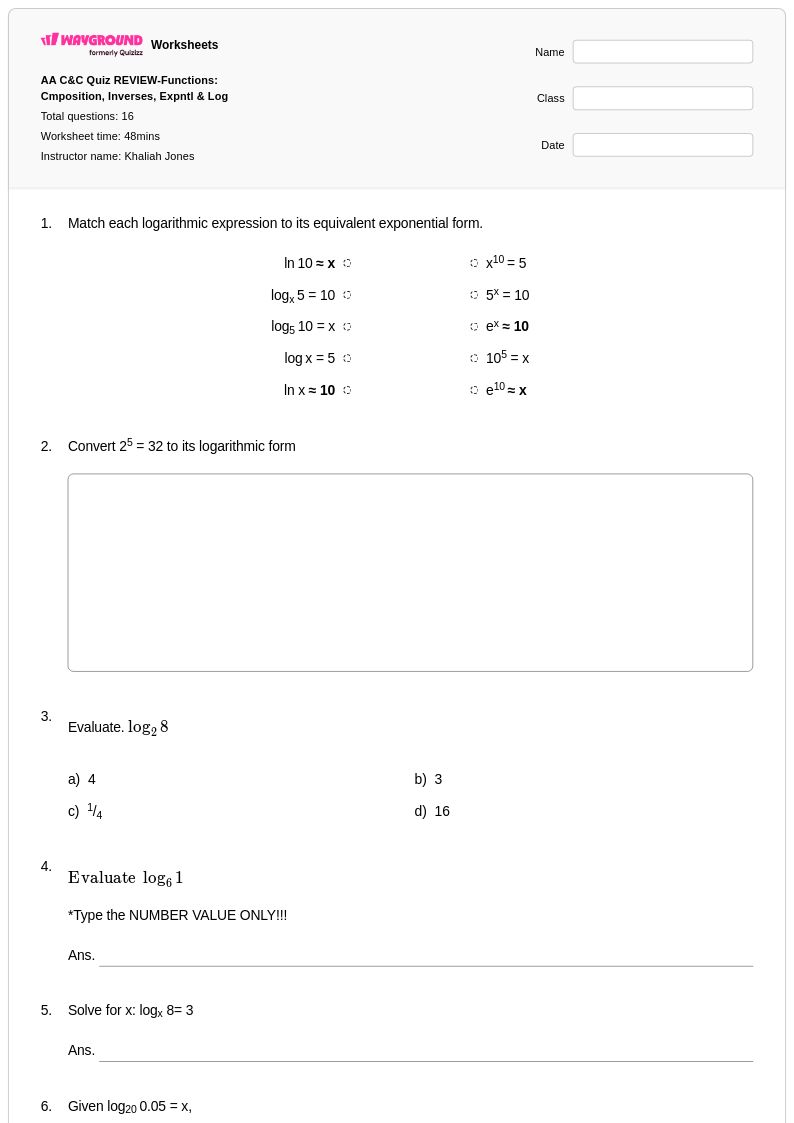
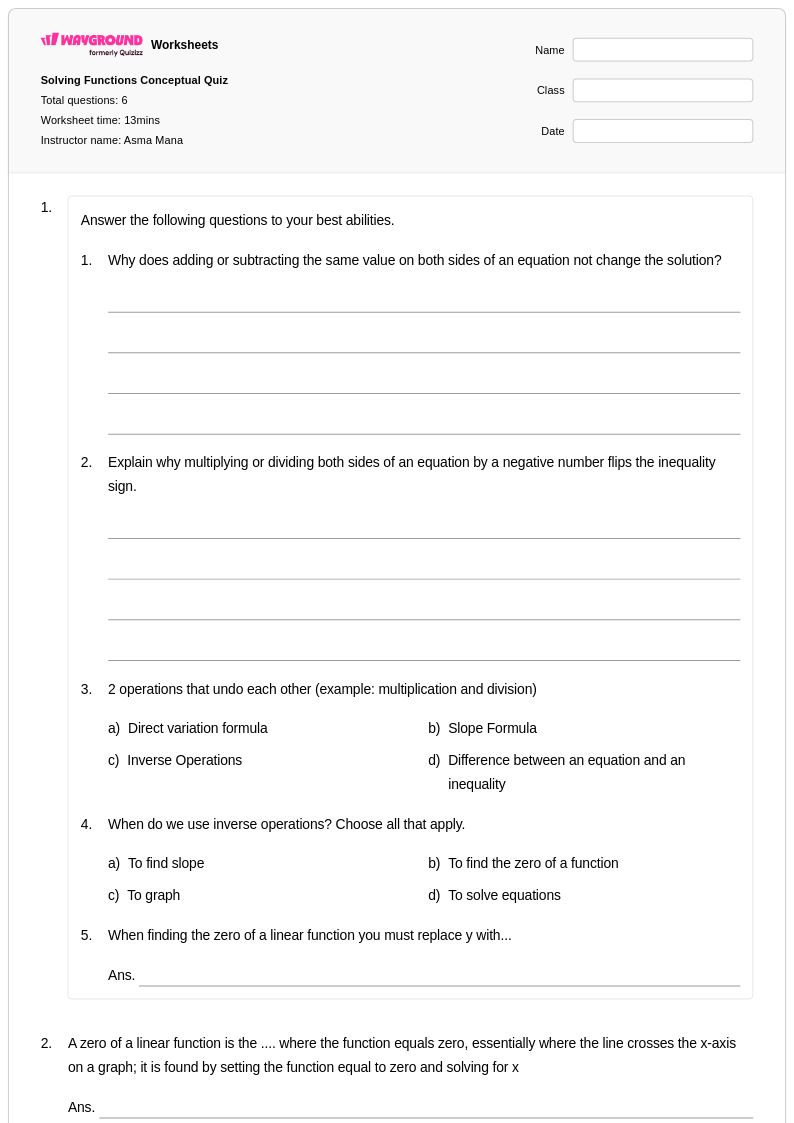
Class 11 direct and inverse variation free worksheets and printables help students master proportional relationships through comprehensive practice problems with detailed answer keys and downloadable PDFs from Wayground.
Explore printable Direct and Inverse Variation worksheets for Class 11
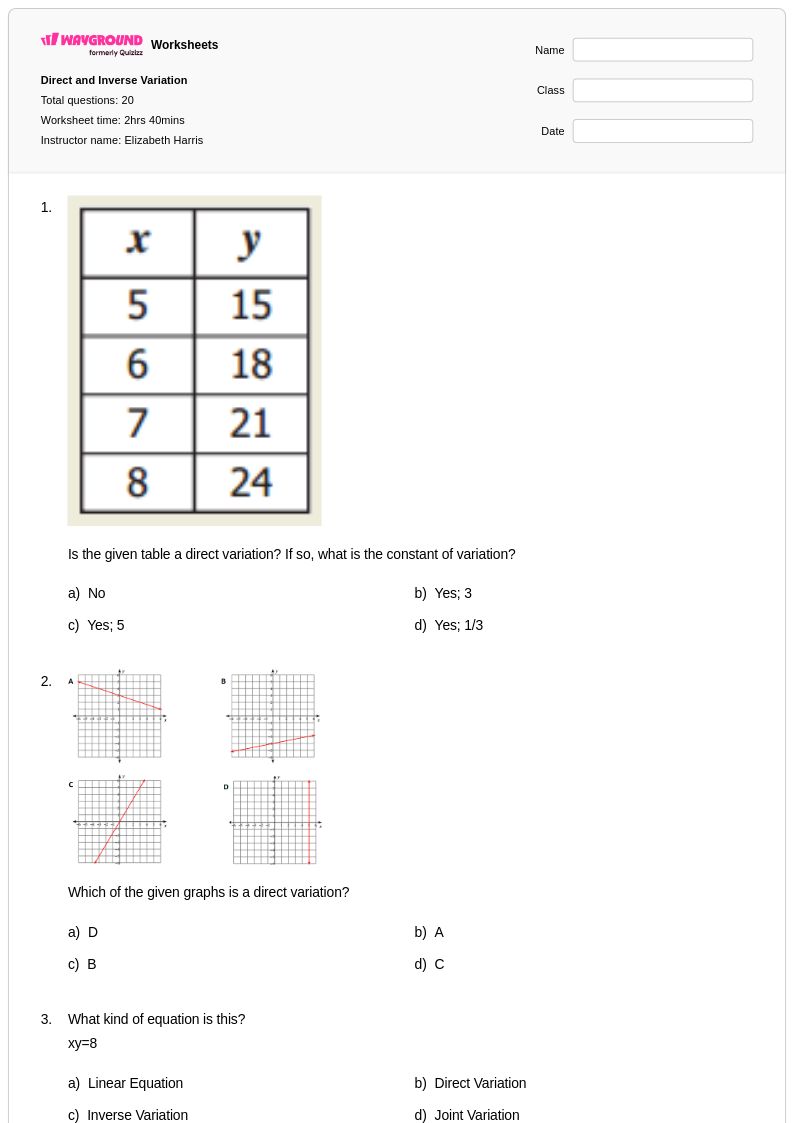
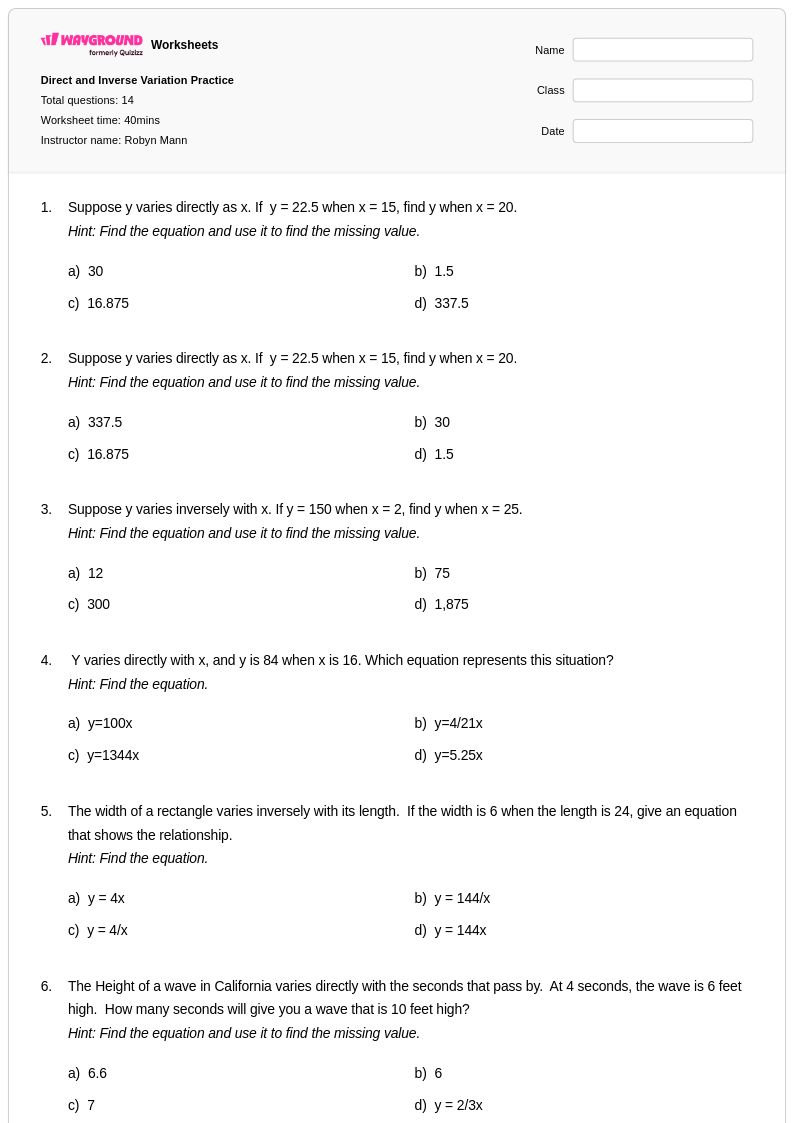
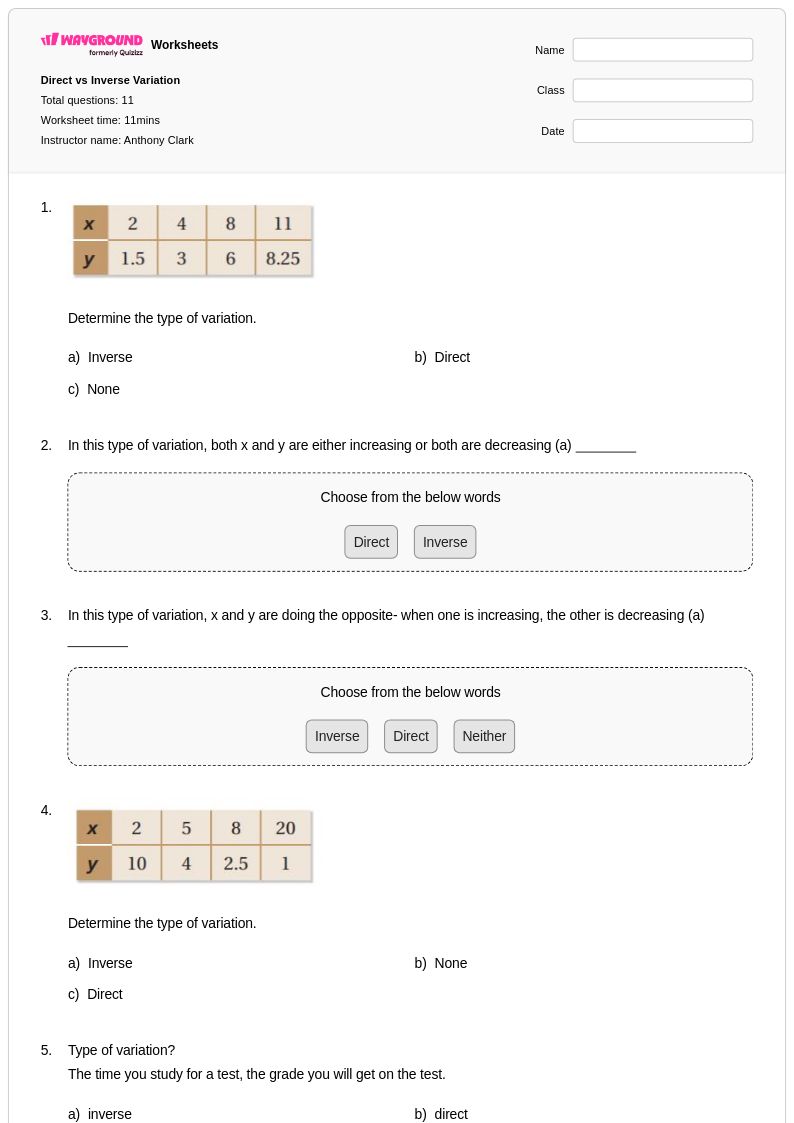
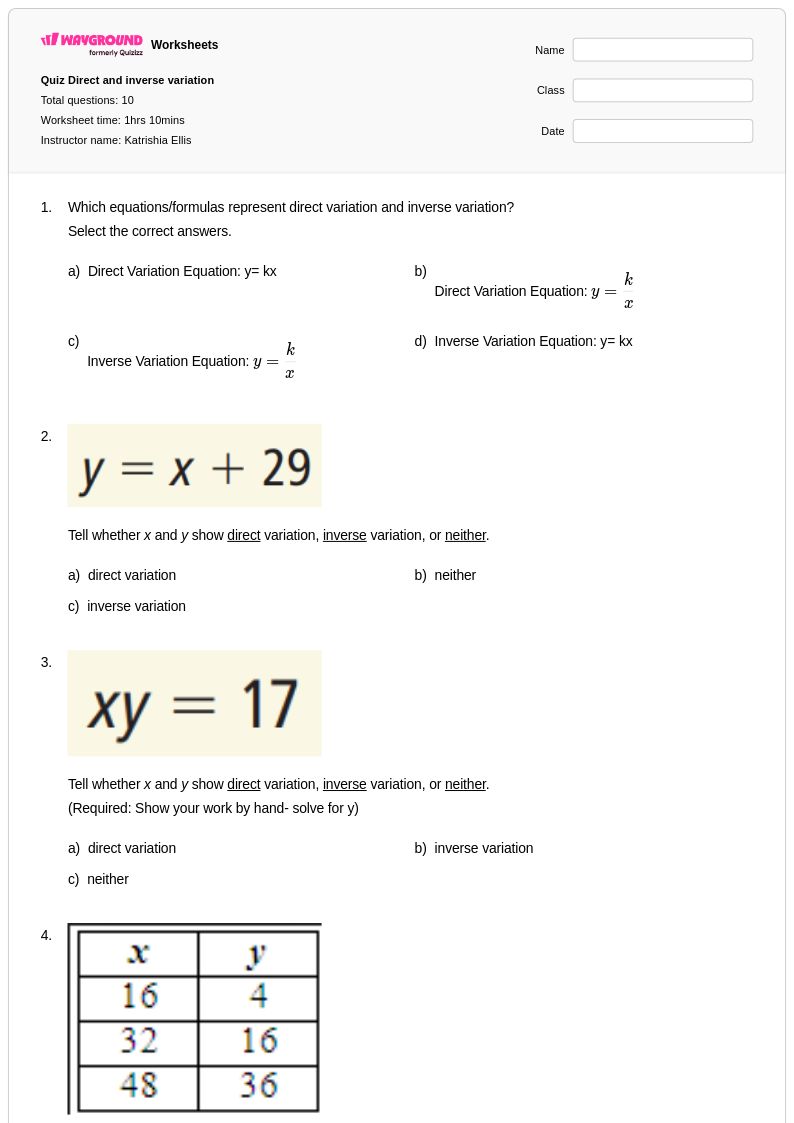
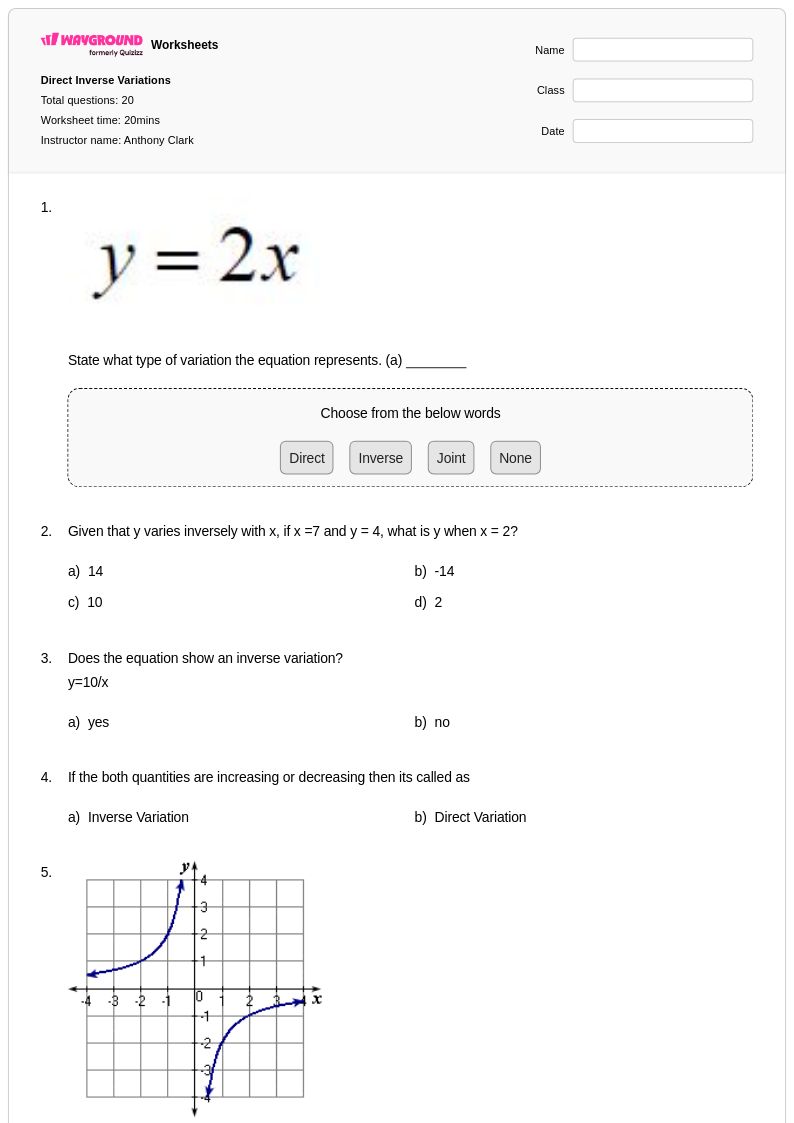
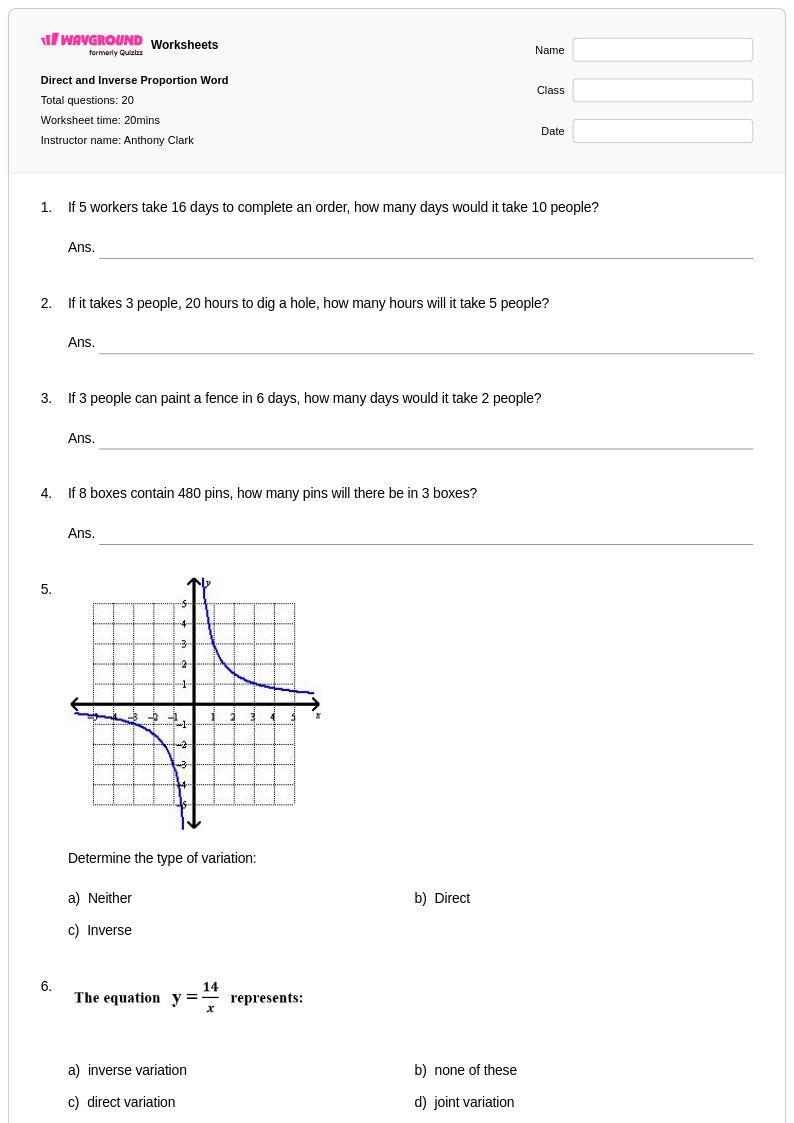
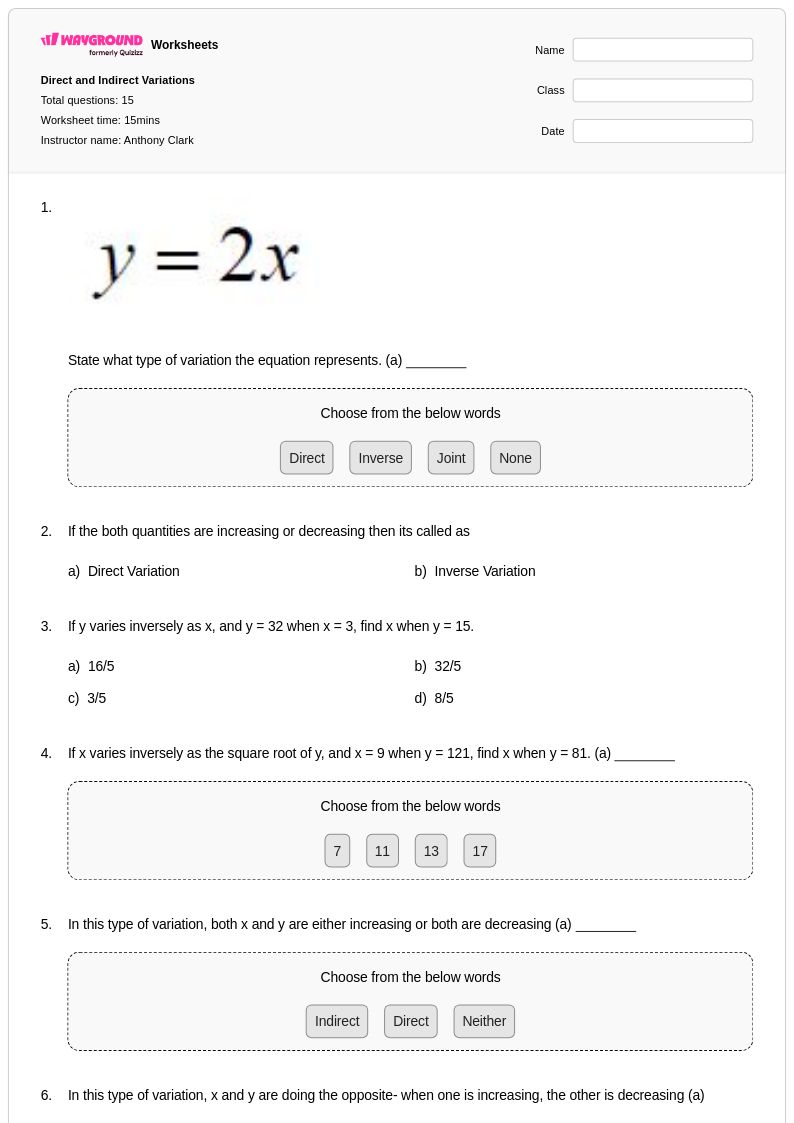
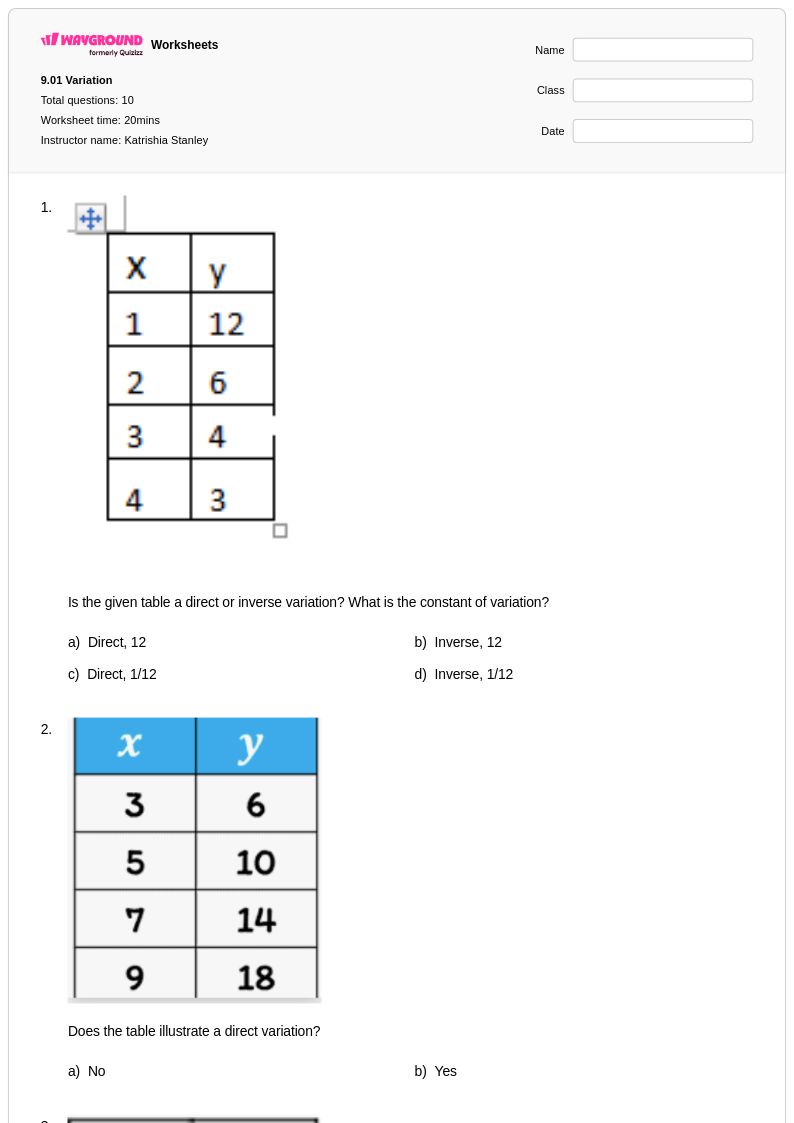
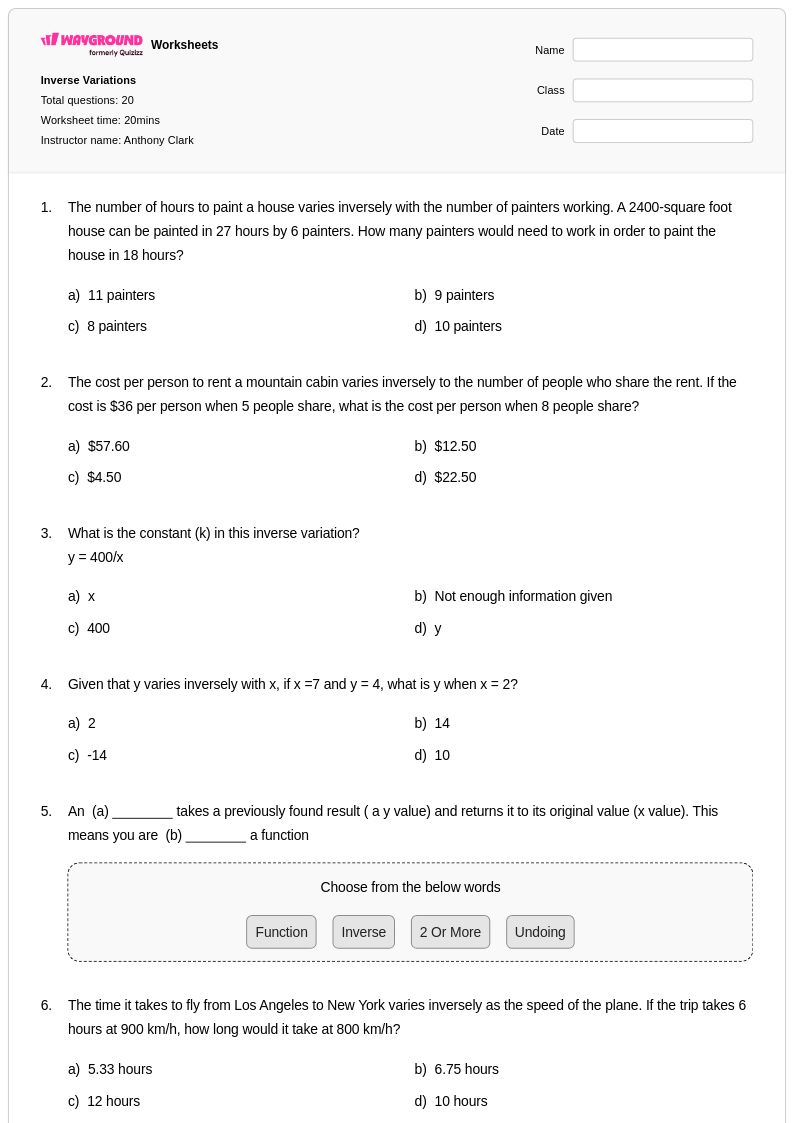
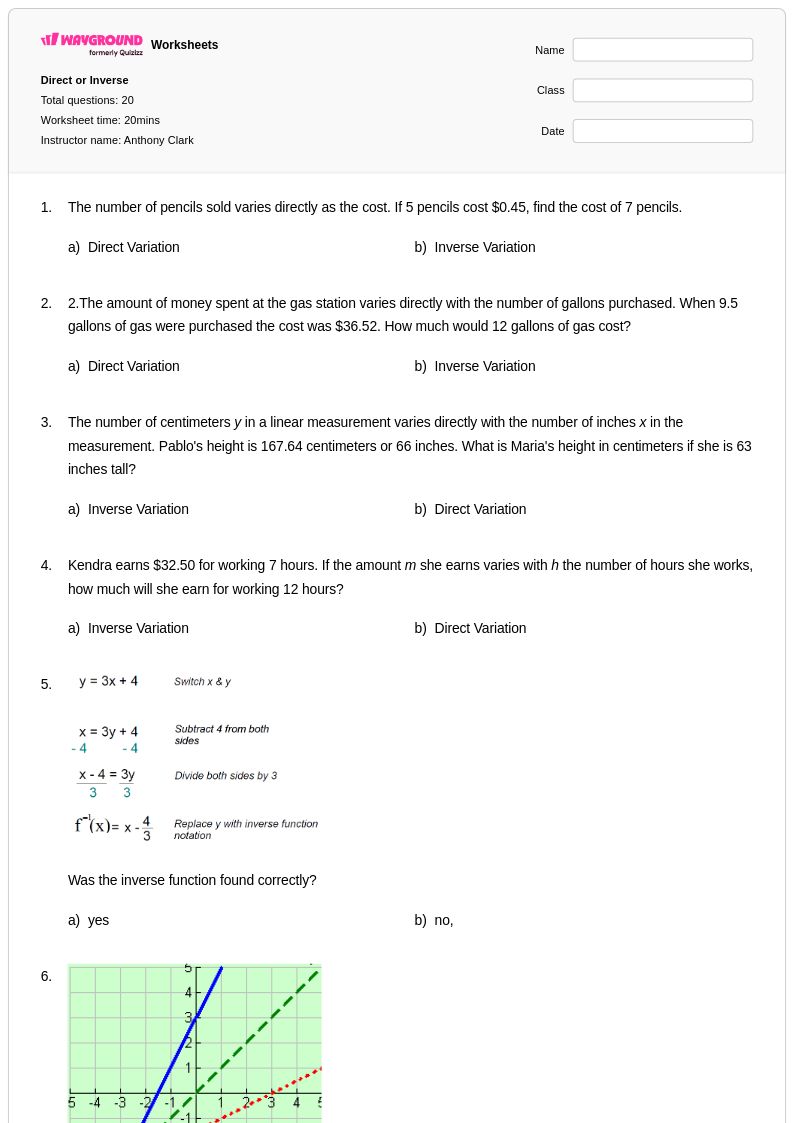
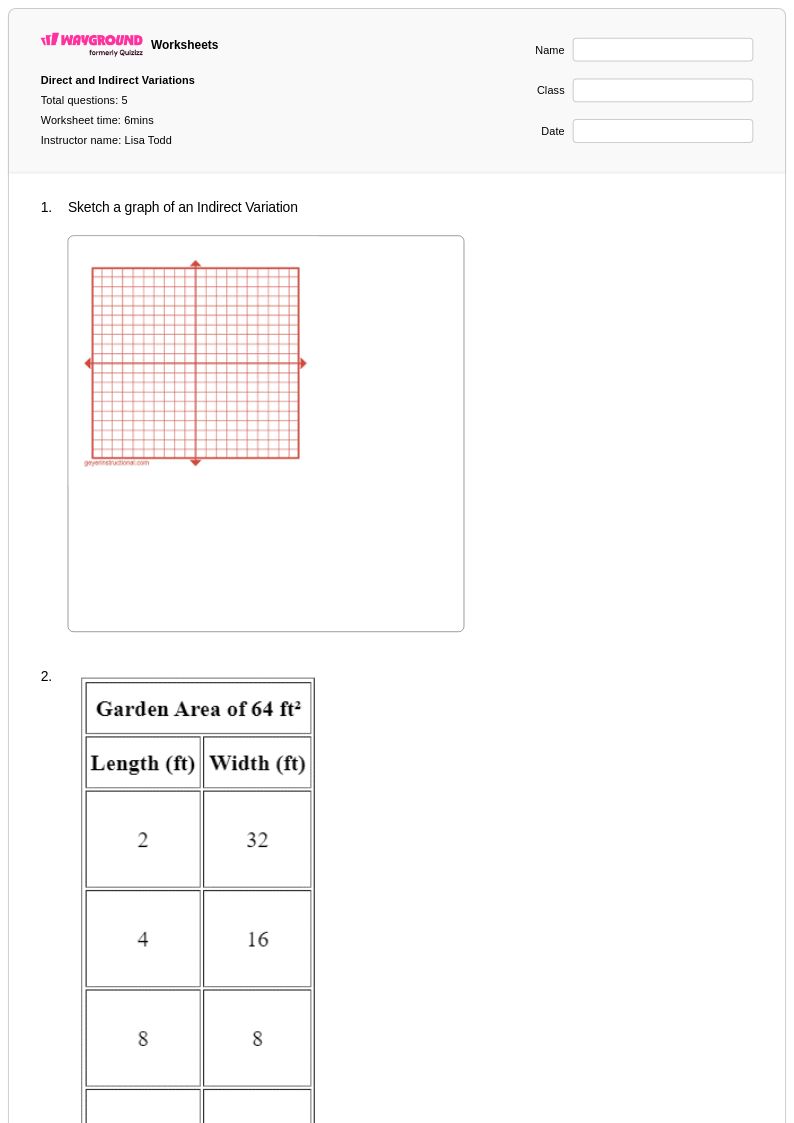
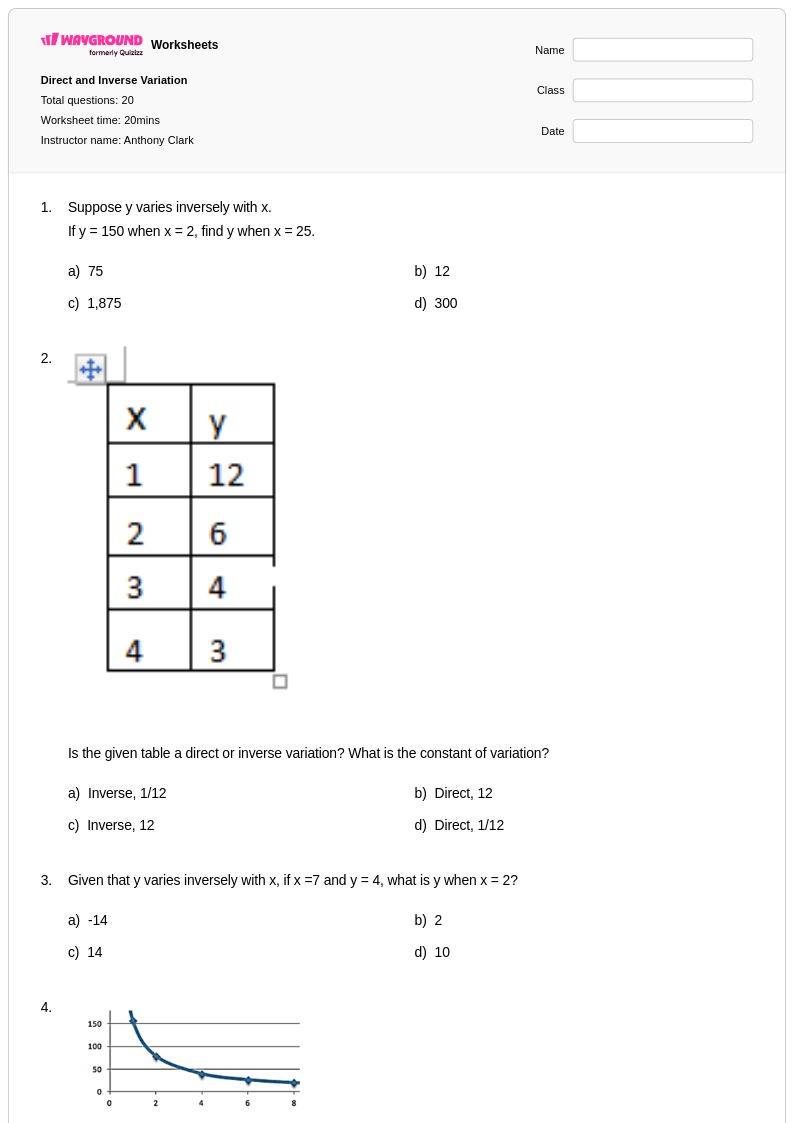
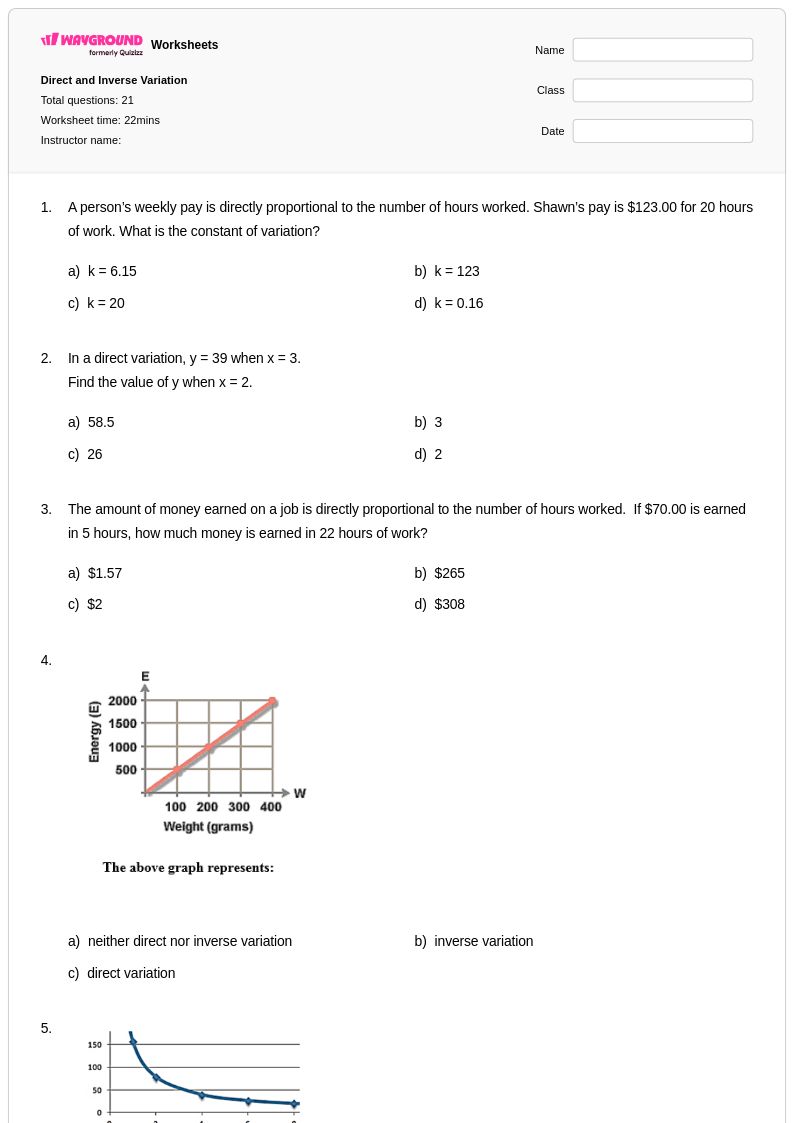
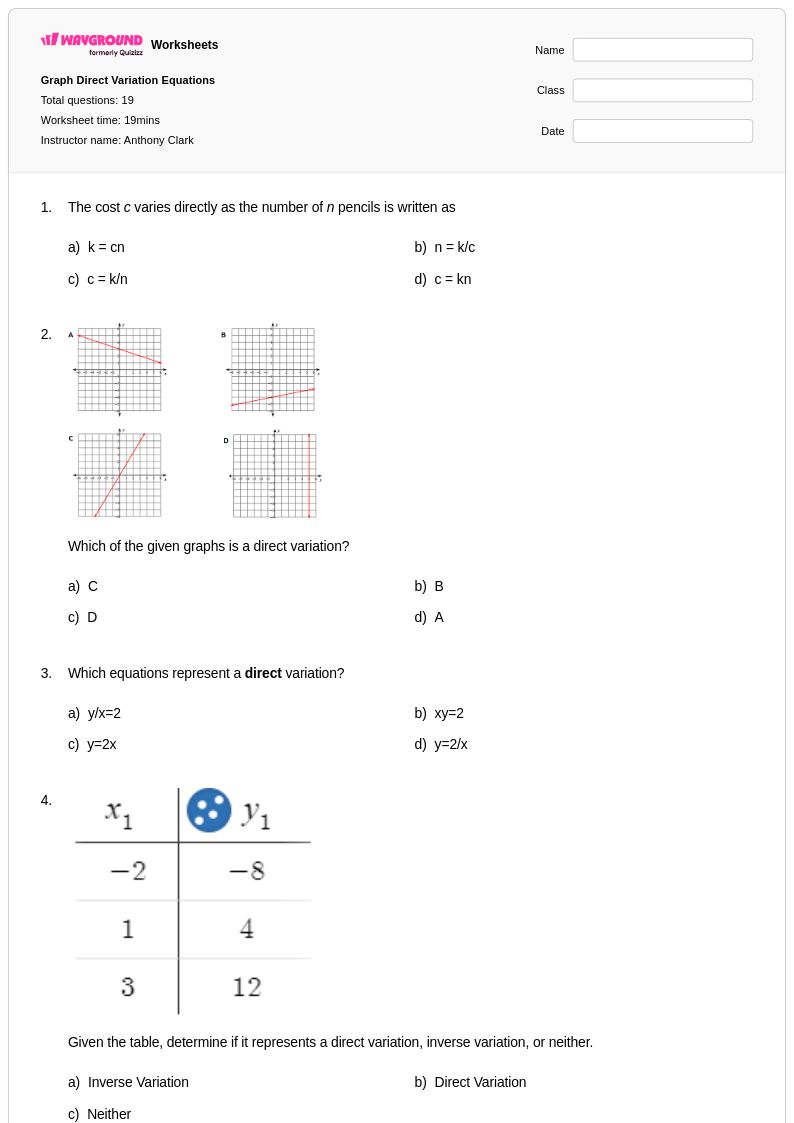
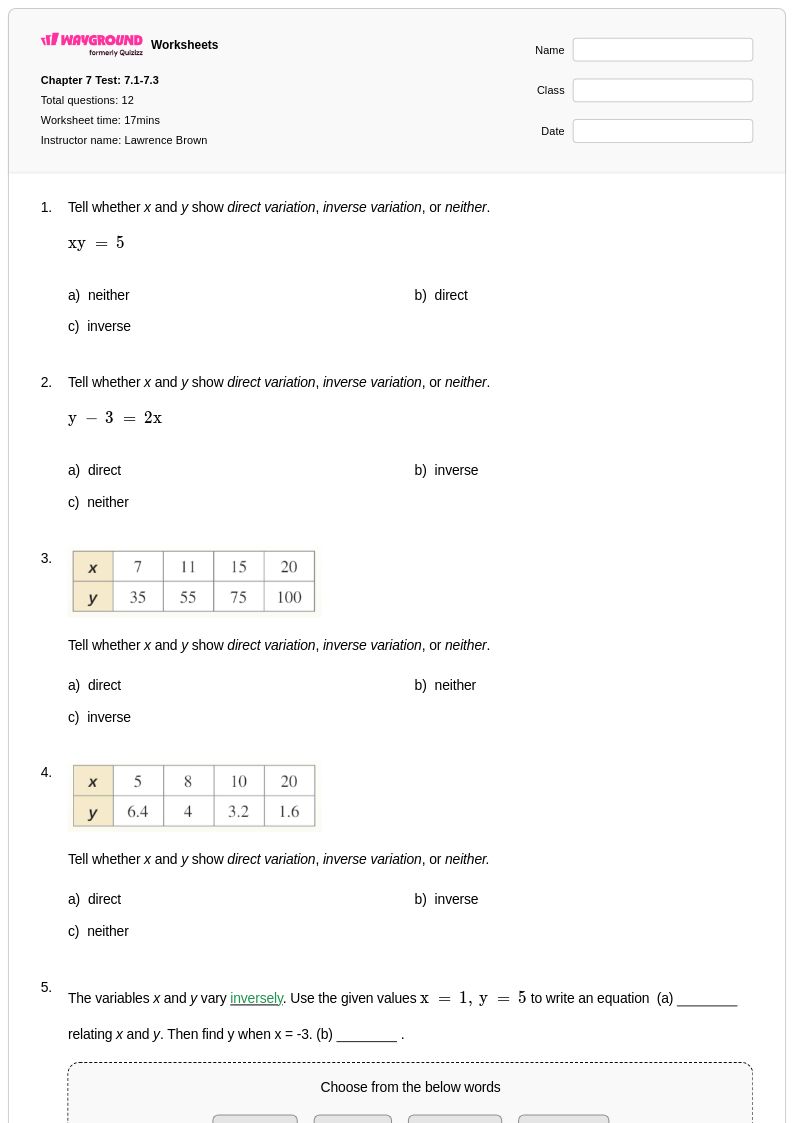
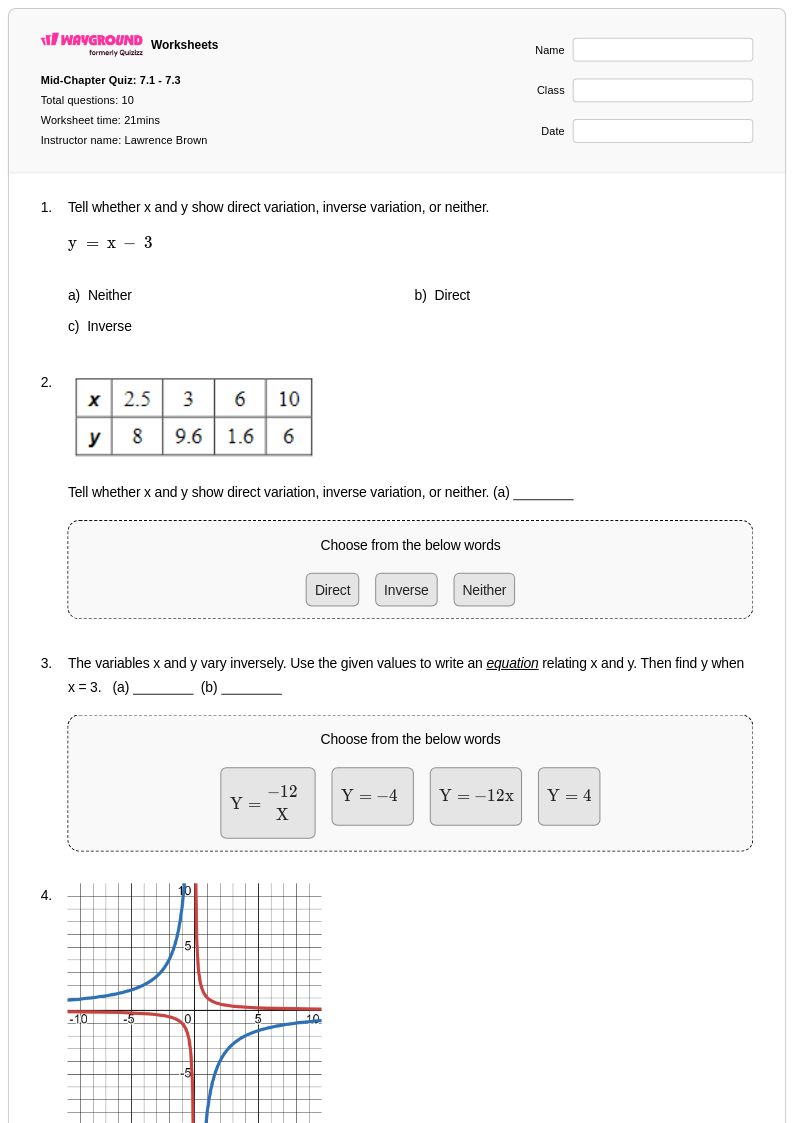
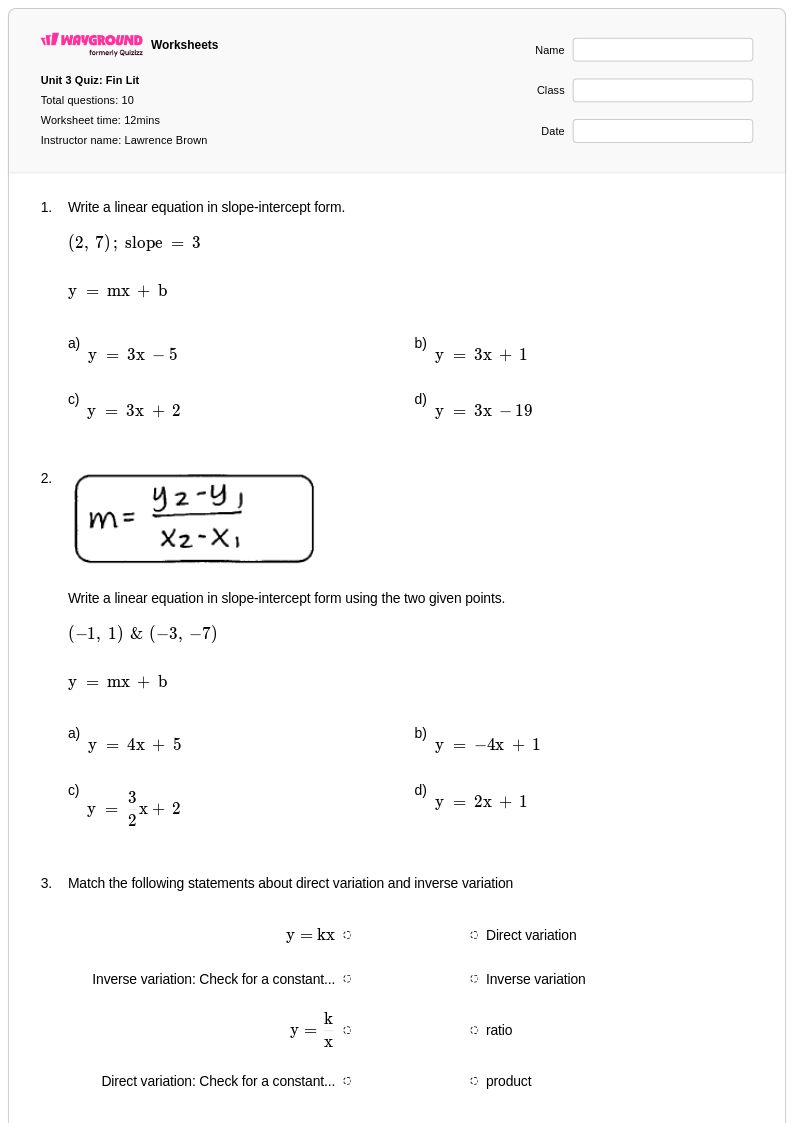
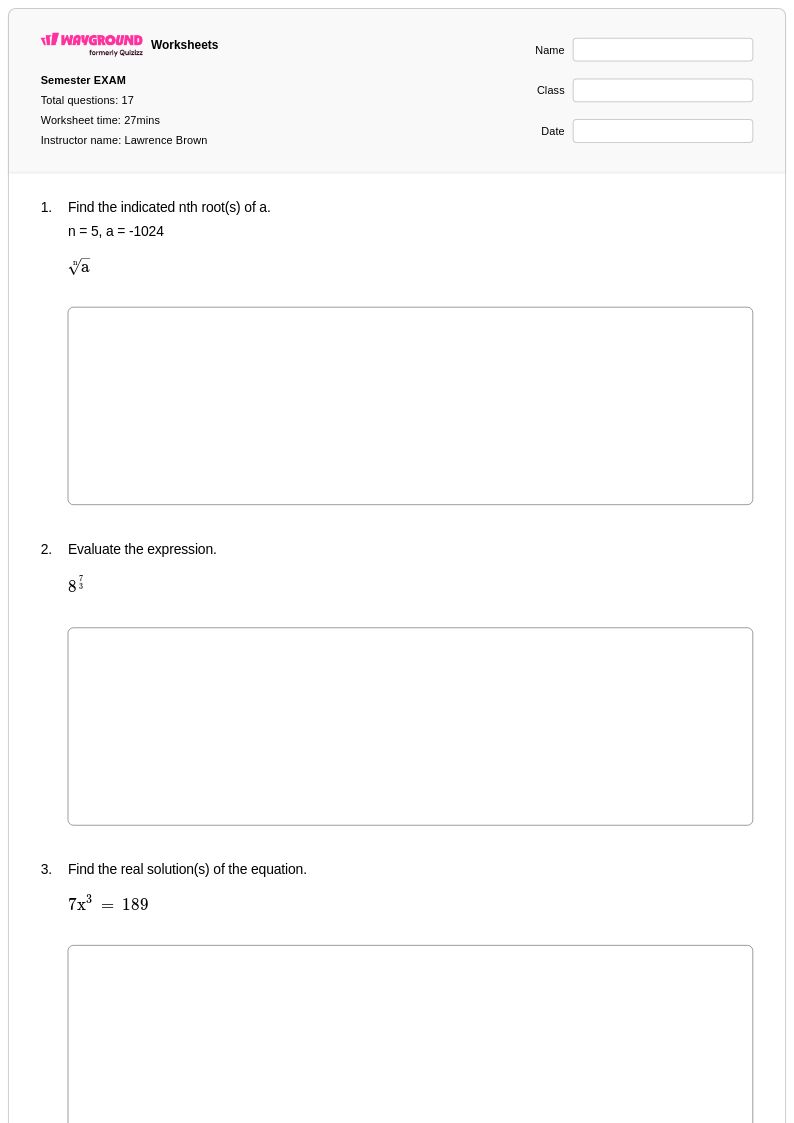
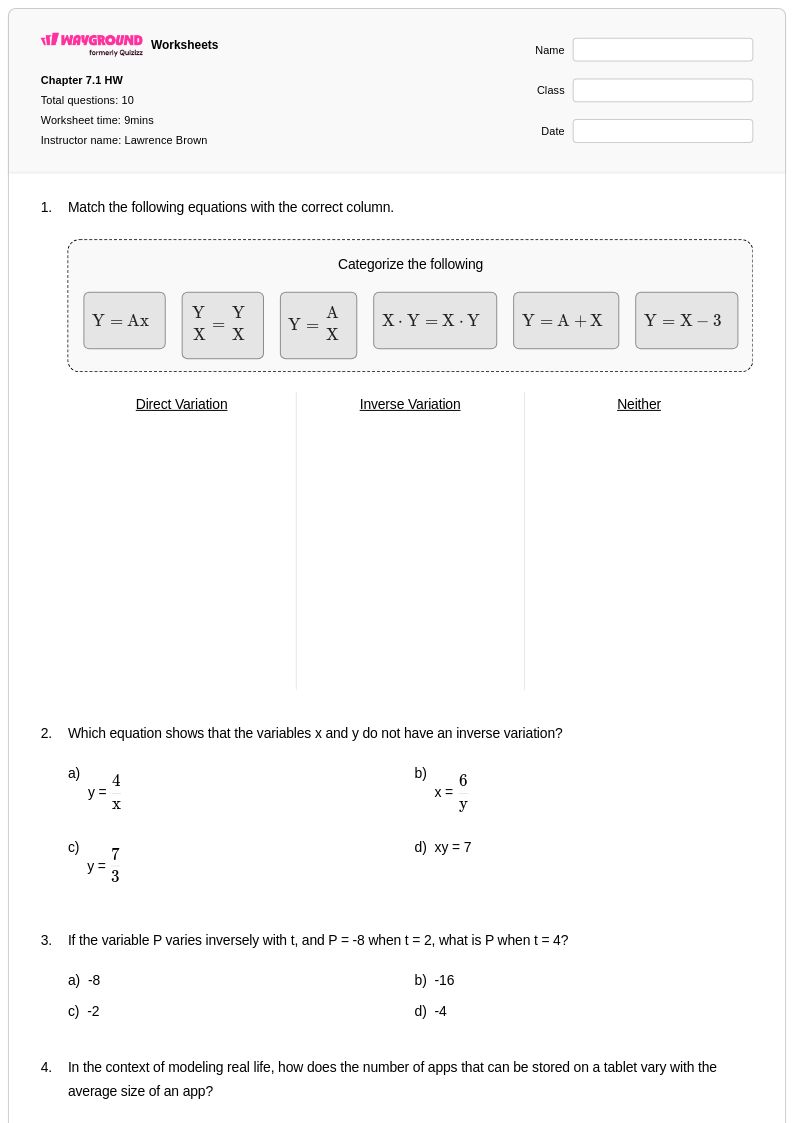
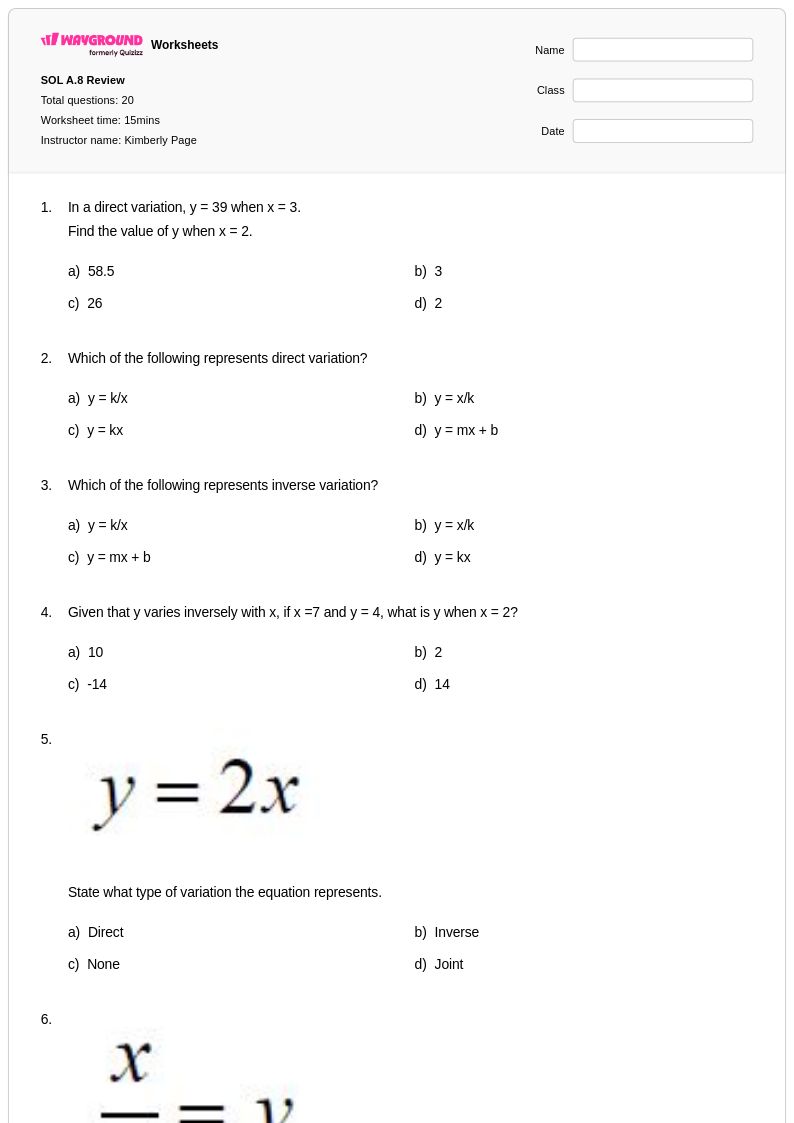
Direct and inverse variation worksheets for Class 11 students provide comprehensive practice with fundamental algebraic relationships that form the foundation for advanced mathematical concepts. These carefully designed resources help students master the distinction between direct variation, where variables increase or decrease proportionally, and inverse variation, where one variable increases as the other decreases in a predictable pattern. The worksheets strengthen critical skills including writing and interpreting variation equations, solving for constants of variation, and applying these relationships to real-world scenarios such as physics problems involving distance, time, and speed. Each worksheet collection includes detailed answer keys and is available as free printable PDFs, making it easy for students to work through practice problems systematically while checking their understanding of these essential algebraic concepts.
Wayground, formerly Quizizz, supports mathematics educators with an extensive library of millions of teacher-created resources specifically designed for direct and inverse variation instruction at the Class 11 level. The platform's robust search and filtering capabilities allow teachers to quickly locate worksheets that align with specific curriculum standards and learning objectives, while built-in differentiation tools enable customization for students with varying skill levels and learning needs. These comprehensive worksheet collections are available in both printable and digital formats, including downloadable PDFs, providing maximum flexibility for classroom instruction, homework assignments, and independent study sessions. Teachers can effectively use these resources for initial concept introduction, targeted remediation for struggling students, enrichment activities for advanced learners, and ongoing skill practice to ensure mastery of variation relationships before progressing to more complex algebraic topics.
FAQs
How do I teach direct and inverse variation at the Grade 11 level?
By Grade 11, the goal is fluency and application rather than first exposure. Students should be able to move between representations — equation, table, graph — without prompting, and apply variation relationships to multi-step problems in physics and other applied contexts. If gaps remain, the most efficient fix is a targeted review of how to identify k from a table (checking y/x vs. xy) before moving into the more complex applications the grade level demands.
What exercises are most useful for Grade 11 students practicing variation?
At this level, the most productive practice involves applied problems where students must independently recognize the variation type, set up the equation, find k, and solve — without scaffolding that labels each step. Problems involving distance, speed, and time or physics scenarios like pressure and volume are particularly effective. Graphical analysis — identifying whether a curve represents direct or inverse variation and reading k from it — is also worth including, since it connects to the function analysis work students are doing in precalculus.
What errors do 11th graders still make with direct and inverse variation?
The most common issue at this level isn't the algebra — it's misidentifying the variation type in an unfamiliar applied context. Students who can solve y = k/x fluently sometimes don't recognize inverse variation when it's embedded in a physics or geometry problem. A second error: students occasionally confuse the constant of variation with slope, particularly in direct variation problems where the linear structure invites that conflation.
How do I use Wayground's Grade 11 variation worksheets?
The worksheets are available as printable PDFs with complete answer keys included — practical for in-class practice, homework, or review before an assessment. You can also assign any worksheet as a digital quiz on Wayground, which is useful when you want results without collecting paper. For paper submissions, the Wayground for Teachers app lets you scan student work to grade it directly.
How does direct and inverse variation fit into the Grade 11 math progression under Common Core?
By Grade 11, Common Core expects students to work fluently with rational functions and to model real-world situations using a range of function types. Inverse variation (y = k/x) is the foundational rational function, and Grade 11 is where students connect it explicitly to the broader rational function family they encounter in precalculus. Direct variation, meanwhile, reinforces the proportional linear relationships that underpin function transformations and modeling. Solid variation fluency at this stage means students can focus on the more complex structure of rational expressions without getting tripped up by the underlying proportional reasoning.
How can I support diverse learners with Grade 11 variation worksheets on Wayground?
For students with reading-related challenges, enabling Read Aloud ensures that complex word problems are accessible without simplifying the math. For English language learners, Wayground lets you generate a translated version of the worksheet directly from the settings — same problems, different language. Both accommodations are applied per student, so the rest of the class works from the standard version without any change to their experience.