Free Printable Discriminant Worksheets for Class 9
Free Class 9 discriminant worksheets and printables help students master identifying solution types in quadratic equations through comprehensive practice problems with detailed answer keys and PDF resources.
Explore printable Discriminant worksheets for Class 9
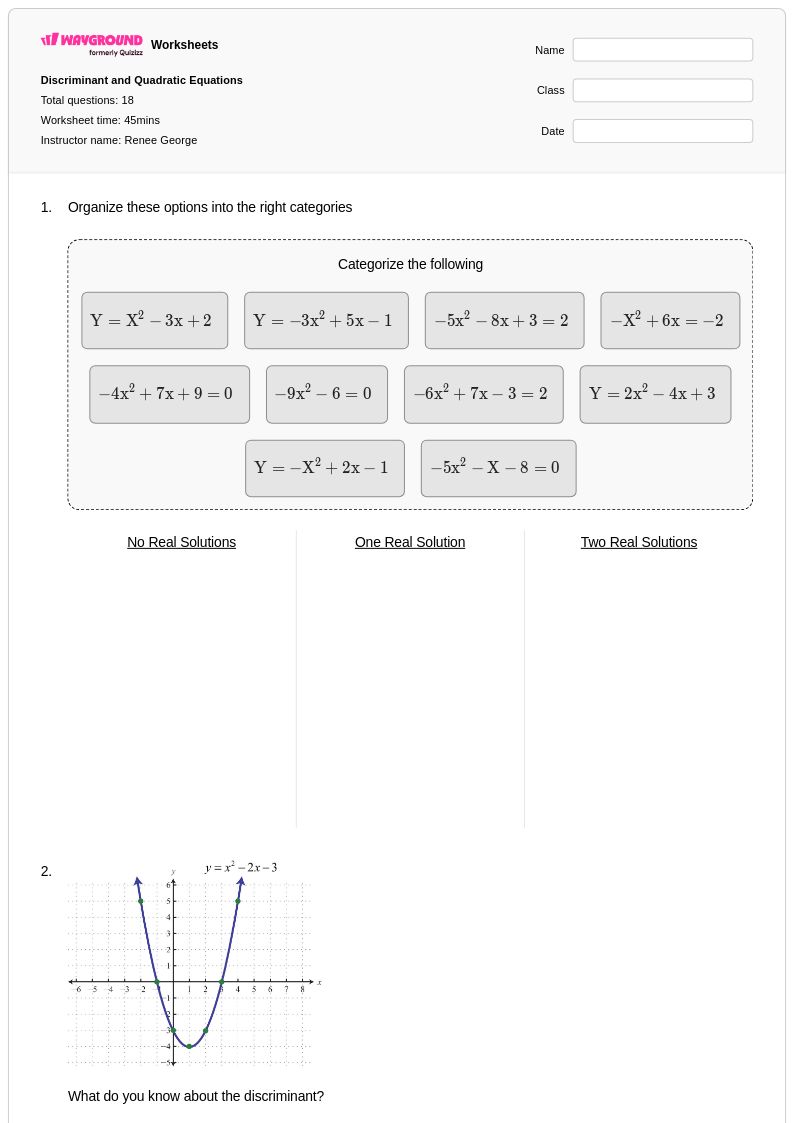
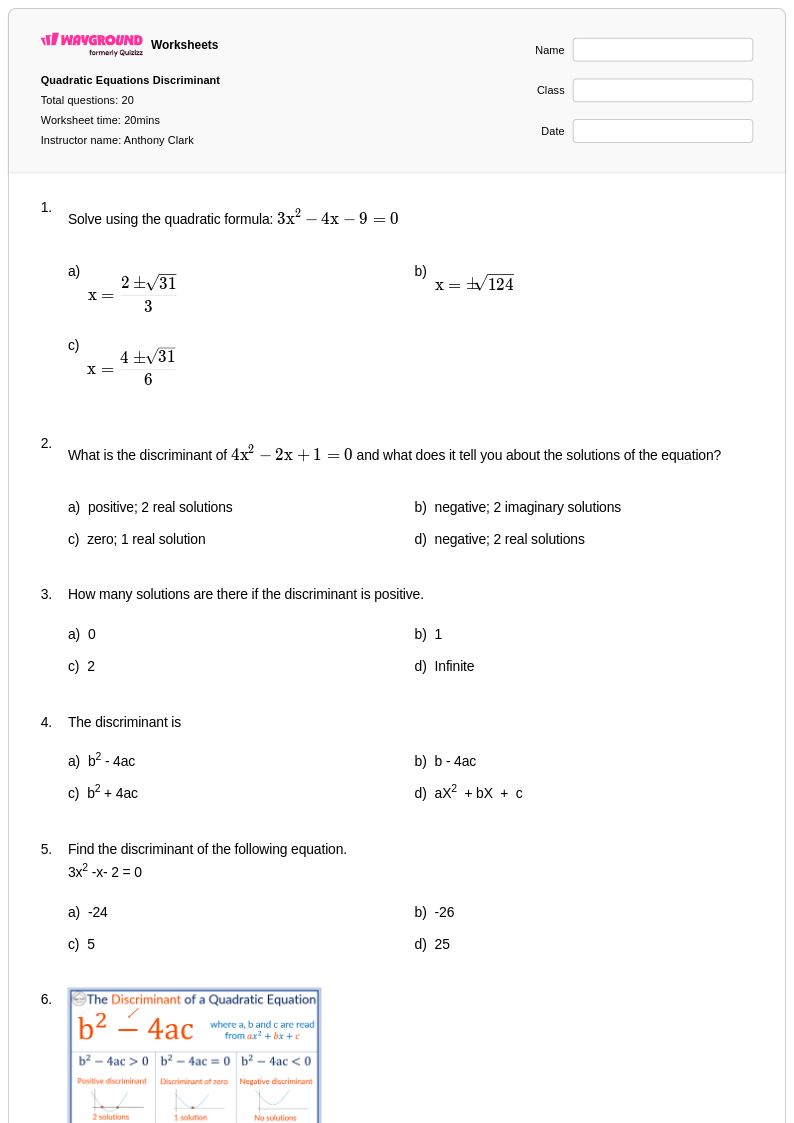
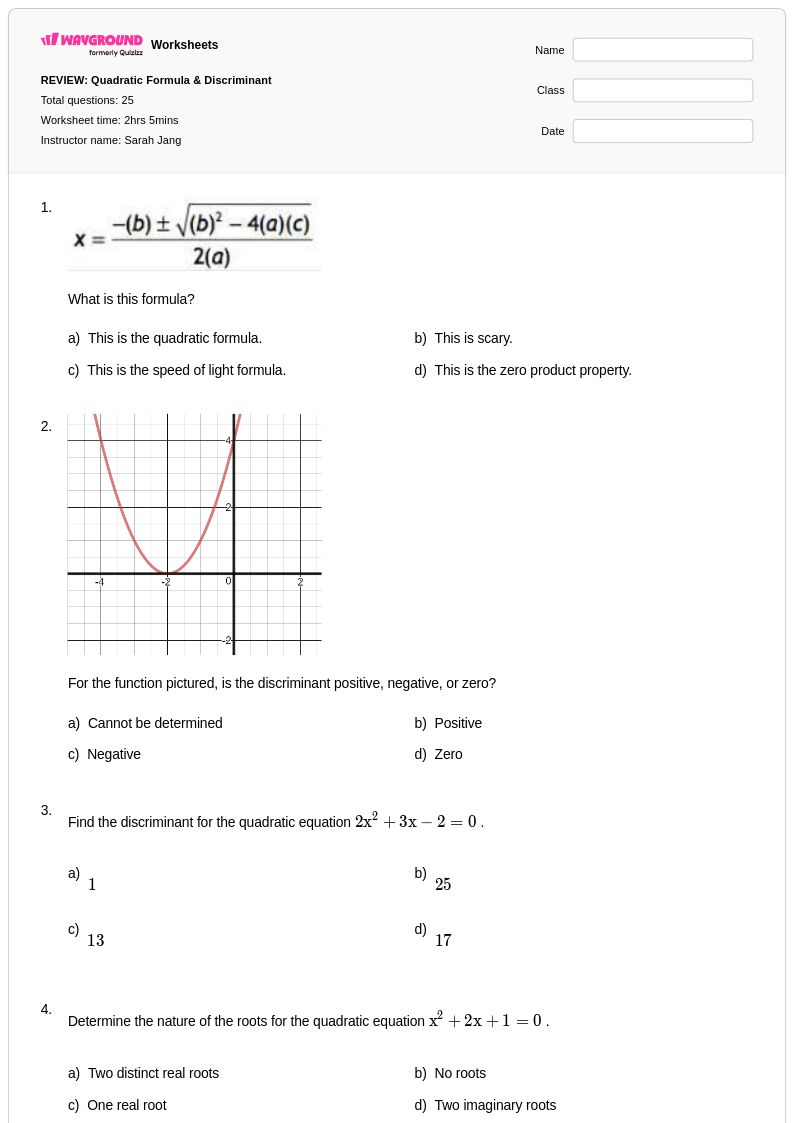
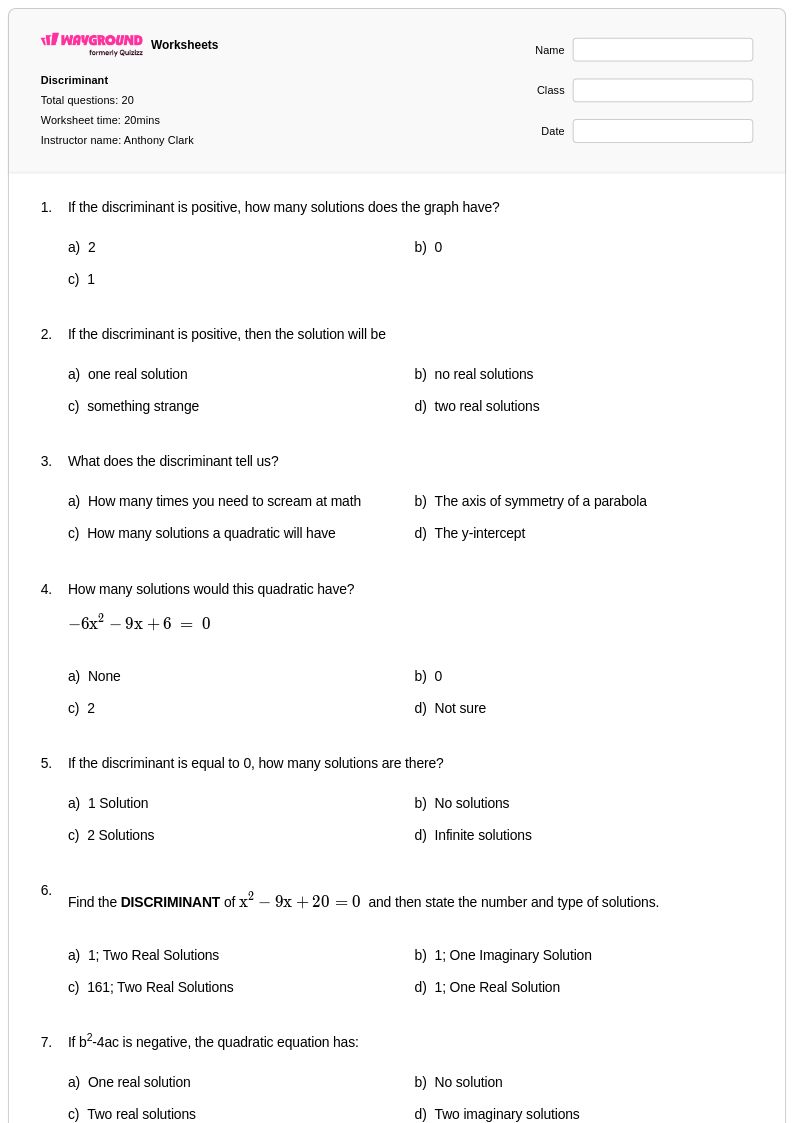
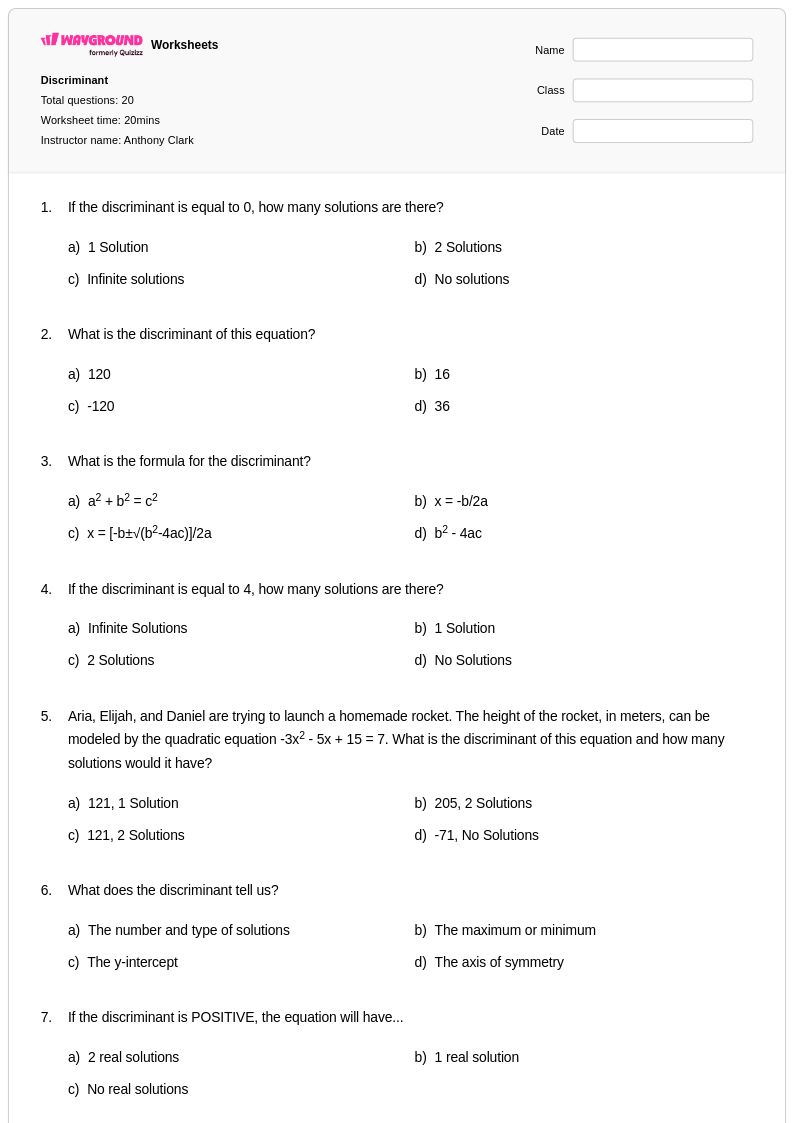
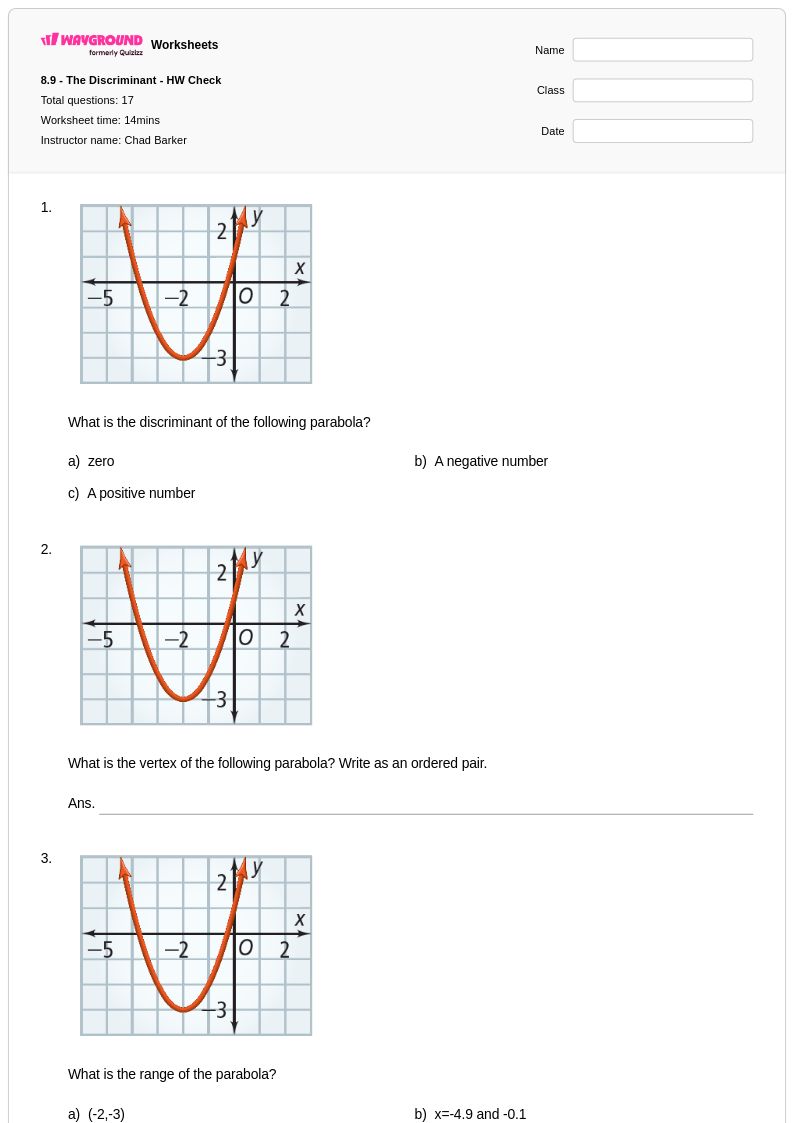
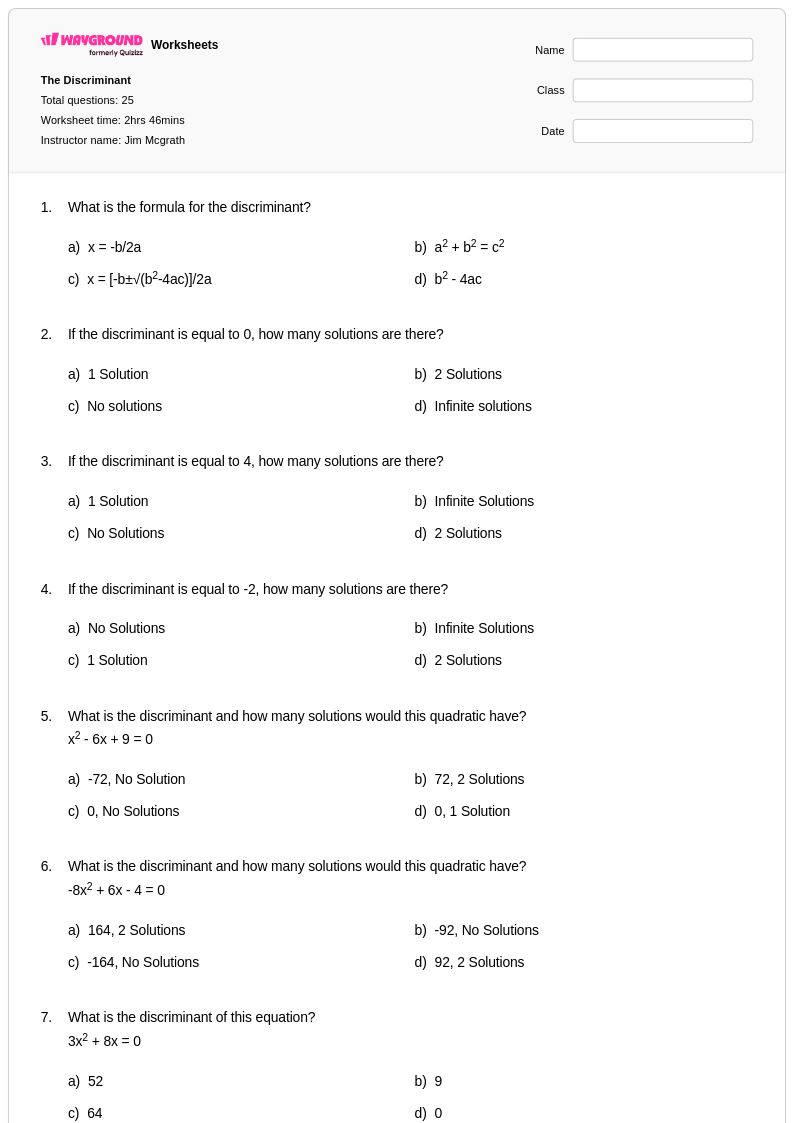
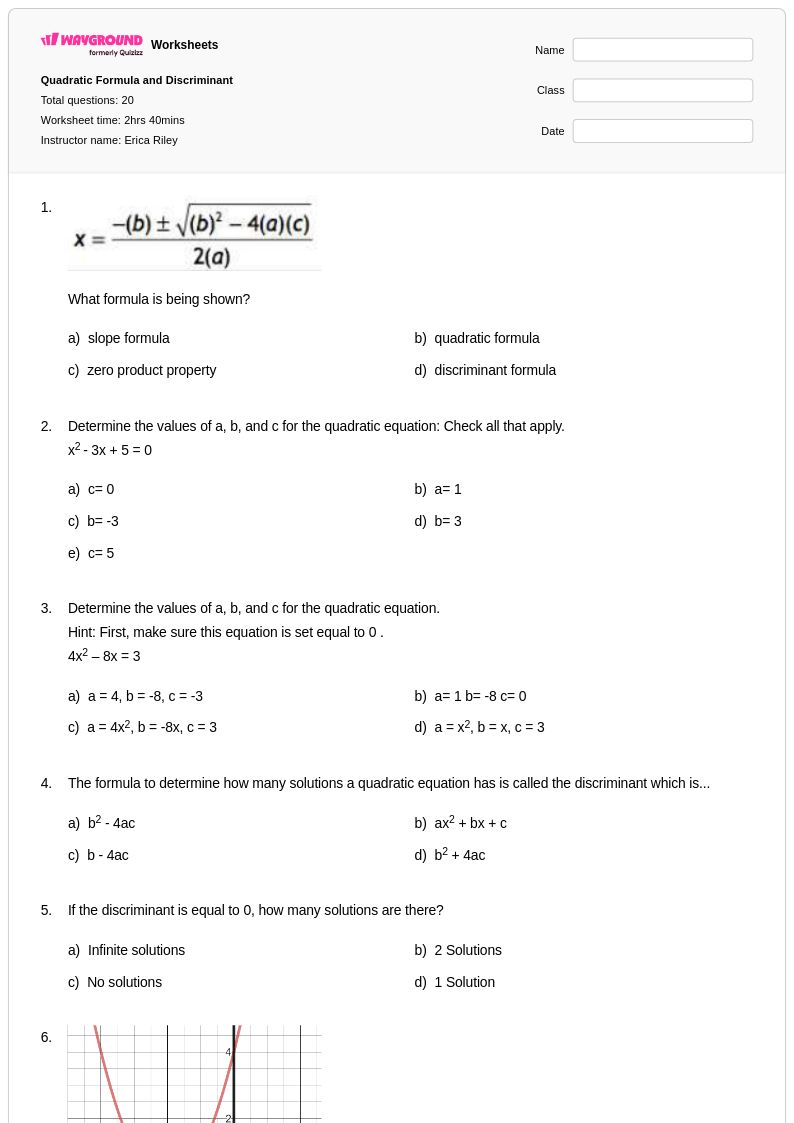
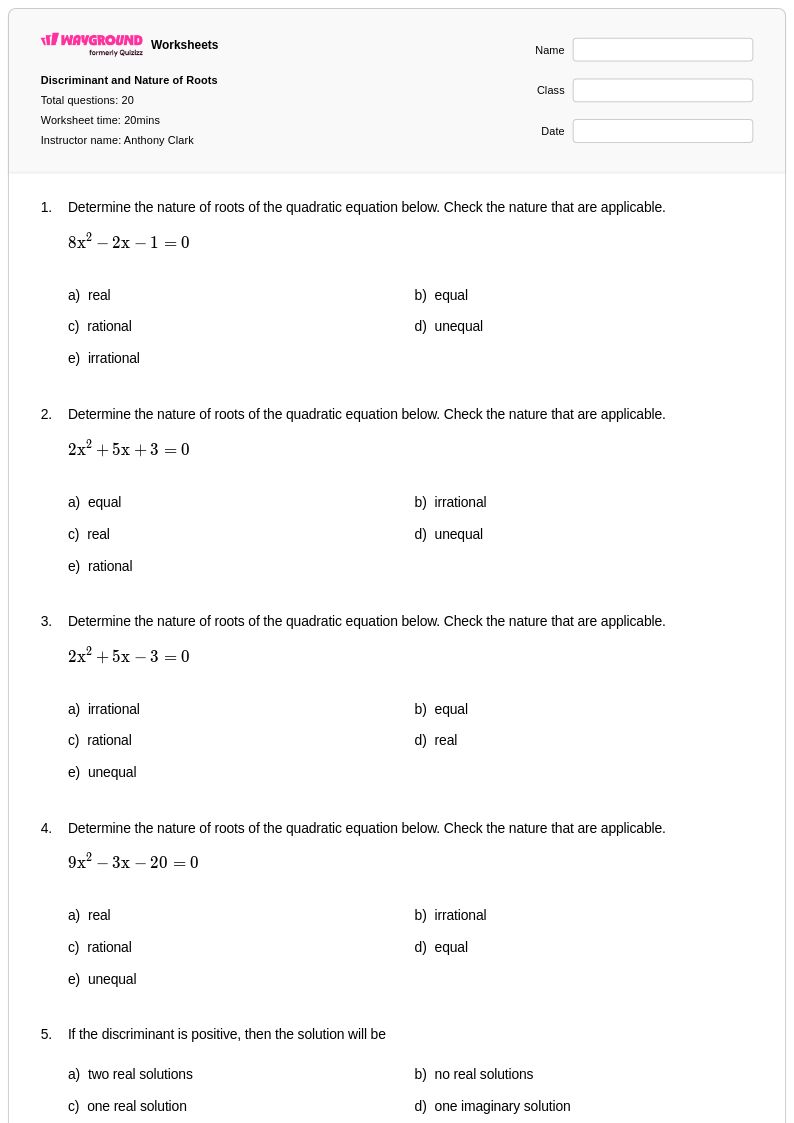
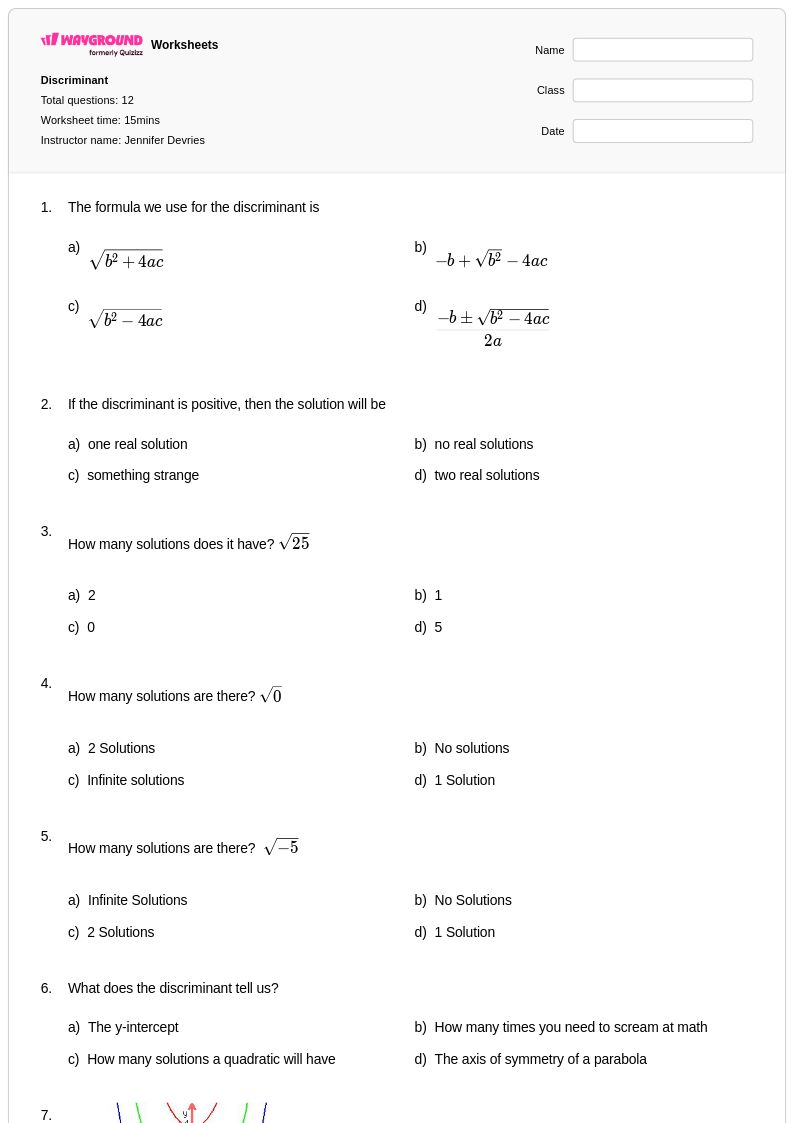
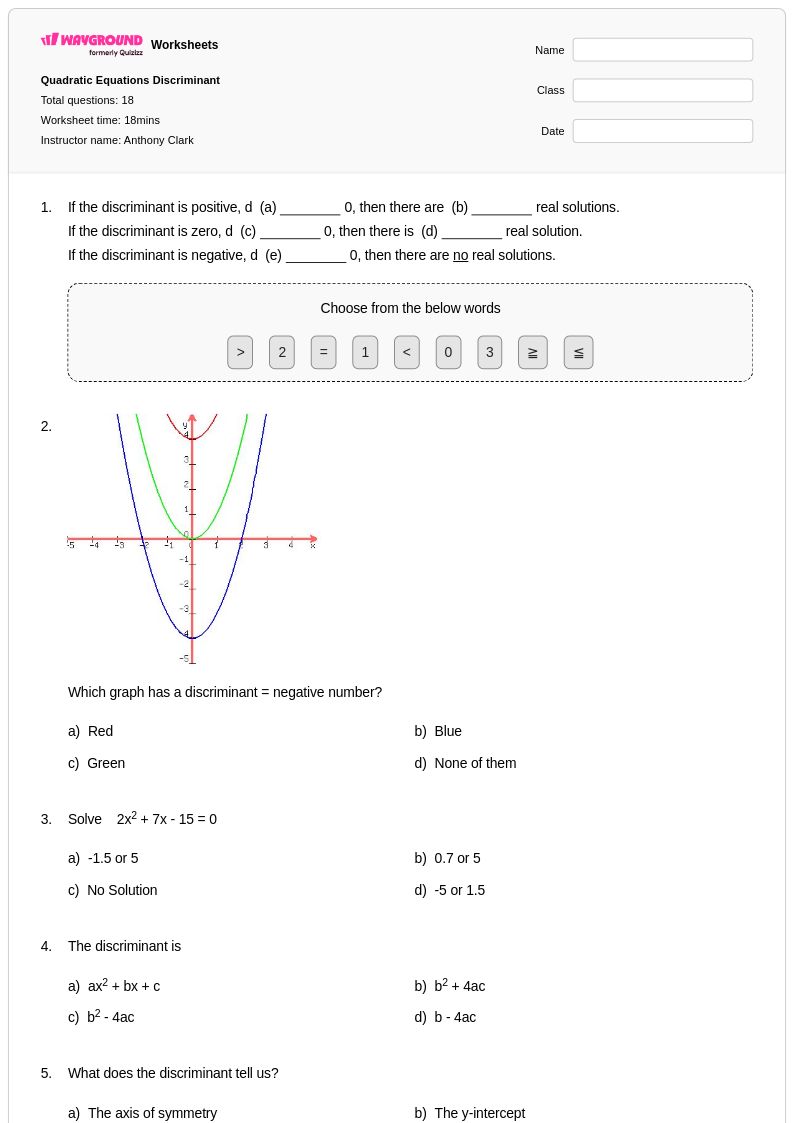
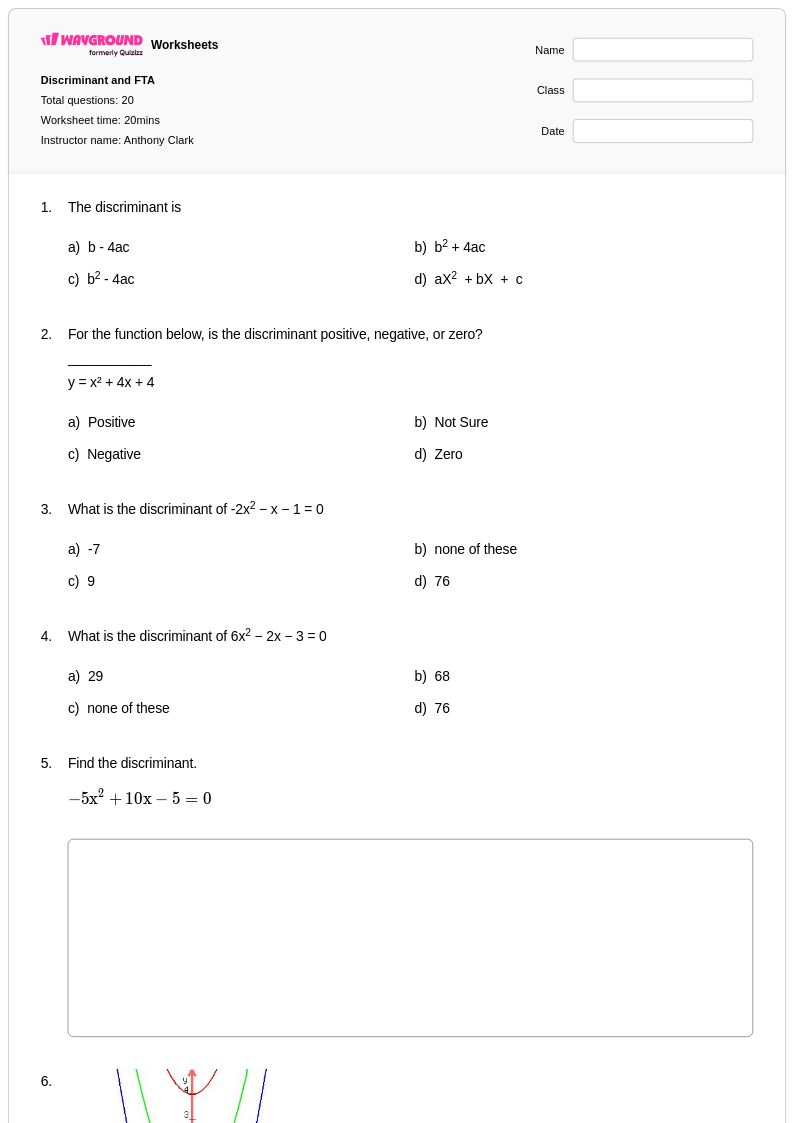
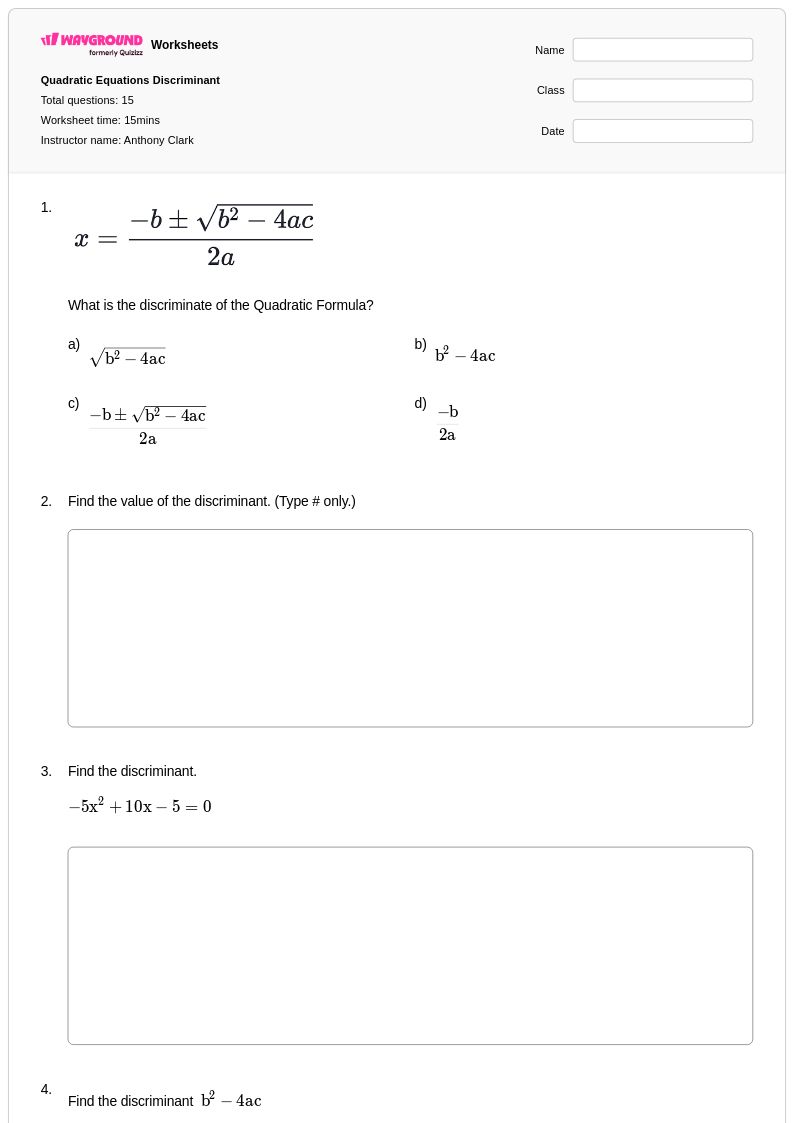
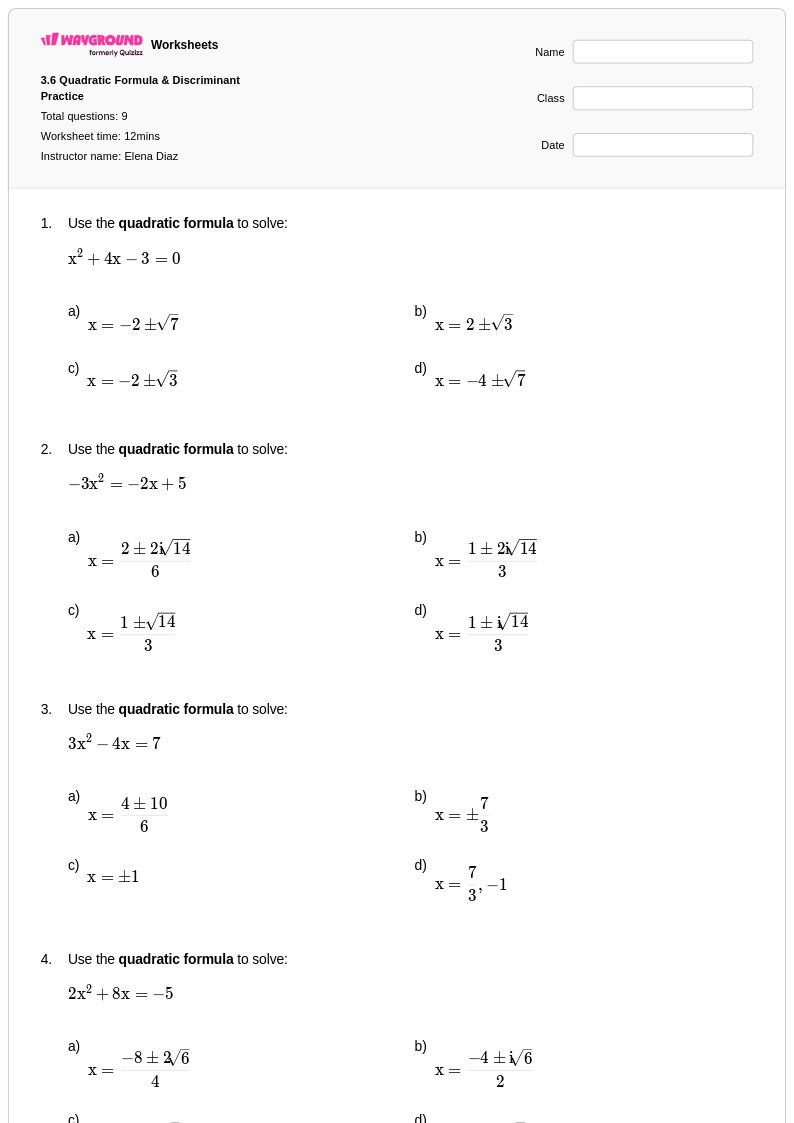
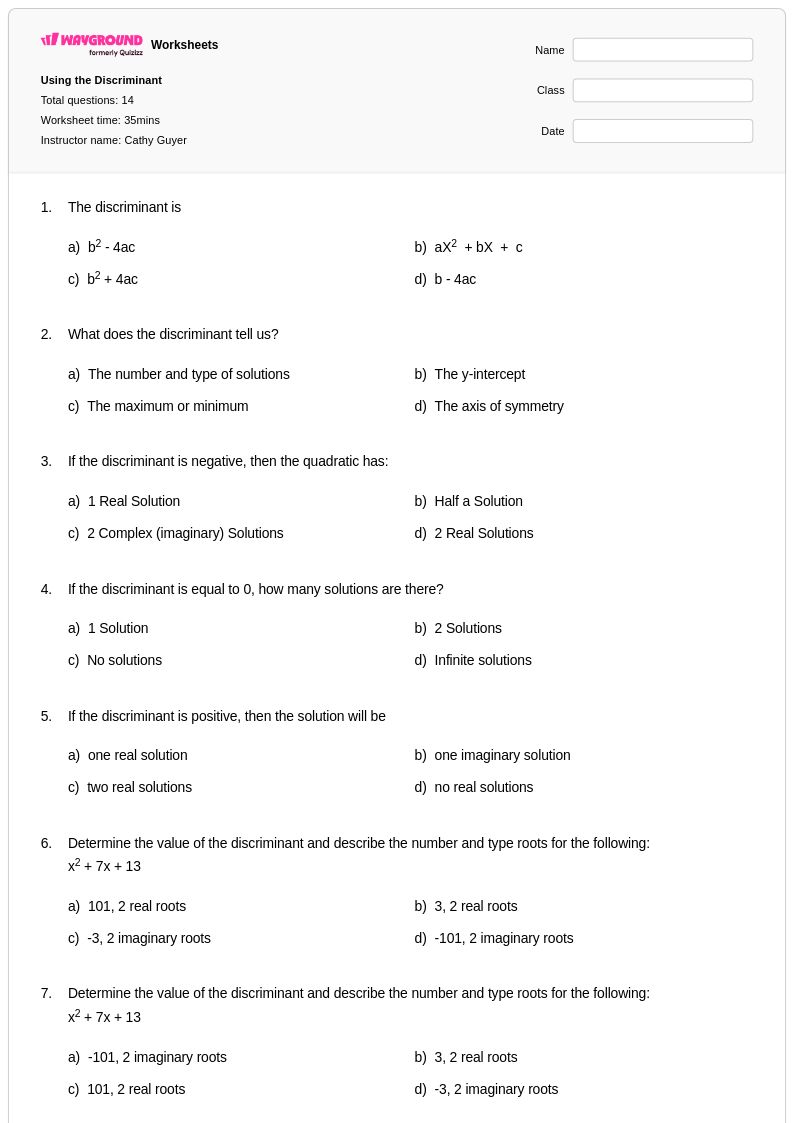
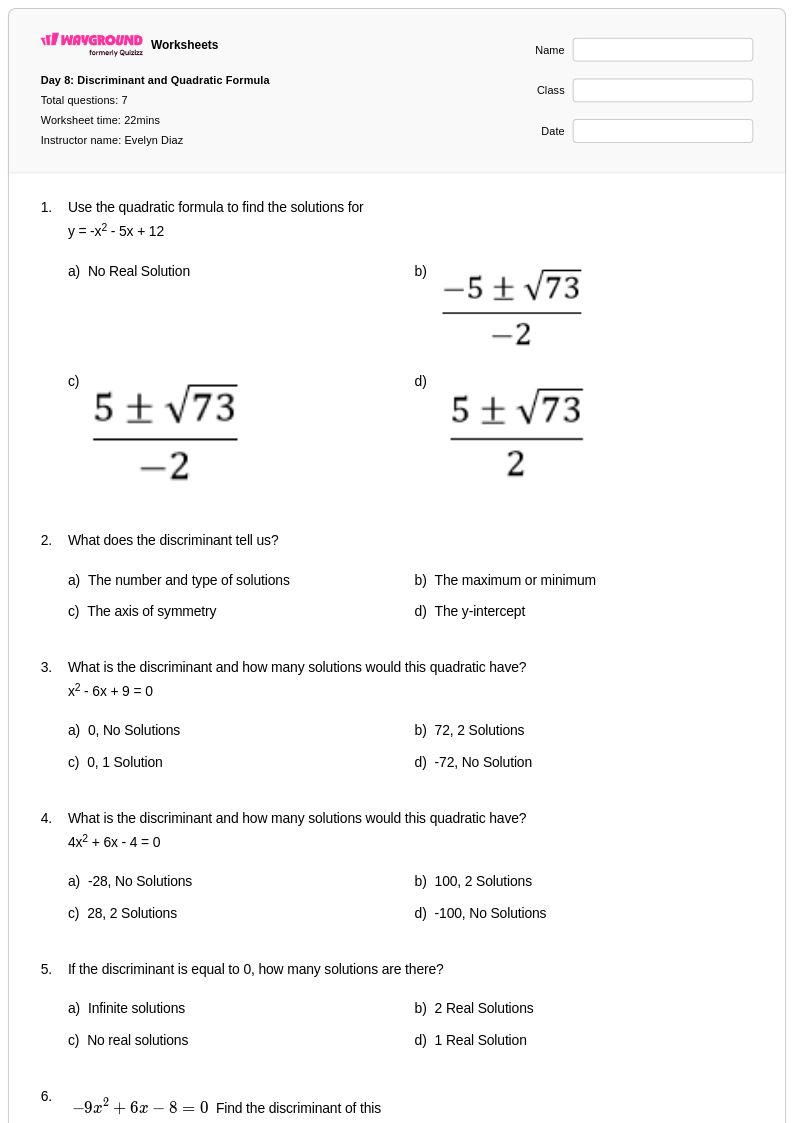
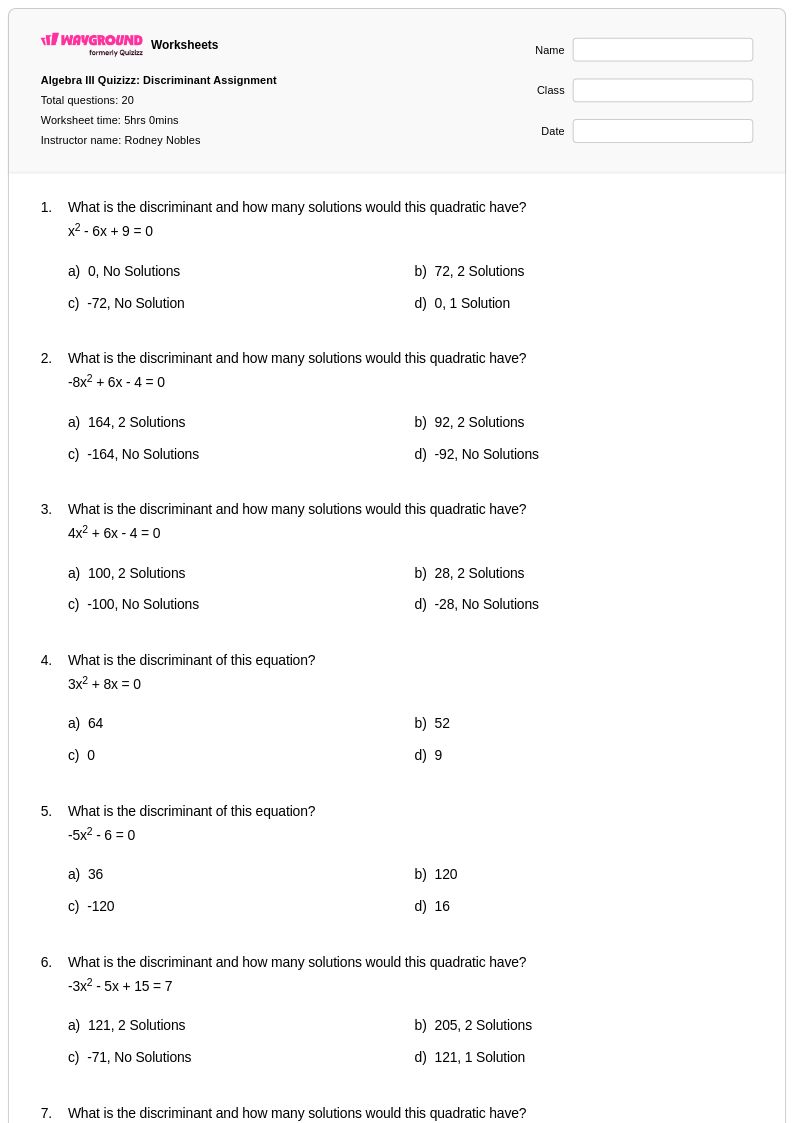
Discriminant worksheets for Class 9 students through Wayground (formerly Quizizz) provide comprehensive practice with this fundamental quadratic concept that determines the nature and number of solutions in quadratic equations. These carefully crafted worksheets strengthen students' ability to calculate the discriminant using the formula b² - 4ac, interpret positive, negative, and zero discriminant values, and predict whether quadratic equations will have two real solutions, one real solution, or no real solutions. The collection includes practice problems ranging from basic discriminant calculations to more complex applications involving word problems and graphical interpretations. Each worksheet comes with a detailed answer key, and the free printables are available in convenient pdf format, making them accessible for both classroom instruction and independent study.
Wayground (formerly Quizizz) empowers mathematics teachers with millions of educator-created discriminant resources that streamline lesson planning and support differentiated instruction for Class 9 quadratic units. The platform's robust search and filtering capabilities allow teachers to quickly locate worksheets aligned with specific curriculum standards and tailored to various skill levels, from remedial practice for struggling students to enrichment activities for advanced learners. Teachers can customize existing worksheets or create entirely new ones, with flexible options for both printable pdf versions and interactive digital formats that provide immediate feedback. This comprehensive approach enables educators to effectively address diverse learning needs, whether conducting whole-class instruction, facilitating small group work, or assigning targeted skill practice that reinforces students' understanding of how discriminants reveal the fundamental properties of quadratic functions.
FAQs
How do I introduce the discriminant to Grade 9 students?
Grade 9 students are usually meeting the discriminant right after they've learned to solve quadratics by factoring. A good entry point is to take a factorable equation, a non-factorable one, and a perfect-square trinomial, and ask students to try factoring all three. When they hit the one that won't factor, explain that the discriminant tells you in advance whether factoring will even work. That framing makes b² - 4ac feel like a useful shortcut rather than another formula to memorize.
What practice problems are appropriate for Grade 9 discriminant work?
At Grade 9, the priority is fluency with the formula itself: identifying a, b, and c correctly, substituting carefully, and classifying the result. Start with equations already in standard form, then introduce problems where students must rearrange first. Word problems and graphical interpretation are appropriate once the calculation is solid — Wayground's Grade 9 discriminant worksheets include both foundational calculation problems and basic application problems to support that progression.
What errors do Grade 9 students most often make with the discriminant?
The most common issue is sign errors when b is negative. Students compute (-b)² and incorrectly keep the negative, which throws off the entire result. A close second is failing to rewrite the equation in standard form before identifying coefficients — students will assign the wrong value to c if there's a constant on both sides. Building in a "rewrite first" step as a habit catches this early.
How do I use these Grade 9 discriminant worksheets in my classroom?
Wayground worksheets work as printable PDFs or as digital quizzes you host directly on the platform — students complete them online and you see results right away. Both formats include a complete answer key. For paper submissions, the Wayground for Teachers app lets you scan student work for grading, which saves time when you're moving through a full quadratics unit.
Is the discriminant part of the Common Core Grade 9 algebra curriculum?
Common Core places quadratic equations firmly in the Algebra I course, which most students take in Grade 9. The progression moves from solving quadratics by factoring and completing the square to understanding why some equations yield two real solutions, one, or none. The discriminant is the tool that answers that question without full solving, and Common Core expects students to interpret its value in terms of the number and type of solutions — connecting the algebra to what the parabola looks like on a graph.
How can I support struggling Grade 9 students with discriminant worksheets?
Two Wayground accommodations are especially useful here. Read Aloud helps students who lose track of multi-step instructions while also trying to manage the algebra. Extended time gives students who are still building fluency with signed-number arithmetic the space to work carefully rather than rushing and making avoidable errors. On the worksheet itself, you can increase font size or apply wider spacing to reduce visual clutter — small changes that help students track which coefficient is which.