
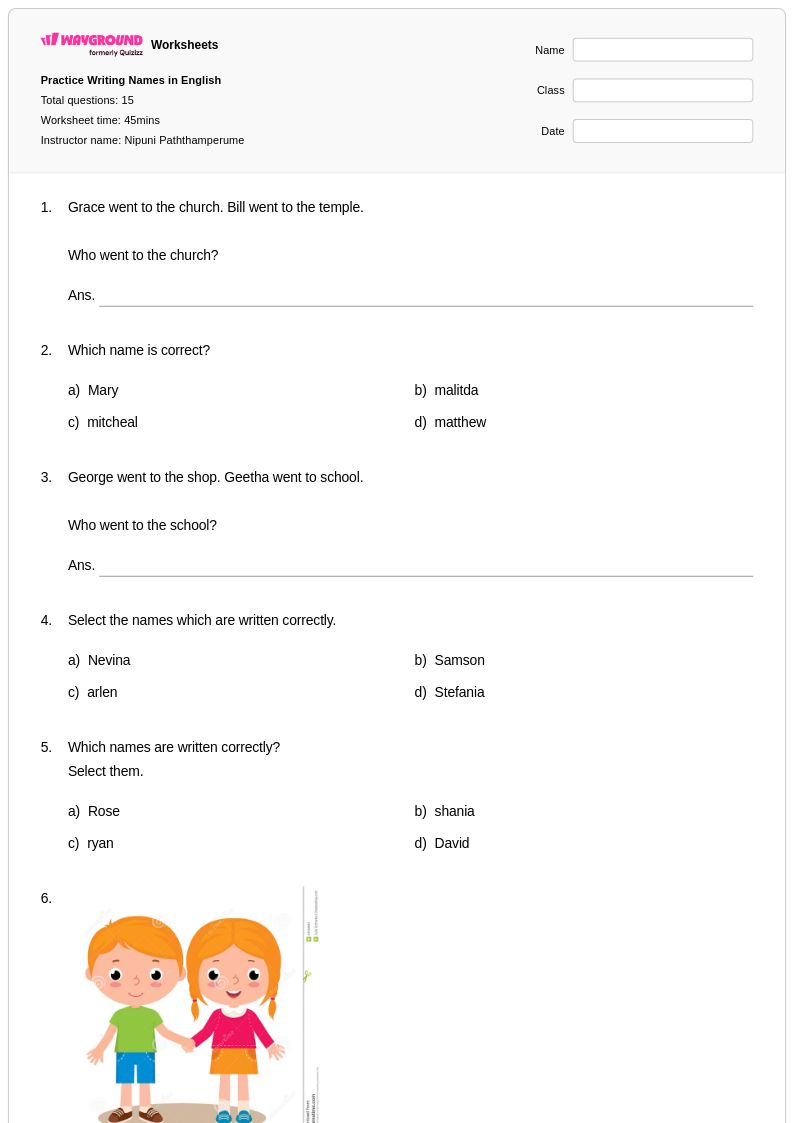
15 Q
1st - 5th
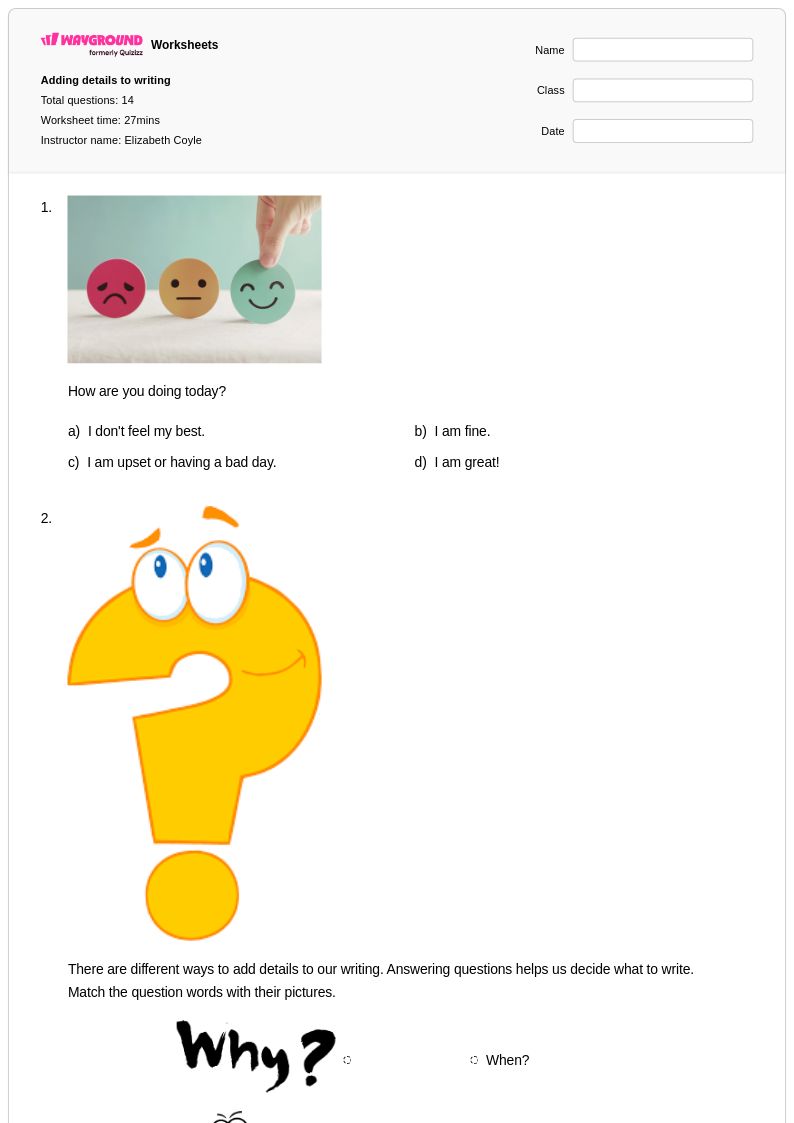
14 Q
3rd
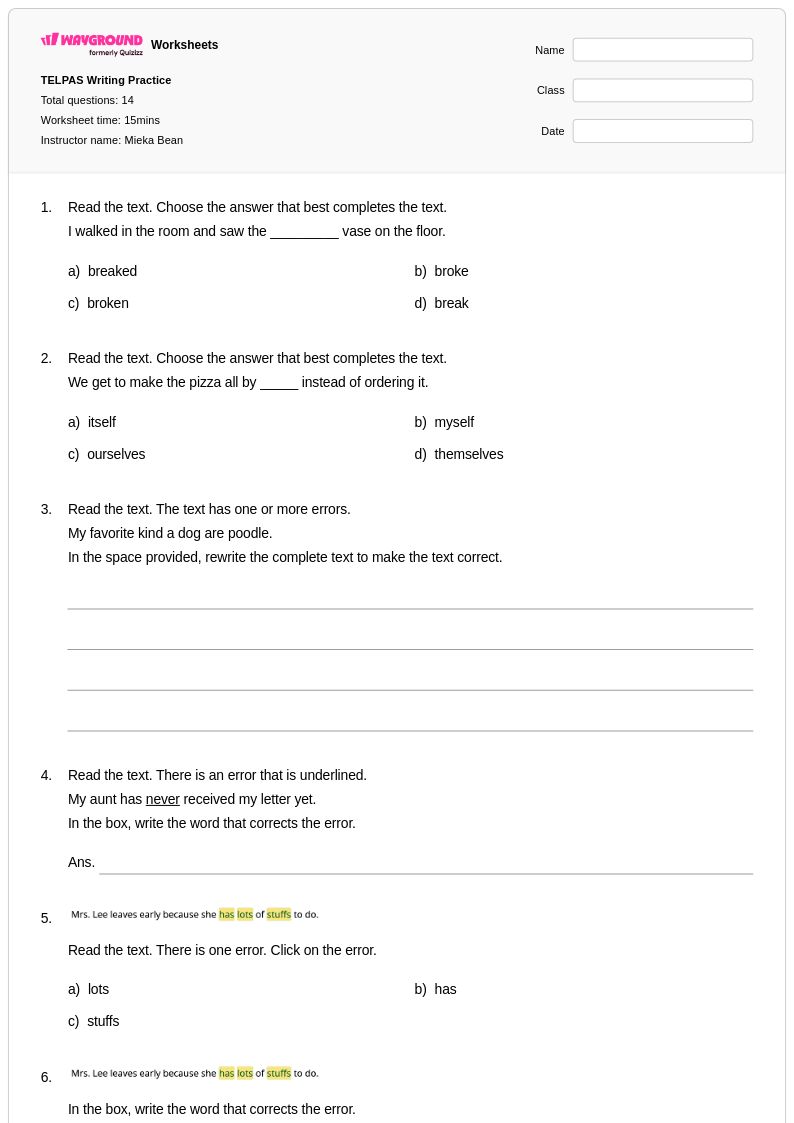
21 Q
1st - 5th
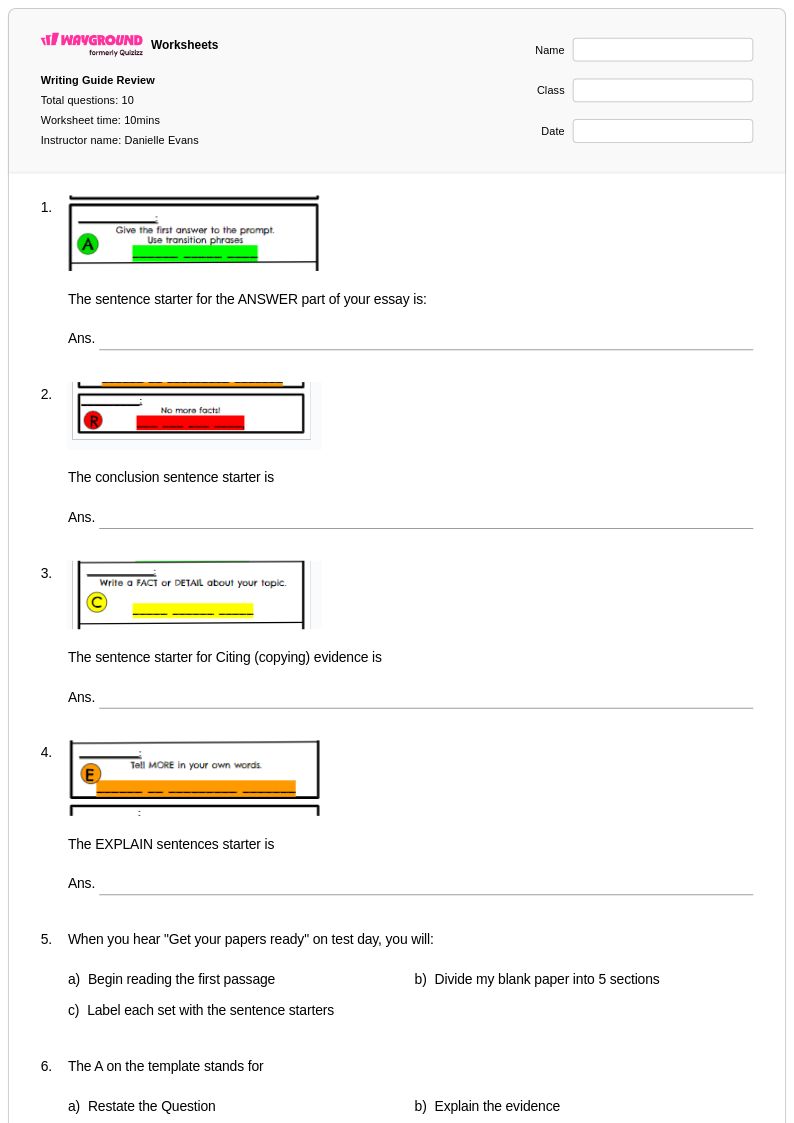
10 Q
3rd
12 Q
3rd - 5th
13 Q
1st - 5th
16 Q
1st - 5th
10 Q
1st - 5th
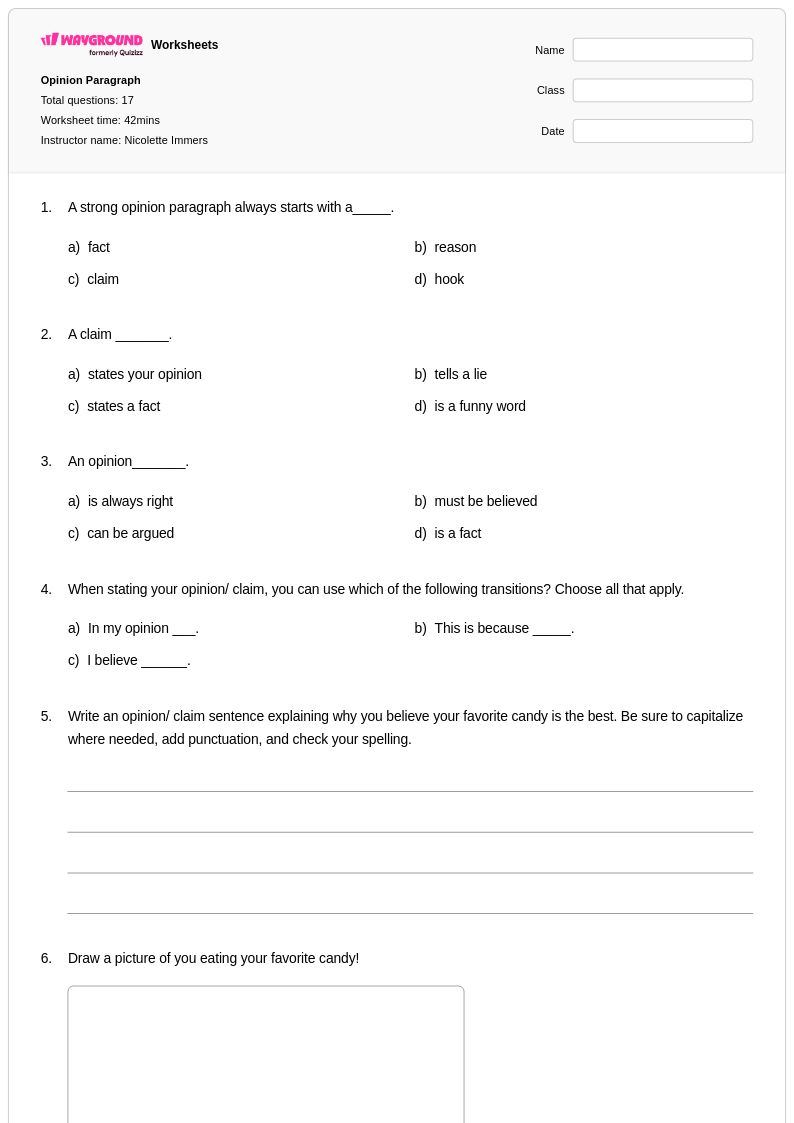
17 Q
3rd
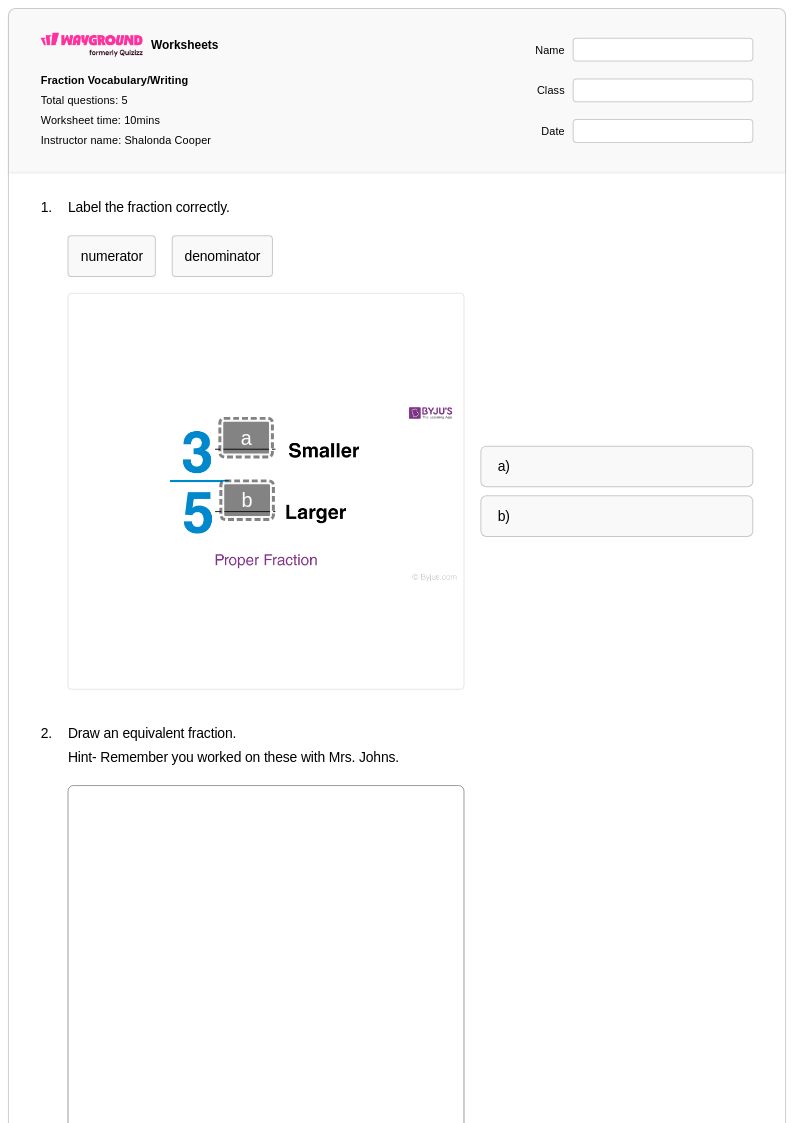
5 Q
1st - 5th
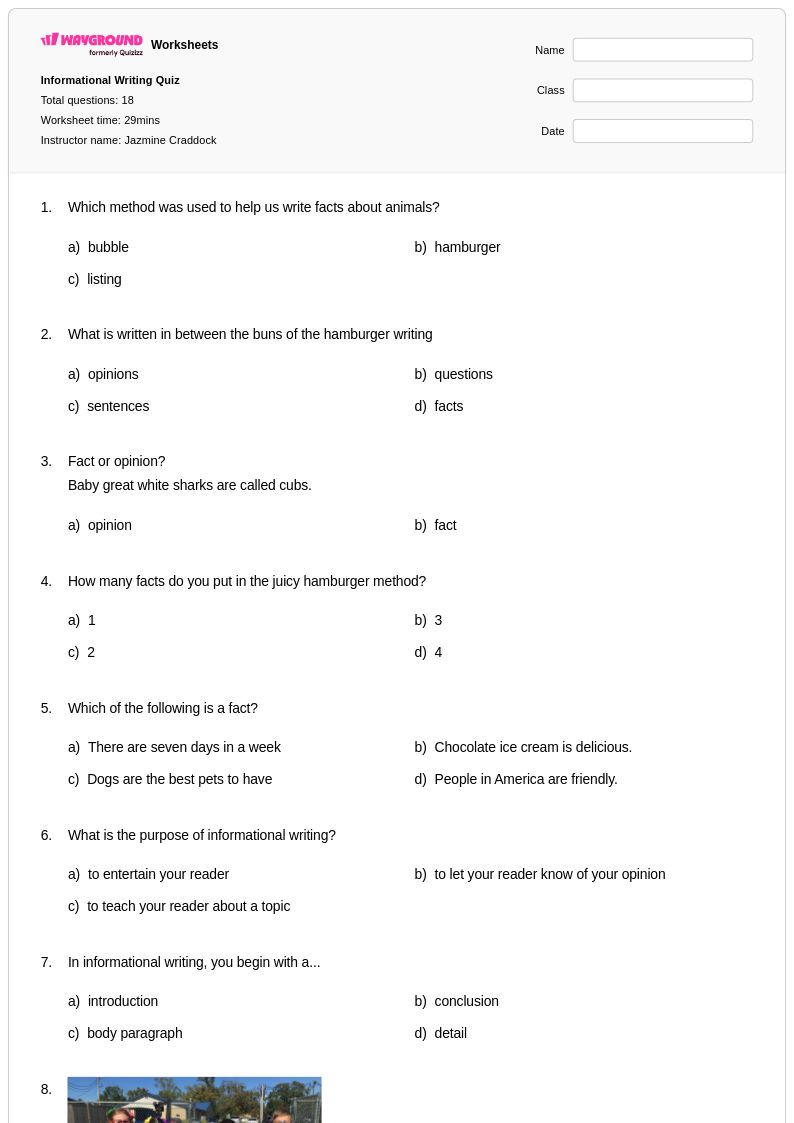
18 Q
3rd - 5th
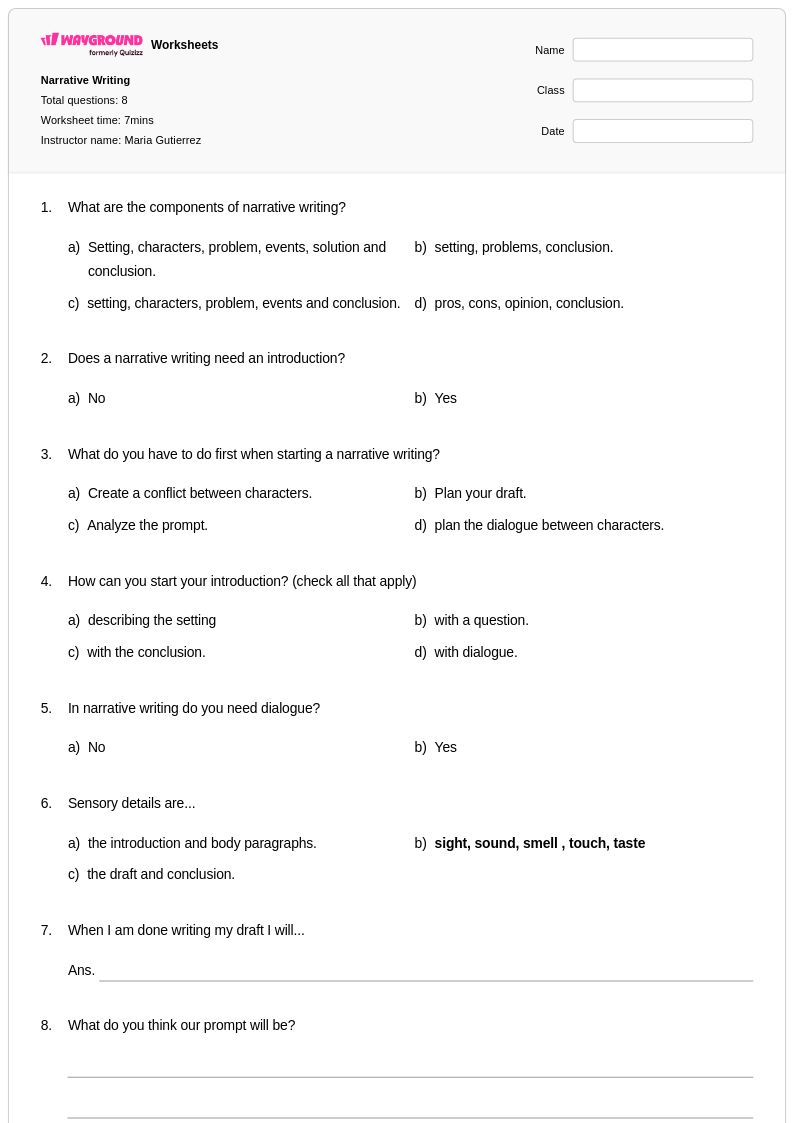
8 Q
3rd - 5th
11 Q
3rd
10 Q
3rd
13 Q
3rd
12 Q
3rd
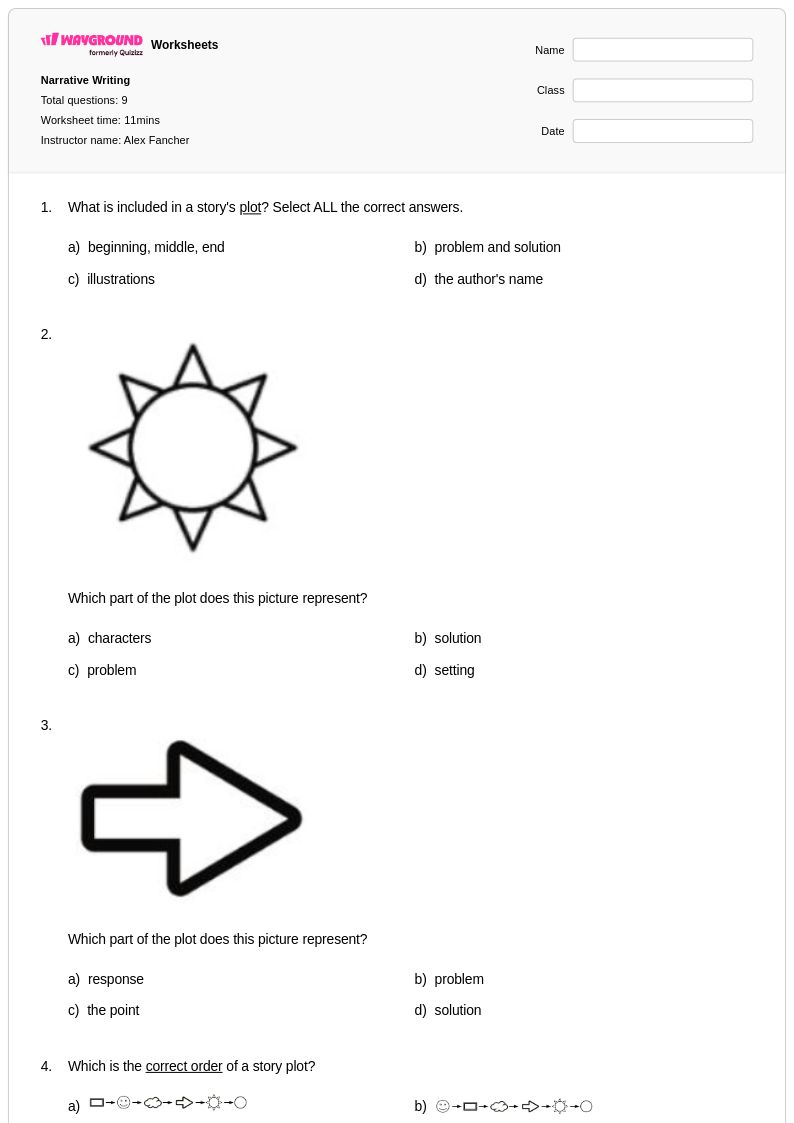
9 Q
3rd
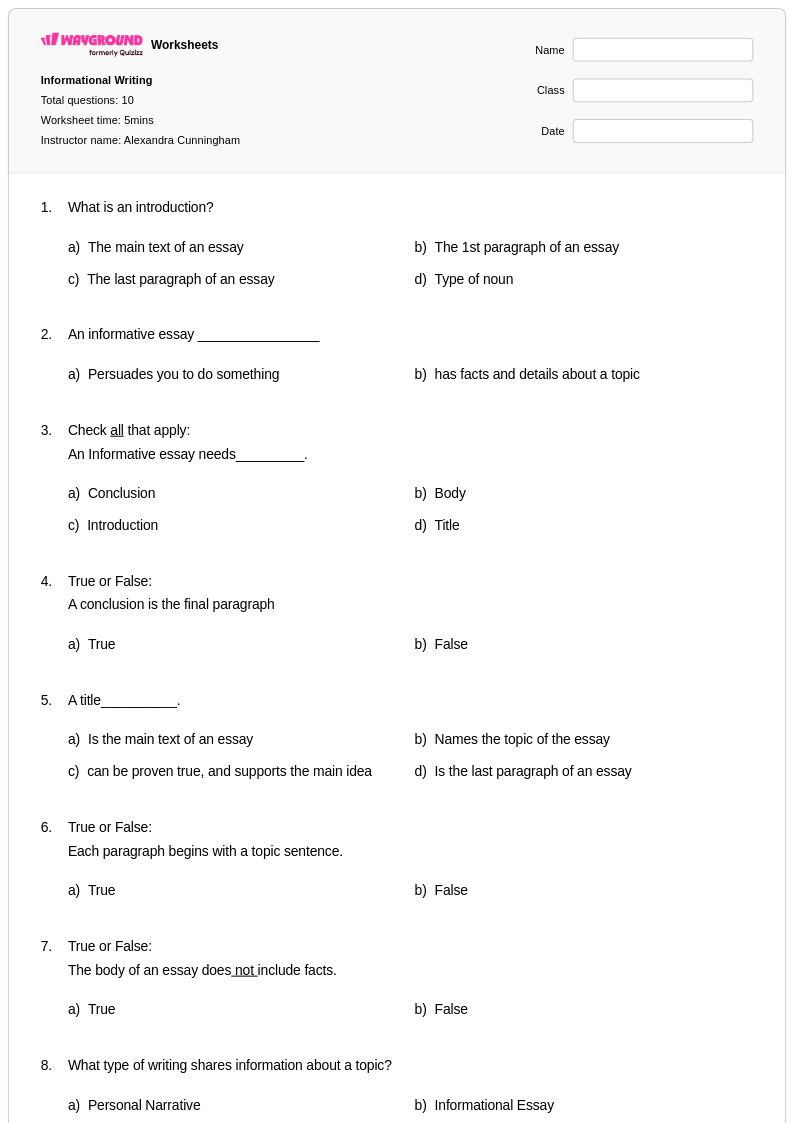
10 Q
3rd
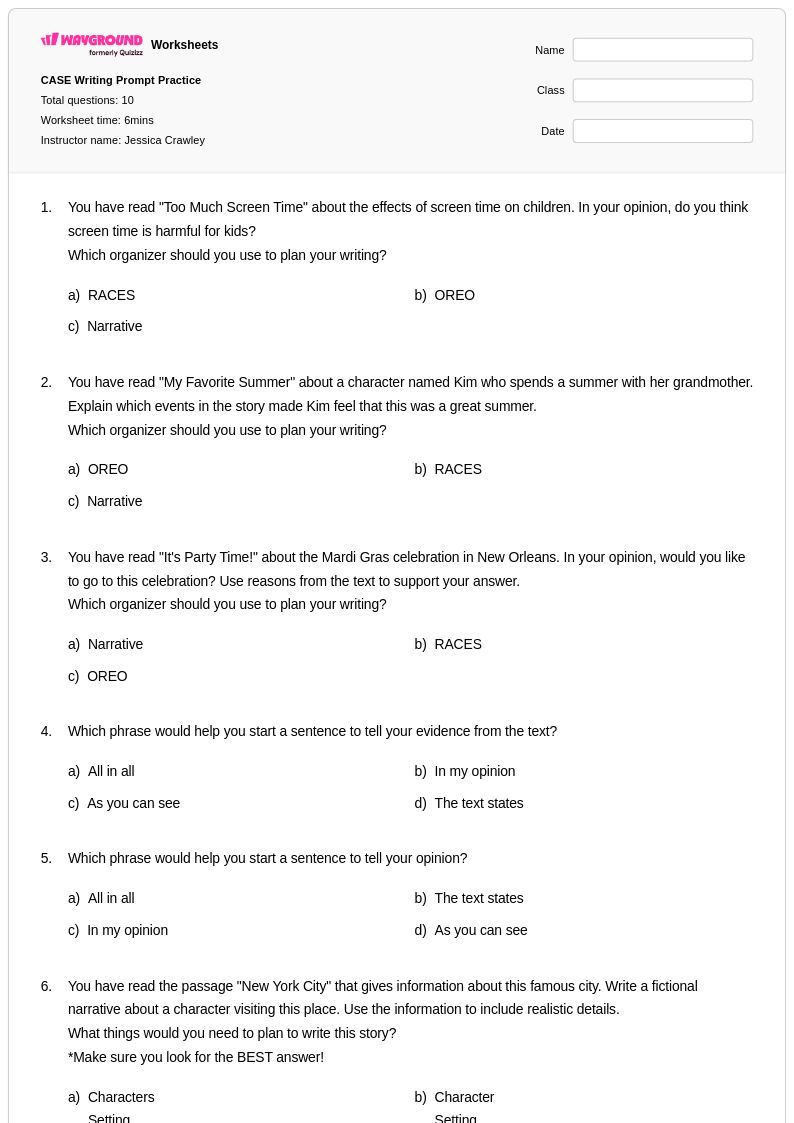
10 Q
3rd
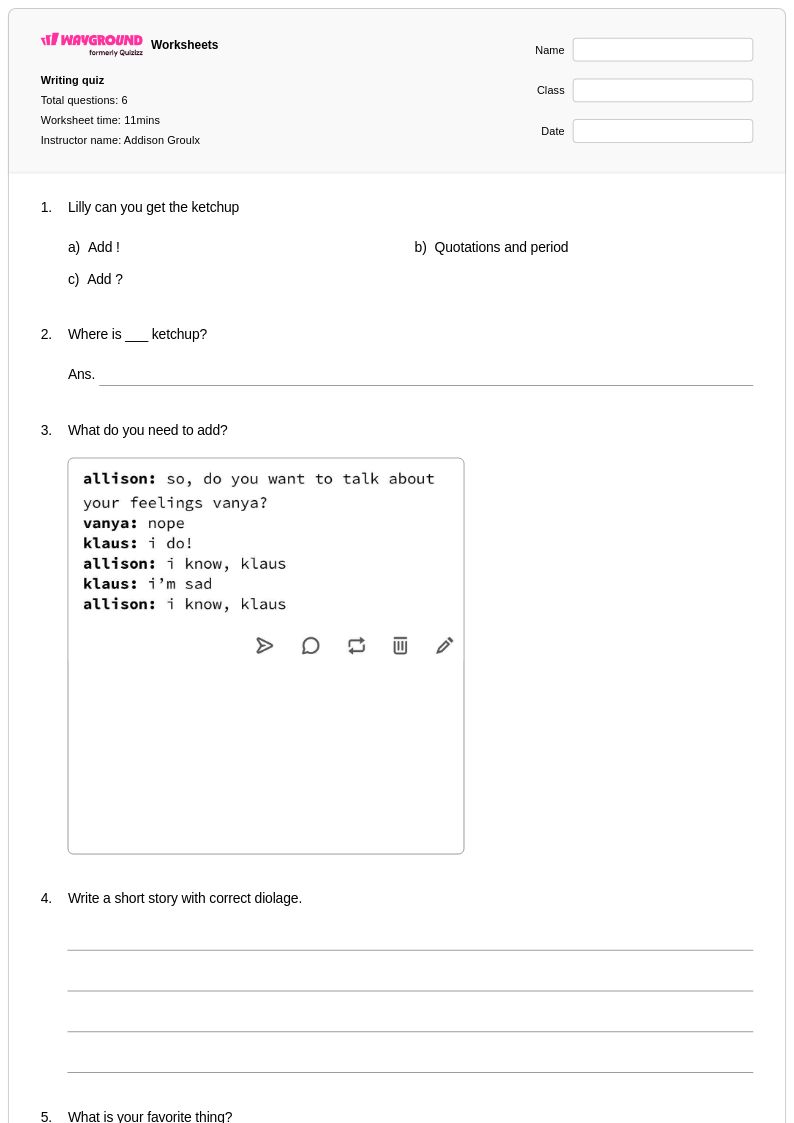
6 Q
2nd - 5th

18 Q
1st - 5th
16 Q
1st - 5th
10 Q
3rd
10 Q
1st - 3rd
Explore Early Writing Practice Worksheets by Grades
Explore Other Subject Worksheets for class 3
Explore printable Early Writing Practice worksheets for Class 3
Early writing practice worksheets for Class 3 students available through Wayground (formerly Quizizz) provide comprehensive skill-building opportunities that target the foundational elements of written communication. These carefully designed worksheets focus on essential components such as letter formation, sentence construction, paragraph development, and basic grammar application, helping third-grade students transition from emergent writing to more structured composition skills. The collection includes practice problems that reinforce proper pencil grip, spacing between words, capitalization rules, and punctuation usage, while also encouraging creative expression through guided writing prompts and story starters. Each worksheet comes with a corresponding answer key to support both independent practice and teacher-guided instruction, and the materials are available as free printables in convenient PDF format for immediate classroom implementation.
Wayground (formerly Quizizz) empowers educators with access to millions of teacher-created early writing practice resources specifically curated for Class 3 instruction, featuring robust search and filtering capabilities that allow teachers to locate materials aligned with specific learning standards and individual student needs. The platform's differentiation tools enable instructors to customize worksheets for varying skill levels within the same classroom, supporting both remediation for struggling writers and enrichment opportunities for advanced students. Teachers can seamlessly integrate these resources into their lesson planning workflow, utilizing both printable PDF versions for traditional paper-and-pencil activities and digital formats for technology-enhanced learning environments. This flexibility supports systematic skill practice while accommodating diverse teaching styles and classroom configurations, ultimately strengthening students' writing foundations through consistent, targeted practice opportunities.
FAQs
How do I teach early writing skills to young learners?
What exercises help students practice pre-writing skills?
What common mistakes do young students make when learning to write?
How can I differentiate early writing practice for students at different skill levels?
How do I use Wayground's early writing practice worksheets in my classroom?