Free Printable Economic Systems Worksheets for Class 10
Class 10 Economic Systems worksheets from Wayground help students explore different economic models through engaging printables, practice problems, and comprehensive answer keys that make learning about market, command, and mixed economies accessible and effective.
Explore printable Economic Systems worksheets for Class 10
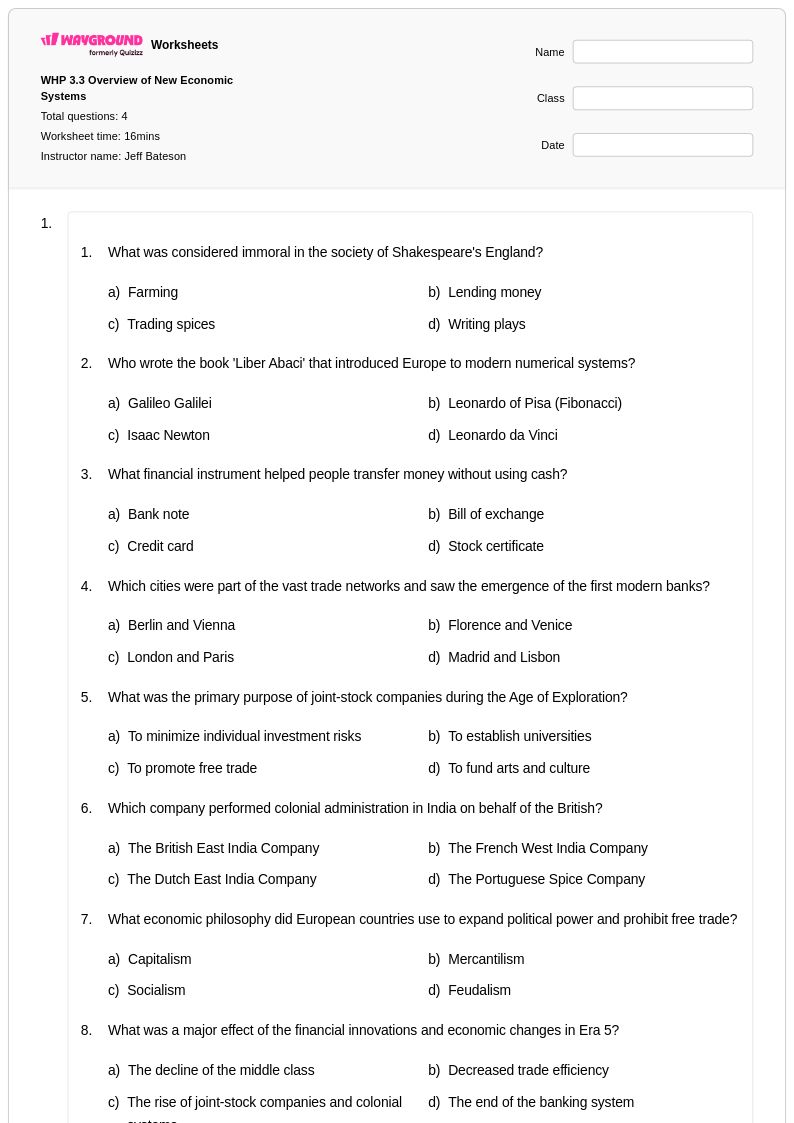
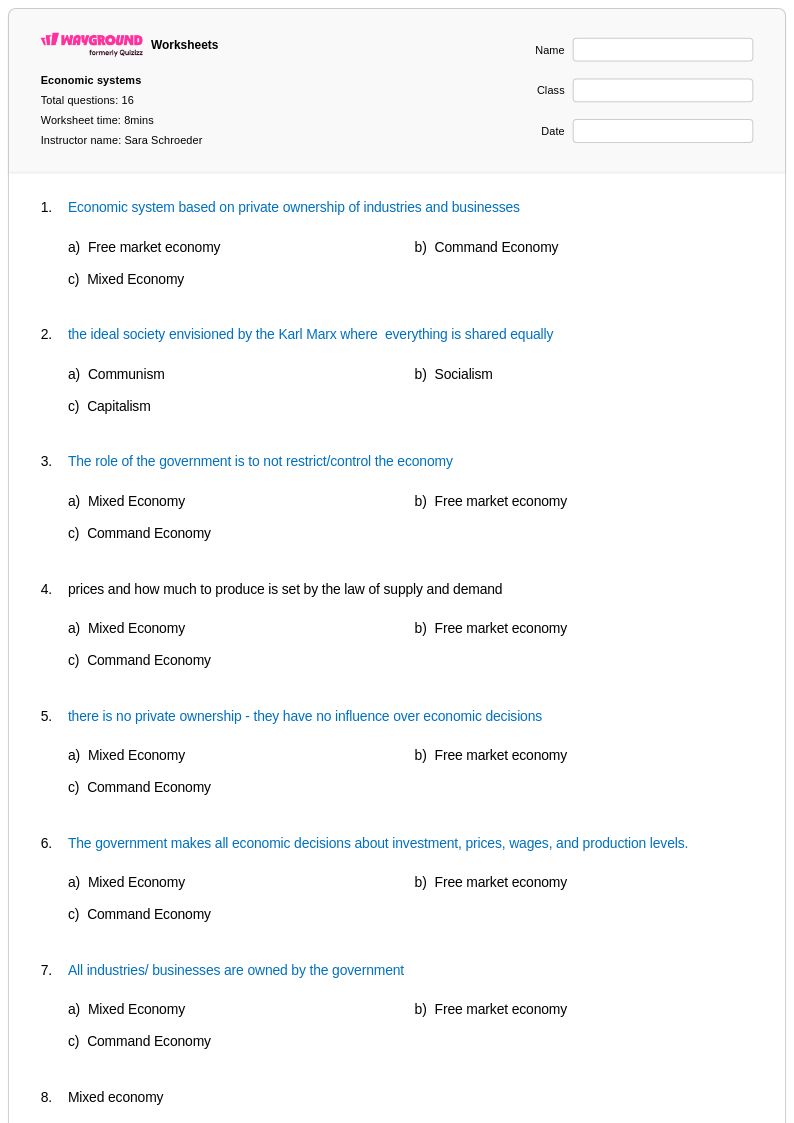
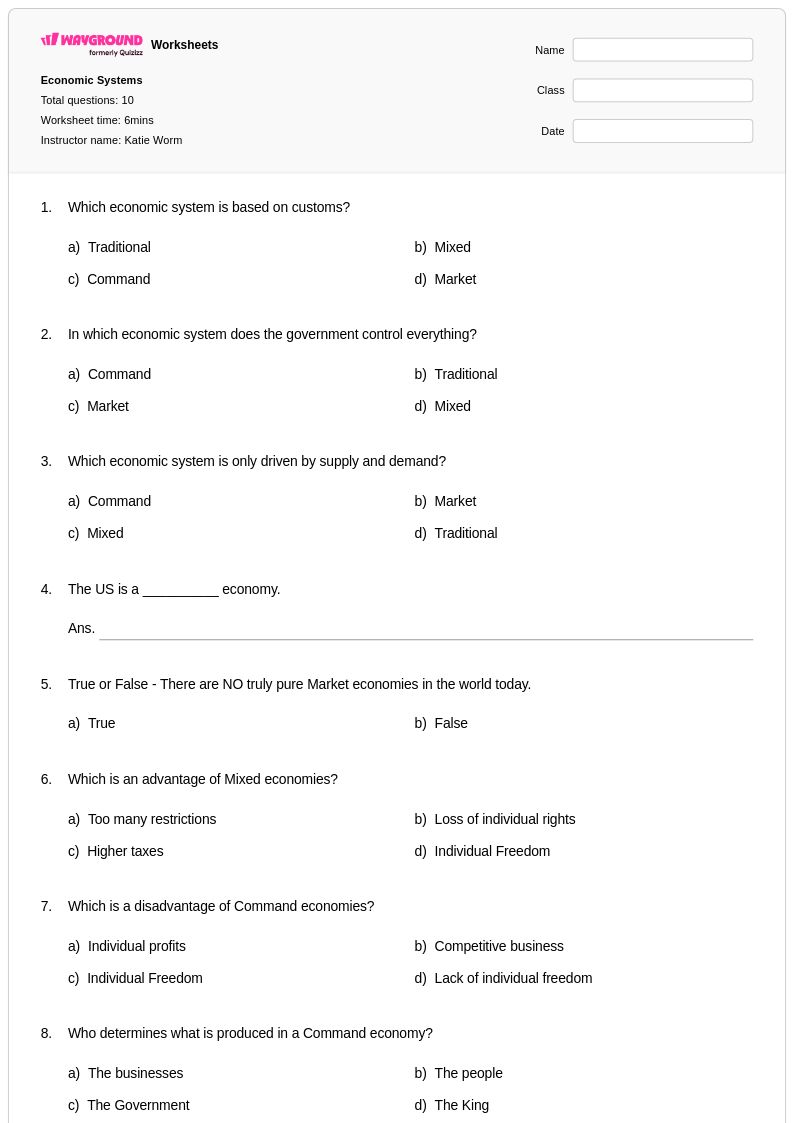
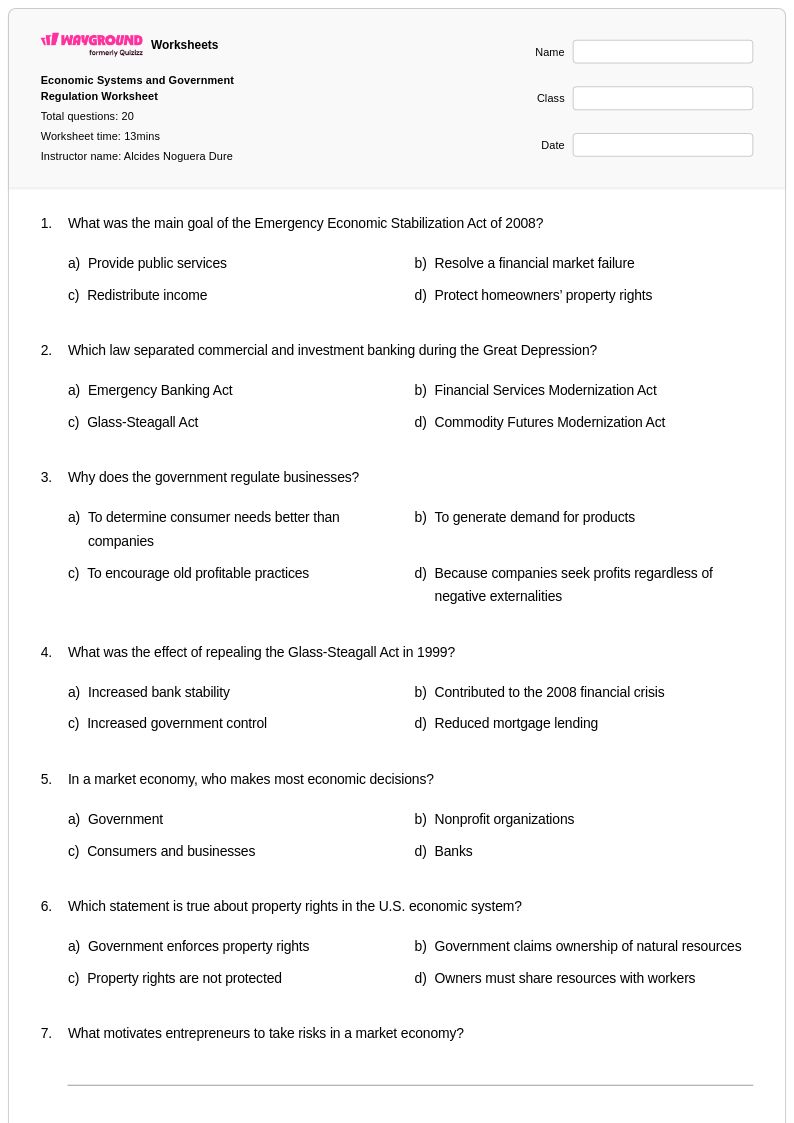
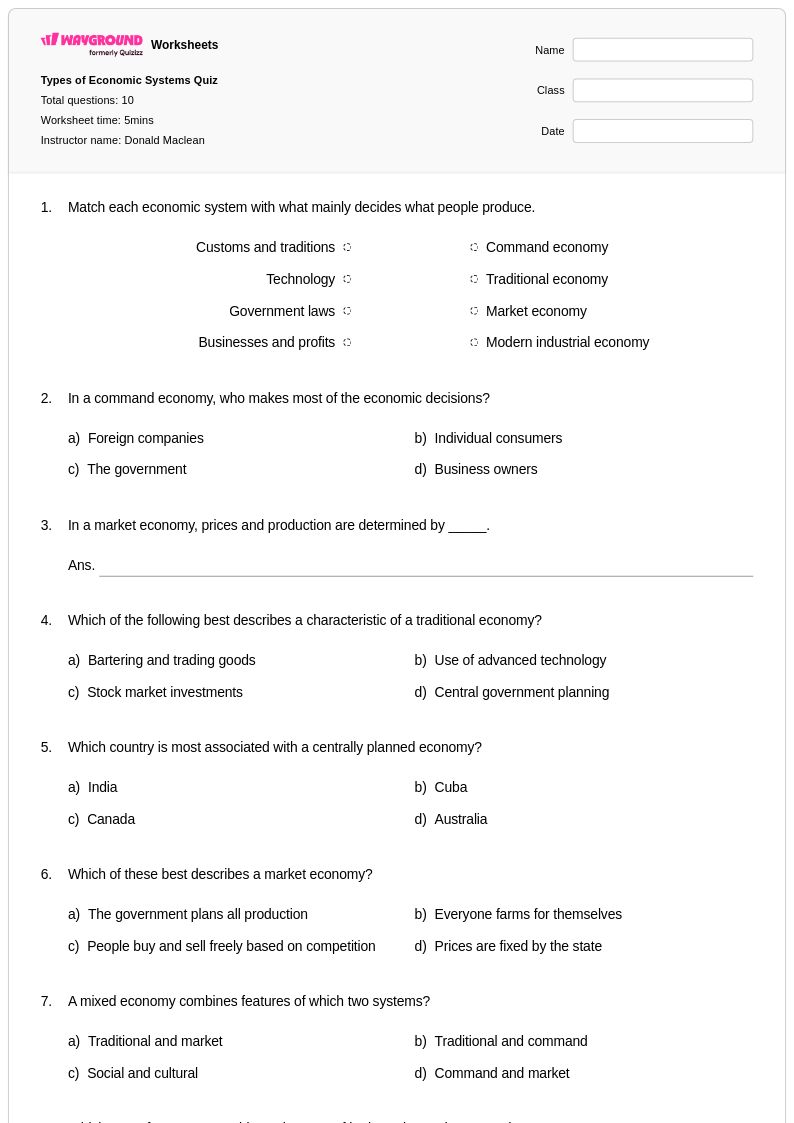
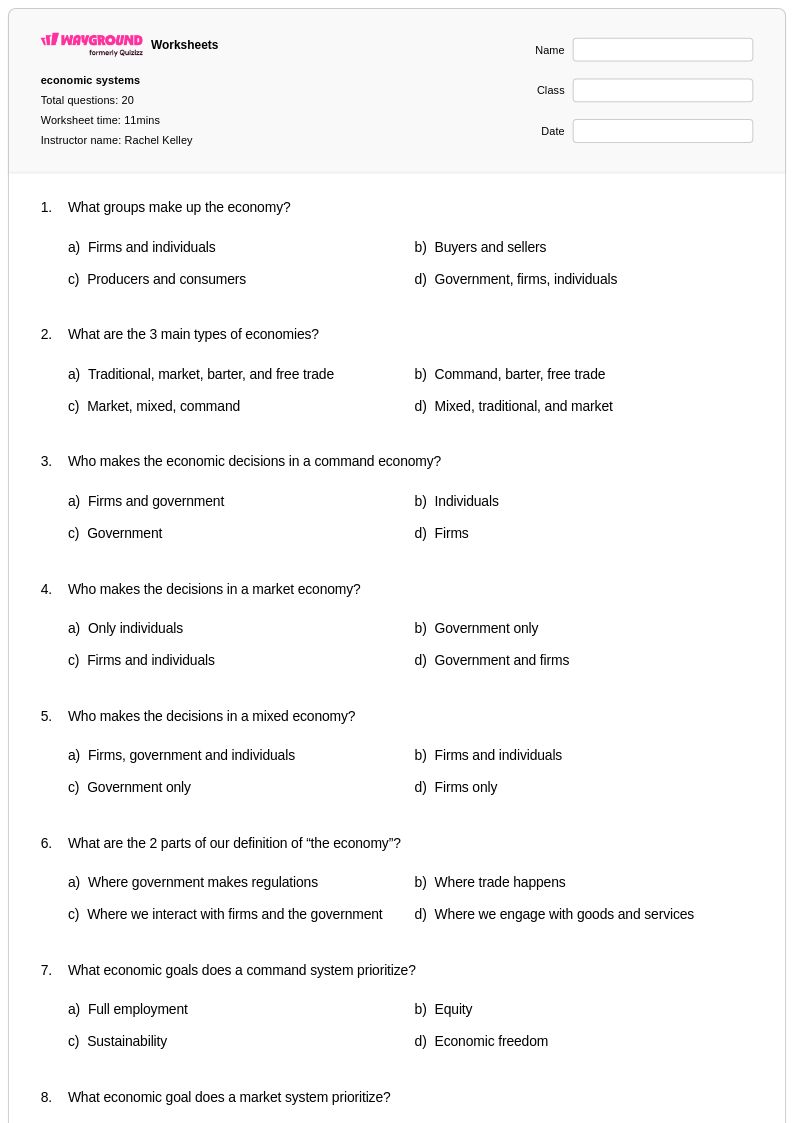
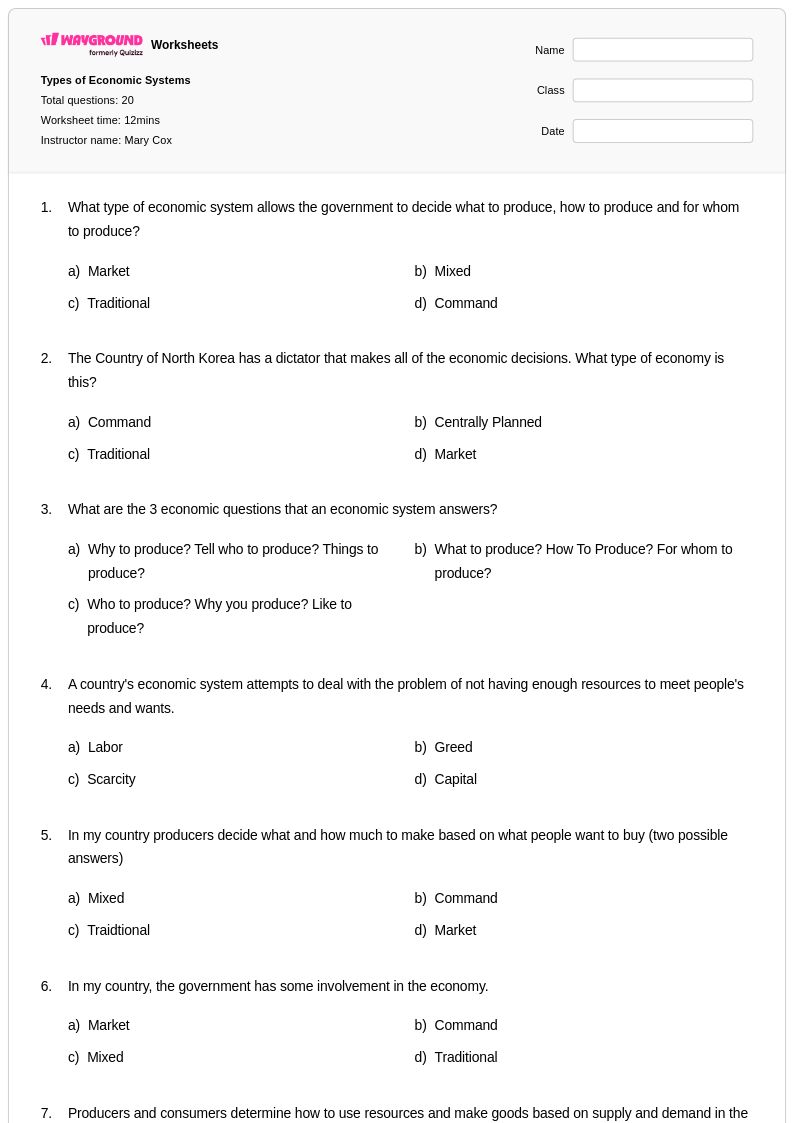
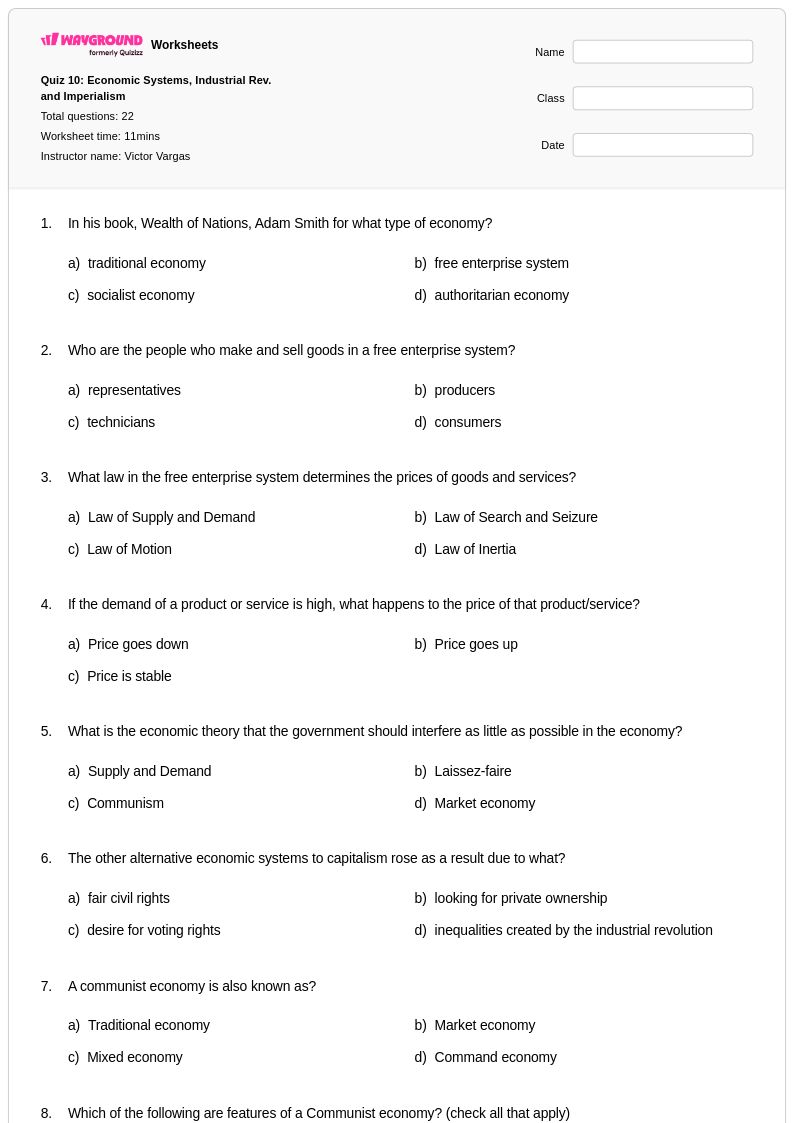
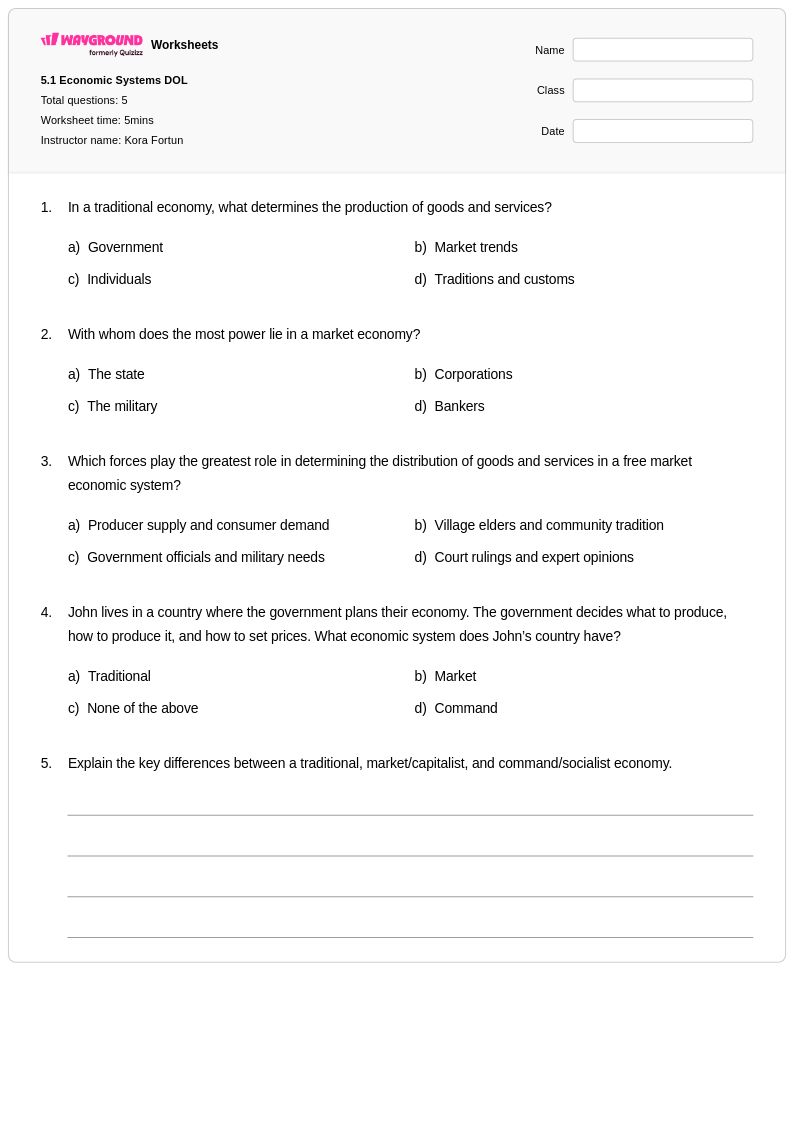
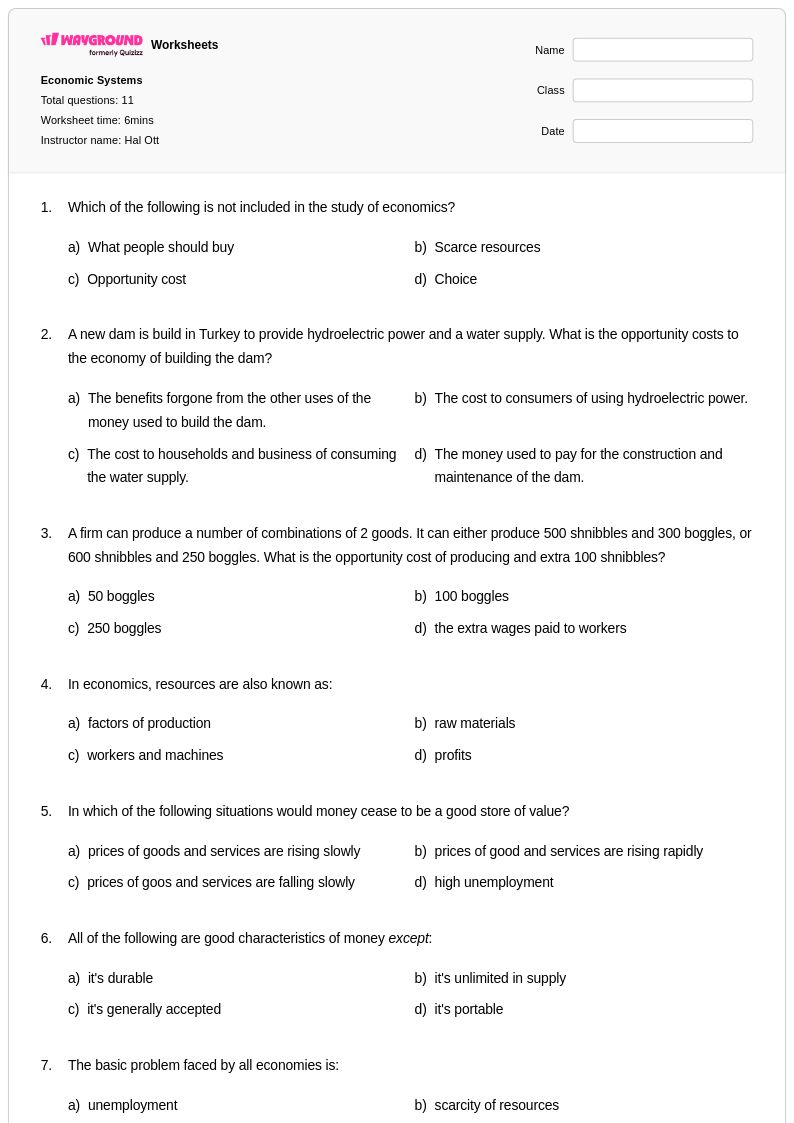
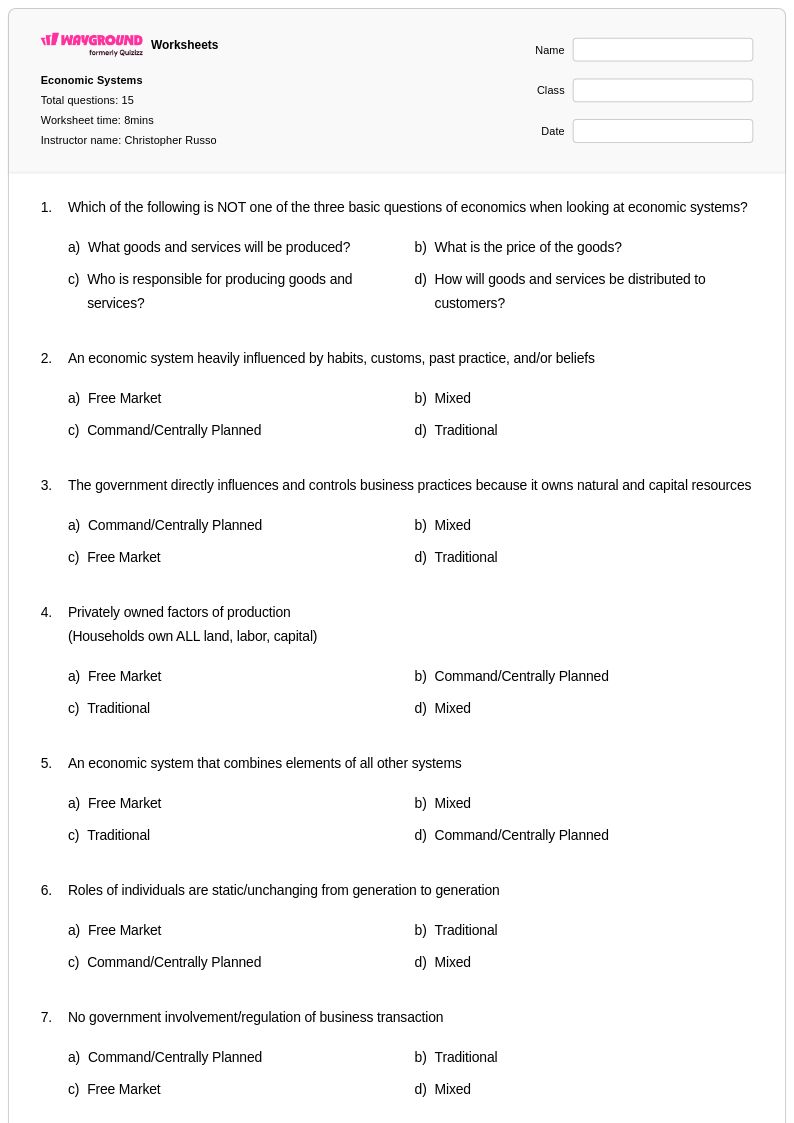
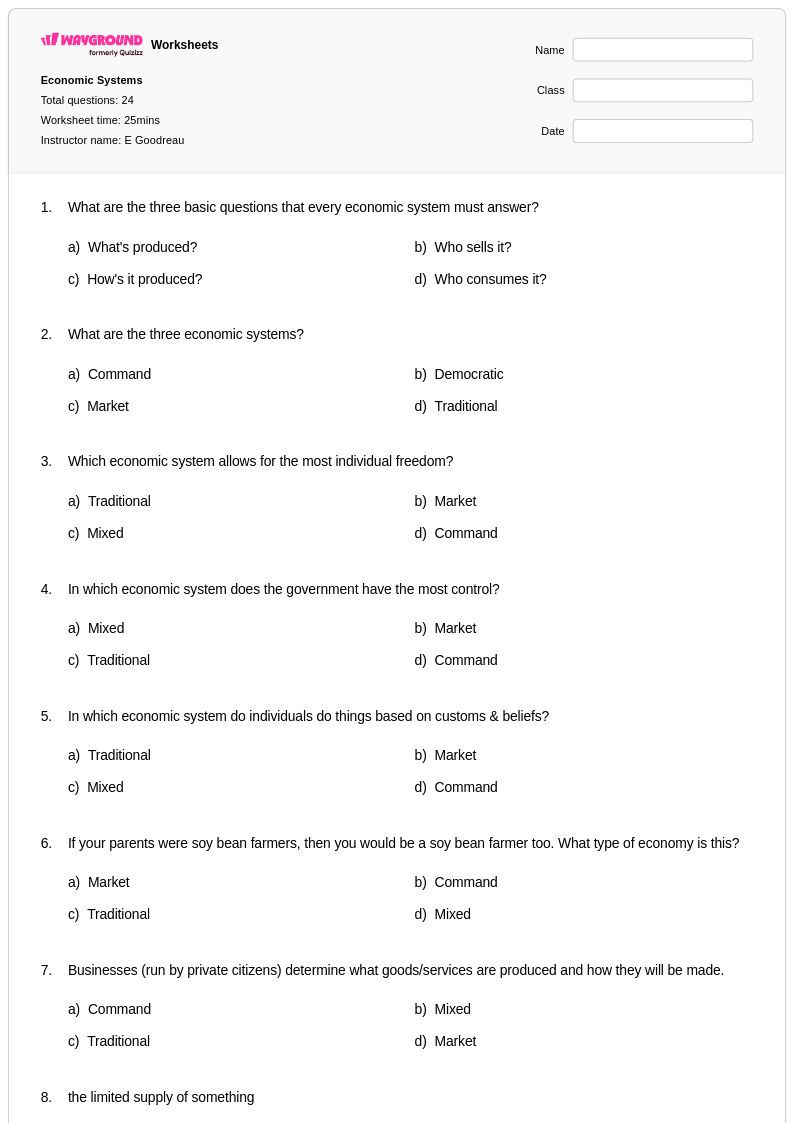
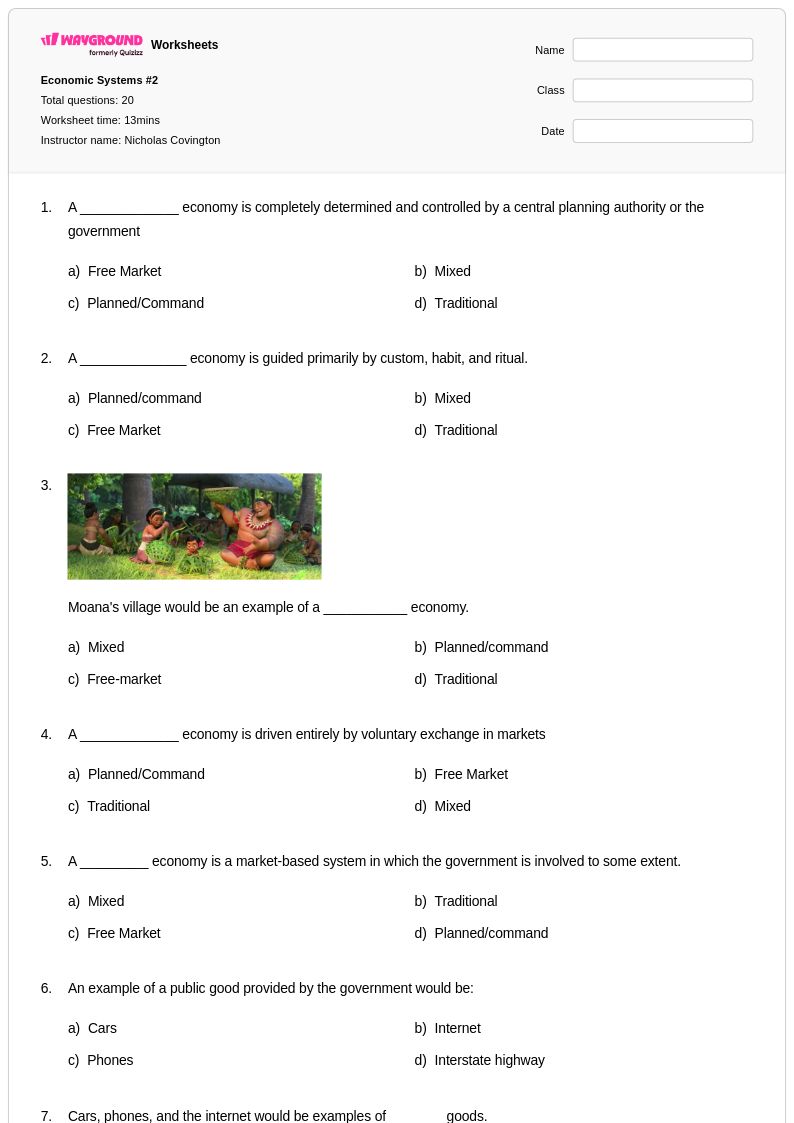
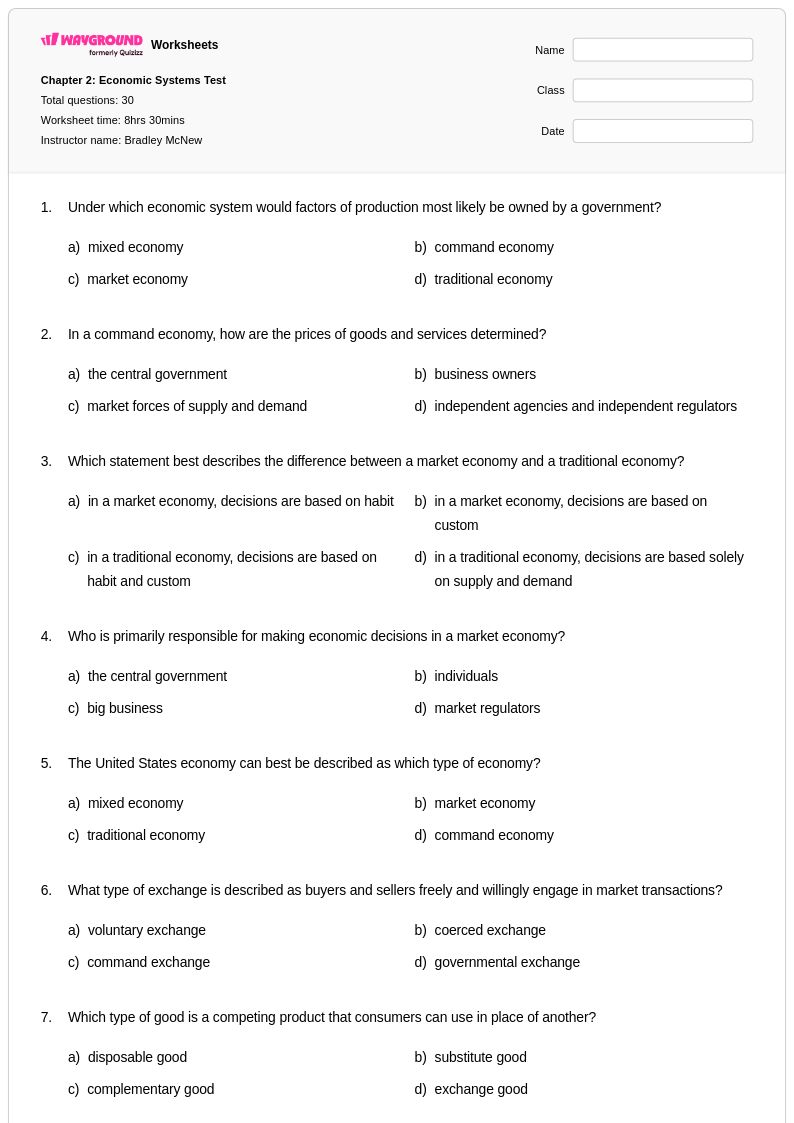
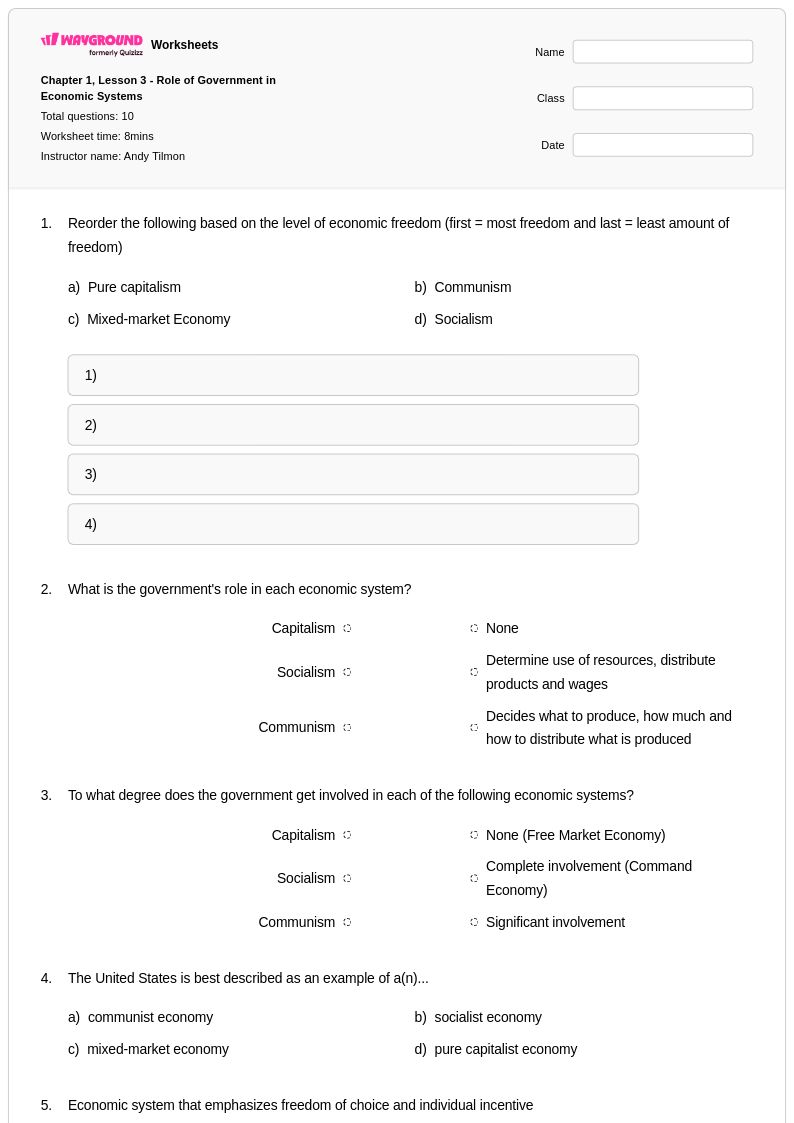
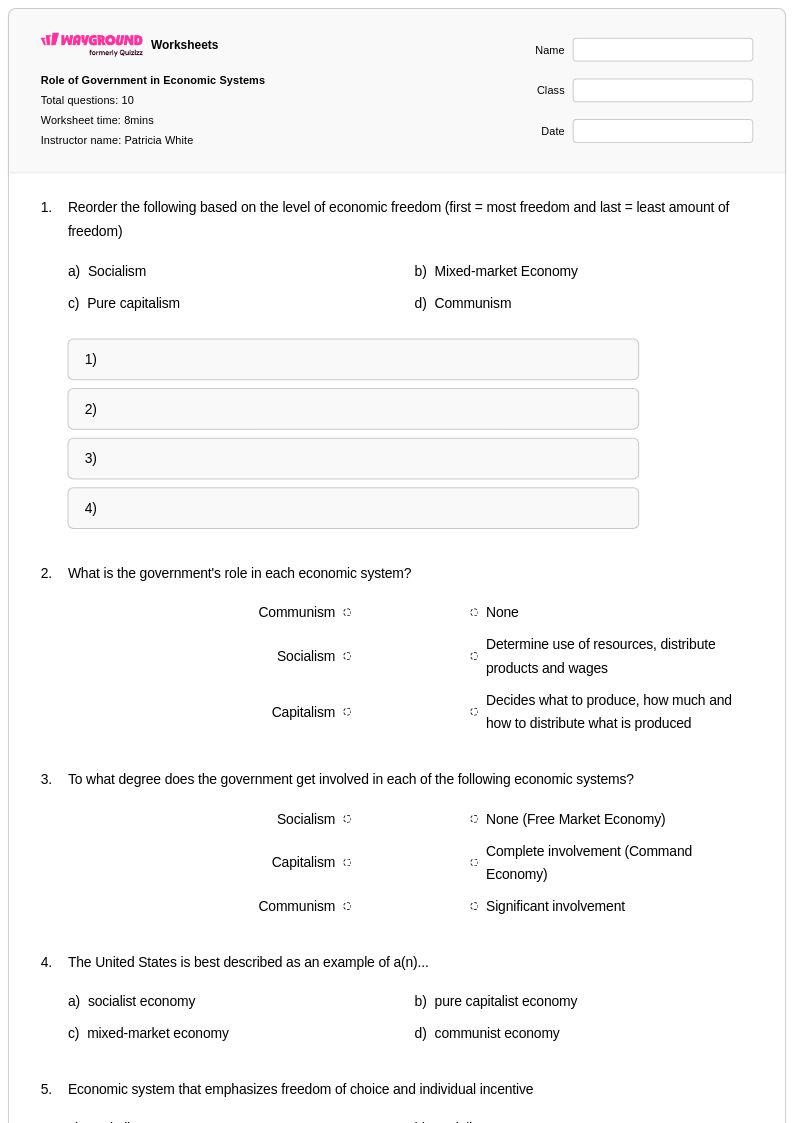
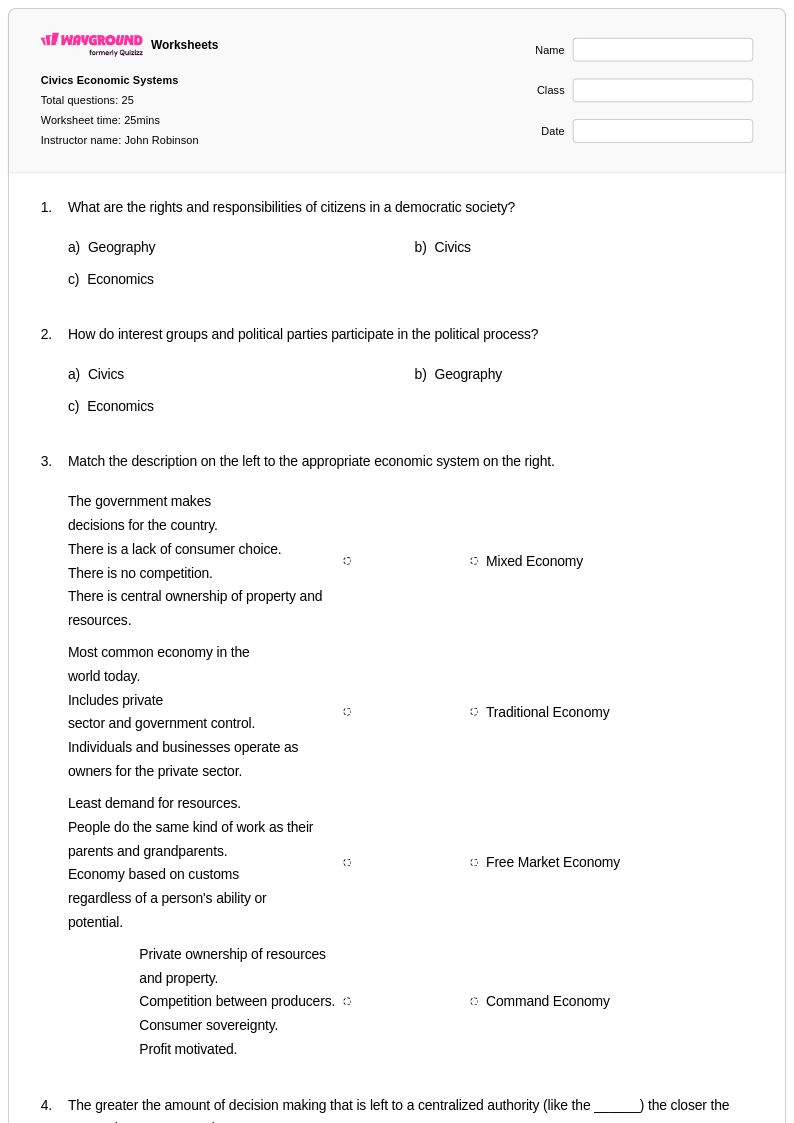
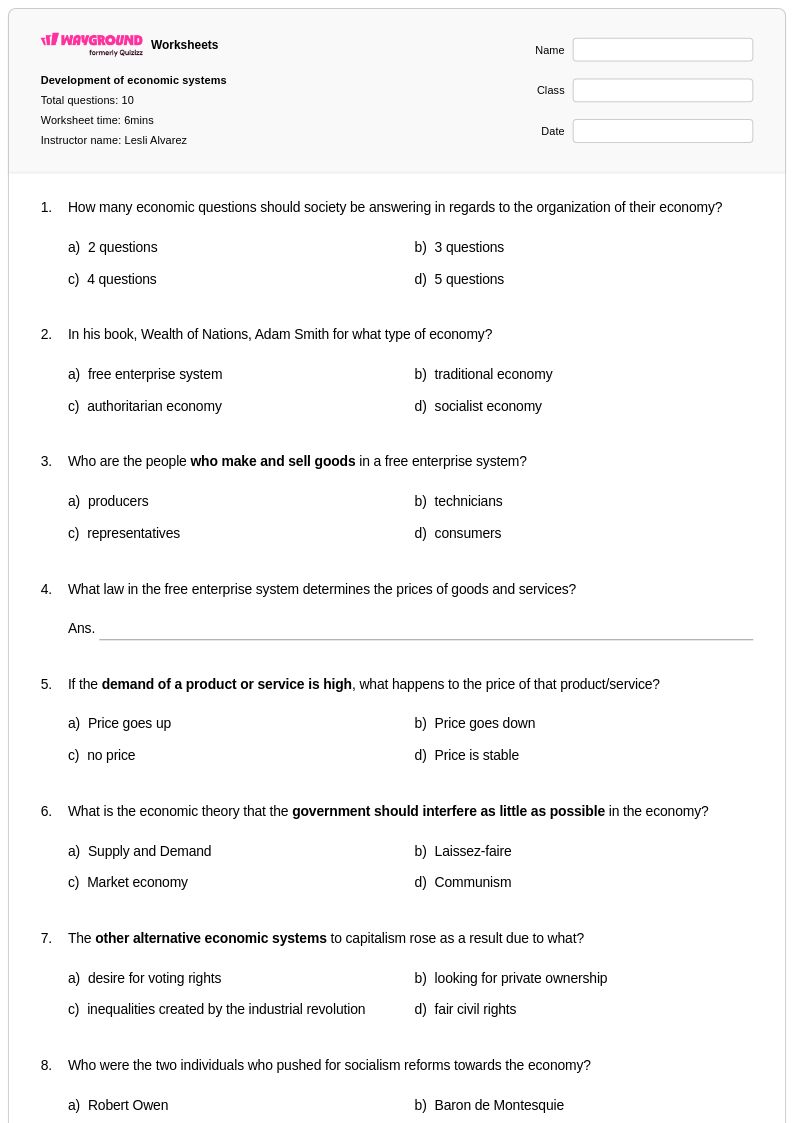
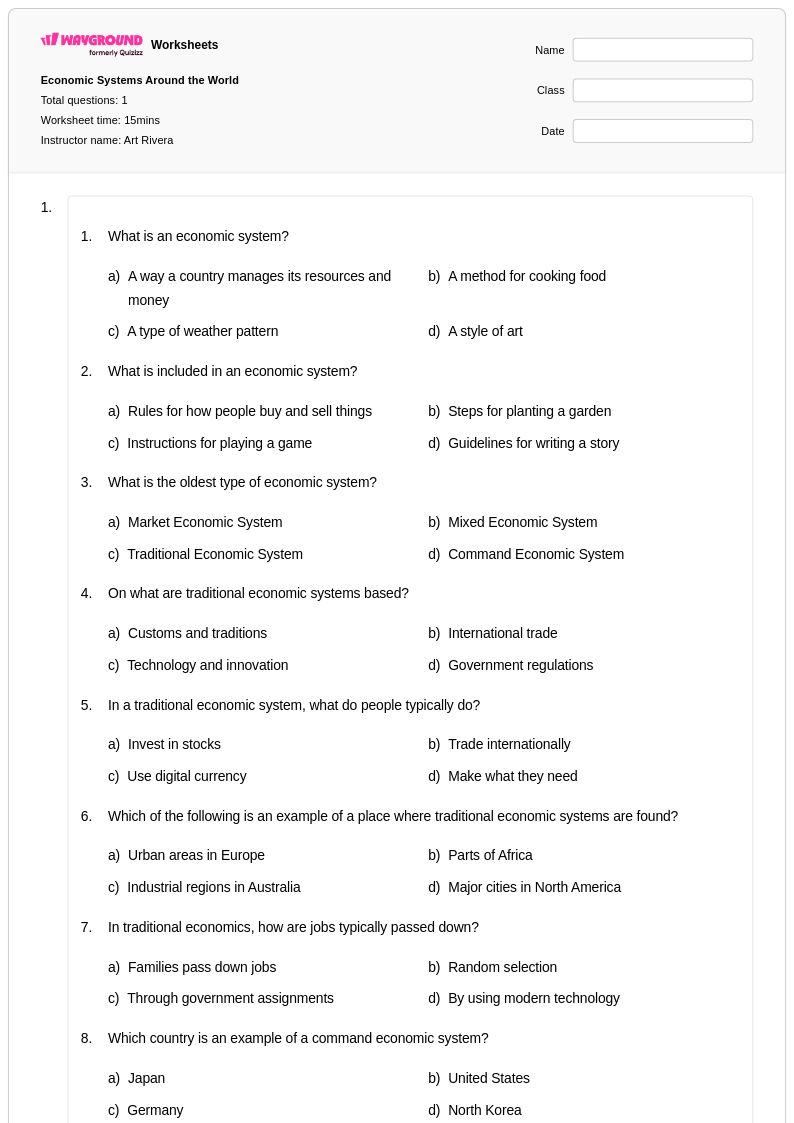
Economic systems worksheets for Class 10 students available through Wayground (formerly Quizizz) provide comprehensive coverage of fundamental economic concepts including market economies, command economies, mixed economies, and traditional economic structures. These expertly designed resources strengthen students' analytical skills by engaging them with practice problems that examine how different societies organize production, distribution, and consumption of goods and services. Students develop critical thinking abilities as they compare and contrast capitalist and socialist systems, analyze government intervention in markets, and evaluate the advantages and disadvantages of various economic models. Each worksheet collection includes detailed answer keys that support independent learning and self-assessment, while free printable pdf formats ensure accessibility for diverse classroom environments and home study sessions.
Wayground (formerly Quizizz) empowers educators with millions of teacher-created economic systems resources that streamline lesson planning and enhance Class 10 social studies instruction. The platform's robust search and filtering capabilities allow teachers to quickly locate materials aligned with state and national standards, ensuring that worksheets complement existing curriculum requirements. Differentiation tools enable instructors to customize content difficulty levels, supporting both remediation for struggling learners and enrichment opportunities for advanced students. Teachers can seamlessly integrate these resources into their economic systems units through flexible digital and printable formats, facilitating targeted skill practice whether students are analyzing circular flow models, examining property rights, or investigating how economic systems address scarcity. This comprehensive approach to resource management transforms complex economic concepts into engaging, accessible learning experiences that build students' understanding of how societies organize their economic activities.
FAQs
How do I teach the four types of economic systems to middle or high school students?
Start by anchoring each system to a real-world example students recognize: the United States as a mixed economy, North Korea as a command economy, subsistence farming communities as traditional economies, and free-market examples like Hong Kong for market economies. Once students can place each system in context, move into comparative analysis by examining who controls production decisions and how resources are distributed in each model. Visual comparison charts and scenario-based questions help students distinguish between systems before they tackle policy-level analysis.
What exercises help students practice comparing economic systems?
Effective practice exercises include side-by-side comparison charts where students evaluate market, command, mixed, and traditional economies across criteria like government role, resource allocation, and individual freedom. Scenario-based questions that ask students to identify which economic system a described country most closely resembles build application skills beyond simple recall. Practice problems that connect economic systems to supply and demand principles help students see how each model handles price-setting and production incentives differently.
What misconceptions do students commonly have about economic systems?
One of the most persistent misconceptions is that economic systems exist as pure types in the real world — students often struggle to accept that virtually every modern economy is a mixed system operating on a spectrum rather than fitting neatly into one category. Students also frequently conflate government involvement in the economy with a command economy, failing to recognize that market economies also involve regulation and public goods. Another common error is treating traditional economies as outdated or inferior rather than as functional systems adapted to specific environmental and cultural conditions.
How can I use economic systems worksheets to assess student understanding?
Worksheets that ask students to analyze advantages and disadvantages of each economic system reveal whether they understand trade-offs rather than just definitions. Tasks requiring students to evaluate real-world economic policies and assign them to a system type are strong indicators of applied comprehension. Look for errors in how students handle edge cases — such as misclassifying a mixed economy as purely market-based — as these reveal gaps in understanding the role of government intervention.
How do I use Wayground's economic systems worksheets in my classroom?
Wayground's economic systems worksheets are available as printable PDFs for traditional classroom use and in digital formats for technology-integrated instruction, making them easy to deploy whether students are working at desks or on devices. You can also host any worksheet as a live or asynchronous quiz directly on Wayground, which gives you real-time data on student performance. The included answer keys support both teacher-led review and independent student study, reducing prep time without sacrificing instructional quality.
How do I differentiate economic systems instruction for students at different skill levels?
For students who need additional support, Wayground's accommodation tools allow teachers to enable Read Aloud so questions and content are read to students, and Reduced Answer Choices to lower cognitive load on assessment items. Extended time settings can be configured per student for those who need more processing time. These accommodations are saved and reusable across future sessions, and remaining students receive default settings without any notification, keeping the experience seamless for the whole class.