
Recommended Topics for you
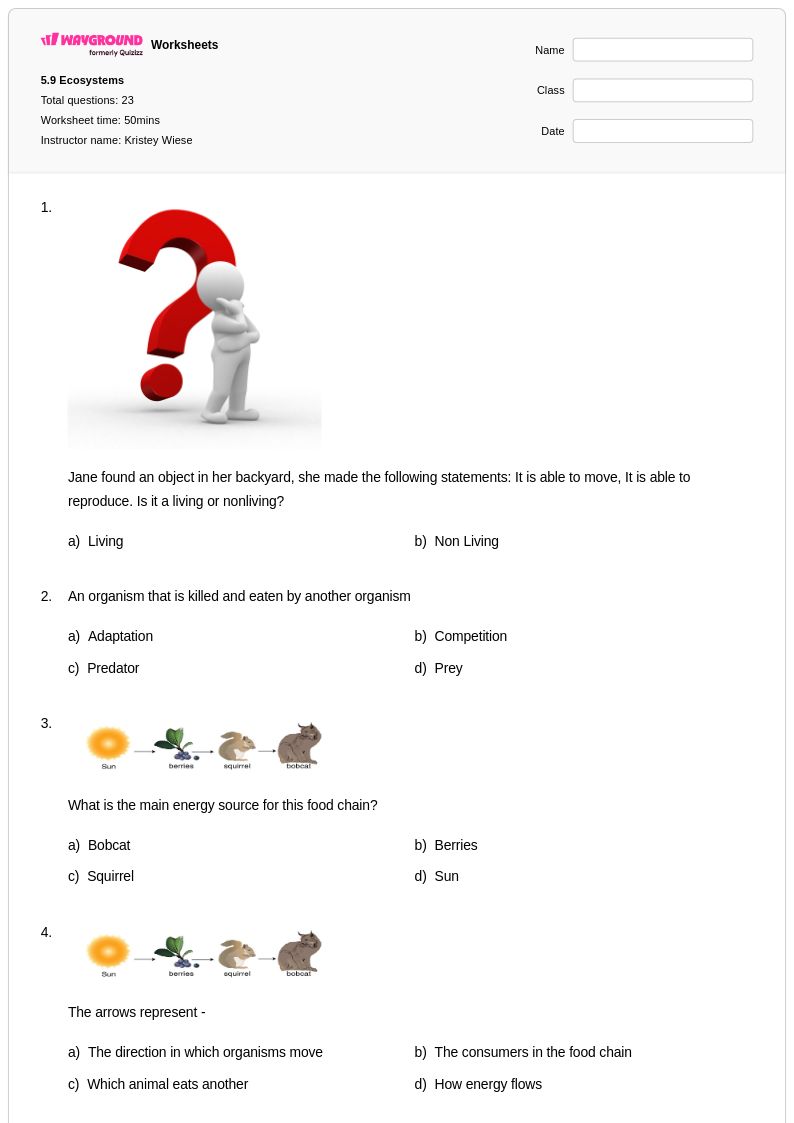
23 Q
4th - 8th
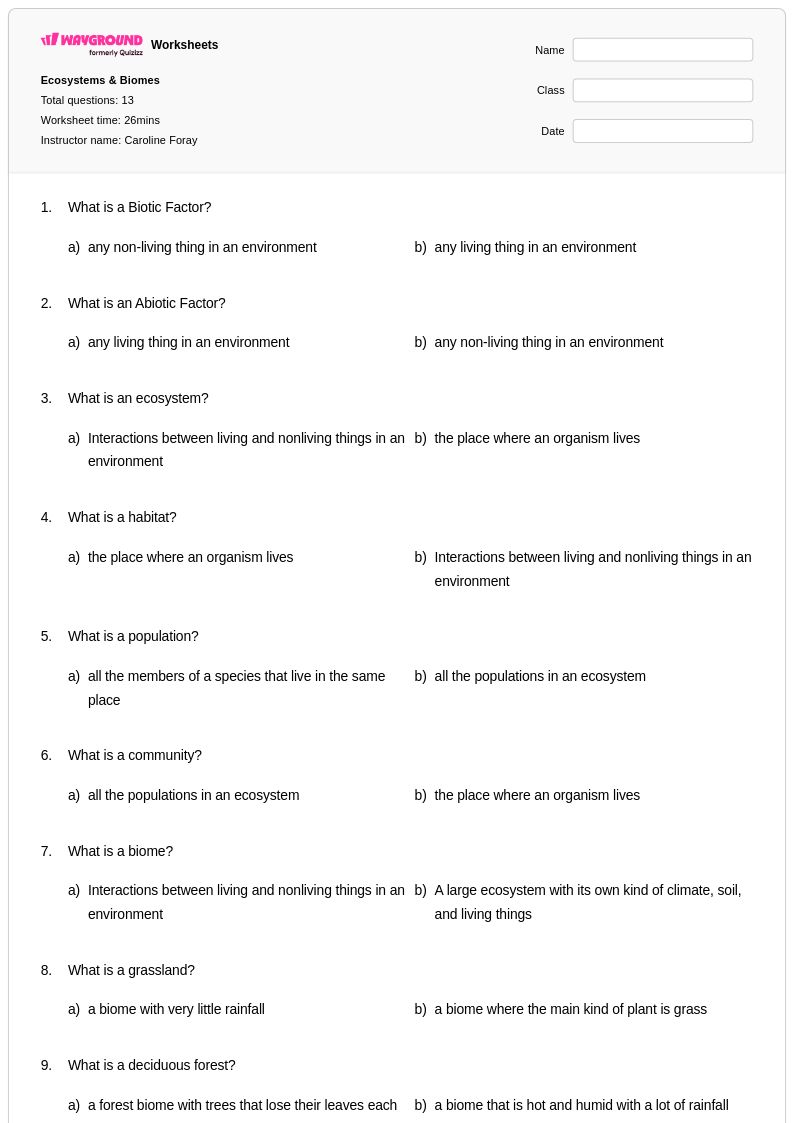
13 Q
4th - 5th
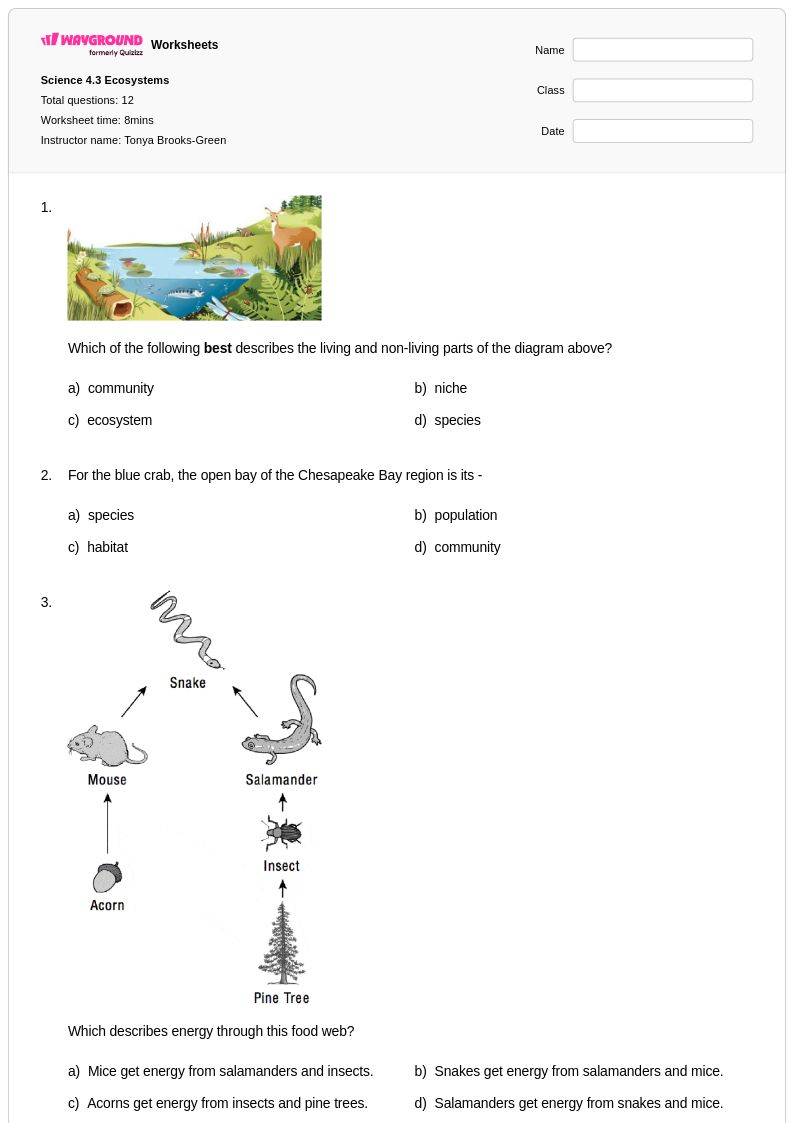
12 Q
4th - 5th
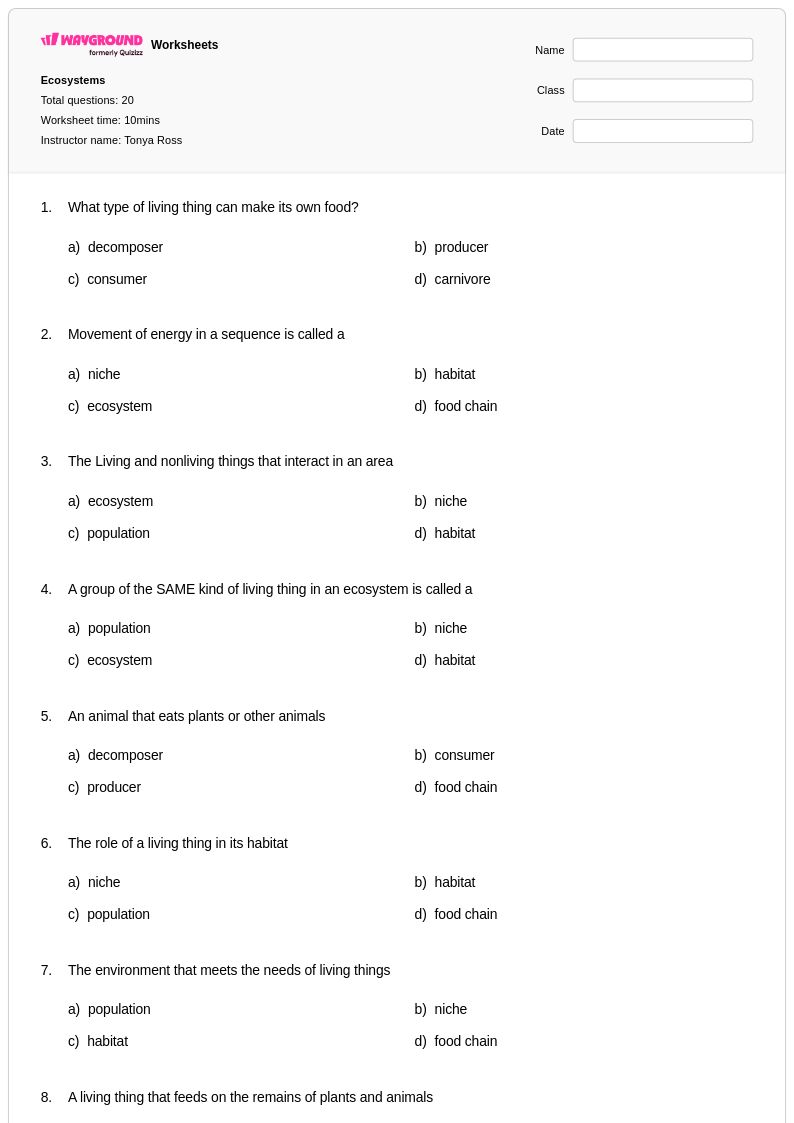
20 Q
4th
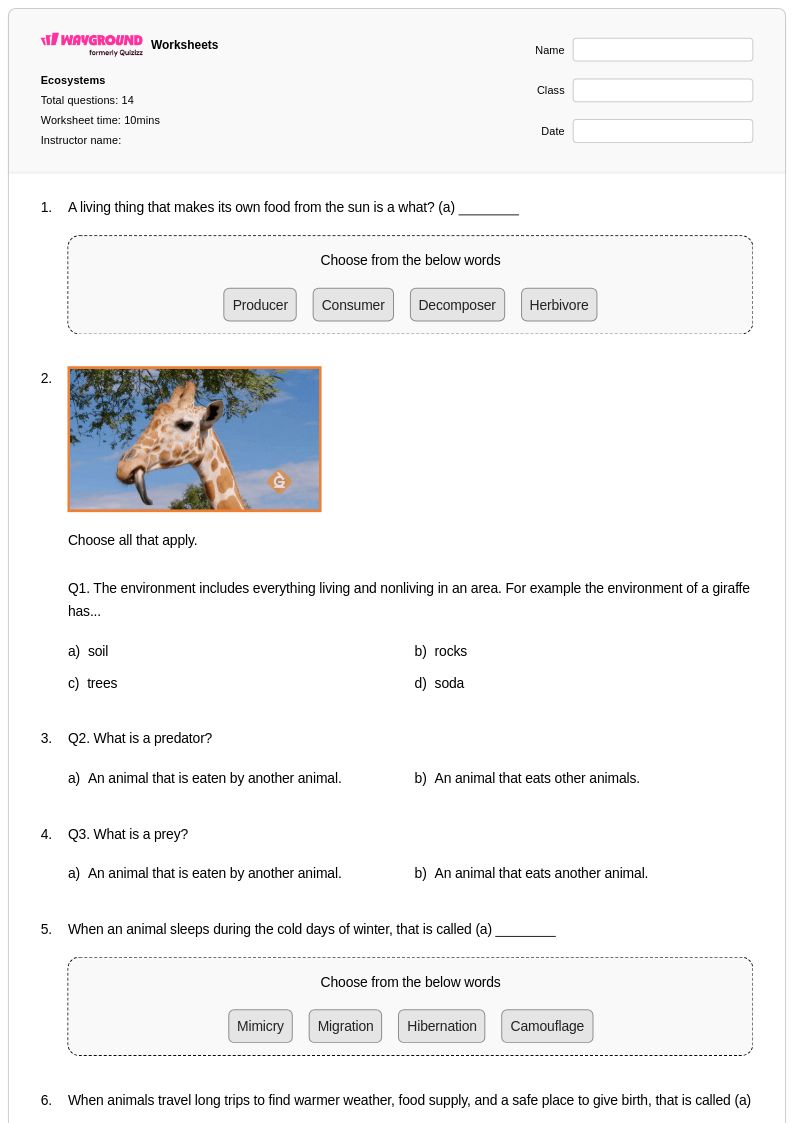
14 Q
4th
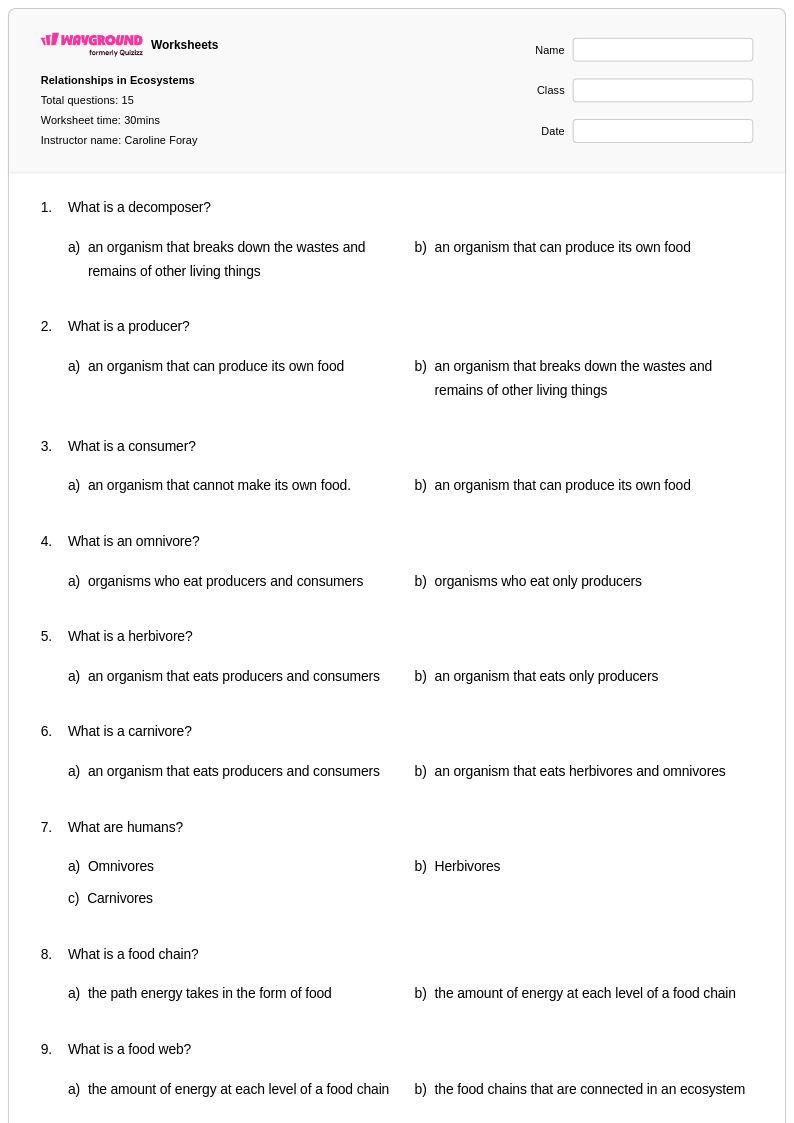
15 Q
4th
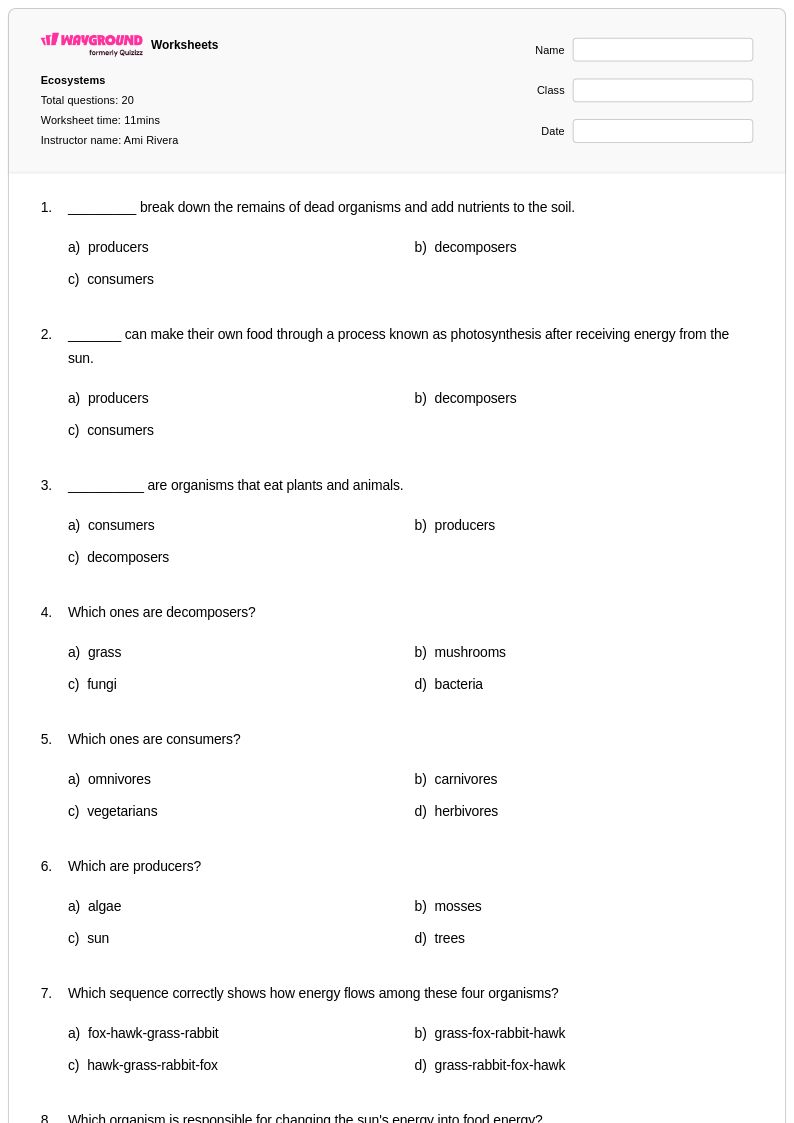
20 Q
4th - 6th
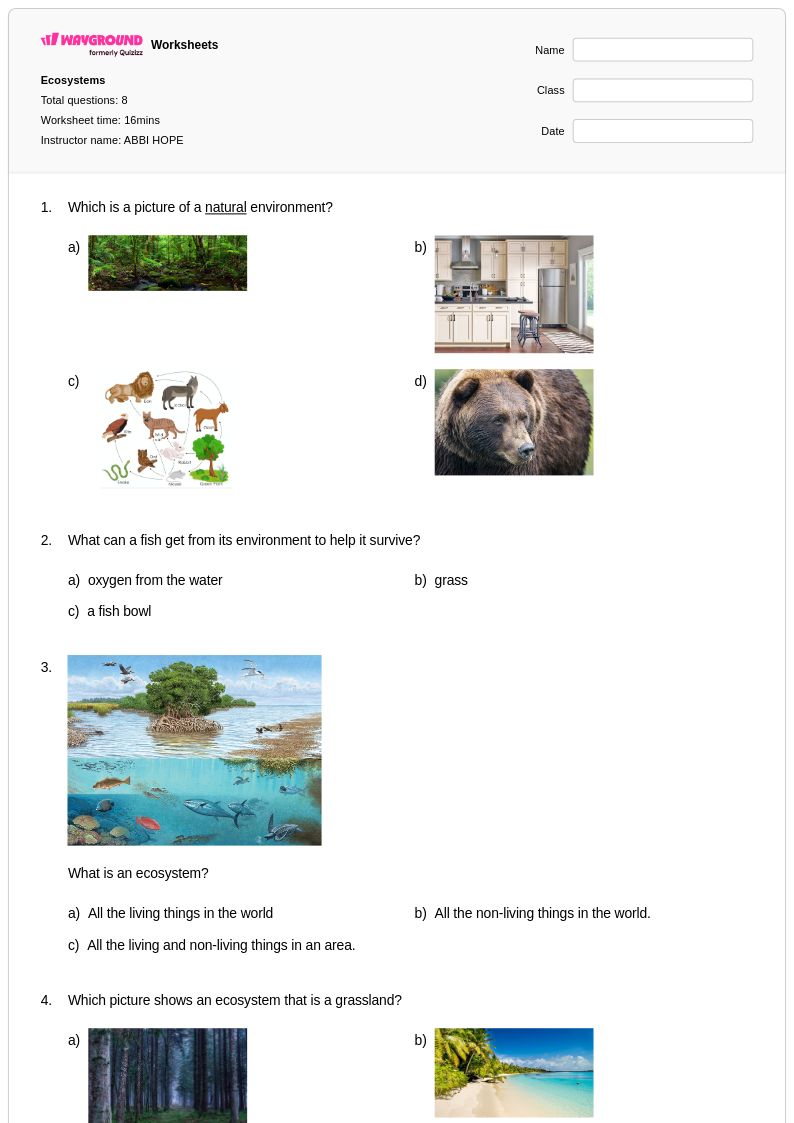
8 Q
3rd - 4th
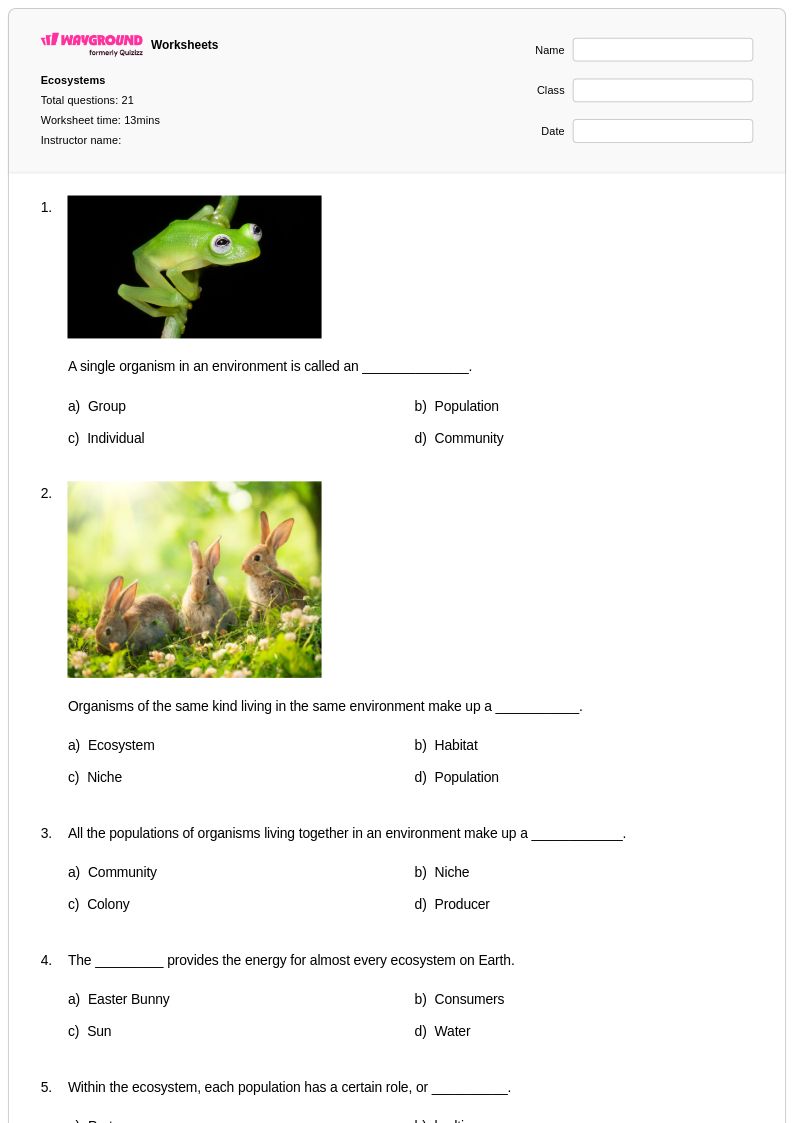
21 Q
4th - 5th
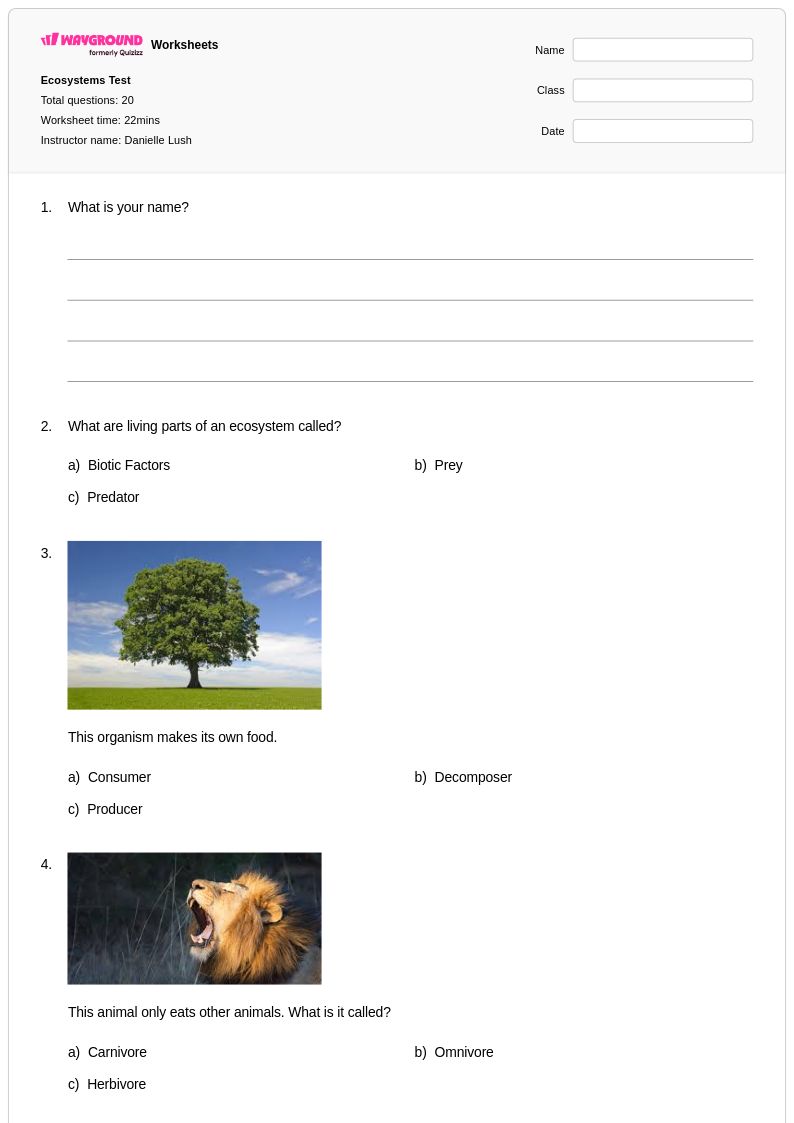
20 Q
4th - 5th
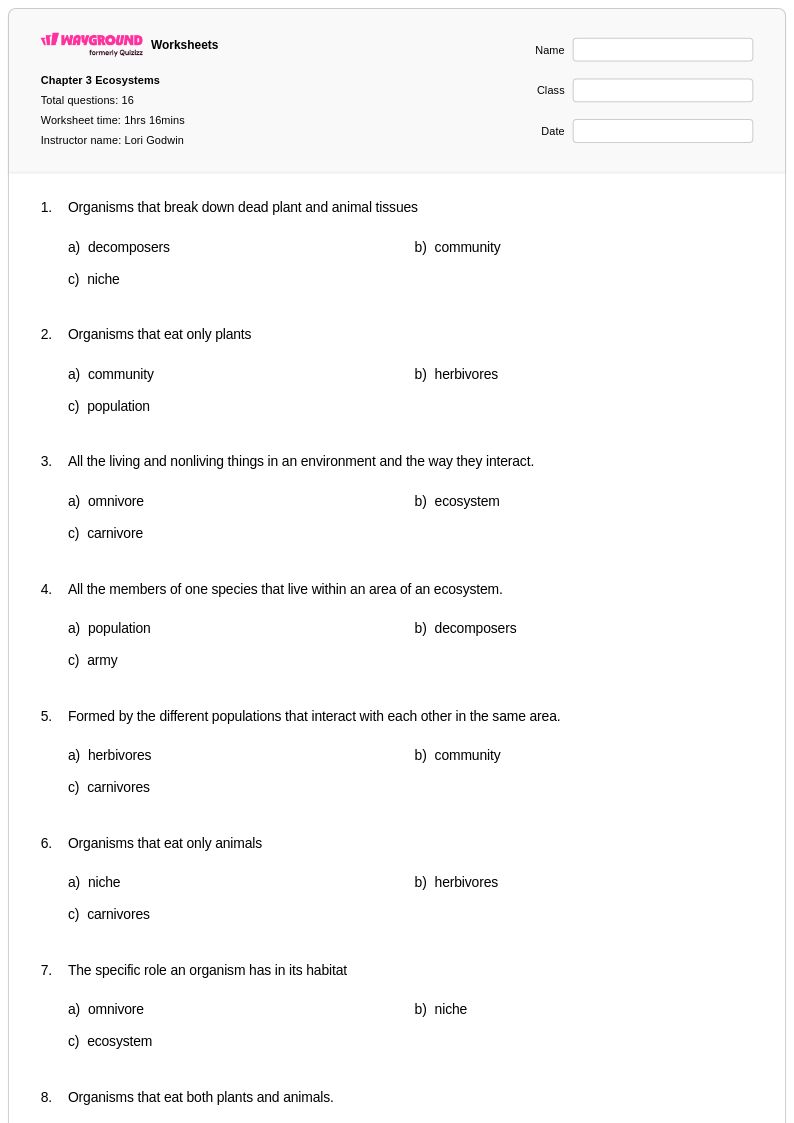
16 Q
4th
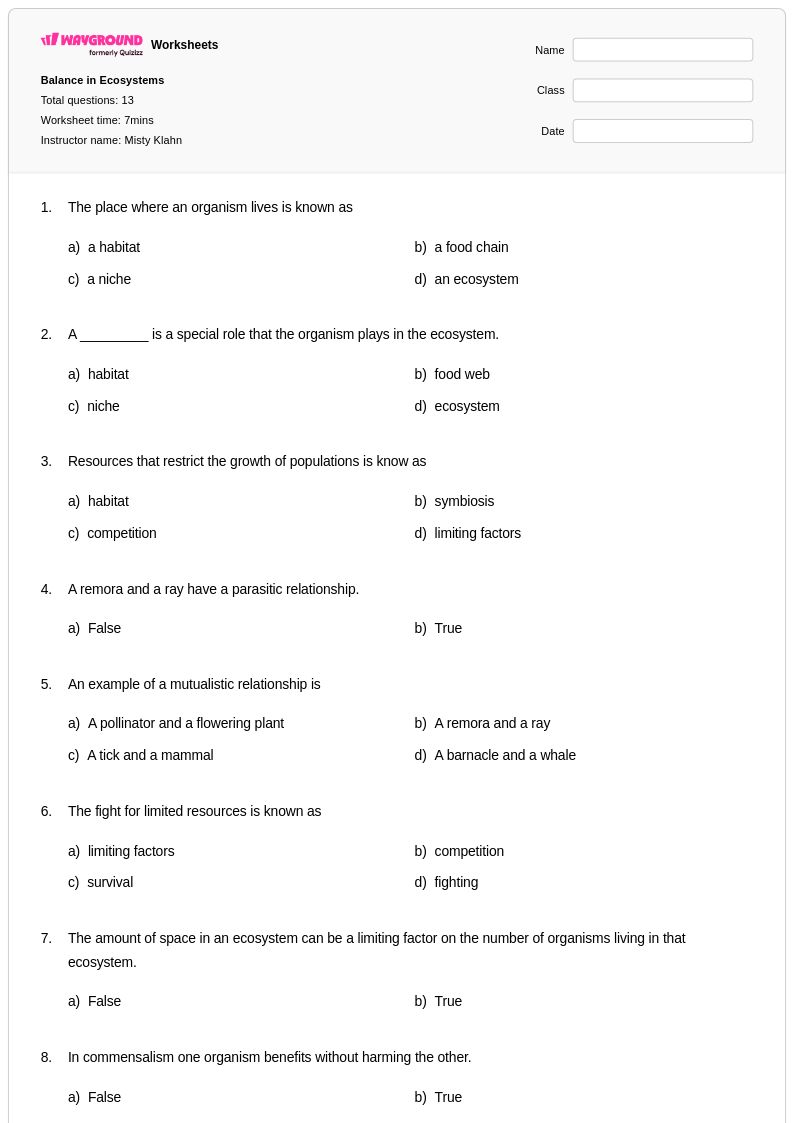
13 Q
4th
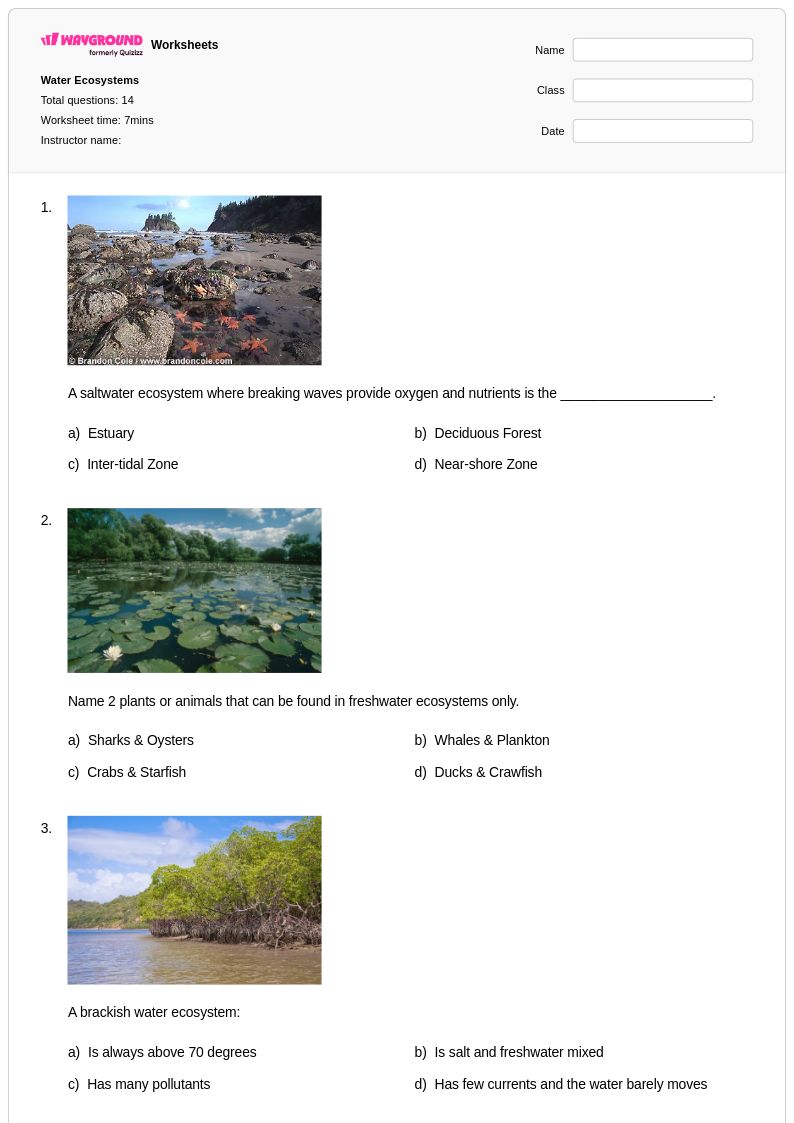
14 Q
4th - 6th
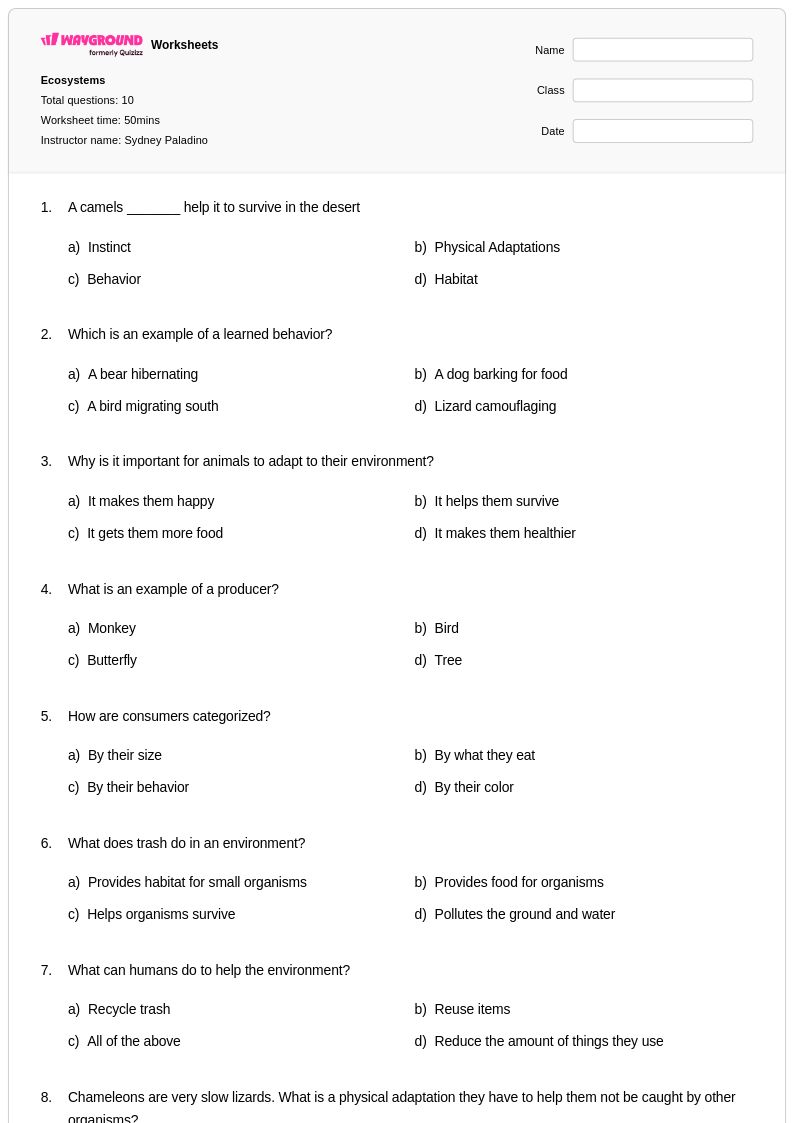
10 Q
4th
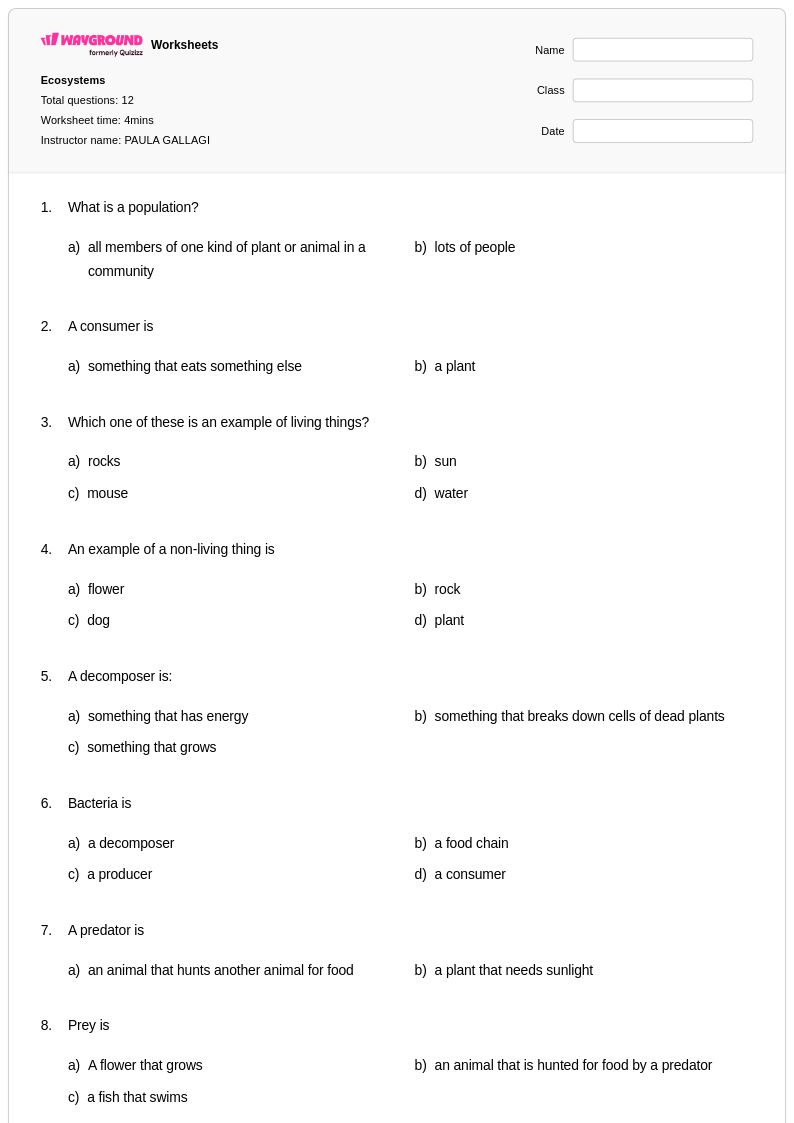
12 Q
4th - 6th
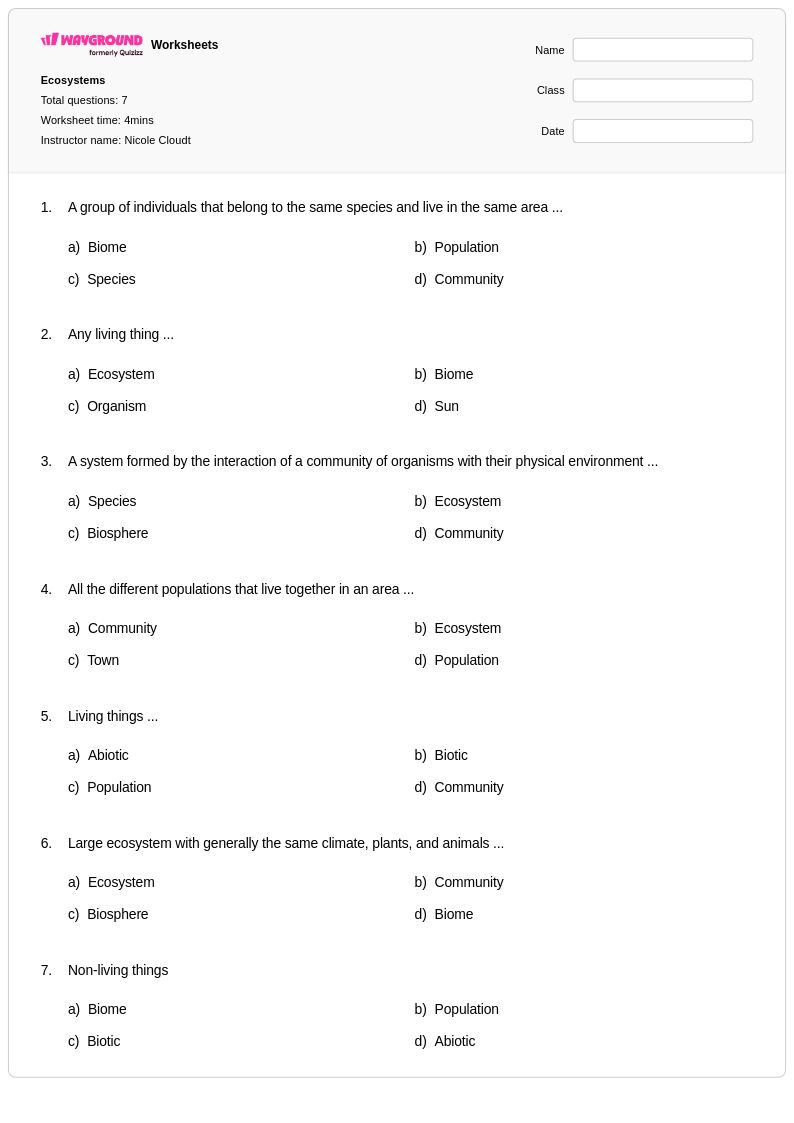
7 Q
4th - 6th
18 Q
4th - 6th
15 Q
4th - 6th
13 Q
4th
25 Q
4th - 6th
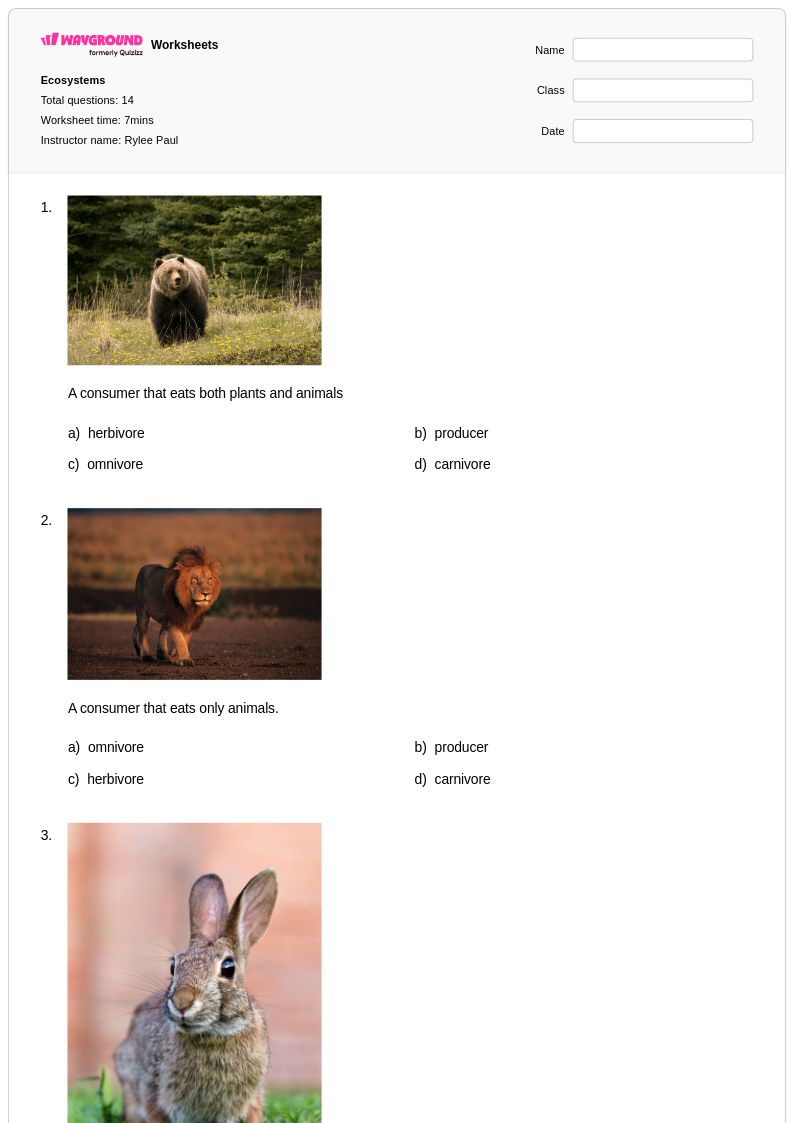
14 Q
4th - 5th
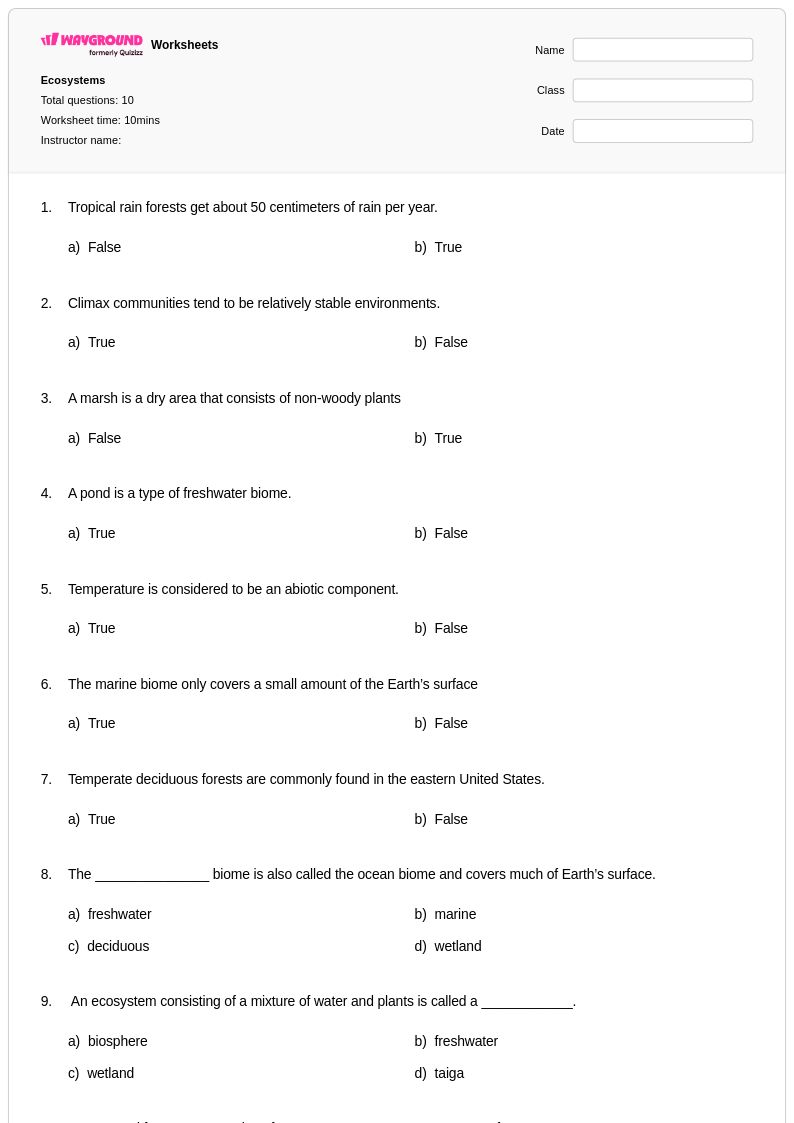
10 Q
4th - 5th
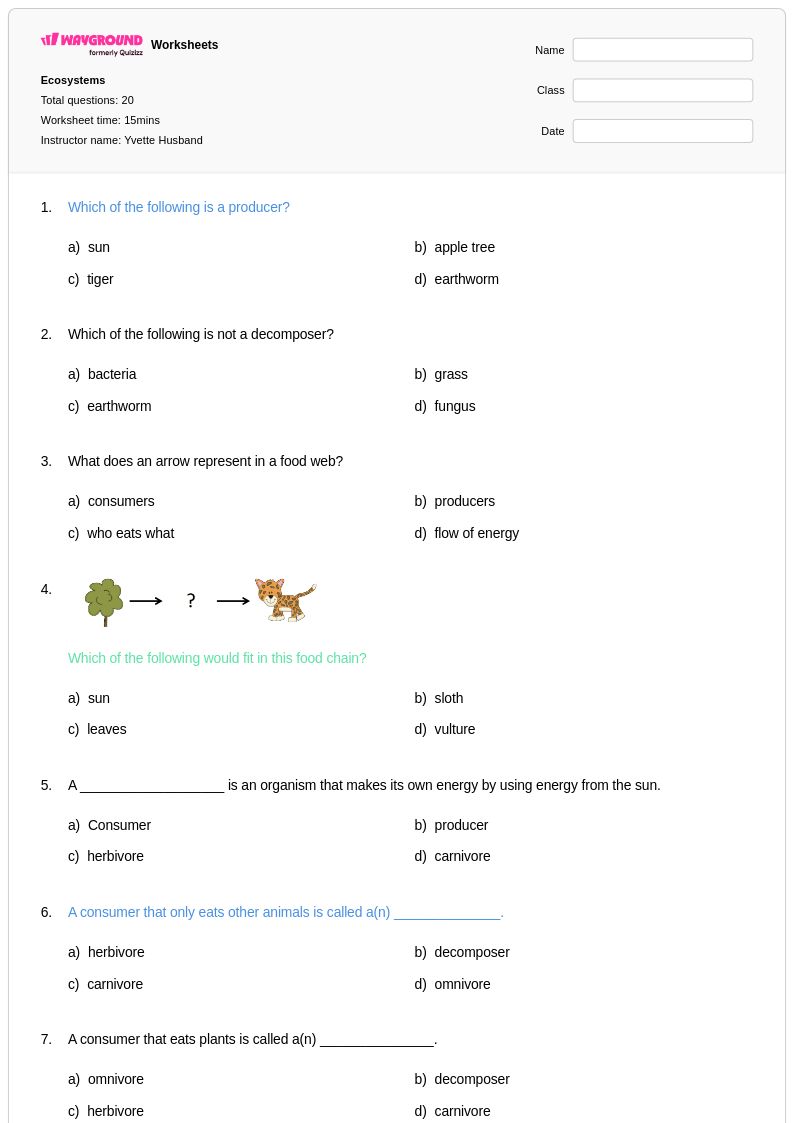
20 Q
4th
Explore Ecosystems Worksheets by Grades
Explore Ecosystems Worksheets for class 4 by Topic
Explore Other Subject Worksheets for class 4
Explore printable Ecosystems worksheets for Class 4
Class 4 ecosystems worksheets available through Wayground (formerly Quizizz) provide elementary students with comprehensive practice in understanding the complex relationships between living and nonliving components in natural environments. These carefully designed educational resources strengthen essential scientific skills including habitat identification, food chain analysis, producer and consumer classification, and ecosystem interdependence concepts. Students engage with practice problems that explore different biomes, examine how organisms depend on their environment for survival, and investigate the flow of energy through ecological systems. Each worksheet collection includes detailed answer keys that support independent learning and self-assessment, while printable pdf formats ensure easy access for both classroom instruction and home study. These free educational resources cover fundamental ecosystem principles through age-appropriate activities that build scientific reasoning and environmental awareness.
Wayground (formerly Quizizz) empowers educators with millions of teacher-created ecosystem worksheets that streamline lesson planning and support diverse learning needs in Class 4 science classrooms. The platform's robust search and filtering capabilities allow teachers to quickly locate resources aligned with specific curriculum standards and learning objectives, while built-in differentiation tools enable customization for varying student ability levels. Teachers can seamlessly transition between printable and digital formats, including downloadable pdf versions, to accommodate different instructional settings and technology availability. These comprehensive worksheet collections support targeted remediation for struggling learners, provide enrichment opportunities for advanced students, and offer consistent skill practice that reinforces ecosystem concepts throughout the academic year. The platform's flexible customization features allow educators to modify existing materials or combine multiple resources to create tailored learning experiences that meet their classroom's unique needs.
FAQs
How do I teach ecosystems to elementary and middle school students?
What exercises help students practice food chains and food webs?
What are the most common mistakes students make when learning about ecosystems?
How can I differentiate ecosystems instruction for students at different levels?
How do I use Wayground ecosystems worksheets in my classroom?
How do predator-prey relationships fit into ecosystem instruction?