Free Printable Emancipation Proclamation Worksheets for Class 9
Explore Class 9 Emancipation Proclamation worksheets and printables from Wayground that help students analyze Lincoln's historic decree, featuring free PDFs with practice problems and answer keys to deepen understanding of this pivotal Civil War document.
Explore printable Emancipation Proclamation worksheets for Class 9
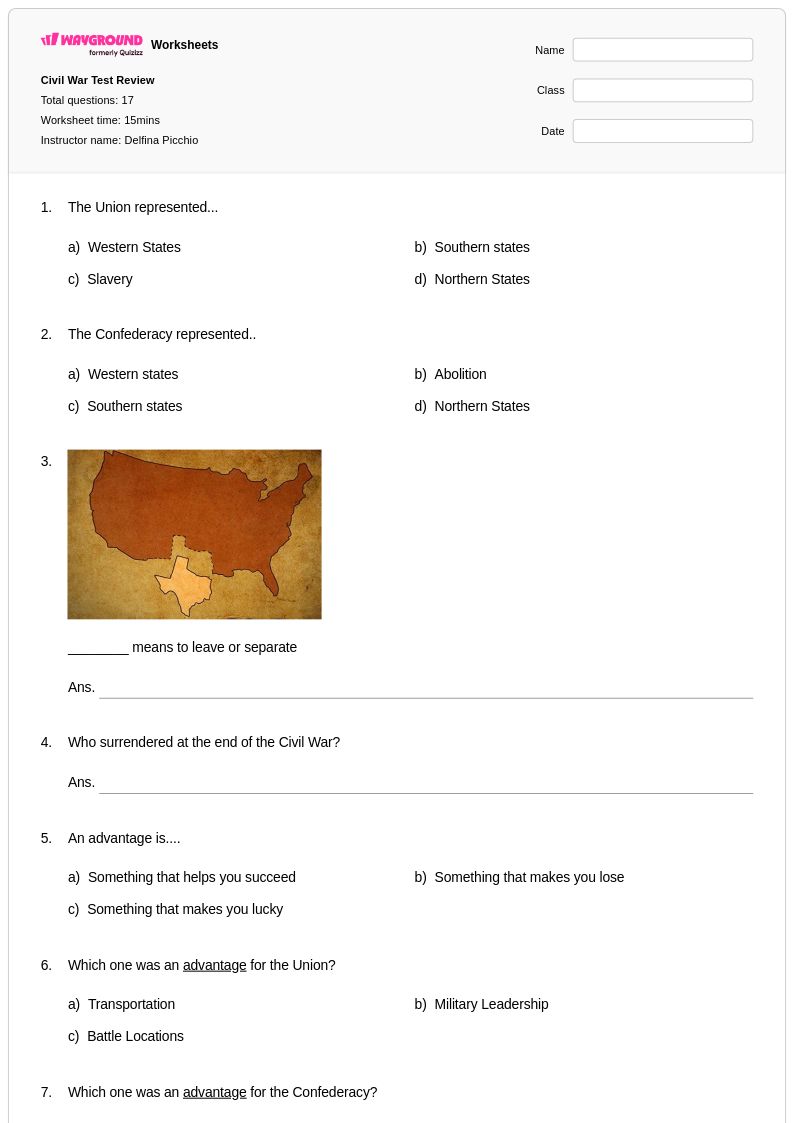
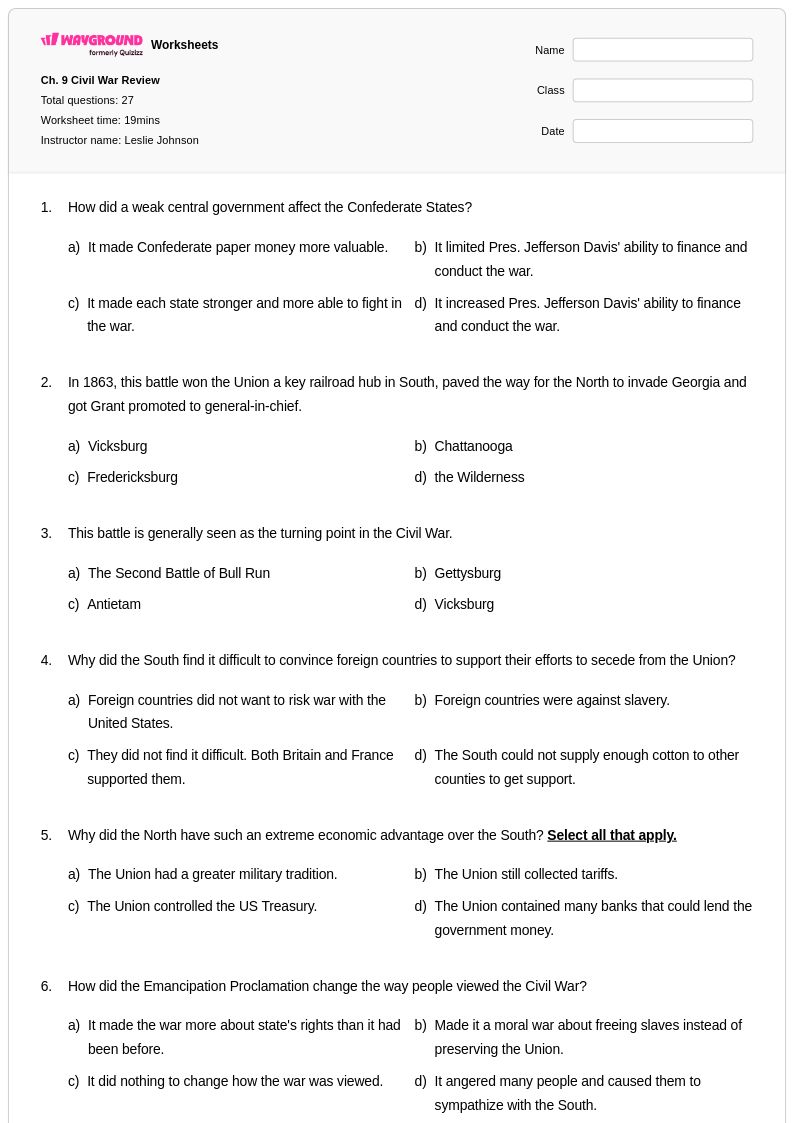
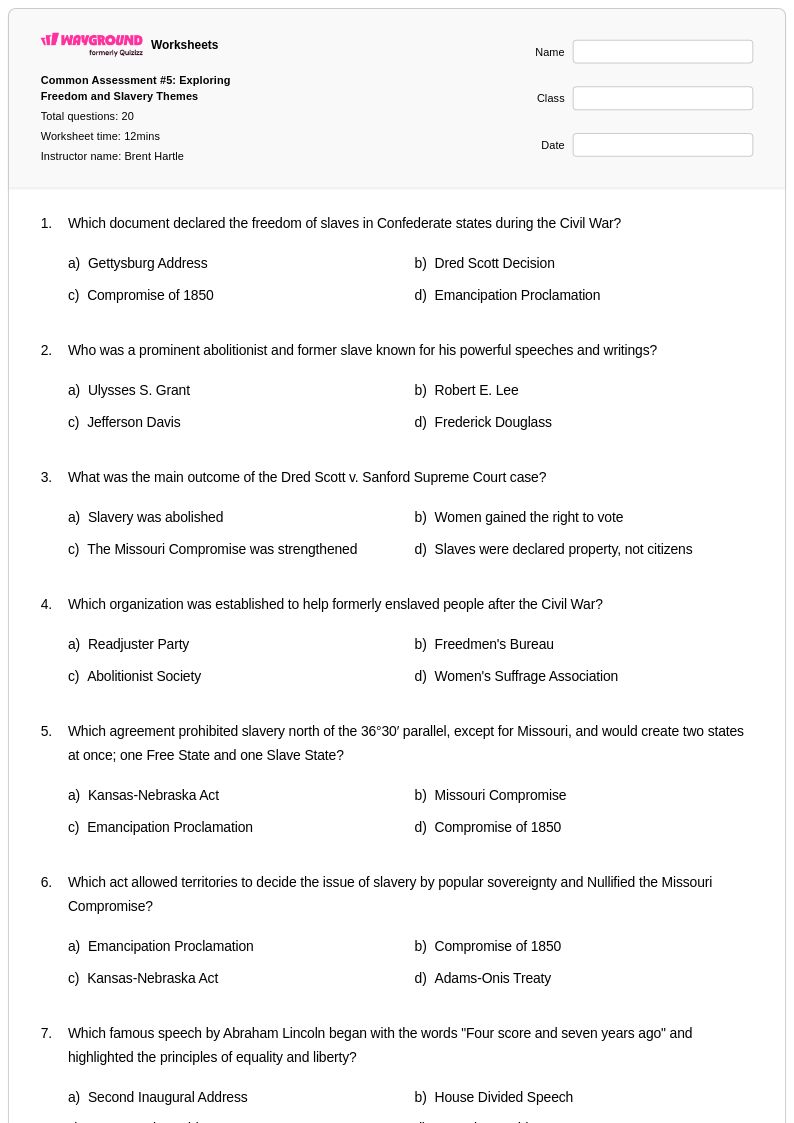
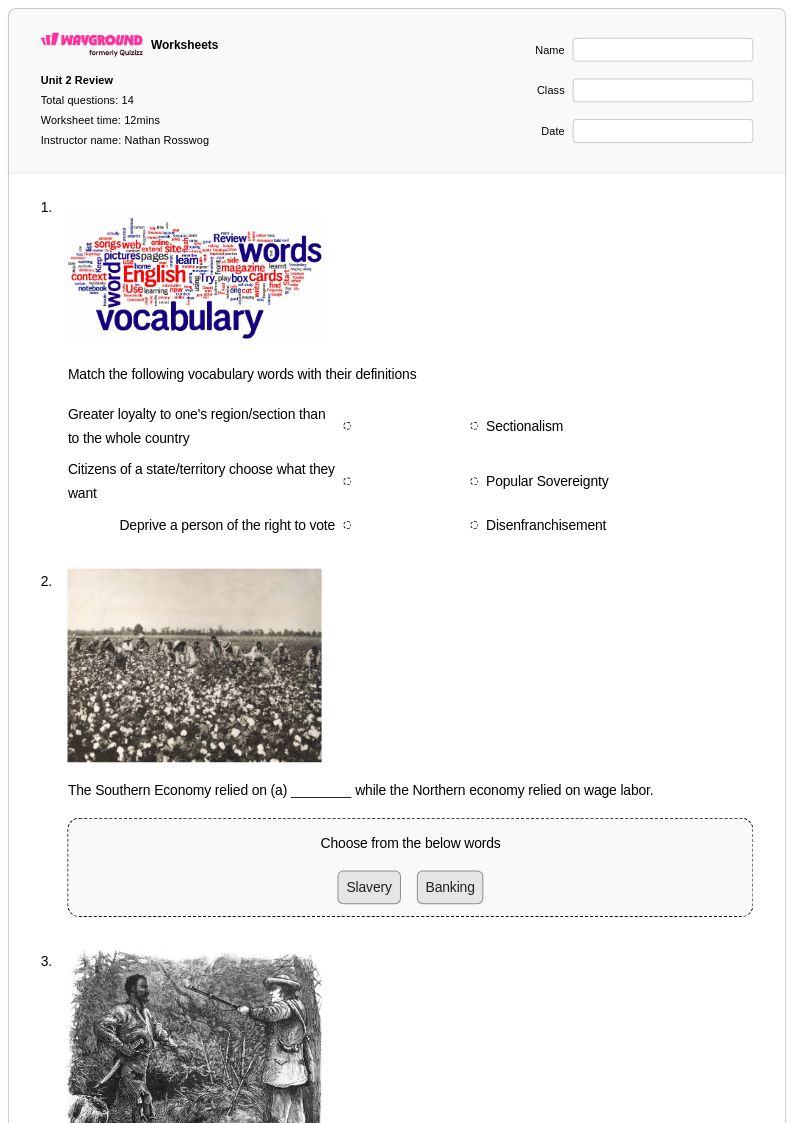
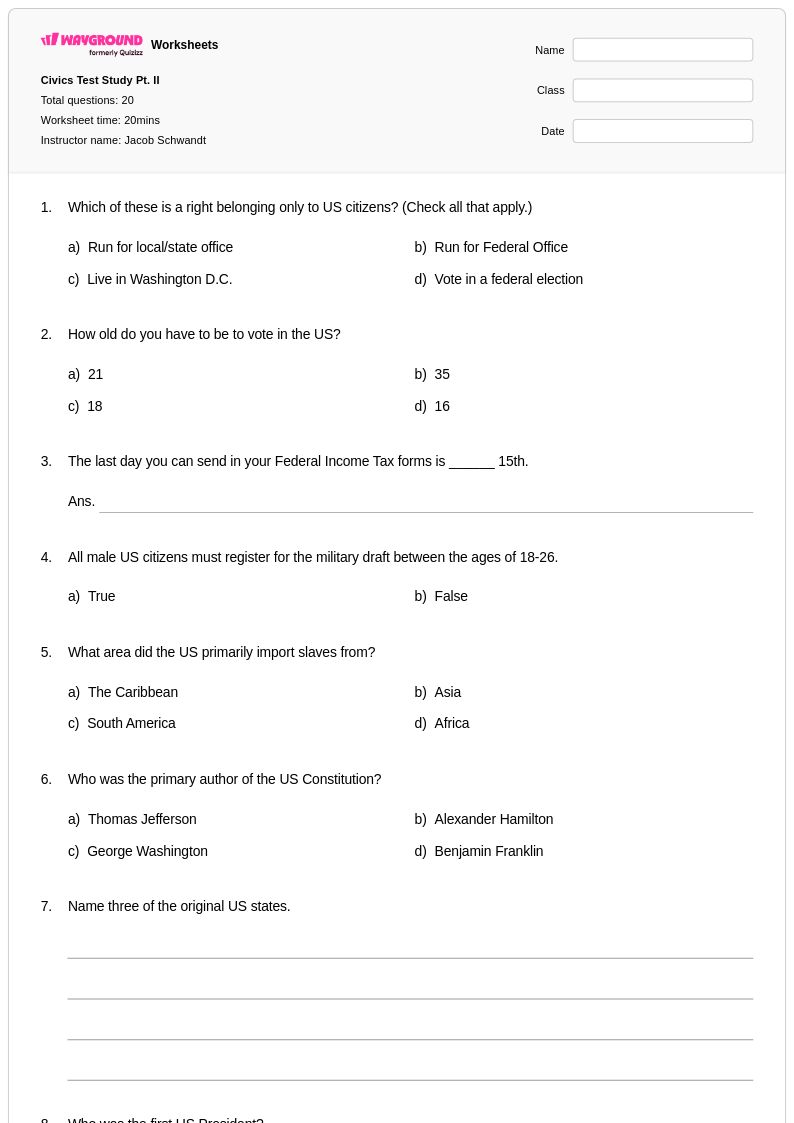
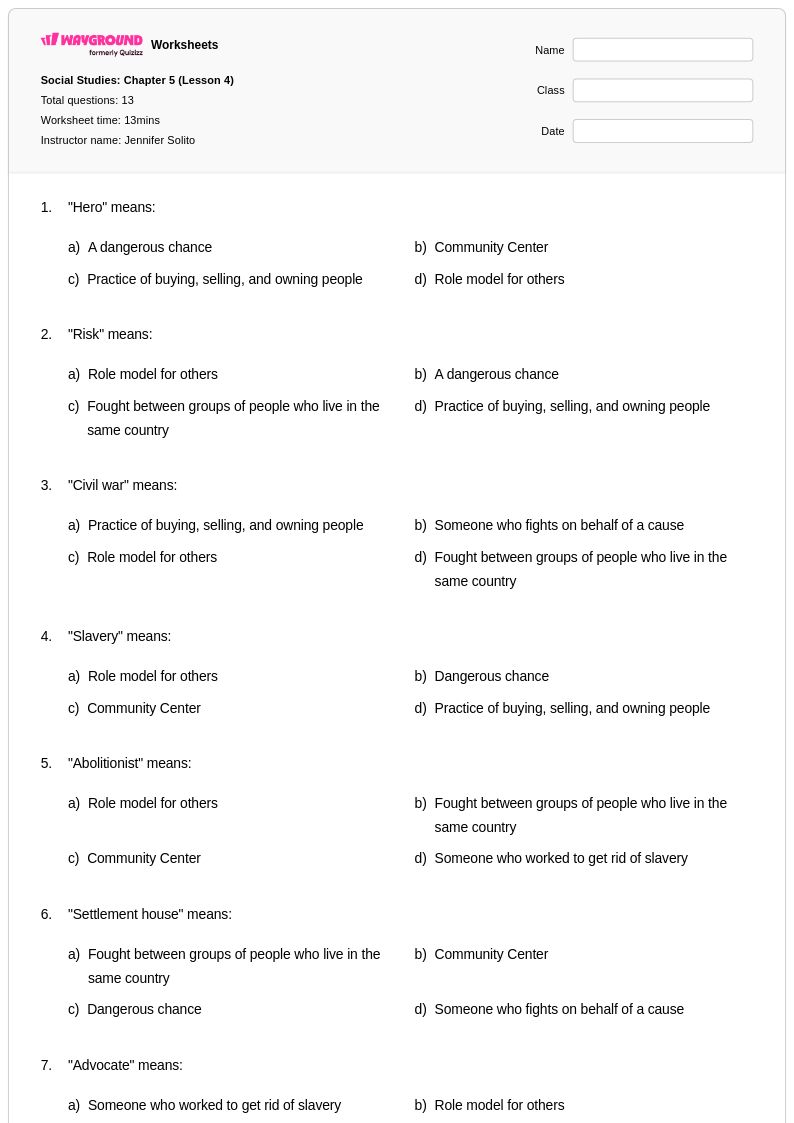
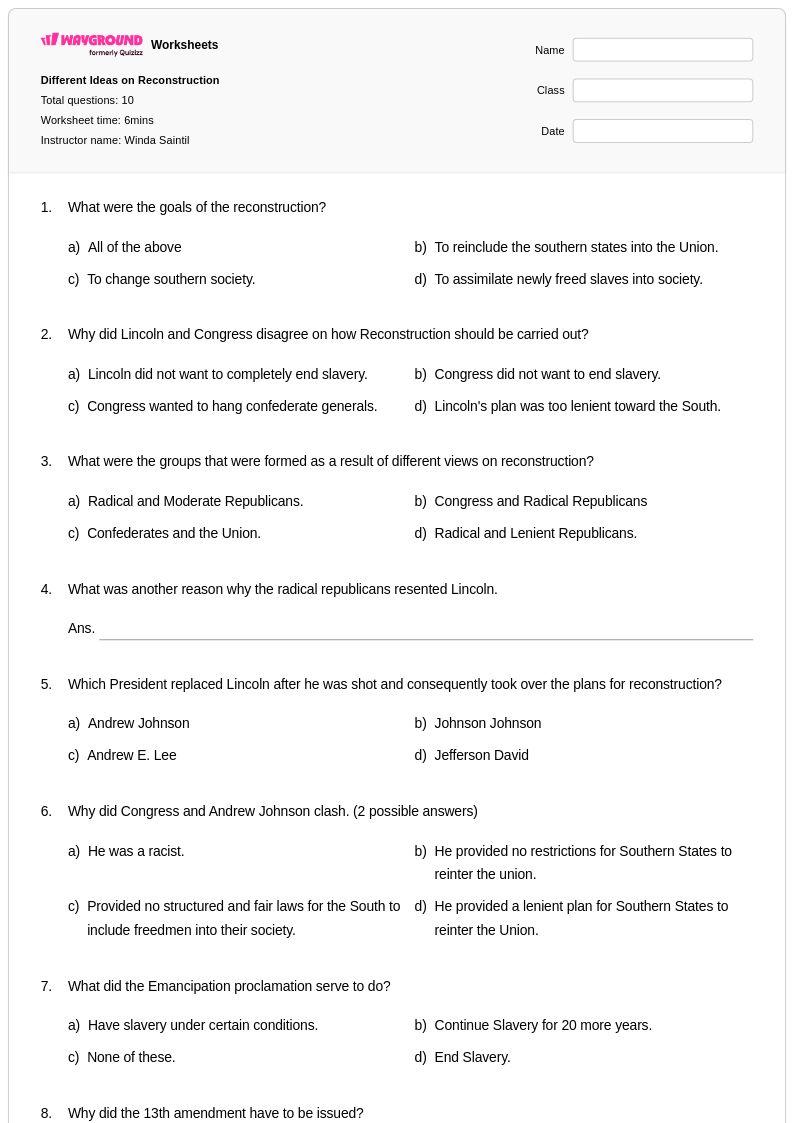
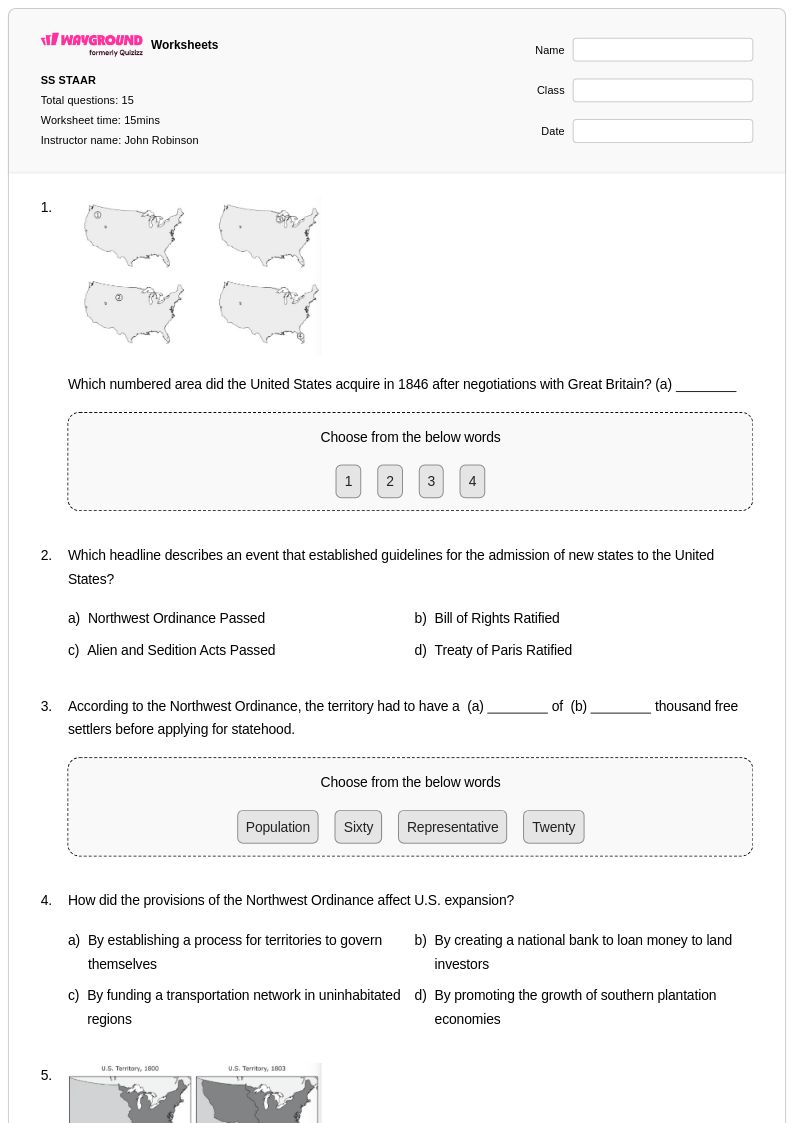
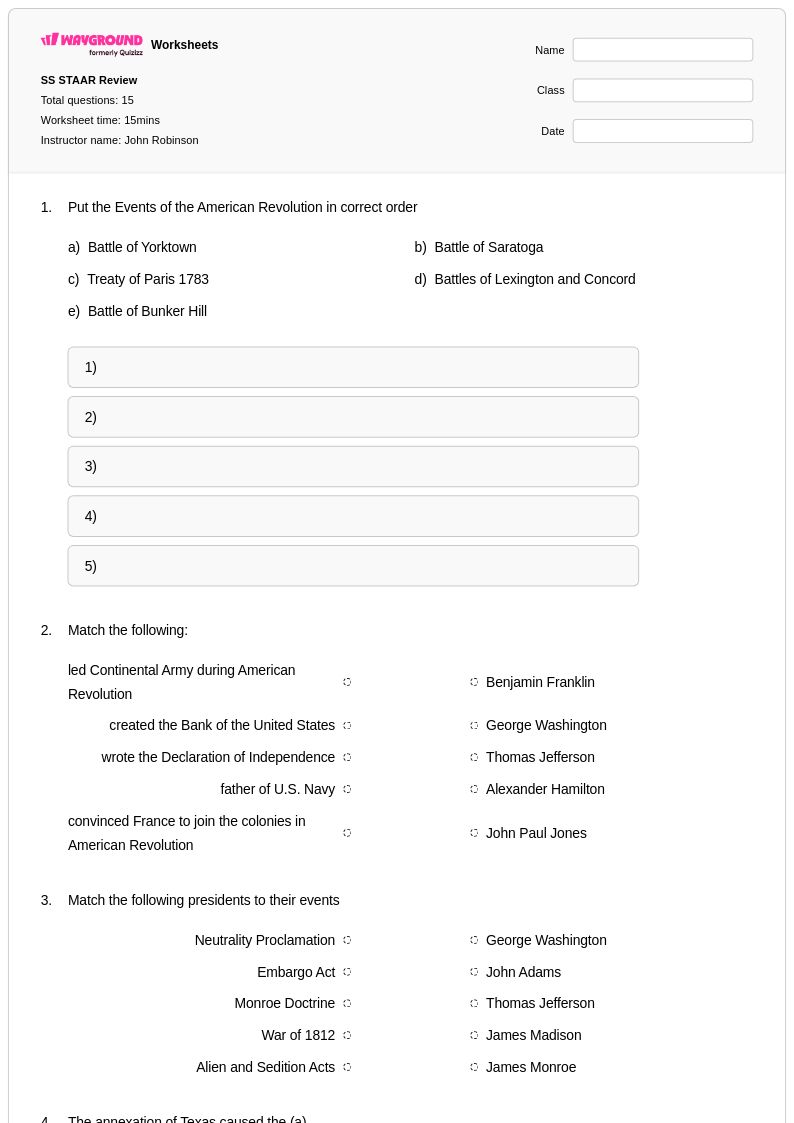
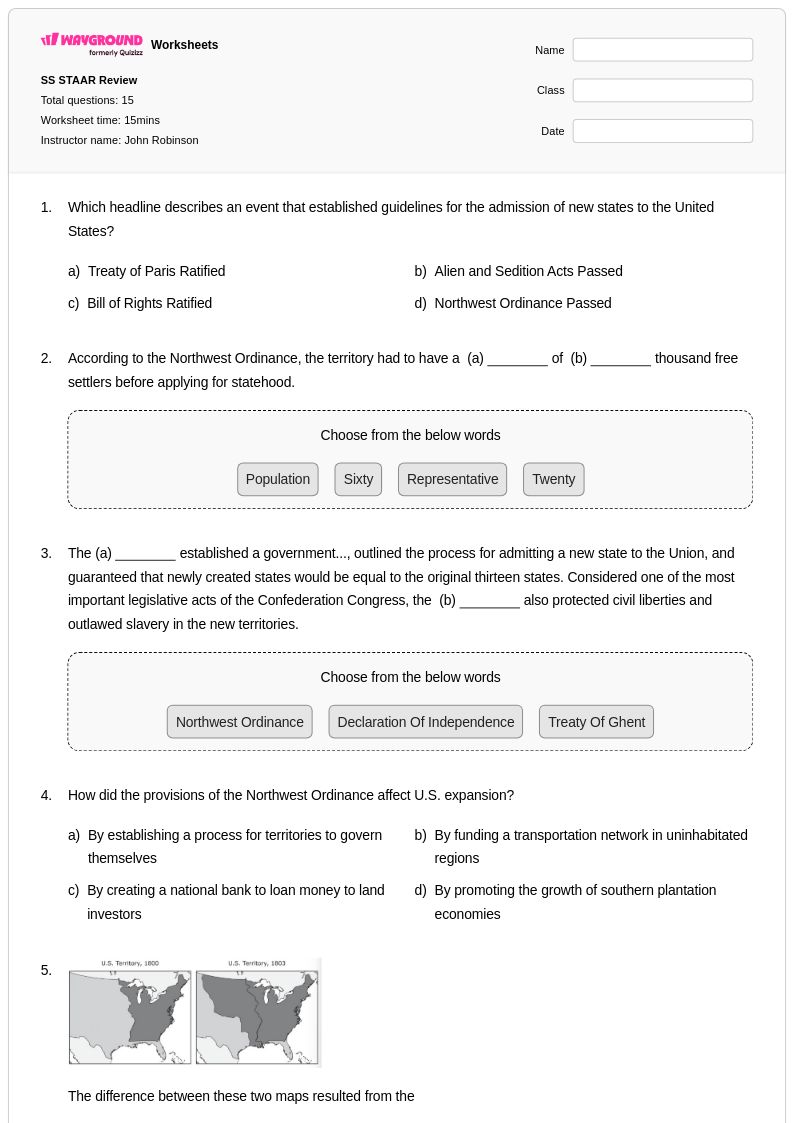
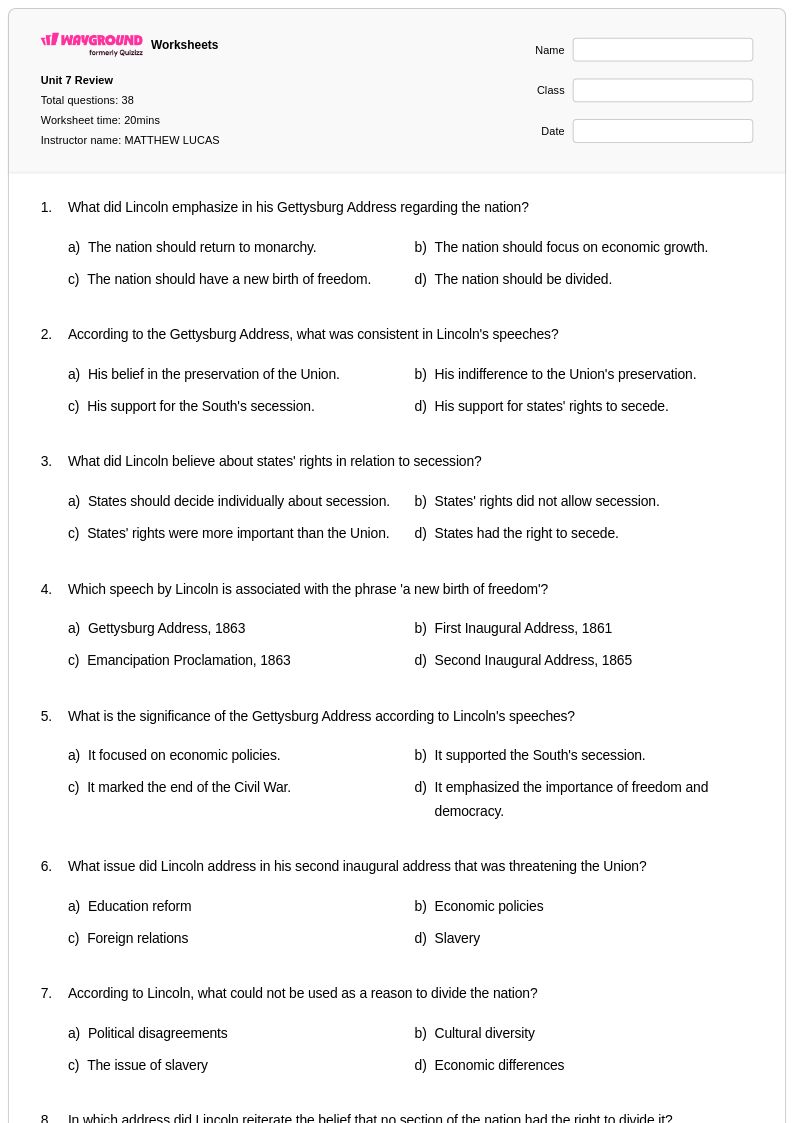
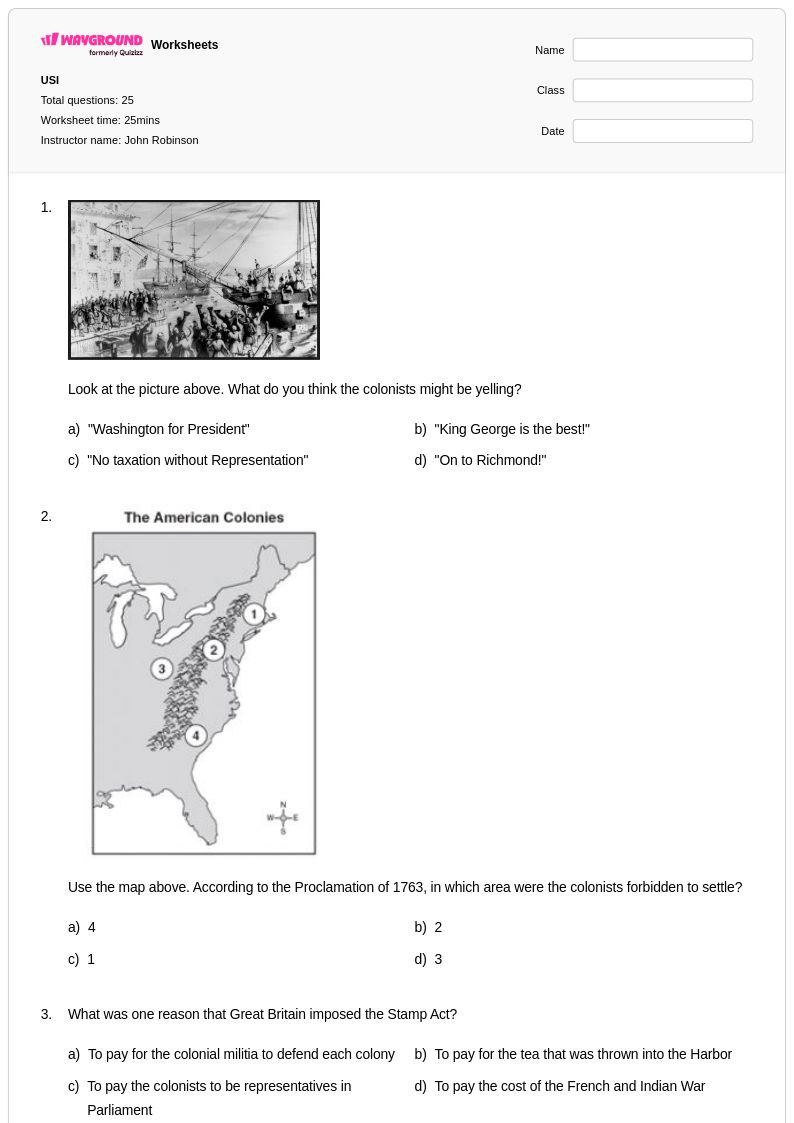
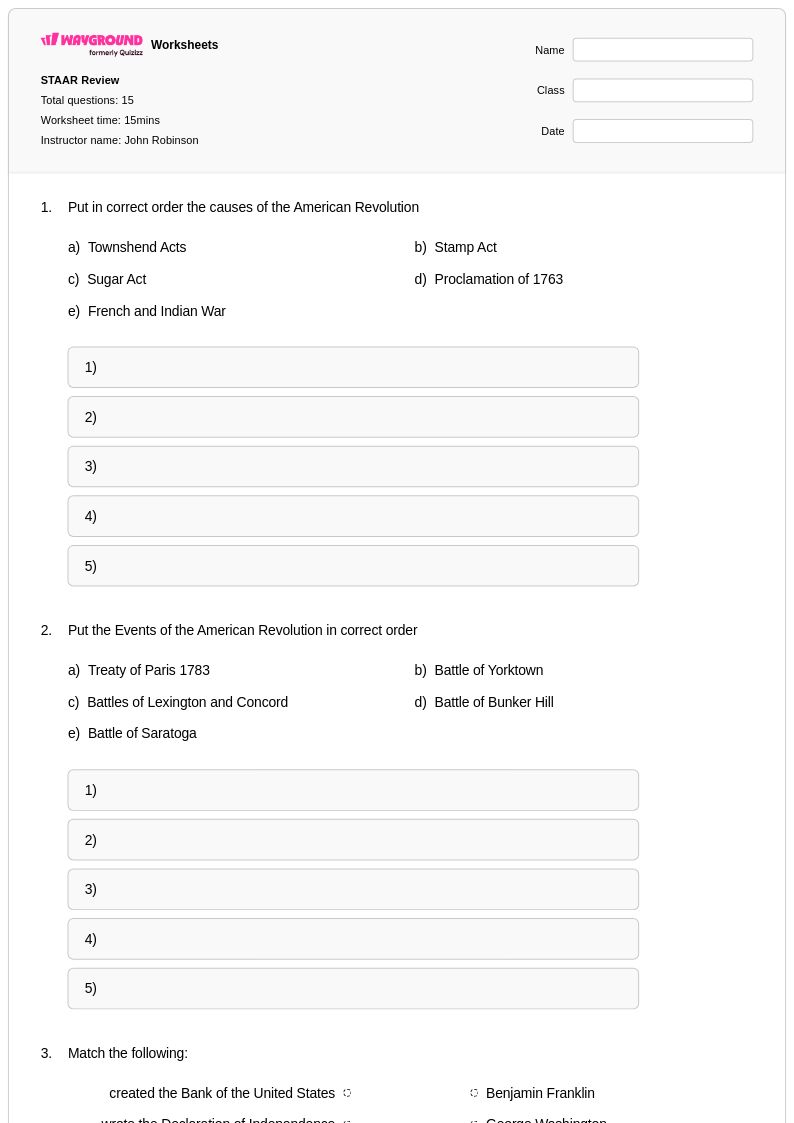
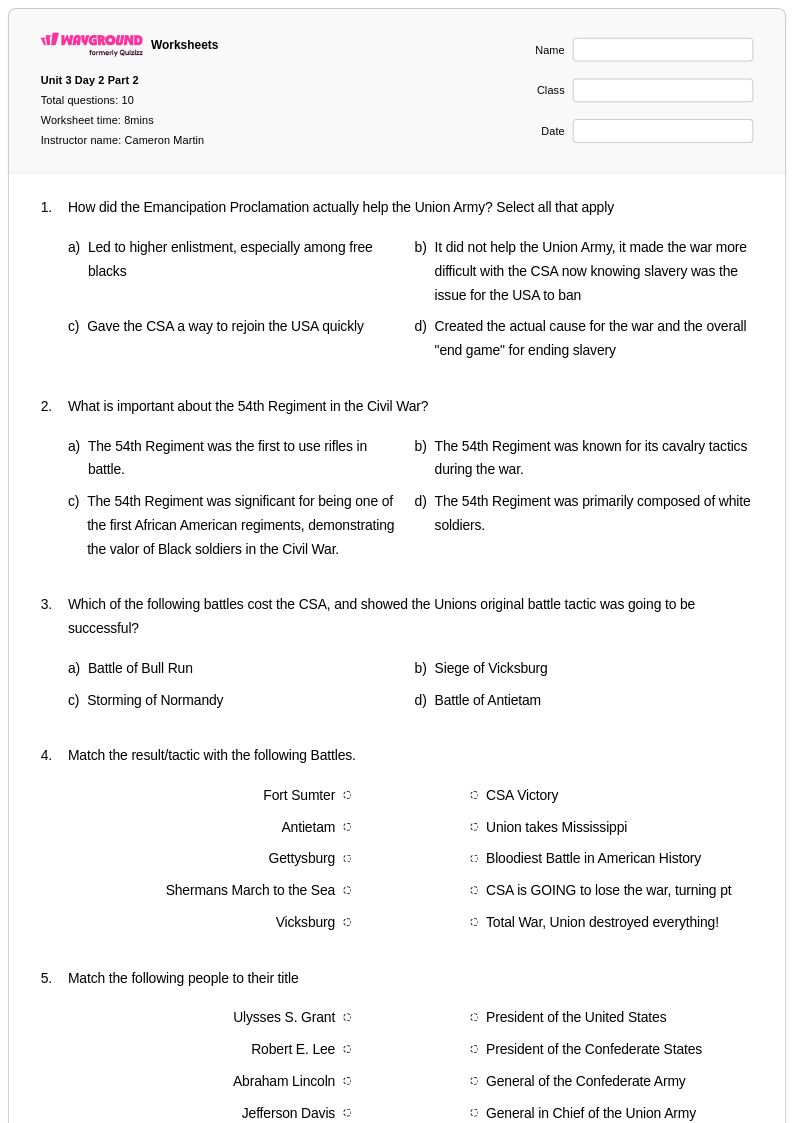
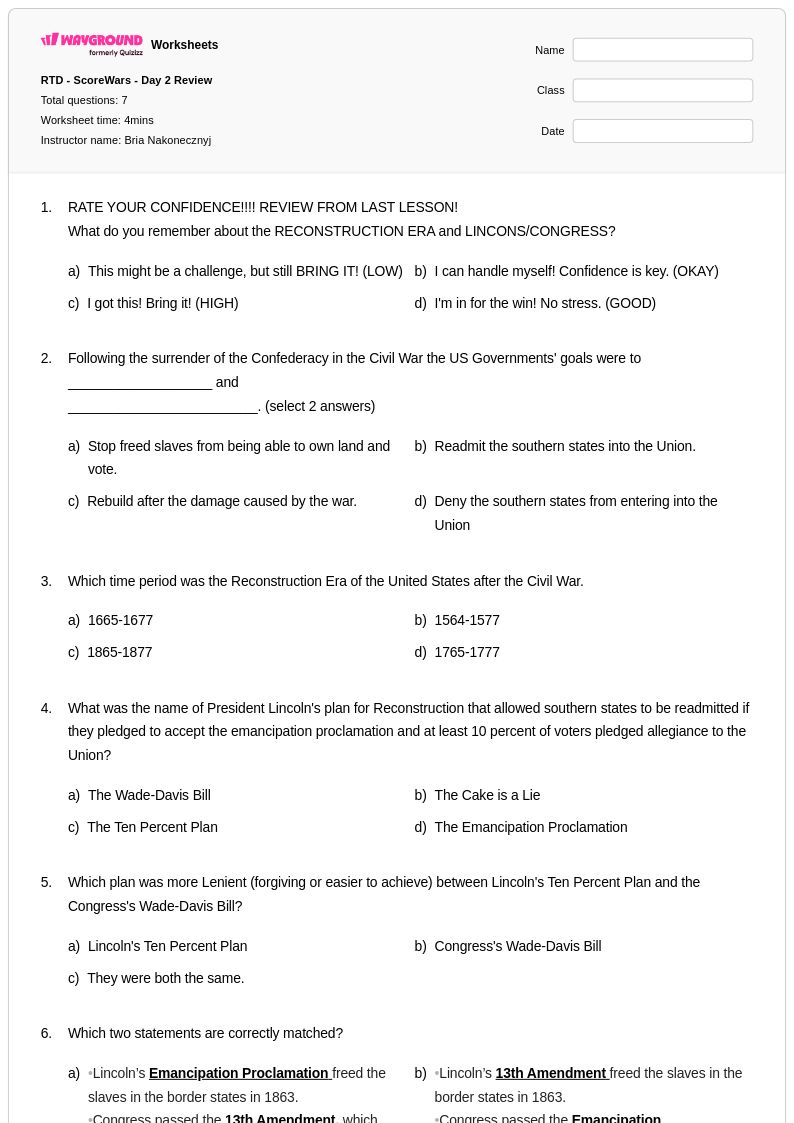
Emancipation Proclamation worksheets for Class 9 students available through Wayground provide comprehensive exploration of this pivotal Civil War document and its transformative impact on American society. These carefully designed resources help students develop critical thinking skills as they analyze primary source excerpts, examine the political motivations behind Lincoln's decision, and evaluate the proclamation's immediate and long-term effects on enslaved populations and the war effort. Students engage with practice problems that require them to interpret historical context, compare different perspectives on emancipation, and assess the document's limitations and significance. The collection includes printable activities with detailed answer keys, free pdf downloads, and varied question formats that challenge students to think historically about this landmark moment in U.S. History.
Wayground's extensive library draws from millions of teacher-created resources to offer educators a robust collection of Emancipation Proclamation materials specifically aligned with Class 9 standards and learning objectives. The platform's advanced search and filtering capabilities allow teachers to quickly locate worksheets that match their specific instructional needs, whether for initial skill practice, targeted remediation, or enrichment activities for advanced learners. Teachers can customize existing materials or create differentiated versions to accommodate diverse learning styles and ability levels within their classrooms. With both digital and printable pdf formats readily available, educators have the flexibility to seamlessly integrate these resources into various lesson plans, from traditional paper-based activities to interactive digital assignments, ensuring all students can access and engage with this crucial chapter of American history.
FAQs
How do I teach the Emancipation Proclamation to middle or high school students?
Start by grounding students in the Civil War context before introducing the document itself — students need to understand the political and military pressures Lincoln faced in 1862 to appreciate why the proclamation was issued and why it was limited in scope. Use primary source excerpts from the proclamation alongside secondary sources that address its strategic timing, so students can distinguish between its legal constraints and its symbolic power. Follow up with discussion or written response activities that ask students to evaluate whether the proclamation was primarily a moral act, a military strategy, or both.
What are common misconceptions students have about the Emancipation Proclamation?
The most widespread misconception is that the Emancipation Proclamation immediately freed all enslaved people in the United States — it did not. The order only applied to enslaved people in Confederate states still in rebellion and had no immediate enforcement mechanism in those areas. Students also frequently confuse it with the 13th Amendment, which actually abolished slavery nationwide in 1865. Addressing these distinctions explicitly, using annotated excerpts of the document's actual language, helps students develop a more accurate and nuanced understanding.
What exercises help students analyze the Emancipation Proclamation as a primary source?
Effective exercises include close reading tasks where students identify what the proclamation specifically does and does not do, followed by evidence-based questions that require them to cite language from the document. Graphic organizers that compare the proclamation's stated purpose, its limitations, and its long-term consequences are particularly useful for building analytical skills. Having students evaluate its impact on the Civil War's trajectory — including its effect on Union recruitment of Black soldiers and its diplomatic consequences in Europe — deepens comprehension beyond surface-level recall.
How can I assess whether students truly understand the significance of the Emancipation Proclamation versus just memorizing facts?
Move beyond recall-based questions by asking students to explain why Lincoln issued the proclamation in January 1863 specifically, or to argue whether it should be considered a turning point in American civil rights history. Short constructed-response prompts that ask students to evaluate the proclamation's limitations while also explaining its strategic and symbolic importance require them to hold complexity rather than reduce it to a single narrative. These types of tasks reveal whether students understand the difference between the proclamation's immediate legal effect and its broader historical significance.
How do I use Emancipation Proclamation worksheets from Wayground in my classroom?
Wayground's Emancipation Proclamation worksheets are available as printable PDFs for traditional classroom use and in digital formats for technology-integrated or remote learning environments, including the option to host them as a quiz directly on Wayground. Each worksheet includes a complete answer key, so teachers can use them for guided instruction, independent practice, or formative assessment without additional preparation. Digital delivery also supports built-in student accommodations such as read aloud, extended time, and reduced answer choices, making the materials accessible for diverse learners.
How do I differentiate Emancipation Proclamation instruction for students at different skill levels?
For foundational learners, focus on comprehension-level tasks — identifying who was affected by the proclamation, when it was issued, and what it declared — before moving to analysis. Advanced students benefit from tasks that require them to weigh the proclamation's limitations against its strategic significance or to connect it to later civil rights milestones like the 13th Amendment. On Wayground, teachers can apply individual accommodations such as read aloud for struggling readers or reduced answer choices for students who need additional scaffolding, while other students work with standard settings.