Free Printable Emotional Intelligence Worksheets for Class 3
Free Class 3 emotional intelligence worksheets and printables help students develop self-awareness, empathy, and social understanding through engaging practice problems with comprehensive answer keys.
Explore printable Emotional Intelligence worksheets for Class 3
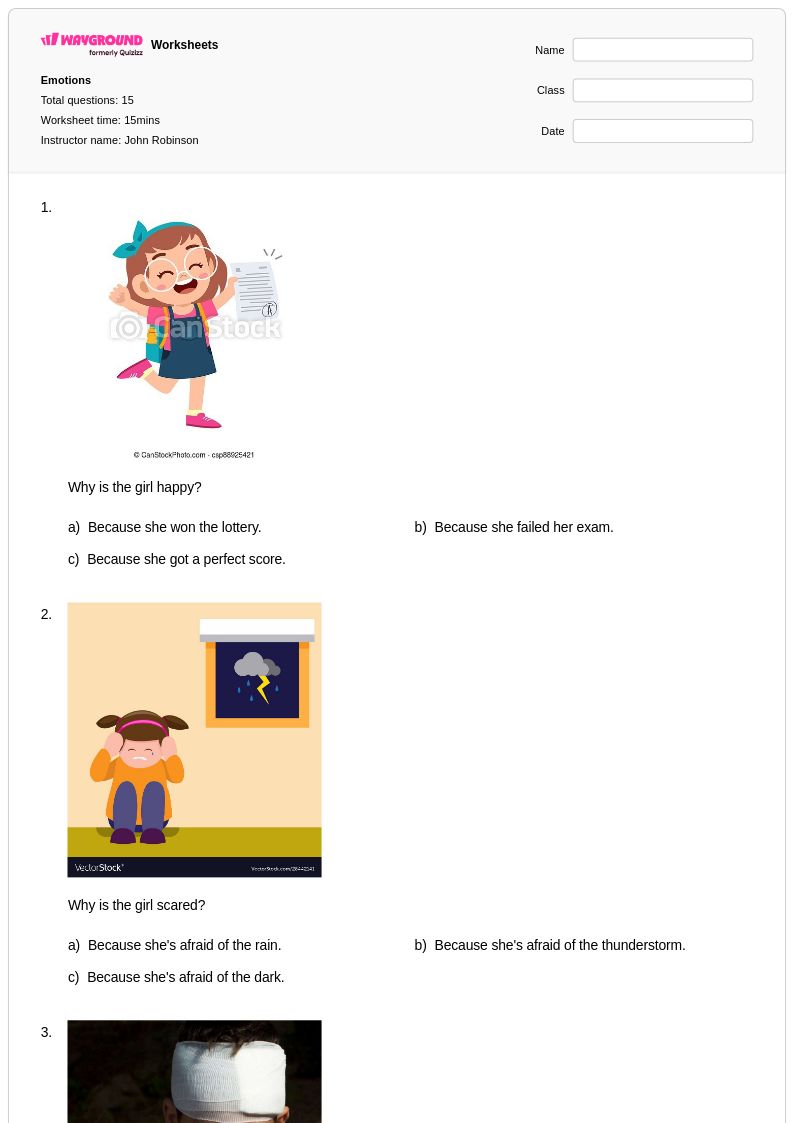
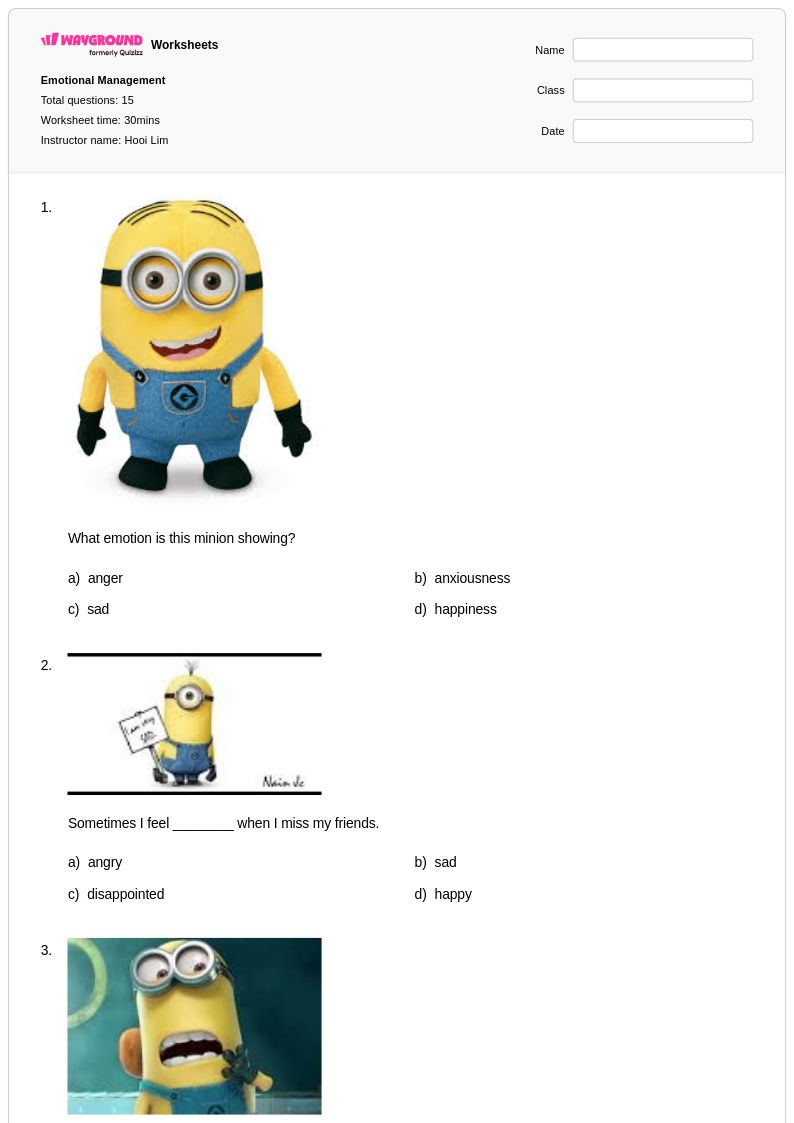
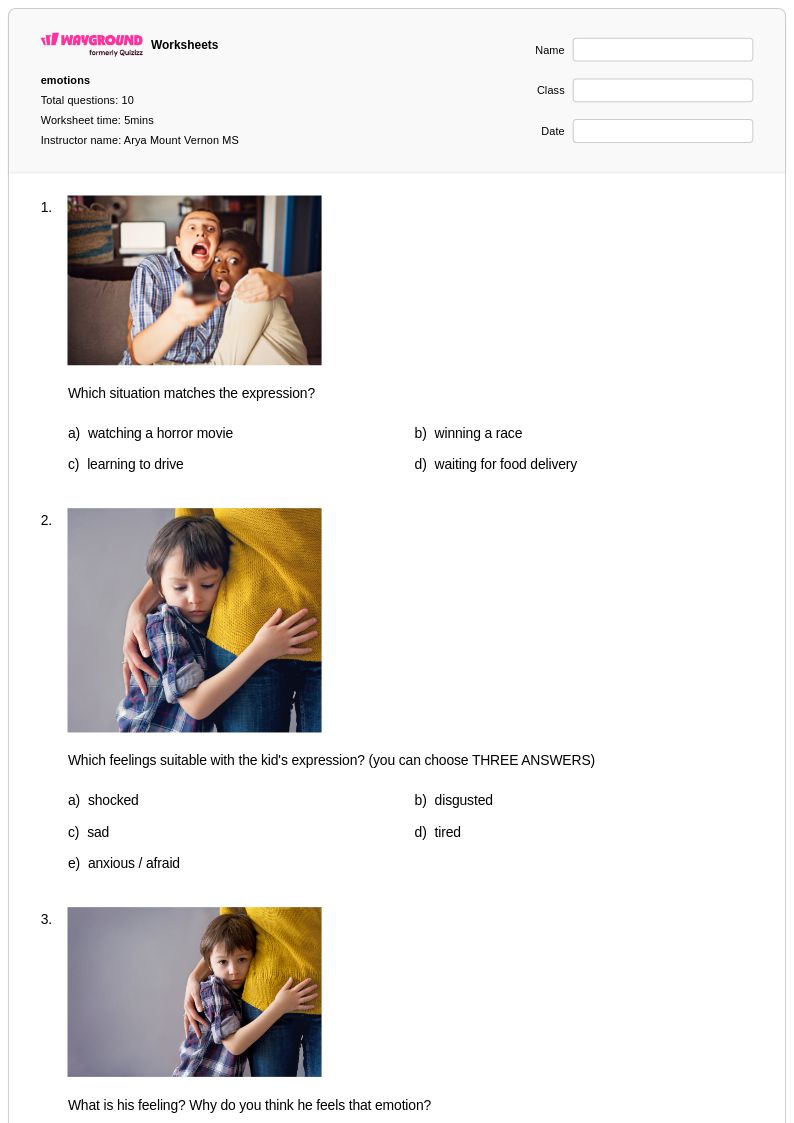
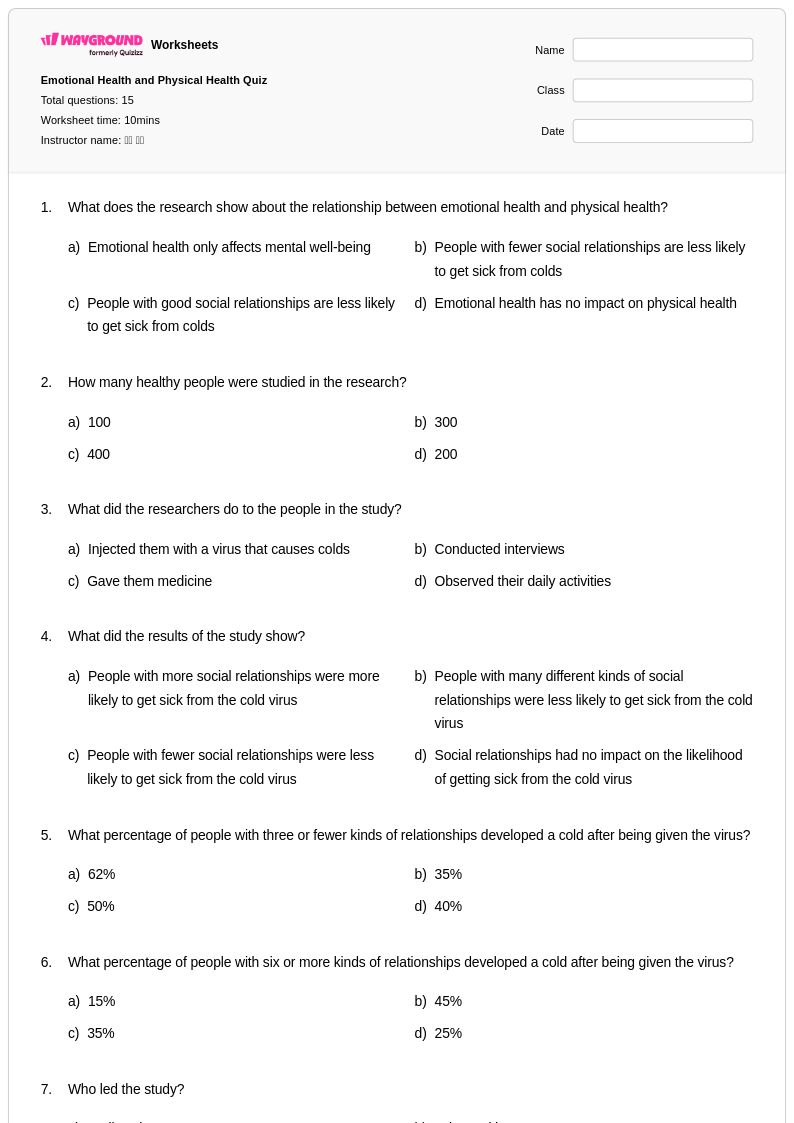
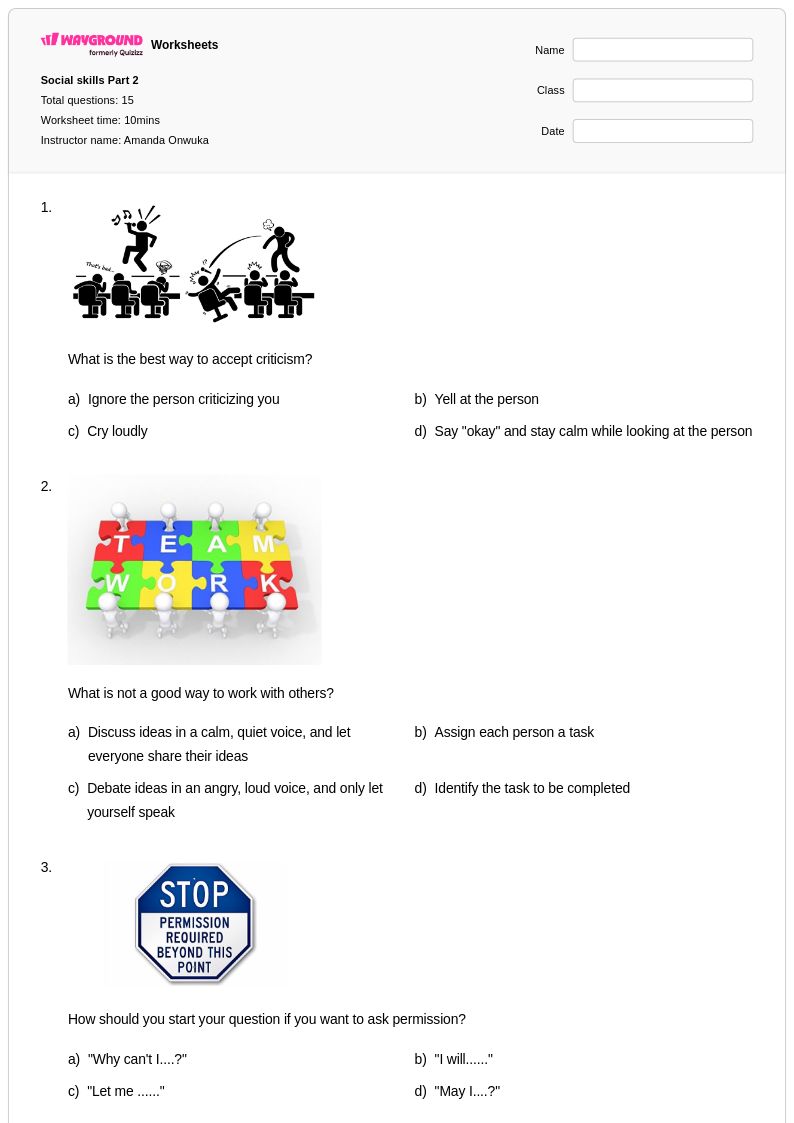
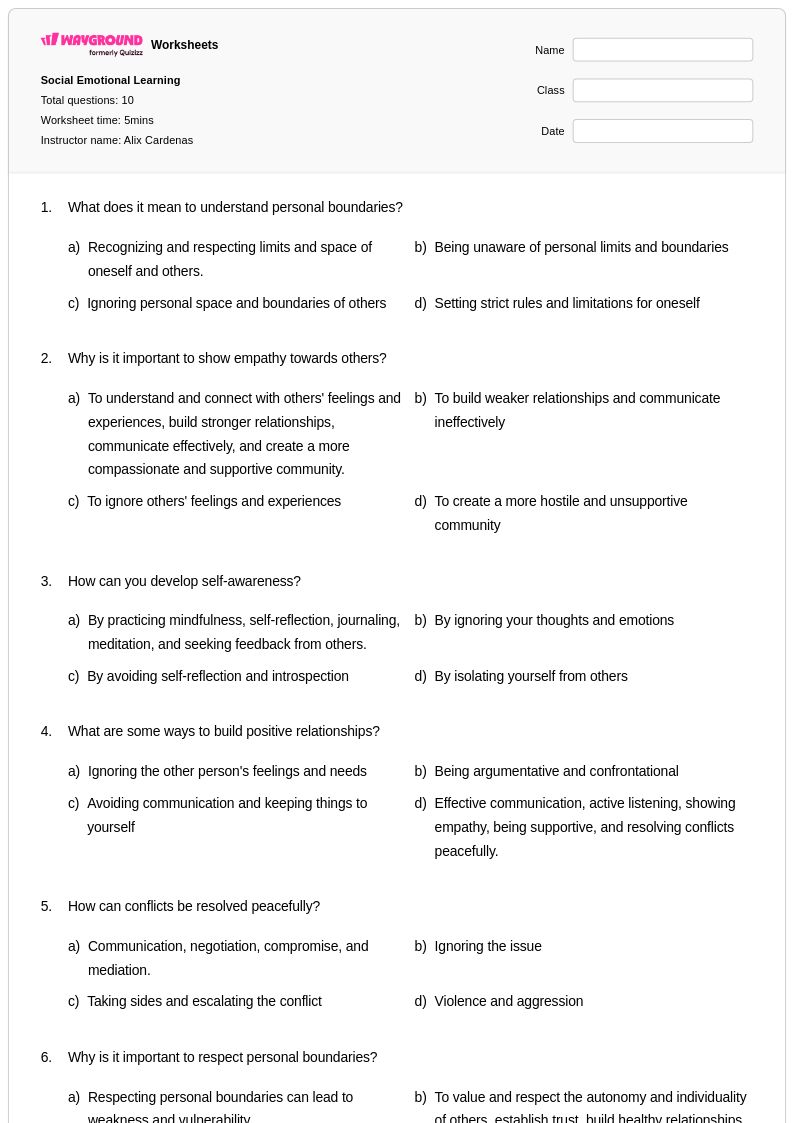
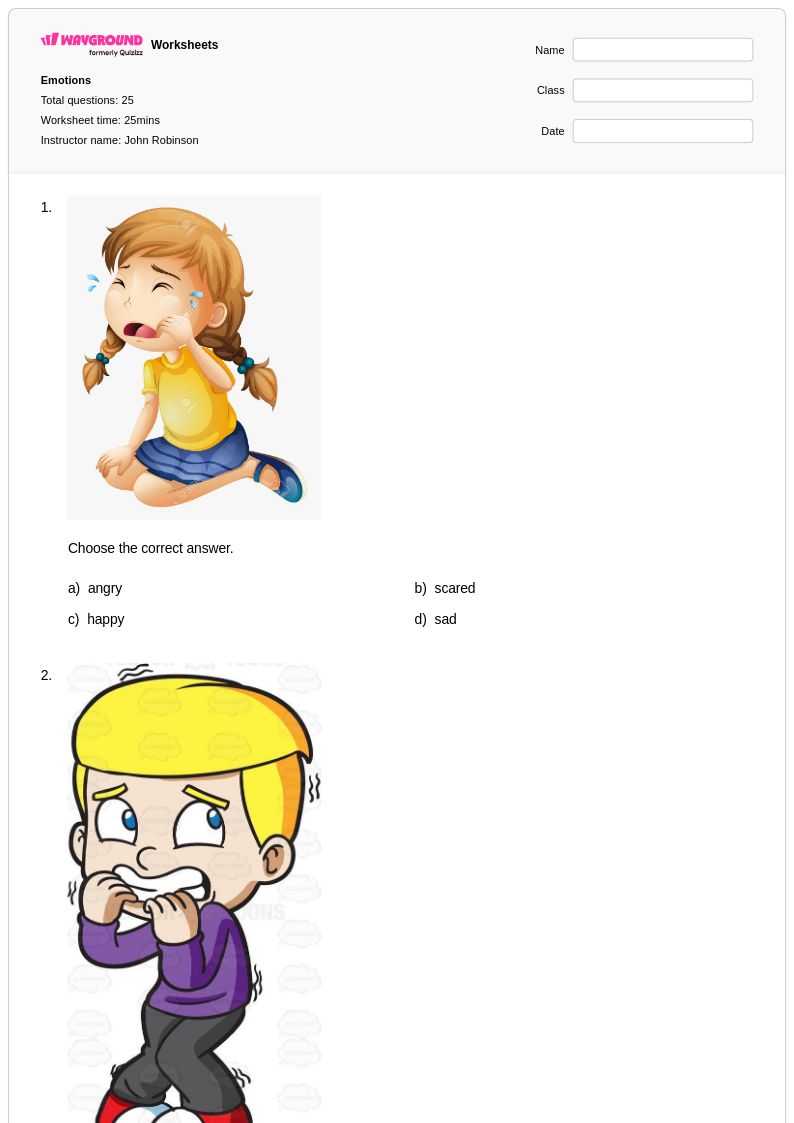
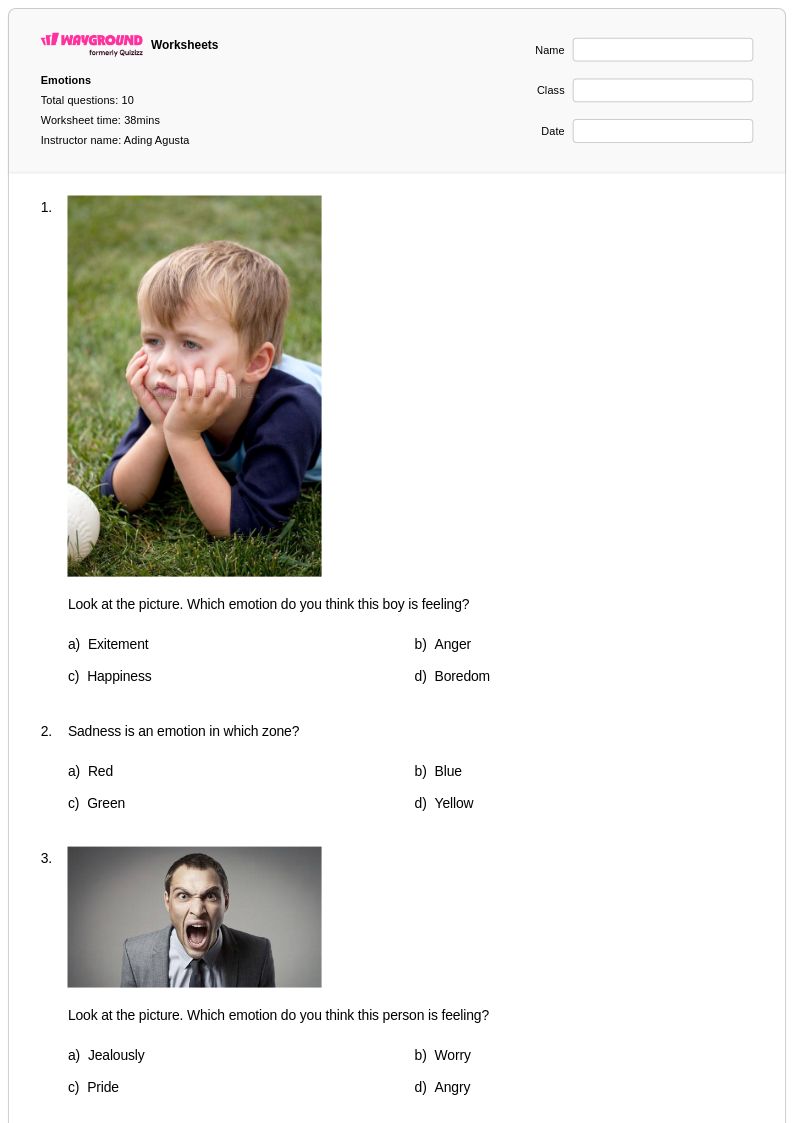
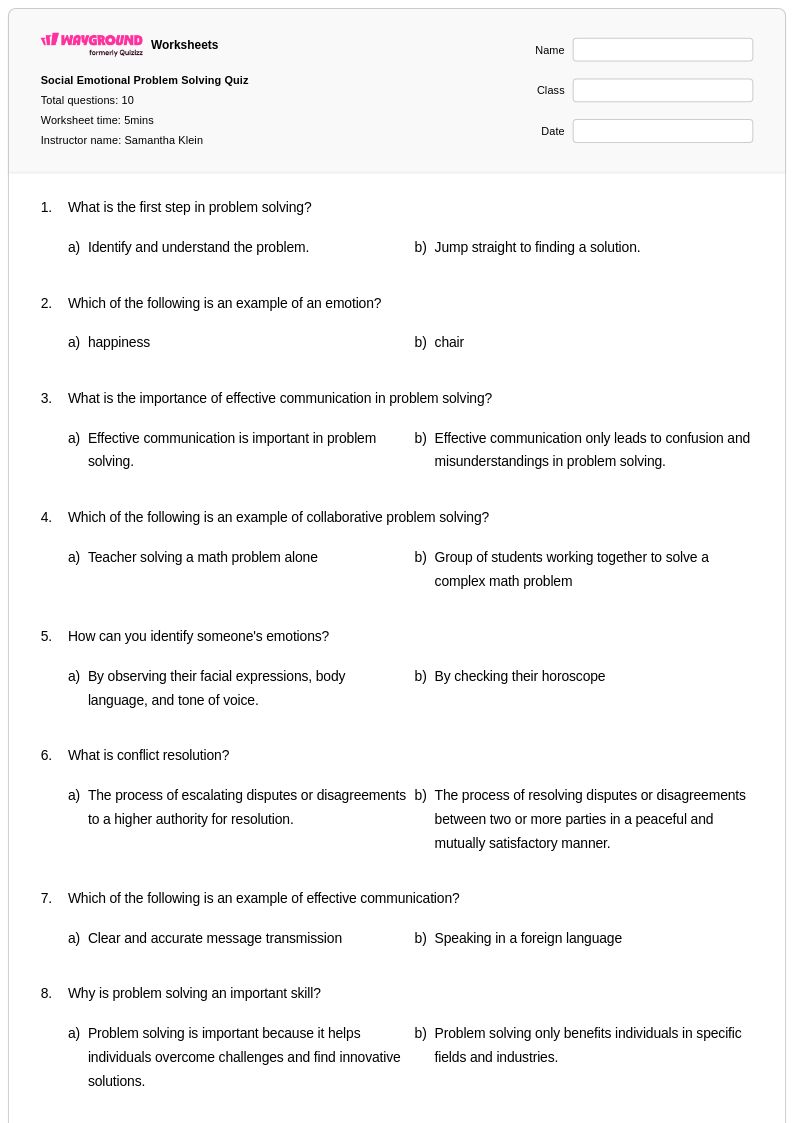
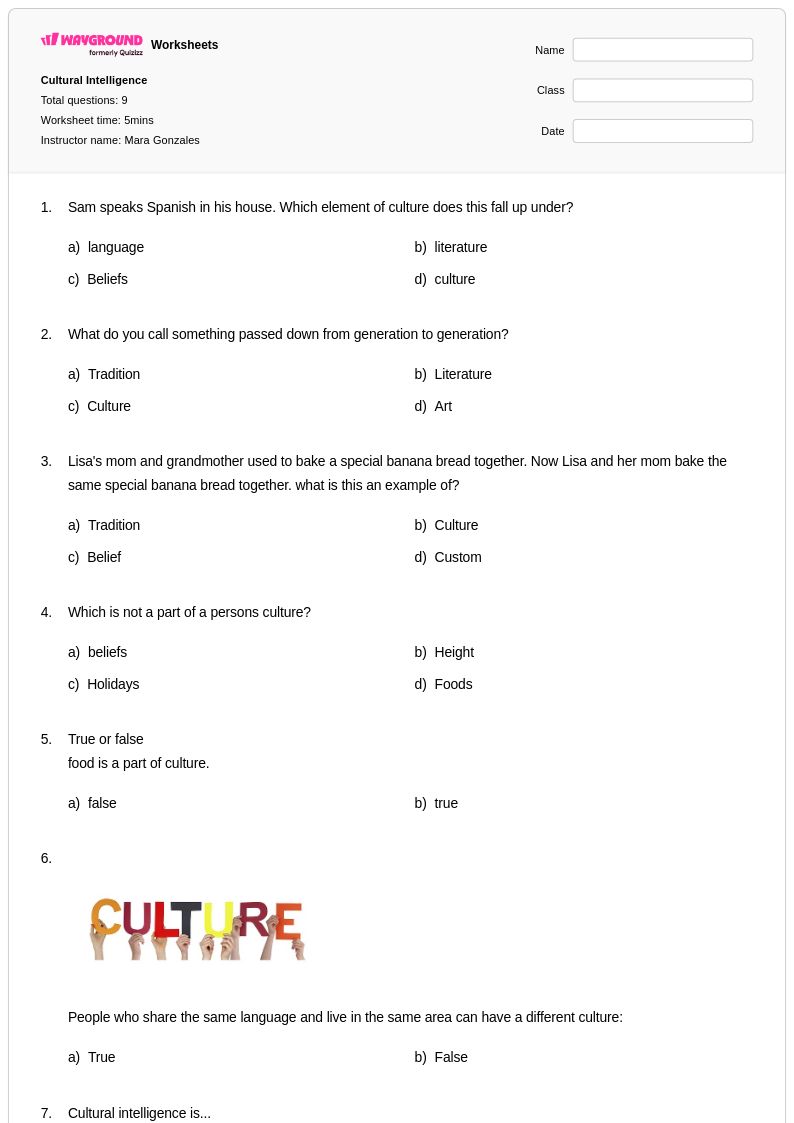
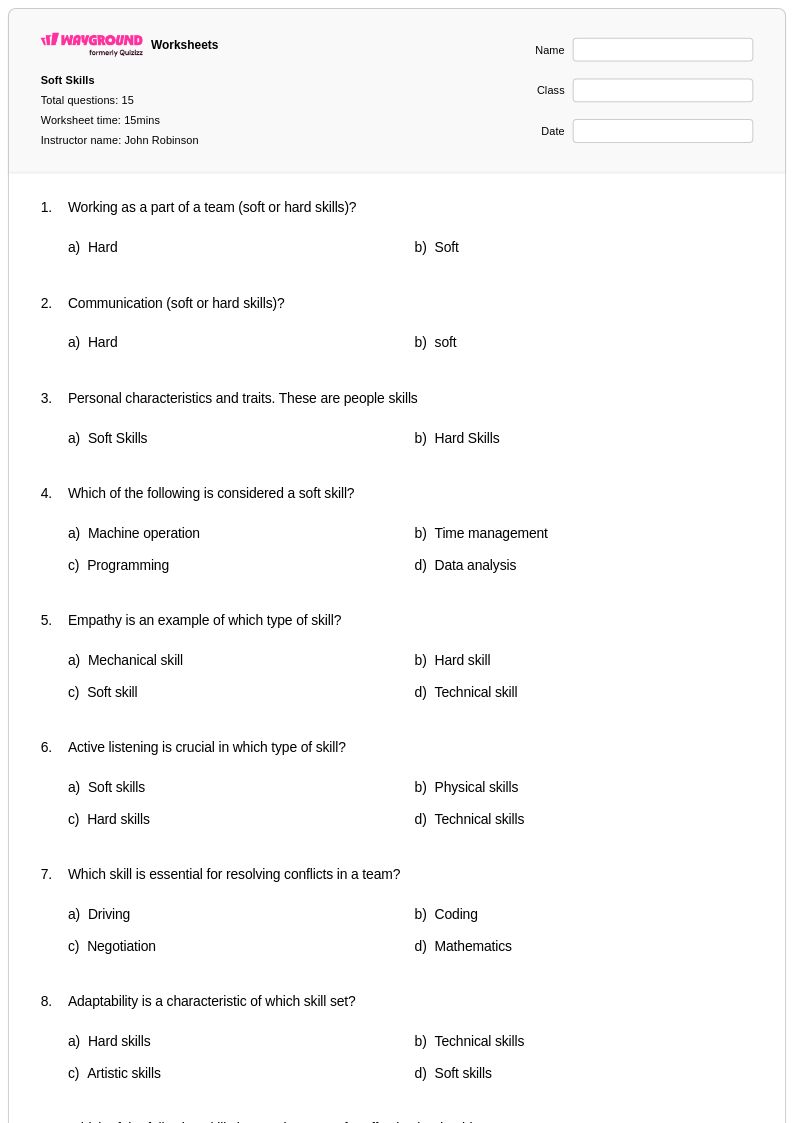
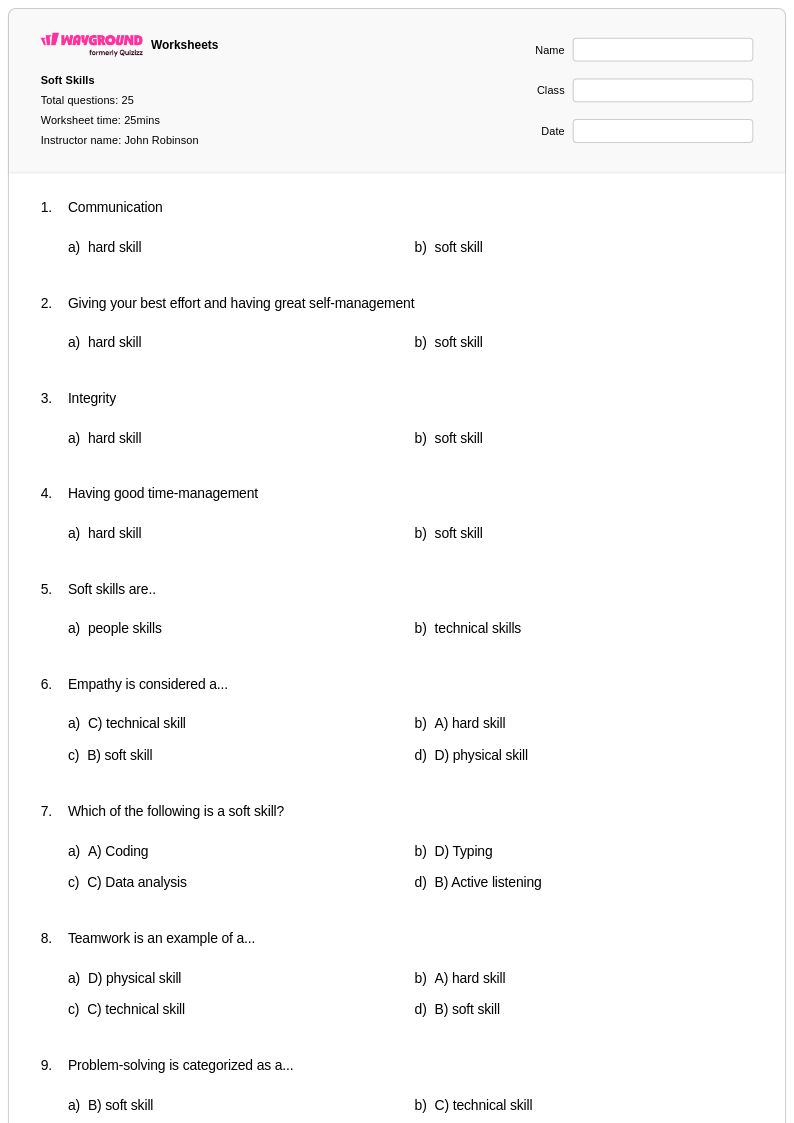
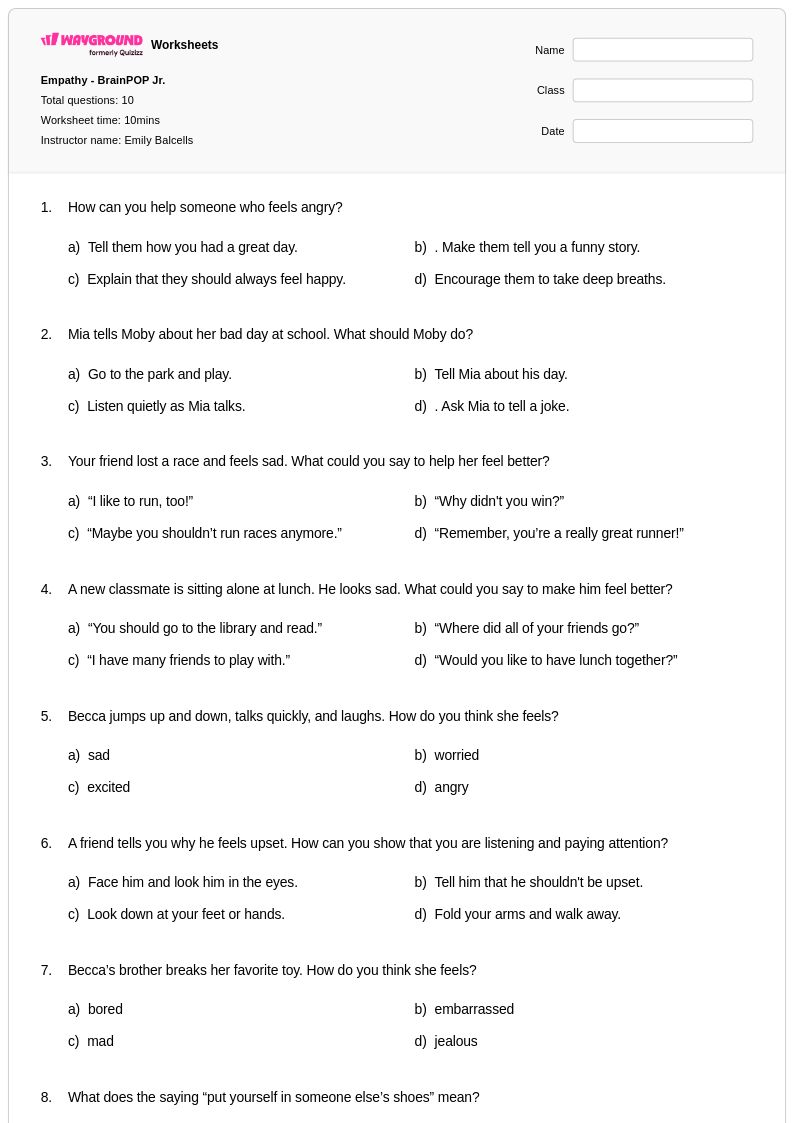
Emotional intelligence worksheets for Class 3 students available through Wayground (formerly Quizizz) provide essential practice in recognizing, understanding, and managing emotions within social contexts. These carefully designed printables focus on developing key emotional intelligence competencies including emotion identification, empathy building, self-regulation strategies, and appropriate social responses. Students engage with scenarios, visual cues, and interactive exercises that strengthen their ability to interpret facial expressions, understand how their actions affect others, and develop healthy coping mechanisms for various emotional situations. Each worksheet collection includes comprehensive answer keys and structured practice problems that allow educators to assess student progress in these critical social-emotional learning areas, with free resources available in convenient PDF formats for immediate classroom implementation.
Wayground (formerly Quizizz) supports educators with millions of teacher-created emotional intelligence resources that can be easily accessed through robust search and filtering capabilities, ensuring alignment with social studies standards and grade-appropriate developmental expectations. The platform's differentiation tools enable teachers to customize worksheets based on individual student needs, whether for remediation support or enrichment activities that challenge advanced learners. These flexible resources are available in both printable and digital formats, including downloadable PDFs, making them adaptable for various learning environments and instructional approaches. Teachers can efficiently plan comprehensive social skills curricula, implement targeted interventions for students struggling with emotional regulation, and provide consistent practice opportunities that build foundational emotional intelligence competencies essential for academic success and positive peer interactions.
FAQs
How do I teach emotional intelligence in the classroom?
Teaching emotional intelligence works best through structured reflection and guided practice with real-world scenarios. Start by helping students identify and name their own emotions, then progress to recognizing emotions in others through role-play, discussion, and scenario analysis. Consistently connecting emotional vocabulary to social situations builds the empathy and self-regulation skills at the core of emotional intelligence.
What activities help students practice emotional intelligence skills?
Scenario-based exercises are among the most effective tools for practicing emotional intelligence because they ask students to analyze emotional dynamics, consider multiple perspectives, and choose appropriate responses. Activities that focus on identifying emotional triggers, interpreting non-verbal communication cues, and practicing empathetic responses give students structured opportunities to apply these skills before encountering them in real social situations.
What mistakes do students commonly make when learning about emotional intelligence?
A frequent misconception is that emotions are either right or wrong, which causes students to suppress or dismiss feelings rather than learning to manage them constructively. Students also often struggle to distinguish between their emotional reaction and their behavioral response, conflating feeling angry with acting aggressively. Worksheets that walk through real-world scenarios with guided reflection help students untangle these patterns and develop more intentional emotional responses.
How can I differentiate emotional intelligence instruction for students with different needs?
Differentiation for emotional intelligence instruction often means adjusting the complexity of scenarios and reducing cognitive load for students who need additional support. On Wayground, teachers can apply individual accommodations such as read aloud for students who need questions read to them, reduced answer choices to simplify decision-making, and extended time to allow deeper reflection. These settings can be assigned to individual students while the rest of the class receives standard settings, with no disruption to the flow of the activity.
How do I use Wayground's emotional intelligence worksheets in my classroom?
Wayground's emotional intelligence worksheets are available as printable PDFs for traditional classroom use and in digital formats for technology-integrated or blended learning environments. Teachers can also host them as interactive quizzes directly on Wayground, which is useful for formative assessment or guided practice sessions. Each worksheet includes a complete answer key, making them practical for independent study, small group instruction, or whole-class activities.
How do emotional intelligence worksheets support social-emotional learning standards?
Emotional intelligence worksheets directly address core SEL competencies including self-awareness, social awareness, responsible decision-making, and relationship skills. Because these worksheets center on identifying emotional triggers, interpreting non-verbal cues, and navigating social situations, they translate abstract SEL standards into concrete, practiceable skills. This makes them a natural fit for integrating SEL into existing curricula without requiring a separate standalone program.