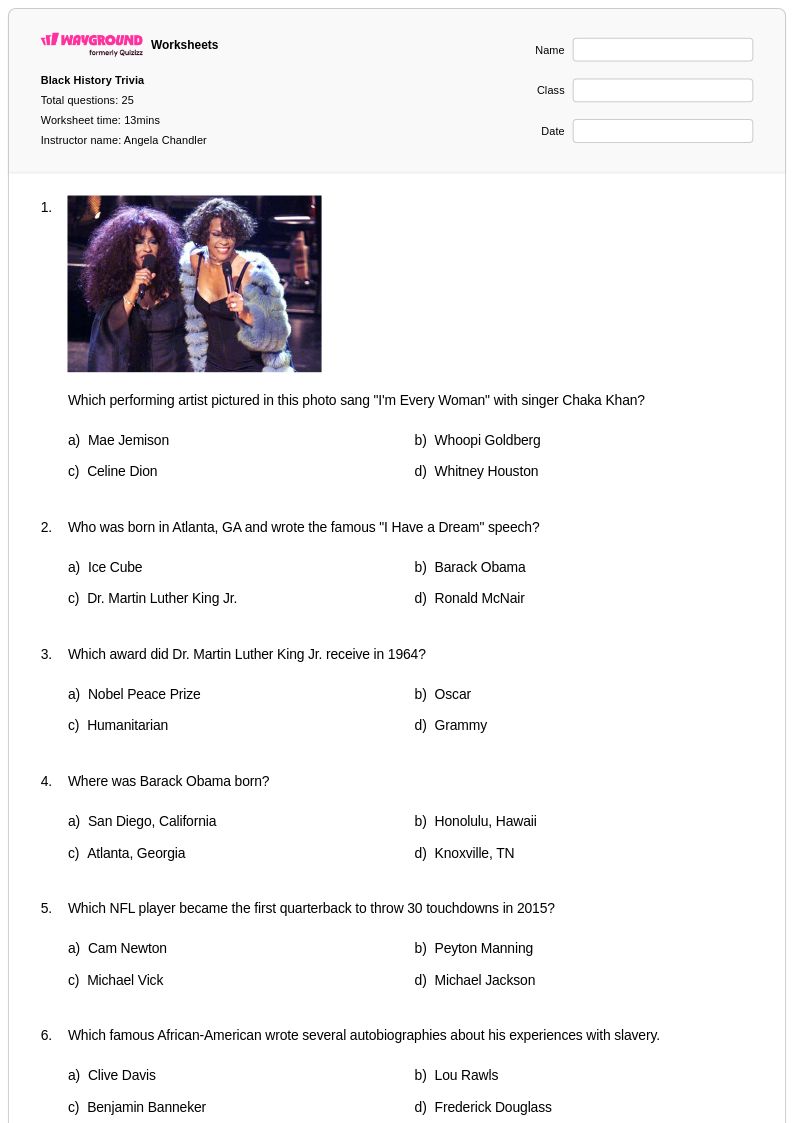
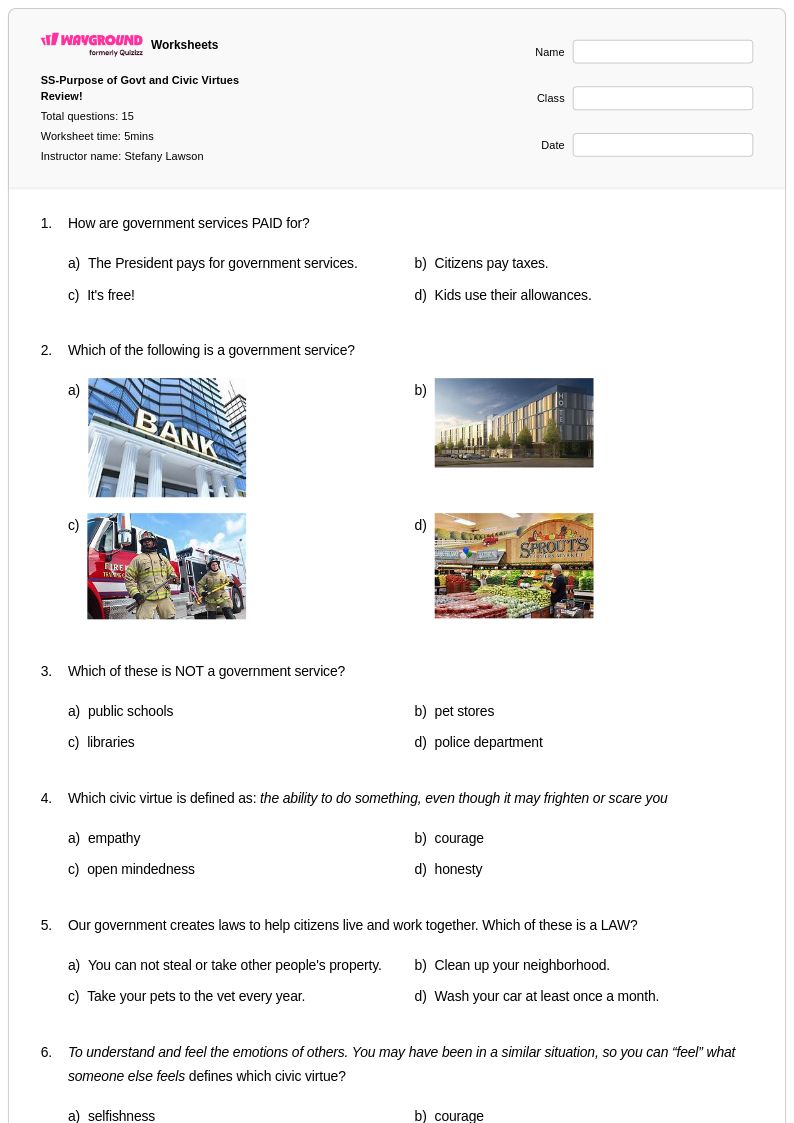
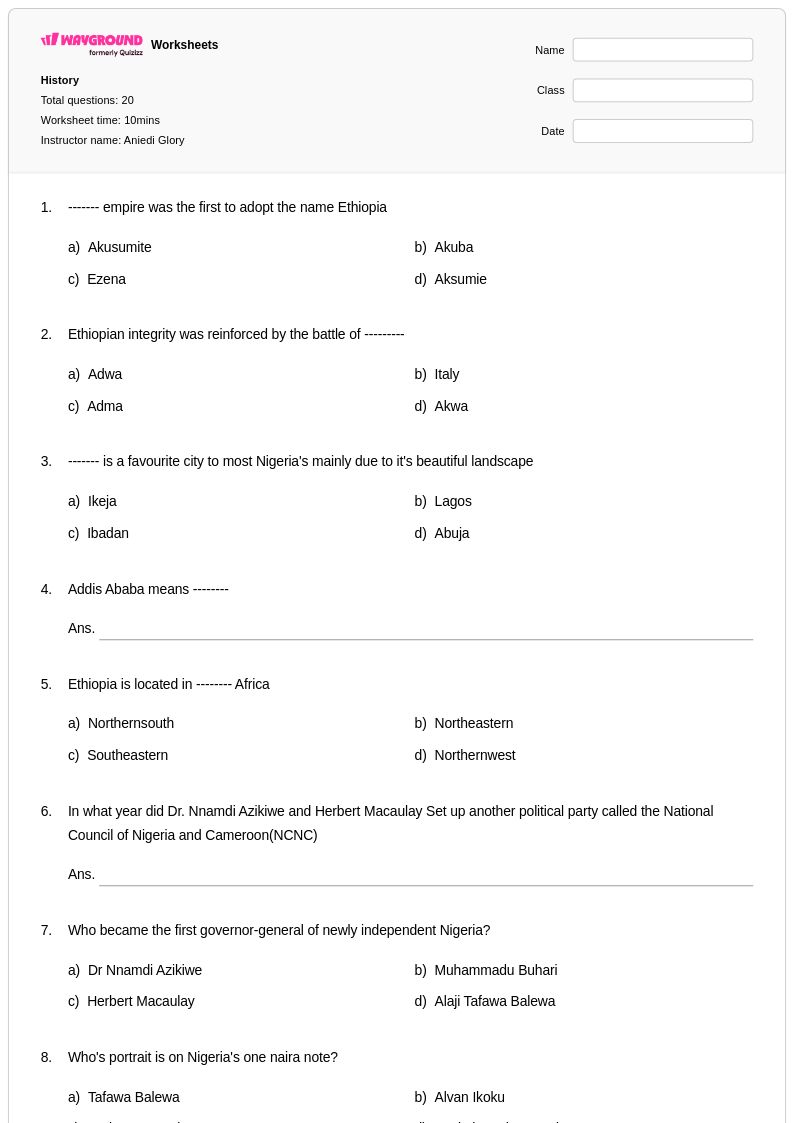
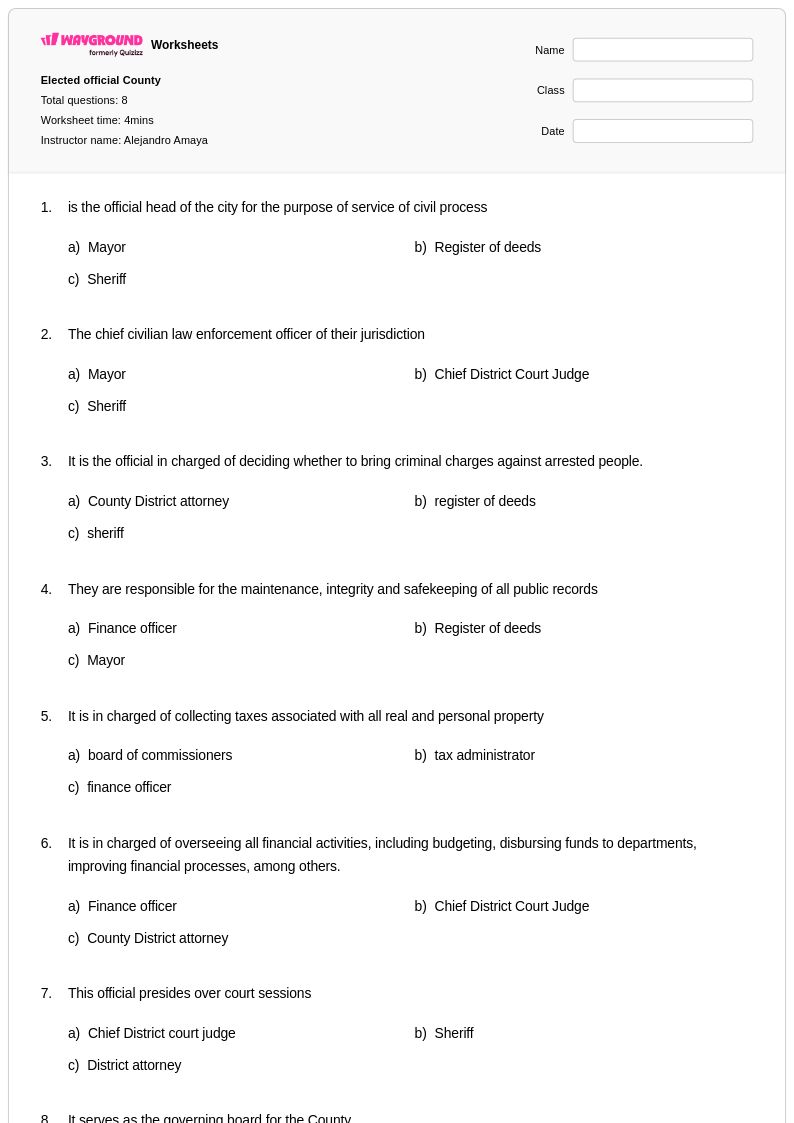
Explore Wayground's free Class 3 integrity worksheets and printables that help students develop strong moral character through engaging practice problems, with PDF downloads and answer keys included.
Explore printable Integrity worksheets for Class 3
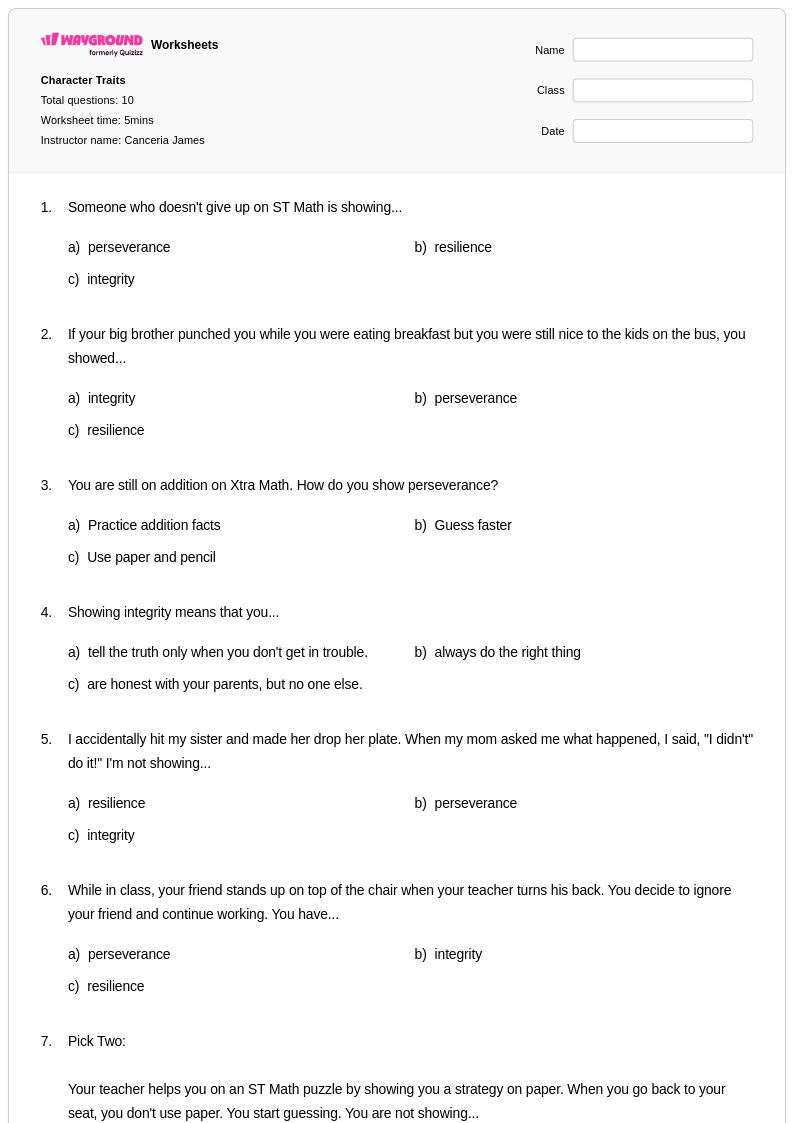
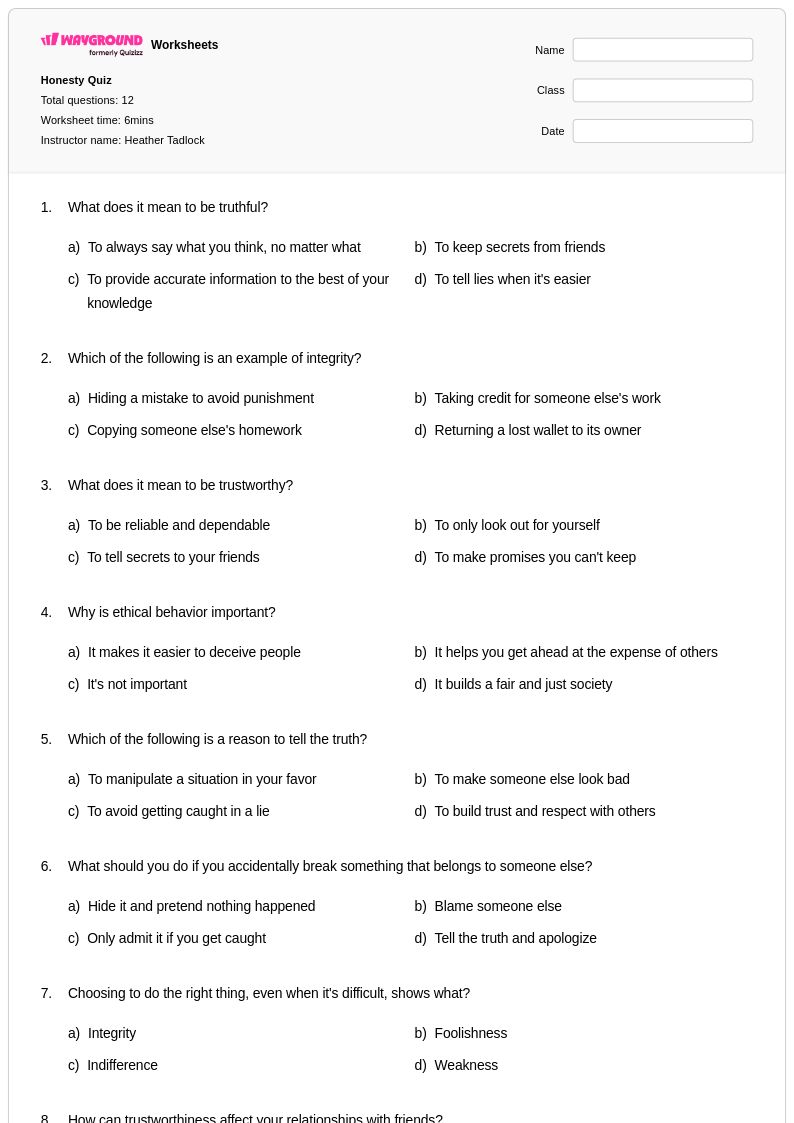
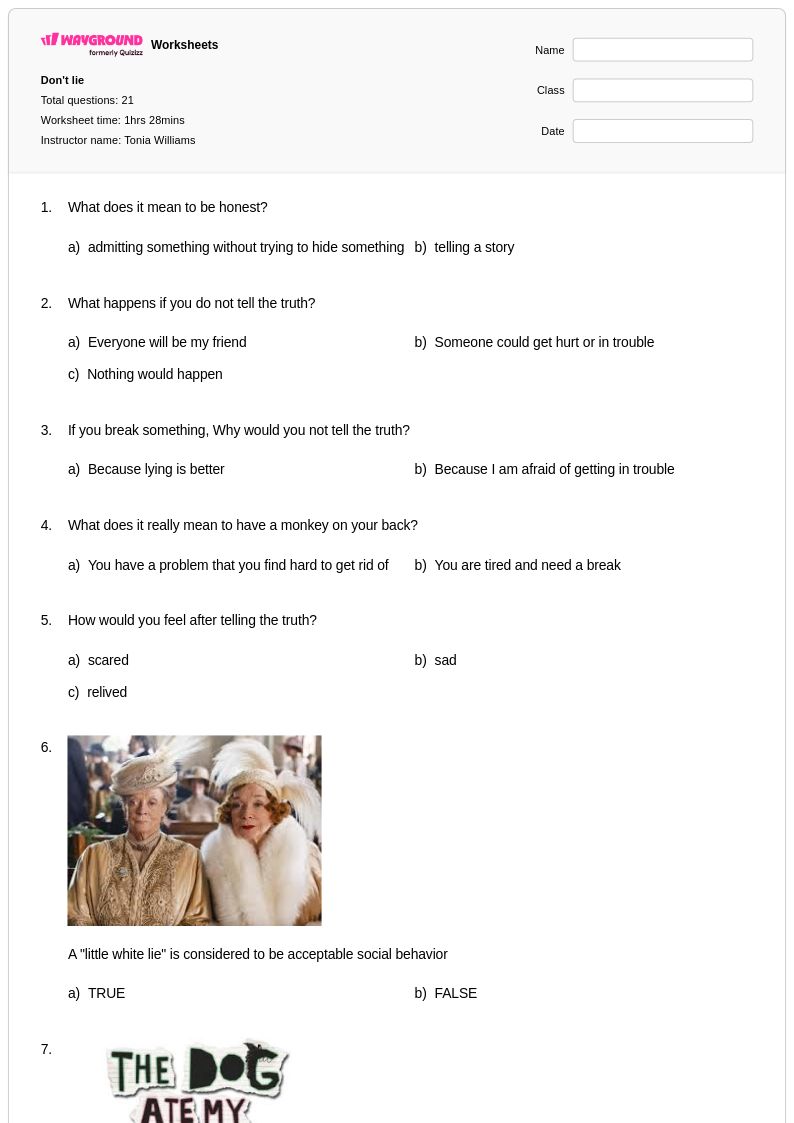
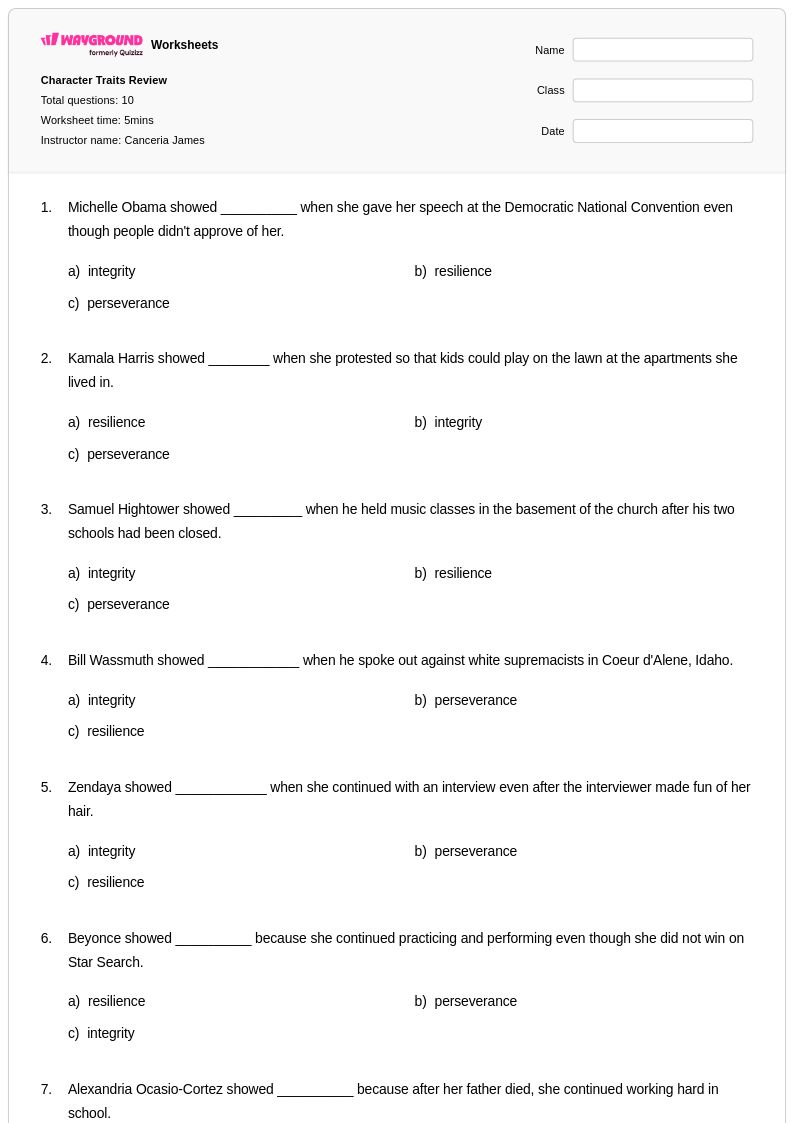
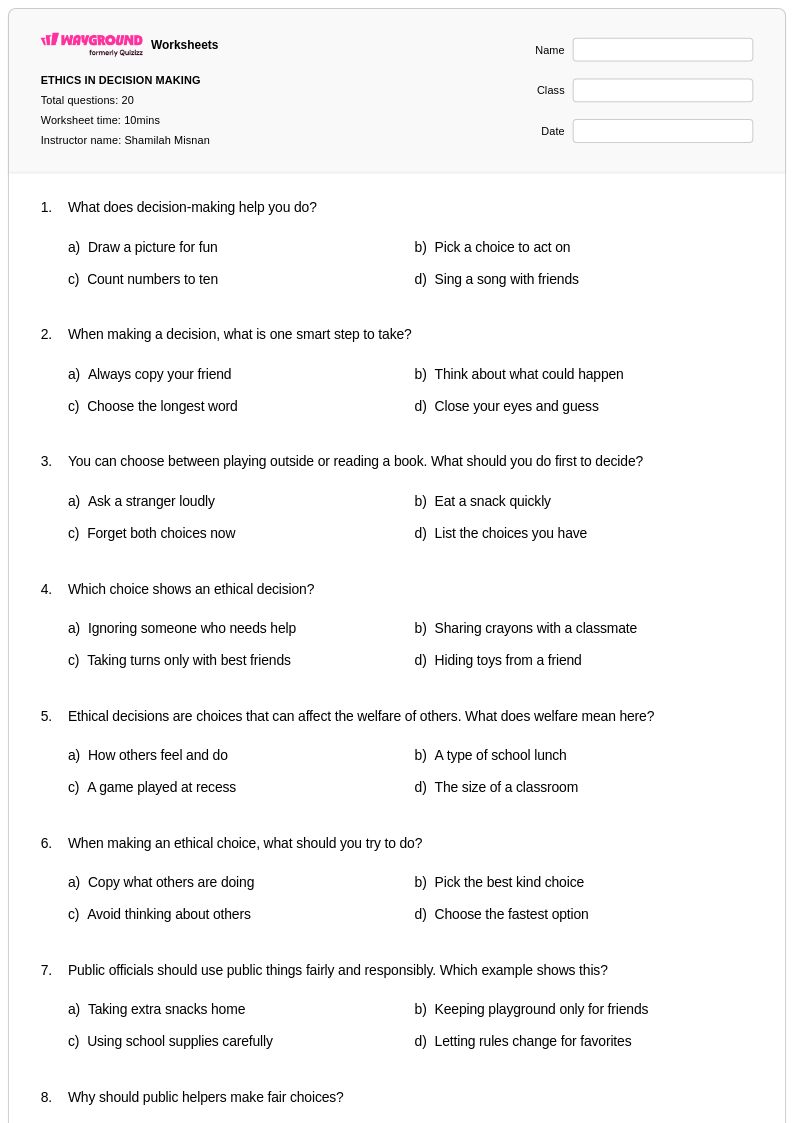
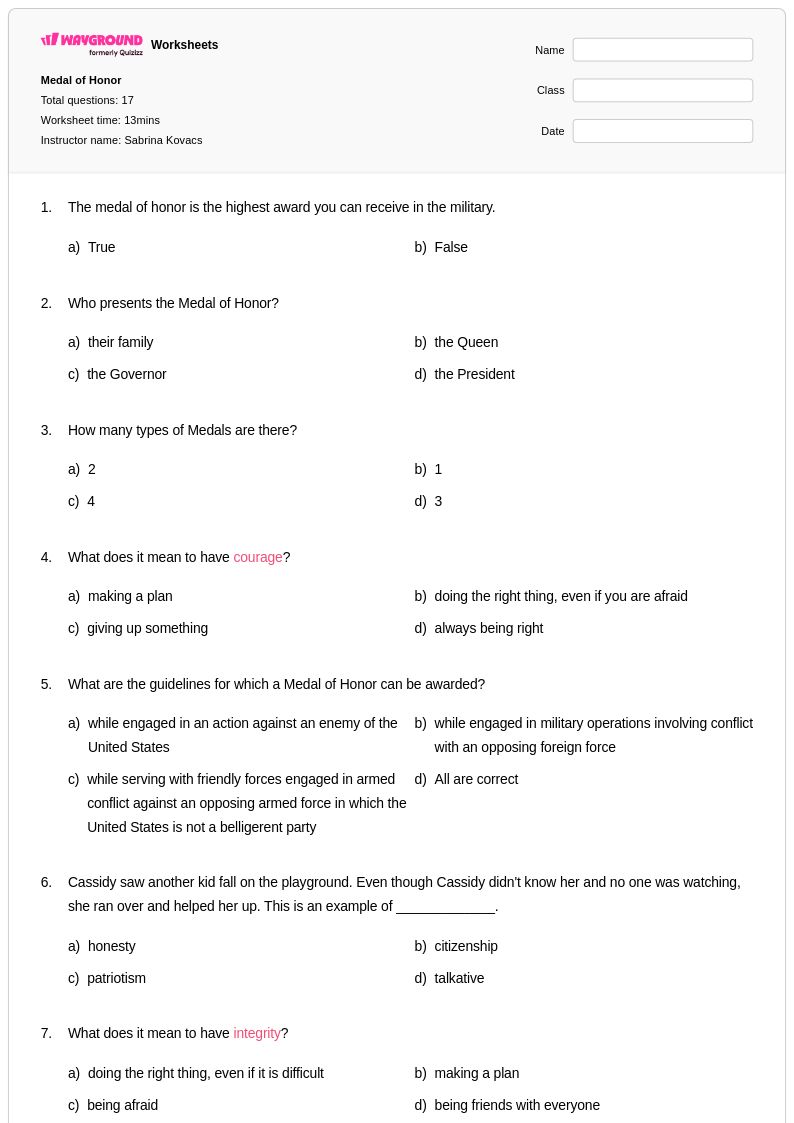
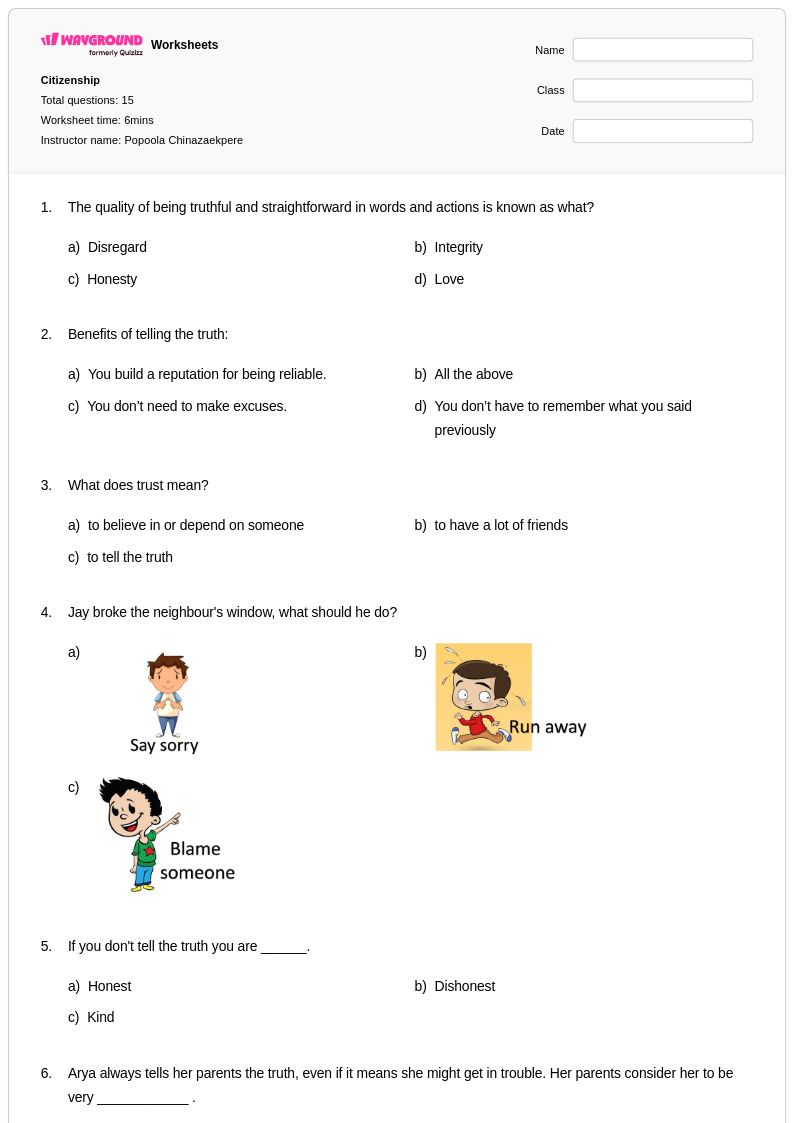
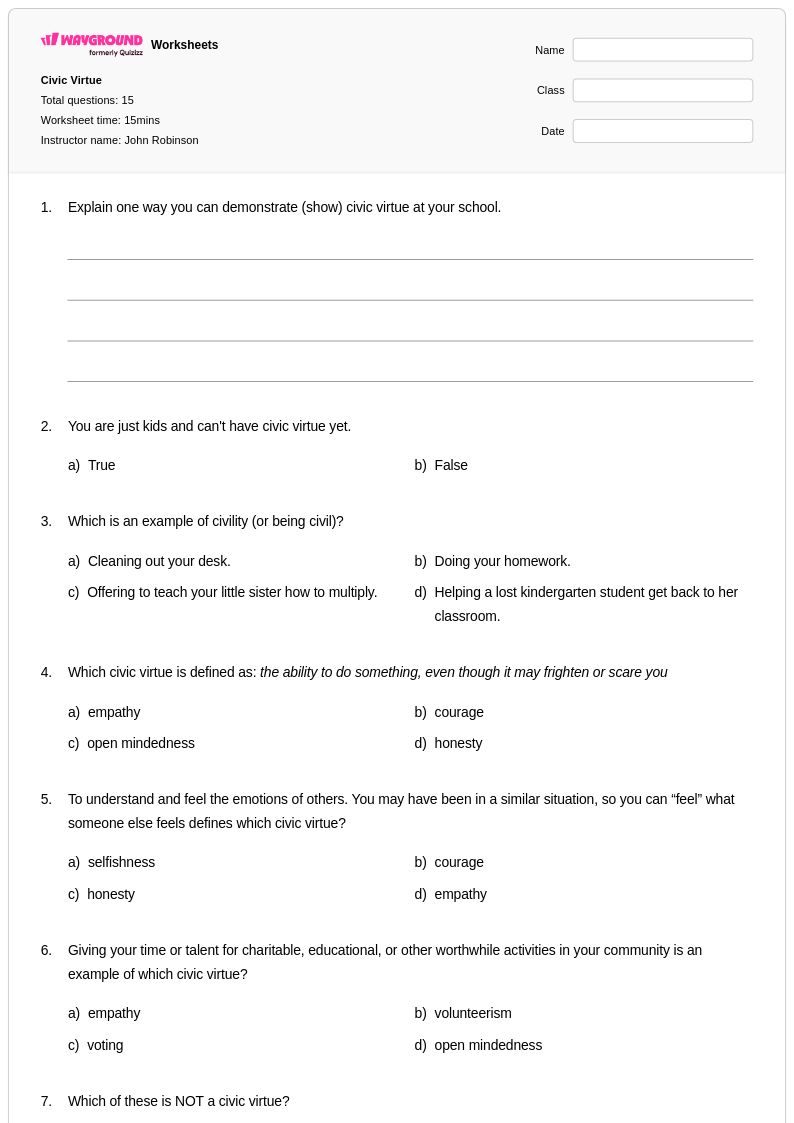
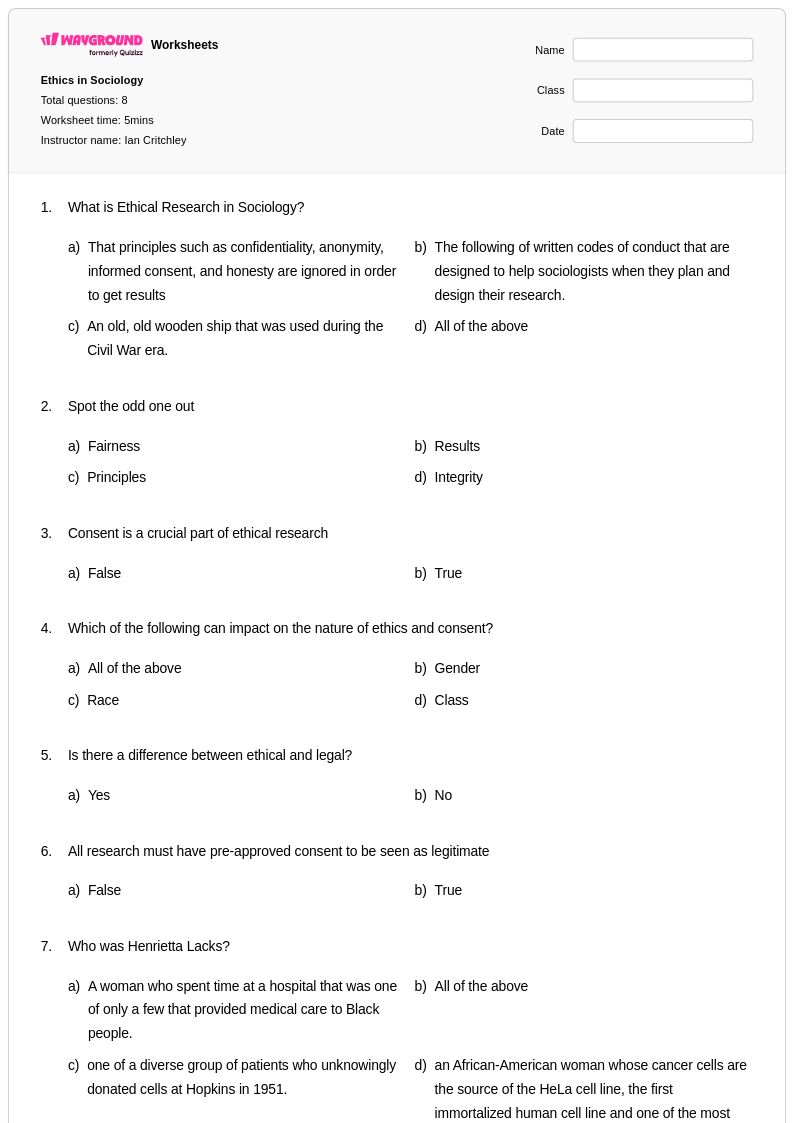
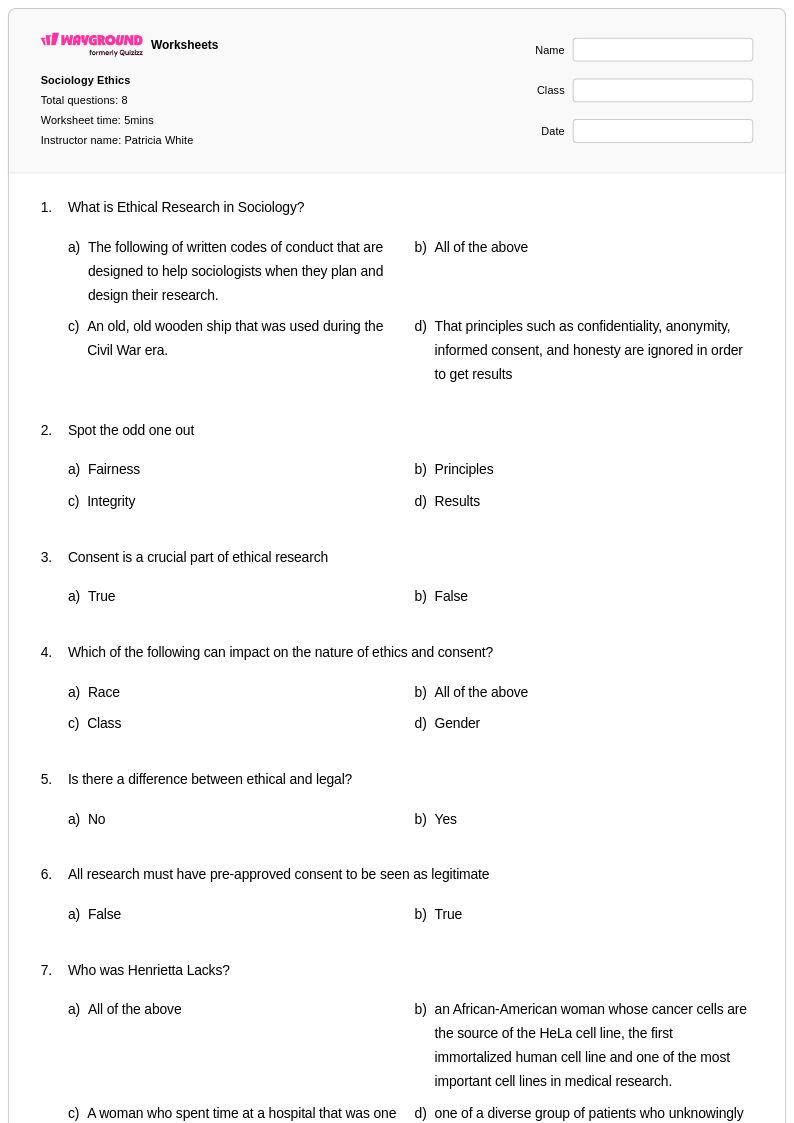
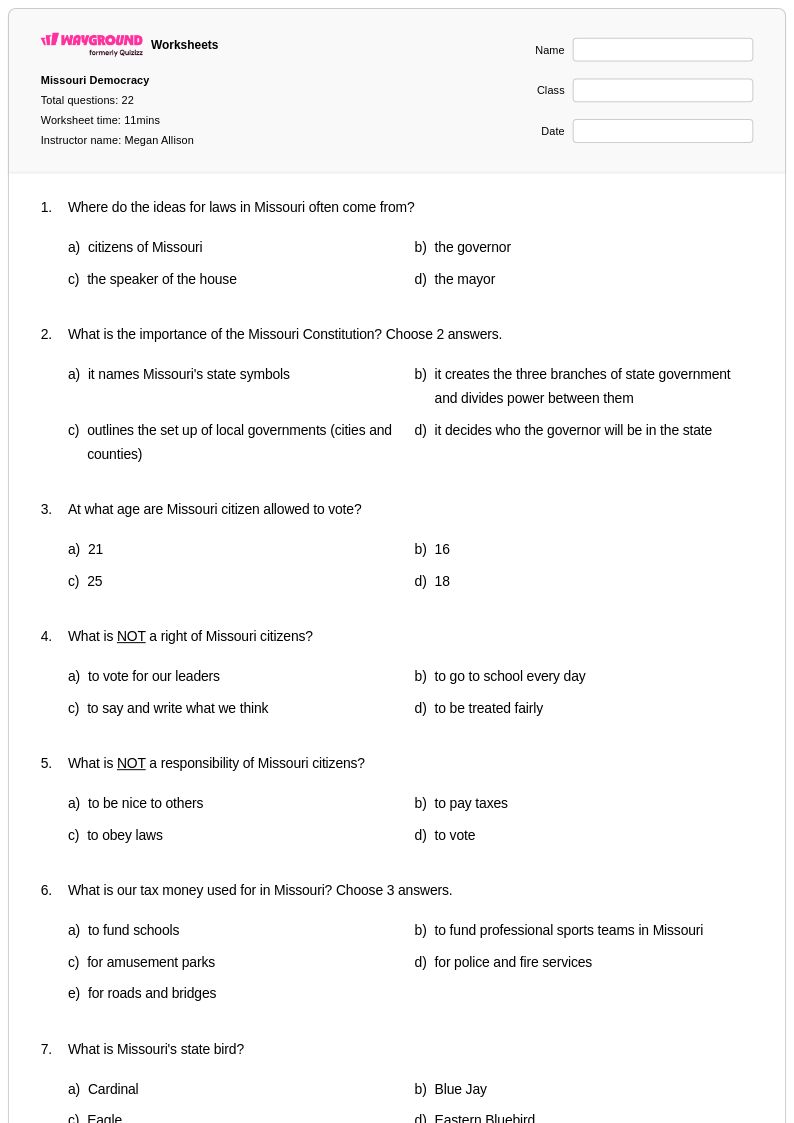
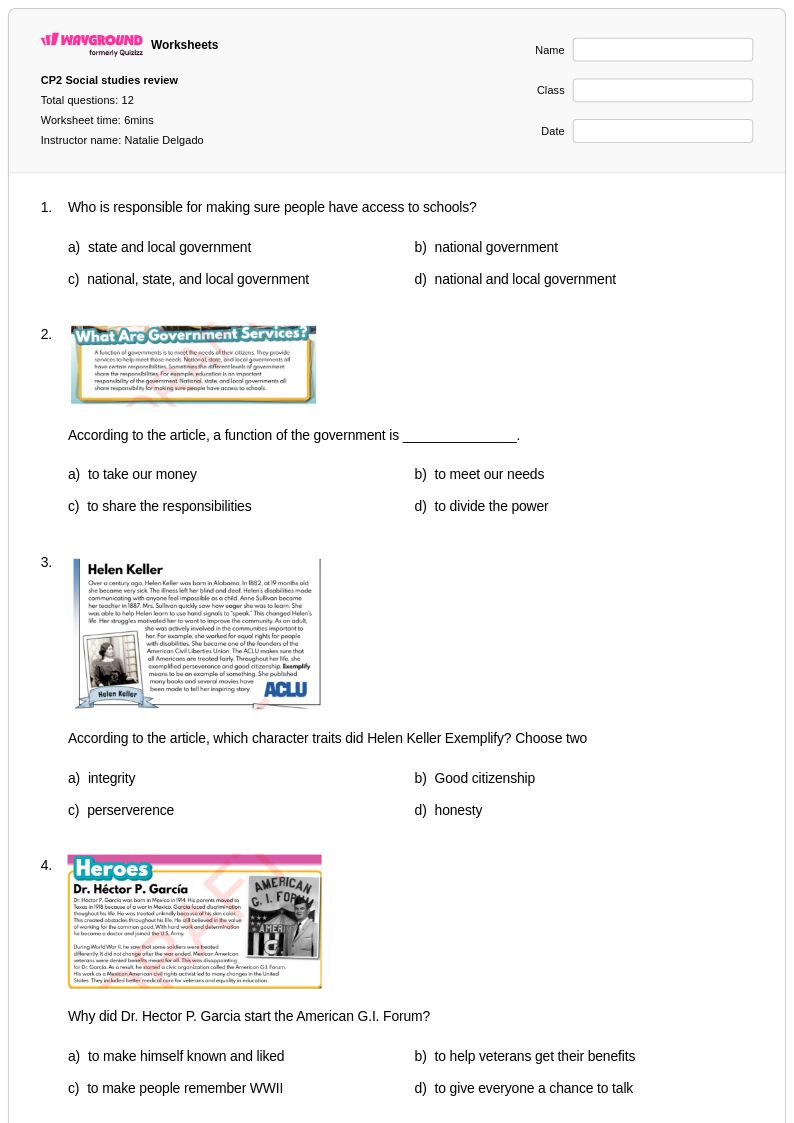
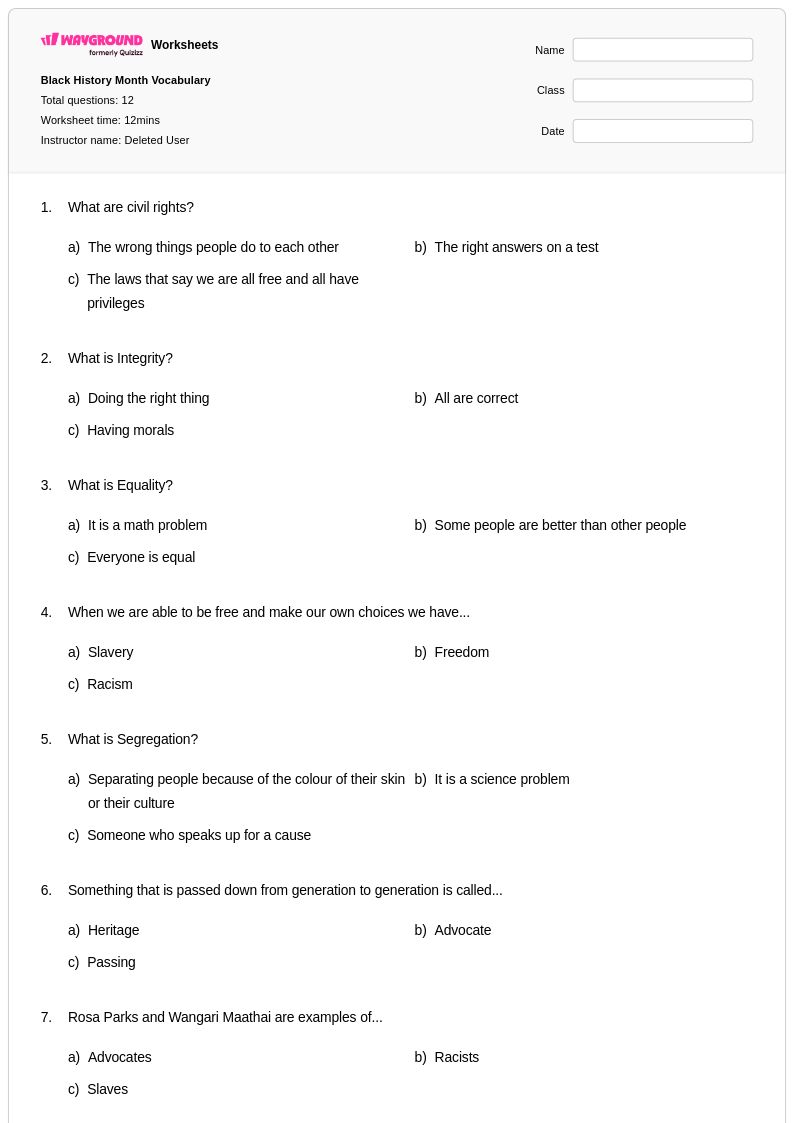
Integrity worksheets for Class 3 students available through Wayground (formerly Quizizz) provide essential foundation-building resources that help young learners understand and practice this fundamental character trait. These comprehensive worksheets focus on developing students' understanding of honesty, trustworthiness, and doing the right thing even when no one is watching, which are crucial social skills for third-grade development. The collection includes engaging practice problems that present real-world scenarios where students must identify examples of integrity, distinguish between honest and dishonest behaviors, and reflect on their own character choices. Each worksheet comes with a detailed answer key to support both independent learning and teacher-guided instruction, and all materials are available as free printables in convenient pdf format for classroom or home use.
Wayground (formerly Quizizz) empowers educators with millions of teacher-created resources specifically designed to support character education and social skills instruction at the Class 3 level. The platform's robust search and filtering capabilities allow teachers to quickly locate integrity-focused worksheets that align with their curriculum standards and classroom needs, while built-in differentiation tools enable customization for diverse learning abilities and styles. These flexible resources are available in both printable and digital formats, including downloadable pdf versions, making them ideal for various instructional settings and learning environments. Teachers can effectively utilize these materials for lesson planning, targeted remediation for students who need additional character development support, enrichment activities for advanced learners, and consistent skill practice that reinforces positive behavioral choices throughout the school year.
FAQs
How do I teach integrity to students in a meaningful way?
Teaching integrity effectively requires grounding abstract moral concepts in concrete, relatable scenarios. Present students with real-world situations where honesty and ethical decision-making are tested, then facilitate structured reflection on consequences and values. Using case studies, role-play, and guided discussion helps students internalize why doing the right thing matters even when no one is watching, which is the core of integrity as a character trait.
What activities help students practice ethical decision-making and integrity?
Scenario-based exercises are among the most effective tools for practicing ethical decision-making because they require students to analyze choices and consider consequences rather than simply define terms. Worksheets that present dilemmas tied to personal relationships, community situations, or civic responsibility push students to apply moral reasoning rather than recall facts. Reflection prompts that ask students to examine their own values extend this practice from academic exercise to genuine character development.
What common misconceptions do students have about integrity?
A frequent misconception is that integrity only matters when others are watching, when in fact it is defined by consistent behavior regardless of observation. Students also tend to conflate integrity with rule-following, missing the distinction between compliance and genuine moral conviction. Another common error is treating integrity as a single dramatic choice rather than a pattern of everyday decisions that shapes relationships, trust, and community standing.
How does integrity connect to social studies and civic education?
Integrity is a foundational element of civic responsibility because communities and democratic institutions depend on individuals who act honestly and ethically in public life. When students explore how integrity affects civic participation, community involvement, and trustworthy leadership, the character trait becomes relevant beyond personal behavior. This connection makes integrity worksheets a natural fit within social studies curricula that address citizenship, ethics, and community values.
How can I use Wayground's integrity worksheets in my classroom?
Wayground's integrity worksheets are available as printable PDFs for traditional classroom use and in digital formats for technology-integrated learning environments, so they work whether students are at desks or on devices. Each worksheet includes an answer key to support assessment and facilitate discussion after students complete the activities. Teachers can also host the materials as a quiz on Wayground, enabling interactive engagement and real-time insight into student responses. Wayground's search and filtering tools make it straightforward to locate worksheets that match specific lesson objectives or character education goals.
How can I differentiate integrity instruction for students with different learning needs?
Differentiation for integrity instruction can involve adjusting the complexity of the ethical scenarios presented, pairing written reflection with verbal discussion for students who struggle with extended writing, or scaffolding vocabulary around terms like honesty, moral principles, and consequences. On Wayground, teachers can apply student-level accommodations such as Read Aloud for students who benefit from audio support, reduced answer choices to lower cognitive load, and extended time settings, all of which can be configured individually so other students are unaffected.