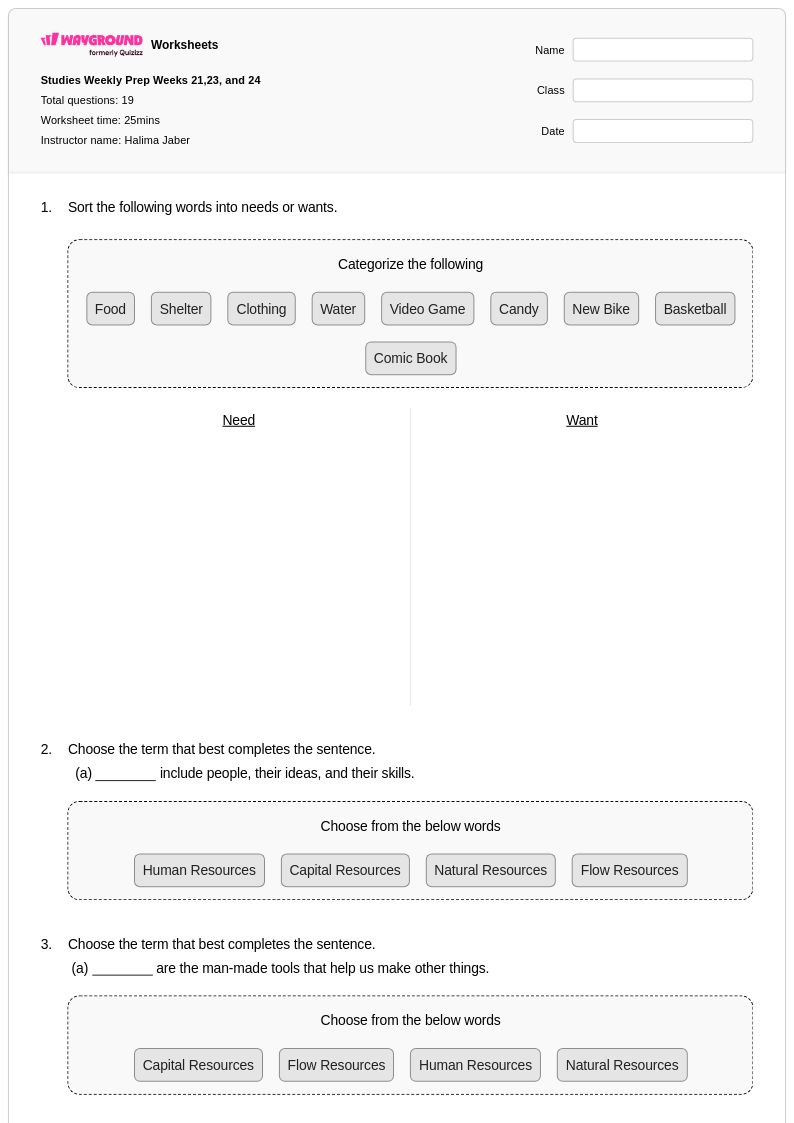
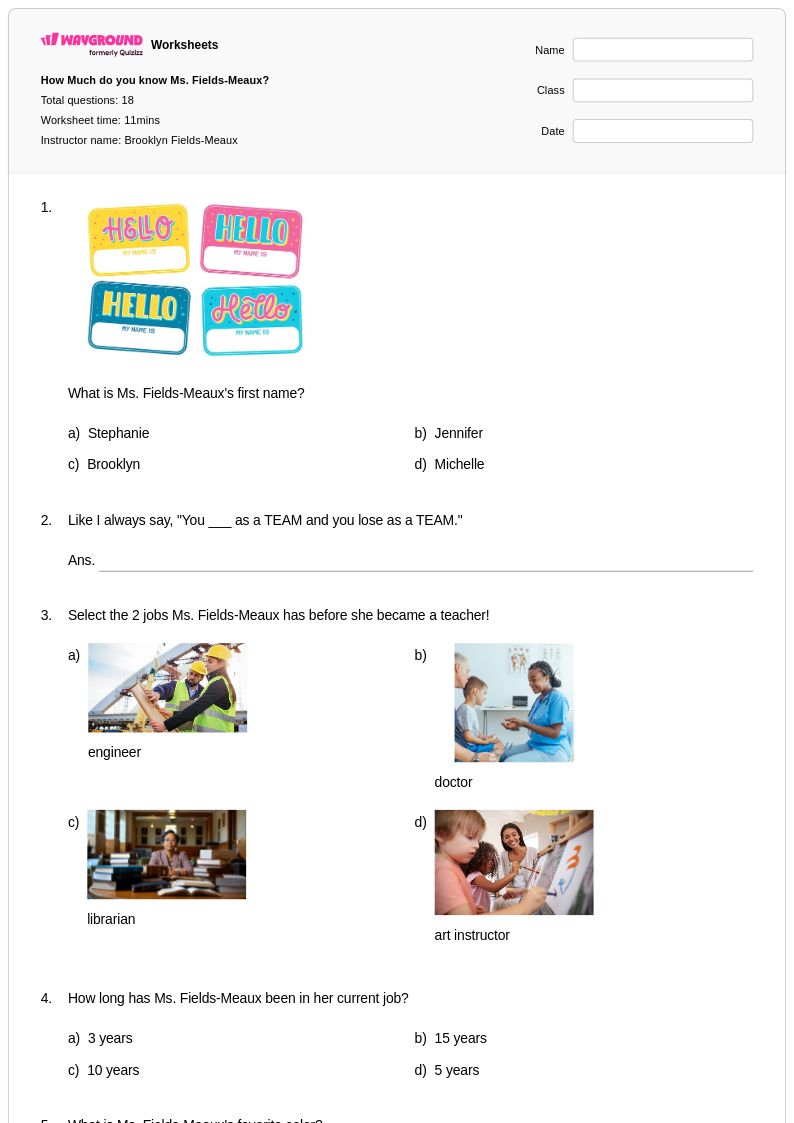
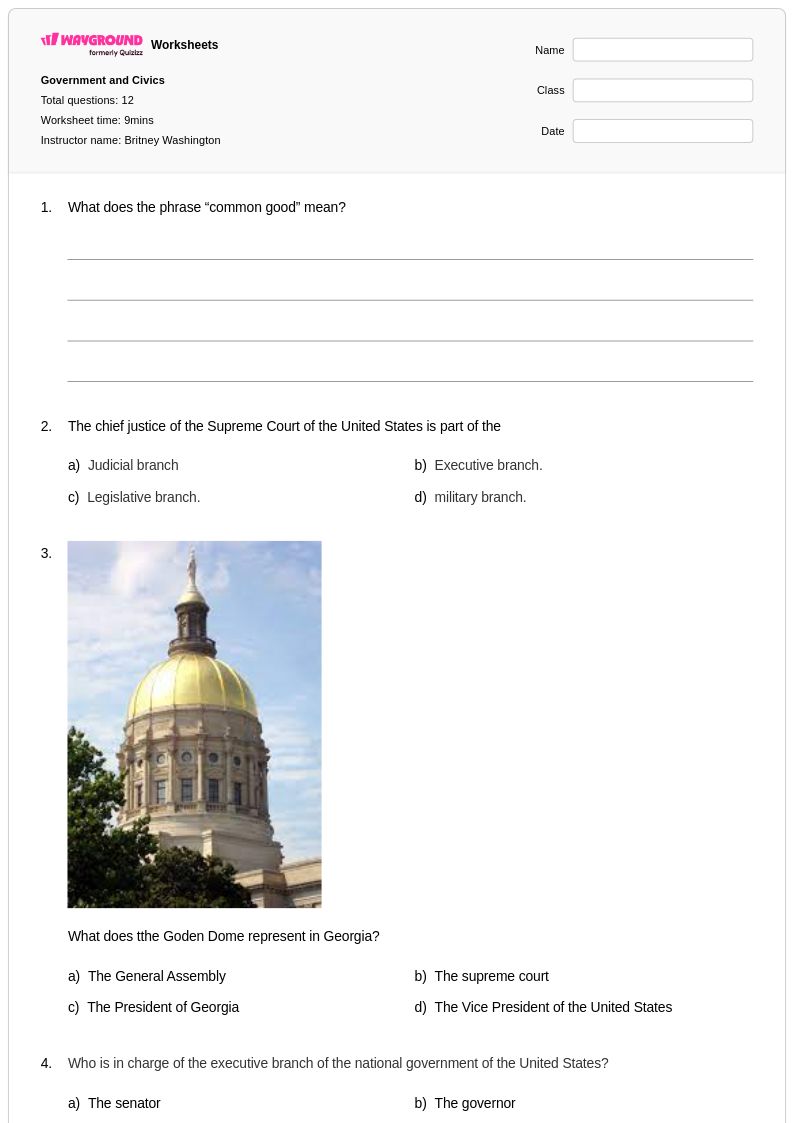
Free Printable Manners and Etiquette Worksheets for Class 3
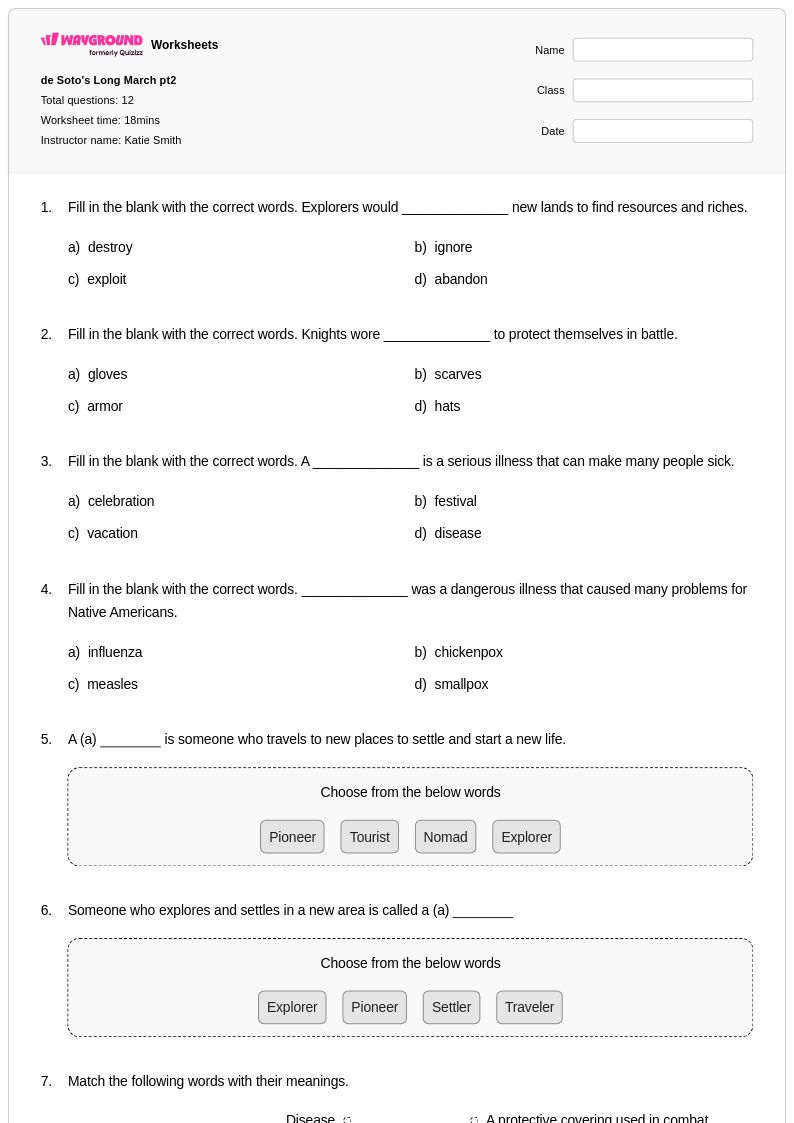
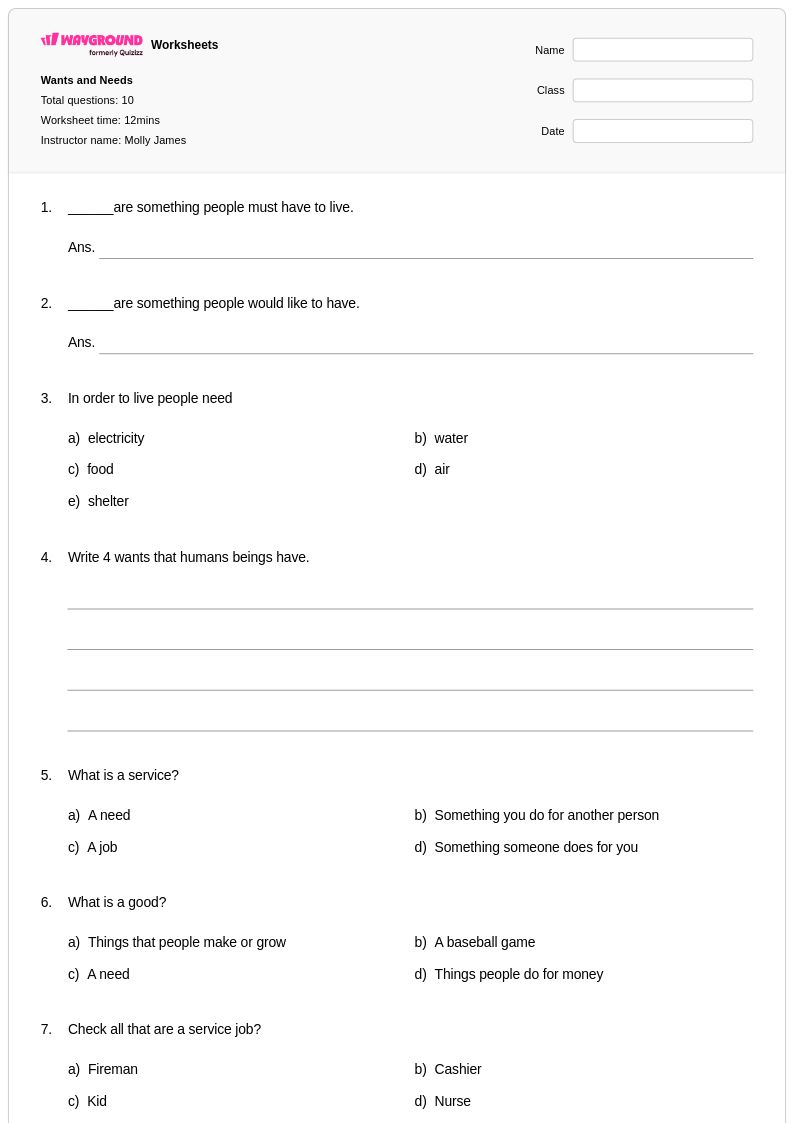
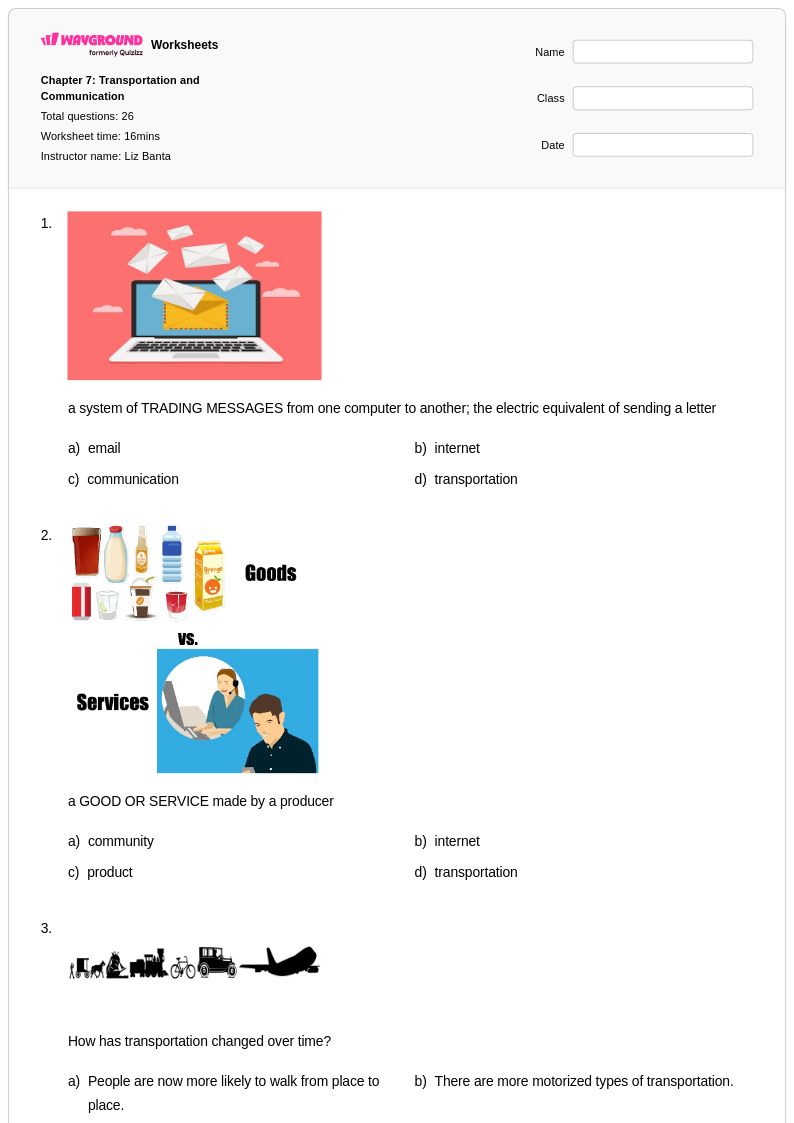
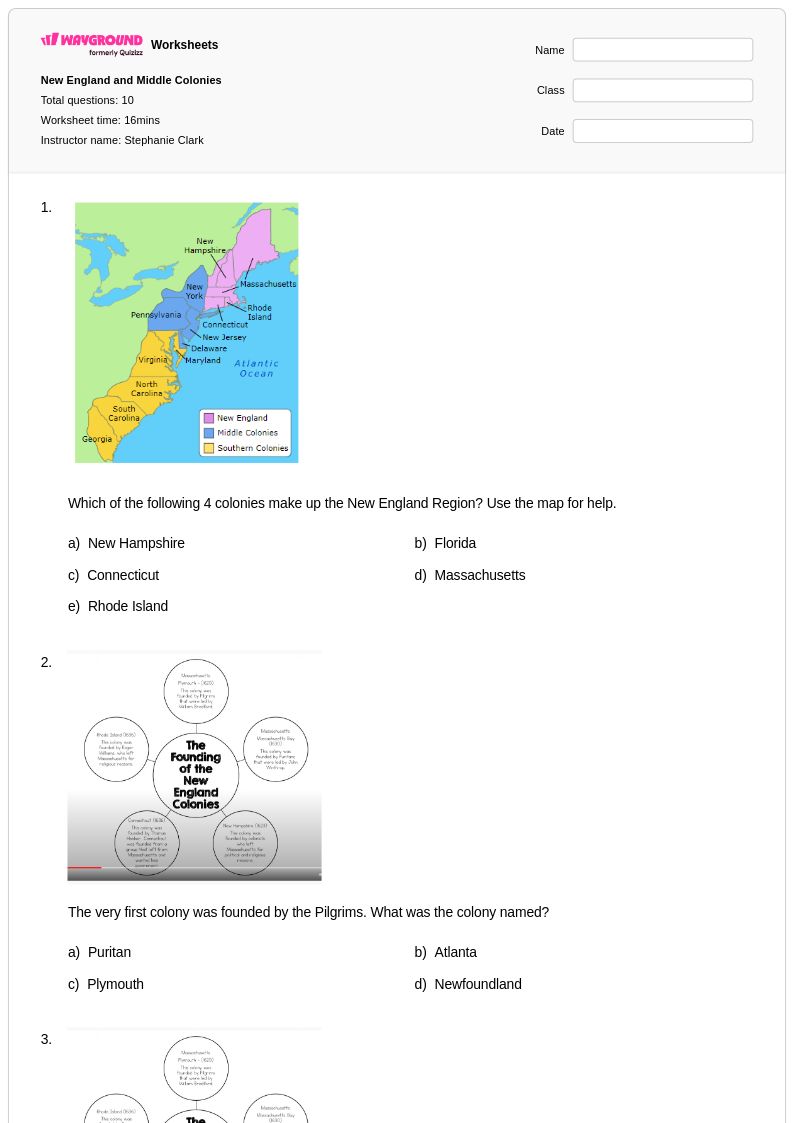
Class 3 manners and etiquette printables from Wayground help students practice proper social behavior through engaging worksheets that teach politeness, respect, and appropriate interactions with free PDF resources and answer keys.
Explore printable Manners and Etiquette worksheets for Class 3
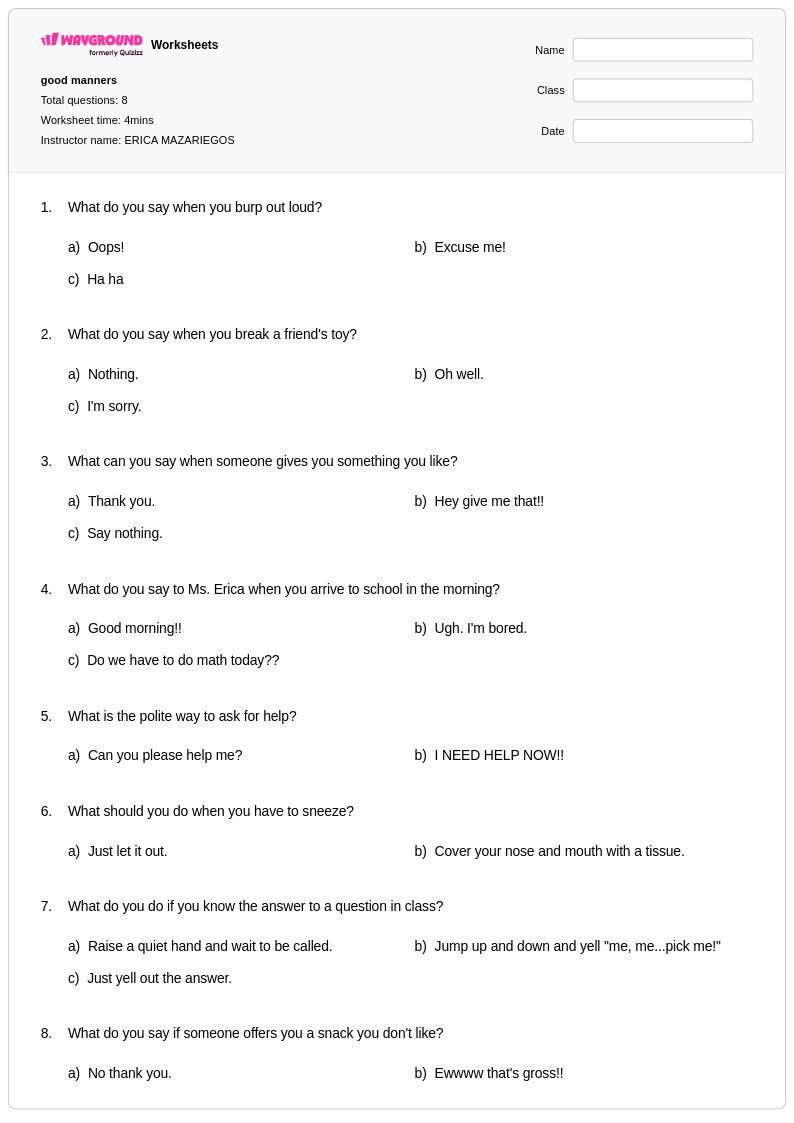
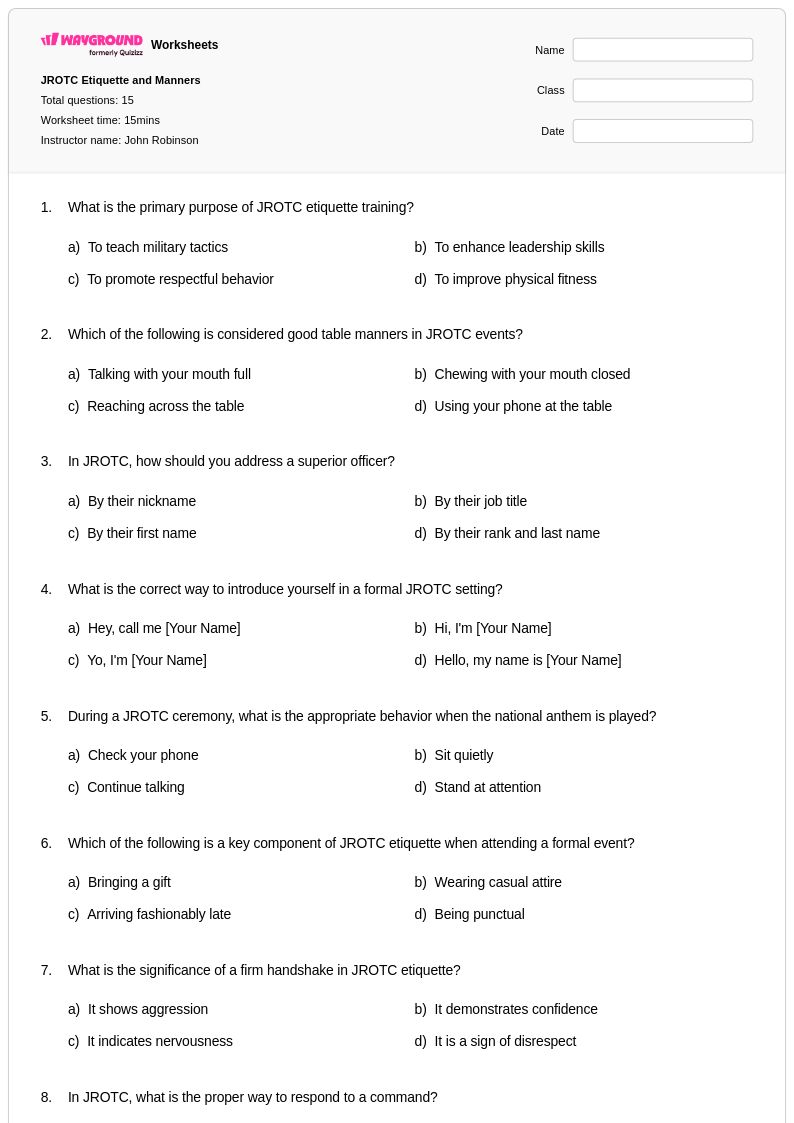
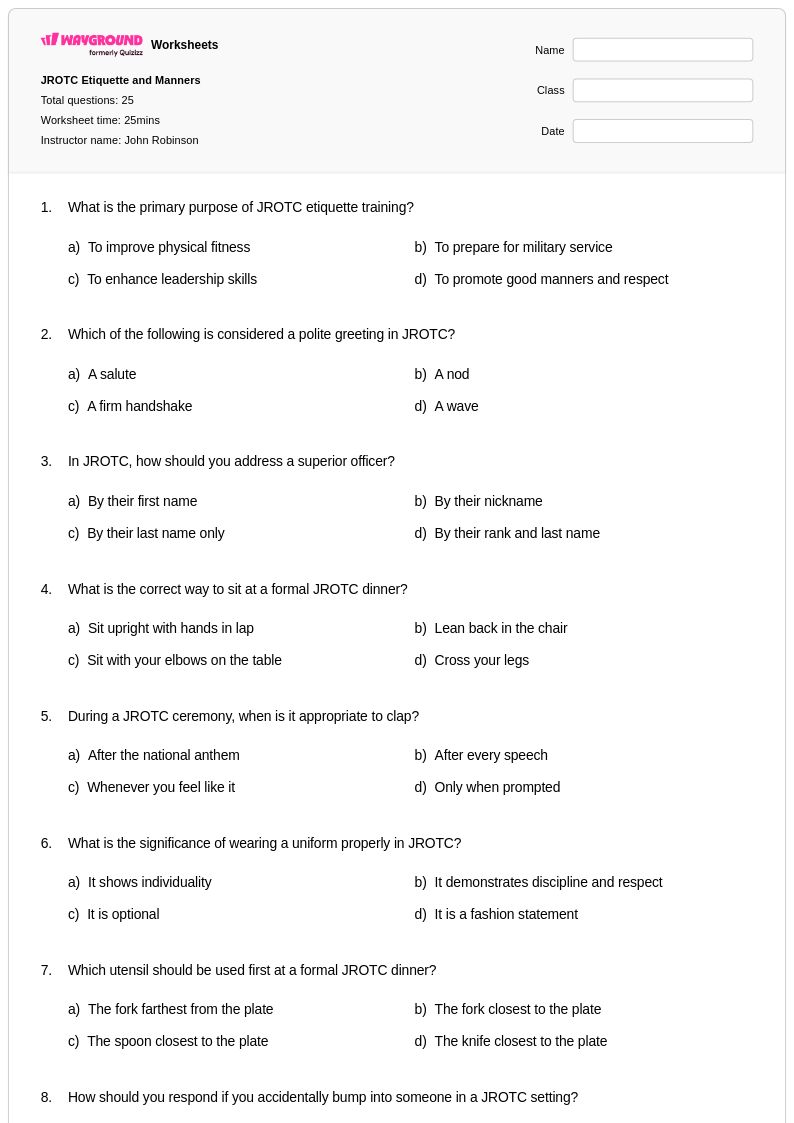
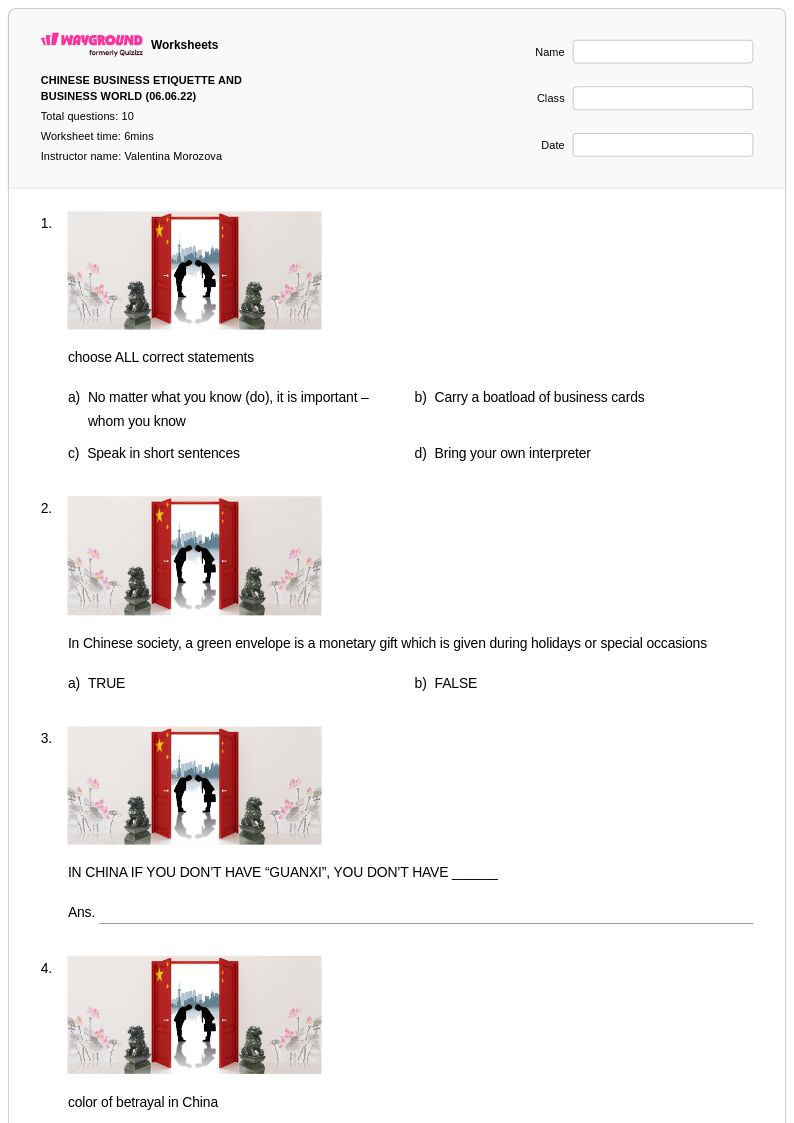
Manners and etiquette worksheets for Class 3 students available through Wayground (formerly Quizizz) provide essential foundational instruction in social courtesy and respectful behavior. These comprehensive resources strengthen students' understanding of appropriate social interactions, including proper greetings, table manners, conversation skills, and respectful communication with peers and adults. The worksheets feature engaging practice problems that help young learners internalize polite behaviors through real-world scenarios, role-playing exercises, and reflective activities. Teachers can access complete answer keys and free printable materials in convenient PDF format, making it simple to incorporate structured social skills instruction into daily classroom routines and character education programs.
Wayground (formerly Quizizz) supports educators with an extensive collection of teacher-created manners and etiquette resources drawn from millions of high-quality worksheets developed by experienced professionals. The platform's robust search and filtering capabilities enable teachers to quickly locate grade-appropriate materials that align with social studies standards and character education objectives. Differentiation tools allow instructors to customize worksheets for diverse learning needs, while flexible digital and printable formats accommodate various teaching preferences and classroom technologies. These comprehensive resources prove invaluable for lesson planning, targeted skill practice, and both remediation and enrichment activities, helping teachers create meaningful learning experiences that prepare Class 3 students to navigate social situations with confidence and respect.
FAQs
How do I teach manners and etiquette in the classroom?
Teaching manners and etiquette is most effective when students encounter real-world social scenarios they can analyze and respond to. Start with foundational concepts like greetings, active listening, and respectful communication before moving to more context-specific behaviors such as table manners or digital etiquette. Role-playing activities and structured reflection prompts help students internalize expectations rather than simply memorize rules.
What activities help students practice manners and etiquette?
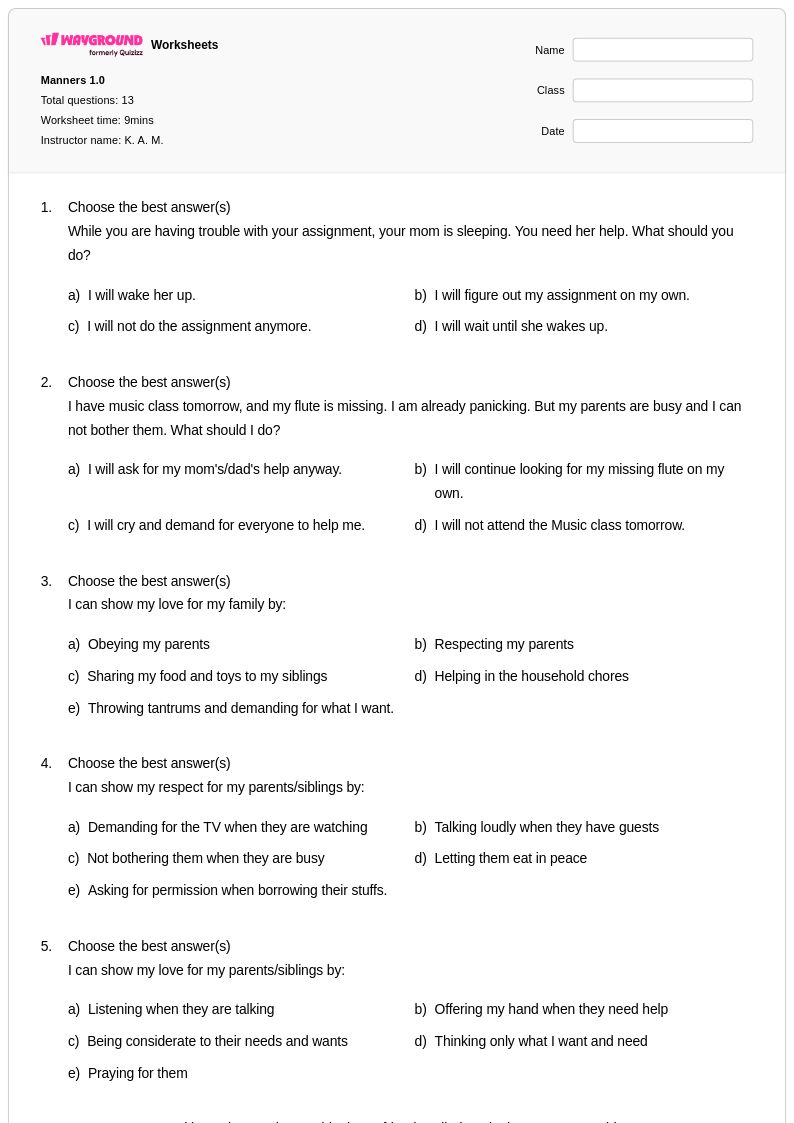
Scenario-based practice problems are among the most effective tools for reinforcing manners and etiquette, as they ask students to evaluate social situations and choose appropriate responses. Worksheets that present real-world contexts — such as how to greet a guest, behave at a meal, or communicate respectfully during a disagreement — build both recognition and application of social norms. Repeated structured practice helps students develop automatic, confident social behavior.
What common mistakes do students make when learning about manners and etiquette?
A common misconception is that etiquette is rigid and universal, when in fact social expectations often vary by culture, setting, and relationship. Students may also conflate politeness with passivity, struggling to understand that assertive and respectful communication can coexist. Worksheets that present diverse scenarios help students recognize context-dependent behavior and avoid overgeneralizing rules.
How can I use manners and etiquette worksheets with students who have different learning needs?
Wayground supports built-in accommodations that can be customized per student, including Read Aloud for students who benefit from audio support, reduced answer choices to lower cognitive load, and extended time for those who need additional processing time. These settings can be applied individually without notifying other students, so the classroom experience remains consistent. This makes manners and etiquette worksheets accessible for diverse learners, including those with reading challenges or processing differences.
How do I use Wayground's manners and etiquette worksheets in my classroom?
Wayground's manners and etiquette worksheets are available as printable PDFs for traditional classroom use and in digital formats for technology-integrated environments, giving teachers flexibility in how they deploy them. Teachers can also host the worksheets as a live quiz on Wayground, enabling real-time student responses and instant feedback. Each worksheet includes a complete answer key, supporting both independent student practice and teacher-led instruction.
At what age should students start learning about manners and etiquette?
Foundational social skills like greeting others, taking turns, and using polite language can be introduced as early as kindergarten and reinforced through elementary school. More nuanced etiquette concepts — such as navigating formal social settings, professional communication, or cultural sensitivity — become appropriate in middle and high school. Scaffolding instruction across grade levels ensures that students build on prior knowledge as social expectations grow more complex.

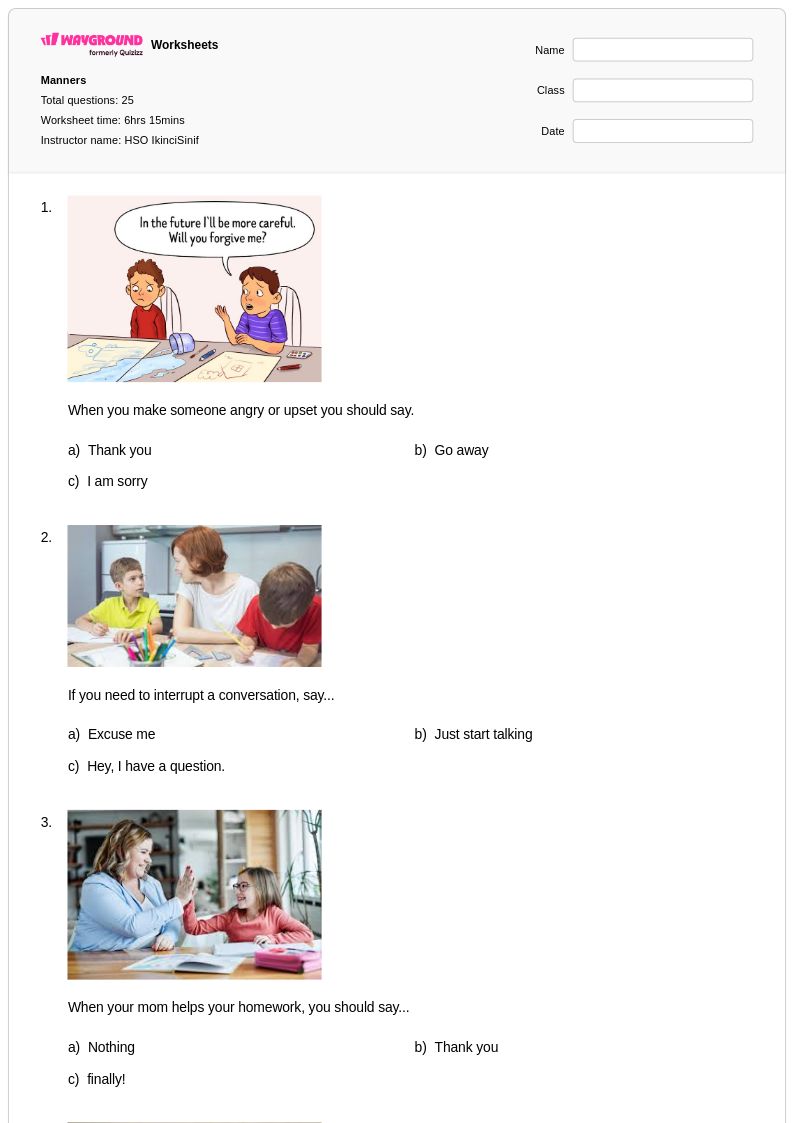
![[P4-6] RHD 2025 Quiz CHS(P) - Imprimible Manners-and-etiquette Worksheets Class 3 - Wayground](https://quizizz-static.s3.amazonaws.com/_media/worksheets-new/683d614d2ddc4e75d4f2df17-p4-6-rhd-2025-quiz-chsp)