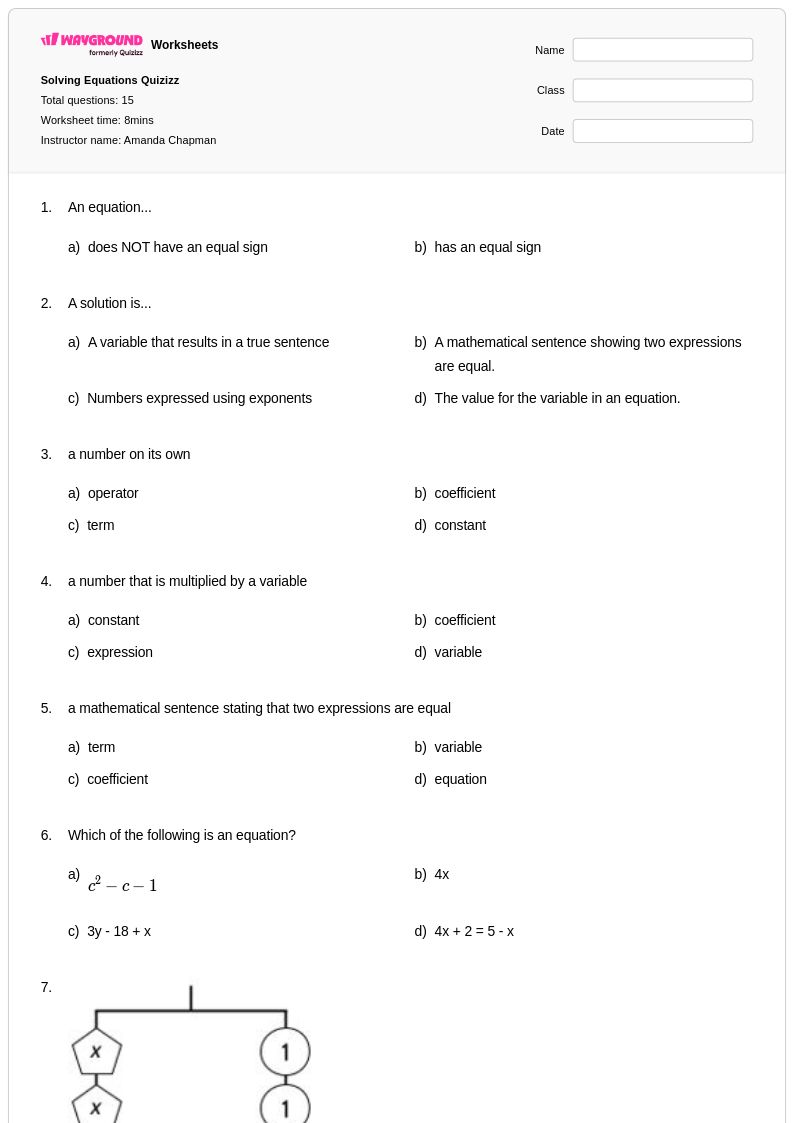
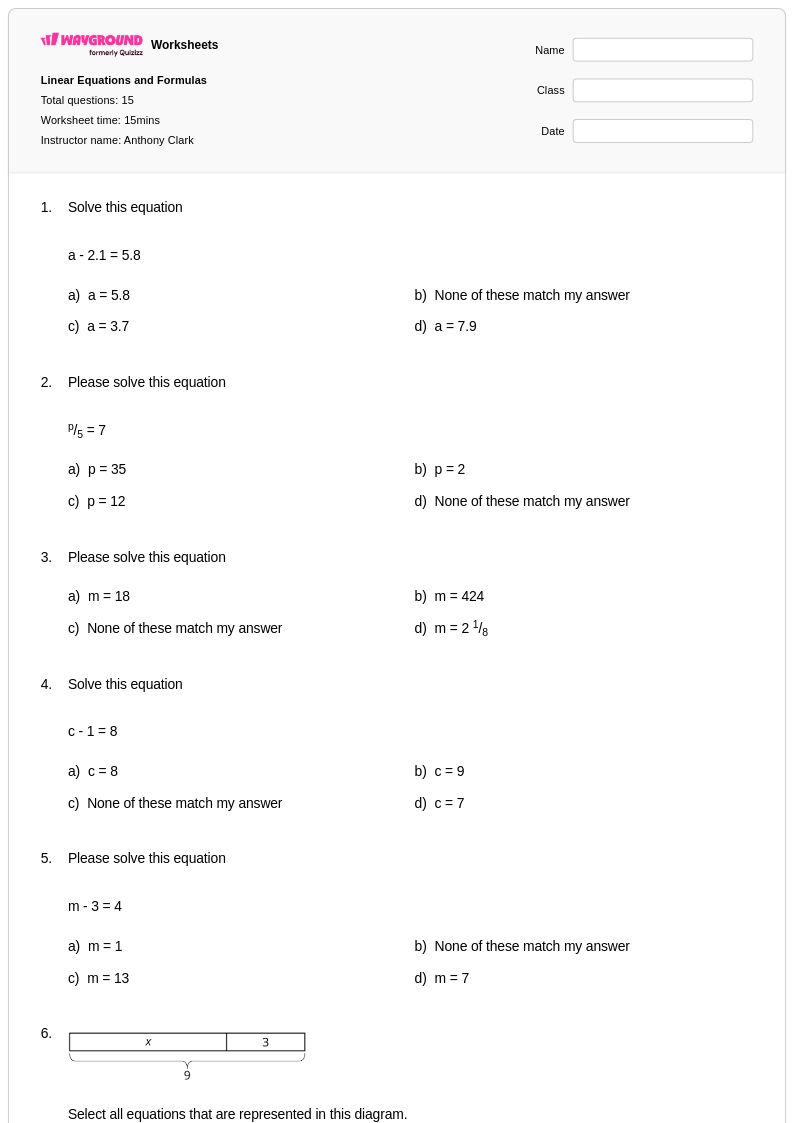
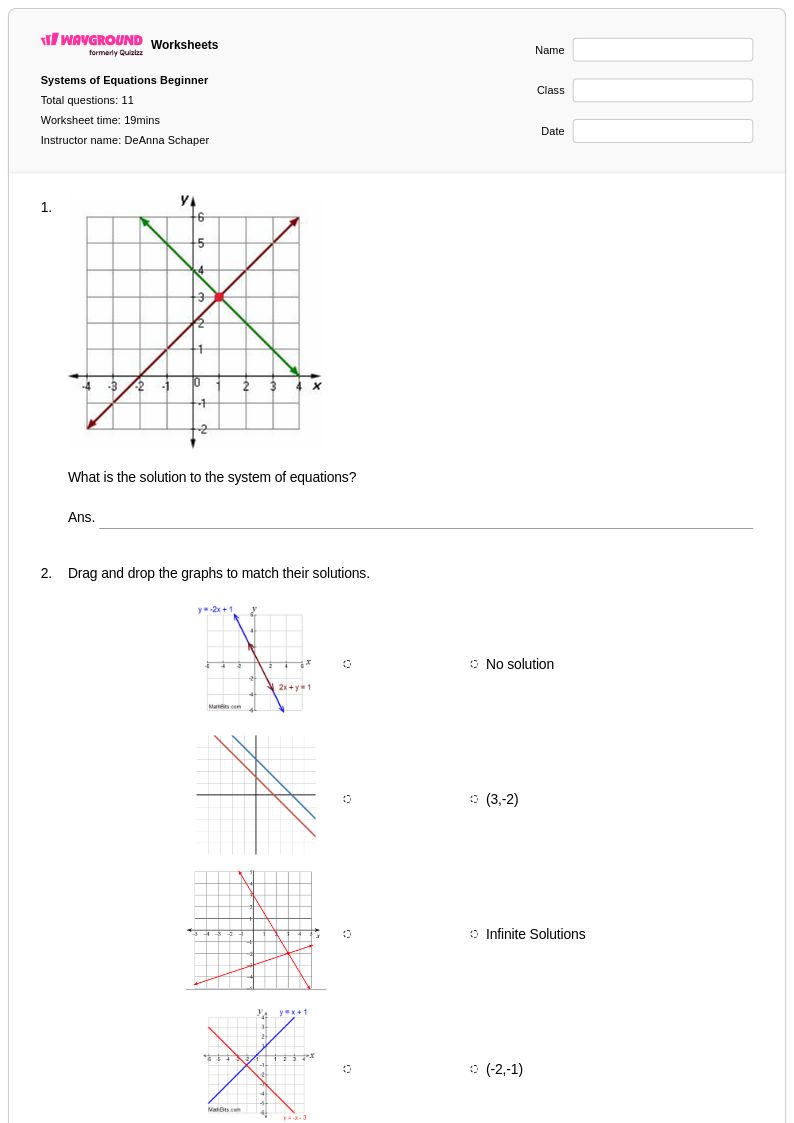
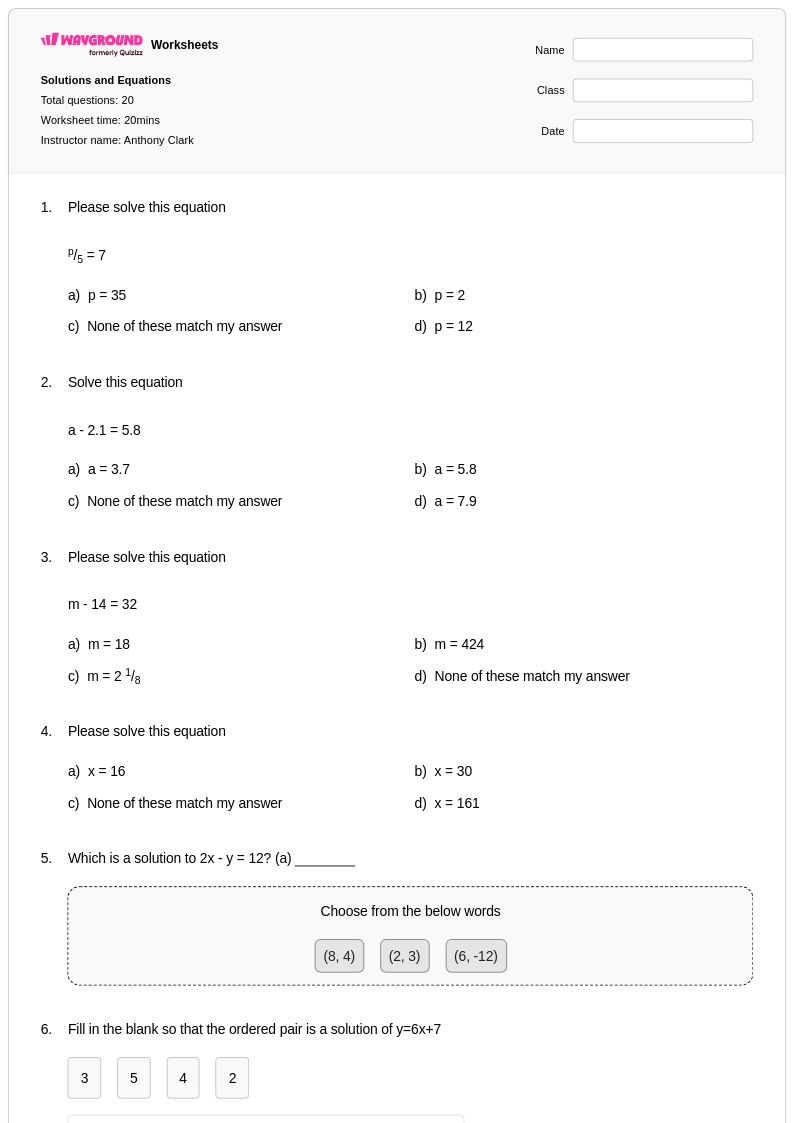
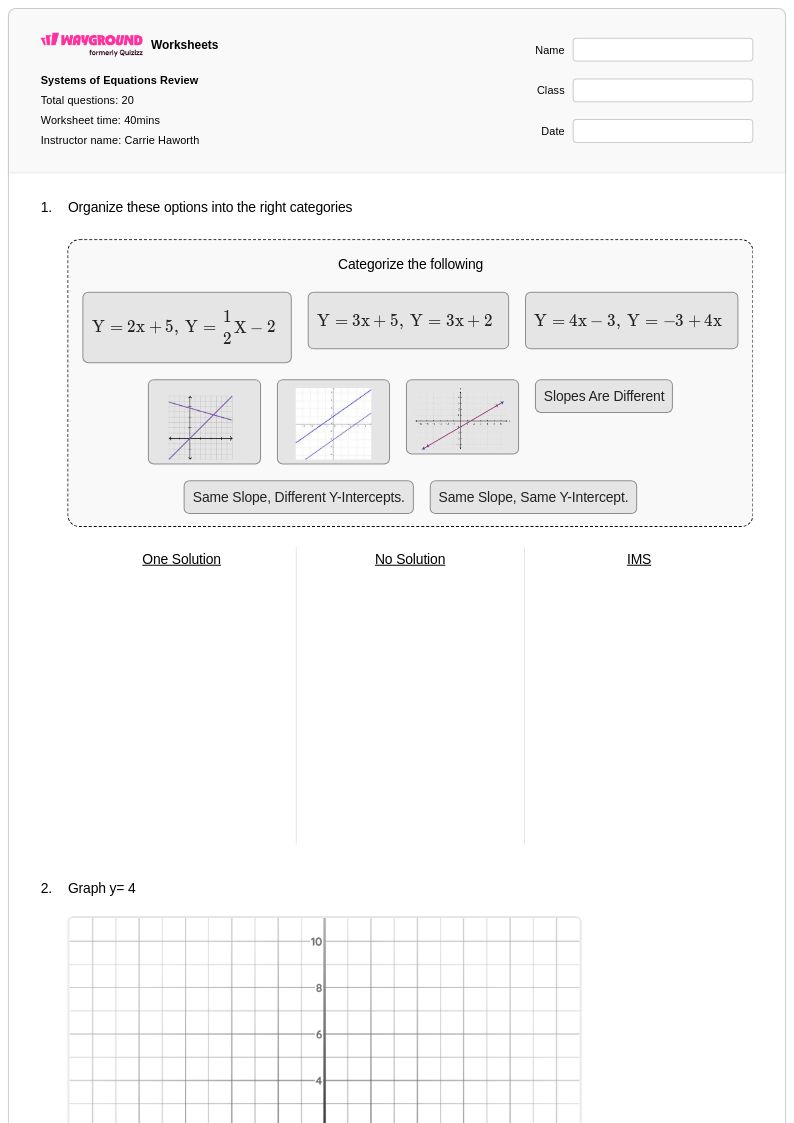
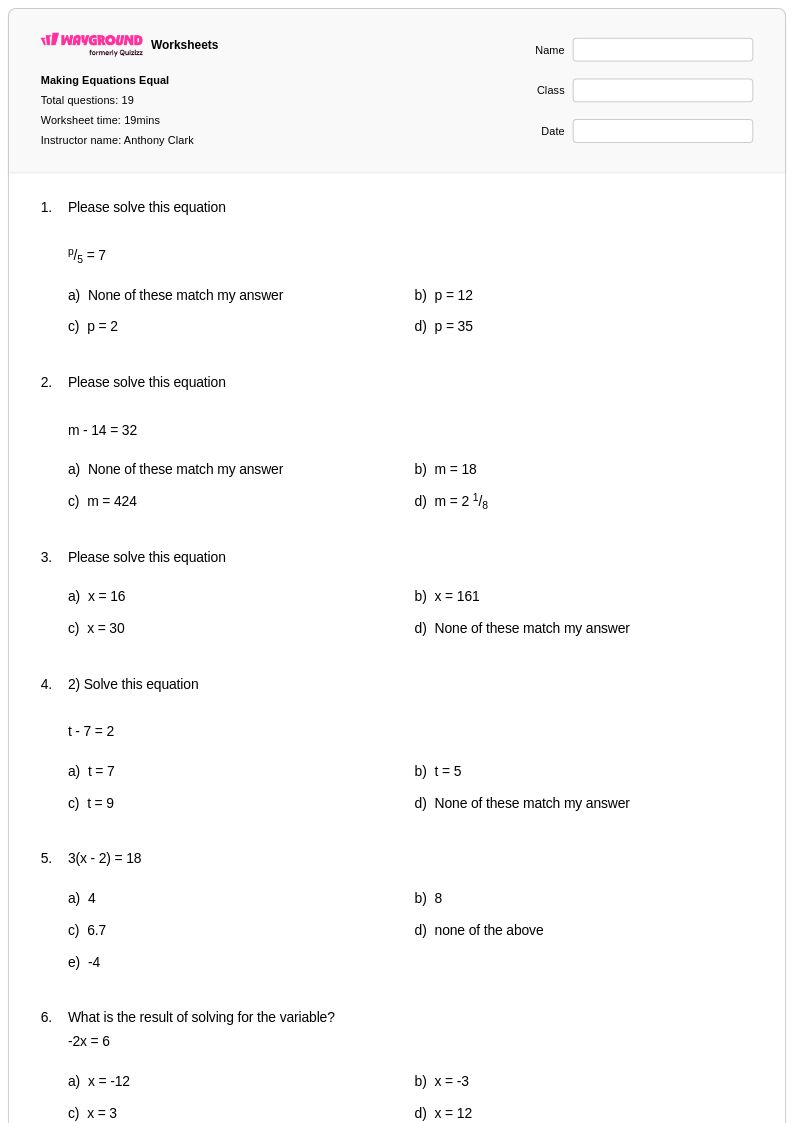
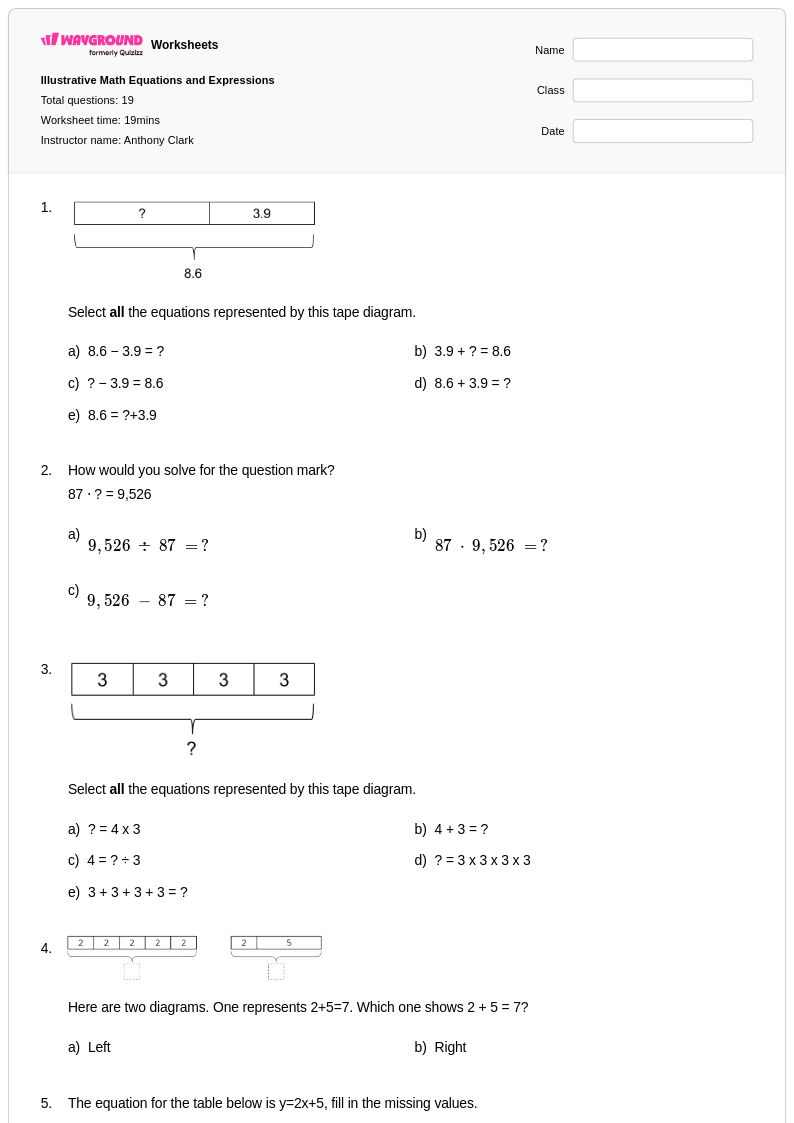
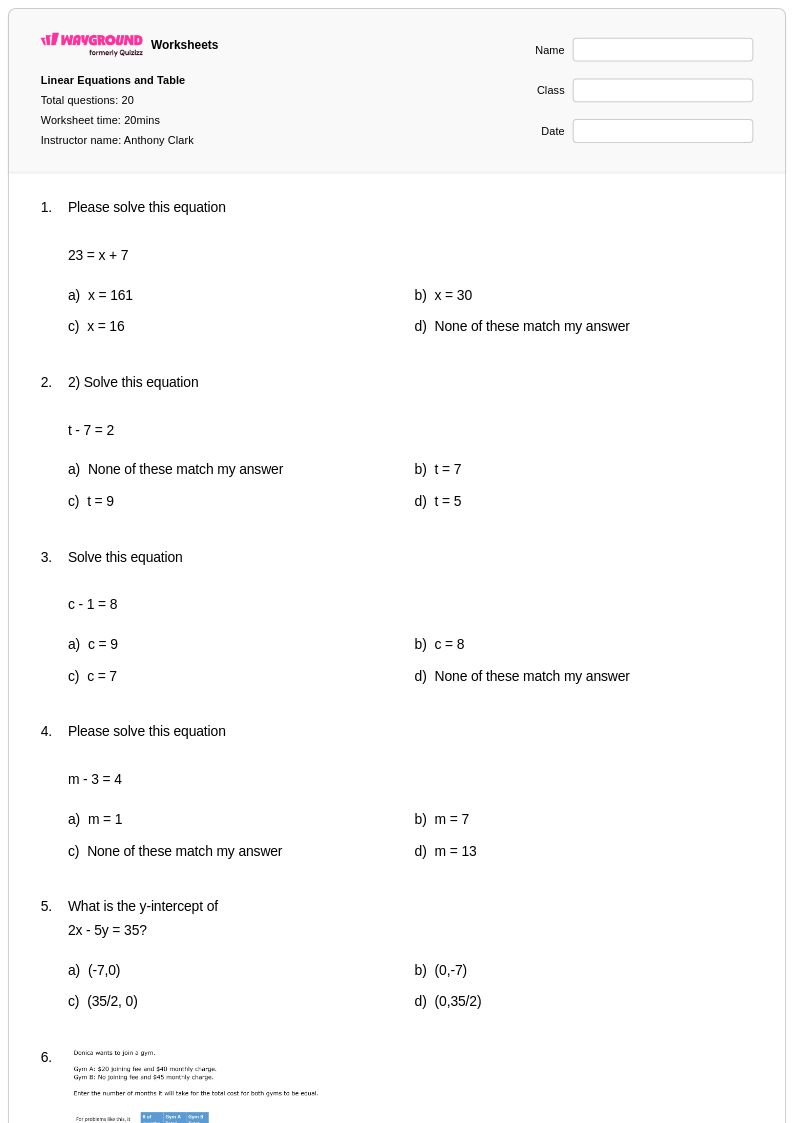
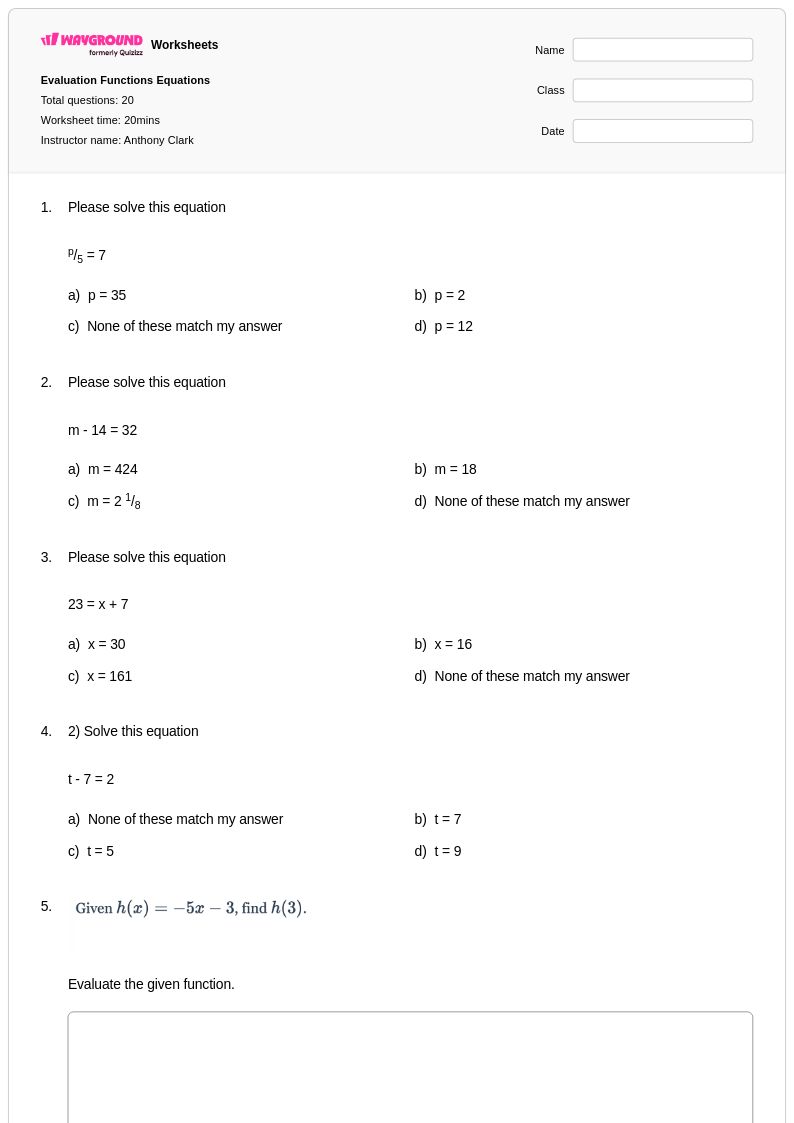
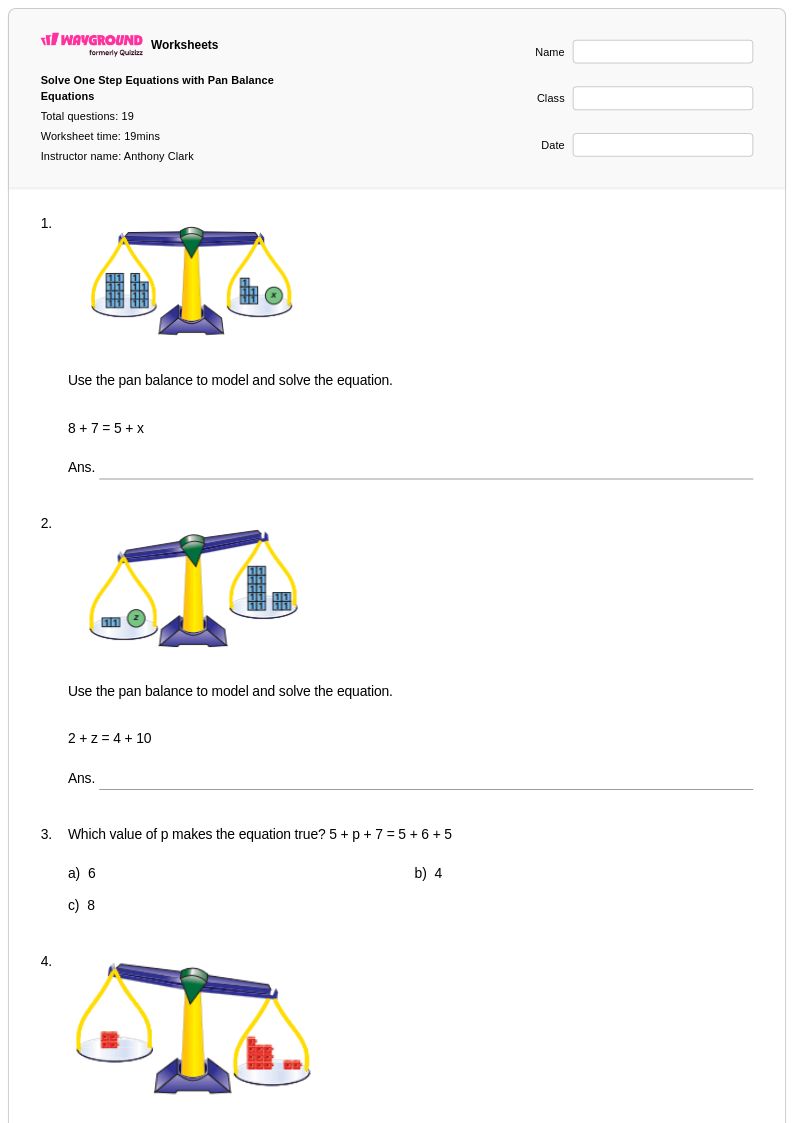
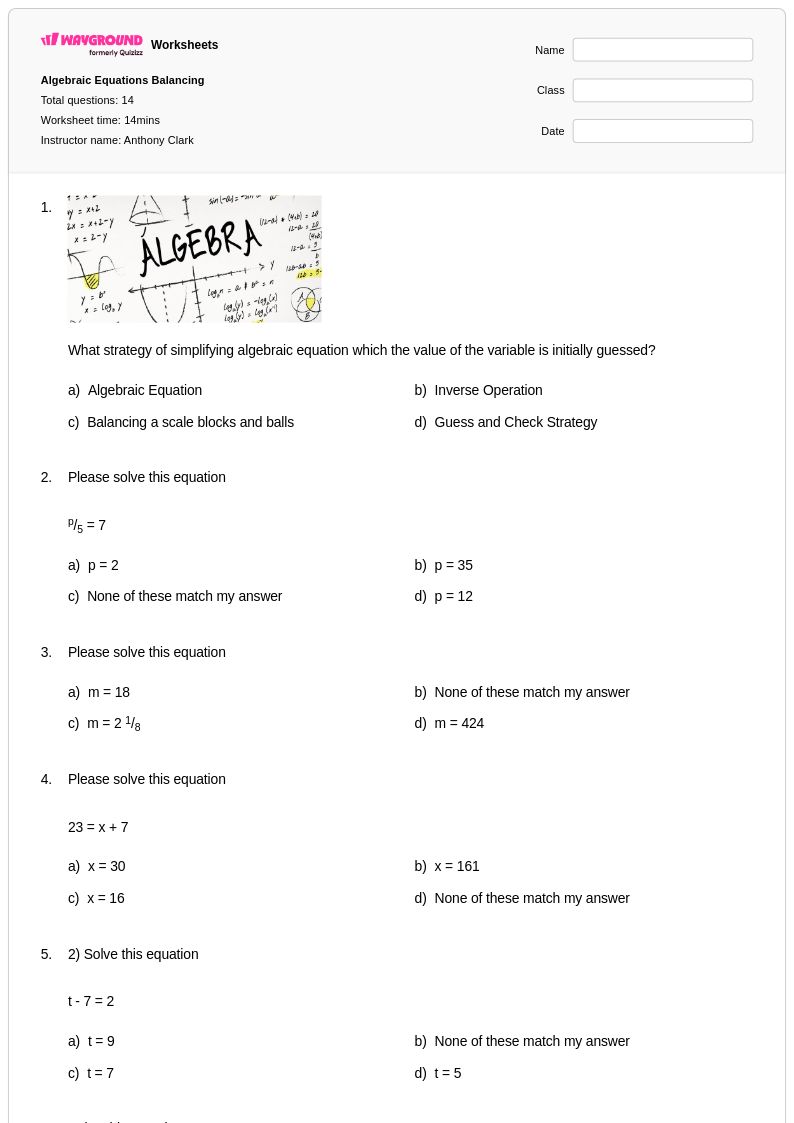
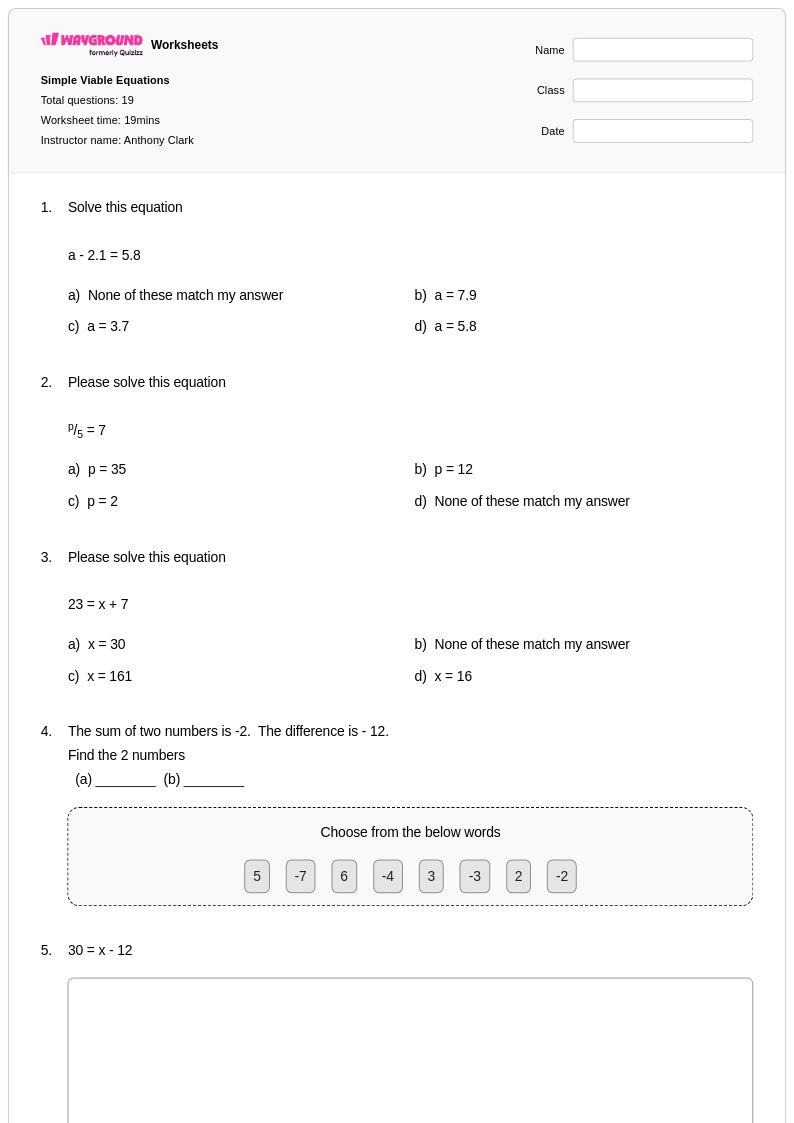
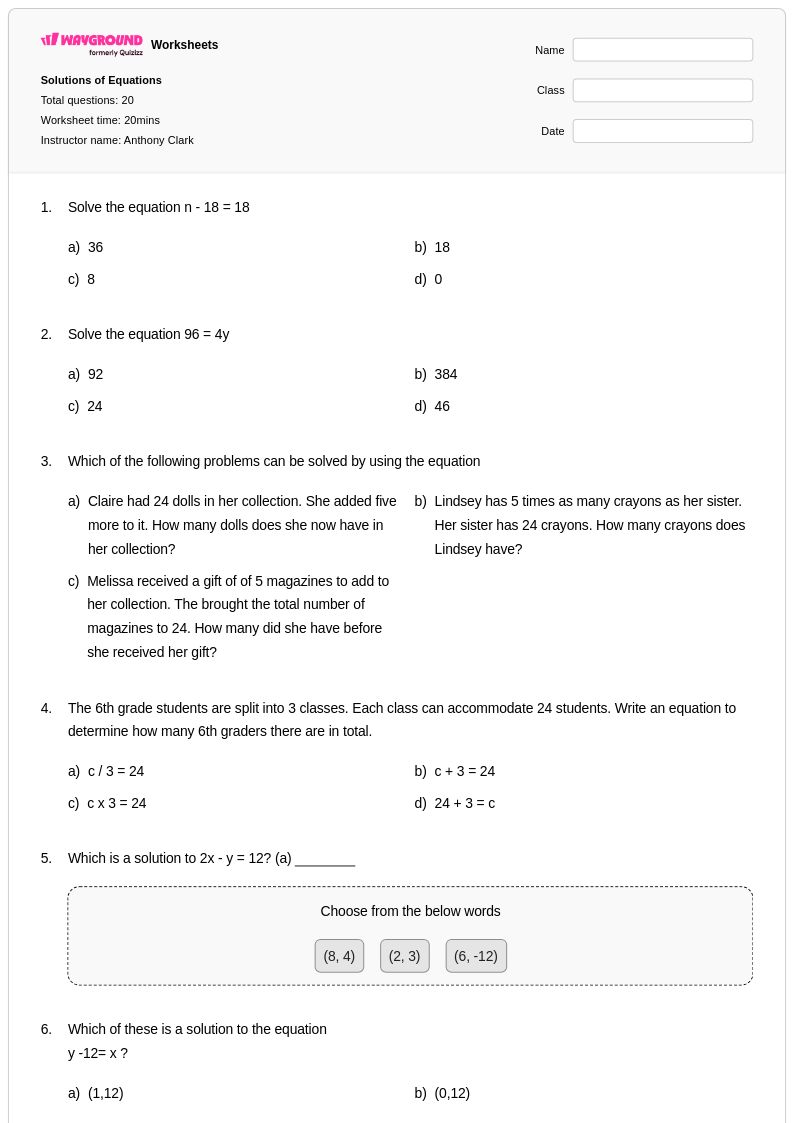
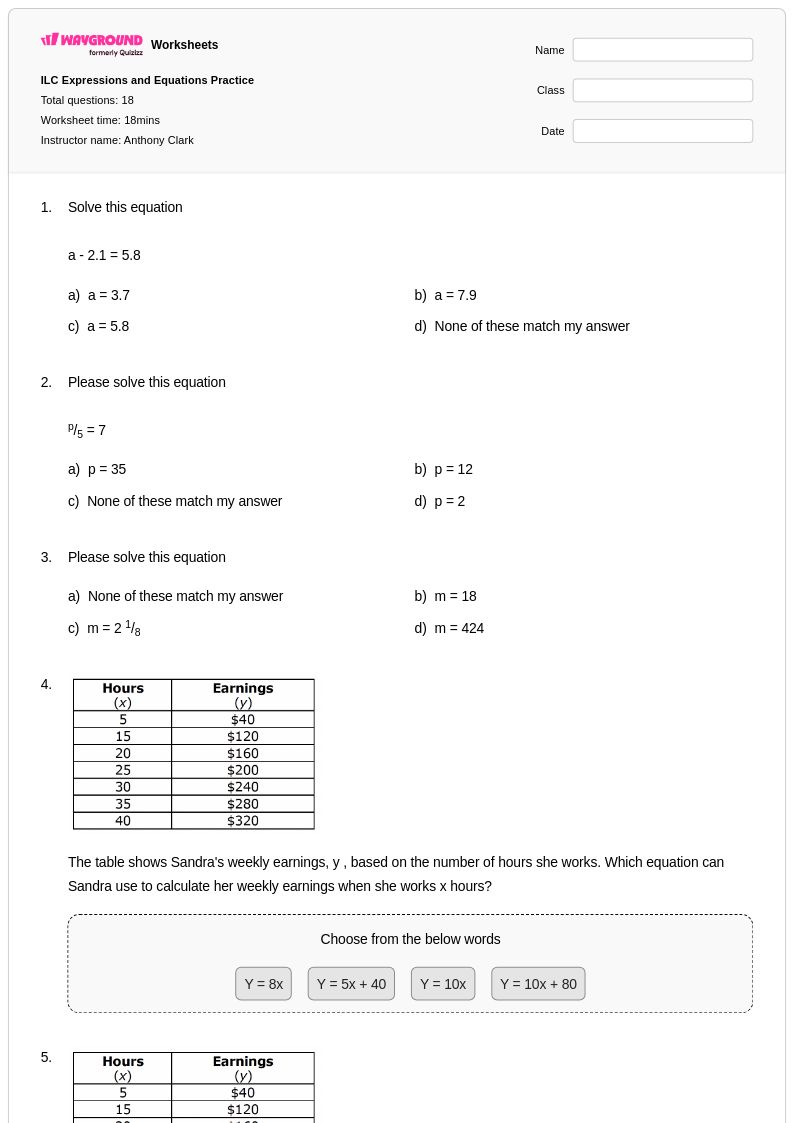
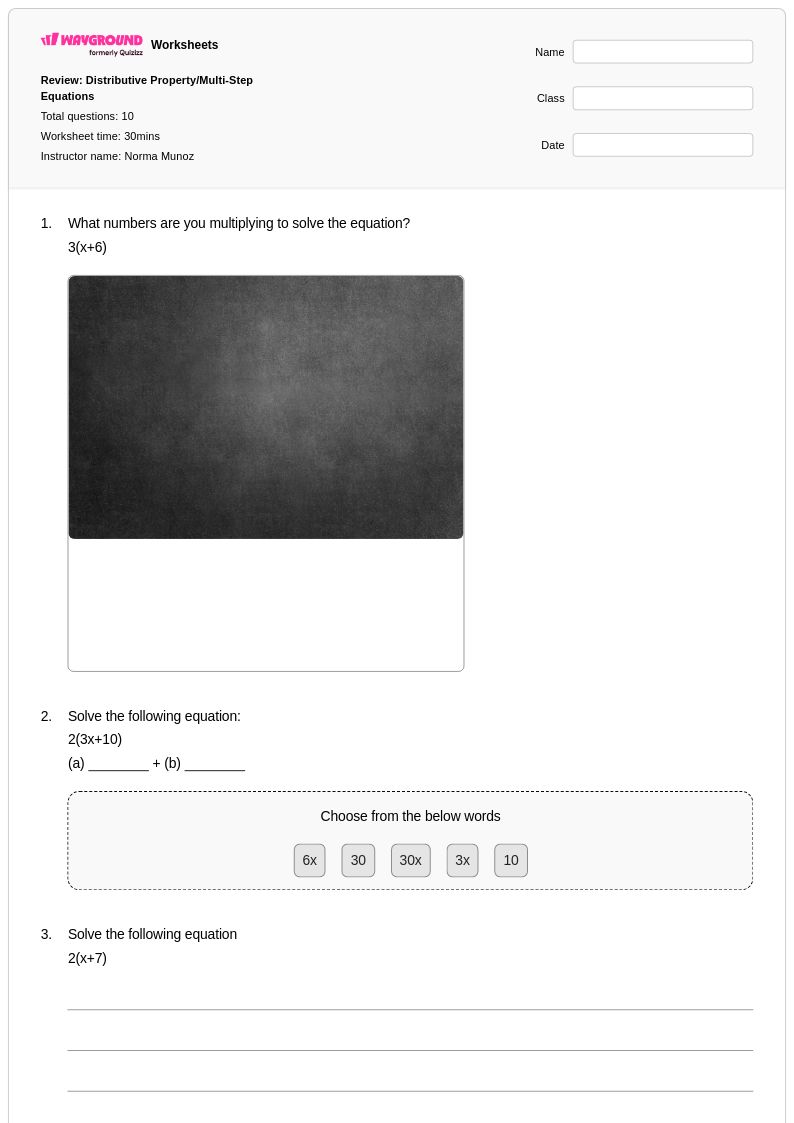
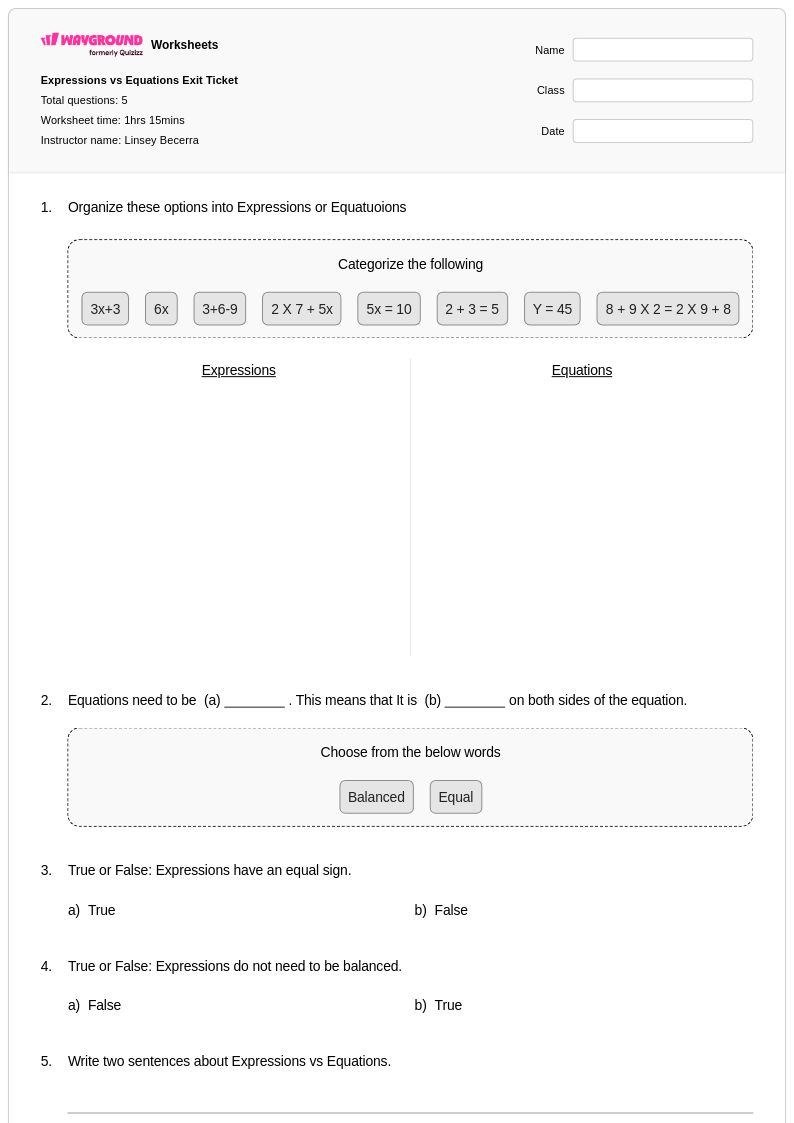
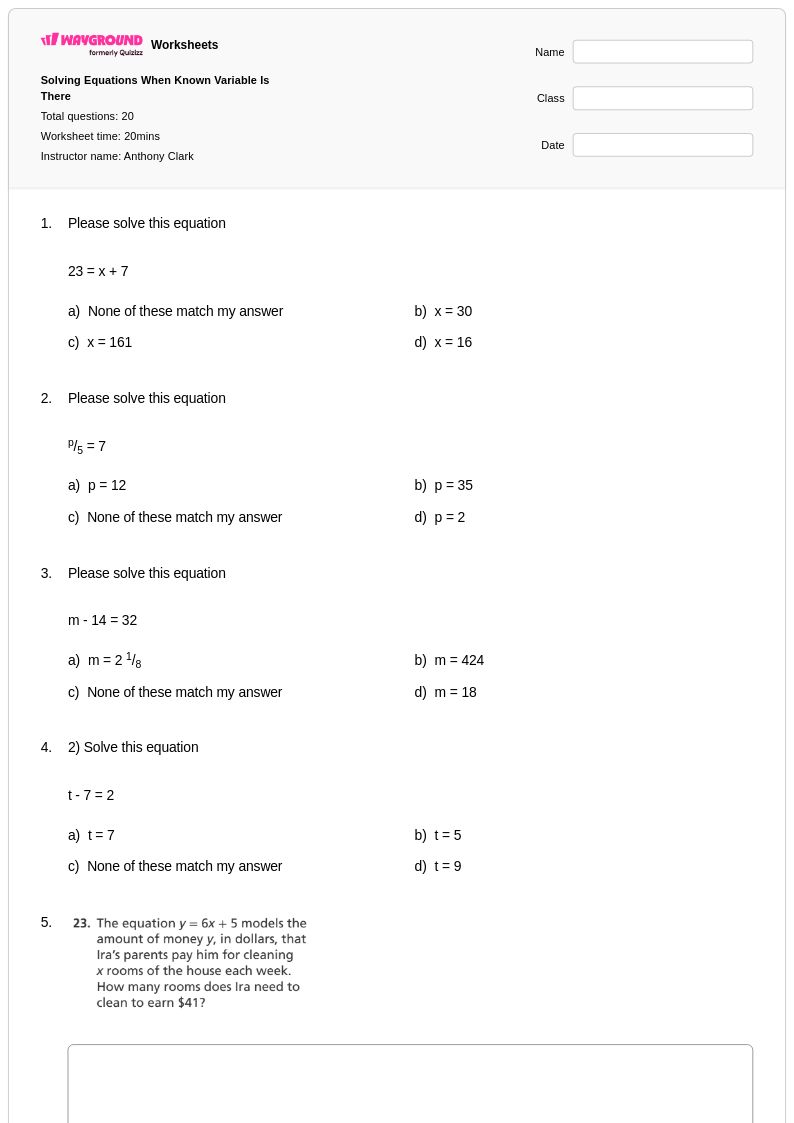
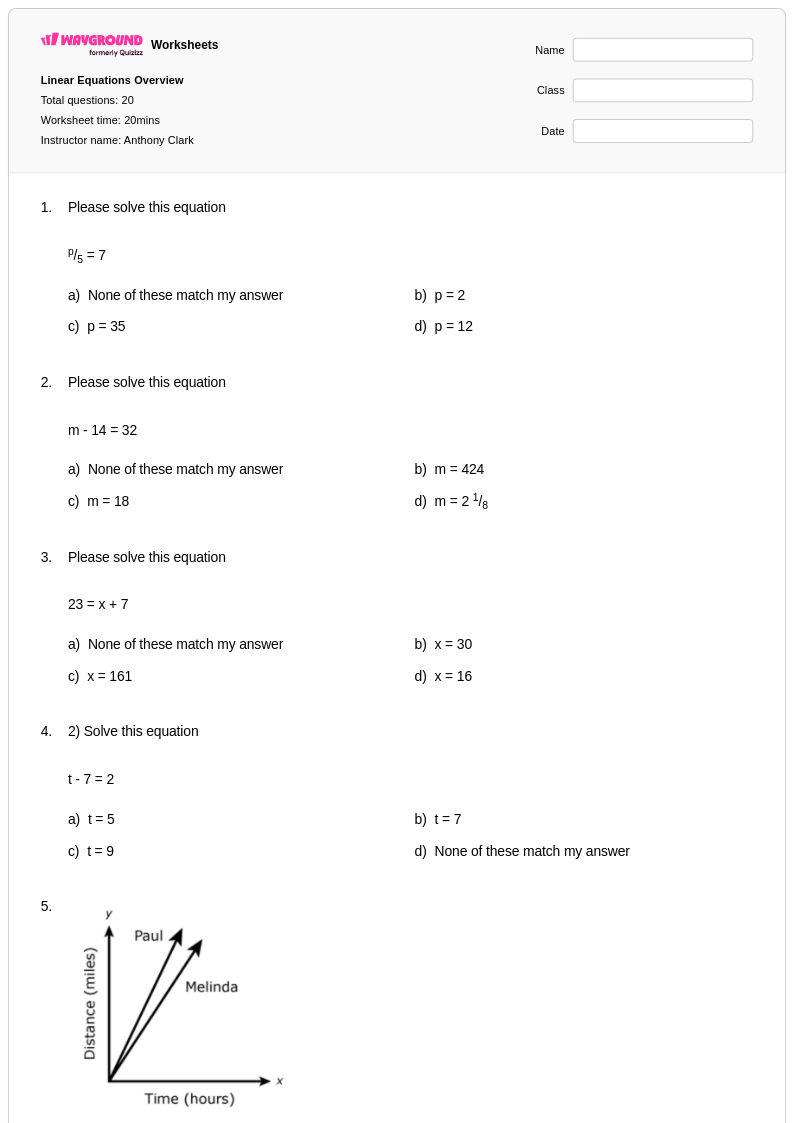
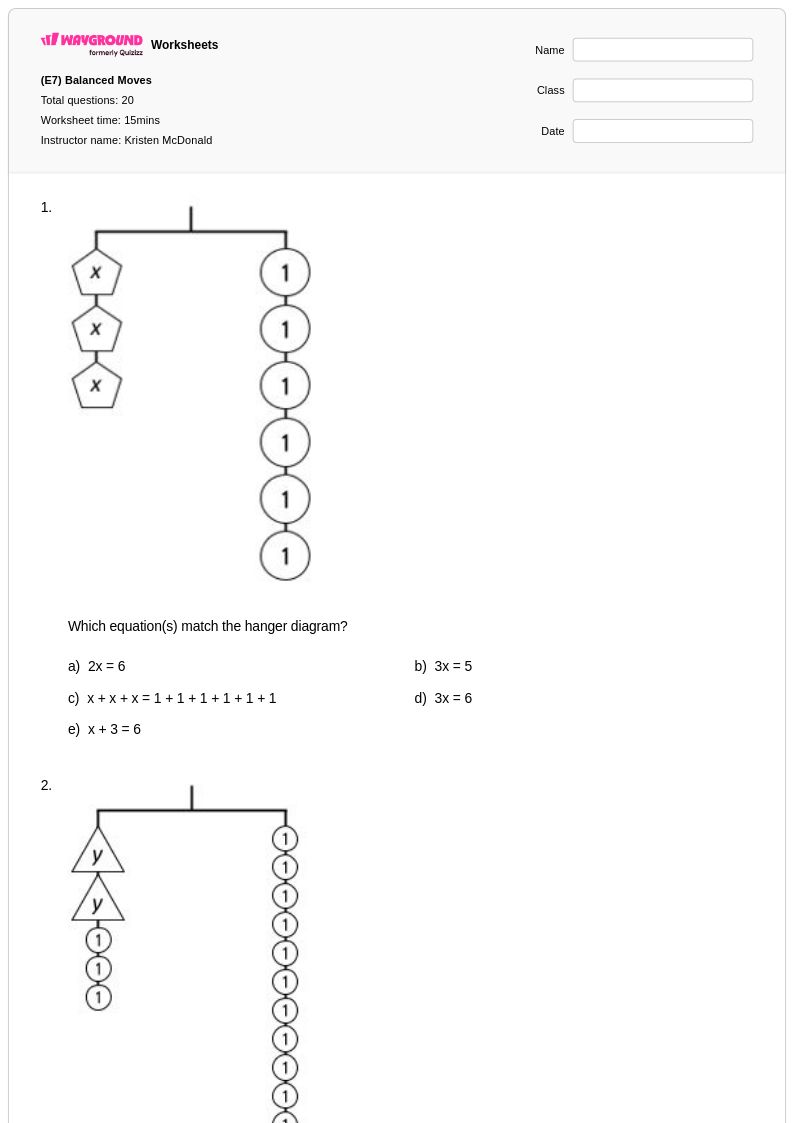
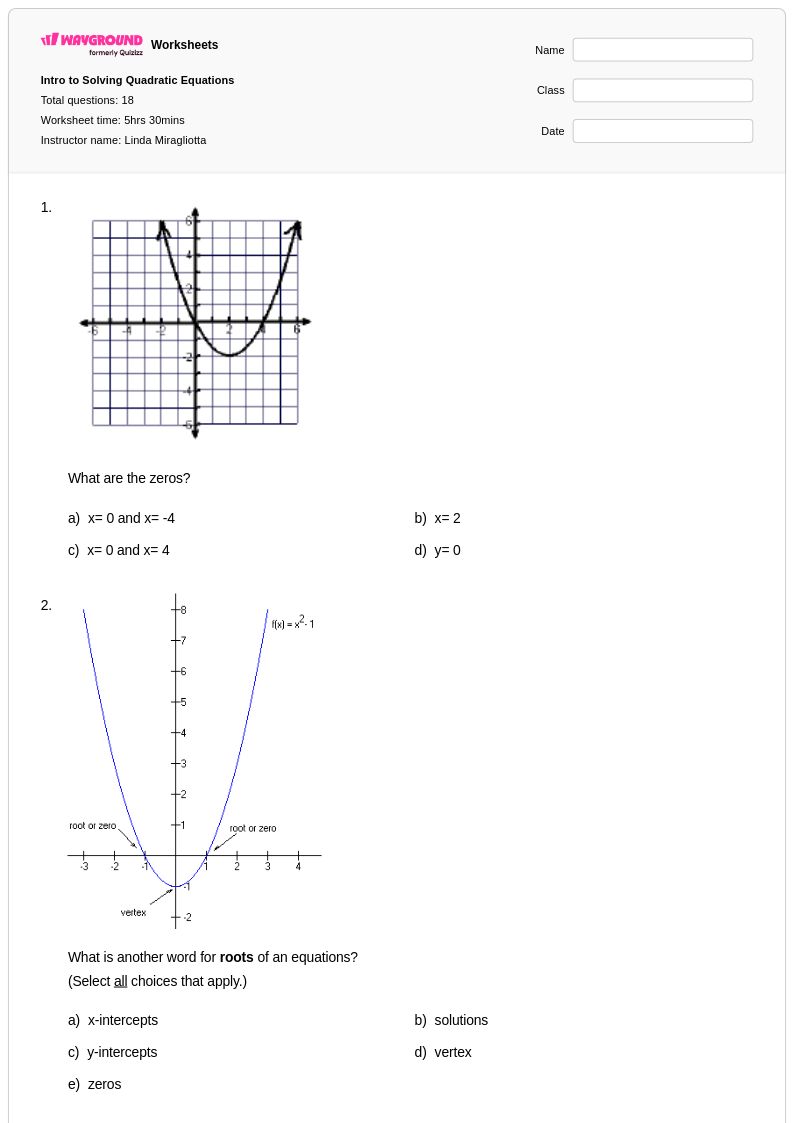
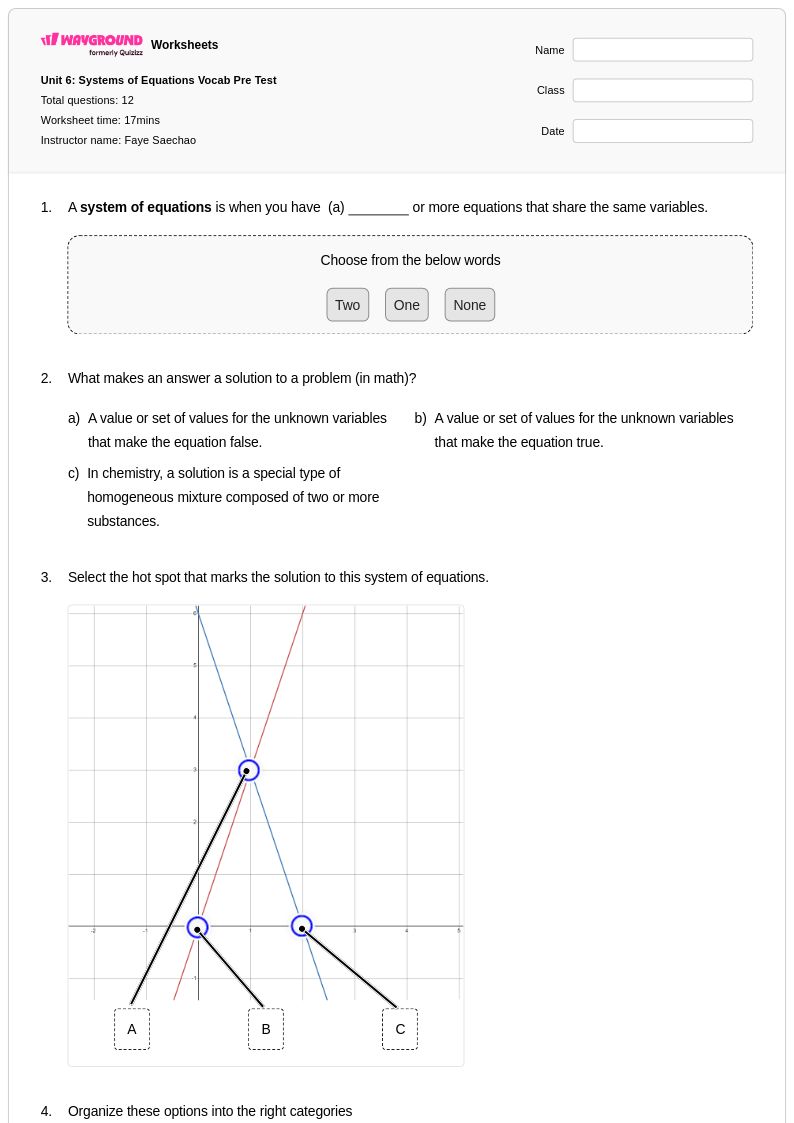
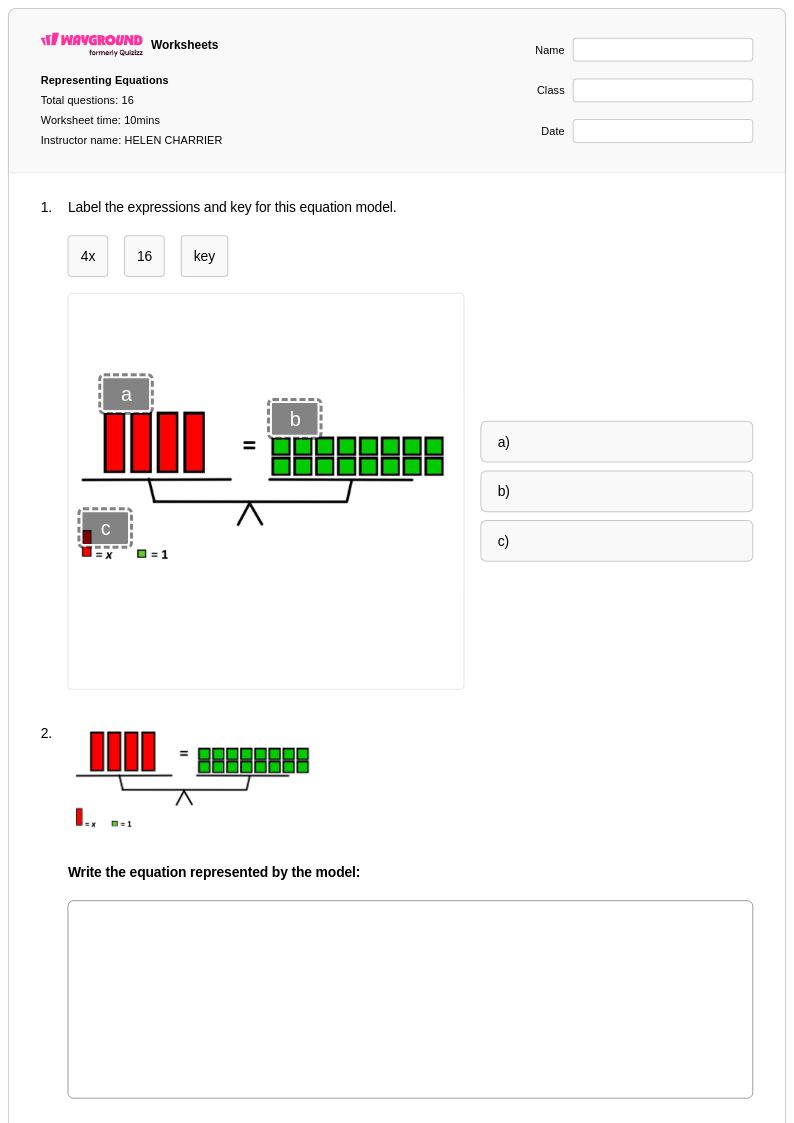
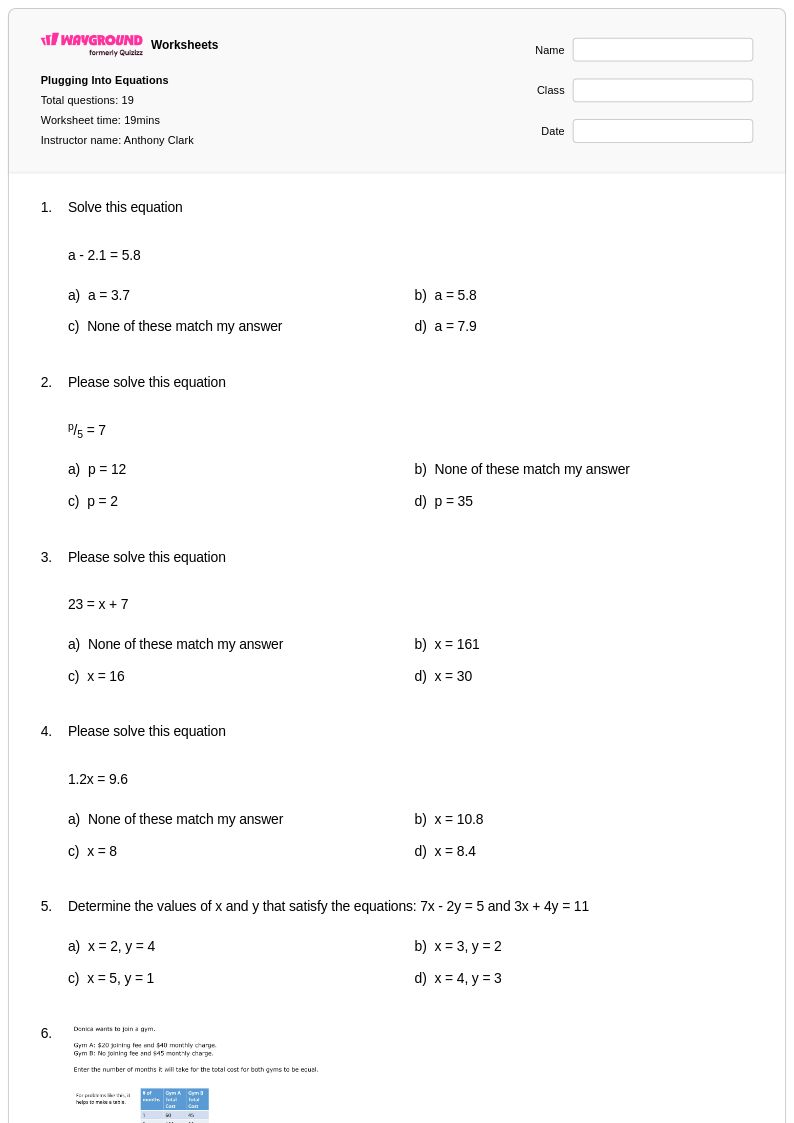
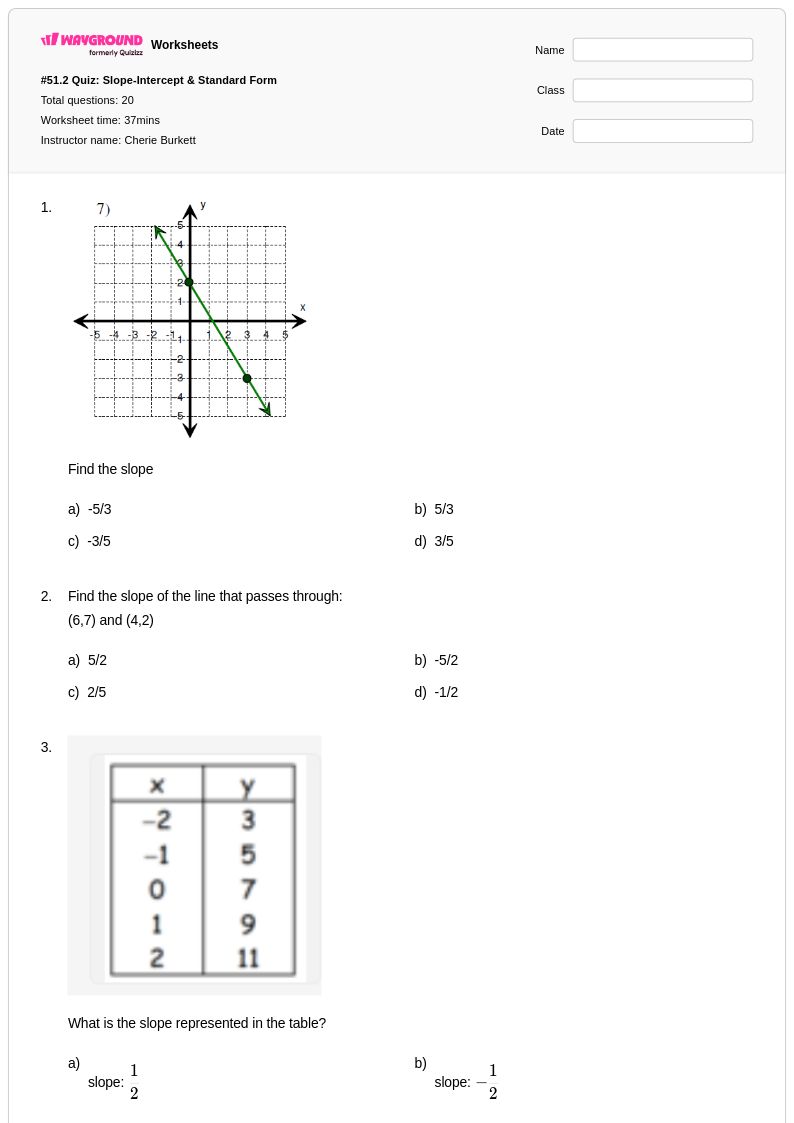
Master equation balancing with Wayground's comprehensive collection of free algebra worksheets, featuring step-by-step practice problems, printable PDFs, and detailed answer keys to strengthen fundamental algebraic problem-solving skills.
Equation balancing worksheets available through Wayground (formerly Quizizz) provide comprehensive practice opportunities for students to master this fundamental algebraic skill. These carefully designed resources focus on developing students' understanding of the equality principle and the systematic methods required to isolate variables while maintaining equation integrity. The worksheets strengthen critical mathematical reasoning abilities including inverse operations, order of operations application, and logical problem-solving sequences. Each collection includes detailed answer keys to support independent learning, while the free printable format ensures accessibility for diverse classroom environments. Students engage with progressively challenging practice problems that build confidence in manipulating equations through addition, subtraction, multiplication, and division properties of equality.
Wayground (formerly Quizizz) empowers educators with millions of teacher-created equation balancing resources that streamline lesson planning and enhance mathematical instruction. The platform's robust search and filtering capabilities allow teachers to locate materials aligned with specific curriculum standards while accommodating diverse learning needs through built-in differentiation tools. These customizable worksheet collections support both remediation for struggling learners and enrichment for advanced students, enabling targeted skill practice across varied proficiency levels. Available in both digital and printable pdf formats, the resources facilitate flexible implementation whether for homework assignments, classroom activities, or assessment preparation, ensuring teachers can effectively address individual student needs while maintaining instructional momentum.
FAQs
How do I teach equation balancing?
Start with the balance scale analogy: whatever you do to one side, you must do to the other. Introduce inverse operations one at a time — addition/subtraction first, then multiplication/division — before combining them. Once students can articulate why a step keeps the equation balanced (not just how to do it), they're ready to move to multi-step problems. Concrete manipulatives or visual models help early on, but the goal is for students to internalize the equality principle so they can work abstractly.
What exercises help students practice equation balancing?
The most effective practice moves from one-step equations to two-step, then to problems that require combining like terms or applying the distributive property. Error-analysis exercises — where students identify and fix a flawed solution — are especially useful because they force students to reason about each step rather than just execute a procedure. Wayground's equation balancing worksheets are structured with this kind of progression, so students build confidence before hitting harder problems.
What mistakes do students commonly make when balancing equations?
Three errors come up constantly. First, students apply an operation to only one side — they subtract 5 from the constant but forget to subtract it from the variable side too. Second, they confuse inverse operations, dividing when they should multiply. Third, when negative numbers appear, sign errors multiply quickly, especially if students are rushing. Watching for these in early practice and addressing them explicitly saves a lot of reteaching later.
How do I use Wayground's equation balancing worksheets in my class?
You can run them as a digital quiz hosted on Wayground — students work through problems on their devices and results come back to you automatically — or download the PDF and hand it out as a paper assignment. Every worksheet includes a complete answer key, so students can self-check or you can use it for quick grading. If you go the printable route, the Wayground for Teachers app lets you scan or capture student work to grade it without re-entering everything by hand.
Is equation balancing aligned to Common Core standards?
Yes. Common Core introduces one-step equations in Grade 6, where students learn to solve for a variable using properties of equality. Grade 7 extends this to multi-step equations with rational numbers, and Grade 8 moves into linear equations that may require distributing and combining like terms before isolating the variable. Equation balancing is the through-line across all three years — the same core principle, applied to increasingly complex expressions.
How can I differentiate equation balancing practice for mixed-ability classes?
For students who struggle with multi-step problems, Wayground's reduced answer choices accommodation lowers the cognitive load while they're still building procedural confidence. The Read Aloud feature helps students who have difficulty parsing written problem setups. On the worksheet side, you can generate alternate versions with larger font sizes or a dyslexia-friendly font without changing the math content — so every student is working on the same skill at the same level of rigor.
What grade level is equation balancing taught?
Equation balancing is typically introduced in Grade 6 with simple one-step equations and developed through Grades 7 and 8 as equations become more complex. By Grade 8, students are expected to handle multi-step linear equations involving distribution and combining like terms. Some students encounter basic balance concepts informally in Grade 5, but formal algebraic equation solving is a middle school focus.