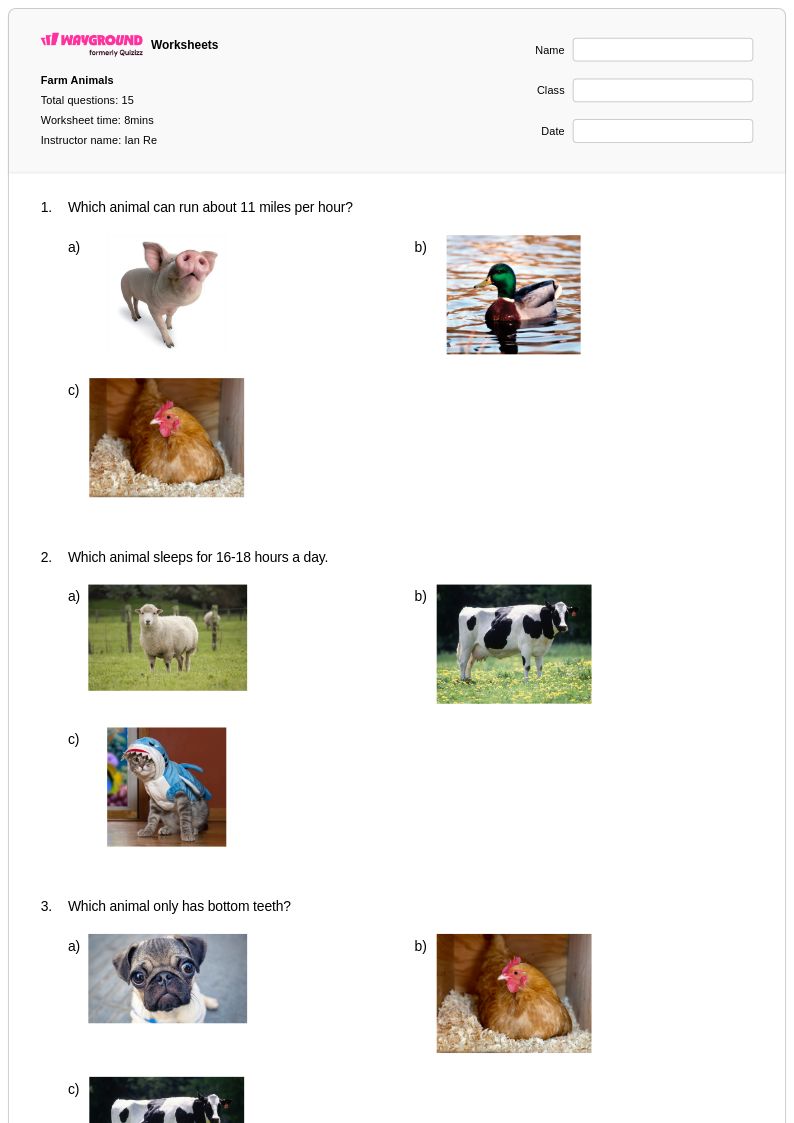
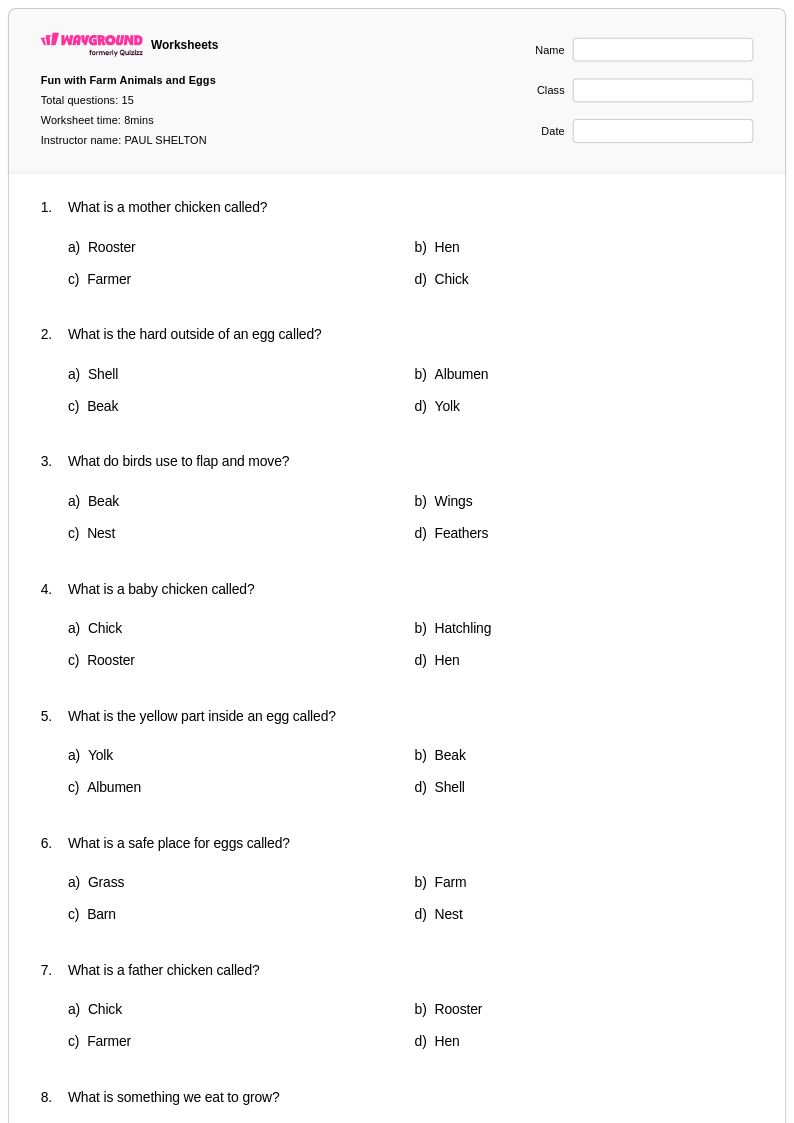
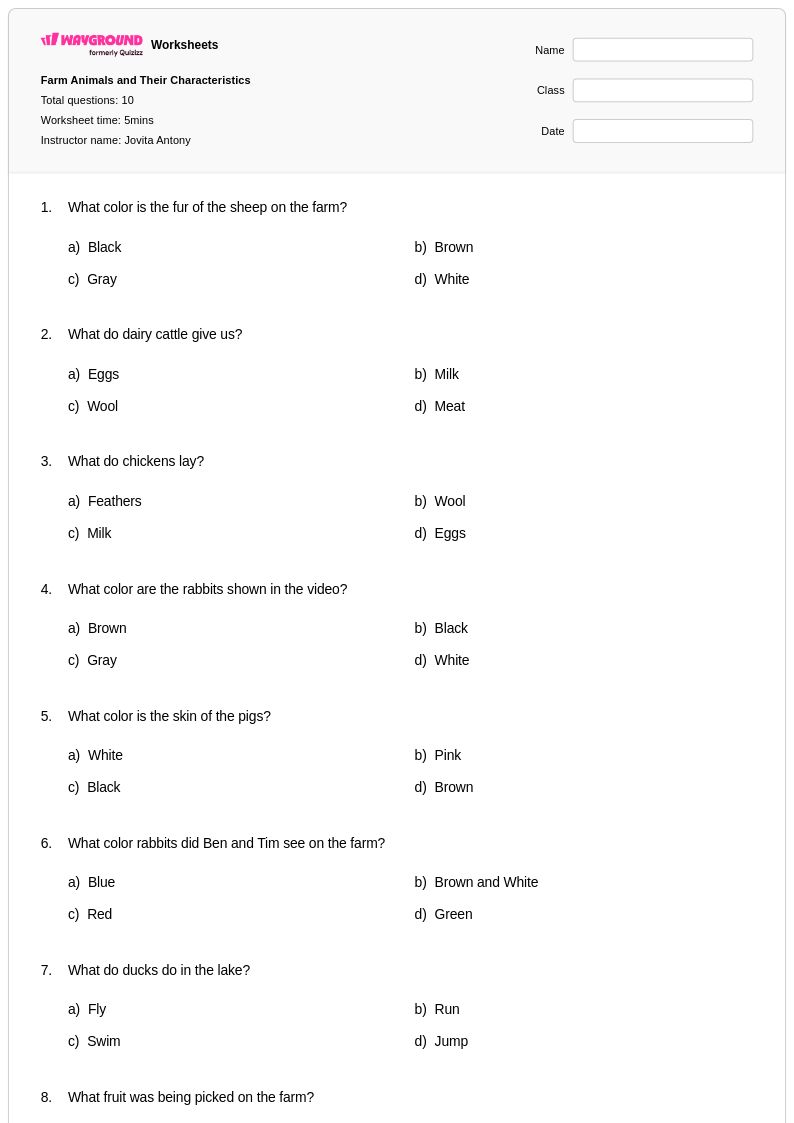
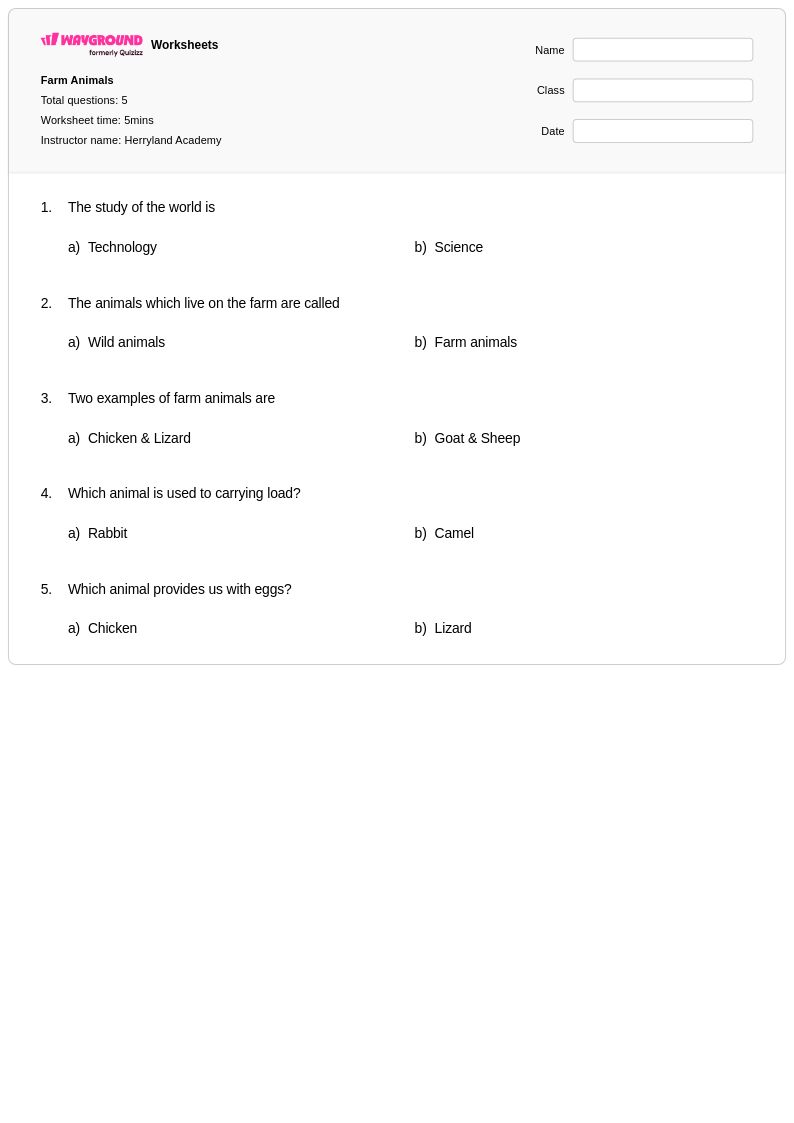
Free Printable Farm Animals Worksheets for Class 2
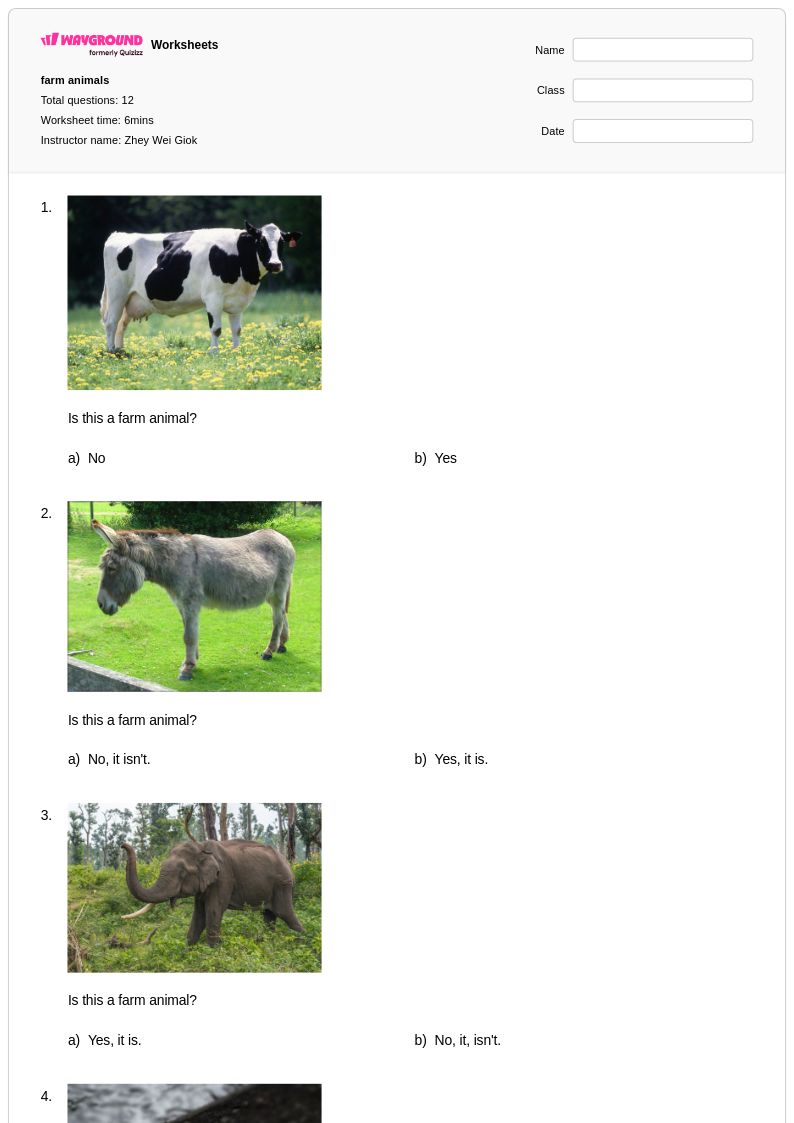
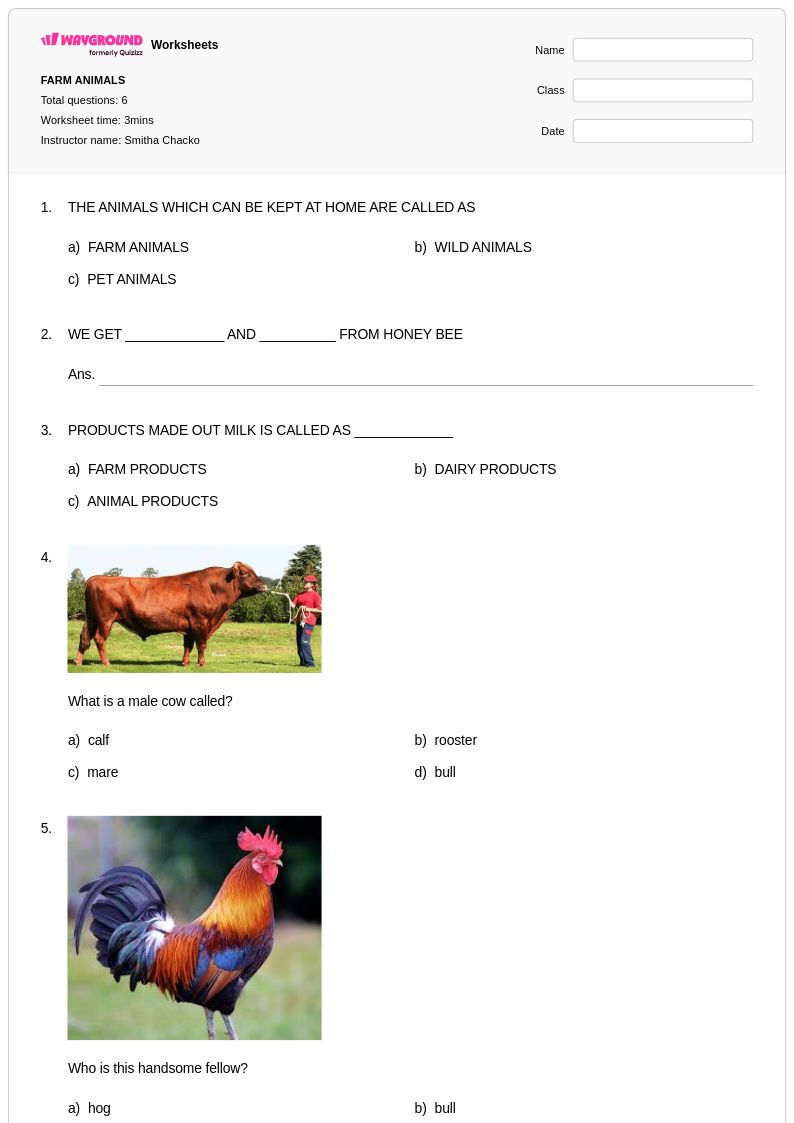
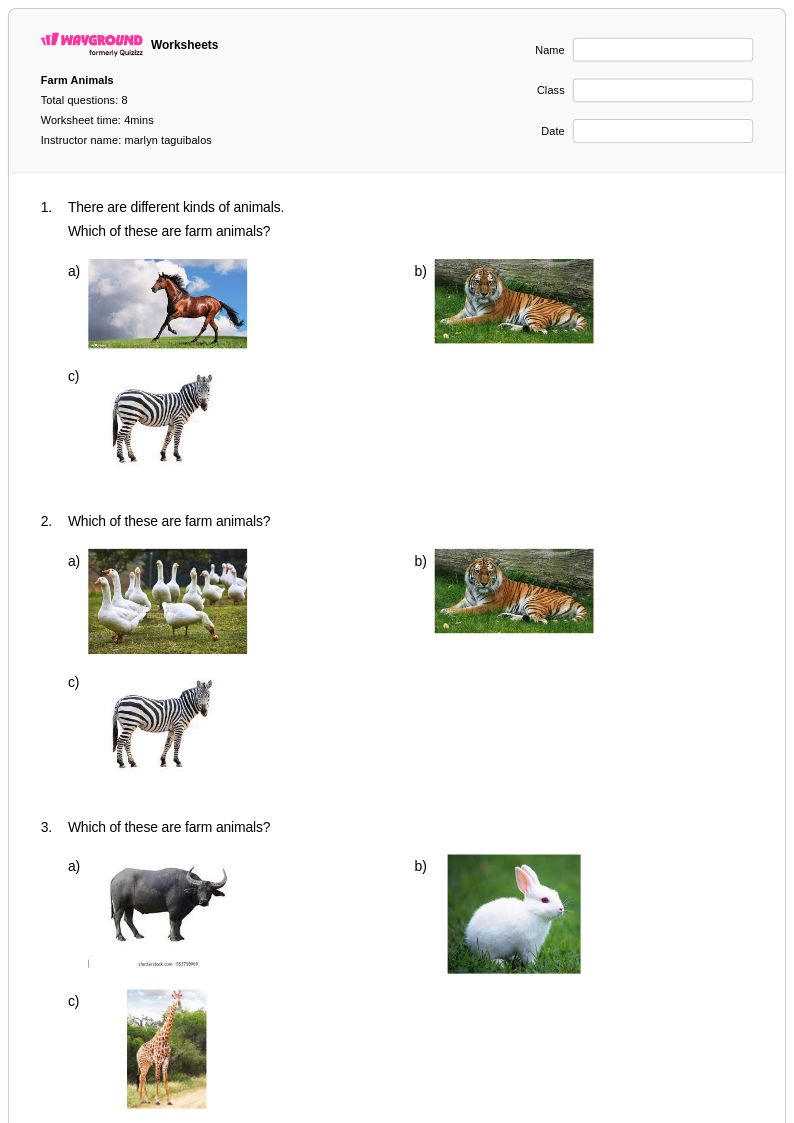
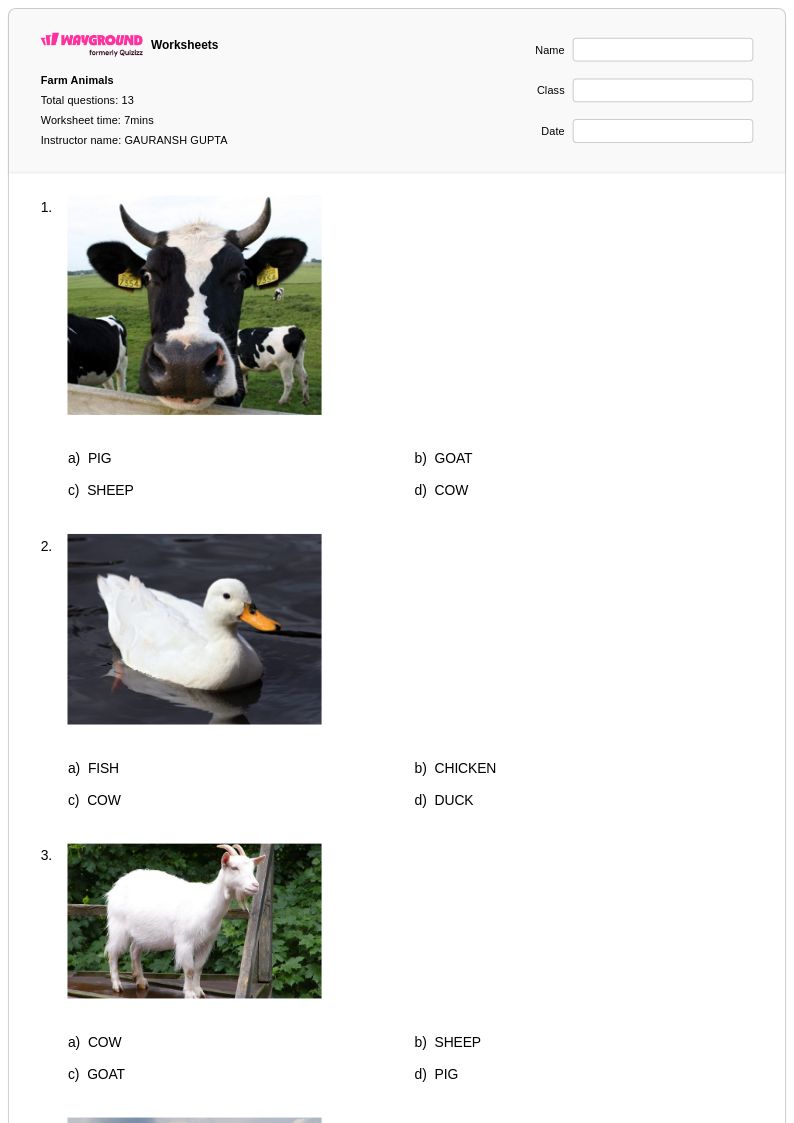
Explore Wayground's free Class 2 farm animals worksheets and printables that help young learners discover different farm animals, their sounds, habitats, and characteristics through engaging practice problems with answer keys.
Explore printable Farm Animals worksheets for Class 2
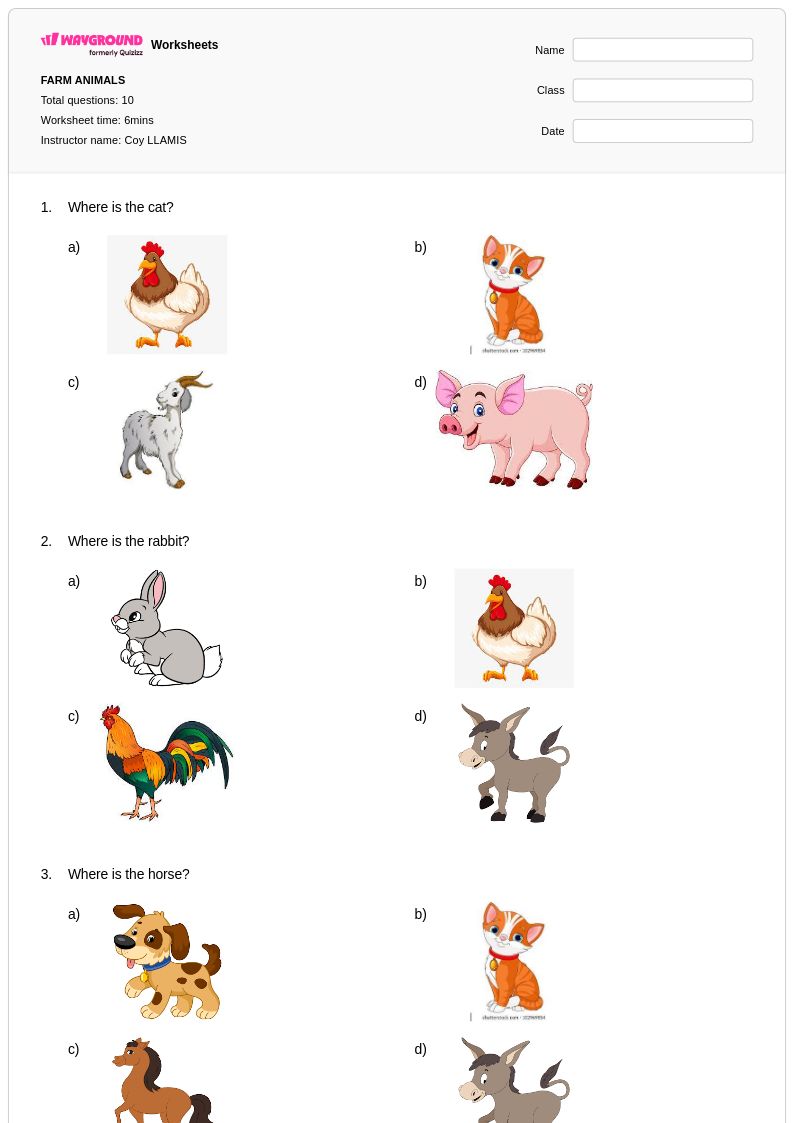
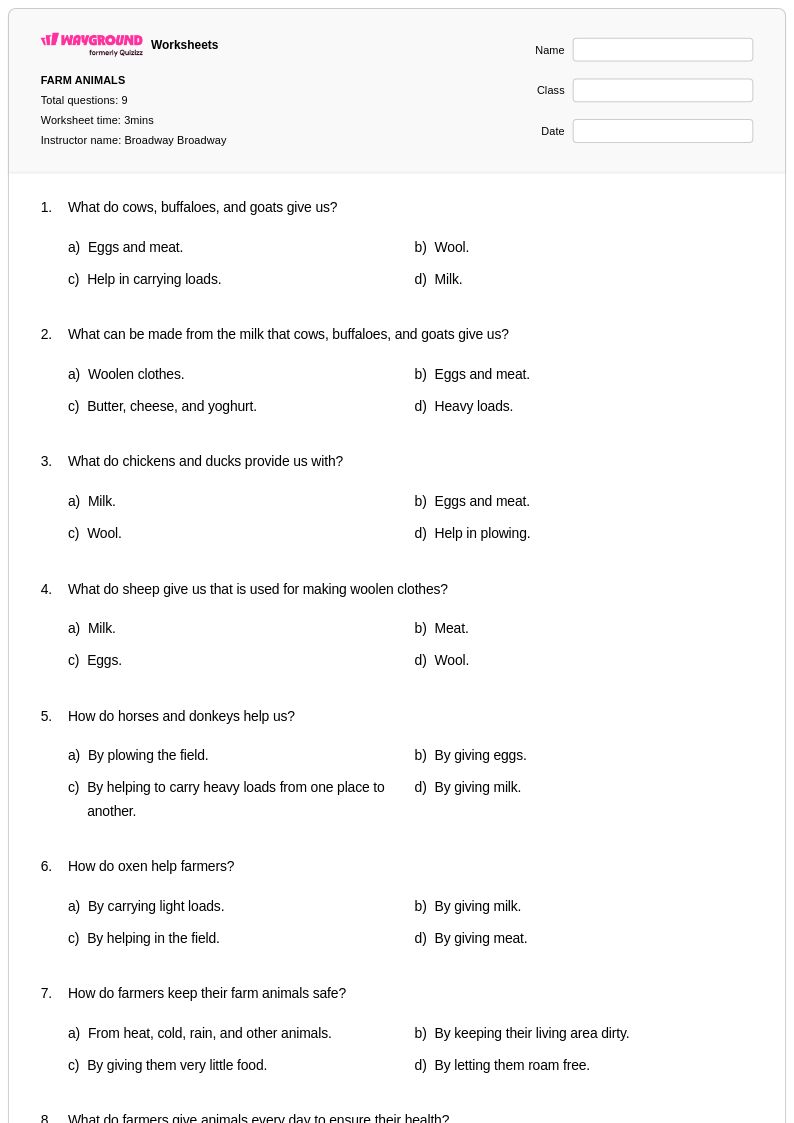
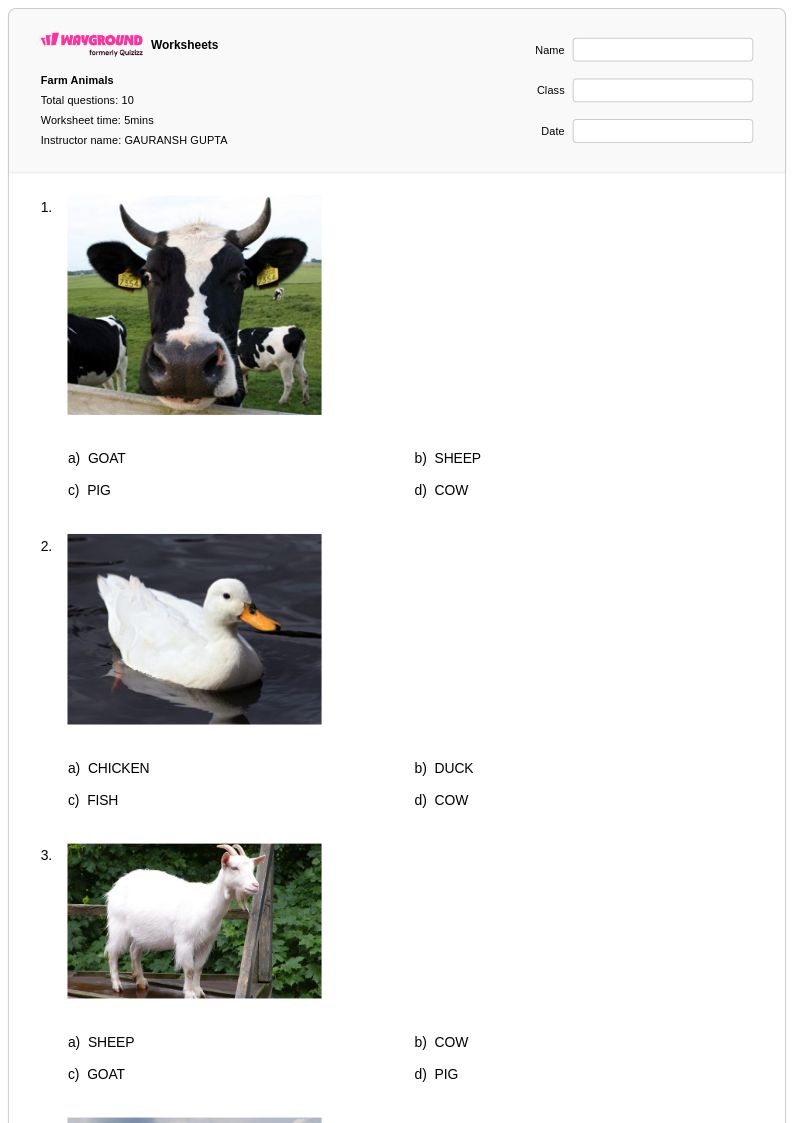
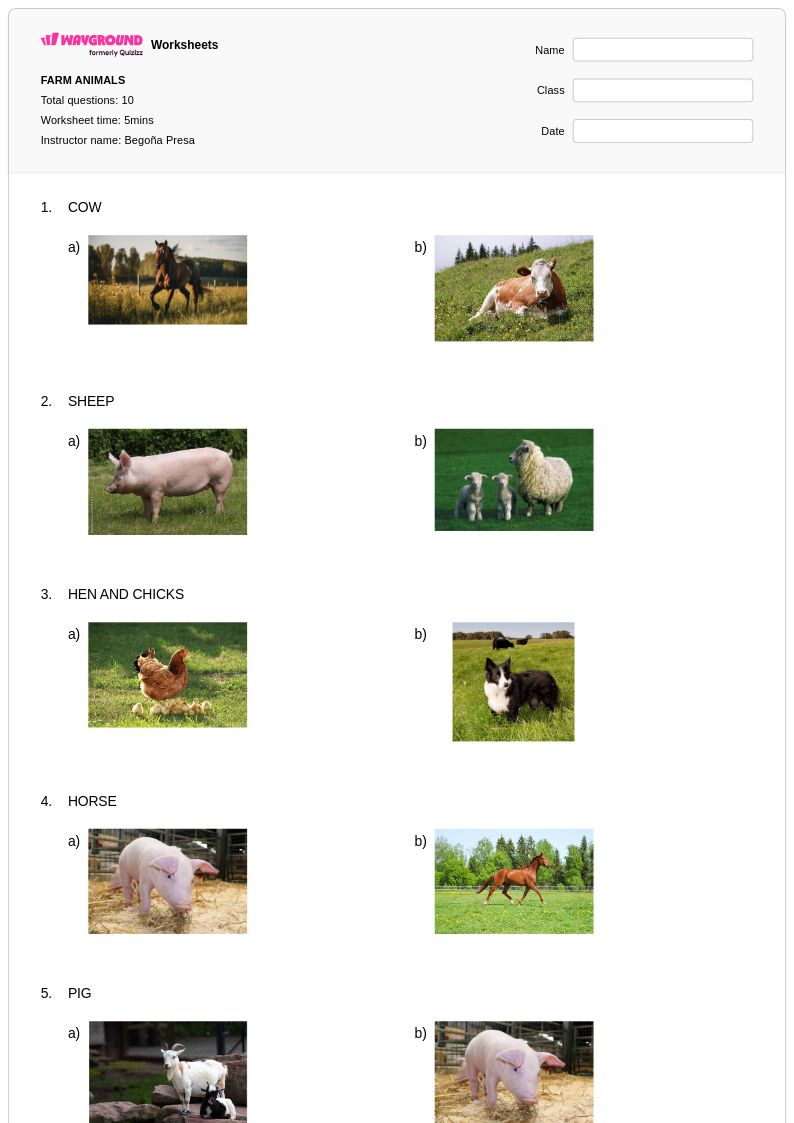
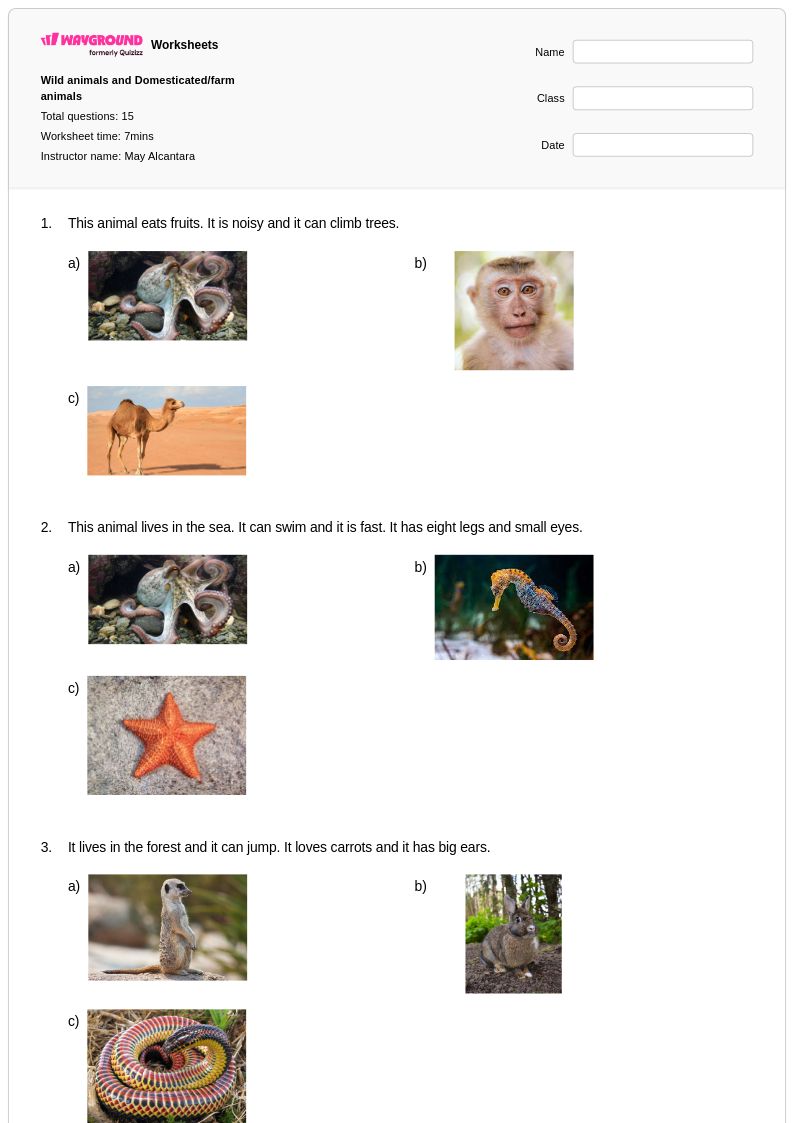
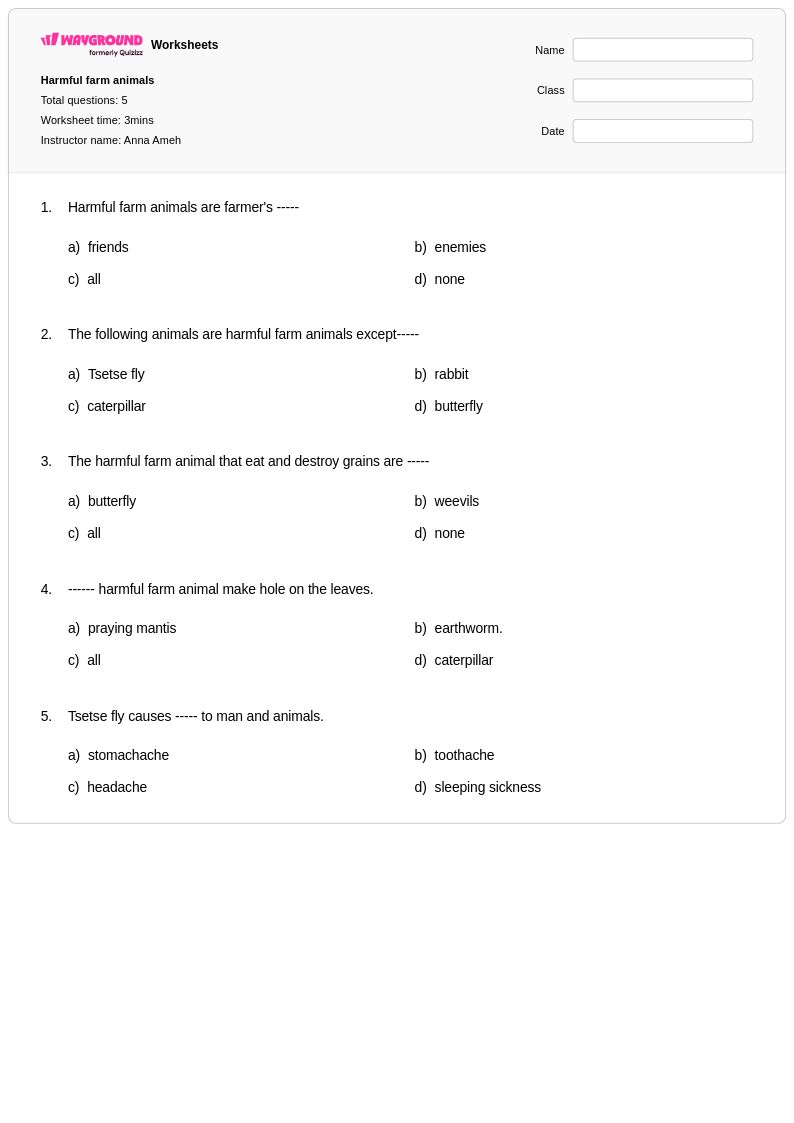
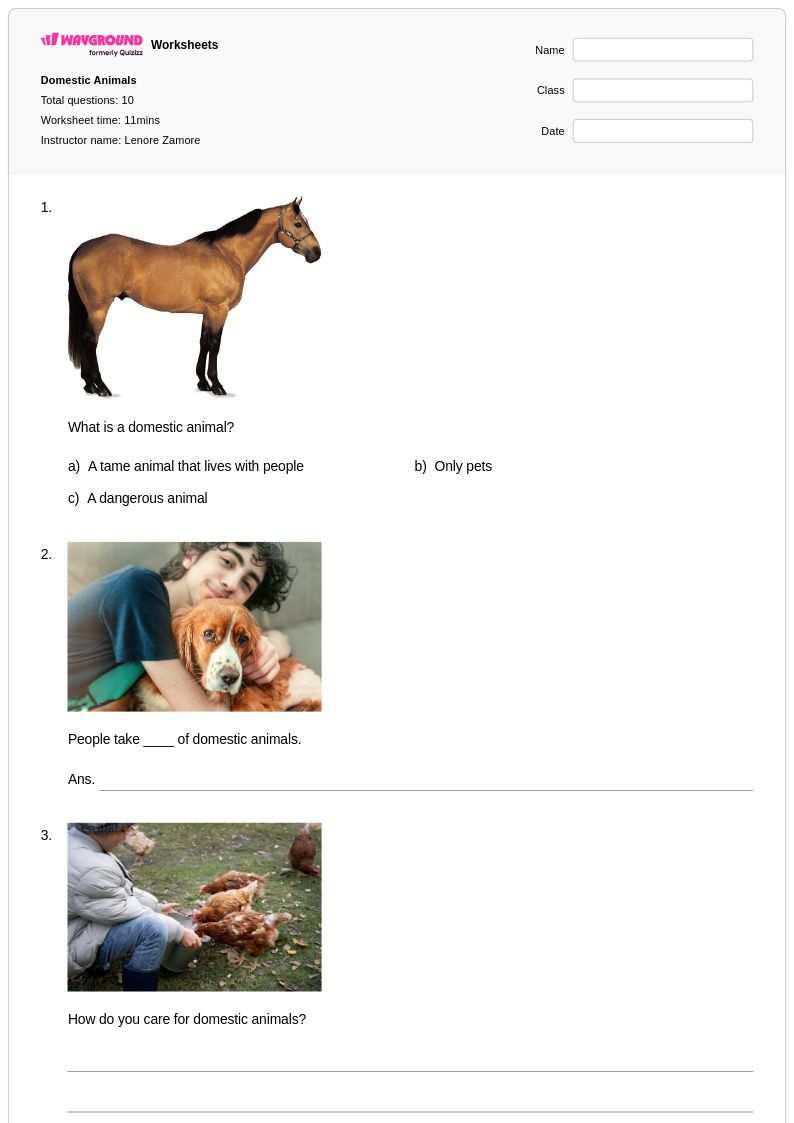
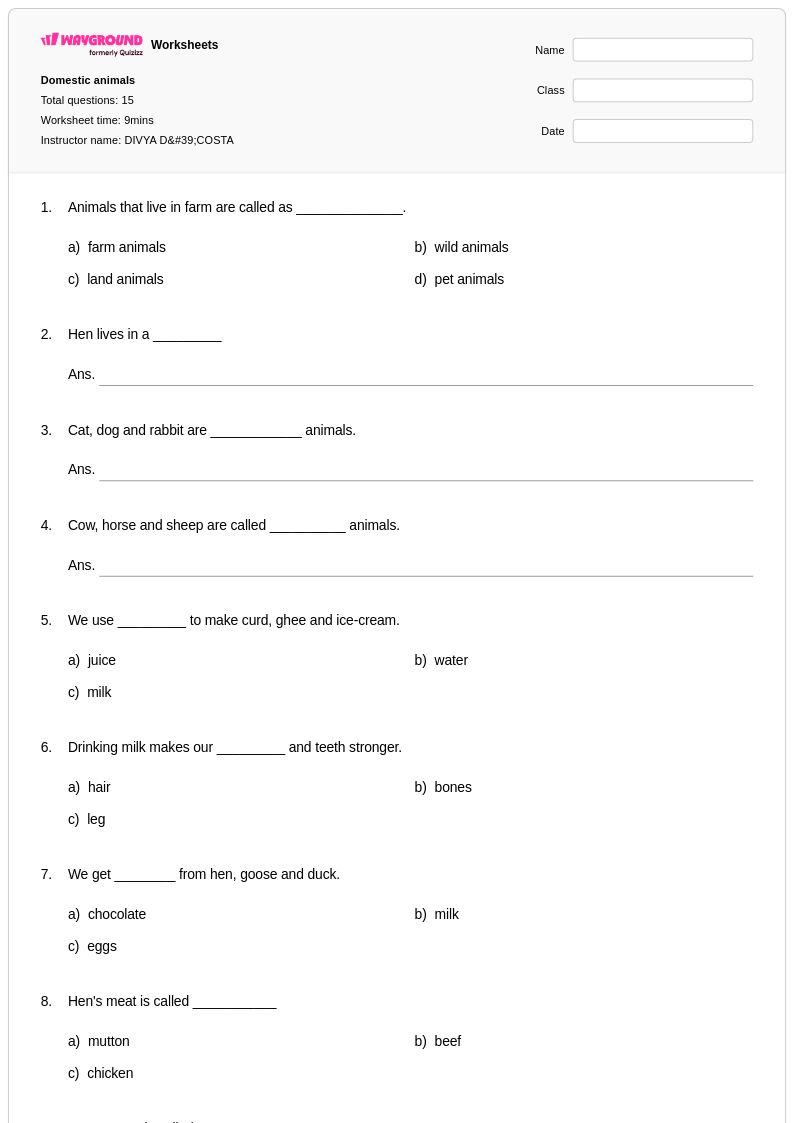
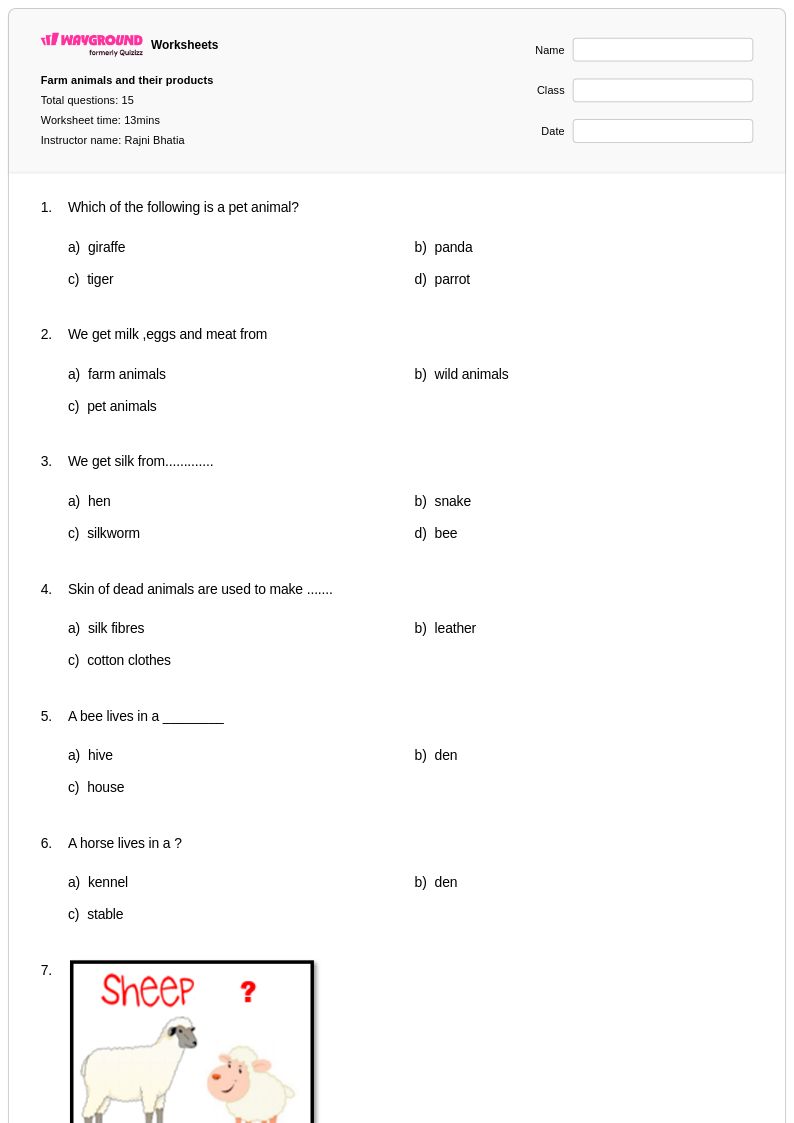
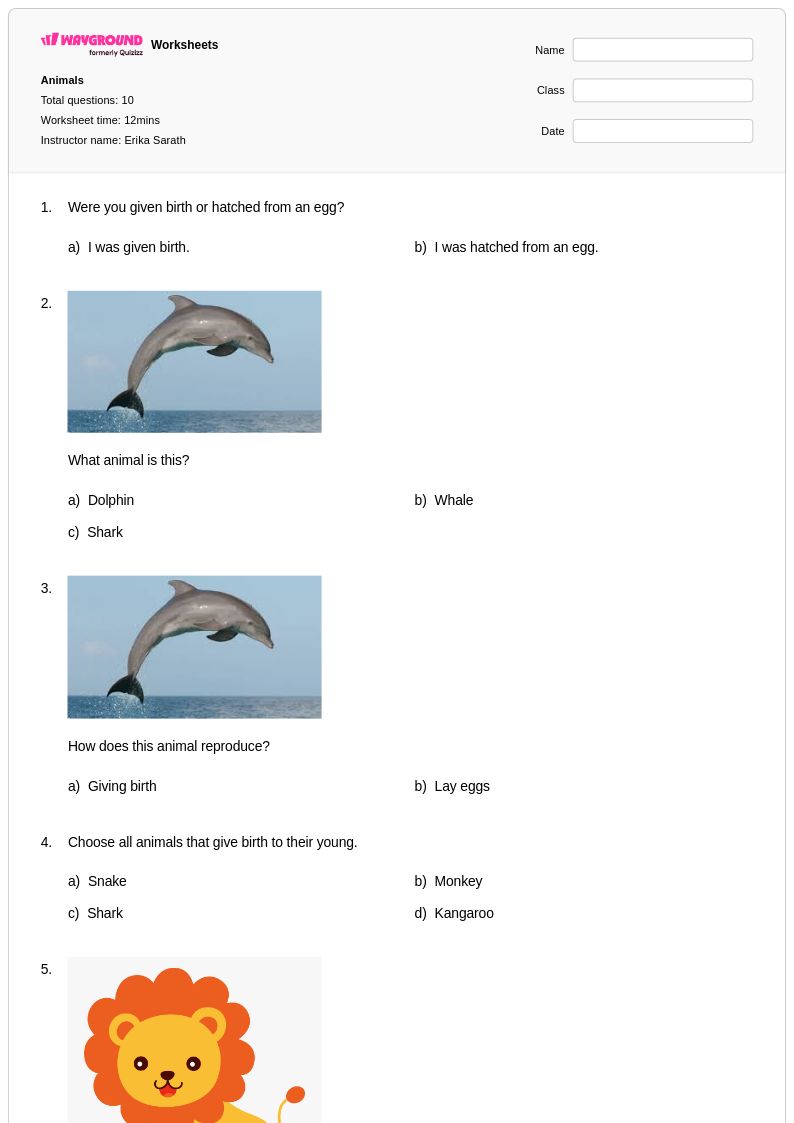
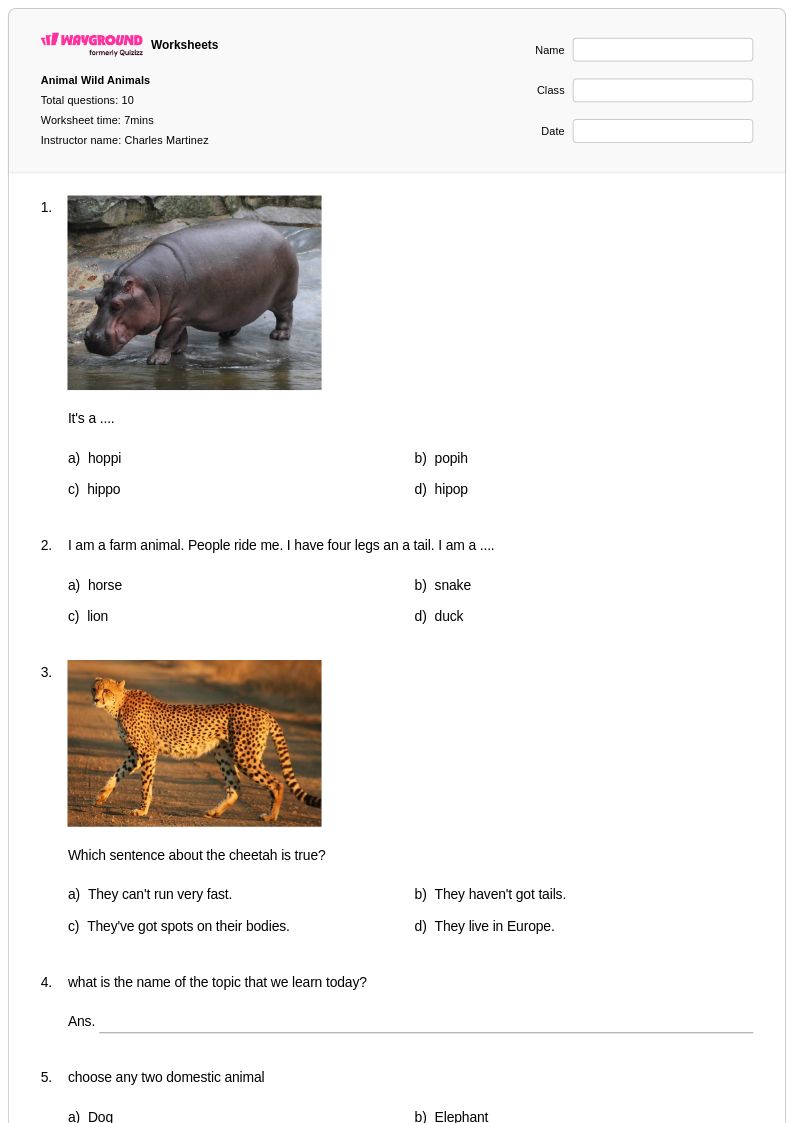
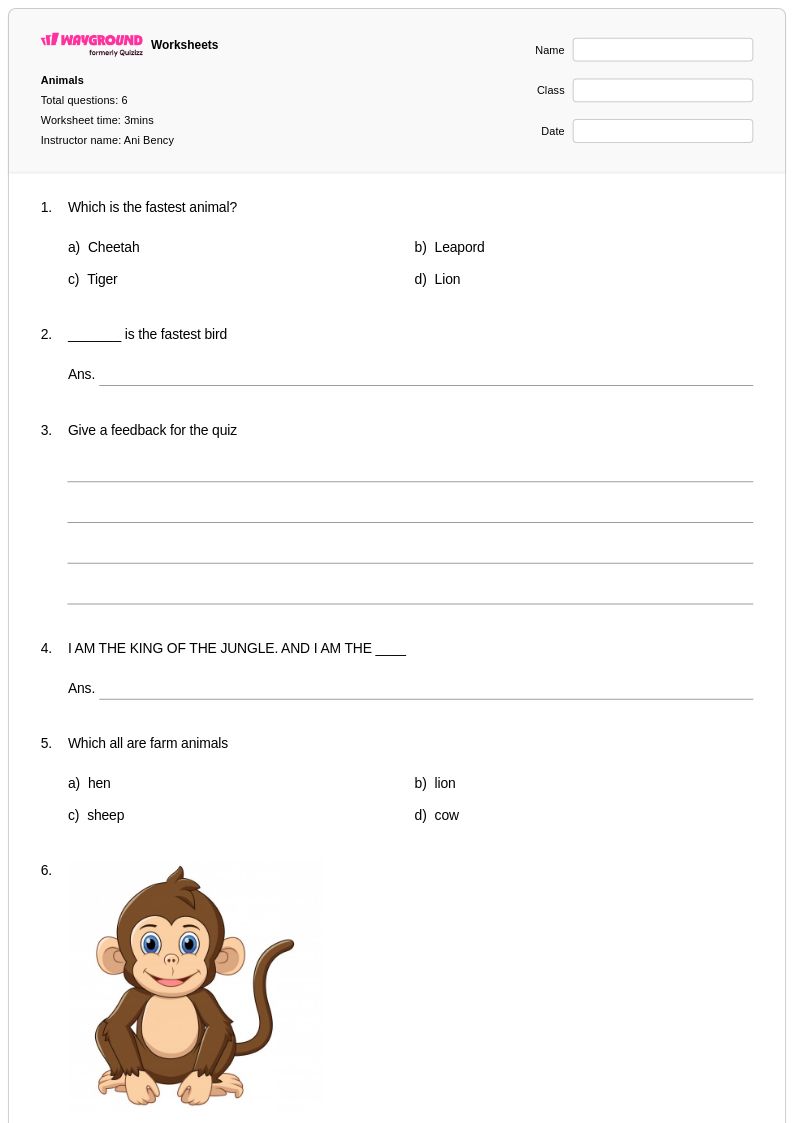
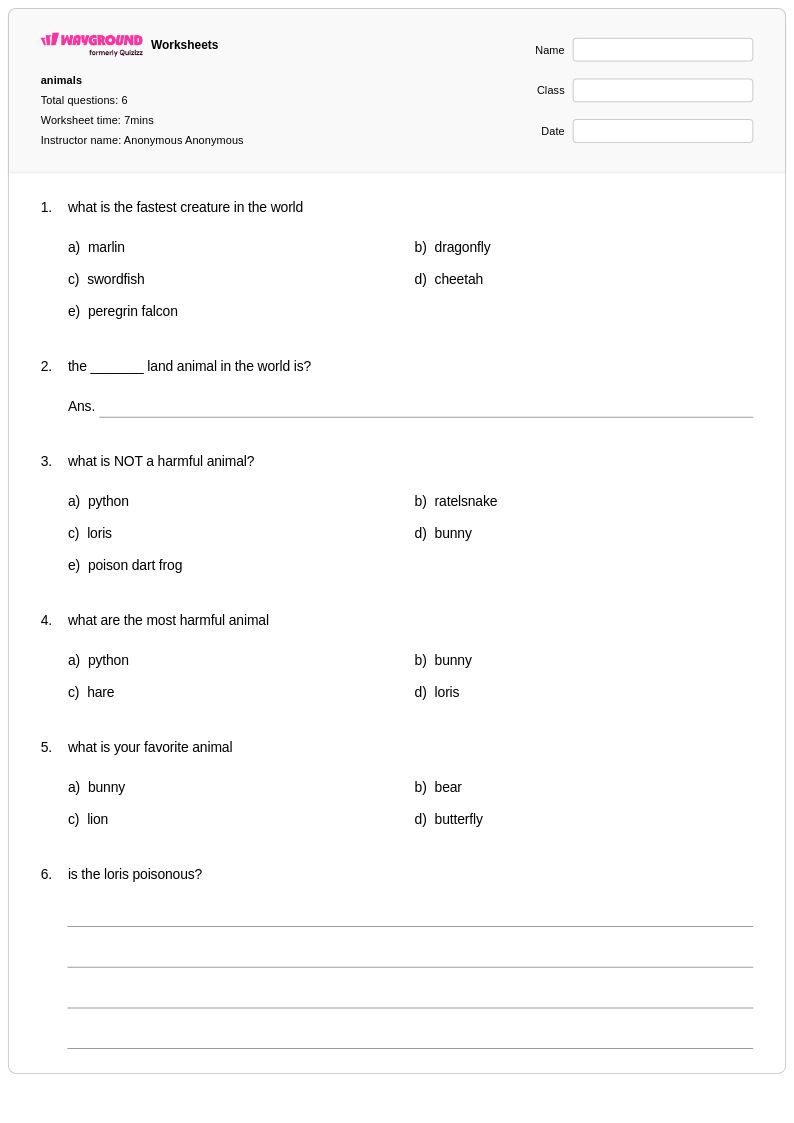
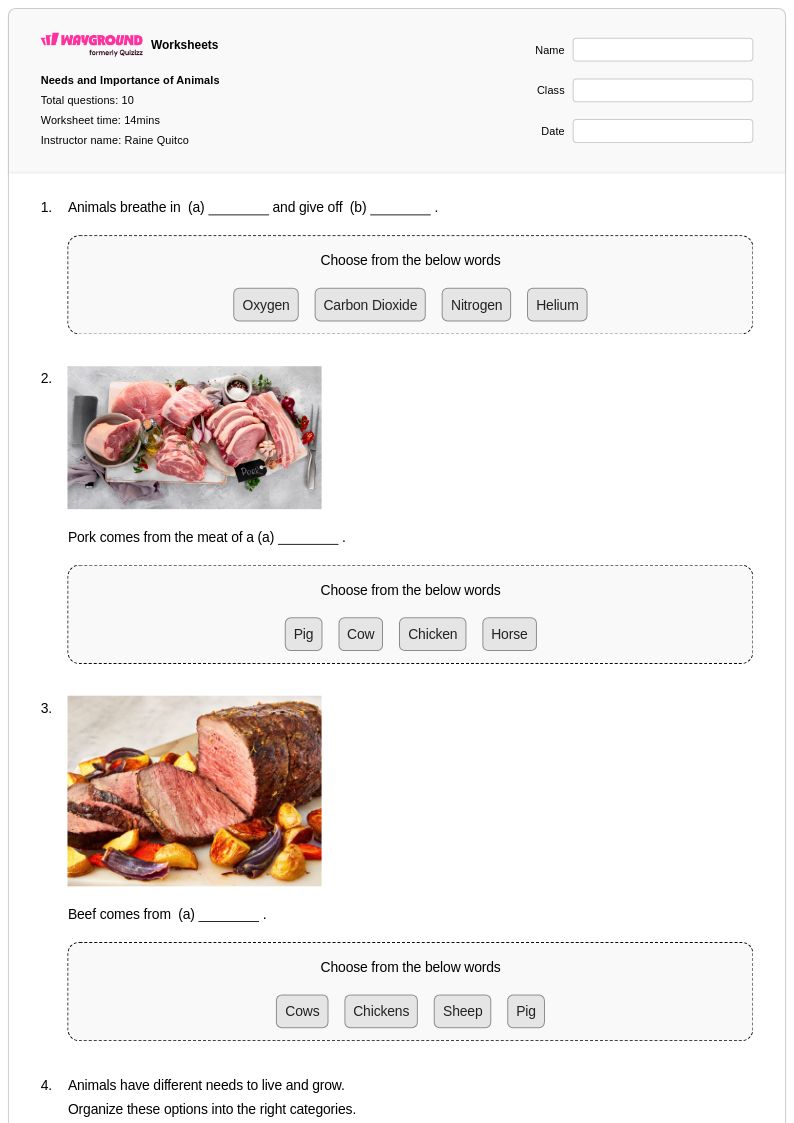
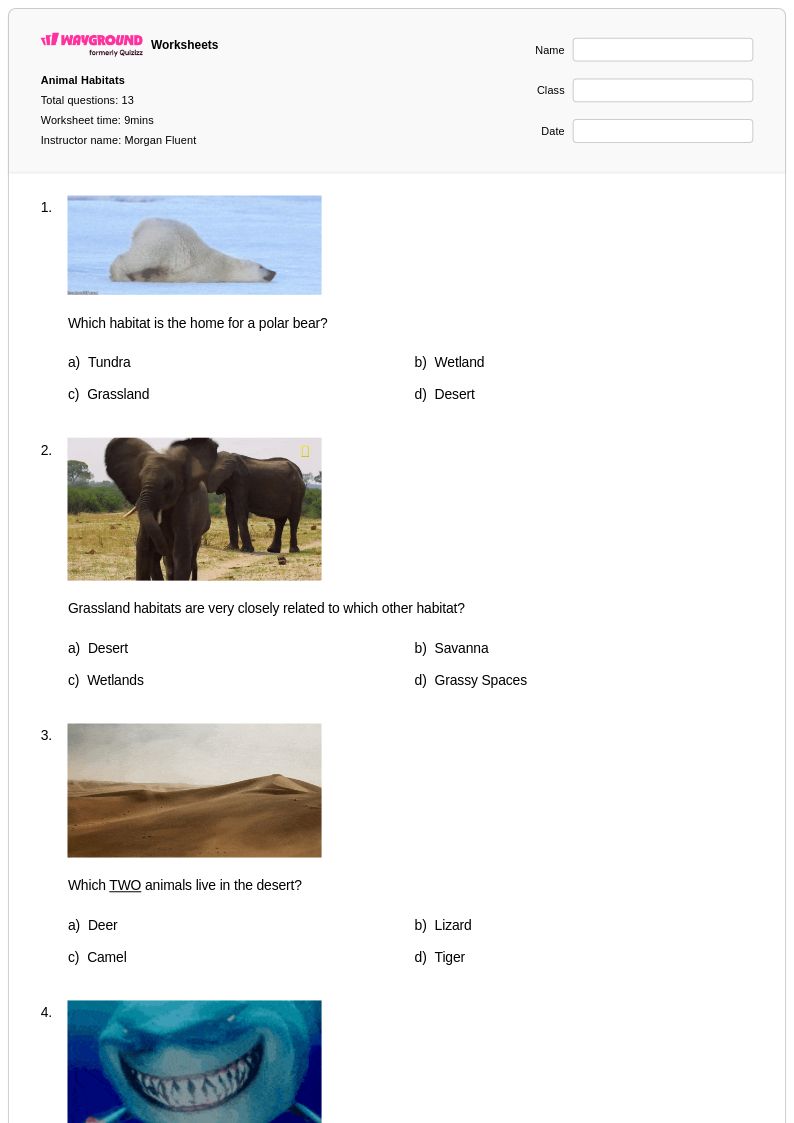
Farm animals worksheets for Class 2 students available through Wayground (formerly Quizizz) provide essential learning opportunities that connect young learners with the natural world while building foundational life science knowledge. These carefully designed printables help second graders identify different farm animals, understand their basic needs, recognize the products they provide, and explore their roles in agriculture and human society. Students develop critical observation skills as they complete practice problems that require them to classify animals by characteristics, match animals to their offspring, and distinguish between different animal habitats on the farm. Each worksheet collection includes comprehensive answer keys that support both independent learning and guided instruction, with free pdf downloads ensuring accessibility for diverse classroom environments.
Wayground (formerly Quizizz) empowers educators with millions of teacher-created farm animal resources specifically tailored for Class 2 life science instruction, featuring robust search and filtering capabilities that streamline lesson planning and curriculum alignment. The platform's extensive collection supports differentiated instruction through customizable worksheets that can be modified to meet varying student needs, from remediation activities for struggling learners to enrichment challenges for advanced students. Teachers benefit from flexible formatting options that include both printable pdf versions for traditional classroom use and digital formats for technology-integrated learning environments. These comprehensive tools enable educators to efficiently design targeted skill practice sessions, assess student understanding of animal characteristics and behaviors, and seamlessly integrate farm animal studies into broader life science curricula that meet educational standards.
FAQs
How do I teach farm animals to early elementary students?
Start by connecting farm animals to students' prior knowledge through picture-based identification activities before introducing animal names, sounds, and roles. Build comprehension progressively by covering what each animal produces (e.g., cows produce milk, hens produce eggs) and how those products reach everyday life. Hands-on sorting activities by animal type, habitat, and product help reinforce classification skills and make agricultural concepts concrete for young learners.
What topics should farm animals worksheets cover?
Effective farm animals worksheets should cover animal identification across major livestock categories including cattle, sheep, pigs, and poultry, as well as the products each animal provides. Students should also practice matching animals to their habitats, understanding basic animal needs and behaviors, and recognizing how farm animals connect to food production and human society. Including life cycle content strengthens life science skills alongside agricultural concepts.
What mistakes do students commonly make when learning about farm animals?
Students frequently confuse which products come from which animals, particularly mixing up sources of wool, leather, and dairy. They also tend to overgeneralize, assuming all large four-legged animals on a farm serve the same purpose. A common misconception is that farm animals are limited to food production, when many also serve roles in fiber, labor, and companionship within agricultural systems.
How can I differentiate farm animals instruction for students at different levels?
For students who need support, simplify tasks by reducing the number of animal categories and focusing on the most familiar species before expanding. Advanced learners can be challenged with breed-specific identification, animal husbandry principles, or comparing agricultural practices across regions. On Wayground, teachers can apply accommodations such as read aloud for struggling readers, reduced answer choices to lower cognitive load, and extended time, all configurable per individual student without affecting the rest of the class.
How do I use Wayground's farm animals worksheets in my classroom?
Wayground's farm animals worksheets are available as printable PDFs for traditional classroom use and in digital formats for technology-integrated or remote learning environments. Teachers can also host the worksheets as a live quiz directly on Wayground, making them suitable for whole-class review or individual assessment. Each worksheet includes a complete answer key, so they work equally well for guided instruction, independent practice, or homework assignments.
How do farm animals worksheets support life science standards?
Farm animals worksheets directly reinforce core life science skills including animal classification, habitat identification, life cycle stages, and the relationship between organisms and their environment. Because farm animals bridge biology and real-world agricultural systems, they provide meaningful context for abstract concepts like animal needs, adaptation, and interdependence. This makes them a strong fit for science units that require students to connect living systems to human society and food production.