
13 Q
2nd
13 Q
2nd
8 Q
2nd
15 Q
2nd
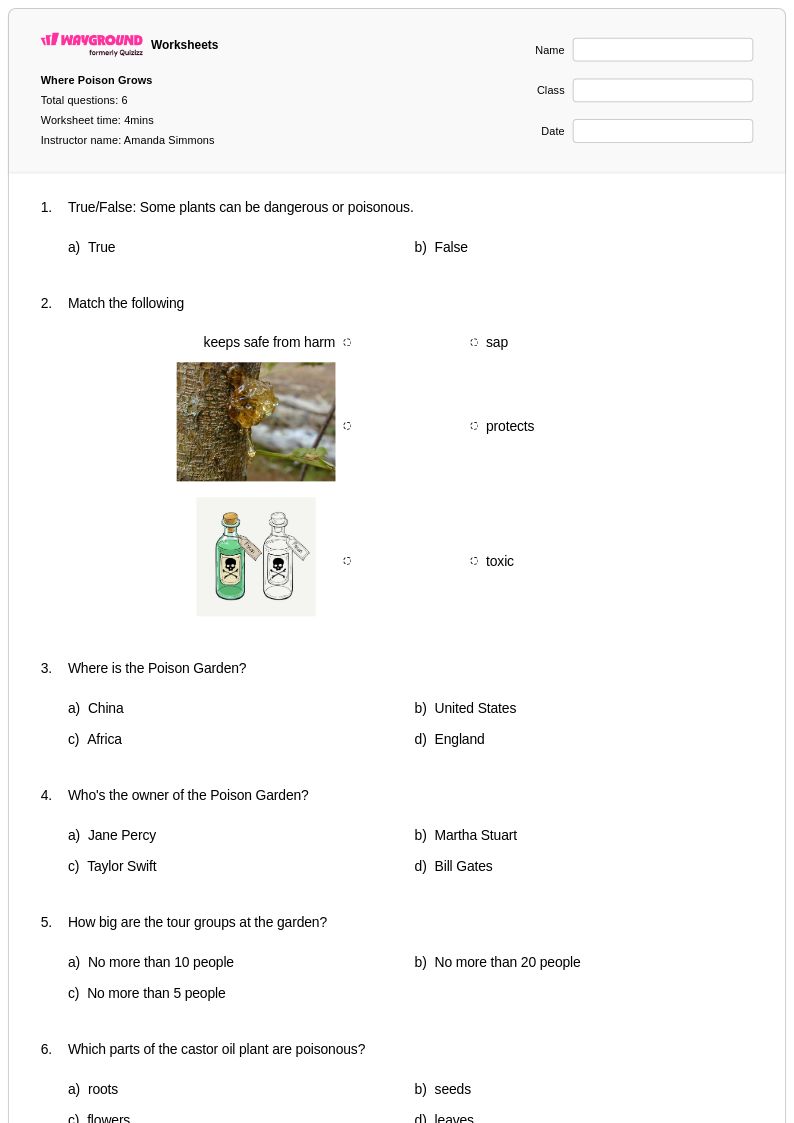
6 Q
2nd
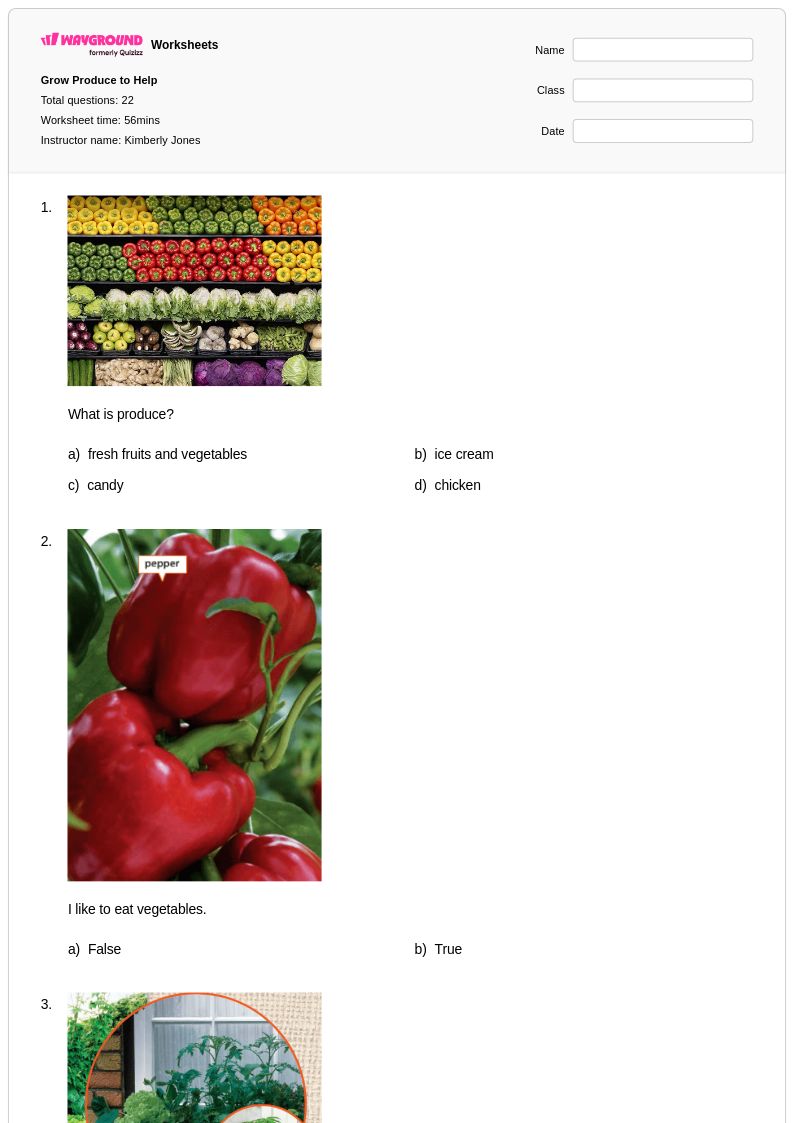
22 Q
2nd
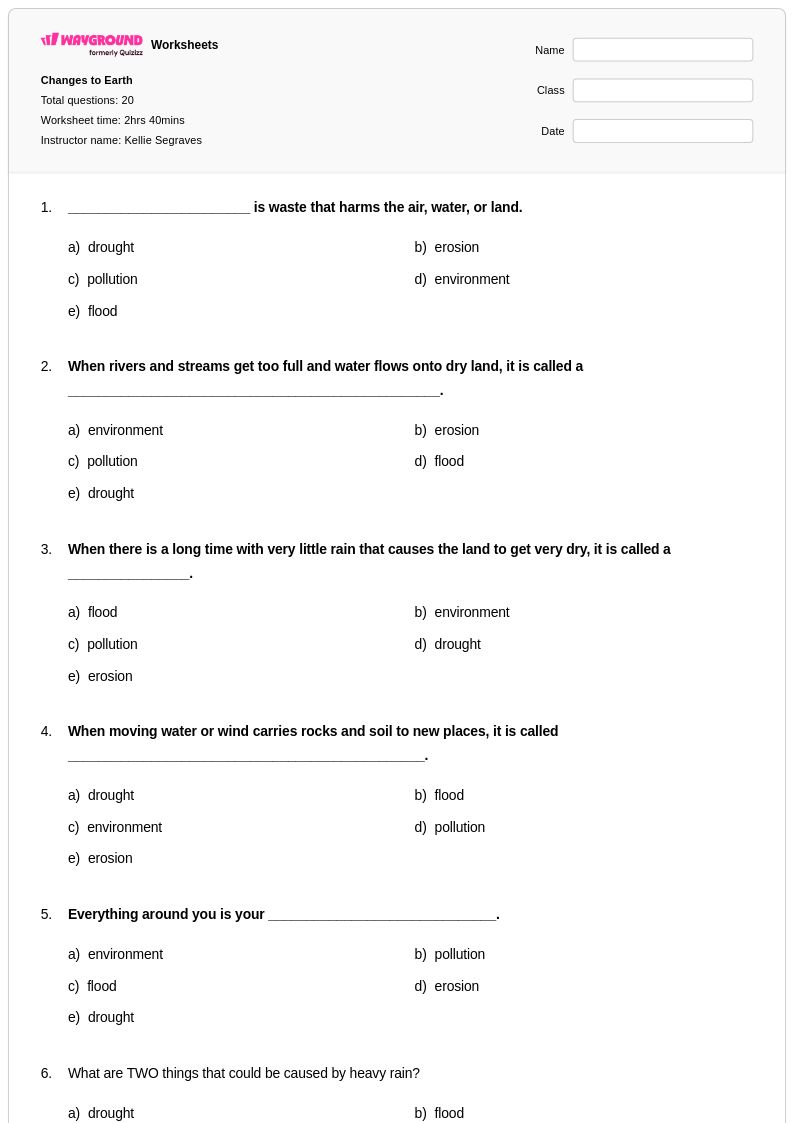
20 Q
2nd
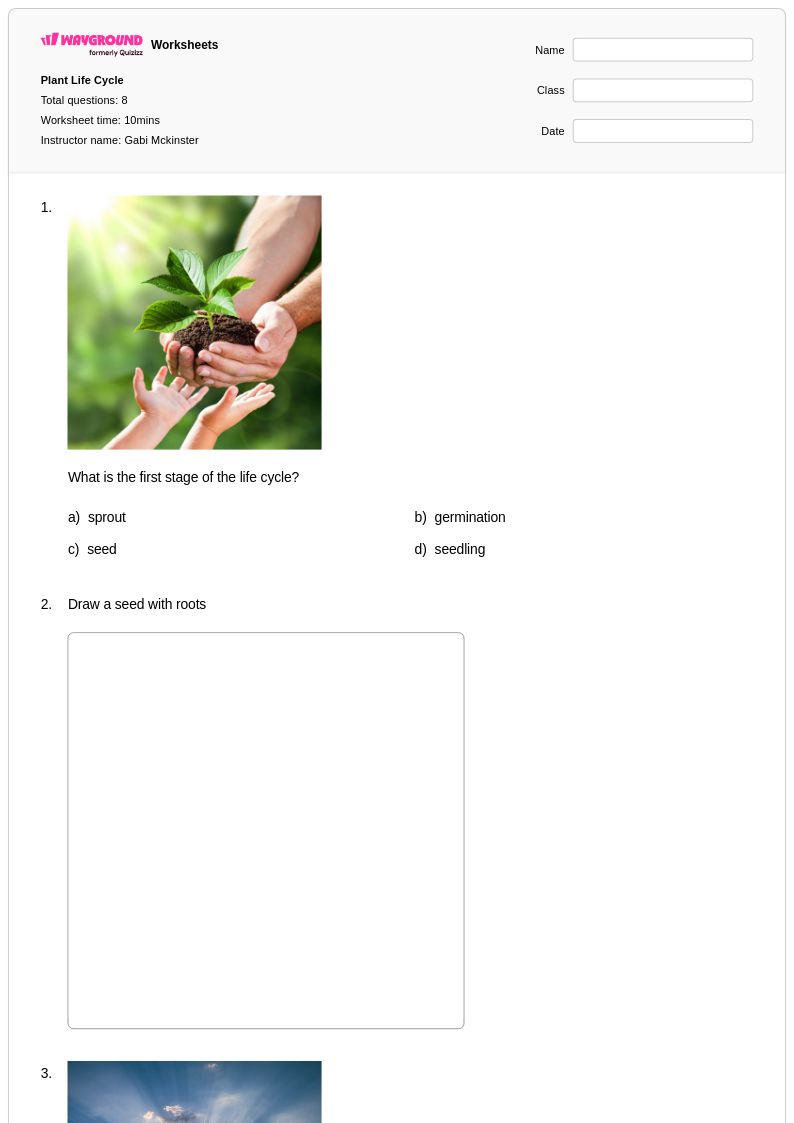
8 Q
2nd
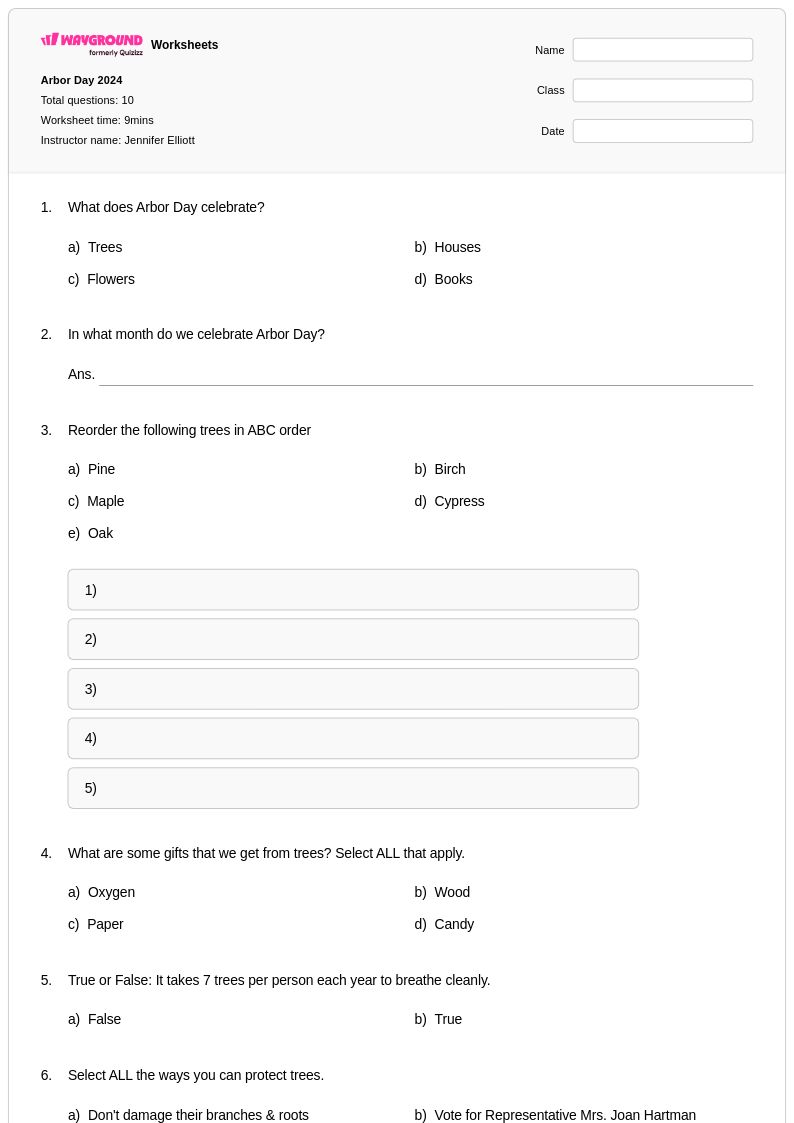
10 Q
2nd
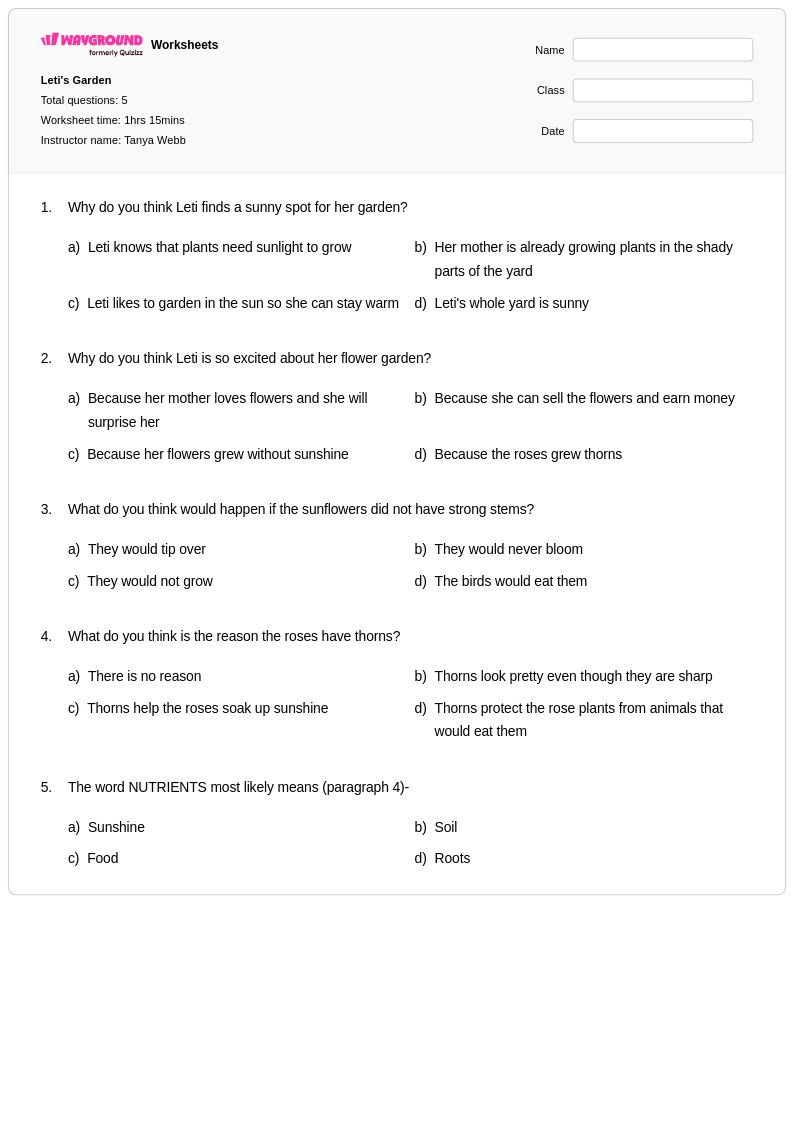
5 Q
2nd
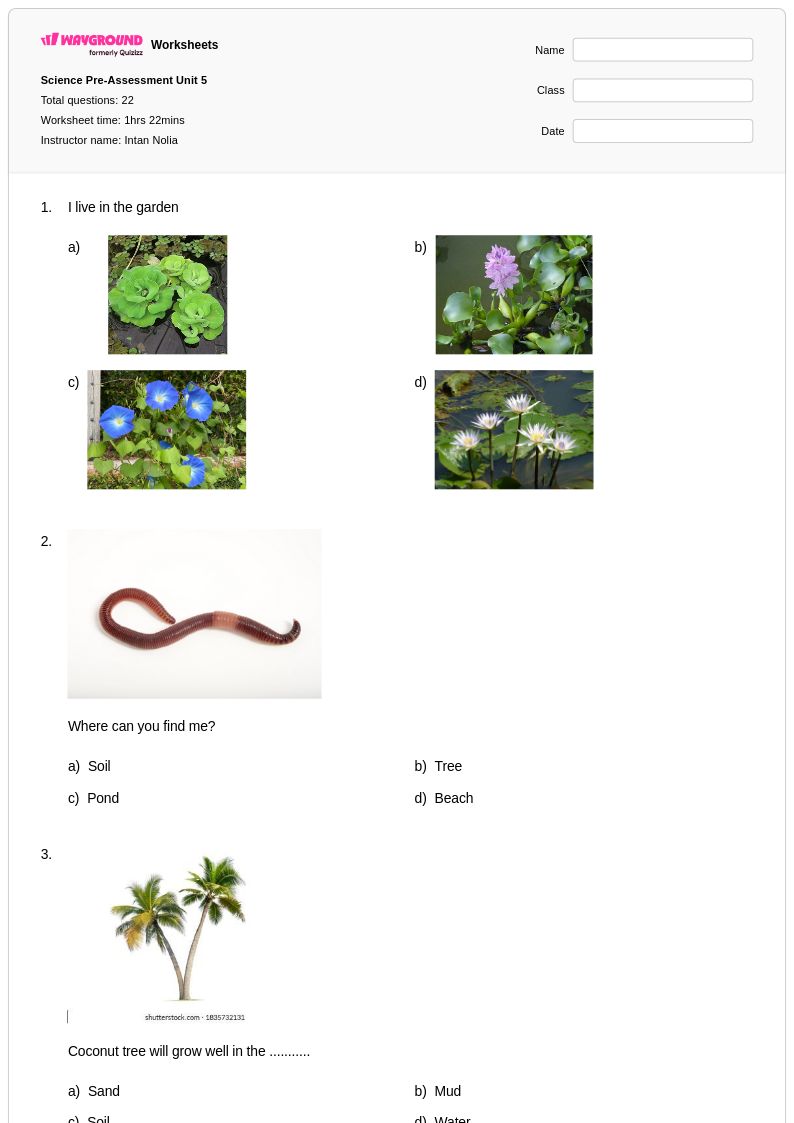
22 Q
2nd
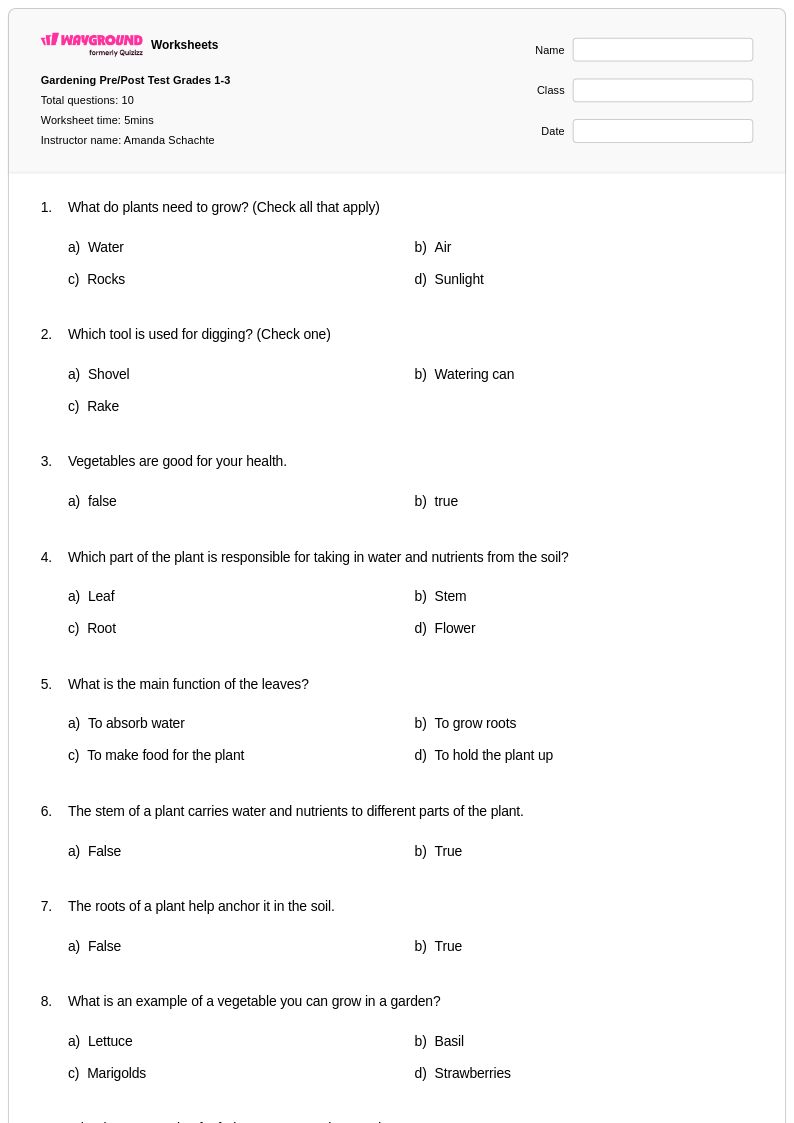
10 Q
1st - 5th
15 Q
2nd - Uni
11 Q
2nd
11 Q
2nd
16 Q
2nd
10 Q
2nd - 5th
11 Q
2nd - Uni
10 Q
2nd
8 Q
2nd
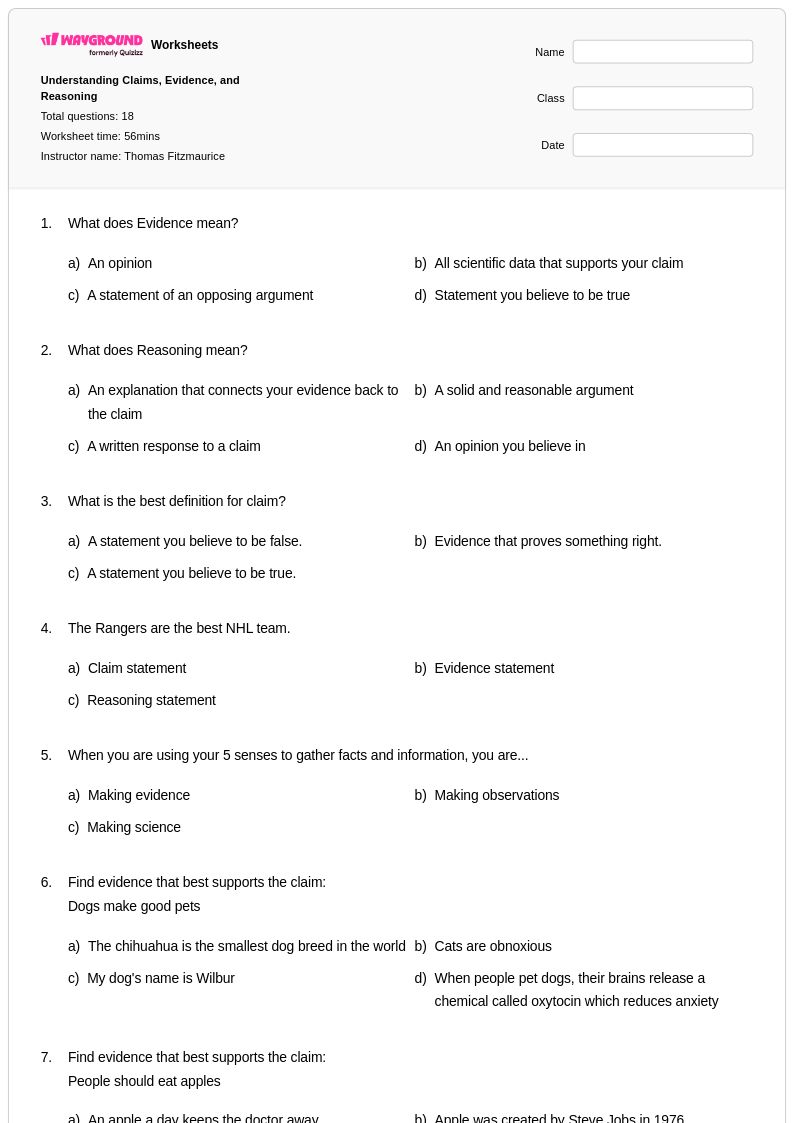
22 Q
1st - 5th
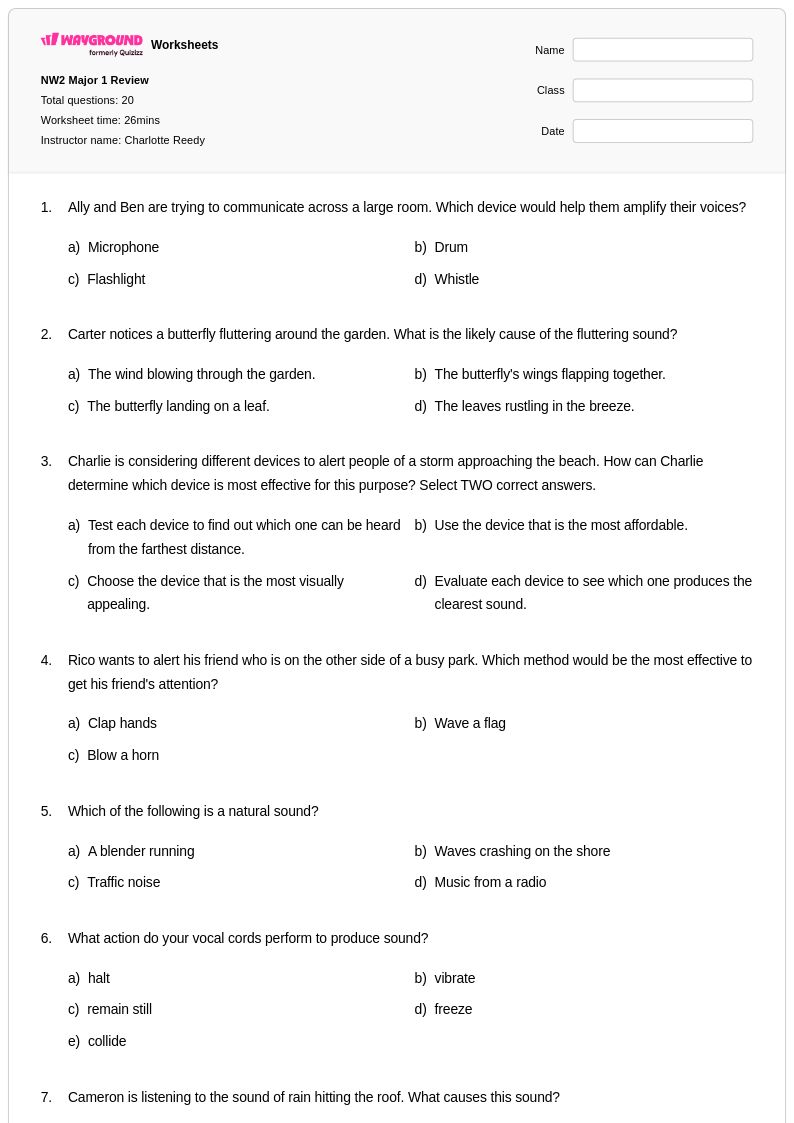
20 Q
2nd
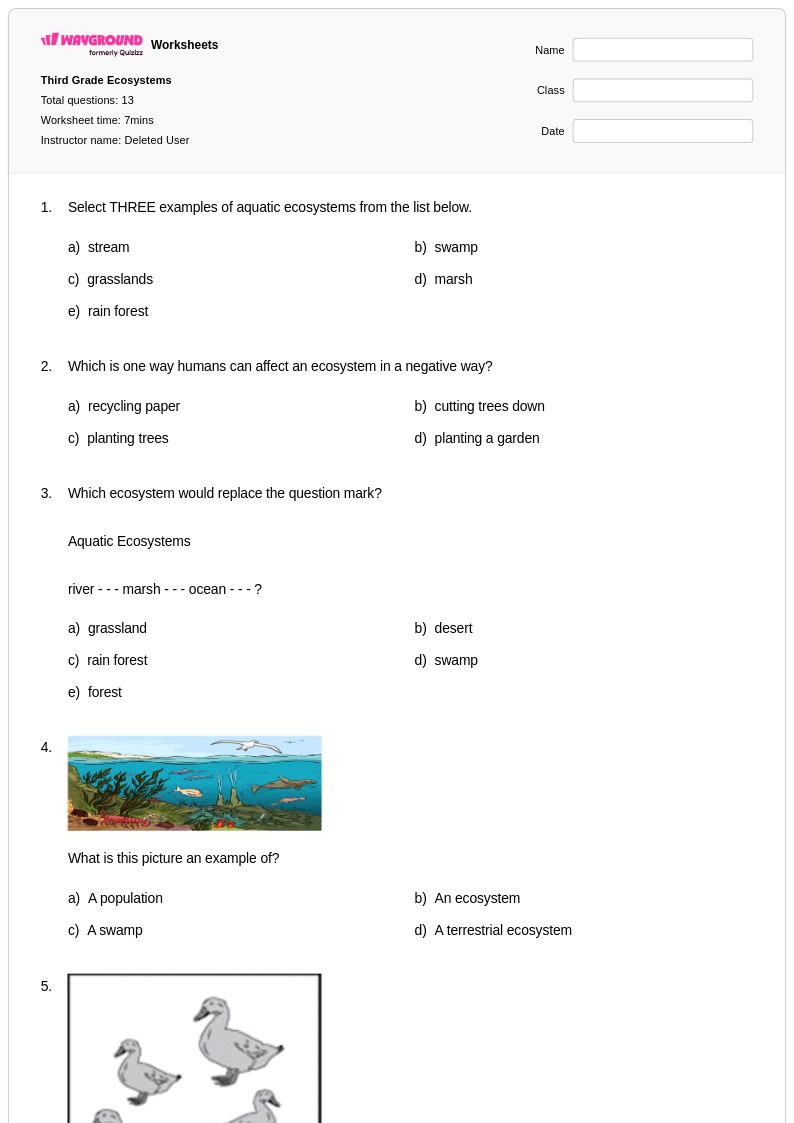
13 Q
2nd - 4th
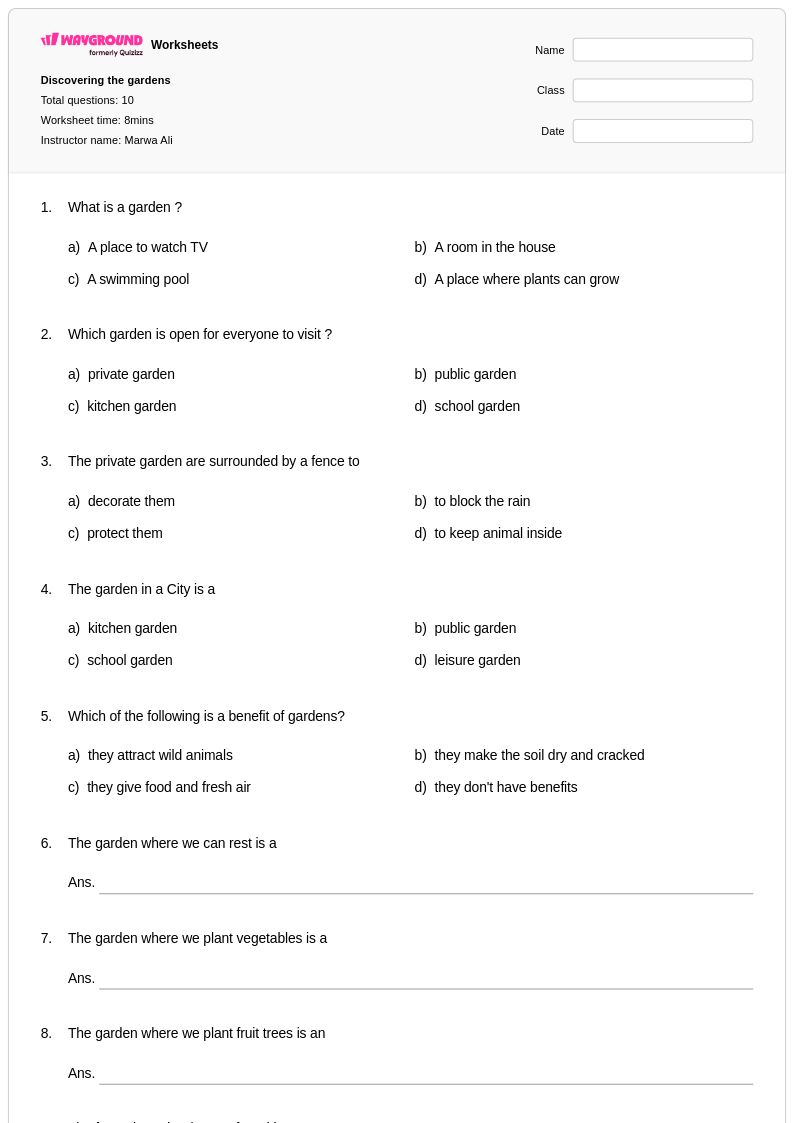
10 Q
2nd
Explore Other Subject Worksheets for class 2
Explore printable Garden Planning worksheets for Class 2
Garden planning worksheets for Class 2 students available through Wayground (formerly Quizizz) provide young learners with engaging opportunities to explore the fundamentals of plant life cycles, seasonal growing patterns, and basic botanical concepts. These carefully designed educational resources strengthen critical thinking skills as students learn to sequence planting activities, identify appropriate growing conditions for different plants, and understand the relationship between seasons and garden productivity. The comprehensive collection includes printables that guide students through mapping garden layouts, matching plants to their optimal growing seasons, and analyzing the basic needs of various garden plants, with each worksheet featuring a complete answer key to support independent learning and provide immediate feedback on practice problems.
Wayground's extensive library of teacher-created garden planning resources supports educators with millions of professionally developed materials that can be easily accessed through robust search and filtering capabilities. Teachers benefit from standards-aligned content that addresses Class 2 life science learning objectives while offering flexible customization options to meet diverse classroom needs and accommodate different learning styles. The platform's differentiation tools enable educators to modify worksheets for remediation or enrichment purposes, ensuring that every student can engage meaningfully with garden planning concepts regardless of their current skill level. Available in both printable pdf format and interactive digital versions, these resources streamline lesson planning while providing versatile options for skill practice, formative assessment, and hands-on learning experiences that connect students to the natural world through scientific inquiry.
FAQs
How do I teach garden planning concepts in a science classroom?
What exercises help students practice garden planning skills?
What mistakes do students commonly make when learning garden planning?
How can I differentiate garden planning worksheets for students at different skill levels?
How do I use Wayground's garden planning worksheets in my classroom?