Free Printable Federalist Papers Worksheets for Class 10
Explore Class 10 Federalist Papers worksheets and printables that help students analyze the foundational arguments for the U.S. Constitution through engaging practice problems, free PDF resources, and comprehensive answer keys.
Explore printable Federalist Papers worksheets for Class 10
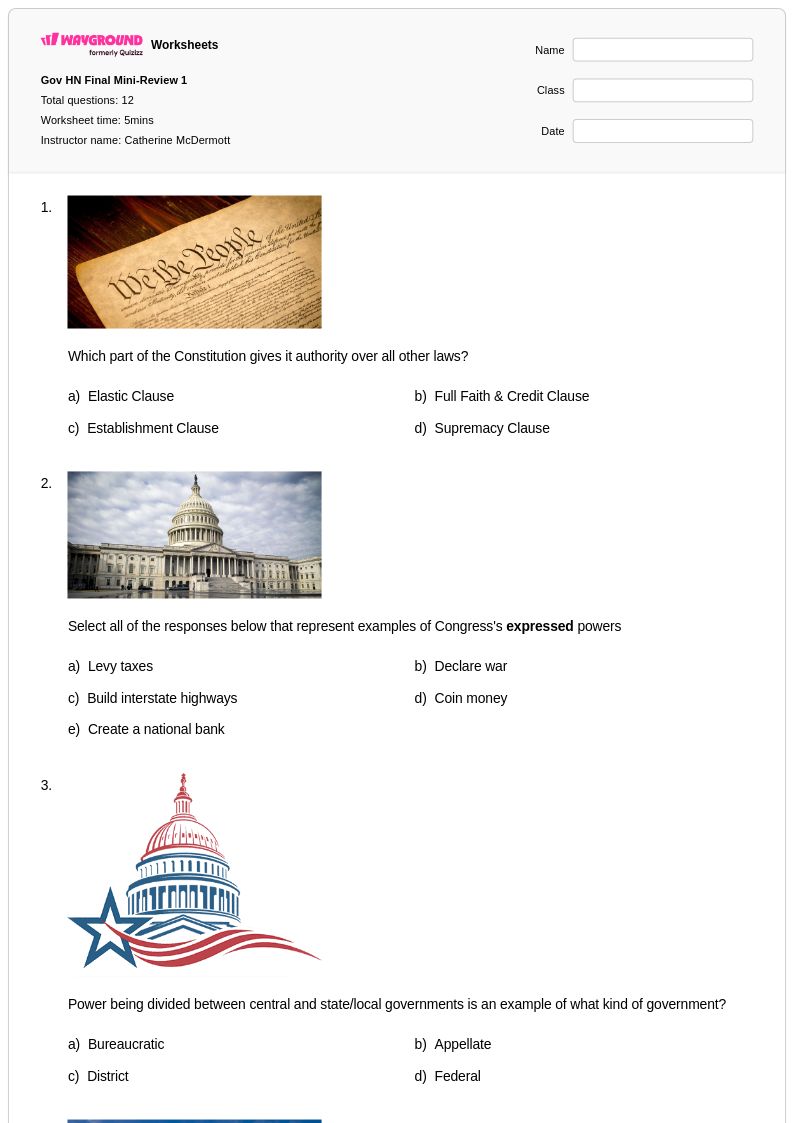
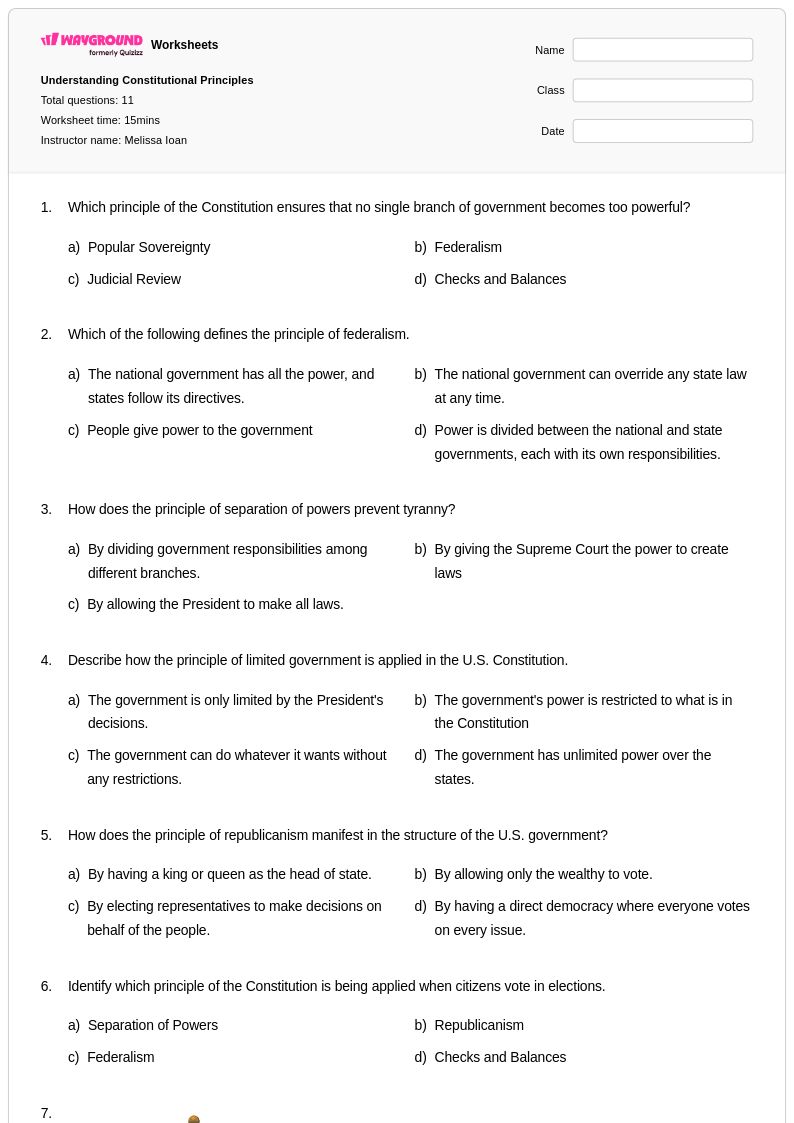
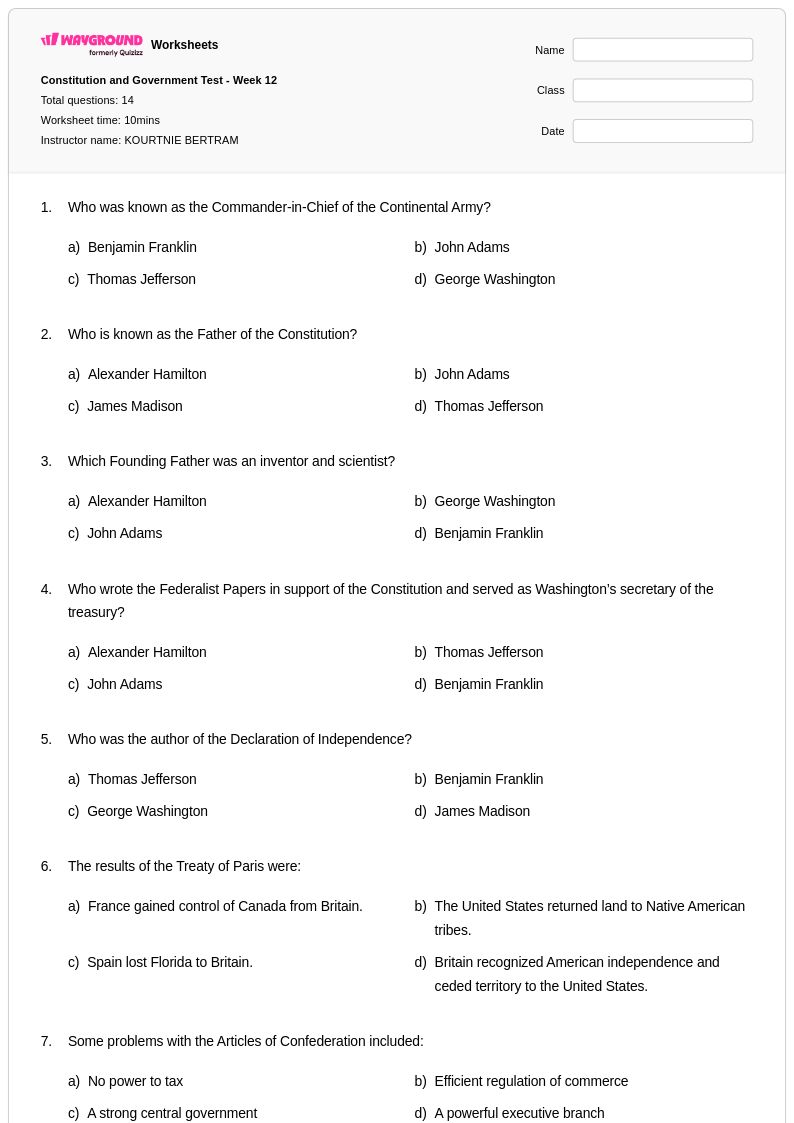
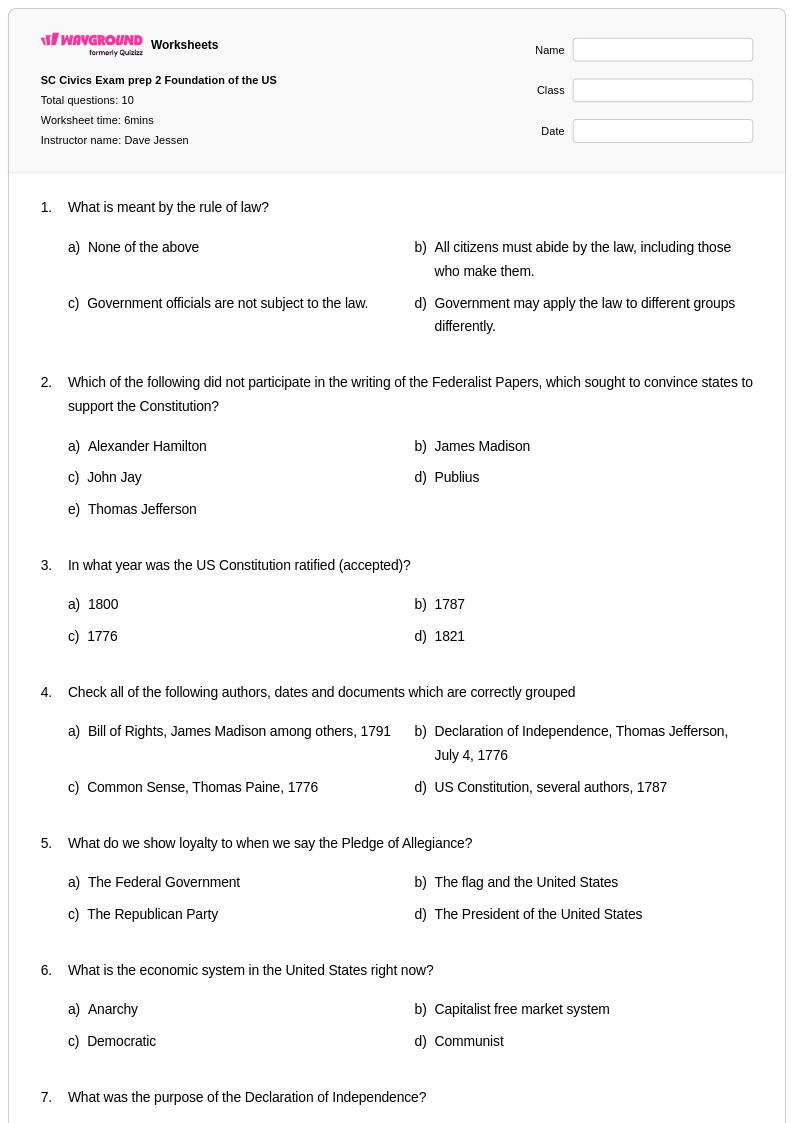
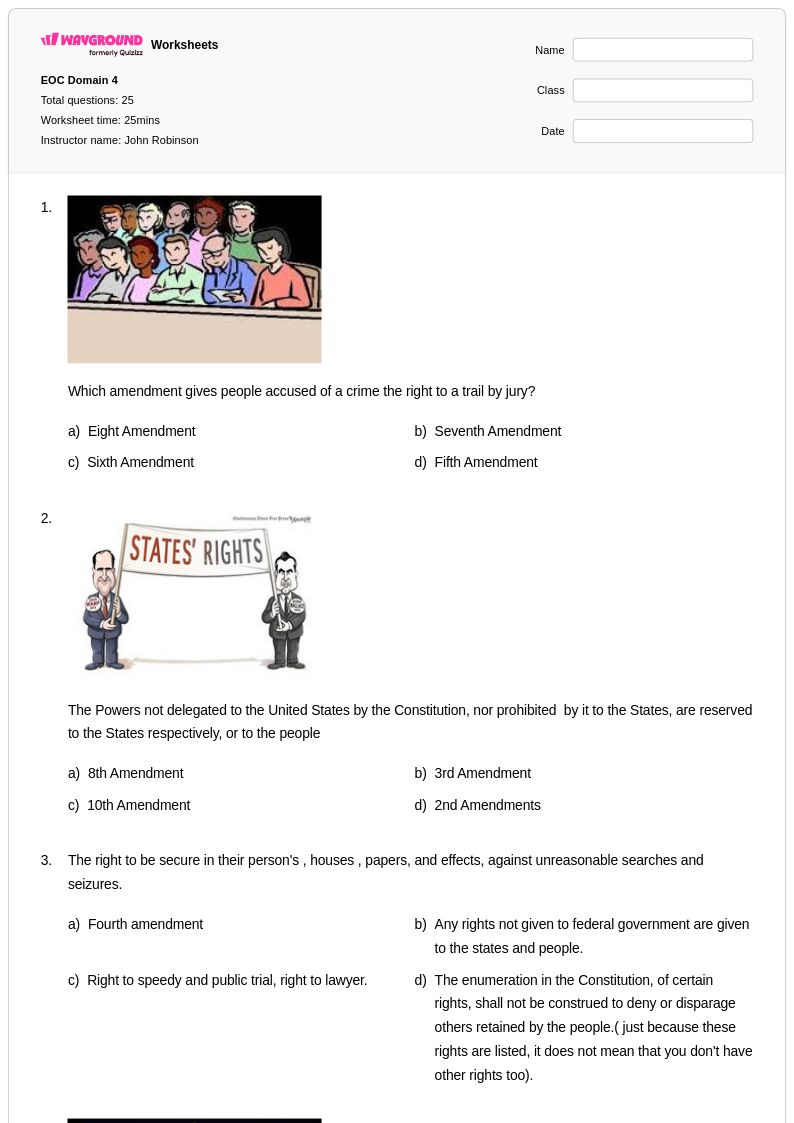
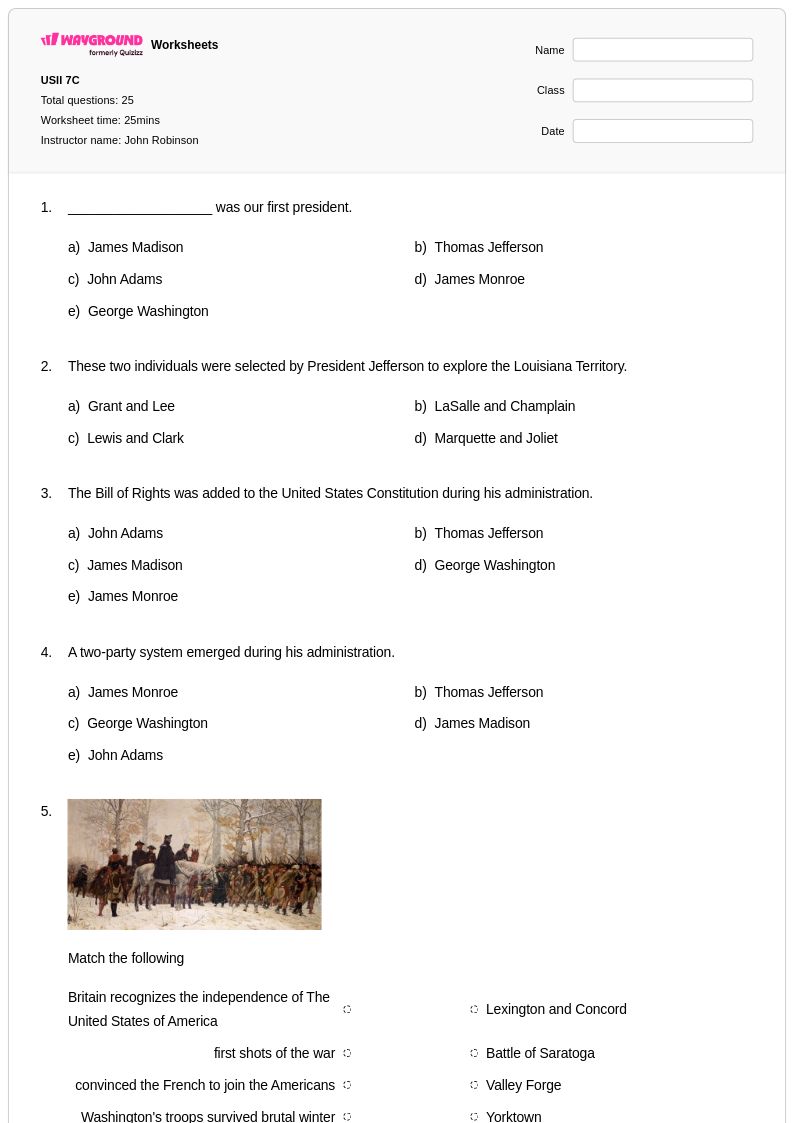
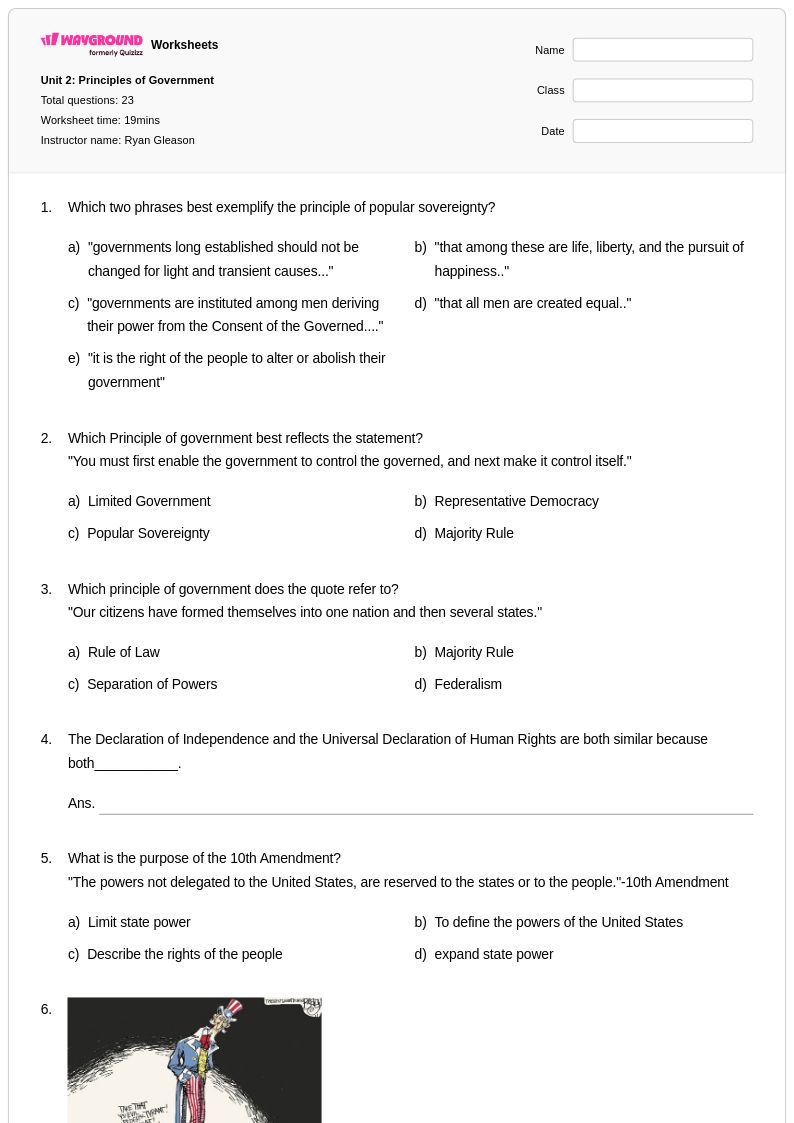
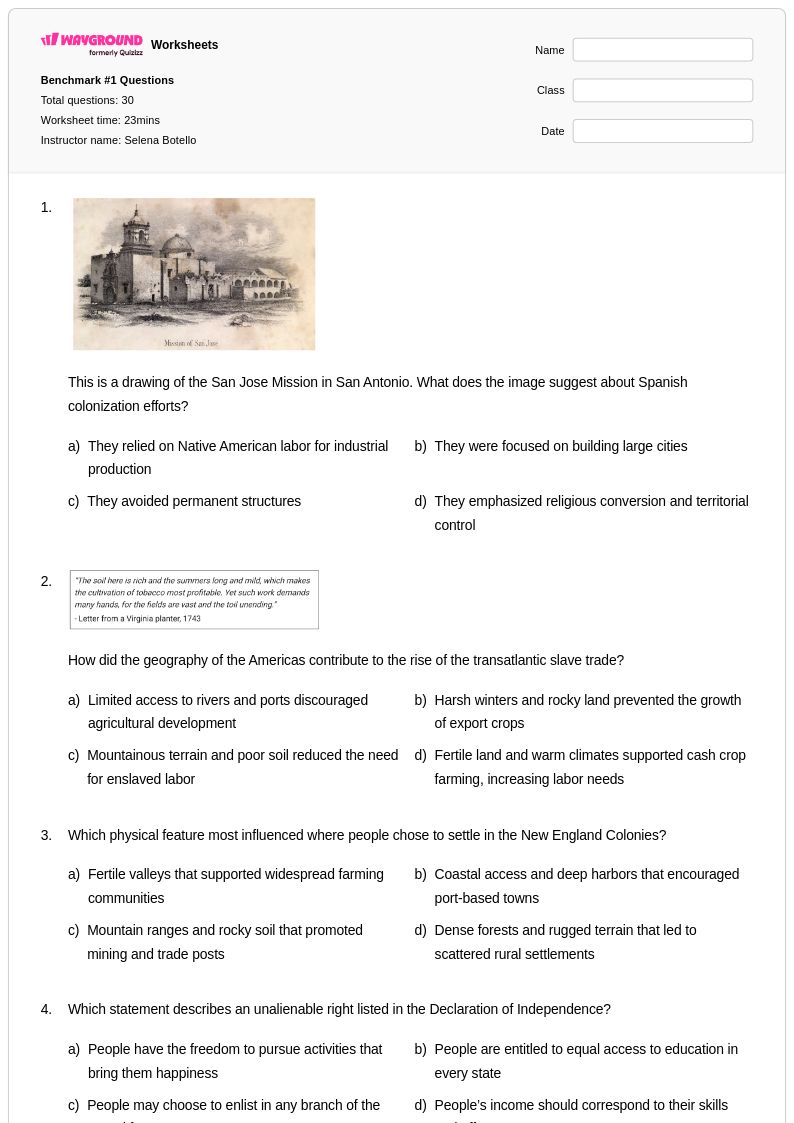
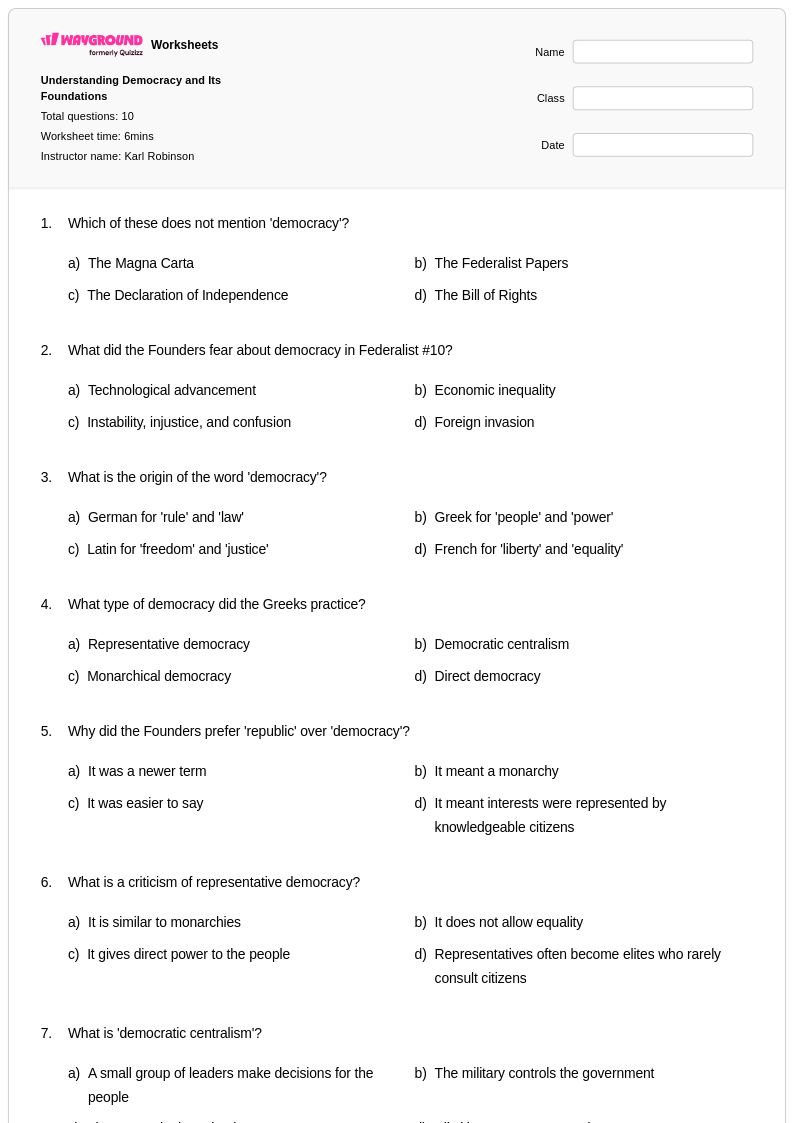
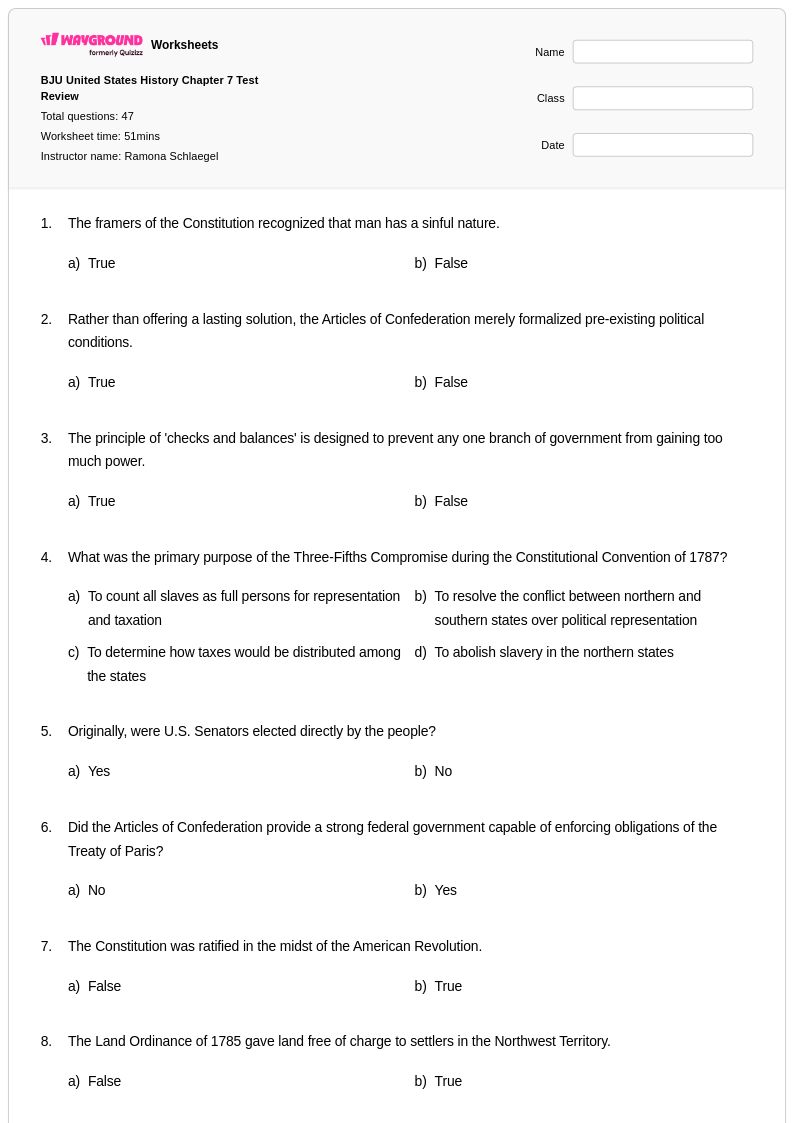
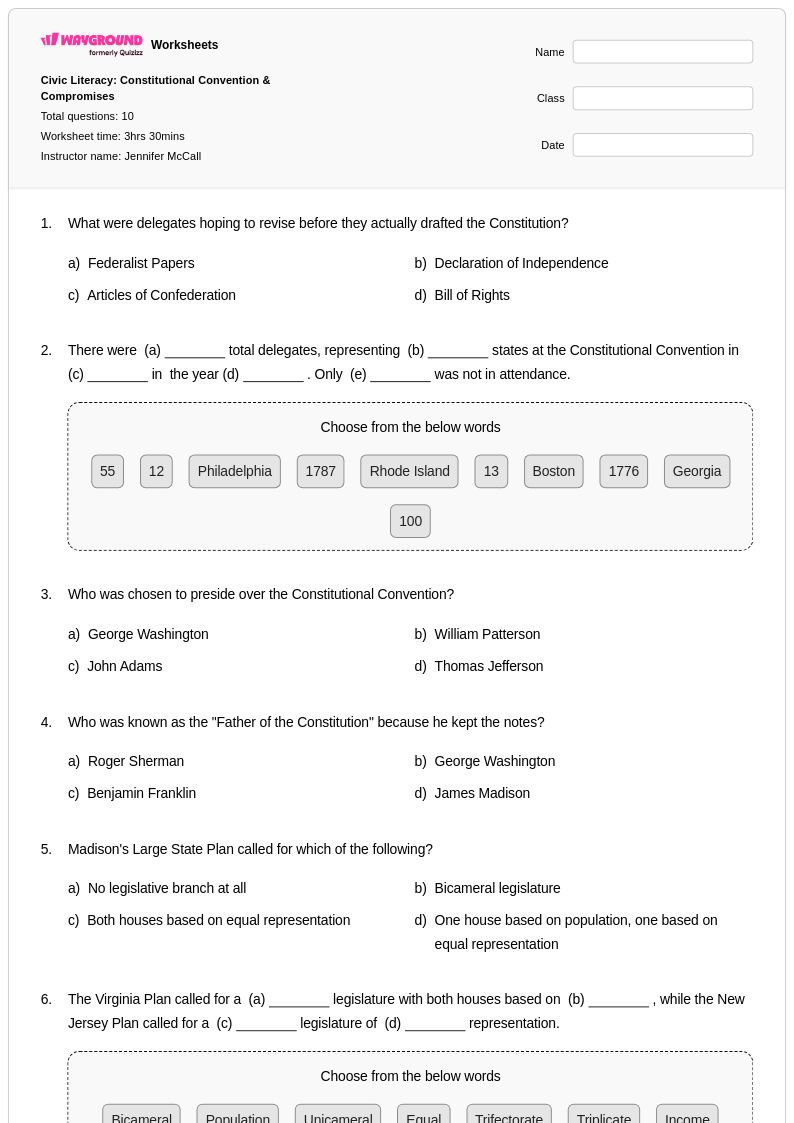
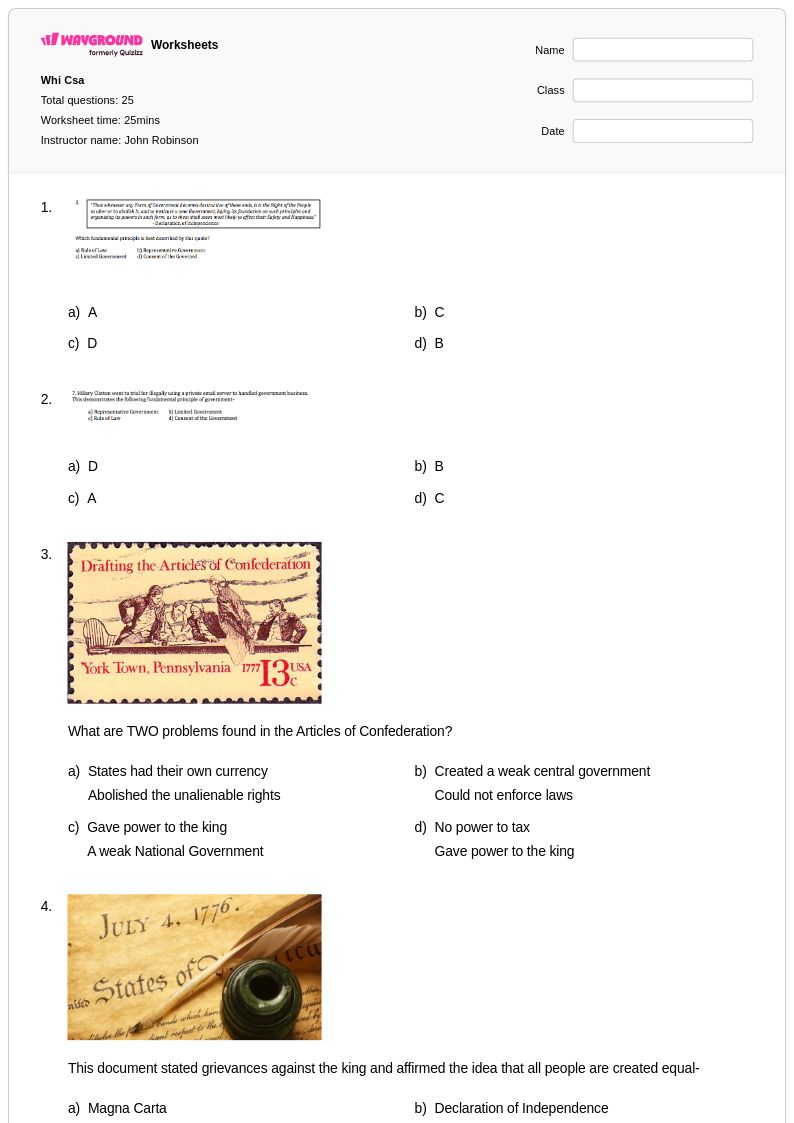
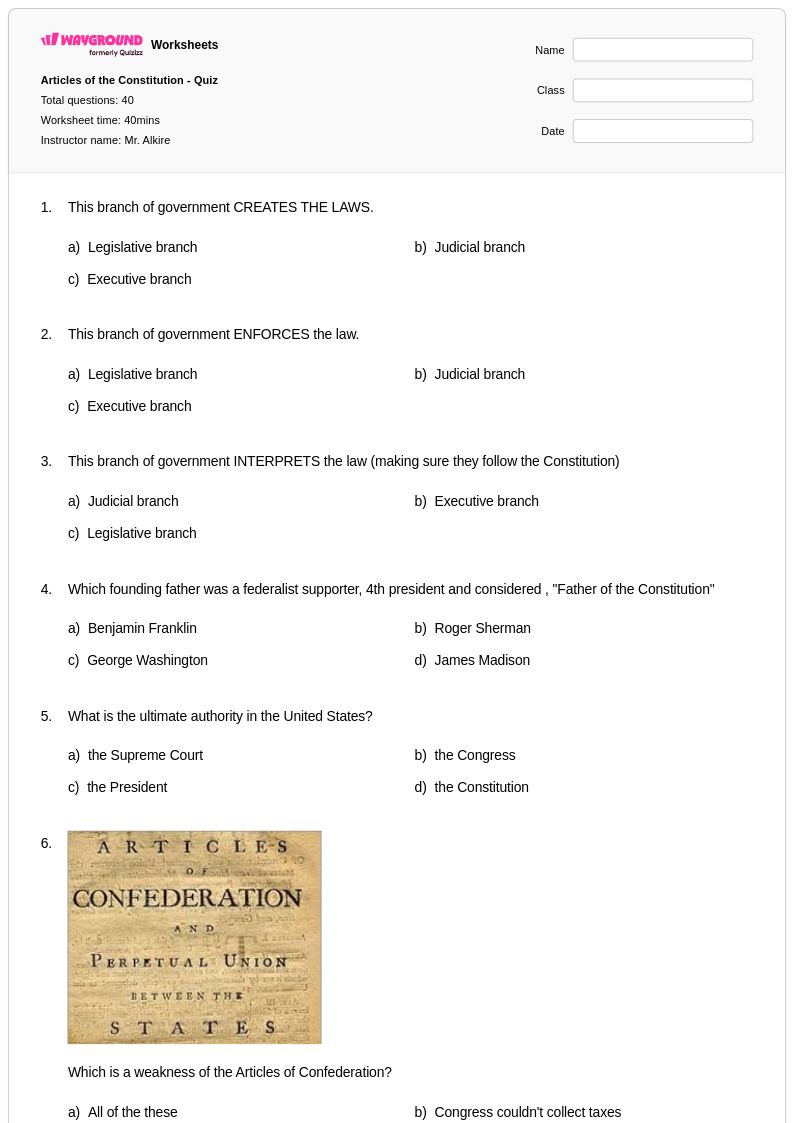
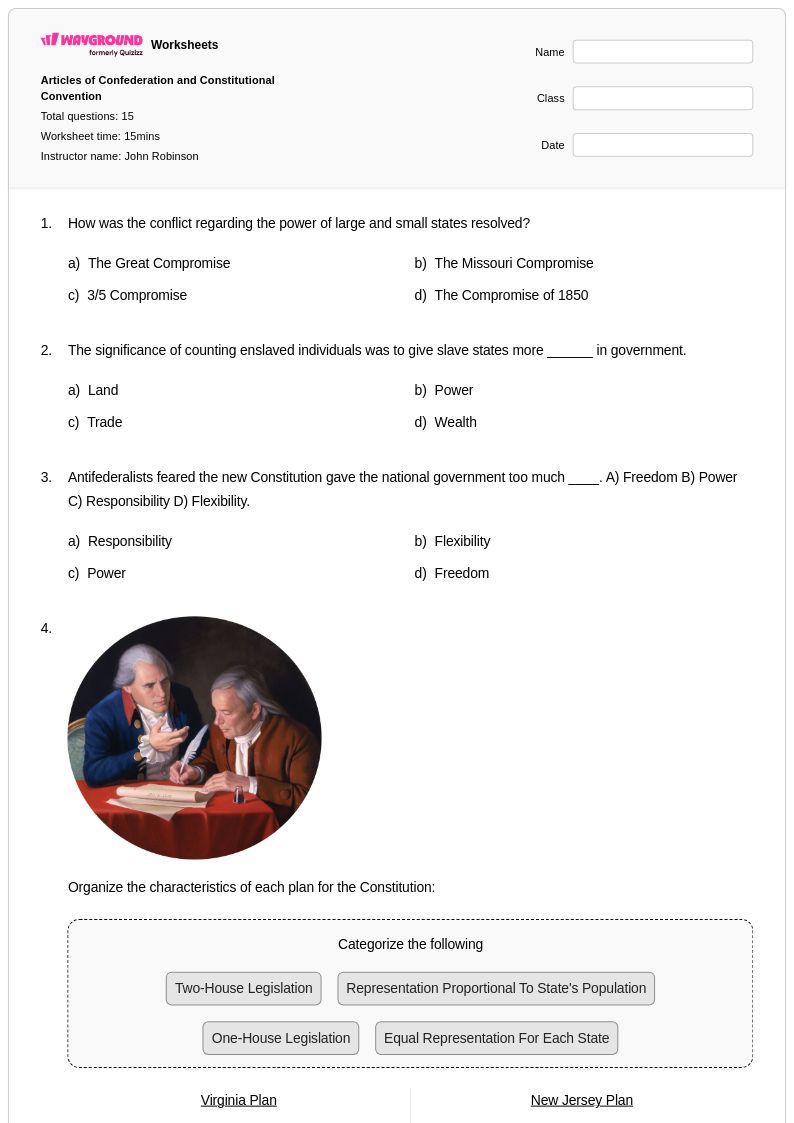
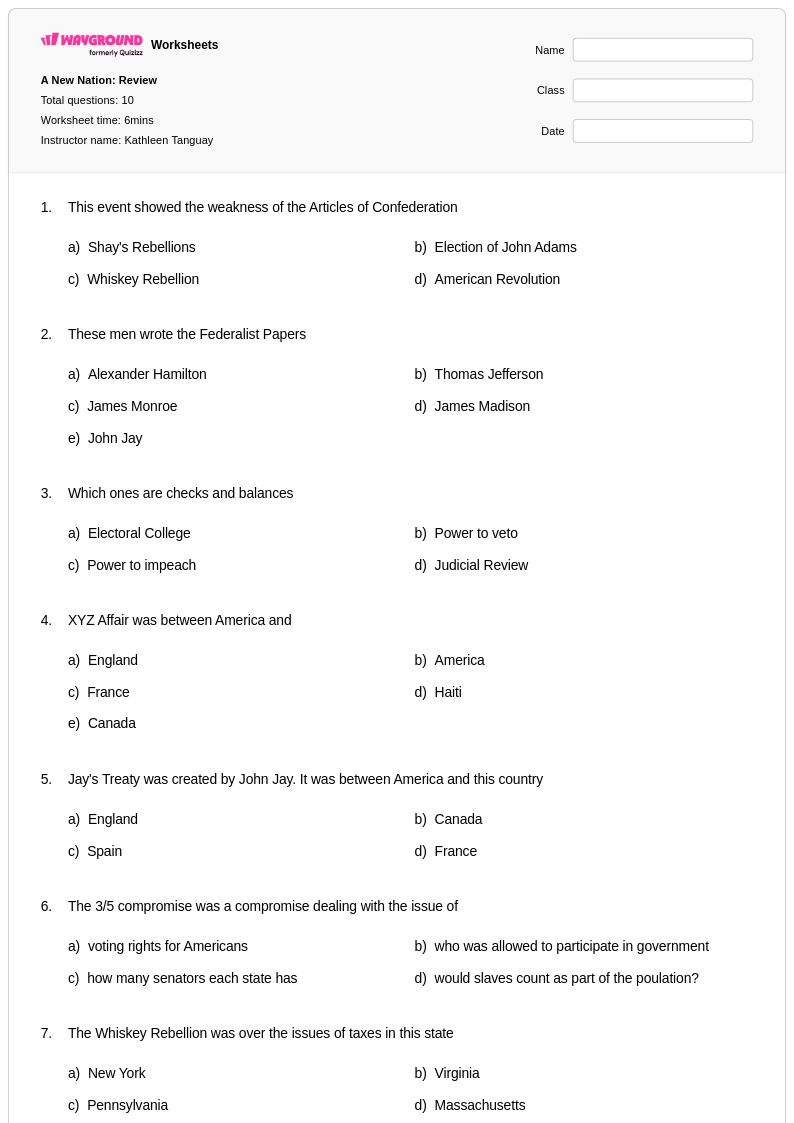
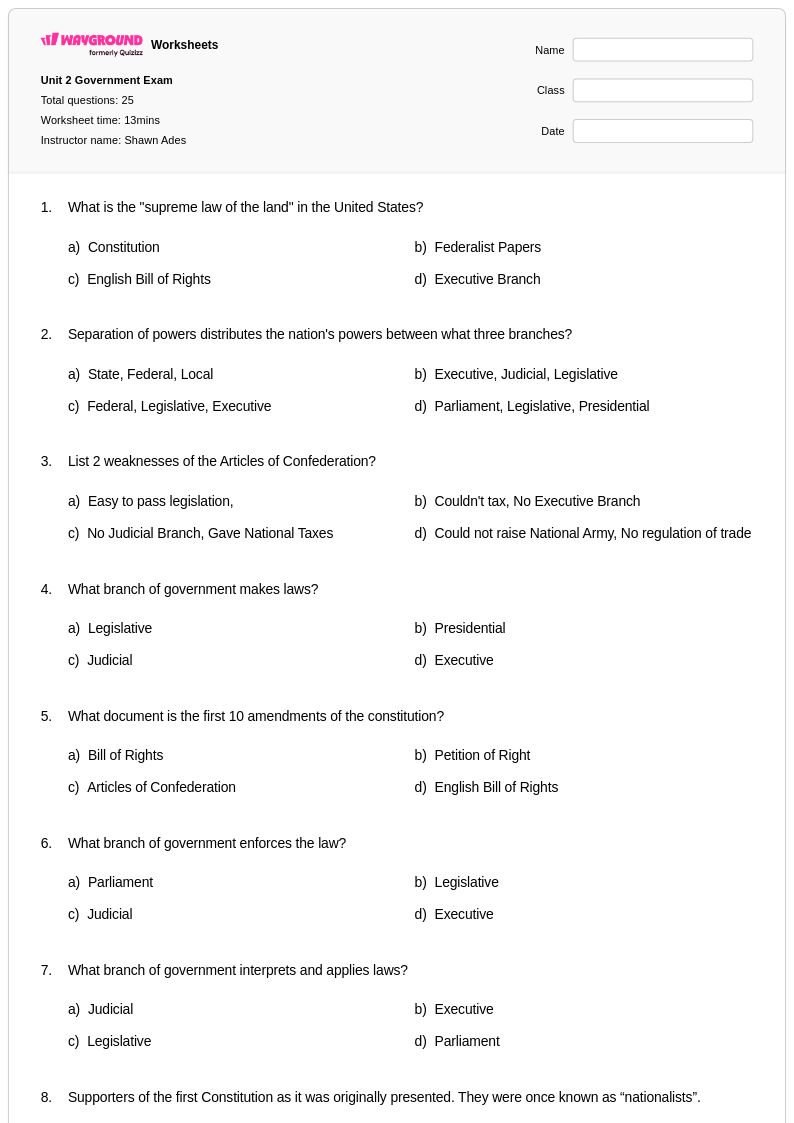
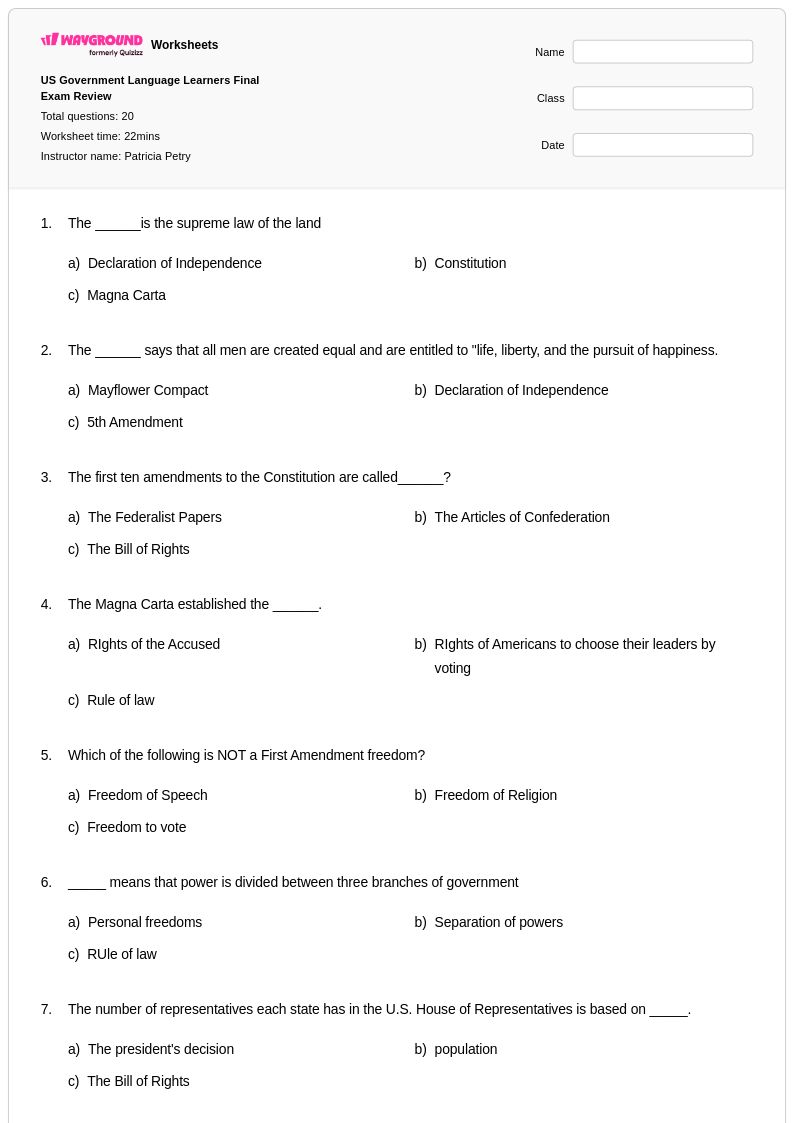
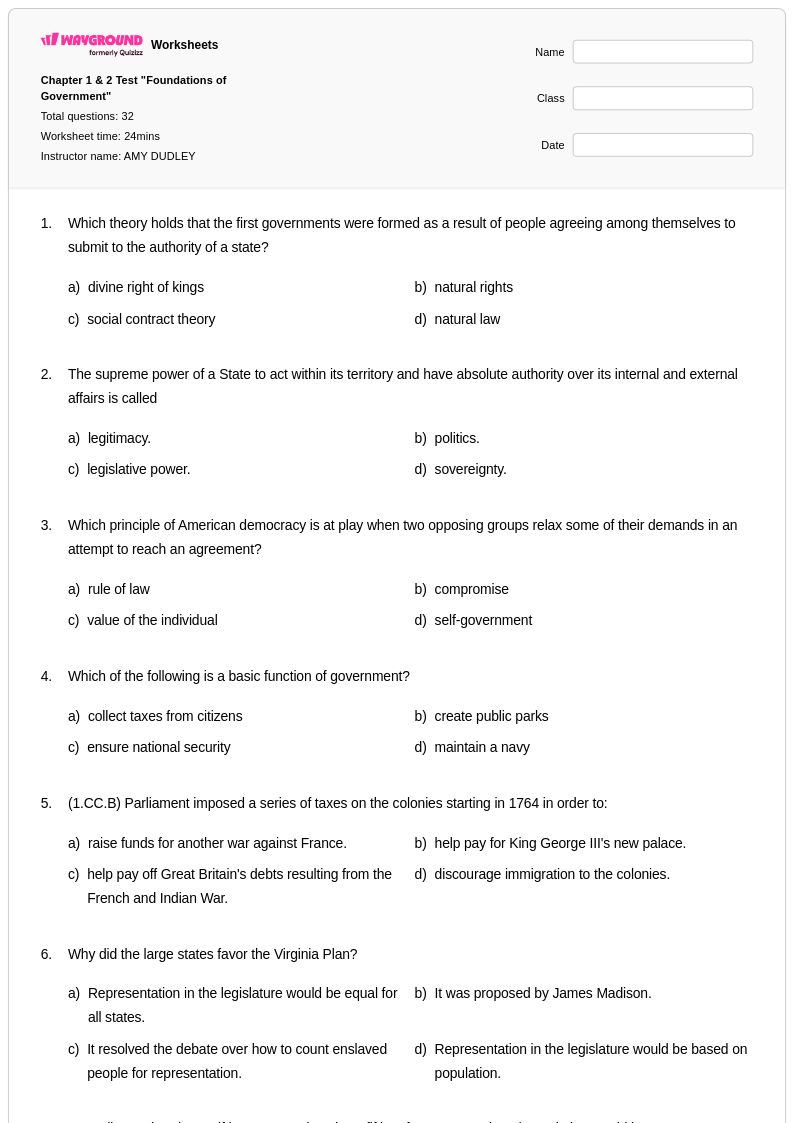
The Federalist Papers worksheets available through Wayground (formerly Quizizz) provide Class 10 students with comprehensive practice materials to analyze these foundational documents of American constitutional thought. These expertly designed worksheets strengthen critical reading skills as students examine the arguments presented by Hamilton, Madison, and Jay in their defense of the proposed Constitution. Students engage with primary source excerpts, practice identifying key constitutional principles, and develop analytical writing abilities through structured practice problems that explore the historical context and enduring significance of these influential essays. Each worksheet includes an answer key to support independent learning, and the materials are available as free printables in convenient pdf format for classroom distribution and homework assignments.
Wayground (formerly Quizizz) supports educators teaching the Federalist Papers through its extensive collection of millions of teacher-created resources that can be easily searched and filtered to match specific classroom needs and standards alignment requirements. Teachers benefit from robust differentiation tools that allow customization of worksheet difficulty levels to accommodate diverse learners, whether providing remediation for struggling students or enrichment challenges for advanced learners. The platform's flexibility enables instructors to access materials in both printable and digital formats, including downloadable pdf versions, making lesson planning more efficient and responsive to different learning environments. These comprehensive worksheet collections facilitate targeted skill practice in constitutional analysis, primary source interpretation, and historical argumentation, essential components of advanced social studies education.
FAQs
How do I teach the Federalist Papers to high school students?
Teaching the Federalist Papers works best when students approach them as arguments rather than historical artifacts. Start with the political problem each essay addresses — faction in Federalist 10, separation of powers in Federalist 51, judicial independence in Federalist 78 — before reading the text itself. Guiding students to identify the claim, evidence, and rhetorical strategy in each essay builds both content knowledge and primary source literacy.
Which Federalist Papers should I prioritize in my curriculum?
Federalist 10, 51, and 78 are the most commonly taught and most frequently assessed essays. Federalist 10 addresses the danger of factions and the advantages of a large republic; Federalist 51 explains checks and balances and the separation of powers; and Federalist 78 establishes the constitutional basis for judicial review. These three essays together give students a strong foundation in the core arguments for ratification and the structural logic of the Constitution.
What exercises help students practice analyzing the Federalist Papers?
Effective practice exercises include close reading tasks that ask students to identify the central argument of a specific essay, annotate rhetorical strategies, and connect the author's reasoning to a specific constitutional provision. Structured comparison activities — such as contrasting Federalist 10 and Anti-Federalist critiques of a large republic — deepen analytical thinking. Worksheets that incorporate primary source excerpts alongside guiding questions help students build interpretive independence rather than relying on paraphrase.
What misconceptions do students commonly have about the Federalist Papers?
A common misconception is that the Federalist Papers are official government documents or part of the Constitution itself — they are persuasive essays written to advocate for ratification, not binding legal text. Students also frequently conflate the authors, not recognizing that Hamilton, Madison, and Jay each wrote distinct essays with different emphases. Another error is reading Federalist 51's "ambition must be made to counteract ambition" in isolation, without understanding it as a structural argument about institutional design rather than a comment on individual character.
How can I use Federalist Papers worksheets in my classroom?
Federalist Papers worksheets on Wayground are available as printable PDFs for traditional classroom use and in digital formats for technology-integrated instruction, making them suitable for in-class analysis, homework, or hybrid learning. Teachers can host the worksheets as a quiz directly on Wayground, enabling students to complete the activity digitally and receive structured feedback. Each worksheet includes a complete answer key, so teachers can use them for independent practice, guided reading sessions, or formative assessment without additional preparation.
How do I differentiate Federalist Papers instruction for students with different reading levels?
Because the Federalist Papers are 18th-century argumentative prose, they present significant reading challenges for many students. Differentiation strategies include providing sentence-level scaffolds, glossaries of key political vocabulary, and excerpted versions of essays rather than full texts for students who need support. On Wayground, teachers can apply individual accommodations such as Read Aloud — which allows the worksheet content to be read to students — reduced answer choices to lower cognitive load, and adjustable font sizes through reading mode, all configurable per student without affecting the rest of the class.