Free Printable Forces and Interactions Worksheets for Class 6
Explore Wayground's free Class 6 Forces and Interactions worksheets featuring printable PDFs with practice problems and answer keys to help students master fundamental physical science concepts about how objects interact and affect motion.
Explore printable Forces and Interactions worksheets for Class 6
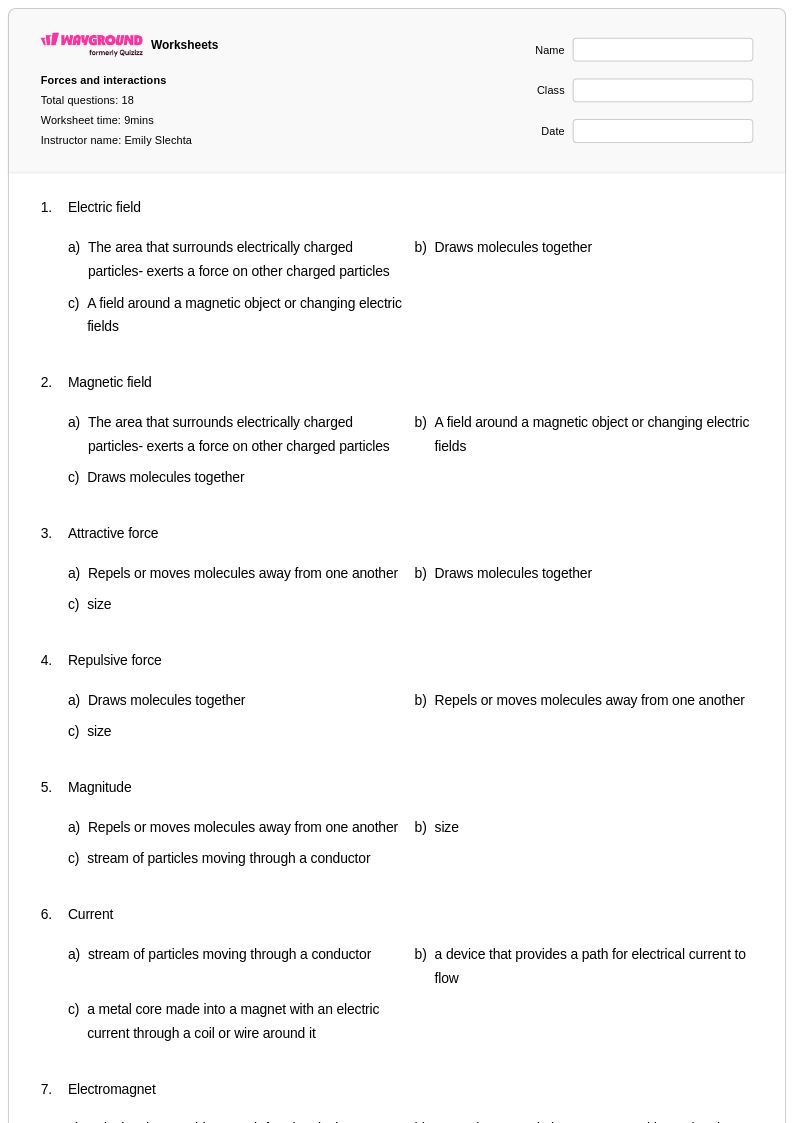
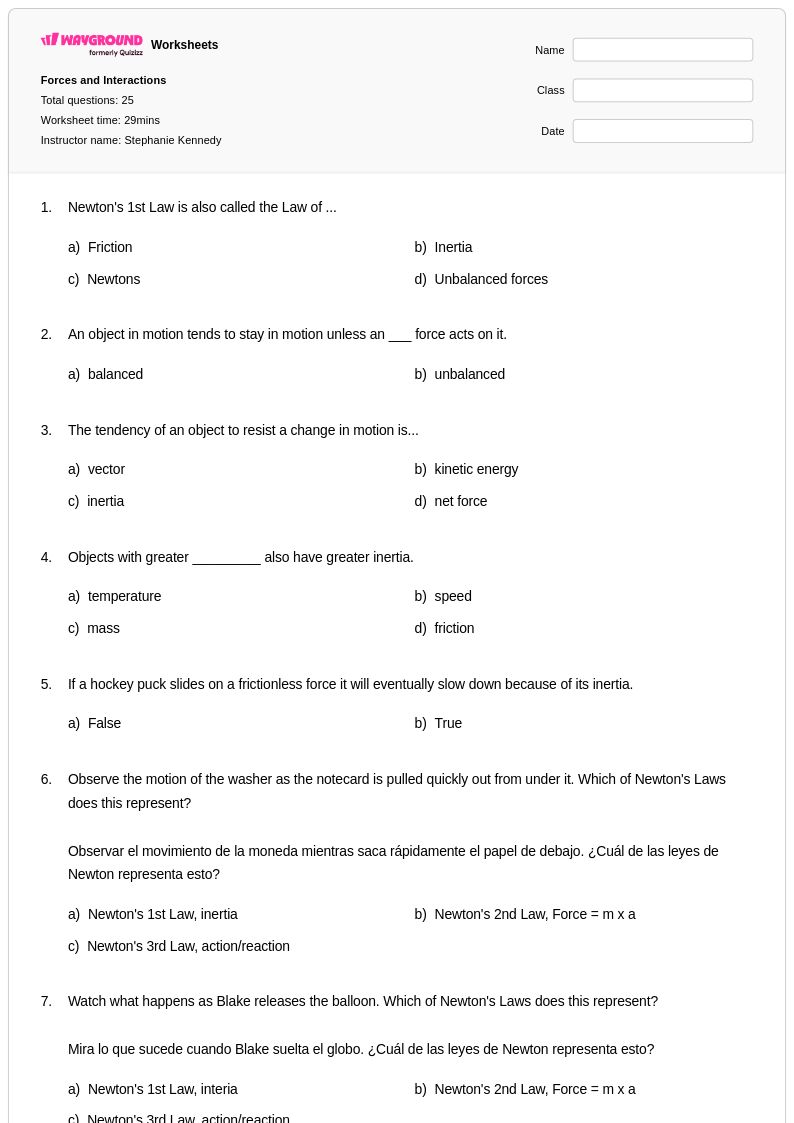
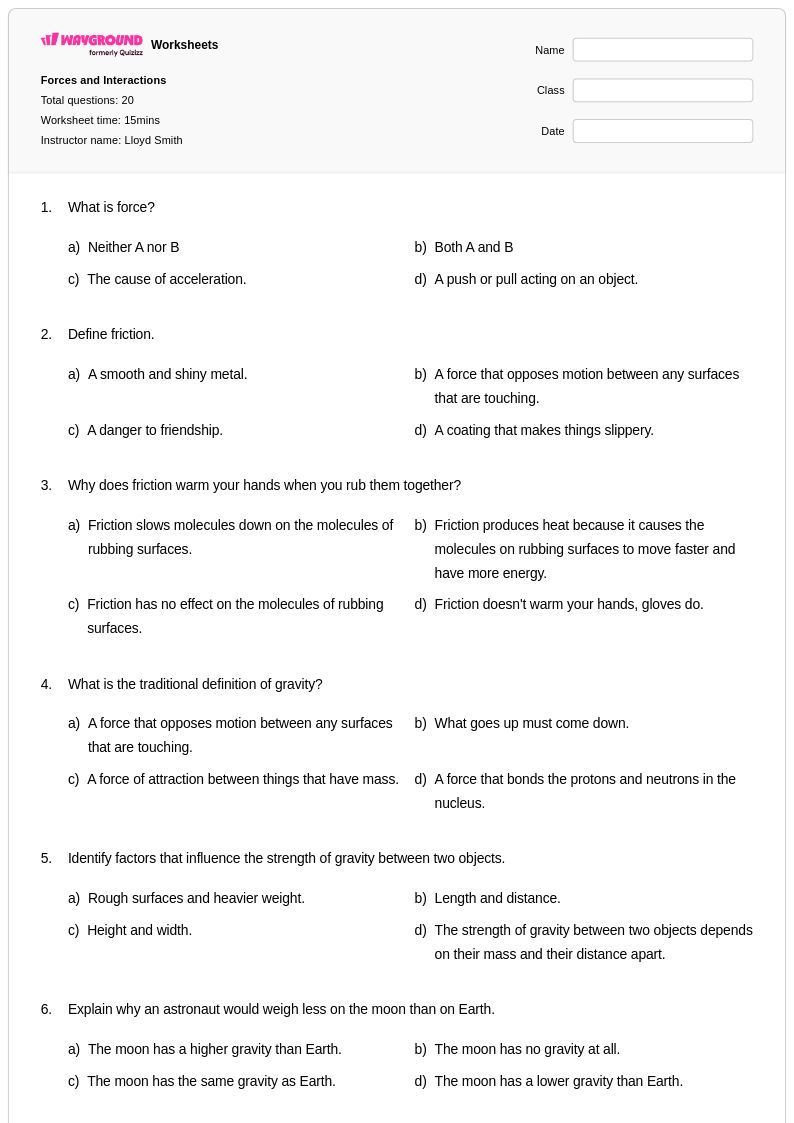
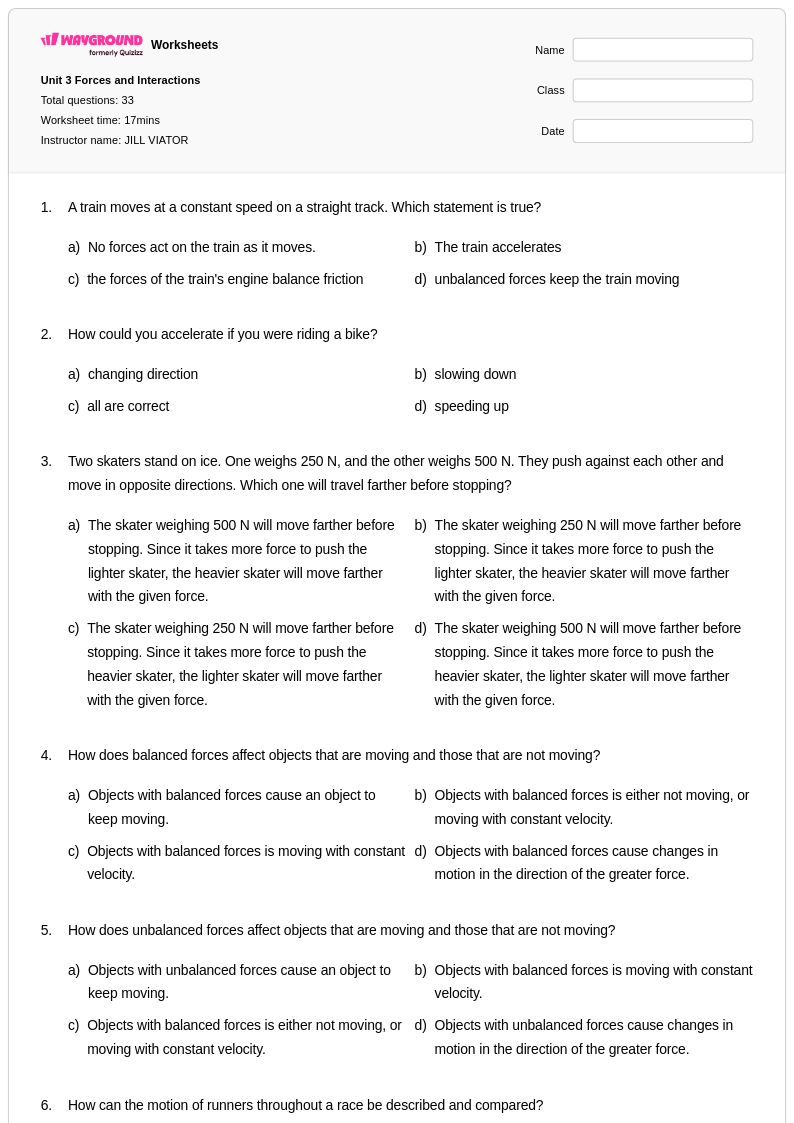
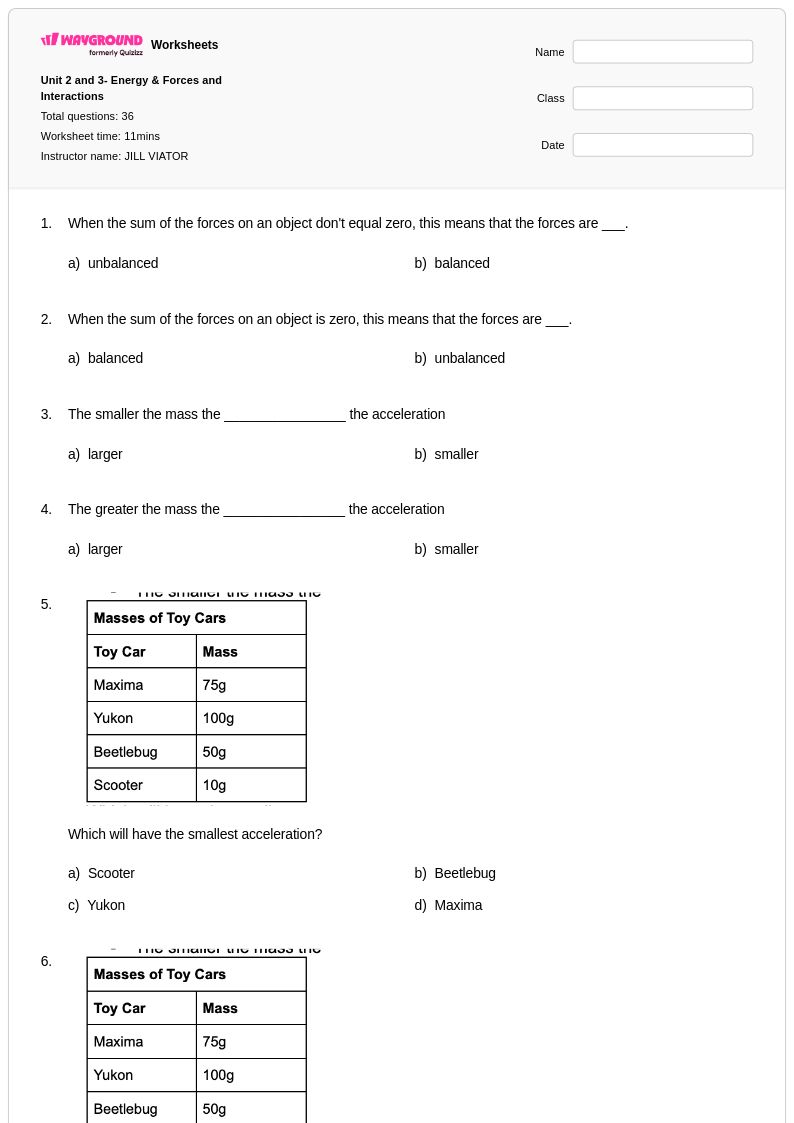
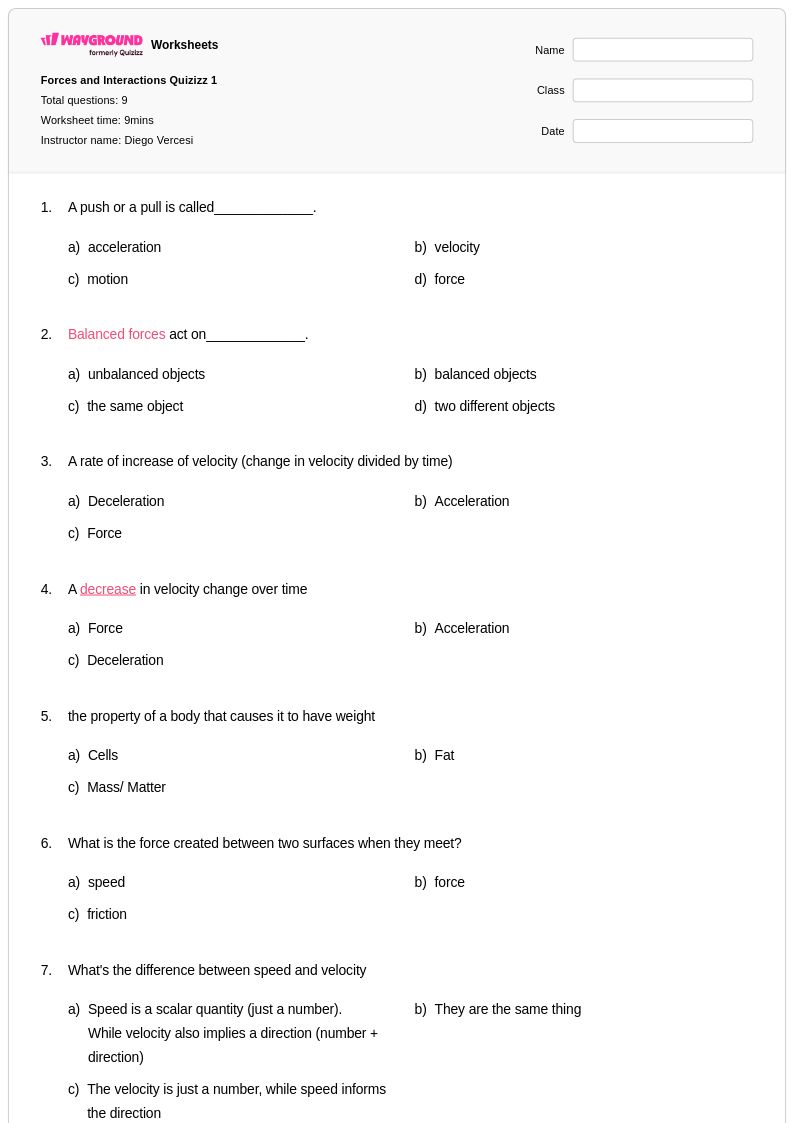
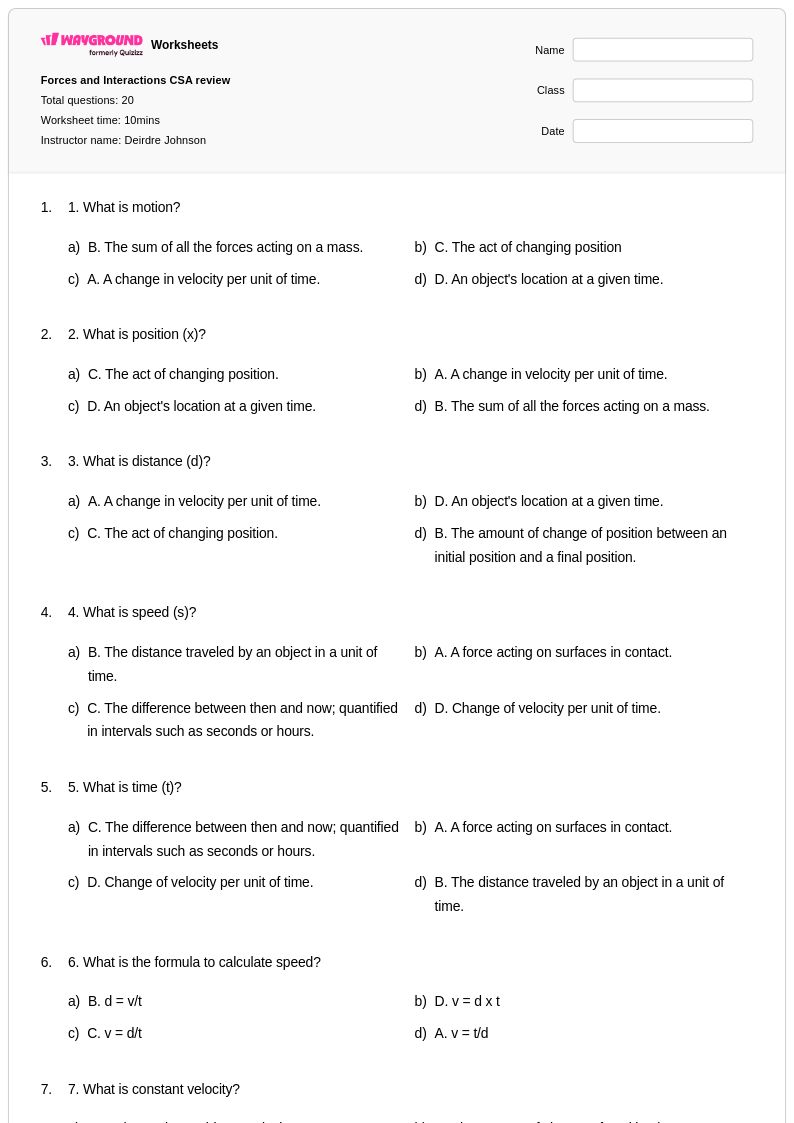
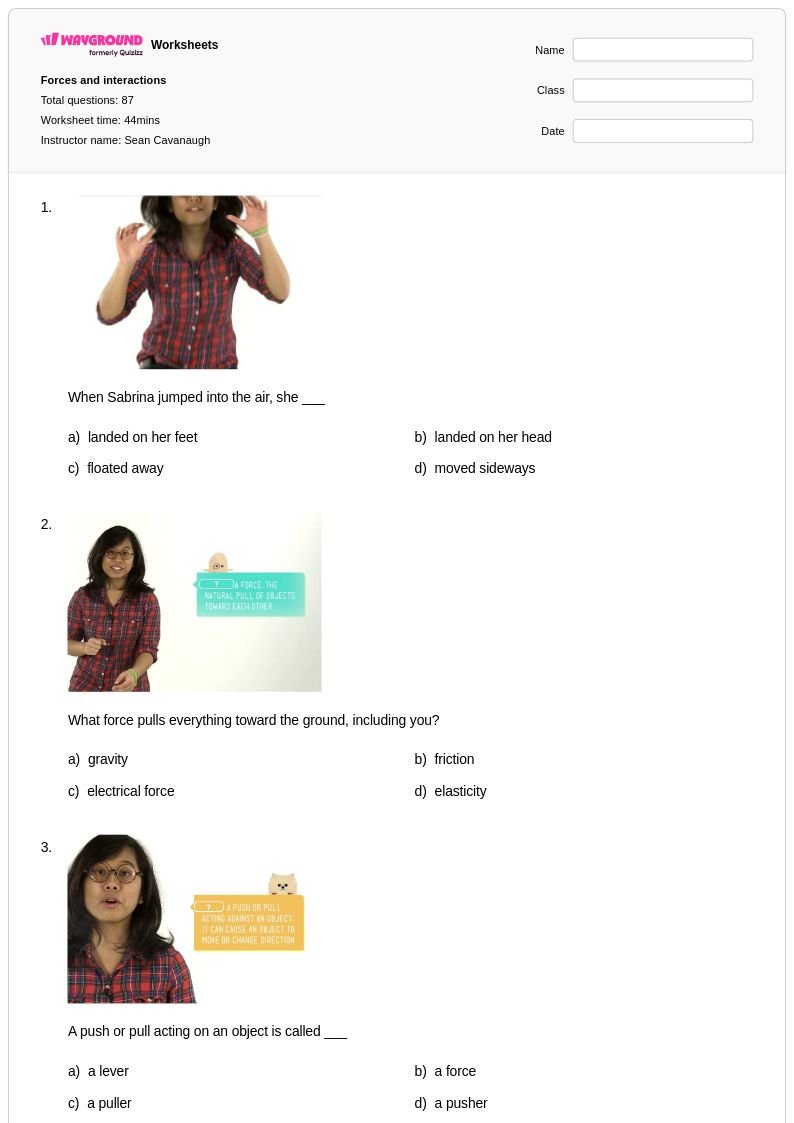
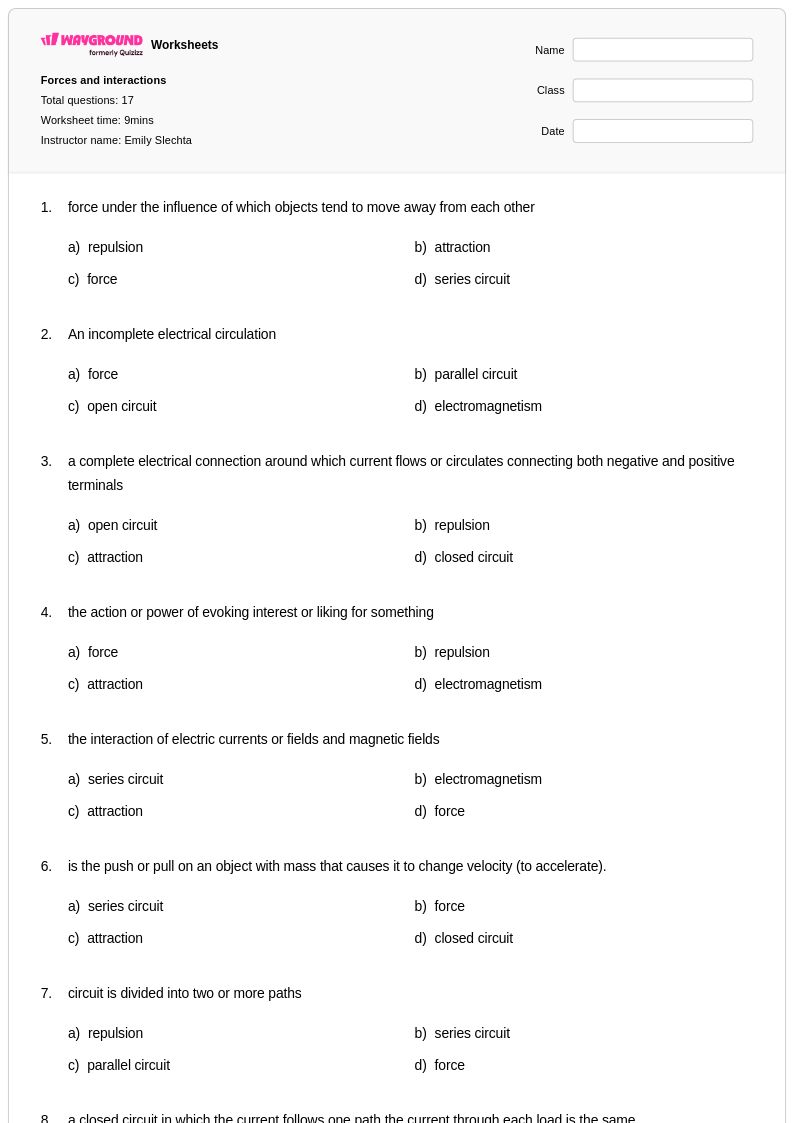
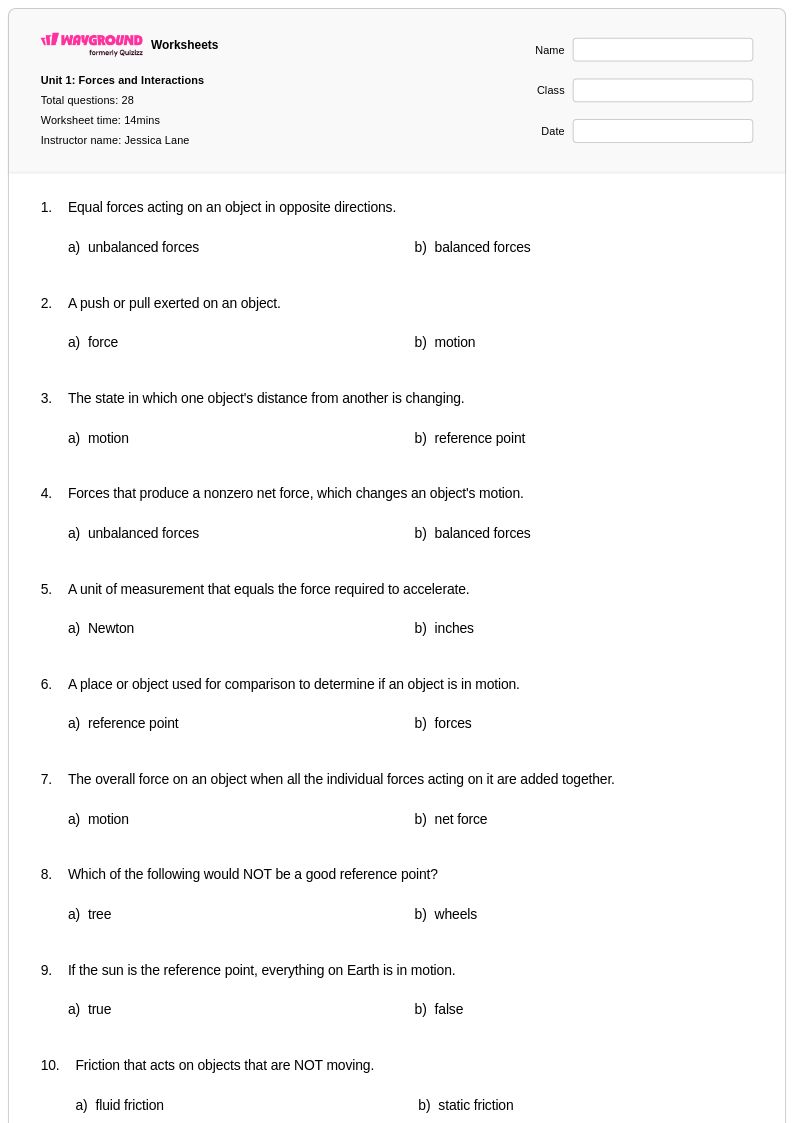
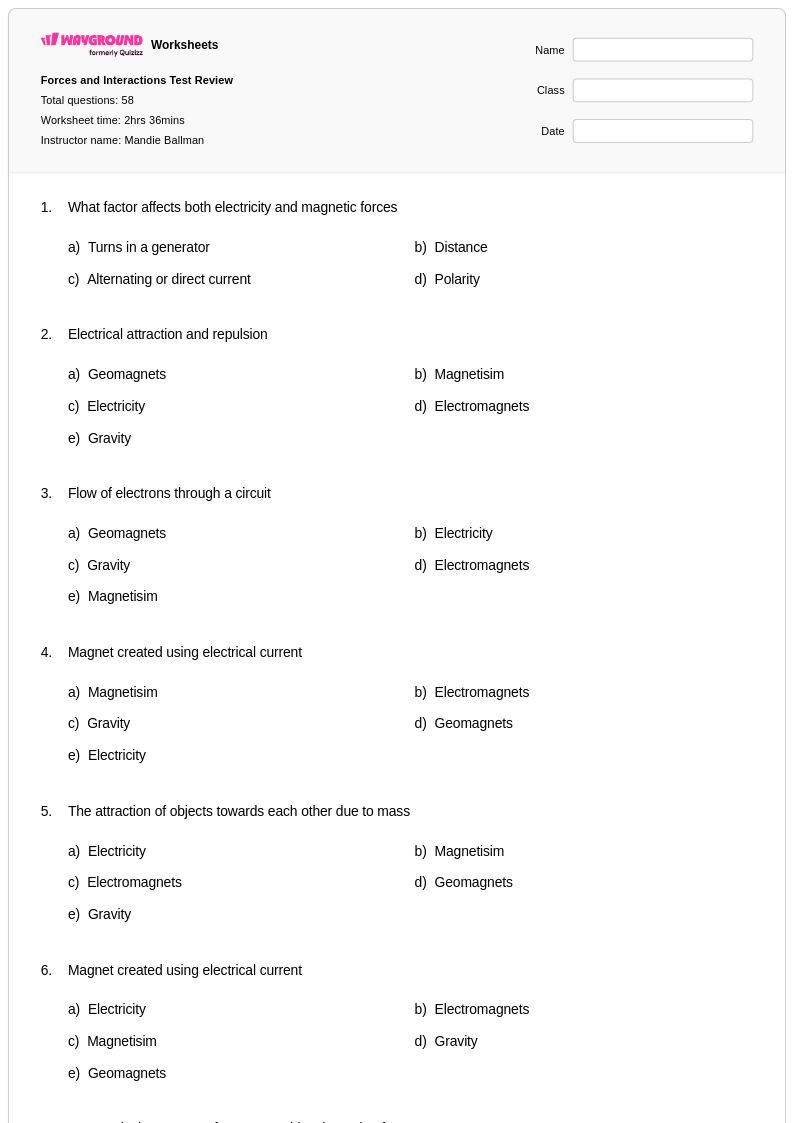
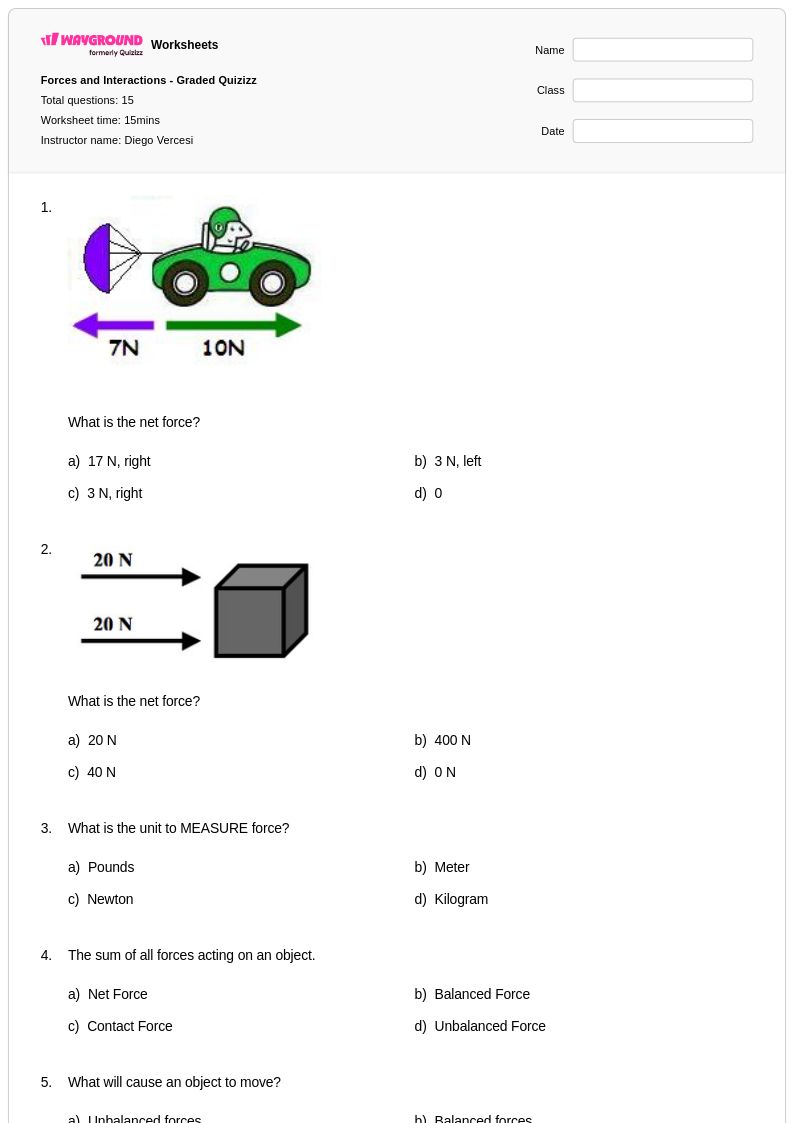
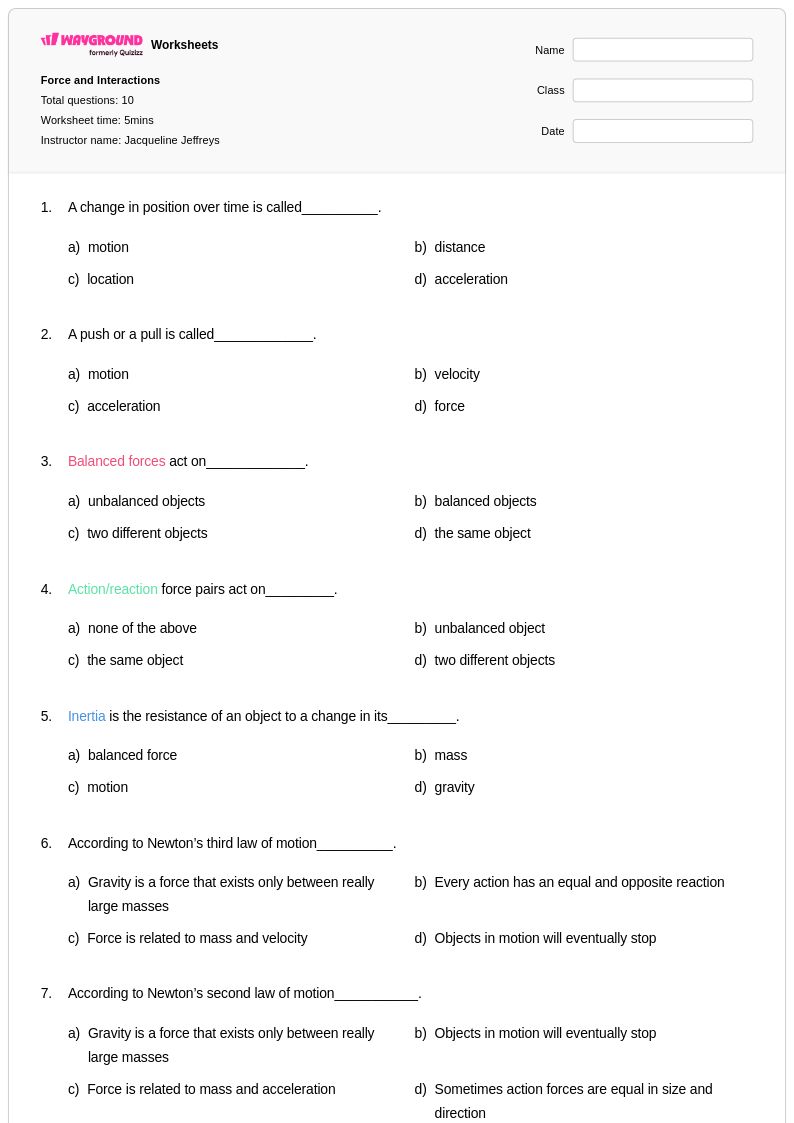
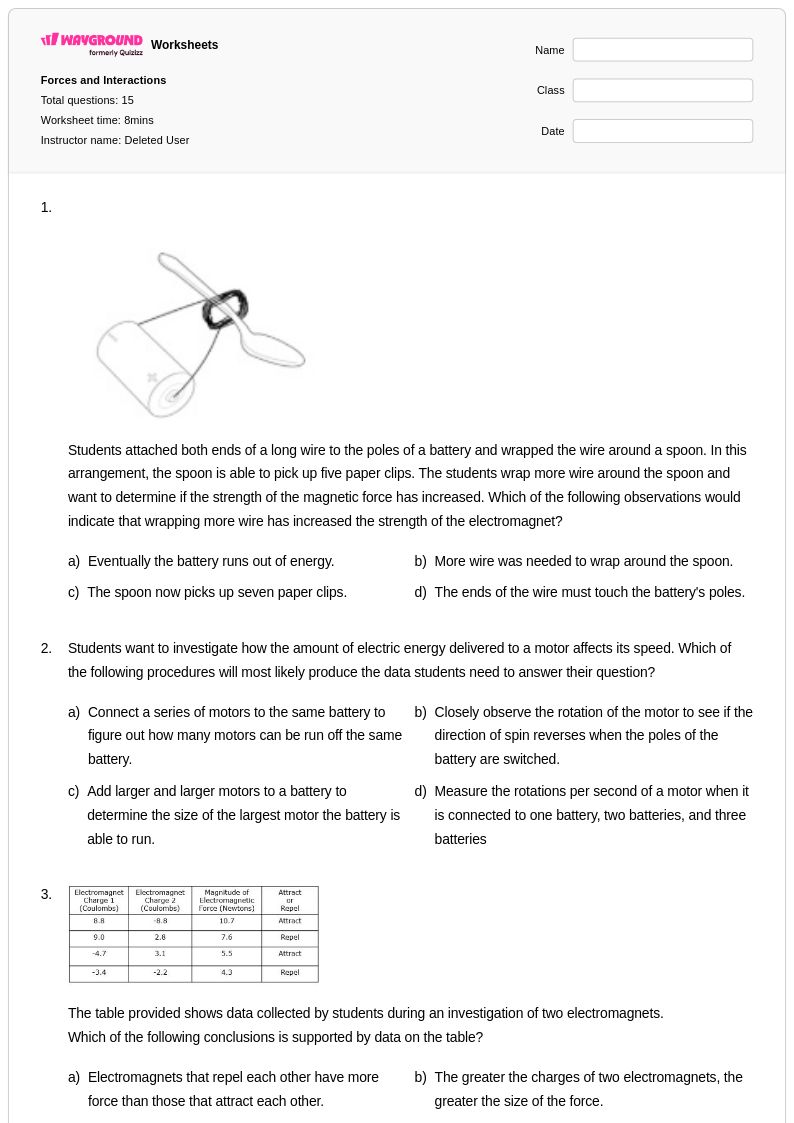
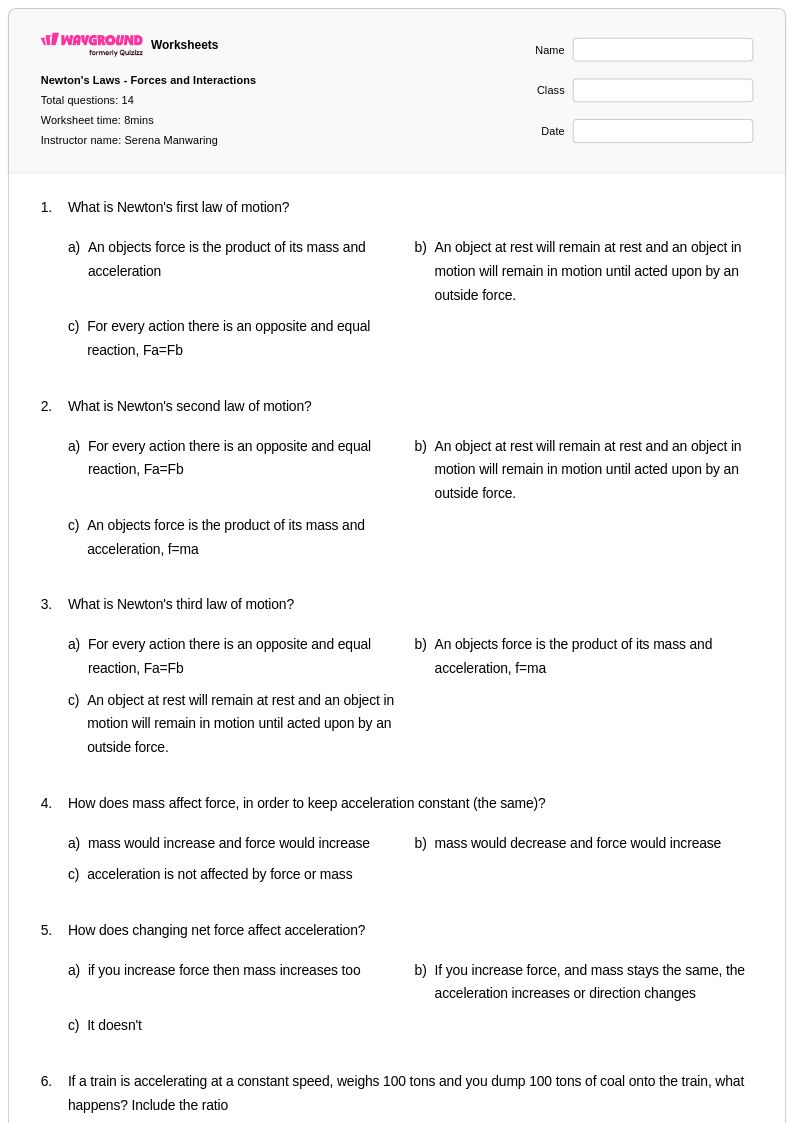
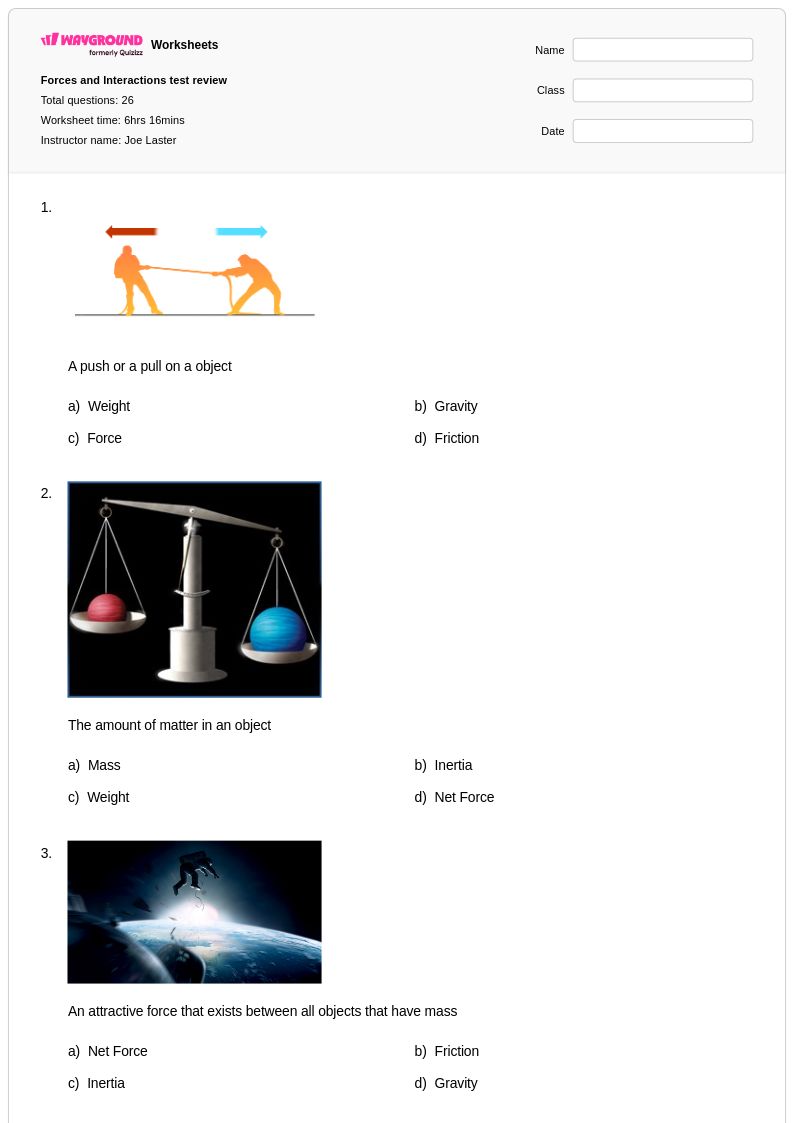
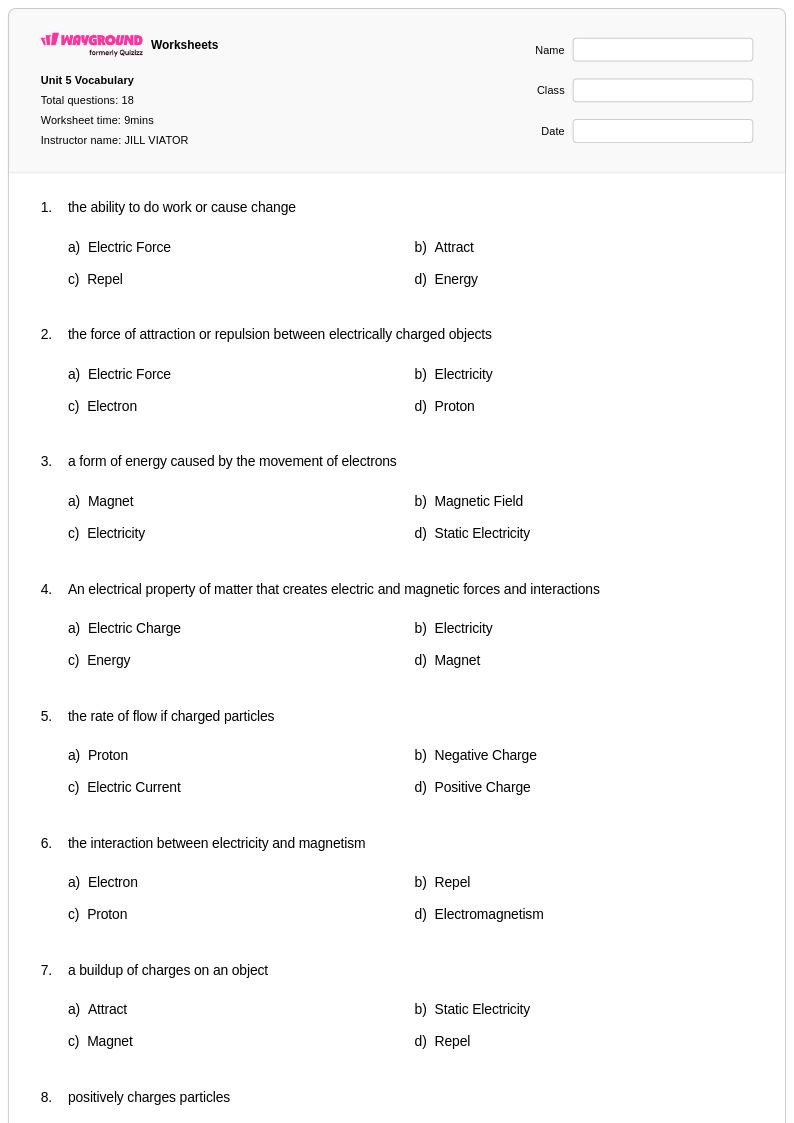
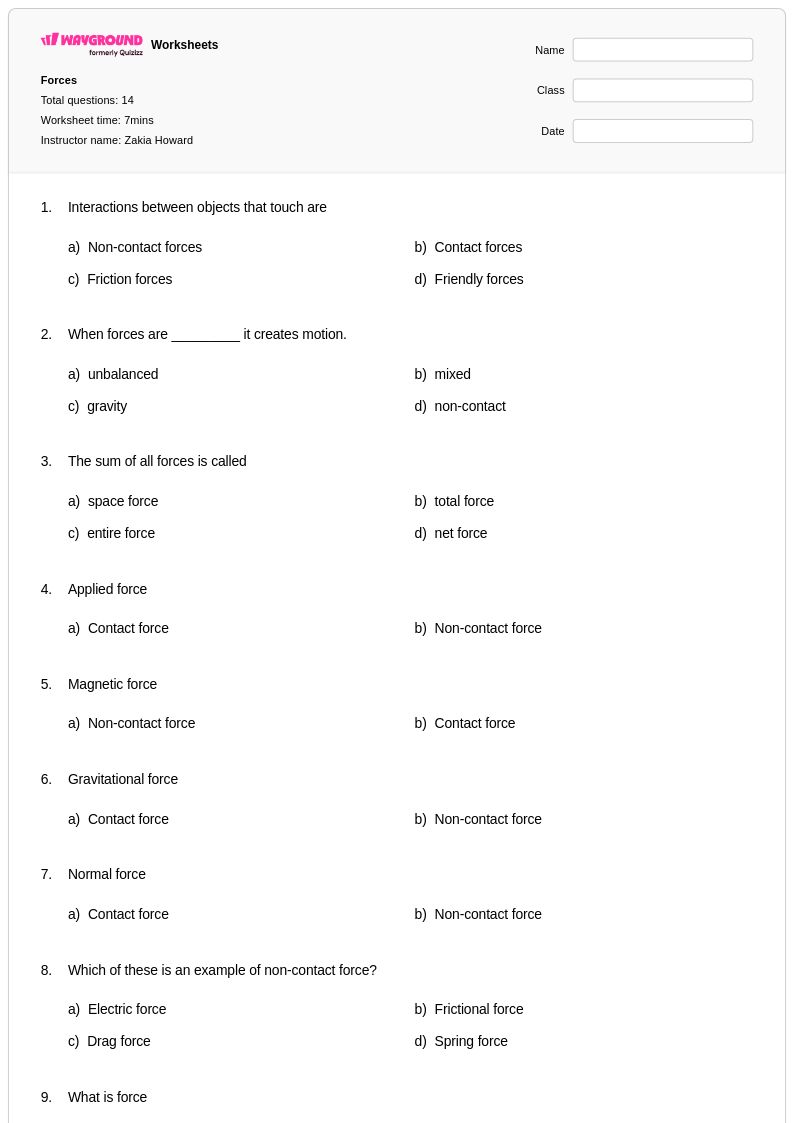
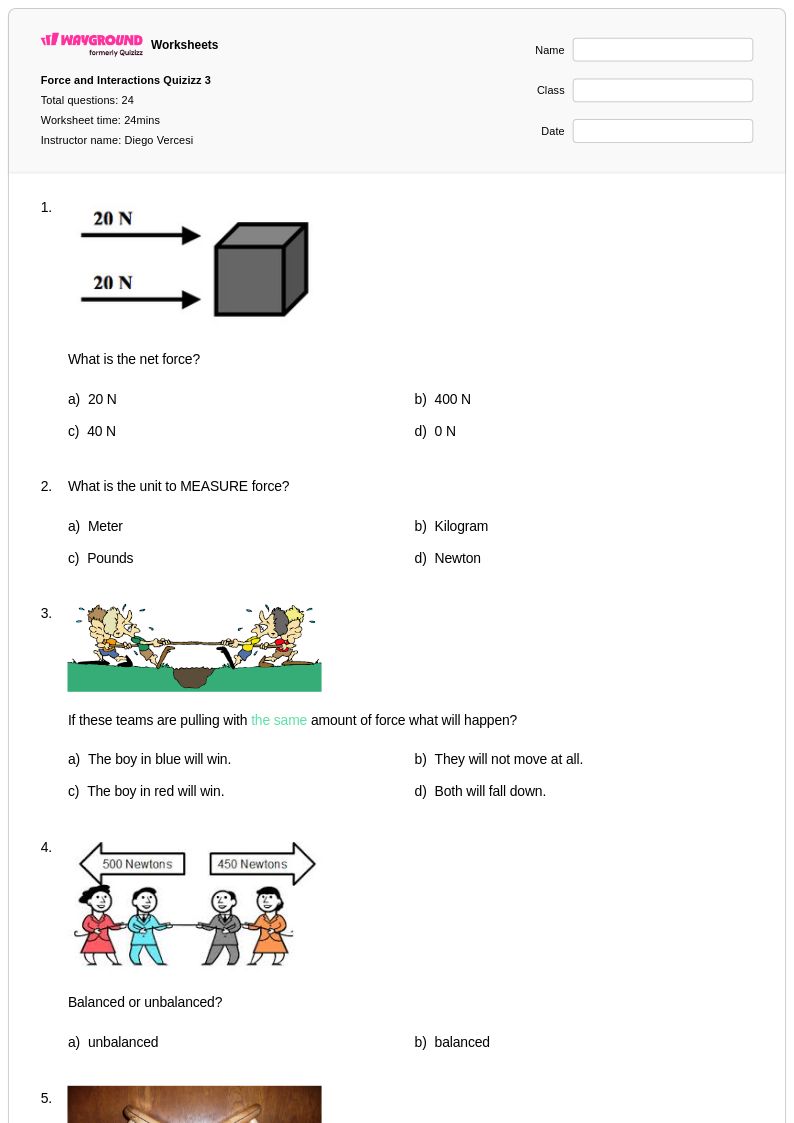
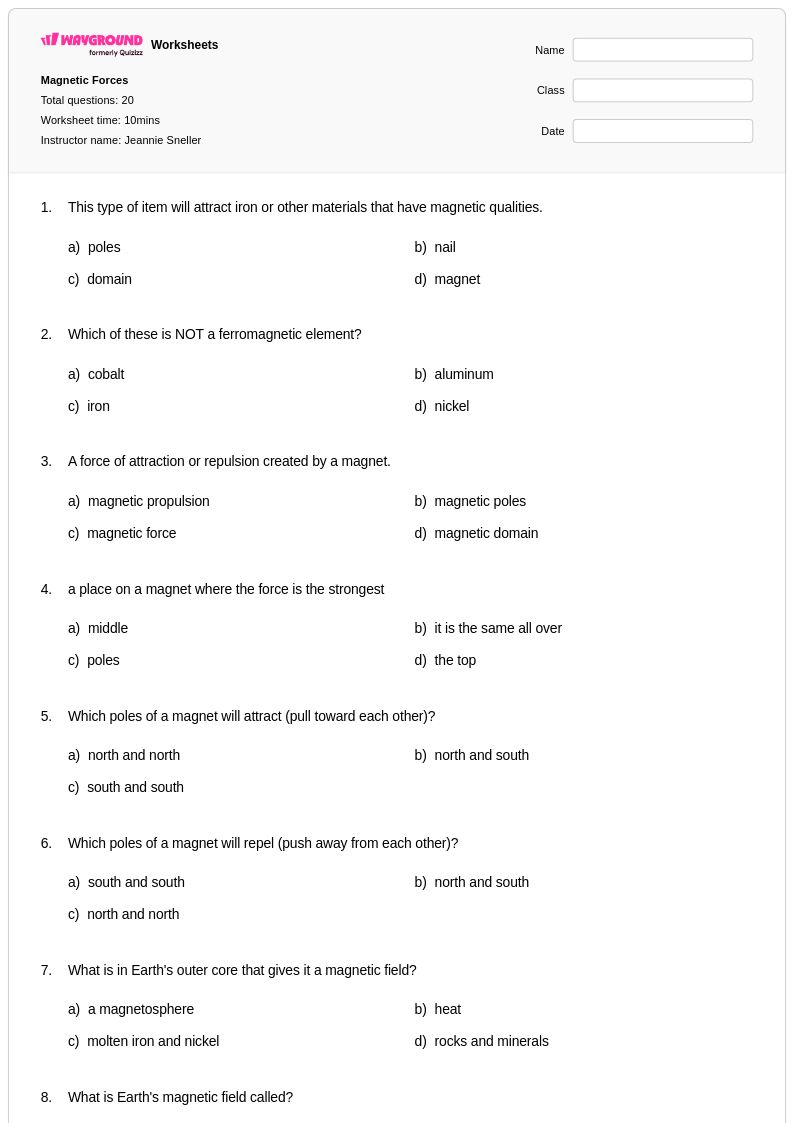
Forces and Interactions worksheets for Class 6 students provide comprehensive practice with fundamental physical science concepts that form the foundation of scientific understanding. These educational resources help students develop critical thinking skills as they explore how objects interact through pushes, pulls, and various types of forces including gravity, friction, and magnetism. The worksheets feature carefully designed practice problems that guide students through identifying balanced and unbalanced forces, predicting motion outcomes, and analyzing real-world scenarios where multiple forces act simultaneously. Each printable resource includes detailed answer keys that support both independent learning and classroom instruction, while the free pdf format ensures accessibility for diverse learning environments where students need structured practice with force diagrams, motion analysis, and scientific reasoning.
Wayground, formerly Quizizz, empowers educators with an extensive collection of teacher-created Forces and Interactions worksheets that streamline lesson planning and differentiated instruction for Class 6 physical science curricula. The platform's millions of resources include standards-aligned materials that can be easily filtered by specific learning objectives, difficulty levels, and instructional focus areas to match diverse classroom needs. Teachers benefit from robust customization tools that allow modification of existing worksheets or creation of entirely new practice sets, while the dual availability in both printable pdf and interactive digital formats provides flexibility for various teaching scenarios. These comprehensive worksheet collections support effective remediation for struggling learners, enrichment opportunities for advanced students, and consistent skill practice that reinforces conceptual understanding of how forces influence motion and interactions in the physical world.
FAQs
How do I teach forces and interactions to elementary and middle school students?
Begin with contact forces students can feel and observe -- pushes, pulls, and friction -- using hands-on demonstrations before introducing non-contact forces like gravity and magnetism. Use worksheets that ask students to identify force pairs in everyday scenarios such as a ball rolling across a surface or a book resting on a table, building intuition before formalizing Newton's Laws. By grades 6-8, transition to quantitative problems where students calculate net force, predict motion direction, and apply Newton's Second Law using F=ma.
What exercises help students practice Newton's Laws and net force calculations?
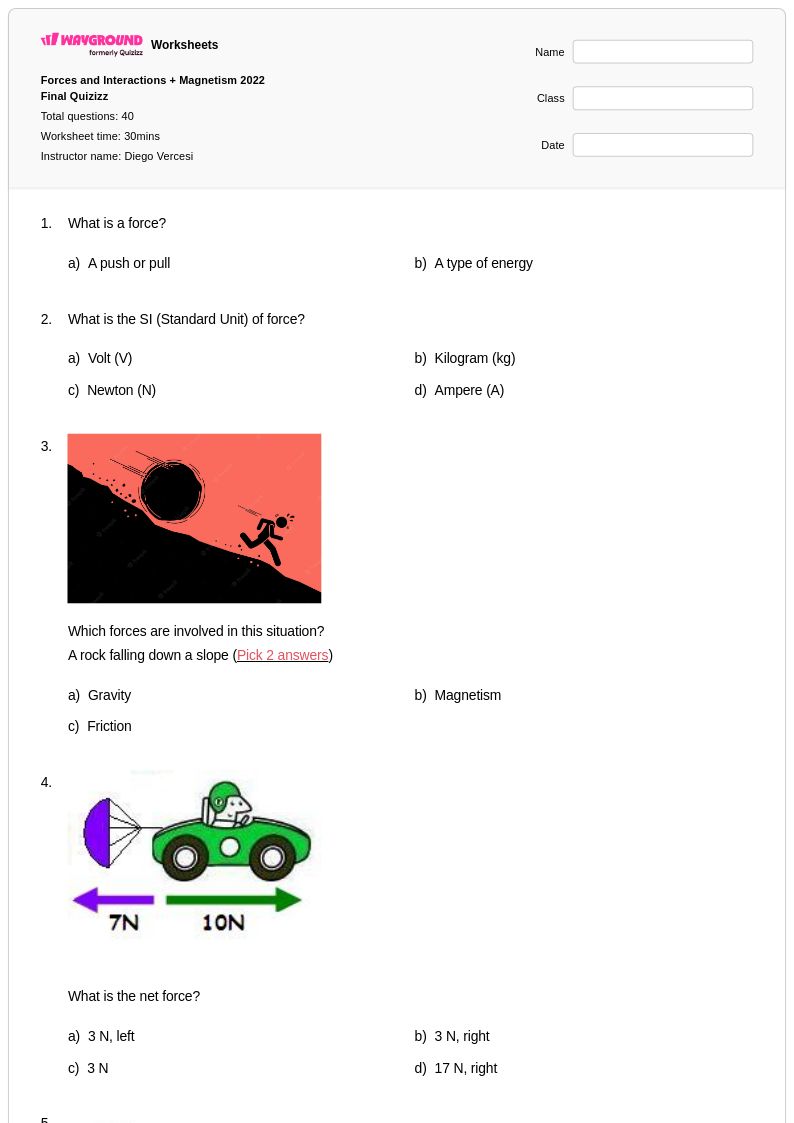
Start with worksheets that present free-body diagrams and ask students to identify all forces acting on an object, then determine the direction and magnitude of the net force. Progress to problems requiring students to calculate acceleration using Newton's Second Law when given mass and applied forces, and then to scenarios involving friction and air resistance that require subtracting opposing forces. Action-reaction pair identification worksheets where students label Newton's Third Law force pairs in real-world situations build conceptual understanding alongside mathematical fluency.
What common mistakes do students make when learning about forces?
The most persistent misconception is that objects in motion require a continuous applied force to keep moving, contradicting Newton's First Law of inertia. Students also commonly believe that heavier objects always fall faster than lighter ones, failing to separate the effects of gravity from air resistance. When calculating net force, students frequently add all forces without accounting for direction, treating force as a scalar quantity rather than a vector, which leads to incorrect predictions about whether an object accelerates, decelerates, or remains at rest.
How do I assess student understanding of forces and Newton's Laws?
Use worksheets that present a scenario -- such as a car braking on a highway or two students pushing a box from opposite sides -- and require students to draw a free-body diagram, calculate the net force, and predict the resulting motion. Questions that ask students to explain why a specific Newton's Law applies to a given situation, rather than just identifying which law it is, reveal whether they understand the underlying principle. Including problems where students must determine what force is missing from an incomplete diagram tests analytical reasoning beyond formula application.
How do I use forces and interactions worksheets in my classroom?
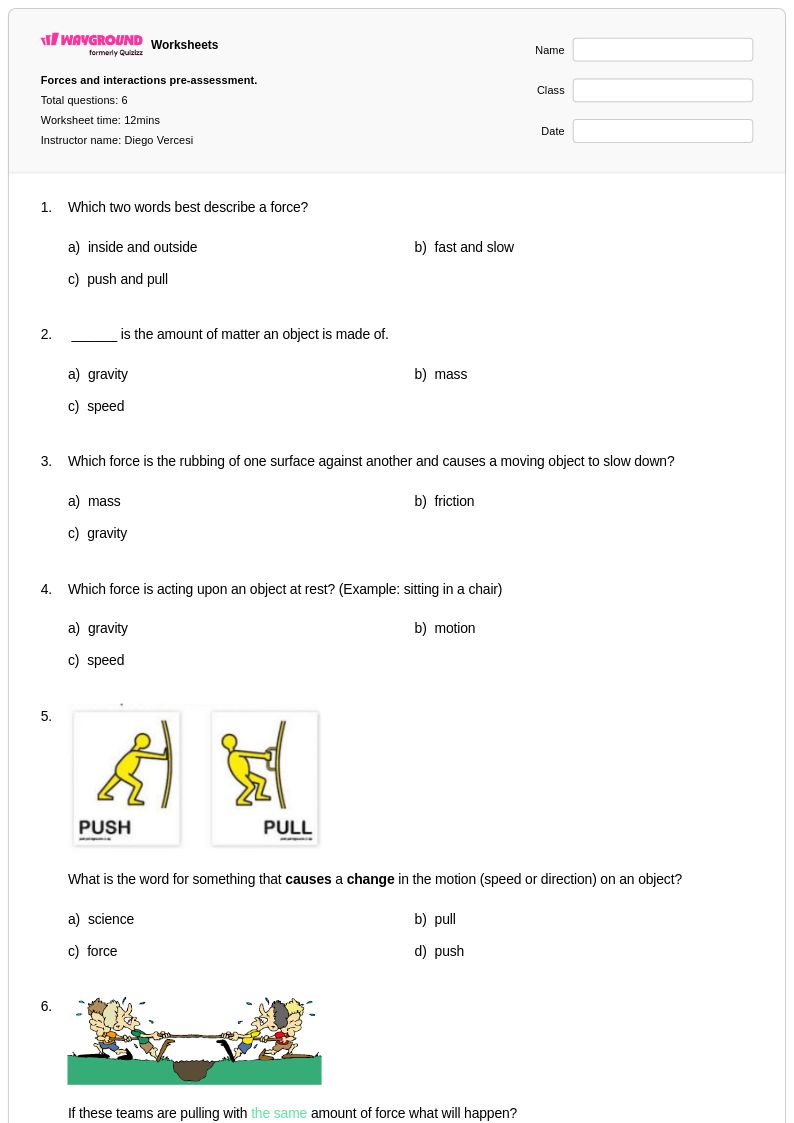
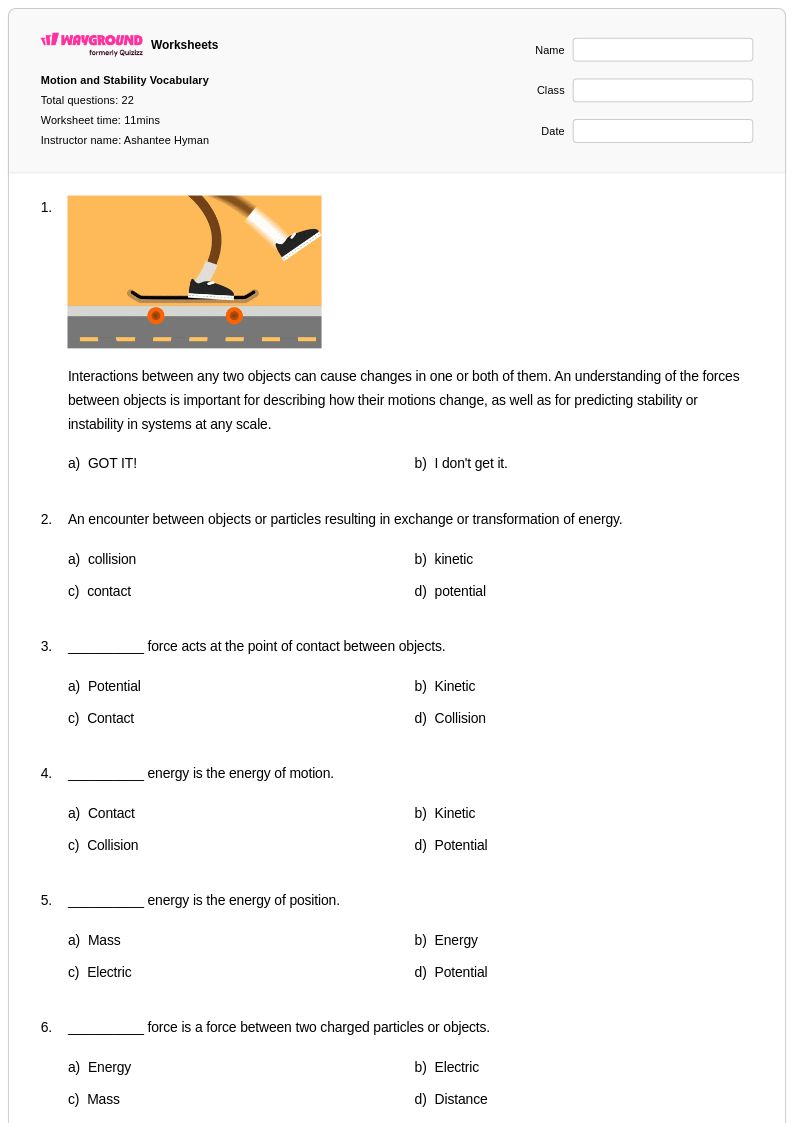
These worksheets are available as printable PDFs for traditional classroom use and in digital formats for technology-integrated learning environments. Use vocabulary worksheets as pre-assessment tools to gauge familiarity with terms like friction, gravity, net force, and inertia before beginning the unit. Assign calculation-based force worksheets as post-demonstration practice after students have observed force interactions firsthand, and use comprehensive unit review worksheets as study guides before summative assessments.
How do I differentiate forces instruction for different grade levels?
For grades 2-4, focus on worksheets that use qualitative descriptions -- identifying pushes and pulls, sorting contact versus non-contact forces, and predicting which direction an object will move based on a picture. Grades 5-6 benefit from worksheets introducing balanced versus unbalanced forces using simple diagrams and basic net force addition. For grades 7-8, assign quantitative problems involving Newton's Second Law calculations, friction coefficients, and multi-force free-body diagrams that require vector addition to determine net force and acceleration.
What grade levels are forces and interactions worksheets appropriate for?
Forces and interactions worksheets span grades 2 through 8, with content complexity scaled to each level. Grades 2-3 cover pushes, pulls, and basic observations of motion changes caused by forces. Grades 4-5 introduce gravity, friction, and the concept of balanced versus unbalanced forces. Grades 6-8 require applying Newton's three Laws of Motion, calculating net force and acceleration, analyzing free-body diagrams, and investigating how friction and air resistance affect motion, aligned to Next Generation Science Standards for Physical Science.