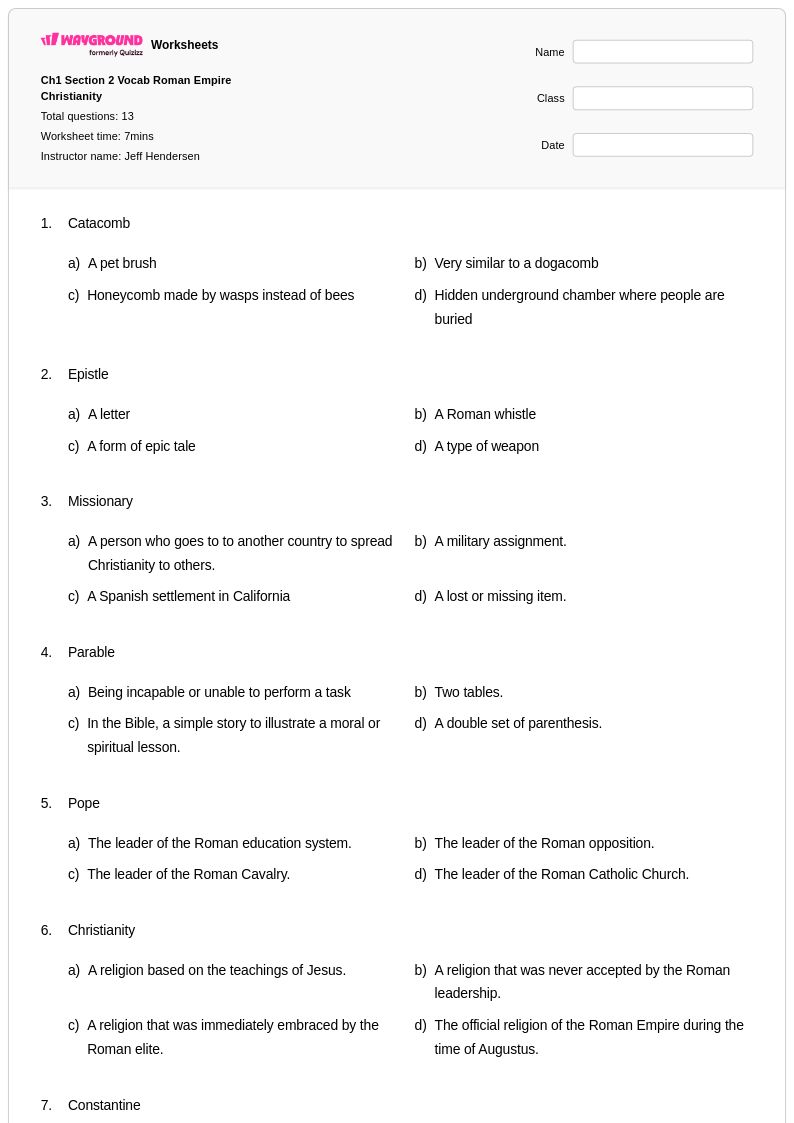
Free Printable Four Marks of the Church worksheets
Explore Wayground's free printable worksheets and practice problems on the Four Marks of the Church, helping students understand the essential characteristics of unity, holiness, catholicity, and apostolicity with comprehensive PDF resources and answer keys.
Explore printable Four Marks of the Church worksheets
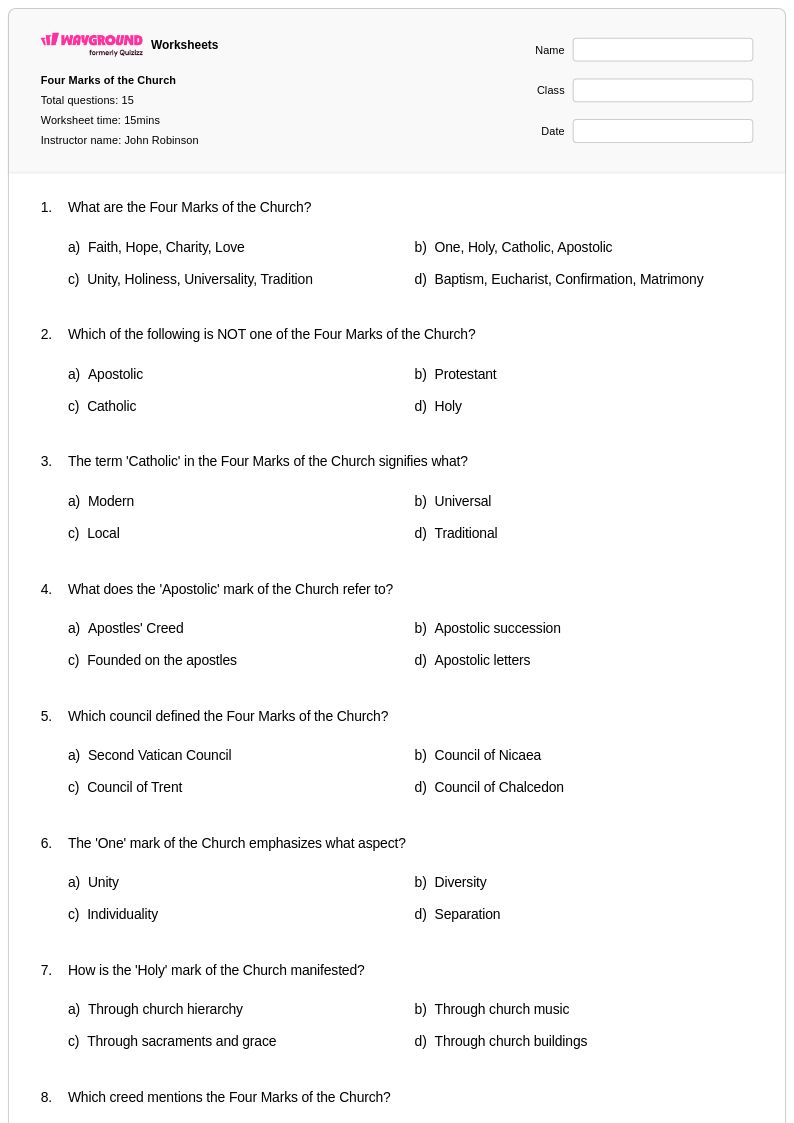
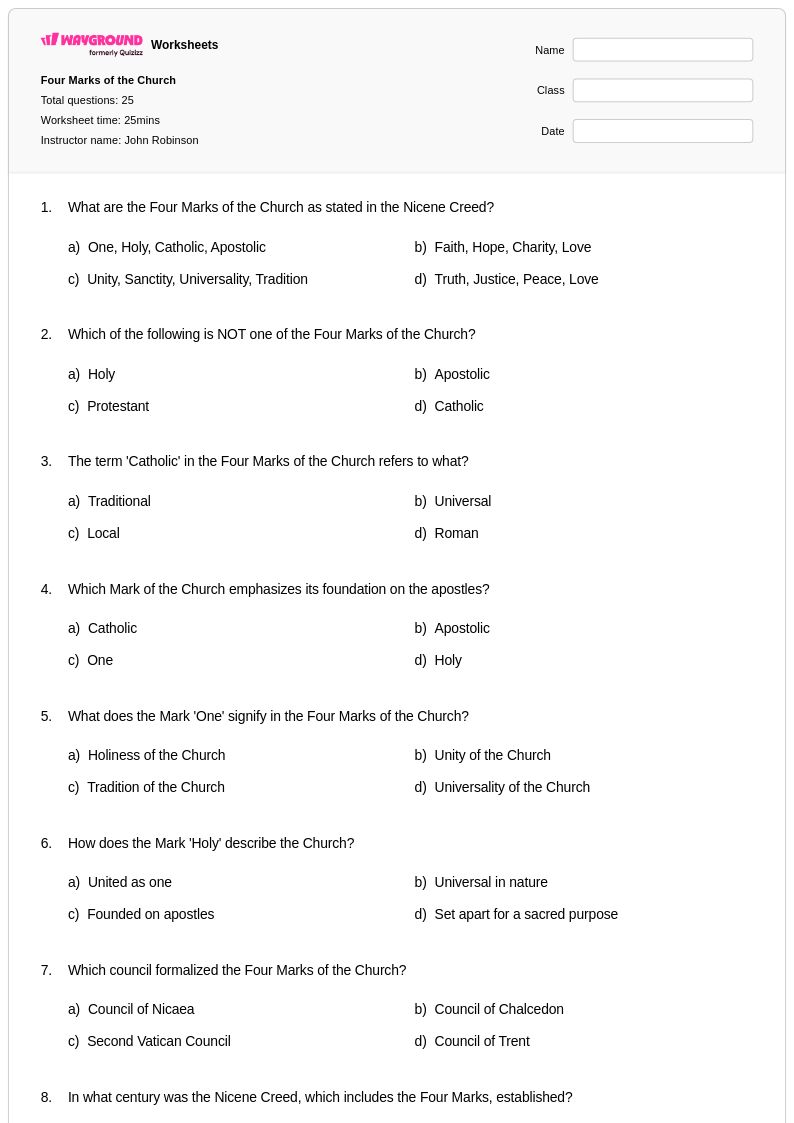
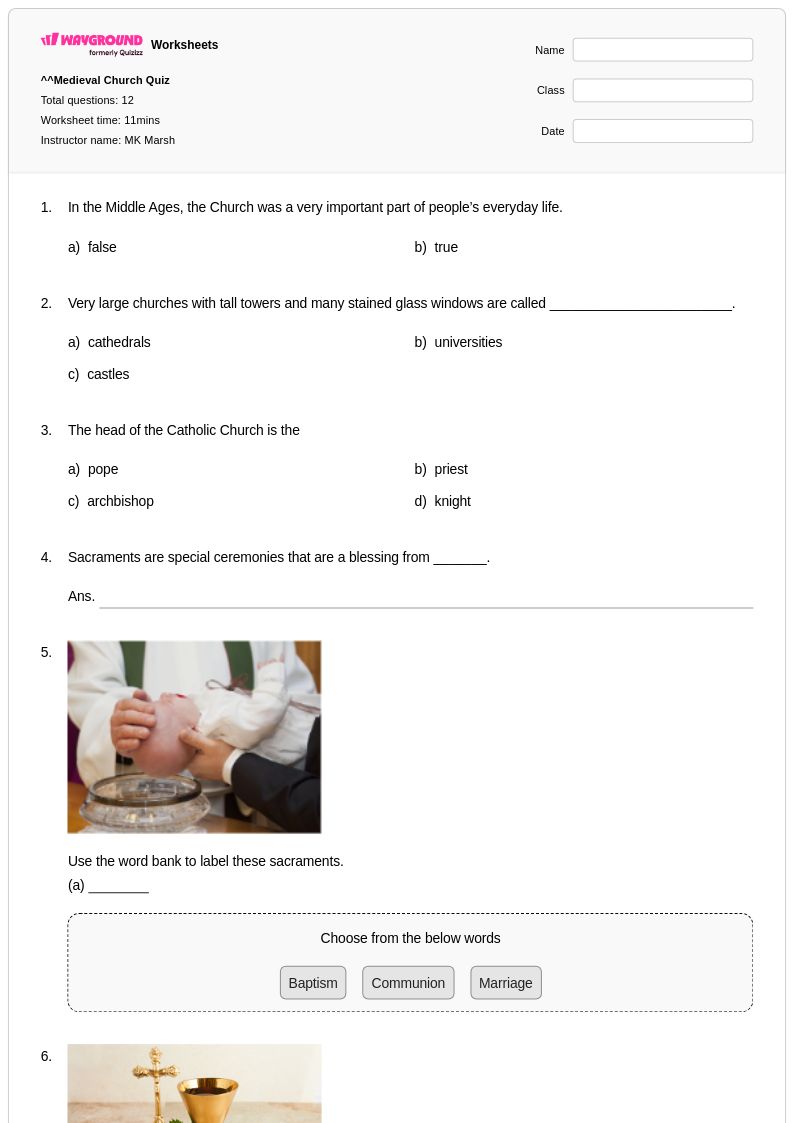
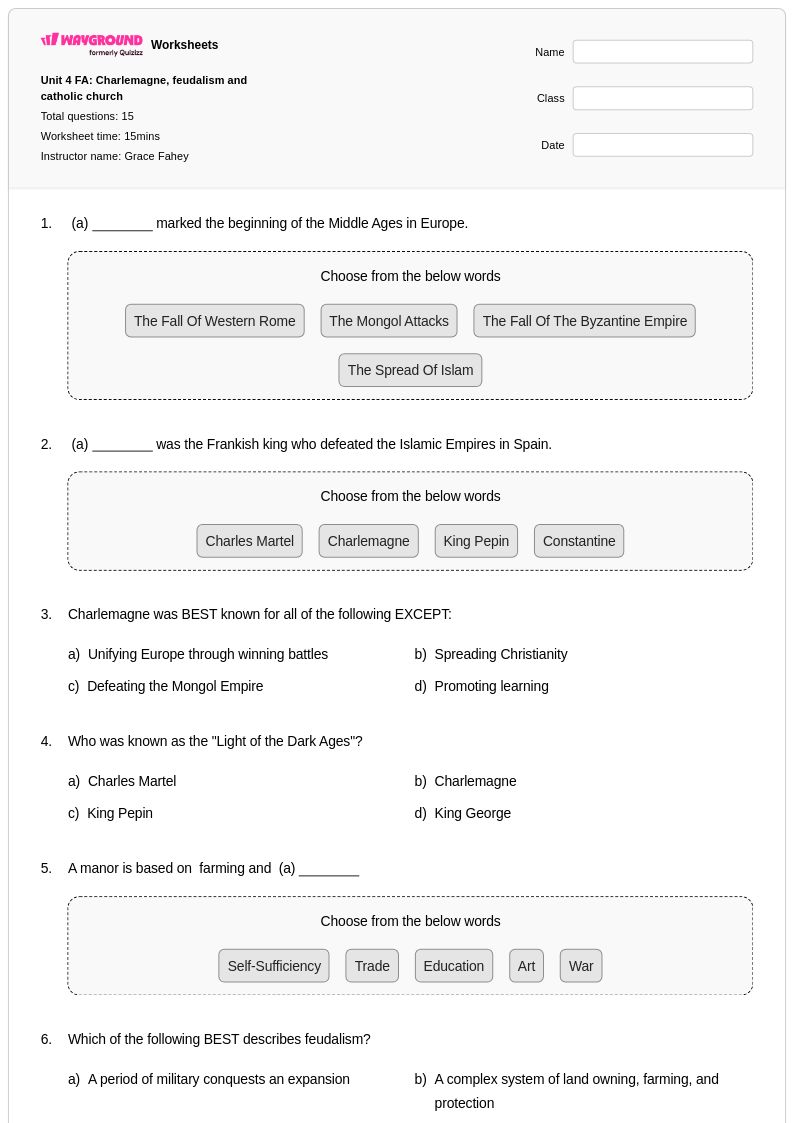
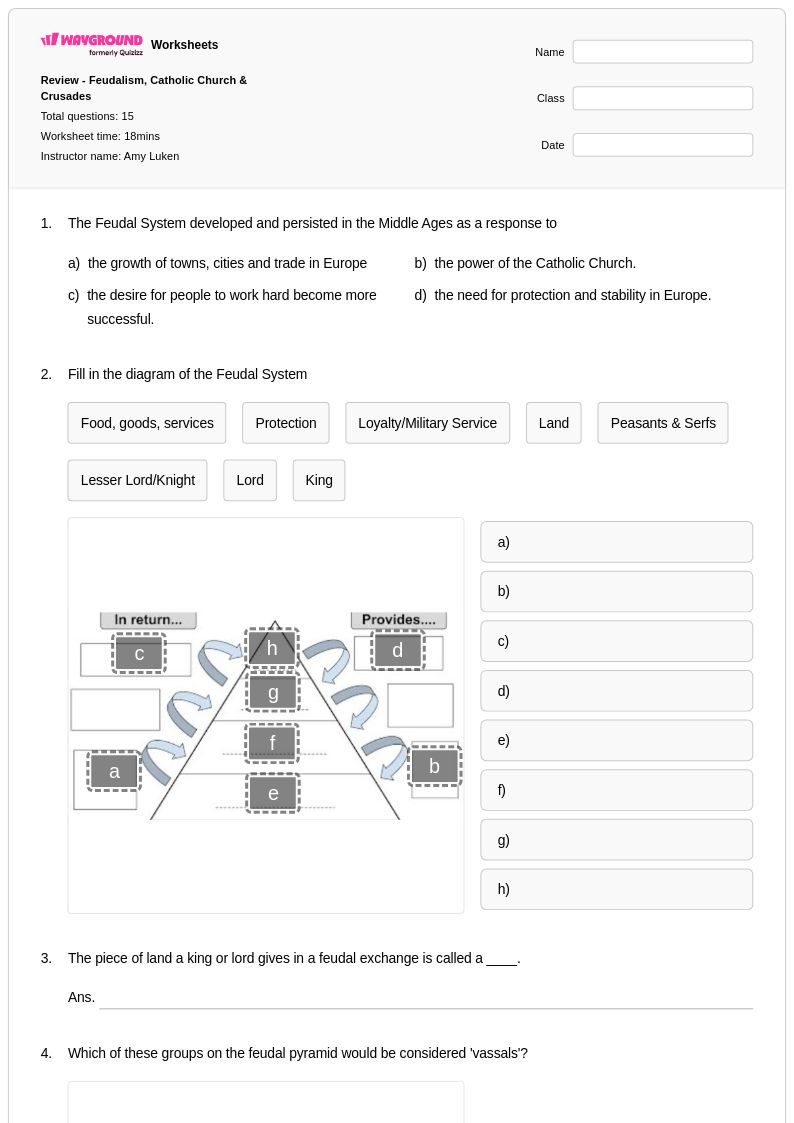
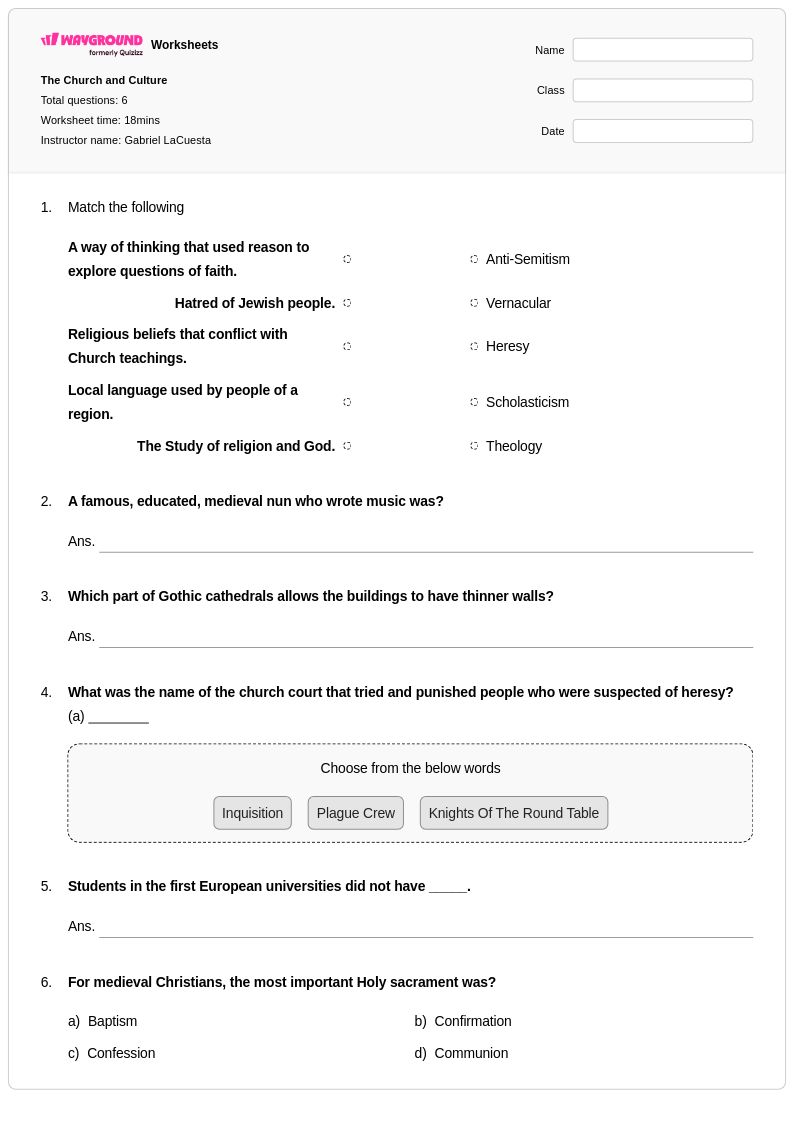
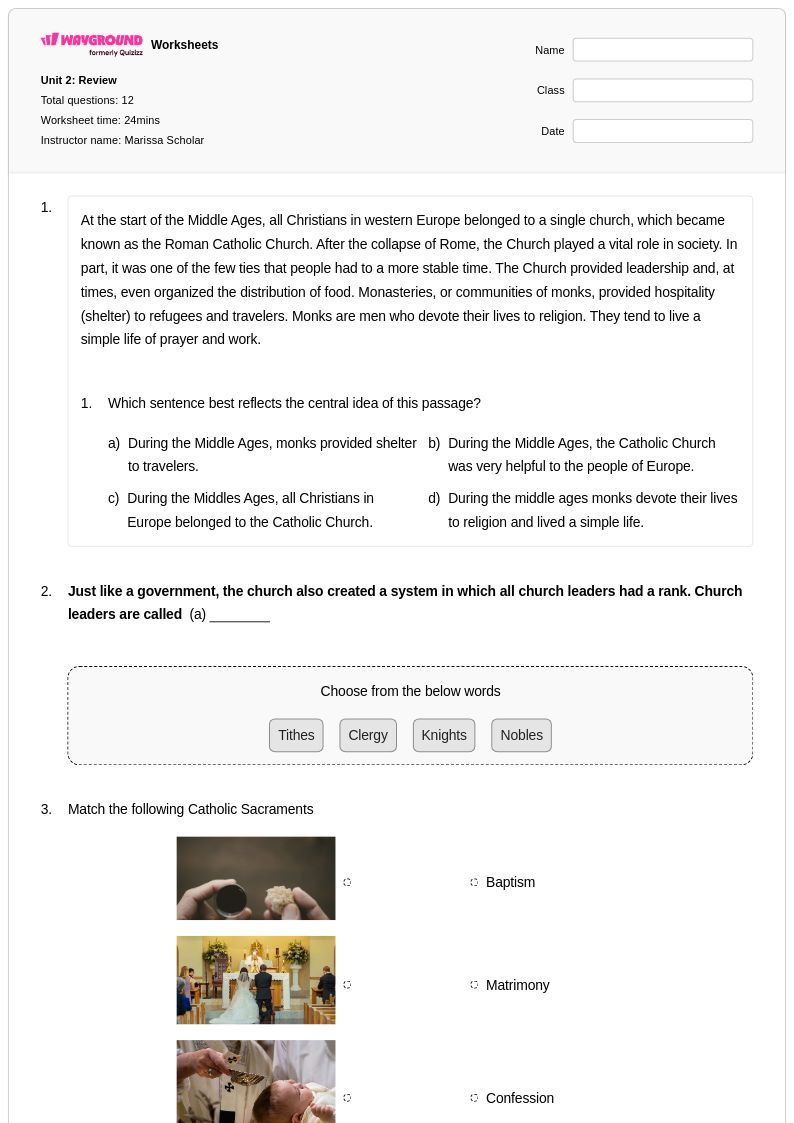
Four Marks of the Church worksheets available through Wayground (formerly Quizizz) provide comprehensive resources for students exploring the essential characteristics that define the Catholic Church: one, holy, catholic, and apostolic. These educational materials strengthen critical thinking skills as students examine how these four marks manifest in Church history, doctrine, and contemporary practice. The worksheets feature practice problems that guide learners through analyzing primary sources, comparing theological concepts, and connecting abstract principles to real-world examples. Each resource includes detailed answer keys to support independent learning and assessment, while printable pdf formats ensure accessibility for diverse classroom needs. These free educational tools help students develop deeper understanding of ecclesiastical concepts while building analytical skills essential for advanced social studies coursework.
Wayground (formerly Quizizz) supports educators with an extensive collection of teacher-created resources focused on the Four Marks of the Church, drawing from millions of professionally developed materials that align with social studies and religious education standards. The platform's robust search and filtering capabilities enable teachers to quickly locate worksheets that match specific learning objectives, whether addressing basic identification of the four marks or complex theological analysis. Advanced differentiation tools allow educators to customize content for varying ability levels, supporting both remediation for struggling learners and enrichment opportunities for advanced students. Available in both printable and digital formats including downloadable pdfs, these resources facilitate flexible lesson planning while providing consistent skill practice opportunities that help students master challenging theological concepts through structured, academically rigorous activities.
FAQs
How do I teach the Four Marks of the Church to students?
Teaching the Four Marks of the Church works best when each mark — one, holy, catholic, and apostolic — is introduced with concrete historical and doctrinal examples rather than abstract definitions alone. Start by having students connect each mark to a specific moment in Church history, such as tracing apostolicity through apostolic succession or examining how catholicity reflects the Church's universal mission. Pairing direct instruction with structured analysis of primary sources or theological texts helps students move from simple identification to genuine understanding.
What exercises help students practice identifying the Four Marks of the Church?
Effective practice exercises include scenario-based questions where students identify which mark is being illustrated, comparative analysis tasks that ask students to distinguish between the four marks, and short-answer prompts that require connecting each mark to real-world examples from Church history or contemporary practice. Worksheets that guide students through analyzing primary sources and applying theological concepts to concrete situations are especially useful for reinforcing retention and critical thinking.
What common mistakes do students make when learning the Four Marks of the Church?
A frequent misconception is conflating 'catholic' (universal) as a mark with the proper noun 'Catholic' as a denominational label, which causes confusion when students encounter the Nicene Creed. Students also commonly struggle to distinguish 'one' from 'holy,' treating them as nearly synonymous rather than understanding that unity refers to structural and doctrinal coherence while holiness refers to the Church's divine origin and sanctifying mission. Explicitly addressing these distinctions during instruction, and using targeted practice questions that test each mark individually, helps correct these errors before assessment.
How do I use Four Marks of the Church worksheets effectively in my classroom?
Four Marks of the Church worksheets on Wayground are available as printable PDFs for traditional classroom use and in digital formats for technology-integrated environments, including the option to host them as a quiz directly on Wayground. For in-class use, the worksheets work well as guided practice after initial instruction or as independent review before an assessment. Digital formats are particularly useful for assigning homework or for students who need read-aloud or extended time accommodations, which can be configured individually through Wayground's student settings.
How can I differentiate Four Marks of the Church instruction for students at different ability levels?
For students who need additional support, focus practice on basic identification tasks — matching each mark to its definition or a simple historical example — before moving to analytical work. Advanced students benefit from tasks that require them to compare how each mark manifests across Church history and connect abstract theological principles to contemporary issues. Wayground's differentiation tools allow teachers to customize content for varying ability levels, supporting remediation and enrichment within the same class session.
How does the Four Marks of the Church fit into religious education and social studies standards?
The Four Marks of the Church is a core concept in Catholic religious education curricula, typically introduced in middle school and revisited with greater theological depth in high school. It also connects to social studies standards around world history, comparative religion, and the development of institutions, making it relevant in both confessional and academic contexts. Teachers in parochial schools and religious education programs will find it aligns with doctrine-focused learning objectives, while the analytical skills it develops — sourcing, comparing concepts, drawing conclusions — support broader academic literacy goals.