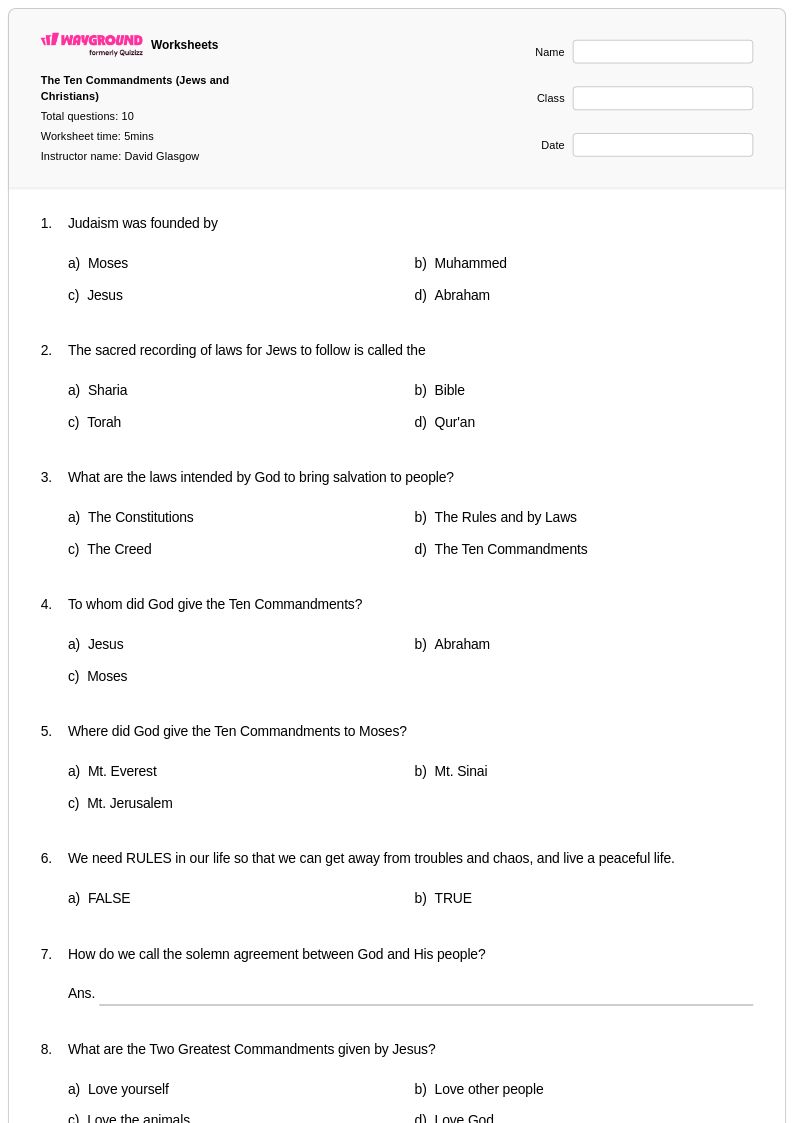
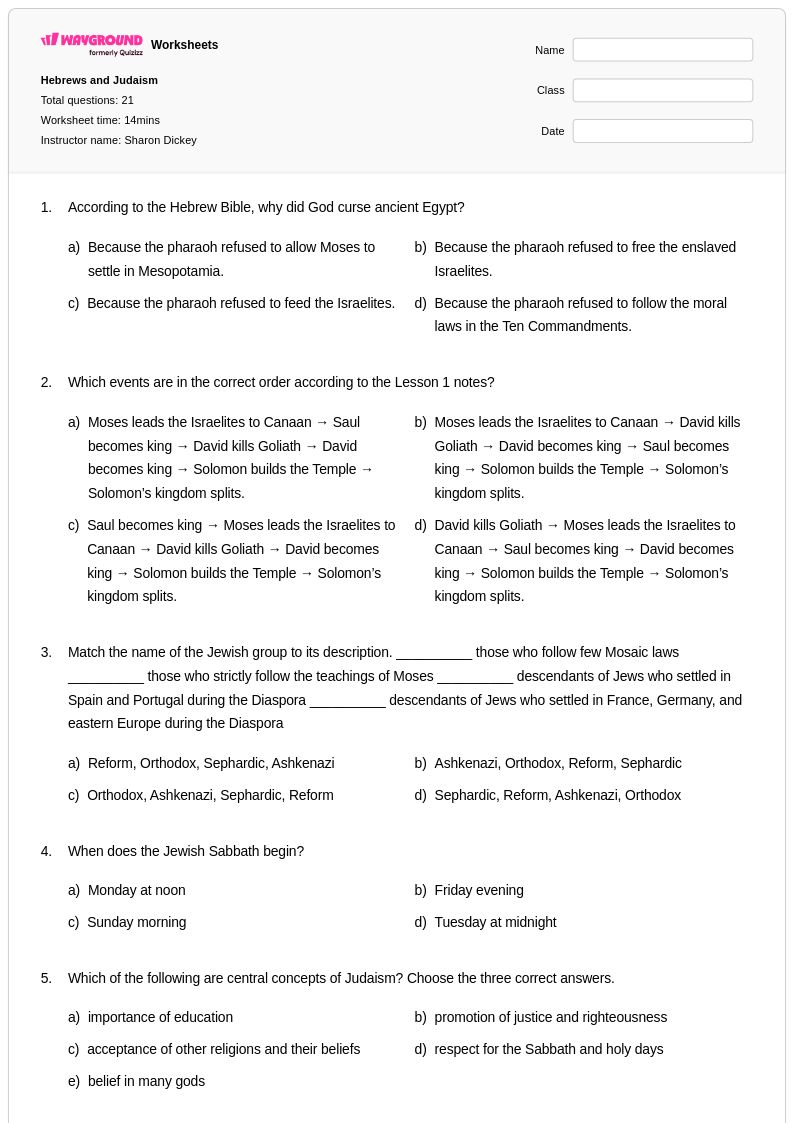
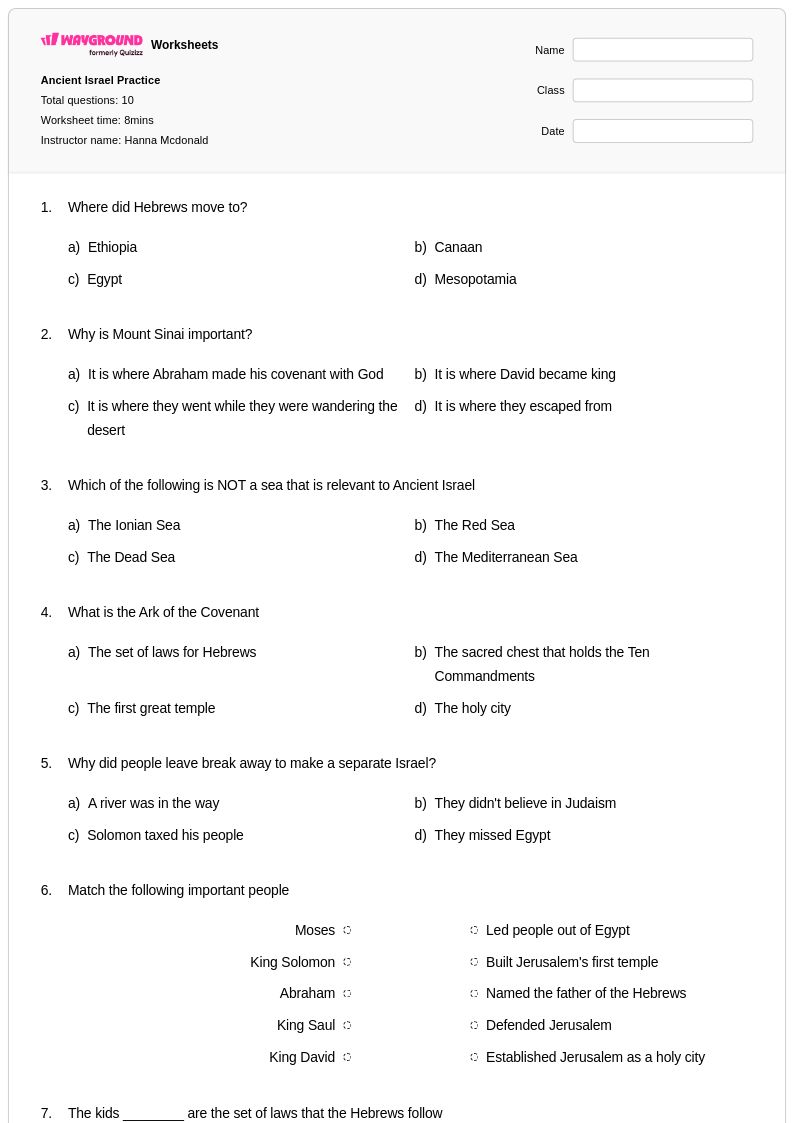
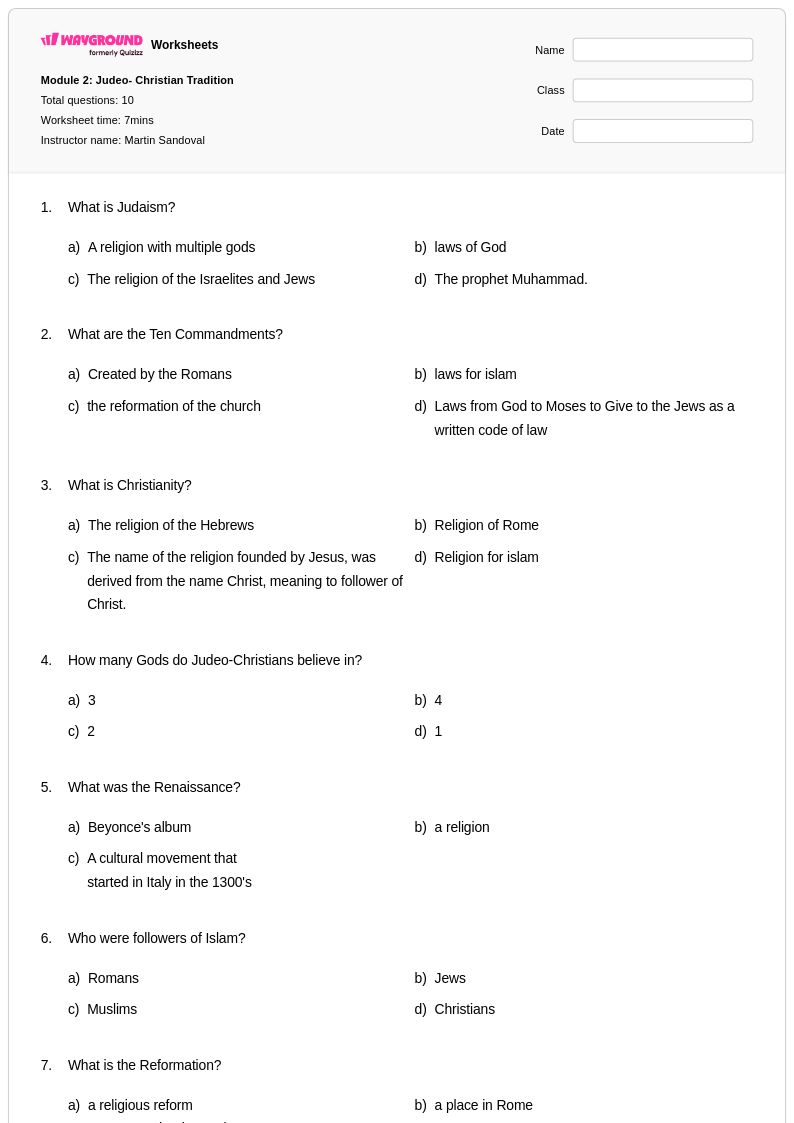
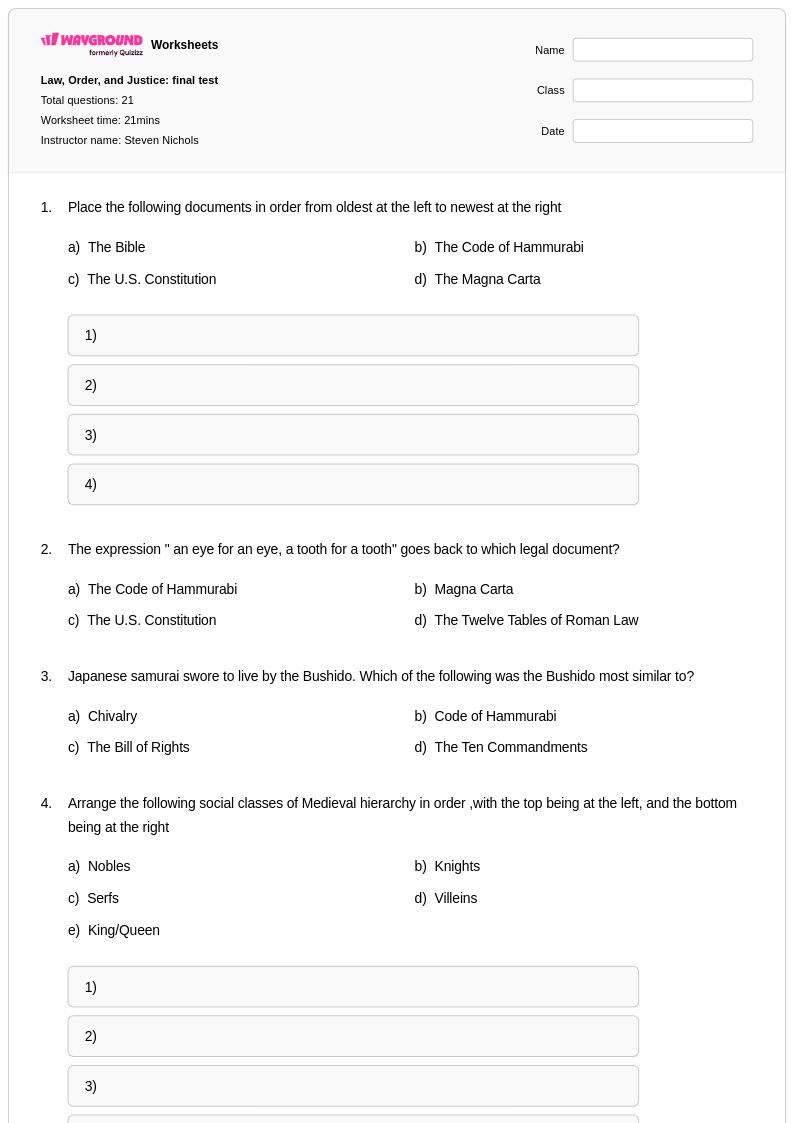
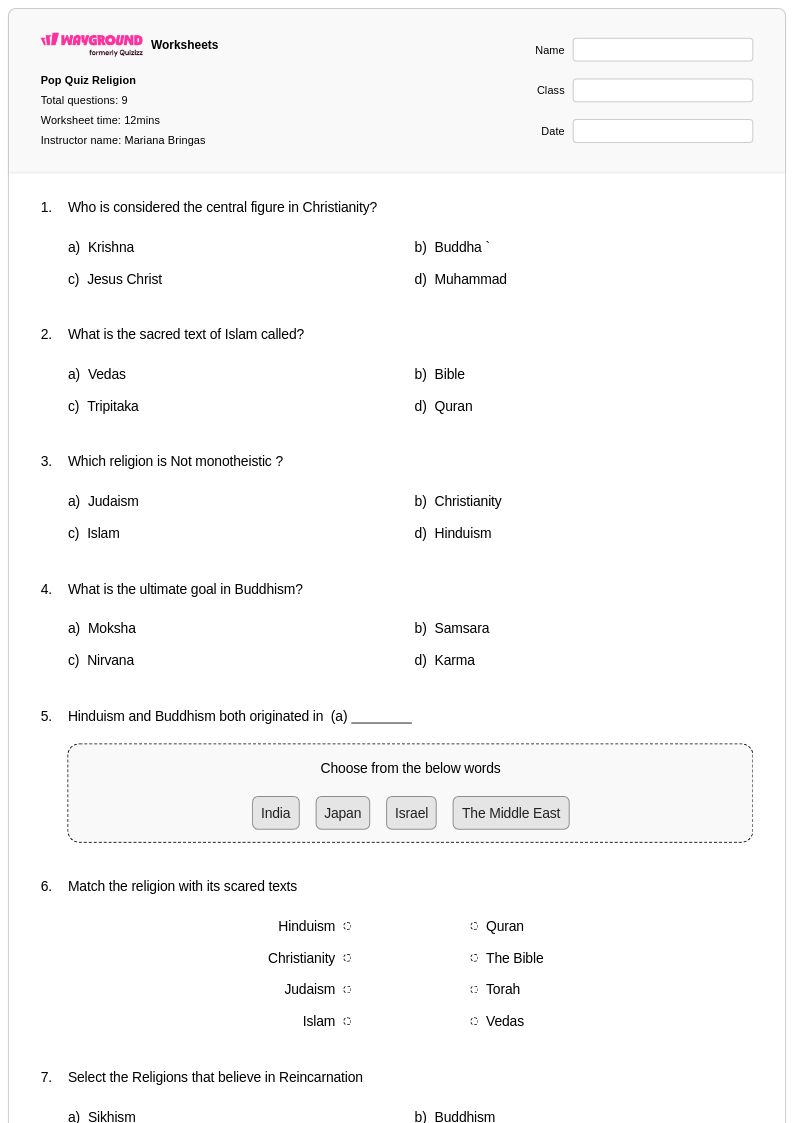
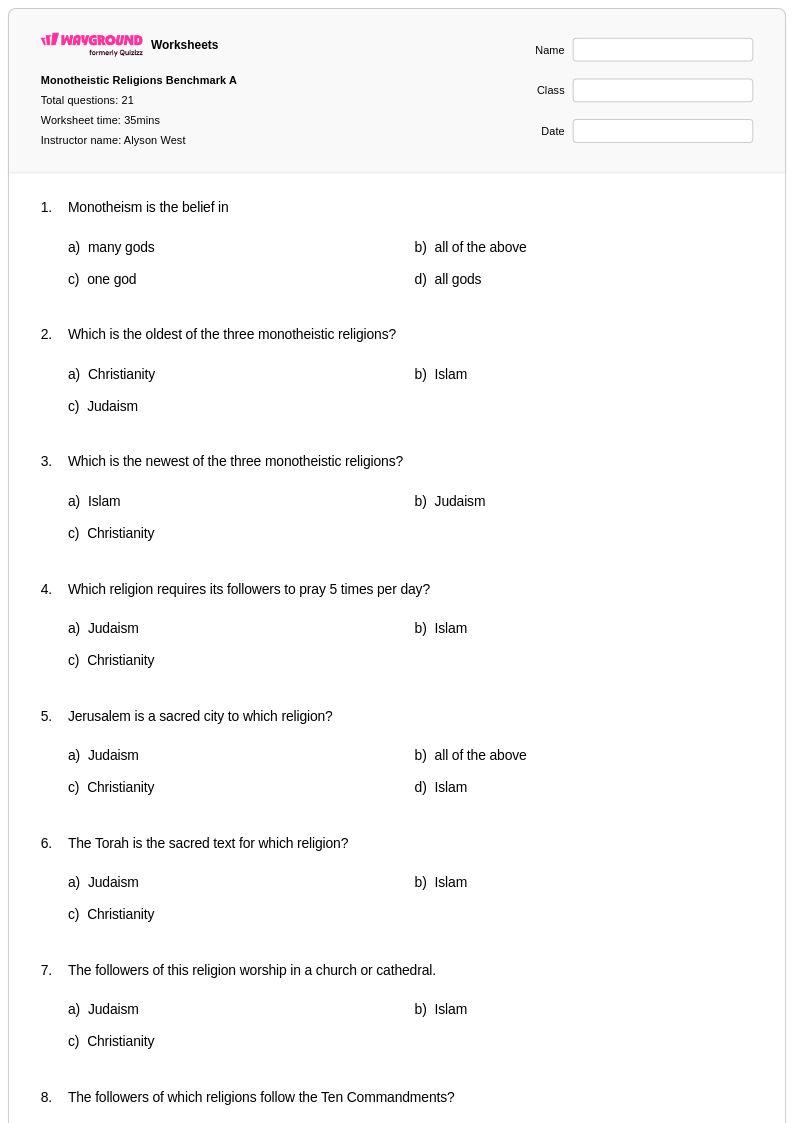
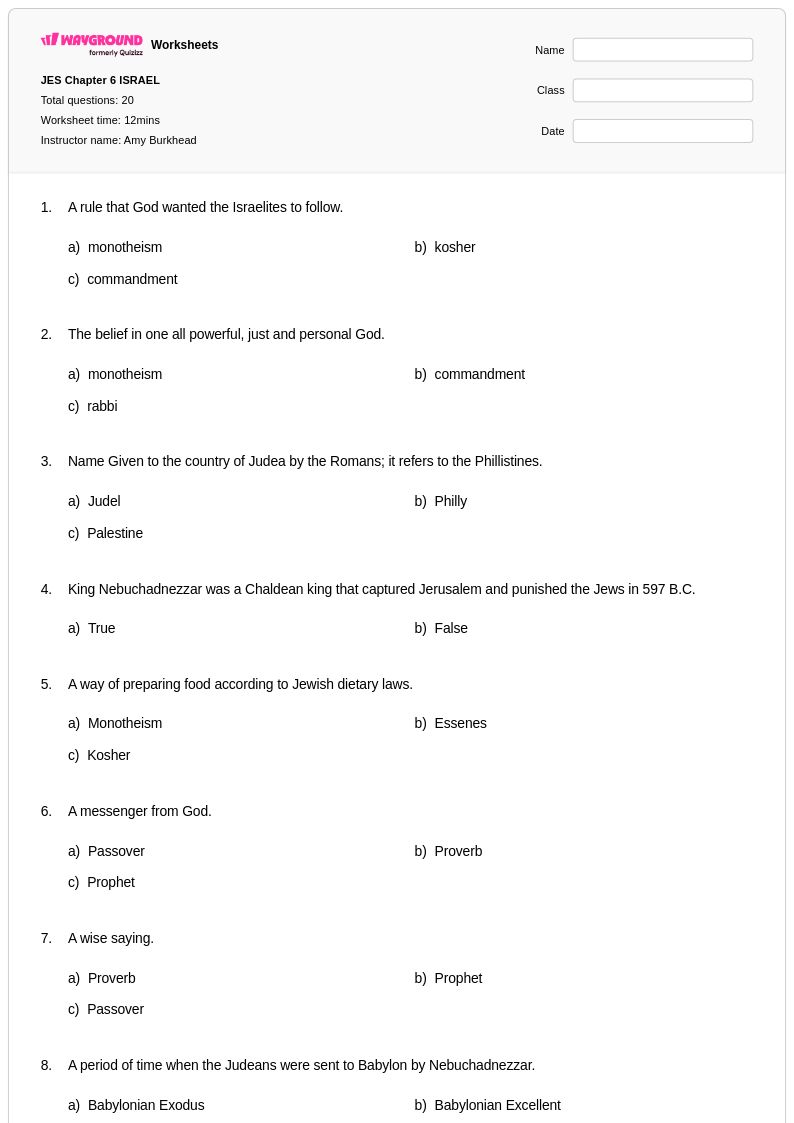
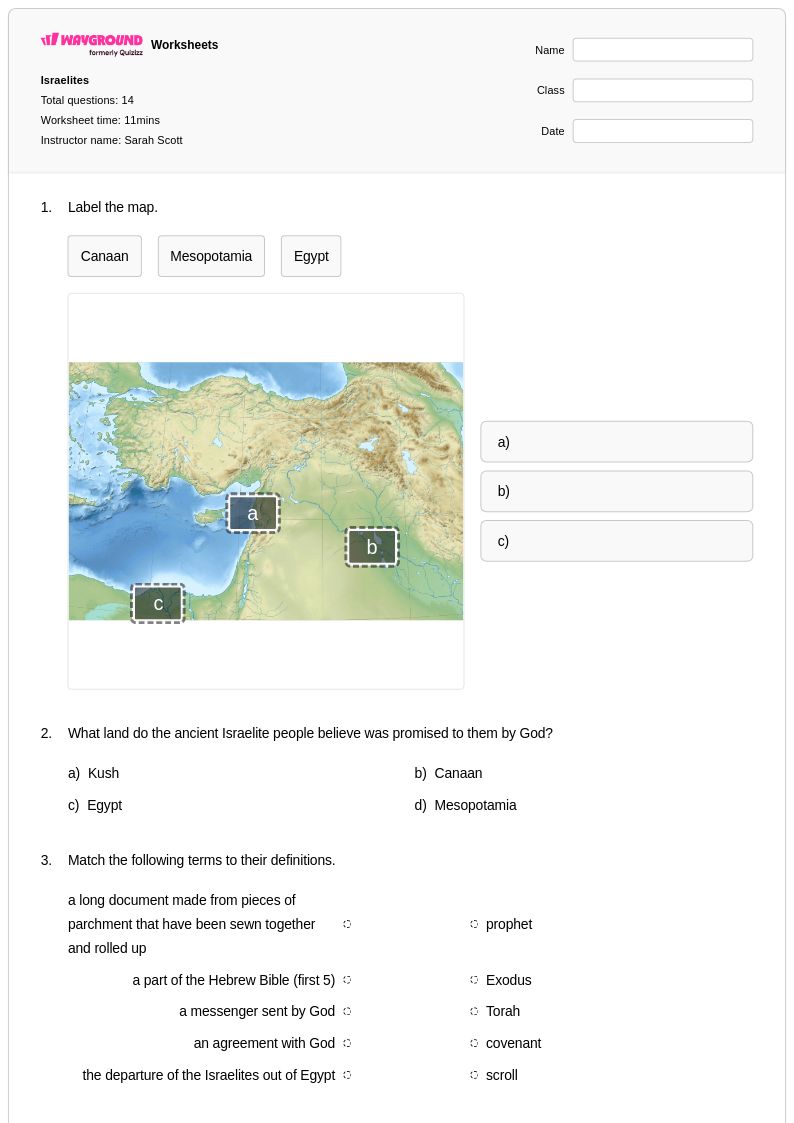
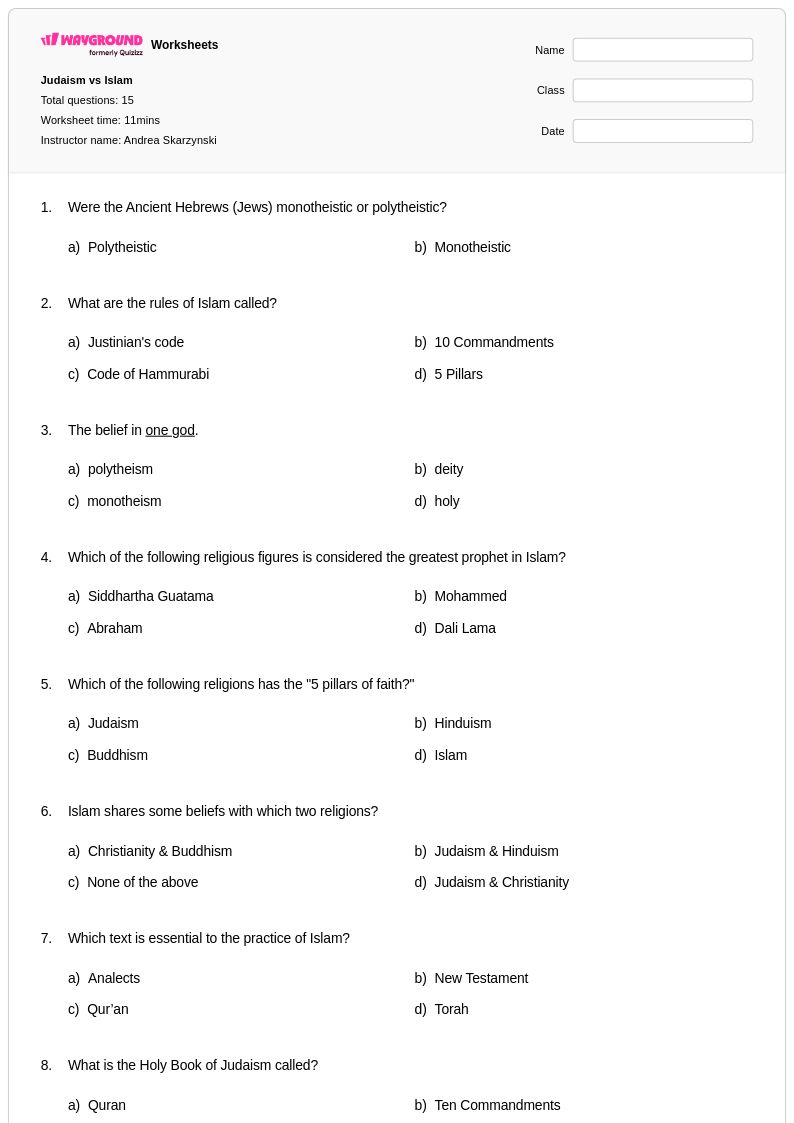
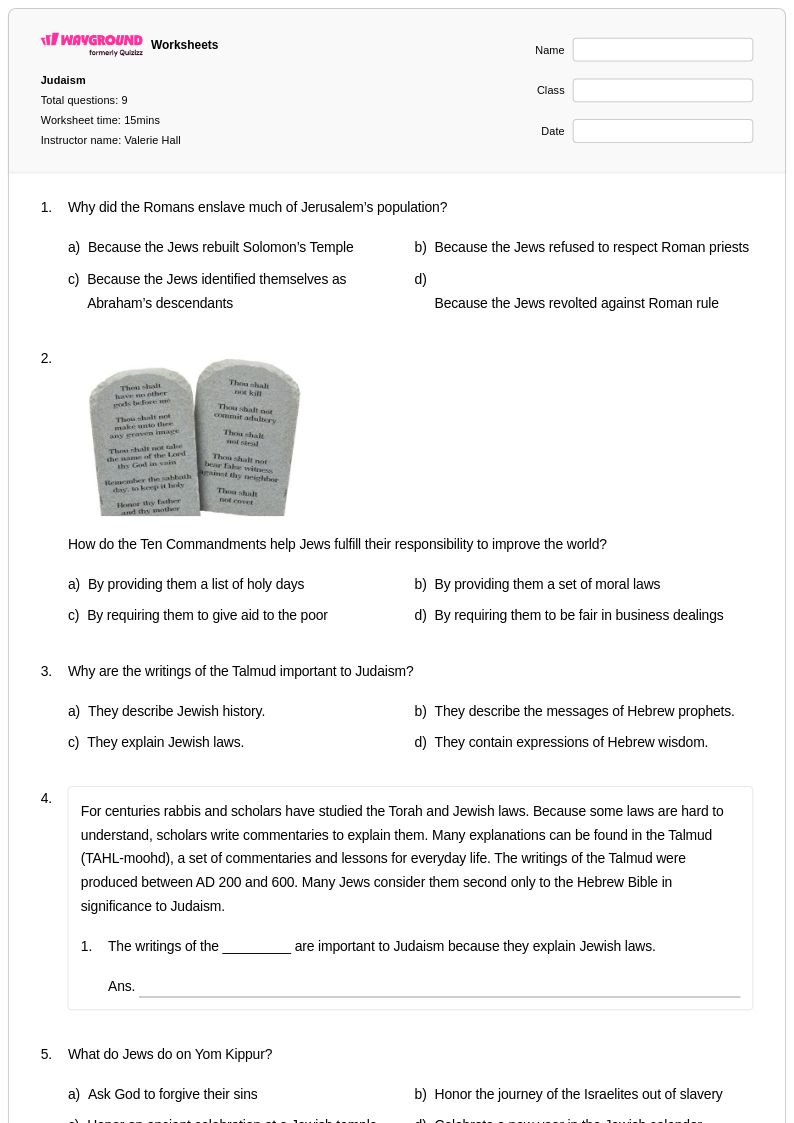
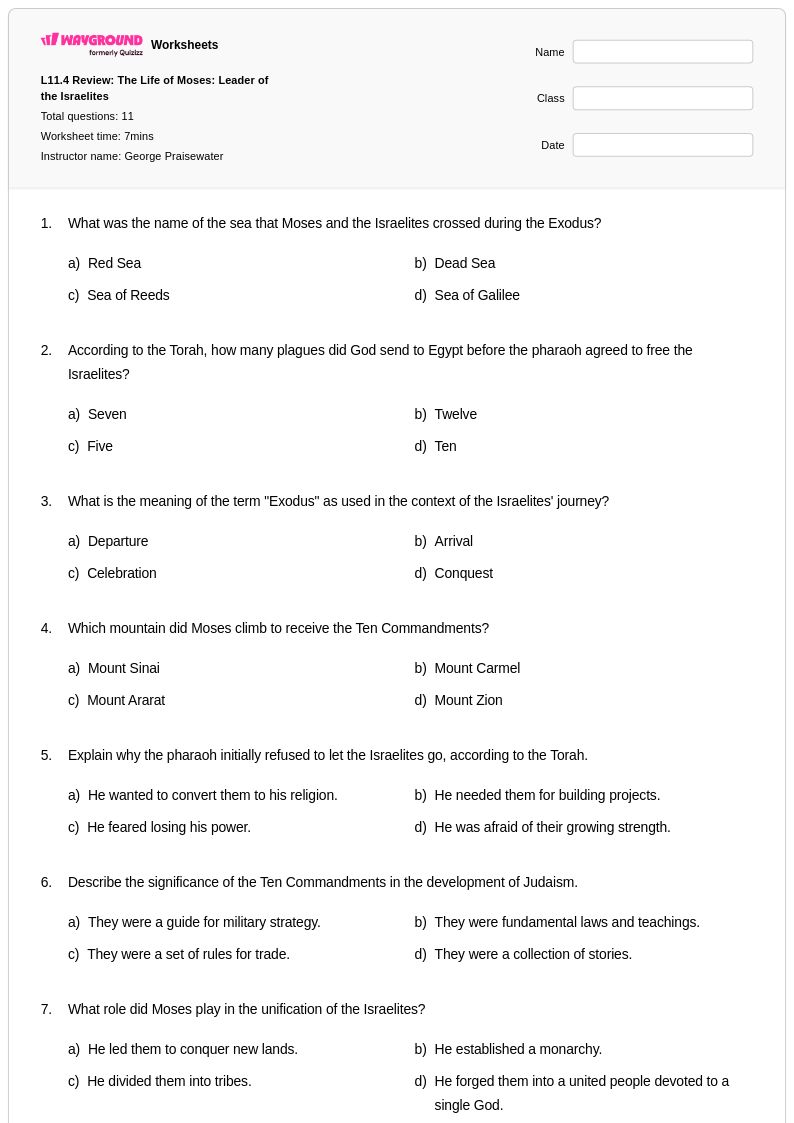
Explore Wayground's free Ten Commandments worksheets and printables that help students understand fundamental moral principles and their role in shaping communities and cultures through engaging practice problems with answer keys.
Ten Commandments worksheets available through Wayground (formerly Quizizz) provide educators with comprehensive resources to explore this foundational aspect of Judeo-Christian tradition within social studies curricula. These educational materials help students understand the historical significance, moral principles, and cultural impact of the Ten Commandments across various civilizations and time periods. The worksheets strengthen critical thinking skills by encouraging students to analyze the commandments' influence on legal systems, ethical frameworks, and societal structures throughout history. Each worksheet collection includes detailed answer keys, practice problems that promote deeper comprehension, and free printable materials that make classroom implementation seamless and cost-effective.
Wayground (formerly Quizizz) supports educators with millions of teacher-created resources specifically designed for exploring religious and cultural foundations like the Ten Commandments within social studies instruction. The platform's robust search and filtering capabilities enable teachers to quickly locate worksheets that align with specific standards and learning objectives, while built-in differentiation tools allow for customization based on individual student needs and abilities. These flexible resources are available in both printable pdf format and digital versions, making them ideal for traditional classroom settings, remote learning environments, or hybrid instruction models. Teachers can effectively utilize these materials for lesson planning, targeted remediation, enrichment activities, and ongoing skill practice, ensuring students develop a well-rounded understanding of how historical moral codes continue to shape contemporary communities and cultures.
FAQs
How do I teach the Ten Commandments in a social studies class?
Teach the Ten Commandments as a historical and cultural document within the context of Judeo-Christian tradition and its influence on Western civilization. Focus on how the commandments shaped early legal codes, ethical frameworks, and governance structures rather than approaching the content from a purely religious perspective. Connecting each commandment to real-world laws or moral principles students recognize today helps ground the material in a relevant, analytical context.
What exercises help students practice analyzing the Ten Commandments?
Effective practice exercises include matching commandments to corresponding modern laws, short-answer questions asking students to explain the moral principle behind each commandment, and comparative analysis tasks where students trace the commandments' influence on different legal or ethical systems across history. These activities push students beyond memorization toward genuine comprehension of the commandments' cultural and societal significance.
What misconceptions do students commonly have about the Ten Commandments?
A common misconception is that the Ten Commandments are exclusively a religious text with no broader historical relevance. Students often fail to recognize that these commandments serve as one of the earliest codified moral frameworks in Western history and have directly influenced secular legal systems. Teachers should address this by explicitly connecting the commandments to historical lawmaking and ethical philosophy, not just theological study.
How do I connect the Ten Commandments to a social studies curriculum standard?
The Ten Commandments can be taught within social studies units covering ancient civilizations, the development of law and governance, or the role of religion in shaping culture and society. Many state standards include learning objectives around how moral codes and religious traditions influenced the development of democratic institutions and legal frameworks. Framing the commandments as a foundational historical document rather than a faith-based lesson keeps instruction standards-aligned and academically grounded.
How do I use Wayground's Ten Commandments worksheets in my classroom?
Wayground's Ten Commandments worksheets are available as printable PDFs for traditional classroom use and in digital formats for technology-integrated or remote learning environments, and teachers can also host them as a quiz directly on Wayground. Each worksheet includes a complete answer key, making them practical for independent practice, guided lessons, or assessment preparation. The digital format allows teachers to assign accommodations such as read aloud or extended time to individual students who need additional support.
How do I differentiate Ten Commandments instruction for students at different levels?
For students who need additional support, simplify the task by focusing on one or two commandments at a time and providing sentence frames or graphic organizers to scaffold their analysis. Advanced students can be challenged with comparative tasks, such as analyzing how the Ten Commandments compare to other ancient legal codes like Hammurabi's Code. On Wayground, teachers can assign accommodations such as reduced answer choices or read aloud to individual students, allowing the same worksheet to serve the full range of learners in a class.