
12 Q
10th - Uni
15 Q
10th - Uni
12 Q
8th - Uni
19 Q
10th
20 Q
10th - Uni
20 Q
3rd - 12th
10 Q
10th - Uni
20 Q
10th - Uni
20 Q
10th - Uni
82 Q
10th
20 Q
10th - Uni
10 Q
8th - 11th
18 Q
9th - 12th
15 Q
9th - Uni
20 Q
10th - Uni
15 Q
7th - Uni
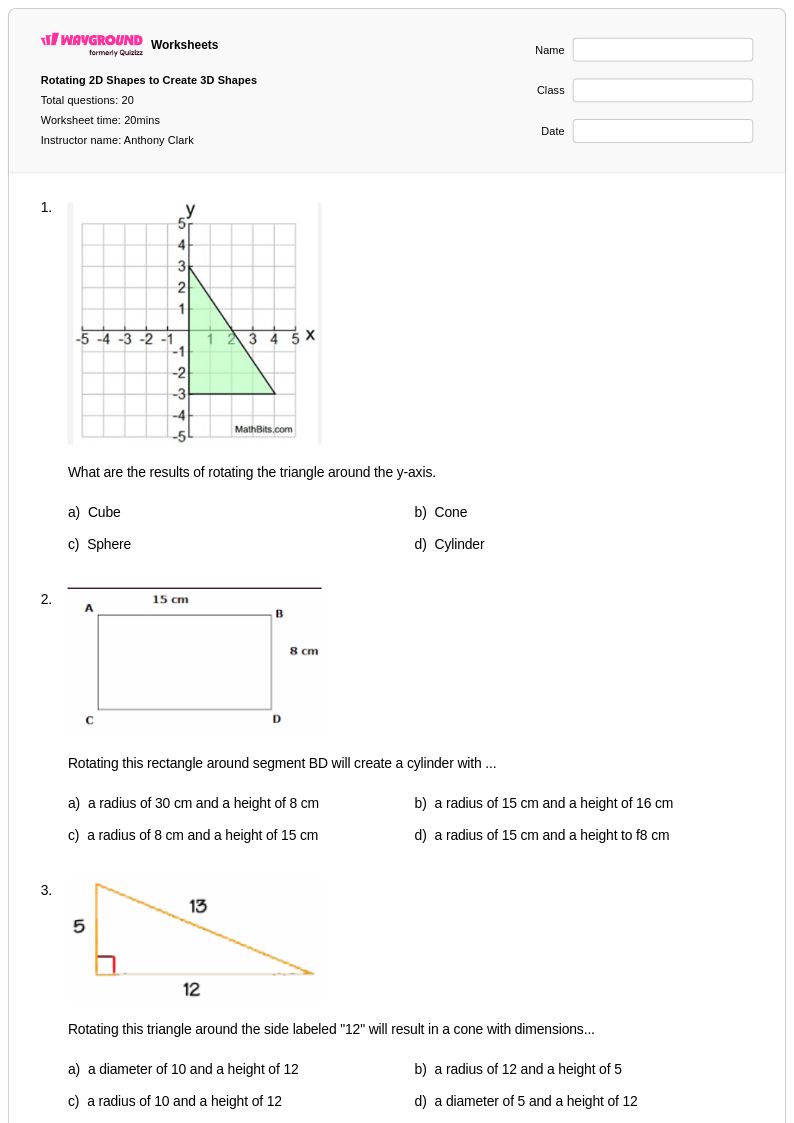
20 Q
9th - Uni
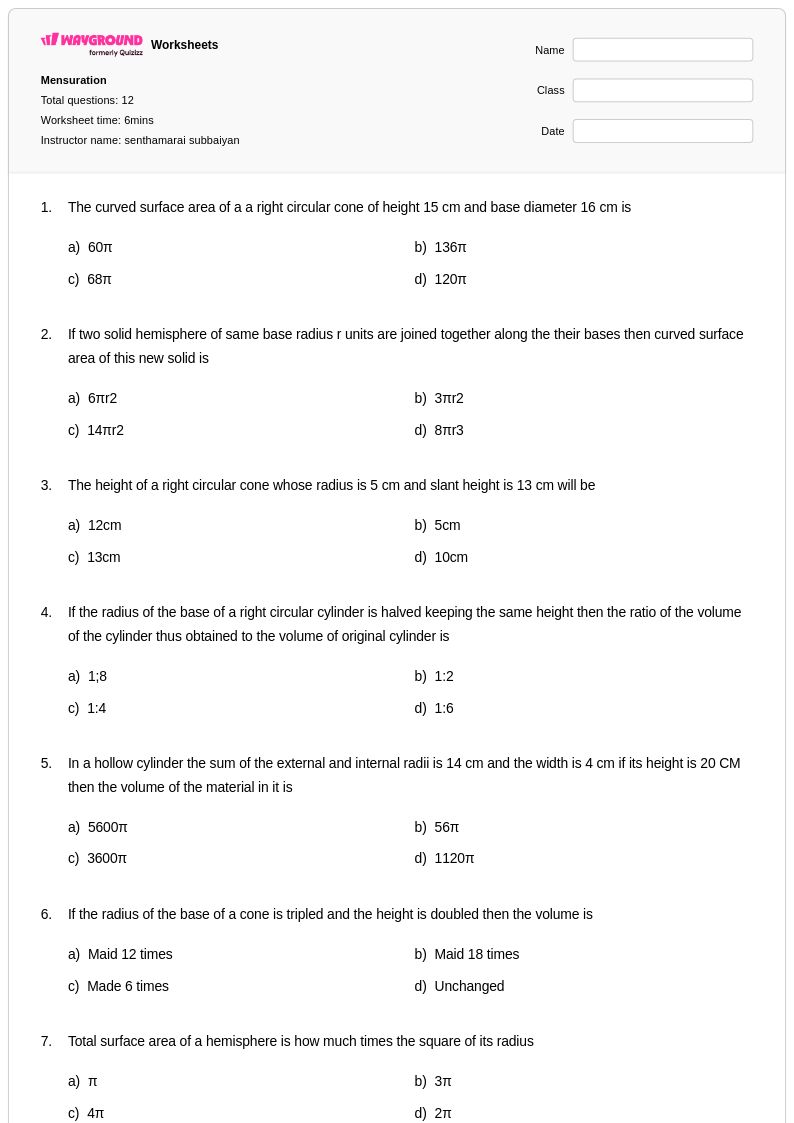
12 Q
10th
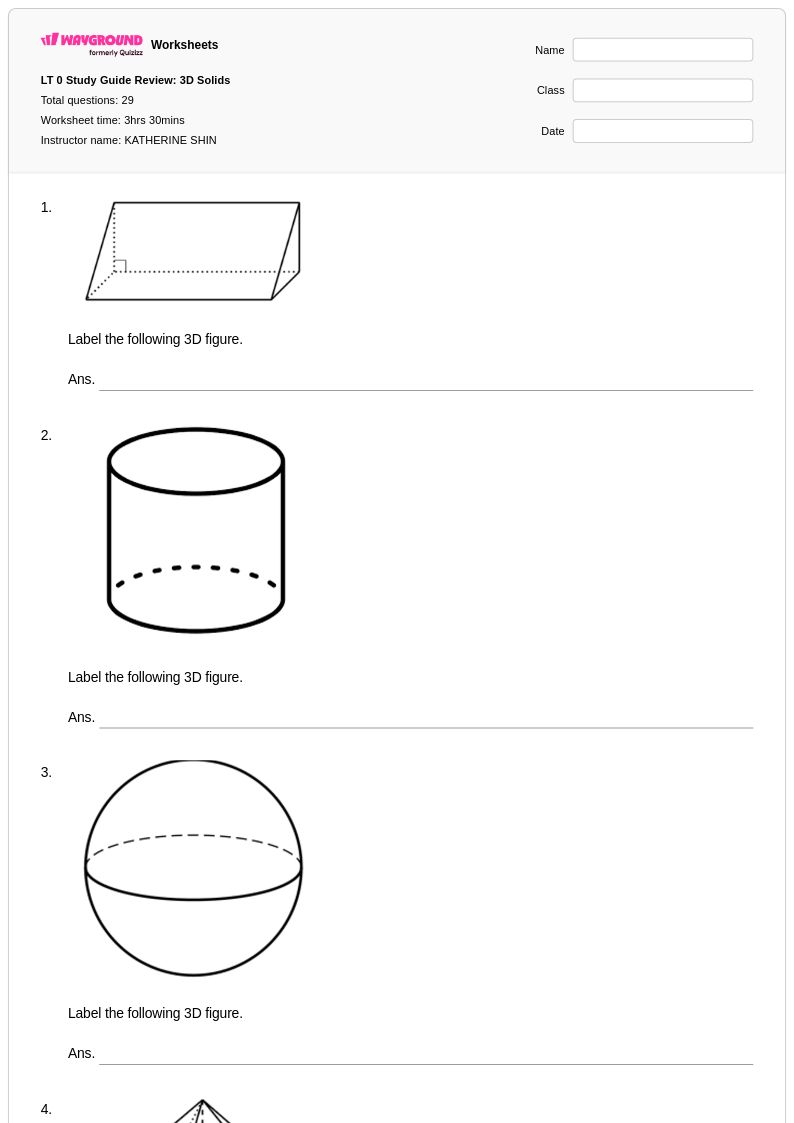
29 Q
9th - 12th
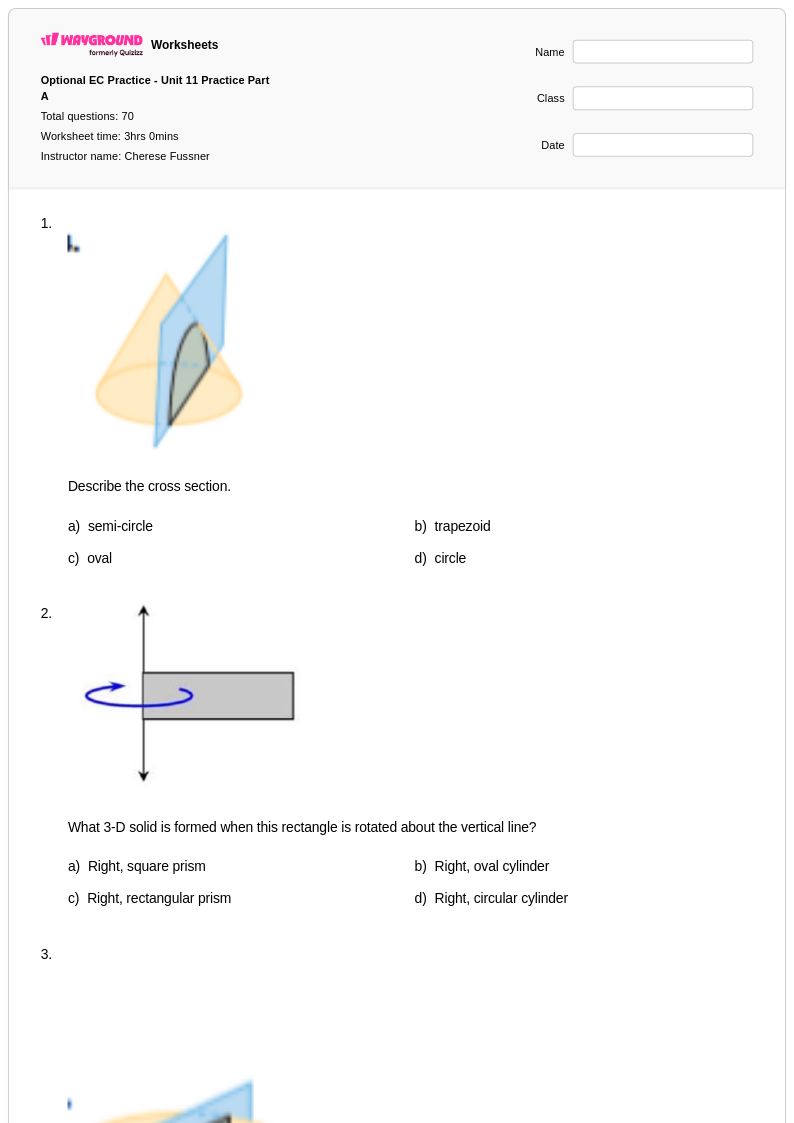
70 Q
9th - 12th
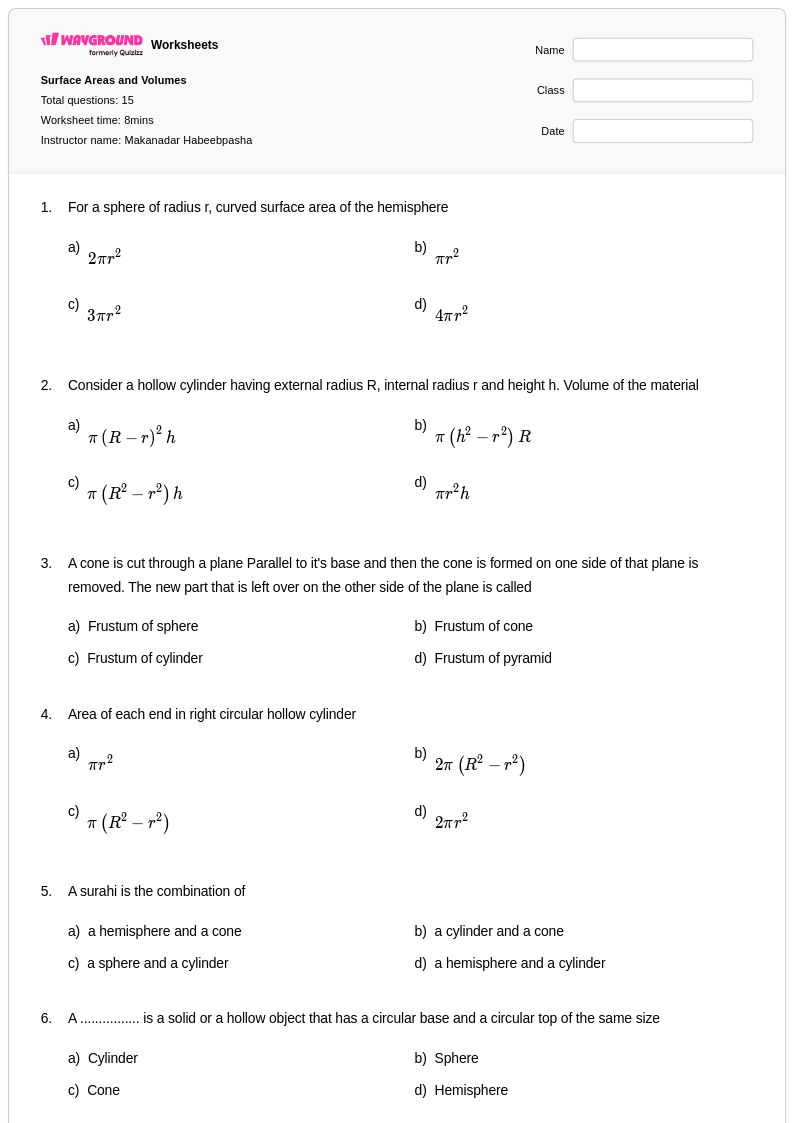
15 Q
9th - 10th
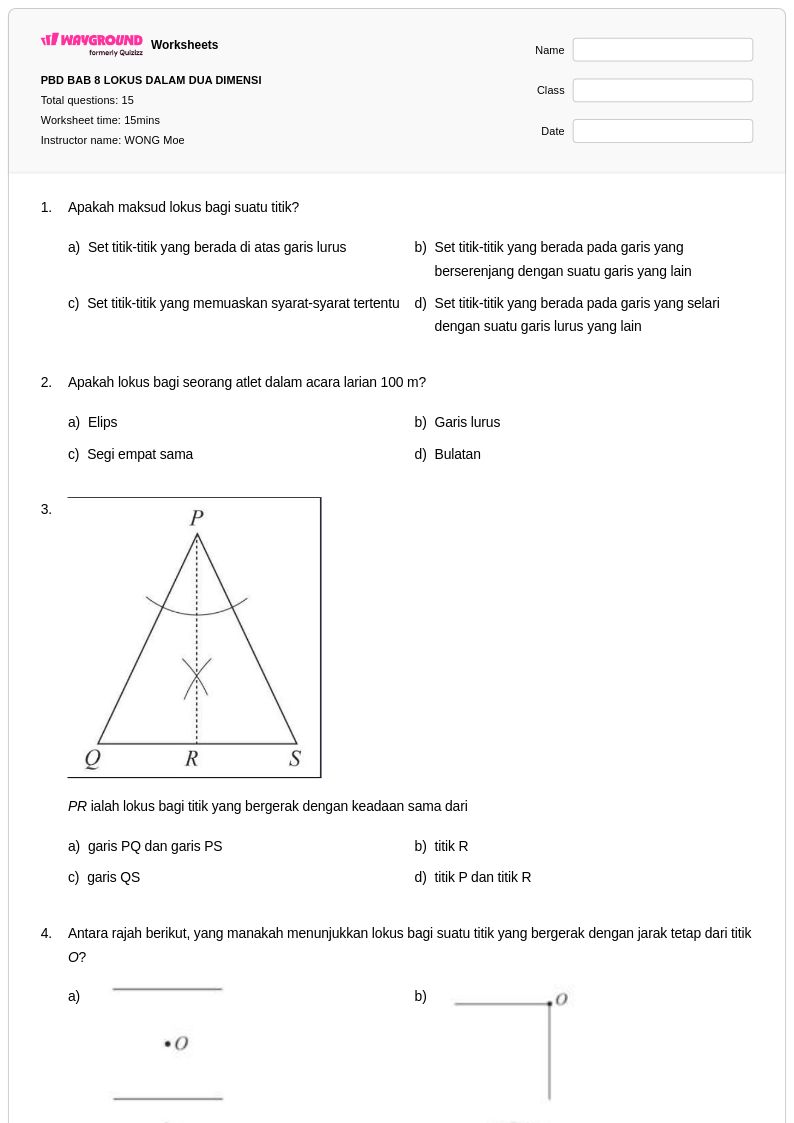
15 Q
10th
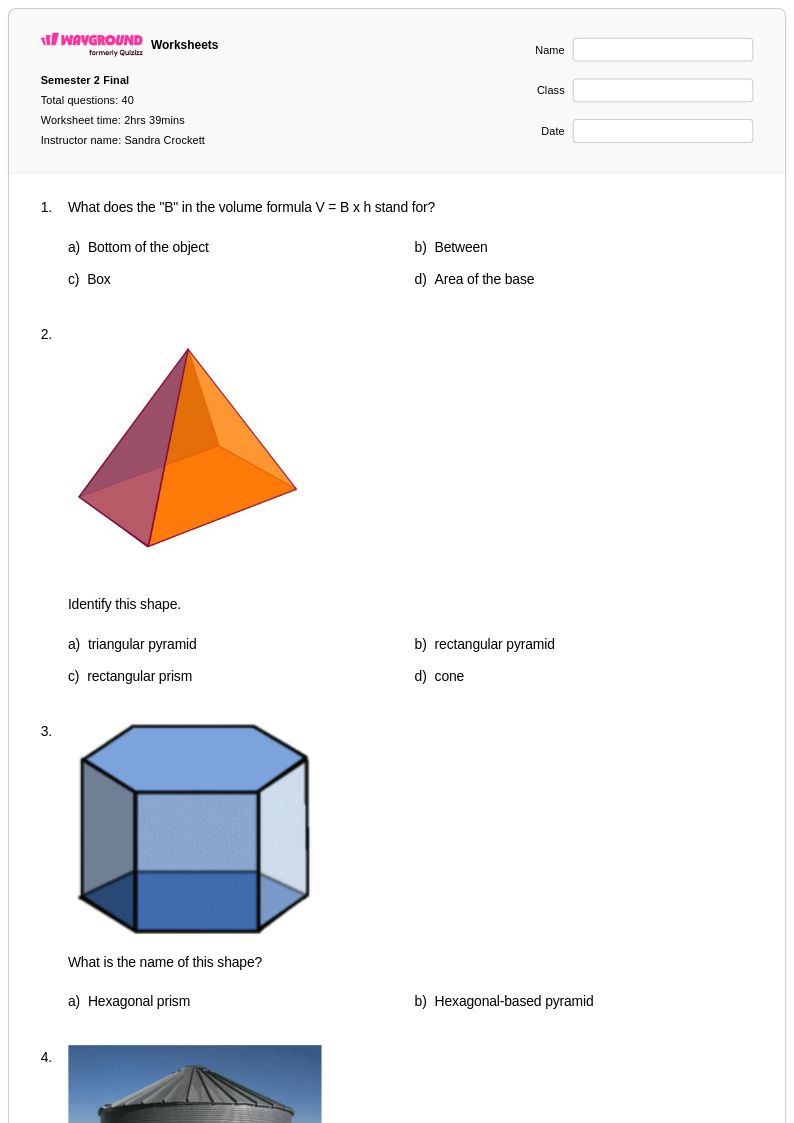
40 Q
9th - 12th
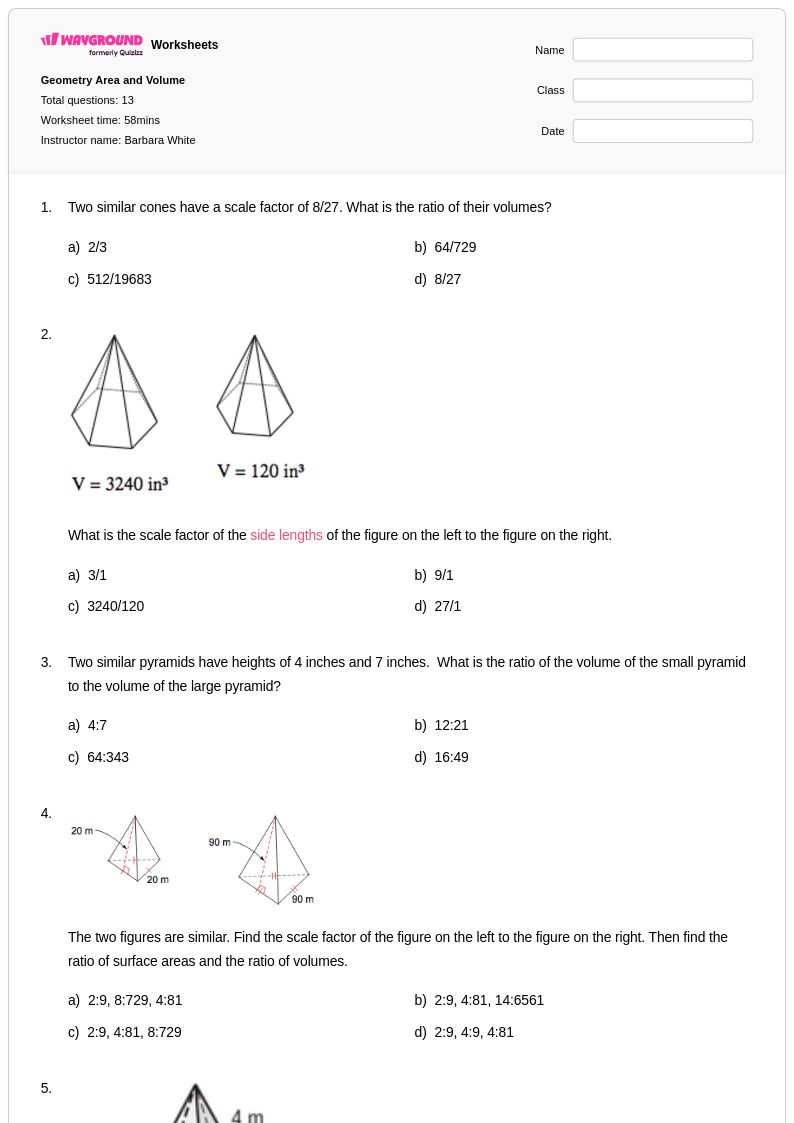
13 Q
8th - 10th
Explore Other Subject Worksheets for class 10
Explore printable Frustums worksheets for Class 10
Frustums worksheets for Class 10 mathematics provide comprehensive practice with three-dimensional geometric shapes formed when a cone or pyramid is cut by parallel planes. These expertly designed worksheets available through Wayground (formerly Quizizz) strengthen essential skills including calculating surface area and volume of frustums, understanding the relationship between similar solids, and applying proportional reasoning to solve complex geometric problems. Students engage with practice problems that range from basic frustum identification to advanced applications involving real-world scenarios such as architectural design and engineering calculations. Each worksheet collection includes detailed answer keys and is available as free printables in convenient pdf format, allowing educators to seamlessly integrate frustum geometry into their curriculum while providing students with immediate feedback on their mathematical reasoning and computational accuracy.
Wayground (formerly Quizizz) empowers teachers with millions of teacher-created frustum worksheets that support diverse learning needs in Class 10 geometry classrooms. The platform's robust search and filtering capabilities enable educators to quickly locate resources aligned with specific mathematical standards, while differentiation tools allow for customization based on individual student abilities and learning objectives. These frustum worksheet collections are available in both printable pdf and interactive digital formats, providing flexibility for in-class instruction, homework assignments, and independent study sessions. Teachers can effectively use these resources for lesson planning, targeted remediation of geometric concepts, enrichment activities for advanced learners, and systematic skill practice that builds student confidence in working with complex three-dimensional shapes and their mathematical properties.
FAQs
How can I make frustum calculations relevant to 10th graders?
What types of problems are included in these Grade 10 worksheets?
What is a common conceptual error with frustum volume at this level?
How does this topic fit into the high school geometry curriculum?
How can I use this Wayground worksheet for my class?
How can I support diverse learners with these worksheets?