
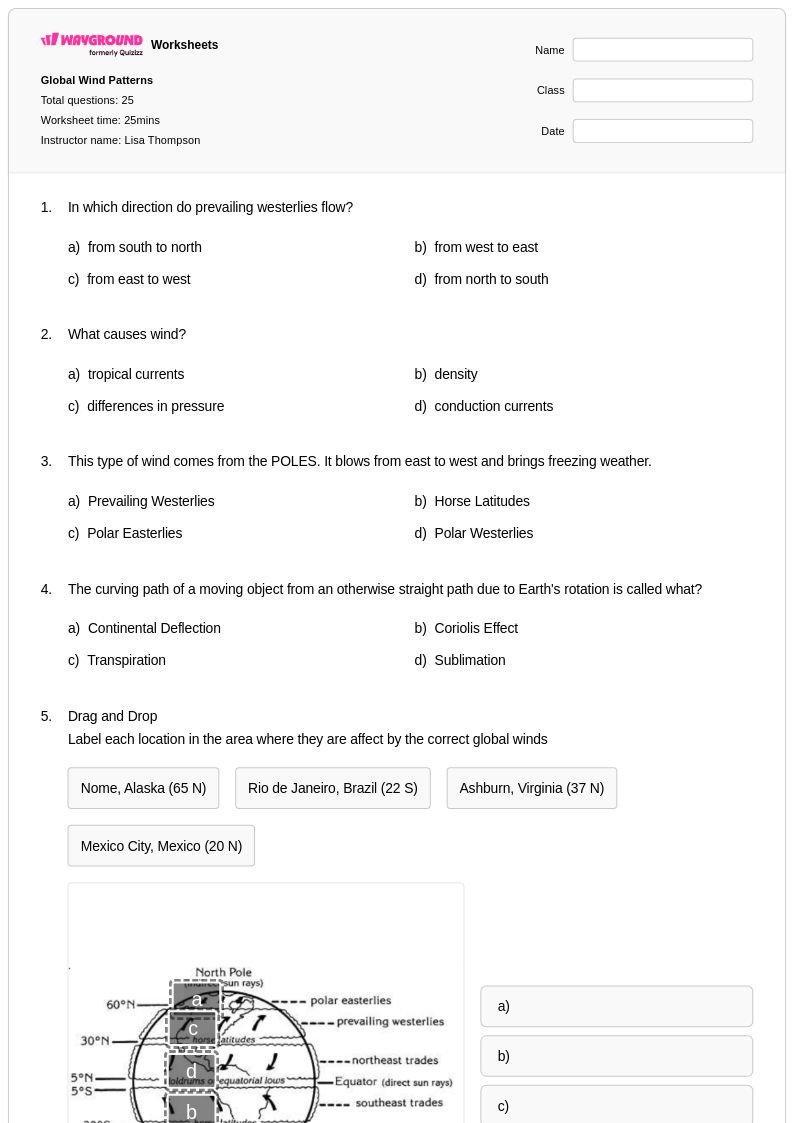
25 Q
6th - Uni
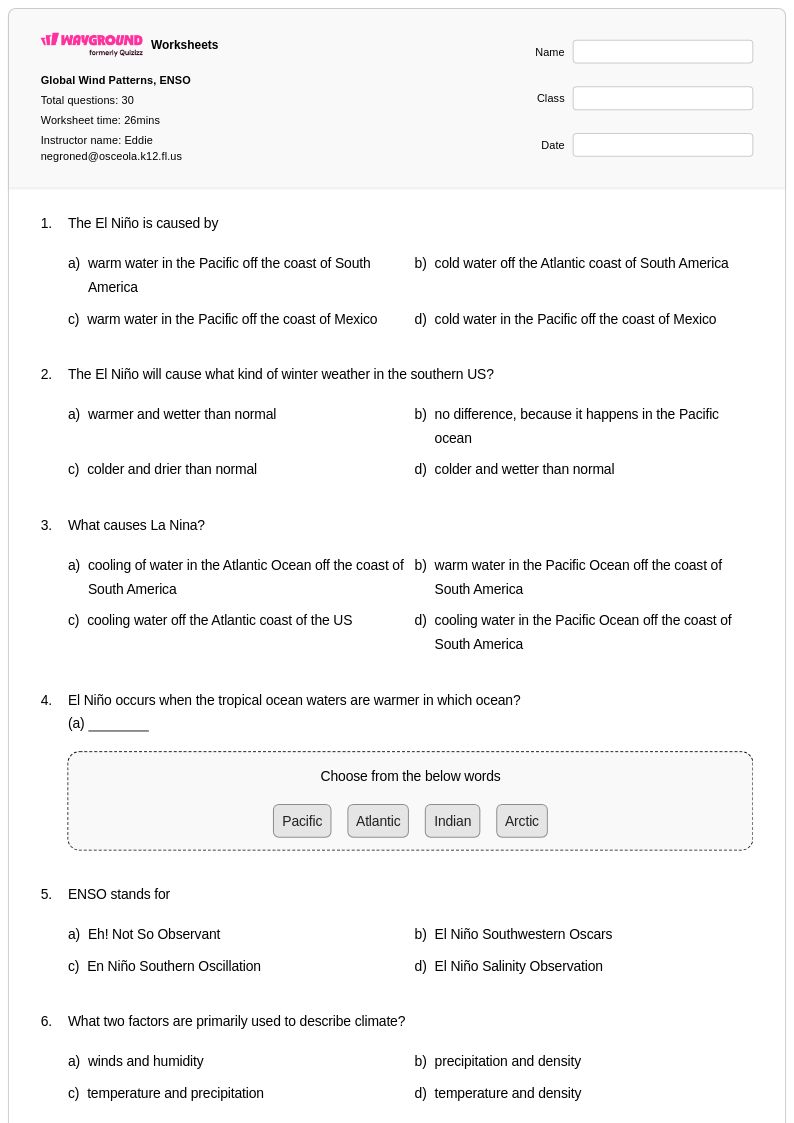
30 Q
9th - 12th
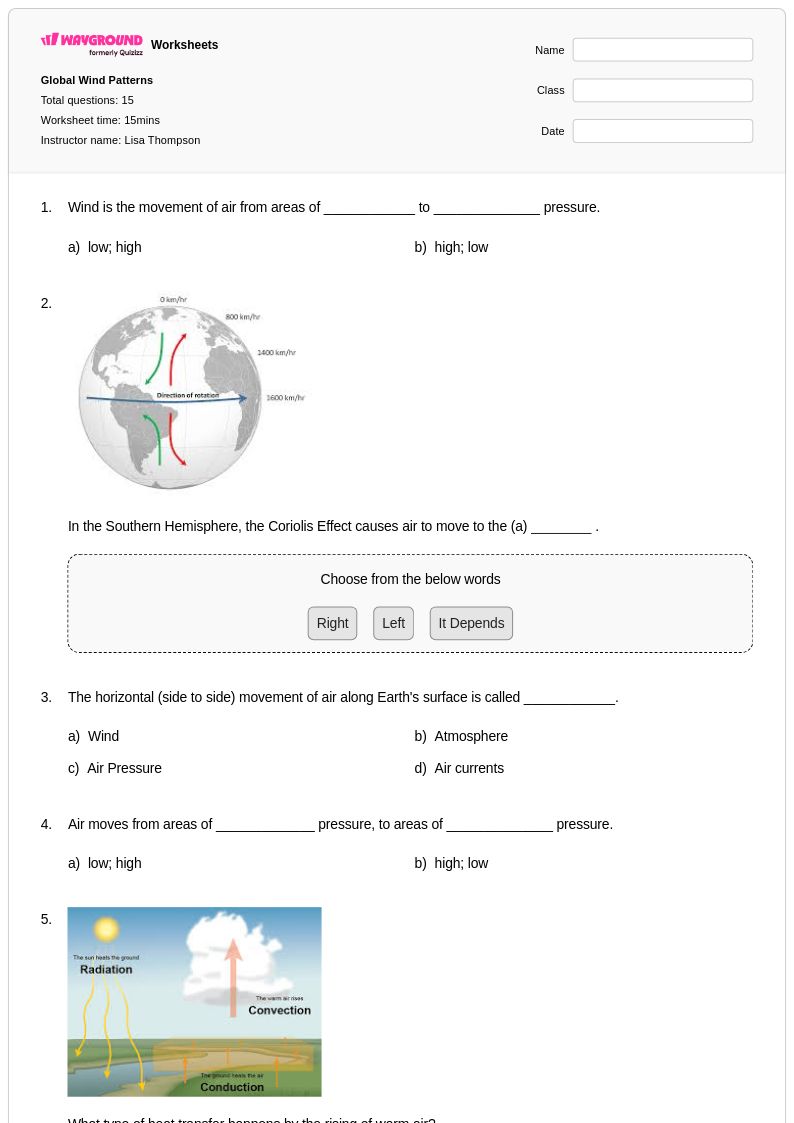
15 Q
6th - Uni
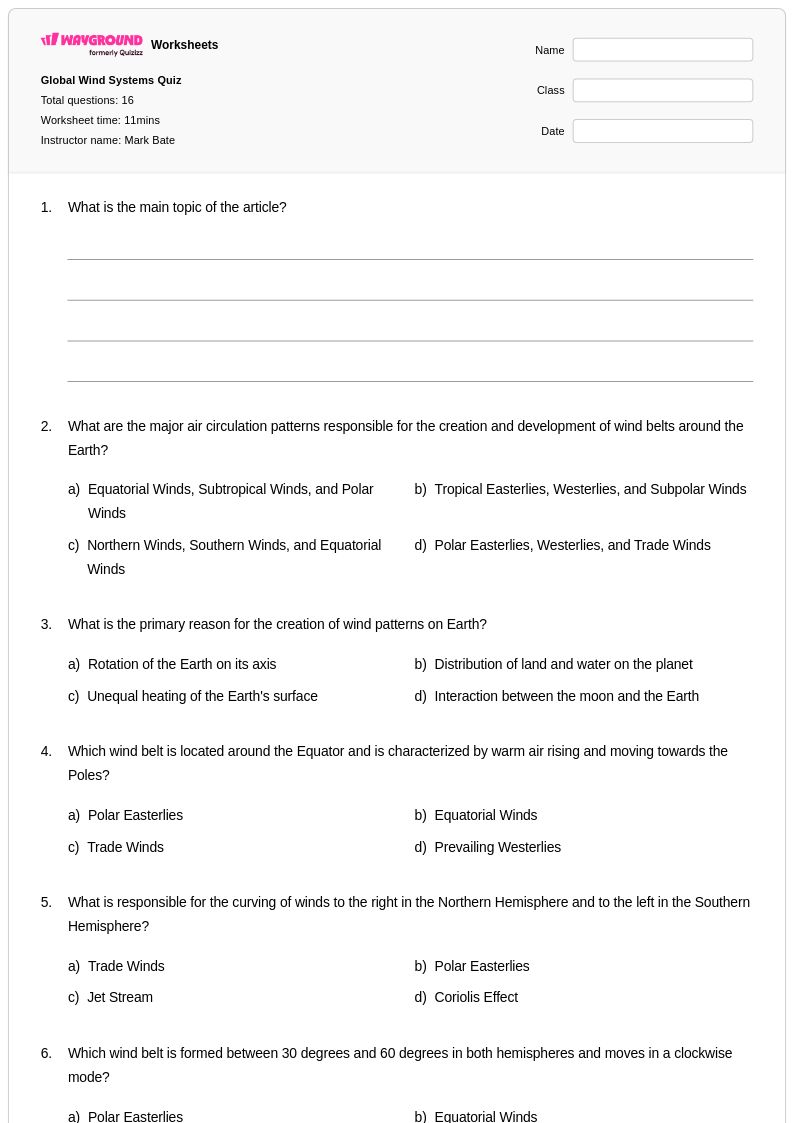
16 Q
10th
30 Q
9th - 12th
8 Q
9th - 12th
20 Q
8th - 10th
135 Q
6th - Uni
19 Q
9th - 12th
15 Q
6th - Uni
15 Q
9th - 12th
15 Q
9th - 12th
21 Q
6th - Uni
25 Q
6th - Uni
21 Q
8th - 12th
20 Q
9th - 12th
9 Q
9th - 12th
30 Q
9th - 12th
25 Q
6th - Uni
24 Q
9th - 12th
20 Q
9th - 12th
53 Q
9th - Uni
90 Q
9th - 12th
44 Q
9th - 12th
Explore Global Wind Patterns Worksheets by Grades
Explore Other Subject Worksheets for class 10
Explore printable Global Wind Patterns worksheets for Class 10
Global wind patterns worksheets for Class 10 students available through Wayground (formerly Quizizz) provide comprehensive coverage of atmospheric circulation systems that drive weather and climate across our planet. These expertly designed resources help students master complex concepts including the Coriolis effect, pressure gradient forces, and the formation of major wind belts such as the trade winds, westerlies, and polar easterlies. Each worksheet collection strengthens critical thinking skills through detailed practice problems that explore how temperature differences, Earth's rotation, and geographical features influence global air movement. Students work through scenarios involving high and low pressure systems, examine seasonal wind pattern variations, and analyze how these atmospheric phenomena affect ocean currents and regional climates. The comprehensive answer key accompanying each printable resource allows for immediate feedback and self-assessment, while the free pdf format ensures accessibility for both classroom instruction and independent study.
Wayground (formerly Quizizz) supports educators with an extensive collection of teacher-created global wind patterns worksheets, drawing from millions of high-quality resources developed by experienced science professionals. The platform's robust search and filtering capabilities enable teachers to quickly locate materials aligned with specific curriculum standards and learning objectives for Class 10 Earth and Space Science courses. Advanced differentiation tools allow instructors to customize worksheet difficulty levels, accommodating diverse learning needs within the classroom while maintaining academic rigor. These versatile resources are available in both printable and digital formats, including downloadable pdf versions that facilitate seamless integration into lesson plans, homework assignments, and assessment strategies. Teachers utilize these comprehensive worksheet collections for targeted skill practice, remediation of challenging concepts, enrichment activities for advanced learners, and efficient planning of instruction that builds students' understanding of atmospheric dynamics and their global implications.
FAQs
How do I teach global wind patterns to middle or high school students?
What exercises help students practice identifying global wind patterns?
What misconceptions do students commonly have about global wind patterns?
How does the Coriolis effect relate to global wind patterns, and how do I explain it clearly?
How can I use global wind patterns worksheets to differentiate instruction for different skill levels?
How do I use Wayground's global wind patterns worksheets in my classroom?