Free Printable Index Fossil Worksheets for Class 10
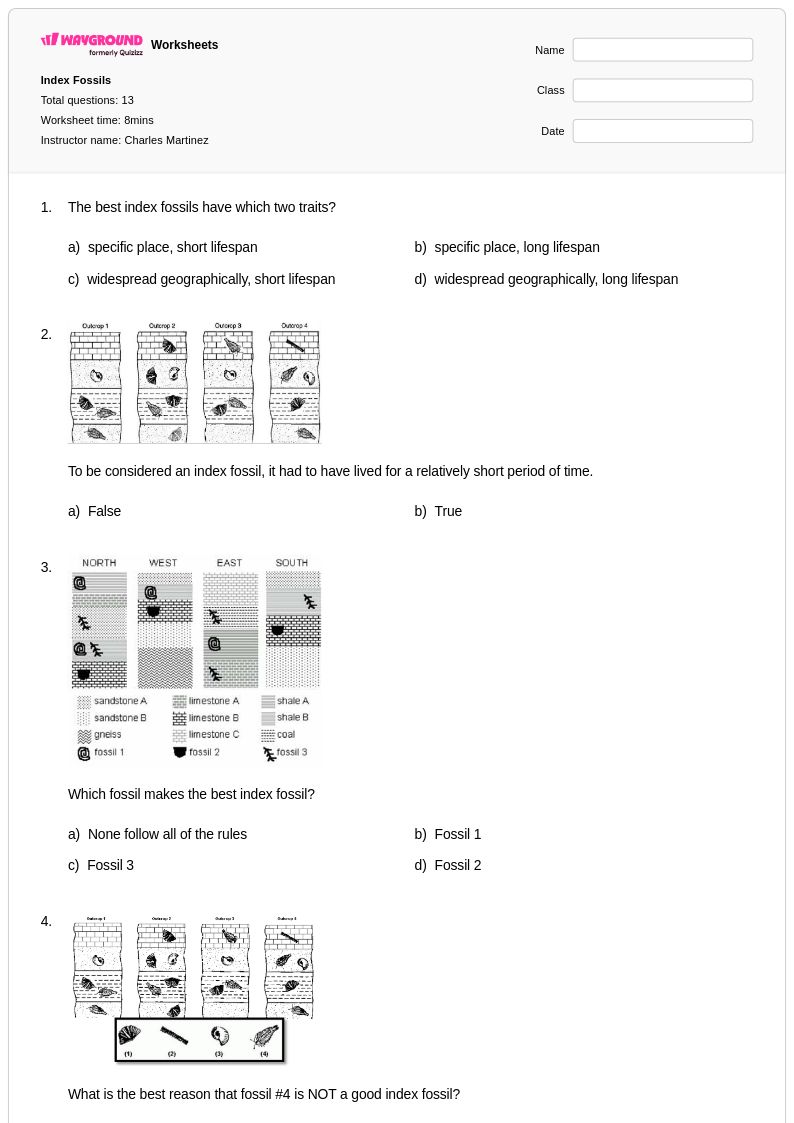
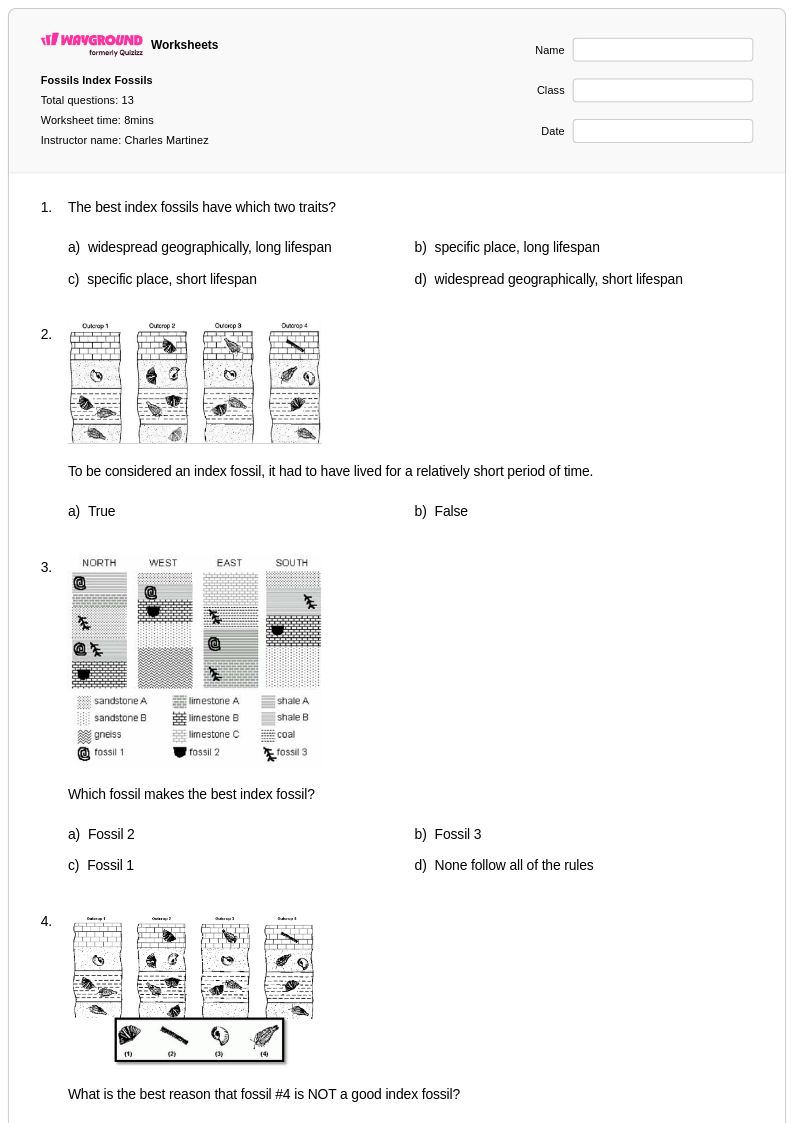
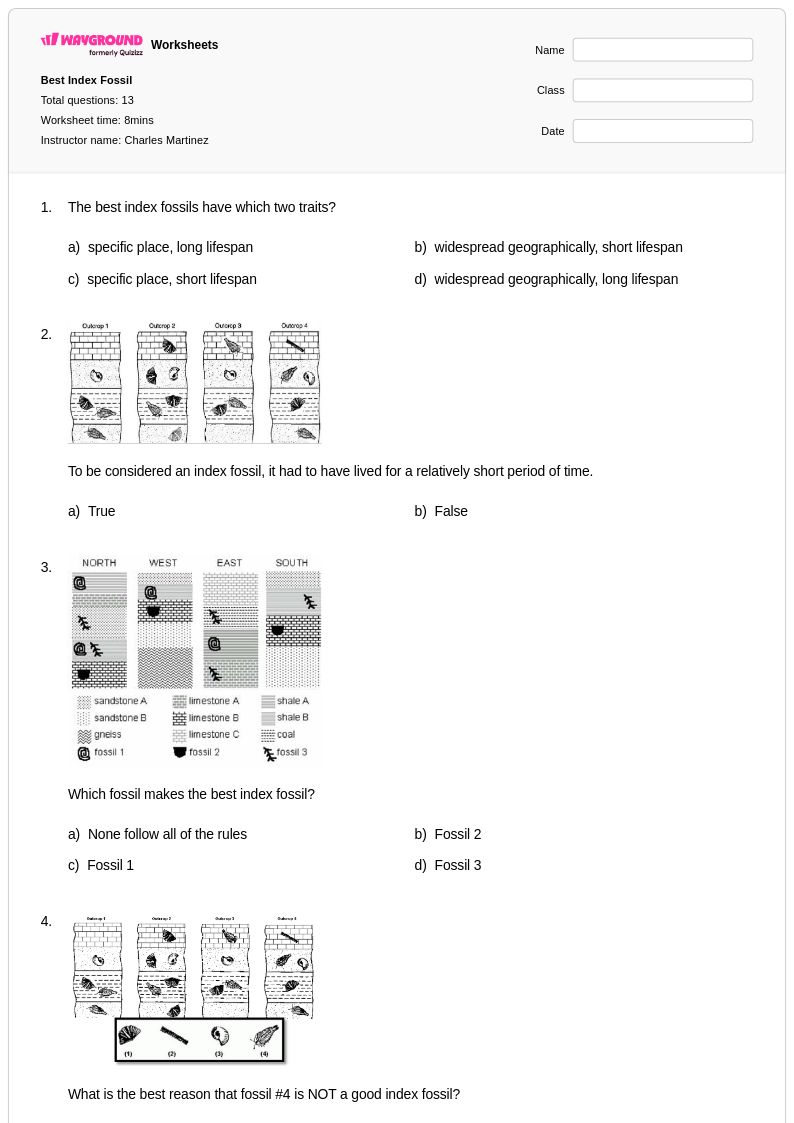
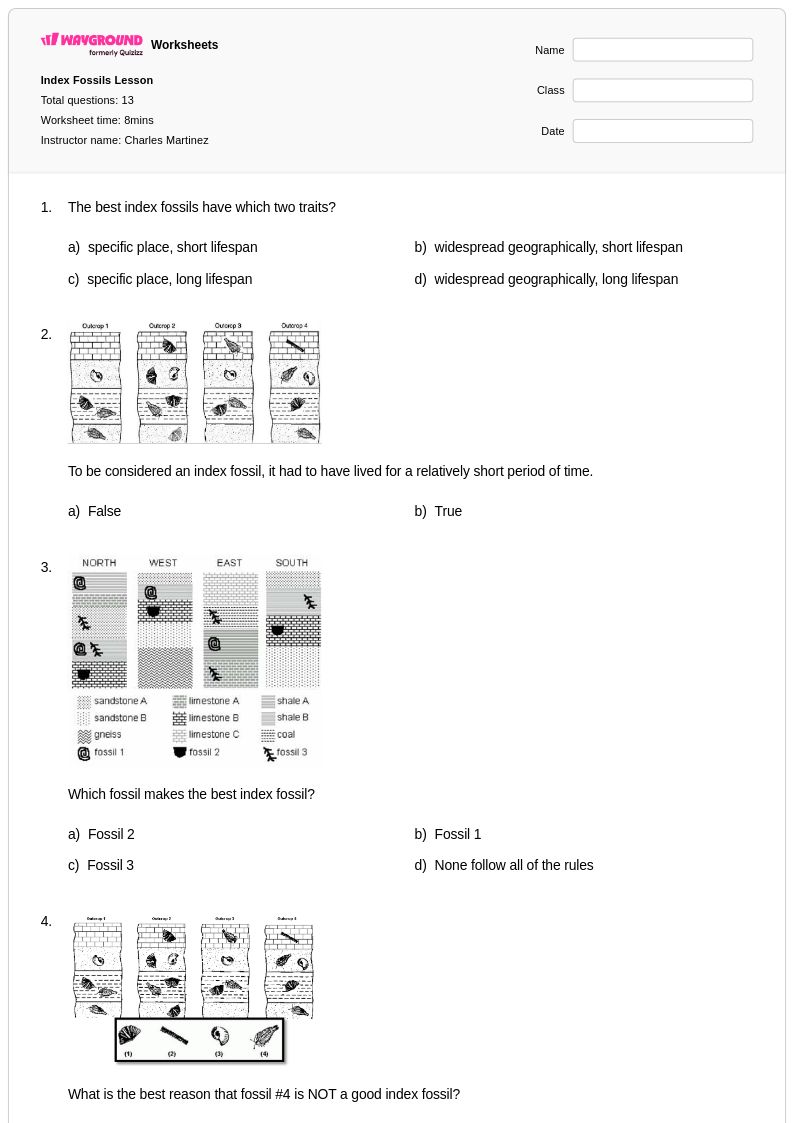
Wayground's Class 10 index fossil worksheets provide comprehensive printables and practice problems that help students master identifying and interpreting fossils used to determine rock age, complete with answer keys and free PDF downloads.
Explore printable Index Fossil worksheets for Class 10
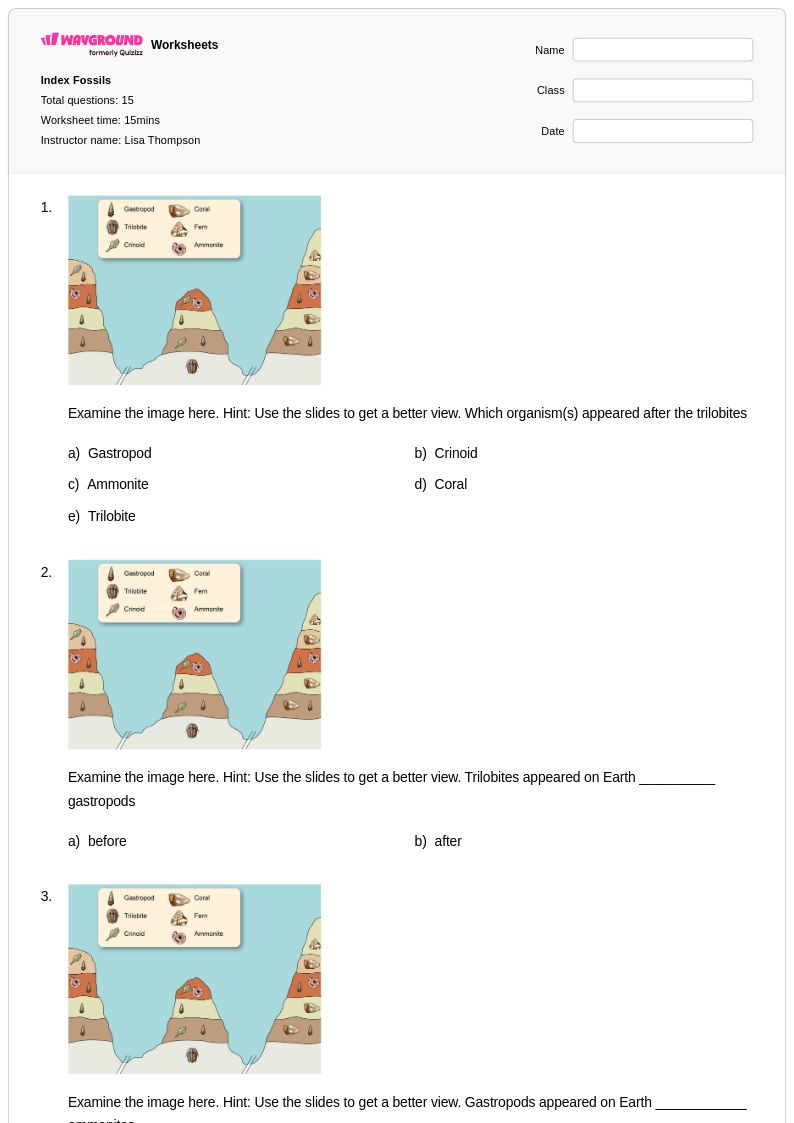
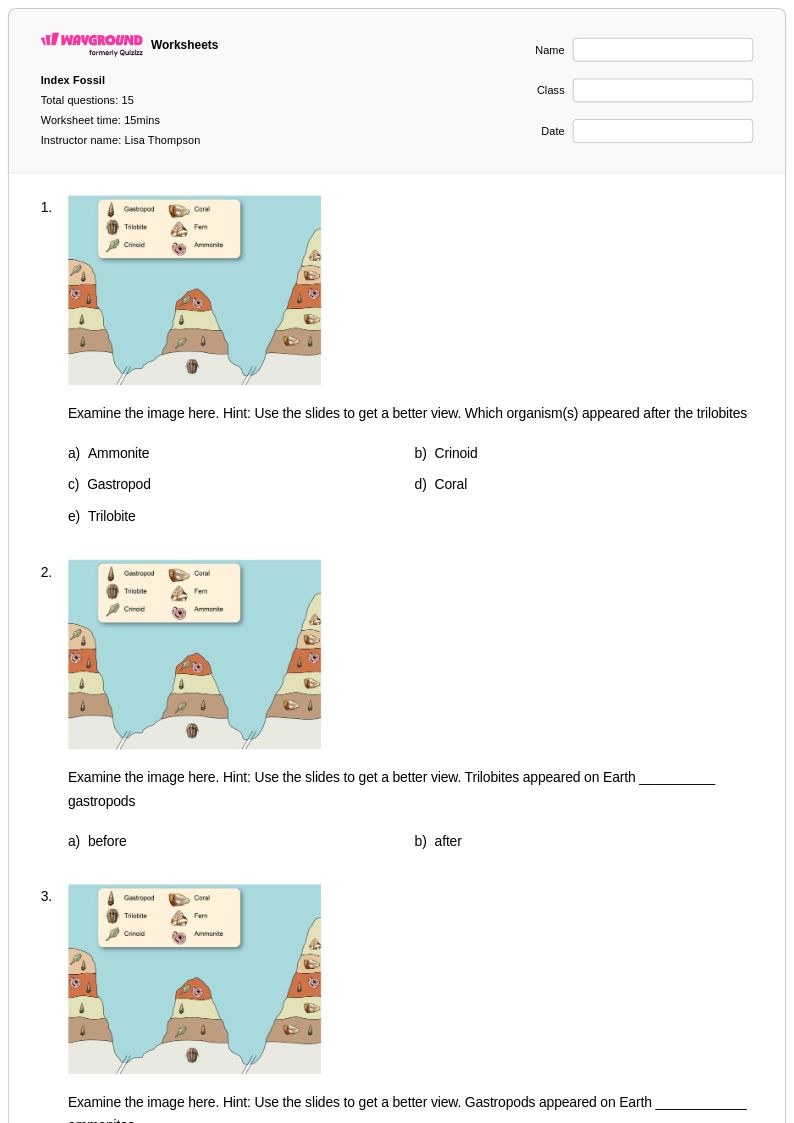
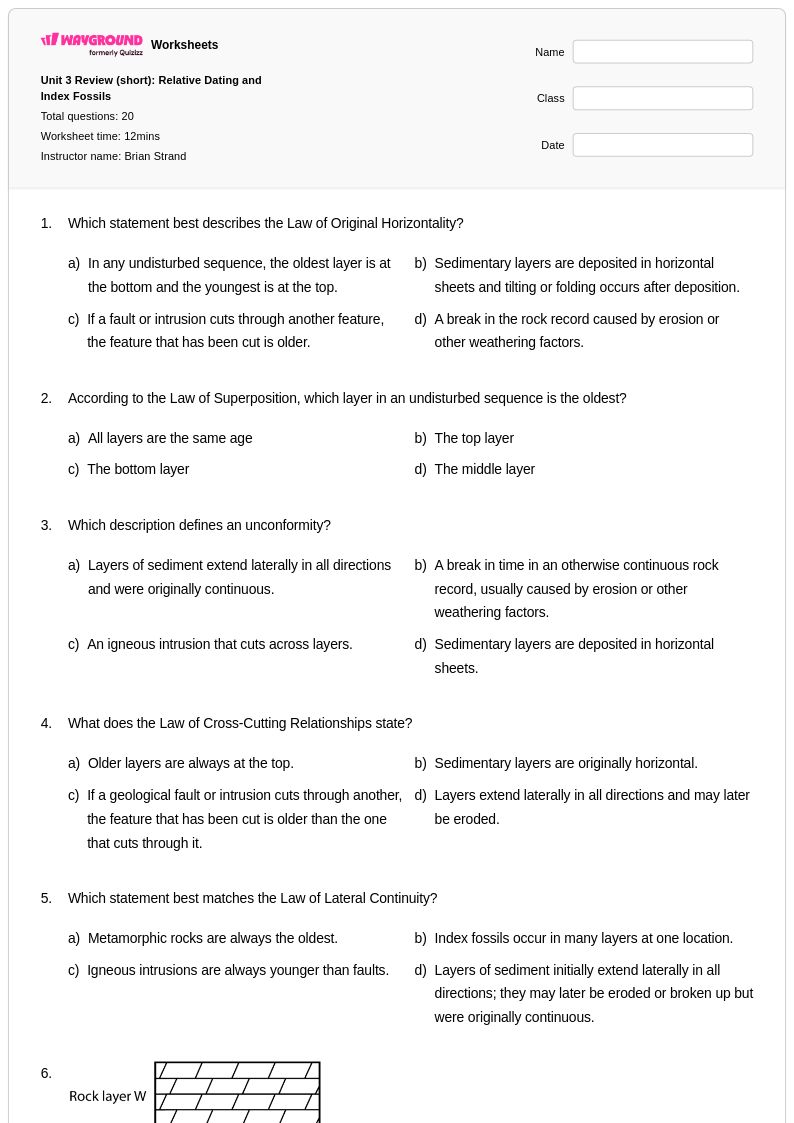
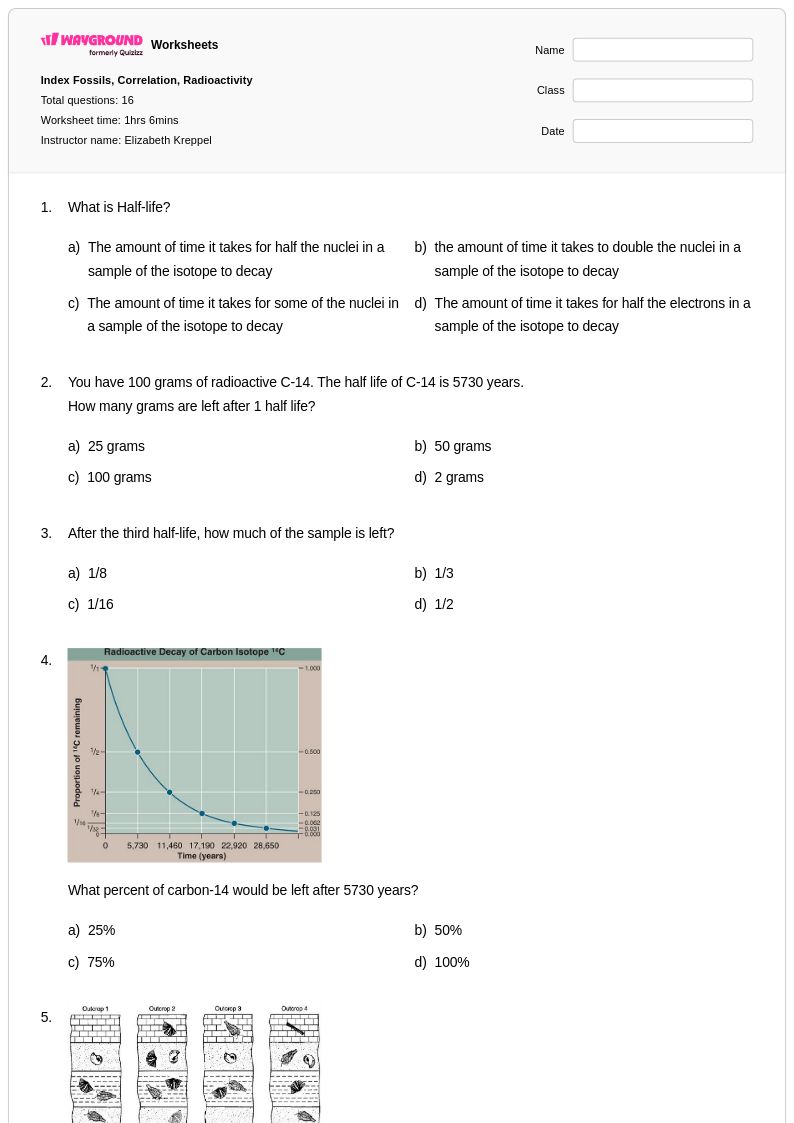
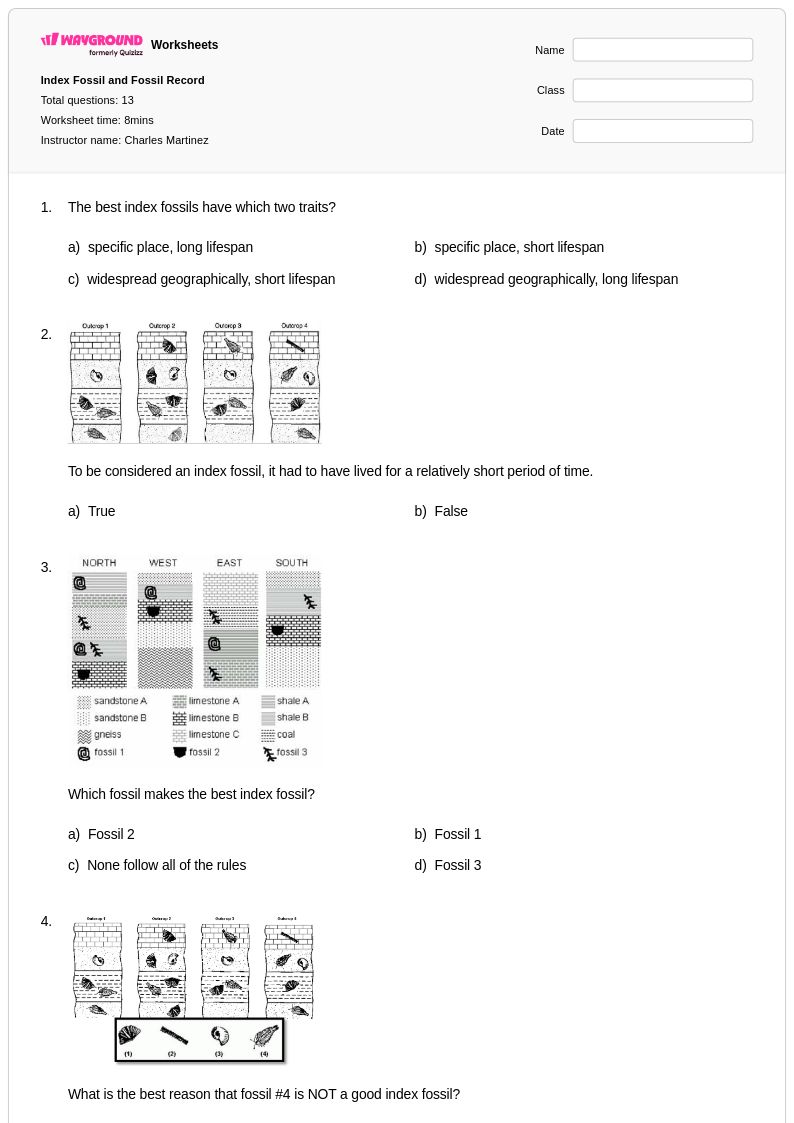
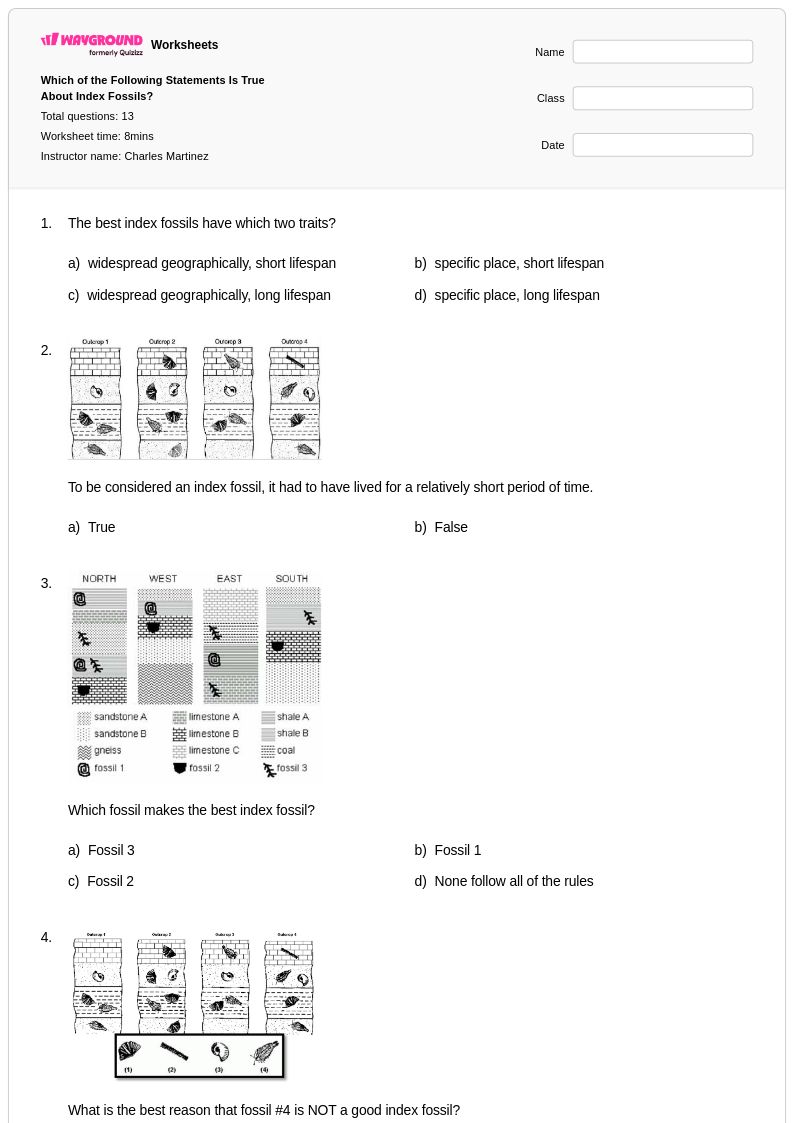
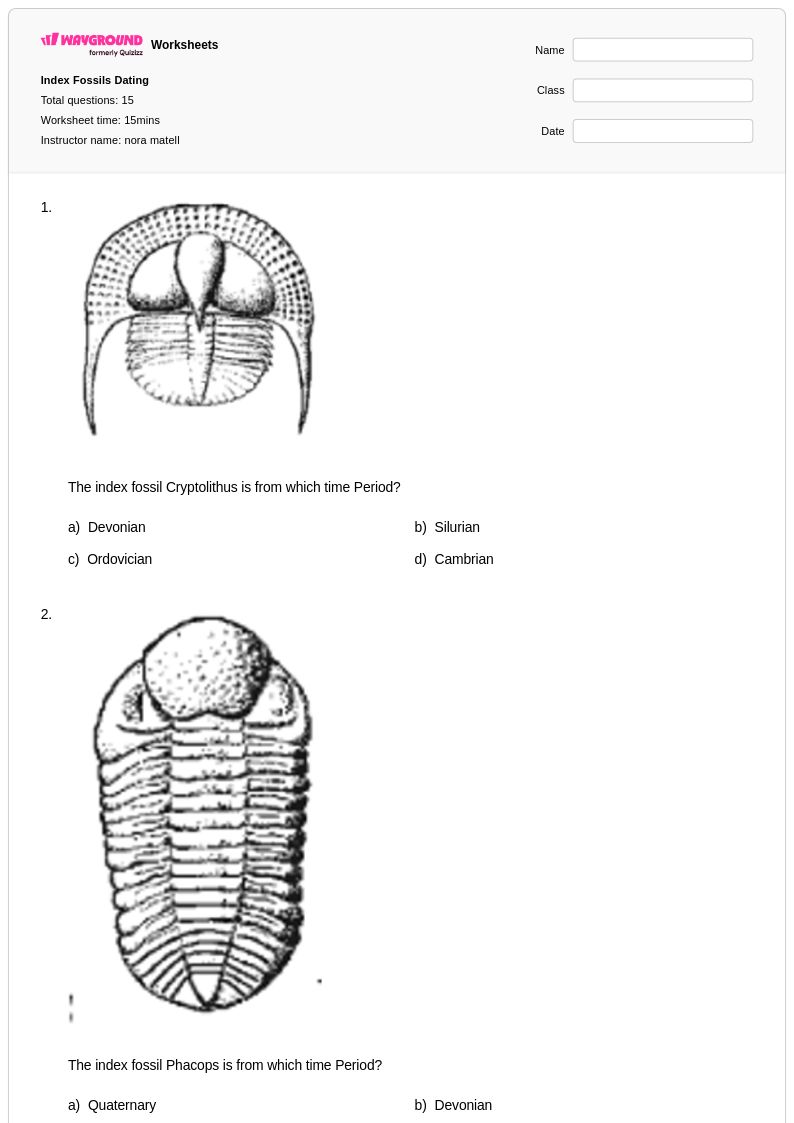
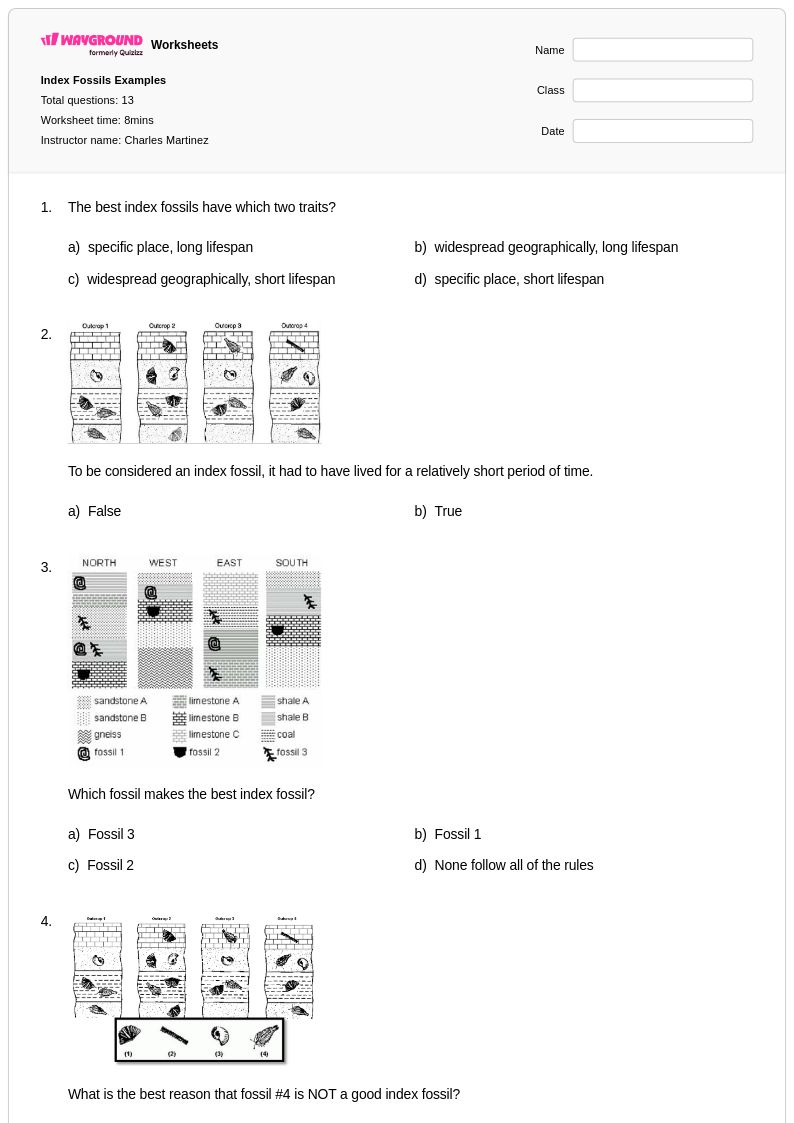
Index fossil worksheets for Class 10 students available through Wayground provide comprehensive practice materials that help students master this fundamental concept in Earth and Space Science. These educational resources focus on developing students' ability to identify characteristic fossils from specific geological time periods and understand how paleontologists use these organisms to determine the relative age of rock layers and correlate strata across different geographical locations. The worksheets strengthen critical thinking skills as students analyze fossil evidence, interpret geological timelines, and apply principles of biostratigraphy to solve dating problems. Each worksheet collection includes detailed answer keys and is available as free printable PDF resources, featuring practice problems that range from basic fossil identification to complex stratigraphic correlation exercises that challenge students to think like professional geologists.
Wayground's extensive library contains millions of teacher-created index fossil worksheets that support educators in delivering effective Earth and Space Science instruction for Class 10 students. The platform's robust search and filtering capabilities allow teachers to quickly locate materials aligned with specific curriculum standards and learning objectives, while differentiation tools enable customization for diverse student needs and ability levels. These comprehensive worksheet collections are available in both printable PDF format and interactive digital versions, providing flexibility for various classroom environments and teaching approaches. Teachers can efficiently plan lessons, create targeted remediation activities for struggling students, develop enrichment materials for advanced learners, and provide consistent skill practice opportunities that reinforce understanding of how index fossils serve as crucial tools for understanding Earth's geological history and the evolution of life through time.
FAQs
How do I teach index fossils to middle or high school students?
Start by establishing what makes a fossil 'diagnostic' — wide geographic distribution, a short and well-defined time range, and abundant preservation in the rock record. From there, walk students through real stratigraphic examples where index fossils are used to correlate rock layers across distant locations. Visual timelines and side-by-side rock column comparisons help students see how a single fossil species can anchor an entire geological period. Connecting this to the broader geological time scale gives students context for why relative dating matters before introducing radiometric methods.
What are good practice exercises for students learning about index fossils?
Effective practice tasks include analyzing fossil assemblages to determine the relative age of rock layers, matching fossil species to their known time ranges on a geological time scale, and correlating stratigraphic columns from multiple locations using shared index fossils. Problems that ask students to identify which organisms qualify as index fossils based on criteria like temporal range and geographic distribution help reinforce the concept analytically rather than by memorization. Worksheet-based exercises that combine fossil identification with timeline construction build both content knowledge and scientific reasoning skills.
What mistakes do students commonly make when working with index fossils?
The most common misconception is confusing index fossils with trace fossils or assuming any fossil can be used for relative dating. Students often overlook the importance of short temporal range, incorrectly using long-lived species as chronological markers. Another frequent error is conflating relative dating with absolute dating, leading students to assign specific numerical ages rather than relative sequences. Teachers should also watch for students who misread stratigraphic columns, placing younger layers below older ones rather than recognizing that deposition moves upward.
How do index fossils relate to the geological time scale?
Index fossils are one of the primary tools geologists used to construct the geological time scale before radiometric dating was available. Because each index fossil species existed for a limited time window, its presence in a rock layer constrains when that layer was deposited. By correlating layers containing the same index fossils across different geographic regions, geologists were able to establish the relative sequence of geological periods. Teaching this connection helps students understand that the geological time scale is an evidence-based framework, not an arbitrary classification.
How can I use Wayground's index fossil worksheets in my classroom?
Wayground's index fossil worksheets are available as printable PDFs for traditional classroom use and in digital formats for technology-integrated environments, making them adaptable for in-person, hybrid, or remote instruction. Teachers can also host worksheets as a quiz directly on Wayground, enabling real-time student response tracking. All worksheets include complete answer keys, which supports efficient grading and allows students to self-check during independent practice. The digital format also supports accommodations such as read aloud and extended time for students who need them.
How do I differentiate index fossil instruction for students at different ability levels?
For students who need additional support, reduce the complexity of stratigraphic columns to two or three layers and provide a reference chart of fossil time ranges rather than asking students to recall them. Advanced students can be challenged with multi-location correlation problems or asked to evaluate whether a given organism meets the criteria to qualify as an index fossil. On Wayground, teachers can apply accommodations such as reduced answer choices or read aloud to specific students individually, while the rest of the class receives standard settings without disruption.