Free Printable Globalization Worksheets for Class 9
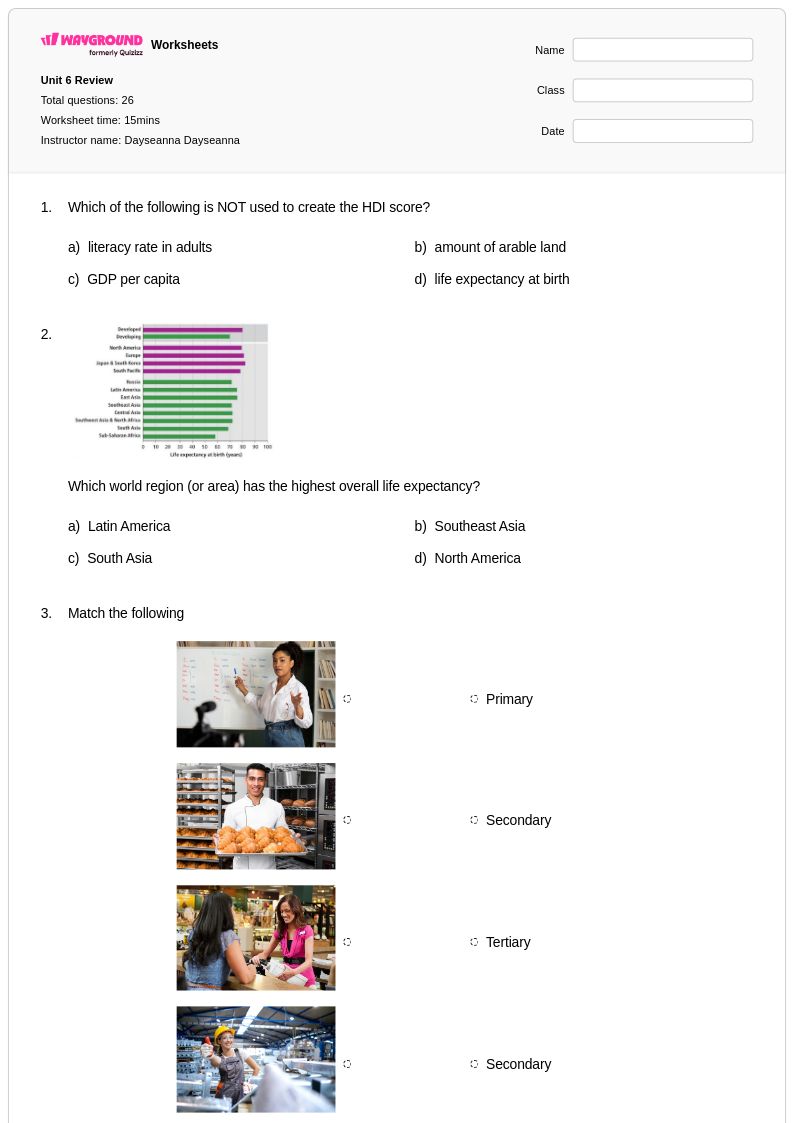
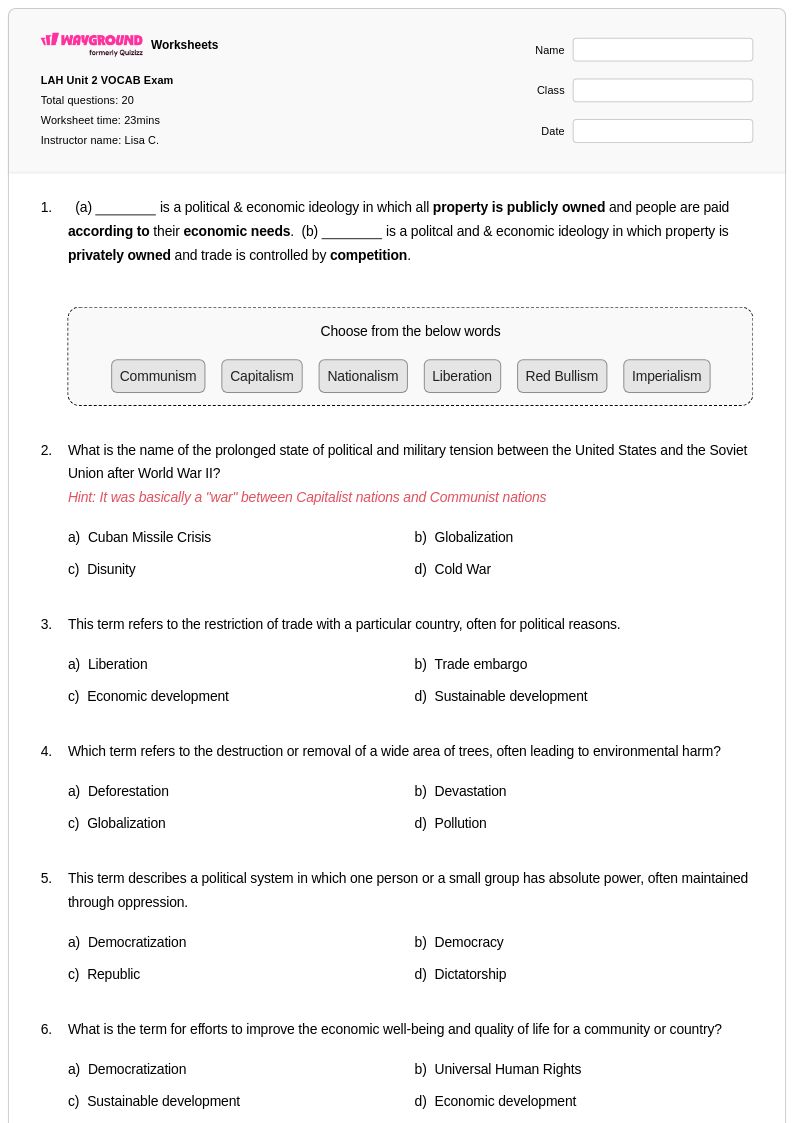
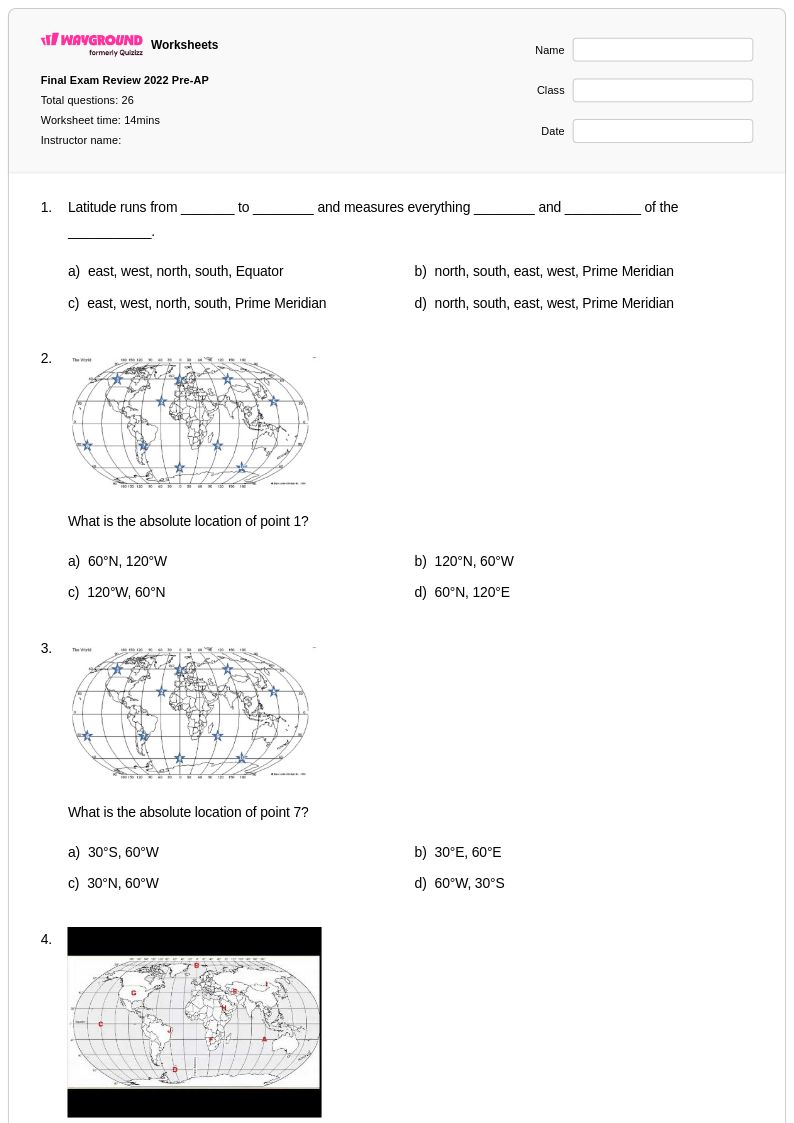
Class 9 globalization worksheets from Wayground help students explore interconnected world economies, cultures, and politics through engaging printables, practice problems, and comprehensive answer keys for effective Social Studies learning.
Explore printable Globalization worksheets for Class 9
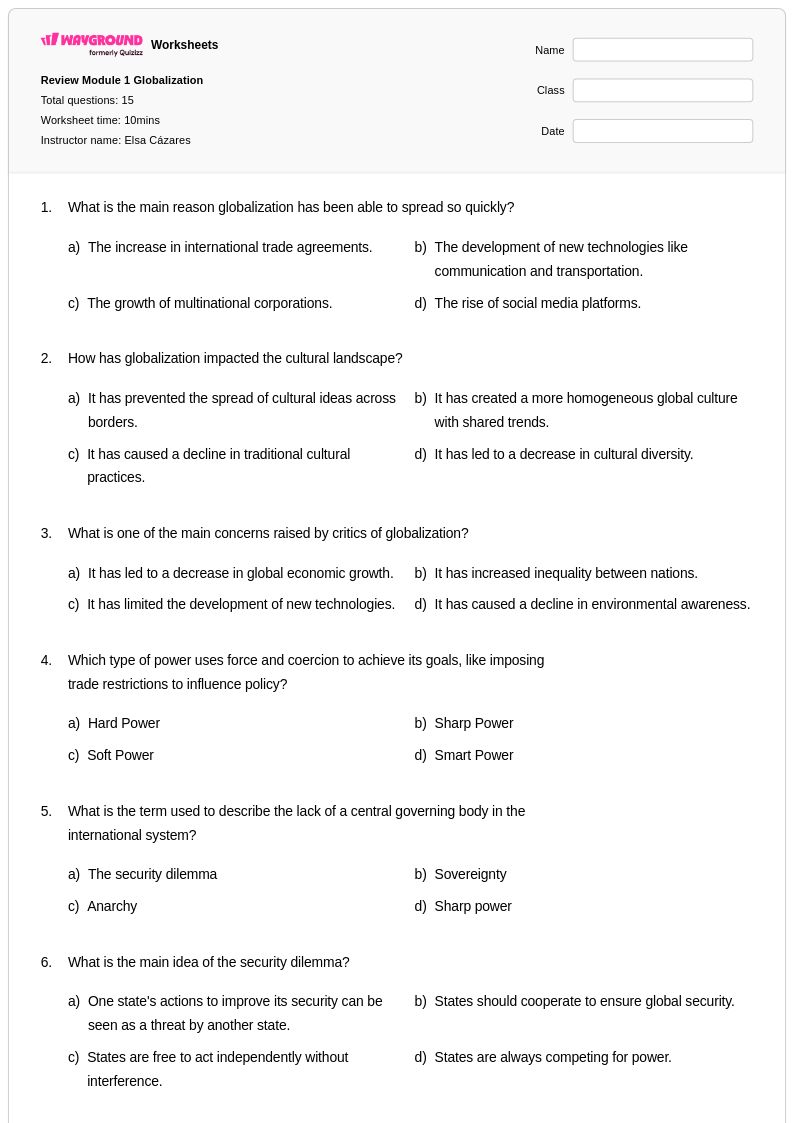
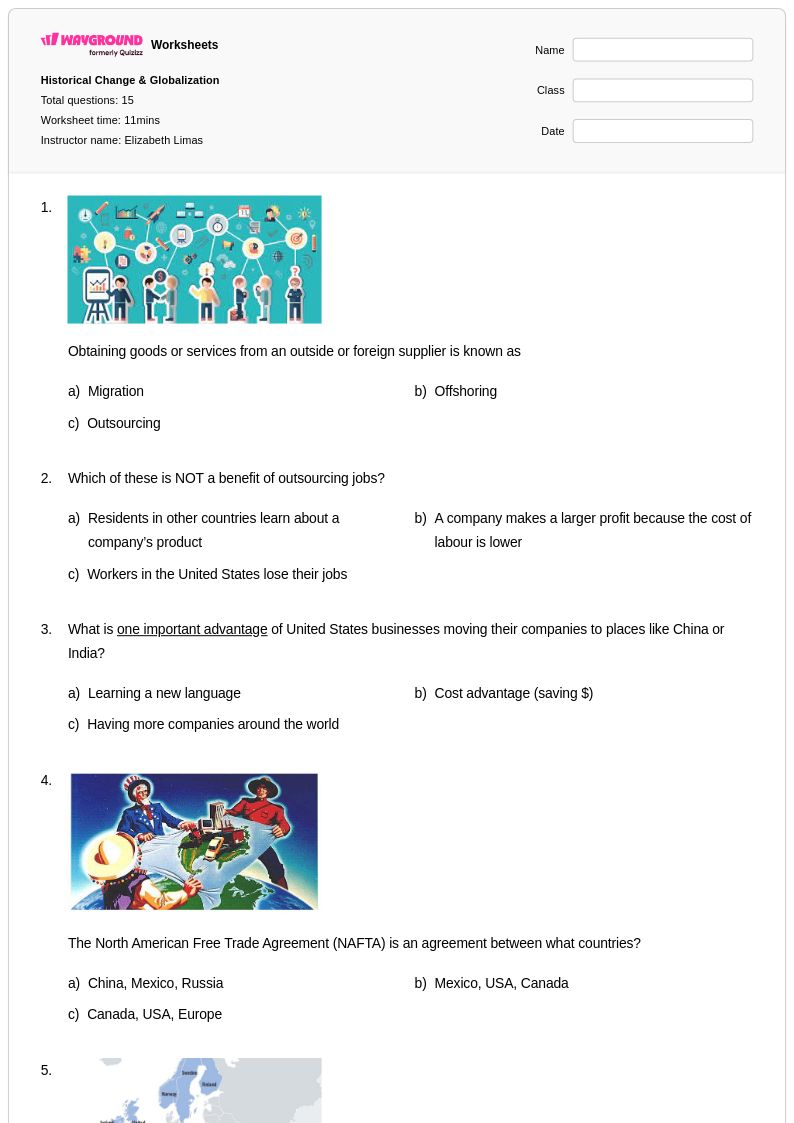
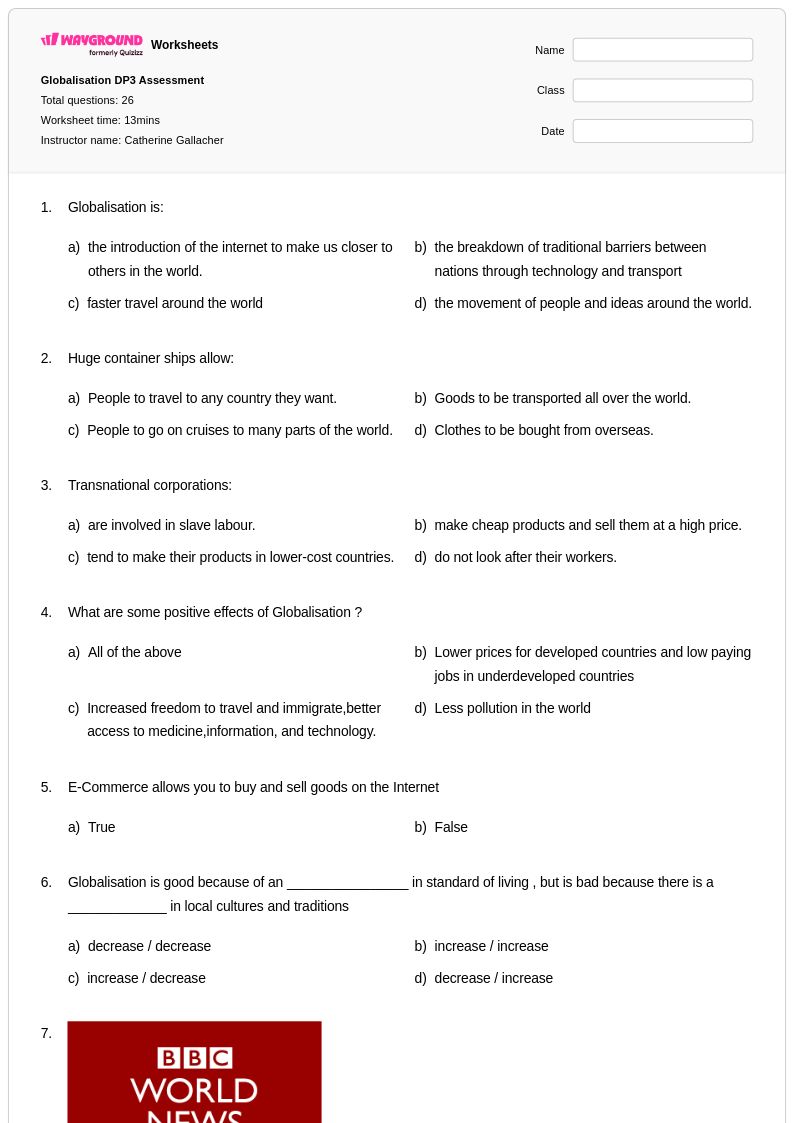
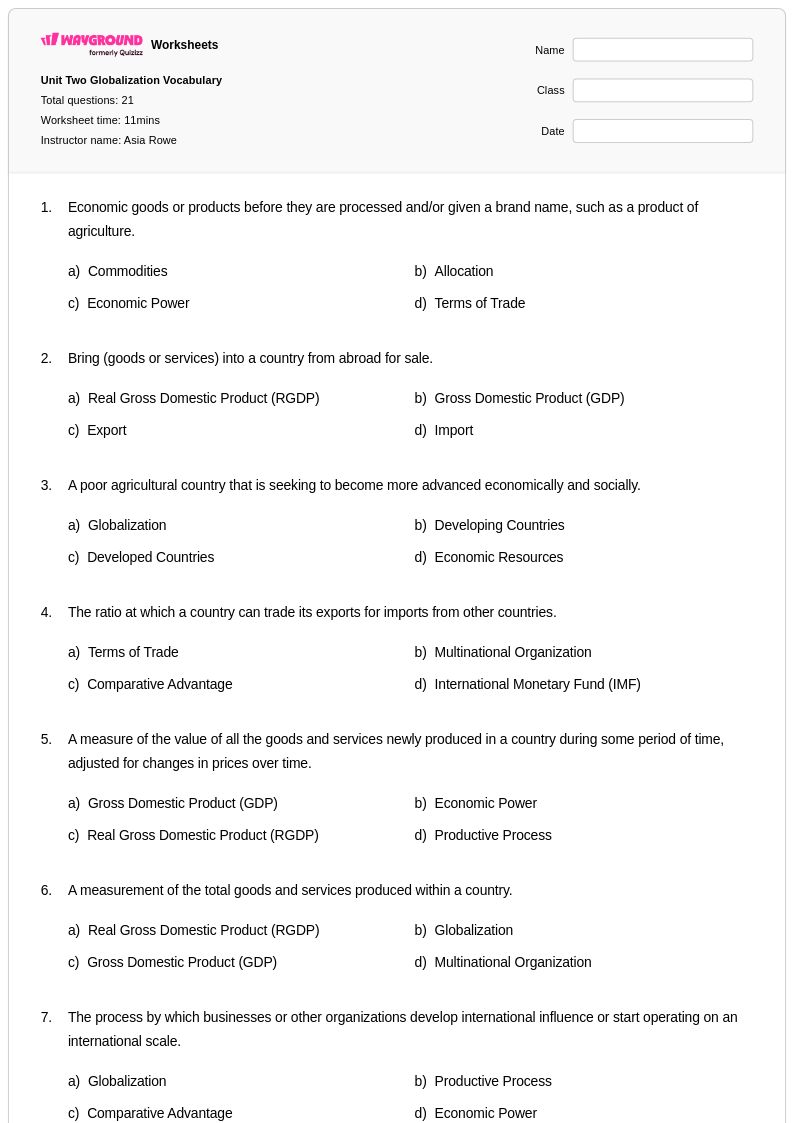
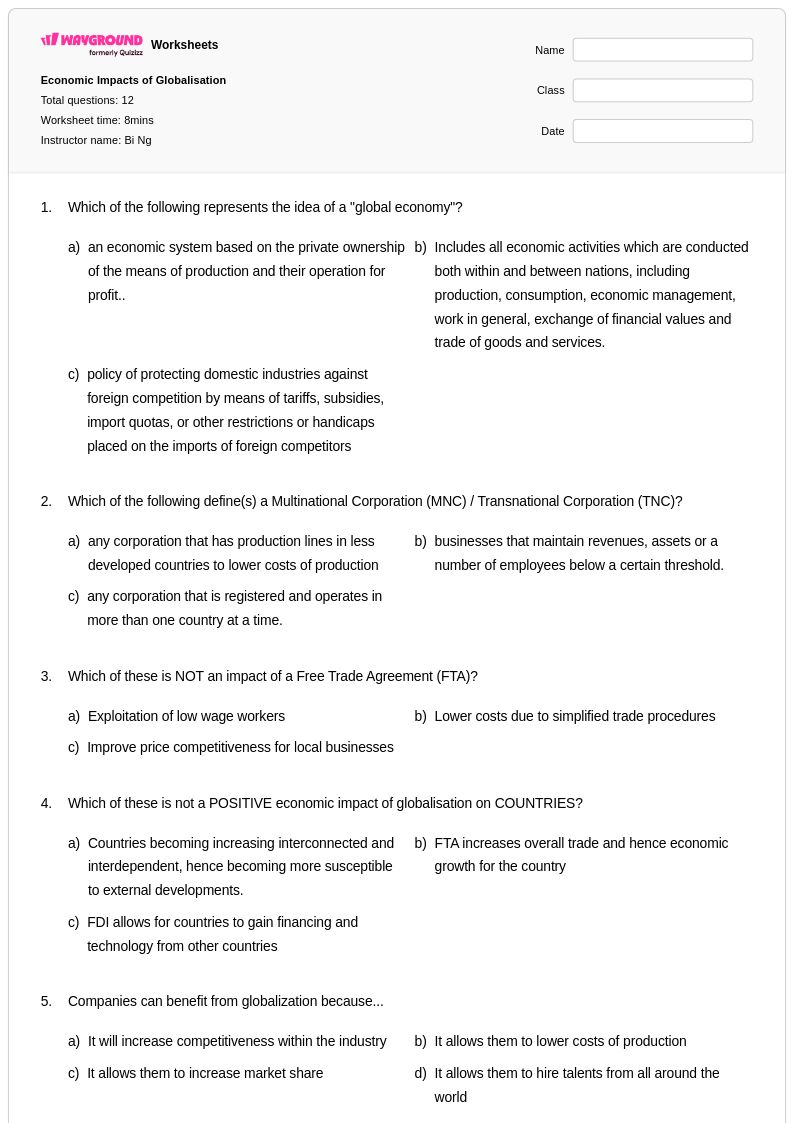
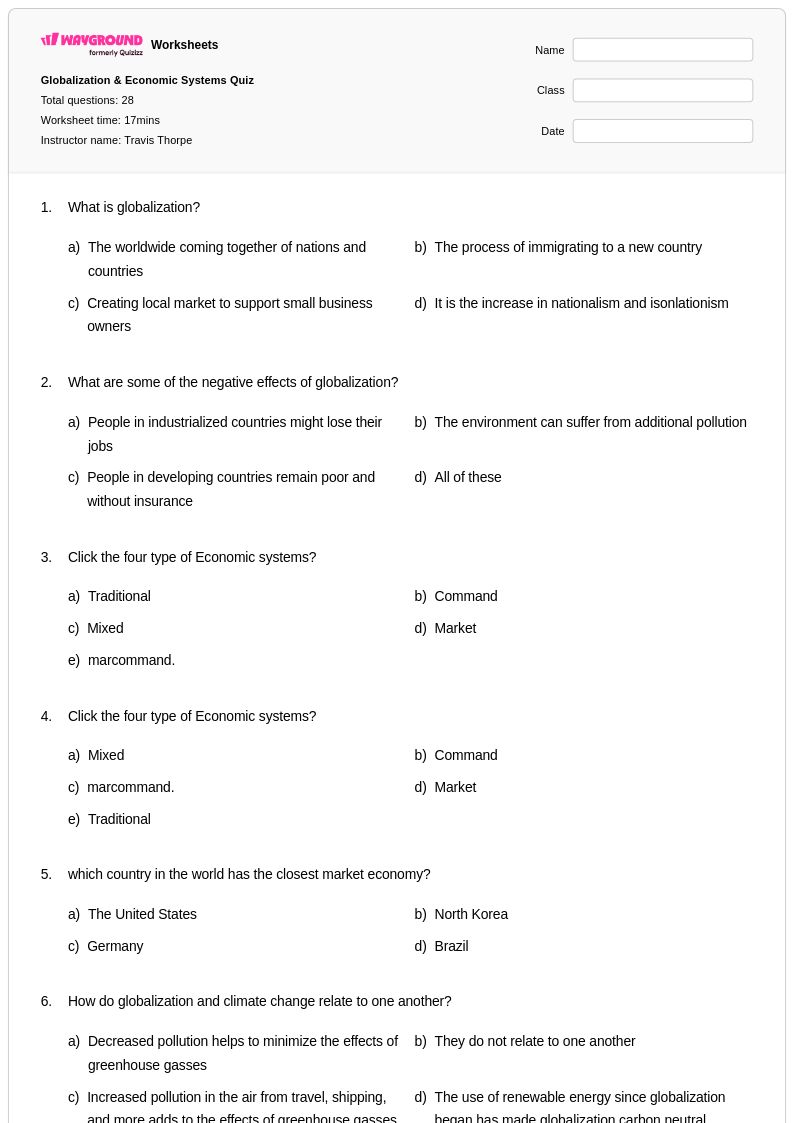
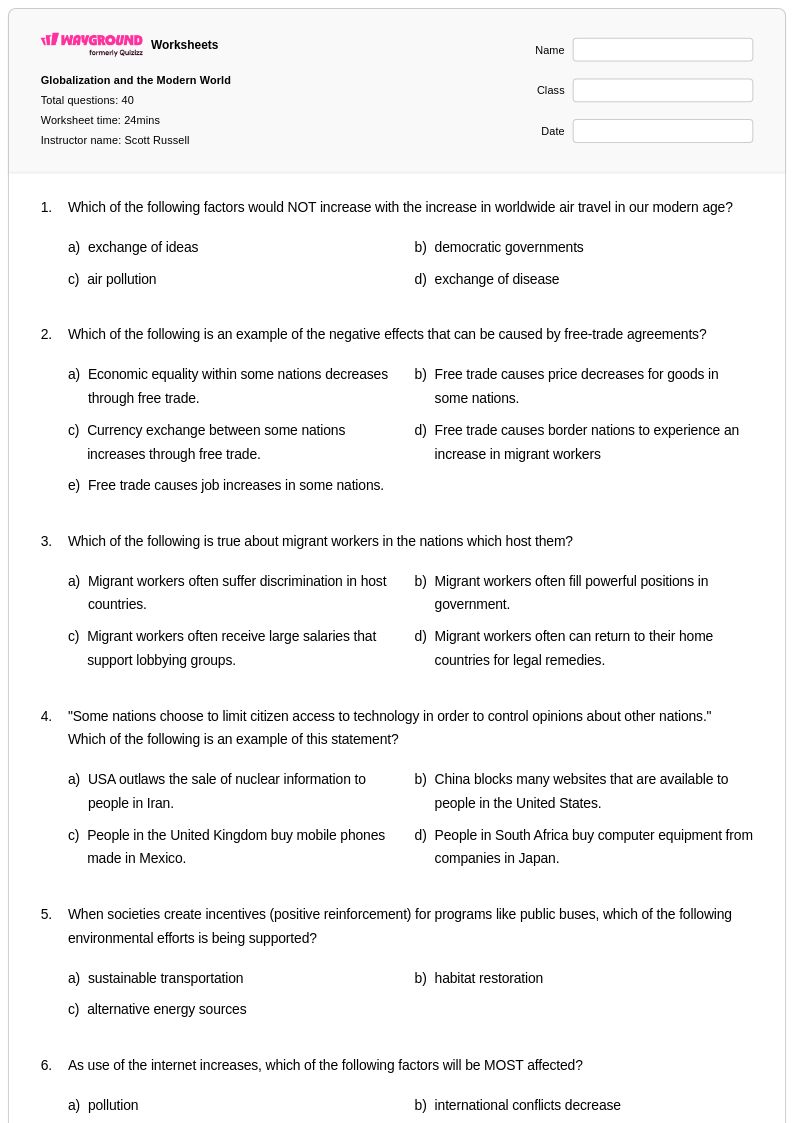
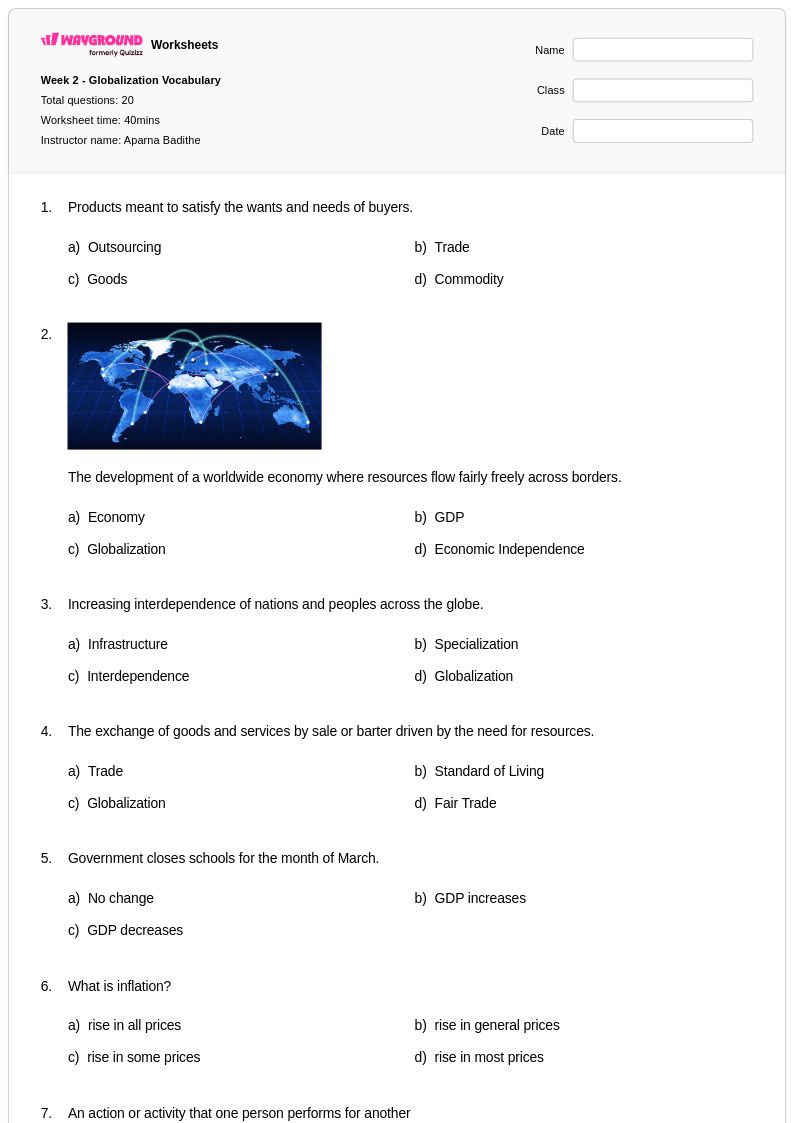
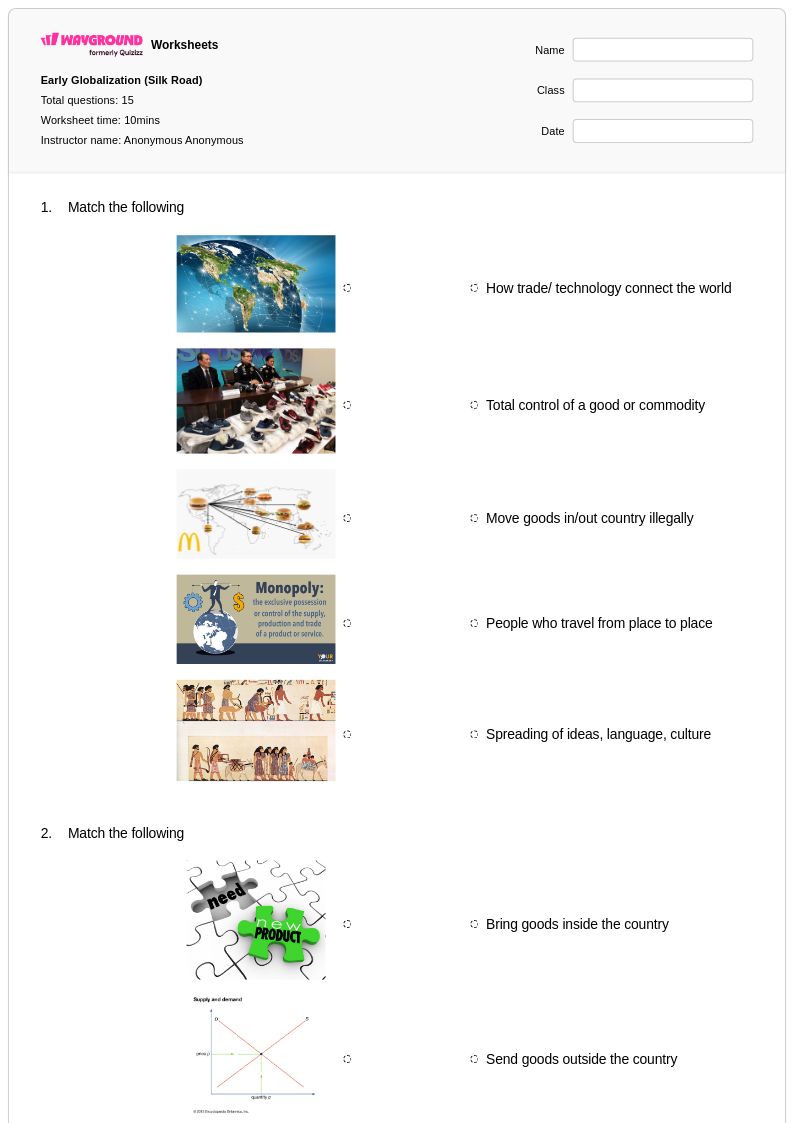
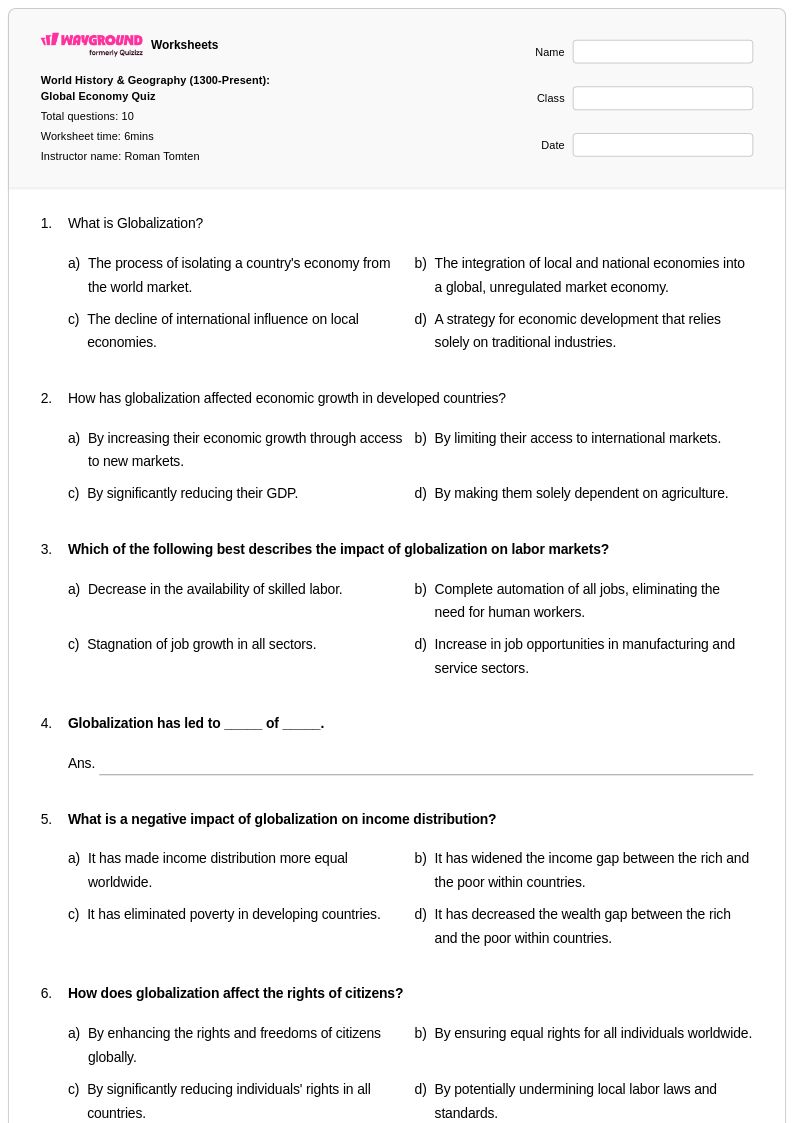
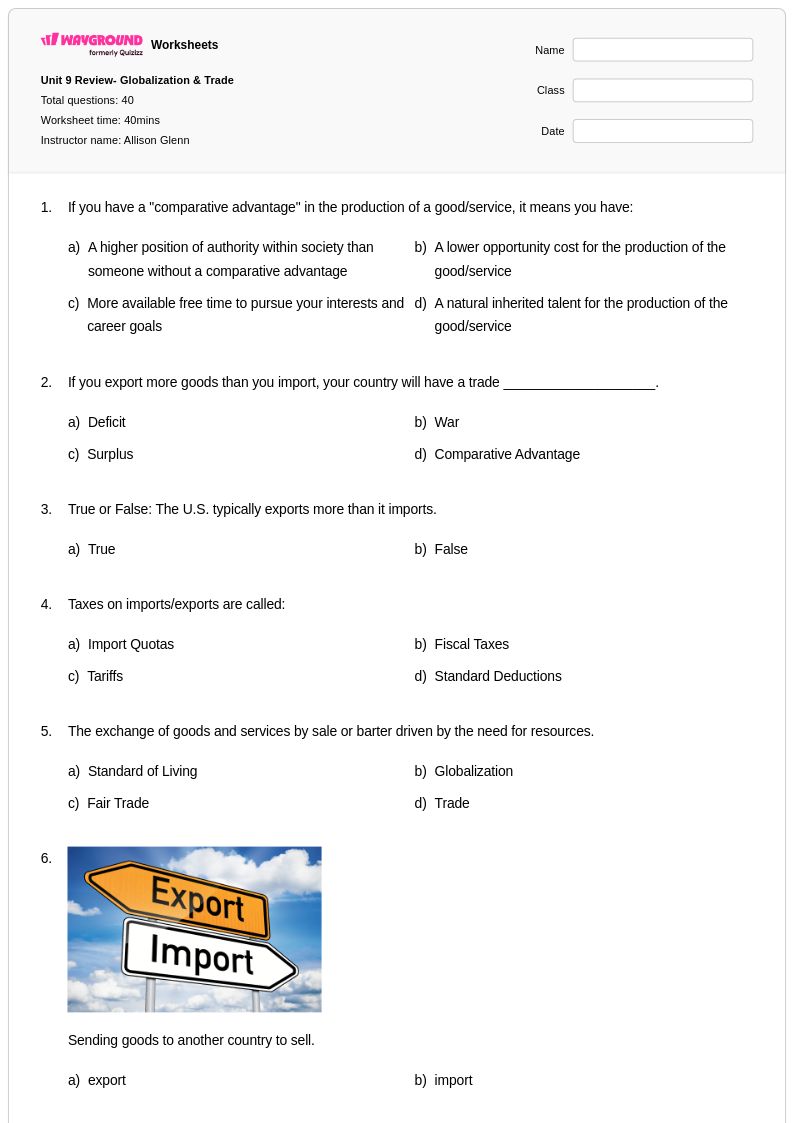
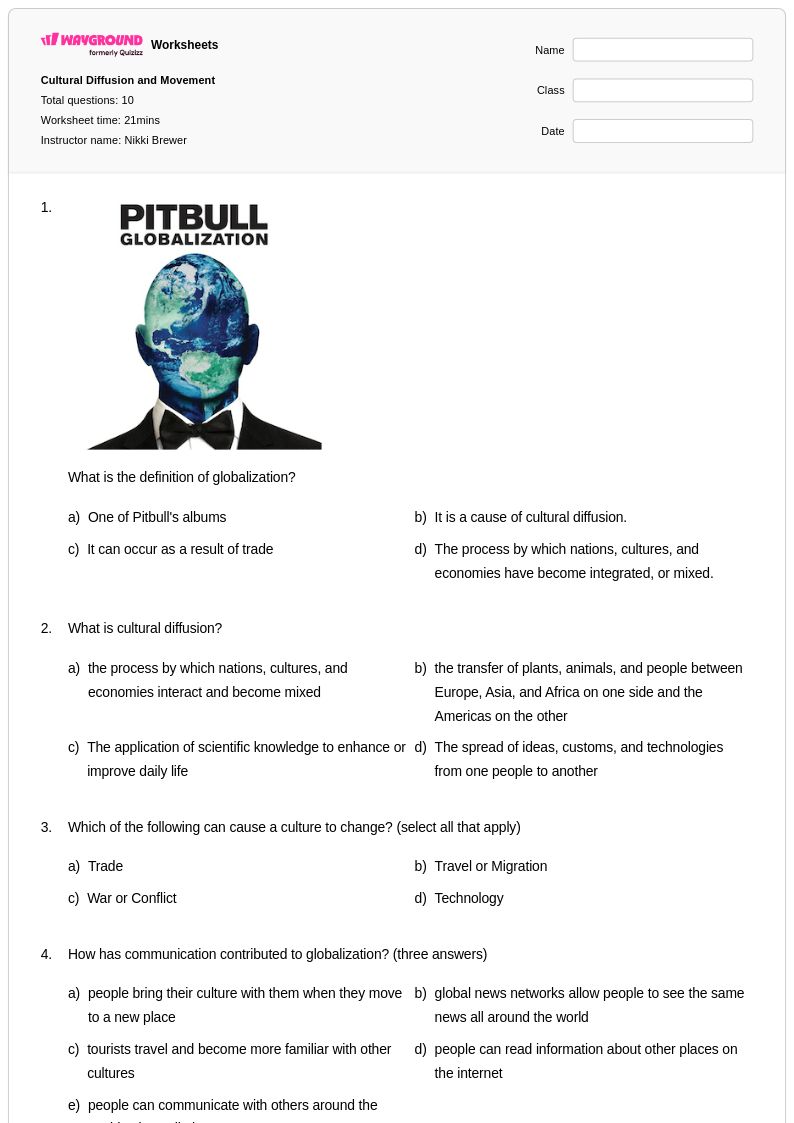
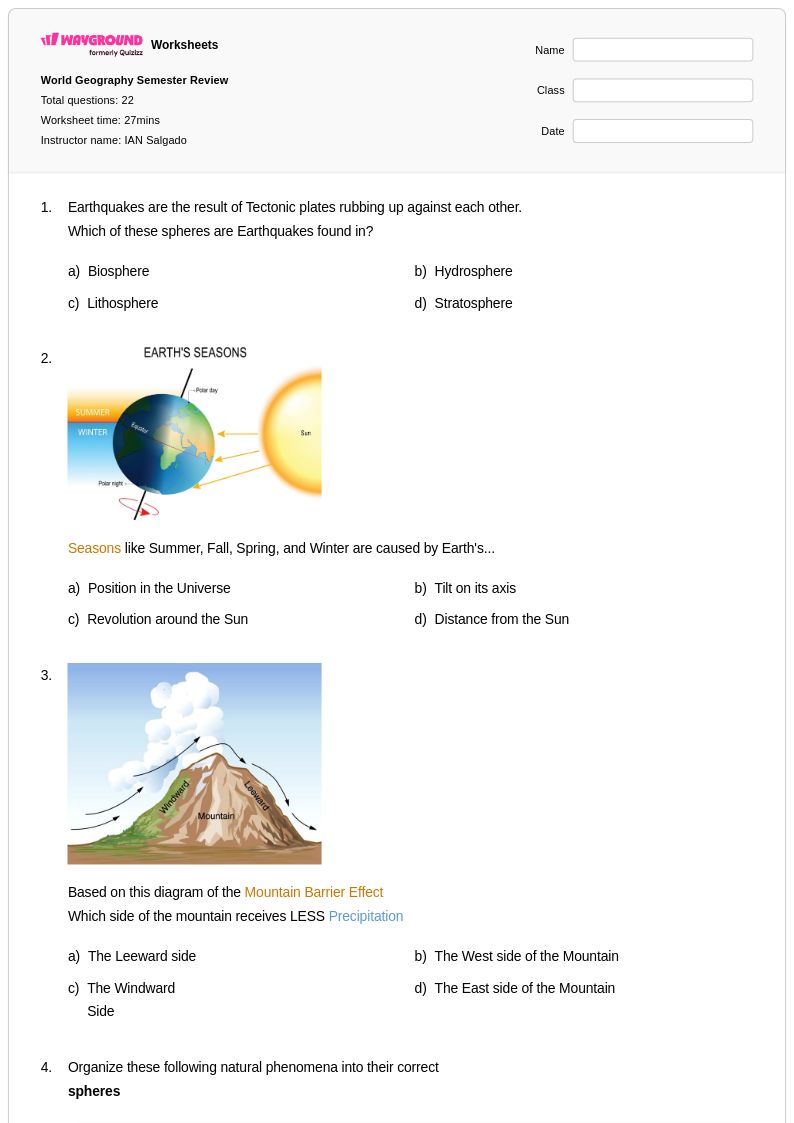
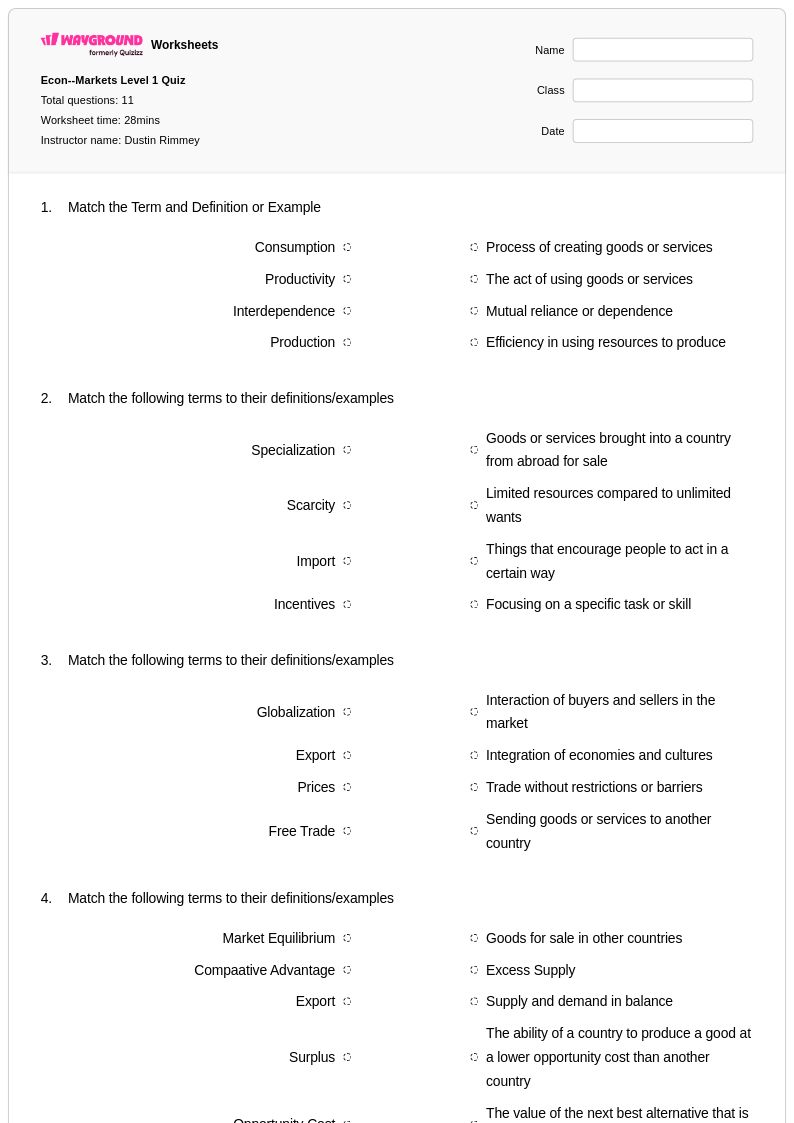
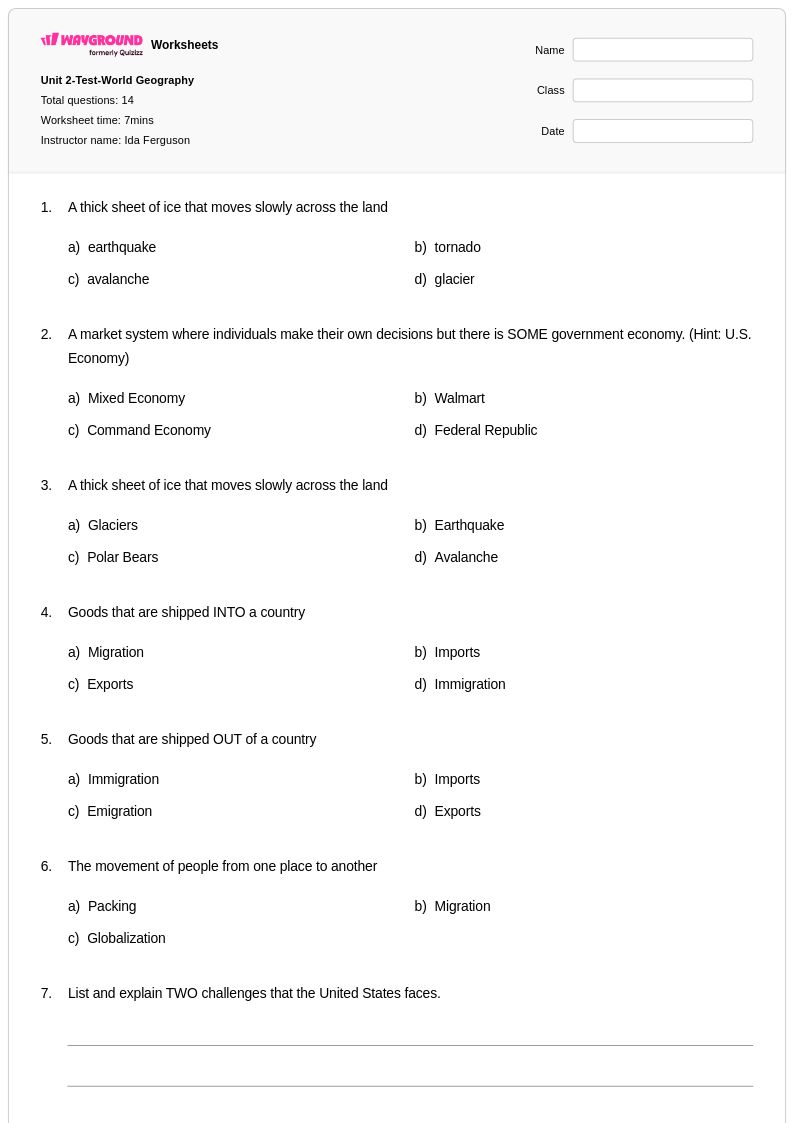
Globalization worksheets for Class 9 students available through Wayground (formerly Quizizz) provide comprehensive coverage of this essential World History concept that shapes our interconnected modern world. These carefully designed educational resources help students analyze the economic, political, cultural, and technological forces that have created our global society, examining both historical patterns of connection and contemporary challenges. The worksheets strengthen critical thinking skills by engaging students with practice problems that explore topics such as international trade networks, cultural diffusion, migration patterns, and the role of multinational corporations. Each worksheet comes with a detailed answer key to support independent learning and self-assessment, while the free printables offer educators flexible options for classroom instruction, homework assignments, and review sessions.
Wayground (formerly Quizizz) empowers teachers with access to millions of teacher-created globalization resources that can be easily searched, filtered, and customized to meet specific classroom needs. The platform's robust collection includes materials aligned with social studies standards, ensuring that Class 9 World History instruction meets rigorous academic expectations while addressing diverse learning styles and ability levels. Teachers can differentiate instruction by selecting from various difficulty levels and worksheet formats, including both digital interactive versions and traditional pdf printables that work seamlessly in any learning environment. These comprehensive tools support effective lesson planning while providing targeted resources for remediation, enrichment, and skill practice, enabling educators to help students develop a nuanced understanding of how globalization has transformed human societies throughout history and continues to influence contemporary world affairs.
FAQs
How do I teach globalization to students in a way that feels relevant and tangible?
Grounding globalization in students' everyday lives makes the concept concrete and accessible. Start with familiar examples like the supply chains behind their smartphones or the cultural origins of foods they eat, then build outward to examine economic interdependence, migration, and international trade patterns. From there, structured analysis of cause-and-effect relationships, such as how a labor shortage in one country affects prices in another, helps students move from personal connection to systemic thinking.
What kinds of practice exercises help students understand globalization concepts?
Effective practice for globalization focuses on applying concepts rather than memorizing definitions. Exercises that ask students to trace a product's supply chain, analyze trade data, or compare cultural exchange across regions build the analytical skills this topic demands. Practice problems centered on cause-and-effect relationships, such as how technological advancement accelerates migration or alters labor markets, are especially useful for reinforcing key terminology and interconnected systems thinking.
What misconceptions do students commonly have about globalization?
One of the most persistent misconceptions is that globalization is purely an economic phenomenon, when in reality it encompasses cultural exchange, political cooperation, environmental consequences, and social movements. Students also frequently conflate globalization with westernization, missing the multidirectional nature of cultural and economic influence. Another common error is treating globalization as a uniformly positive or negative force rather than understanding it as a process with context-dependent benefits and drawbacks depending on geography, industry, and population.
How do I assess whether students understand the benefits and drawbacks of globalization?
Strong assessment for this topic requires students to argue from evidence rather than simply list pros and cons. Tasks that ask students to evaluate a specific case, such as the environmental impact of expanded shipping routes or the cultural effects of multinational media, reveal whether they can apply nuance and weigh competing interests. Looking for whether students distinguish between short-term and long-term effects, and whether they consider multiple stakeholder perspectives, is a reliable indicator of genuine comprehension.
How can I use Wayground's globalization worksheets in my classroom?
Wayground's globalization worksheets are available as printable PDFs for traditional classroom use and in interactive digital formats for technology-integrated or remote learning environments, including the option to host them as a quiz directly on Wayground. Each worksheet includes complete answer keys, making them practical for both guided instruction and independent practice. Wayground also supports student-level accommodations such as read aloud, extended time, and reduced answer choices, so teachers can differentiate the same resource for students with varying needs without creating separate materials.
How do I differentiate globalization instruction for students at different ability levels?
For students who are still building foundational understanding, scaffolded worksheets that focus on key terminology and basic cause-and-effect relationships provide structured entry points into complex content. Advanced learners benefit from open-ended analysis tasks that require them to synthesize information across economic, cultural, and political dimensions of globalization. On Wayground, teachers can apply individual accommodations such as read aloud or reduced answer choices to specific students, ensuring differentiated support without disrupting the experience of the rest of the class.