Free Printable Helping Verbs Worksheets for Kindergarten
Discover free kindergarten helping verbs worksheets and printables from Wayground that help young learners identify and practice using auxiliary verbs through engaging activities with answer keys included.
Explore printable Helping Verbs worksheets for Kindergarten
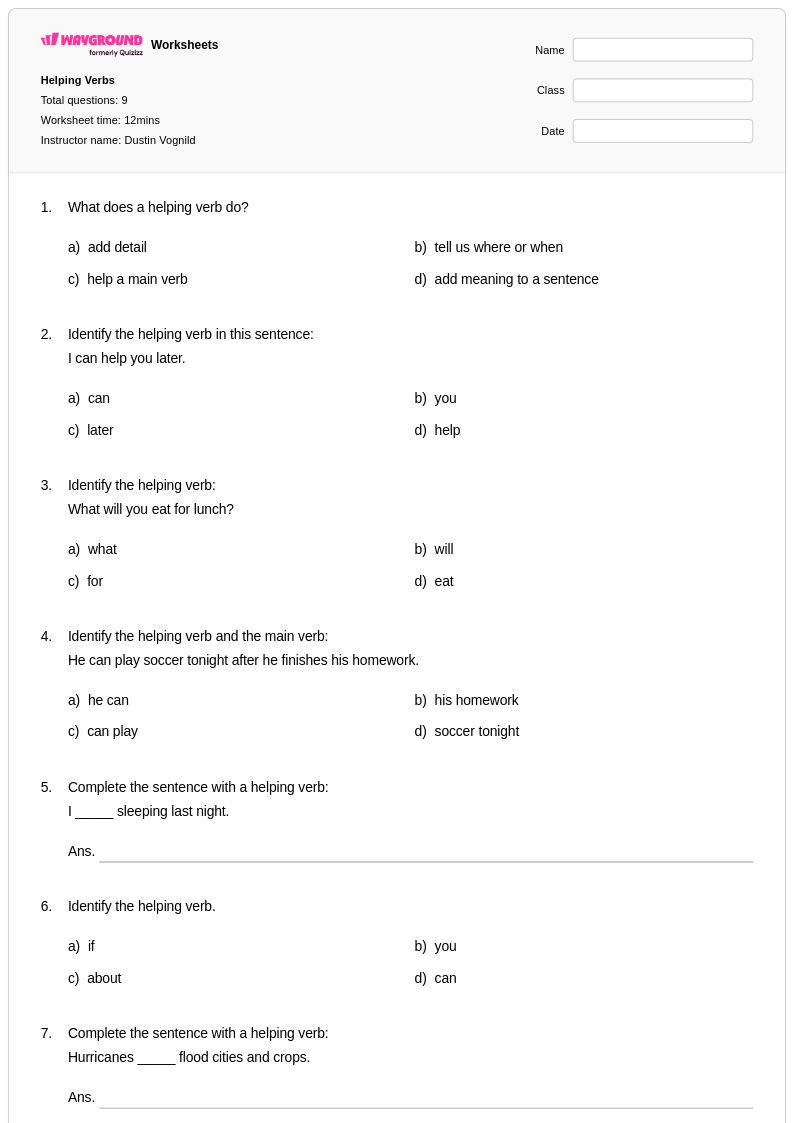
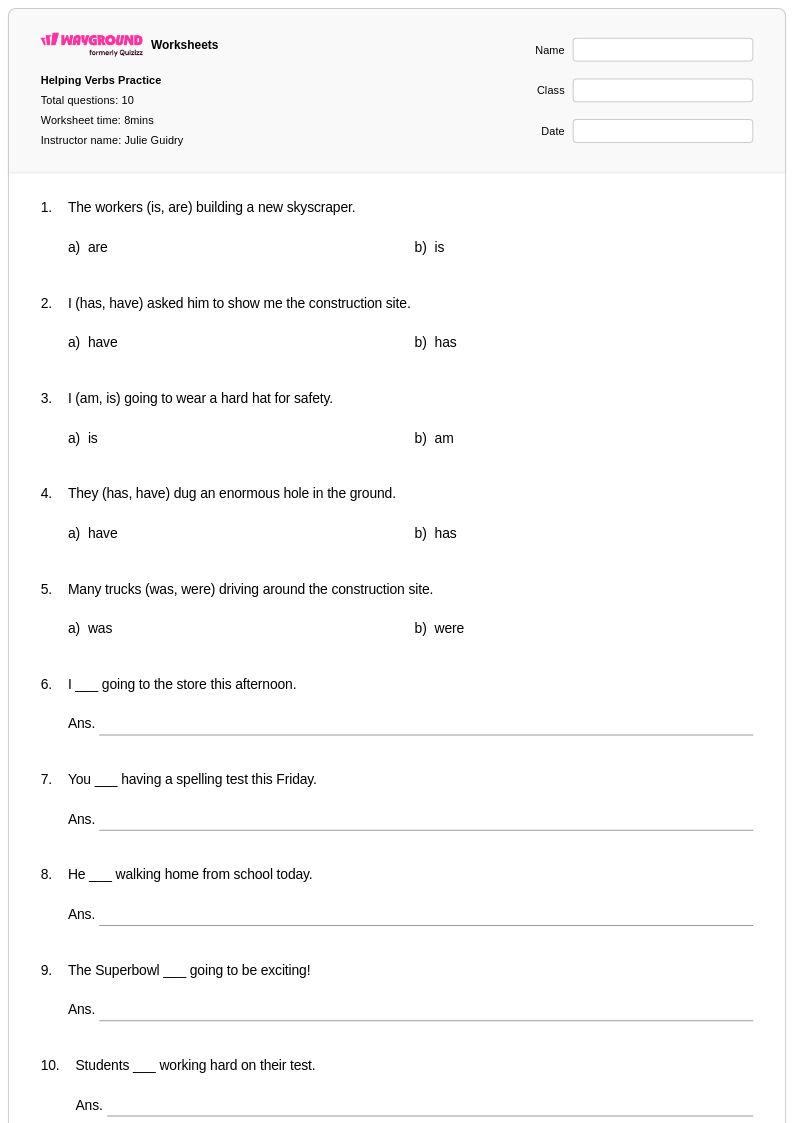
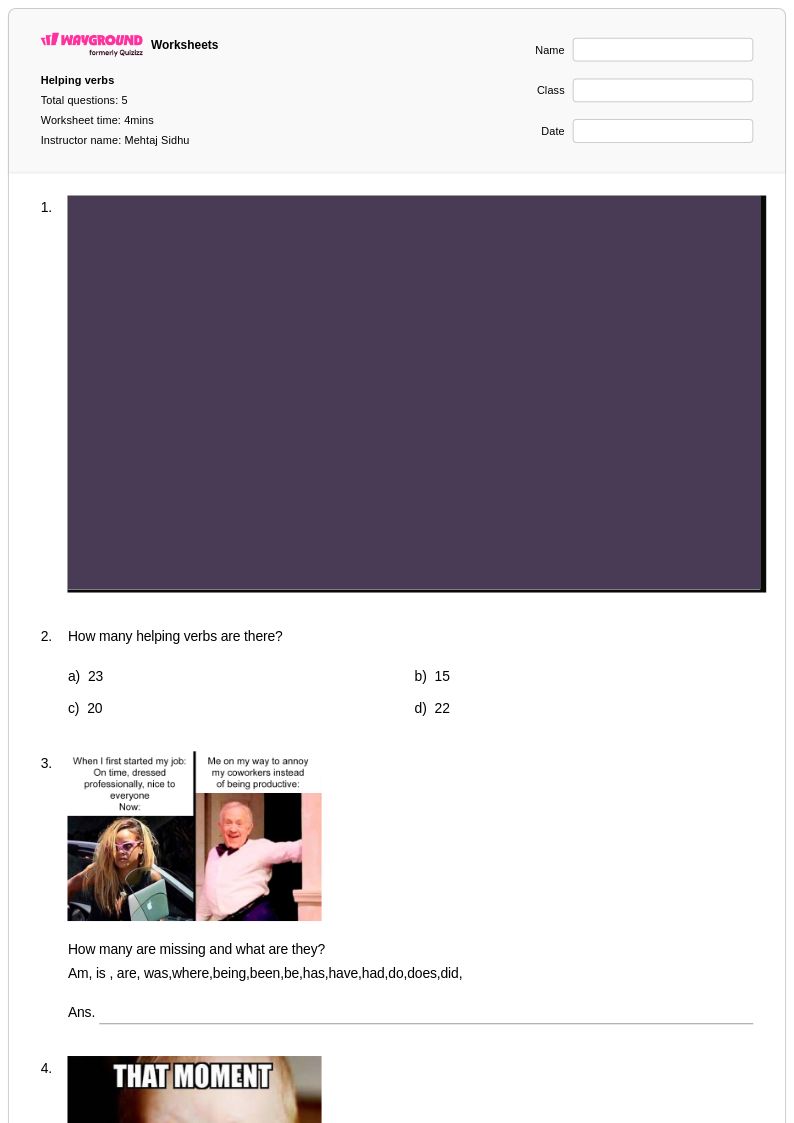
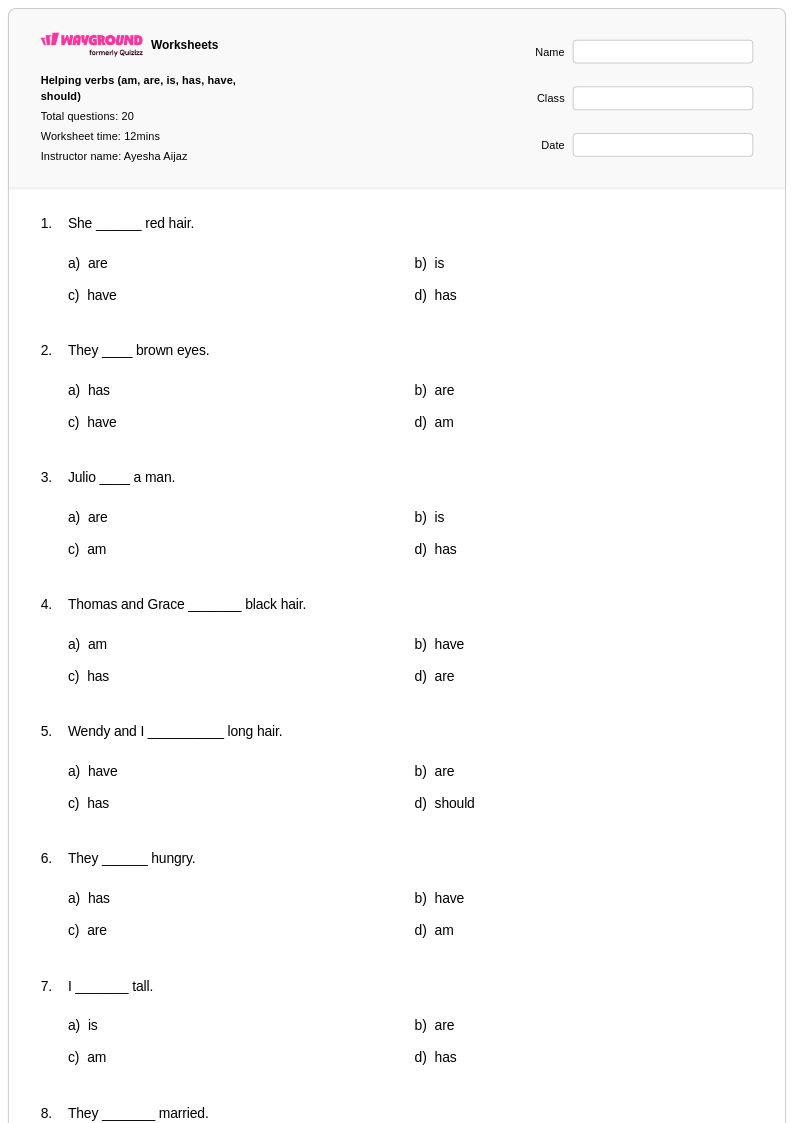
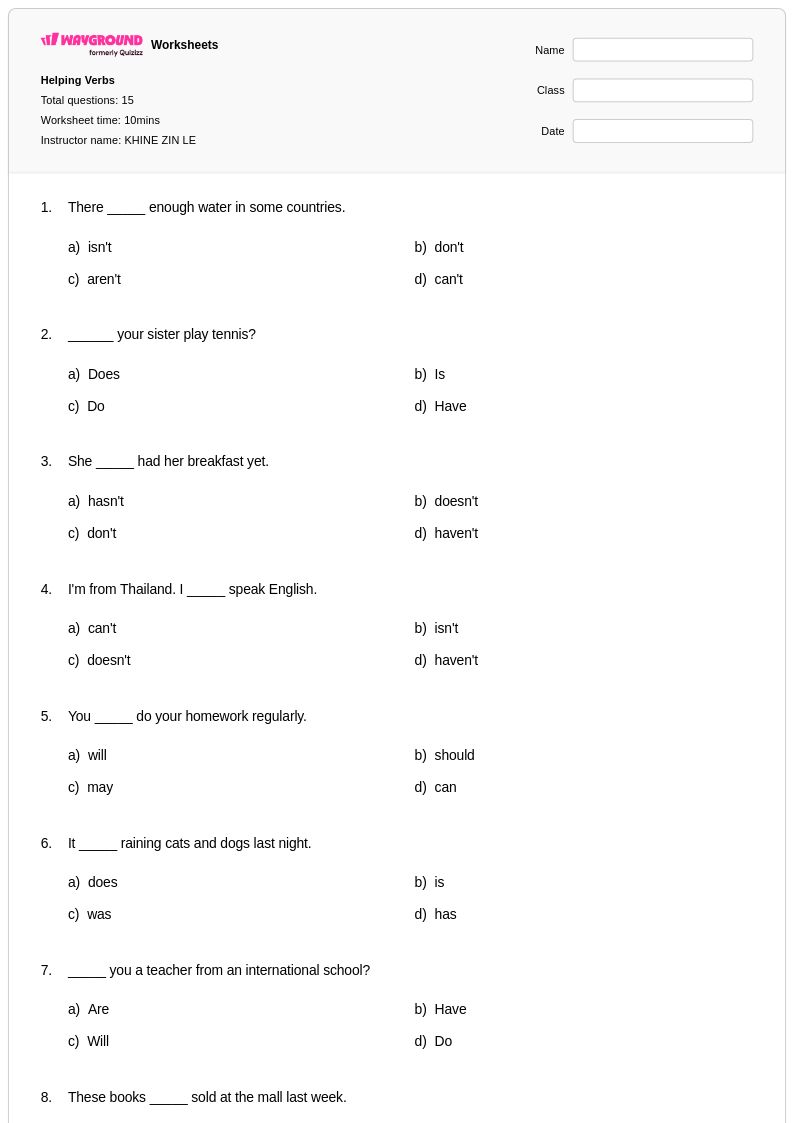
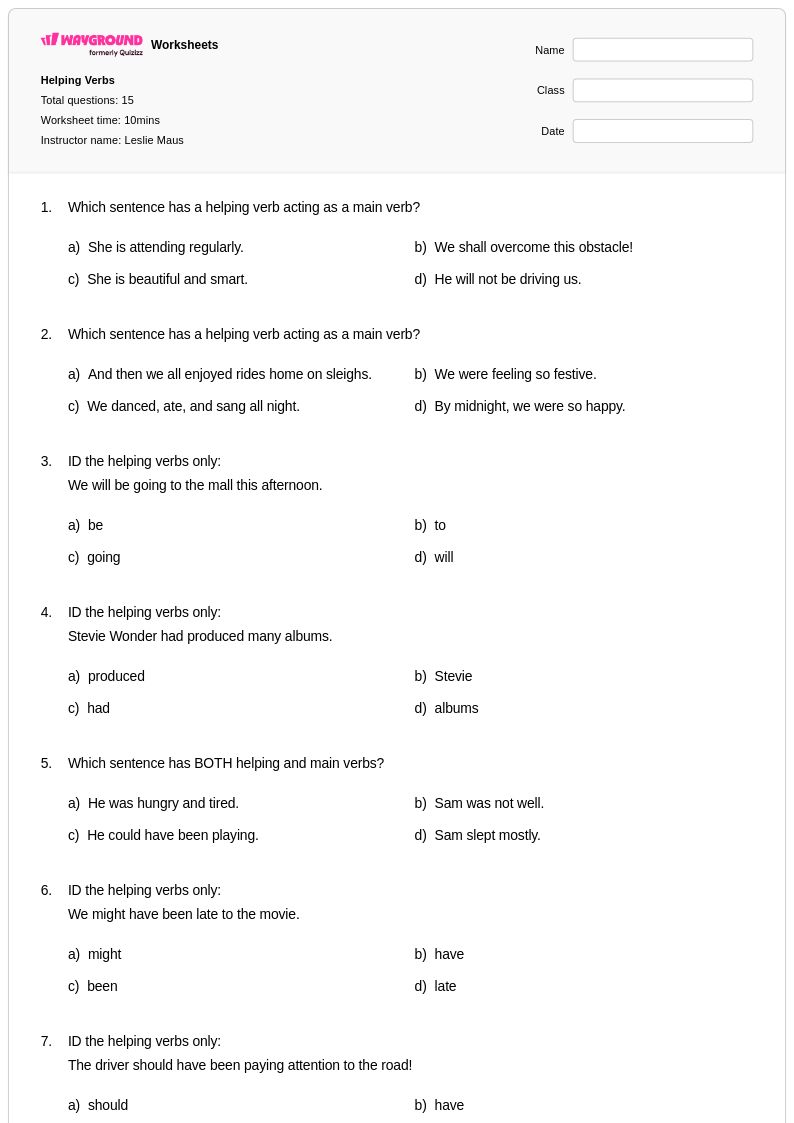
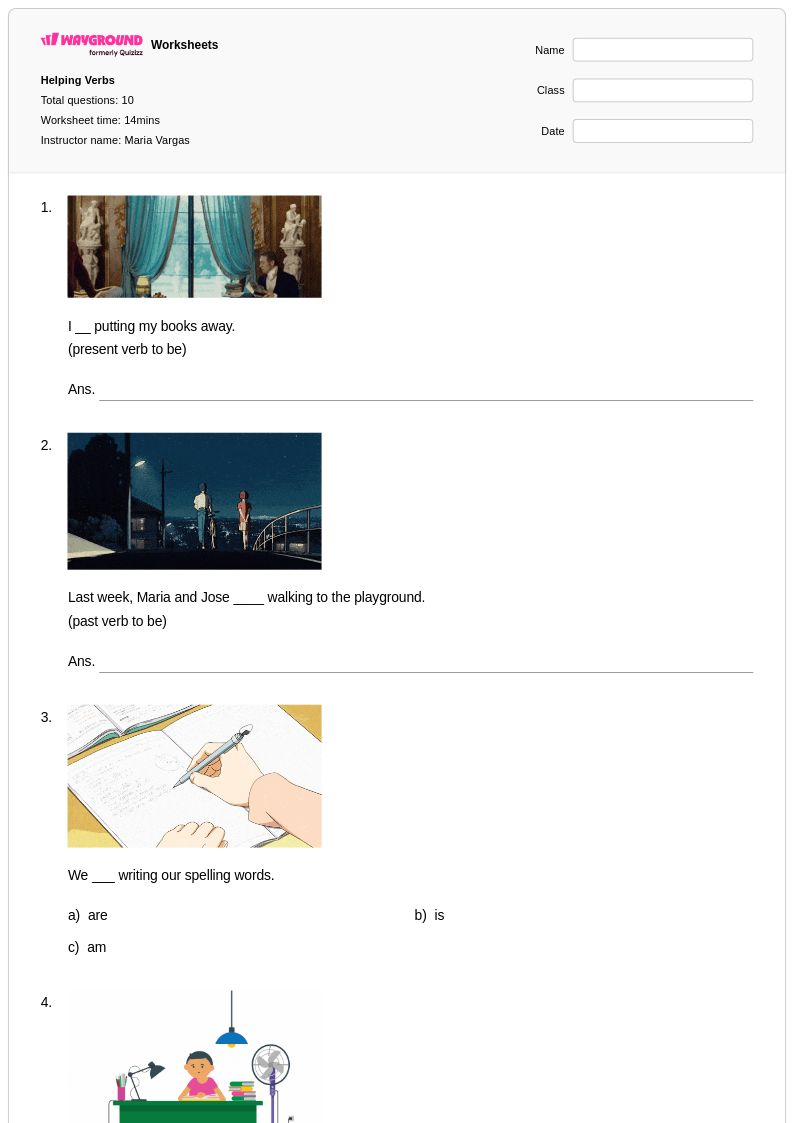
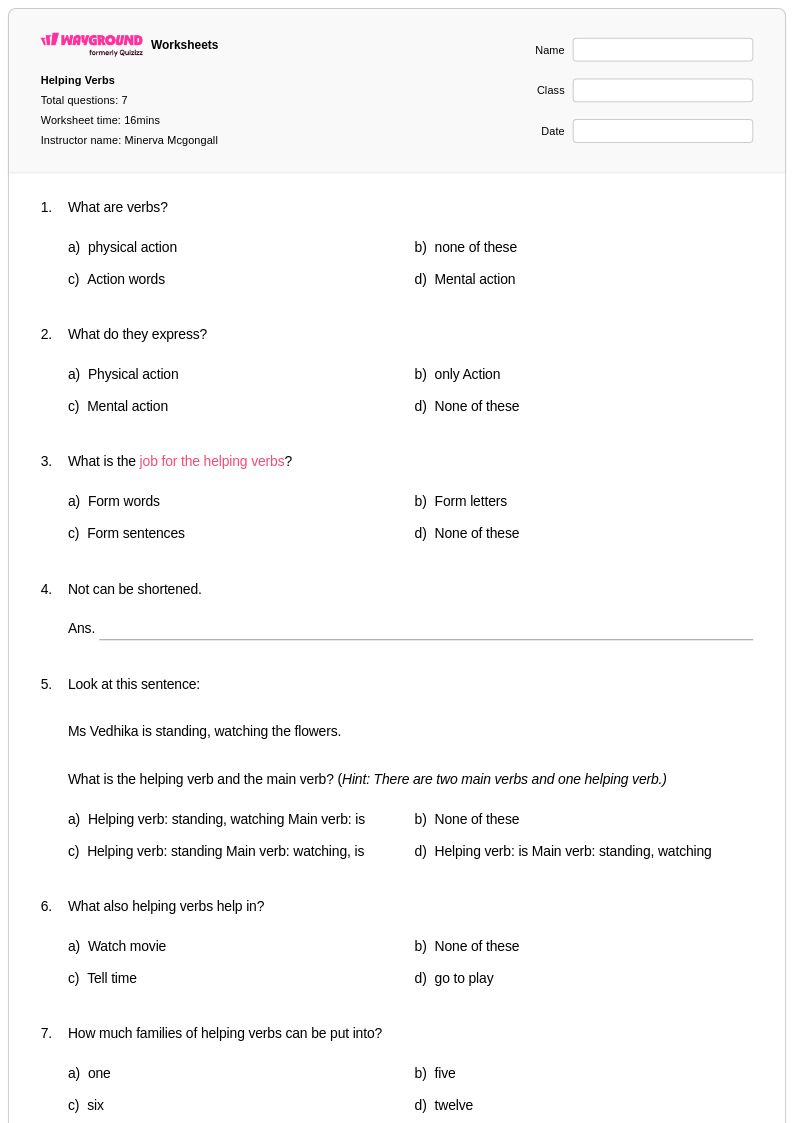
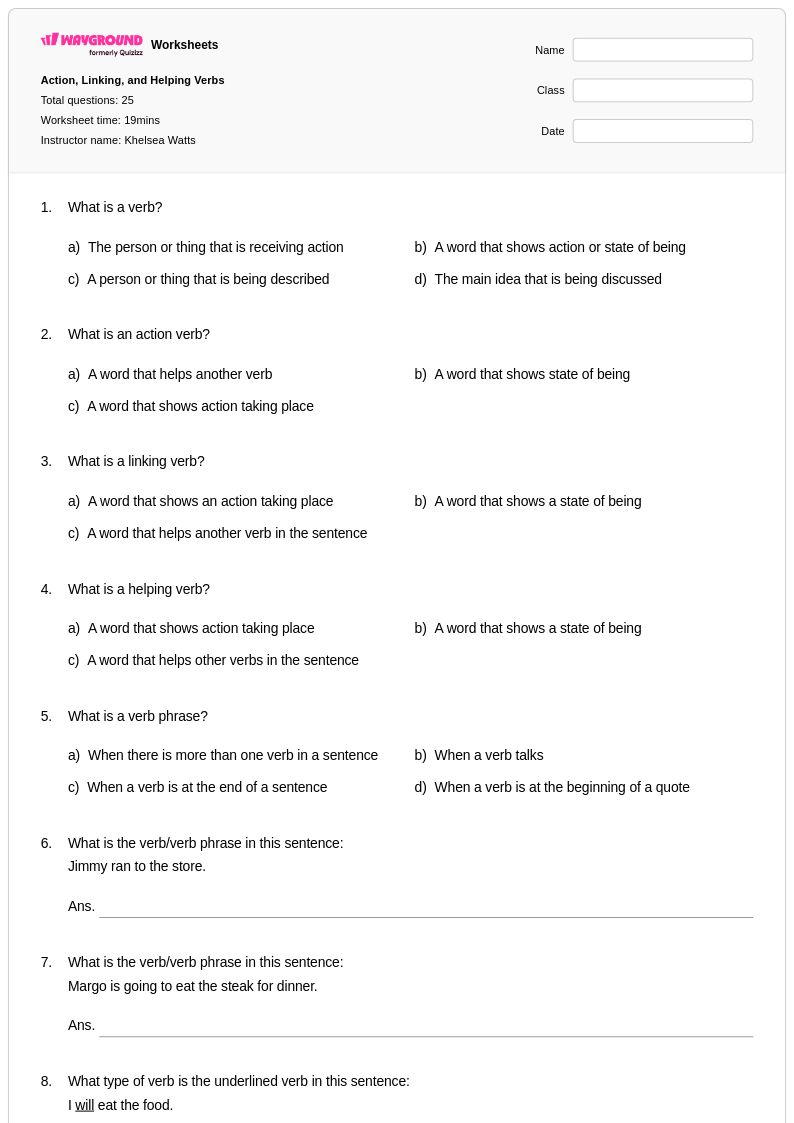
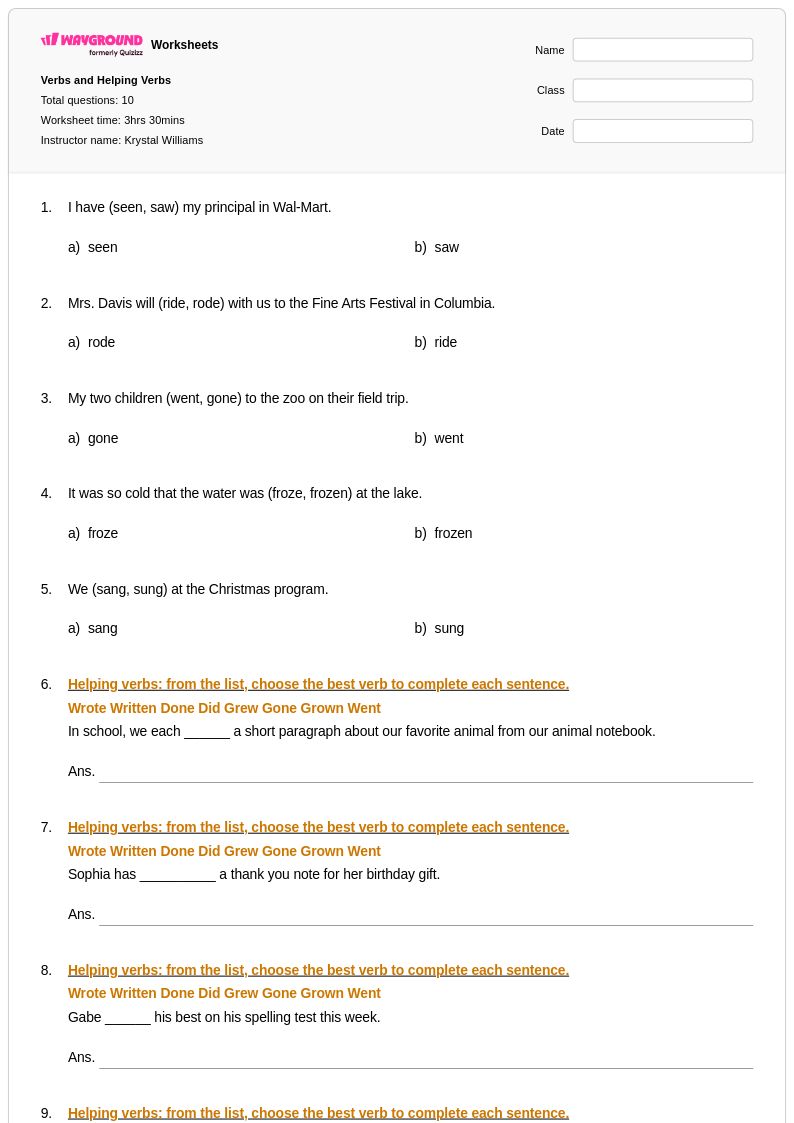
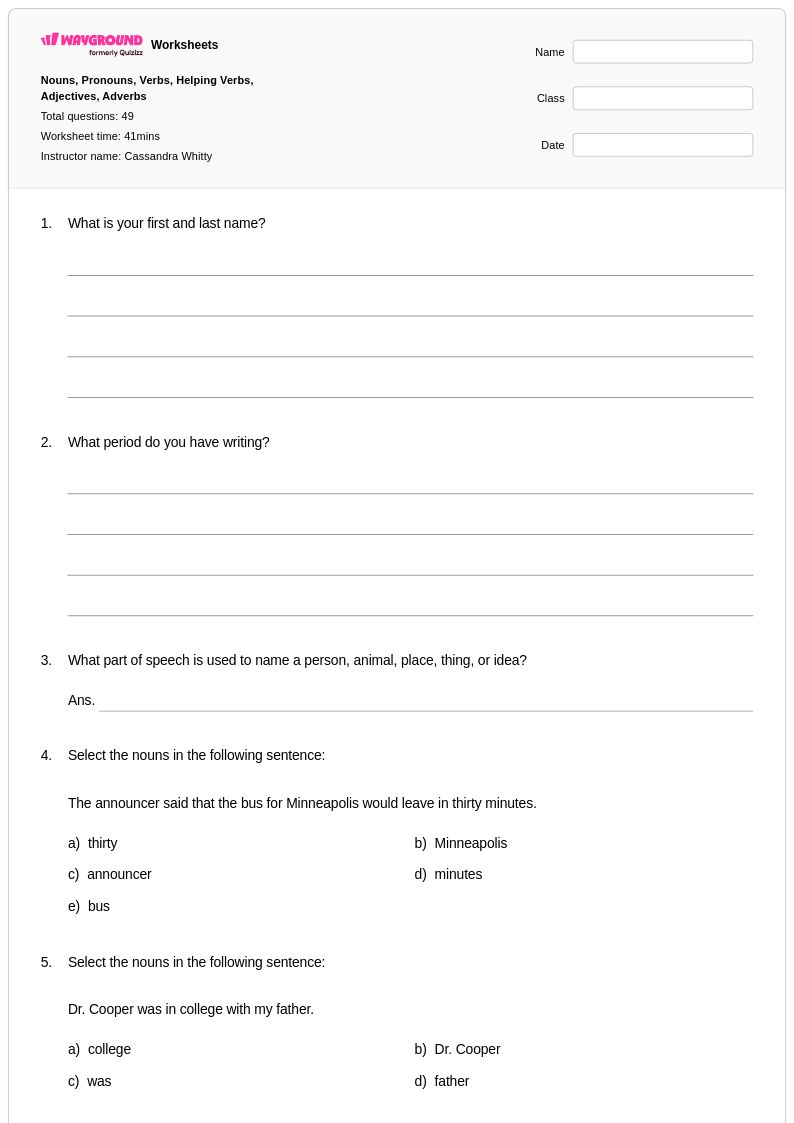
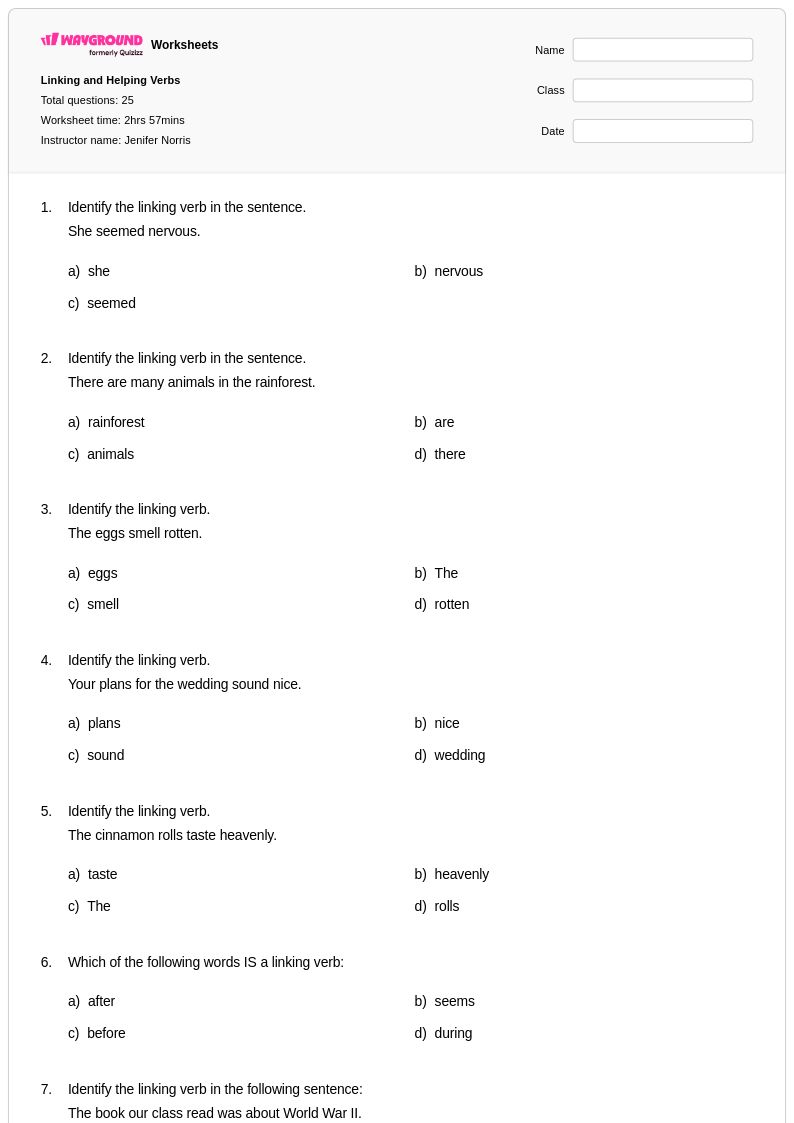
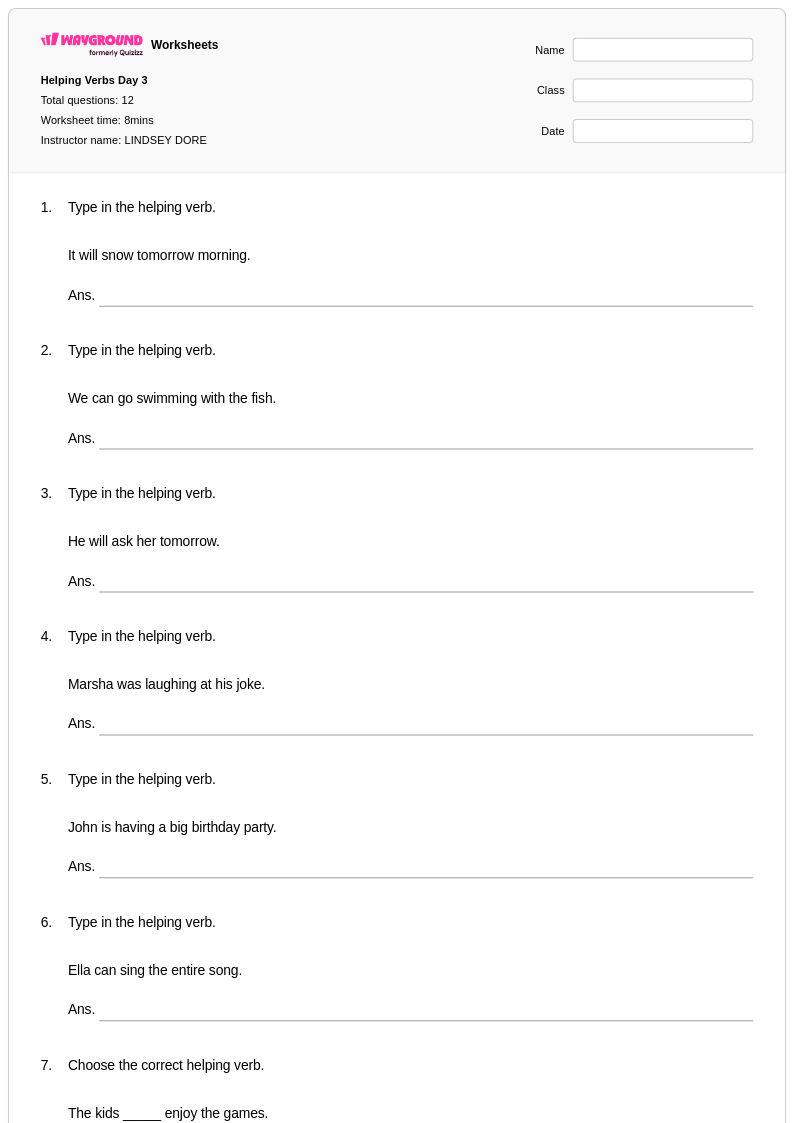
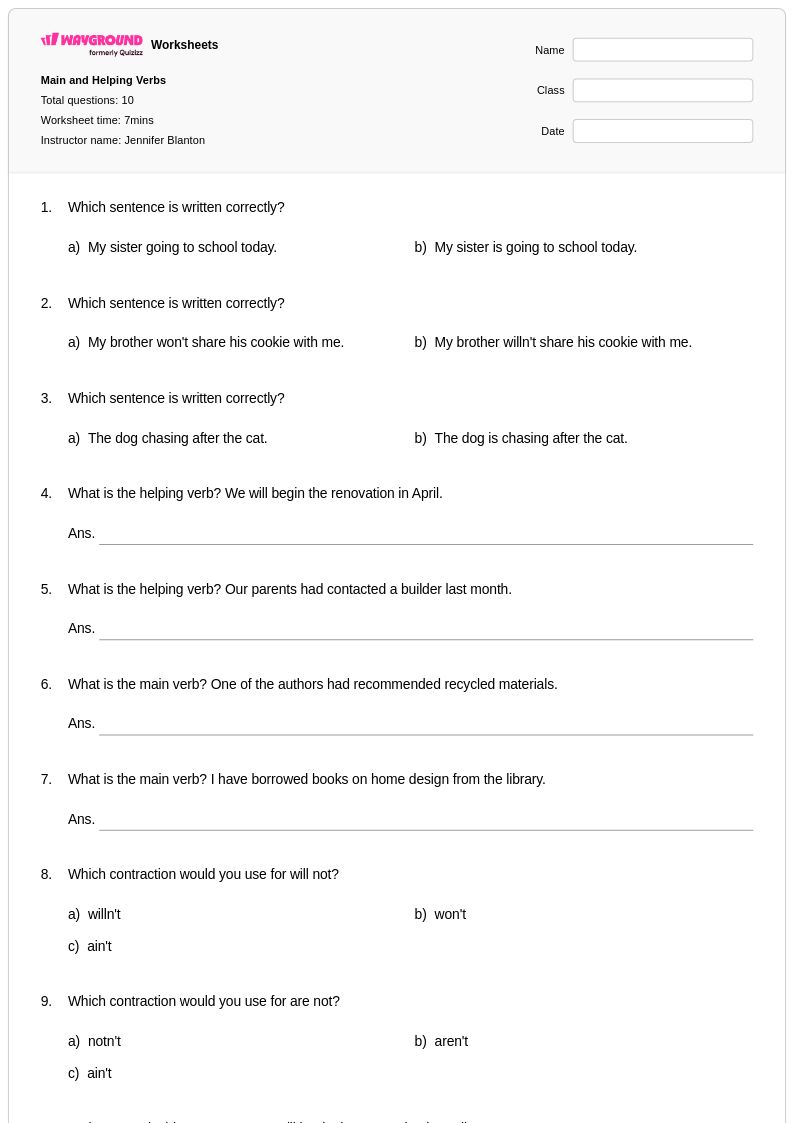
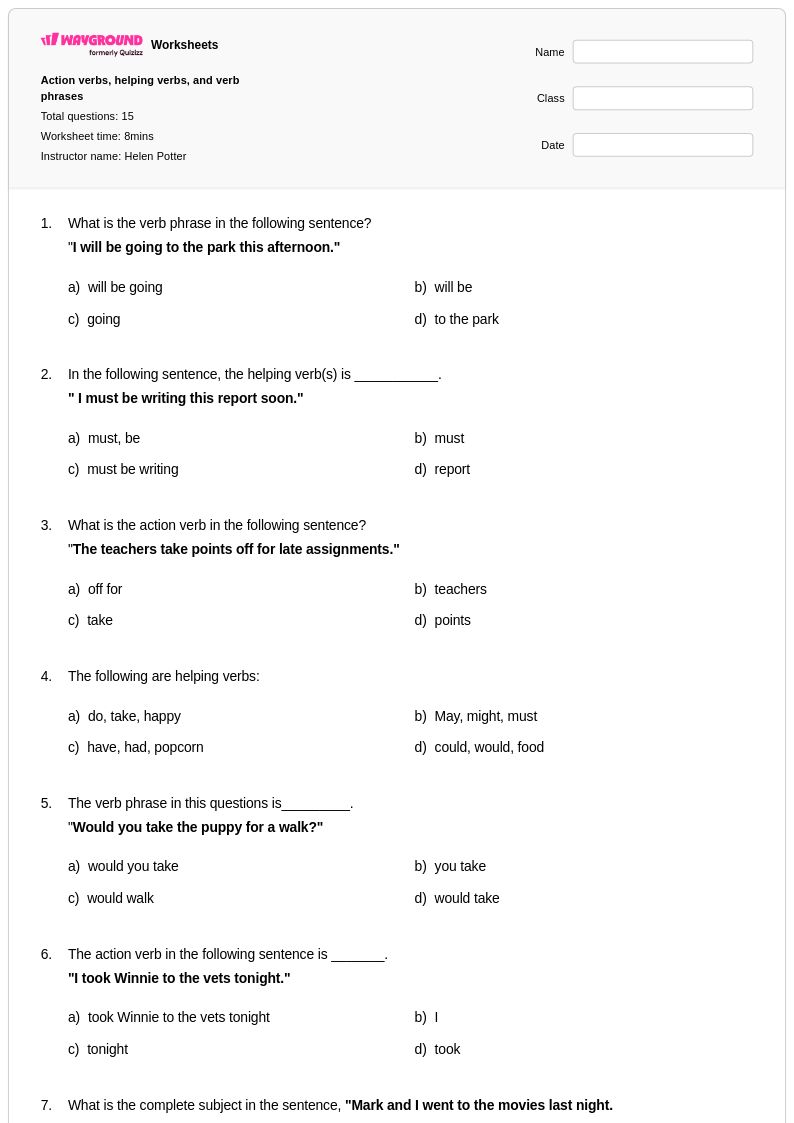
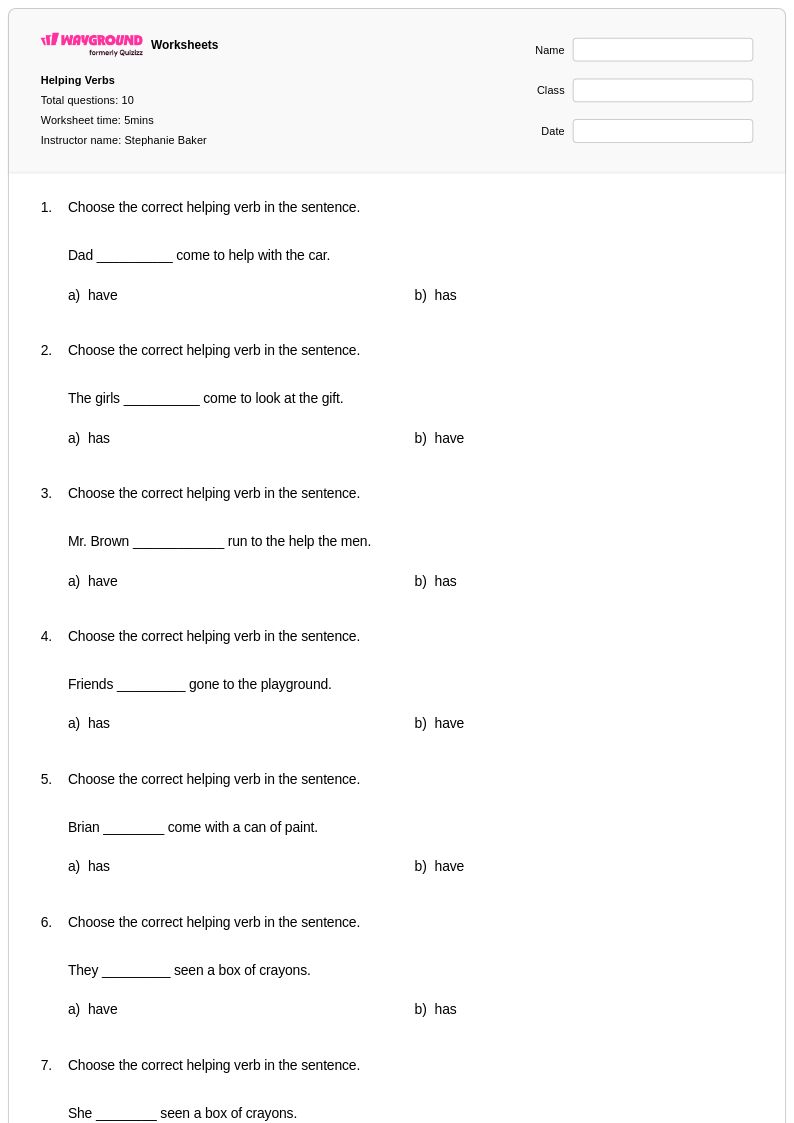
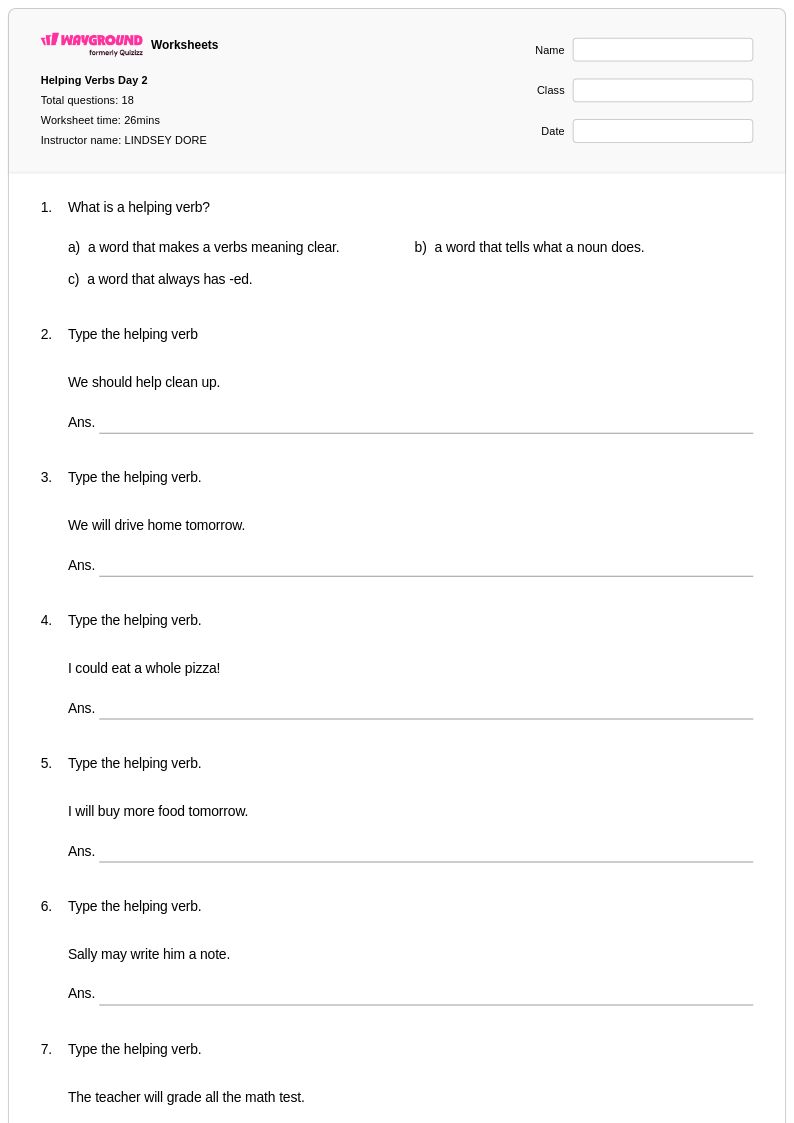
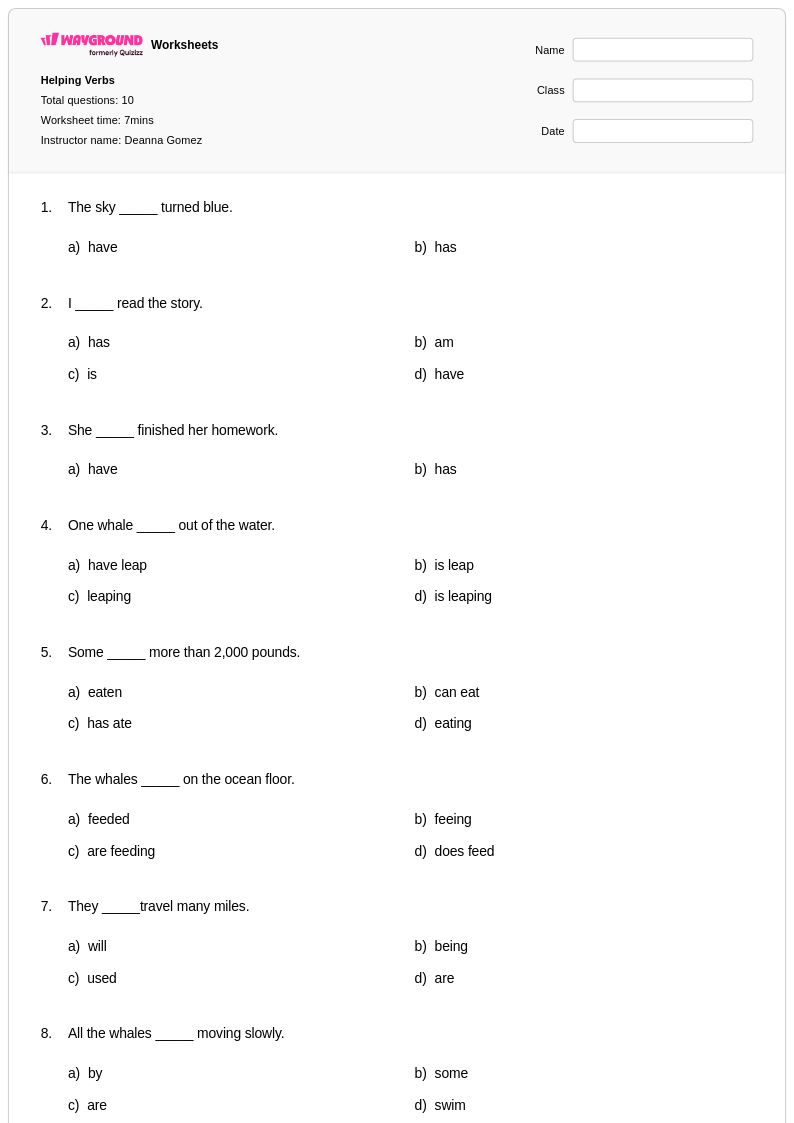
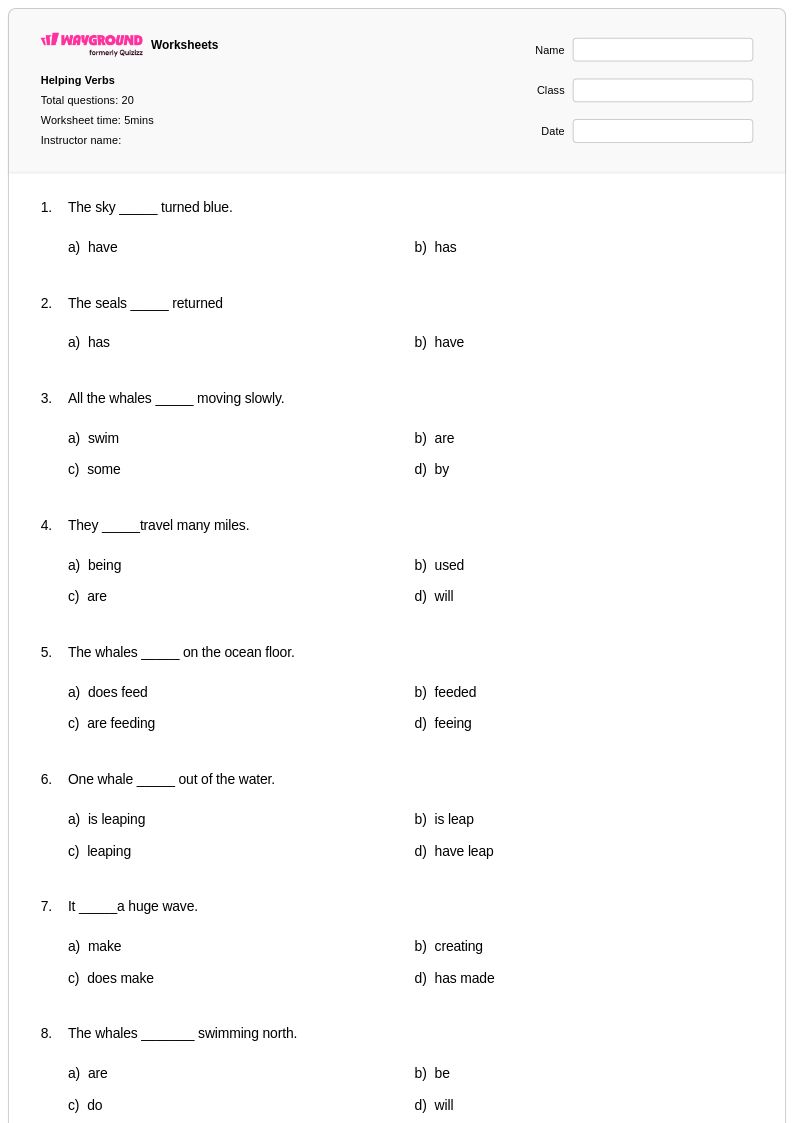
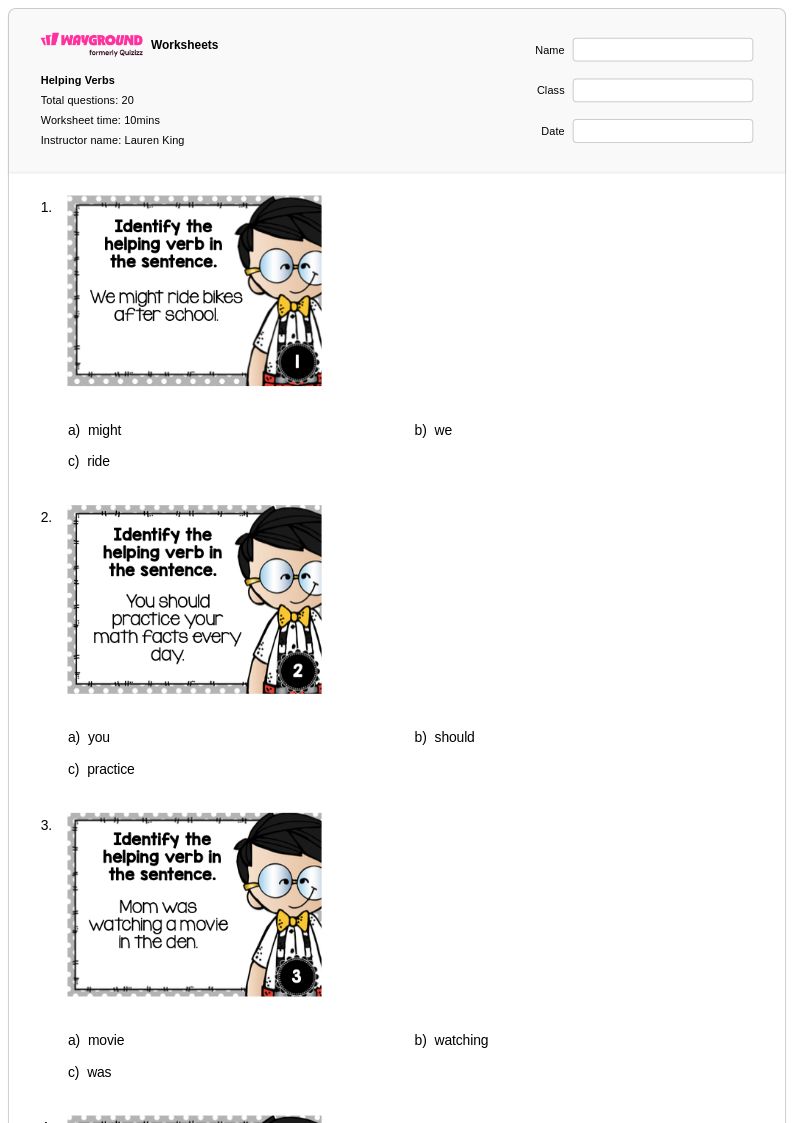
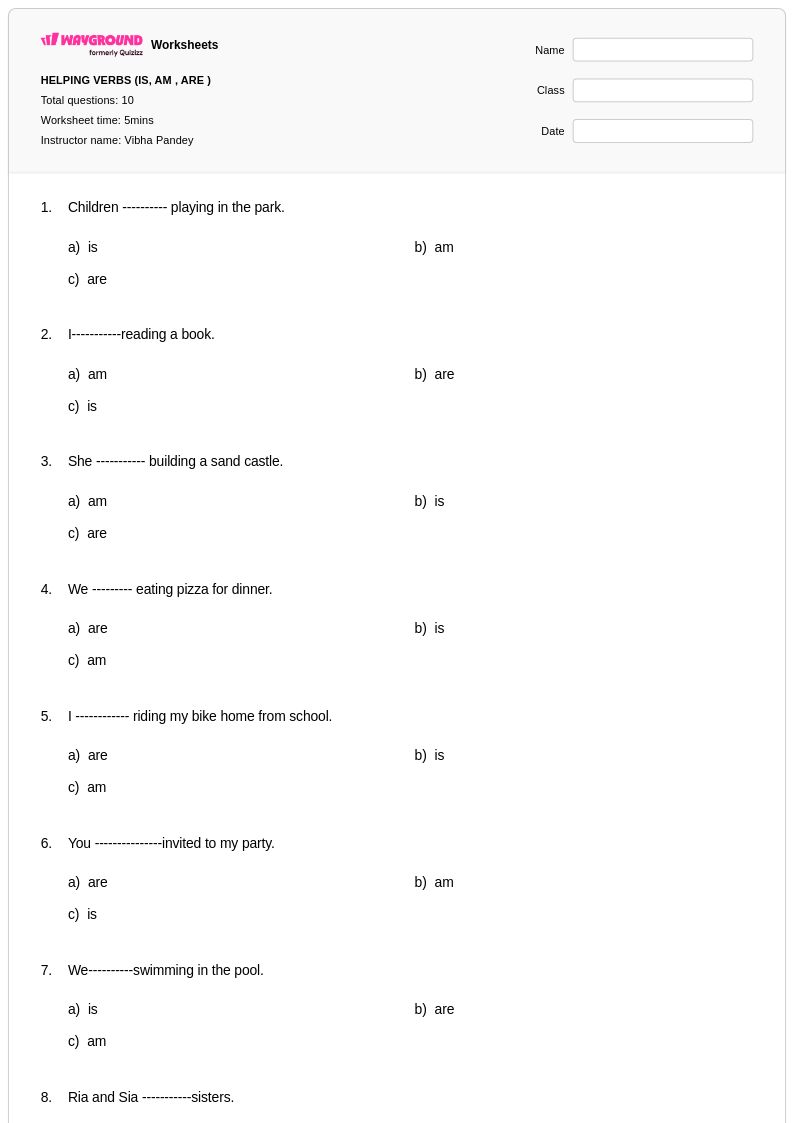
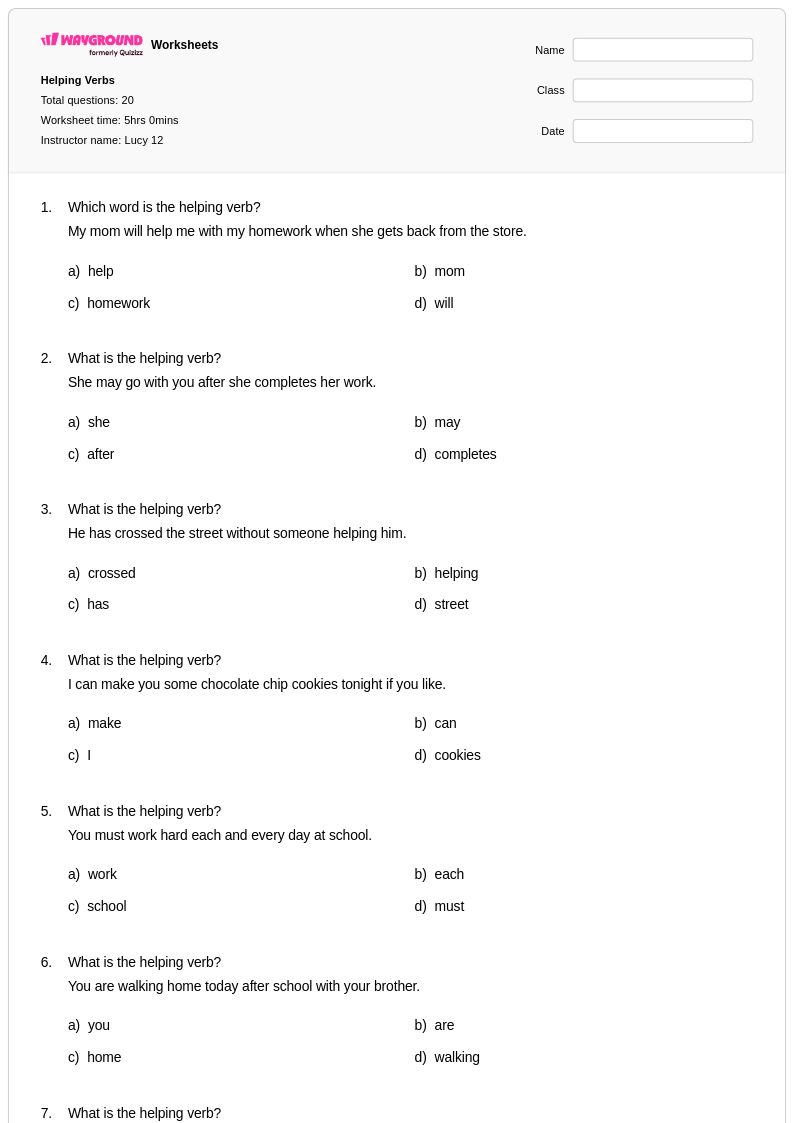
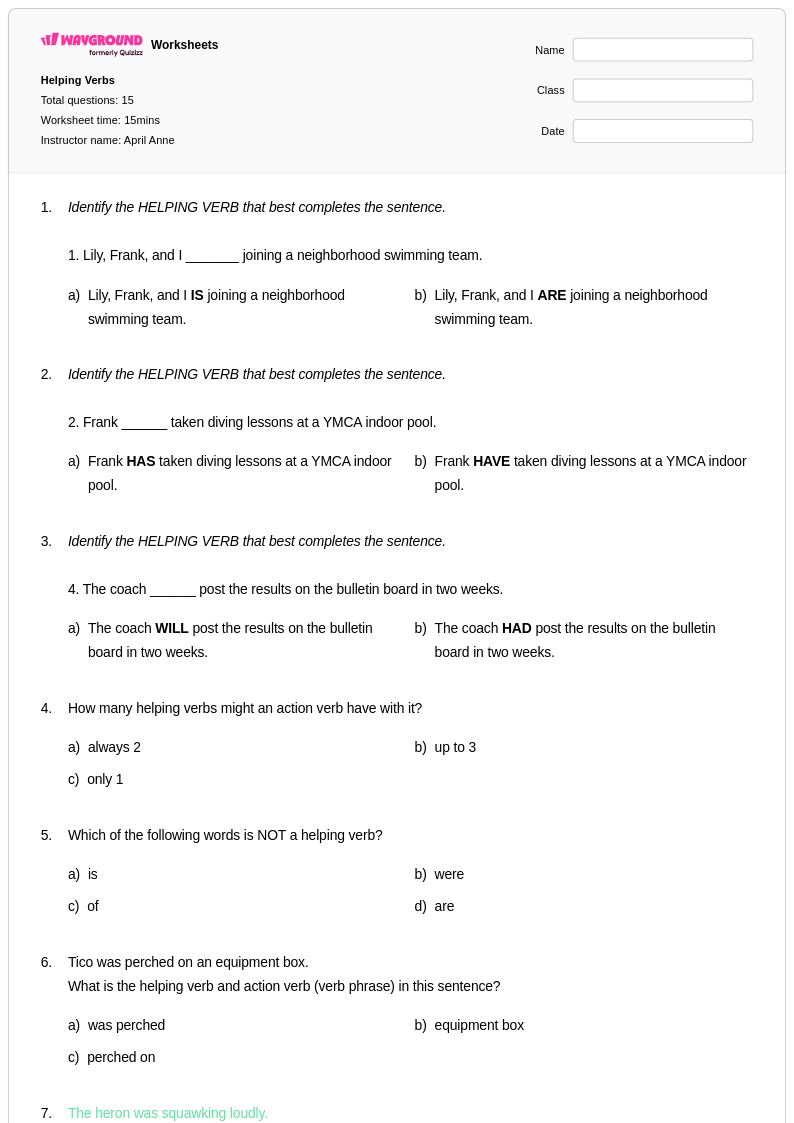
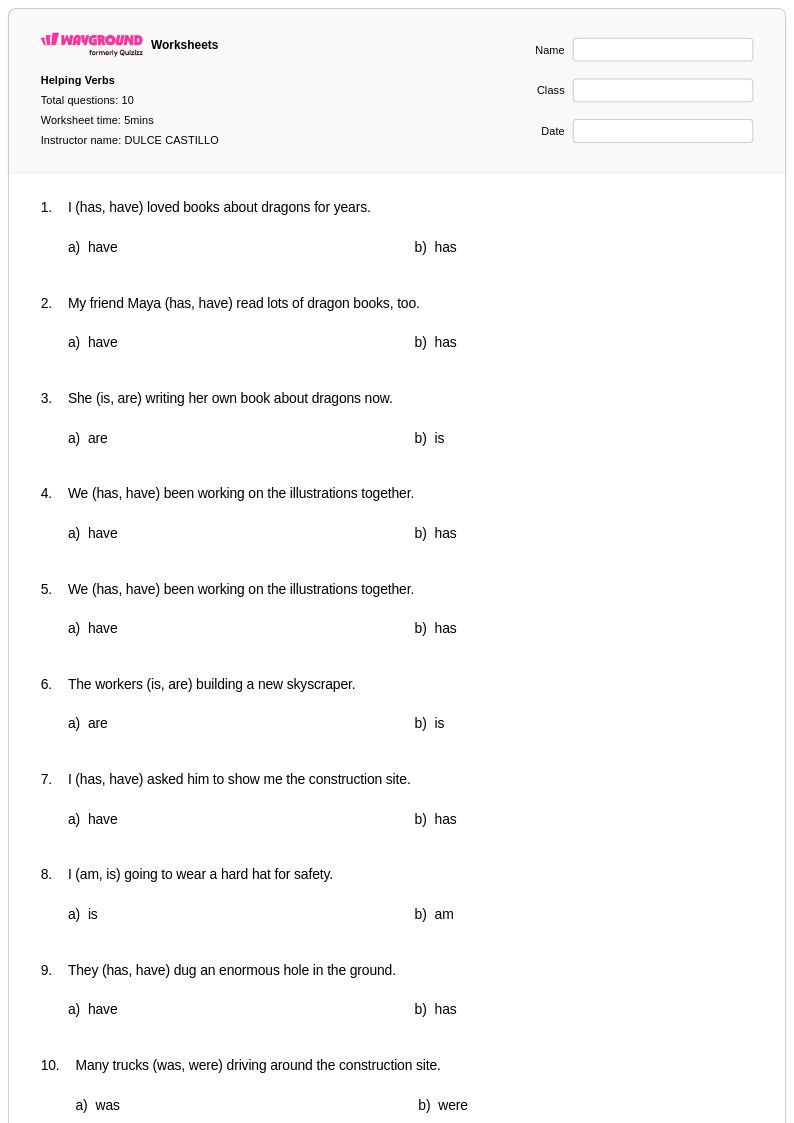
Helping verbs worksheets for kindergarten students available through Wayground (formerly Quizizz) provide essential foundational practice for understanding how auxiliary verbs function alongside main verbs in simple sentences. These carefully designed printables introduce young learners to basic helping verbs like "is," "am," "are," "was," "were," "have," "has," and "will" through age-appropriate exercises that build recognition and usage skills. The worksheets feature engaging activities such as sentence completion, picture matching, and simple identification tasks that help kindergarteners grasp how helping verbs work with action words to create complete thoughts. Each worksheet includes a comprehensive answer key and is available as a free pdf download, making it easy for educators to incorporate systematic practice problems into their daily English instruction while supporting early grammar development.
Wayground (formerly Quizizz) empowers teachers with access to millions of educator-created helping verb resources specifically tailored for kindergarten-level instruction, featuring robust search and filtering capabilities that allow precise targeting of specific grammar concepts and skill levels. The platform's extensive collection includes worksheets aligned with early childhood language arts standards, offering differentiation tools that accommodate diverse learning needs through varying complexity levels and multiple presentation formats. Teachers can customize these printable and digital materials to match their classroom objectives, seamlessly integrating them into lesson planning for initial instruction, targeted remediation, or enrichment activities. The flexibility of both pdf downloads and interactive digital formats enables educators to provide consistent skill practice across different learning environments while ensuring that kindergarten students develop a solid understanding of helping verbs as building blocks for future grammar concepts.
FAQs
How do I teach helping verbs to elementary students?
Start by introducing a core list of common helping verbs — such as am, is, are, was, were, have, has, had, will, would, could, should, may, might, must, and do — and show students how each one pairs with a main verb to form a complete verb phrase. Use color-coding to visually separate the helping verb from the main verb in sample sentences, which helps students see the two-part structure clearly. Once students can identify helping verbs in isolation, move them toward recognizing verb phrases in context, including sentences where the helping verb and main verb are separated by adverbs like 'not' or 'always.'
What exercises help students practice identifying helping verbs?
Effective practice exercises ask students to underline or circle the helping verb in a sentence, distinguish the helping verb from the main verb, and fill in blanks with the correct helping verb to complete a verb phrase. Sentence-sorting tasks — where students categorize sentences by tense or meaning based on the helping verb used — build deeper understanding of how auxiliary verbs shift meaning. These structured practice formats mirror the kind of targeted repetition that builds automaticity in grammar recognition.
What mistakes do students commonly make with helping verbs?
The most common error is confusing the helping verb with the main verb, particularly with forms of 'have' and 'be,' which can function as either depending on context. Students also struggle when the helping verb and main verb are not adjacent in a sentence, such as in questions ('Did she run?') or negations ('He should not go'). Another frequent misconception is treating modal verbs like 'can,' 'might,' and 'should' as standalone action verbs rather than recognizing their role as auxiliaries that modify meaning and tense.
How do helping verbs change the meaning or tense of a sentence?
Helping verbs signal tense, mood, possibility, obligation, and aspect — making them one of the most meaning-dense elements in English grammar. For example, 'She runs' becomes a future action with 'will' ('She will run'), a past event with 'had' ('She had run'), or a conditional possibility with 'might' ('She might run'). Teaching students to recognize how swapping one helping verb changes the entire meaning of a sentence is a powerful way to deepen their grammatical awareness.
How do I use Wayground's helping verbs worksheets in my classroom?
Wayground's helping verbs worksheets are available as printable PDFs for traditional classroom distribution and in digital formats for technology-integrated lessons, making them adaptable to different teaching environments and student preferences. Teachers can host worksheets as a quiz directly on Wayground, enabling real-time student responses and faster assessment turnaround. The included answer keys streamline grading, so teachers can spend more time on targeted follow-up instruction rather than scoring.
How can I differentiate helping verbs instruction for students at different levels?
For struggling learners, reduce cognitive load by limiting practice to a small set of high-frequency helping verbs (such as 'is,' 'are,' 'was,' 'will') before expanding to modals and perfect tenses. Advanced students benefit from exercises that ask them to rewrite sentences using different helping verbs and explain how the meaning shifts. On Wayground, teachers can apply accommodations such as read aloud, reduced answer choices, and extended time to individual students, allowing the same worksheet to serve the full range of learners in one classroom without singling anyone out.