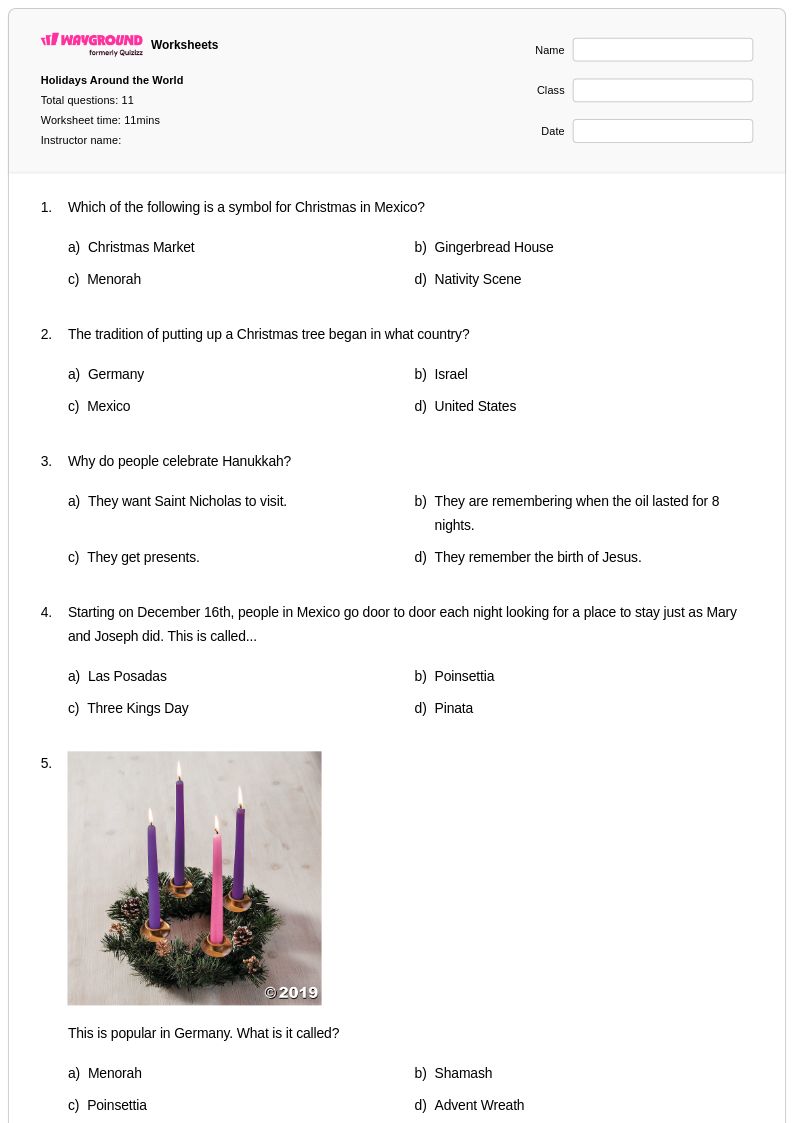
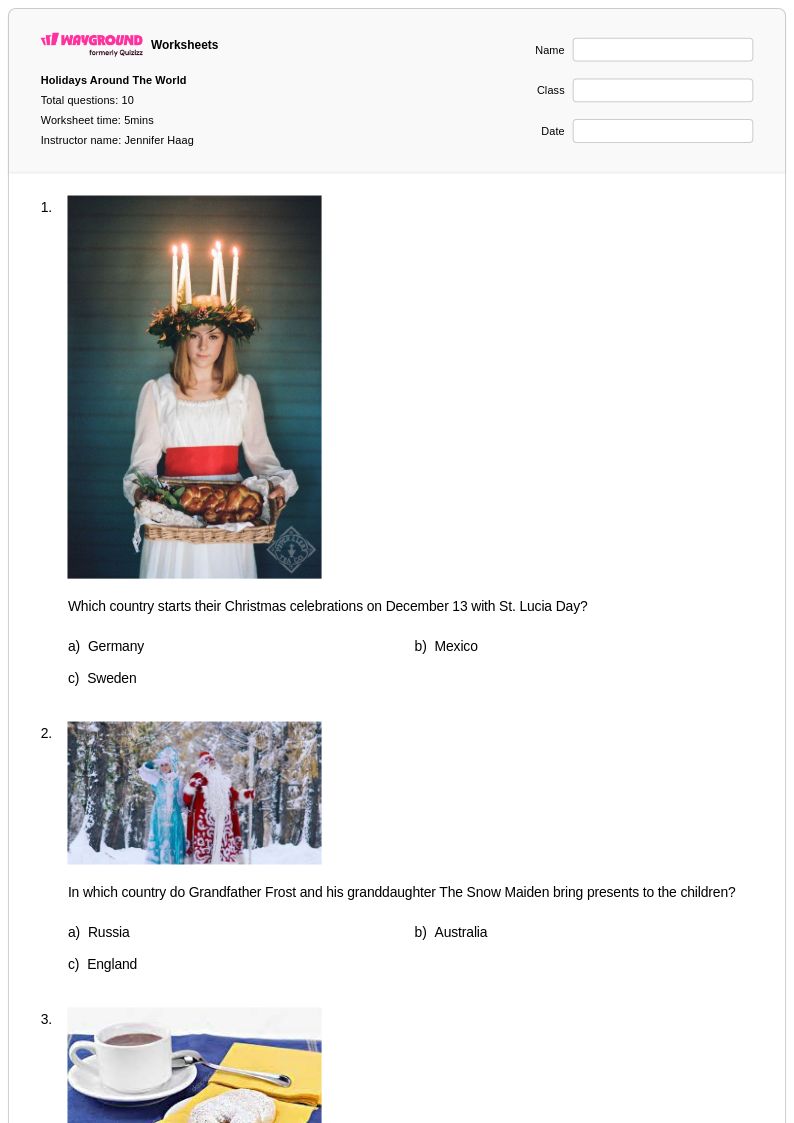
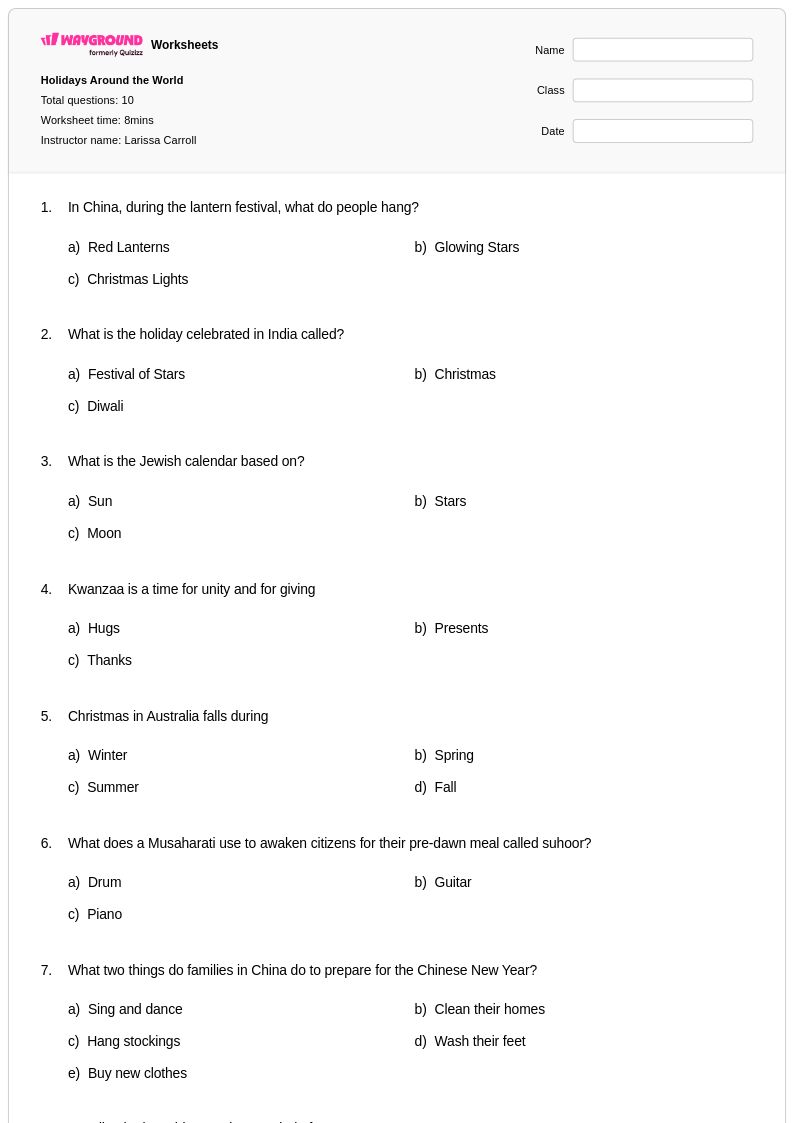
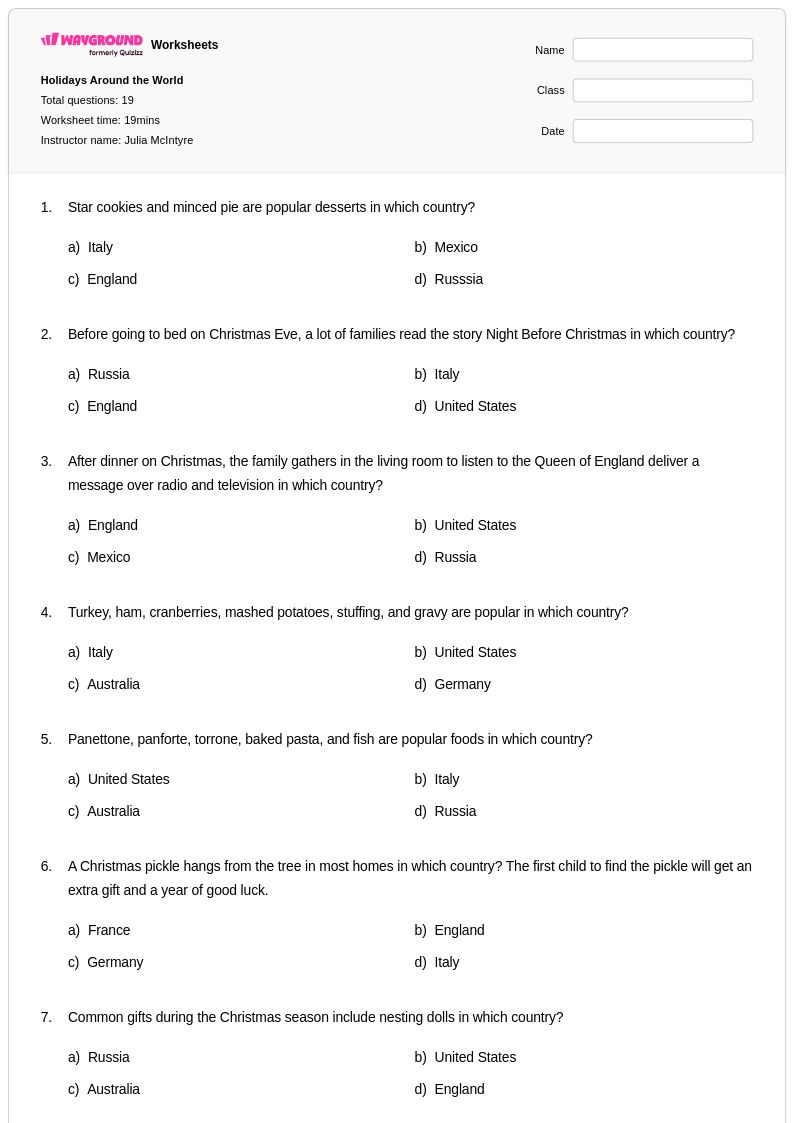
Free Printable Holidays Around the World Worksheets for Class 3
Explore Class 3 Holidays Around the World free worksheets and printables from Wayground that help students discover diverse cultural celebrations through engaging practice problems and comprehensive answer keys.
Explore printable Holidays Around the World worksheets for Class 3
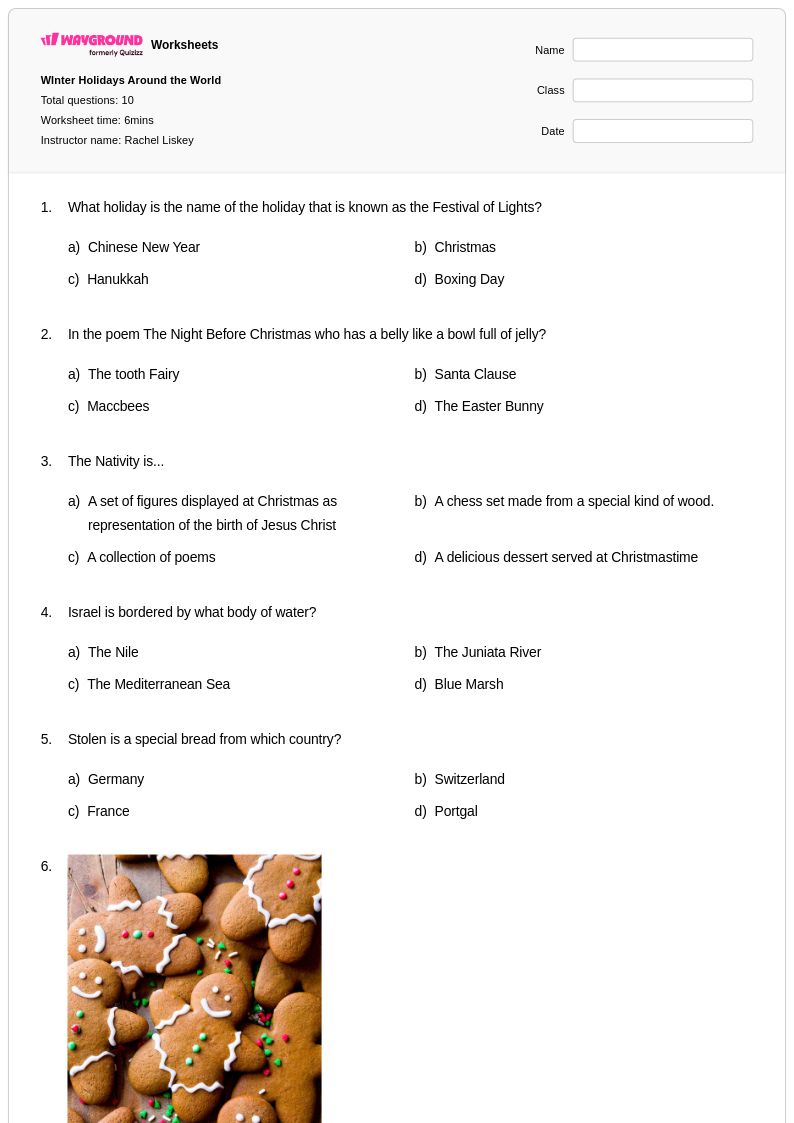
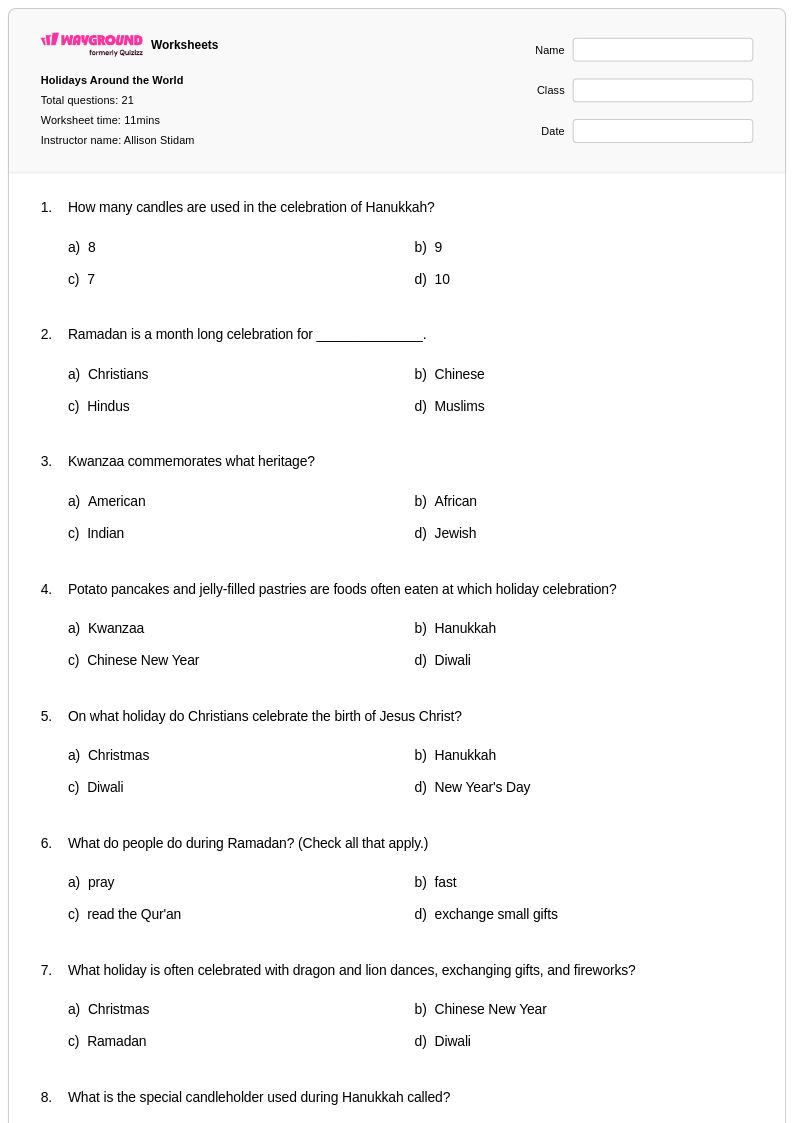
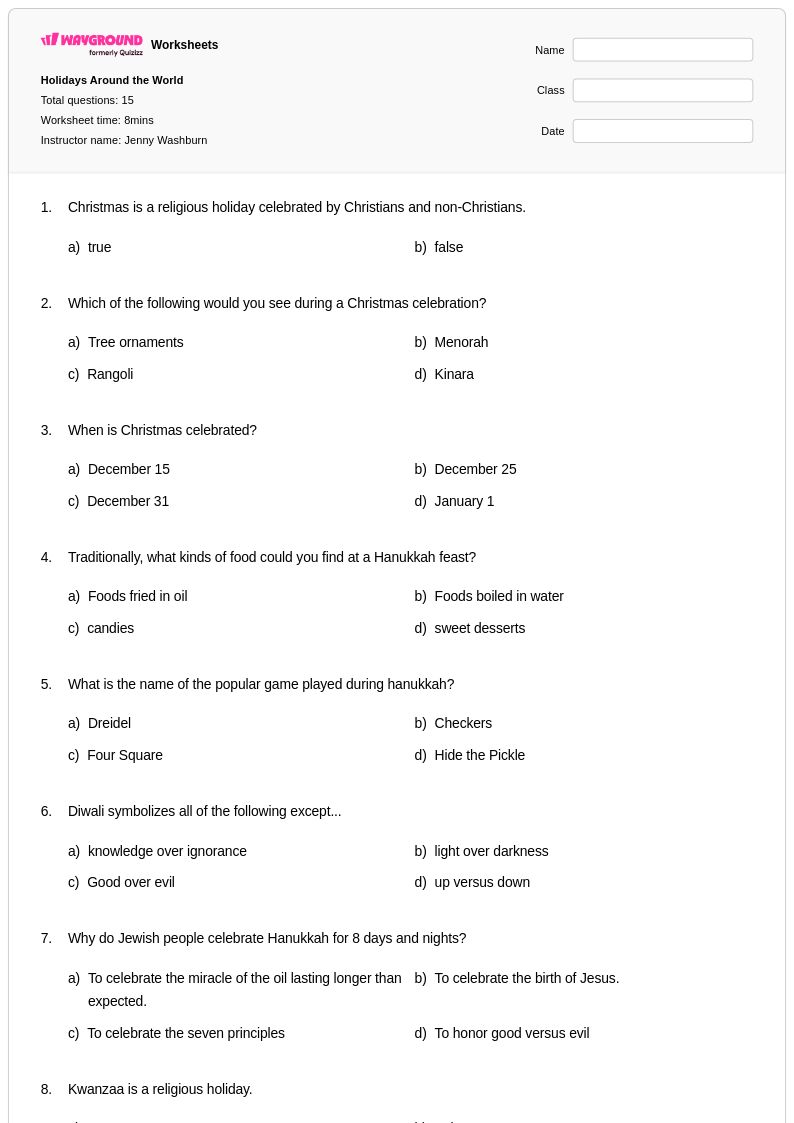
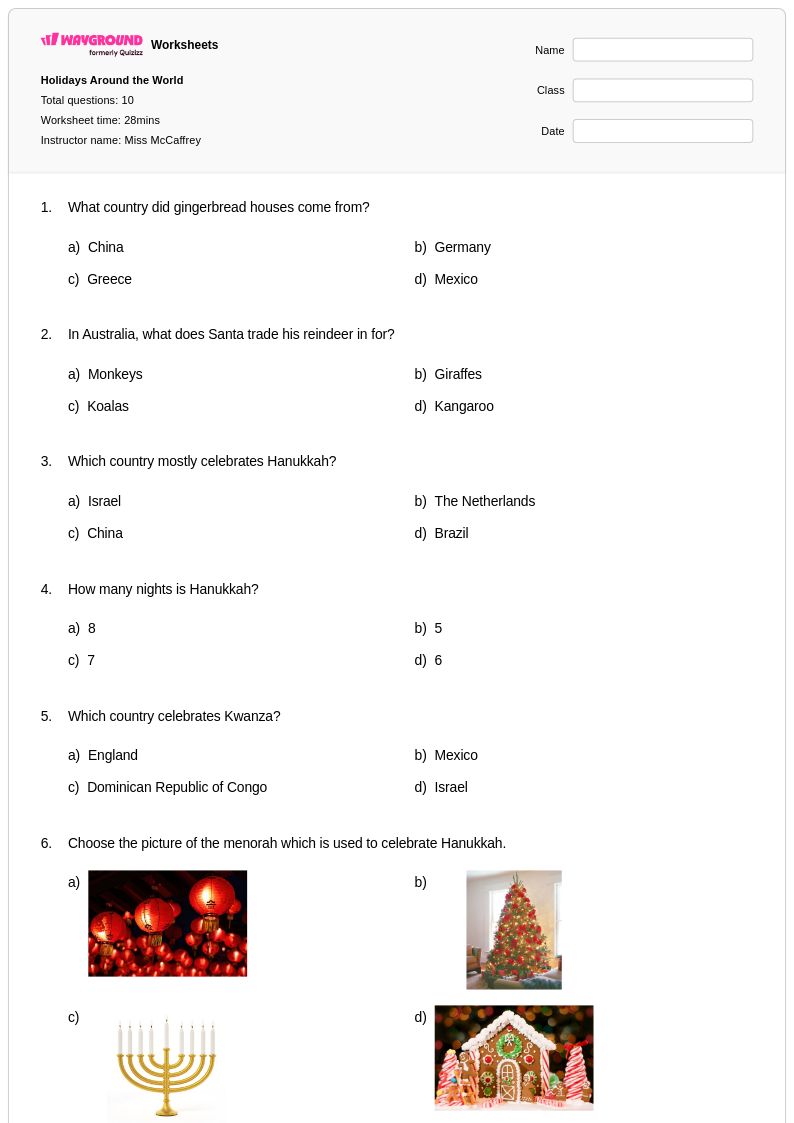
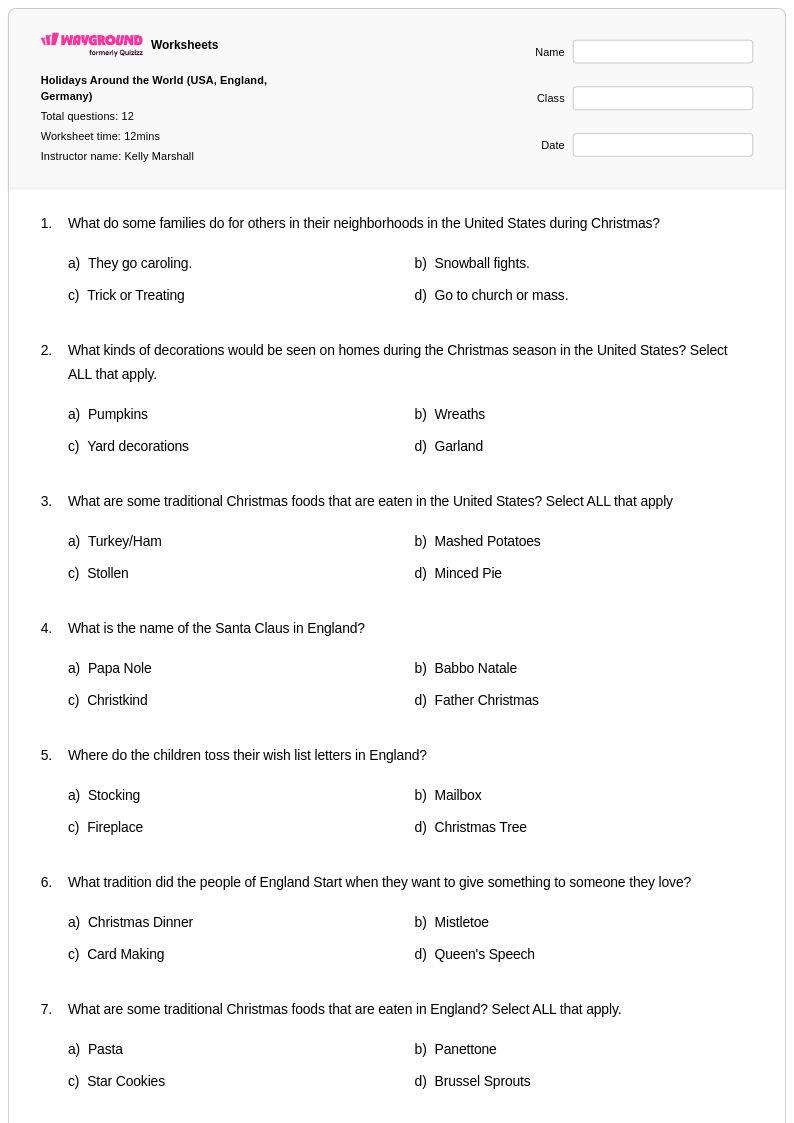
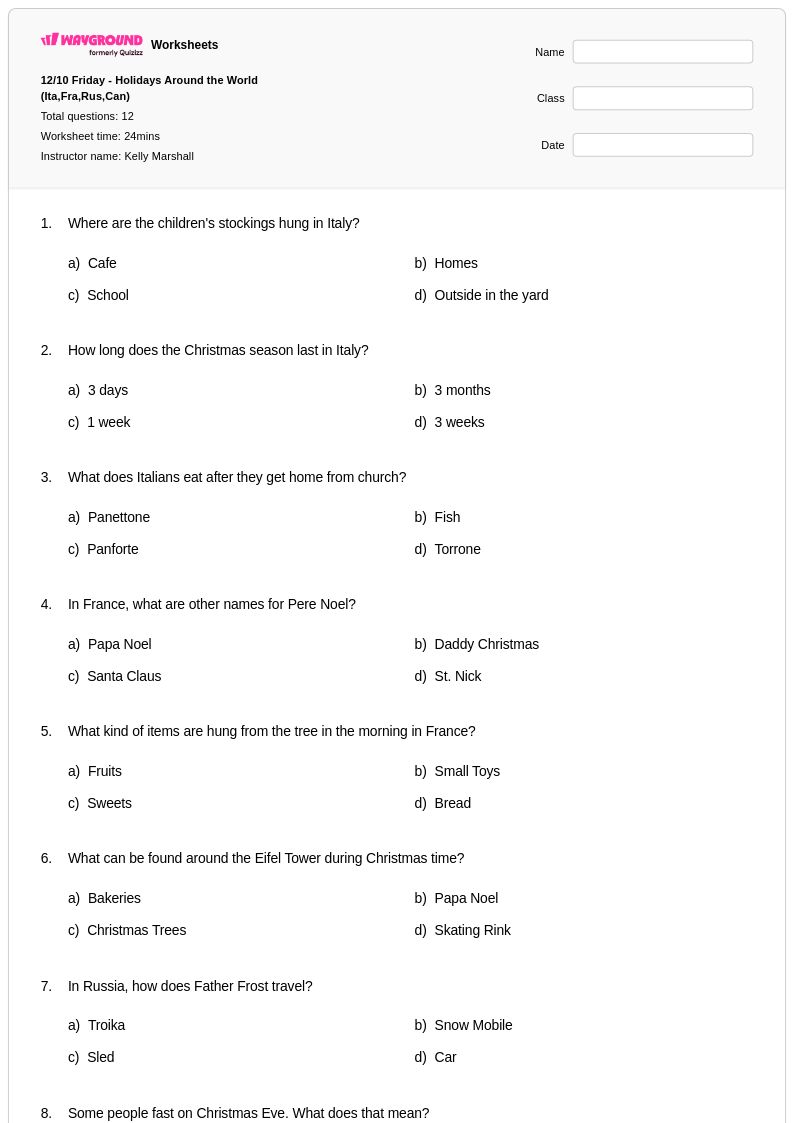
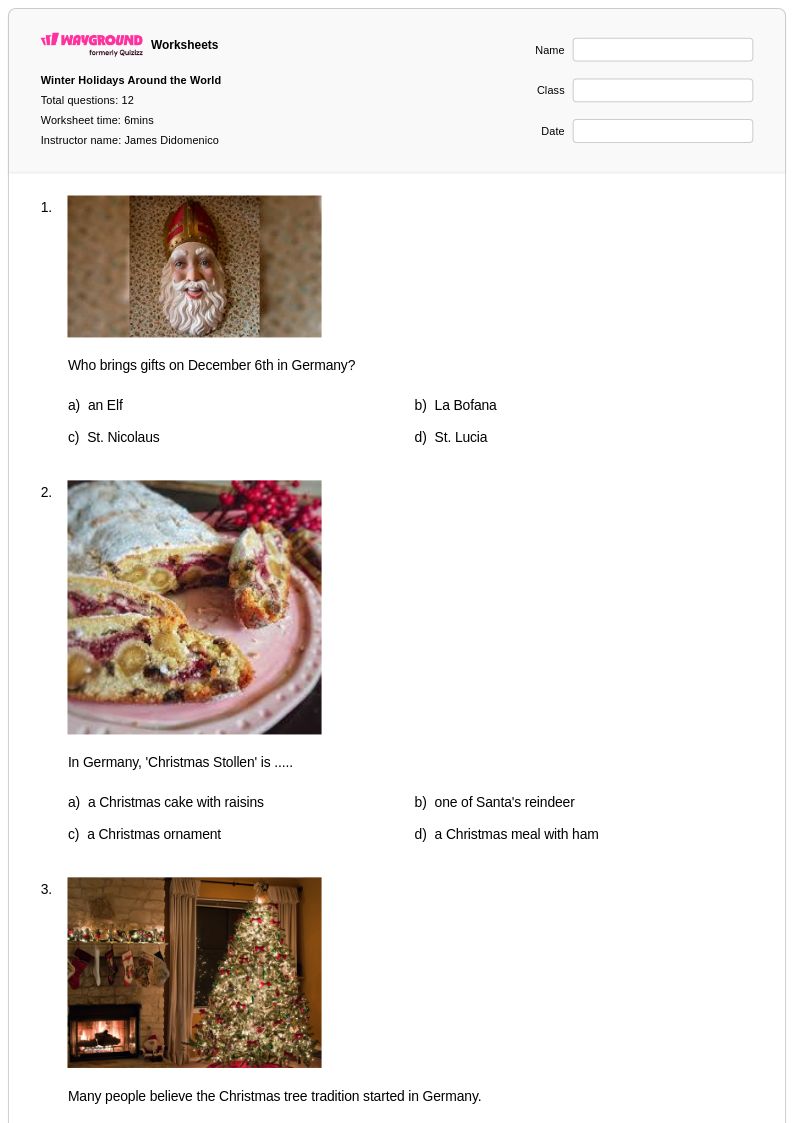
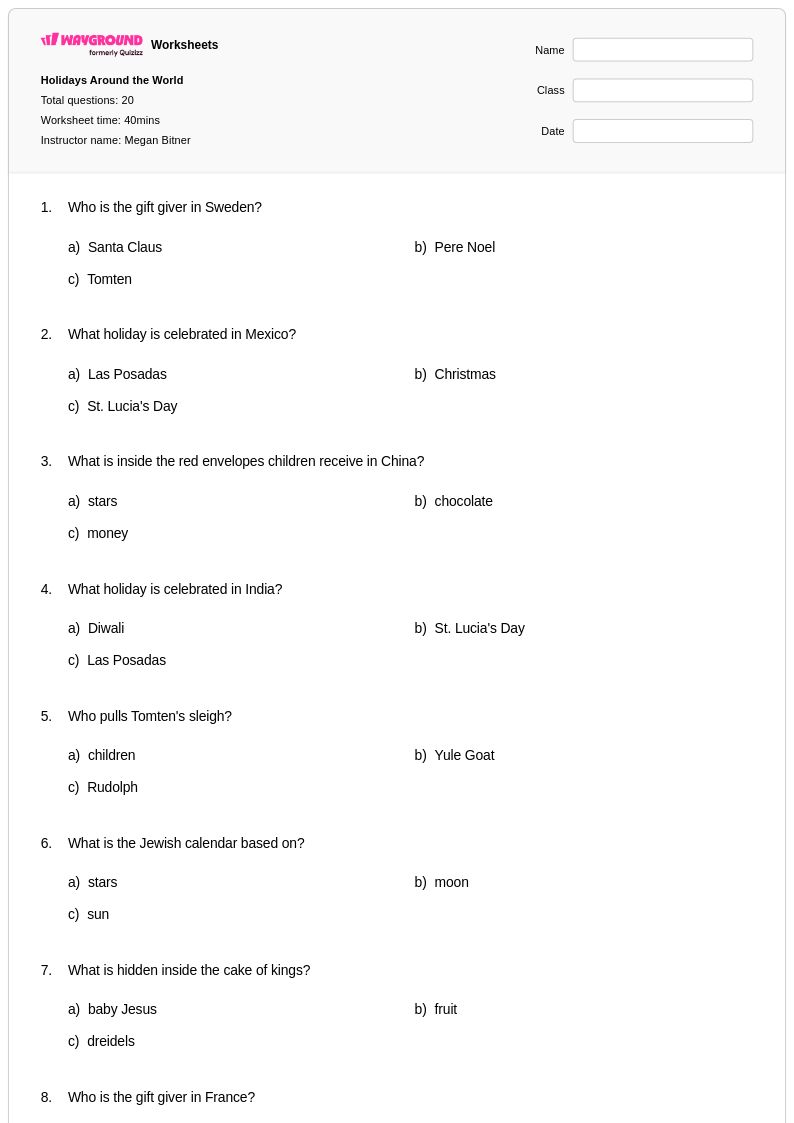
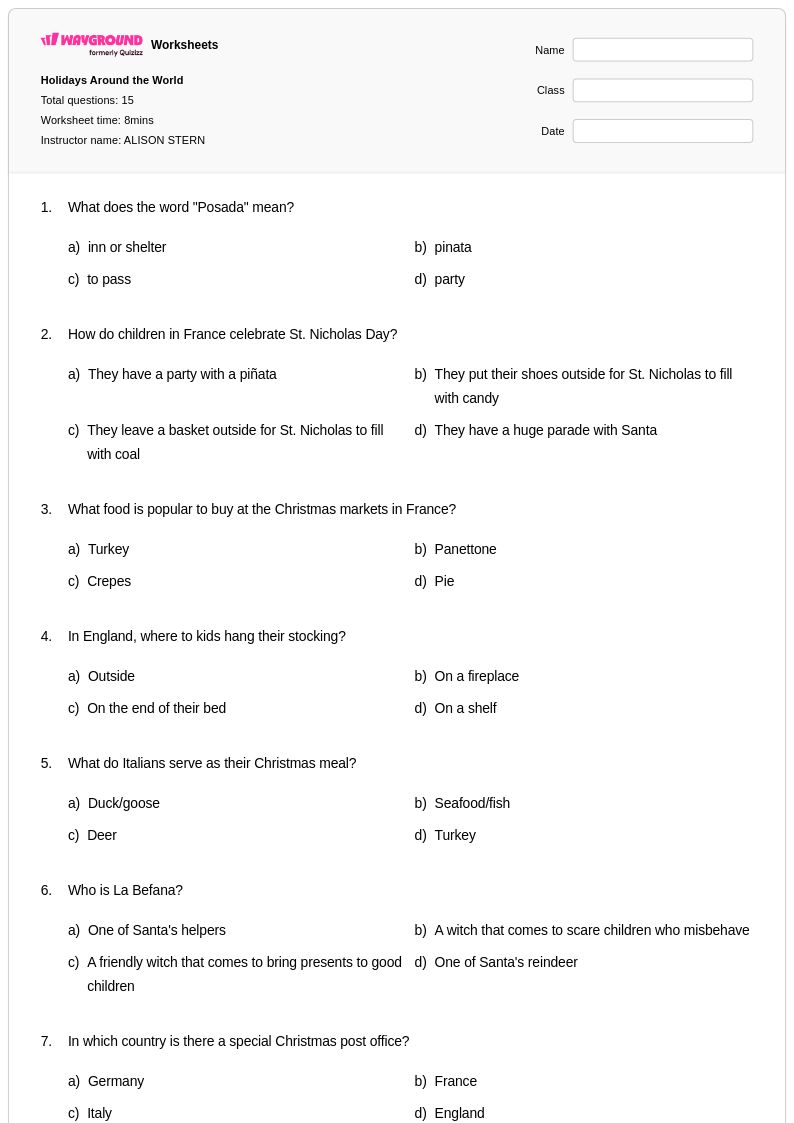
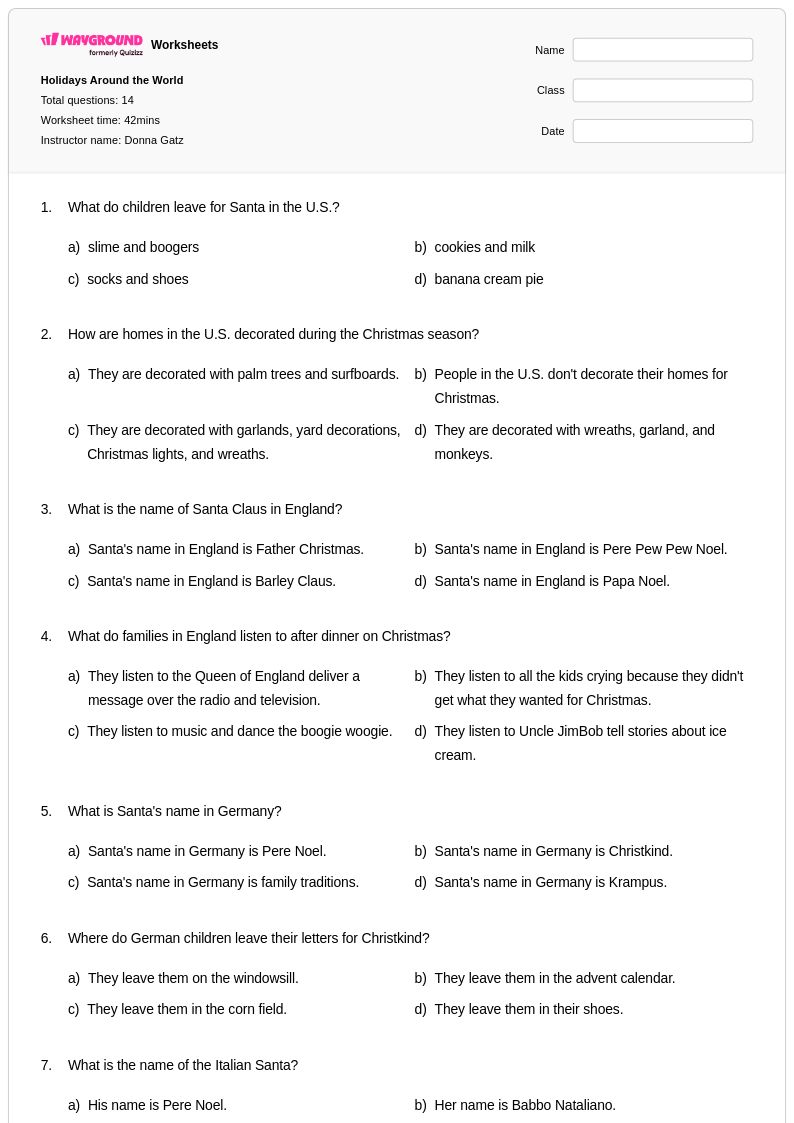
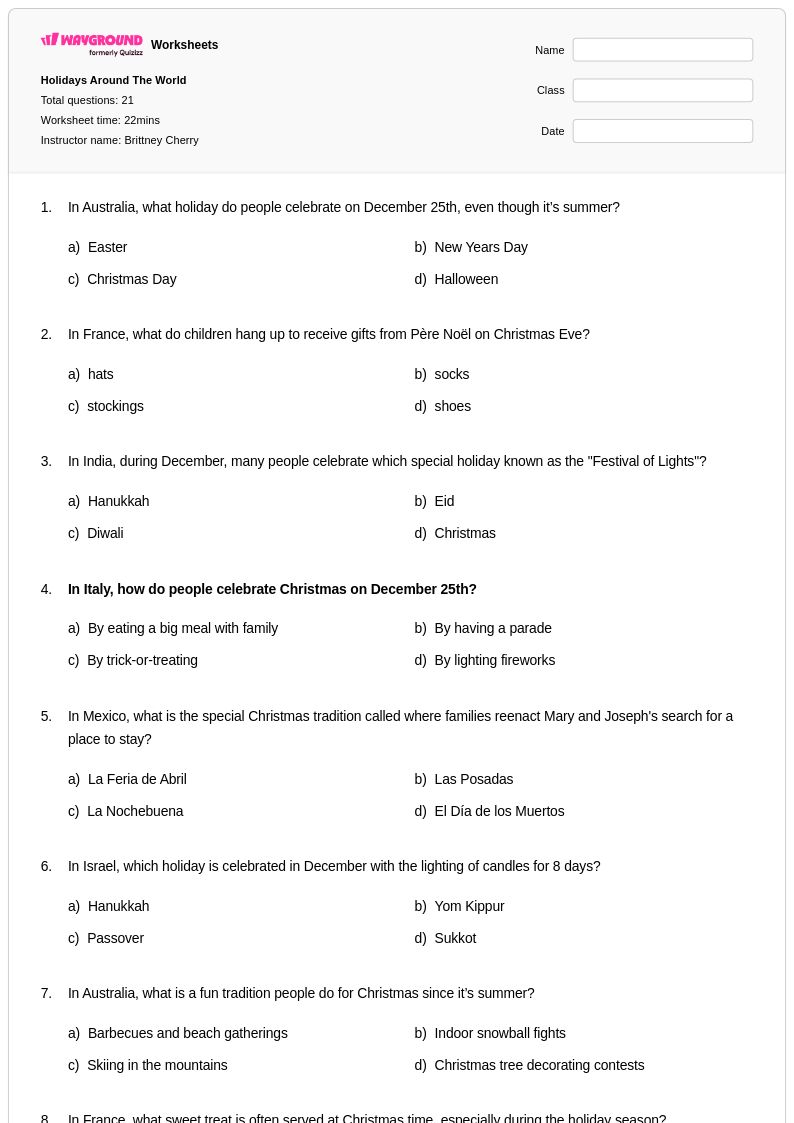
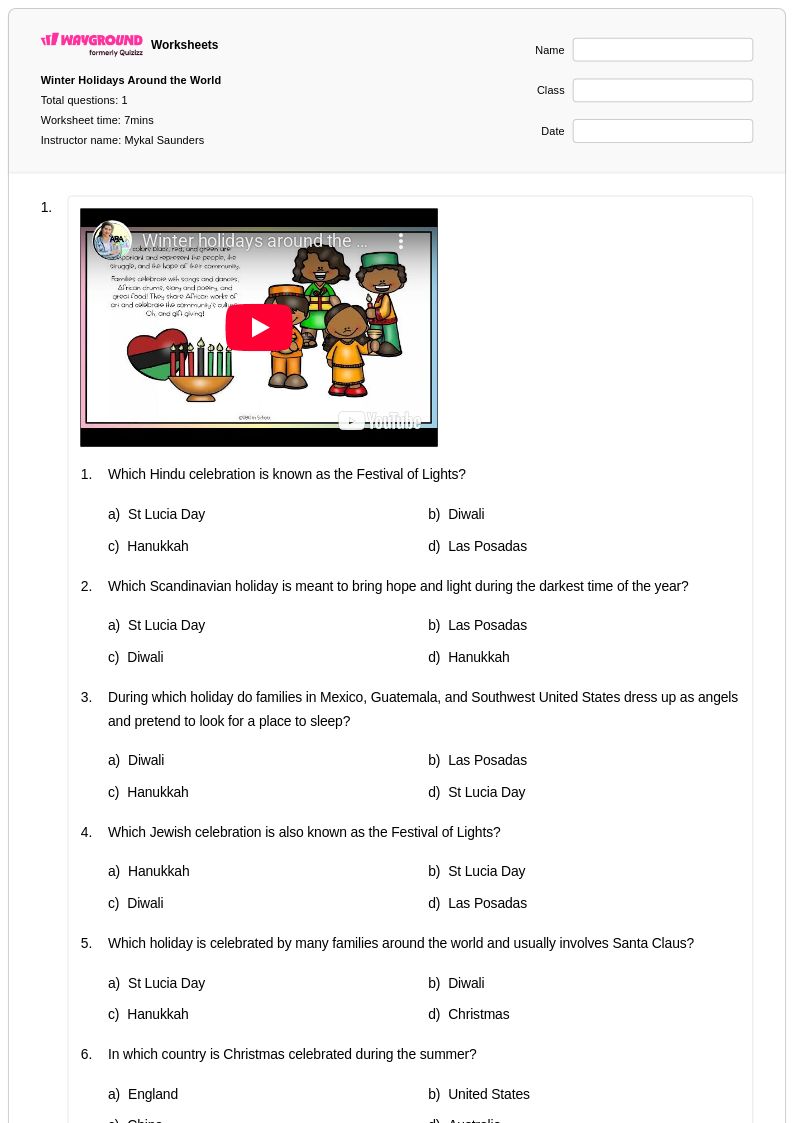
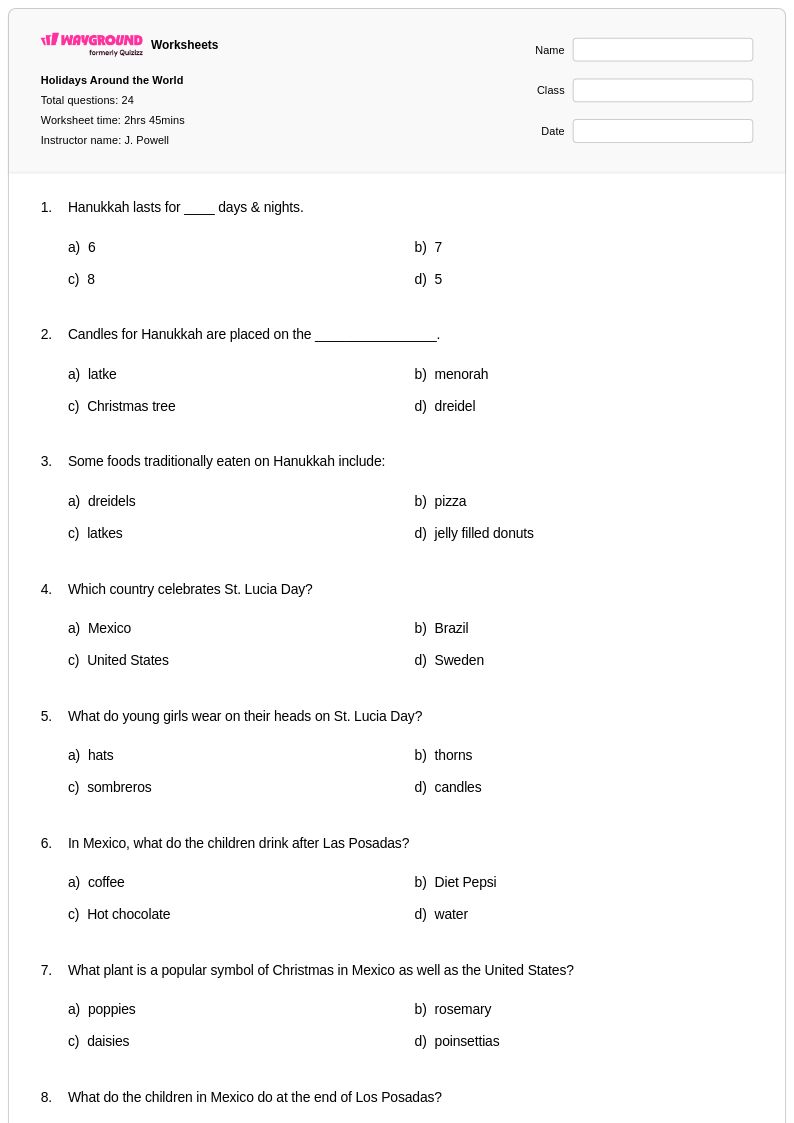
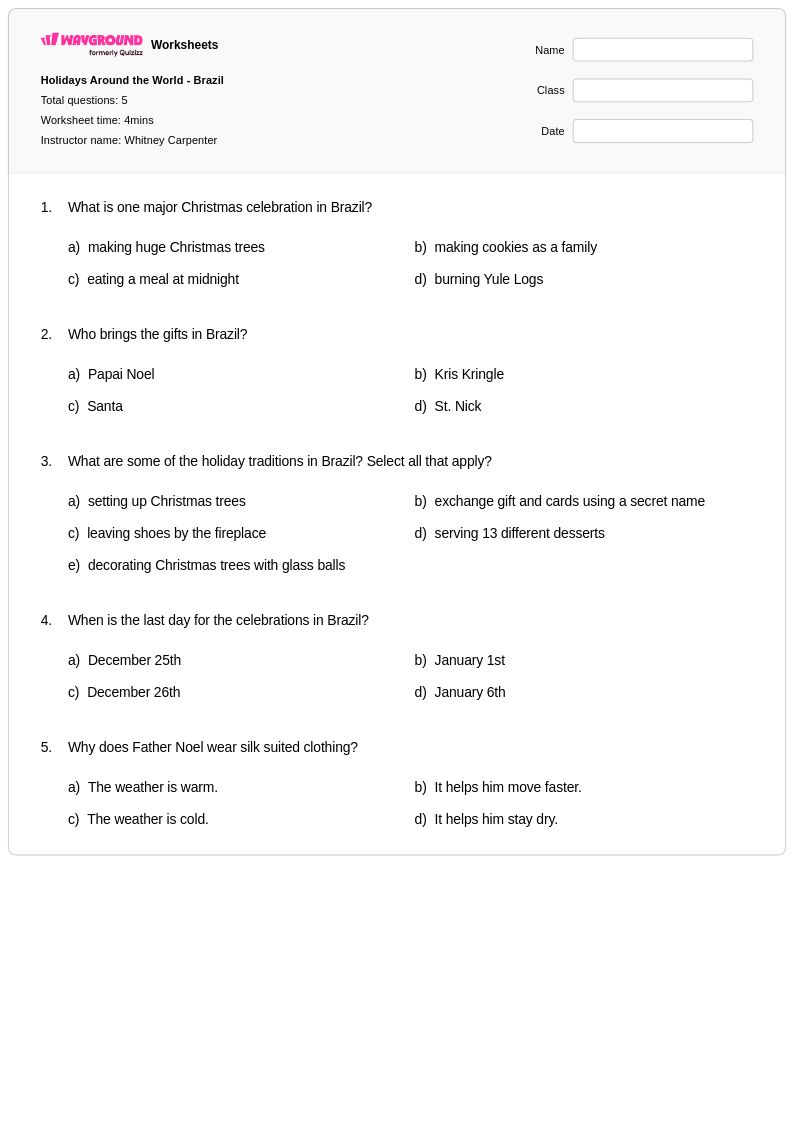
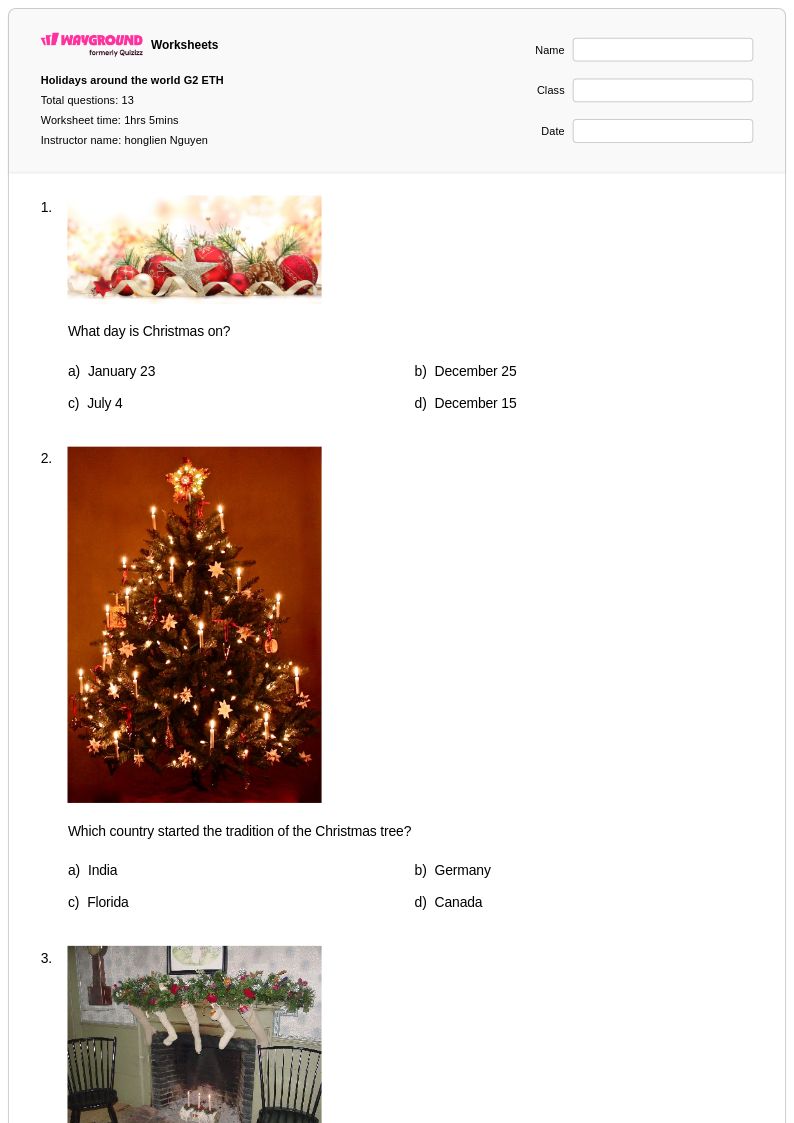
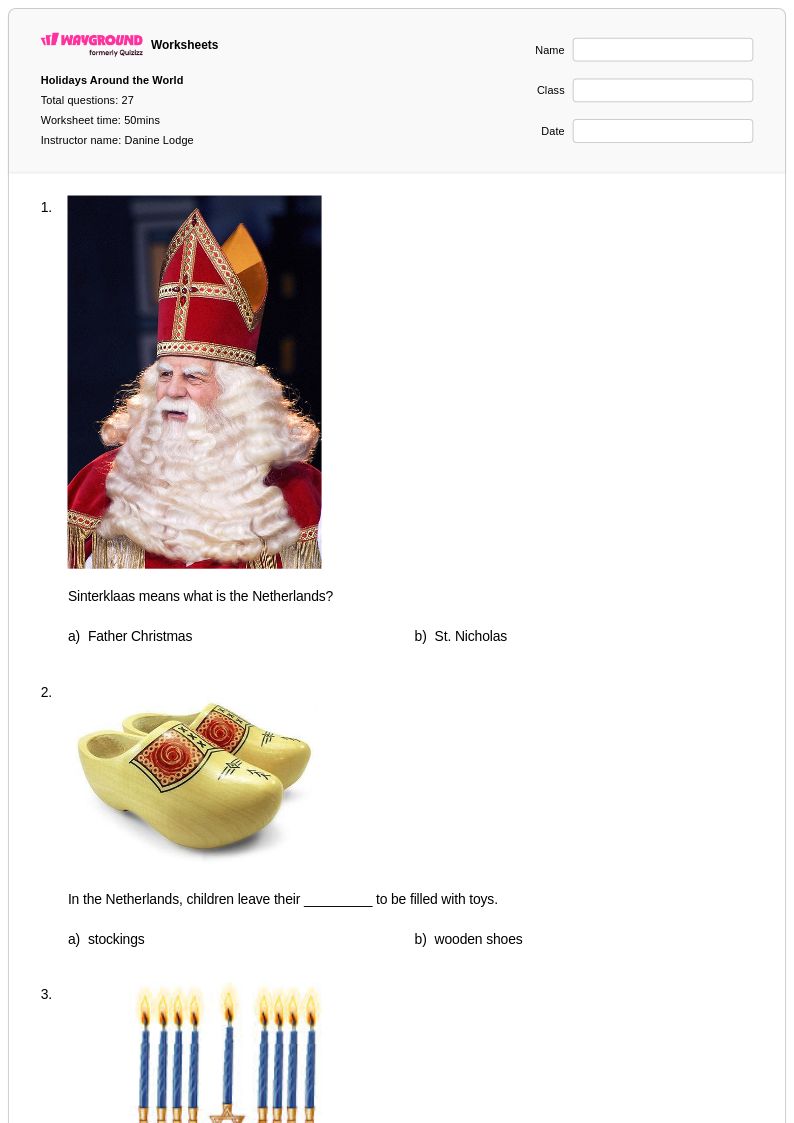
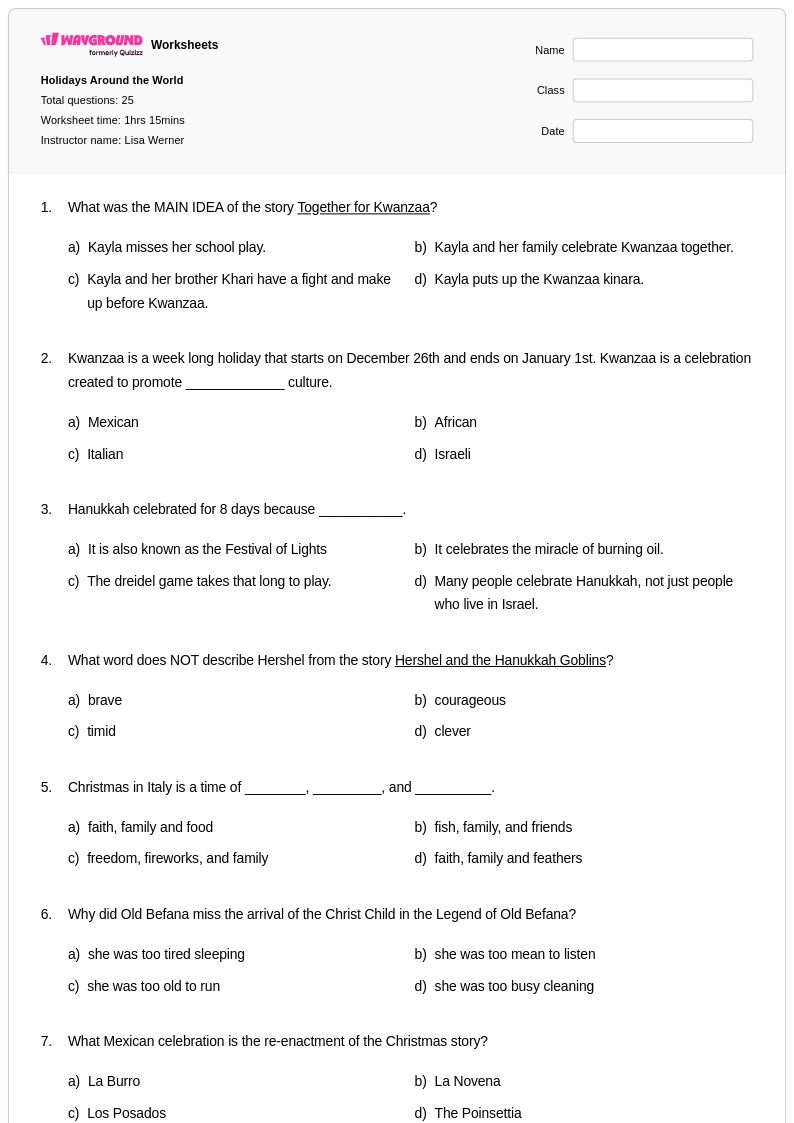
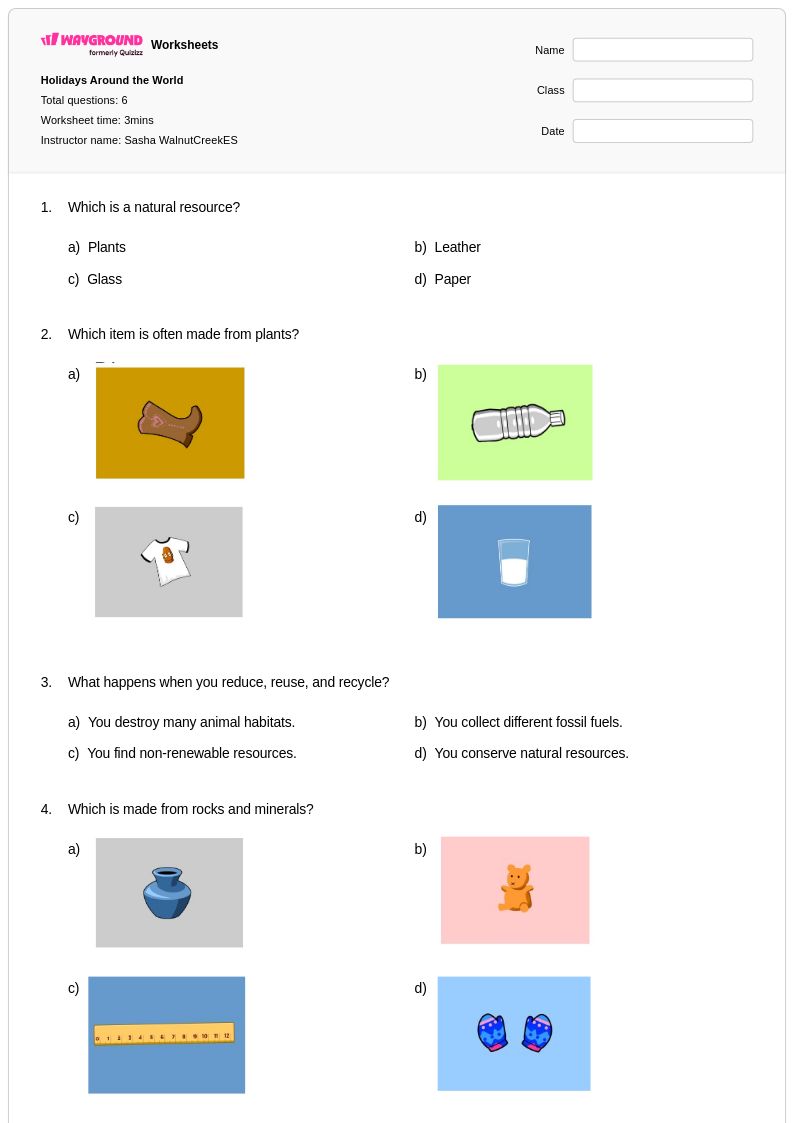
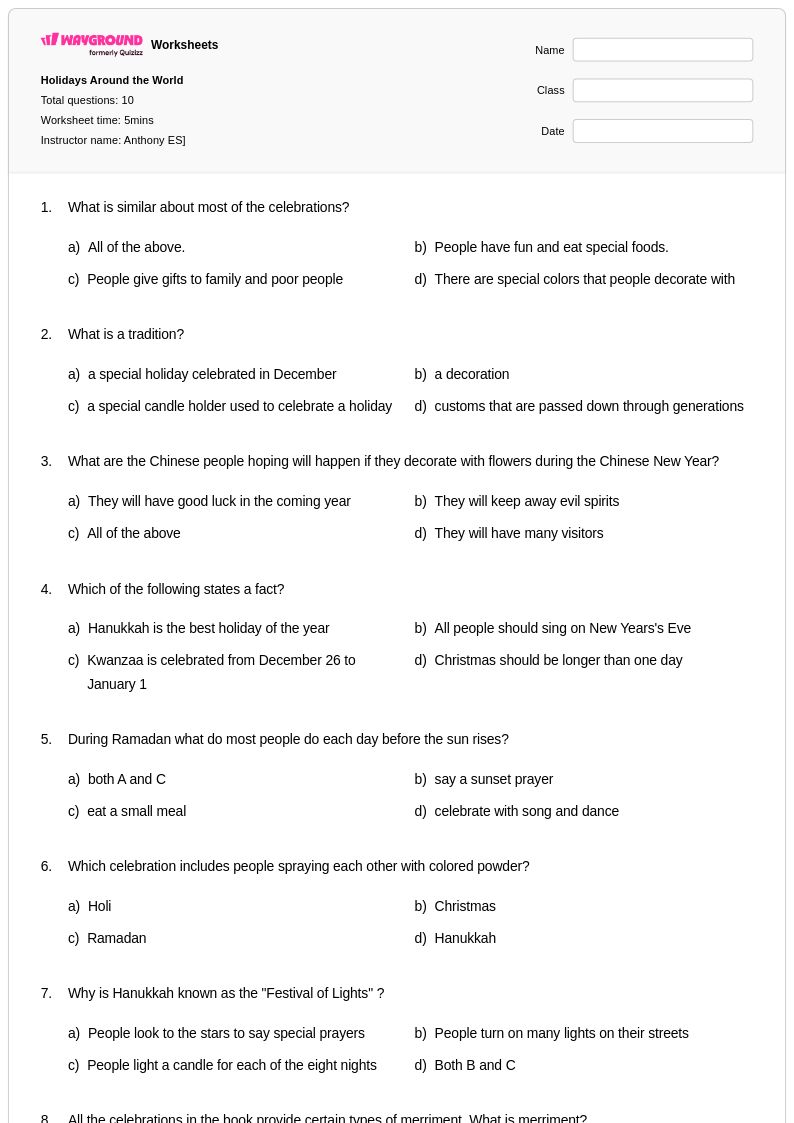
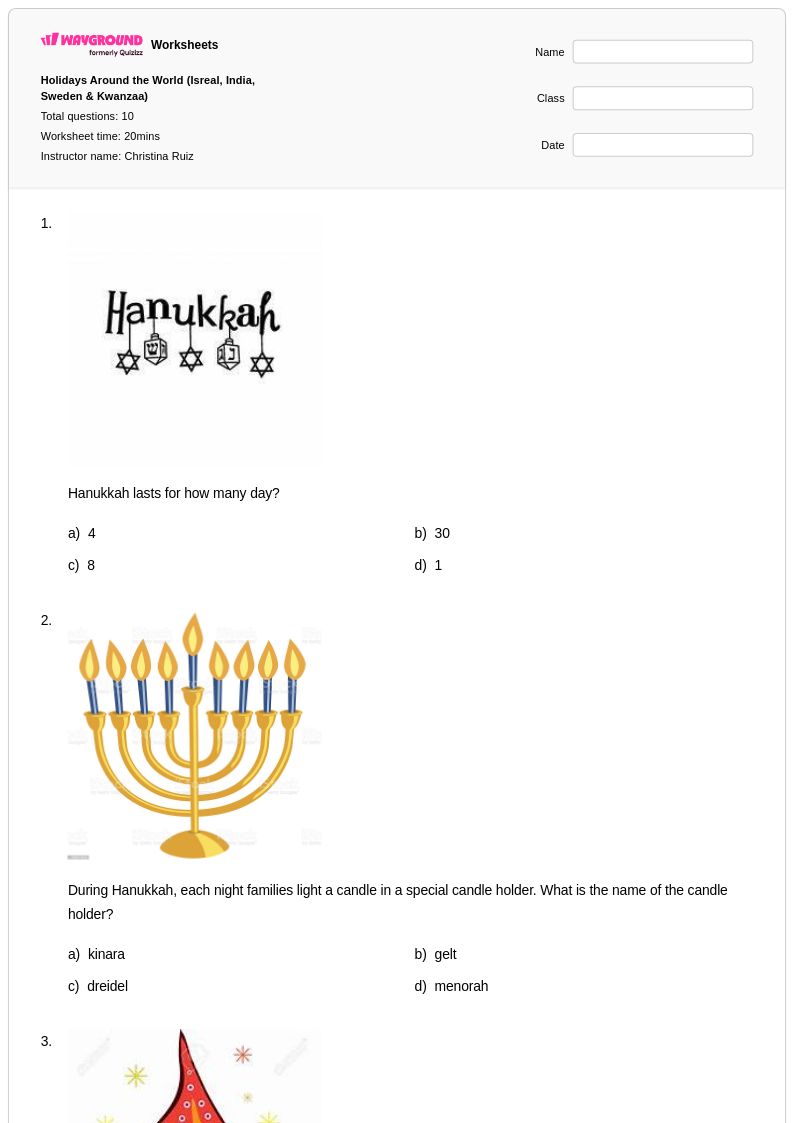
Holidays Around the World worksheets for Class 3 students offer an engaging exploration of diverse cultural celebrations and traditions that connect communities across the globe. These educational resources help young learners develop cultural awareness, critical thinking skills, and geographic knowledge as they discover how different societies mark special occasions throughout the year. Students practice reading comprehension, compare and contrast skills, and analytical thinking while examining festivals like Diwali, Chinese New Year, Día de los Muertos, and Hanukkah. Each worksheet includes structured activities with answer keys that guide students through exploring the customs, foods, symbols, and historical significance of various celebrations, making these free printables valuable tools for building cross-cultural understanding and respect for diversity.
Wayground, formerly Quizizz, empowers educators with an extensive collection of teacher-created Holidays Around the World worksheets designed specifically for Class 3 social studies instruction. The platform's robust search and filtering capabilities allow teachers to quickly locate resources aligned with curriculum standards and differentiate instruction based on individual student needs. These customizable materials are available in both printable pdf formats and interactive digital versions, providing flexibility for classroom instruction, homework assignments, and independent practice. Teachers can efficiently plan comprehensive cultural studies units while accessing millions of high-quality resources that support remediation for struggling learners and enrichment opportunities for advanced students, ensuring all Class 3 students develop meaningful connections to global communities and cultural traditions.
FAQs
How do I teach holidays around the world in my social studies class?
Teaching holidays around the world works best when students compare and contrast celebrations across cultures rather than studying each holiday in isolation. Start by grounding students in the concept that holidays reflect a community's values, history, and beliefs, then use structured activities that examine origins, symbols, and customs side by side. Incorporating primary sources, maps, and visual materials helps students connect holidays to their geographic and cultural contexts, building both cultural awareness and global citizenship skills.
What activities help students practice cultural awareness through holiday studies?
Effective practice activities for holidays around the world include comparative analysis charts where students examine how different cultures celebrate similar themes such as harvest, new year, or light, as well as reading comprehension passages focused on specific holiday traditions. Research-based tasks that ask students to identify holiday origins, regional variations, and symbolic meanings reinforce analytical thinking alongside cultural literacy. These exercises build the kind of cross-cultural understanding that supports broader social studies goals around global citizenship and diversity.
What misconceptions do students commonly have when learning about world holidays?
A common misconception is that holidays celebrated in multiple countries are practiced identically everywhere, when in reality regional customs, foods, and rituals vary significantly even within the same holiday. Students also frequently assume that unfamiliar celebrations are less important or less meaningful than those they recognize from their own culture, which can reinforce cultural bias rather than curiosity. Addressing these errors directly, through comparison tasks and discussion, helps students develop more nuanced and respectful perspectives on global traditions.
How do I use Holidays Around the World worksheets in my classroom?
Holidays Around the World worksheets on Wayground are available as printable PDFs for traditional classroom use and in digital formats for technology-integrated learning environments, making them flexible for in-person, hybrid, or remote settings. Teachers can also host worksheets as a quiz directly on Wayground, which adds an interactive layer to cultural studies lessons. Each worksheet includes a complete answer key, so they work equally well for guided instruction, independent practice, or assessment. For students who need additional support, Wayground's accommodation tools, including read aloud and reduced answer choices, can be applied individually so all learners can access the content.
How can I differentiate Holidays Around the World lessons for students at different skill levels?
Differentiation for a global holidays unit can include tiered tasks, where on-level students analyze a single holiday's customs and origins while advanced learners examine cultural connections and historical contexts across multiple traditions. For students who need additional support, Wayground offers built-in accommodations such as read aloud, extended time, and reduced answer choices, which can be assigned to individual students without alerting the rest of the class. This allows the same worksheet to serve a range of learners without requiring separate lesson planning.
How do Holidays Around the World worksheets support reading comprehension skills?
Holidays Around the World worksheets naturally integrate reading comprehension practice because students must read informational text about unfamiliar traditions before responding to questions about meaning, context, and cultural significance. This makes them a strong cross-curricular tool, connecting social studies content to ELA standards around identifying main ideas, drawing inferences, and analyzing text structure. Using these worksheets regularly during a cultural studies unit reinforces both content knowledge and transferable literacy skills.