
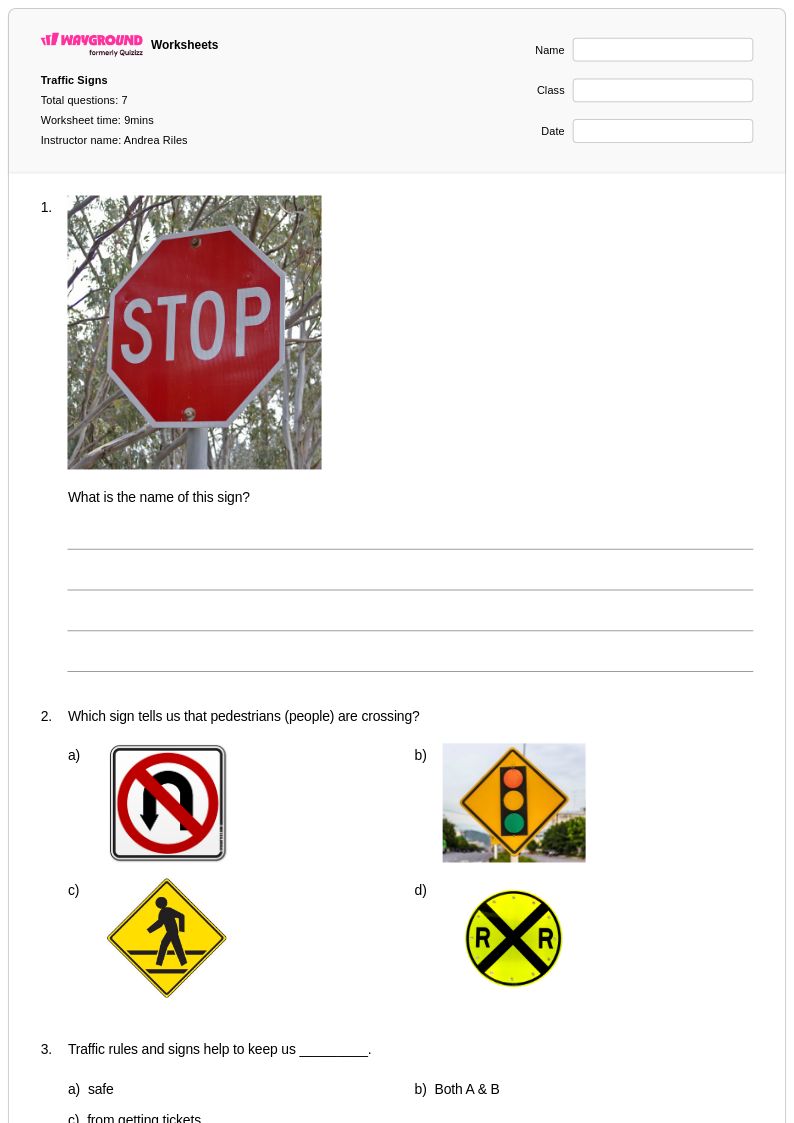
7 T
2nd - 5th
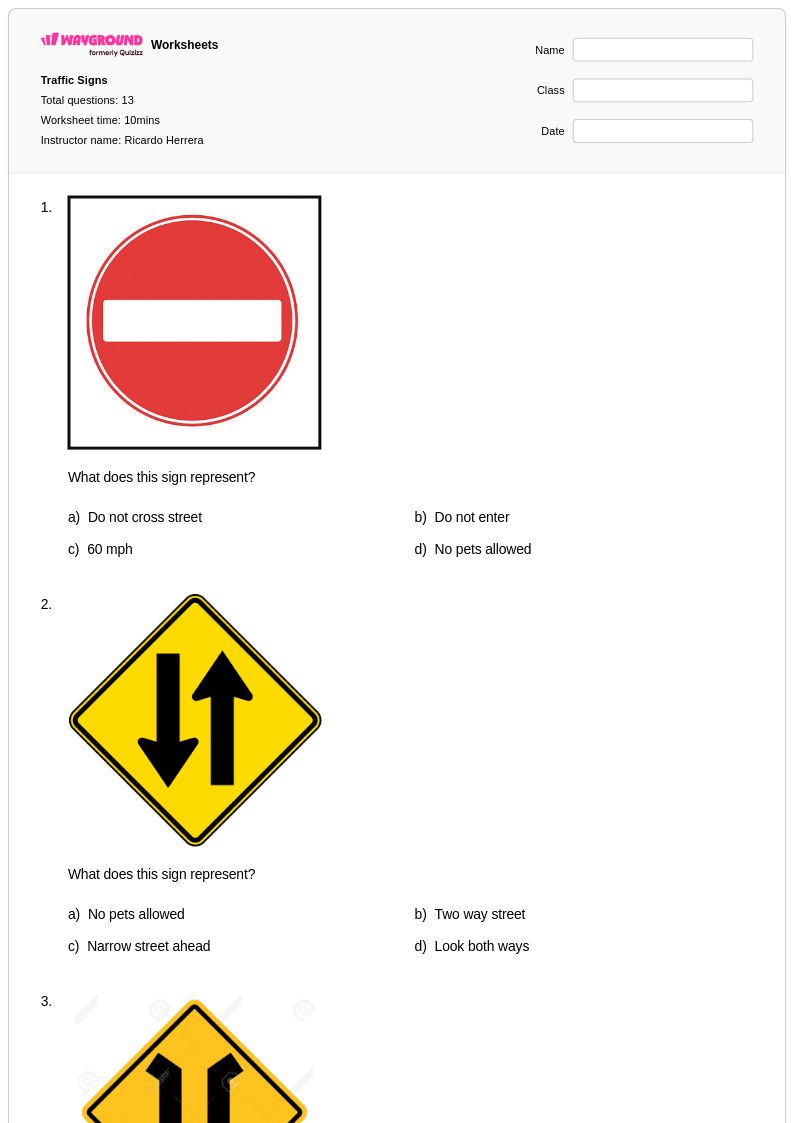
13 T
1st - 6th
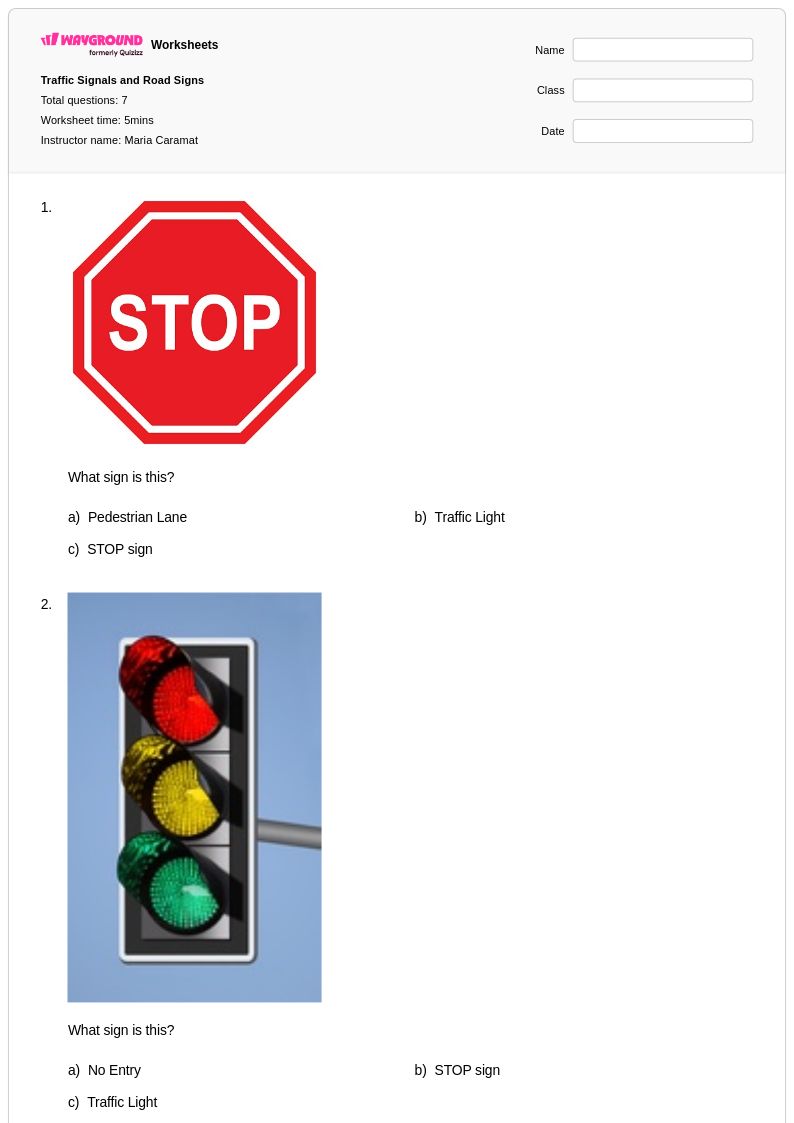
7 T
KG - 3rd
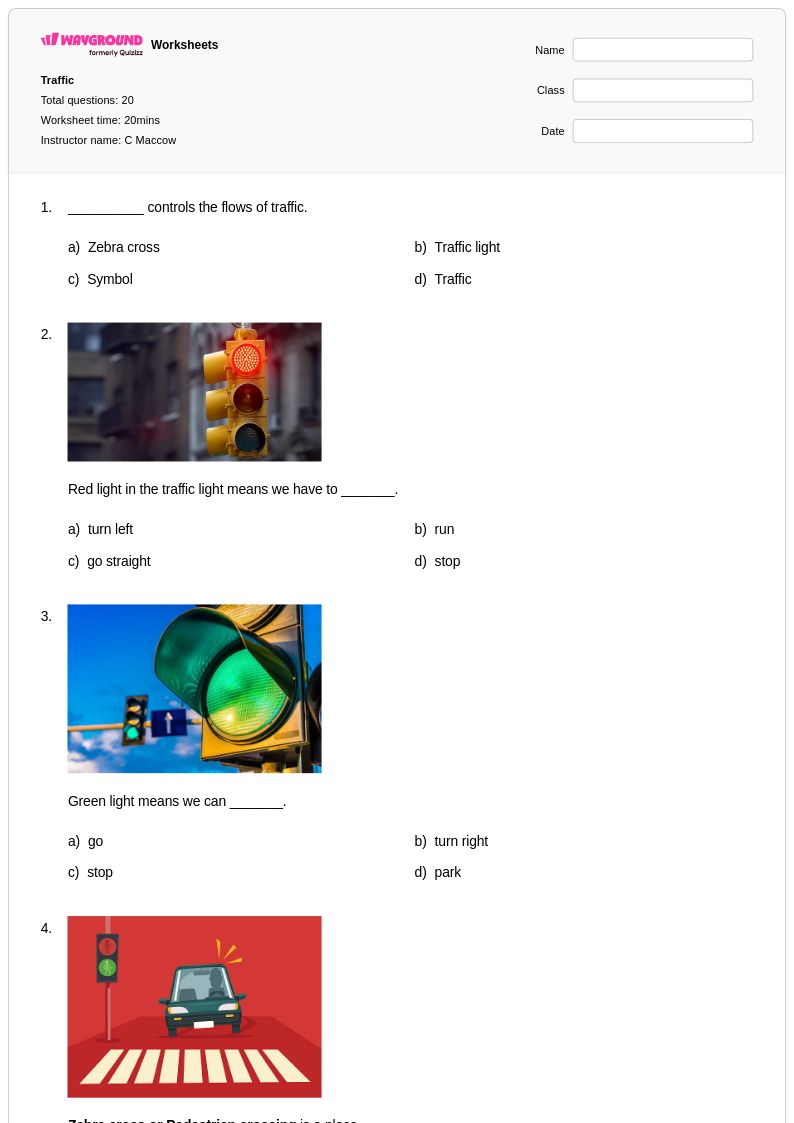
20 T
3rd
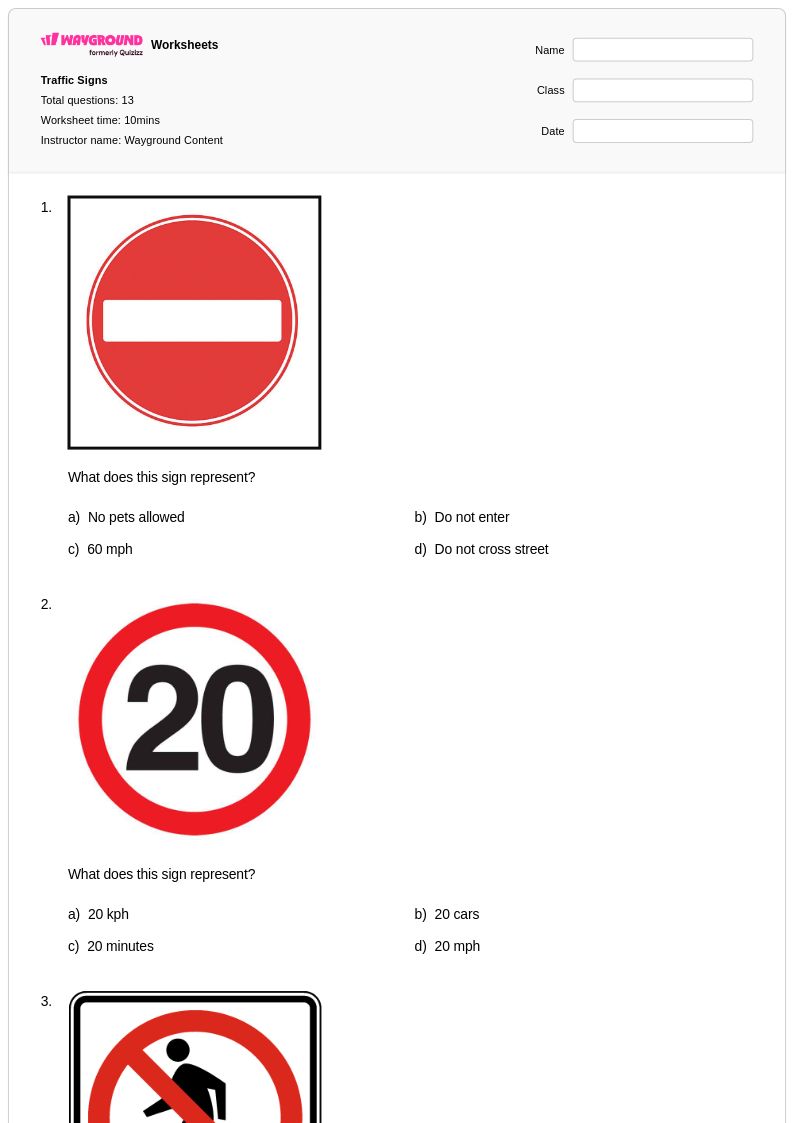
13 T
1st - 6th
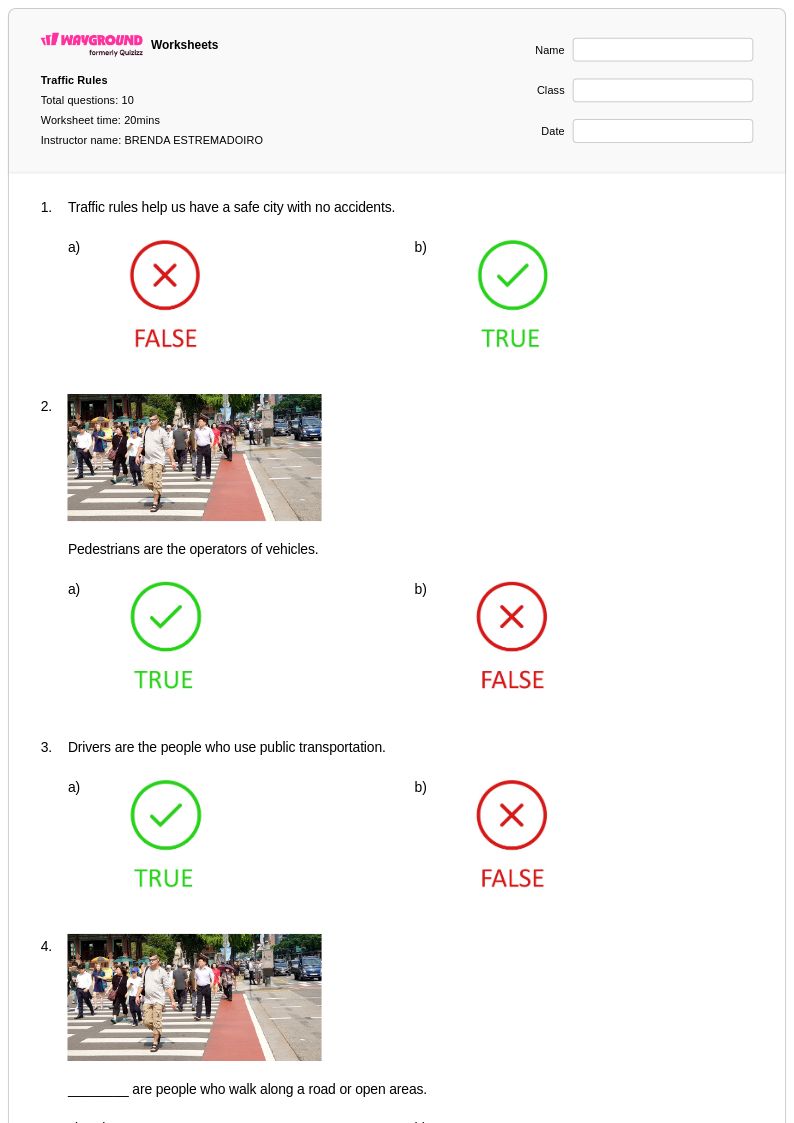
10 T
3rd
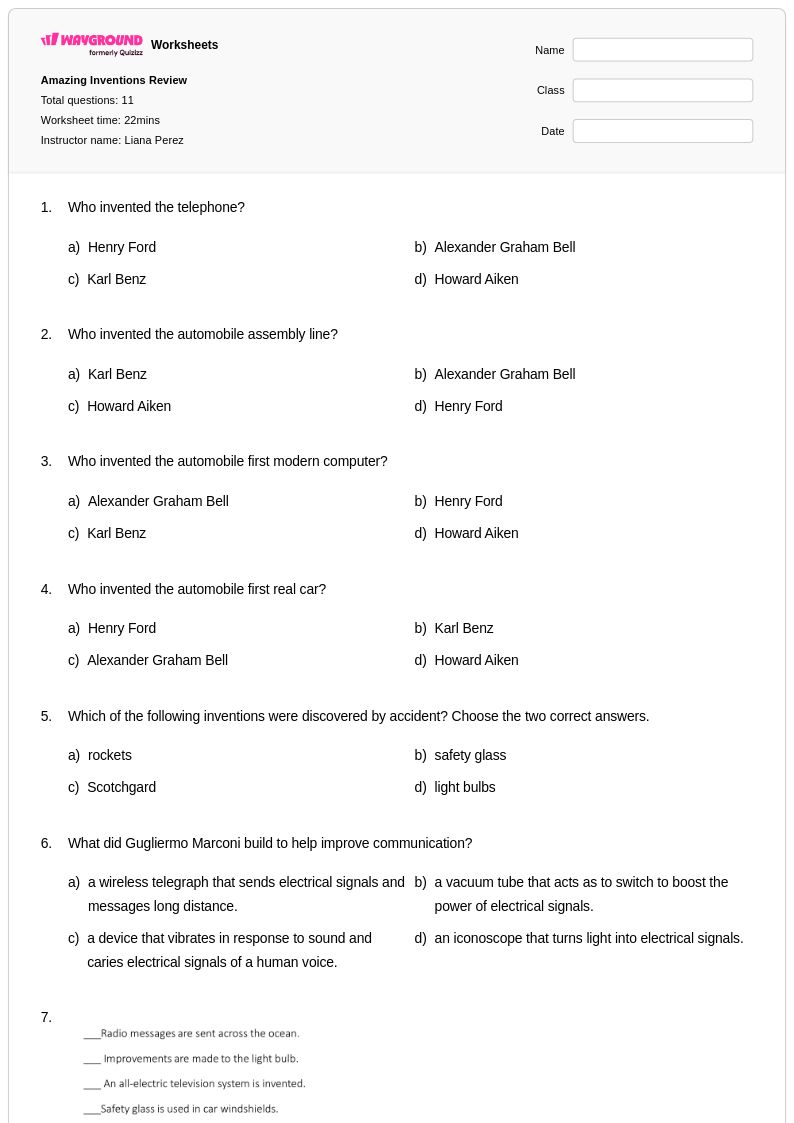
11 T
3rd
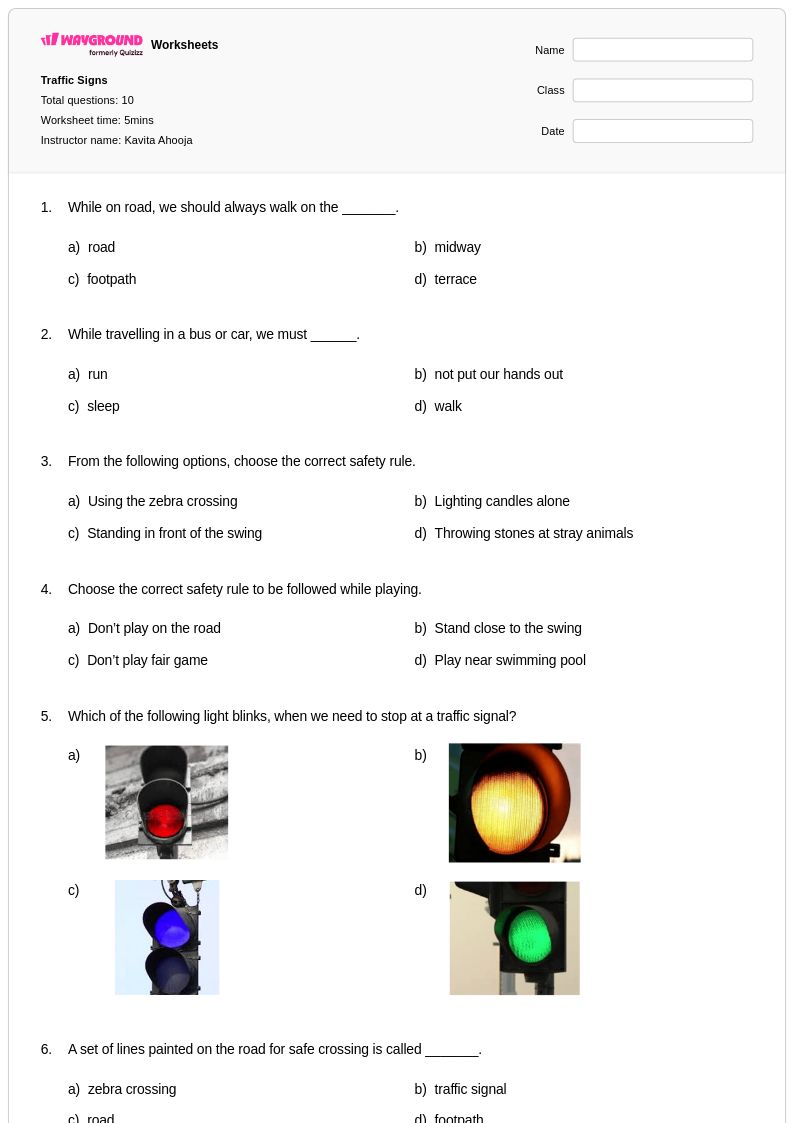
10 T
2nd - 3rd
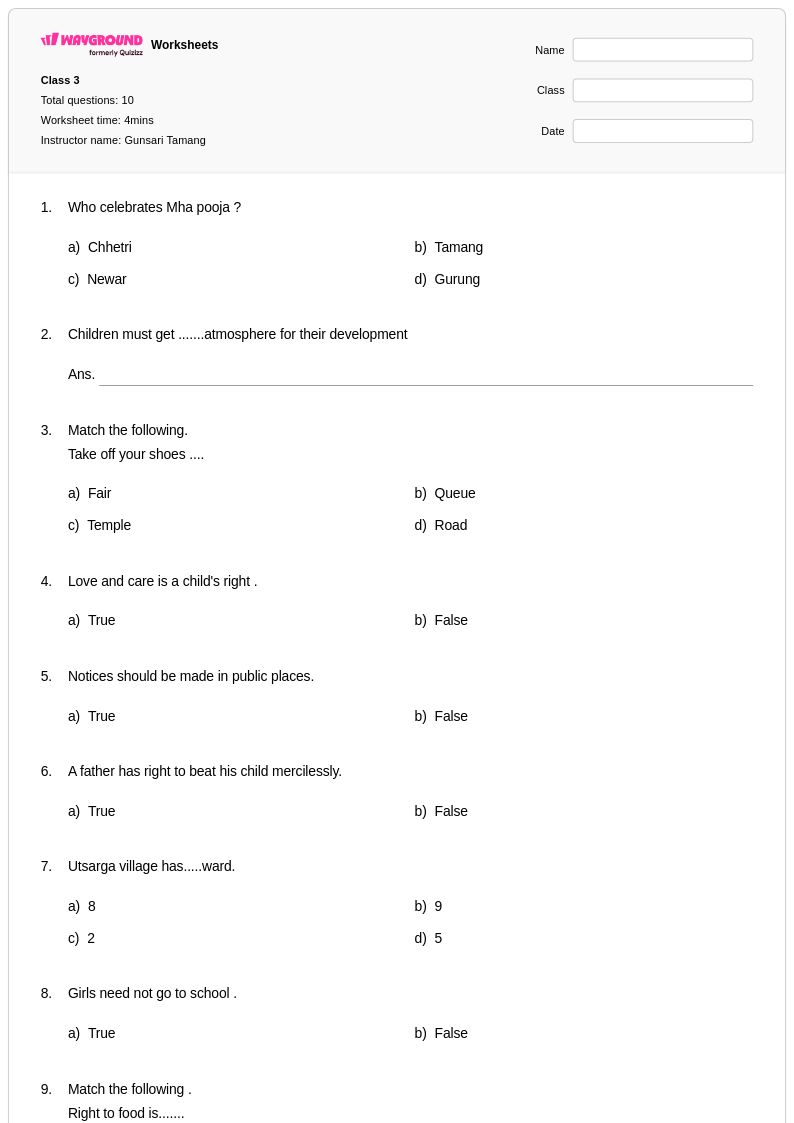
10 T
2nd - 3rd
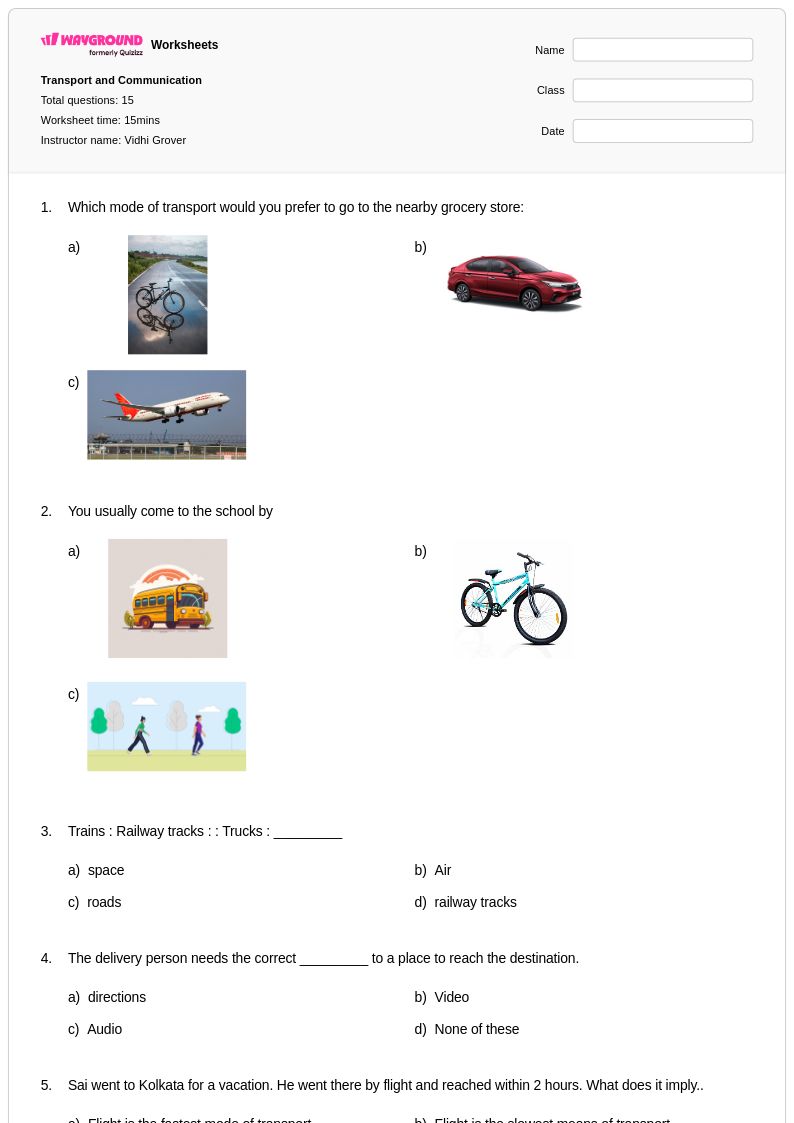
15 T
3rd
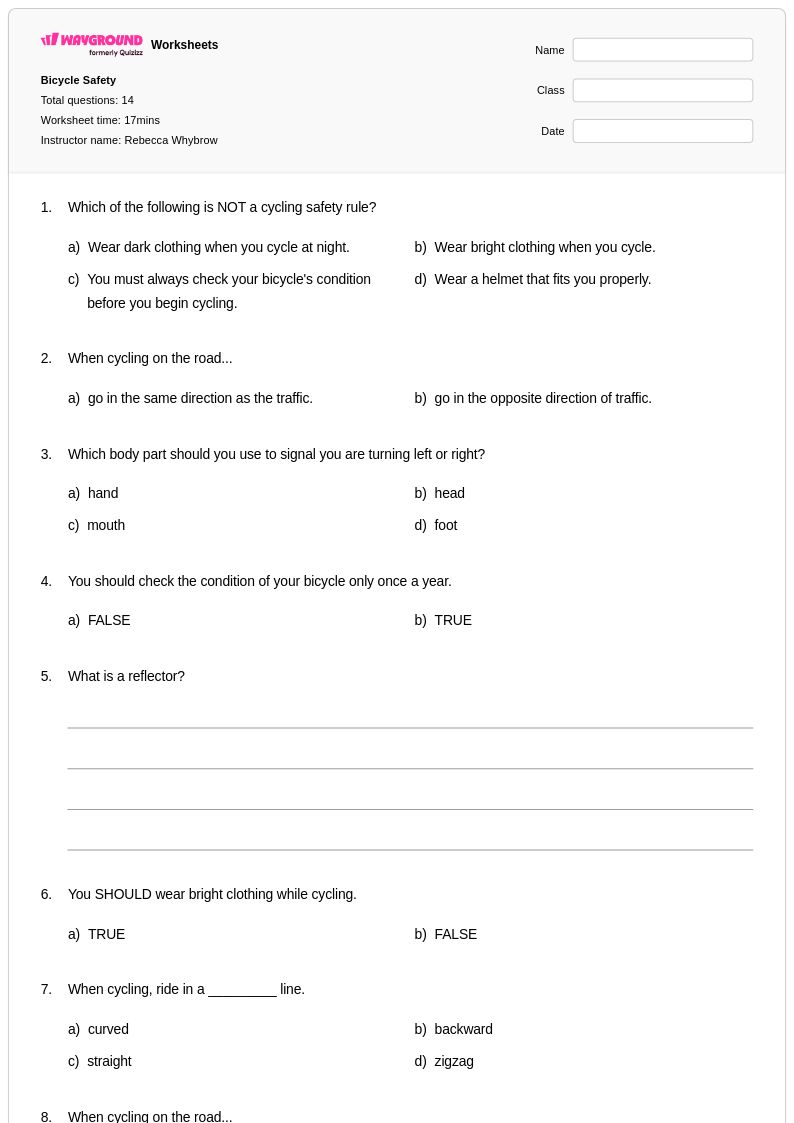
14 T
3rd
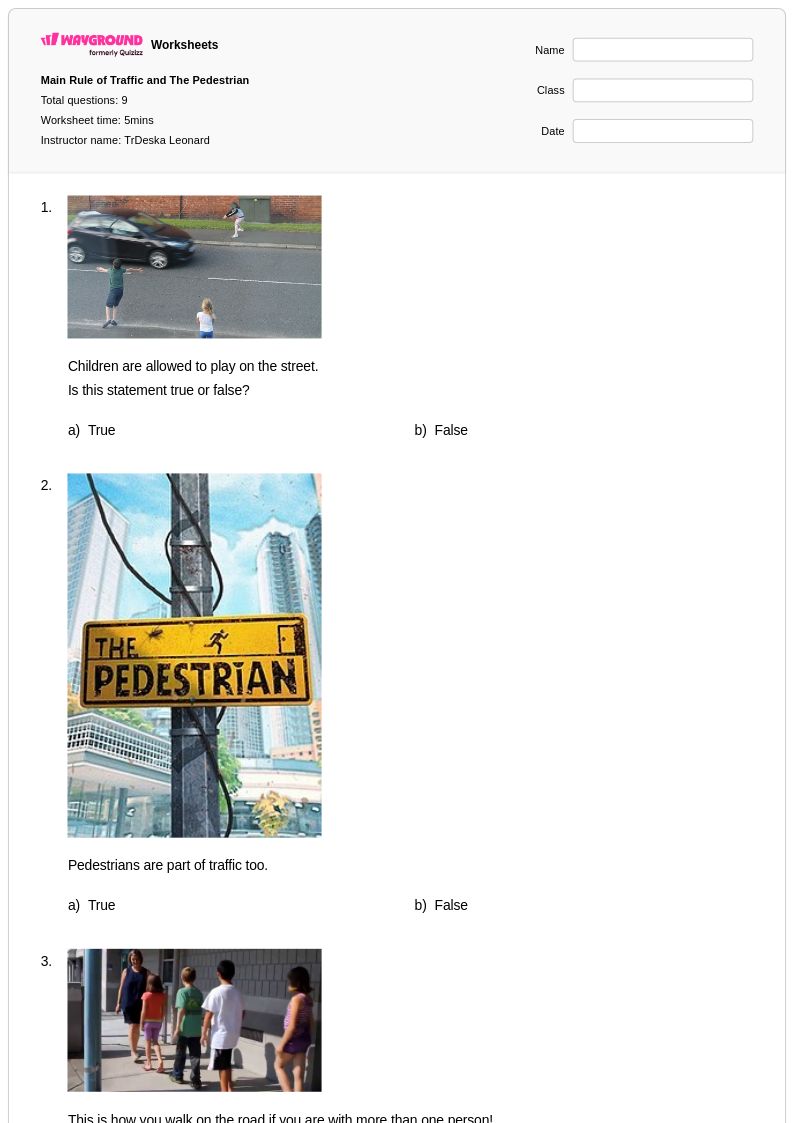
9 T
3rd
10 T
3rd
11 T
3rd
32 T
3rd
15 T
3rd
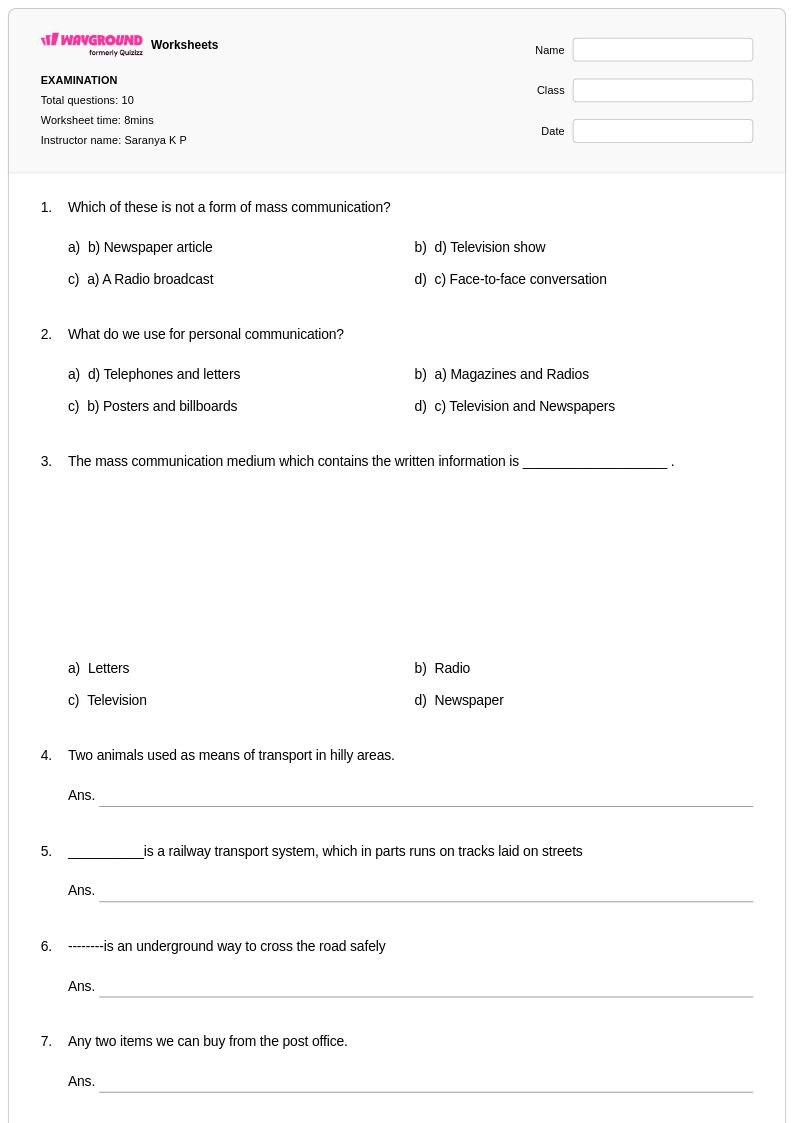
10 T
3rd - Uni
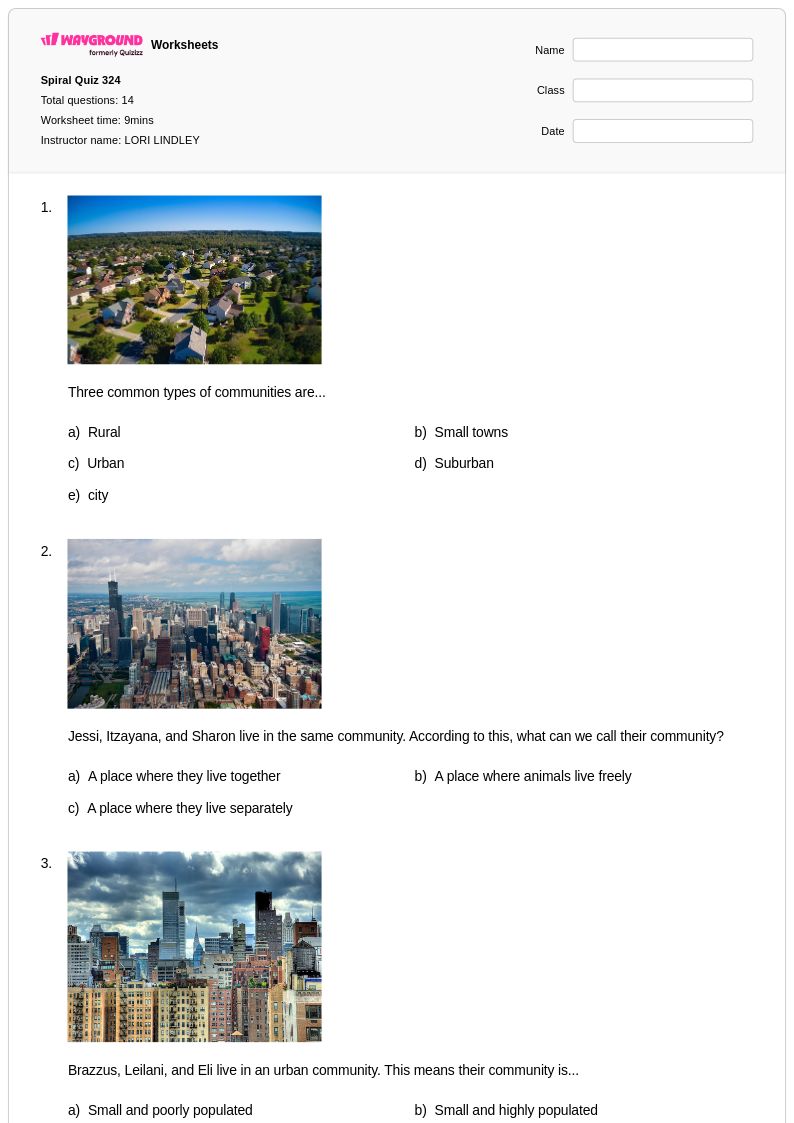
14 T
3rd
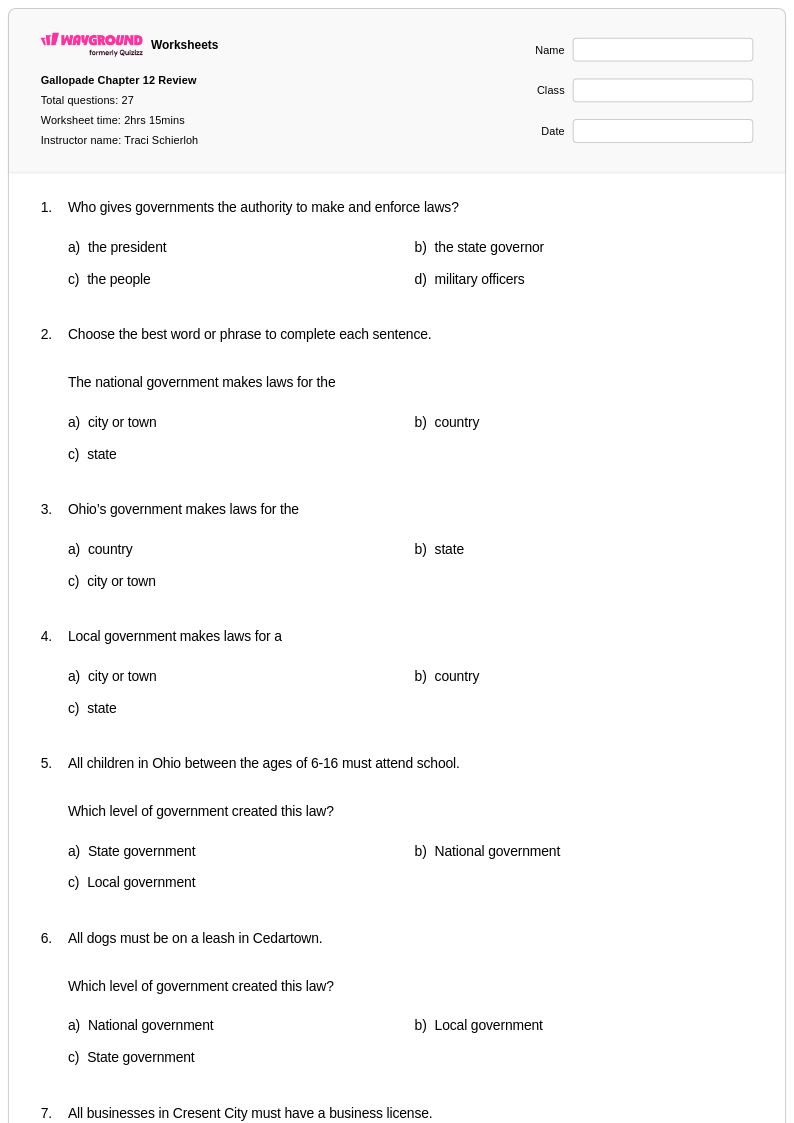
27 T
3rd
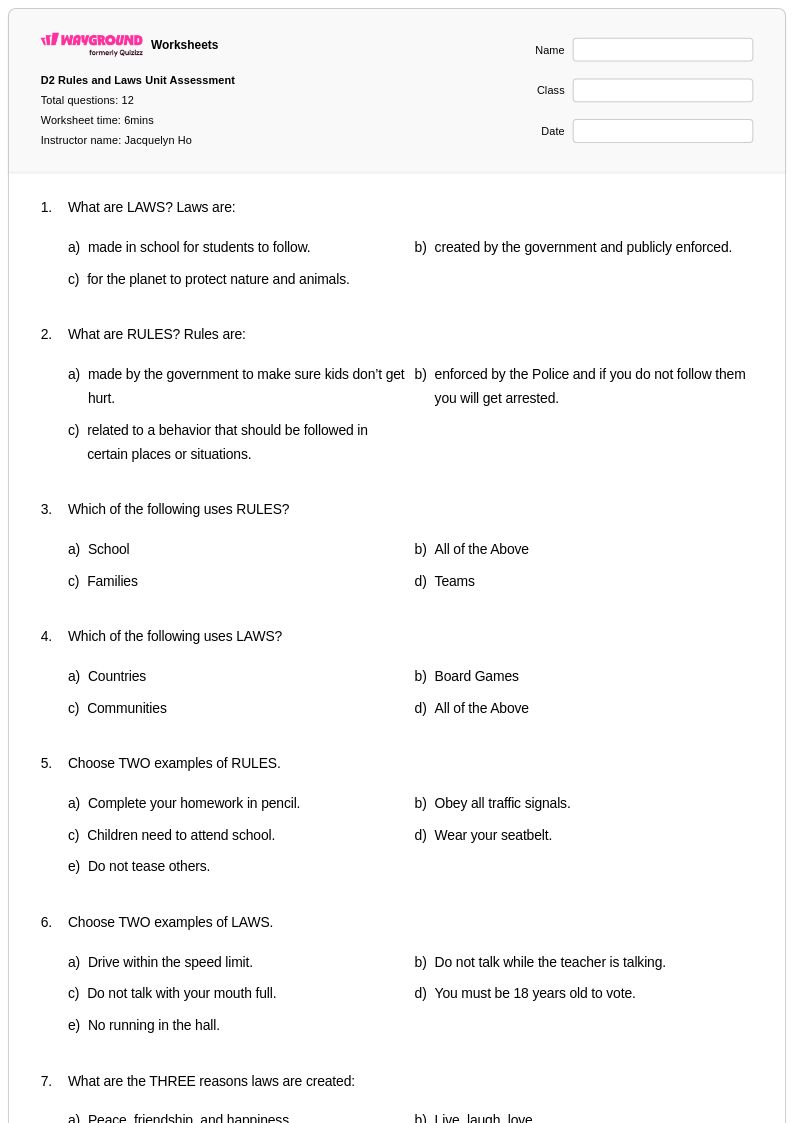
12 T
3rd
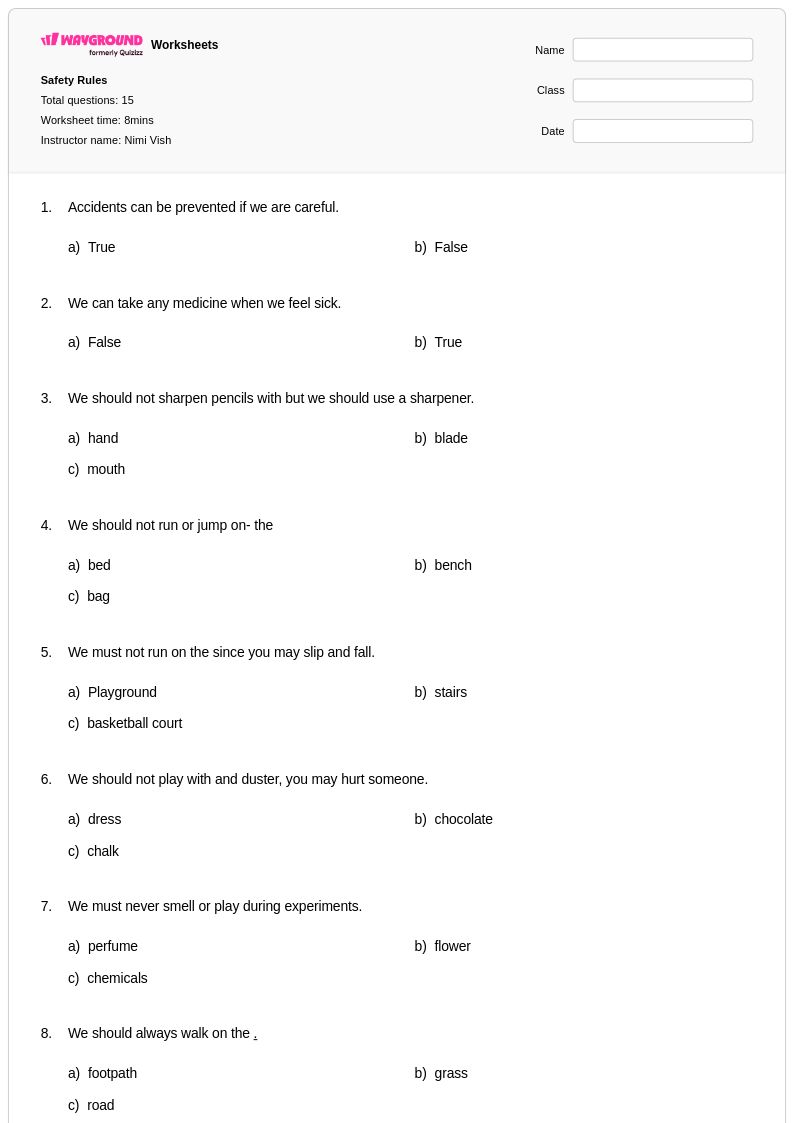
15 T
3rd
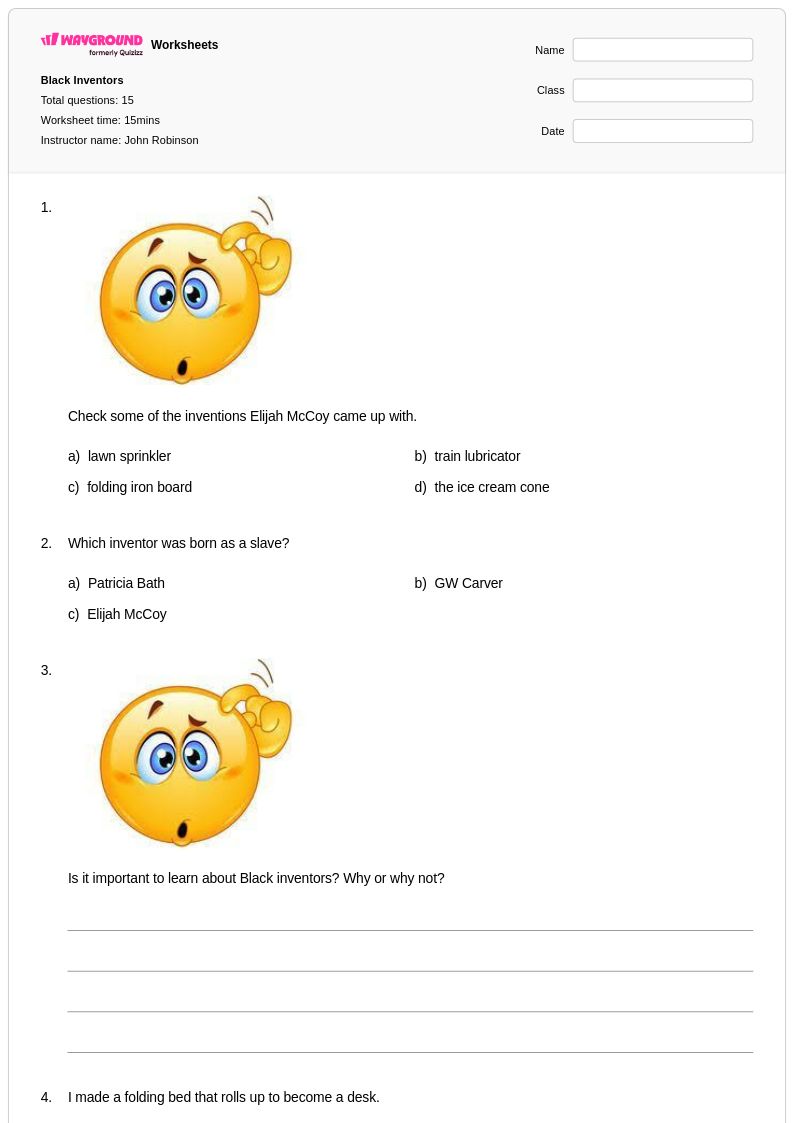
15 T
3rd - Uni
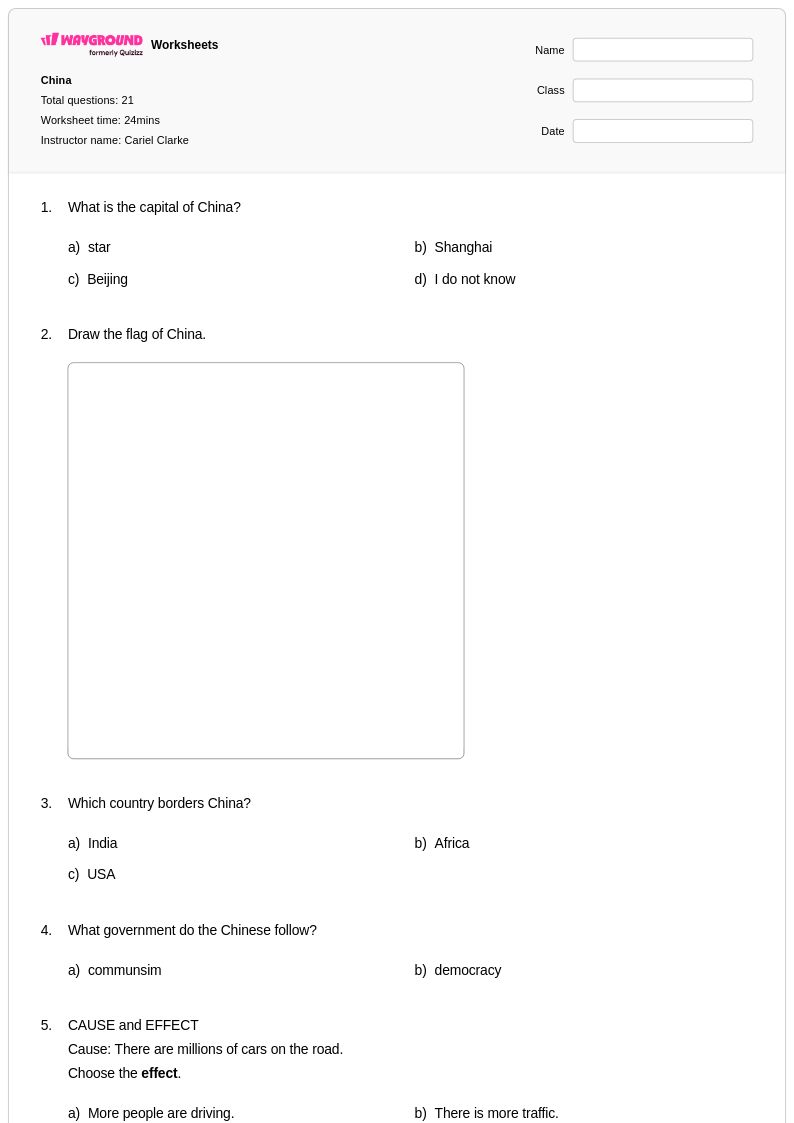
21 T
3rd
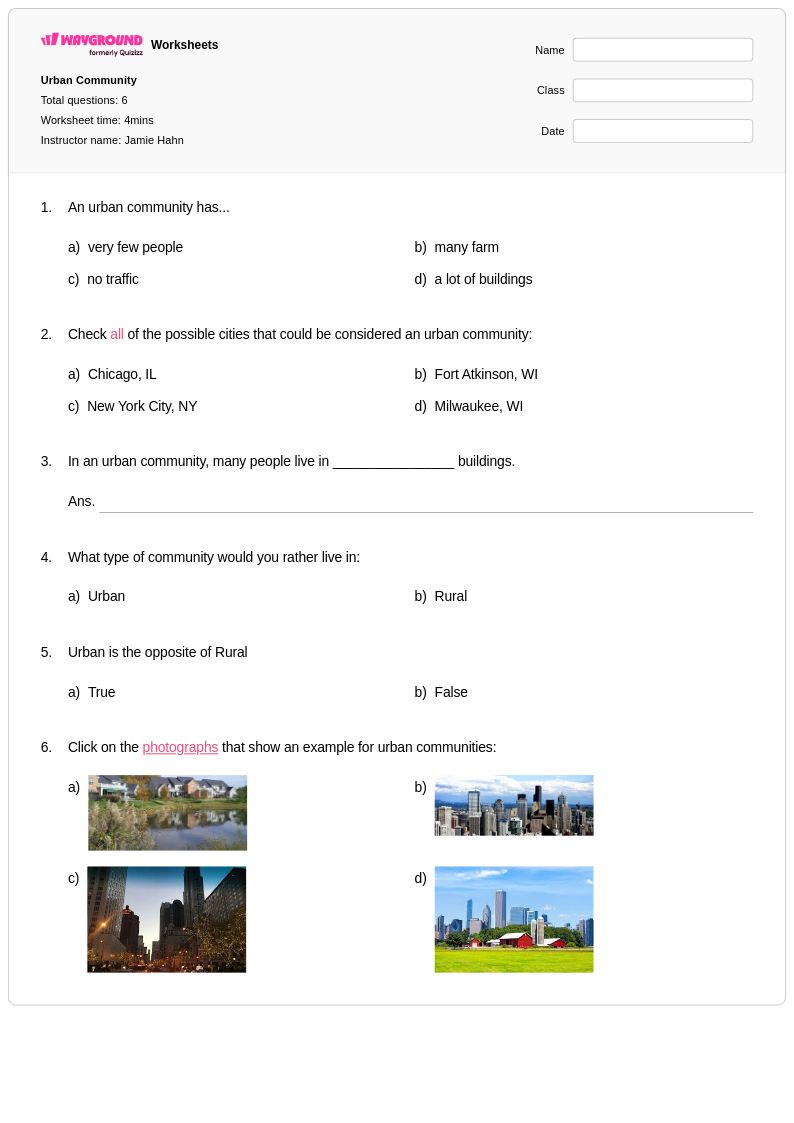
6 T
2nd - 3rd
Jelajahi Traffic Signals Lembar Kerja berdasarkan Nilai
Jelajahi Lembar Kerja Mata Pelajaran Lainnya untuk class 3
Explore printable Traffic Signals worksheets for Class 3
Traffic signals worksheets for Class 3 students available through Wayground (formerly Quizizz) provide essential learning opportunities that connect community safety concepts with social studies education. These carefully designed printables help young learners understand the critical role traffic signals play in organizing community life while developing foundational skills in civic awareness, safety consciousness, and community responsibility. Students engage with practice problems that explore the meanings of red, yellow, and green lights, identify different types of traffic control devices, and analyze how these systems help people navigate their neighborhoods safely. Each worksheet includes comprehensive answer keys that support independent learning and allow educators to provide immediate feedback, while the free pdf format ensures accessibility for all classroom and home learning environments.
Wayground's extensive collection of teacher-created traffic signals resources draws from millions of educational materials specifically designed to support Class 3 social studies instruction. The platform's robust search and filtering capabilities enable educators to quickly locate worksheets that align with community and cultures curriculum standards while offering differentiation tools that accommodate diverse learning needs within the classroom. Teachers can customize these printable and digital resources to match their specific lesson objectives, whether focusing on basic traffic signal recognition for remediation or exploring complex community planning concepts for enrichment activities. The flexible pdf and digital formats facilitate seamless integration into various instructional approaches, from traditional worksheet-based practice to interactive classroom discussions, supporting comprehensive skill development in community awareness and cultural understanding.
FAQs
How do I teach traffic signals to elementary students?
What kinds of practice exercises help students learn traffic signal rules?
What common mistakes do students make when learning about traffic signals?
How do traffic signals connect to social studies standards?
How can I use Wayground's traffic signals worksheets in my classroom?
How can I differentiate traffic signals instruction for students at different levels?