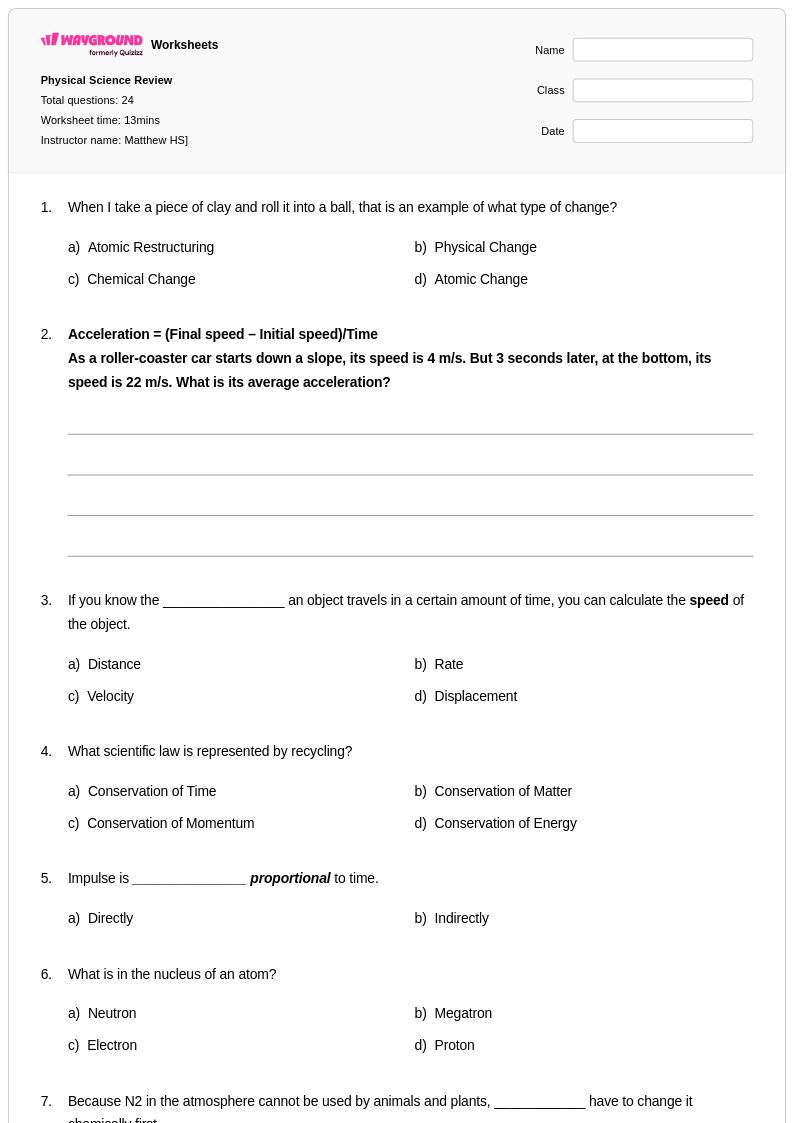
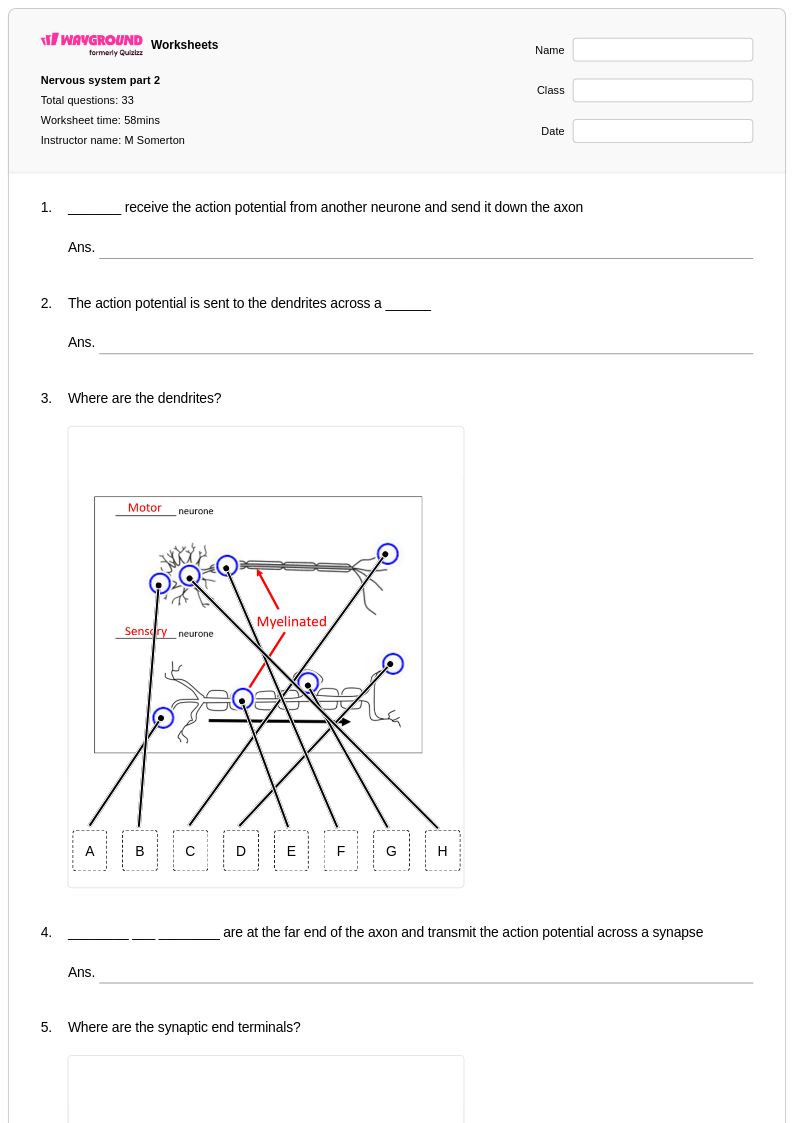
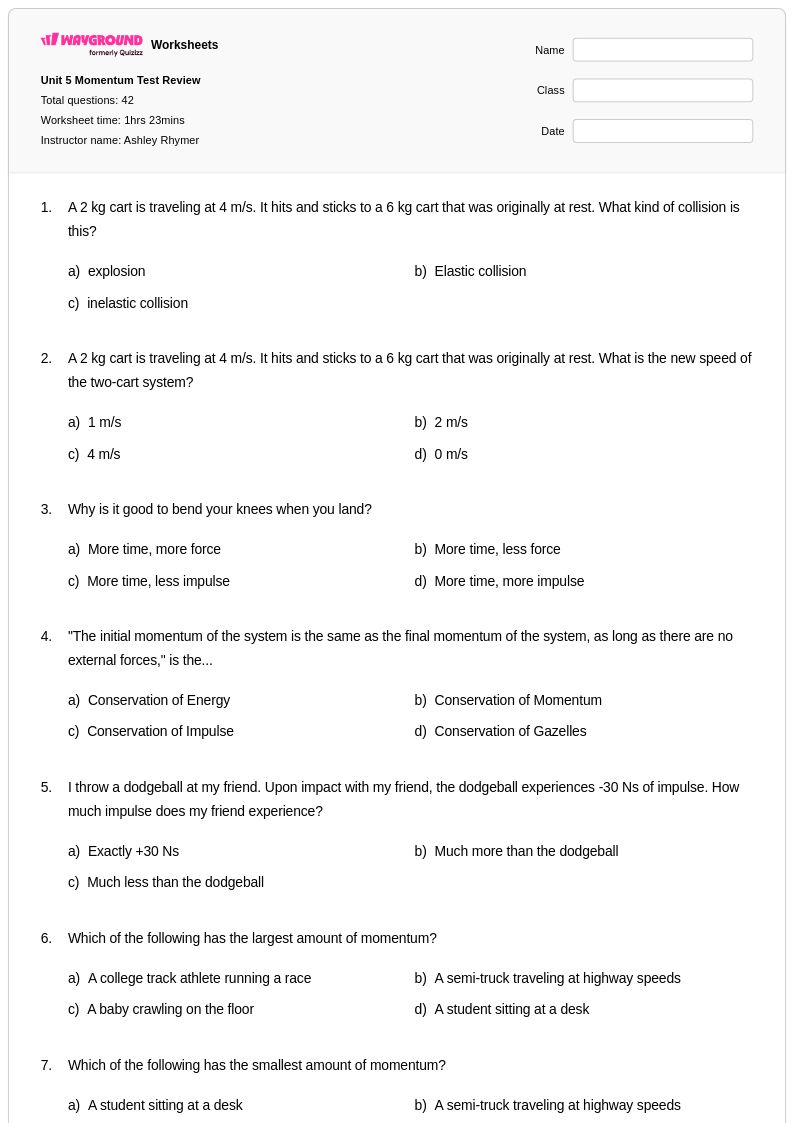
Class 12 impulse worksheets and printables help students master momentum change calculations through comprehensive practice problems, free PDF resources, and detailed answer keys for physics concept reinforcement.
Class 12 impulse worksheets available through Wayground (formerly Quizizz) provide comprehensive practice with momentum change calculations and collision analysis, essential concepts for advanced physics students preparing for college-level coursework and standardized examinations. These carefully designed resources strengthen critical problem-solving skills through systematic exploration of impulse-momentum theorem applications, including scenarios involving variable forces, collision dynamics, and conservation principles. Each worksheet collection includes detailed answer keys that guide students through complex multi-step solutions, while printable pdf formats ensure accessibility for both classroom instruction and independent study. The free practice problems progress from fundamental impulse calculations using J = FΔt to sophisticated analyses of real-world applications such as automotive safety systems, sports mechanics, and engineering design challenges.
Wayground's extensive collection draws from millions of teacher-created resources specifically aligned with Class 12 physics standards, offering educators powerful search and filtering capabilities to locate precisely targeted impulse materials for diverse classroom needs. The platform's robust differentiation tools enable seamless customization of worksheet difficulty levels, allowing teachers to provide appropriate challenges for students across varying ability ranges while maintaining rigorous academic standards. Standards alignment features ensure comprehensive coverage of impulse concepts within broader momentum and energy units, while flexible formatting options support both traditional printable worksheets and interactive digital assignments. These versatile resources prove invaluable for lesson planning, targeted remediation of conceptual gaps, enrichment activities for advanced learners, and intensive skill practice sessions that prepare students for advanced placement examinations and university physics coursework.
FAQs
How do I teach impulse in a physics class?
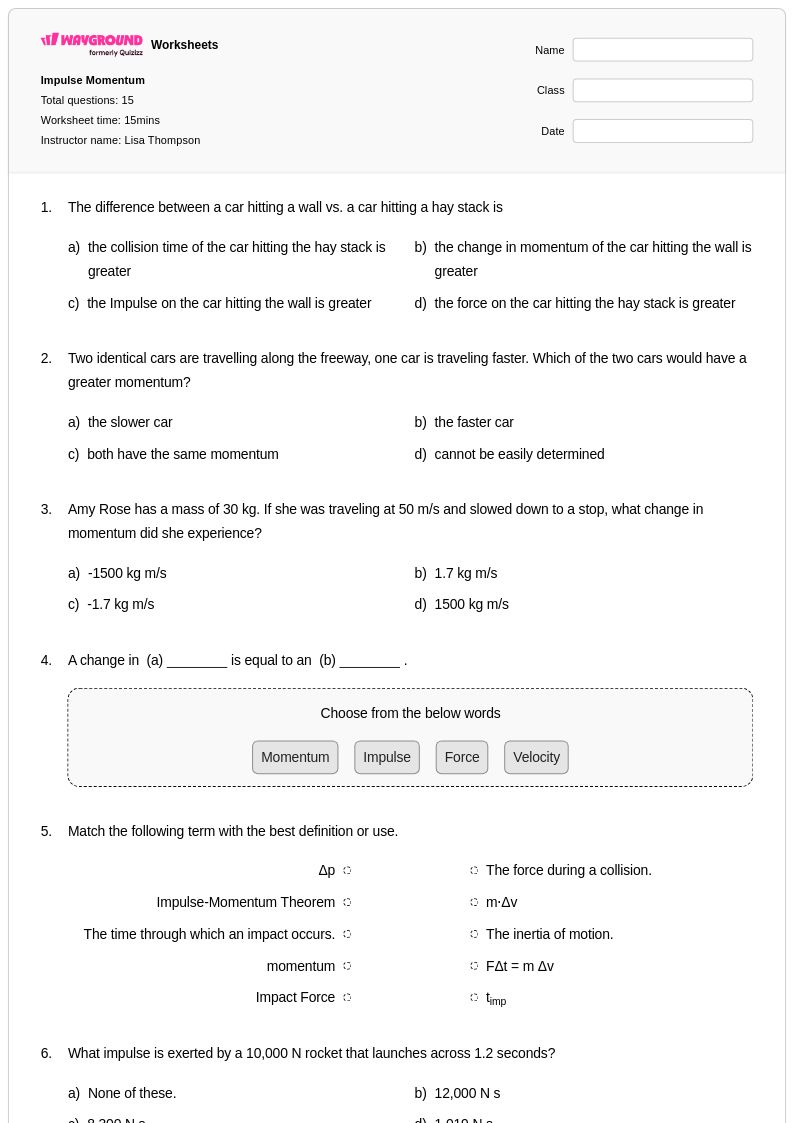
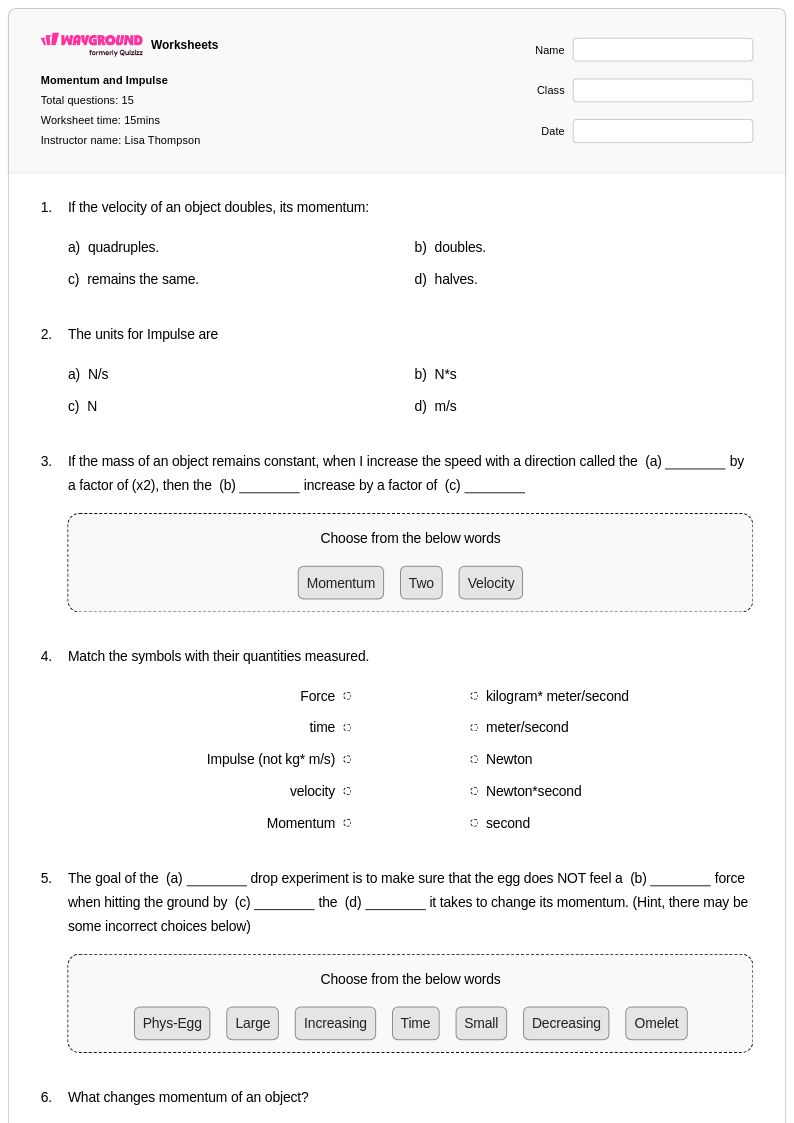
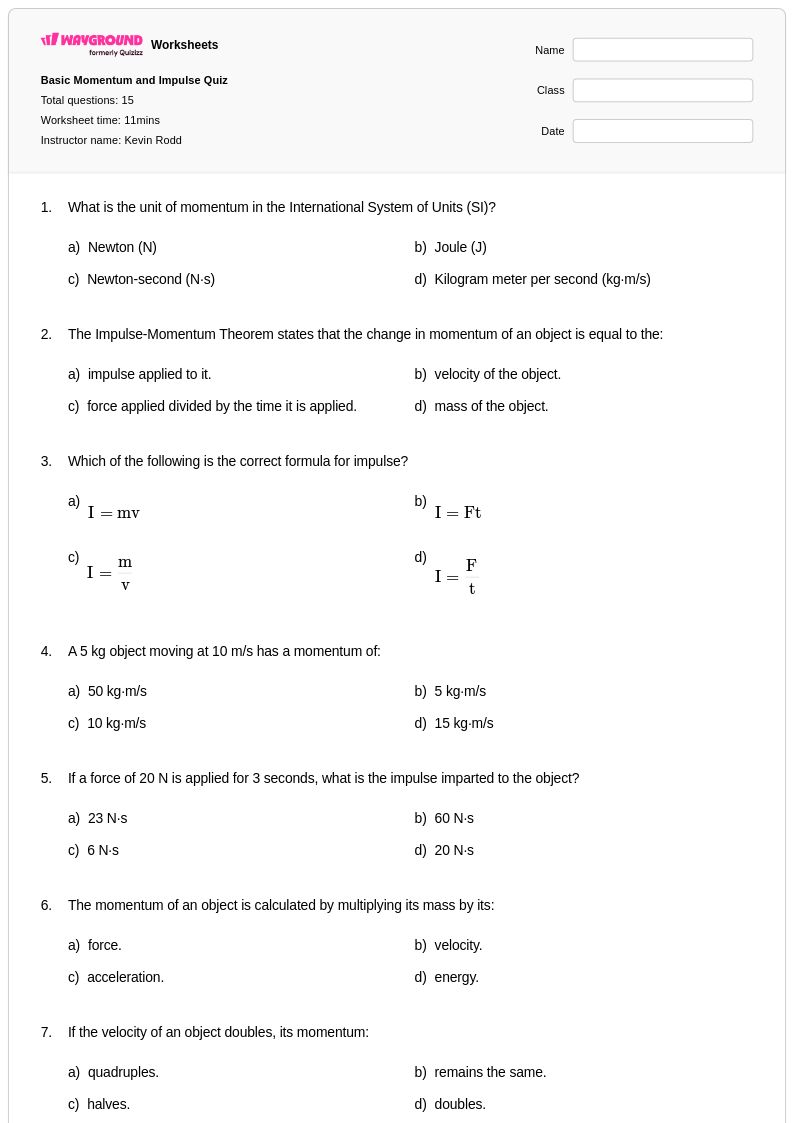
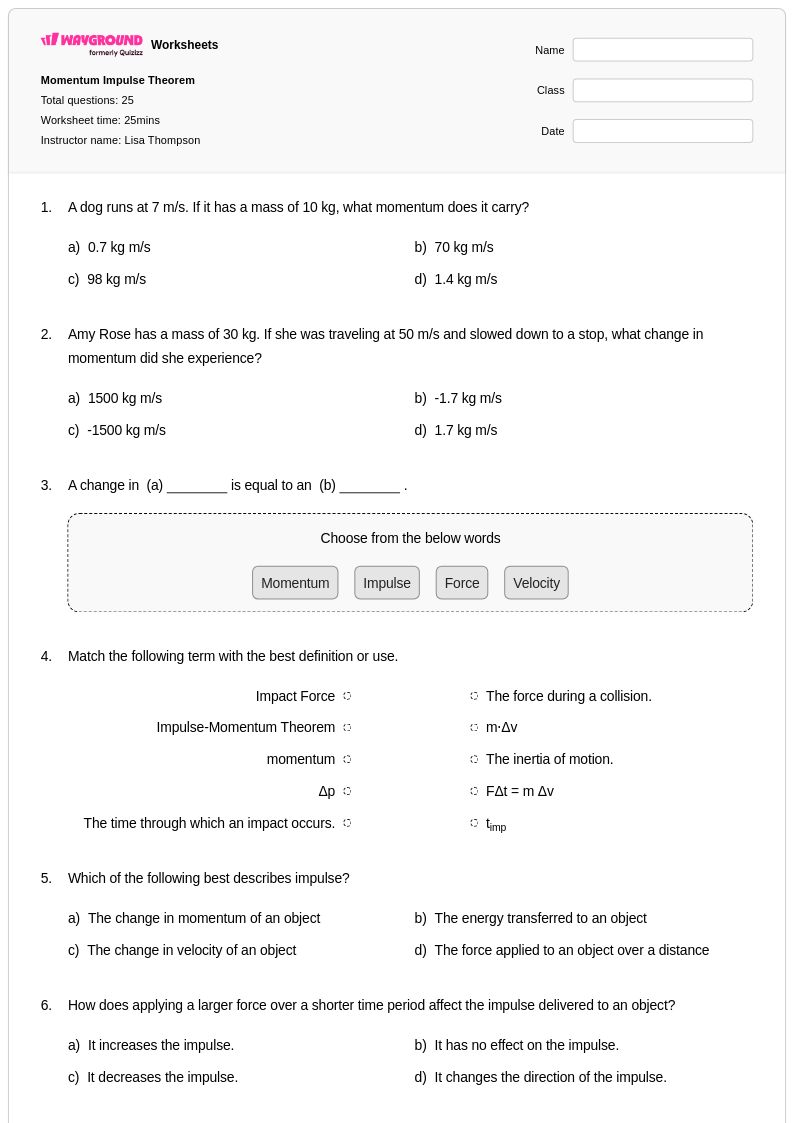
Teach impulse by first grounding students in Newton's Second Law, then introducing the impulse-momentum theorem (J = FΔt = Δp) as a natural extension. Use concrete examples like a soccer ball being kicked or a car collision to show how force applied over time produces a change in momentum. Progressing from conceptual understanding to calculation-based problems helps students internalize the relationship before tackling complex variable-force scenarios.
What practice problems help students understand the impulse-momentum theorem?
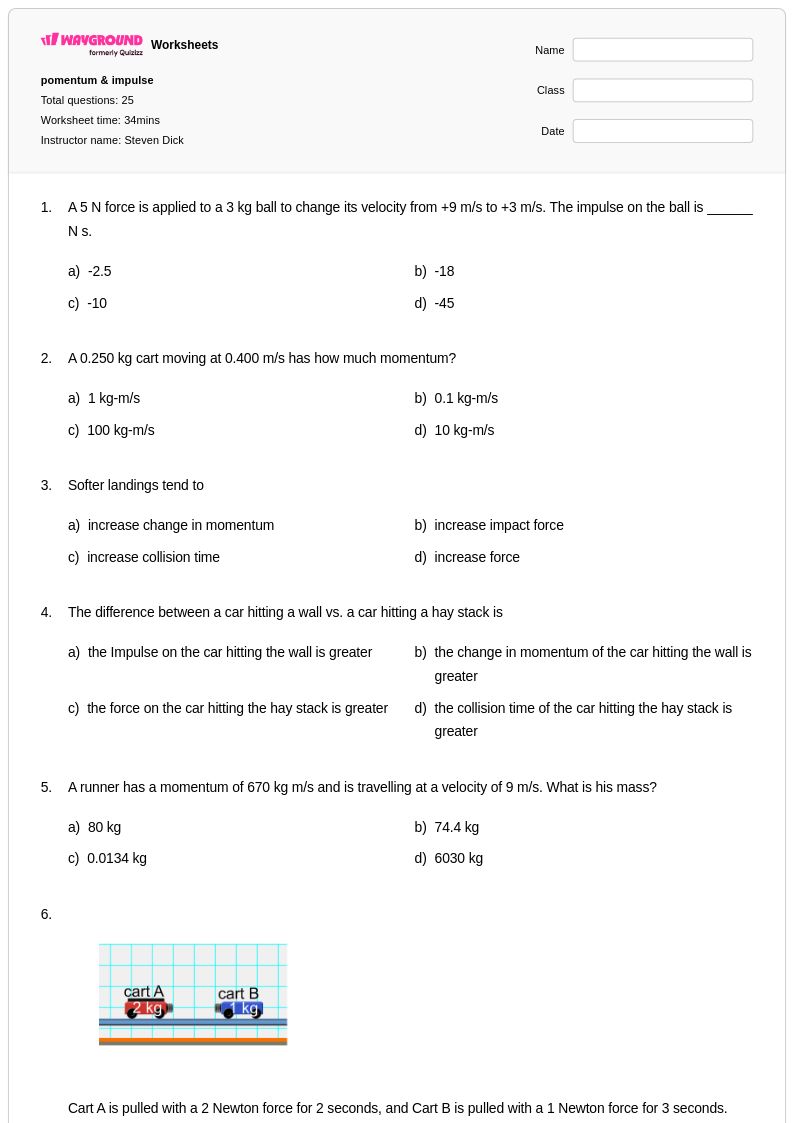
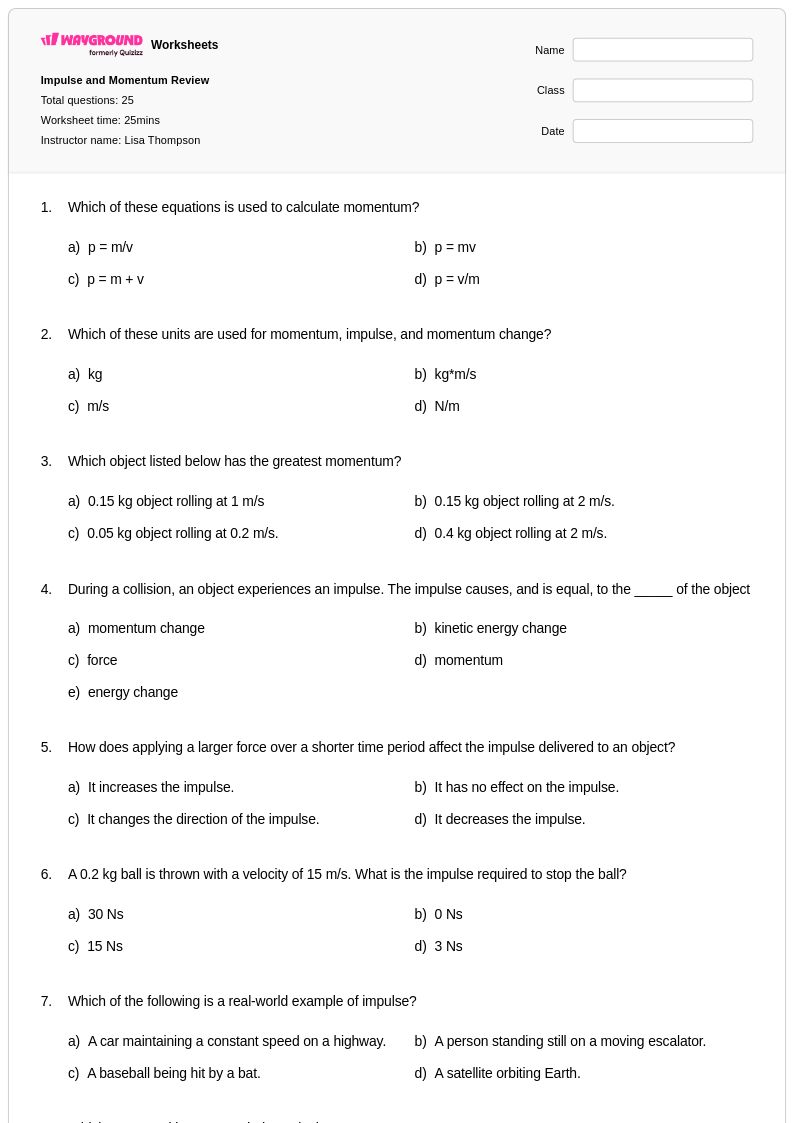
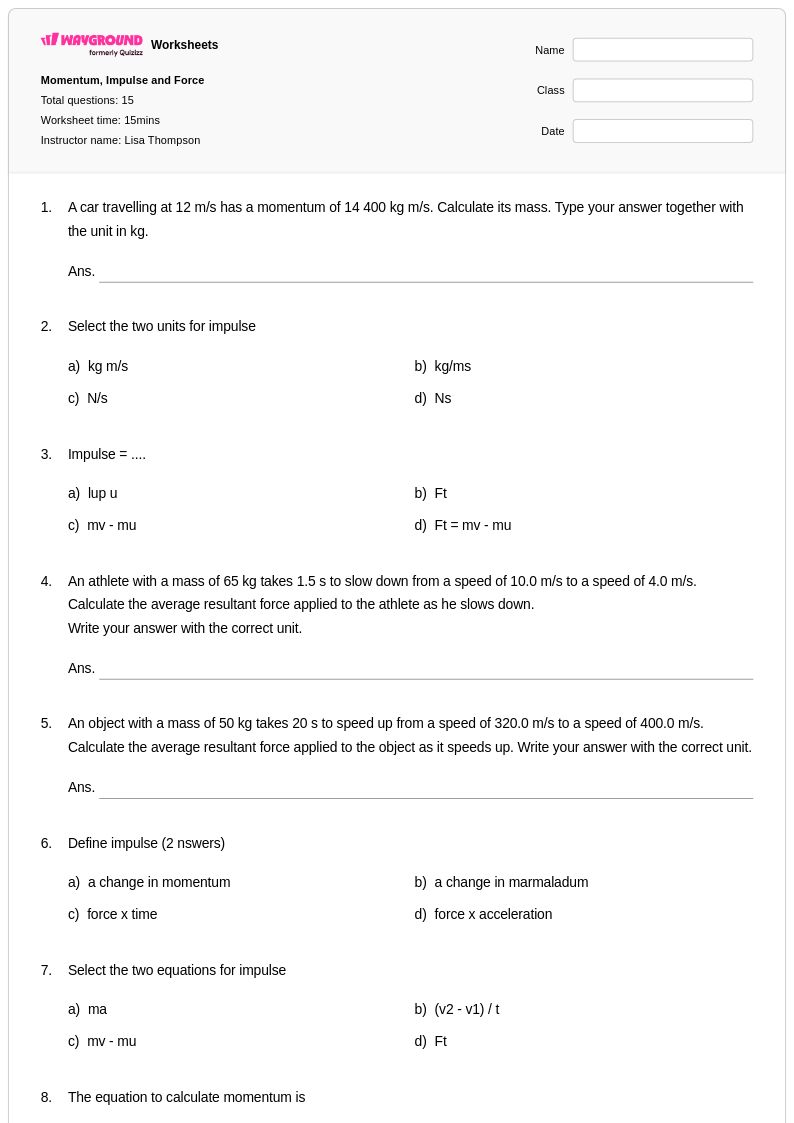
Effective practice should move from straightforward calculations — finding impulse given constant force and time — to multi-step problems involving collision scenarios where students must solve for unknown forces, time intervals, or velocity changes. Including real-world contexts like airbag deployment or batting a baseball keeps problems meaningful and helps students connect the math to physical intuition.
What mistakes do students commonly make when solving impulse problems?
The most frequent error is confusing impulse with momentum itself — students often forget that impulse equals the change in momentum, not momentum at a single point in time. Another common mistake is failing to account for direction, treating impulse as a scalar when it is a vector quantity. Students also frequently misapply the impulse-momentum theorem by using total time rather than the time interval during which the force actually acts.
How can I differentiate impulse instruction for students at different skill levels?
For students who are still building foundational skills, start with single-variable problems using constant forces before introducing variable force scenarios. More advanced students can work through problems that require integrating force-time graphs to find impulse. On Wayground, teachers can apply accommodations such as reduced answer choices to lower cognitive load for struggling learners, or enable Read Aloud so students with reading challenges can still access problem content independently.
How do I use Wayground's impulse worksheets in my classroom?
Wayground's impulse worksheets are available as printable PDFs for traditional classroom distribution and in digital formats for technology-integrated environments, giving teachers flexibility regardless of their classroom setup. Teachers can also host the worksheets as a quiz directly on Wayground, enabling automatic grading and real-time progress tracking. All worksheets include complete answer keys, making them practical for independent practice, homework, or in-class problem sets.
How do force-time graphs connect to impulse, and how should I teach them?
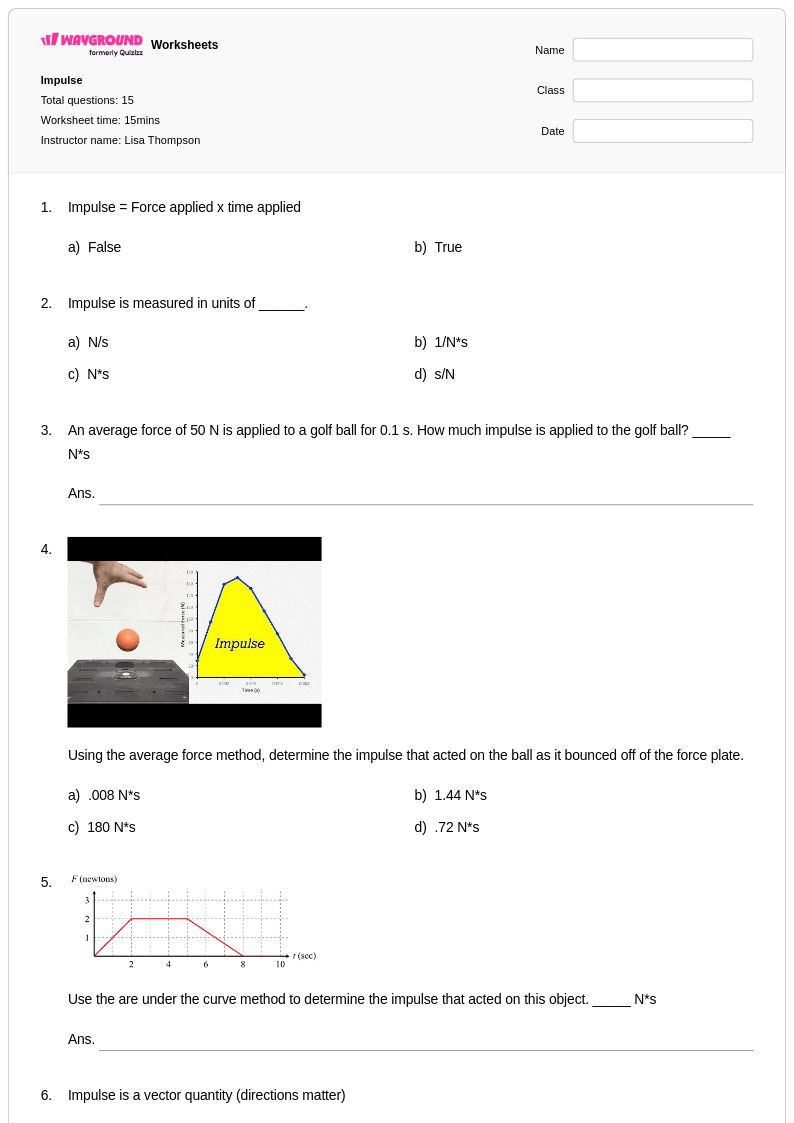
A force-time graph illustrates impulse as the area under the curve, making it a powerful visual tool for students who struggle with abstract formulas. Teaching students to calculate the area of rectangular and triangular regions on these graphs bridges graphical analysis with the impulse-momentum theorem. This approach is especially effective for showing how a smaller force applied over a longer time can produce the same impulse as a larger force applied briefly.