Free Printable Linear Motion Worksheets for Class 12
Class 12 linear motion worksheets from Wayground provide comprehensive printables and practice problems with answer keys to help students master velocity, acceleration, and displacement concepts in physics.
Explore printable Linear Motion worksheets for Class 12
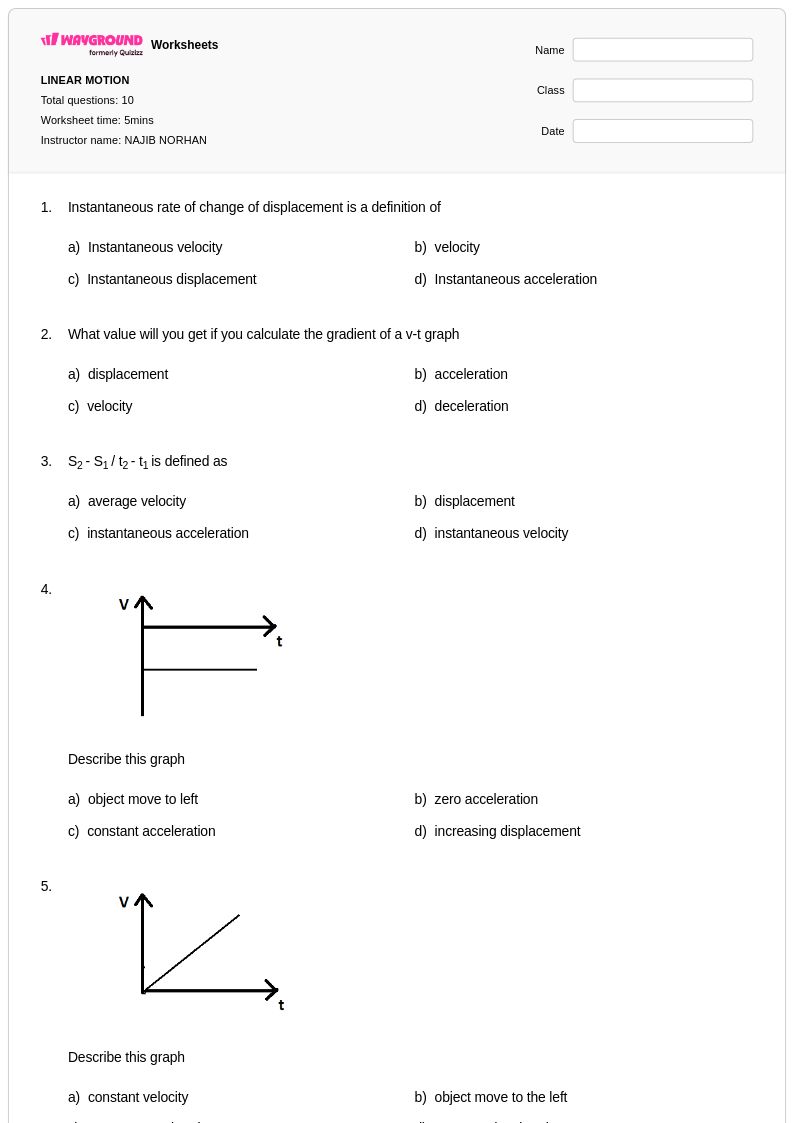
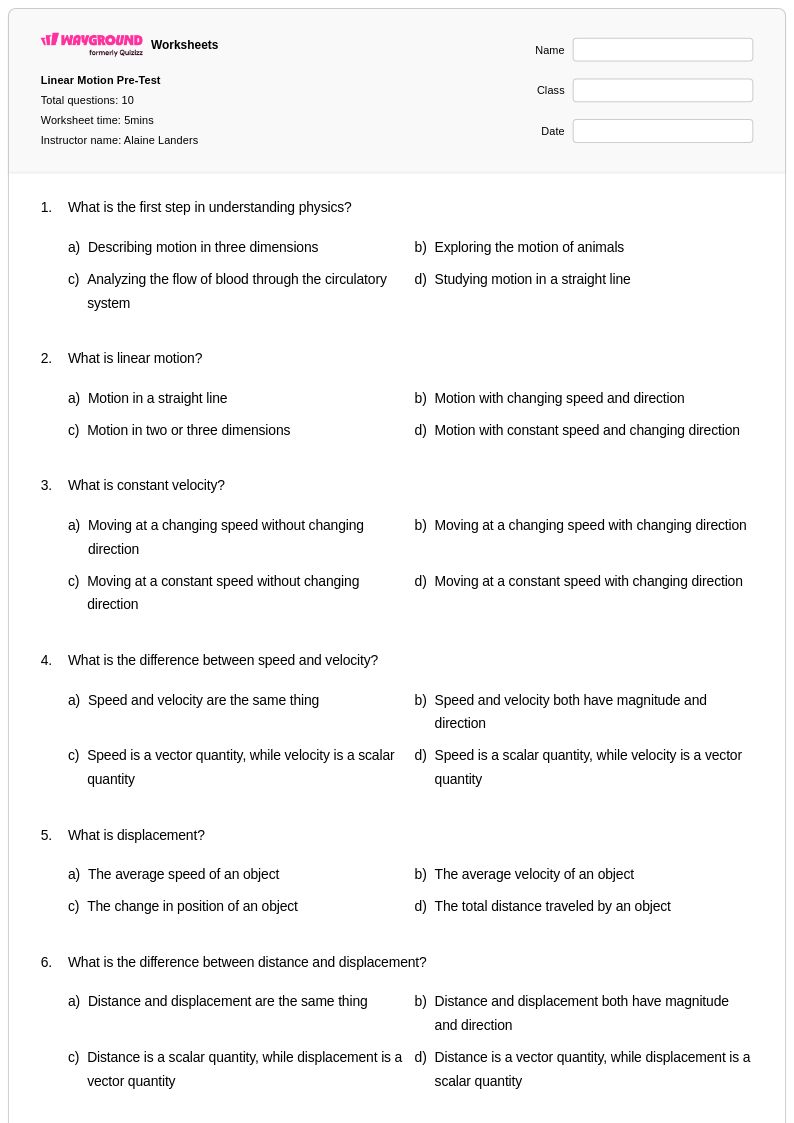
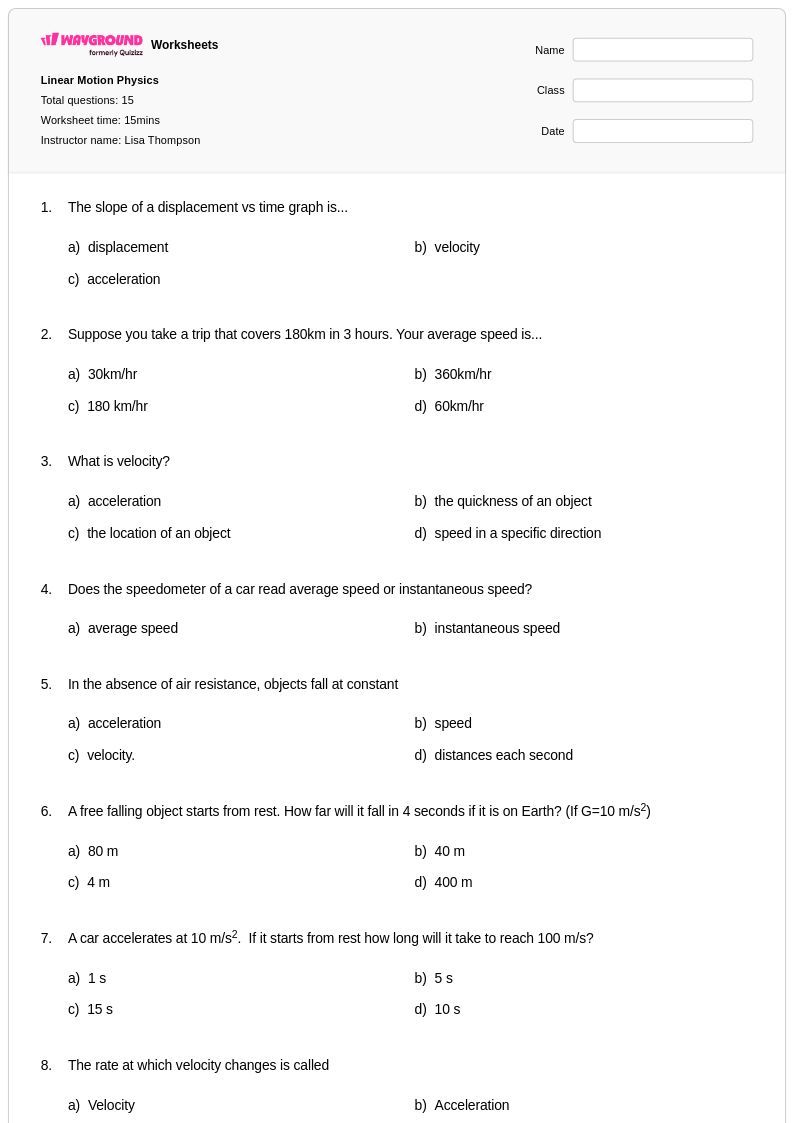
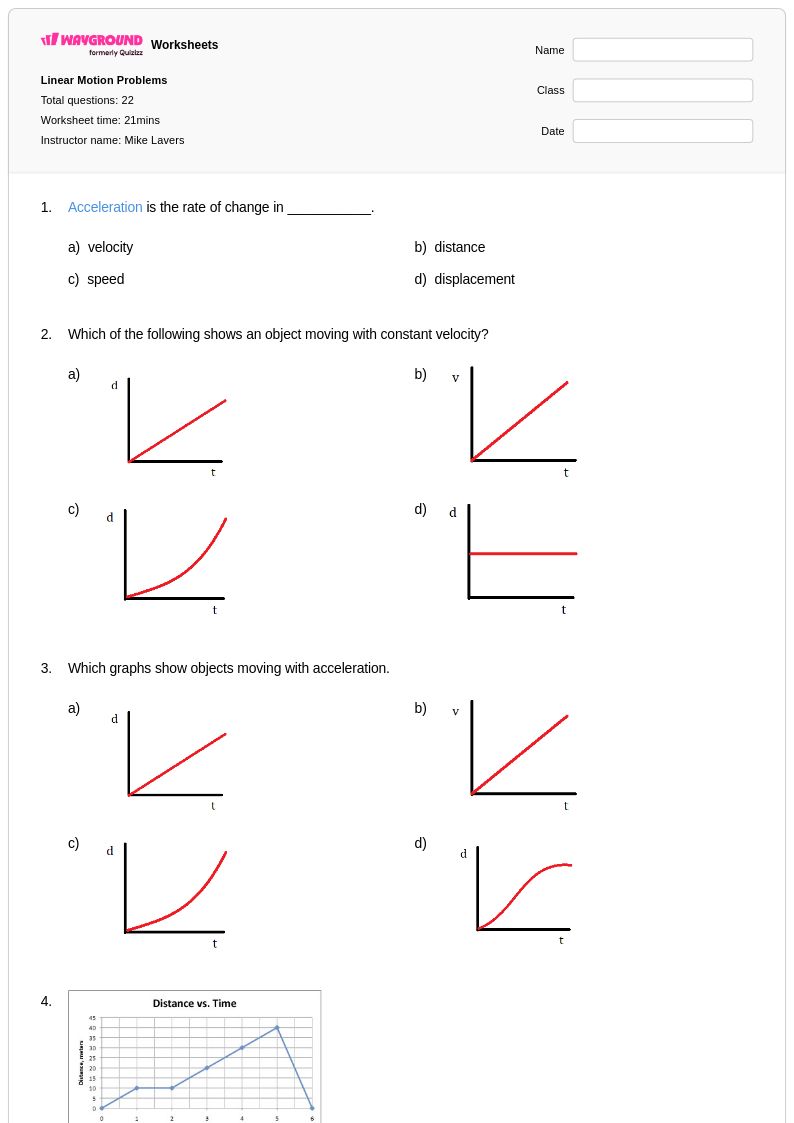
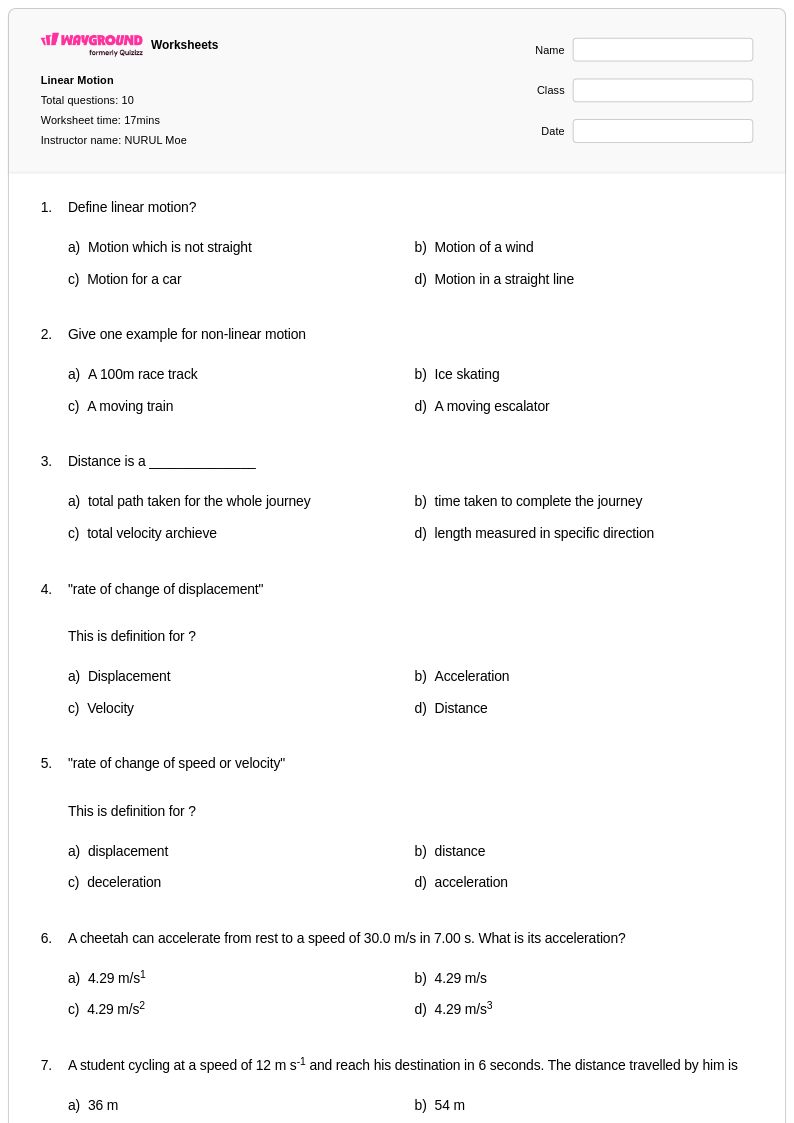
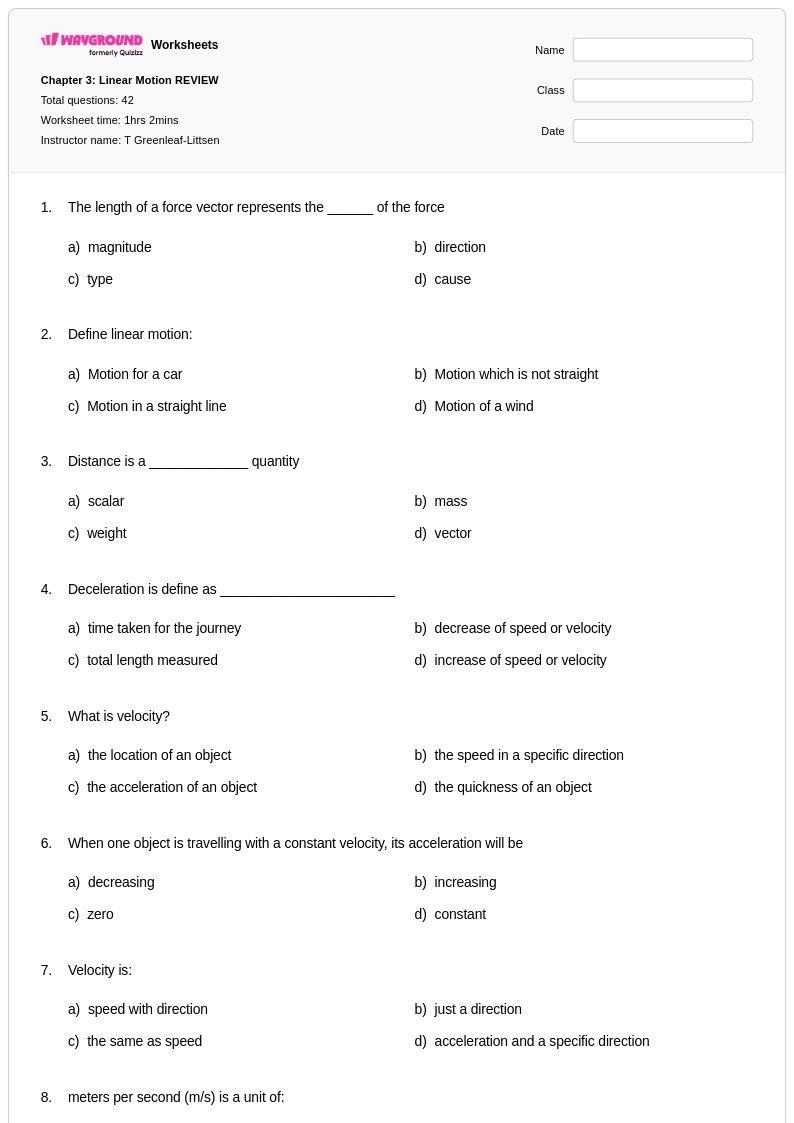
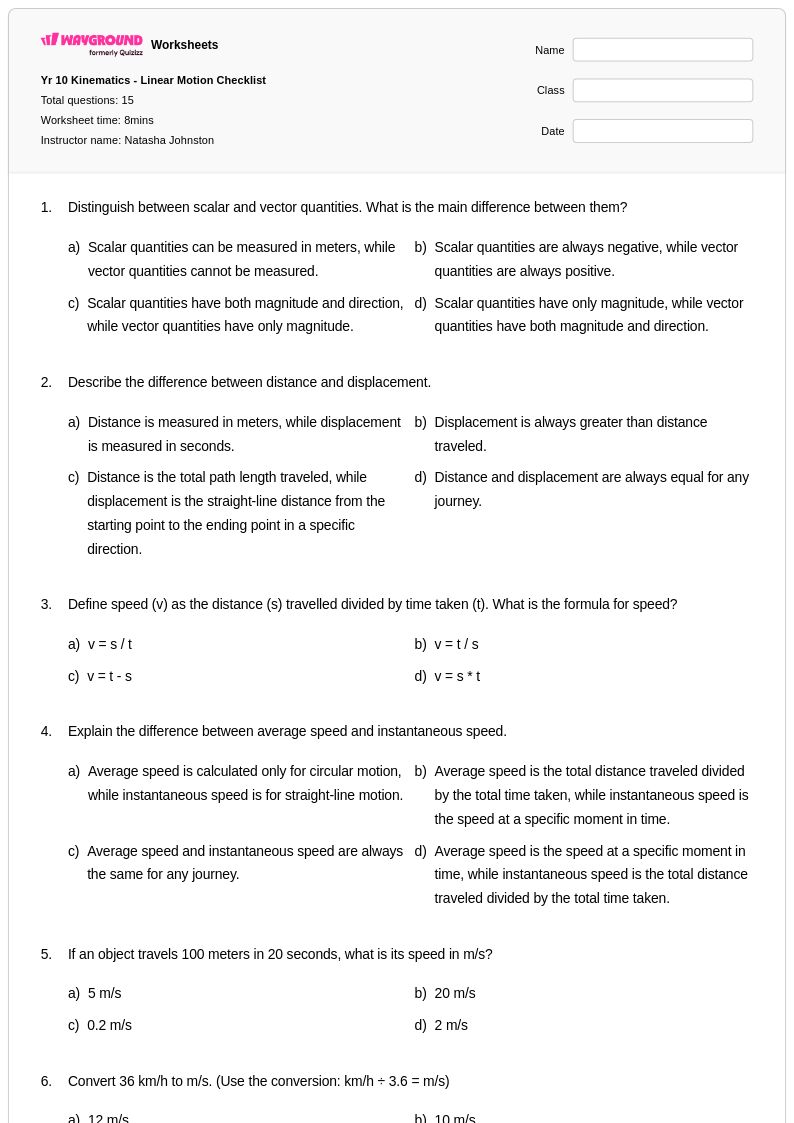
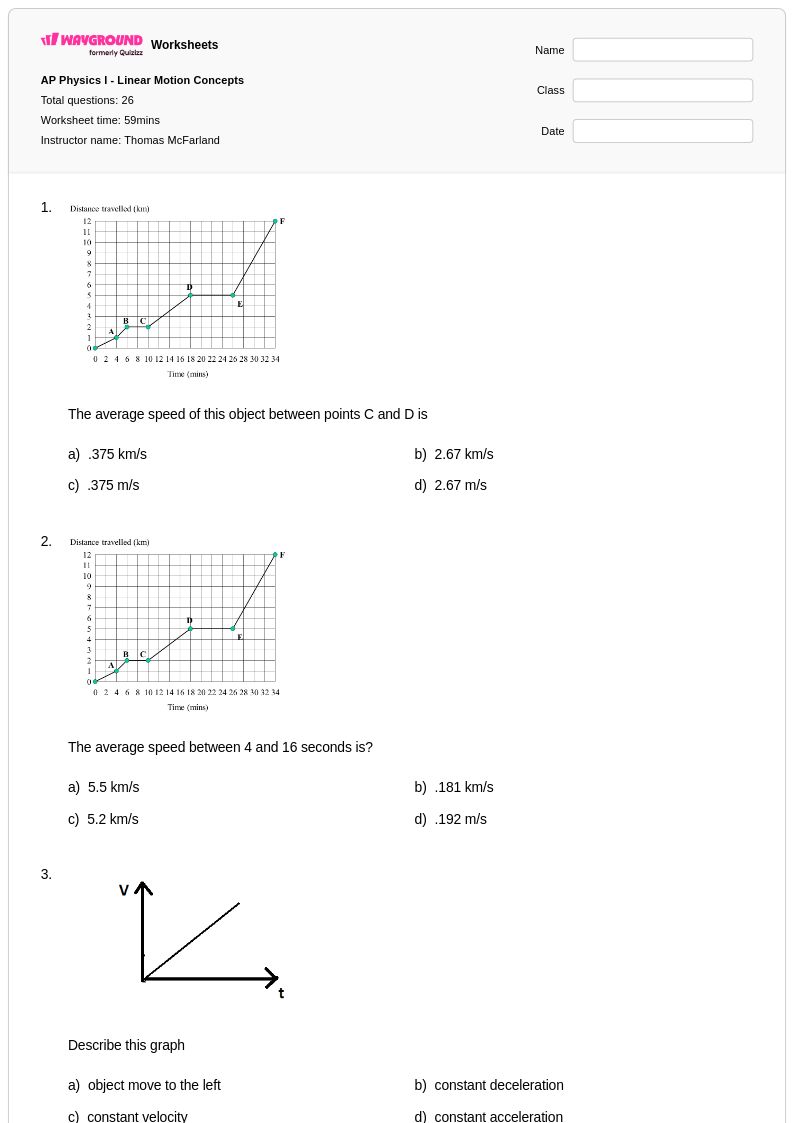
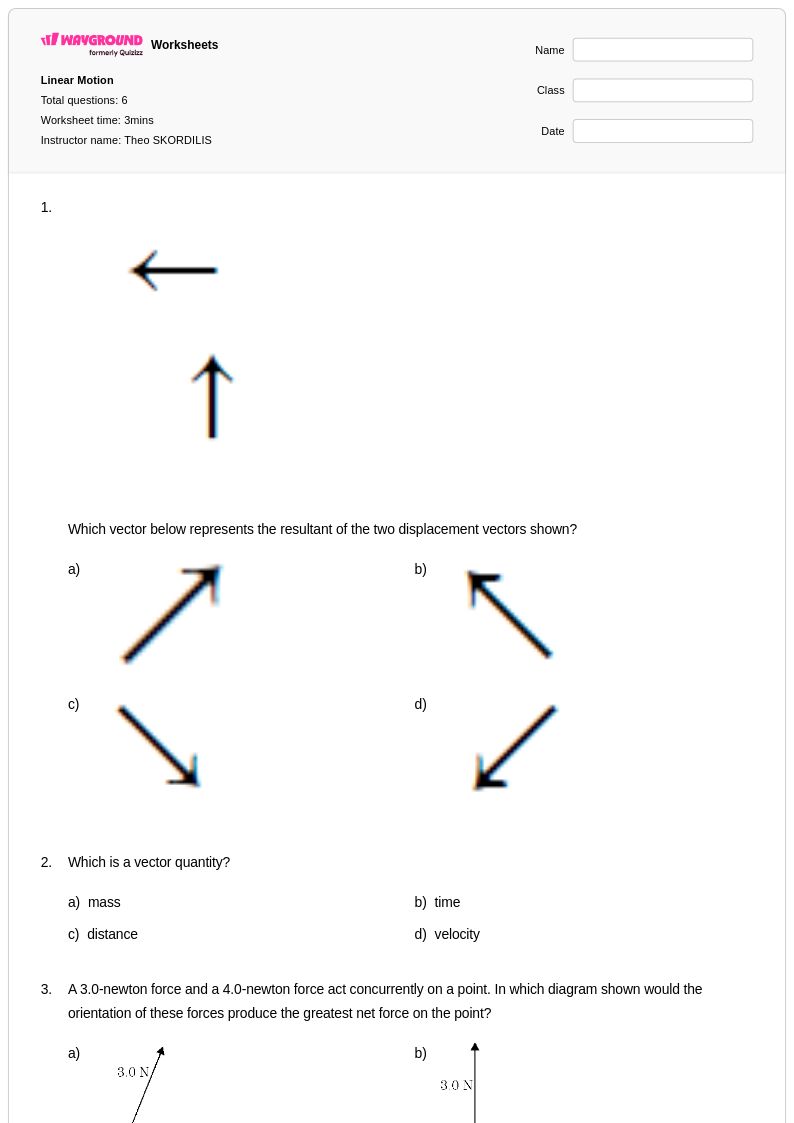
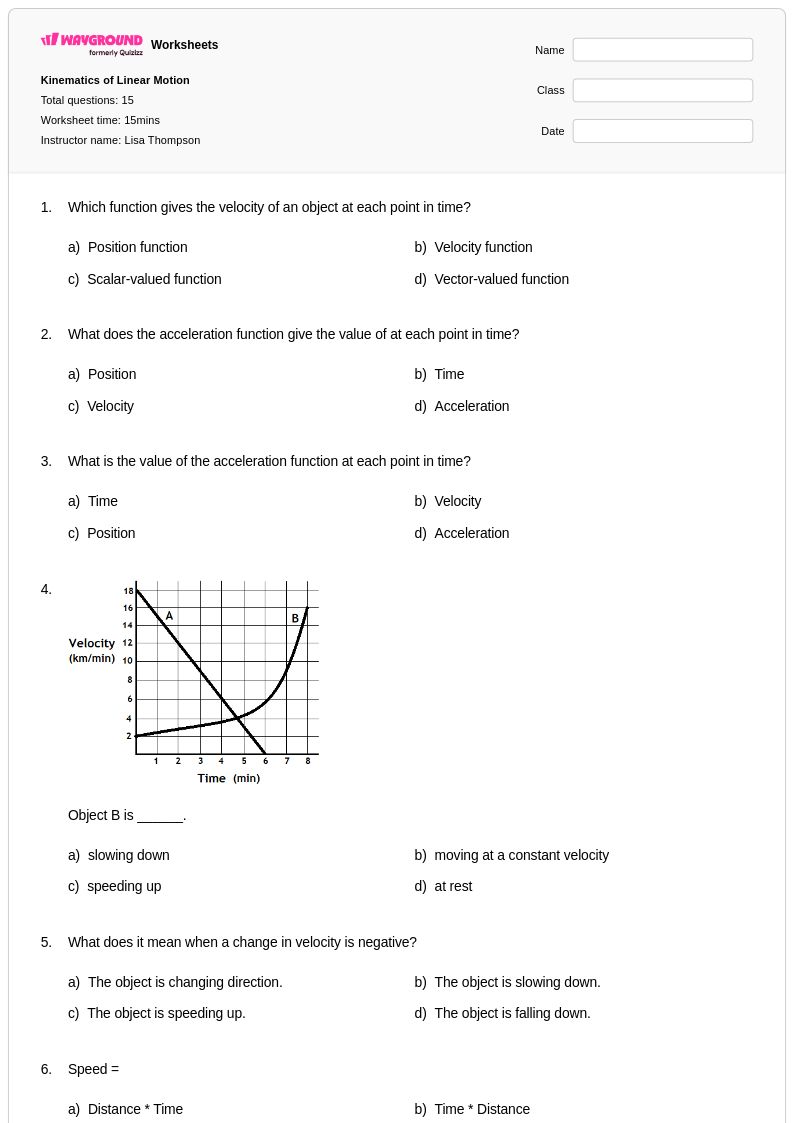
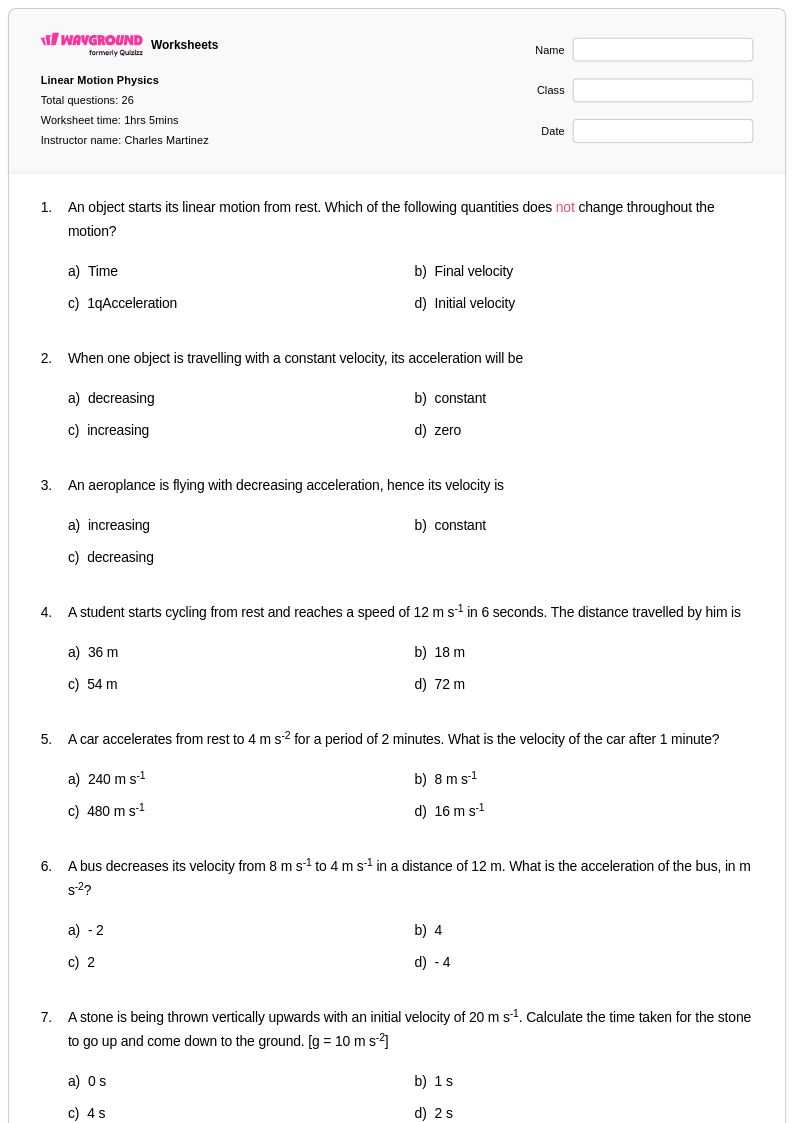
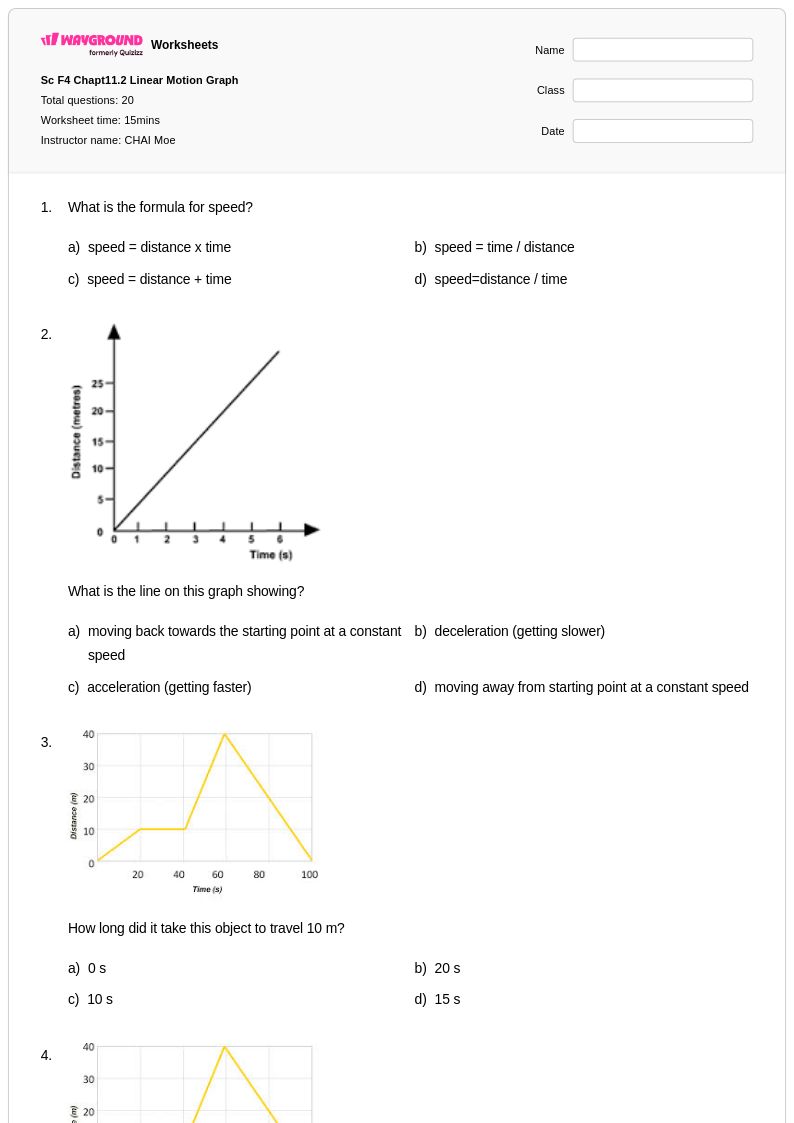
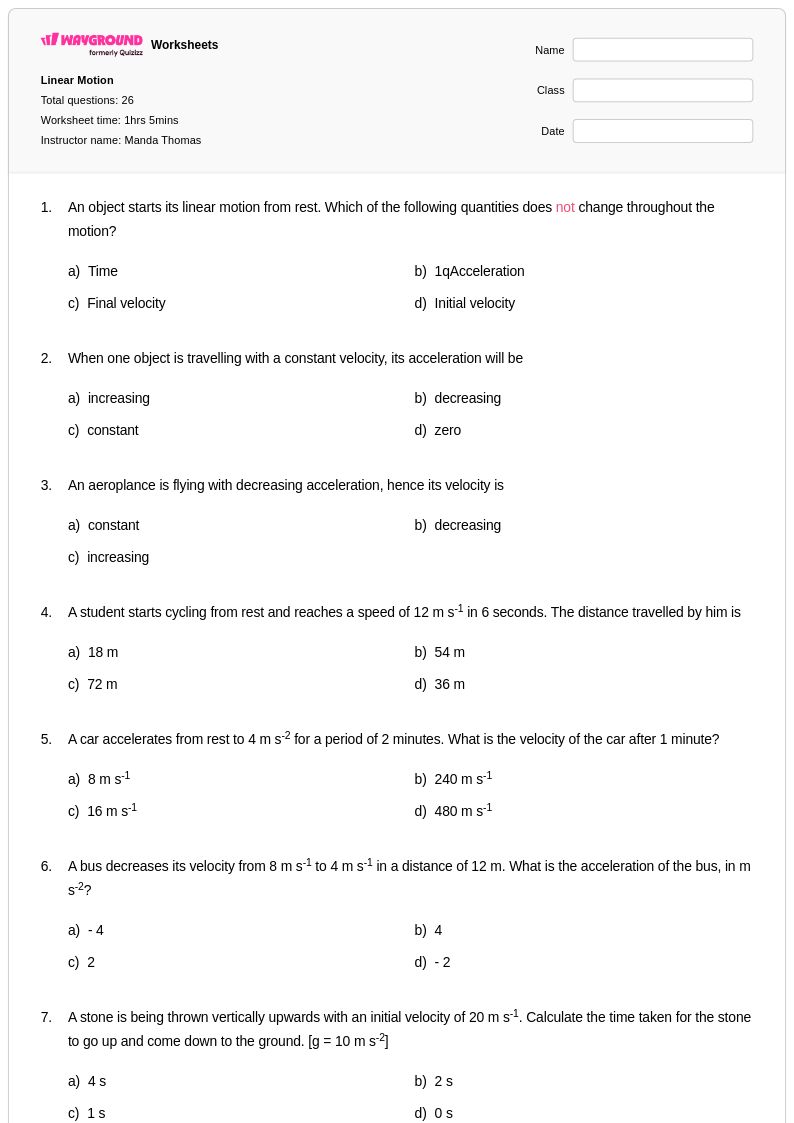
Linear motion worksheets for Class 12 students available through Wayground (formerly Quizizz) provide comprehensive coverage of advanced kinematics concepts essential for mastering physics at the senior level. These expertly designed resources focus on developing critical analytical skills through systematic exploration of displacement, velocity, and acceleration relationships in one-dimensional motion scenarios. Students engage with complex practice problems involving calculus-based derivations, graphical interpretations of motion data, and real-world applications of kinematic equations. The worksheet collection includes detailed answer keys that facilitate self-assessment and independent learning, while printable pdf formats ensure accessibility across various classroom environments. Free resources within this collection emphasize problem-solving strategies for advanced topics such as variable acceleration, relative motion, and the mathematical modeling of linear systems.
Wayground (formerly Quizizz) empowers educators with millions of teacher-created linear motion resources that streamline Class 12 physics instruction through sophisticated organizational tools and comprehensive standards alignment. The platform's advanced search and filtering capabilities enable teachers to quickly locate worksheets targeting specific linear motion concepts, from basic kinematic equations to complex analytical scenarios involving calculus applications. Differentiation tools support diverse learning needs by providing multiple complexity levels within the same topic area, while flexible customization options allow educators to modify existing materials or create entirely new assessments tailored to their curriculum requirements. Both printable and digital formats, including downloadable pdf versions, accommodate various teaching modalities and support seamless integration into lesson planning, targeted remediation for struggling students, enrichment activities for advanced learners, and systematic skill practice across the linear motion curriculum.
FAQs
How do I teach linear motion to physics students?
Start by grounding students in the three core quantities: displacement, velocity, and acceleration. Build conceptual understanding first using position-time and velocity-time graphs before introducing kinematic equations, so students can visualize what the math represents. From there, progress to problem sets that increase in complexity, moving from constant-velocity scenarios to constant-acceleration problems and finally free fall motion.
What are the best practice problems for students learning linear motion?
Effective linear motion practice should span multiple representations: graphical interpretation (reading position-time and velocity-time graphs), numerical calculation (applying kinematic equations to find displacement, velocity, or time), and real-world application problems like free fall and braking distances. Structured problem sets that progress from single-variable to multi-step scenarios help students build fluency with the relationships between motion quantities before tackling complex kinematics.
What mistakes do students commonly make when solving linear motion problems?
The most common errors include confusing displacement with distance, misreading the slope and area of motion graphs, and incorrectly assigning sign conventions to direction. Students also frequently select the wrong kinematic equation because they haven't clearly identified which variables are known and which are unknown before solving. Reinforcing a consistent problem-setup routine, where students list knowns, unknowns, and sign conventions before calculating, significantly reduces these errors.
How do I help struggling students catch up on linear motion concepts?
For students who are behind, targeted remediation works best when it isolates the specific skill causing difficulty, whether that is graph interpretation, equation selection, or unit conversion. On Wayground, teachers can assign accommodations to individual students, including read-aloud support for word problems, reduced answer choices to lower cognitive load, and extended time per question, while the rest of the class works under default settings without any disruption.
How do I use Wayground's linear motion worksheets in my classroom?
Wayground's linear motion worksheets are available as printable PDFs for traditional paper-based assignments and in digital formats for technology-integrated classrooms. Teachers can assign them as homework, in-class practice, or host them directly as a quiz on Wayground. Each worksheet includes a complete answer key, making them suitable for independent student practice, group work, or guided instruction with minimal teacher prep time.
How do I teach students to read position-time and velocity-time graphs in physics?
Teach graph interpretation by connecting the visual features to physical meaning: the slope of a position-time graph represents velocity, and the slope of a velocity-time graph represents acceleration. Have students practice extracting values from graphs before asking them to sketch graphs from described motion scenarios, reversing the direction builds deeper understanding. Pairing graph analysis with matching kinematic calculations reinforces how algebraic and graphical representations of motion describe the same physical reality.