Free Printable Physics Unit Conversions Worksheets for Class 12
Master Class 12 physics unit conversions with our comprehensive collection of free worksheets, printables, and practice problems that help students develop essential measurement skills through step-by-step exercises and detailed answer keys.
Explore printable Physics Unit Conversions worksheets for Class 12
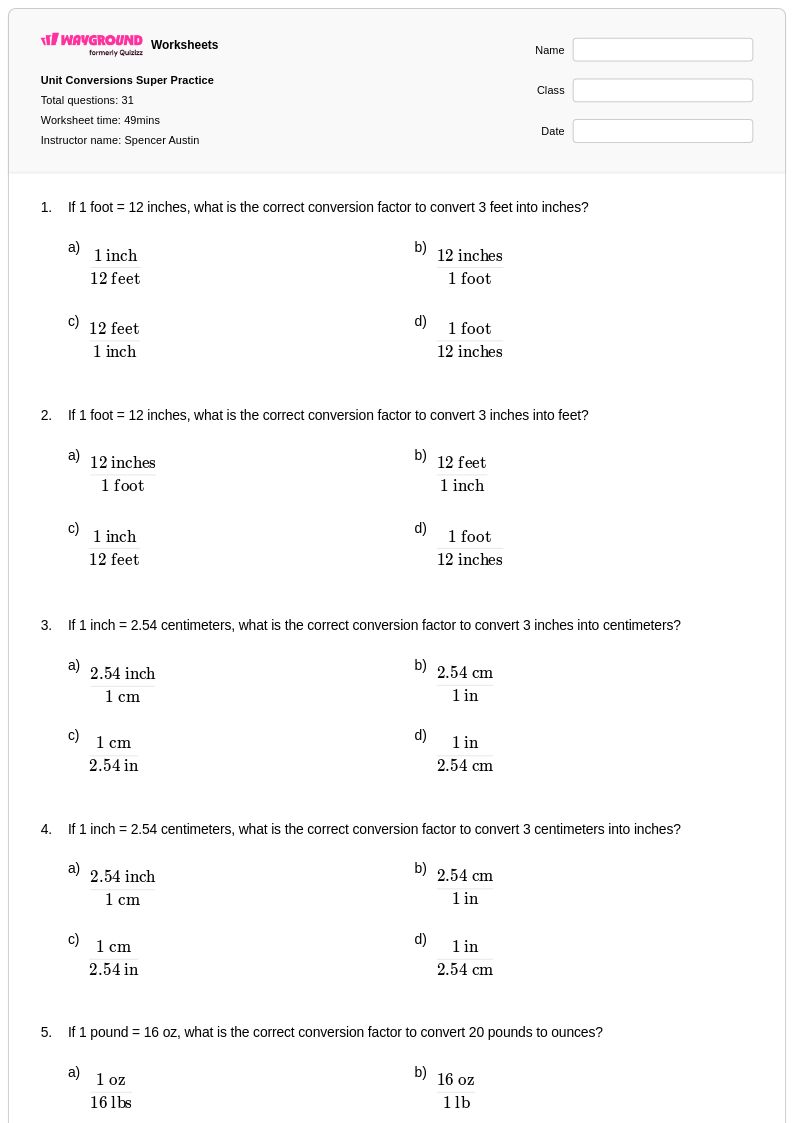
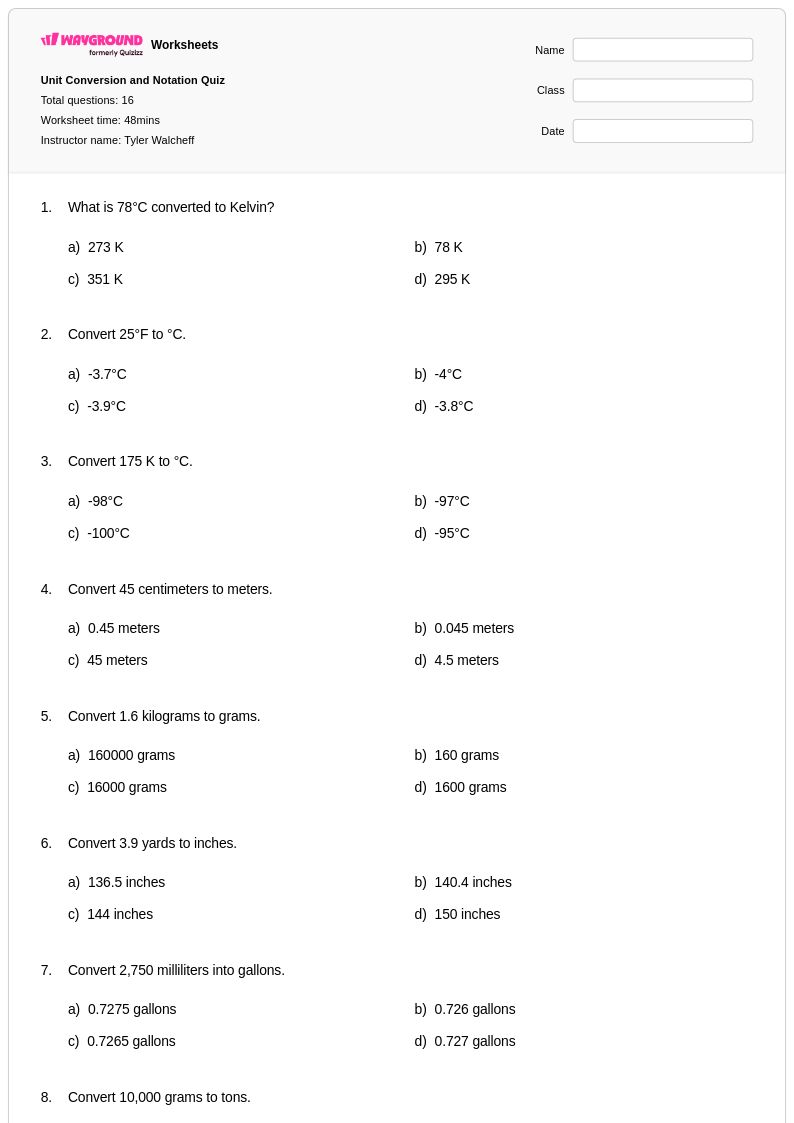
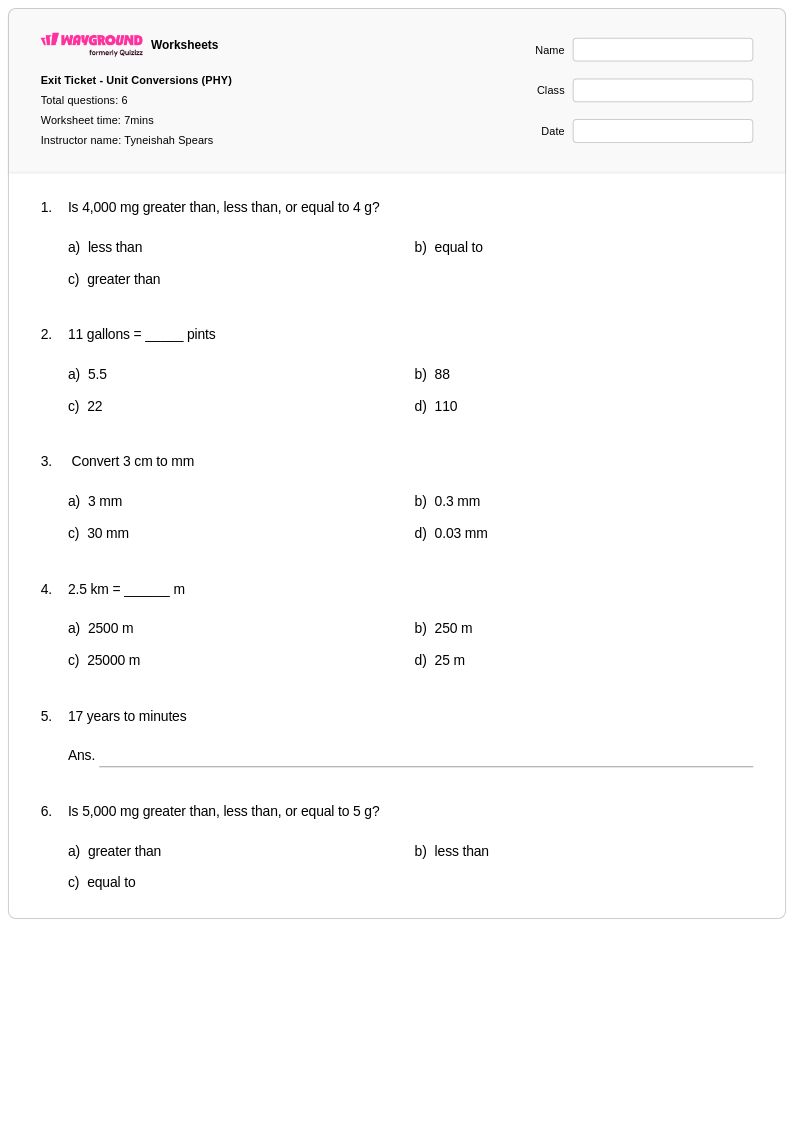
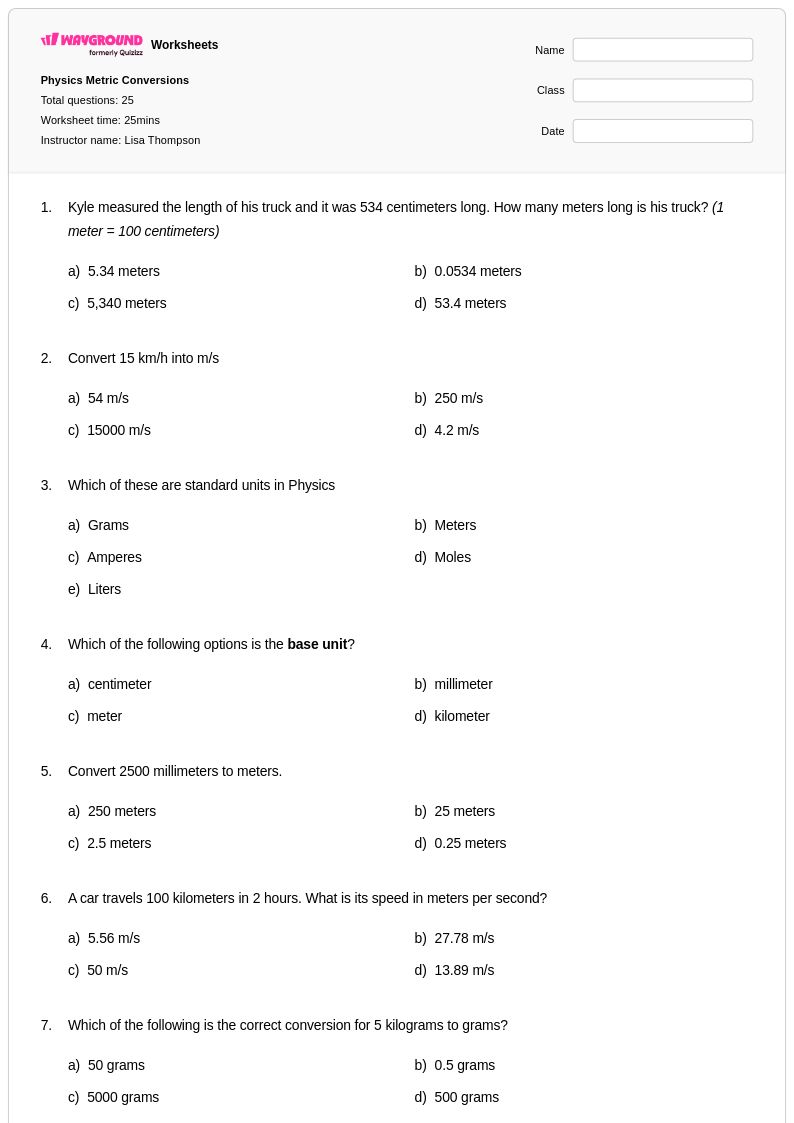
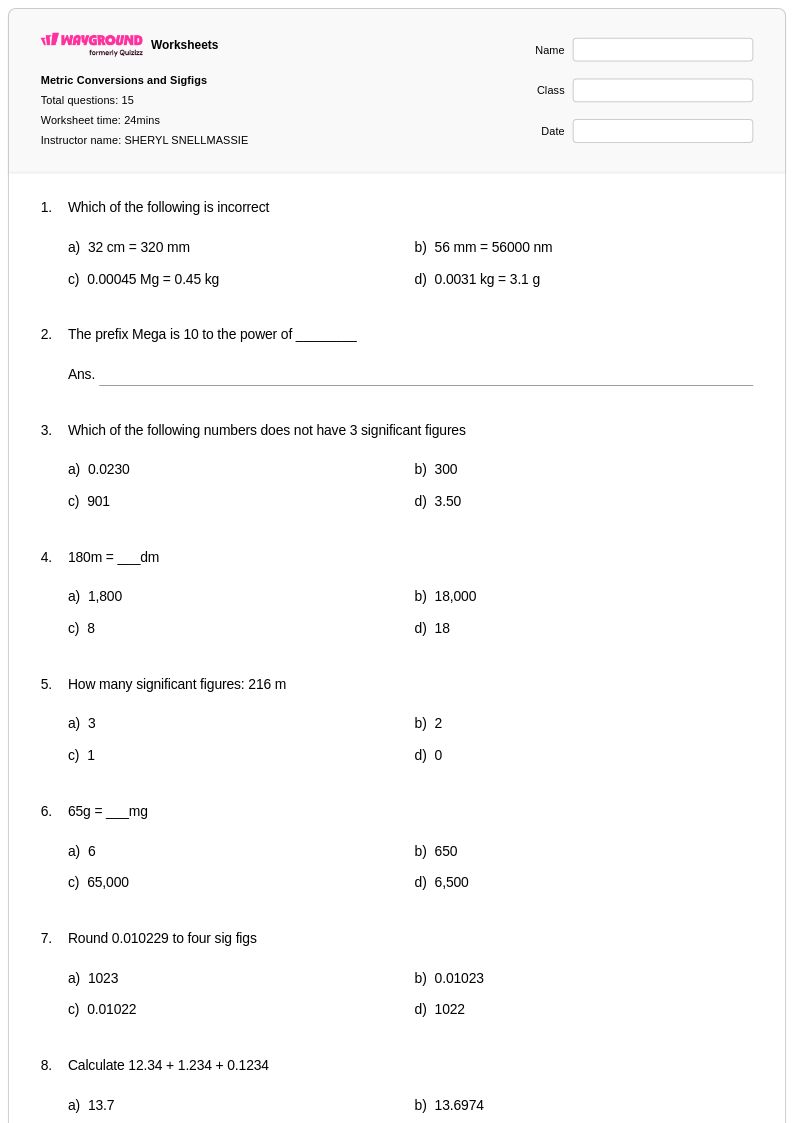
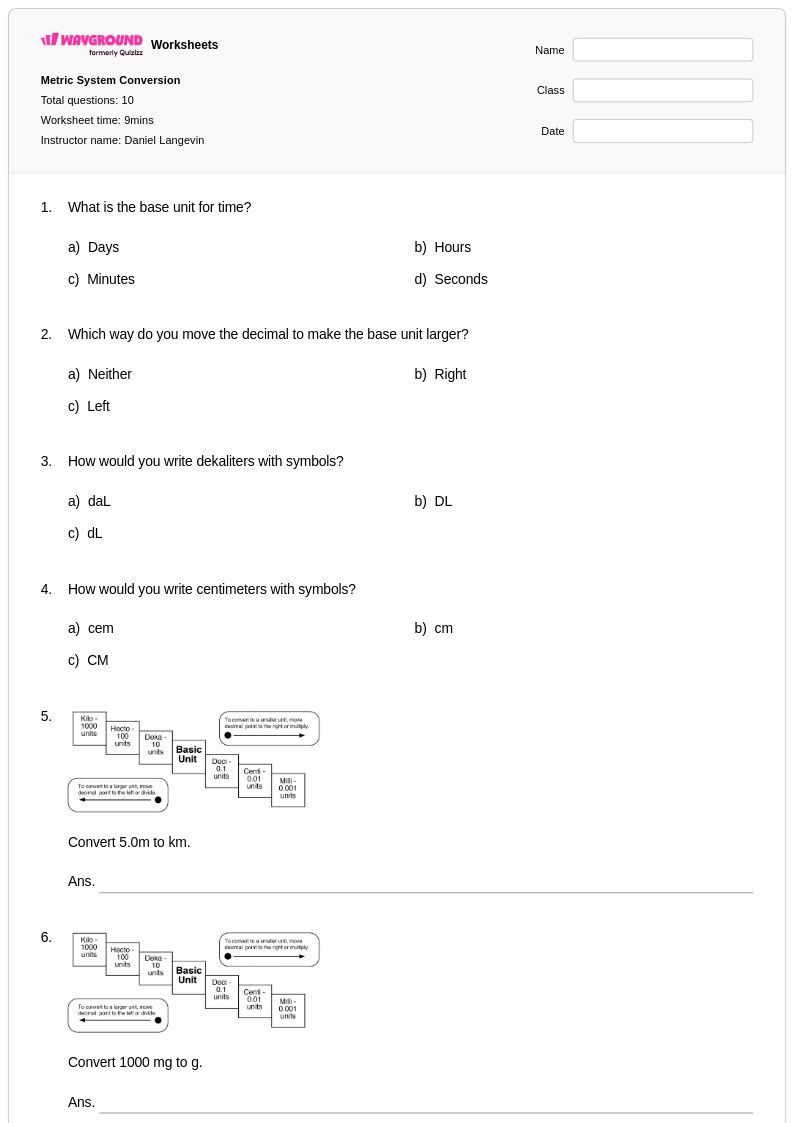
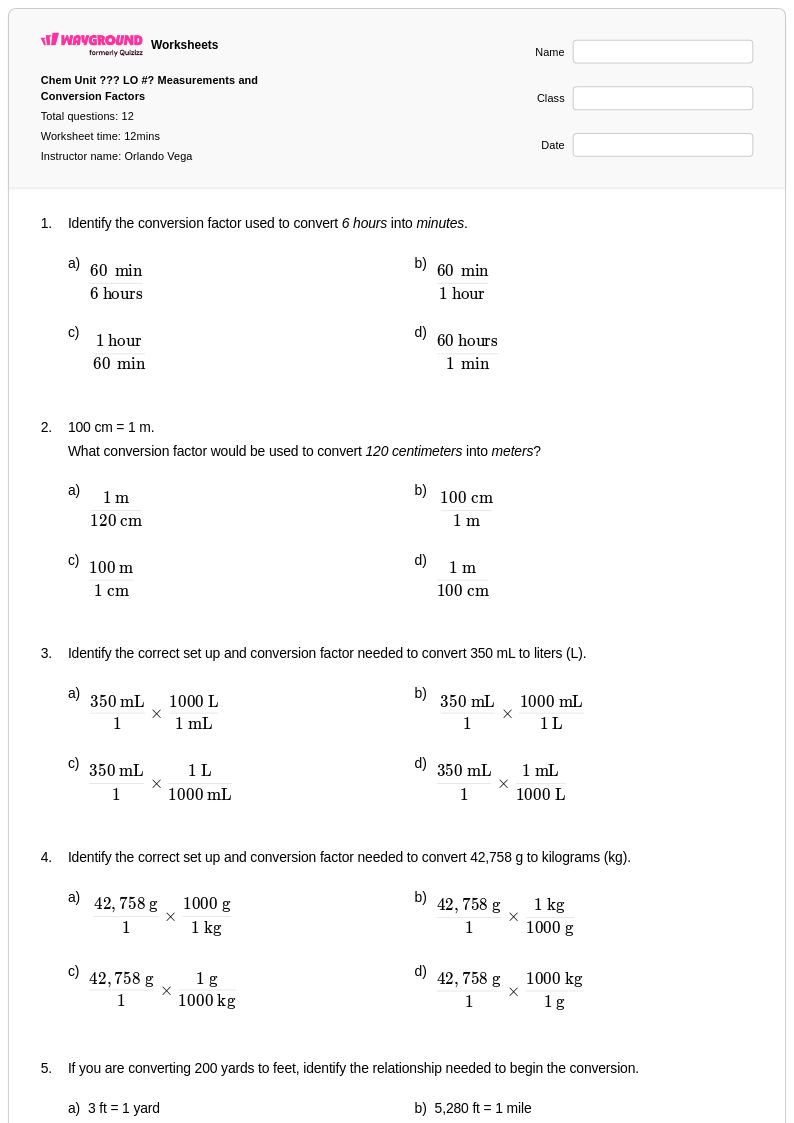
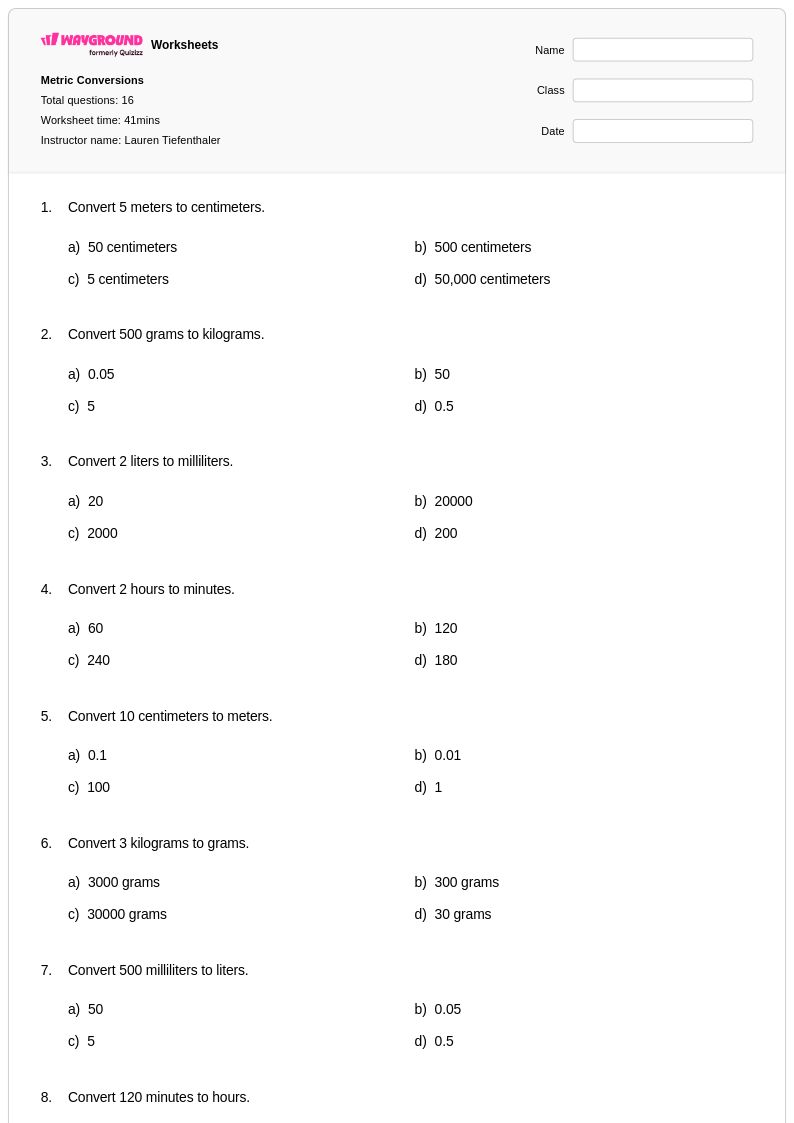
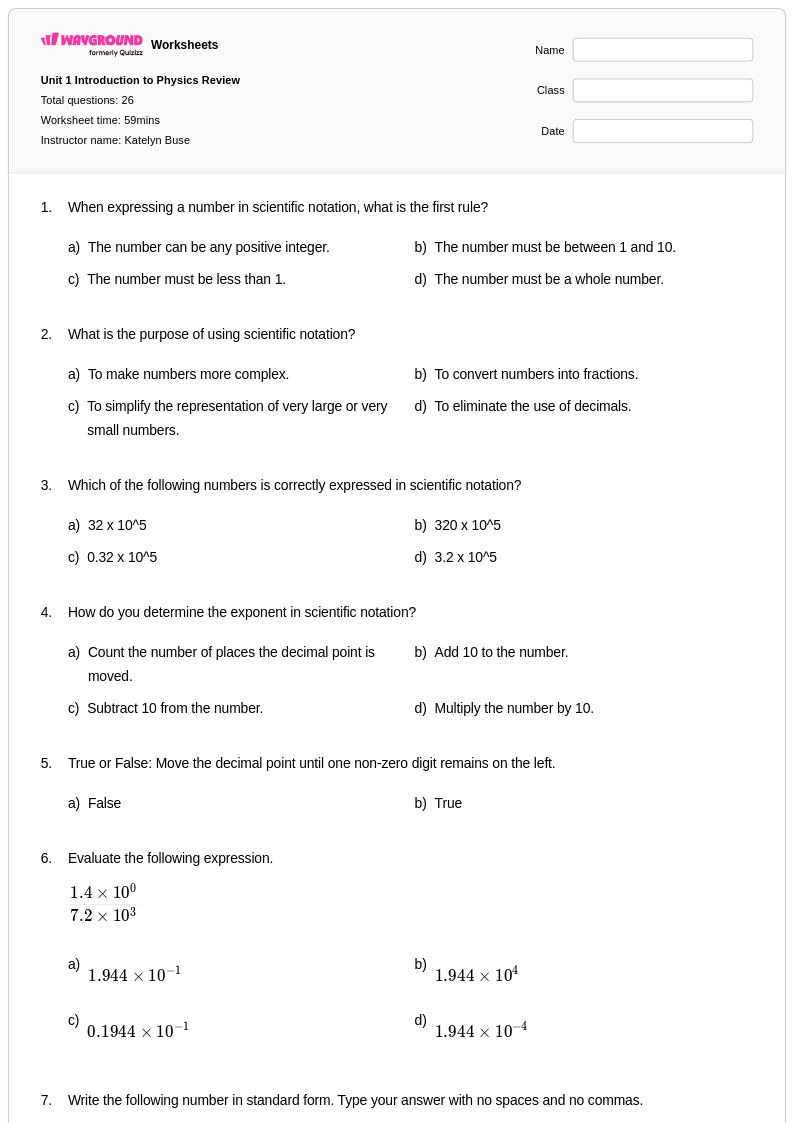
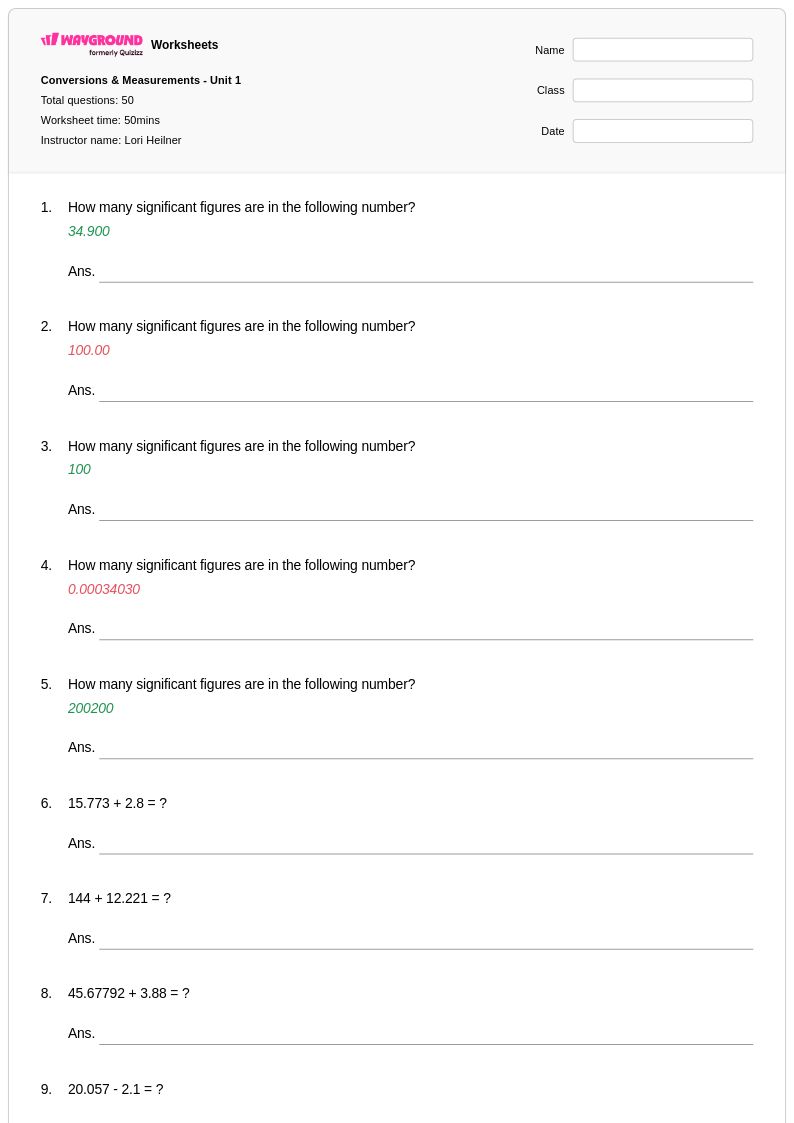
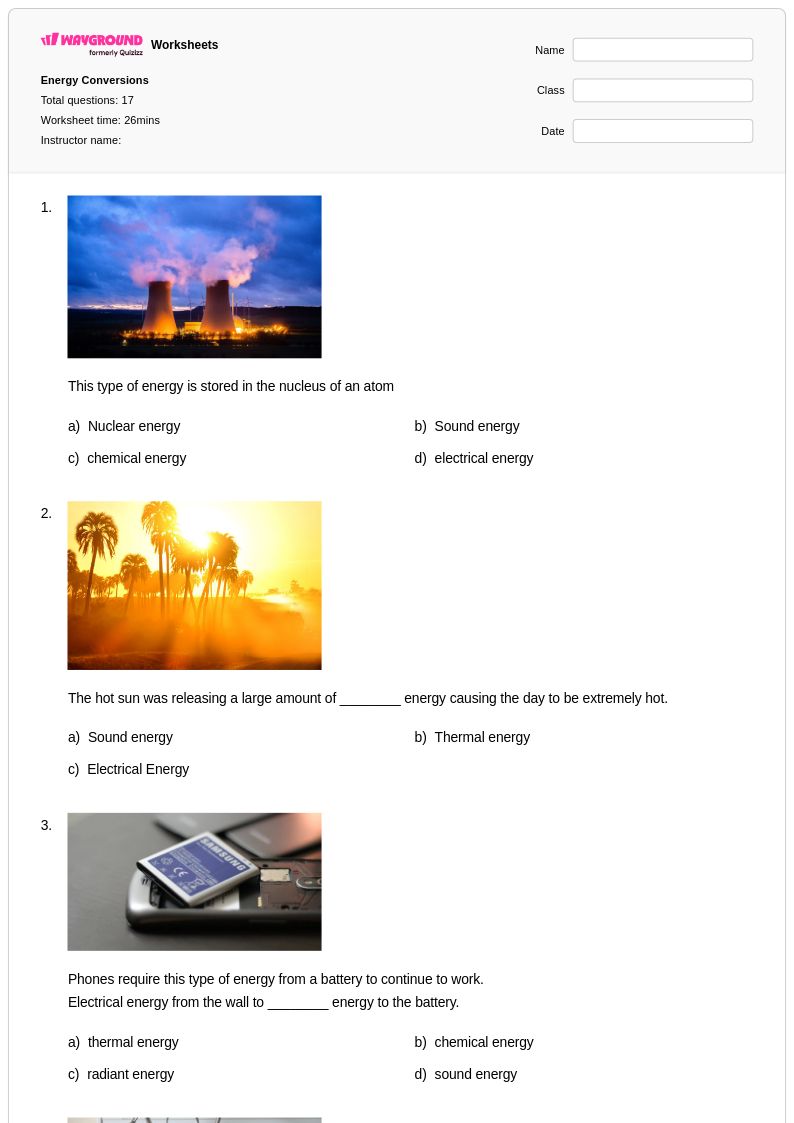
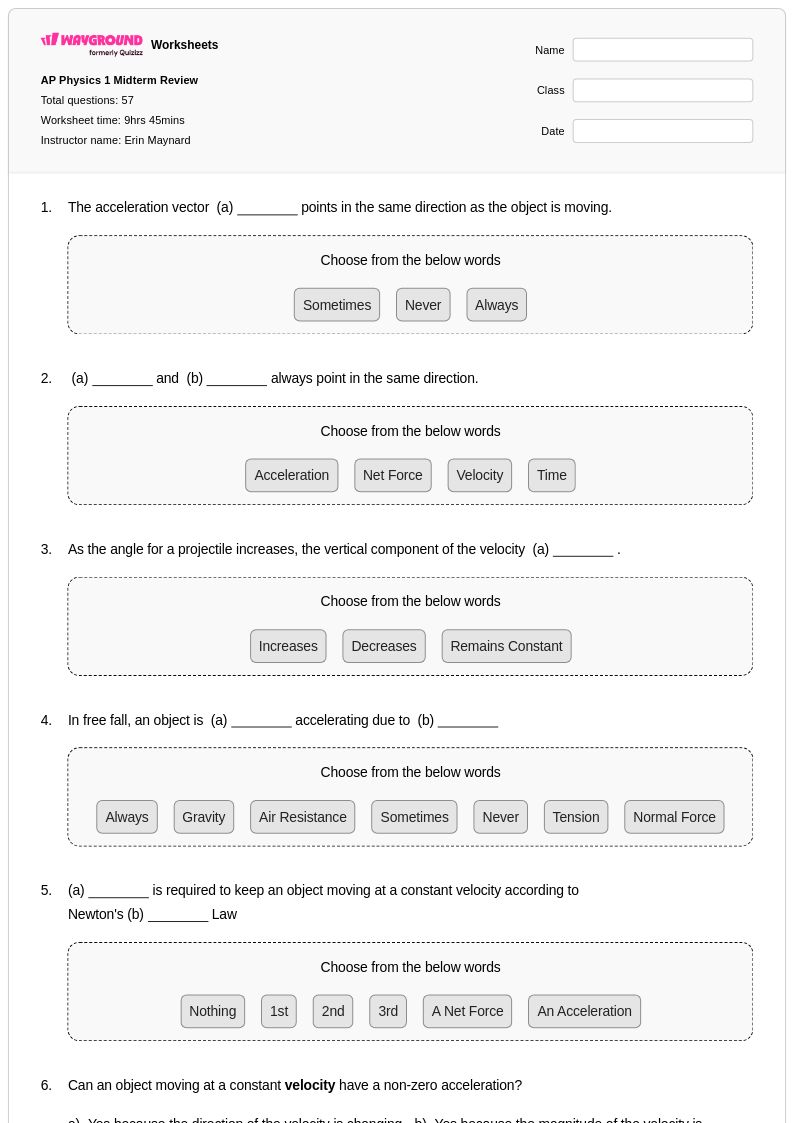
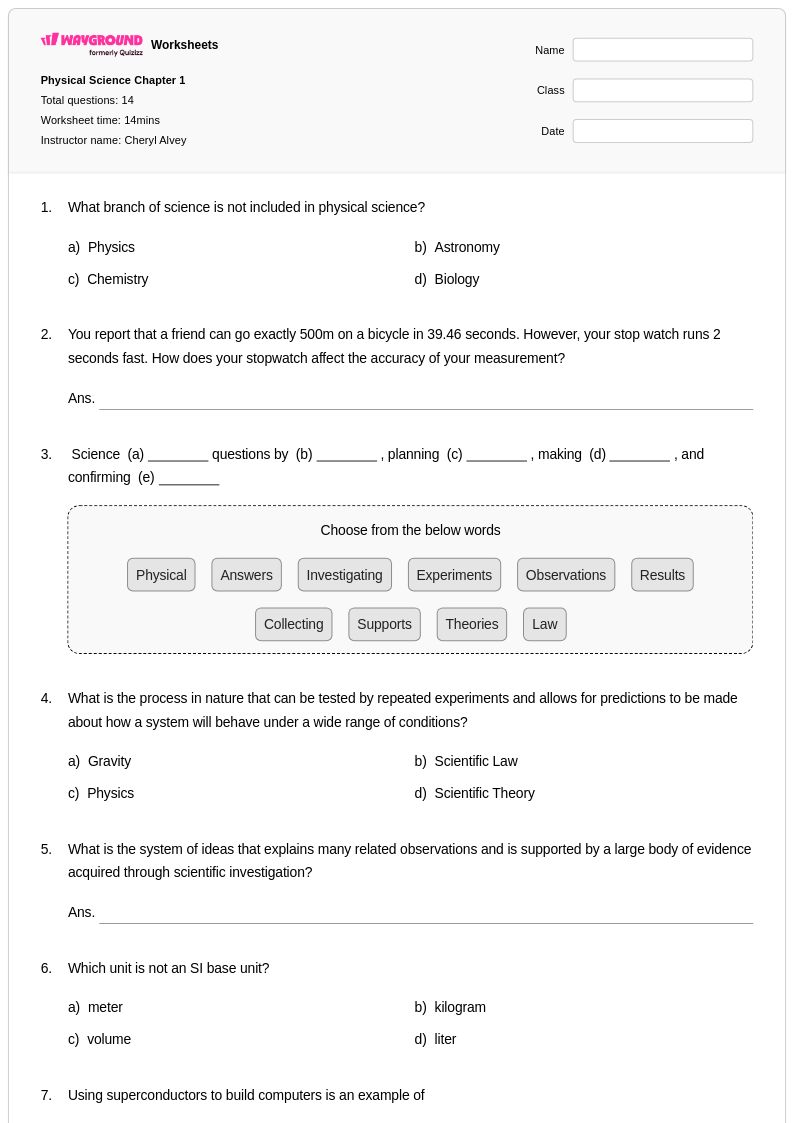
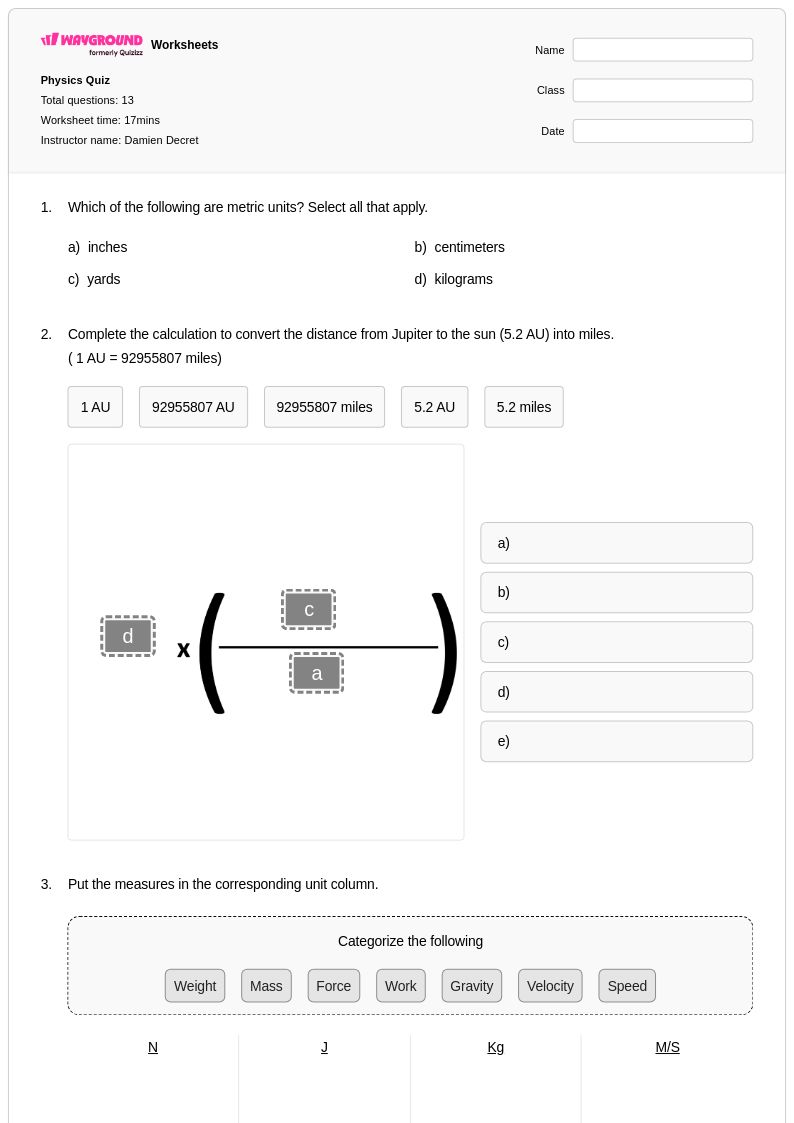
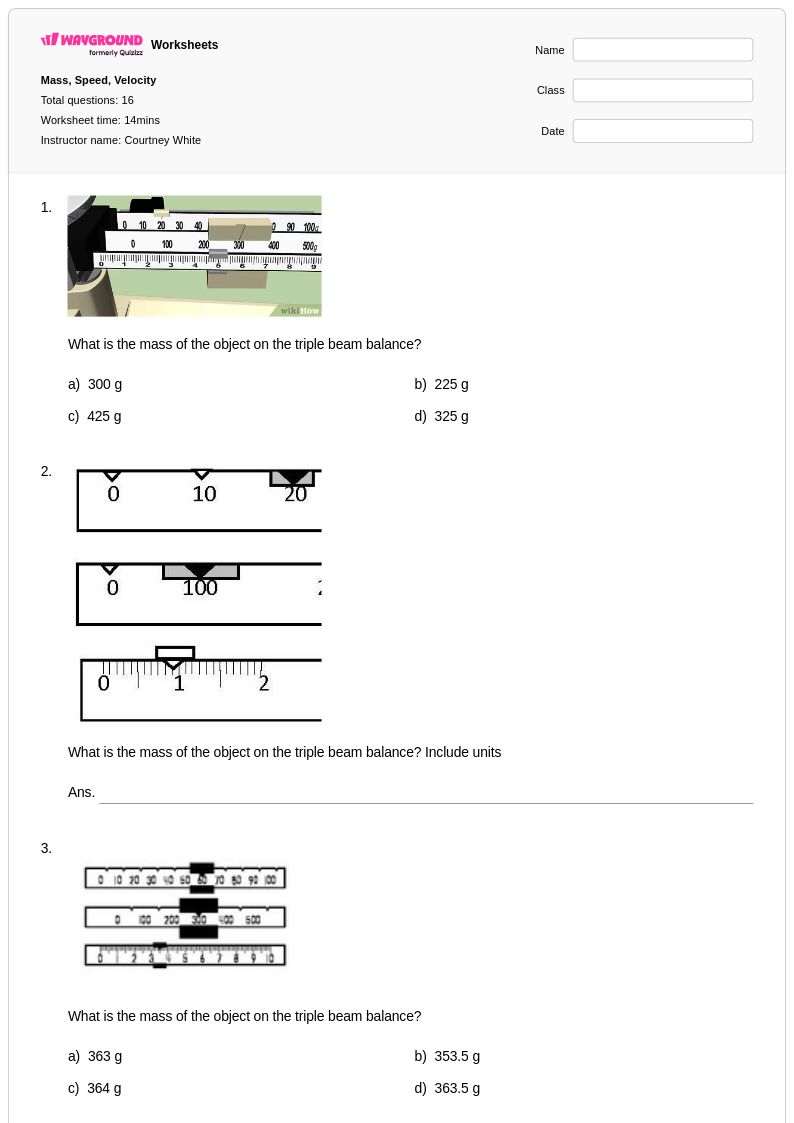
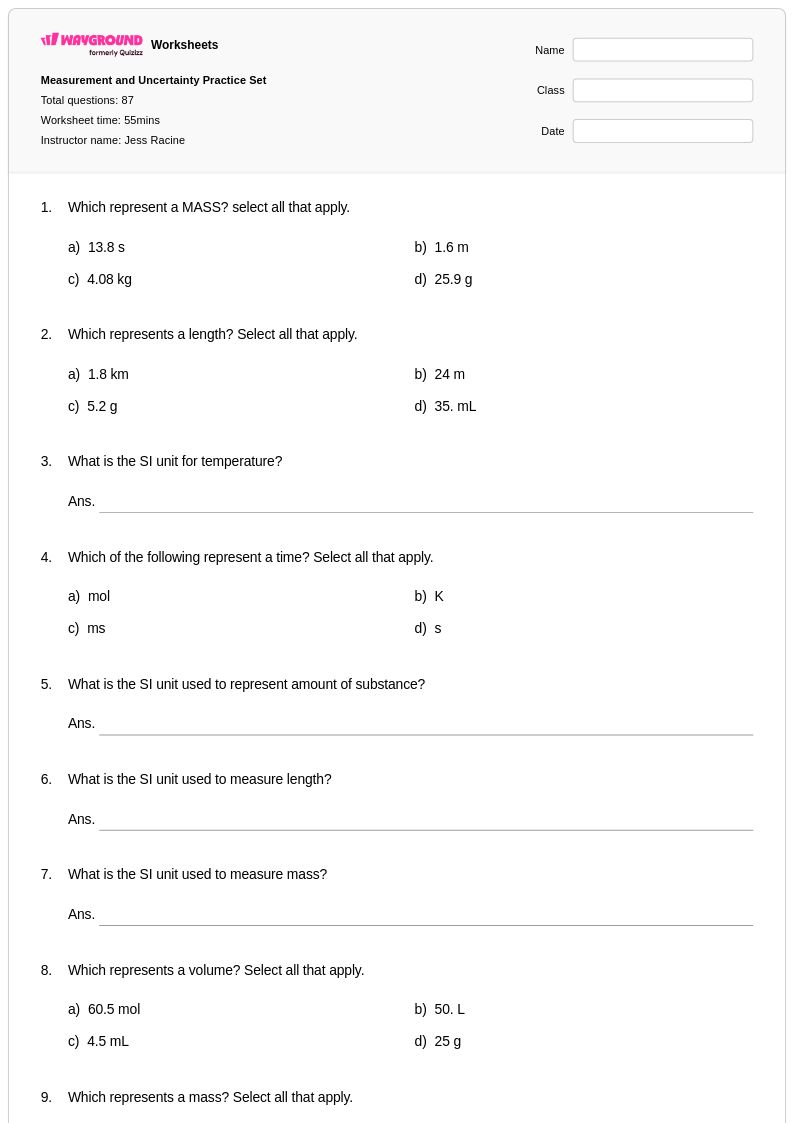
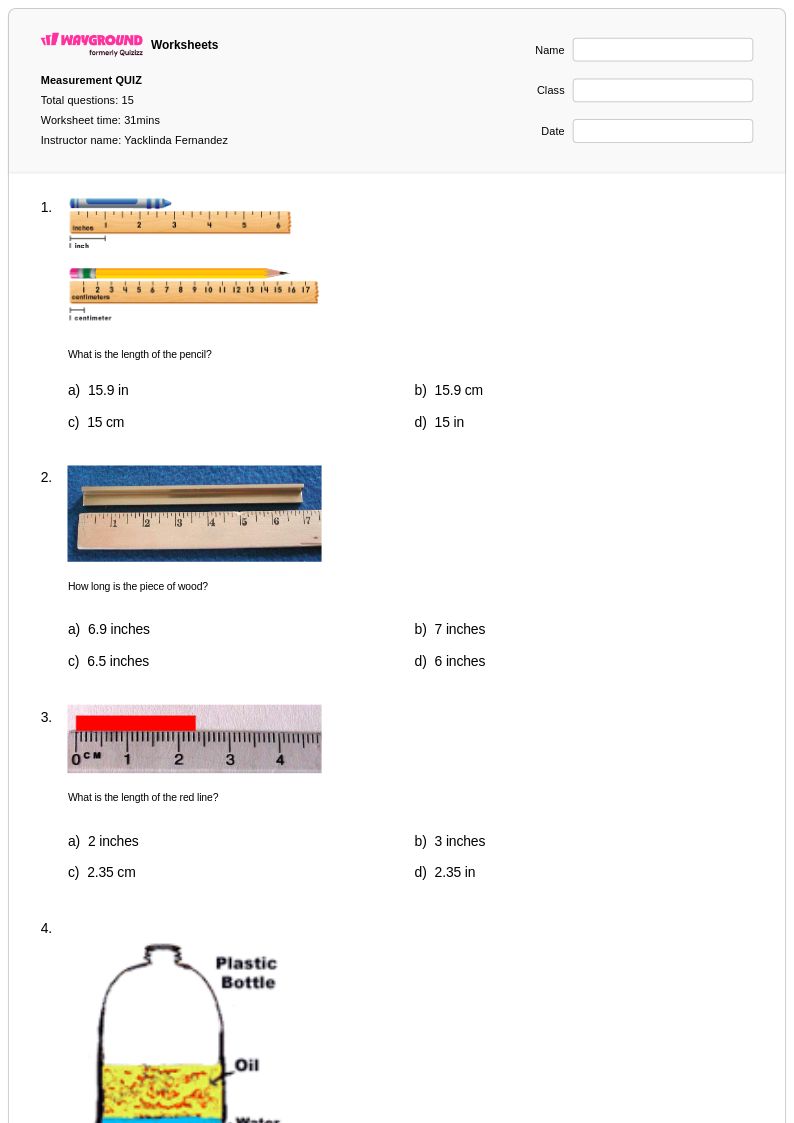
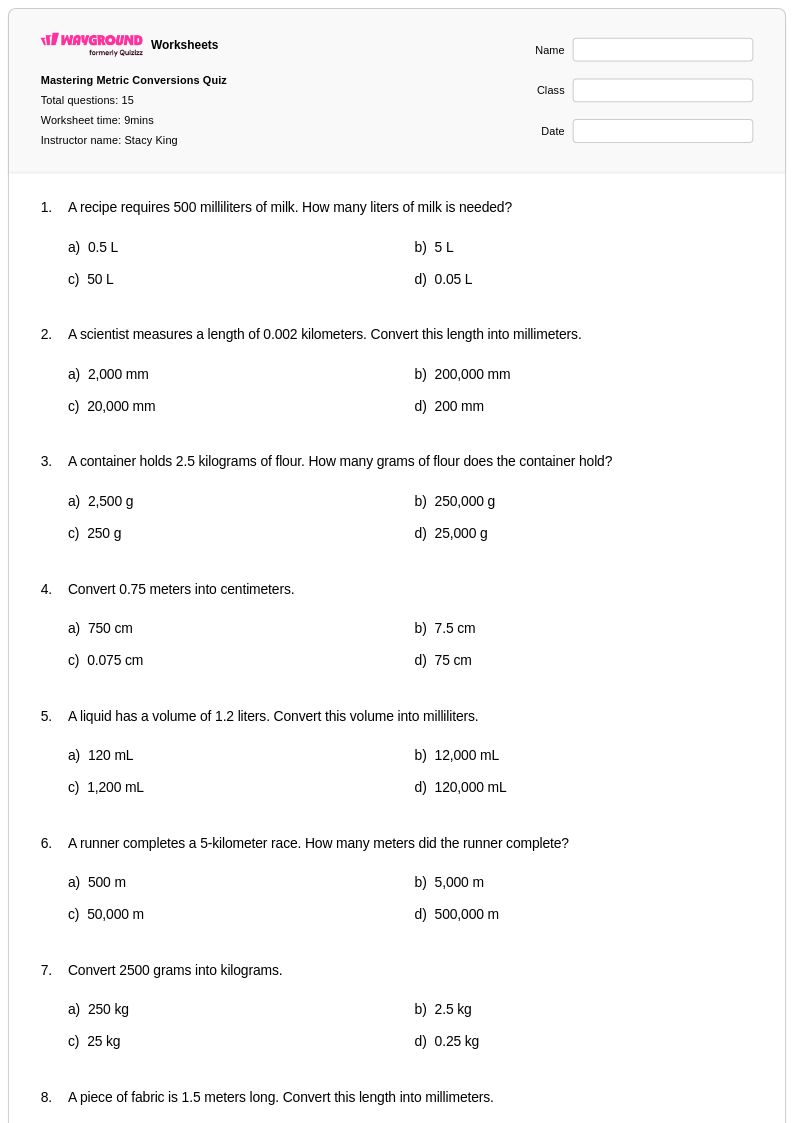
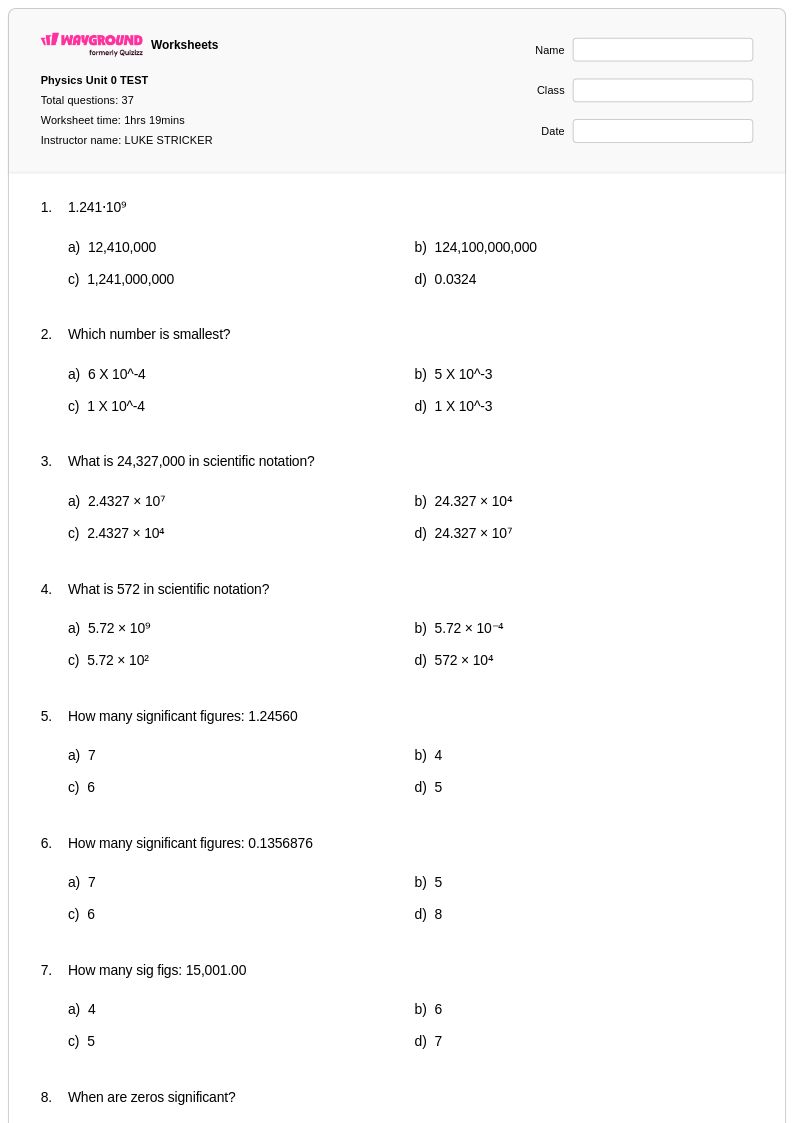
Physics Unit Conversions worksheets for Class 12 students available through Wayground (formerly Quizizz) provide comprehensive practice with the essential measurement skills that form the foundation of advanced physics problem-solving. These carefully designed resources help students master the conversion between different units of measurement across all physics quantities, including length, mass, time, force, energy, power, and electromagnetic units, while building proficiency with both metric and imperial systems. The worksheets strengthen critical analytical skills by requiring students to apply dimensional analysis, scientific notation, and proportional reasoning to solve complex conversion problems that mirror real-world physics applications. Each worksheet collection includes detailed answer keys and is available as free printables in convenient pdf format, allowing students to practice independently while receiving immediate feedback on their problem-solving techniques.
Wayground (formerly Quizizz) supports physics educators with millions of teacher-created Class 12 Physics Unit Conversions resources that can be easily discovered through robust search and filtering capabilities aligned to physics curriculum standards. Teachers can differentiate instruction by selecting worksheets that match their students' skill levels, from basic metric conversions to advanced multi-step problems involving derived units and scientific calculations. The platform's flexible customization tools allow educators to modify existing worksheets or combine multiple resources to create targeted practice sets for remediation, enrichment, or regular skill reinforcement. Available in both printable pdf format and interactive digital versions, these worksheet collections streamline lesson planning while providing the varied practice opportunities students need to develop confidence and accuracy in unit conversions essential for success in advanced physics coursework.
FAQs
How do I teach unit conversions in physics?
The most effective approach to teaching unit conversions in physics is through dimensional analysis, also called the factor-label method. Teach students to treat units as algebraic quantities that cancel when multiplied by conversion factors, writing out each step explicitly before simplifying. Start with single-step metric conversions, then progress to multi-step problems involving compound units like velocity (m/s to km/h) or energy (joules to kilowatt-hours). Consistent practice with varied physical quantities — length, mass, force, power — builds the fluency students need for advanced physics coursework.
What exercises help students practice physics unit conversions?
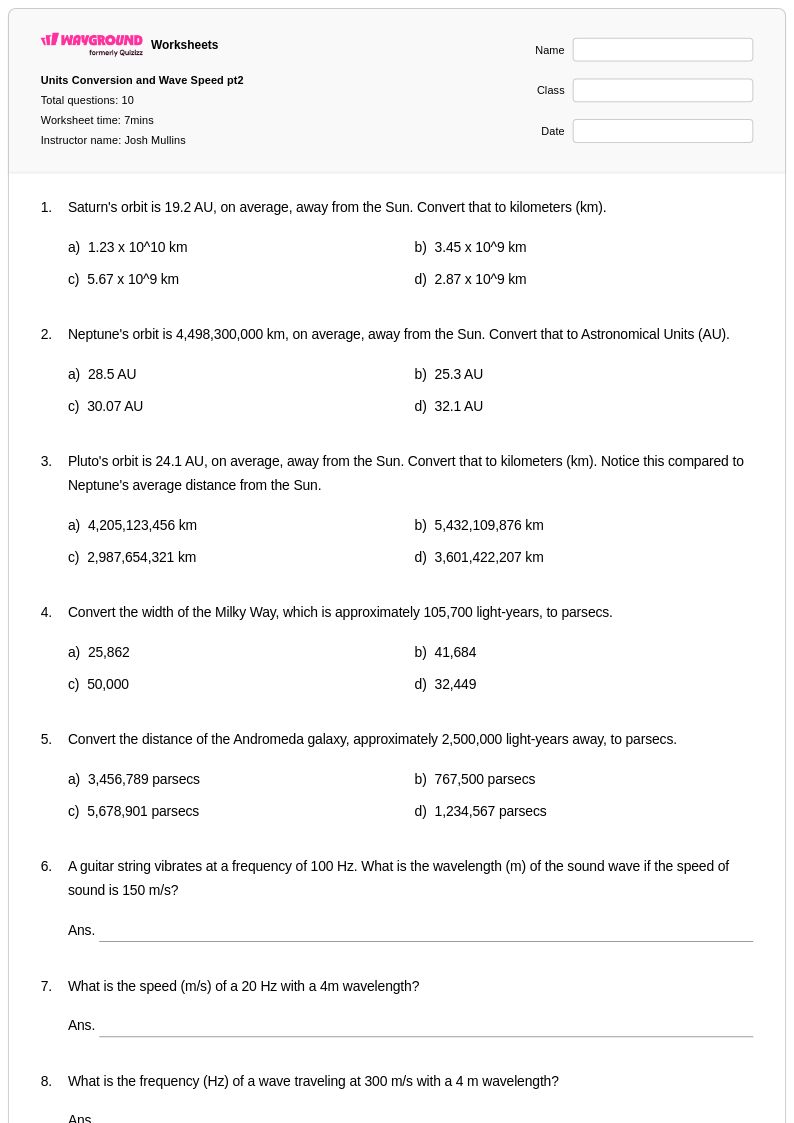
Structured conversion drills that progress from single-step to multi-step problems are the most effective practice format for physics unit conversions. Students benefit from exercises that span multiple physical quantities — length, mass, velocity, acceleration, force, energy, and power — so they encounter the full range of units used in physics. Problems that mirror real-world applications, such as converting speeds from m/s to mph or forces from newtons to pounds, reinforce both computational accuracy and conceptual relevance. Including scientific notation problems prepares students for the magnitudes commonly encountered in physics calculations.
What mistakes do students commonly make with physics unit conversions?
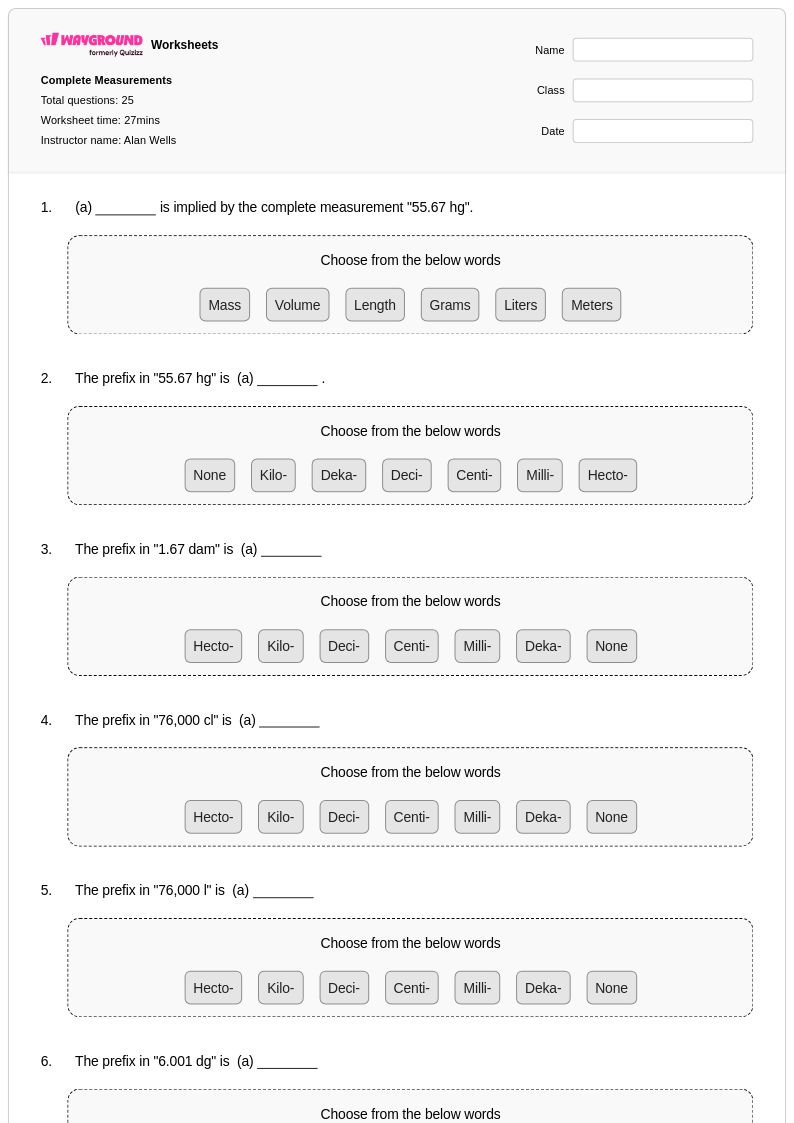
The most frequent error is inverting the conversion factor, which multiplies by the wrong ratio and produces an answer in incorrect units. Students also commonly confuse metric prefixes — particularly milli-, centi-, and kilo- — leading to off-by-factor-of-ten errors. A third persistent mistake is dropping units mid-calculation, which removes the self-checking mechanism that dimensional analysis provides. Teaching students to write units at every step and verify that unwanted units cancel is the most reliable way to catch and correct these errors before they become habits.
How do I differentiate unit conversion practice for students at different levels?
For students who are still building fluency, limit problems to single-step metric conversions within a single physical quantity, such as converting meters to kilometers. Intermediate students can work with multi-step conversions and mixed unit systems, such as converting imperial to metric. Advanced students should tackle compound unit conversions involving scientific notation, such as converting acceleration values or energy between systems. On Wayground, teachers can apply accommodations such as reduced answer choices to lower cognitive load for students who need additional support, while other students receive standard problem sets simultaneously.
How can I use Wayground's physics unit conversion worksheets in my classroom?
Wayground's physics unit conversion worksheets are available as printable PDFs for traditional classroom use and in digital formats for technology-integrated learning environments. Teachers can assign them as independent practice, homework, or in-class review, and can host them as a quiz directly on Wayground for immediate student feedback. Each worksheet includes answer keys, so they also work effectively as self-checking practice or as a formative assessment tool. The ability to filter by conversion type and difficulty level makes it straightforward to match the right worksheet to the current stage of instruction.
How does dimensional analysis relate to unit conversions in physics?
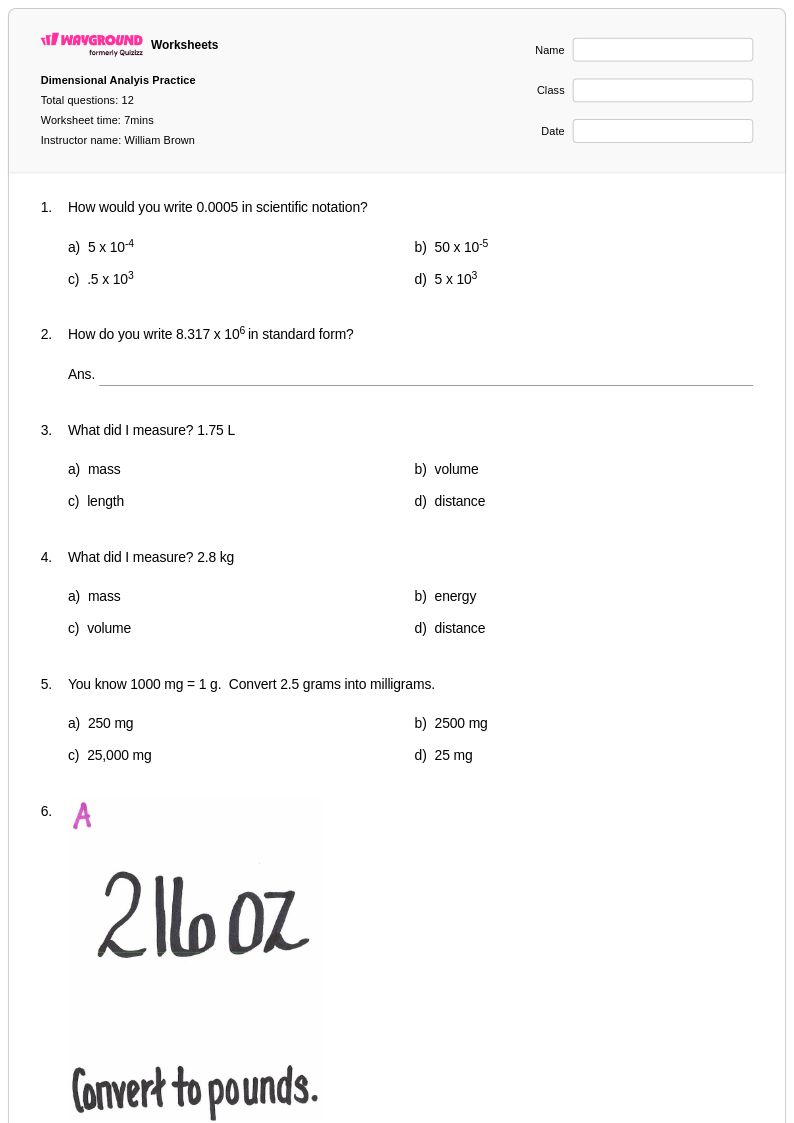
Dimensional analysis is the formal method underlying all unit conversions in physics: it treats units as algebraic quantities and uses conversion factors expressed as fractions equal to one to systematically cancel unwanted units. This approach ensures that the numerical answer carries the correct units, which serves as a built-in check on whether the conversion was set up correctly. Beyond basic conversions, dimensional analysis is used throughout physics to verify equations, derive relationships between quantities, and check the plausibility of calculated results. Building this skill early is essential for success in mechanics, thermodynamics, electromagnetism, and standardized physics assessments.