
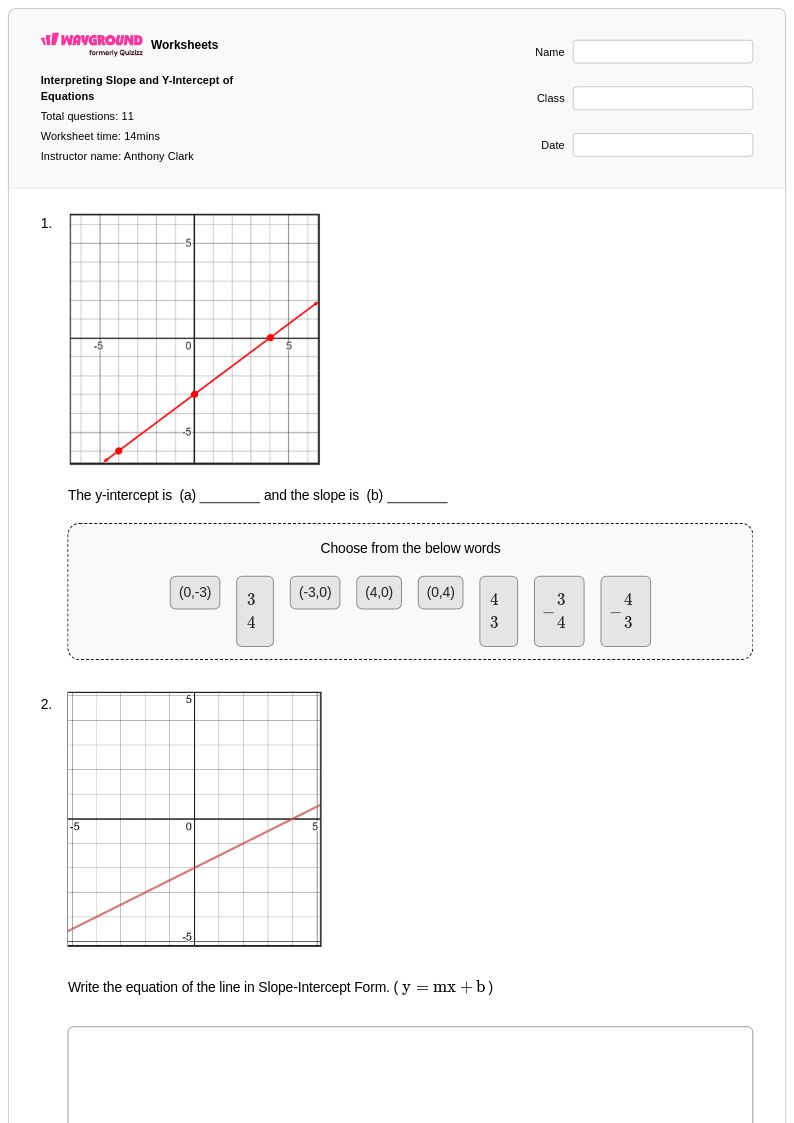
14 Q
9th - Uni

15 Q
9th - Uni
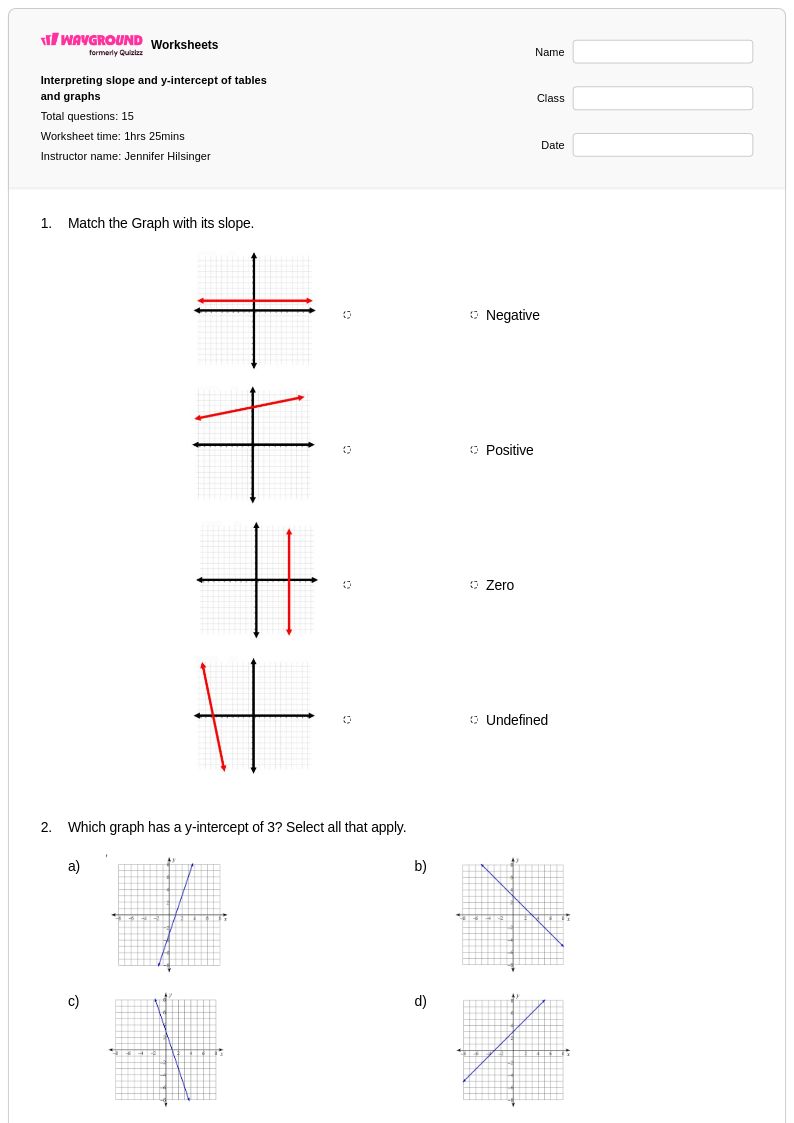
15 Q
8th
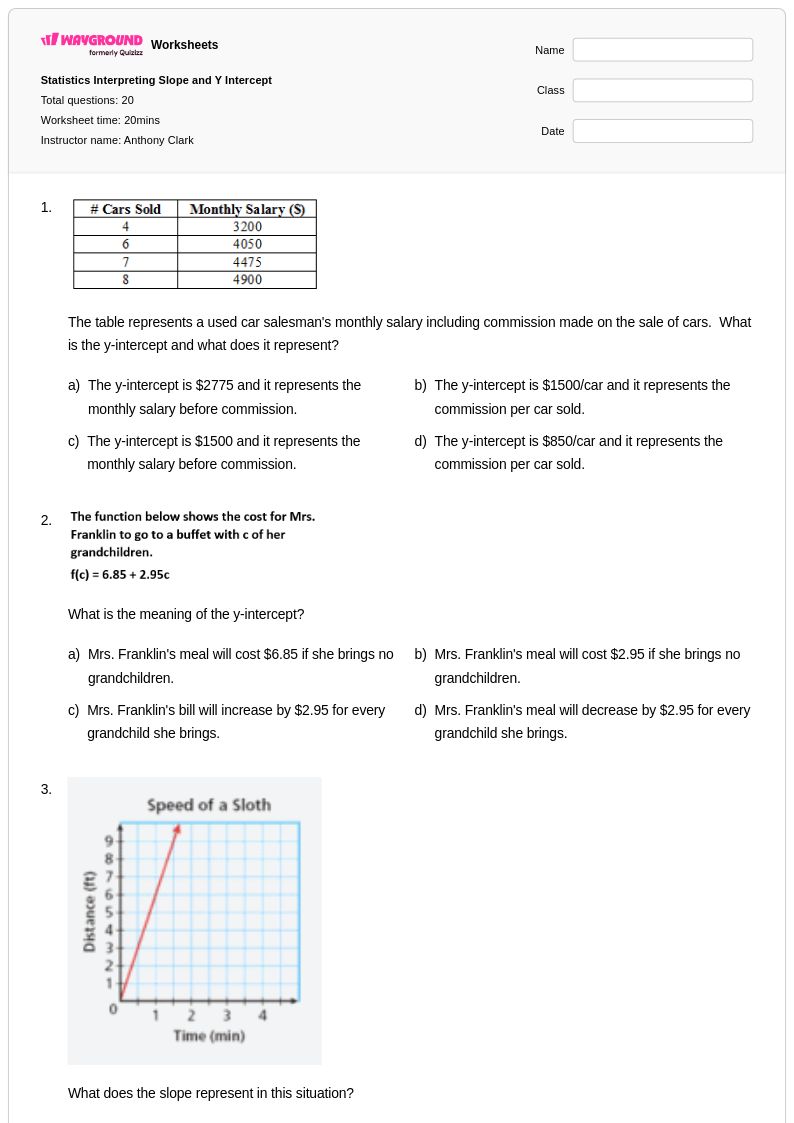
20 Q
9th - Uni
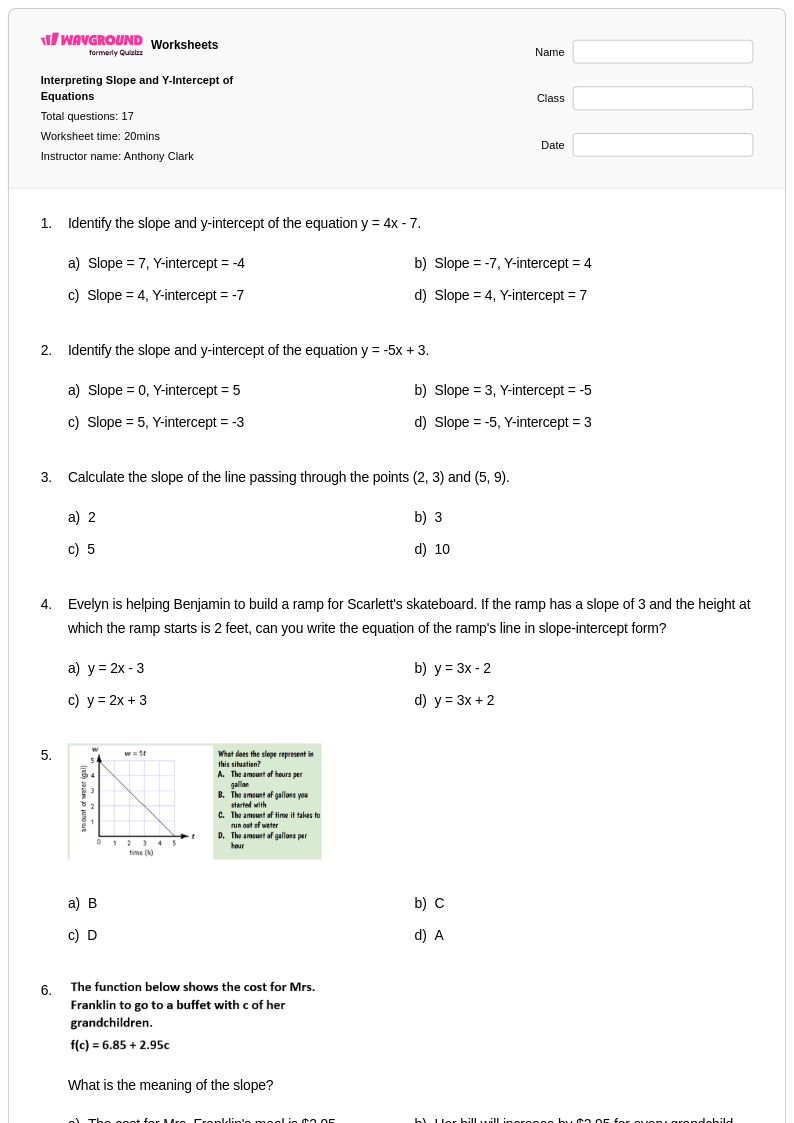
20 Q
9th - Uni
28 Q
8th
10 Q
9th - Uni
11 Q
9th - 12th
20 Q
9th - Uni
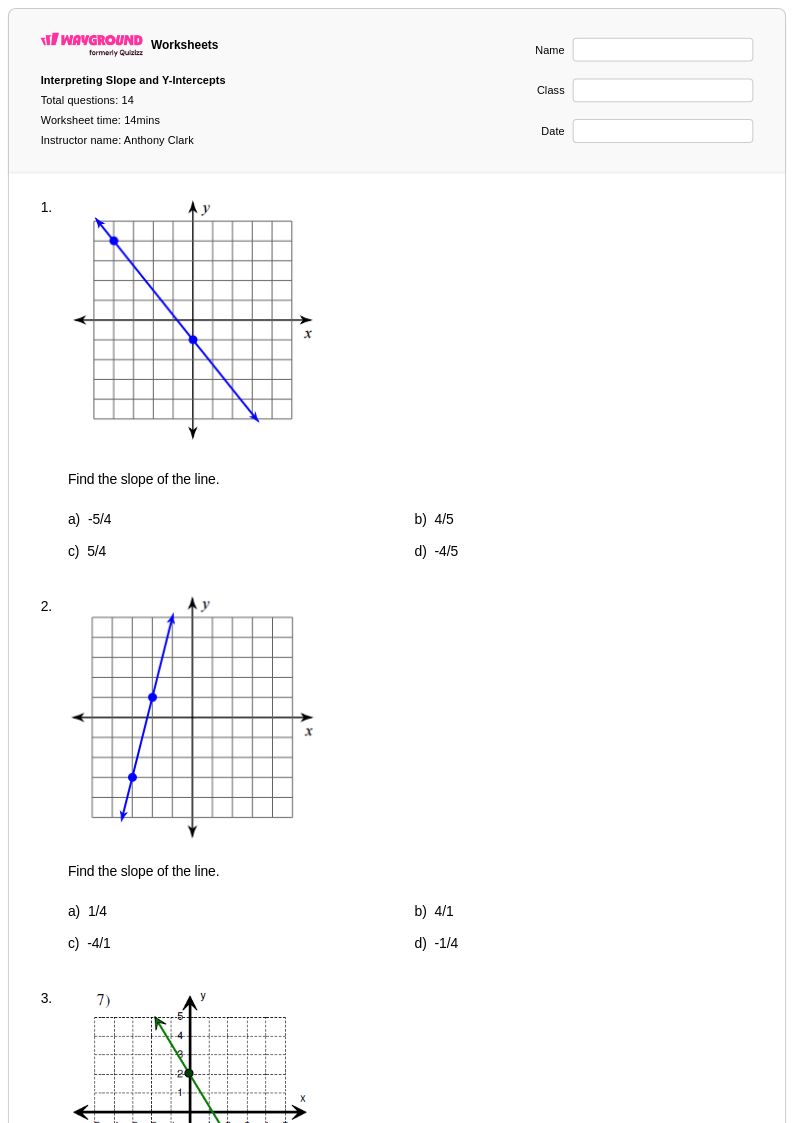
14 Q
9th - Uni

13 Q
8th - Uni

20 Q
8th
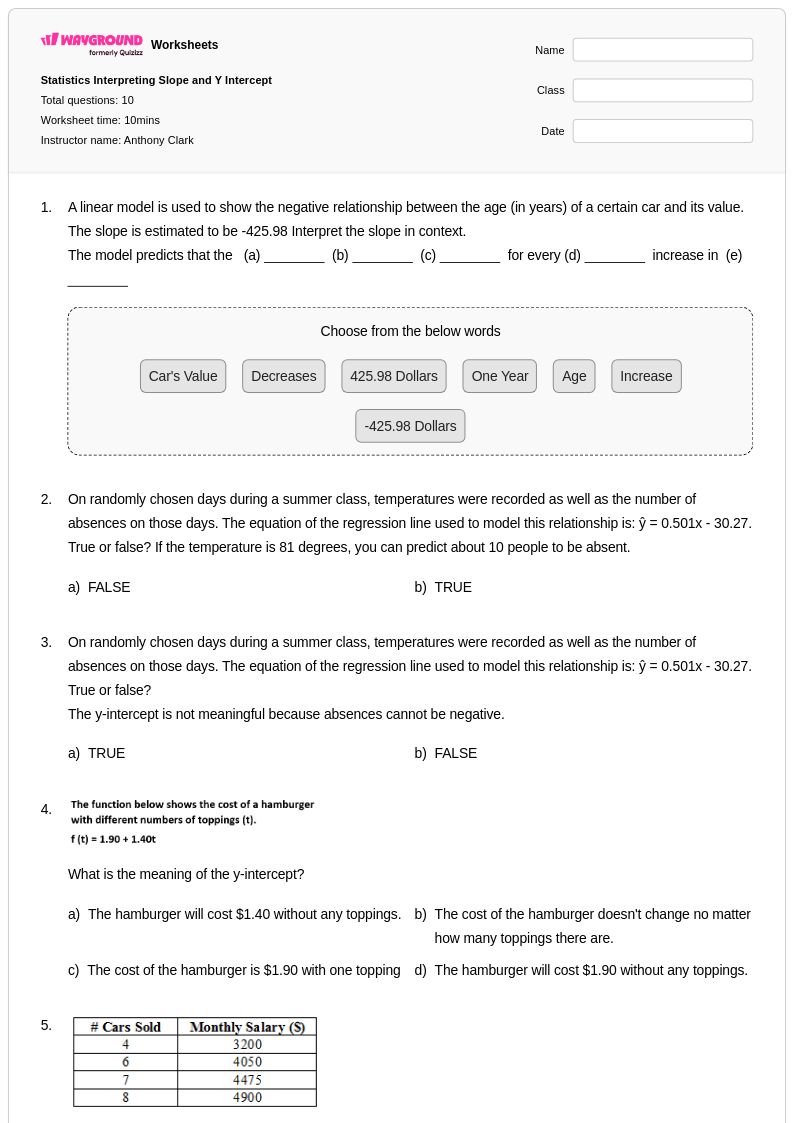
10 Q
9th - Uni
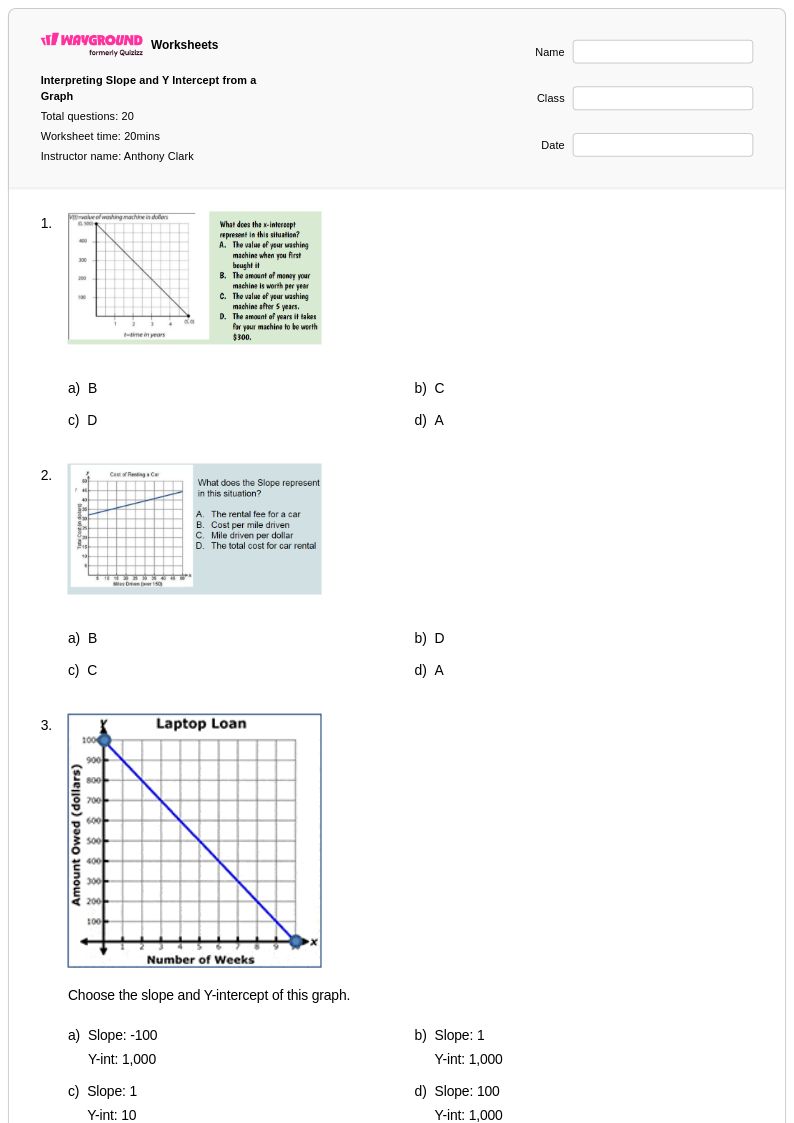
20 Q
9th - Uni
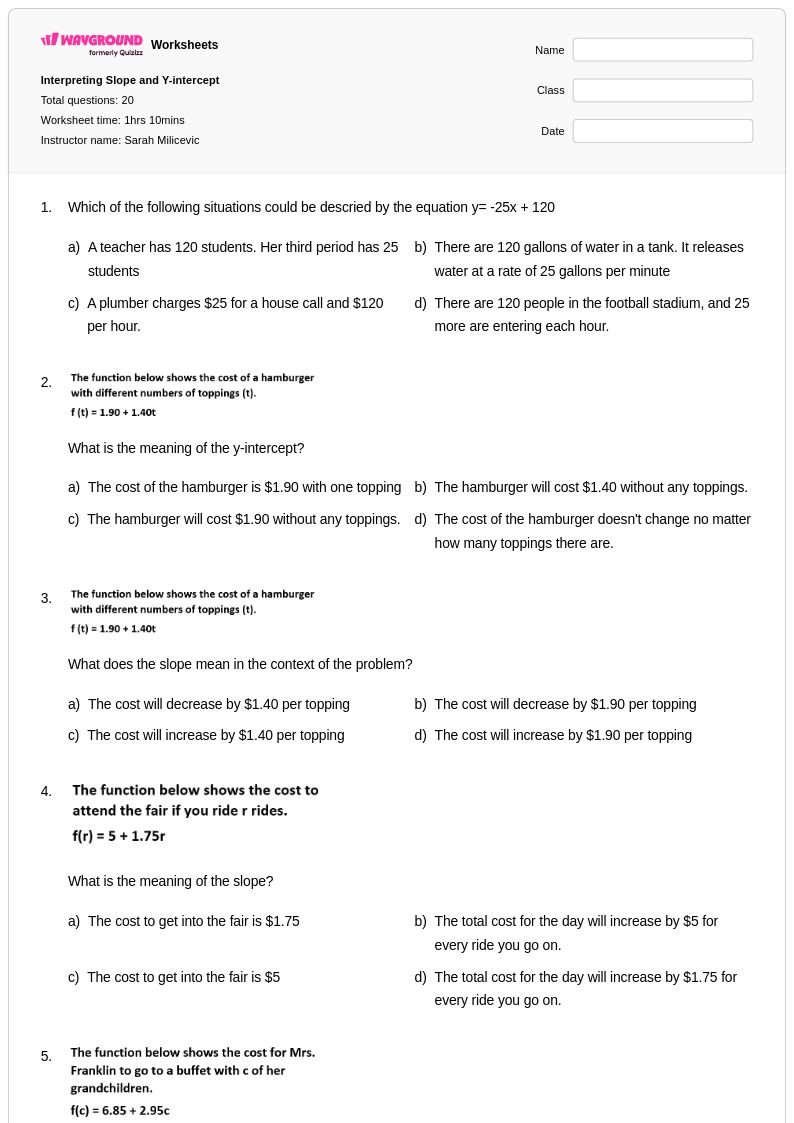
20 Q
8th
8 Q
9th - Uni

15 Q
9th - Uni

10 Q
9th
14 Q
8th
30 Q
7th - 9th
20 Q
7th - 9th
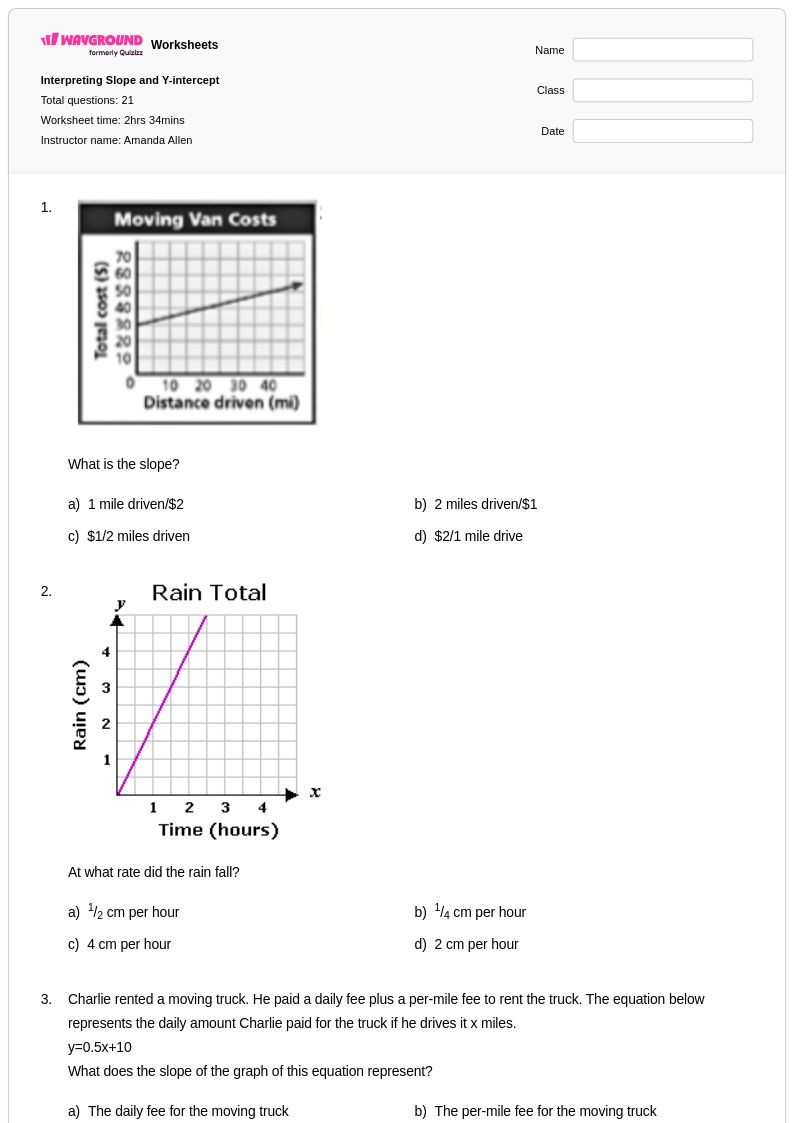
21 Q
11th
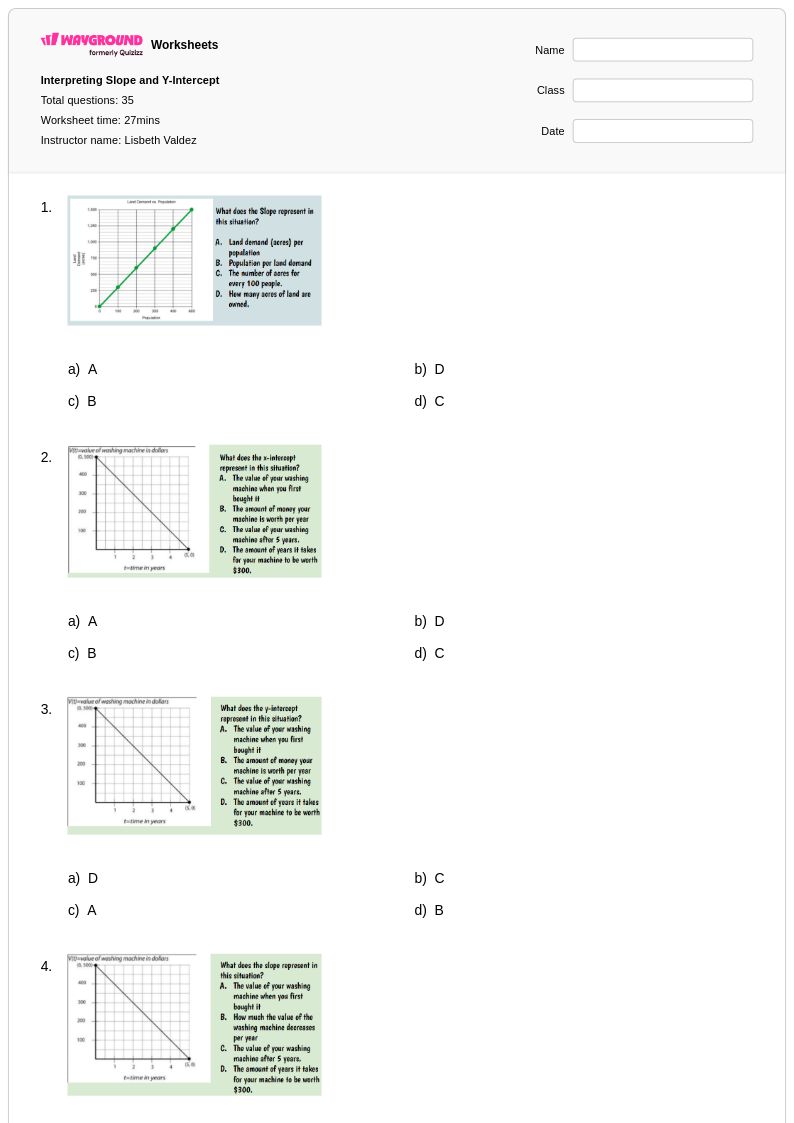
35 Q
9th

10 Q
9th - 12th
Explore Worksheets by Subjects
Explore printable Interpreting Slope and Y-intercept worksheets
Interpreting slope and y-intercept worksheets from Wayground (formerly Quizizz) provide students with comprehensive practice in analyzing the fundamental components of linear equations and their graphical representations. These mathematics resources focus on developing students' ability to extract meaning from the slope and y-intercept values, connecting algebraic expressions to real-world contexts and coordinate plane visualizations. The worksheets strengthen critical mathematical reasoning skills by guiding learners through problems that require them to identify what the slope represents as a rate of change and understand the y-intercept as an initial value or starting point. Each printable resource includes an answer key for immediate feedback, and the free practice problems range from basic identification exercises to complex application scenarios where students must interpret these values within story problems and data analysis contexts.
Wayground (formerly Quizizz) empowers educators with millions of teacher-created worksheet collections specifically designed for interpreting slope and y-intercept concepts, offering robust search and filtering capabilities that allow instructors to locate materials perfectly aligned with their curriculum standards and student needs. The platform's differentiation tools enable teachers to customize worksheets for various skill levels, providing both remediation support for struggling learners and enrichment opportunities for advanced students ready to tackle more sophisticated linear equation applications. Available in both printable pdf format and interactive digital versions, these resources streamline lesson planning while supporting flexible instructional approaches, whether teachers need quick skill practice activities, comprehensive review materials, or targeted intervention worksheets that address specific misconceptions about slope and y-intercept interpretation.
FAQs
How do I teach students to interpret slope and y-intercept?
What exercises help students practice interpreting slope and y-intercept?
What are the most common mistakes when interpreting slope and y-intercept?
How can I use this worksheet with my students?
How does interpreting slope and y-intercept fit into the math curriculum?
How can I differentiate this topic for diverse learners?